
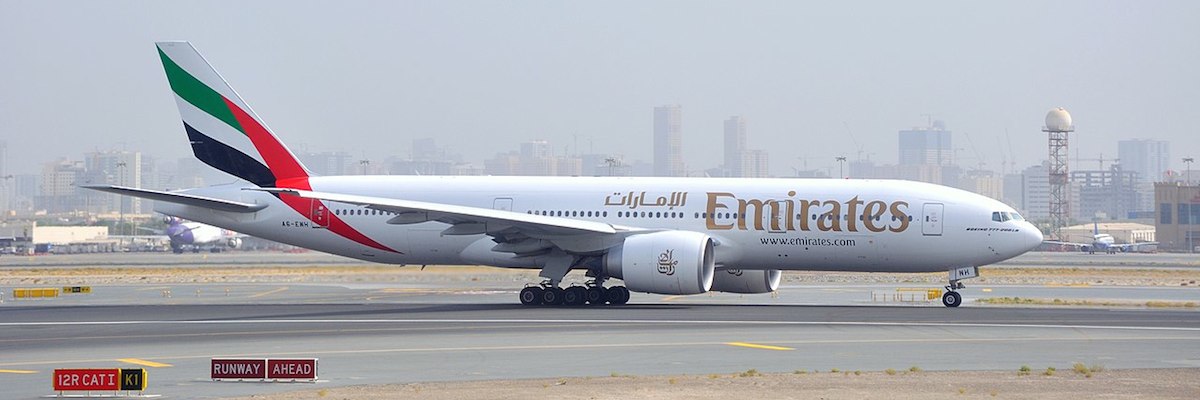
Airlines Halt Hormuz Flights Amid US-Iran Crisis
◢ Some of the world's leading carriers including British Airways, Qantas and Singapore Airlines on Friday suspended flights over the Strait of Hormuz, as Iran-US tensions flare over the downing of a drone. The suspensions came after the Federal Aviation Administration issued a notice, "prohibiting US-registered aircraft from operating over the Persian Gulf and Gulf of Oman.”
By Jitendra Joshi
Some of the world's leading carriers including British Airways, Qantas and Singapore Airlines on Friday suspended flights over the Strait of Hormuz, as Iran-US tensions flare over the downing of a drone.
The suspensions will affect many thousands of passengers and came after the Federal Aviation Administration in the United States issued a Notice to Airmen (NOTAM), "prohibiting US-registered aircraft from operating over the Persian Gulf and Gulf of Oman".
The NOTAM was in response to "heightened military activities and increased political tensions that might place commercial flights at risk", an FAA statement said, as Tehran and Washington engaged in a war of words over Thursday's missile strike on the drone.
The FAA's notice applies only to US-registered airlines, and United Airlines said it was suspending its Newark-Mumbai service in response. But European and Asian operators were taking no chances.
"Our safety and security team are constantly liaising with authorities—including the likes of the FAA -- around the world as part of their comprehensive risk assessment into every route we operate," a BA spokeswoman said.
Germany's Lufthansa and Dutch airline KLM followed suit in bypassing the Hormuz area, although Air France said it was already flying further south. Dubai-based Emirates said it had rerouted flights to avoid "areas of possible conflict.”
Iran's downing of the drone—which Washington insists was above international waters but Iran says was within its airspace—has seen tensions between the two countries spike further after a series of attacks on tanker ships blamed by the US on Tehran.
The Global Hawk surveillance aircraft can attain a maximum altitude of 60,000 feet (18.3 kilometres), nearly double the typical cruising height of a passenger plane.
KLM said: "The incident with the drone is reason not to fly over the Strait of Hormuz for the time being. This is a precautionary measure."
Pakistan Problem
The Netherlands is still reeling from the downing of Malaysia Airlines flight MH17 in 2014, which was hit a missile over eastern Ukraine's Donetsk region where pro-Russian separatist rebels are battling Ukraine government forces.
All 298 people on board were killed, 196 of them Dutch. International investigators on Wednesday charged three Russians and a Ukrainian with murder over the shooting down of the plane, which was
traveling between Amsterdam and Kuala Lumpur. The incident forced airlines on the busy Europe-Asia route to divert flights away from Ukraine airspace.
Responding to the latest tensions over Iran, Malaysia Airlines said it "is closely monitoring the situation and is guided by various assessments including security reports and NOTAMs by respective airspace control authorities".
Australia's flag carrier Qantas said it too was avoiding the Strait of Hormuz and Gulf of Oman "until further notice", while Singapore Airlines warned passengers that its flight times to Europe would likely take longer now. Europe-Asia flights have already faced disruption since February, when
Pakistan restricted large swathes of airspace near India due to cross-border air strikes which came close to all-out war between the nuclear-armed rivals.
"This (Pakistan's action) has also pushed much of the transiting traffic south, nearer to the area now prohibited to US carriers," the flight-tracking website Flightradar24 said in a blog.
Alex Macheras, an independent aviation analyst in London, said the Hormuz diversions were another image problem for Iran after the "mass exodus" of European airlines, which had to abandon their Tehran routes following the restoration of US sanctions.
Pointing back to the Ukraine downing, Pakistan's closure and other incidents, he told AFP that "more and more passengers have been affected by geopolitics", and that many travelers were avoiding stopovers in the Middle East altogether.
Photo: Wikicommons

Trump Ordered Military Strike Against Iran, Then Called It Off
◢ The U.S. called off military strikes against Iran on Thursday night that were approved by President Donald Trump, according to an administration official, abandoning a move that would have dramatically escalated tensions that are already running high between the two countries. The attack, ordered after Iranian forces shot down a U.S. Navy drone over the Strait of Hormuz, would have involved airstrikes and was close to being carried out when it was stopped.
By Tony Capaccio and John Harney
The U.S. called off military strikes against Iran on Thursday night that were approved by President Donald Trump, according to an administration official, abandoning a move that would have dramatically escalated tensions that are already running high between the two countries.
The attack, ordered after Iranian forces shot down a U.S. Navy drone over the Strait of Hormuz, would have involved airstrikes and was close to being carried out when it was stopped, said the official, who was granted anonymity to discuss a national security matter. The official would not discuss whether the plan might be revived.
Airstrikes would raise the specter of a far broader conflict in the volatile region, which supplies one-third of the world’s oil.
It was not immediately known what prompted the decision to hold off. But the move and its reversal underscore the wavering approach the president has shown at times regarding military force. He has repeatedly and fiercely lashed out at Iran and North Korea, but then cooled his rhetoric when hostilities threatened to erupt into open conflict. On two occasions since he took office, he has ordered military strikes on Syria.
Brent oil pared its biggest weekly gain in four months on the shifting developments. Futures erased gains in London on Friday, but are still up 4% for the week.
Iran’s Deputy Foreign Minister for Political Affairs Seyed Abbas Araghchi said the country had "indisputable" evidence the U.S. drone had violated Iranian air space, adding some wreckage was recovered from the country’s territorial waters. "The Islamic Republic of Iran would not hesitate for a moment to decisively defend its territory against any aggression," Araghchi said in a statement released by the Ministry of Foreign Affairs on Friday.
Earlier Thursday, as the attack was being planned, Trump downplayed Iran’s strike on the U.S. Navy drone in the Persian Gulf that escalated regional tensions and fueled a surge in oil prices, suggesting a “loose and stupid” individual may have been responsible for the strike.
“I would imagine it was a general or somebody who made a mistake by shooting that drone down,” Trump said during an Oval Office meeting Thursday with Canadian Prime Minister Justin Trudeau. “I find it hard to believe it was intentional. It could have been somebody who was loose and stupid.”
The operation was first reported by the New York Times, which said that Trump had pulled back as warplanes were in the air. The U.S. official disputed that part of the Times account.
The White House declined to comment on the reports and an official at the State Department didn’t immediately respond to a request for comment.
The president is in an increasingly difficult position on Iran. His administration has blamed the Islamic Republic for a series of attacks in the Gulf region since mid-May, including one last week on two oil tankers, but with little consequence for Tehran. He’s shown a desire to project American power, yet during the 2016 election he promised to extricate the U.S. from foreign conflicts, an issue that’s sure to come up as his re-election campaign begins.
The U.S. has directed additional forces to the Middle East in recent weeks, but the numbers—about 2,000 troops in total—have been modest and haven’t come with clear indications of where they would be sent or what their mission would be. In some cases, forces already planned for deployment to the region had their arrival accelerated, while troops scheduled to depart saw their tours extended.
A military assault by the U.S. could have immediate and far-reaching consequences. With proxy forces or allies in countries including Lebanon, Syria, Iraq and Yemen, among others, retaliation from Iran could come in many forms, targeting not just U.S. interests but Israel as well and raising the risk of disruptions to oil flows out of the wider Persian Gulf region.
The last time the U.S. launched a significant military effort against Iran was Operation Praying Mantis in 1988. In that operation, U.S. Navy ships sank two Iranian ships and destroyed two Iranian surveillance platforms.
The move came after the USS Samuel B. Roberts was damaged by a mine in the Persian Gulf.
Later that year, a U.S. Navy cruiser shot down an Iranian commercial aircraft on a scheduled flight in Iranian airspace, killing nearly 300 people. The U.S. expressed regret for the loss of life and said it mistakenly targeted the plane. Iran said it was a deliberate and illegal act.
During his time in office, Trump has ratcheted up economic sanctions on Iran as part of his “maximum pressure” campaign against the Islamic Republic. Yet he has also said he doesn’t want a war with Tehran and that he is hoping Iran will reach out to negotiate.
As tensions climbed on Thursday following the drone strike, regional analysts and lawmakers from both parties warned that the likelihood of a bigger confrontation could be looming, whether intentional or not.
“The president may not intend to go to war here but we’re worried that he and the administration may bumble into a war,” Senate Minority Leader Chuck Schumer, a New York Democrat, told reporters Thursday after a briefing at the White House.
The top Republicans in the Senate and House both called separately for Trump to take a “measured” response to the Iranian actions.
Saudi Vice Minister of Defense Khalid bin Salman said he met with Brian Hook, the U.S. special representative to Iran, to “explore the latest efforts to counter hostile Iranian acts and continuous escalation that threaten the region’s security and stability.” In a series of posts on Twitter, the minister affirmed Saudi Arabia’s support for the U.S. “maximum pressure campaign on Iran.”
The U.S. said the Global Hawk drone was flying in international airspace about 34 kilometers (20 miles) away from Iranian territory when it was shot down.
“This was an unprovoked attack on a U.S. surveillance asset in international airspace,” said Navy Captain Bill Urban, a spokesman for U.S. Central Command.
Photo: Wikicommons
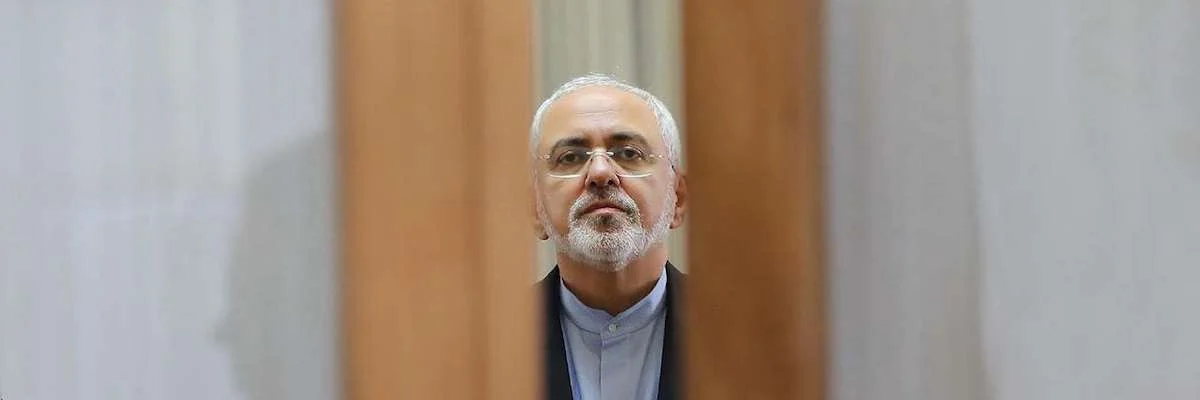
Iran Says Downed US Drone Recovered in its Territorial Waters
◢ Iran's Foreign Minister Mohammad Javad Zarif said Thursday a US surveillance drone "violated Iranian airspace" before being shot down earlier in the day, providing coordinates to back his claim. The drone "was targeted at 04:05 at the coordinates (25°59'43"N 57°02'25"E) near Kouh-e Mobarak. We've retrieved sections of the US military drone in OUR territorial waters where it was shot down."
By Sebastian Smith and Marc Jourdier
Iran said Thursday it had recovered parts of a US spy drone in its territorial waters, after downing the aircraft in a missile strike slammed by President Donald Trump as a "big mistake."
Under pressure to respond to the high-stakes incident in the strategic Strait of Hormuz, where a series of tanker attacks have sent tensions soaring with Iran, Trump initially struck a combative tone.
"Iran made a very big mistake!" he tweeted in response to news Iran had shot down the Global Hawk surveillance aircraft—which the Pentagon says was above international waters at the time.
"This country will not stand for it, that I can tell you," he repeated later at the White House.
But as the overnight incident whipped up fears of open conflict between the United States and its declared foe Iran—sending crude oil prices up more than six percent—Trump moved swiftly to dial tensions back down, suggesting the drone may have been shot in error.
"I find it hard to believe it was intentional, if you want to know the truth," Trump said. "I think that it could have been somebody who was loose and stupid that did it."
The president's mixed message left the world unsure what Washington's next move would be.
"You will find out," Trump said, when asked about possible retaliation.
In Tehran, however, the message came loud and clear.
Late Thursday Foreign Minister Mohammad Javad Zarif announced that parts of the drone had been recovered in Iranian territorial waters, as Tehran moved to bring the incident before the United Nations.
“We don't seek war, but will zealously defend our skies, land & waters," Zarif said.
Drone violating or victim?
The Pentagon denounced the strike as an "unprovoked attack" in international air space, claiming the navy drone was some 34 kilometers (21 miles) from Iran when destroyed by a surface-to-air missile.
But the Islamic Revolutionary Guard Corps said it brought the drone down as it was "violating Iranian air space" over the waters of Hormozgan province.
Zarif provided coordinates to back the claim.
"At 00:14 US drone took off from UAE in stealth mode & violated Iranian airspace," Zarif tweeted. "It was targeted at 04:05 at the coordinates (25°59'43"N 57°02'25"E) near Kouh-e Mobarak."
"We've retrieved sections of the US military drone in OUR territorial waters where it was shot down."
In a letter addressed to the UN Security Council and Secretary-General Antonio Guterres, Iran protested against a "dangerous and provocative act by the U.S. military forces against the territorial integrity of the Islamic Republic of Iran."
The drone downing came as Iran was already accused by Washington of carrying out explosions on oil tankers in the congested Hormuz area. Tehran denies being behind the attacks but has frequently threatened to block the sea lanes used by shipping to move much of the world's oil exports.
The commander of the US Naval Forces Central Command, Sean Kido, said that a mine allegedly used in one of the attacks matched Iranian weaponry and that incriminating fingerprints had also been collected.
Options 'running out?'
Trump has repeatedly said he does not favor war with Iran unless it is to stop the country getting a nuclear weapon—something Iranian leaders insist they are not pursuing.
But critics of the Trump administration say his policy of "maximum pressure"—including crippling economic sanctions, abandonment of a complex international deal to regulate Iran's nuclear activities, and deployment of extra sea, air and land forces to the region—make war ever more likely.
In Washington, talk of war has become part of the already heated atmosphere as Trump's reelection fight starts to gain traction.
A key Republican ally of Trump, Senator Lindsey Graham, said the president's "options are running out."
Asked if he believed the countries were nearing conflict, he replied: "I think anybody would believe that we're one step closer."
"They shot down an American asset well within international waters trying to assess the situation. What are you supposed to do?"
One of Trump's biggest opponents, the Democratic speaker of the House of Representatives, Nancy Pelosi, warned that "there's no appetite for wanting to go to war in our country."
Israeli Prime Minister Benjamin Netanayahu blasted "Iranian aggression" and said "Israel stands by the United States."
But Russian President Vladimir Putin, who has close relations with Iran's leadership, said that US military retaliation against Iran "would be a disaster for the region."
Diplomatic, Military Brinkmanship
Trump was elected in part on promises to end US involvement in wars in the Middle East, but the president has at the same time made clear his unquestioning support for Iran's big rivals in the region—Israel and Saudi Arabia.
Trump's arrival in the White House, alongside veteran Mideast hawks like his national security adviser John Bolton, has seen sharp deterioration in relations with Tehran.
Trump began last May by abandoning—and effectively wrecking—a 2015 international agreement on bringing Iran in from the diplomatic cold in exchange for verified controls on its nuclear industry.
That has prompted Iran to threaten it will stop observing restrictions agreed to under the deal on enrichment of uranium.
The threat has been seen as an effort to pressure European governments that want to save the nuclear deal to push back against Washington. The US State Department called that "extortion."
Photo: IRNA
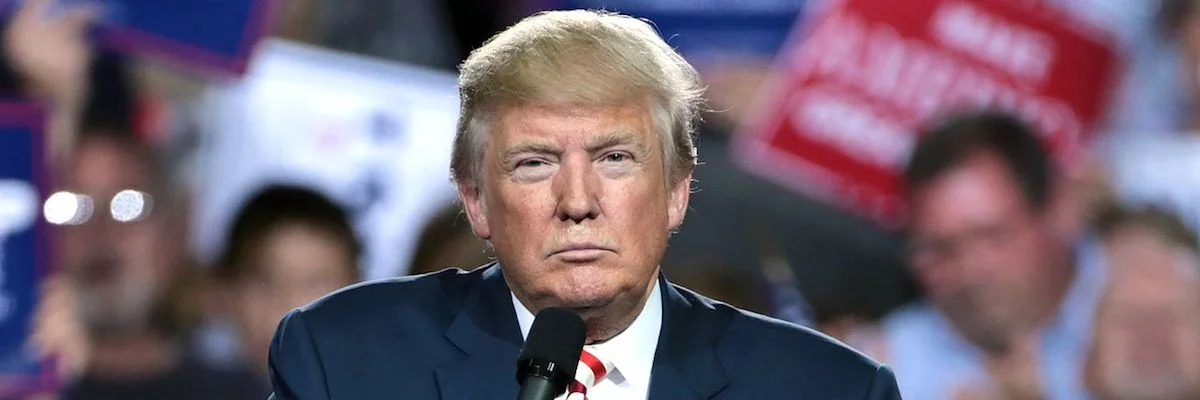
Oil Prices Jump 6% as Trump Says Iran Made 'Very Big Mistake'
◢ Oil prices jumped Thursday on rising US-Iran tensions, with gains accelerating on a cryptic tweet by US President Donald Trump after Iranian forces shot down a US spy drone. President Donald Trump said Thursday that Tehran had made a "very big" error, after Iranian forces shot down a US spy drone near the strategic Strait of Hormuz.
Oil prices jumped Thursday on rising US-Iran tensions, with gains accelerating on a cryptic tweet by US President Donald Trump after Iranian forces shot down a US spy drone.
President Donald Trump said Thursday that Tehran had made a "very big" error, after Iranian forces shot down a US spy drone near the strategic Strait of Hormuz.
Near 1505 GMT, US benchmark West Texas Intermediate climbed 6.3 percent to $57.13 a barrel, while Brent futures in London gained 4.7 percent to $64.69 a barrel.
"Iran made a very big mistake!" he tweeted in his first public reaction to the strike.
Iran's Islamic Revolutionary Guard Corps earlier said it had brought down the surveillance drone after it entered its country's airspace. The Pentagon said the incident occurred in international airspace.
The drone shooting adds to growing tensions as Tehran pushes back against surging US diplomatic, economic and military pressure.
Trump has repeatedly said he does not favor war with Iran unless it is to stop the country getting a nuclear weapons—something Iranian leaders insist they are not pursuing.
Critics of the Trump administration say that his policy of "maximum pressure"—including crippling economic sanctions, abandonment of a complex international deal to regulate Iran's nuclear activities, and deployment of extra sea, air and land forces to the region—make war ever more likely.
The drone downing came as Iran was already accused by Washington of having carried out explosions on two oil tankers in the congested Hormuz area. Tehran denies having been behind the attacks but has frequently threatened in the past to block the sea-lanes used by shipping to move much of the world's oil exports.
Photo: Wikicommons
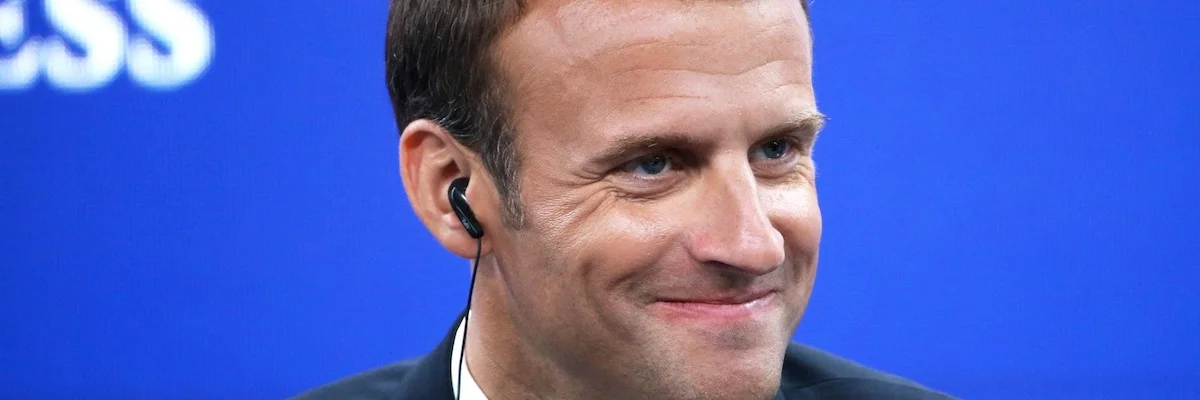
Macron Sends Senior Diplomat to Iran to Defuse US Tensions
◢ President Emmanuel Macron sent his top diplomatic adviser to Iran this week as part of European efforts to defuse tensions between Tehran and Washington, the French presidency said Thursday. The adviser, Emmanuel Bonne, held "high-level meetings" Wednesday in Tehran,” with the aim of contributing to the deescalation of tensions in the region,” Macron's office said.
President Emmanuel Macron sent his top diplomatic adviser to Iran this week as part of European efforts to defuse tensions between Tehran and Washington, the French presidency said Thursday.
The adviser, Emmanuel Bonne, held "high-level meetings" Wednesday in Tehran, "with the aim of contributing to the deescalation of tensions in the region,” Macron's office said.
The presidency refused to say whom Bonne met, adding only that he left Tehran on Wednesday evening.
The strains between Washington and Tehran increased Thursday with Iran's announcement that it had shot down a US "spy drone" that violated Iranian airspace near the Strait of Hormuz.
The United States has yet to respond.
The incident marks the latest escalation in tensions following last week's attacks on two oil tankers in the Strait of Hormuz, which the United States blamed on Iran.
Tehran has denied any involvement.
Tensions between the longtime foes, who have had no relations since the hostage crisis that followed the 1979 Islamic revolution, have increased sharply since US President Donald Trump last year abandoned a landmark 2015 nuclear agreement with Iran and reimposed sanctions.
Macron, who is traveling to a G20 summit in the Japanese city of Osaka on June 28-29, will "have contact with the main players" in the standoff, his office said.
Before that he will pay an official visit to Japan on June 26-27, during which he will hold talks with Prime Minister Shinzo Abe, who recently travelled to Iran to try mediate in the crisis.
Abe met with Iran's supreme leader, Ayatollah Ali Khamenei, who categorically refused to hold talks with Trump.
The EU is under pressure from Tehran to try salvage the 2015 deal, with Iran threatening to breach its nuclear enrichment limits.
On Tuesday, Macron urged Tehran to be "patient and responsible.”
Photo: Wikicommons
Iran Shoots Down US Drone as Tensions Soar
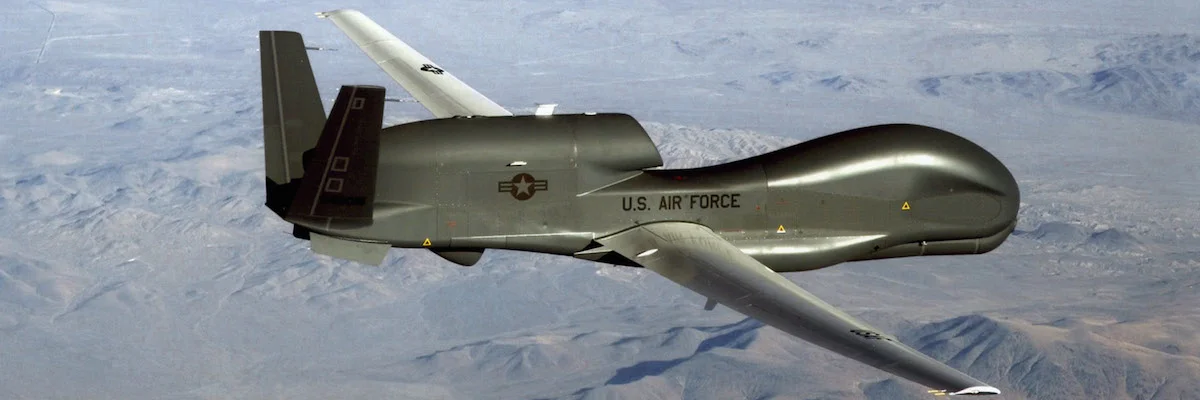
◢ Iran shot down a US spy drone Thursday near the strategic Strait of Hormuz, with the two sides at odds whether it was in Iranian or international airspace, in the latest incident stoking tensions between the arch-foes. The Islamic Revolutionary Guard Corps said the "US-made Global Hawk surveillance drone" was hit with a missile "after violating Iranian air space" over the waters of Hormozgan province.
By Marc Jourdier
Iran shot down a US spy drone Thursday near the strategic Strait of Hormuz, with the two sides at odds whether it was in Iranian or international airspace, in the latest incident stoking tensions between the arch-foes.
The Islamic Revolutionary Guard Corps said the "US-made Global Hawk surveillance drone" was hit with a missile "after violating Iranian air space" over the waters of Hormozgan province.
The Pentagon confirmed a US surveillance drone was shot down by Iranian forces, but it insisted the unmanned aircraft was in international airspace.
The incident comes at a time of growing antagonism between Iran and the United States following two waves of still unexplained attacks on Gulf shipping, which Washington has blamed on Tehran.
Iran has denied any involvement and hinted the US might have orchestrated them itself to provide a pretext for the use of force against the Islamic Republic.
Russian President Vladimir Putin said any use of force by the United States against Iran "would be a disaster for the region.”
The head of Iran's Revolutionary Guard said the downing of the drone was "a clear message" his country will defend its borders.
Iran will "respond to all foreign aggression and our reaction is, and will be, categorical and absolute", General Hossein Salami said, quoted by Tasnim news agency.
"We declare that we are not looking for war but we are ready to respond to any declaration of war," he added.
The Pentagon said later in a statement that an Iranian surface-to-air missile had brought down a US Gold Hawk high-altitude drone over the Strait of Hormuz.
"Iranian reports that the aircraft was over Iran are false," it said.
"This was an unprovoked attack on a US surveillance asset in international airspace."
World oil prices rebounded strongly on the news, with London's Brent North Sea crude up 2.78 percent to $63.54 per barrel in midday trading and New York's West Texas Intermediate up 3.42 percent to $55.60.
'Maximum pressure'
Tensions have been running high between Iran and the United States ever since President Donald Trump abandoned a landmark 2015 nuclear agreement in May last year.
The subsequent reimposition of crippling unilateral sanctions has dealt a heavy blow to Iran's already flagging economy.
Washington has also bolstered its military presence in the Middle East in a campaign of "maximum pressure" against Tehran.
Its deployment to the Gulf of an aircraft carrier task force as well as B-52 bombers, an amphibious assault ship and a missile defense battery has sparked fears of fresh conflict in the region.
One of the two tankers attacked in the Gulf of Oman last week was damaged by a limpet mine, the US military said Wednesday.
Commander Sean Kido of US Naval Forces Central Command, or NAVCENT, said the mine used in the attack "is distinguishable and it is also strikingly bearing a resemblance to Iranian mines that have already been publicly displayed in Iranian military parades.”
The Japanese-owned Kokuka Courageous, loaded with highly flammable methanol, came under attack on June 13 as it passed through the Gulf of Oman along with the Norwegian-operated Front Altair.
Fingerprints
It was the second attack in a month on ships in the strategic shipping lane.
On May 12, two Saudi oil tankers and two other vessels were damaged in mysterious "sabotage attacks" in the Gulf of Oman off the United Arab Emirates.
Kido told reporters in the UAE emirate of Fujairah that the US military had recovered "biometric information" of the assailants on the Kokuka Courageous including fingerprints.
This information "can be used to build a criminal case", Kido said as the US Navy took journalists to the damaged ship currently anchored some 14 kilometres (nine miles) off Fujairah.
Defence Minister Amir Hatami flatly rejected allegations Iran was behind the twin attacks.
"Accusations levelled against Iran's armed forces and the published film with regards to the incident (that) happened to the vessels... are unsubstantiated and we categorically reject these accusations," the official news agency IRNA quoted him as saying.
Washington has released images and a grainy black-and-white video it says shows Iranians on a patrol boat removing an unexploded limpet mine attached to the Kokuka Courageous.
The US commander Kido said there was an "ongoing joint and combined investigation with our regional partners into the attacks" on the two tankers.
Photo: US Air Force
China Is Buying Iranian LPG Despite Sanctions, Ship-Tracking Shows
◢ After being hit by the trade war and U.S. sanctions on Iran, some Chinese buyers of liquefied petroleum gas from the Persian Gulf nation are finding it’s too tough a habit to kick. China probably isn’t complying with U.S. sanctions on Iranian crude, U.S. Deputy Energy Secretary Dan Brouillette said Friday, adding that he didn’t have any hard evidence to show this.
By Saket Sundria and Dan Murtaugh
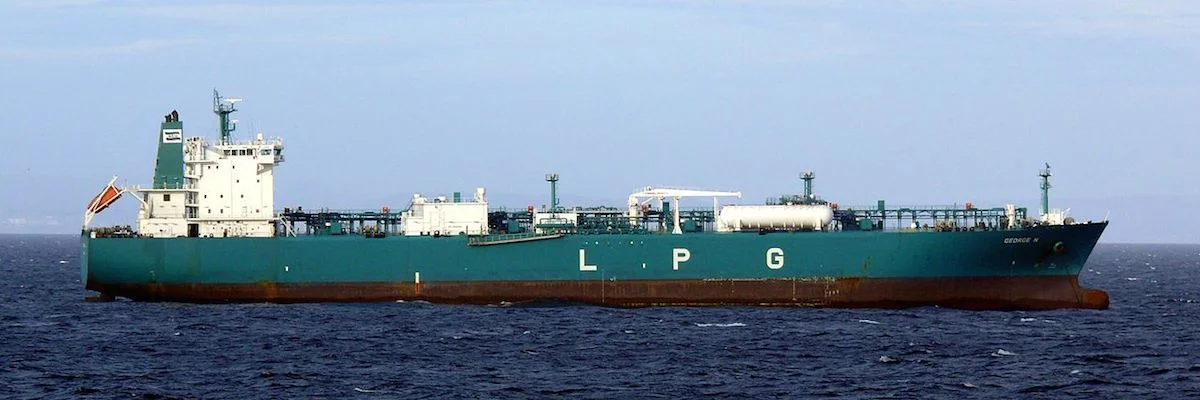
After being hit by the trade war and U.S. sanctions on Iran, some Chinese buyers of liquefied petroleum gas from the Persian Gulf nation are finding it’s too tough a habit to kick.
China sourced around a fifth of its LPG—used as cooking fuel, in cigarette lighters and to make plastic—from the U.S before Beijing slapped a 25% tariff on the gas last August as the trade tussle heated up. Buyers then turned to Iran, which accounted for around a third of imports in April, before President Donald Trump blocked all energy exports from the country in May.
But some Chinese customers are still buying from Iran, according to Kpler SAS. Based on ship-tracking data, the Paris-based energy researcher estimates that at least five supertankers loaded Iranian LPG in May and June that was destined for China. That would equate to around $100 million of the gas, according to Bloomberg calculations.
“They’ve started using a variety of techniques to hide their activity,” Ilya Niklyaev, an LPG analyst at Kpler, said in an interview. “Like switching off transponders as well as intentionally signaling wrong destinations and indicating loading ports in Qatar, Saudi Arabia or the U.A.E.”
The predicament of the Chinese buyers underscores how the White House’s aggressive trade and foreign policy is disrupting global commodity flows. To avoid running afoul of the U.S. sanctions, LPG importers in Asia’s largest economy would have to turn to more expensive supplies from elsewhere in the Middle East or Africa.
Going Dark
Tankers carrying Iranian oil and gas are notorious for masking their journeys by turning off satellite locator beacons, a technique known as going dark, and transferring fuel between ships to hide the origin of the cargo.
LPG tanker Sea Dolphin sailed into the Persian Gulf between Iran and Qatar with empty tanks on May 17, and then turned off its beacon, Kpler said in a June 6 note. It turned the locator back on May 26, indicating its tanks were now full, and headed toward the Maldives, where it again went dark.
Another ship, the Pacific Yantai, loaded its tanks near where the Sea Dolphin had stopped, and then set sail toward China, according to Kpler. Bloomberg ship-tracking data confirms the movements of the two vessels and show the Pacific Yantai appearing to drop off a partial cargo at Ningbo on June 14.
The Sea Dolphin is owned by Kunlun Trading Co., data compiled by Bloomberg show. Staff who answered the phone at its Hong Kong office said they weren’t authorized to speak to the media and there was no spokesperson. There was no response to emails sent to Kunlun’s investor relations department.
Pacific Yantai is owned by China’s Pacific Gas, Bloomberg-compiled data show. The ship was on a long-term charter, said a staff member at the company’s Shanghai office who asked not to be identified as the person is not authorized to speak to media. The person wouldn’t name the company that chartered the vessel. Nobody answered emails sent to generic addresses for information and investor relations at Pacific Gas.
Oil Imports
Chinese refiners may also be circumventing American sanctions to import Iranian oil, with FGE saying in a note last week that it expects some degree of non-compliance. China probably isn’t complying with U.S. sanctions on Iranian crude, U.S. Deputy Energy Secretary Dan Brouillette said Friday, adding that he didn’t have any hard evidence to show this.
LPG is an important export for Iran. Some 83% of the country’s 507,000 barrels a day of petroleum product shipments in 2017 were LPG and fuel oil, according to Energy Information Administration data. That compared with 2.5 million barrels a day of crude and condensate exports.
China’s Foreign Minister Wang Yi last month pledged to support Tehran’s efforts to safeguard its interests. The country’s Ministry of Commerce and the General Administration of Customs didn’t respond to faxed requests for comment.
China took 346,000 tons, or 80%, of Iran’s LPG exports in May, Kpler estimated. If the cargoes loaded before the end of the U.S. waivers on May 2 they may not have been in contravention of the sanctions. Iran is likely to export a total of 400,000-500,000 tons in June with at least eight supertankers set to load the fuel in coming weeks, Kpler said in the note. Three supertankers have loaded LPG from Iran in June, of which at least one is headed for China, it said.
Kpler and Chinese customs figures show similar overall LPG import data for the past year. But while the Kpler numbers show a sizable portion coming from Iran, the Chinese data has no cargoes from the Persian Gulf nation since mid-2017.
Iranian LPG supplies have been among the cheapest in the world as customers from Japan to South Korea turned away from doing business with the country following the U.S. sanctions. China could turn to other suppliers, like Qatar and Saudi Arabia, but it would be more expensive.
After rising 21% this year through late April, the benchmark east Asian price for propane, a type of LPG, has since fallen 23%, according to data from PVM Oil Associates. The contract traded 3.2% lower on Tuesday at $410.12 a ton.
“While the LPG market isn’t expected to be nearly as tight in the second half of 2019, China will still have to lean heavily on LPG supplies from Iran, as well as from Qatar, Saudi Arabia, Nigeria and Angola to fill the gap left behind by the U.S,” said Han Wee Ong, a Singapore-based senior consultant at FGE.
Photo: Wikicommons
U.K. Settles $1.6 Billion Damages Claim Brought by Iranian Bank
◢ The U.K. government settled a 1.3 billion-pound ($1.6 billion) damages claim brought by an Iranian bank over a trading ban just as a "costly and potentially embarrassing" five-week trial was set to begin. The U.K. and Bank Mellat settled the London lawsuit for an undisclosed sum, a spokesman for law firm Zaiwalla & Co., which represented the bank, said in a statement.
By Jonathan Browning
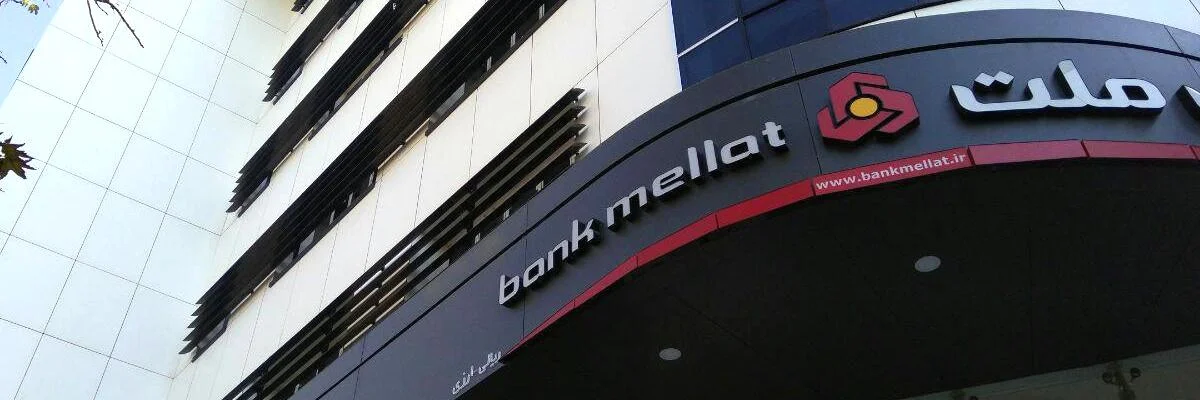
The U.K. government settled a 1.3 billion-pound ($1.6 billion) damages claim brought by an Iranian bank over a trading ban just as a "costly and potentially embarrassing" five-week trial was set to begin.
The U.K. and Bank Mellat settled the London lawsuit for an undisclosed sum, a spokesman for law firm Zaiwalla & Co., which represented the bank, said in a statement. The government has spent 35 million pounds defending the claim, he said.
Mellat sued the U.K. Treasury after its operations were effectively banned from the country’s financial sector. The U.K.’s highest court had earlier found that the order was unlawful.
The U.S. Treasury placed financial sanctions on Bank Mellat, which is 20% owned by the Iranian government, in October as part of wider sanctions reimposed on Iran. The sanctions followed the U.S. administration’s decision to withdraw from the seven-nation Iran nuclear deal in May 2018.
Photo: Bank Mellat
China Warns US Against Opening Mideast 'Pandora's Box'
◢ China on Tuesday warned against opening a "Pandora's box" in the Middle East after the United States announced the deployment of 1,000 additional troops to the region amid escalating tensions with Iran. Foreign Minister Wang Yi also urged Tehran to not abandon the nuclear agreement "so easily" after Iran said it would exceed its uranium stockpile limit if world powers fail to fulfill their commitments under the agreement in 10 days.
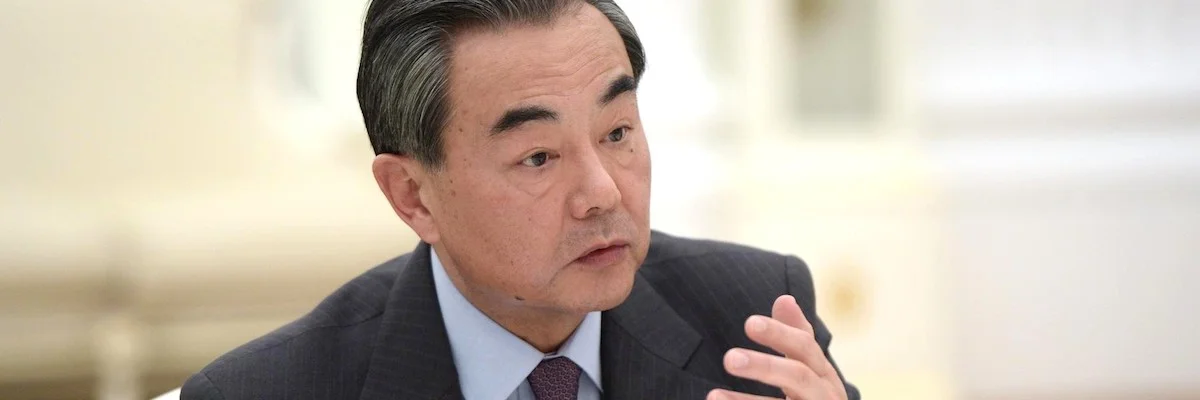
China on Tuesday warned against opening a "Pandora's box" in the Middle East after the United States announced the deployment of 1,000 additional troops to the region amid escalating tensions with Iran.
Foreign Minister Wang Yi also urged Tehran to not abandon the nuclear agreement "so easily" after Iran said it would exceed its uranium stockpile limit if world powers fail to fulfill their commitments under the agreement in 10 days.
The United States ratcheted up pressure on Iran Monday, announcing the deployment of additional troops to the Middle East and producing new photographs it said showed Tehran was behind an attack on a tanker ship in the Gulf of Oman last week.
"We call on all parties to remain rational and restrained, not to take any actions to provoke the escalation of tension in the region, and not to open a Pandora's box," Wang told reporters in Beijing during a joint press conference with visiting Syrian Foreign Minister Walid Muallem.
"In particular, the United States should change its practice of extreme pressure," Wang said.
Tensions between Tehran and Washington have escalated ever since the US quit the nuclear deal and with Washington blacklisting Iran's elite Revolutionary Guards as a terrorist organization.
Wang urged Iran to "make prudent decisions" and not "so easily abandon" the deal that aims to keep Tehran's nuclear ambitions in check.
Iranian President Hassan Rouhani announced on May 8 that Iran would stop observing restrictions on its stocks of enriched uranium and heavy water agreed under the deal, a move he said was in retaliation for the unilateral US withdrawal.
Tehran on Monday followed through with a 10-day countdown for world powers to fulfil their commitments under the 2015 nuclear deal.
Iran has threatened to go even further in scaling down nuclear commitments by July 8 unless remaining partners to the deal—Britain, China, France, Germany and Russia—help it circumvent US sanctions and especially enable it to sell its oil.
The US responded to the ultimatum by urging the international community not to give in to Iranian "nuclear extortion", while the UN and European states called for cool heads.
"China's determination to safeguard the comprehensive agreement has not changed," Wang said.
“We are willing to work with all parties to continue to make efforts for the full and effective implementation of the agreement."
Wang said China has also "worked closely" with all parties to reconstruct the Arak heavy water reactor at a nuclear plant in the southwest of Tehran.
On Syria, Wang told his visiting counterpart that China "firmly supports Syria's economic reconstruction" and its efforts to "combat terrorism.”
Beijing has in the past teamed up with Moscow to veto any UN proposals to sanction the government of Syrian President Bashar al-Assad.
"China has always advocated that the Syrian issue should be resolved through political means," Wang said.
Photo: Kremlin.ru

Macron Urges Iran to be 'Patient and Responsible' in Nuclear Deal
◢ French President Emmanuel Macron on Monday urged Iran to be "patient and responsible" after Tehran said it would surpass the uranium stockpile limit set under the 2015 nuclear deal with world powers that the US has abandoned. "I regret Iran's announcements today.... We strongly encourage Iran to behave in a way that is patient and responsible," Macron said in a press conference at the presidential palace in Paris.
French President Emmanuel Macron on Monday urged Iran to be "patient and responsible" after Tehran said it would surpass the uranium stockpile limit set under the 2015 nuclear deal with world powers that the US has abandoned.
"I regret Iran's announcements today.... We strongly encourage Iran to behave in a way that is patient and responsible," Macron said in a press conference at the presidential palace in Paris.
Iran said earlier it will surpass from June 27 the uranium stockpile limit set under the nuclear deal, turning up the pressure after the US walked away from the landmark pact last year.
Iran's atomic energy organization spokesman Behrouz Kamalvandi said that the move would be reversed "once other parties live up to their commitments."
To the dismay of Europe, President Donald Trump had unilaterally pulled the United States out of the nuclear deal last year, with Washington imposing tough sanctions on Iran.
Macron said that any kind of escalation in the nuclear standoff at the current time was in the interest of no-one.
"It is damaging to the interests of the Iranians themselves and also to the international community," he said.
"So we will do everything with our partners to dissuade Iran from this (surpassing the limit)," he said.
The United States has blamed Iran for last week's attacks on two tankers in the Gulf of Oman, a charge Tehran has denied as "baseless.”
Macron took a more circumspect line, saying that "only once all the information has been gathered and all the doubts lifted can the attributions (of blame) be made in a certain way."
"I think that in the period that we are entering into it is useful to show calm," he added.
Photo: Wikicommons
Germany, UK Warn Iran Over Uranium Plans as EU Urges Caution
◢ Germany and Britain on Monday warned Tehran not to breach uranium stockpile limits set by the 2015 nuclear deal, as the EU's diplomatic chief dismissed Iranian threats as "political dialectics.” Iran set a 10-day countdown on Monday to exceed the 300-kilogram limit set on its enriched uranium stocks, dealing another blow to the crumbling nuclear accord signed by Tehran and six international powers.
Germany and Britain on Monday warned Tehran not to breach uranium stockpile limits set by the 2015 nuclear deal, as the EU's diplomatic chief dismissed Iranian threats as "political dialectics".
Iran set a 10-day countdown on Monday to exceed the 300-kilogram limit set on its enriched uranium stocks, dealing another blow to the crumbling nuclear accord signed by Tehran and six international powers.
The EU has battled to save the agreement since US President Donald Trump withdrew and reimposed sanctions, but Iran said it would step back from exceeding the 300-kg limit on June 27 only if "other parties live up to their commitments.”
The move comes as Iran tries to step up pressure on the deal's other signatories—Germany, France, Britain, China and Russia—to help it sidestep US sanctions and in particular enable it to sell oil.
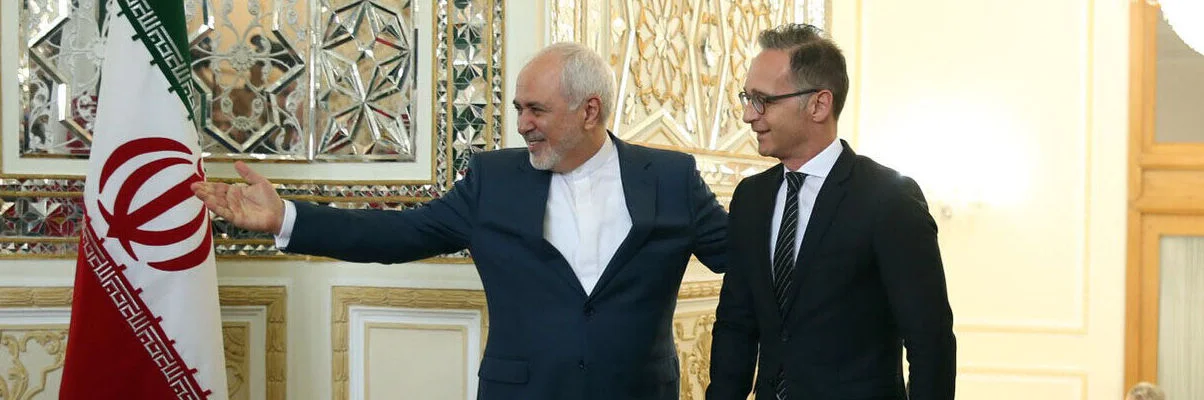
German Foreign Minister Heiko Maas rejected the Iranian ultimatum and insisted Tehran must stick to its commitments under the deal.
"We have already said in the past that we will not accept less for less. It is up to Iran to stick to its obligations," Maas said after talks with EU foreign ministers in Luxembourg.
"We will certainly not accept a unilateral reduction of obligations."
A spokesman for the British government echoed the call, saying the E3—the European signatories to the deal—has "consistently made clear that there can be no reduction in compliance".
"For now Iran remains within its nuclear commitments. We are coordinating with E3 partners on next steps," the spokesman added.
The European Union's diplomatic chief Federica Mogherini said the bloc would not act on the basis of Iranian rhetoric but wait for reports by the UN's nuclear watchdog, the International Atomic Energy Agency (IAEA).
"Our assessment on the implementation of the nuclear deal has never been, is not and will never be based on statements, but on the evaluation that the IAEA makes, the reports that the IAEA produces and that can be done at any time," Mogherini said after the talks.
"Announcements are relevant elements of political dialectics but our assessment on the implementation of the agreement is based on the factual, technically sound assessment and evaluation that the IAEA makes in its reports."
On May 8, President Hassan Rouhani said Iran would stop observing restrictions on its stocks of enriched uranium and heavy water agreed under the 2015 nuclear deal.
Rouhani said the move was in retaliation for the unilateral US withdrawal from the accord a year earlier, which saw Washington impose tough economic sanctions on Tehran.
Tensions between Tehran and Washington have escalated ever since, with the United States bolstering its military presence in the region and blacklisting Iran's Revolutionary Guards as a terrorist organization.
Photo: IRNA
EU States Cool on US Blaming Iran for Gulf Tanker Attacks
◢ European states on Monday urged caution in attributing blame for last week's tanker attacks in the Gulf, pointedly refusing to fall in line with Washington's assessment that Iran was behind the incidents. Several EU foreign ministers arriving for talks in Luxembourg backed UN Secretary General Antonio Guterres' call for an independent investigation into explosions that damaged two tankers.
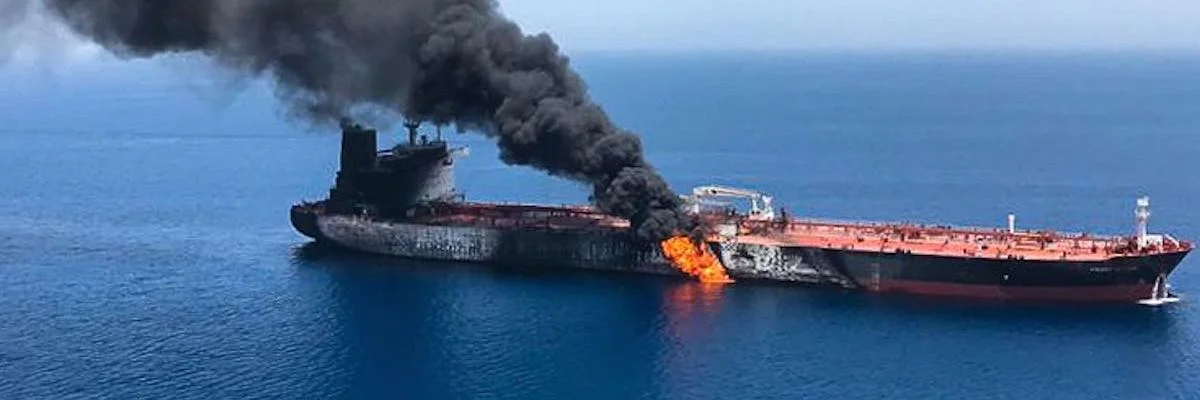
European states on Monday urged caution in attributing blame for last week's tanker attacks in the Gulf, pointedly refusing to fall in line with Washington's assessment that Iran was behind the incidents.
Several EU foreign ministers arriving for talks in Luxembourg backed UN Secretary General Antonio Guterres' call for an independent investigation into explosions that damaged two tankers sending tensions—and oil prices—soaring.
US President Donald Trump has said the Gulf of Oman attacks had Iran "written all over it" and Britain has concluded responsibility "almost certainly" lies with Tehran, but the EU has called for caution.
"We know the findings of the American and the British intelligence services, which assume that you can be almost certain. We are comparing this with our information. I think you have to proceed very, very carefully on this," German Foreign Minister Heiko Maas told reporters.
His Finnish counterpart Pekka Haavisto said it was vital to have "the full evidence" before reaching conclusions.
"I support very much the line of the UN Secretary General Mr Guterres, that a proper investigation (to put) all the facts on the table and then we can look what really has happened, who is behind this," he said.
"I think its a very very concerning event but let's have all the details first."
Luxembourg's foreign minister echoed his support for Guterres' call, warning against repeating the diplomatic mis-steps that led to the invasion of Iraq in 2003.
"I'm convinced, as I was 16 years ago, that you really shouldn't make the mistake of believing that you can solve a problem in the Middle East with weapons," Jean Asselborn said.
Unexploded Limpet Mine
A senior EU official last week said the bloc needed time to analyse the events, insisting this did not mean "that we're convinced or lack conviction" about the US assessment, which included video footage that Washington said showed an Iranian patrol boat removing an "unexploded limpet mine" from one of the damaged tankers.
The latest flare-up comes with the EU scrambling to save the Iran nuclear deal after Trump pulled the US out and reimposed tough sanctions on the Islamic republic.
The top official in the EU's diplomatic service, Helga Schmid, made a whistle-stop tour of the region last week to gather information and press the bloc's call for restraint and de-escalation.
Thursday's attacks took place southeast of the Strait of Hormuz, a vital corridor connecting the energy-rich states of the Middle East to the global market.
Iran, which is struggling with crippling US sanctions, has repeatedly warned in the past that it could block the strait in a relatively low-tech, high-impact counter measure to any attack by the United States.
Photo: ISNA
Iran to Surpass Uranium Stockpile Deal Limit from June 27: Nuclear Official
◢ Iran will surpass the uranium stockpile limit set under the nuclear deal agreed with world powers from June 27, a top official said Monday on state television. "Today the countdown to pass the 300 kilograms reserve of enriched uranium has started and in 10 days time we will pass this limit," Iran's atomic energy organization spokesman Behrouz Kamalvandi said at a press conference broadcast live.
By Amir Havasi
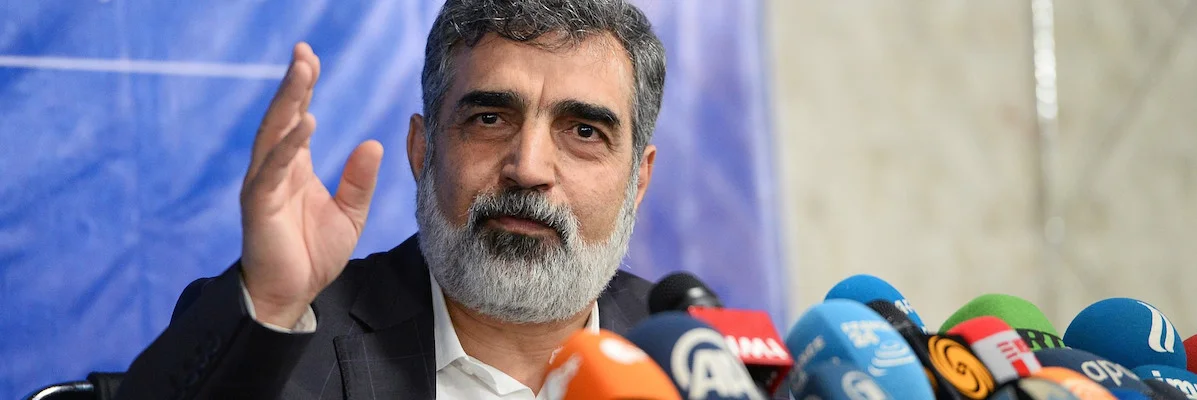
Iran will surpass the uranium stockpile limit set under the nuclear deal agreed with world powers from June 27, a top official said Monday on state television.
"Today the countdown to pass the 300 kilograms reserve of enriched uranium has started and in 10 days time we will pass this limit," Iran's atomic energy organization spokesman Behrouz Kamalvandi said at a press conference broadcast live.
"This is based on the Articles 26 and 36 of the (nuclear deal), and will be reversed once other parties live up to their commitments," he added, speaking from the Arak nuclear plant south-west of Tehran.
On May 8, President Hassan Rouhani announced that Iran would stop observing restrictions on its stocks of enriched uranium and heavy water agreed under the 2015 nuclear deal.
He said the move was in retaliation for the unilateral US withdrawal from the accord a year earlier, which saw Washington impose tough economic sanctions on Tehran.
Iran has threatened to go even further by July 8 unless remaining partners to the deal—Britain, China, France, Germany and Russia—help it circumvent US sanctions and especially enable it to sell its oil.
Under the agreement, Iran pledged to reduce its nuclear capacities for several years and allow international inspectors inside the country to monitor its activities in return for relief from international sanctions.
The deal set a limit on the number of uranium-enriching centrifuges, and restricted its right to enrich uranium to no higher than 3.67 percent, well below weapons-grade levels of around 90 percent.
It also called on Iran to export enriched uranium and heavy water to ensure that the country's reserves would stay within the production ceiling set by the agreement, yet recent US restrictions have made such exports virtually impossible.
According to Rouhani, his ultimatum last month was intended to "save the (deal), not destroy it".
The three European parties to the accord created a trade mechanism meant to bypass US sanctions, but their attempt was dismissed by Iran's supreme leader Ayatollah Ali Khamenei as a "bitter joke."
If world powers do not step up to help Iran, the atomic energy organization spokesman warned further steps could be taken.
"They range from going to 3.68 percent to any other percent according to the country's needs," said Kamalvandi.
Authorities are still debating whether to "redesign or revive" the Arak reactor, he added.
Uranium enriched to much higher levels than Iran's current stocks can be used as the fissile core of a nuclear weapon, while heavy water is a source of plutonium, which can be used as an alternative way to produce a warhead.
"A point to Europeans: if the first step took time to be done, other steps, especially increasing enrichment... need no more than a day or two," said Kamalvandi.
Germany has acknowledged the economic benefits Tehran hoped for from the deal were now "more difficult to obtain", but has urged Iran to fully respect the "extraordinarily important" nuclear deal.
Photo: IRNA
Iran Children Citizenship Bill Sent Back to Parliament
◢ Iran's Guardian Council said Saturday it sent a bill that would allow Iranian mothers married to foreigners to confer citizenship on their children back to parliament, citing "security" concerns. In a statement on its website, the council said it did not have an issue with the spirit of the bill, but rather the absence of any clauses allowing authorities to address "security" issues potentially arising from the activities of foreign fathers.
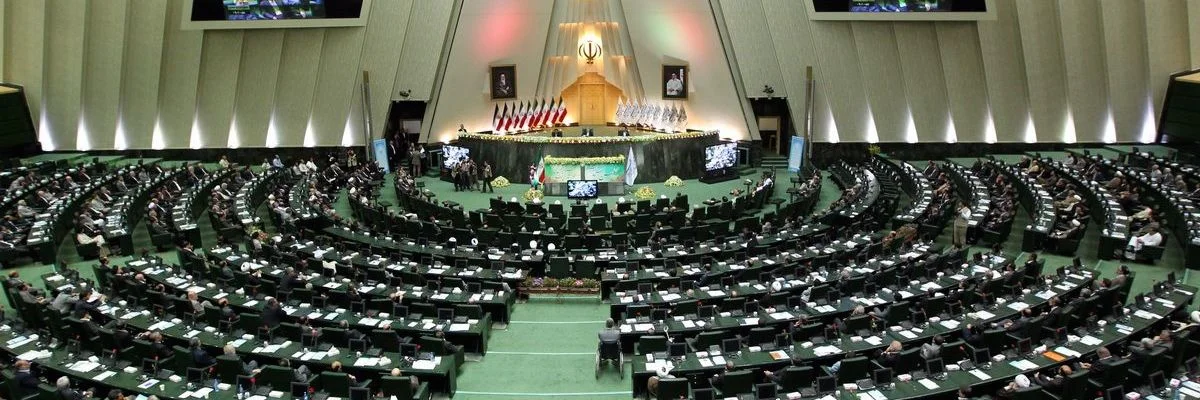
Iran's Guardian Council said Saturday it sent a bill that would allow Iranian mothers married to foreigners to confer citizenship on their children back to parliament, citing "security" concerns.
In a statement on its website, the council said it did not have an issue with the spirit of the bill, but rather the absence of any clauses allowing authorities to address "security" issues potentially arising from the activities of foreign fathers.
The council—made up of clerics and jurists—was also concerned that the bill planned to automatically grant residence permits to foreign fathers, when in the council's view the government must retain discretion to refuse, MP Tayebeh Siavoshi told the semi-official ISNA news agency.
The bill, overwhelmingly passed in May by parliament, has been seen as a huge step forward for thousands of children born in Iran to Afghan fathers who cannot enjoy full social rights.
Iran is one of seven countries worldwide that "do not allow mothers to confer their citizenship on their children with no or very limited exceptions," according to a 2019 report by the United Nations' refugee agency (UNHCR).
Lebanon, Kuwait, Qatar, eSwatini (formerly Swaziland) and Brunei are among the others.
The next step is for parliament to review the bill and amend it, ahead of further discussion by the Guardian Council.
Parliament's powers are limited compared to other institutions.
Lawmaking is vetted by the Guardian Council, which has the authority to interpret the constitution and check laws' compliance with sharia.
According to Iranian officials, the Islamic republic is home to some three million Afghan immigrants, many of whom are married to Iranian women and have children.
"Thousands of children were left out in the cold... with this law things would have cleared up for them," said sociologist Mohammad Reza Jalaeipour in an interview with official news agency IRNA.
"Some of them can't have driving licenses, some of them can't have social security," he added.
Photo: IRNA
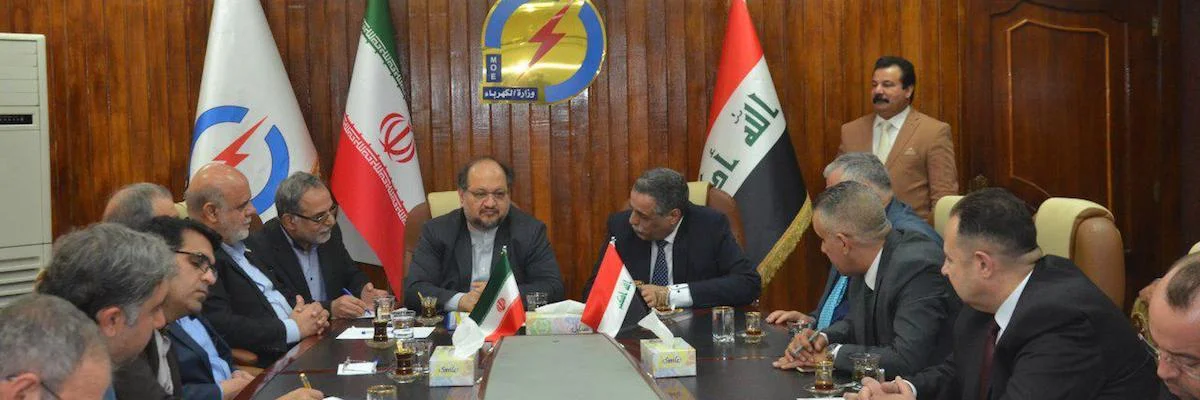
US Grants Energy-Hungry Iraq New Iran Sanctions Waiver
◢ The United States has granted Iraq another 90-day waiver to continue with vital energy imports from neighboring Iran despite re-imposed sanctions, a government source said Saturday. The extension came after "long discussions" with Washington ahead of a looming deadline on a previous extension granted in December, the official, close to the negotiations, told AFP on condition of anonymity.
The United States has granted Iraq another 90-day waiver to continue with vital energy imports from neighboring Iran despite re-imposed sanctions, a government source said Saturday.
The extension came after "long discussions" with Washington ahead of a looming deadline on a previous extension granted in December, the official, close to the negotiations, told AFP on condition of anonymity.
The talks came amid spiking tensions between Iraq's two closest allies—the US and Iran—following a twin attack on tankers in the Gulf that US President Donald Trump has blamed on Tehran.
Iranian energy imports are vital to Iraq, one of the world's hottest countries, which faces chronic blackouts that often leave homes without power for up to 20 hours a day.
Summer temperatures in Baghdad are already topping seasonal averages, boosting electricity consumption and raising fears of a repeat of last summer's mass protests over power outages.
To compensate, Iraq pipes in up to 28 million cubic meters of Iranian gas a day for power generation and also directly imports up to 1,300 megawatts of Iranian electricity.
That dependence is uncomfortable for Washington, which sees Tehran as its top regional foe.
Trump reimposed crippling unilateral sanctions on Iran's energy and finance sectors in November following a decision to abandon a landmark 2015 nuclear deal between major powers and Tehran.
He gave Iraq an initial 45-day waiver to continue buying electricity and natural gas from Tehran, and in December Washington granted Baghdad an 90-day extension.
Photo: IRNA
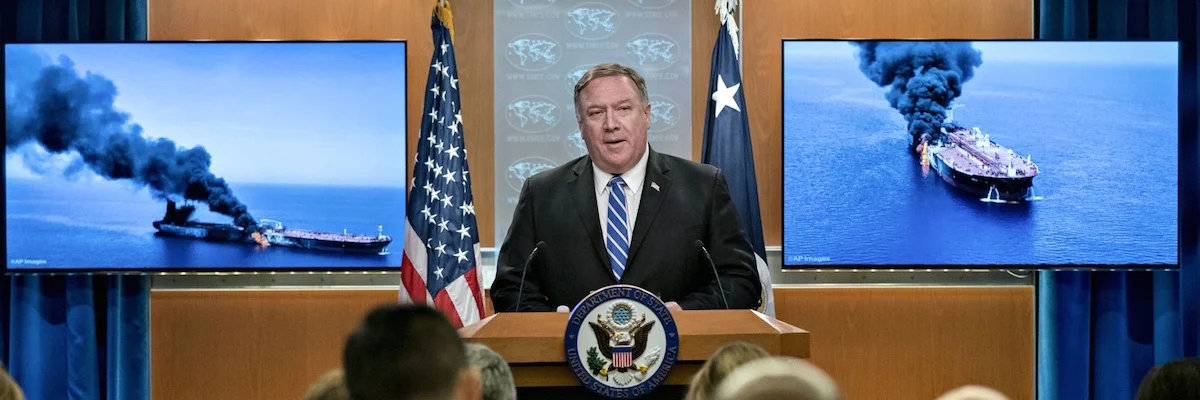
Pompeo Vows That U.S. Will Protect Shipping in Persian Gulf
◢ There’s “no doubt” Iran was responsible for attacks on two oil tankers leaving the Persian Gulf last week, and the U.S. will guarantee safe commercial navigation going forward with its partners, Secretary of State Michael Pompeo said. “The United States is going make sure that we take all the actions necessary, diplomatic and otherwise, that achieve that outcome,” Pompeo said on Sunday.
By Mark Niquette and Shawn Donnan
There’s “no doubt” Iran was responsible for attacks on two oil tankers leaving the Persian Gulf last week, and the U.S. will guarantee safe commercial navigation going forward with its partners, Secretary of State Michael Pompeo said.
“The United States is going make sure that we take all the actions necessary, diplomatic and otherwise, that achieve that outcome,” Pompeo said on “Fox News Sunday,” one of two scheduled appearances on the political talk shows.
Pompeo spoke days after he and President Donald Trump accused Iran of being behind attacks that crippled the tankers in the Strait of Hormuz, which abuts Iran and is a strategic choke point for crude oil coming out of the Persian Gulf.
Asked how certain the U.S. is about Iran’s responsibility, Pompeo said, “it’s unmistakable what happened here” and there’s “high confidence” Iran was behind other attacks throughout the world during the past 40 days as well.
The U.S. has released video of what it says was an Iranian boat approaching one of the tankers at night to remove an unexploded limpet mine and other evidence that it says point to Iran’s responsibility for the attacks.
“Iran did do it and you know they did it,” Trump said Friday during a phone interview with Fox News.
‘Economic Terrorism’
Iran has denied any wrongdoing. The country’s foreign minister, Javad Zarif, on Friday suggested in a series of tweets that Iran’s enemies may have been behind the attacks, accusing the Trump administration of “economic terrorism’’ and blaming it for the “renewed tension in our region.”
There’s no question Iran was behind the attacks, and it was a “Class A screw-up,” Democratic Representative Adam Schiff of California, chairman of the House Intelligence Committee, said Sunday on CBS’s “Face the Nation.” But the problem is the U.S. is struggling to persuade its allies to join in a response, he said.
“It shows just how isolated the United States has become,’’ Schiff said.
Pompeo said on CBS he is making calls to allies and “the world needs to unite against this threat.’’ He suggested that Iran is attacking international waterways to “drive up the price of crude oil around the world so that the world will cry uncle.”
The incidents highlight the potential risks of the Trump administration’s aggressive approach toward Iran. They’ve raised fears that months of building tensions over Trump’s decision to abandon a multilateral nuclear deal and restore U.S. sanctions might trigger a military conflict between the U.S. and Iran.
Retaliatory Strike
Republican Senator Tom Cotton of Arkansas advocated an attack, saying on CBS that “these unprovoked attacks on commercial shipping warrant a retaliatory military strike.’’ Schiff noted that Trump has said he doesn’t want war with Iran, but that his advisers “seem to be taking actions to undercut that ambition to stay out of warfare.’’
Schiff said Trump’s pressure campaign on Iran after withdrawing from the nuclear accord was “dangerously naïve” and that the attacks on shipping were “eminently foreseeable.”
House Speaker Nancy Pelosi, in an interview conducted Thursday that aired on CNN’s “Fareed Zakaria GPS” on Sunday, said “we have absolutely no appetite for going to war, or to be provocative to create situations that might evoke responses, where mistakes could be made.”
Pompeo blamed Iran for escalating the tensions. He declined to discuss what options the administration is considering in response, but said Trump has been clear that the Islamic Republic will not acquire a nuclear weapon.
Photo: Bloomberg
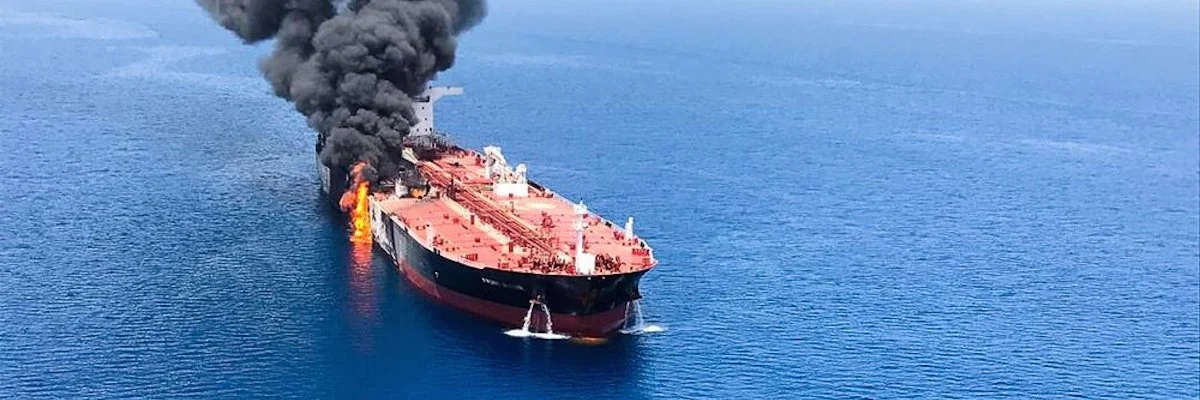
Attacks on Oil Tankers Near Hormuz Fan Fears of Conflict
◢ Two oil tankers were damaged on Thursday in a suspected attack near the entrance to the Persian Gulf, stoking fears that high-stakes diplomatic efforts won’t avert a military confrontation between the U.S. and Iran. Oil prices surged. The incidents, including an attack on a Japanese-operated vessel, were the second in a month to hit ships near the Strait of Hormuz chokepoint, through which about 40% of the world’s seaborne oil travels.
By Verity Ratcliffe, Anthony DiPaola and Bruce Stanley
Two oil tankers were damaged on Thursday in a suspected attack near the entrance to the Persian Gulf, stoking fears that high-stakes diplomatic efforts won’t avert a military confrontation between the U.S. and Iran. Oil prices surged.
The incidents, including an attack on a Japanese-operated vessel, were the second in a month to hit ships near the Strait of Hormuz chokepoint, through which about 40% of the world’s seaborne oil travels. They come as Japanese Prime Minister Shinzo Abe, a rare ally of both Donald Trump and Iranian leaders, visits Tehran in an effort to ease tensions.
“Even in the absence of ironclad evidence, the U.S. and its allies will point the finger at Iran,” said Fawaz A. Gerges, professor of Middle Eastern politics at the London School of Economics. “These incidents are a bad omen because they point to a calculated escalation that tells us both sides are hunkering down.”
The prospects of a conflict have spiked since the Trump administration tightened its sanctions on Iranian oil exports in early May. Trump abandoned a year ago the 2015 deal that was meant to prevent Iran from developing a nuclear bomb and reimposed sanctions in a bid to force the Islamic Republic to rein in its military program and proxy militias.
Facing economic catastrophe, Iran has threatened to retreat from the accord itself unless European parties throw it an lifeline. Its supreme leader, Ali Khamenei, told Abe on Thursday that his country would not repeat the “bitter experience” of talks with the U.S.
High-Stakes Diplomacy
The Bahrain-based Fifth Fleet said it received two separate distress signals at 6:12 a.m. and about 7:00 a.m. local time. “U.S. Navy ships are in the area and are rendering assistance,” Commander Josh Frey, a spokesman, said. He couldn’t confirm reports that one of the vessels was struck by a torpedo. Iran said it has rescued 44 sailors.
The manager of one tanker, the Norwegian-owned Front Altair, said it was sailing in international waters when it was damaged by an explosion, whose cause “is as yet unknown.” The Norway Maritime Authority said there were three detonations on board. The ship had loaded a cargo of naphtha in Abu Dhabi and was bound for Taiwan, a company official said.
A distress call over VHF radio from the Front Altair said the ship was “under attack and on fire," said Donald MacLeod, a navigation officer on a vessel about 45 miles away on the Oman Sea. "They had to abandon ship."
Kokuka Sangyo, the Japanese operator of the other ship, said it was attacked twice, three hours apart, forcing the crew to evacuate. The tanker was carrying 25,000 tons of methanol from Saudi Arabia to Asia.
Brent oil crude soared as much as 4.5% and was trading at $62.07 a barrel at 10:42 a.m. in London. Stocks in Saudi Arabia and Dubai were down more than 1%.
The incidents come a day after Iran-backed rebels in Yemen fired a missile at a Saudi airport, wounding 26 people. The projectile crashed into the arrivals hall, damaging ceilings and windows and causing a fire, though the airport was able to keep functioning with only two flights cancelled. Houthi rebels last month hit oil infrastructure hundreds of kilometers inside Saudi Arabia, forcing it to temporarily close an oil pipeline.
Iran distanced itself from any attack.
“Iran is concerned by the suspicious events around commercial tankers related to Japan,” Foreign Ministry spokesman Abbas Mousavi, was quoted as saying on Fars news agency. “We see this as going against efforts from within the region and beyond to reduce tensions.”
Oil tankers last became a target in the Persian Gulf and Arabian Sea during the so-called "Tanker War" in the 1980s—a sideshow of the Iran-Iraq conflict. Between 1981 and 1988, a total of 451 ships suffered some sort of attack in the region from Iraqi or Iranian forces, according to a report from the U.S. Naval Institute.
Photo: ISNA
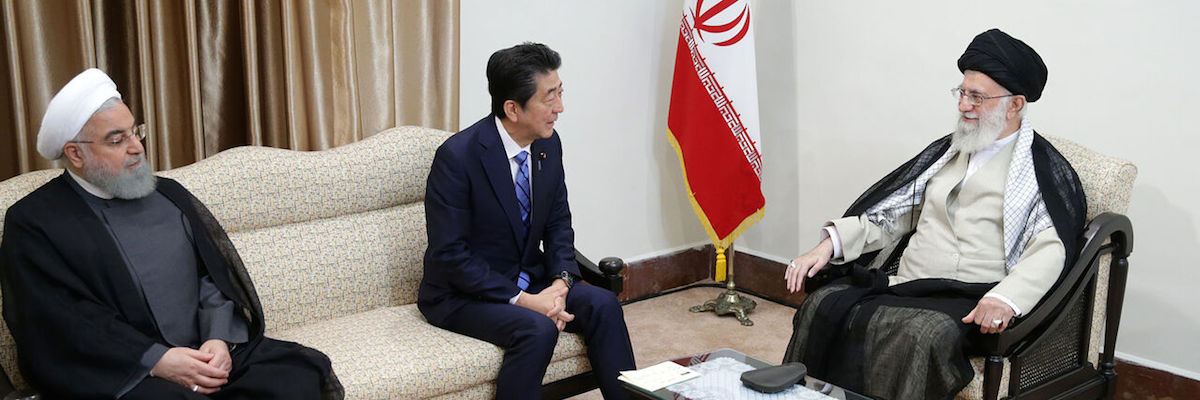
Iran Tells Japan's Abe It Doesn't Intend to Have Nuclear Arms
◢ Iranian Supreme Leader Ayatollah Ali Khamenei told visiting Shinzo Abe that his country doesn’t intend to produce, possess or use nuclear weapons, the Japanese leader said after a trip aimed at easing tensions between the U.S. and Iran. Abe, making the first visit of a sitting Japanese prime minister to Iran in 41 years, held talks with Khamenei on Thursday.
By Isabel Reynolds
Iranian Supreme Leader Ayatollah Ali Khamenei told visiting Shinzo Abe that his country doesn’t intend to produce, possess or use nuclear weapons, the Japanese leader said after a trip aimed at easing tensions between the U.S. and Iran.
Abe, making the first visit of a sitting Japanese prime minister to Iran in 41 years, held talks with Khamenei on Thursday. Abe said he conveyed to Khamenei what he thought were the views of U.S. President Donald Trump, who sanctioned the visit when he met Abe for a summit in May.
“Ayatollah Khamenei said that he would not produce, possess or use nuclear weapons, that he had no such intention, and it was something that should not be done,” Abe told reporters, adding the Iranian leader spoke of his belief in peace.
Expectations were low for the visit bringing a major breakthrough in the tensions between Iran and the U.S. that threaten to spill into armed conflict. But with strong personal ties to Trump and Japan having maintained good relations with Iran for decades, Abe was seen as being able to open a line of communication between Washington and Tehran that could ease some friction.
Standing Firm
The visit came as the U.S. shows little sign of backing off on sanctions it reimposed after abandoning a 2015 accord meant to prevent Iran from developing a nuclear bomb. Tensions have spiked in the Gulf since the U.S. halted sanctions waivers early last month that had allowed some major importers, including Japan, to continue buying Iranian oil.
A missile attack on a Saudi Arabian airport by Tehran-backed Yemeni rebels ratcheted up tensions in the Gulf just as Abe’s efforts got underway. The region has been churning since Washington piled more sanctions on Iran in May and unleashed a show of military force, sending an aircraft carrier to the region. Those moves drew a threat from Iran to retreat from the nuclear deal.
While Abe was in Iran, Japan received a reminder of the dangers in the region. Economy Minister Hiroshige Seko said the ministry held an emergency meeting Thursday over a tanker attack in Sea of Oman, according to a tweet from Japan’s Ministry of Economy, Trade and Industry. The attack involved two ships that carried Japan-related goods, it said.
Photo: IRNA
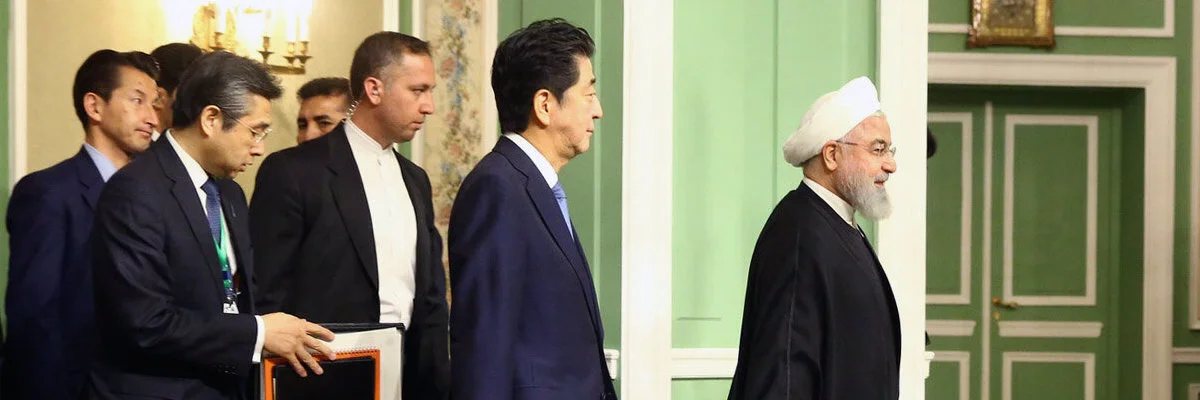
In Tehran, Japan's Abe Urges Iran to Play 'Constructive Role'
◢ Japanese Prime Minister Shinzo Abe urged Tehran to play a "constructive role" for Middle East peace Wednesday during a rare diplomatic mission to the Islamic republic aimed at defusing US-Iran tensions. Iran has been locked in a bitter standoff with the United States since US President Donald Trump withdrew from a landmark 2015 nuclear deal in May last year.
By Amir Havasi
Japanese Prime Minister Shinzo Abe urged Tehran to play a "constructive role" for Middle East peace Wednesday during a rare diplomatic mission to the Islamic republic aimed at defusing US-Iran tensions.
Iran has been locked in a bitter standoff with the United States since US President Donald Trump withdrew from a landmark 2015 nuclear deal in May last year.
Washington has since reimposed crippling unilateral sanctions—which have forced Tokyo to halt its once-substantial purchases of Iranian oil—and launched a military buildup in the Gulf.
"It is essential that Iran plays a constructive role in building solid peace and stability in the Middle East," Abe told a joint news conference in Tehran with Iran's President Hassan Rouhani.
"Today, tension is rising in the Middle East. Some experts point out that the conflict might be triggered accidentally," said Abe.
An armed clash "must be avoided by all means", the premier stressed.
He added that Japan "wishes to play an utmost role in its capacity to ease the tension. This is the one single thought that brought me to Iran."
Addressing the same news conference, Rouhani said he expected a "very positive change" in the Middle East and the world if the United States stops its economic pressure on Iran through sanctions.
"If there are some tensions, (their) roots stem from America's economic war against Iran. Whenever it stops we will witness a very positive change in the region and the world," Rouhani said.
"We will not initiate a conflict in the region, even against the US, but if a war starts against us we will then give a crushing response," the Iranian president added.
Lower the Temperature
Abe began his visit to Iran on Wednesday, the first by a Japanese prime minister in 41 years, with the stated aim of defusing tensions between Tehran and Washington.
Japan stopped importing Iranian crude oil in May to comply with US sanctions against the Islamic republic.
The Asian powerhouse has an interest in keeping the Middle East stable in order to ensure the flow of cheap hydrocarbons to fuel its economy.
Rouhani said he saw "Japan's interest in continuing to buy oil from Iran and fixing financial issues" as a "guarantee" for the ongoing development of bilateral ties.
The spokesman for Japan's foreign ministry, Takeshi Osuga, later said that, on the questions of Iranian oil sales to Japan, "our understanding is that this was the wish of the Iranian side."
But he added: "Oil purchase (from Iran) is the decision of private companies. I cannot predict their decision."
The Iranian president also underlined a convergence of views with his visitor on the issue of nuclear weapons, which he said "both of us are against.”
Abe, for his part, expressed his "deep respect to the fact that the supreme leader Ayatollah Khamenei reiterates the fatwa which says 'nuclear weapons and other weapons of mass destruction are against Islam.’”
The Japanese premier is expected to meet Khamenei on Thursday morning.
Abe discussed "the situation in Iran" in a telephone call with Trump on Tuesday, a Japanese government spokesman said.
The Japanese prime minister won Trump's blessing for the mediation mission when the US president visited Tokyo last month.
“We believe it is extremely important that, at the leadership level, we call on Iran as a major regional power to ease tension, to adhere to the nuclear agreement and to play a constructive role for the region's stability," Japanese Chief Cabinet Secretary Yoshihide Suga said.
Substantial Obstacles
Iranian newspapers were divided along conservative-reformist lines in their assessment of Abe's visit.
The reformist Sazandegi daily ran a front-page cartoon of Abe in full samurai armour, a rolled piece of paper in one hand and a shield on the other.
In an accompanying article headlined "A samurai in Tehran," the paper said everyone was waiting to see "Tehran's reaction to Japan's initiative to raise its international standing by mediating as both Washington's ally and Iran's friend."
The ultraconservative Javan daily warned that "Iran and Japan minus America" could be a winning formula for Abe, but "Japan as America's intermediary in Iran" would fail given the deep mistrust of the US.
Other Iranian commentators said Abe could pass messages between the two sides.
"Mr Abe's visit comes right after meeting Mr Trump in Japan, so the Americans are interested in using this channel," Ebrahim Rahimpour, a former deputy foreign minister, told Iran's Shargh daily.
But while Tokyo has longstanding trade ties with Tehran and a strategic alliance with Washington, experts say Abe has little leverage with either side and mediation will be an uphill struggle.
The trip by the Japanese premier "faces substantial obstacles and is unlikely to bear fruit," said Tobias Harris, an analyst at Teneo consultancy group.
"While Japan has good relationships with countries on both sides, these relationships do not necessarily translate into influence."
Photo: IRNA

US Blacklists Iraq Firm as Revolutionary Guard Guns Front
◢ The US Treasury placed Iraq-based South Wealth Resources on its sanctions blacklist Wednesday, saying the company is an important weapons trafficking and financial front for Iran's Islamic Revolutionary Guard Corps. The Treasury said the company, Manabea Tharwat al-Janoob General Trading Company, was used by the IRGC to smuggle "hundreds of millions of dollars' worth" of weapons to IRGC allies in Iraq.
The US Treasury placed Iraq-based South Wealth Resources on its sanctions blacklist Wednesday, saying the company is an important weapons trafficking and financial front for Iran's Islamic Revolutionary Guard Corps.
The Treasury said the company, Manabea Tharwat al-Janoob General Trading Company, was used by the IRGC to smuggle "hundreds of millions of dollars' worth" of weapons to IRGC allies in Iraq.
South Wealth Resources has also helped move millions of dollars to Iraq "for illicit financial activity benefitting" the IRGC and Iraq militias it supports.
The company and two Iraqis who worked with it were placed on the US sanctions blacklist, which seeks to lock them out of the international financial system by forbidding Americans and companies with US units,
particularly banks, from doing business with them.
The company and the two Iraqis, Makki Kazim Abd Al Hamid Al Asadi and Muhammed Husayn Salih al-Hasani, were also placed on the US State Department's list of "Specially Designated Global Terrorists."
"Treasury is taking action to shut down Iranian weapons smuggling networks that have been used to arm regional proxies of the IRGC Qods Force in Iraq, while personally enriching regime insiders," Treasury Secretary Steven Mnuchin said in a statement.
"The Iraqi financial sector and the broader international financial system must harden their defenses against the continued deceptive tactics emanating from Tehran in order to avoid complicity in the IRGC's ongoing sanctions evasion schemes and other malign activities," he said.
Photo: Wikicommons