
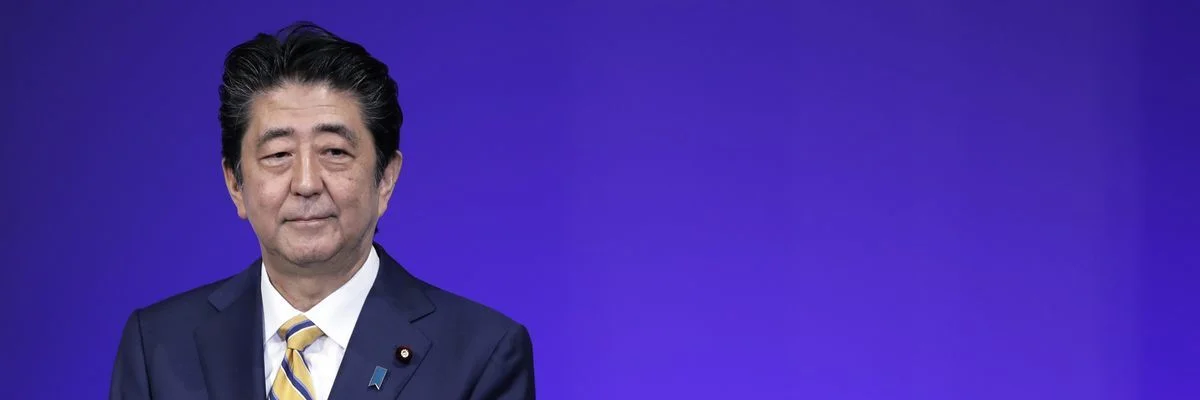
With Trump's Blessing, Japan's Abe Looks to Mend Ties With Iran
◢ Japanese Prime Minister Shinzo Abe, a rare friend of both President Donald Trump and Iran’s leaders, left for Tehran with the daunting task of bridging a divide that could plunge the Middle East into renewed chaos. Abe, who spoke to Trump by telephone just ahead of his trip, told reporters that he plans to have a frank exchange of views with Iran’s leader in Japan’s bid to play a role in the stability of the Middle East.
By Golnar Motevalli and Isabel Reynolds
Japanese Prime Minister Shinzo Abe, a rare friend of both President Donald Trump and Iran’s leaders, left for Tehran with the daunting task of bridging a divide that could plunge the Middle East into renewed chaos.
Abe’s visit from Wednesday through Friday comes as the U.S. has given scant indication it’s ready to ease sanctions it reimposed after abandoning a 2015 accord meant to prevent Iran from developing a nuclear bomb. Tehran has said it can’t sit down with the Trump team while the U.S. is waging “economic war” on it.
With the two sides so far apart, any step that reduces mistrust and hostility would be a welcome achievement for Abe, seen more as a stable hand running the world’s third-largest economy than a globe-trotting peace negotiator. Trump sanctioned the trip, which would be the first by a sitting Japanese prime minister to Iran in 41 years and includes talks with Supreme Leader Ayatollah Ali Khamenei and President Hassan Rouhani.
“What Abe can do depends on what Trump has given Abe,” said Kazuo Takahashi, professor of International Politics at the Open University of Japan, who specializes in Japanese policy towards Iran. “If he is going as a messenger boy, he is shaming himself in front of the world’s public opinion. I don’t think he’d take such a political risk without some ideas of inducement for the Iranians offered by the Americans.”
Little Leverage
Abe, who spoke to Trump by telephone just ahead of his trip, told reporters at the airport before boarding his plane to Tehran Wednesday that he plans to have a frank exchange of views with Iran’s leader in Japan’s bid to play a role in the stability of the Middle East.
The trip comes as the Trump administration appears ready to step up its pressure, weighing sanctions against the Iranian financial body set up as a go-between for humanitarian trade with Europe. Such a move is likely to sever the economic and humanitarian lifeline that France, Germany and the U.K. have sought to create for Tehran. While Japan has maintained good ties with Iran for decades and called for Tehran to abide by the nuclear deal, its pro-U.S. stance could mean Abe’s offerings are received with caution.
Along with the Abe visit, diplomacy to salvage the Iran nuclear deal kicked into high gear this week with German Foreign Minister Heiko Maas landing in Iran’s capital Monday and the Vienna-based International Atomic Energy Agency set to assess the state of the agreement supposed to rein in Iranian nuclear work in return for sanctions relief.
Iran has increased the rate at which it enriched uranium, although the amount stockpiled is still short of the 300 kilograms (661 pounds) allowed under the deal, IAEA Director General Yukiya Amano told reporters.
Mohammad Javad Zarif, Iran’s foreign minister, told Maas the only way to reduce tension is ending America’s economic attack on Iran. The comments come after Tehran already set the bar almost impossibly high for Abe.
On Saturday, the country’s Supreme National Security Council said a successful visit means bringing a proposal for the U.S. to rejoin the nuclear deal, lifting its sanctions and paying for damages inflicted on Iran’s economy.
“I don’t think he will be able to re-start talks between the U.S. and Iran, or get the U.S. to soften its line on sanctions or Iran to accept some of the U.S. demands. It won’t be anything like that,” an energy expert with ties to the Abe government said.
“He will go and listen to the requests of the Iranian leadership and convey U.S. thinking to Khamenei and Rouhani, which will keep the dialogue going about the nuclear agreement,” said the expert, who declined to be named because of the sensitivity of the visit.
Economic Incentives
For Japan, there is an economic incentive to prevent tensions in the Gulf from spiraling out of control. It relies heavily on Middle Eastern energy, and before the 1979 Islamic Revolution, the bulk of those supplies came from Iran.
But as U.S.-Iran relations deteriorated over the years, Japan significantly reduced crude imports from Iran in favor of supplies from its Gulf rivals Saudi Arabia, the United Arab Emirates and Kuwait — all allies of Washington.
With Saudi Arabia saying last month there were attacks on its oil tankers and Iran threatening to disrupt traffic in the Persian Gulf should Washington succeed in wiping out its oil sales, maintaining stability is of paramount importance to Japan.
Family Affair
The Japanese public isn’t expecting much of the visit, an opinion poll released Tuesday from public broadcaster NHK showed, reducing the political risks for Abe. The visit does increase his global exposure ahead of an upper house election planned for July and Japan hosting the Group of 20 leaders summit in late June.
His father, former Foreign Minister Shintaro Abe, also tried his hand -- unsuccessfully -- at defusing Middle East tensions with a visit to Iran in 1983. He met then-President Khamenei, who would eventually be promoted to the clerical hierarchy and the mantle of the Supreme Leader.
“Politically, we never had a huge issue with the Iranian government, neither pre- nor post the revolutionary period in Iran. Our economic ties have been stranded, I would say, because of pressure from Washington,” said Koichiro Tanaka, president of the Japanese Institute of Middle East Economies in Tokyo.
Photo: Bloomberg
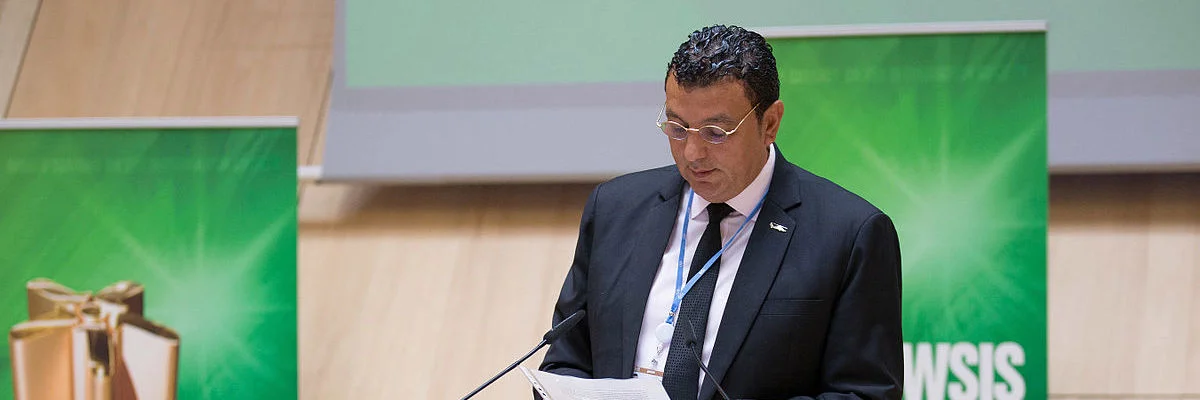
Iran Frees Lebanese Man Convicted of Spying for US
◢ Iran on Tuesday freed a Lebanese man detained in 2015 on charges of spying for the United States, a gesture that comes amid soaring tensions between Tehran and Washington. A US resident in his 50s, Nizar Zakka was arrested in September 2015 during a visit to Iran, where he was convicted the following July.
Iran on Tuesday freed a Lebanese man detained in 2015 on charges of spying for the United States, a gesture that comes amid soaring tensions between Tehran and Washington.
A US resident in his 50s, Nizar Zakka was arrested in September 2015 during a visit to Iran, where he was convicted the following July.
He is the head of The Arab ICT Organization, a non-profit that advocates the growth and development of information and communications technology in the Middle East.
Before his arrest, he had been taking part in a conference in Tehran at the invitation of Shahindokht Molaverdi, then vice-president for women and family affairs, according to his family.
He was stopped on his way to the airport, his family and lawyer have said.
At the time, Iranian state television said he was accused of "deep ties to the military and intelligence services of the United States.”
It broadcast photographs of a man in military uniform it said was of Zakka at a US base.
On Tuesday, Zakka arrived in Lebanon, after his release by Iranian authorities.
He was escorted back to his native country by Lebanon's General Security chief Abbas Ibrahim, who was in Tehran one day earlier, according to the security service.
In a speech at Lebanon's presidential palace, Zakka declined to elaborate on the circumstances behind his arrest but dismissed the case against him.
"There was no espionage," he said after meeting President Michel Aoun, accusing Tehran of "kidnapping him" on false charges and staging a "show trial.”
Presidential Request
For his part, the general security chief denied speculation Iran's Lebanese ally Hezbollah played a primary role in brokering Zakka's release.
"The issue was resolved at the request of the president," Ibrahim told reporters.
"Hezbollah definitely played a role but the basis (for the release) was a request from the president."
His comments came in response to a report by Iran's Fars news agency on Monday that Zakka's release followed "the request and mediation" of Hezbollah chief Hassan Nasrallah.
"Zaka has been freed and extradited, thanks to Nasrallah's mediation and the respect Tehran pays to him," it said, citing an "informed source.”
Tehran has direct control over Hezbollah, its main proxy in the region.
Earlier on Tuesday, a spokesman for Iran's judiciary Gholamhossein Esmaili said Aoun had requested Zakka's release "in writing" and Hezbollah had said it would be "expedient.”
"This is an absolutely judicial procedure and no political issue has been involved," Esmaili was quoted as saying by Iran's Tasnim news agency.
Meanwhile, Zakka's lawyer appealed for help for other detainees being held in Iranian prisons following his client's release.
"Nizar expresses his sincerest thanks to those who never forgot him," Jason Poblete said in an emailed statement.
"Nizar also wants to remind those who can help that there remain many Americans... and other foreigners in Iranian prisons. Nizar grew close to some of these men; they need help and want to come home."
Rising Tensions
Iran and the United States broke diplomatic ties in 1980 in the aftermath of the Islamic revolution. Relations have deteriorated sharply since US President Donald Trump took office in January 2017.
At the end of 2017, an Iranian court upheld Zakka's 10-year jail sentence as well as those of an American and two Iranian-Americans accused of "collaboration" with the United States.
Zakka's brother Ziad has previously accused Lebanese officials of neglecting his case.
The decision to release him comes amid a stand-off that has been simmering since the United States last year withdrew from the 2015 nuclear treaty which Iran reached with major world powers.
Tensions have intensified since April when the US added Iran's Revolutionary Guards to its blacklist of "terrorist" organizations and strengthened sanctions against the Islamic republic.
The standoff has worsened recent weeks, after the US military announced it was dispatching reinforcements to the Middle East in response to alleged "Iranian threats" as well as the sabotage of four ships at the entrance to the Gulf on May 12.
Washington and Riyadh have accused Tehran of being behind those attacks, a charge it has dismissed as "laughable.”
Photo: IRNA
U.S. Weighs More Iran Sanctions Over Potential Trade With Europe
◢ The Trump administration is weighing sanctions against the Iranian financial body set up as a go-between for humanitarian trade with Europe, a move likely to sever the economic and humanitarian lifeline that France, Germany and the U.K. have sought to create for Tehran.
By Nick Wadhams
The Trump administration is weighing sanctions against the Iranian financial body set up as a go-between for humanitarian trade with Europe, a move likely to sever the economic and humanitarian lifeline that France, Germany and the U.K. have sought to create for Tehran.
The U.S. measures would target the Special Trade and Finance Institute, which Iran established as a counterpart to the European mechanism known as Instex, according to a senior administration official who asked not to be identified discussing internal deliberations.
The official said the STFI is essentially an extension of Iran’s central bank, which already is covered by U.S. sanctions and, according to the administration, hasn’t implemented minimum global safeguards against money laundering and terrorism financing.
European countries established Instex in January to help shield limited trade with Iran from U.S. sanctions imposed after President Donald Trump withdrew from the multinational Iran nuclear deal a year ago. The new sanctions, if they take effect, would probably derail faltering European efforts to sustain some trade with Iran by avoiding the use of U.S. dollars or the American financial system.
Such a move—still in the early planning stages—would exacerbate divisions with European nations that have chafed against the Trump administration’s “maximum pressure” campaign against Iran. It would be the latest effort meant to force the Islamic Republic back to the negotiating table to discuss a deal stronger than the Joint Comprehensive Plan of Action, the 2015 agreement that limited Iran’s nuclear program in exchange for sanctions relief.
“If they are looking at sanctioning STFI, you’re essentially trying to kill INSTEX through the back door,” said Ellie Geranmayeh, a senior policy fellow at the European Council on Foreign Relations, referring to the Iranian body. “If the U.S. were to take action that kills INSTEX on arrival, my sense is there will be even more political backing in Europe to oppose the U.S.”
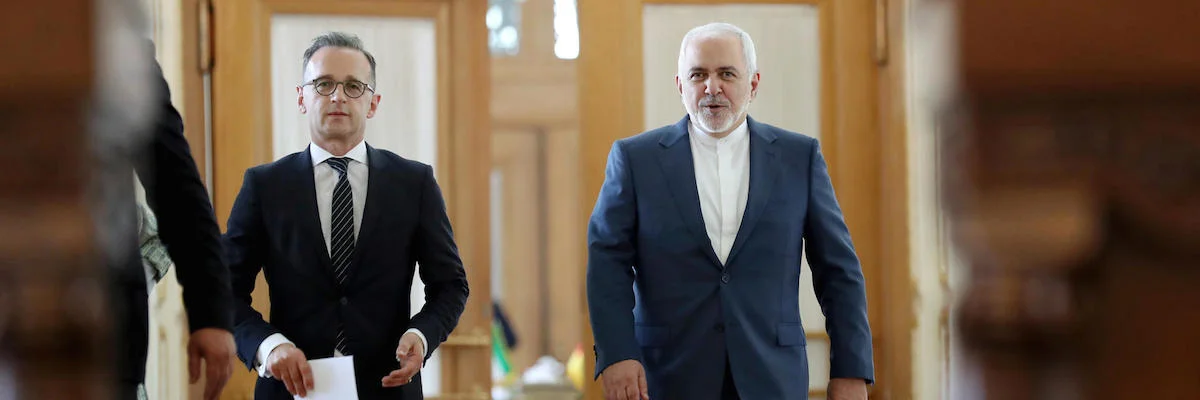
The sanctions deliberations come as German Foreign Minister Heiko Maas visits Tehran. Iranian Foreign Minister Javad Zarif said Monday the two were having “frank talks” about how Iran could still get the economic benefits it expected by agreeing to the nuclear accord.
Yet in a tacit acknowledgment of the effectiveness of U.S. sanctions, European nations have significantly scaled back their ambition for the mechanism, saying trade through it would be limited only to transactions covering humanitarian goods.
U.S. sanctions against Iran already include carve-outs for humanitarian transactions. But European nations argue that INSTEX is needed to provide European companies and banks stronger assurances that they won’t be hit by U.S. sanctions even if they limit themselves to humanitarian purposes.
While the INSTEX mechanism is relatively obscure and would probably be used in limited cases, its opponents say that letting it survive could create a powerful economic tool later that could deal a blow to the effectiveness of U.S. sanctions more broadly.
One possibility, they say, is that Trump could lose re-election in 2020 and a Democratic president could look the other way as European nations used INSTEX for a wider range of trade with Iran, even as sanctions remained in place.
Another possibility is that other nations, including American adversaries, could use INSTEX as a model in the future and avoid the U.S. financial system entirely.
“The development of INSTEX is really worrying for U.S. sanction policy in the long run,” said Emma Ashford, a research fellow at the Cato Institute in Washington. “INSTEX sets up a framework other countries can use in the future.”
Officials at the State Department and the National Security Council declined to comment on the possibility of new sanctions.
Nuclear Deal
Punishing the STFI could doom INSTEX because it raises the possibility of sanctions risk to anyone who’s a part of the European mechanism. The initiative drives home a letter sent by the U.S. Treasury Department in early May to Per Fischer, the president of INSTEX, arguing that the financial body could face sanctions.
European officials say that establishing INSTEX is imperative to keep Iran abiding by the nuclear deal, which they credit with restraining the Islamic Republic’s nuclear capabilities. They’re especially eager to get it up and running before early July, when Iran has threatened to abandon the accord unless it sees greater benefits from abiding by its terms.
Visa Restrictions
The U.S. has sent conflicting signals about its attitude toward INSTEX, with some officials taking a hard line and others saying it could be acceptable. During a stop in Berlin on May 31, Secretary of State Michael Pompeo said the vehicle was “unproblematic” as long as it’s used to facilitate trade in humanitarian goods and other transactions the U.S. has exempted from sanctions.
Yet Republican hawks in the administration and Congress disagree, saying that channels for humanitarian trade with Iran already exist. Senator Ted Cruz of Texas is considering a draft bill that threatens sanctions against the European and Iranian finance vehicles.
Skeptics point out that Iran’s Islamic Revolutionary Guard Corps, covered by existing sanctions, has used humanitarian front companies in the past.
The risk of crushing INSTEX now is that the U.S. could face an even greater backlash if it closes off an avenue for legitimate humanitarian trade, according to Suzanne Maloney, deputy director of the foreign policy program at the Brookings Institution.
“It does call into question what the long-term strategy here is,” Maloney said. “If there’s no room for humanitarian aid for Iran, literally no viable mechanisms for facilitating those transactions, then clearly this is purely a punitive strategy and one that is intended to wreak maximum havoc on the Iranian population.”
Photo: IRNA
High-Stakes Iran Talks Try to Prevent Atomic Deal Unraveling
◢ Diplomacy intended to salvage the Iran nuclear deal goes into high gear this week after Tehran threatened to follow the U.S. in abandoning the accord. German Foreign Minister Heiko Maas landed in Iran’s capital to meet Monday with his counterpart Mohammad Javad Zarif. Japanese Prime Minister Shinzo Abe arrives in Tehran on Wednesday for more consultations.
By Golnar Motevalli, Jonathan Tirone and Patrick Donahue
Diplomacy intended to salvage the Iran nuclear deal goes into high gear this week after Tehran threatened to follow the U.S. in abandoning the accord.
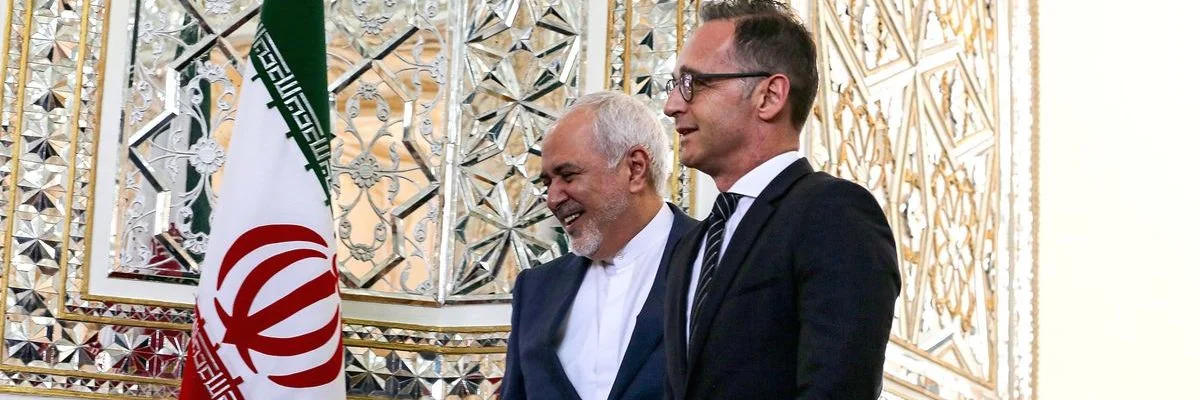
German Foreign Minister Heiko Maas landed in Iran’s capital to meet Monday with his counterpart Mohammad Javad Zarif. Japanese Prime Minister Shinzo Abe arrives in Tehran on Wednesday for more consultations. In Vienna, the International Atomic Energy Agency will assess the state of the 2015 agreement that was supposed to rein in Iranian nuclear work in return for sanctions relief.
While European governments recognize Iran’s right to benefit from the nuclear accord and are striving to protect trade with it despite U.S. sanctions, they won’t accept the Islamic Republic’s “reneging” on its nuclear obligations because the U.S. has, Maas said.
The only way to reduce tensions is ending America’s “economic war” on Iran, and Germany and the European Union have a role to play in this, said Zarif, speaking alongside his German counterpart.
Iranian Ultimatum
The flurry of diplomacy kicked off after Iran’s president signaled May 8 that the country could soon violate terms of the agreement, known as the Joint Comprehensive Plan of Action. The declaration was made on the one-year anniversary of the U.S. decision to unilaterally exit the accord and reimpose sanctions, including on vital oil exports. With its economy plunging into recession, Iran gave European signatories 60 days to deliver the financial relief offered under the deal in return for moderating its nuclear output.
The European vehicle to sustain trade with Iran, Instex, will become operational this month, according to a senior European official with knowledge of the Maas-Zarif talks, who asked not to be identified to discuss the private consultations. A material Iranian violation of the nuclear agreement would force EU governments to end efforts to help Tehran mitigate U.S. sanctions.
Germany initially had hoped Maas would be accompanied to Tehran by officials from France and the U.K., the other EU signatories to the deal, according to another European official.
In Vienna, IAEA monitors convene to assess Iranian compliance. They reported last month in a 15th consecutive quarterly report that showed Iran has observed its obligations, amid growing concerns that the Trump administration’s campaign to counter Iranian influence in the Middle East could spill into war.
“I am worried about tensions over the Iran nuclear issue,” IAEA Director General Yukiya Amano said in a statement. “The nuclear-related commitments entered into by Iran under the Joint Comprehensive Plan of Action represent a significant gain. I therefore hope that ways can be found to reduce current tensions through dialogue.”
Iran has increased the rate at which it enriched uranium, although the amount stockpiled is still short of the 300 kilograms (661 pounds) allowed under the deal, Amano said at a press briefing. Any potential violation will be immediately reported and could trigger and emergency meeting in Vienna.
The country had about 180 kilograms of the material stockpiled last week—well short of the amount needed for a weapon, were the material to be further enriched, and if Iran were to make the decision to pursue a bomb. Tehran has always said its program is solely for civilian energy and industrial use, but world powers pursued the deal because they doubted that claim.
Tensions spiked after the U.S. accelerated the deployment of a carrier strike group to the Gulf to counter unspecified Iranian threats, and suggested without providing proof that Iran and its proxies were to blame for attacks on ships in the crucial waterway as well as a Saudi oil pipeline, and sent more troops to the region.
The visit by Abe, the first by a sitting Japanese prime minister in 41 years, was endorsed by President Donald Trump and is an effort to open a channel for mediation. But with the U.S. continuing to pile on new sanctions that target Iran’s petrochemical industry, the initiative has failed to gain traction.
“We are witnessing a treacherous policy” from the U.S., said Abbas Mousavi, the spokesman for Iran’s Ministry of Foreign Affairs. “They bring up negotiations and at the same time administrate maximum pressure. To Iran, this isn’t acceptable.”
High-level diplomacy could continue over the next month depending on the outcome of talks this week in Tehran. The remaining parties to the accord—China, France Germany, Russia and the U.K.—could convene a meeting of foreign ministers if that lends to the accord’s survival, according to one of the European officials.
Photo: Bloomberg
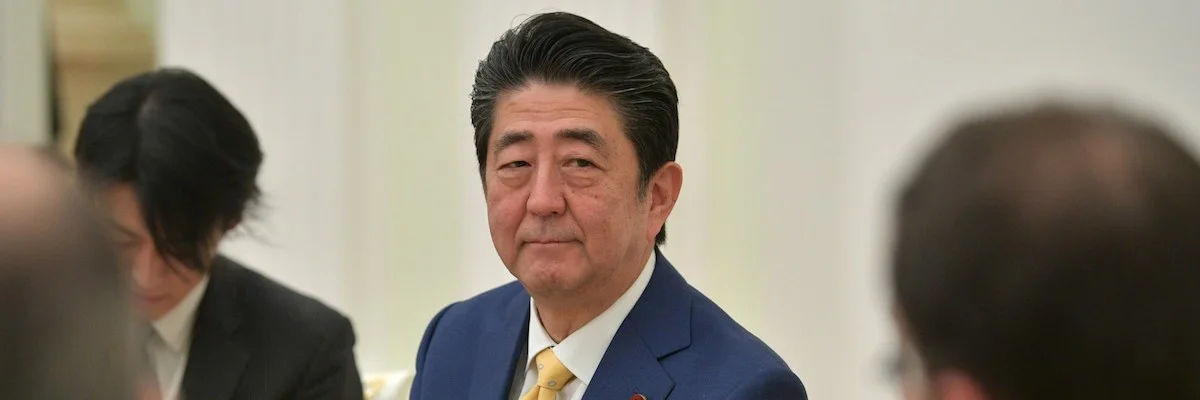
Man on a Mediation Mission: Japan's Abe Heads to Iran
◢ Japan's Prime Minister Shinzo Abe heads to Iran this week on a rare diplomatic mission, hoping to ease tensions between the Islamic Republic and Tokyo's key ally Washington. Japanese government officials say Abe will not present Tehran with a list of demands, or deliver a message from Washington, and instead want to position Japan as a neutral intermediary.
By Sarah Hussein
Japan's Prime Minister Shinzo Abe heads to Iran this week on a rare diplomatic mission, hoping to ease tensions between the Islamic Republic and Tokyo's key ally Washington.
Tehran is locked in a bitter standoff with the US after president Donald Trump withdrew from a landmark nuclear deal last year.
Washington has now reimposed sanctions and shifted troops to the region, putting military and economic pressure on Iran, including by forcing US allies like Japan to stop purchasing Iranian oil.
Japanese government officials say Abe will not present Tehran with a list of demands, or deliver a message from Washington, and instead want to position Japan as a neutral intermediary.
That could prove useful, said Michael Bosack, special adviser for government relations at the Yokosuka Council on Asia-Pacific Studies.
"Japan carries none of the historical or religious baggage of other potential mediators... (and) has demonstrated its willingness to go its own way on Middle East policy," he told AFP.
"These factors better position Abe for engagement with Ayatollah Khamenei and mean that Japanese-proposed options could allow hardliners in Iran to entertain proposed off-ramps, without the potential fallout that could come from accepting 'Western' solutions."
Abe will meet President Hassan Rouhani and the country's Supreme Leader Ayatollah Ali Khamenei on the June 12-14 trip—the first time a Japanese prime minister has visited Iran since 1978, a year before the country's revolution.
Against that backdrop, Japan is hoping to lower the temperature, officials say, with Abe winning Trump's blessing for the mediation trip when the US leader visited Tokyo last month.
"We believe it is extremely important that, at the leadership level, we call on Iran as a major regional power to ease tension, to adhere to the nuclear agreement and to play a constructive role for the region's stability," Chief Cabinet Secretary Yoshihide Suga said ahead of the trip.
Intermediary
Iranian commentators said Abe could ferry messages between the two sides.
"Mr. Abe's visit comes right after meeting Mr. Trump in Japan, therefore the Americans are interested to use this channel," Ebrahim Rahimpour, a former deputy foreign minister, told Iran's Shargh daily ahead of the trip.
Iran will "announce our rights and stances and the other side can announce the messages that could be the US president's message," he said.
But while Japan has long-standing ties with Tehran and warm relations with Washington, experts say Abe has little leverage with either side and mediation will be an uphill struggle.
The trip by the Japanese PM "faces substantial obstacles and is unlikely to bear fruit," said Tobias Harris, an analyst at Teneo consultancy group, in a note on the visit.
"While Japan has good relationships with countries on both sides, these relationships do not necessarily translate into influence," he added.
'Shuttle diplomacy'?
Japan is not just the messenger—its own interests are also at stake: before US sanctions were reimposed, Tokyo imported around five percent of its oil from Iran and it would suffer from rising crude prices.
The trip also offers Abe a rare role as international statesman, particularly given Tokyo's disappointing recent diplomatic track record.
Efforts this year to resolve a long-running standoff with Russia over a string of disputed islands have run aground.
And Japan has also found itself out of the loop on perhaps the most pressing diplomatic challenge in its backyard: North Korea.
Abe "needs a diplomatic stunt as he faces an impasse on Russia and North Korea," said Tetsuro Kato, political science professor at Tokyo's Waseda University.
But analysts cautioned that expectations would stay low for now.
"Japan has never played an active role in Middle Eastern problems," Kato told AFP. "I don't expect much in the way of results."
Bosack said it would be "unrealistic" to expect quick outcomes from the visit.
"Right now, the focus is mitigating military conflict, which means Abe can employ shuttle diplomacy to keep communication going," he said.
“That shuttle diplomacy alone may be enough to de-escalate tensions."
Photo: Wikicommons
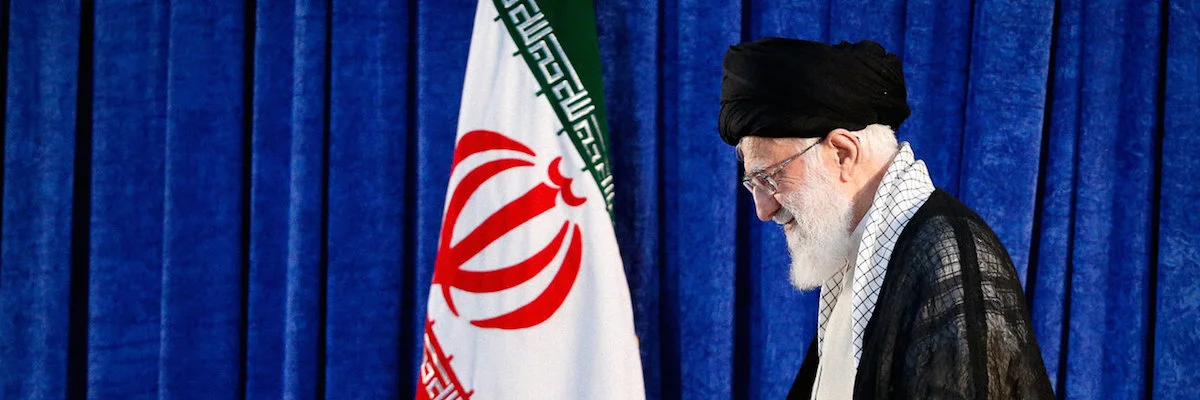
Iran Leader Pardons 691 on Eid, But Lebanese Excluded
◢ Iran's supreme leader pardoned hundreds of prisoners on the occasion of the end of Ramadan, but a Lebanese national who Beirut expected to be released was not among them, authorities said Sunday. In total, the sentences of 691 prisoners were either commuted or deferred as decided by Ayatollah Ali Khamenei, as a gesture for the Eid al-Fitr holidays, said the judiciary's Mizan Online news website.
Iran's supreme leader pardoned hundreds of prisoners on the occasion of the end of Ramadan, but a Lebanese national who Beirut expected to be released was not among them, authorities said Sunday.
In total, the sentences of 691 prisoners were either commuted or deferred as decided by Ayatollah Ali Khamenei, as a gesture for the Eid al-Fitr holidays, said the judiciary's Mizan Online news website.
Last week, Lebanon said one of its nationals condemned in 2016 to 10 years' jail in Iran after being found guilty of spying for the United States would be on the pardon list.
The Lebanese foreign ministry, quoted by the country's official NNA news agency, said Nizar Zakka would be pardoned at the request of Beirut as a gesture for Eid.
But Zakka's name was not on the list, said Iran's judiciary spokesman Gholamhossein Esmaili.
"The individual was sentenced and the president of Lebanon had—in letters to judicial officials—requested a conditional pardon," he said, quoted by Mizan.
"This request has been in the judicial process and, in case any decision is taken by the judicial apparatus, information will be provided."
A resident of the United States in his 50s, Zakka was arrested in September 2015 during a visit to Iran, where he was convicted the following July.
At the time of his arrest, state television in Iran charged Zakka had "deep ties to military and intelligence services of the United States", Iran's arch-foe.
It broadcast photographs of a man in military uniform it said was of Zakka at an American base.
At the end of 2017, Iranian courts confirmed his 10-year sentence on appeal, as well as that of an American and two Iranian-Americans accused of "collaboration" with the United States.
Iran and the United States broke diplomatic ties in 1980, and their relations have deteriorated significantly since US President Donald Trump took office in January 2017.
Photo: IRNA

Hundreds of Tehran Restaurants Shut for Breaking 'Islamic Principles'
◢ Iranian police have shut down 547 restaurants and cafes in Tehran for not observing "Islamic principles", the capital's police chief said Saturday. The infractions included "unconventional advertising in cyberspace, playing illegal music and debauchery", Fars reported.
Iranian police have shut down 547 restaurants and cafes in Tehran for not observing "Islamic principles,” the capital's police chief said Saturday.
"The owners of restaurants and cafes in which Islamic principles were not observed were confronted, and during this operation 547 businesses were closed and 11 offenders arrested," Hossein Rahimi said, quoted on the police's website.
Fars news agency said the operation was carried out over the past 10 days.
The infractions included "unconventional advertising in cyberspace, playing illegal music and debauchery", Fars reported.
"Observing Islamic principles is... one of the police's main missions and responsibilities," the police chief said.
Also on Saturday, the head of Tehran's guidance court, which deals with "cultural crimes and social and moral corruption", called on Tehran citizens to report cases of "immoral behaviour" by texting a designated phone number.
"People would like to report those breaking the norms but they don't know how... We decided to accelerate dealing with instances of public immoral acts," Mohammad Mehdi Hajmohammadi told the judiciary's Mizan Online.
Citizens can report instances of those removing their "hijab in cars", "hosting mixed dance parties" or posting "immoral content on Instagram", he said.
Under the Islamic dress code of Iran, where alcohol is banned, women can only show their face, hands and feet in public, and they are supposed to wear modest colors.
Photo: IRNA
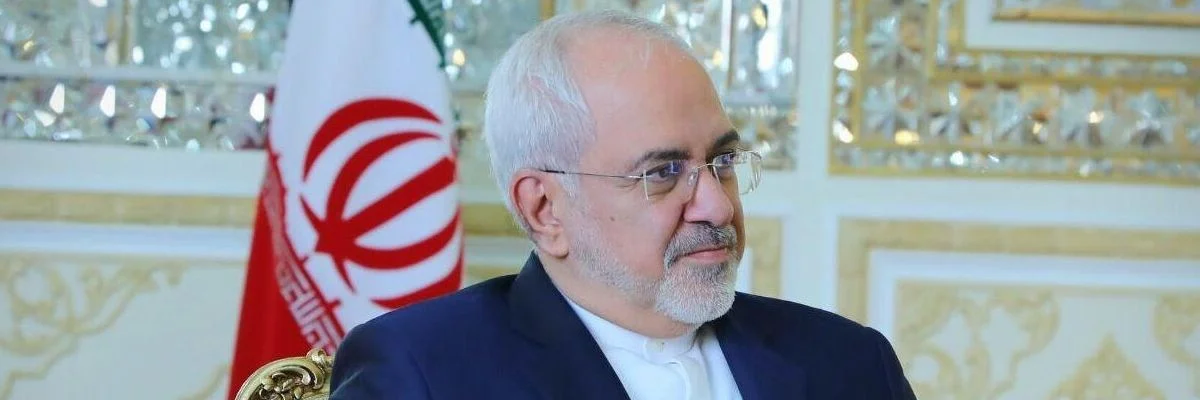
Iran Rejects French Idea of Re-Opening Nuclear Talks
◢ Iran on Friday rejected an idea mooted by France of re-opening nuclear talks, warning that seeking to broaden an existing landmark treaty could lead to its collapse.President Emmanuel Macron said Thursday that his goal of “regional peace” would require new negotiations.
Iran on Friday rejected an idea mooted by France of re-opening nuclear talks, warning that seeking to broaden an existing landmark treaty could lead to its collapse.
President Emmanuel Macron said Thursday that his goal of “regional peace” would require new negotiations, adding that Paris aimed to rein in Iran’s nuclear and ballistics activities and its regional influence.
He made the comments at a press conference with US President Donald Trump, who last year withdrew from the multi-lateral agreement known as the JCPOA.
But Tehran’s Foreign Ministry Spokesman Abbas Mousavi warned Friday that “bringing up issues that are beyond the JCPOA does not help in saving the JCPOA, but will instead cause increased distrust among the remaining parties” to the deal.
European leaders, bitterly angered by Trump’s pullout from the deal in May last year, have struggled to find ways to salvage it in the face of Washington’s re-instatement of tough sanctions.
In a statement on the foreign ministry’s website, Mousavi said European parties to the deal had been “incapable of acting upon their commitments”.
Under such circumstances, he said, making new demands would “only help America in nearing its objective—the collapse of the JCPOA.”
The Joint Comprehensive Plan of Action was an agreement between world powers including France and the United States, offering Iran sanctions relief in return for curbs on its nuclear programme.
Iran had until recently remained in full compliance with the deal, but with the remaining parties struggling to bypass US sanctions, Tehran has reaped few of the promised benefits.
In May, it dropped its adherence to certain limits on enrichment activities under the accord and gave an ultimatum to the remaining parties that it would ditch other commitments unless they delivered on promised sanctions relief.
Trump’s administration has also sought tighter controls on Iran’s ballistic missile capabilities.
In comments published by the Washington Times on Friday, Secretary of State Mike Pompeo demanded that Iran bring its missile programme “back inside a set of constraints” laid out in UN Security Council Resolution 2231.
Iran’s Foreign Minister Mohammad Javad Zarif hit back, tweeting that the US had “violated” the same resolution by withdrawing from the nuclear deal and was “in no position to push a conceited interpretation of its missile provision”.
He pointed out that the resolution called on Iran “not to undertake any activity related to ballistic missiles DESIGNED to be capable of delivering NUCLEAR weapons.”
“Our missiles are not ‘designed’ for nukes, which we’re not developing,” he said.
Photo: IRNA
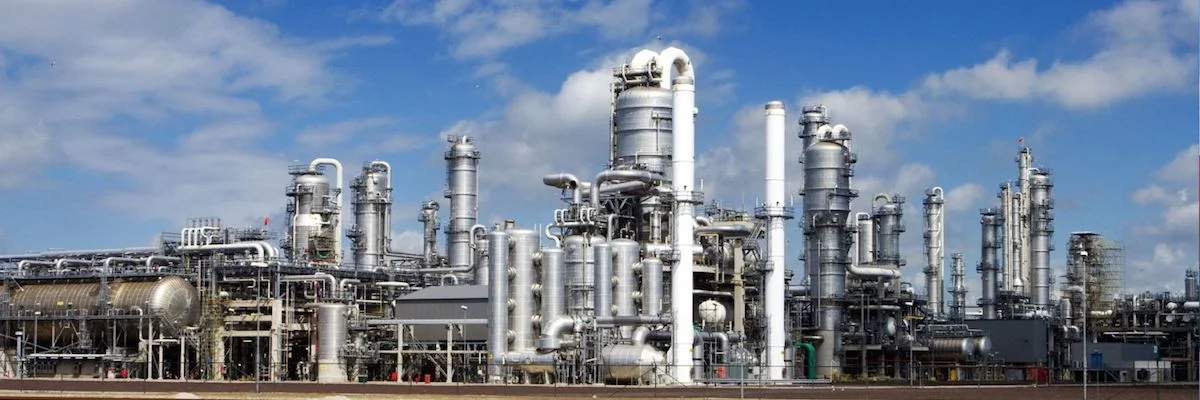
US Hits Iran Petrochemical Group PGPIC with Sanctions
◢ The United States has hit Iran's petrochemical group PGPIC with economic sanctions due to its ties with the country's Revolutionary Guards (IRGC), the Treasury Department announced on Friday. The move aims to choke off financing to the country's largest and most profitable petrochemical group and extends to its 39 subsidiaries and "foreign-based sales agents," Treasury said in a statement.
The United States has hit Iran's petrochemical group PGPIC with economic sanctions due to its ties with the country's Revolutionary Guards (IRGC), the Treasury Department announced on Friday.
The move aims to choke off financing to the country's largest and most profitable petrochemical group and extends to its 39 subsidiaries and "foreign-based sales agents," Treasury said in a statement.
Those include UK-based NPC International and Philippines-based and NPC Alliance Corporation that are controlled by PGPIC.
"This action is a warning that we will continue to target holding groups and companies in the petrochemical sector and elsewhere that provide financial lifelines to the IRGC," Treasury Secretary Steven Mnuchin said in the statement.
Treasury warned that international companies continuing to partner with PGPIC or subsidiaries and sales agents "will themselves be exposed to US sanctions."
Following President Donald Trump's decision to abandon the 2015 nuclear deal negotiated by his predecessor, US efforts over the past year to choke off Iran's economy have angered allies as foreign companies get caught up in the dispute.
Several countries have halted oil imports from Iran, while Europe has tried to design a mechanism to continue trading with the country without violating US sanctions.
Treasury said it is penalizing PGPIC due to its links to the economic arm of the IRGC, known as Khatam al-Anbiya. The holding company has awarded contracts to Khatam al-Anbiya "generating hundreds of millions of dollars for an IRGC economic conglomerate that stretches across Iran?s major industries."
Washington in April branded the IRGC a terrorist organization, the first time it has taken the step against part of a foreign government. The move meant anyone who deals with the Revolutionary Guards could face prison in the United States.
'Deny Funding'
The new sanctions prohibit the firm and its subsidiaries from accessing the US market or financial system, including through other foreign companies, and blocks all funds or property that is in the United States or held by a US firm.
The penalties could extend to "any foreign financial institution that knowingly facilitates a significant financial transaction or provides significant financial services for entities designated," the statement said.
"By targeting this network we intend to deny funding to key elements of Iran's petrochemical sector that provide support to the IRGC," Mnuchin said.
The PGPIC group holds 40 percent of Iran's total petrochemical production capacity and is responsible for 50 percent of the country's petrochemical exports, Treasury said.
Tensions between Washington and Tehran have escalated further in recent weeks after Trump last month deployed additional troops to the region and resumed arm sales to Saudi Arabia to protect against what the United States said was the threat of an imminent attack.
Trump on Thursday said he would be willing to reopen talks as long as Iran agreed to give up nuclear weapons. But Tehran ruled out talks until the United States is ready to "return to normal."
Photo: PGPIC
Trump and Macron Say They Have the Same Goals on Iran
◢ U.S. President Donald Trump and his counterpart in France, Emmanuel Macron, said Thursday that they share the goal of preventing Iran from developing nuclear weapons. “I don’t think the president wants to see nuclear weapons and neither do I,” Trump told reporters at a meeting with Macron in Caen, France.
By Alyza Sebenius and Margaret Talev
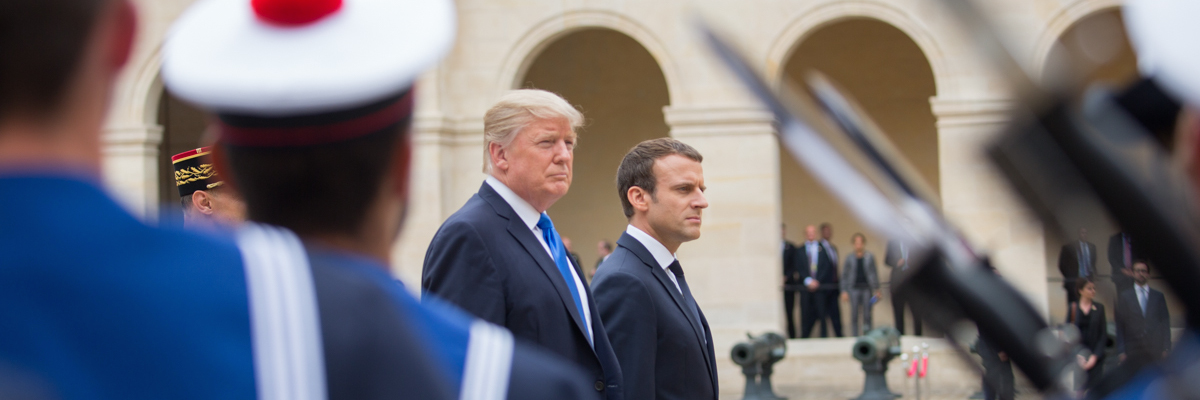
U.S. President Donald Trump and his counterpart in France, Emmanuel Macron, said Thursday that they share the goal of preventing Iran from developing nuclear weapons.
“I don’t think the president wants to see nuclear weapons and neither do I,” Trump told reporters at a meeting with Macron in Caen, France.
“We do share the same objectives on Iran,” Macron said, siding with Trump in calling for “a new negotiation” with Tehran.
“We want to be sure they don’t get nuclear weapon” and “we want to reduce their ballistic activity,” the French president said.
Macron has advocated for the 2015 Iran nuclear accord to be broadened to curb Iranian behavior Western countries consider hostile, including its development of ballistic missiles. But the French president tried and failed to persuade Trump not to back out of the nuclear deal negotiated by his predecessor Barack Obama.
Trump said earlier this week that there’s “always a chance” of the U.S. taking military action in Iran, though he’d prefer to engage verbally with Iranian President Hassan Rouhani.
“If they want to talk, that’s fine,” Trump said Thursday. “We’ll talk.”
Tensions have recently escalated between the U.S. and Iran after Trump blamed the Islamic Republic for recent violence in the Middle East and ordered 1,500 U.S. troops to the region last month. The small deployment indicated that Trump’s administration wants to avoid fueling fears of another war, though the president has repeatedly made clear the possibility isn’t entirely off the table.
Photo: Wikicommons
Tajikistan Foreign Minister Snubs Saudis for a Trip to Iran
◢ On June 1, the Organization for Islamic Cooperation held a summit of foreign ministers from its member states in the Saudi city of Jeddah. Although the conference was scheduled long in advance, Tajikistan’s foreign minister snubbed the event, sending his deputy in his place. Instead, Sirodjidin Muhriddin preferred to pay a visit to the sworn enemy of Saudi Arabia—Iran.
This article was originally published by Eurasianet.
Is Tajikistan about to have another strategic change of heart? On June 1, the Organization for Islamic Cooperation held a summit of foreign ministers from its member states in the Saudi city of Jeddah.
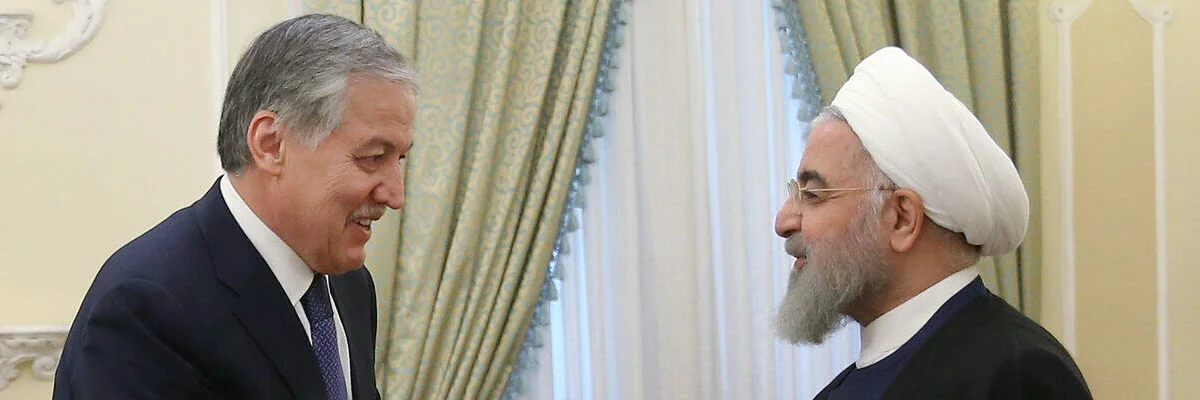
Although the conference was scheduled long in advance, Tajikistan’s foreign minister snubbed the event, sending his deputy in his place. Instead, Sirodjidin Muhriddin preferred to pay a visit to the sworn enemy of Saudi Arabia — Iran.
A dark cloud has been hanging over relations between Tajikistan and Iran — ostensibly two brother nations linked by a Persian heritage — since late 2015.
Toward the end of that year, Tehran invited Muhiddin Kabiri, the leader of the opposition Islamic Renaissance Party of Tajikistan, or IRPT, to attend a conference on Islam, enraging officials in Dushanbe. Authorities in Tajikistan had some months earlier banned the IRPT and then designated it an extremist group, so Iran’s apparent endorsement of Kabiri felt like a calculated slight.
Since that time, there is not enough bad that Tajikistan can say about Iran. President Emomali Rahmon has suggested that Iran was a primary instigator of the civil war of the 1990s. Security officials have, without providing a shred of evidence, accused Iran of assisting the opposition cook up violent plots. And Iranian businessman have been squeezed out of the country.
The figures speak for themselves. Trade turnover between the countries was $165 million in 2015. That dropped to USD 92 million in 2018.
The received wisdom is that this row has to a great extent been engineered by the Saudis.
Riyadh’s man in Dushanbe confirmed as much last year, when he bragged about how his government had granted Tajikistan over USD 200 million in aid over the years, partly as piece of a strategy to push their main foe out of the region.
Tajikistan, which teeters permanently on the verge of insolvency, likely pursued this friendship in the hope of generating yet more financial assistance and investment from their Arabian friends.
But the turn back to Iran suggests this love affair may have now been put on ice.
The results of the detente have already borne some fruit, with Iran now seemingly explicitly foreswearing its prior cultivation of the IRPT.
On June 2, the Iranian news website Farsnews deleted an old interview with Kabiri, the IRPT leader. Also, Iranian Foreign Ministry spokesman Bahram Qassemi has been citedby Farsnews as saying that “Iran has not and is not supporting any group that acts against Tajikistan’s legal bodies and has always sought good and brotherly relations with that government.” This was another clear reference to the IRPT.
Tajikistan is clearly hopeful this new outbreak of amity will presage remunerative dividends.
Fars News cited Prime Minister Kokhir Rasulzoda as saying last week, during farewell consultations with outgoing Iranian Ambassador Hojatullah Faqani, that Dushanbe is eager to see an improvement in trade and economic ties.
“We demand an increase in the volume of trade exchanges, especially the strengthening of investments and presence of Iran in the agricultural, energy, industry and tourism sectors of Tajikistan,” Rasulzoda is quoted as having said.
Rasulzoda then went on to commend Iran for its historic investments in major infrastructure projects in Tajikistan, including hydroelectric power plants and tunnels. Among examples of the former, he included the Roghun dam, which is curious since there is no evidence that Tehran has ever provided any assistance to this economically existential undertaking. It is possible this was wishful thinking.
While in Tehran, Muhriddin urged Iranian President Hassan Rouhani to travel to Dushanbe later this month to participate at event called the Conference on Interaction and Confidence-Building Measures in Asia. There is certainly much room for confidence-building in this on-again, off-again relationship.
Photo: IRNA
Trump Says ‘Always a Chance’ of War With Iran But Prefers Talks
◢ President Donald Trump said there’s “always a chance” of the U.S. taking military action in Iran, though he’d prefer to engage verbally with Iranian President Hassan Rouhani. “There’s always a chance. Do I want to? No, I’d rather not, but there’s always a chance,” Trump said when asked about the prospect of conflict in an interview on ITV’s Good Morning Britain. “I’d much rather talk.”
By Alyza Sebenius
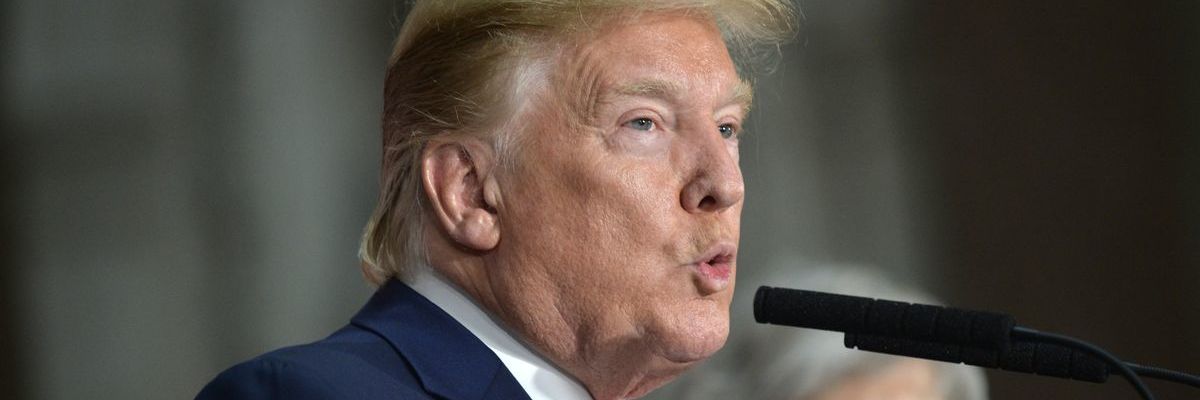
President Donald Trump said there’s “always a chance” of the U.S. taking military action in Iran, though he’d prefer to engage verbally with Iranian President Hassan Rouhani.
“There’s always a chance. Do I want to? No, I’d rather not, but there’s always a chance,” Trump said when asked about the prospect of conflict in an interview on ITV’s Good Morning Britain. “I’d much rather talk.”
The comments come amid heightened tension between the two countries, after Trump blamed the Islamic Republic for recent violence in the Middle East and ordered 1,500 U.S. troops to the region last month. The small deployment indicated that Trump’s administration wants to avoid fueling fears of another war, though the president made it clear it wasn’t off the table entirely.
Trump said “of course” he’d be willing to talk to Rouhani, pointing out that the Iranian president had himself said he wasn’t looking for conflict with the U.S. “The only thing is we can’t let them have nuclear weapons,” Trump said.
Pentagon officials believe Iran was behind recent attacks on oil tankers, a Saudi oil pipeline and the Green Zone diplomatic compound in Bagdhad, though the U.S. hasn’t published evidence for the claims.
The United Arab Emirates and other countries are investigating the attacks on the ships, Saudi Arabian Foreign Affairs Minister Adel Al-Jubeir said last month.
‘Stay Away’
“The Americans need to stay away,” Iranian Supreme Leader Ayatollah Ali Khamenei said Tuesday. “Where they’ve gone there’s been war, killings, sedition, and humiliation,” he said, adding: “If they get close, we know how to act, we know what needs to be done.”
Trump’s tougher stance toward Iran—the U.S. pulled out of the 2015 nuclear accord signed with global powers and reimposed sanctions—has strained relations with allies in Europe, including the U.K. At their press conference in London Tuesday, Prime Minister Theresa May said while the two governments agreed to work together to avoid escalation by Iran, they “differ on the means of achieving it.”
The nuclear accord capped Iran’s nuclear activities in return for sanctions relief. The agreement, the signatories said, would prevent Tehran from building the nuclear weapons that some Western powers and Israel feared were the end goal of its atomic program. Iran says its nuclear work is solely aimed at meeting civilian energy and medical needs.
May said the U.K., which is part of EU efforts to protect European trade with the Islamic Republic after the U.S. reimposed economic sanctions, still stands by the nuclear deal. Trump criticized the accord—and Iran—again in the ITV interview.
Iran was “extremely hostile when I first came into office,” he said. It was “terrorist nation number one in the world at that time, and probably maybe are today.”
Photo: Bloomberg
Iran to Free Lebanese Jailed for US Spying: Beirut
◢ Iran is to free a Lebanese national held since 2015 and sentenced to 10 years in jail on charges of spying for Washington, the foreign ministry in Beirut said Tuesday. Nizar Zakka, a resident of the United States in his 50s, was arrested in September 2015 during a visit to Iran, where he was convicted the following July.
Iran is to free a Lebanese national held since 2015 and sentenced to 10 years in jail on charges of spying for Washington, the foreign ministry in Beirut said Tuesday.
Nizar Zakka, a resident of the United States in his 50s, was arrested in September 2015 during a visit to Iran, where he was convicted the following July.
The foreign ministry, quoted by Lebanon's official news agency NNA, said Zakka was pardoned at the request of Beirut as a gesture for this week's Eid holidays marking the end of the Muslim holy month of Ramadan.
At the time of his arrest, state television in Iran charged Zakka had "deep ties to military and intelligence services of the United States", Iran's arch-foe.
It broadcast photographs of a man in military uniform it said was of Zakka at an American base.
The report on his imminent release following almost four years of detention comes at a time of heightened US-Iranian tensions.
Washington last month deployed an aircraft carrier task force, B-52 bombers and an amphibious assault ship to the Gulf, along with additional troops over an alleged Iranian plan to attack US assets.
Photo: Wikicommons
China's Bank of Kunlun Denies Owning Ship Carrying Oil From Iran
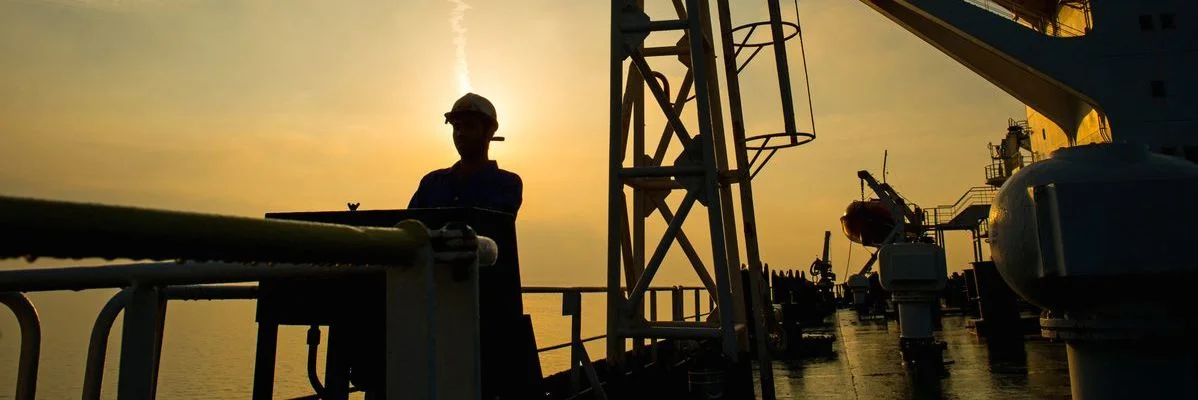
◢ Bank of Kunlun, a Chinese lender, said it doesn’t own a ship that the U.S. pinpointed last week as carrying Iranian oil. A senior U.S. official said May 28 that the ship, the PACIFIC BRAVO was the property of the bank and was headed toward Hong Kong.
By Karen Leigh
Bank of Kunlun, a Chinese lender, said it doesn’t own a ship that the U.S. pinpointed last week as carrying Iranian oil.
A senior U.S. official said May 28 that the ship, the PACIFIC BRAVO was the property of the bank and was headed toward Hong Kong. The official, who spoke on condition of anonymity, warned that any entity in the Asian financial hub that did business with the ship would be exposed to U.S. sanctions.
“After our checks, the vessel PACIFIC BRAVO and the goods it carries, have nothing to do with Bank of Kunlun,” the bank said in an emailed statement. It didn’t provide further information.
Hong Kong’s government has “strictly” implemented United Nations Security Council sanctions, which don’t impose “any restrictions on the export of petroleum from Iran,” a spokesperson for the city’s Commerce and Economic Development Bureau said last week in response to a question about the U.S. warning.
U.S. Warning
Washington wants to put Hong Kong and China on notice that it will aggressively and consistently enforce its sanctions on Iran, the senior U.S. official said.
While the U.S. official said the tanker is heading to Hong Kong, ship-tracking data compiled by Bloomberg showed a vessel called the Pacific Bravo off the coast of Indonesia on Monday.
President Donald Trump has increased pressure on Iran since taking office, exiting the landmark 2015 nuclear deal that gave the Islamic Republic sanctions relief in exchange for curbs on its disputed nuclear program.
Reuters reported in October that the Bank of Kunlun—once Beijing’s major channel for transactions with Iran—would stop handling such payments due to sanctions pressure.
Photo Bloomberg
Saudis Take Iran's Oil-Market Share, Keeping OPEC Supply Steady
◢ Saudi Arabia ramped up oil production last month by the most this year, largely filling the gap created by tougher U.S. sanctions on its political rival, Iran. Iranian output plunged in May to the lowest since 1990 as the Trump administration threatened sanctions, according to a Bloomberg survey of officials, analysts and ship-tracking data.
By Grant Smith
Saudi Arabia ramped up oil production last month by the most this year, largely filling the gap created by tougher U.S. sanctions on its political rival, Iran.
Iranian output plunged in May to the lowest since 1990 as the Trump administration threatened penalties for anyone trading with the Islamic Republic, according to a Bloomberg survey of officials, analysts and ship-tracking data.
Nonetheless, the production boost by Riyadh, along with increases in fellow OPEC members Libya and Iraq, meant that overall output from the group remained unchanged in May from the previous month. OPEC pumps about 40% of the world’s oil supplies.
Iran’s production plunged by 230,000 barrels a day to 2.32 million a day, according to the Bloomberg survey. Saudi Arabia increased by 170,000 barrels a day to 9.96 million a day. Total supply from OPEC’s 14 members was unchanged at 30.26 million barrels a day.
President Donald Trump is tightening the squeeze on Iran’s oil exports amid a dispute that revolves around the country’s nuclear program, and has turned to America’s allies in Riyadh to keep global crude markets comfortably supplied. The survey indicates that Saudi Arabia, a long-standing antagonist of Iran, has been willing to oblige.
That sets the stage for a contentious meeting when the Organization of Petroleum Exporting Countries and its partners gather in the coming weeks to consider production levels for the second half of the year. Iran has warned that the 59-year-old cartel is at risk of collapse because of aggressive moves by some members.
Despite the boost, the Saudis are still significantly below the limit of 10.3 million barrels a day agreed at the start of the year with a global coalition of producers, which spans fellow OPEC members as well as nations outside the group including Russia and Kazakhstan.
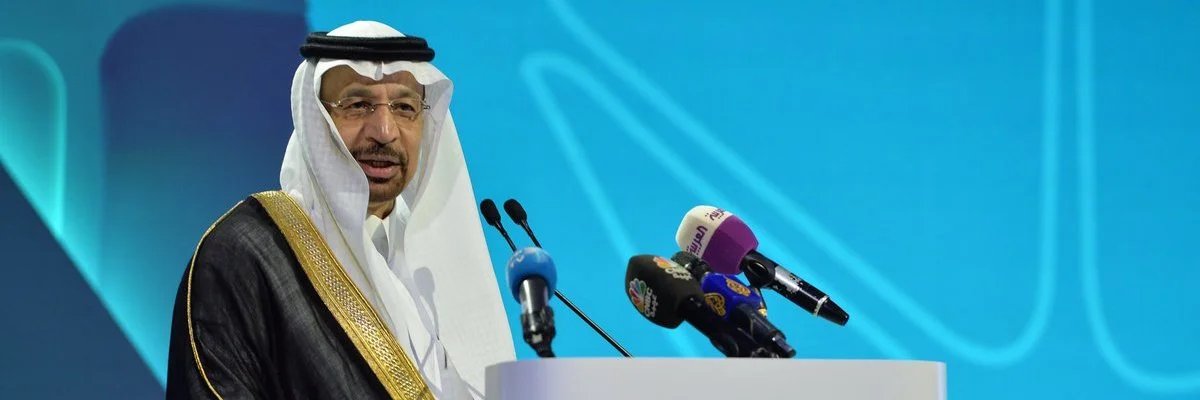
Saudi Arabian Energy Minister Khalid Al-Falih has recommended that the alliance should keep the supply curbs in place for the rest of the year, as headwinds to global economic growth may reduce oil demand.
Oil prices slumped more than 11% in London last month as the trade dispute between the U.S. and China threatened to crimp growth in the world’s two biggest economies. Brent, the international benchmark, was trading around $62 a barrel on Monday.
While the Saudi production increase was still well inside the limits agreed with fellow producers, the same can’t be said of a boost by Iraq.
Baghdad raised output by 50,000 barrels a day last month to 4.63 million a day, meaning that it has now abandoned any of the restraint pledged under the OPEC agreement. As the Saudis have urged fellow OPEC members to abide by their individual targets, that could provide another source of friction when the producers get together.
Photo: Aramco
Japan PM to Meet Iran's Khamenei to Mediate With US
◢ Japanese Prime Minister Shinzo Abe will meet Iran's supreme leader Ayatollah Ali Khamenei later this month with Tokyo hoping to mediate between Washington and Tehran, a report said Sunday. As tensions intensify between Iran and Japan's key ally the United States, Abe has reportedly proposed serving as a go-between and is said to be weighing up a state visit to Iran.
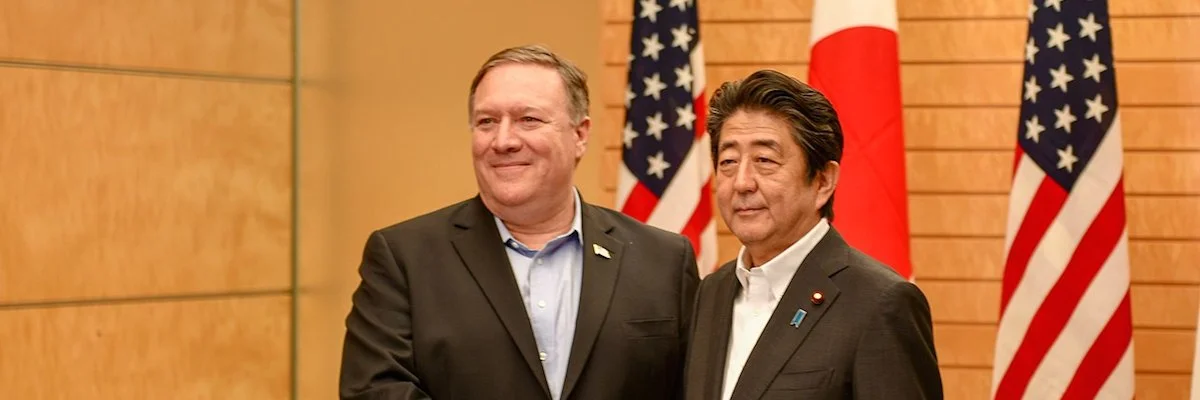
Japanese Prime Minister Shinzo Abe will meet Iran's supreme leader Ayatollah Ali Khamenei later this month with Tokyo hoping to mediate between Washington and Tehran, a report said Sunday.
As tensions intensify between Iran and Japan's key ally the United States, Abe has reportedly proposed serving as a go-between and is said to be weighing up a state visit to Iran.
According to the Mainichi Shimbun report, Abe's planned meeting with influential Khamenei will be the first such talks between a Japanese premier and Tehran's supreme leader.
US President Donald Trump said last week he remained open to talks with Tehran during his state visit to Tokyo, appearing to have given the green light to Abe's plan.
Abe will also meet Iran's president Hassan Rouhani before meeting Khamenei during his tour to Iran from June 12 to 14, the newspaper said, citing unnamed government sources.
Before Trump flew to Japan, the United States had announced it was sending 1,500 extra troops to the region, adding to the aircraft carrier group and nuclear-capable bomber planes already dispatched.
Trump himself threatened "the official end" of the country if Tehran ever attacked US interests.
But last Monday in Tokyo, Trump offered assurances that he can live with the Islamic Republic's government, whose toppling has long been a dream for Washington hardliners.
"We're not looking for regime change," Trump said, explaining that he only cared about Iran not achieving nuclear power status.
"I do believe that Iran would like to talk, and if they'd like to talk, we'd like to talk also," Trump added, striking a relatively dovish tone on Iran.
Khamenei has likened negotiations with the Trump administration to "poison" since "they don't stand by anything", referring to Washington's withdrawal from the landmark 2015 nuclear deal signed by Tehran and world powers.
Japan and Iran have kept a good relationship as resource-poor Japan relies heavily on imports of oil from the Middle East, though crude from Iran accounted for just 5.3 percent of the country's total imports last year.
Photo: Wikicommons
US Prepared to Talk to Iran 'With No Preconditions': Pompeo
◢ Washington is willing to speak with Iran "with no preconditions", US Secretary of State Mike Pompeo said Sunday, but stressed his country would continue working to rein in Iran's "malign activity.” “We are prepared to engage in a conversation with no preconditions. We are ready to sit down with them," Pompeo told a news conference in Switzerland.
By Francesco Fontemaggi
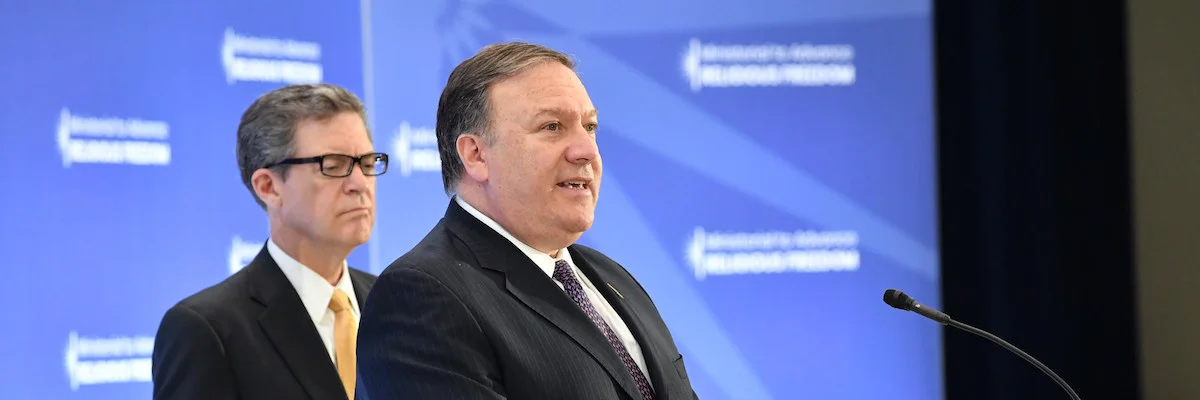
US Secretary of State Mike Pompeo said Sunday his country was ready to talk with Tehran "with no preconditions", but with no indication lifting sanctions over Iran's nuclear program is on the table.
The top US diplomat, who is considered a hawk on the Iran file, appeared to soften the US stance somewhat following weeks of escalating tensions with Tehran.
"We are prepared to engage in a conversation with no preconditions," Pompeo said in Switzerland, which in the absence of US-Iranian diplomatic ties represents Washington's interests in the Islamic Republic.
"We are ready to sit down with them," Pompeo told a joint news conference with his Swiss counterpart Ignazio Cassis at the impressive medieval Castelgrande castle in Bellinzona, nestled in the Alps in Switzerland's Italian-speaking Ticino region.
He was reacting to comments made by Iranian President Hassan Rouhani on Saturday insisting that his country would not be "bullied" into talks with the United States, and that any dialogue between the two countries needed to be grounded in "respect.”
But Pompeo appeared to immediately back-pedal on the offer to have condition-free talks with Iran, stating that Washington was "certainly prepared to have (a) conversation when the Iranians will prove they are behaving as a normal nation."
’Malign Activity'
Pompeo's comments mark the first time the Trump administration has offered no-strings-attached talks since the recent escalation began in the wake of the US withdrawal from a hard-won 2015 nuclear deal between Tehran and world powers.
But Pompeo stressed that "the American effort to fundamentally reverse the malign activity of this Islamic Republic, this revolutionary force, is going to continue."
In other words, Washington has no intention to let up on its campaign of "maximum pressure" on Iran.
Pompeo himself last year laid out 12 draconian demands he said Iran would need to meet before reaching a "new deal" with the United States, essentially addressing every aspect of Iran's missile program and what Washington calls its "malign influence" across the region.
Washington has since reimposed sanctions, and has been locked in an increasingly tense standoff with Tehran.
Last month it deployed an aircraft carrier task force, B-52 bombers and an amphibious assault ship to the Gulf, along with additional troops against what Washington's leaders believed was an imminent Iranian plan to attack US assets.
But at the same time, Trump has over the past week toned down the rhetoric, saying Washington does not seek "regime change" in Iran and holding out the possibility of talks.
He said the US was merely "looking for no nuclear weapons," adding that "I really believe that Iran would like to make a deal. I think that's very smart of them and I think there's a possibility for that to happen also."
Swiss Mediation?
Swiss Foreign Minister Cassis meanwhile voiced his country's readiness to play the role of "intermediary" between the two countries.
But he stressed Switzerland could not be "mediators if there is not willingness on both sides."
Cassis also voiced concern about the "great suffering" in Iran brought about by the US sanctions, and urged Washington to identify a financial "channel" to allow the Iranians to purchase humanitarian aid without being slapped with US punitive measures.
Pompeo did not respond directly to this request, but he rejected the notion that US sanctions were causing suffering, instead blaming the leadership in Tehran.
The challenges facing Iranians "are not caused by our economic sanctions," he said. "They're caused by 40 years of the Islamic regime not taking care of their people and instead using their resources to destroy lives."
He meanwhile preferred to remain discreet about efforts, largely led by Switzerland, to ensure the release of a handful of American citizens being held in Iran, stating only that the issue was a top priority for Trump, and that Washington is "working with all willing nations to assist us."
Photo: State Department
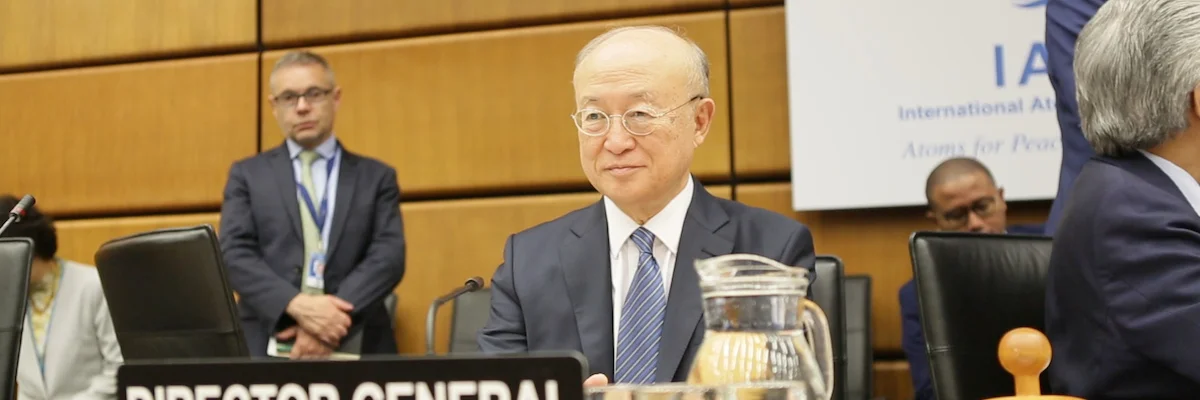
Iran's Stocks of Nuclear Materials Still Within Limits: IAEA
◢ Iran's stocks of key nuclear materials have increased but are still within the limits set by a 2015 deal with world powers, the latest International Atomic Energy Agency report on the matter said Friday. Earlier this month Iran announced it was suspending some of its commitments under the 2015 Joint Comprehensive Plan of Action (JCPOA).
Iran's stocks of key nuclear materials have increased but are still within the limits set by a 2015 deal with world powers, the latest International Atomic Energy Agency report on the matter said Friday.
Despite an announcement from Iran earlier this month that it no longer considered itself bound by the agreed restrictions on stocks of enriched uranium and heavy water, stocks of both did not exceed the ceilings set in the 2015 agreement, the report said.
As of May 26, Iran had 125.2 metric tonnes of heavy water, an increase of 0.4 tonnes on February but stil under the 130-tonne limit.
As of 20 May, Iran had 174.1 kg of enriched uranium, up from 163.8kg in February but again well within the relevant of limit 300kg.
Earlier this month Iran announced it was suspending some of its commitments under the 2015 Joint Comprehensive Plan of Action (JCPOA).
The move came a year after US President Donald Trump pulled out of the deal. His administration has also reinforced economic sanctions against the Islamic Republic.
Photo: IAEA
State Department Says No Change in Plan to End Iran Oil Waivers
◢ The U.S. State Department sought to quash speculation that the Trump administration is easing its clampdown on Iranian oil exports after a sanctions waiver program ended May 2, saying there has been no softening in the American stance that any country buying Iran’s oil would be subject to penalties.
By Nick Wadhams
The U.S. State Department sought to quash speculation that the Trump administration is easing its clampdown on Iranian oil exports after a sanctions waiver program ended May 2, saying there has been no softening in the American stance that any country buying Iran’s oil would be subject to penalties.
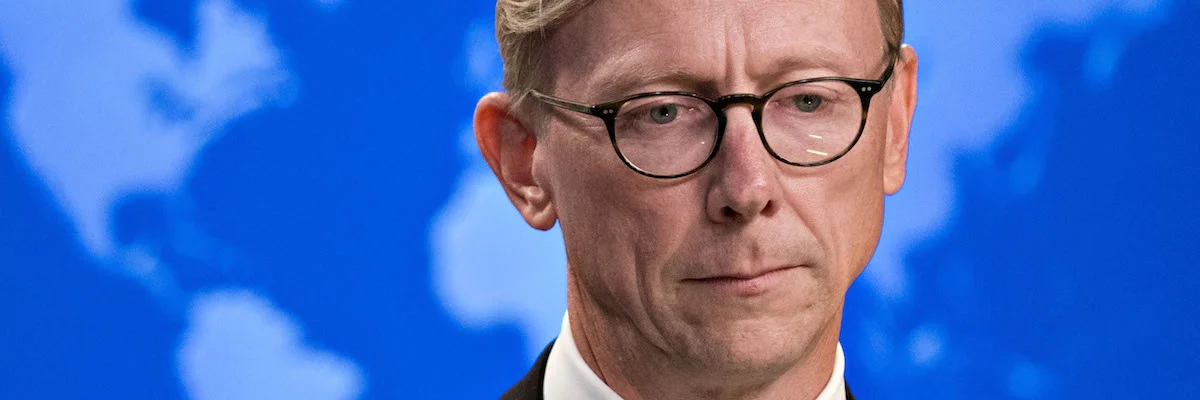
A U.S. decision not to renew the six-month waivers allowing limited exports is final and no more trade will be permitted, Brian Hook, the U.S. special representative for Iran, said in a statement to Bloomberg News on Thursday. The U.S. had previously granted waivers, known as significant reduction exceptions, to eight governments in November—China, India, South Korea, Japan, Turkey, Taiwan, Greece and Italy.
“Our firm policy is to completely zero out purchases of Iranian oil—period,” Hook said. “Any new purchases of oil initiated after the expiration of the SREs on May 2 will be subject to U.S. sanctions, even if a country had not met its previously negotiated purchase caps during the SRE period from November to May 2.”
The statement was intended to clarify comments Hook made during a news briefing earlier Thursday. Those remarks were construed as saying the U.S. would allow countries to keep buying Iranian oil after May 2 as long as they remained under the limits the U.S. set out when it originally granted the waivers.
For weeks, oil traders have asked how tough the U.S. stance really is and whether there would be any loopholes for buyers of Iranian crude following the decision to end the waivers. Thursday’s statement sought to clarify that the only possible exception to the position would be for oil that was already en route to its destination before the waivers expired.
“If oil was purchased, loaded and en route to its destination prior to the expiration of the significant reduction exceptions on May 2, these cargoes would not exceed the agreed-to caps on imports of Iranian crude oil negotiated under the now-expired SREs,” Hook said.
Photo:
Arab, Muslim Leaders Gather in Mecca for Iran-Focused Summits
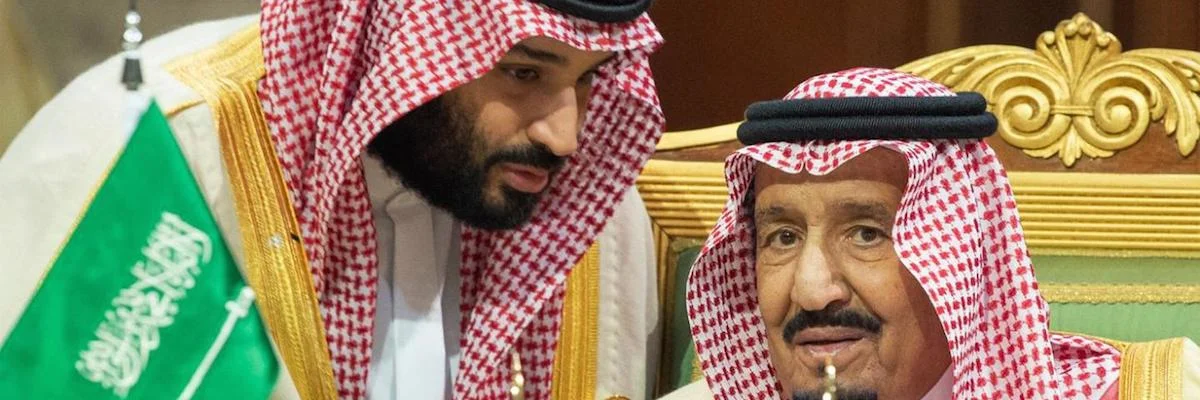
◢ Arab and Muslim leaders began gathering in the holy city of Mecca on Thursday for three summits, as Saudi Arabia seeks to rally support against arch-rival Iran over attacks on oil installations. On the eve of the talks, Riyadh blasted what it called Iranian "interference" in the region and demanded "firmness" over attacks on Gulf oil tankers and pipelines.
By Mohamad Ali Harissi
Arab and Muslim leaders began gathering in the holy city of Mecca on Thursday for three summits, as Saudi Arabia seeks to rally support against arch-rival Iran over attacks on oil installations.
On the eve of the talks, Riyadh blasted what it called Iranian "interference" in the region and demanded "firmness" over attacks on Gulf oil tankers and pipelines.
The call came just hours after US National Security Advisor John Bolton said Iran was almost certainly behind the sabotage of four ships, including two Saudi oil tankers, off the UAE coast.
Iran-aligned Yemeni rebels meanwhile have stepped up drone attacks on the kingdom—one of which resulted in the temporary shutdown of a major oil pipeline.
Saudi Arabia, a staunch US ally, geared up to host leaders from across the Arab and Muslim world for emergency Gulf and Arab summits and a meeting of the heads of state of Islamic nations.
Egypt's President Abdel Fattah al-Sisi, Kuwait's emir, Sheikh Sabah Al-Ahmed Al-Sabah, and Sudan's new military council chief General Abdel Fattah al-Burhan were among the leaders who arrived in the kingdom Thursday, Saudi state media reported.
Riyadh has called the talks to discuss the standoff with Iran and ways to isolate Tehran amid fears of a military confrontation.
"Tehran's support for Huthi rebels in Yemen is proof of Iranian interference in other nations' affairs and this is something that... Islamic countries should reject," Saudi Foreign Minister Ibrahim al-Assaf told a gathering of foreign ministers of the 57-member Organization of Islamic Cooperation in western Jeddah city overnight.
‘Firmness and Determination'
Contrary to expectations, an Iranian delegation headed by Reza Najafi, director general for international peace and security affairs at Iran's foreign ministry, represented the Islamic republic at the meeting.
Assaf said attacks on oil installations must be addressed with "firmness and determination.”
Tensions in the region spiked after the four ships were damaged in a sabotage attack off the coast of the emirate of Fujairah on May 12
The vessels were attacked using "naval mines almost certainly from Iran", Bolton told a news conference in Abu Dhabi on Wednesday.
"There's no doubt in anybody's mind in Washington who's responsible for this," he said in a clear reference to Iran. Iran strongly rejected the accusation.
"Making such laughable claims... is not strange" coming from the US, foreign ministry spokesman Abbas Mousavi said.
US experts are part of a five-nation team that is investigating the ship attacks.
The new war of words between Tehran and Washington follows a US military buildup that includes the deployment of an aircraft carrier, B-52 bombers and 1,500 more troops to the region.
Bolton however said the additional US forces were sent to the Middle East as a "deterrent" and that Washington's response would be prudent.
Regional tensions have grown since US President Donald Trump's administration reimposed sanctions against Iran after Washington unilaterally pulled out of a multilateral 2015 nuclear accord signed with the Islamic Republic. But Trump appeared to soften his hawkish tone towards Tehran, saying during a visit to Japan on Monday that his government does not seek "regime change".
Qatar invited
Saudi Arabia is hosting the three summits in an apparent bid to present a unified front against Tehran.
Qatar will be represented by its Prime Minister Sheikh Abdullah bin Nasser al-Thani, the highest ranking official to visit the kingdom since the start of a two-year-old Saudi-led boycott.
Saudi Arabia, the UAE, Bahrain and Egypt have enforced the economic and diplomatic boycott of Qatar since June 2017, including bans on shipping, trade, direct flights, overflight and land crossings.
The alliance accuses Doha of supporting Islamist movements and backing Iran—claims Qatar rejects.
Large banners and flags decorated the streets of Mecca, Islam's holiest city, to welcome the leaders.
The summits coincide with the last few days of the Muslim fasting month of Ramadan when Mecca throngs with hundreds of thousands of pilgrims.
The summits are held at midnight as Muslims break their day-long fasting at sunset and then go into several hours of special prayers known as Taraweeh.
Draped in seamless all-white uniforms, worshippers walked under lampposts decorated with flags of participating nations while heading to the Grand Mosque to perform umrah or minor pilgrimage.
The large crowds could pose a logistic headache for the organizers who sealed off six major roads for leaders and advised pilgrims to use alternative streets.
Photo: KSA Press Office