
Europe Doubles Down on Iran Support as Trump Targets Oil Exports
◢ Europe pledged to keep afloat its efforts to aid Iran after the U.S. tightened the screw by targeting all exports of Iranian oil for sanctions. The French government and the European Union both said they will abide by the terms of the Iran nuclear accord with world powers even after the latest U.S. move.
Europe pledged to keep afloat its efforts to aid Iran after the U.S. tightened the screw by targeting all exports of Iranian oil for sanctions.
The French government and the European Union both said they will abide by the terms of the Iran nuclear accord with world powers even after the latest U.S. move. France and its European partners intend to continue efforts to ensure that Iran derives economic benefits as long as Tehran complies with its nuclear obligations, the Foreign Ministry in Paris said.
U.S. Secretary of State Michael Pompeo said Monday that the U.S. wouldn’t renew waivers granted to eight countries including South Korea, Japan and Turkey that allowed them to buy Iranian oil without facing sanctions. The non-renewal of waivers that were due to expire on May 2 roiled energy markets and risks upsetting major importers including China and India.
Europe’s insistence on standing by the Iran nuclear deal, known as the JCPOA, risks further inflaming tensions with the Trump administration as it seeks to force Tehran to renegotiate the terms of the accord to include Iran’s non-nuclear ballistic missiles and influence in the wider Middle East.
“We regret yesterday’s announcement by the U.S. not to renew oil waivers,” European Commission spokeswoman Maja Kocijancic told reporters in Brussels. “This further risks undermining the implementation of the JCPOA, which is a key element of the global nuclear non-proliferation architecture that was endorsed unanimously by the UN security council.”
Trade Spillover
European leaders such as French President Emmanuel Macron and German Chancellor Angela Merkel may have concerns at potential fallout for EU-U.S. trade talks aimed at averting more tit-for-tat tariffs, since President Donald Trump has previously shown willingness to conflate disparate policy matters in a bid to achieve his goals.
Germany, France and the U.K. have already created a special purpose vehicle for trade with Iran designed to get around U.S. sanctions. Work on the INSTEX mechanism to facilitate financial transactions for European companies trading with Iran is “progressing positively with a view to a near completion,” the French ministry said.
Iran should continue work on its mirror mechanism, the ministry said. Exchanges between the two sides are underway to ensure that both structures “operate in a manner consistent with international financial standards,” it said.
France said it is “determined” to persevere with the nuclear deal, while Kocijancic at the commission said the EU will abide by the accord “as long as Iran continues with the full and effective implementation of its nuclear-related commitments.”
Photo: Bloomberg
Trump Playing Hardball Gives Iran Oil Buyers Costly Headache
◢ Asia is more dependent on oil imports than any other region and has been repeatedly buffeted by America’s campaign to isolate Iran, once OPEC’s second-largest producer. While they’ll be able to find other supplies, they face the prospect of having to pay more, potentially accelerating inflation and putting pressure on their economies.
The biggest buyers of Iranian oil are being struck by deja vu, and it’s not conjuring up pleasant memories.
Six months ago they were scrambling to secure alternative supplies as the U.S. prepared to impose sanctions on Iranian oil exports, though last minute waivers eventually gave them a reprieve. Now, the Donald Trump administration says it won’t renew those same waivers, forcing the buyers to find a replacement for the Persian Gulf barrels.
Asia is more dependent on oil imports than any other region and has been repeatedly buffeted by America’s campaign to isolate Iran, once OPEC’s second-largest producer. While they’ll be able to find other supplies, they face the prospect of having to pay more, potentially accelerating inflation and putting pressure on their economies.
Importers had been expecting the waivers to be extended, perhaps with a cut in permitted volumes instead of an outright ban, according to refinery officials in Asia. They’d put purchases for May on hold as they awaited the U.S. decision.
One buyer, South Korea’s Hanwha Total Petrochemical Co., said it’s possible to find alternatives, but they’ll cost more and potentially affect the firm’s profits because they largely depend on the price of raw materials. The company has been importing and testing other supply from areas such as Africa and Australia, a spokesman said.
The White House said on Monday that its decision is intended to bring Iran’s oil exports to zero and squeeze the Persian Gulf state’s principal source of revenue. The U.S. wants to force Iran back to negotiations over its nuclear program. Any buyer importing crude after the waivers expire on May 2 faces the risk of being cut off from the American financial system.
Elusive Alternatives
While Trump said in a tweet that Saudi Arabia and other producers in the Organization of Petroleum Exporting Countries will make up for any shortfall, that prospect will not necessarily bring relief to buyers. South Korea, for example, is highly dependent on a type of ultra-light oil known as condensate from Iran that’s used by the Asian nation’s petrochemical producers.
These companies will be hit especially hard by the U.S. decision to eliminate waivers, according to four condensate traders interviewed by Bloomberg. That’s because Saudi Arabia and the United Arab Emirates—among the biggest OPEC producers—export only limited supplies of the ultra-light oil, which is used in units known as splitters to produce petrochemicals and plastic components, they said.
Unipec, the trading arm of China’s state-owned refining giant Sinopec, hasn’t been approached by Saudi Arabia or the U.A.E. with more oil offers, said a person familiar with its procurement plan who asked not to be identified as the information is private. While the firm expected America to renew waivers at least with limited volumes, it had a contingency plan for an end to shipments, said the person, adding that it will seek to import more from the Middle East, West Africa and the U.S.
Caught by Surprise
An official at another major South Korean refiner also said it was caught off-guard by the U.S. decision, and still remained hopeful that the U.S. would ultimately extend waivers allowing at least some Iranian imports. Based on Bloomberg’s ship-tracking data, Asian buyers such as China, India, Japan and South Korea accounted for more than 80 percent of the Islamic Republic’s total crude and condensate exports in March.
Saudi Arabia, for its part, will coordinate with other crude producers to ensure that adequate supplies are available and the market “does not go out of balance,” Energy Minister Khalid Al-Falih said after the Trump administration announced the end of the waivers.
One person familiar with the U.S. decision announced Monday said that some of the countries that had previously received waivers would be given a little more time to wind down purchases. The person described that not as a waiver but more as a brief grace period.
Crude Gains
Global benchmark Brent crude rose to a six-month high, moving toward $75 a barrel in London after the U.S. decision. Front-month futures were at $74.33 a barrel at 11:43 a.m. in London. West Texas Intermediate, the American marker, also jumped and is trading near $66 a barrel in New York.
Some refiners in India—which had been negotiating hard with the U.S. for the waivers to be renewed—sought to play down the impact on Monday. Indian Oil Corp., the nation’s top importer of Iranian crude, has enough supplies of alternative feedstock, said a company official who asked not to be identified because of internal policy.
The company intends to use built-in options in its oil contracts with Kuwait, Abu Dhabi, Saudi Arabia and Mexico to procure more crude from those sources, thus making up for any shortfall from the Persian Gulf state, the official said. Fellow domestic refiner Hindustan Petroleum Corp. is confident there won’t be supply constraints, according to Chairman M.K. Surana.
HPCL has reduced its purchases from the Islamic Republic and has limited exposure to U.S. sanctions, he said in a phone interview, though he added that a halt in supplies from Iran would likely push oil prices higher in coming months.
Photo: Bloomberg
Trump to Sanction Allies Over Iran Oil, Risking Friction
◢ The United States said Monday it would start imposing sanctions on friends such as India that buy Iranian oil, in its latest aggressive step to counter Tehran that could jeopardize US relationships. The announcement sent global crude prices spiraling higher, although President Donald Trump tweeted that Saudi Arabia and other US allies would"more than make up" for decreases in Iranian oil.
The United States said Monday it would start imposing sanctions on friends such as India that buy Iranian oil, in its latest aggressive step to counter Tehran that could jeopardize US relationships.
The announcement sent global crude prices spiraling higher, although President Donald Trump tweeted that Saudi Arabia and other US allies would "more than make up" for decreases in Iranian oil.
In seeking to reduce Iran's oil exports to zero, the Trump administration is targeting the country's top revenue maker in its latest no-holds-barred move to scale back the clerical regime's influence
"The Trump administration and our allies are determined to sustain and expand the maximum economic pressure campaign against Iran to end the regime's destabilizing activity threatening the United States, our partners and allies and security in the Middle East," the White House said in announcing its move.
Eight governments were initially given six-month reprieves from the unilateral sanctions imposed last year by the United States on Iran.
They include India, which has warm ties with Washington but disagrees on the US insistence that Iran is a threat.
Other countries that will be affected include China and Turkey, opening up new friction in contentious relationships if the United States goes ahead with sanctions over buying Iranian oil.
Secretary of State Mike Pompeo insisted that the United States would punish countries that buy Iranian oil after May 2, without spelling out the scope of the sanctions.
“We've made clear—if you don't abide by this, there will be sanctions," Pompeo told reporters. "We intend to enforce the sanctions."
The others—Greece, Italy, Japan, South Korea and Taiwan—have already heavily reduced their purchases from Iran.
Pressure Keeps Building
Trump last year withdrew the United States from an accord negotiated by his predecessor, Barack Obama, under which Iran drastically reduced its nuclear program in return for promises of sanctions relief.
Pompeo said the United States would keep raising pressure until Iranian leaders come back to the table, although he appeared little concerned with wooing them, saying he was making his demands to "the ayatollah and his cronies."
Trump's tough Iran policy has already alienated close allies, with the Europeans supporting the 2015 accord—with which UN inspectors say Iran is complying—and setting up a way for their businesses to evade US sanctions.
A key backer of Trump's push is Israeli Prime Minister Benjamin Netanyahu, who hailed the latest move as "of great importance."
Just two weeks ago, Trump took another key step by designating Iran's elite Revolutionary Guards—who are in charge of preserving the regime and have amassed vast commercial interests—as a terrorist group, the first time such action has been taken against part of another government.
Iran earned USD 52.7 billion from petroleum exports in 2017, according to the oil cartel OPEC, before the reimposition of US sanctions.
Experts say it is unlikely that Iranian exports will ever be reduced completely to zero, with a black market likely to exist.
Oil Prices Rise
Oil prices jumped overnight on reports of the action by the United States.
US benchmark West Texas Intermediate for May delivery went up another 2.2 percent shortly after opening to $65.39 a barrel.
Backing Trump's comments, Saudi Arabia's Energy Minister Khalid al-Falih said that the kingdom would work to "stabilize" the oil market.
Energy-hungry India stands to be among the most affected by the decision and is also facing US pressure not to buy from Venezuela, where Trump is seeking to topple leftist President Nicolas Maduro.
According to Indian commerce ministry data, oil imports from Iran in the 10 months to January rose 16.3 percent to 21.3 million tonnes—although they have declined since the initial US sanctions announcement.
Trump's move has also been good for US business, with India's oil purchases from the United States skyrocketing 350 percent from 2017 to 2018.
In the case of Turkey, Ibrahim Kalin, the spokesman for President Recep Tayyip Erdogan, recently told reporters in Washington that "we are expecting" a waiver extension as the country had reduced imports from Iran, despite disagreeing with US policy.
The United States still has an exemption in place for Iraq, which relies on electricity from its neighbor to cope with chronic blackouts that have triggered unrest.
Photo: Bloomberg
Iran Names Fiery Chief to Lead Elite Force Targeted by U.S.
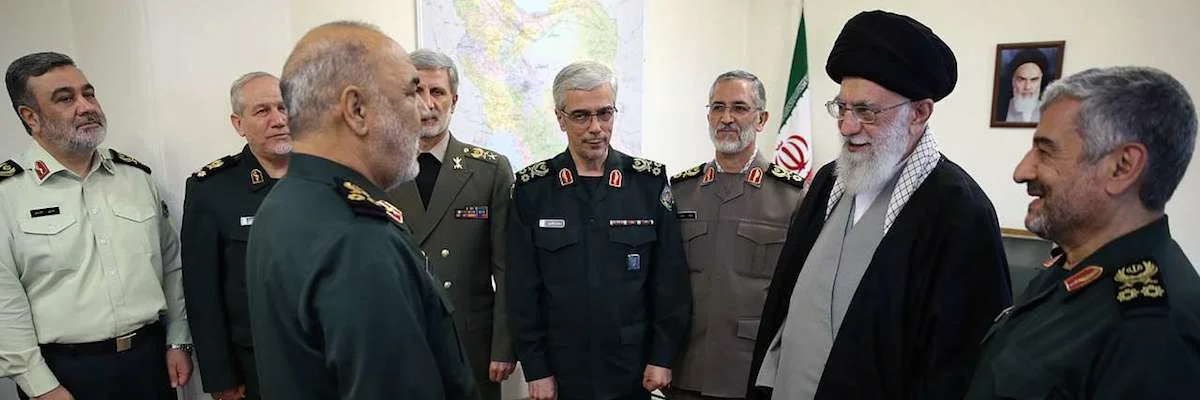
◢ Iran named a new commander known for his bellicose rhetoric against his country’s enemies to lead the Revolutionary Guard Corps, two weeks after the elite military force was designated a terrorist organization by the U.S. Supreme Leader Ayatollah Ali Khamenei appointed General Hossein Salami, 58, to replace General Mohammad Ali Jafari, according to a decree.
Iran named a new commander known for his bellicose rhetoric against his country’s enemies to lead the Revolutionary Guard Corps, two weeks after the elite military force was designated a terrorist organization by the U.S.
Supreme Leader Ayatollah Ali Khamenei appointed General Hossein Salami, 58, to replace General Mohammad Ali Jafari, according to a decree. Salami’s fiery speeches during Friday prayers are among his hallmarks. No reason was given for Jafari’s replacement after more than a decade at the Guards’ helm.
The U.S. slapped the terrorism label on the force in another bid to deter foreign companies and governments from doing business with Iran by threatening criminal prosecution of anyone providing “material support” to the Guards. It’s the latest in a series of steps Washington has taken to ramp up pressure on Iran since President Donald Trump quit the multinational nuclear accord with the Islamic Republic last year and reimposed sanctions.
“The Supreme Leader is moving his chess pieces around as a reaction to the administration’s posture,” said Amir Handjani, a senior fellow at the Atlantic Council, describing Salami as “well versed in the exercise of brute force” and “very much an operations guy.” He “picked Salami because he foresees a confrontational footing with the U.S. and he wants a hardliner’s hardliner,” Handjani said.
The Guards, created after the 1979 Islamic Revolution to bolster the regime, is deeply embedded in the country’s economy and was already under heavy sanctions before the terrorism designation. Salami joined the force during the Iran-Iraq war in the 1980s and held a number of posts in its ground, air and naval forces, according to state-run media.
As the deputy head of the Guards before his new appointment, Salami was already in charge of much of its internal affairs, according to Fars news.
His trademark rhetoric has included warnings that "our missiles are ready to launch” and “Israel will be razed” if a war is initiated against Iran. While he won’t be a policy maker—the Guards answer directly to Khamenei—he will be a high-profile and pugnacious figure as Iran pushes back against new U.S. pressure on the force.
Iranian officials say the entity is a vital institution that helps protect Iran from external threats and ensure its national security and sovereignty.
Trump has turned confronting Iran into a cornerstone of his Middle East policy, pressing Arab states and European allies alike to isolate the Islamic Republic and weaken its influence in the region. The U.S. government said on Monday that it won’t renew waivers that let countries buy Iranian oil without facing American sanctions.’
Photo: IRNA
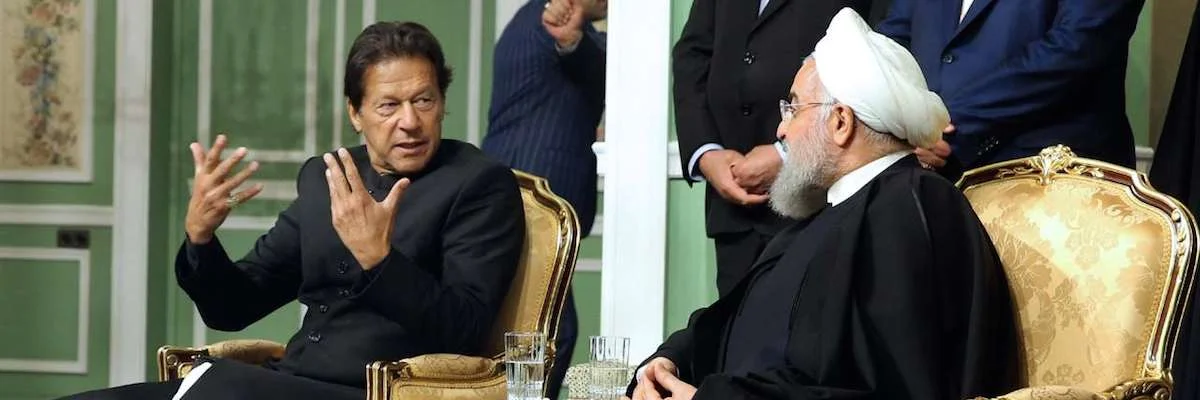
Pakistan PM Imran Khan Makes First Visit to Iran
◢ Pakistani Prime Minister Imran Khan began his first official visit to Iran on Sunday for talks set to focus on
strengthening ties and countering terrorism. The state-run IRNA news agency said Khan's trip was expected to help "develop ties between the two countries, especially those related to regional cooperation in fighting terrorism and safeguarding borders.”
Pakistani Prime Minister Imran Khan began his first official visit to Iran on Sunday for talks set to focus on
strengthening ties and countering terrorism, state media reported.
Khan began his two-day visit with a stop in the northeastern holy city of Mashhad, Iran's second largest and home to the shrine of Imam Reza who is revered by Shiite muslims, state television said in a live broadcast.
After visiting the shrine, Khan was to fly to Tehran where on Monday he is expected to hold talks with President Hassan Rouhani and other top officials.
The state-run IRNA news agency said Khan's trip was expected to help "develop ties between the two countries, especially those related to regional cooperation in fighting terrorism and safeguarding borders.”
Iran and Pakistan share a long border that runs nears the volatile southeastern province of Sistan-Baluchistan which has witnessed over the years numerous attacks on Iran's security forces.
In March, Rouhani demanded Pakistan act "decisively against anti-Iranian terrorists", following a February attack that killed 27 members of the elite Revolutionary Guards in Sistan-Baluchistan.
Iran has said a Pakistani suicide bomber was behind the attack, which was claimed by the Sunni jihadist group, Jaish al-Adl (Army of Justice), which Tehran says operates mostly out of bases in Pakistan.
Khan's visit to Iran, the first since he took office last year, also comes days after gunmen killed 14 members of Pakistan's security forces in the Balochistan province.
On Saturday Pakistani Foreign Minister Shah Mehmood Qureshi said Islamabad had evidence the "terrorist outfits" that carried out the attack have "training and logistic camps inside Iranian areas bordering Pakistan".
Balochistan, which borders Afghanistan and Iran, is Pakistan's poorest province and the largest by landmass, with Islamist as well as ethnic Baloch separatists active there.
Photo: AFP
Saudi, UAE Send Relief Aid to Flood-Stricken Iran
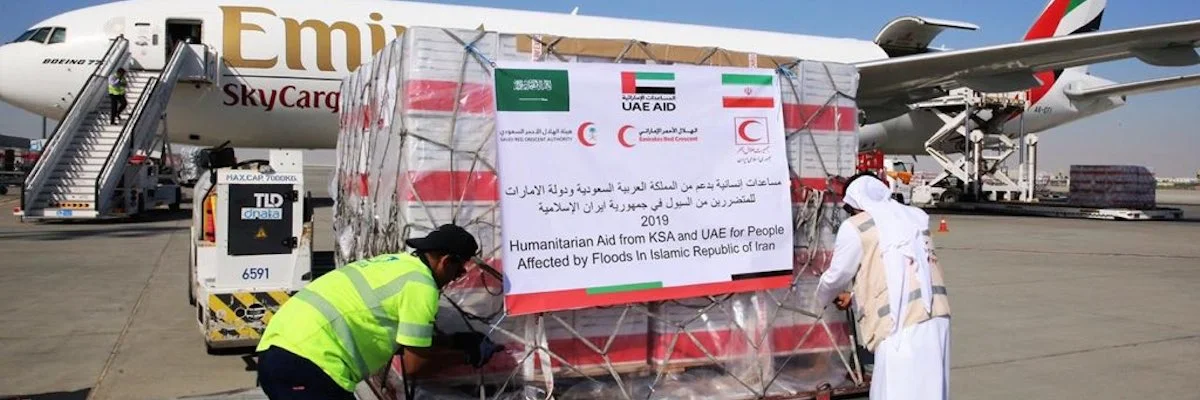
◢ Saudi Arabia and the UAE have sent 95 tons of humanitarian aid to their rival Iran as it reels from deadly floods, officials said Thursday, after Tehran complained US sanctions were obstructing relief. The aid, which includes food and shelter material, was authorized by Saudi Arabia's king and crown prince, it added.
Saudi Arabia and the UAE have sent 95 tons of humanitarian aid to their rival Iran as it reels from deadly floods, officials said Thursday, after Tehran complained US sanctions were obstructing relief.
"The Saudi Red Crescent, as part of a joint Saudi-UAE initiative to alleviate the suffering of Iranian citizens, has dispatched a relief plane to Tehran with 95 tons of humanitarian aid to support those affected by floods," the official Saudi Press Agency said.
The aid, which includes food and shelter material, was authorized by Saudi Arabia's king and crown prince, it added.
The Emirates Red Crescent was also involved in the relief operation, the UAE's official WAM news agency said.
At least 76 people have died in Iran after torrential rainfall, which has also caused billions of dollars worth of damage since March 19.
Iran's Red Crescent has repeatedly complained that US banking sanctions re-imposed last year make it impossible to receive donations from outside the country.
US President Donald Trump last year withdrew Washington from a multilateral agreement on Iran'snuclear program, later re-imposing sanctions focusing on oil exports and financial transactions.
Sunni powerhouse Saudi Arabia and Shiite-dominated Iran have a longstanding rivalry based as much on geostrategic interests as religious differences.
Facing off across the Gulf, the two major oil producers have taken opposing sides for decades in conflicts across the Middle East.
Riyadh broke off diplomatic relations with Tehran in 2016 in protest at the torching of its diplomatic missions by Iranian protesters angry over its execution of a leading Shiite cleric.
Photo: Saudi Red Crescent
Turkey Hopeful US Will Extend Waiver on Iran Sanctions
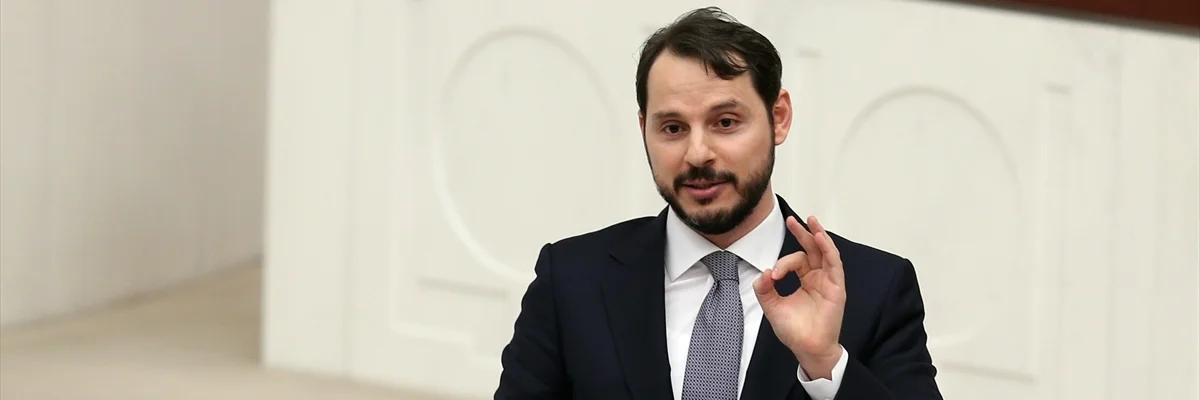
◢ Turkey voiced hope Tuesday that the United States will extend an exemption in sanctions to allow it to keep buying oil from Iran, despite tensions between the allies on multiple fronts. Turkish Finance Minister Berat Albayrak met President Donald Trump at the White House on Monday and discussed the range of disagreements.
Turkey voiced hope Tuesday that the United States will extend an exemption in sanctions to allow it to keep buying oil from Iran, despite tensions between the allies on multiple fronts.
Turkish Finance Minister Berat Albayrak met President Donald Trump at the White House on Monday and discussed the range of disagreements including Ankara's major weapons purchase from Russia, said Ibrahim Kalin, the spokesman for President Recep Tayyip Erdogan.
"It was a positive meeting overall," Kalin told reporters in Washington.
Kalin said Turkey was hopeful that the Trump administration would issue another waiver for Turkey after last year demanding that all nations stop buying oil from Iran.
"Certainly we are expecting an extension for Turkey," Kalin said, adding that Ankara has not received a formal notice.
The United States has given six-month exemptions to eight countries -- China, Greece, India, Italy, Japan, South Korea, Taiwan and Turkey—that run out on May 2.
Kalin said Turkey had reduced its imports from Iran despite disagreeing with the US sanctions, which Trump imposed unilaterally after pulling out of an international accord under which Tehran drastically scaled back its nuclear program.
"People should not expect Turkey to turn its back on Iran just like that," he said, pointing to the countries' shared border and historic relationship.
"We want to maintain good relations with Iran and we believe that the way to deal with Iran is more engagement rather than more sanctions."
Relations between the United States and Turkey deteriorated after the NATO ally said it would buy the S-400 missile defense system from the alliance's main nemesis Russia.
The United States has responded by suspending Turkey's participation in the key F-35 fighter-jet project.
Kalin renewed Turkey's offer to form a joint committee to examine US concerns that Russia would gain data in Turkey to help the S-400 system shoot down the Western planes.
He said that Russian air defenses are already operating in war-torn Syria, where Israeli F-35s frequently enter the airspace.
“When you consider the airspace in the region, it should be very easy for Russians to gain access to that sensitive data already," Kalin said.
"If they are waiting for Turkey to install these S-400s in Turkey to get that information, that wouldn't make sense."
Kalin was in Washington to participate in a conference of the American-Turkish Council, a business group, at the Trump International Hotel.
Photo: Turkish Government
Instagram Accounts of Iran Guards Commanders Blocked
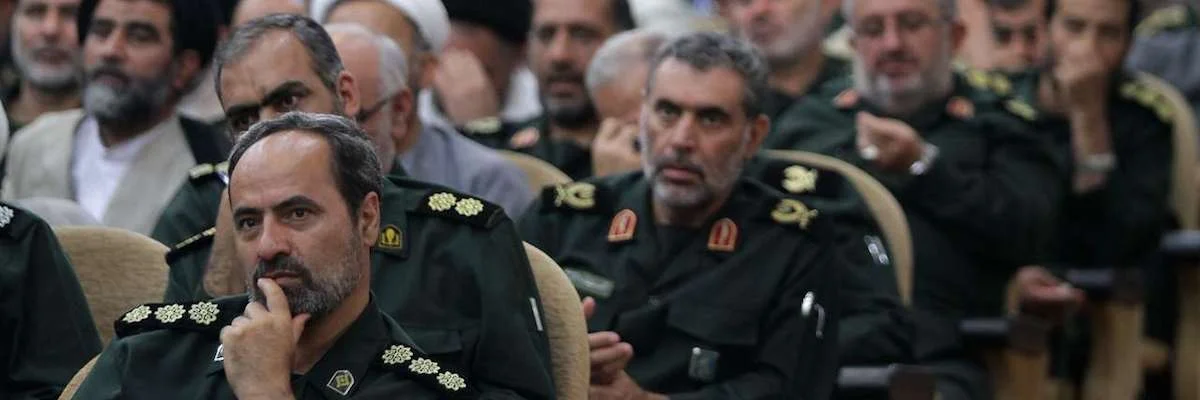
◢ The Instagram accounts of several Iranian Revolutionary Guards commanders have been blocked, the Tabnak news website reported Tuesday, with the photo-sharing website saying it was complying with US sanctions. The United States announced on April 8 that it has placed the IRGC, the ideological army of the Islamic republic, on their list of "foreign terrorist organizations.”
The Instagram accounts of several Iranian Revolutionary Guards commanders have been blocked, the Tabnak news website reported Tuesday, with the photo-sharing website saying it was complying with US sanctions.
The United States announced on April 8 that it has placed the Islamic Revolutionary Guard Corps, the ideological army of the Islamic republic, on their list of "foreign terrorist organizations.”
Tabnak, a site close to Iranian conservatives, said Instagram blocked the accounts of Major General Mohammad Ali Jafari, Major General Mohammad Bagheri and Major General Ghassem Soleimani.
Access to Soleimani's account, which was working last week, was denied on Tuesday.
"Sorry, this page isn't available," read a message on the account.
"The link you followed may be broken, or the page may have been removed."
Contacted by AFP, an Instagram spokesperson said it was operating "under the constraints of US sanctions laws.”
"We work with appropriate government authorities to ensure we meet our legal obligations, including those relating to the recent designation of the IRGC," the spokesperson added.
Iran's Telecommunications Minister Mohammad-Javad Azari Jahromi appeared to be referring to Instagram's move with a tweet on Tuesday.
"When you tear out a man's tongue, you aren't proving him a liar, you're only telling the world that you FEAR what he might say," he wrote on Twitter.
Facebook, Twitter and the Telegram messenger service are officially banned in Iran, making Instagram the only major social media service accessible in the country without the use of a virtual private network, or VPN, to bypass censorship.
Photo: IRNA
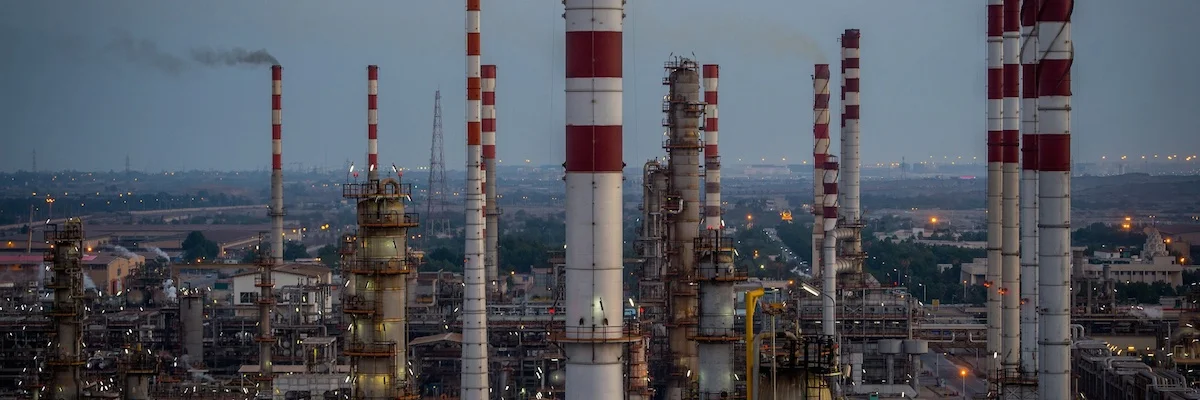
U.S. Waiver Concern Sees Iranian Oil Buyers Put Imports on Hold
◢ The biggest buyers of Iranian oil are said to be putting their purchases on hold as they wait to see whether the White House will extend waivers allowing them to keep buying the crude. Most Asian buyers are avoiding imports for next month as it’s unclear what will happen to the exemptions that are set to expire in the first week of May, according to people with knowledge of the matter.
The biggest buyers of Iranian oil are said to be putting their purchases on hold as they wait to see whether the White House will extend waivers allowing them to keep buying the crude.
Most Asian buyers are avoiding imports for next month as it’s unclear what will happen to the exemptions that are set to expire in the first week of May, according to people with knowledge of the matter. Even if the waivers are extended, it would be too late to order and receive cargoes for the month, said the people who asked not to be identified as the information is private.
The U.S.’s surprise decision last year to allow eight nations to keep buying Iranian oil was a big contributor to the plunge in crude prices in the fourth quarter. While the White House appears keen to keep the pressure on the Persian Gulf nation, analysts including FGE have speculated that preventing further gains in oil prices is a bigger priority for President Donald Trump. Given that crude has recovered strongly this year, that suggests that at least some of the waivers may be extended.
At least five refiners in South Korea, Japan and China are not planning to import Iranian crude and condensate loading in May, the people said. Some Korean and Japanese processors have already bought alternative cargoes for the period, while Iran is being flexible with its customers on timing, they said. Iranian shipments take over 20 days to reach east Asia, meaning there won’t be enough time for the cargoes to load and arrive during the same month.
Japanese refiners say imports from Iran might start loading in June at the earliest if the exemptions are extended, the people said. The nation took 108,000 barrels a day of Iranian supplies last month, tanker tracking data from Bloomberg show.
India, on the other hand, may take some shipments next month if the waivers are extended because shipping time from Iran is only about a week, the people said. The South Asian nation was already in discussions for an extension of the waiver and the country’s processors are allowed to import 9 million barrels of Iranian oil every month under the 180-day exemption.
Photo: Bloomberg
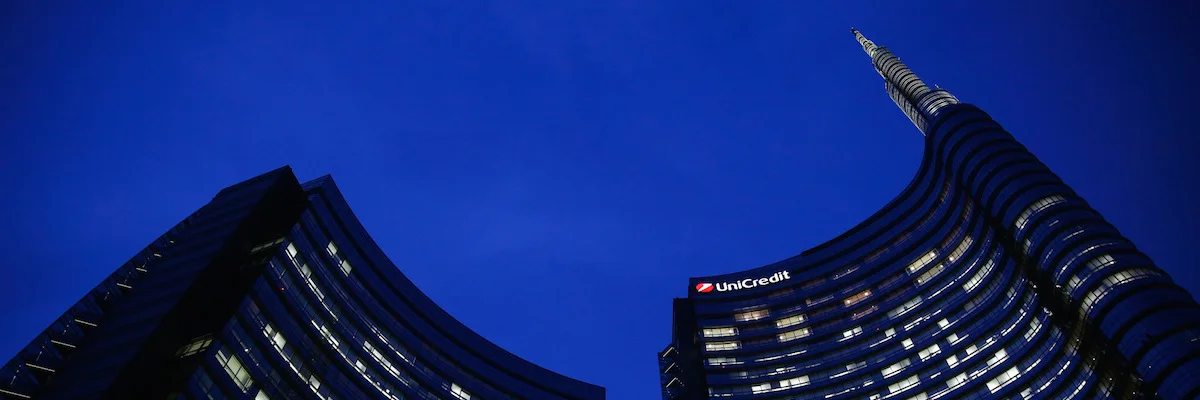
UniCredit’s German Unit Pleads Guilty in U.S. Sanctions Case
◢ A German unit of the Italian bank UniCredit SpA pleaded guilty to U.S. charges that it allowed Iranian customers to conduct transactions in violation of sanctions. As part of its settlement with several U.S. regulators, the bank will pay $1.3 billion and its Austrian unit will enter into a deferred-prosecution agreement.
A German unit of the Italian bank UniCredit SpA pleaded guilty to U.S. charges that it allowed Iranian customers to conduct transactions in violation of sanctions.
As part of its settlement with several U.S. regulators, the bank will pay $1.3 billion and its Austrian unit will enter into a deferred-prosecution agreement. The bank’s German unit, HypoVereinsbank, will also enter a guilty plea in Manhattan to a state-level charge of violating books-and-records requirements.
The penalty is several hundred million dollars more than people familiar with the matter had expected. It’s also among the largest ever related to U.S. sanctions laws. On April 9, Standard Chartered Plc agreed to pay more than $1 billion to resolve a long-running investigation into its handling of transactions related to Iran.
Over a decade beginning in 2002, the German bank moved at least $393 million through the U.S. financial system on behalf of sanctioned entities, the U.S. Justice Department said. The Austrian unit of UniCredit also conspired to circumvent U.S. restrictions on Iranians, prosecutors said.
The bank handled billions of dollars in illegal and non-transparent transactions to clients in sanctioned countries including Cuba, Iran, Libya, Myanmar and Sudan, according to New York’s Department of Financial Services, which fined UniCredit $405 million as part of the settlement. The U.S. attorney’s office in Washington, the Treasury Department, the New York branch of the Federal Reserve Bank and the New York district attorney’s office also took part in the settlement.
The lender set aside 741 million euros ($838 million) in provisions and charges, including funds to settle the allegations, in the third quarter. The bank had also set aside some money for the matter earlier but declined to provide a total.
The settlement amount is covered fully by those set-asides, UniCredit said Monday in a written statement. The bank’s first-quarter earnings will be boosted by about 300 million euros after the penalty funds are released, the bank said. Its common equity tier 1 ratio, a key measure of financial strength, will improve by 8.5 basis points, it said.
UniCredit says it has implemented a “remediation and enhancement plan to strengthen its policies, procedures, supports and controls to ensure full compliance with applicable economic sanctions and internal control requirements,” it said. The bank said it would also further develop methods to prevent and detect illegal activity.
According the New York regulator, UniCredit implemented automated transaction filtering software, known as the “embargo tool,” in 2004 as part of its efforts to flag transactions that might run afoul of the U.S. Treasury’s Office of Foreign Assets Control.
The bank’s core compliance team came up with an instructional guide designed to help the bank’s employees work around the embargo tool -- by submitting payment orders in an “OFAC-neutral” manner that wouldn’t trigger any red flags, according to the New York regulator.
“UniCredit prioritized profit over compliance and security by deliberately engaging in billions of dollars of transactions with clients from sanctioned nations, including Iran, Libya and Cuba, and then working to cover their tracks to avoid detection,” said Linda Lacewell, the acting superintendent of the New York regulator.
UniCredit Chief Executive Officer Jean Pierre Mustier inherited the case when he took the helm in July 2016. HypoVereinsbank, the German unit, was subpoenaed in March 2011 by the New York district attorney’s office over transactions with certain Iranian entities.
UniCredit, Italy’s biggest bank, is one of several European financial institutions settling similar cases. Fifteen European banks have together paid more than $19.5 billion for violating U.S. sanctions against various countries. BNP Paribas SA’s $8.97 billion penalty in 2014 was the largest individual fine.
The settlement is the second for an Italian bank. Intesa Sanpaolo SpA, the country’s second-biggest lender, agreed to pay $235 million in Dec. 2016 to resolve a New York regulator’s allegations that it flouted money-laundering controls for a decade.
Photo Credit: Bloomberg
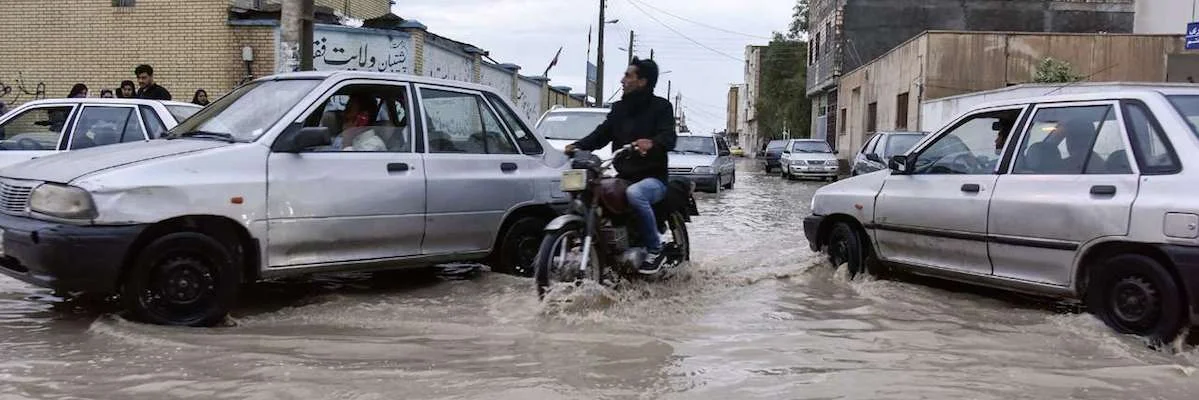
2 Million in Need of Aid After Iran Floods: Red Crescent
◢ The devastating floods that have swamped many parts of Iran since March have left two million people in need of humanitarian aid, the Red Crescent said Monday. The International Federation of Red Cross and Red Crescent Societies called the floods the "largest disaster to hit Iran in more than 15 years.”
The devastating floods that have swamped many parts of Iran since March have left two million people in need of humanitarian aid, the Red Crescent said Monday.
The International Federation of Red Cross and Red Crescent Societies called the floods the "largest disaster to hit Iran in more than 15 years.”
According to the IFRC, the floods have killed at least 78 people and injured more than 1,000 others.
An estimated 10 million people across 2,000 cities and towns have been affected, with more than half a million displaced, it said.
"In all, more than 457,000 people have been reached by Red Crescent services," and emergency accommodation provided for 239,000.
Heavy rainfall in eastern Iran since Saturday prompted authorities to renew flood warnings for large swathes of the country, with local media reporting rivers bursting their banks and roads being swept away.
Iran has been hit by massive floods since March 19 following heavy rainfall in the normally arid country.
Alternating between the country's north, west and southwest, the floods have caused between USD 2.2 and USD 2.6 billion of damages.
Officials said Sunday that 25 out of Iran's 31 provinces have been affected and more than 14,000 kilometers (8,700 miles) of roads damaged.
Photo Credit: IRNA
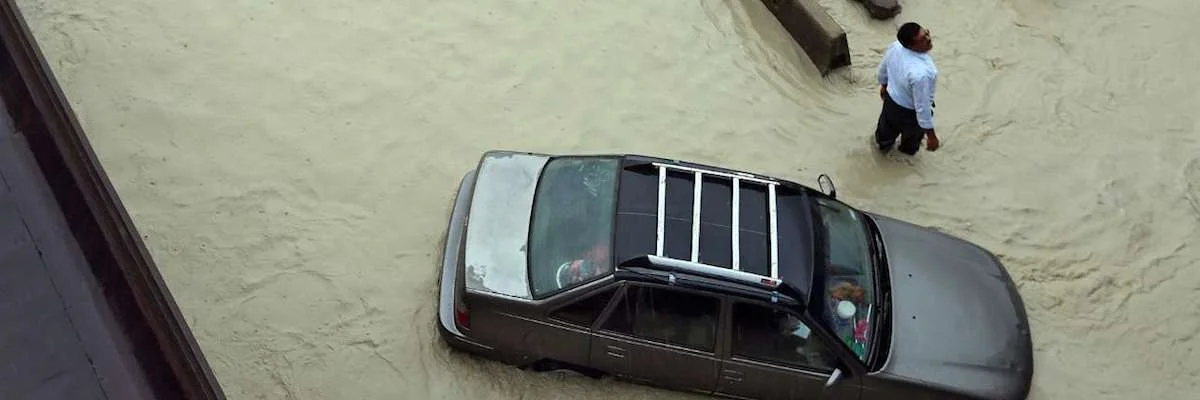
76 Dead in Iran Floods as Tehran Weighs Costs
◢ Floods in Iran have killed 76 people and caused more than USD 2.2 billion in damages in recent weeks, officials said Sunday, with warnings still in place for large swathes of the country. "With the death of five people in the Khuzestan province flood and another person in Ilam province the death toll has now reached 76" since March 19, according to a statement published online by the coroner's office.
Floods in Iran have killed 76 people and caused more than USD 2.2 billion in damages in recent weeks, officials said Sunday, with warnings still in place for large swathes of the country.
"With the death of five people in the Khuzestan province flood and another person in Ilam province the death toll has now reached 76" since March 19, according to a statement published online by the coroner's office.
The two southwestern provinces are the latest overwhelmed by floods that first hit the northeast of the usually arid country, forcing hundreds of thousands to evacuate from cities and villages.
Officials have again issued flood warnings for the east of Iran with heavy rains that began on Saturday forecasted to continue.
The floods have caused immense damage with homes, roads, infrastructure and agriculture all hit.
"Twenty-five provinces and more than 4,400 villages across the country were affected by the floods," Interior Minister Abdolreza Rahmani-Fazli told parliament, according to the official IRNA news agency.
He said the damages amount to between 300 and 350 trillion rials—between USD 2.2 and USD 2.6 billion at the free market rate.
Transport minister Mohammad Eslami meanwhile told lawmakers "725 bridges have been totally destroyed."
“More than 14,000 kilometers (8,700 miles) of roads have been damaged," he said, according to IRNA.
The head of Iran's meteorology service told the same parliamentary session that the floods do not necessarily mean that a decades-long drought has ended.
"The recent floods were due to climate change and global warming," Sahar Tajbakhsh said according to the semi-official ISNA news agency.
The Islamic republic has received aid from neighboring countries and further afield, with France on Saturday donating 210 tents and 114 pumps.
Photo Credit: IRNA
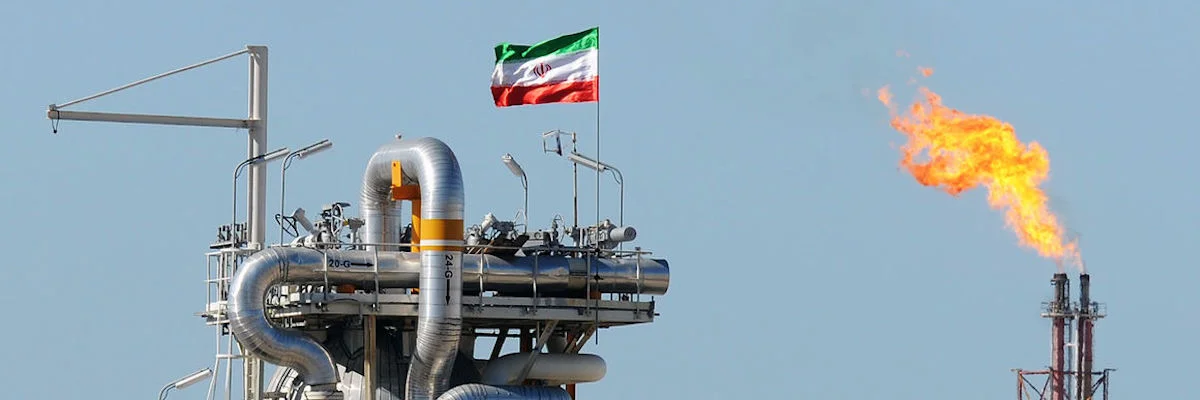
Iran Is Peddling a Million Barrels of Oil Again. No One Wants It
◢ An Iranian exchange has offered investors as much as 6 million barrels of oil so far this year. Only a single deal closed, for the minimum 35,000 barrels. With foreign investors steering clear of the world’s fourth-largest holder of crude, it’s trying via the Iran Energy Exchange to offload some oil to domestic buyers.
An Iranian exchange has offered investors as much as 6 million barrels of oil so far this year. Only a single deal closed, for the minimum 35,000 barrels.
Iran’s oil production and exports have slumped after the U.S. reinstated sanctions last year, and new curbs are set to further restrict its exports. Exemptions for importing countries including Japan, China, Turkey, India and South Korea have partially cushioned the blow.
With foreign investors steering clear of the world’s fourth-largest holder of crude, it’s trying via the Iran Energy Exchange to offload some oil to domestic buyers. Sales have been dismal, and even Iranian oil officials concede that the physical contracts are undesirable as long as oil sanctions remain intact.
“We knew from the beginning that it was almost impossible to sell oil” on the exchange, Morteza Behrouzifar, deputy head of the Iranian Association for Energy Economics, said in an interview. “Iran’s crude is sanctioned and under no circumstances can anyone buy Iranian crude except those who were granted waivers.”
Iran has tried to sell oil on its exchange in the past. The first offerings in 2011 weren’t successful, and another effort to sell just under three thousand barrels in 2014 wasn’t received well by potential buyers, state-run Islamic Republic News Agency reported last week.
The exchange is offering another million barrels of light crude for a 6 percent down payment and 90 days of credit this week. But it’s up to the buyer to line up the tanker and insurance needed to transport the fuel to the ultimate user.
“Those who have waivers go directly to the National Iranian Oil Co. They don’t need to participate in the bourse,” Behrouzifar said. “It’s pretty immature to think of the energy exchange as a way to get around sanctions.”
Photo Credit: IRNA
Iranians Band Together to Battle Devastating Floods
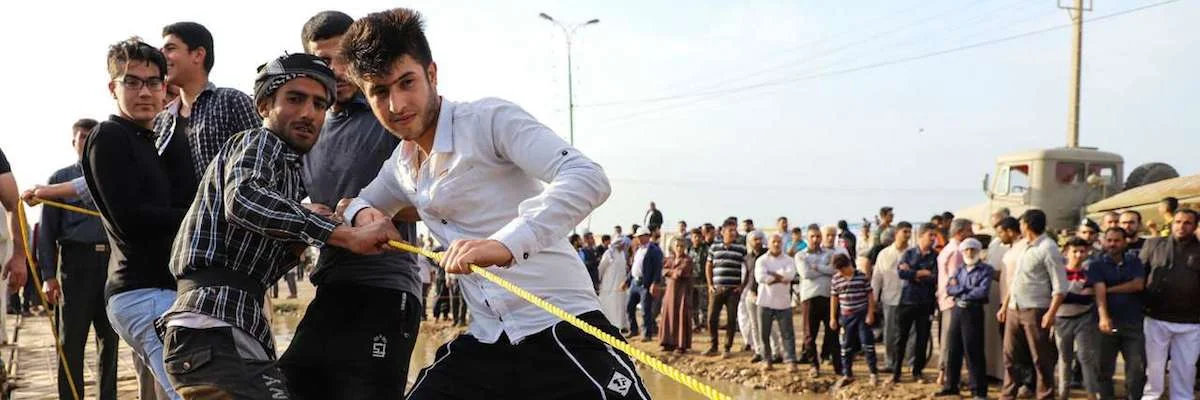
◢ The oil-rich Khuzestan province and its large Arab minority have been hit by major floods since early April due to heavy rains and floodwater rushing down from the north. In the absence of adequate resources in place to ease such disasters, people are banding together in towns like Hamidiyeh to battle the overflow.
Sweat rolling down his cheek, Ghasem Arabi filled sandbags to prop-up a makeshift dyke as flood waters surged just metres behind him in Iran's deluge-stricken southwest.
"Our youth are working day and night," said the 37-year-old nurse as he helped shovel sand into plastic sacks held by fellow residents in the agricultural town of Hamidiyeh.
"God willing this flood will not reach their homes... that's all they have left," he said, adding that many had already lost their farmlands to the rising waters.
The oil-rich Khuzestan province and its large Arab minority have been hit by major floods since early April due to heavy rains and floodwater rushing down from the north.
They are the latest in a series of unprecedented floods that have swamped the normally arid country since March 19, killing at least 70 people in 20 of Iran's 31 provinces.
In the absence of adequate resources in place to ease such disasters, people are banding together in towns like Hamidiyeh to battle the overflow.
Most women and children have been evacuated but young men and their fathers have stayed behind to help protect their homes, building barriers and banks to beat back the swelling waters of the Karkheh river.
Arabi works at a hospital in Ahvaz city, the capital of Khuzestan, roughly 30 kilometres (18 miles) southeast of Hamidiyeh.
He was on holiday with his family for the Nowruz Persian New Year holiday when the floods started. He decided to stay and help.
"We need clothes, food, drinking water. Running water and power get cut every night," said Arabi.
His brothers were busy lugging what little furniture and appliances they had up to the roof, hoping to protect them from the tide.
'Critical' Situation
Floodwaters have already swallowed up some houses along the river bank, seeping into the ground floors of others and turning yards into lakes.
The rising waters have submerged kilometres of surrounding flatlands too.
Many of the newly homeless residents have found shelter with neighbours in parts of the town still hoping to control the flood.
Along the bulging river banks, dozens dig up soil and fill sandbags.
The Karkheh's water level has risen dangerously close to the town's sole small bridge. Just a few more metres and the river will only be crossable by boat.
"See that tree? That's where my garden was," said one resident, throwing a stone towards a branch poking out of the water.
At one spot along the bank, more than a dozen men formed a chain from a nearby alley to the water's edge, handing down bags of sand.
The mix of locals, fatigue-clad members of the elite Revolutionary Guards and Muslim clerics wearing black and white robes looked almost jovial—singing revolutionary anthems and upbeat Arabic tunes.
Despite the presence of the Guards, residents said more government help was needed.
"We lack trucks, sandbags... and bulldozers. The situation is very critical," said Abbas Mansouri, a farmer whose house was heavily damaged but was handing out food, tea and cold water to his neighbours.
Two pumps draining water out of homes were donated by the Guards, locals said, and a bulldozer and a truck working nearby belonged to the government, according to their drivers.
"The government has sent us very little help," said one resident, without providing his name.
He said he had not seen any Red Crescent workers or soldiers pitching in to help out.
'My Heart Breaks'
The scale of the disaster and a lack of resources has meant the Red Crescent has been forced to prioritize villages with limited means, aid workers with the group told AFP.
The humanitarian organisation only has six helicopters to cover thousands of square kilometres hit by the floods, according to a Red Crescent flight engineer.
The flooding has caused damages worth IRR 40 trillion in Khuzestan—over USD 280 million at the free market rate—according to an official figure.
Despite oil riches and large agriculture industry, Khuzestan is one of Iran's most underprivileged provinces.
"Agriculture was their life and now it's destroyed," Mostafa Torfi, a 35-year old aid worker, told AFP.
"My heart breaks for the villagers every time I see them ... We are doing all we can for them," he added.
Photo Credit:INRA
Fresh U.S. Divide on Iran Emerges Over Expiring Nuclear Waivers
◢ A fresh divide is emerging between some Trump administration officials and hard-line opponents of Iran in the Senate over how far to go in the White House’s “maximum pressure” campaign against the Islamic Republic. In a letter to President Donald Trump this week, a group of Republican senators demanded that Secretary of State Michael Pompeo stop letting Iran continue its limited civilian nuclear research program.
A fresh divide is emerging between some Trump administration officials and hard-line opponents of Iran in the Senate over how far to go in the White House’s “maximum pressure” campaign against the Islamic Republic.
In a letter to President Donald Trump this week, a group of Republican senators demanded that Secretary of State Michael Pompeo stop letting Iran continue its limited civilian nuclear research program.
At issue are three waivers the Trump administration granted after it withdrew from the 2015 nuclear deal last year. They allow Iran to work with nations that remain in the deal at three sites—Fordow, Bushehr and Arak—to ensure it doesn’t seek to enrich uranium to high levels. It’s part of an effort to limit the risk of nuclear weapons proliferation.
In their April 9 letter to Trump, six Republican senators including Ted Cruz of Texas, Tom Cotton of Arkansas and Marco Rubio of Florida argued that the administration shouldn’t extend the waivers when they expire in early May.
“There is extensive evidence Iran channeled its nuclear weapons program through civil nuclear projects after 2003,” the senators wrote in the letter seen by Bloomberg News. They urged the president to “finally end all U.S. implementation” of the 2015 deal, known as the Joint Comprehensive Plan of Action.
Bolton Versus Pompeo
The nuclear exceptions are up for renewal even as the administration must weigh extending waivers that allow a select group of governments to keep buying Iranian oil without facing sanctions.
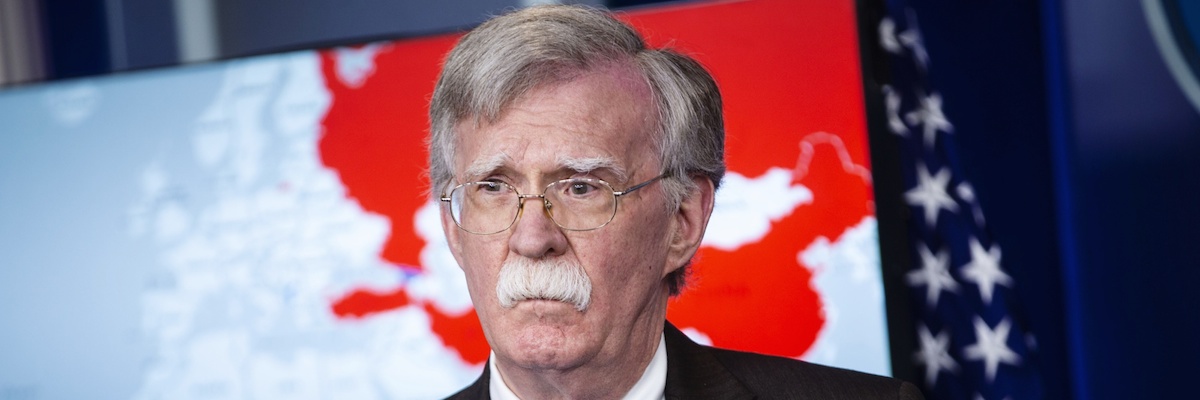
Some within the administration, including National Security Advisor John Bolton, have argued those waivers also should be revoked. On the other side is Pompeo -- normally seen as among the toughest Trump aides on Iran -- whose State Department advisers have argued that the exceptions fit broader U.S. interests including keeping oil markets stable.
The fight over both sets of waivers has exposed a rare division between hard-line and harder-line opponents of Tehran. This week the Trump administration designated the Islamic Revolutionary Guard Corps, an elite branch of Iran’s military, as a foreign terrorist organization.
But that move didn’t quell growing irritation among some of Trump’s allies that the president has continued to let Iran get limited benefits from the Obama-era nuclear agreement.
With the 2020 U.S. presidential election approaching, advocates of an even tougher approach are pushing for a complete collapse of the deal that allies including the U.K., Germany and France have struggled to keep alive.
Cruz pressed Pompeo on the issue at a hearing of the Senate Foreign Relations Committee on Wednesday, telling him that extending the waivers “could further Iran acquiring nuclear weapons.”
“‘Maximum pressure’ should be ‘maximum pressure,”’ Cruz said.
Pompeo demurred, saying the decision hadn’t been made yet. He left open the possibility that the waivers could be extended.
“I’d love to talk to you in a classified setting about it—it’s complicated,” Pompeo said. On Cruz’s contention that t people in the State Department continue to resist Trump’s desire to kill the nuclear deal, Pompeo said, “We’ve got 90,000 employees, probably that many opinions.”
‘End All’
Two people familiar with the administration’s thinking, who asked not to be identified discussing private deliberations, said they expect the nuclear waivers to be renewed. One of the people said Republican senators are still weighing how hard to fight Trump and Pompeo on the matter, including whether to hold up administration nominees unless the waivers are scrapped.
A spokesman for Cruz wouldn’t rule out the possibility.
“The Trump administration should end all implementation of the deal, including the nuclear and oil waivers the State Department has been issuing, and Senator Cruz will use all options available to him to push the administration to do so,” Billy Gribbin said.
Views on extending the nuclear waivers vary among experts on Iran’s nuclear program. David Albright, president of the Institute for Science and International Security, argues that the waiver governing the Bushehr nuclear complex on the Persian Gulf should be extended because it allows Iran to buy uranium to power its reactor rather than enriching it on its own.
Weapons-Grade Uranium
But Albright says the Fordow waiver is more complicated because of information that came out after Israel exposed Iran’s nuclear archive last year. That data showed Iran had built Fordow, near the holy city of Qom, solely to make weapons-grade uranium, he said.
“The U.S. position should be that Fordow be shut down,” Albright said in an interview. “It was part of nuclear weapons program and it’s being preserved for a nuclear weapons program.”
Former Obama administration officials who helped craft the Iran deal said revoking the nuclear waivers would do the opposite of what the administration seeks by only adding to risk that Iran could build a nuclear weapon.
“It’s insane from a nonproliferation perspective,” said Jarrett Blanc, a senior fellow at the Carnegie Endowment for International Peace and a former State Department coordinator for Iran nuclear implementation. “Deciding to throw that away because you need the next drumbeat of antagonism toward Iran is nuts.”
Photo Credit: Bloomberg

Pompeo Says Iran Tied to Al-Qaeda, Declines to Say if War Legal
◢ US Secretary of State Mike Pompeo on Wednesday accused Iran of ties to Al-Qaeda and declined to say whether the Trump administration had legal authority to invade the country. Testifying before the Senate Foreign Relations Committee, Pompeo hedged on whether the authorization of force by the US Congress days after the September 11, 2001 attacks would allow the United States to strike Iran.
US Secretary of State Mike Pompeo on Wednesday accused Iran of ties to Al-Qaeda and declined to say whether the Trump administration had legal authority to invade the country.
Testifying before the Senate Foreign Relations Committee, Pompeo hedged on whether the authorization of force by the US Congress days after the September 11, 2001 attacks would allow the United States to strike Iran.
"I would prefer just to leave that to lawyers," Pompeo told Senator Rand Paul, a Republican who is critical of US foreign interventions.
"The factual question with respect to Iran's connections to Al-Qaeda is very real. They have hosted Al-Qaeda, they have permitted Al-Qaeda to transit their country," he said.
"There is no doubt there is a connection between the Islamic Republic of Iran and Al-Qaeda. Period, full stop," he said.
But Pompeo denied Paul's suggestion that President Donald Trump's designation Monday of Iran's elite Revolutionary Guards was aimed at making a legal case for war.
"It was not part of the decision-making process. The designation was a simple recognition of reality," Pompeo said, citing US figures that Iran was behind more than 600 deaths of US troops in Iraq after the 2003 invasion when Tehran backed Shiite forces.
Trump has piled pressure on Iran after last year withdrawing from a nuclear accord negotiated under previous president Barack Obama, slapping sweeping sanctions as Washington seeks to roll back the clerical regime's regional influence.
Paul voiced concern that Pompeo had not rejected war with Iran under the 2001 authorization, which has been used to back the war in Afghanistan as well as attacks on Al-Qaeda in countries as diverse as Yemen and the Philippines.
"I am troubled that the administration can't unequivocally say that you haven't been given power or authority by Congress to have war with Iran," Paul said.
"In any kind of semblance of a sane world, you would have to come back and ask us before you go into Iran," Paul said. The US Constitution gives the power to declare war to Congress.
Paul also rejected the idea that Iran, a Shiite clerical regime, would ally with Al-Qaeda, Sunnis whose ranks have denounced Shiites as heretics.
"I don't think that dog hunts very well," Paul said of Pompeo's statement. "They actually would just as soon eradicate Sunni extremists."
Iran is believed to have been the longtime base of Hamza bin Laden, the son of late Al-Qaeda founder Osama bin Laden.
But some experts say Tehran kept him under house arrest as a way to maintain pressure on rival Saudi Arabia and dissuade Al-Qaeda attacks inside Iran.
Photo Credit: State Department
Iran Orders More Than 60,000 to Evacuate Food-Hit Oil City
◢ Authorities ordered tens of thousands of residents of the southwestern Iranian city of Ahvaz to evacuate immediately on Wednesday as floodwaters entered the capital of oil-rich Khuzestan province, state television reported. The province's governor, Gholamreza Shariati, said he ordered the evacuation of five districts as a "precautionary and preventive move to avert any danger.”
Authorities ordered tens of thousands of residents of the southwestern Iranian city of Ahvaz to evacuate immediately on Wednesday as floodwaters entered the capital of oil-rich Khuzestan province, state television reported.
The province's governor, Gholamreza Shariati, said he ordered the evacuation of five districts as a "precautionary and preventive move to avert any danger", Iran's Tasnim news agency reported.
The districts have an estimated population of between 60,000 and 70,000.
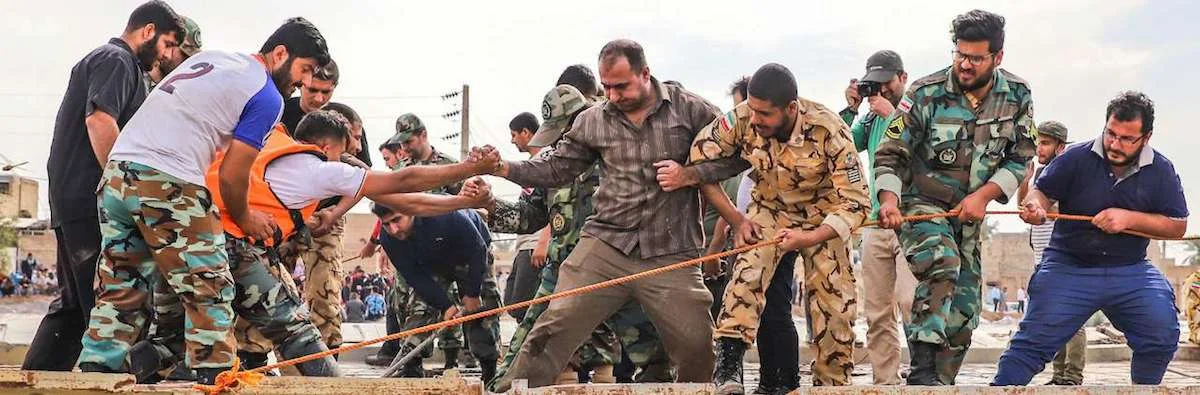
Shariati asked young men to "help us in building dykes and to assist in the evacuation of women, children and the elderly."
"The Dez and Karkheh rivers have for the first time joined each other near Ahvaz and are now flowing towards the city," Shariati told state TV, adding this was unprecedented.
"These two rivers are far away from each other, but the huge volume of floodwater caused them to join up.”
Shariati said a sixth district was also put on standby for possible evacuation.
Khuzestan province has been struggling with major floods due to heavy rains as well as floodwater coming from the north.
It is the latest in a series of unprecedented floods that have hit the normally arid country since March 19, killing at least 70 people in 20 of Iran's 31 provinces.
The country's northeast was first swamped on March 19 before the west and southwest of the country were hit on March 25.
Food is Priority
On April 1 the west and southwest were again swamped by floods when heavy rains returned.
The huge inflow of water forced authorities to release large volumes of water from the province's largest dams, which is now threatening some of the cities downstream including the Ahvaz region, home to 1.3 million.
Authorities ordered the evacuation of six new cities along the Karkheh river on Saturday as the situation neared "critical" status.
"We've been trying to manage the water ... most of it has been diverted toward other channels," Ahvaz Mayor Mansour Katanbaf told ISNA on Sunday.
But on Monday a hospital in danger of being flooded was evacuated in Ahvaz as officials battled to contain the rising waters.
Emergency services have been left scrambling to prevent further loss of life and to provide relief to flood-stricken residents.
"Delivering food and hygienic goods to (shelter) camps is our primary priority and we have provided emergency accommodations for about 44,000 people," Iran Red Crescent's head of Relief and Rescue Organization Morteza Salimi told AFP on Tuesday.
In the city of Susangerd, swamped by floodwaters, an AFP team dispatched to the region saw residents living in tents setup on the roofs of their homes as what had previously been roads had become canals marked by the palm trees lining the streets.
Red Crescent choppers were providing food and basic goods to regions cutoff by floods, with villagers rushing to receive the help as they approached.
The flooding across Iran has caused damage worth IRR 150 trillion—more than USD 1 billion at the free market rate—according to an official estimate given by lawmaker Mehrdad Lahooti.
Photo Credit: IRNA
Lies, Coaching at StanChart Kept Iran Cash Moving, U.S. Says
◢ A pair of Standard Chartered Plc bankers in Dubai went a long way to protect the lucrative business of a prized Iranian client. Now the cost of their actions is clear: The London-based bank just agreed to fines and penalties of more than USD 1 billion for failing to stop and disclose its work with the Iranian and several others.
A pair of Standard Chartered Plc bankers in Dubai went a long way to protect the lucrative business of a prized Iranian client.
Now the cost of their actions is clear: The London-based bank just agreed to fines and penalties of more than USD 1 billion for failing to stop and disclose its work with the Iranian and several others.
U.S. court filings on Tuesday revealed how little some Standard Chartered employees heeded U.S. sanctions, and how they dissembled in order to hold onto profitable clients. When it came to the Iranian, Mahmoud Reza Elyassi, it was clear from the start that his company was linked closely to Iran. He submitted his Iranian passport as he opened an account in 2006. He routinely faxed payment instructions to the bank from a number originating in Iran.
The two Standard Chartered employees—a relationship banker and a foreign-exchange sales manager -- assured other bank executives that Elyassi’s business wasn’t prohibited by U.S. sanctions against Iran. After the bank moved to close Elyassi’s account because of too many rejected payments, the banker allegedly helped him open a new account in another company’s name.
Overall, the Standard Chartered employees helped Elyassi, 49, move USD 240 million through the U.S. financial system from 2007 to 2011, prosecutors say. Standard Chartered failed to disclose the activity to U.S. authorities even as it negotiated a settlement over other Iran-related violations in 2012, resulting in a sealed criminal charge against the banker, who pleaded guilty to conspiring to defraud the U.S. but wasn’t identified.
The bank’s resolution comes as President Donald Trump reasserts a hard line against Iran, most recently by designating an arm of Iran’s military as a terror organization.
Blacklisted Customers
The case involving Elyassi and the two bankers document the most egregious conduct cited by U.S. authorities amid a broad array of new evidence that the bank facilitated illicit business for blacklisted operators over the better part of a decade. The total value of the transactions exceeded USD 400 million, the vast majority for Iranian interests.
The court documents made public Tuesday make clear that while the Dubai branch was the locus of the misconduct, it was not limited to the employees who helped Elyassi. Another relationship banker helped an Iran-linked petrochemical company conduct extensive business through Standard Chartered. Others, including business and legal personnel, hesitated for more than a year to block online transactions originating from sanctioned countries despite warnings—and having the technological capability to do so.
The bank said Tuesday that it accepted “full responsibility” for the misconduct and faulted two former junior employees “who were aware of certain customers’ Iranian connections and conspired with them to break the law.”
The filings say that bank executives changed identifying information on customer accounts to hide Iranian ties for a petrochemical company and allowed thousands of fax and online transactions originating from IP addresses in Iran. It also facilitated hundreds of transactions in U.S. dollars involving Sudan, Syria, Cuba and Burma.
Charging Individuals
Through dozens of sanctions cases, some of them involving billions of dollars in prohibited transactions, the U.S. has rarely, if ever, charged an individual banker with facilitating the violations. In major cases, including those against HSBC Holdings Plc and BNP Paribas SA, the Justice Department faced intense criticism for extracting multibillion-dollar punishments from banks while failing to hold any individuals culpable.
The latest charges—albeit against an anonymous, low-level banker in a foreign country—represent an incremental step toward calling bank executives to account for financial misdeeds.
“Very few charges have been brought against individuals in the financial services sector and, more specifically, in anti-money laundering and sanctions related cases” since the Justice Department in 2015 started encouraging prosecutors to pursue individuals in corporate cases, said Jesse Morton, a fraud investigator at the Stout consulting firm in Atlanta.
It’s not clear whether the prosecution of individuals in the Standard Chartered case “is the result of the actions of these two being so blatant and egregious, the huge dollar amount and number of transactions at issue, the primary country at issue being Iran or the start of a new trend in these types of cases,” Morton said.
The banker, referred to only as Person A in court papers, and the foreign-exchange sales manager left Standard Chartered in 2014, in the middle of the Justice Department investigation.
Avoiding Detection
Prosecutors said the pair counseled Elyassi on ways to structure transactions in ways that wouldn’t raise suspicions about Iranian connections. They also provided false and misleading information to disguise his Iranian connections and lied to other bank executives, including compliance officials, when questioned about rejected payments, the U.S. says.
In the settlement with Standard Chartered, prosecutors said the two employees were motivated by their intent to generate revenue for the bank and keep their jobs.
Based on representations made by the two bank employees, Standard Chartered’s U.S. operation told the Treasury Department in 2010 that Elyassi’s company was based in Dubai and that it traded in power tools and circuits for the printing, diamond and car industries in China, Europe and the Middle East. In fact, according to Elyassi’s indictment, the trading companies were a front for an Iran-based currency-exchange business meant to provide covert access to the U.S. financial system for Iranian people and companies.
But even as Elyassi’s transactions washed through the global financial system, they began to set off alarms at European and U.S. banks that detected Iranian links. Several banks rejected the transactions, and even Standard Chartered’s own internal alerts flagged dozens of the payments for scrutiny.
Banker Coaching
When bank executives finally ordered the account shut down in 2011, Elyassi persuaded the banker in a telephone conversation to delay the closure for a few weeks while they opened a new account in a new company name so Elyassi could continue doing business, prosecutors said. The banker coached Elyassi on structuring payments to hide Iranian ties—telling him to stop sending payments directly from the account to Iranian entities and instead to transfer them through a personal account first, the U.S. says.
The new account was opened a day after the old one was closed, and remained open for nine more months—processing more than 200 transactions during that time, even after it immediately began generating a new series of red flags, according to the filings.
Elyassi was charged with conspiracy and money laundering. His whereabouts are unclear from court documents, but as an Iranian national operating in Iran and the United Arab Emirates, he probably won’t stand trial in the U.S. unless he’s apprehended in a third country with stronger U.S. ties. The U.A.E. has no extradition treaty with the U.S., and the U.S. and Iran have no diplomatic relations.
It’s unclear whether the second bank employee, identified in court filings as Person B, has been charged. The case of the banker who pleaded guilty remains under seal, suggesting he or she is continuing to cooperate with U.S. authorities.
Photo Credit: Bloomberg
Macron Urges Iran's Rouhani to Avoid 'Escalation' of Tensions
◢ French leader Emmanuel Macron on Tuesday urged his Iranian counterpart Hassan Rouhani to avoid an escalation of tensions after Washington blacklisted Iran's elite Revolutionary Guards as a terrorist organization. In a telephone conversation, Macron urged Rouhani to "avoid any escalation or destabilization of the region," the French presidency said in a statement.
French leader Emmanuel Macron on Tuesday urged his Iranian counterpart Hassan Rouhani to avoid an escalation of tensions after Washington blacklisted Iran's elite Revolutionary Guards as a terrorist organization.
In a telephone conversation, Macron urged Rouhani to "avoid any escalation or destabilization of the region," the French presidency said in a statement.
President Donald Trump called the unit—which has some 125,000 troops and vast interests across the Iranian economy—Tehran's "primary means of directing and implementing its global terrorist campaign."
It was the first time that the United States has branded part of a foreign government a terrorist group.
In response, Rouhani on Tuesday accused the United States of being the real "leader of world terrorism".
The Revolutionary Guards are the ideological arm of Iran's military and deeply embedded in the country's political and economic life.
Photo Credit: Wikicommons
Iraq Says Tried to Stop US Blacklist of Iran Revolutionary Guard
◢ Baghdad tried to stop Washington from blacklisting Iran's Revolutionary Guards as a "terrorist organization," Iraqi Prime Minister Adel Abdel Mahdi said Tuesday, warning that the decision could further destabilize the region. The United States declared the Islamic Revolutionary Guard Corps a "terrorist" group on Monday, prompting Tehran to quickly slap US troops with the same designation.
Baghdad tried to stop Washington from blacklisting Iran's Revolutionary Guards as a "terrorist organization," Iraqi Prime Minister Adel Abdel Mahdi said Tuesday, warning that the decision could further destabilize the region.
The United States declared the Islamic Revolutionary Guard Corps a "terrorist" group on Monday, prompting Tehran to quickly slap US troops with the same designation.
"We tried to stop the American decision. We reached out to all sides, to the US and the Saudis," Abdel Mahdi said during a weekly press conference on Tuesday.
He said he had warned Washington and its ally Riyadh that the move would have "negative repercussions in Iraq and in the region,” but stopped short of denouncing it.
Any escalation, he said, "would make us all losers.”
The premier has repeatedly said Baghdad would seek good ties with both Tehran and Washington, and the new sanctions have forced it to walk an even tighter rope.
They mark the first time Washington has branded part of a foreign government a terrorist group, meaning anyone who deals with the Revolutionary Guard could face US prison.
The IRGC was integral during Iraq's years of fighting against the Islamic State group, with the head of its foreign wing Major General Qassem Suleimani coordinating fighting across various Iraqi battlefields.
Since the battle against IS ended in late 2017, Suleimani has continued to meet with Iraq's top political brass.
Officially, the IRGC has no presence in Iraq, and it remains unclear whether these sanctions impact Iraqi figures, institutions or military groups.
Washington reimposed tough sanctions on Tehran's energy and finance industries last year, but granted Iraq several temporary waivers to continue importing Iranian gas and electricity to prop up its frail power sector.
At the same time, Iraq and Iran seem to be deepening trade ties, with Iranian President Hassan Rouhani visiting Baghdad in March and Abdel Mahdi returning the visit at the weekend.
The premier has also said he is planning trips soon to both Riyadh and Washington, Tehran's main foes.
Photo Credit: IRNA