
Iran Holidays at Home as Trump Puts Exotic Trips Out of Reach
◢ Some destinations in Iran got their biggest break courtesy of Donald Trump. His decision in May to reimpose U.S. sanctions led to a collapse in the rial currency that’s sapped Iranians’ spending power, forcing many to abandon the idea of expensive overseas trips. While the resulting runaway prices and shortages are causing hardship for poorer Iranians, it’s boom time on dolphin-shaped Qeshm in the Gulf.
Rare wildlife and dramatic canyons attracted a steady stream of travelers to Mina Fatemi Sadr’s hotel on Iran’s Qeshm island each Persian New Year holiday. Then it got its biggest break courtesy of Donald Trump.
His decision in May to reimpose U.S. sanctions led to a collapse in the rial currency that’s sapped Iranians’ spending power, forcing many to abandon the idea of expensive overseas trips. While the resulting runaway prices and shortages are causing hardship for poorer Iranians, it’s boom time on dolphin-shaped Qeshm in the Gulf.
“We were at full capacity last year, too, at Norouz,” Fatemi Sadr said, referring to Iran’s new year that starts in late March. This year, though, the rooms, flats and villas at her Fulton complex started filling up as the weather cooled around November and there’s been a 30 percent increase over the period from a year ago. It’s a similar picture all over the island, she said.
Home to a free-trade zone specializing in discounted electronics and clothes, Qeshm was touted as a potential beneficiary after Iran signed a 2015 deal with world powers that lifted most economic penalties in return for caps on the country’s nuclear program. A local official said in 2016 that Japanese, Chinese and Russian banks were interested in opening offices on the island as excitement grew over the opening up of an Iranian market of 80 million people.
Silver Lining
Trump’s anti-Iran drive put paid to those hopes, but tourism is providing a silver lining.
Among Qeshm’s attractions are the exotically-named Valley of Stars with its gorges and canyons, mangrove forests peppered with egrets, and fishing villages spread along sandy beaches. They have for years lured a smattering of local travelers and a few adventurous foreigners. The Lonely Planet guide to Iran refers to Qeshm as “bliss for nature-lovers” and in 2017 it became a UNESCO Global Geopark.
Its sights may not be as appealing to middle-class Iranians who in recent years favored new year destinations such as Turkey, Dubai, Thailand and Malaysia—but they’re affordable and within easier reach. Major carriers Air France-KLM Group and British Airways suspended services to Iran last year, citing the reduced commercial viability of the routes in the wake of U.S. sanctions. Low-cost carrier flydubai has also canceled its Tehran route.
Staying Put
Vali Teymouri, deputy director for tourism affairs at the Cultural Heritage, Handicraft and Tourism Organization, said travel agencies have registered a 60 percent drop in international tour packages and officials have sought to promote domestic tourism instead. Iran’s Hotel Association says southern regions like Qeshm, Kerman and the more commercialized Kish islands in the Gulf are more popular this year.
Hamzeh Mohammadi’s small Asmari hotel a few hundred meters from a beach on Qeshm is full, with reservations up 40 percent from last year.
“It became clear in the winter that there are more travelers,” he said, arriving from as far afield as Tehran and the northern cities of Tabriz and Mashhad. “There are more visitors coming for tourism but less people who come to shop.”
Others are just staying at home. A nationwide survey by the Donya-e-Eqtesad newspaper of 3,545 Iranians showed 40 percent had no travel plans for Norouz. Another 45 percent said they would travel domestically, while two percent planned to go abroad at low cost.
Haleh used to live frugally so she could afford to sign up for a Norouz package tour to destinations that included Russia, India and South Africa. This year, she’s turning back the clock with a new year from her Tehran childhood.
“You visited relatives at their home,” she said. “You sat down and just talked about life.”
Photo Credit: Bloomberg
Iran President Visits Flood-Hit Zones as Death Toll Hits 43
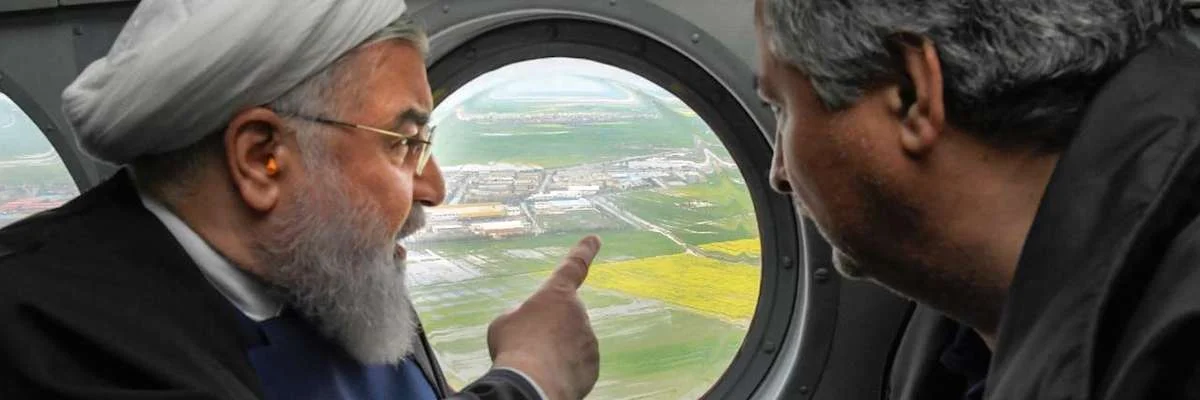
◢ President Hassan Rouhani travelled to flood-hit zones of Iran for the first time Wednesday after nine days of heavy rains that have inundated most of the country and killed 43 people. The authorities have been struggling to cope with flooding after extreme rainfall which at times has been equivalent to half of the average annual levels within 24 hours.
President Hassan Rouhani travelled to flood-hit zones of Iran for the first time Wednesday after nine days of heavy rains that have inundated most of the country and killed 43 people.
The authorities have been struggling to cope with flooding after extreme rainfall which at times has been equivalent to half of the average annual levels within 24 hours.
The disaster, which one government minister blamed on climate change, struck in the middle of Iranian New Year break, with many relief workers on leave and millions of holiday-makers on the roads.
"When suddenly 25 out of 31, and on some days all provinces are struck (by flooding), this may be an unprecedented phenomenon," Rouhani said in Tehran, quoted by the government's website.
Rouhani then flew to the northeastern province of Golestan, one of the areas where the floods first struck on March 19 and have since killed at least 10 people, according to the latest official figures.
Speaking at a crisis meeting in Golestan aired live on state television, Rouhani responded to criticism he was slow to visit the disaster-hit zone.
"I had planned to come in the first days, but ultimately due to considerations it was decided the first vice-president would travel here," he said.
The deluge spread rapidly from the north to the west and south of the country on March 25 before hitting the centre of Iran as the weather front moved eastwards.
"In some regions, rainfall within 24 hours equalled that of the prior 10 months," said Mahmoodreza Peiravi, secretary general of Iran's Red Crescent Society.
"If you take the number and ferocity of the floods into account, the death toll was thankfully not that high," he said, while warning it could rise in coming days.
"The floods struck during the holidays and many vacationers on road trips were affected by it," Peiravi told AFP.
"It is possible that some vacationers might have been carried off by the floods and no one is yet aware of it," he warned.
Day of Mourning
A day of mourning has been declared for Thursday in the southern city of Shiraz, the worst-hit area where the flooding claimed the lives of 19 people and injured more than 100.
The latest toll included six people who drowned when a boat full of rescuers and victims overturned in the northeastern Gomishan region in Golestan province.
"Another body has been found but we have not yet recovered it," the area's emergency services head Alireza Kamalgharibi said, adding that search and rescue operations would continue as it was unclear how many people had been on board the boat.
Another four people were killed in the western provinces of Kogiluyeh-Va-Boyerahmad and Lorestan, said Morteza Salimi, head of the Iranian Red Crescent's search and rescue organization.
One death was also reported in each of Khuzestan, Kermanshah and Semnan provinces.
“More than 43,000 people were rescued and nearly 27,000 were provided with emergency accommodation," Salimi said, quoted by Tasnim news agency, adding rescue operations had been carried out in 30 provinces.
Officials estimate the flooding caused hundreds of millions of dollars in damage to homes, farms and infrastructure.
The skies have mostly cleared up for now but Iran's meteorological service has warned of more heavy showers from Saturday.
Such a widespread flood threat is unprecedented in arid Iran, which until 2018 was dealing with decades of drought.
"Climate change is forcing itself on our country," Energy Minister Reza Ardekanian, who is in charge of dams and water supply, said on Monday.
"These unprecedented floods in our country are because of climate change worldwide," he added.
Photo Credit: IRNA
Iran Looks to Remote Port to Beat US Sanctions
◢ With the web of US sanctions tightening, Iran faces a host of challenges as it looks to an isolated port in the country's far southeast to maintain the flow of goods. The port in Chabahar, only about 100 kilometers (62 miles) from the Pakistan border and located on the Indian Ocean, is Iran's largest outside the Gulf.
With the web of US sanctions tightening, Iran faces a host of challenges as it looks to an isolated port in the country's far southeast to maintain the flow of goods.
The port in Chabahar, only about 100 kilometers (62 miles) from the Pakistan border and located on the Indian Ocean, is Iran's largest outside the Gulf.
It is also the only Iranian port with exemptions from unilateral economic sanctions reimposed by the United States in 2018.
That is due mainly to the pivotal role of the port, and a planned railway line, in breaking landlocked Afghanistan's dependence on Pakistan for trade with the world, especially India.
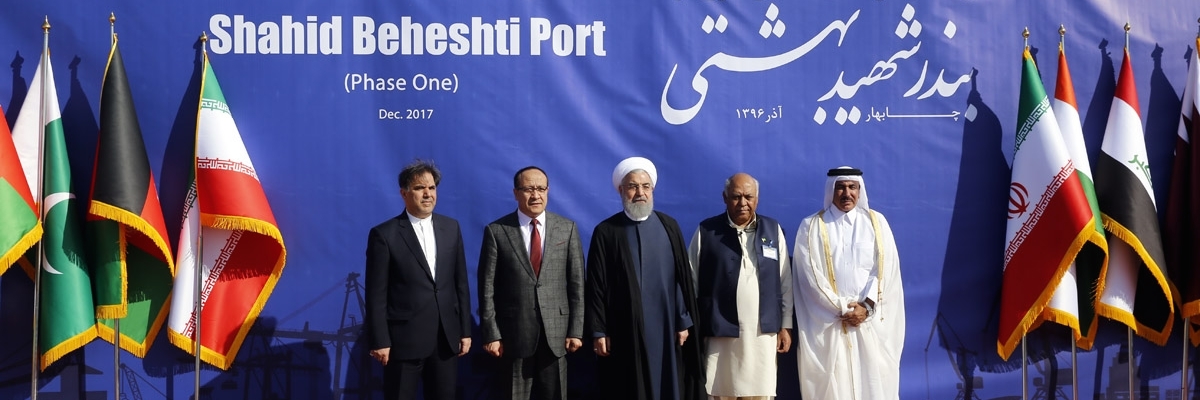
Afghan trade as well as plans for a trading route by rail between central Asia and the Indian Ocean called the North-South Corridor are the main reasons the Islamic republic has invested one billion dollars in Chabahar's Shahid Beheshti port, official sources say.
"We will keep on developing this port... our rail network, road network and airport are all being developed, so that we can implement the North-South Corridor," Roads and Urban Development Minister Mohammad Eslami told AFP while visiting Chabahar for a development conference.
‘Traffic will Pick Up'
More than 200 hectares (almost 500 acres) of land have been reclaimed from the sea for the project and over 17.5 million cubic meters (618 million cubic feet) dredged, creating a 16.5-meter (54-foot) draught.
But more than a year since the new installations became operational in December 2017, business has yet to pick up.
The ships that officials say have docked in the past year have only loaded and unloaded 2.1 million tonnes of cargo, a far cry from the port's annual capacity of 8.5 million tonnes.
Only 20 ships have docked at the new section of the port and most of its three kilometers of waterfront remains unutilized, with new machinery and neatly lined-up cranes standing idle.
But authorities remain upbeat about the prospects for growth.
Hossein Shahdadi of the provincial ports and maritime authority said that in the first 11 months of the past Iranian year, which started on March 21, 2018, "there has been a 56 percent increase in cargo handled at the port compared with the previous year.”
"We've also had a 25 percent rise in the number of ships calling at the port" on the Gulf of Oman, he said.
Arun Kumar Gupta, managing director of India Ports Global Limited which has a 10-year concession at the new port, played down the startup issues.
"Any port will have a gestation period, there will be lulls but we are very sure that traffic will pick up," Gupta told AFP.
'Born with Sanctions'
The Indian company began work in December and has so far handled only an average of 60,000 tonnes of cargo per month.
But Gupta is counting on the port's proximity to India and Afghanistan to attract business.
Chabahar's location, however, carries its own risks as it lies in the volatile Sistan Baluchistan province where militant jihadists operate.
In December, a suicide attack on the local police headquarters killed two policemen.
During an investment conference in February, security was tight with many roads cut off and hundreds of armed security personnel deployed to protect delegates.
Apart from security concerns, US sanctions banning financial transactions with Iran make it ever harder to pay or receive payments.
Some like Afsaneh Rabiani, who runs a freight forwarding company, see Chabahar as an opportunity for "those willing to take the risk".
“I've been researching Chabahar for the past year and a half, and the infrastructure is now in place to do serious work here," she said.
As for the sanctions, Iran's roads minister said the challenge was nothing new.
"We were born with sanctions. Ever since the (1979 Islamic) revolution, we have been under sanctions and we are working on how to counter them," Eslami said, as he oversaw the unloading of a first shipment of Afghan goods lined up to be re-exported from Chabahar.
Photo Credit: IRNA
U.S. Sanctions Two Dozen People, Entities Over Ties to Iran
◢ The US Treasury Department sanctioned 25 individuals and entities it accused of transferring more than USD 1 billion dollars and euros to the Islamic Revolutionary Guard and Iran’s defense ministry. Some of the people and entities obtained millions of dollars worth of vehicles for the defense ministry, the Treasury Department said in a statement Tuesday.
The US Treasury Department sanctioned 25 individuals and entities it accused of transferring more than USD 1 billion dollars and euros to the Islamic Revolutionary Guard and Iran’s defense ministry.
Some of the people and entities obtained millions of dollars worth of vehicles for the defense ministry, the Treasury Department said in a statement Tuesday.
The Treasury said the penalties expose “an extensive sanctions evasion network established by the Iranian regime, which it increasingly relies on as the United States’ maximum pressure campaign severely constricts the regime’s sources of revenue.”
Those sanctioned included Ansar Bank Brokerage Company, the Treasury said.
“This once again exposes to the international community the dangerous risks of operating in an Iranian economy that is deliberately opaque,” Treasury Undersecretary for Terrorism and Financial Intelligence Sigal Mandelker said in a statement.
In separate sanctions announced last week, the U.S. sanctioned 14 individuals and 17 entities tied to Iran’s Organization of Defensive Innovation and Research, “whose key personnel played a central role in the Iranian regime’s past nuclear weapons effort,” the Treasury said in a statement.
Photo Credit: Bloomberg

23 Dead as Iran Battles Heavy Rain and Floods
◢ The death toll from major floods swamping much of Iran has risen to 23, emergency services said Tuesday, as authorities sent safety warnings to mobile telephones across the country. Supreme leader Ayatollah Ali Khamenei issued a message of condolence urging officials to speed up relief efforts and compensation for victims of the floods, which the authorities described as unprecedented.
Iran battled torrential rain and floods across most of the country on Tuesday, warning citizens to stay vigilant after unprecedented flash flooding killed 23 people.
The authorities also announced for the first time that seven people were killed a week ago in separate floods that swept the northeastern provinces of Golestan and Mazandaran.
The latest deluge claimed the lives of 19 people and injured 98 in the worst-hit southern city of Shiraz, the rescue services said.
There was also one death in each of the western provinces of Kermanshah, Lorestan and Kogiluyeh-Va-Boyerahmad, and another in the southwestern province of Khuzestand.
The disaster, which the energy minister blamed on climate change, struck in the middle of Iranian New Year holidays, with many relief workers on vacation and millions of Iranians on the roads.
On Tuesday the authorities sent out emergency warnings to the public on mobile phones as state television aired safety tips, including on how to leave cars stuck in floods.
Supreme leader Ayatollah Ali Khamenei issued a message of condolence and urged officials to speed up relief efforts and compensation for victims of the floods, which the authorities described as unprecedented.
Overall, at least 110 people were injured in this week's flooding, the health ministry said.
More than 25,000 had to be put up in emergency accommodation, according to the Iranian Red Crescent Society.
With at least 20 of Iran's 31 provinces experiencing floods or facing an imminent threat and more than 250 cities and villages needing emergency assistance, the country's National Crisis Management Committee was put on its highest alert level.
Iran's meteorological service has warned of more heavy showers through to Wednesday, and flood warnings have gone out for central provinces including Isfahan and Tehran.
Sandbagging in Tehran
In the capital sandbags were laid at the entrances to underground stations as police made emergency plans to divert traffic from freeways already impeded by runoff from the downpour.
In top tourist attraction Isfahan, residents and travelers were evacuated from the banks of the Zayandeh Rood river over fears they would burst.
The river had been completely dry until recently due low rainfall.
As the weather front moves to the east of Iran, more and more regions of the country that had been facing chronic water shortages a few months ago have been inundated with water.
The downpour has triggered scores of landslides that have blocked roads, especially in mountainous regions.
One buried an entire village in Kogiluyeh-Va-Boyerahmad province shortly after residents were evacuated, the semi-official Fars News agency quoted its governor as saying.
Hundreds of villages in western Iran have been cut off with many also losing electricity and normal water supplies, forcing authorities to deploy military helicopters to try to save and supply those left stranded.
Overnight the crisis management committee sent out multiple text messages to all mobile telephones in Iran urging people to be cautious and await instructions from official sources.
"Remain calm when facing possible dangers... do not honk your car horns in mountainous regions as it might cause avalanches," one of the messages read.
"Do not set up tents near rivers or mountainous areas... and most importantly do not cross bridges when floods are running underneath," read another one.
The floods followed extreme rainfall which at times was equivalent to half of the average annual levels within 24 hours.
Such a widespread flood threat is unprecedented in arid Iran, which until 2018 was dealing with decades of drought.
"Climate change is forcing itself on our country," said Energy Minister Reza Ardekanian, who is in charge of dams and water supply.
"These unprecedented floods in our country are because of climate change worldwide," he said on Monday, quoted by the Tasnim news agency.
Photo Credit: IRNA

Trump Team Split Over Iran Oil Waivers as Next Deadline Nears
◢ President Donald Trump’s national security team is deeply divided over whether to let a small group of countries keep buying Iranian oil after a U.S. deadline on sanctions waivers expires in May. Now that fight is getting ugly. The division—primarily between John Bolton’s National Security Council and Michael Pompeo’s State Department—has led to rising frustration and flared tempers.
President Donald Trump’s national security team is deeply divided over whether to let a small group of countries keep buying Iranian oil after a U.S. deadline on sanctions waivers expires in May. Now that fight is getting ugly.
The division—primarily between John Bolton’s National Security Council and Michael Pompeo’s State Department—has led to rising frustration and flared tempers. It’s exposing fault lines over how the president’s most senior advisers approach the Iran issue, according to four people familiar with the debate who asked not to be identified discussing the internal deliberations.
Above the fray, at least for now, is a president who must weigh competing priorities. While Trump wants to make good on his “maximum pressure” campaign against Iran and strong-arm it into meeting U.S. demands—including ending its ballistic missile tests and support for Hezbollah—there’s also concern that squeezing Tehran too much will lead to a spike in oil prices. That could raise gasoline costs for U.S. drivers as the 2020 election approaches.
Favoring a tougher tack, Bolton and his team point out that oil prices remain low—about USD 59 a barrel as of Monday. But that could change quickly depending on production moves by OPEC nations as well as the administration’s separate efforts to choke off Venezuelan oil sales in a bid to push President Nicolas Maduro from office.
“The administration will really be weighing its desire to put the screws further on Iran against its allergy to oil over USD 70 a barrel,” said Meghan O’Sullivan, a former deputy national security adviser now at the Harvard Kennedy School. “It is risky for the administration to think that it can drive a hard policy which contracts the oil supply from both Iran and Venezuela simultaneously.”
A spokesman for the White House National Security Council said agencies are coordinating closely to apply maximum pressure on Iran. A State Department official said the U.S. goal remains to get to zero Iranian oil exports as quickly as possible, adding that the secretary of state alone has the discretion to grant exemptions.
There’s little doubt the U.S. sanctions have pinched Iran: Oil revenue has tumbled, the rial has been battered and shortages of meat, medicine and gasoline are spreading. Iran’s supreme leader this week even called European efforts to sustain trade with Iran outside of U.S. sanctions “a joke.”
Price Spike
Trump has until the first week of May to decide whether to issue new waivers to eight governments—China, India, Japan, Turkey, Italy, Greece, South Korea and Taiwan—that were allowed in November to keep buying Iranian oil without facing penalties. The current speculation is that the biggest buyers of Iranian crude, including China and India, will get waivers again.
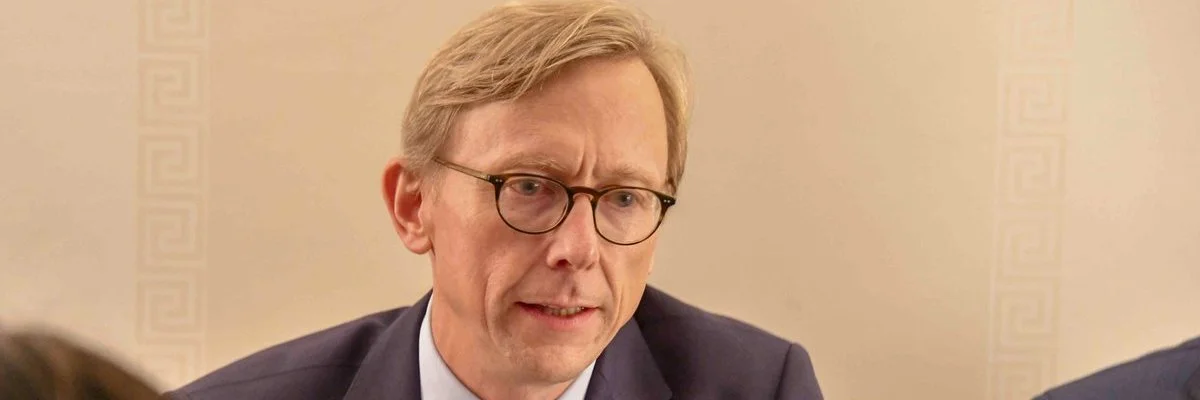
But Bolton and officials in the Energy Department argue that it’s time for the administration to make good on its demands to push Iran’s oil exports to zero. Pompeo’s team, led by Iran special representative Brian Hook, caution that a sudden removal of Iranian crude from the market—about 1.1 million barrels a day—would fuel volatility and lead to a price spike.
A key analyst who has advised the White House on its approach said the intensifying squabble underscores just how much more politicized the debate over the waivers has become as the U.S. presidential election in 2020 grows nearer.
“If you think Trump will be a two-term president, you have about six years and you can afford to go more slowly,” said Mark Dubowitz, chief executive officer of the Foundation for Defense of Democracies. “But if you think there’s a risk that he’s a one-term president, then he’s got 21 months left and you want to throw everything you can at the regime.”
Pompeo, a hard-line conservative on most issues, and Treasury Secretary Steven Mnuchin find themselves increasingly isolated from Bolton and their usual allies on Capitol Hill, including Republican Senators Marco Rubio and Tom Cotton, who have argued for the U.S. not to grant any more waivers.
“The Iranian regime uses its petrodollars to fund terrorism and sow chaos throughout the region,” Cotton tweeted on March 18. “Going forward, the proper amount of oil exports from Iran is zero.”
According to two GOP aides familiar with the thinking of Senator James Risch, the chairman of the Senate Foreign Relations Committee, the Idaho Republican believes any new waiver will need “substantial justification” to be granted. Risch also thinks there’s more than enough oil sloshing around global markets to counter the crude removed from Iran, thanks to Saudi Arabia and the U.S., according to the people.
As the debate plays out, Pompeo is also facing pressure from his own ambassadors. According to one of the people, Kay Bailey Hutchison, the U.S. ambassador to NATO, is among several who especially oppose giving Turkey another waiver. They argue that would send the wrong message when the U.S. is pushing NATO allies to cut ties with Tehran.
The debate has moved along enough that Hook and his allies have lost several key supporters who were previously open to the waivers but now believe issuing them sends the wrong signal.
“I’m sympathetic to where Brian Hook and Secretary Pompeo are in striking a balance between zero Iranian oil and global oil prices,” Dubowitz said. “But today’s oil market supports zero. So either you’re running a maximum pressure campaign against Iran or you’re not.”
Photo Credit: Bloomberg
At Least 18 Dead as Iran Faces Unprecedented Floods
◢ The death toll of floods that have swept across most Iranian provinces has risen to 18 with more than 70 injured, the country's emergency services said Monday. National Emergency Service chief Pirhossein Koolivand said the casualty toll in the southern city of Shiraz was 17 dead and 74 injured, while another person was killed in Sarpol-e Zahab in the western province of Kermanshah.
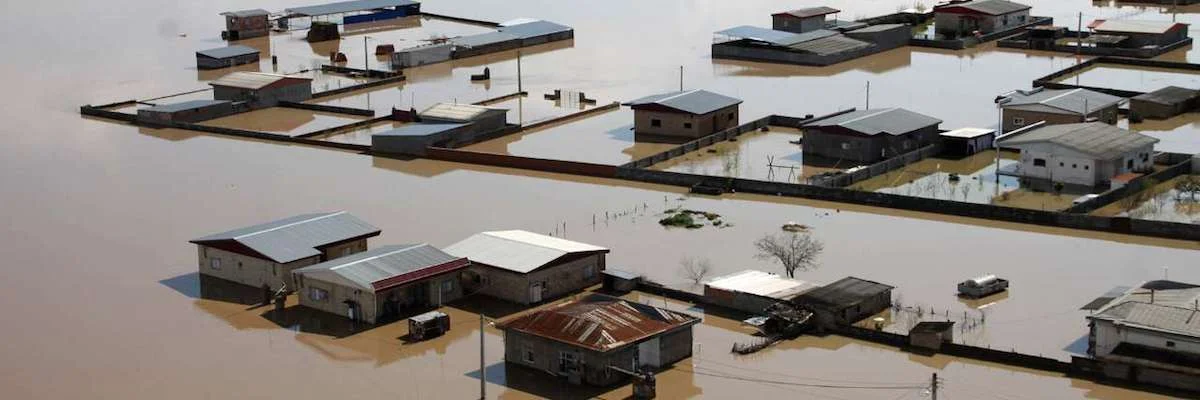
Major floods across much of Iran have left 18 people dead and more than 70 injured, blocking roads and triggering landslides with warnings of more heavy rain to come, emergency services said Monday.
Such a widespread flood threat is unprecedented in arid Iran, which until 2018 was dealing with decades of drought.
Seventeen people were killed and 74 injured in the southern city of Shiraz, and one person was killed in Sarpol-e Zahab in the western province of Kermanshah, the rescue services said.
The national emergency has struck in the middle of Iranian New Year holidays, with many relief workers also on vacation.
Many of those killed in Shiraz were holidaymakers caught in the flood as they entered the city in their cars.
With 25 of Iran's 31 provinces experiencing floods or facing imminent threat, the country's National Crisis Management Committee was activated at cabinet level.
"I have ordered all governor-generals, all provincial managers and officials nationwide to stay at their posts throughout the next 72 hours which is the peak of the flood threat," First Vice President Eshagh Jahangiri said on state television after the committee's first meeting.
Since the flooding, Iran's President Hassan Rouhani, a moderate, has been absent from public view, with his deputies and ministers taking his place in visiting disaster-struck areas.
Reports on the ultra-conservative Fars news agency that Rouhani has been vacationing on the southern Gulf island of Qeshm have triggered criticism from his political opponents.
Situation 'Critical'
Iran's meteorological service has warned of more heavy showers until Wednesday, forecasting as much as 15 centimetres (almost six inches) of rainfall in some western provinces in the next 24 hours.
The situation is "critical" in the provinces of Khuzestan, Lorestan and Kohgiluyeh-Va-Boyerahmad, said Deputy Interior Minister Mehdi Jamalinejad, quoted by the ISNA news agency.
The latest floods follow major flooding on March 19 in the northeast's Golestan and Mazandaran provinces, for which no official casualty toll has been issued.
The police have advised against road trips in the coming days, with many roads blocked by flooding or landslides caused by heavy rains.
Tehran's Mehrabad Airport announced delays or cancellations of flights to the provinces.
The Crises Management Organization and the health ministry, in charge of hospitals, have cancelled all leave and been placed on full alert.
Local media reported that hundreds of villages have lost electricity and water, many of them cut off as access roads were washed away.
'Climate Change'
The army has been called in to help the worst affected areas, and villages are being evacuated for fear of rivers and dams overflowing.
Officials have gone on state television to broadcast urgent calls for holidaymakers as well nomadic tribes in western Iran to move to high ground and away from rivers.
Flood warnings have gone out for central provinces such as Isfahan and the
capital Tehran.
"Climate change is forcing itself on our country," said Energy Minister Reza Ardekanian, who is in charge of dams and water supply.
"These unprecedented floods in our country are because of climate change worldwide," he said, quoted by Tasnim news agency.
Photo Credit: IRNA
US Sanctions Iran Nuclear Researchers, Warns of Future Work
◢ The United States on Friday imposed sanctions on Iranian nuclear researchers, saying it wanted to warn young scientists to steer clear of any future effort to build a bomb. Sanctioning 14 individuals and 17 entities, US officials acknowledged that the nuclear work was in the past but said Washington wanted to make the targeted figures "radioactive."
The United States on Friday imposed sanctions on Iranian nuclear researchers, saying it wanted to warn young scientists to steer clear of any future effort to build a bomb.
Sanctioning 14 individuals and 17 entities, US officials acknowledged that the nuclear work was in the past but said Washington wanted to make the targeted figures "radioactive."
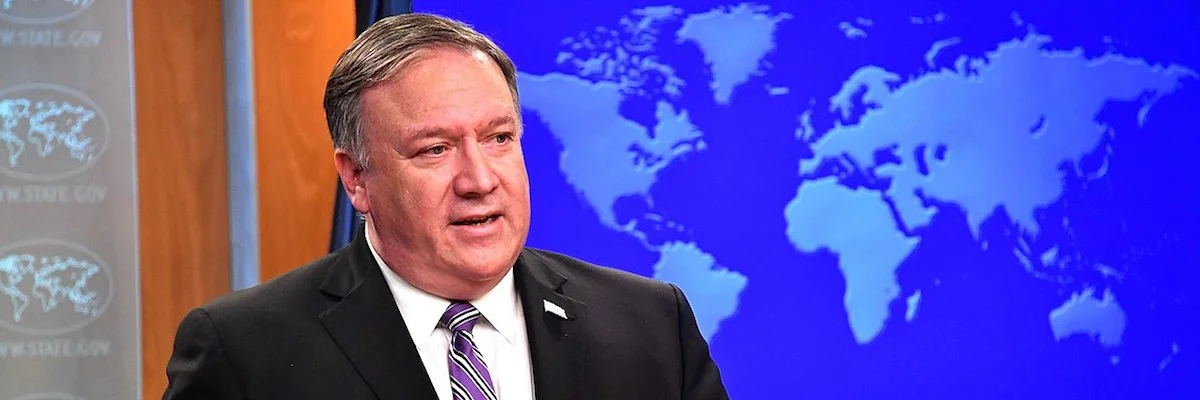
Secretary of State Mike Pompeo on Twitter called the sanctions part of the "maximum pressure campaign" on Iran as the United States tries to roll back the clerical regime's regional influence.
"We'll be relentless in denying Iran the ability to engage in WMD proliferation and all its outlaw activities," said Pompeo, who is on a Middle East tour to build a united front against Iran.
President Donald Trump last year pulled out of an international accord negotiated under his predecessor Barack Obama, under which Iran drastically scaled back its nuclear program, and instead imposed sweeping sanctions.
But European nations still back the accord and the International Atomic Energy Agency has repeatedly said that Iran remains in compliance.
But the US Treasury Department said it was alarmed over the continued existence of the Organization of Defensive Innovation and Research, whose Farsi acronym is SPND, saying that it could get back to work—including after some prohibitions under the nuclear deal start running out in 2025.
A senior US official, speaking to reporters on condition of anonymity, said that the United States wanted to "continue to stigmatize SPND and the reconstitution program-in-waiting that it represents."
The sanctions aim to "make it as unattractive as possible to be a part of that organization, make it hard to recruit the next generation of illicit nuclear weapons scientists and to make it all more clear that this is an option that is not and cannot be allowed to be made available to Iran," he said.
The sanctioned individuals include people who work with the Shahid Karimi Group, which the Treasury Department said focused on missile and explosives projects for SPND, and the Shahid Chamran Group, which researches electromagnetics and wave generation.
The US official said that the SPND was still in place and headed by Mohsen Fakhrizadeh, a physicist identified by US and Israeli intelligence as the aspiring father of Iran's nuclear bomb.
"It's as if some evil version of Robert Oppenheimer had been kept in charge of keeping the Manhattan Project crew together years afterward," the official said, referring to the founder of the US nuclear program in World War II.
Photo Credit:
Trump's Sanctions Staff Defects as U.S. Expands Economic War
◢ The U.S. office in charge of financial sanctions, President Donald Trump’s favorite weapon against American adversaries, risks being hobbled by staff departures due to management turmoil and growing private-sector demand for its expertise. Trump has nearly doubled the number of people and companies under U.S. sanctions. But in the last two years, about 20 staff have left the office in charge of implementing and enforcing sanctions.
The U.S. office in charge of financial sanctions, President Donald Trump’s favorite weapon against American adversaries, risks being hobbled by staff departures due to management turmoil and growing private-sector demand for its expertise.
Trump has nearly doubled the number of people and companies under U.S. sanctions. But in the last two years, about 20 staff have left the office in charge of implementing and enforcing sanctions, the Office of Foreign Assets Control—about 10 percent of its workforce.
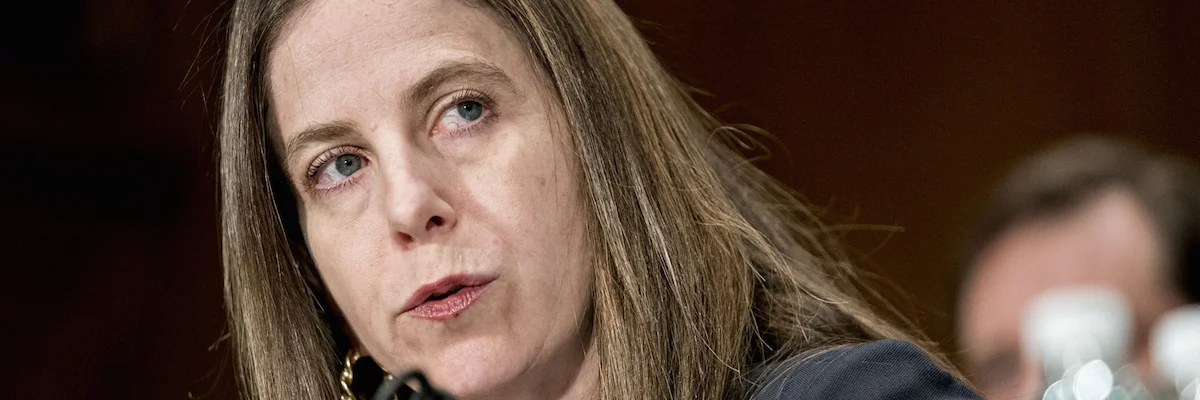
The sanctions office, part of a Treasury division overseen by Sigal Mandelker, has the power to freeze billions of dollars in assets, blacklist individuals and companies from participating in the U.S. economy and punish violations. The Trump administration has turned to sanctions to pressure countries including North Korea, Venezuela and Turkey.
The increased tempo and sophistication of the work of the sanctions office, known as OFAC, has contributed to attrition. Washington law firms, Wall Street banks and other companies have sought to hire Treasury’s sanctions officials to help them translate the agency’s decisions, which can have sweeping effects on financial markets.
But some who have left also blame Mandelker, 47, the undersecretary for Treasury’s Terrorism and Financial Intelligence unit, or TFI, which is composed of four offices, including OFAC.
While they say Mandelker is smart and well-versed, people familiar with her work also call her disorganized, indecisive and short-tempered and say she has embroiled her staff in feuds with a deputy, Marshall Billingslea.
Mandelker’s poor leadership has hurt morale across the units she oversees, according to more than 20 people familiar with the inner workings of her department, all of whom asked not to be identified because of the sensitivity of the situation.
Attrition Risks
The Treasury Department made Secretary Steven Mnuchin available for an interview after it was asked for comment from Mandelker. He expressed confidence in her work and said criticism of her is “completely inconsistent” with the operations of her division.
“Sigal and I have tremendous confidence in the career staff and their opinions,” he said. Mnuchin said attrition rates are lower at TFI than other parts of Treasury, though the department declined to provide numbers.
Mandelker said in written testimony for a House hearing last week that she was “humbled to supervise TFI’s career professionals who work day-in and day-out, often behind the scenes, to keep America safe.” She called OFAC the “beating heart of U.S. sanctions.”
Mnuchin has taken an increased interest in TFI’s work compared to his predecessors, often saying that he spends half his time on sanctions. Some of the people who blame Mandelker or Billingslea for the attrition say Mnuchin’s involvement in the office helps speed decisions, and that the secretary was more willing to hear and follow advice from civil servants than Mandelker.
“Given the activity and the impact on the private sector both here and abroad I can see why companies would want to hire experts to deal with this,” Mnuchin said.
It’s difficult to pinpoint risks from staff attrition at TFI, but one vulnerability could be legal. People under U.S. sanctions sometimes sue the government for relief. Russian billionaire Oleg Deripaska, who was sanctioned last year in response to Moscow’s interference in the 2016 election, filed a lawsuit last week claiming $7.5 billion in losses related to the U.S. penalties.
Deripaska’s lawsuit names OFAC’s current director, Andrea Gacki, as a defendant.
OFAC has never lost such a case, but if it does, it “could tie OFAC’s hands in actions in the future, while also making a mess of economies facing sanctions,” said Erich Ferrari, who founded Ferrari & Associates in Washington and helps people get removed from U.S. sanctions.
“Sanctions are hard. It takes a long time to really understand how the tool can be effective and what the legal bounds are,” said Ferrari, one of the lawyers representing Deripaska. “When you lose all of that institutional knowledge, you could end up getting sued for not understanding which actions may not be in accordance with the law.”
Sanctions Power
OFAC’s work is as enigmatic as it is powerful. One day in February, trading of some Venezuelan debt came to a standstill after Treasury updated its sanctions guidelines on transactions tied to Maduro’s regime. OFAC’s complex instructions were interpreted as forbidding most transactions. Treasury clarified its guidance a week later.
OFAC also has the ability to punish anyone who violates its financial restrictions, whether it’s BNP Paribas, one of the world’s largest banks, which agreed to pay a $9 billion fine in 2014, or a beauty company using North Korean materials to make false eyelashes.
Recent departures from TFI include Sarah Runge, who left after about 10 years to lead regulatory strategy at Credit Suisse Group, Jennifer Fowler, who left after 17 years for Brunswick Group in Washington and Heather Epstein, who is now at Barclays Plc. Neither responded messages seeking comment.
The more than 20 people interviewed who blame Mandelker for the departures from TFI said she has ignored the advice of veteran civil servants in the unit, frequently loses her temper and often leaves dozens of employees waiting up to 40 minutes for her to arrive at meetings.
Office Friction
Her clashes with Billingslea, a fellow political appointee who is a subordinate but like Mandelker is Senate-confirmed, have also discomfited some staff, the people said.
Trump has nominated Billingslea to be an assistant secretary at the State Department.
Treasury Department officials asked some of Mandelker’s subordinates and supporters to contact Bloomberg News in her defense, including Isabel Patelunas, an assistant secretary in TFI; Kenneth Blanco, who heads another unit Mandelker oversees called the Financial Crimes Enforcement Network; Paul Ahern, assistant general counsel at Treasury; and others who asked not to be named. They said Mandelker deserves credit for her leadership of a division of Treasury undertaking challenging and high-pressure work.
They said she’s passionate about her work, aggressively advocates for resources and has helped break silos within TFI. Stuart Levey, one of Mandelker’s predecessors who also worked with her during the post-9/11 era at Justice Department, said she operates well under pressure.
“In every administration from Clinton to Bush to Obama to Trump, I saw conflict within the agency because they were incredibly passionate people who cared deeply about the mission,” said John Smith, who worked for Treasury for 11 years and left OFAC as director in May due to personal reasons.
Mandelker has said she takes pride in a career directed at fighting human rights abuses, including in her current role at Treasury. The daughter of Holocaust survivors, she held various positions at the Justice and Homeland Security departments during President George W. Bush’s administration. She was a partner at New York law firm Proskauer Rose LLP before she joined the Trump administration.
The departures at TFI echo instability earlier in Trump’s administration at Treasury’s International Affairs unit, led by David Malpass. Following a Bloomberg News report that Malpass’s mismanagement pushed more than 20 civil servants out of the office, Treasury officials started hosting listening sessions, lunches between civil servants and Malpass, and increased transparency into decision-making, according to two people familiar with the matter.
Photo Credit: Bloomberg
Australian Gets 2 Years in Jail for Iran Trade
◢ An Australian man was sentenced to two years in prison in Washington Thursday for exporting restricted aviation equipment to Iranian buyers in violation of US restrictions. The exports took place in 2007-2008. At the time Levick was general manager of ICM Components, Inc., located in Thornleigh, Australia.
An Australian man was sentenced to two years in prison in Washington Thursday for exporting restricted aviation equipment to Iranian buyers in violation of US restrictions.
Seven years after he was charged, David Levick, 57, from Cherrybrook, Australia, was ordered to prison after pleading guilty to four counts of violating the US International Emergency Economic Powers Act, which places tight restrictions on sales of sensitive equipment to Iran.
The exports took place in 2007-2008. At the time Levick was general manager of ICM Components, Inc., located in Thornleigh, Australia.
US authorities say he ordered the restricted materials on behalf of an Iranian company for transshipment to Iran.
When he was first charged, US authorities accused Levick of selling Iran US components of missiles, drones and torpedoes.
But the Justice Department statement Thursday made no mention of those.
Instead, he admitted to selling "precision pressure transducers," sensor devices with many applications, including in the avionics industry.
He also sold the Iranians emergency flotation system kits and assemblies for mounting lights on aircraft.
Levick was extradited from Australia in December 2018.
Levick was also ordered to forfeit nearly USD 200,000, the value of the goods involved in the Iran deals.
Photo Credit: Wikicommons

France Urges Iran to Free Human Rights Lawyer
◢ France on Thursday called for Iranian human rights lawyer Nasrin Sotoudeh to be released and warned Tehran that its adherence to a nuclear accord does not give it a blank cheque on human rights. "We will do all we can to secure the release of Mrs Sotoudeh", French Foreign Minister Jean-Yves Le Drian told the upper chamber Senate.
France on Thursday called for Iranian human rights lawyer Nasrin Sotoudeh to be released and warned Tehran that its adherence to a nuclear accord does not give it a blank cheque on human rights.
"We will do all we can to secure the release of Mrs Sotoudeh", French Foreign Minister Jean-Yves Le Drian told the upper chamber Senate.
"She was condemned under astonishing conditions," for "defending the rights of women, in particular those who contest the obligation to wear the Islamic veil," he added.
Sotoudeh's husband Reza Khandan told AFP on Sunday that his wife had been sentenced to a total of 33 years in prison over a case with seven charges, but she is to only serve the longest sentence, 12 years imposed on Sunday for "encouraging corruption and debauchery.”
She has also been convicted of espionage.
Sotoudeh has also been sentenced to a total of 148 lashes for appearing in court without the hijab Islamic head covering and for another offence.
According to Khandan, Sotoudeh has refrained from choosing a lawyer as attorneys on her previous cases have faced prosecution for representing her.
"We have been making considerable efforts in recent months to preserve the (Iranian) nuclear accord, despite America's withdrawal," said Le Drian.
"We are doing so because we respect our signature, but Iran must also respect its obligations in particular those international agreements relating to civil and political rights," he added.
Last month the UN atomic watchdog said that Iran has been adhering to its deal with world powers on limiting its nuclear program, as diplomatic wrangling continues over the future of the accord.
The latest report from the International Atomic Energy Agency confirmed that Iran was still complying with the 2015 Joint Comprehensive Plan of Action (JCPOA) with global powers under which Tehran drastically scaled back its nuclear program in return for sanctions relief.
Last week, European nations rejected a call from US Vice President Mike Pence to follow the US lead in withdrawing from the Iranian nuclear deal.
Le Drian said Thursday: "Our wish to preserve the Vienna accord does not grant carte-blanche to Iran and certainly not in the matter of human rights."
Before her arrest, Sotoudeh, 55, had taken on the cases of several women arrested for appearing in public without headscarves in protest at the mandatory dress code in force in Iran.
Sotoudeh won the European Parliament's prestigious Sakharov Prize in 2012 for her work on high-profile cases, including those of convicts on death row for offenses committed as minors.
She spent three years in prison after representing dissidents arrested during mass protests in 2009 against the disputed re-election of ultra-conservative president Mahmoud Ahmadinejad.
Photo Credit: Wikicommons
Iran Supreme Leader Calls European Trade Mechanism 'Bitter Joke'
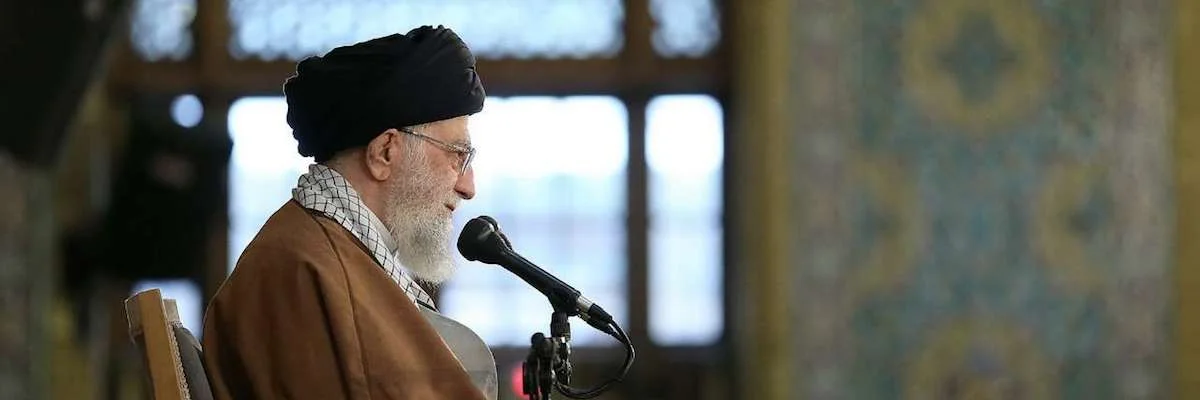
◢ Iran's Supreme Leader Ayatollah Ali Khamenei called a trade mechanism launched by European countries to bypass renewed US sanctions a "bitter joke" on Thursday, in a speech aired by state TV. "This financial channel they recently set up resembles a joke, a bitter joke," Khamenei told a thousands-strong congregation at a shrine in the northeastern city of Mashhad, where he speaks every year to mark Iranian new year.
Iran's supreme leader Ayatollah Ali Khamenei on Thursday dismissed a trade mechanism launched by European countries to bypass renewed US sanctions as a "bitter joke" and said Europe could not be trusted.
"This financial channel they recently set up resembles a joke, a bitter joke," Khamenei told a thousands-strong congregation in a televised address at a shrine in the northeastern city of Mashhad, where he speaks every year to mark the Iranian New Year.
Britain, France and Germany launched the special payment system called INSTEX—Instrument in Support of Trade Exchanges—in late January after President Donald Trump abruptly quit the 2015 nuclear deal between Iran and world powers in May last year.
The three countries were the European signatories to the deal, also signed by the US, Russia and China, that curbed Tehran's nuclear ambitions in return for sanctions relief.
London, Paris and Berlin launched the device in the hope it will help save the deal by allowing Tehran to keep trading with European companies despite Washington reimposing sanctions.
"The difference between what they are obligated to do and what they are proposing is as far as the earth is from the sky," Khamenei said.
"We should completely forego (any hope) of help or cooperation from Westerners in strengthening our economy, we shouldn't wait for them," he said.
"Once again the Europeans have stabbed us in the back, they have betrayed us," Khamenei said, cursing Western politicians as "savages.”
"They wear suits, they put on ties and eau de cologne and carry Samsonite briefcases but they are savages," Khamenei said.
"What I am saying does not mean (Iran) should cut Western ties, not at all... there is no problem in having relations with them, but trusting them is a mistake, don't trust them," he said.
Iran on Tuesday registered a parallel structure to INSTEX called the Special Trade and Finance Institute or STFI, the semi-official ISNA news agency reported.
"With the registration of STFI, we expect that, in cooperation with INSTEX, it would facilitate trade between Iran and Europe and be influential in countering limitations caused by US sanctions," said Iran's central bank governor Abdolnaser Hemmati.
Earlier on Thursday, Khamenei called the economic difficulties of Iranians the most urgent problem facing the country.
"Specially in recent months the difficulties for people's livelihoods have increased," Khamenei said in a prerecorded message to mark the March 21 start of the New Year.
“The economy is the country's urgent problem, it's the country's (most) serious and primary problem," he said, pointing to the rial's devaluation, decline in purchasing power and falling production.
Photo Credit: IRNA
Iran Leader Calls Economy 'Urgent Problem'
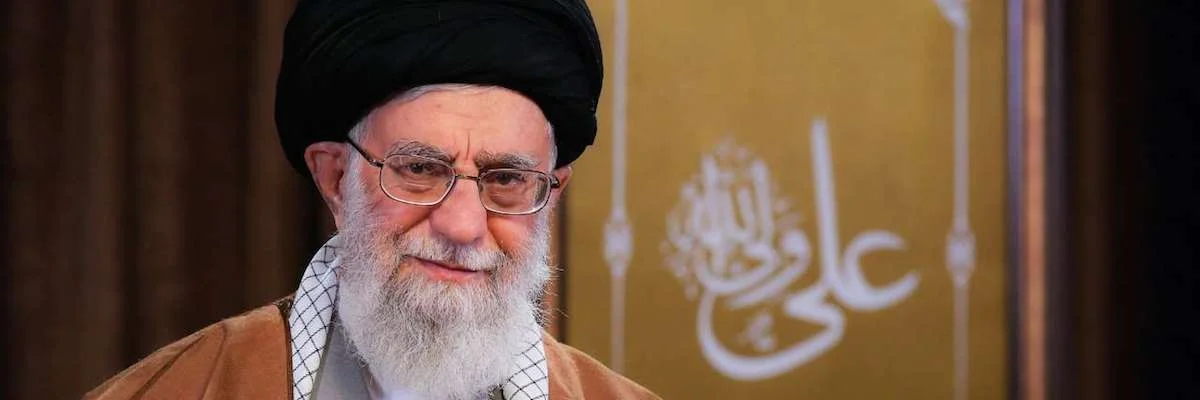
◢ Iran's supreme Leader Ayatollah Ali Khamenei called the economic difficulties of Iranians the main and most urgent problem of the country in a message aired Thursday on state TV. Iran has faced increased economic hardship in the last 12 months which was aggravated after US President Donald Trump withdrew from the 2015 nuclear deal between Iran and world powers last May.
Iran's supreme Leader Ayatollah Ali Khamenei called the economic difficulties of Iranians the main and most urgent problem of the country in a message aired Thursday on state TV.
Iran has faced increased economic hardship in the last 12 months which was aggravated after US President Donald Trump withdrew from the 2015 nuclear deal between Iran and world powers last May.
The renewal of American sanctions, which had been eased in exchange for curbs on Tehran's nuclear program, sent shockwaves through Iran's economy.
"Specially in recent months the difficulties for people's livelihoods has increased," Khamenei said in a prerecorded message aired to mark the beginning of the new Iranian year (21 March 2019 till 20 March 2010).
"The economy is the country's urgent problem, it's the country's (most) serious and primary problem," he added, mentioning the devaluation of the national currency, the drop in purchasing power and the fall in production as symptoms of the issue.
Khamenei said increasing production was the key to saving the economy and declared "national production" the motto of the new year.
The IMF reported that the Iranian economy slumped into recession in 2018 and has forecast a 3.6 percent decline in GDP for 2019.
Iran's President Hassan Rouhani also focused on the US sanctions in his new year message broadcast on state TV immediately after Khamenei's.
"Some might ask till when will these sanctions and problems go on... these problems began with the oath-breakers and those who have recently reached power in Washington, but the (key to the) end is in our hands," he said sitting in front of a row of Iranian flags.
“The more we are united, and the more the enemy realizes that with these sanctions our nation becomes more cohesive, the sooner they will despair and regret (sanctioning Iran)," Rouhani said calling on all branches of government, as well as the armed forces and Iranians from all walks of life, to put aside differences and share the burden of economic "problems and disorder.”
Rouhani had heavily counted on the 2015 nuclear deal to help save the floundering economy.
But ever since the US withdrawal he has been under increasing criticism from his political opponents both for mismanagement of the economy as well as his perceived gullibility in trusting the US in the nuclear deal.
Photo Credit :IRNA
Pompeo on Middle East Tour to Counter Iran, Boost Netanyahu
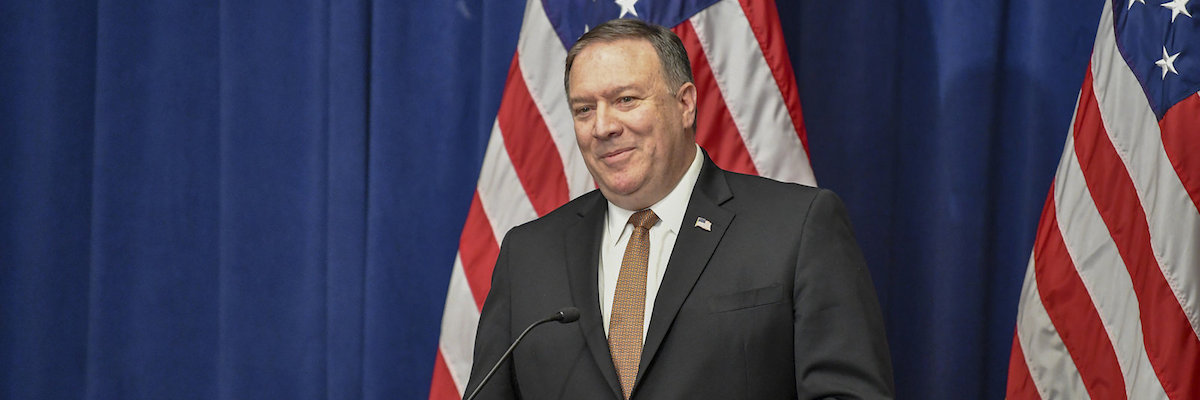
◢ Top US diplomat Mike Pompeo sought Wednesday to bolster a united front against Iran during a Middle East tour that will include talks with key ally Prime Minister Benjamin Netanyahu ahead of Israeli elections. The US secretary of state kicked off his regional tour in Kuwait where he met Emir Sheikh Sabah al-Ahmad Al-Sabah on the first stop of a trip that will also take him to Israel and Lebanon.
Top US diplomat Mike Pompeo sought Wednesday to bolster a united front against Iran during a Middle East tour that will include talks with key ally Prime Minister Benjamin Netanyahu ahead of Israeli elections.
The US secretary of state kicked off his regional tour in Kuwait where he met Emir Sheikh Sabah al-Ahmad Al-Sabah on the first stop of a trip that will also take him to Israel and Lebanon.
Pompeo told reporters on the flight from the United States that he would discuss "strategic dialogue" and the need to combat "the threat posed by the Islamic Republic of Iran" with leaders in the region.
He will also push for a greater role for the Middle East Strategic Alliance, a US-sponsored Arab NATO aimed at uniting Washington's Arab allies against Tehran.
After Kuwait Pompeo will fly to Israel where an election campaign is in its final weeks with Netanyahu locked in a close battle with centrist rivals.
While Washington insists it is not interfering in Israeli politics, his visit is seen as a sign of support for Netanyahu, who is struggling to keep his grip on power as he faces allegations of bribery, fraud and breach of trust ahead of the April 9 polls.
"I'm going to Israel because of the important relationship we have," Pompeo said.
"Leaders will change in both countries over time. That relationship matters no matter who the leaders are."
Israel is one of the most outspoken members of the anti-Iranian grouping assembled by the US, and Iran is sure to be a central focus of Pompeo's talks in Jerusalem.
'Important Relationship'
No meetings with Netanyahu's opponents are scheduled, and the secretary of state will not meet with representatives of the Palestinian Authority.
"They'd have to want to talk to us," Pompeo said of the Palestinian officials. "That'd be a good start."
President Donald Trump's decision in December 2017 to recognize Jerusalem as the capital of Israeli delighted Netanyahu's government.
But it enraged Palestinians, who want to make the eastern, mainly Palestinian part of the city the capital of their future state.
Washington has taken a series of steps deemed so "hostile" by the Palestinian Authority that it now refuses any contact with the US administration. The moves include cutting most of the US aid to the Palestinians.
Pompeo's two-day visit to Jerusalem also includes a symbolic stop at the new US embassy, which was transferred from Tel Aviv on Trump's orders last year.
Netanyahu will travel to Washington in the last week of March for the annual conference of the American Israel Public Affairs Committee (AIPAC), an event sponsored by the influential lobbying group that draws thousands each year.
While a meeting has not been officially confirmed, the Israeli premier hopes to use the opportunity of his Washington visit to meet with Trump.
Peace Plan Countdown
A shift in semantics and policy has marked the Trump term, particularly related to the Middle East.
The US has ceased to refer to Syria's Golan Heights as "Israeli-occupied" and instead calls the territory "controlled" by Israel—a change seen by some as a prelude to US recognition of Israeli sovereignty over the strategic plateau.
“That language reflects the facts as we understand them," Pompeo said. “This was a factual statement about how we observe the situation. And we think it's very accurate, and we stand behind it."
The April 9 vote in Israel will also start the countdown for the presentation, expected before the summer, of the Israeli-Palestinian peace plan that a small White House team—strongly pro-Israeli, analysts say—has been quietly preparing under the president's son-in-law, Jared Kushner.
During Friday's Beirut leg of his trip, Pompeo will focus on the Hezbollah movement, which the US considers a pro-Iranian "terrorist" group even though it is represented in the coalition government of Lebanese Prime Minister Saad Hariri, himself a US ally.
Photo Credit: State Department
US Extends Iraq Waiver Over Iran Sanctions
◢ The United States is extending a waiver to let energy-hungry Iraq keep buying power from Iran, despite Washington's campaign of sanctions aimed at curbing Tehran, an official said. "While this waiver is intended to help Iraq mitigate energy shortages, we continue to discuss our Iran-related sanctions with our partners in Iraq," a State Department official said.
The United States is extending a waiver to let energy-hungry Iraq keep buying power from Iran, despite Washington's campaign of sanctions aimed at curbing Tehran, an official said.
The State Department issued a second three-month exemption from Iran sanctions for Iraq, mindful not to destabilize the war-torn country increasingly reliant on Iranian gas and electricity to cope with chronic blackouts that have triggered unrest.
"While this waiver is intended to help Iraq mitigate energy shortages, we continue to discuss our Iran-related sanctions with our partners in Iraq," a State Department official said.
The official said that increasing Iraq's capacities and diversifying imports "will strengthen Iraq's economy and development as well as encourage a united, democratic and prosperous Iraq free from malign Iranian influence."
Despite Washington's repeated warnings, Iraq since the fall of Saddam Hussein has walked a fine line and maintained warm ties with Iran, with which Iraq's majority Shiite community shares religious affinities.
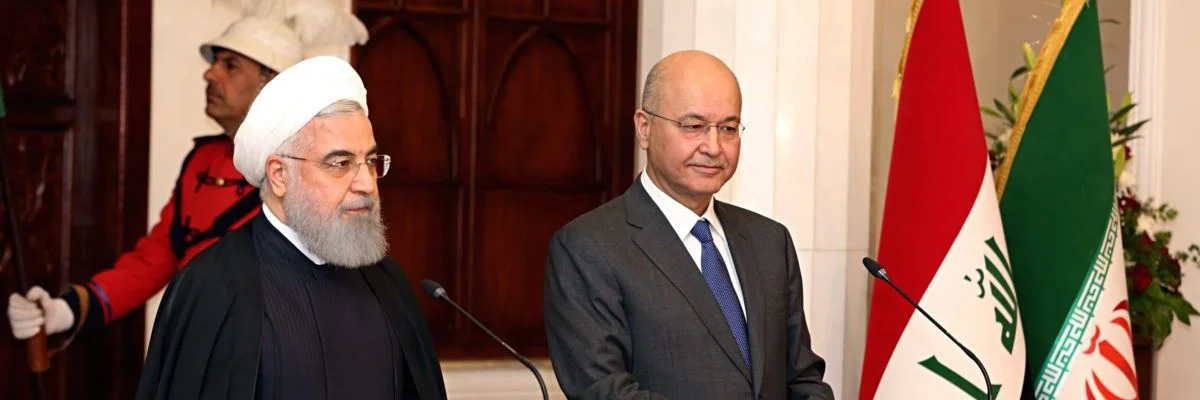
Iranian President Hassan Rouhani paid a visit last week to Iraq, where he highlighted Tehran's support in battling the Islamic State extremist movement and said that the United States was "despised" in the region.
Last year, US President Donald Trump pulled out of an international deal on curbing Iran's nuclear program that was negotiated by his predecessor Barack Obama.
Trump instead imposed sweeping sanctions on Iran as he seeks to reduce the regional role of the Shiite clerical state, a foe of US allies Saudi Arabia and Israel.
But the US approach has met strong opposition, with European powers encouraging their companies to stay present in Iran so as to safeguard the denuclearization accord.
Photo Credit: IRNA
Iran's Mahan Air Cancels Paris Flights Over 'Sanctions'
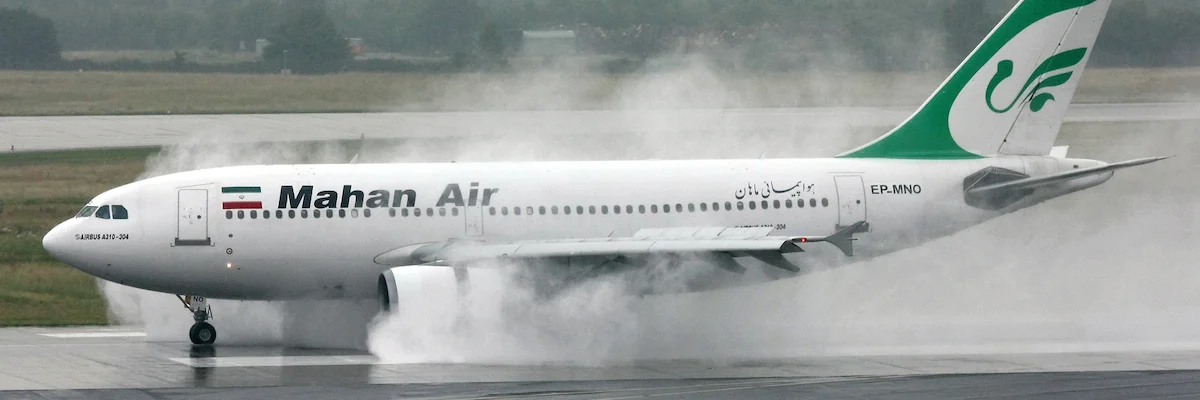
◢ Iran's Mahan Air has been forced to cancel its Paris flights over "sanctions", its customer services team said Tuesday weeks after Germany banned the airline. "We have been told that (flights to France) have been cancelled... as of the first of April," an operator at the airline's office in Tehran's Imam Khomeini Airport told AFP.
Iran's Mahan Air has been forced to cancel its Paris flights over "sanctions", its customer services team said Tuesday weeks after Germany banned the airline.
"We have been told that (flights to France) have been cancelled... as of the first of April," an operator at the airline's office in Tehran's Imam Khomeini Airport told AFP.
The Paris schedule will be scrapped "because of sanctions" by the French, the source said by phone without elaborating.
Two of the airline's French customers in Iran were notified by email that their flights booked for next month were cancelled.
Mahan, the Islamic republic's second-largest carrier after Iran Air, flies up to four services a week between Tehran and Paris.
Germany imposed a ban on Mahan in January, which the foreign ministry said was necessary to protect Berlin's "foreign and security policy interests.”
That decision came amid broader sanctions adopted by the European Union against Tehran over attacks on opponents in the bloc.
Iran has denied any involvement in the alleged plots and described Germany's move as "hasty and unjustifiable."
Mahan Air was blacklisted by the US in 2011, as Washington said the carrier was providing technical and material support to an elite unit of Iran's Revolutionary Guards known as the Quds Force.
Photo Credit: Wikicommons
Iranians Line Up at Dawn for a Sanctions Meal They Can Afford
◢ Iran isn’t facing a Venezuela-style collapse, but renewed U.S. sanctions have slashed oil revenue, battered the rial and pushed prices beyond the reach of many. Shortages, in meat, medicine, even gasoline in some regions, are spreading; proof, say hardline conservatives, that President Hassan Rouhani’s engagement with the West has failed.
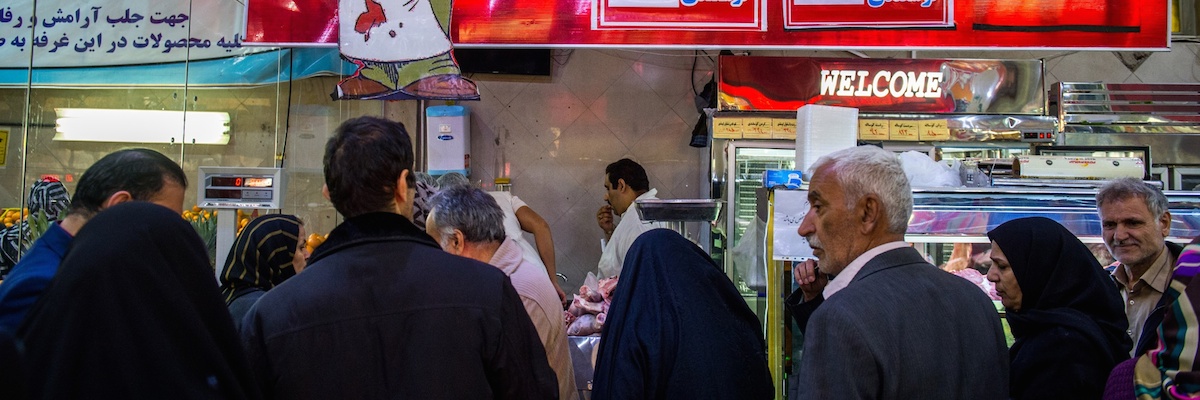
Just after dawn Fatemeh Ansari Mokhtari stood alone outside Tehran’s Shahid Baharloo supermarket, gripping the edge of her black chador.
Hours later she was still there, now at the head of a long queue, as a refrigerated van pulled up and the driver unloaded Australian-reared lamb wrapped in white muslin. The 69-year-old was eligible for 3 kilograms of state-subsidized meat, her monthly allotment. “It’s good we have this at least, otherwise what would we do?” she said. “It’s bread and milk, too—the pressure is immense.”
The sidewalk where Mokhtari spent most of that Saturday morning is a front line in what’s increasingly resembling a war economy, with red meat rationed while profiteers and smugglers thrive. Iran isn’t facing a Venezuela-style collapse, but renewed U.S. sanctions have slashed oil revenue, battered the rial and pushed prices beyond the reach of many. Shortages, in meat, medicine, even gasoline in some regions, are spreading; proof, say hardline conservatives, that President Hassan Rouhani’s engagement with the West has failed.
“Each day there’s about a hundred people waiting, but we usually only have enough for about 50 or 60,” said butcher Amir Hossein Siapoush, waiting to cut up the lamb. “It’s like this every day.” The cost of red meat and poultry has surged more than 90 percent from a year ago. US sanctions don’t apply to humanitarian supplies like food but their re-imposition last year froze banking channels and alarmed foreign companies doing even permitted business in Iran. The rial went into free fall and has only partially recovered. Imports, when Iran can afford them, are vastly more expensive. Ministers are prioritizing food and medicines, and last week parliament approved USD 14 billion of Iran’s dwindling resources to support domestic producers and fund “electronic coupons” for the poor that can be exchanged for essential goods. Importers already had access to cheaper foreign currency to ensure a flow of goods, but that policy is blamed for fanning price rises, with companies not passing savings onto customers despite threats of prosecution.
The government banned livestock exports last August to avoid shortages at home as sanctions came into force, but farmers instead smuggled animals abroad to obtain foreign currency. To stem public discontent, it has airlifted in hundreds of thousands of cows and sheep, as well as extra supplies of beef and lamb from Romania, Australia and Brazil for cut-price sale to low-income families like Mokhtari’s.
Djavad Salehi-Isfahani, a non-resident senior fellow at the Brookings Institution, said the government shared some of the blame for Iran’s difficulties, describing its policy of providing subsidized dollars to importers as misguided.Instead, authorities should boost monthly cash transfers to poorer Iranians and let them decide how to spend the money, he said. “They’re trying to maintain consumption by the poor at a level that’s unrealistic given the environment that Iran finds itself in today.”
Attacks Escalate
For Iranians who recall the privations of the 1980s, when their country was mired in a grinding war with Iraq, or the coordinated international sanctions that isolated their economy prior to the 2015 nuclear deal, rationing is nothing new. Things are not as bad yet as they have been in only recent memory. The Islamic Republic shows little sign of buckling, but a bout of protests that swept through provincial cities even before sanctions resumed show how quickly the tide can turn. What began then as anger over the government’s handling of the economy, quickly escalated into a display of frustration with the political establishment. Rouhani’s attempts to claw more of the economy away from the military and other state institutions have been set back by U.S. President Donald Trump’s decision last year to withdraw from the 2015 international accord that curbs Iran’s nuclear program in return for an end to some sanctions. The economic crisis means Rouhani is facing pressure from the U.S. on one side, and hardliners, who say Iran is being punished for its concessions, on the other.
With U.S. officials pledging to tighten curbs on Iran’s oil sales, and import waivers for several of the nation’s oil buyers set to expire in May, life is only getting harder. It’s a grim backdrop as Iran this week celebrates Persian new year, or Nowruz, a festival normally characterized by feasts, sweets and gifts. Central bank chief Abdolnaser Hemmati said last month families should adjust spending habits and prepare to see fewer foreign brands on the shelves. In an address to supporters in the oil-exporting region of Bushehr, Rouhani promised to expand welfare programs that already target 11 million poor Iranians. “You have to persevere, I guess. Tolerate things a little,” said Ali Sabaghi, a 53-year-old worker at a state-run garment factory who was in the meat queue with his wife. Their monthly income would cover just two weeks of expenses if they hadn’t cut back.
Another Day
Talk of belt-tightening does little to mitigate the frustration among those who’d hoped the nuclear accord would finally ease their isolation. “The U.S. has its own objectives. What they are, God only knows,” said Jaleh, 37, asking not be identified talking to foreign media. The value of her husband’s monthly pension, the sole income for a family of six, has slumped by more than half in hard-currency terms to USD 184. “We won’t starve or go hungry, but this still isn’t right, lining up like this.” The arrival of the store manager didn’t improve the mood. He turned away those who’d arrived too late for a numbered ticket or hadn’t realized they needed their ID card to buy the cheaper meat. They’d have to come back another day.
Photo Credit: Bloomberg

Tehran Aims to Sue US Individuals Over Sanctions
◢ Tehran is preparing a lawsuit in Iran against US individuals involved with economic sanctions imposed by Washington, President Hassan Rouhani said Monday. Rouhani said the presidency's legal affairs office as well as the justice and foreign ministers have been tasked with "drawing up a lawsuit against all those within America involved with designing and executing these sanctions.”
Tehran is preparing a lawsuit in Iran against US individuals involved with economic sanctions imposed by Washington, President Hassan Rouhani said Monday.
Rouhani said the presidency's legal affairs office as well as the justice and foreign ministers have been tasked with "drawing up a lawsuit against all those within America involved with designing and executing these sanctions.”
The case would be lodged in a "competent court inside Iran," he said, quoted by state television.
Speaking after the last cabinet meeting of Iran's calendar year which ends on March 20, Rouhani condemned the sanctions as a "crime against humanity" that was hitting ordinary Iranians.
"The world should know that what America has done was not against the Iranian state, it was not against Iran's nuclear program, it was against the wellbeing of the Iranian people," he said.
Rouhani said the sanctions targeted "the normal life of the people... the food supply... the medical supply of the people.”
Last May, US President Donald Trump withdrew from the 2015 nuclear deal between Iran and world powers.
The renewal of American sanctions, which had been eased in exchange for curbs on Tehran's nuclear program, sent shockwaves through Iran's economy.
The IMF reported that the Iranian economy slumped into recession in 2018 and has forecast a 3.6 percent decline in GDP for 2019.
The sanctions have indirectly impacted medical and food supplies, and a steep decline in the value of the rial has pushed up prices of basic goods.
In October, the International Court of Justice (ICJ) ordered the United States to lift sanctions affecting imports of "humanitarian" goods to Iran.
The court said sanctions "may have a serious detrimental impact on the health and lives of individuals on the territory of Iran.”
Photo Credit: IRNA
Oil Market Can Weather Zero Iranian Exports: U.S. Officials
◢ US officials said the global oil market can withstand the removal of all Iranian crude exports this year, a conclusion that could be pivotal in the coming weeks as President Donald Trump weighs whether to end sanctions waivers granted to several nations. The message from American officials comes as OPEC and its allies prepare for a ministerial meeting in Baku, Azerbaijan.
US officials said the global oil market can withstand the removal of all Iranian crude exports this year, a conclusion that could be pivotal in the coming weeks as President Donald Trump weighs whether to end sanctions waivers granted to several nations.
Based on current oil supply and the potential of the US and Saudis to ramp up production, “going to zero” could happen this year without compromising affordable crude supplies, according to four officials who spoke on condition of anonymity to discuss internal deliberations. The officials emphasized that the discussions are still underway and no final decision has been made.
The message from American officials comes as OPEC and its allies prepare for a ministerial meeting in Baku, Azerbaijan, this weekend to discuss whether the cartel and its allies should continue cutting global output.
President Donald Trump re-imposed sanctions on Iran in November, with the goal of choking off the Islamic Republic’s oil revenue. The administration granted eight countries full or partial waivers allowing them to continue buying the nation’s crude: China, India, Italy, Greece, Japan, South Korea, Taiwan and Turkey. The waivers, which last for 180 days, were meant to be temporary measures to ease their transition from Iranian oil and avoid unsettling the energy market.
As the waivers near their expiration date, the officials said that sufficient spare capacity exists to make up for the loss of all Iranian oil barrels. They cited OPEC’s ability to ramp up production as well as booming U.S. output, among other possibilities.
According to the International Energy Agency, OPEC has 2.8 million barrels a day of spare capacity, more than enough to offset Iranian supply losses. Iran exported 1.17 million barrels a day in February, up from a multiyear low of 629,000 barrels a day in December, according to Bloomberg tanker tracking. Meanwhile, the U.S. Energy Information Administration estimates that global crude supply this year will exceed demand by 180,000 barrel a day, according to its Short-Term Energy Outlook.
But future supply losses from Venezuela muddy the picture. The politically beleaguered country saw oil production decline by 100,000 barrels a day in February to 1.14 million, the IEA said. Deeper declines are likely in March, the group said.
“We’re committed to bringing Iranian crude oil exports to zero as quickly as market conditions will permit,” U.S. Secretary of State Mike Pompeo said Tuesday at the CERAWeek by IHS Markit conference in Houston.
Photo Credit: State Department
U.S. Oil Waivers That Rocked Market in 2018 Coming Back to Focus
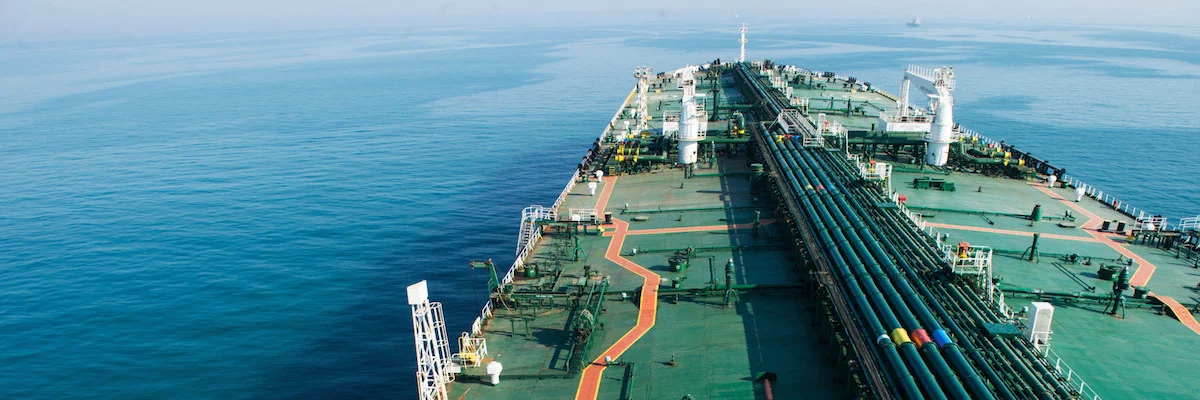
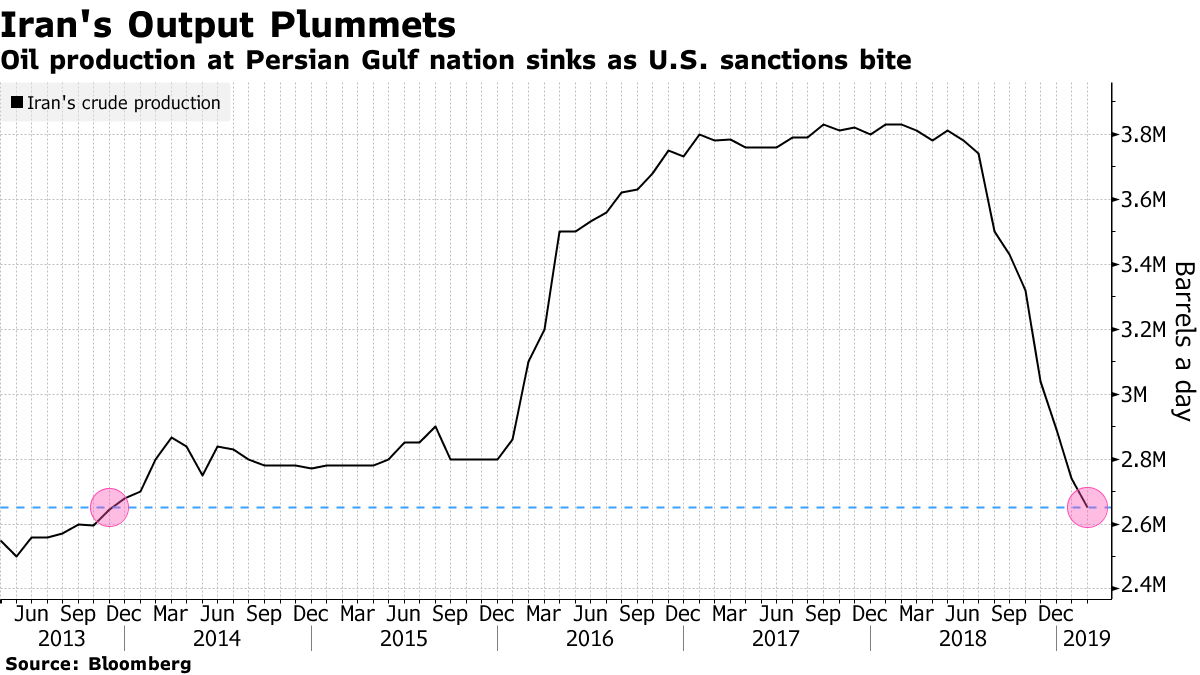
◢ Uncertainty over U.S. waivers for buyers of Iranian oil is starting to grip the market again, under very different circumstances than when American sanctions were set to go into effect last year. The Trump administration, for its part, says the aim is still to completely halt Iran’s oil shipments as it seeks to increase economic pressure on Tehran.
Uncertainty over U.S. waivers for buyers of Iranian oil is starting to grip the market again, under very different circumstances than when American sanctions were set to go into effect last year.
Before existing exemptions were granted in early November, Saudi Arabia was pumping at record levels, benchmark Brent futures rose to a four-year high, traders were predicting USD 100 oil, and Donald Trump was seeking lower fuel prices ahead of U.S. mid-term elections. The waivers blindsided the market, which had assumed America would bring Iranian exports to zero, and sparked a 40 percent collapse in crude.
Now, as the six-month waivers allowing buyers to ship limited quantities approach their expiry, the Saudis are pursuing aggressive output cuts, U.S. sanctions on Venezuela have further squeezed supplies and OPEC producers burned by last quarter’s oil slump are defying Trump’s call for lower prices. Iran’s customers, meanwhile, are making plans -- with some betting the exemptions will be extended and others expecting an end.
The Trump administration, for its part, says the aim is still to completely halt Iran’s oil shipments as it seeks to increase economic pressure on Tehran. In February, Japanese broadcaster NHK cited the State Department’s Brian Hook as saying the U.S. doesn’t plan to extend the waivers. More recently, Secretary of State Mike Pompeo said America wants to bring the Islamic Republic’s exports to zero “as quickly as market conditions will permit.”
Iran’s customers, meanwhile, are making plans—with some assuming the waivers will be renewed while others foreseeing some cuts to permitted purchases. Here’s a round-up of plans by major buyers, based on information from traders who participate in the market, refinery officials, data compiled by Bloomberg and analysts.
South Korea
Waiver: Up to 200,000 barrels a day of condensate
Nation purchased 179,000 b/d from Iran in February, tanker tracking data show
Refineries built to turn ultra-light oil known as condensate into petrochemicals have stepped up purchases of alternative supply due to mounting uncertainty around future cargoes from Iran. Hanwha Total Petrochemical Co. and SK Innovation Co. have bought several spot cargoes of Qatari shipments for loading in April after a months-long hiatus, just as the U.S.-issued waiver is set to expire.
The companies had slashed their spot purchases in February and March as they rushed to import the maximum permitted volume of Iran’s South Pars condensate. While they are now turning to Qatari cargoes, they are being aided by a glut in the market for such supply.
Additionally, the relatively low cost of other feedstock such as heavy full-range naphtha offers another viable replacement for some. Overall demand is also muted due to planned maintenance shutdown at Hyundai Chemical Co.
China
Waiver: 360,000 b/d over six months
Nation purchased 569,000 b/d from Iran in February, based on tanker tracking data
The nation’s largest refiners, state-run Sinopec and PetroChina Co., are preparing for a scenario where U.S.-issued waivers are renewed with some cuts to permitted purchase volumes, according to company officials with knowledge of procurement plans, who asked not to be identified because the information is private.
Chinese buyers may choose to secure at least some alternatives in the spot market ahead of time, according to a Bloomberg survey of traders who participate in the market. That’s because allocations for Iranian cargoes tend to take place three to four weeks before shipments are due to load, leaving refiners with the risk of insufficient supplies if there are hurdles related to the waivers.
With Atlantic Basin benchmarks Brent crude and West Texas Intermediate prices weakening relative to the Middle East’s Dubai marker, China is seen sustaining high levels of African oil imports while also considering shipments of Russian Urals and American crude as trade tensions between the U.S. and China ease.
Japan
Waiver: Unknown volume
Nation purchased 167,000 b/d from Iran in February, based on tanker tracking data
After receiving its first cargo under the waivers only in February, the close U.S. ally is now already scaling back purchases even though the waivers expire only in early May. A cargo that loaded this month from Iran for Cosmo Oil Co. will be the company’s last. Fuji Oil Co. halted lifting shipments at the end of February.
Other refiners that have purchased volumes include JXTG Holdings Inc. and Showa Shell Sekiyu KK. Japan’s purchases from Iran typically drop during March due to uncertainty around the prospect of an annual renewal of government-issued freight insurance for the Islamic Republic’s cargoes for the following fiscal year starting in April.
The nation’s refiners are highly reliant on Middle East producers for crude supply, and the Saudi-led output curbs by the Organization of Petroleum Exporting Countries and its allies could increase the risk of disruptions if the U.S. waiver on Iran isn’t renewed. Japanese firms have already purchased more spot cargoes of Abu Dhabi’s Murban and Das for April loading, according to traders who participate in the market.
India
Waiver: Up to 300,000 b/d
Four Indian refiners took nine million barrels of Iranian crude in March
Buyers of Iranian crude such as Indian Oil Corp. and Bharat Petroleum Corp. plan to continue importing oil from the Persian Gulf producer in April, even as the availability of May supplies remains uncertain as refiners await the Trump administration’s decision on waivers.
While an IOC official said the company is mulling alternative plans should supplies be halted, the top Indian importer of Iranian crude remains confident that it can lean on flexible terms in its supply contracts with Saudi Arabia and Iraq to make up for any loss in shipments.
BPCL, meanwhile, has booked 1 million barrels of Iranian oil for April and had yet to decide on its purchases for May, Director of Refineries R. Ramachandran said.
“Beyond May 4, we don’t know what will happen. We are waiting,” he said, adding that the company has the option of purchasing other grades from the Middle East. “We feel the extension of waivers may not happen easily, so we have alternative plans,” he added.
Photo Credit: Bloomberg