
Iran President Defends Telecom Minister Against Judiciary
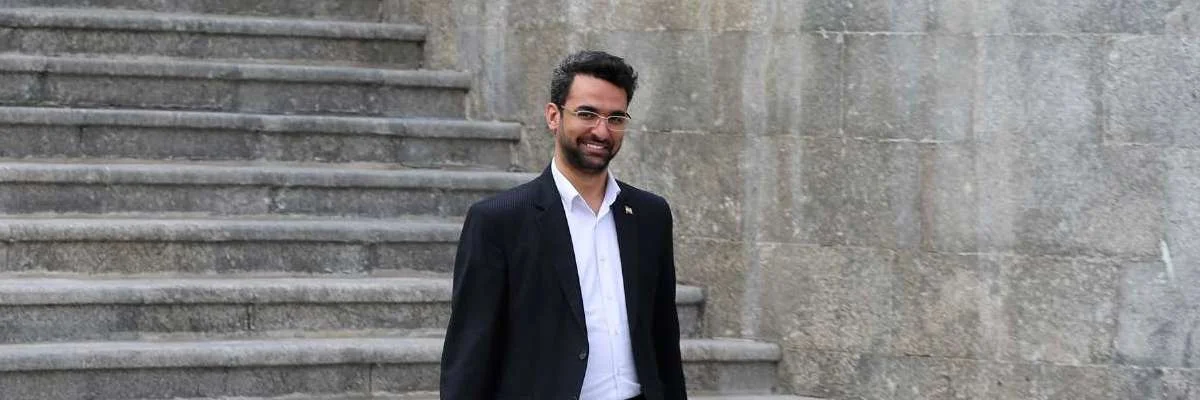
◢ Iran President Hassan Rouhani on Monday brushed off attacks against his telecom minister over charges of failing to create a "safe environment" in social media and leaving Iranian data vulnerable to espionage, state television reported. According to the judiciary, 2,000 people in the southwestern city of Ahvaz and the general prosecutor's office have lodged a complaint against the minister, Mohammad Javad Azari-Jahromi.
Iran President Hassan Rouhani on Monday brushed off attacks against his telecom minister over charges of failing to create a "safe environment" in social media and leaving Iranian data vulnerable to espionage, state television reported.
According to the judiciary, 2,000 people in the southwestern city of Ahvaz and the general prosecutor's office have lodged a complaint against the minister, Mohammad Javad Azari-Jahromi.
"Someone in the judiciary says they'll lodge a complaint against a young minister. Well, he is not at all intimidated and is doing his job," said Rouhani, without naming the minister.
“Ok, then, lodge a complaint! The young minister is working for the benefit of the people and pays no heed to pointless orders," he added defiantly.
A "lack of safe space" in social media has "drawn (young people) to Takfiri (jihadist) groups and eventually led to (last year's) terrorist incident at the armed forces parade," a cyberspace official at the prosecutor's office, Javad Javidnia, told semi-official news agency ISNA.
Back in September 2018 in the southwestern city of Ahvaz, in Khuzestan province bordering Iraq, gunmen killed at least 24 people as they opened fire on the military parade.
Javidnia said a complaint had also been lodged against the managers of Telegram and Instagram.
Iran has in the past blocked access to social media platforms such as Facebook, Twitter and YouTube, and the judiciary blocked the Telegram messaging app in May.
The judiciary has also accused Azari-Jahromi, at 37 the youngest member of Rouhani's cabinet, of leaving Iran's "big data" vulnerable to access by its enemies, which enables them to commit "internet espionage".
"Foreigners can analyze this data and use it to disrupt the country's security and stability," Javidnia told ISNA.
The judiciary has frequently clashed with the telecom minister.
In January, Azari-Jahromi opposed a mulled ban on the photo- and video-sharing application Instagram, saying it would only create new problems for the Islamic republic.
Despite restrictions, top Iranians officials like Rouhani and the minister himself use services such as Twitter, which are widely accessible via proxy servers.
Photo Credit: IRNA
Washington Post Reporter's Memoir Recounts Imprisonment in Iran
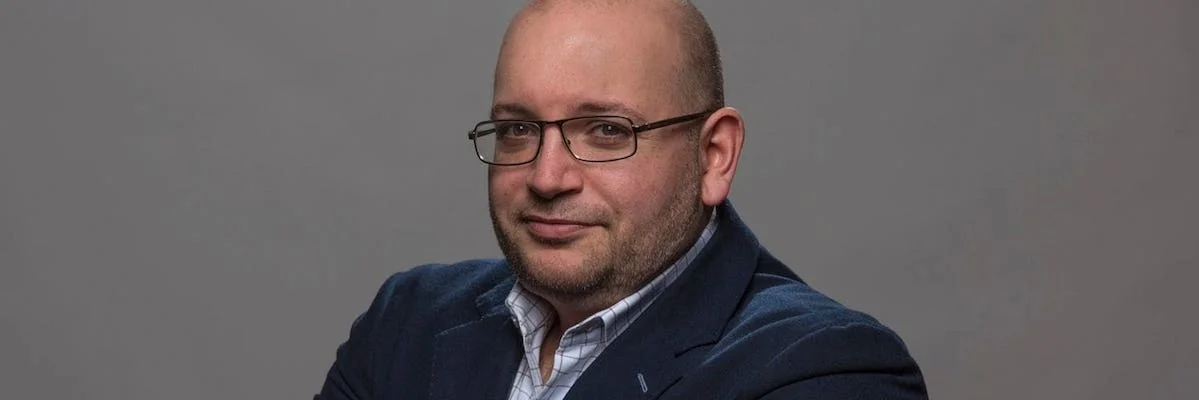
◢ A pawn in a game of international chess, Jason Rezaian, the Tehran correspondent for The Washington Post, spent 544 days in an Iranian prison. Rezaian, 42, who was born and raised in California, recounts his 18-month ordeal in a memoir, "Prisoner," which came out at the end of January.
A pawn in a game of international chess, Jason Rezaian, the Tehran correspondent for The Washington Post, spent 544 days in an Iranian prison.
As Rezaian languished behind bars in Evin Prison, the high-stakes match was being played over the future of Iran's nuclear program.
"I was treated as an Iranian but when it came time to make a trade, I was traded as an American," Rezaian, the son of an Iranian-born father and an American mother, told AFP in an interview. "It is a hypocritical way, but a very Iranian way of doing business."
Rezaian, 42, who was born and raised in California, recounts his 18-month ordeal in a memoir, "Prisoner," which came out at the end of January.
Rezaian and his wife, Yeganah, were arrested on July 22, 2014 after he returned from Vienna, where he had covered a negotiating session between Iran and the P5+1—the five permanent members of the UN Security Council plus
Germany.
After years of economic sanctions, the talks had officially resumed following the June 2013 election of moderate Hassan Rouhani to the Iranian presidency.
The two sides were working towards an agreement governing Iran's nuclear program, which Tehran insisted was for civilian purposes but Western intelligence agencies suspected had military goals.
Rezaian, who had worked for the Post for two years and was well acquainted with the restrictions on foreign reporters in Iran, was accused by the Iranian authorities of being the station chief for the Central Intelligence Agency (CIA) in Tehran.
His Iranian interrogators were particularly suspicious about a quixotic Kickstarter campaign he launched to bring avocados—a fruit that is not found in Iran—to the Islamic Republic.
"To take a Kickstarter project on an avocado farm, such a silly thing, and turn this into proof that you are the CIA station chief in Tehran is ridiculous," Rezaian said.
He soon came to realize that his "value" and that of his Iranian-born wife was linked to the delicate negotiations over the future of Iran's nuclear program.
"Very early on, they would say 'just a journalist has no value for us'—they kept talking about value, value," Rezaian said.
"Iran has been famous for taking hostages, and using those hostages for trade for many years," he added in a reference to the 1979 seizure of American diplomats in Tehran, a move which led to the rupture in relations between the two countries.
’Very Complex Situation'
Rezaian and his wife also found themselves caught up in the middle of a power struggle among the leadership of the Islamic Republic over the nuclear deal and the country's relations with the West.
"The (faction) that didn't want relationships (with the West) was responsible for my arrest and they were doing everything they could to undermine the negotiations between the Rouhani administration and (P5+1)," he said.
"It was a very complex situation a—at the same time—Rouhani's folks that were negotiating understood that they could use me as leverage as well," the journalist said.
During his 18 months in Evin Prison, in northern Tehran, Rezaian was interrogated, threatened with dismemberment and told he could receive life in prison or even the death sentence.
He was told he would be freed if he pleaded guilty to espionage. Put on trial behind closed doors in 2015, Rezaian pleaded not guilty.
Rezaian said his prison conditions improved somewhat as the months dragged on. His wife was released after 72 days and he was allowed visits by his mother.
The Washington Post, his brother, Ali, and press freedom groups launched a campaign seeking his release.
"I realized that it needed to be as loud as possible because at that point it became a political issue and it was my only chance," Rezaian said. "For innocent people who are captured and used as leverage, it's imperative to keep their name out there."
Rezaian was released along with three other Americans on January 16, 2016—the day the nuclear agreement signed in Vienna on July 14, 2015 went into force.
"My fate was tied up with how the deal was going to be implemented," he said.
Rezaian said his first months back home were difficult.
"We will never return to the life we had and it took me many months to understand it," he said. "In the first months I thought I was like, broken.
"I could not sleep at night," he said, and was "very paranoid.”
Since his release, Rezaian has campaigned for the release of other foreigners or dual nationals held by Iran such as Nazanin Zaghari-Ratcliffe, a British-Iranian who has been detained since April 2016, and Iranian-Americans Baquer and Siamak Namazi.
Rezaian's advice to other members of the press working in Iran is to be "very careful."
"Take all the necessary precautions," he said. "Because unfortunately, the likelihood is that it will happen again to somebody else."
Photo Credit: Washington Post
IAEA Says Iran Adhering to Terms of Nuclear Deal
◢ Iran has been adhering to a deal with world powers governing its nuclear program, the UN atomic watchdog said Friday, as diplomatic wrangling continues over the future of the accord. The latest report from the International Atomic Energy Agency confirmed that Iran was still complying with the restrictions to its nuclear activities under the 2015 Joint Comprehensive Plan of Action.
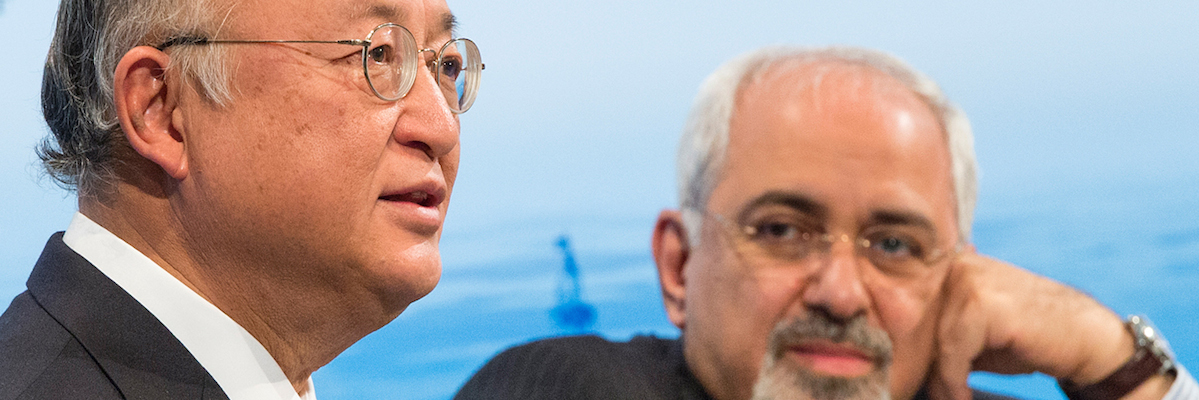
Iran has been adhering to a deal with world powers limiting its nuclear program, the UN atomic watchdog said Friday, as diplomatic wrangling continues over the future of the accord.
The latest report from the International Atomic Energy Agency confirmed that Iran was still complying with the 2015 Joint Comprehensive Plan of Action (JCPOA) with global powers under which Tehran drastically scaled back its nuclear program in return for sanctions relief.
The IAEA's latest report showed that over the past three-month period, Iran's stock of heavy water had risen from 122.8 to 124.8 metric tonnes and that it held 163.8kg of enriched uranium, up from 149.4kg in November.
Both levels are within the limits foreseen by the JCPOA.
Last week European states rejected a call from US Vice President Mike Pence to follow the US lead in withdrawing from the Iranian nuclear deal.
Photo Credit: MSC

Trial Opens for Iran President's Brother
◢ The trial of Iranian President Hassan Rouhani's brother, who was arrested two years ago on charges of financial violations, opened Tuesday in Tehran, the judiciary's news website Mizan Online reported. Hossein Fereydoun, a key adviser to Rouhani, was arrested in July 2017 following long-running corruption allegations, with the judiciary saying at the time that he was the subject of "multiple investigations.”
The trial of Iranian President Hassan Rouhani's brother, who was arrested two years ago on charges of financial violations, opened Tuesday in Tehran, the judiciary's news website Mizan Online reported.
Hossein Fereydoun, a key adviser to Rouhani, was arrested in July 2017 following long-running corruption allegations, with the judiciary saying at the time that he was the subject of "multiple investigations.”
At the first hearing on Tuesday Fereydoun and four associates were present in court with their lawyers for a session that lasted more than two hours, Mizan Online said.
During the hearing a representative of the state prosecutor read out the indictment, it said, without giving further details.
A new hearing will be held next week, Mizan Online said without giving an exact date.
Fereydoun and his brother do not share the same name because Rouhani changed his when he was younger.
A day after his arrest in 2017, Fereydoun was released on bail, reported by local media to be millions of dollars.
The head of the General Inspection Organisation, Naser Seraj, had accused Fereydoun of financial violations.
Seraj alleged Fereydoun had influenced the appointment of two bank directors, one of whom was accused by the Revolutionary Guards of involvement in a "large corruption scandal.”
Conservatives had demanded that Fereydoun be put on trial, accusing him of receiving zero-interest loans among other violations.
Photo Credit: Wikicommons
Iran Arrests 3 'Terrorists' over Suicide Bomb Attack
◢ Iran's elite Revolutionary Guards said Monday it has arrested three "terrorists" involved in last week's deadly suicide bomb attack on security forces in a region bordering Pakistan. "Safe houses in (the cities of) Saravan and Khash were identified and eliminated, and the terrorists based in them were arrested," the force said on its official Sepah news agency.
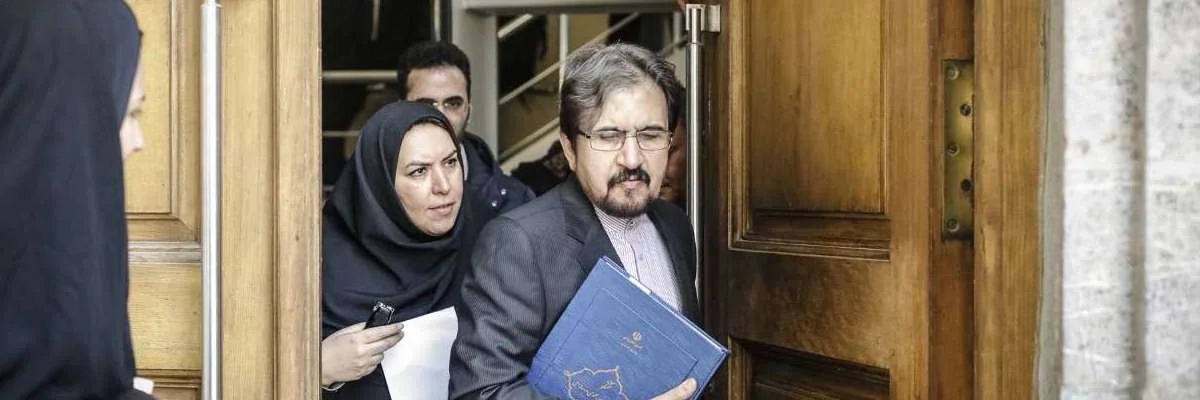
Iran's elite Revolutionary Guards said Monday it has arrested three "terrorists" involved in last week's deadly suicide bomb attack on security forces in a region bordering Pakistan.
"Safe houses in (the cities of) Saravan and Khash were identified and eliminated, and the terrorists based in them were arrested," the force said on its official Sepah news agency.
"Three of the terrorists were arrested and 150 kilograms (330 pounds) of explosives and 600 kilograms of explosive materials as well as weapons and ammunition were confiscated," it said.
The Guards said the three arrested had "produced, guided and supported" the vehicle used in Wednesday's suicide bombing.
The attack killed 27 members of Iran's Revolutionary Guards traveling on a bus in the volatile southeastern province of Sistan-Baluchistan, which straddles the border with Pakistan.
It was claimed by the jihadist outfit Jaish al-Adl (Army of Justice).
Iran has provided Pakistani officials with "information on the terrorist groups' hidden and semi-hidden training centers", army chief-of-staff Mohammad Bagheri told Tasnim news agency.
In a phone call with Pakistani army commanders, Bagheri asked them to "either confront the groups or allow (Iranian) forces to enter."
Islamabad launched an operation against the "terrorists" in its Balochistan border province on Sunday, he said.
Guards commander Major General Mohammad Ali Jafari has accused Pakistan's army and intelligence agency of sheltering the jihadists.
The foreign ministry said Iran "cannot tolerate" Pakistan's inability to stop cross-border attacks on Iran and said Tehran's frustration had been communicated to Islamabad.
"We hope the Pakistani government can and wants to prevent such things from happening again," spokesman Bahram Ghasemi told reporters on Monday.
The ministry has summoned the Pakistani ambassador in Tehran and urged Islamabad to "seriously confront... the terrorist groups active on its border" with Iran.
Photo Credit: IRNA
Iran Takes Aim at 'Hateful' Pence Comments
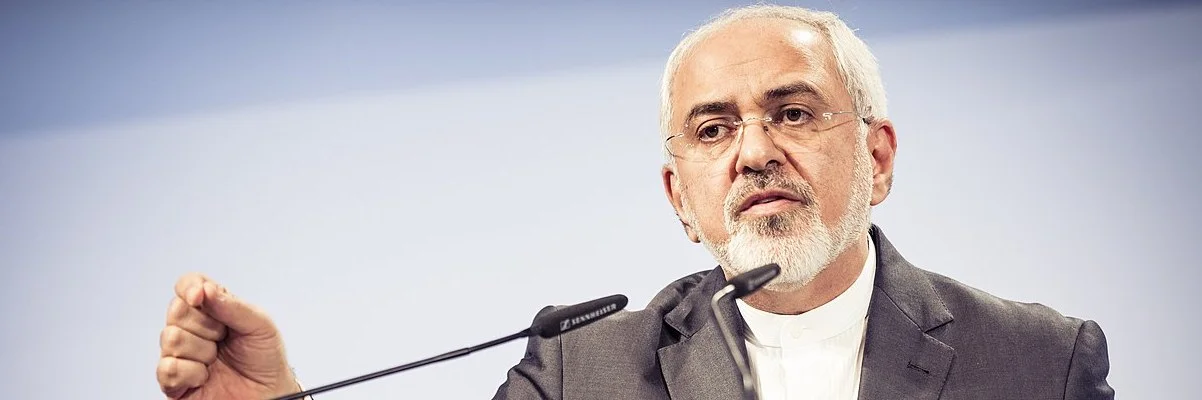
◢ Iran's foreign minister on Sunday launched a blistering attack on US Vice President Mike Pence, saying his allegations that Tehran was plotting a "new Holocaust" were "hateful" and "ignorant.” Mohammad Javad Zarif told the Munich Security Conference that Pence's demands for the EU to follow the US in abandoning the 2015 Iran nuclear deal amounted to asking Europe to undermine its own security.
Iran's foreign minister on Sunday launched a blistering attack on US Vice President Mike Pence, saying his allegations that Tehran was plotting a "new Holocaust" were "hateful" and "ignorant.”
Mohammad Javad Zarif told the Munich Security Conference that Pence's demands for the EU to follow the US in abandoning the 2015 Iran nuclear deal amounted to asking Europe to undermine its own security.
And Zarif piled fresh pressure on the EU, telling Brussels that a trade mechanism to bypass US sanctions on Iran was inadequate and it needed to do more if it wanted to save the accord.
US President Donald Trump tore up the nuclear deal last year, branding it a failure, and Washington has slapped strict sanctions back on Tehran.
Pence used a diplomatic tour of Europe this week to demand repeatedly that EU countries stop trying to preserve the deal, which curbed Tehran's nuclear ambitions in return for sanctions relief.
Zarif slammed the vice president, saying he had "arrogantly demanded that Europe must join the US in undermining its own security and breaking its obligations" to the treaty under international law.
"His hateful accusations against Iran including his ignorant allegations of anti-semitism (...) are both ridiculous but at the same time very very dangerous," Zarif said.
Away from the fiery rhetoric, Zarif's criticism of INSTEX—the payment mechanism created by European countries to try to continue trade with Iran—will cause concern in Brussels.
The creation of INSTEX by Britain, France and Germany—the so-called E3 European signatories to the nuclear deal—was a complex, drawn-out process that has infuriated the Trump administration, exacerbating transatlantic tensions.
But while Zarif welcomed the EU's political support, he said it was not enough, and demanded Europe "walk the walk".
"INSTEX falls short of the commitments by the E3 to save the nuclear deal," he said.
"Europe needs to be willing to get wet if it wants to swim against the dangerous tide of US unilateralism."
He warned that the future of the nuclear deal was "on the brink", saying that while polls showed 51 percent of Iranians still supported staying in, there were many who thought Tehran had got a bad deal.
Photo Credit: Wikicommons
Iran Launches 'Cruise Missile Capable' Submarine
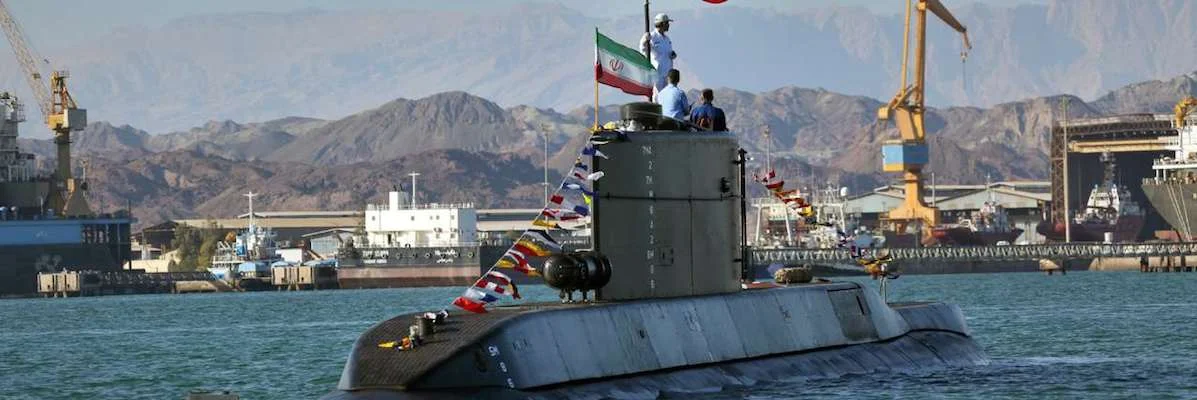
◢ Iran on Sunday launched a new locally-made submarine capable of firing cruise missiles, state TV said, in the country's latest show of military might at a time of heightened tensions with the US. The launch ceremony, led by President Hassan Rouhani, took place in the southern port city of Bandar Abbas.
Iran on Sunday launched a new locally-made submarine capable of firing cruise missiles, state TV said, in the country's latest show of military might at a time of heightened tensions with the US.
The launch ceremony, led by President Hassan Rouhani, took place in the southern port city of Bandar Abbas.
"Today, the Islamic Republic of Iran is fully self-reliant on land, air and sea," Rouhani said.
"Our defensive power is meant to defend our interests and we have never sought to attack any country," he added.
Named the Fateh (Farsi for 'Conqueror'), Fars news agency said the new submarine is Iran's first in the semi-heavy category, filling a gap between the light Ghadir class and the heavy Kilo class submarines that the country possesses.
Fars said the near 600-tonne underwater vessel is equipped with torpedoes and naval mines in addition to cruise missiles, and can operate more than 200 metres below sea level for up to 35 days.
The US withdrew from a 2015 multilateral nuclear deal with Iran in May 2018 and re-imposed biting unilateral sanctions later last year.
Iran's Revolutionary Guards on February 7 unveiled a new ballistic missile with a range of 1,000 kilometers (620 miles), according to the elite unit's official media agency Sepah News.
The surface-to-surface missile—called Dezful—is an upgrade on the older Zolfaghar model that had a range of 700 kilometres, aerospace commander Brigadier General Amirali Hajizadeh said.
Rouhani said on Sunday that "pressure by enemies, the (Iran-Iraq) war and sanctions" were incentives for Tehran to be self-reliant in its defense industry.
"Maybe we would not have this motivation to industrialize our defense sector," he said, if Iran could just buy the weaponry it needed.
Iran's top military brass and cabinet ministers attended the ceremony.
Photo Credit: IRNA
Iranians Cry 'Revenge' at Funeral of Terrorism Victims
◢ Tens of thousands of Iranians called for "revenge" Saturday at the funeral of 27 Revolutionary Guards killed in a suicide attack perpetrated by jihadists that Tehran accuses Pakistan of supporting. "The Islamic Republic of Iran will no longer observe the previous reservations and will directly act to counter such acts," Jafari told mourners gathered at the city of Isfahan's Bozorgmehr Square.
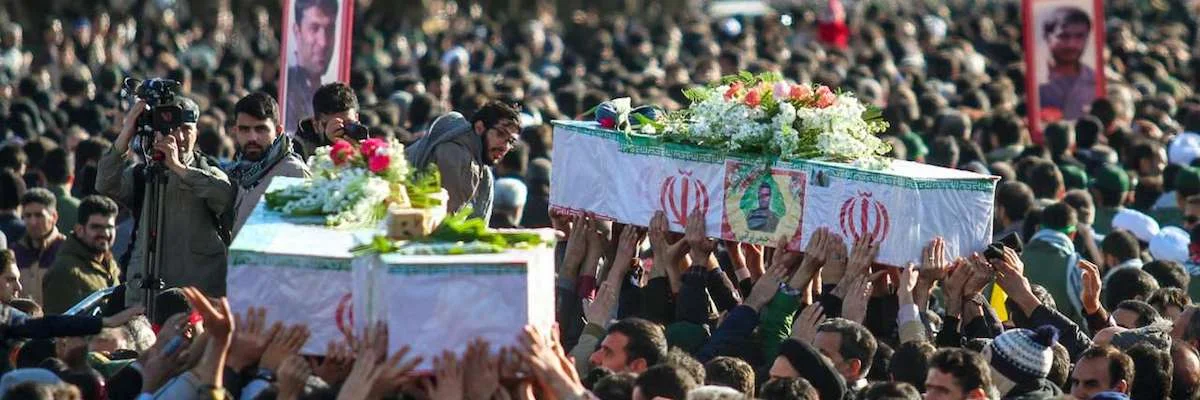
Tens of thousands of Iranians called for "revenge" Saturday at the funeral of 27 Revolutionary Guards killed in a suicide attack perpetrated by jihadists that Tehran accuses Pakistan of supporting.
"The government of Pakistan must pay the price of harboring these terrorist groups and this price will undoubtedly be very high," said Major General Mohammad Ali Jafari, referring to jihadist outfit Jaish al-Adl ("Army of Justice").
"The Islamic Republic of Iran will no longer observe the previous reservations and will directly act to counter such acts," Jafari told mourners gathered at the city of Isfahan's Bozorgmehr Square.
The comments by Jafari, commander of Iran's elite Revolutionary Guards, came a day ahead of a planned two-day visit to Pakistan by Mohammed bin Salman, the crown prince of Iran's regional arch-rival Saudi Arabia.
Jafari blamed Pakistan's army and Inter-Services Intelligence agency, saying that "sheltering and silence" amounts to supporting the perpetrators.
As he left the podium, people shouted "Commander of Sepah (Farsi for Revolutionary Guards)—Revenge! Revenge!""
The Wednesday bombing targeted a busload of Revolutionary Guards in the volatile southeastern province of Sistan-Baluchistan, which straddles the border with Pakistan.
Jaish al-Adl was formed in 2012 as a successor to the Sunni extremist group Jundallah (Soldiers of God), which waged a deadly insurgency for a decade before it was severely weakened by the capture and execution of its leader Abdolmalek Rigi in 2010.
Jafari also blasted "the traitorous governments of Saudi Arabia and (the) Emirates" and said Iran will no longer tolerate their "hidden support for anti-Islam thugs and Takfiri groups".
He called on President Hassan Rouhani and the country's Supreme National Security Council to give the guards more freedom to carry out "retaliatory operations," but did not elaborate.
Iran's supreme leader Ayatollah Ali Khamenei has linked the perpetrators of Wednesday's attack to "the spying agencies of some regional and trans-regional countries".
'We will never submit'
Black flags attached to lamp-posts adorned Isfahan as the city prepared for the funeral and two days of mourning.
When the bodies of the troops arrived on the back of Toyota vans—the guards' signature vehicles—their comrades, women in black veils and young men in jeans were there to greet them.
Tens of thousands chanted "Down with America!" and "We will never submit!"
Iran's flag could be seen at half-mast in Bozorgmehr Square's southeastern side, and the crowd chanted "Allahu Akbar" each time the speaker read the names of the dead.
The troops killed in the bombing belonged to the Guards' 14th Imam Hussein Division, which is based in Isfahan province, according to Tasnim news agency.
Aged from 21 to 52, each will be buried in his hometown after the funeral.
A housekeeper originally from Khuzestan province, where a deadly attack killed 24 last year, told AFP of the thirst for revenge.
"We demand that the blood of these troops be avenged," said Tayebbeh Rezaee, 34. "They cannot weaken the Islamic Republic in any way—not war, not economic attacks. So they have to stoop to such acts."
Restive Sistan
Sistan-Baluchistan has long been a flashpoint, where Pakistan-based Baluchi separatists and jihadists carry out cross-border raids.
A Revolutionary Guard was killed and five wounded in a February 2 attack claimed by Jaish al-Adl on a base of the Basij militia in the town of Nikshahr, some way from the border.
One of the wounded—Khodarahm Heidari, who was critically injured in that attack—died on Saturday, semi-official news agency ISNA reported.
On January 29 three members of an Iranian bomb squad sent to the scene of an explosion in the provincial capital Zahedan were wounded when a second device blew up as they were trying to defuse it, police said at the time.
And in early December two people were killed and around 40 others wounded in the port city of Chabahar, also in Sistan-Baluchistan, in an attack which Iran's Foreign Minister Mohammad Javad Zarif blamed on "foreign-backed terrorists"—a reference to Sunni Muslim extremists.
In October, Jaish al-Adl claimed responsibility for abducting 12 Iranian security personnel near the border with Pakistan.
Photo Credit: IRNA
Germany Rejects US Call to Leave Iran Nuclear Deal
◢ Germany on Friday rejected an appeal by US Vice President Mike Pence for Europeans to withdraw from the Iranian nuclear deal and isolate Tehran. Foreign Minister Heiko Maas defended the 2015 agreement under which Iran drastically scaled back its nuclear program in return for sanctions relief.
Germany on Friday rejected an appeal by US Vice President Mike Pence for Europeans to withdraw from the Iranian nuclear deal and isolate Tehran.
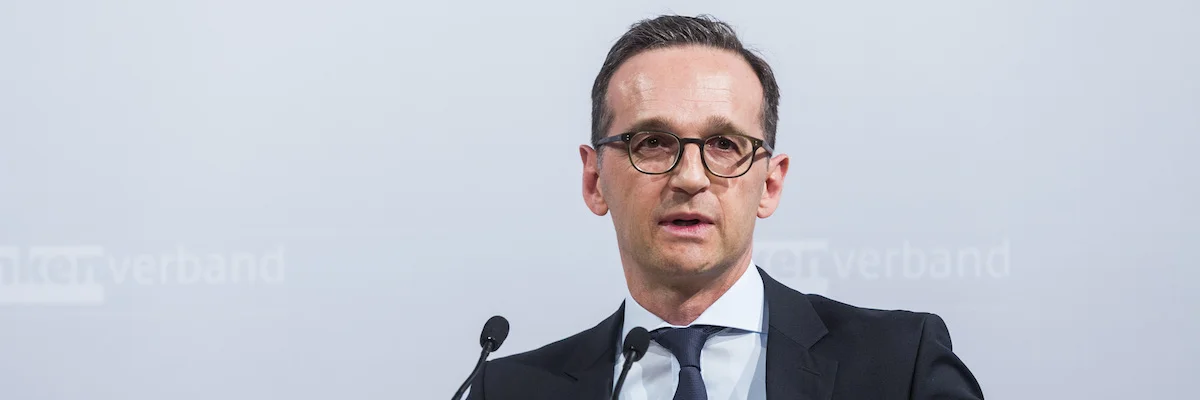
Foreign Minister Heiko Maas defended the 2015 agreement under which Iran drastically scaled back its nuclear program in return for sanctions relief.
"Together with the Brits, French and the entire EU we have found ways to keep Iran in the nuclear agreement until today," Maas told the Munich Security Conference.
A day earlier, Pence accused Tehran of planning a "new Holocaust" with its opposition to Israel and regional ambitions in Syria, Lebanon, Iraq and Yemen.
Maas said that "our goal remains an Iran without nuclear weapons, precisely because we see clearly how Iran is destabilizing the region".
Without this agreement, "the region will not be safer and would actually be one step closer to an open confrontation," he added.
Pence at a conference on the Middle East in Warsaw on Thursday denounced the retention by the Europeans of the nuclear agreement.
He also criticized the initiative of France, Germany and Britain to allow European companies to continue operating in Iran despite US sanctions.
Photo Credit: Jochen Zick
Pence Demands EU Allies Leave Iran Nuclear Deal
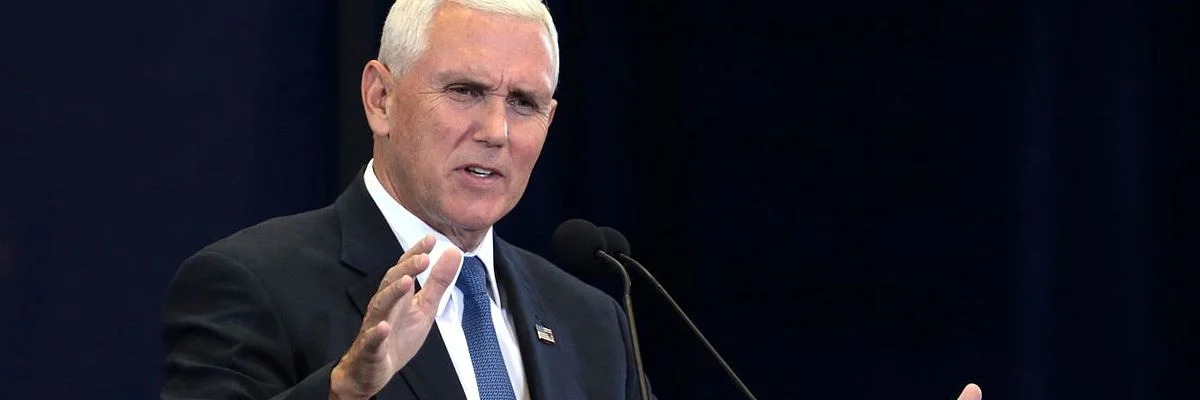
◢ US Vice President Mike Pence on Thursday demanded that European Union allies leave the Iran nuclear deal and warned of further US sanctions on Tehran. Speaking at a conference in Poland attended by Israel and senior Arab leaders, Pence denounced Iran as the "greatest threat to peace and security in the Middle East" and accused the clerical regime of plotting a "new Holocaust" with its regional ambitions.
US Vice President Mike Pence on Thursday demanded that European Union allies leave the Iran nuclear deal and warned of further US sanctions on Tehran.
Speaking at a conference in Poland attended by Israel and senior Arab leaders, Pence denounced Iran as the "greatest threat to peace and security in the Middle East" and accused the clerical regime of plotting a "new Holocaust" with its regional ambitions.
Pence denounced a new initiative by France, Germany and Britain to let European businesses keep operating in Iran despite renewed US sanctions.
"It's an ill-advised step that will only strengthen Iran, weaken the EU and creates still more distance between Europe and the United States," Pence said.
"The time has come for our European partners to withdraw from the Iran nuclear deal and join with us as we bring the economic and diplomatic pressure necessary to give the Iranian people, the region and the world the peace, security and freedom they deserve," he said.
As Iran's clerical state marks 40 years since the overthrow of the pro-US shah, Pence vowed maximum pressure while not explicitly urging regime change.
"As Iran's economy continues to plummet, as the people of Iran take to the streets, freedom-loving nations must stand together and hold the Iranian regime accountable for the evil and violence it has inflicted on its people, on the region and the wider world," he said.
US sanctions "will get tougher still" unless Iran "changes its dangerous and destabilising behavior," Pence said.
The European Union, including summit host Poland, has shown no sign of rejecting the 2015 accord negotiated under former US president Barack Obama in which Iran constrained its nuclear program in return for promises of sanctions relief.
EU officials say they acknowledge concerns about Iran but believe the deal, with which Tehran has complied, is working and that the clerical state is not the only problematic actor in the region.
Photo Credit: Wikicommons

Iran Vows Revenge on 'Mercenaries' Behind Suicide Attack
◢ President Hassan Rouhani vowed revenge Thursday against the "mercenary group" behind a suicide bombing which killed 27 people in southeastern Iran and accused the US and Israel of supporting "terrorism.” Rouhani was speaking at Tehran's Mehrabad Airport before leaving for the Russian resort of Sochi for a summit with his Russian and Turkish counterparts Vladimir Putin and Recep Tayyip Erdogan on the future of war-battered Syria.
President Hassan Rouhani vowed revenge Thursday against the "mercenary group" behind a suicide bombing which killed 27 people in southeastern Iran and accused the US and Israel of supporting "terrorism.”
"We will certainly make this mercenary group pay for the blood of our martyrs," the official IRNA news agency quoted the Iranian president as saying in response to Wednesday's attack.
"The main root of terrorism in the region is America and Zionists, and some oil-producing countries in the region also financially support the terrorists," he added.
Rouhani was speaking at Tehran's Mehrabad Airport before leaving for the Russian resort of Sochi for a summit with his Russian and Turkish counterparts Vladimir Putin and Recep Tayyip Erdogan on the future of war-battered Syria.
Wednesday's attack, which targeted a busload of Revolutionary Guards in the volatile southeastern province of Sistan-Baluchistan, was one of the deadliest on Iranian security forces in years.
The bomber struck as the troops were returning from a patrol mission on the border with Pakistan, where Baluchi separatist and jihadist groups have rear bases, the Guards said.
Sistan-Baluchistan is home to a large ethnic Baluchi community, who straddle the border and who, unlike most Iranians, who are Shiite Muslims, are mainly Sunni.
Warning to Neighbors
Rouhani called on Iran's neighbors to assume their "legal responsibilities" and not allow "terrorists" to use their soil to prepare attacks.
"If this continues and they cannot stop the terrorists, it is clear—based on international law—that we have certain rights and will act upon them in due time," he said, without elaborating.
The attack came on the same day as the United States gathered some 60 countries in Poland for a conference on the Middle East and Iran which they hoped would increase pressure on Tehran.
Iran quickly linked the attack to the Warsaw conference, where supporters of the formerly armed opposition People's Mujahedeen plan a second day of protests on Thursday.
Dubbing the meeting the "WarsawCircus", Foreign Minister Mohammad Javad Zarif said it was "no coincidence that Iran is hit by terror on the very day" that the talks began in the Polish capital.
"Especially when cohorts of same terrorists cheer it from Warsaw streets & support it with twitter bots? US seems to always make the same wrong choices, but expect different results," Zarif wrote on Twitter.
Wednesday's bombing was claimed by the jihadist Jaish al-Adl (Army of Justice), which is blacklisted as a terrorist group by Iran, the SITE Intelligence Group reported.
The group was formed in 2012 as a successor to Sunni extremist group Jundallah (Soldiers of God), which waged a deadly insurgency against Iranian targets over the previous decade.
Sistan-Baluchistan has been hit by previous deadly attacks in recent months.
On January 29, three members of an Iranian bomb squad sent to the scene of an explosion in provincial capital Zahedan were wounded when a second device blew up as they were trying to defuse it.
And in early December, two people were killed and around 40 wounded in an attack in the strategic port city of Chabahar, on the province's Arabian Sea coast, which Zarif blamed on "foreign-backed terrorists".
In October, Jaish al-Adl claimed responsibility for abducting 12 Iranian security personnel near the border, five of whom were later released and flown home after Pakistani intervention.
Zarif visited Islamabad twice in a month for briefings on the progress of the efforts to secure the captured unit's release.
Photo Credit: IRNA
Suicide Attack on Bus Kills 27 Iran Revolutionary Guards
◢ A suicide car bombing on a Revolutionary Guards bus in southeastern Iran killed 27 troops on Wednesday, in one of the deadliest attacks on the elite forces in years. The assault came as the troops were returning from a border patrol mission, the Guards said in a statement.
A suicide car bombing on a Revolutionary Guards bus in southeastern Iran killed 27 troops on Wednesday, in one of the deadliest attacks on the elite forces in years.
The assault came as the troops were returning from a border patrol mission, the Guards said in a statement.
"In this terrorist attack 27 of Islam's brave warriors were killed and 13 were wounded," the statement read, accusing "world domination and Zionist intelligence agencies" of supporting the attackers.
Earlier the official IRNA news agency said "the suicide attack on an Islamic Revolutionary Guards Corps personnel bus happened on the Khash-Zahedan road."
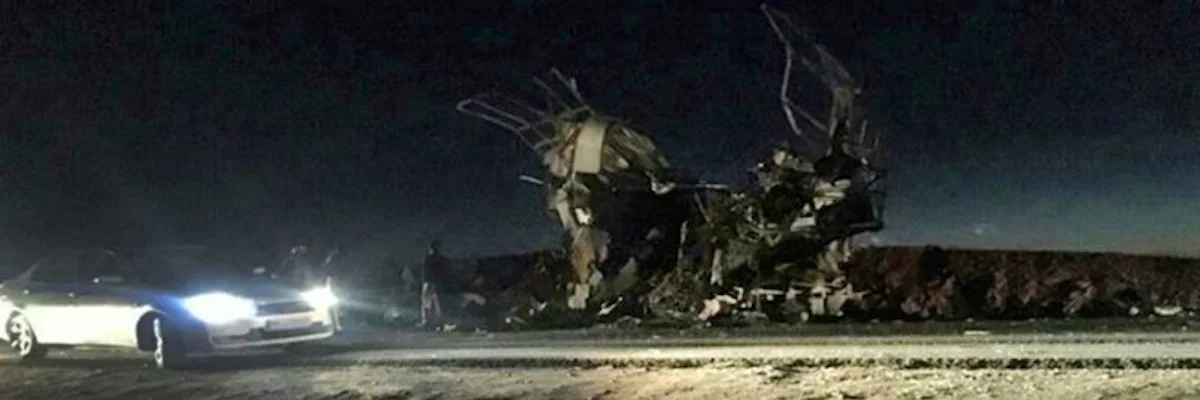
A picture released by the semi-official Fars news agency showed a hulk of twisted metal lying by the side of a road, unrecognizable as a bus.
The attack happened when "a car filled with explosives blew up besides a bus," the Guards said.
"Mercenaries of intelligence agencies of world arrogance and domination," carried out the attack to counteract "the victory of the 40th anniversary of the Islamic revolution," they added.
Iran has been celebrating the 40th anniversary of the return to Tehran of Ayatollah Ruhollah Khomeini in 1979 after more than 14 years in exile and the overthrow of the pro-Western shah. His arrival triggered the start of the Islamic Revolution and led to the creation of the Islamic Republic.
Wednesday's attack took place in the volatile southeastern province of Sistan-Baluchistan which has a large, mainly Sunni Muslim ethnic Baluchi community straddling the border with Pakistan.
The SITE Intelligence Group reported that the attack was claimed by Jaish al-Adl, a jihadist group formed in 2012 as a successor to the Sunni extremist group Jundallah (Soldiers of God), which waged a deadly insurgency against Iranian targets over the past decade
The Jaish al-Adl—blacklisted as a "terrorist group" in Iran—"announced its responsibility in a brief Persian message on February 13, 2019," SITE reported.
The attack came on the same day as the United States gathered some 60 countries in Poland for a conference on the Middle East and Iran which they hoped would increase pressure on Tehran.
'US Obsession
Dubbing the meeting in Poland the "WarsawCircus", Iranian Foreign Minister Mohammad Javad Zarif said it was "no coincidence that Iran is hit by terror on the very day" that the talks began in the Polish capital.
"Especially when cohorts of same terrorists cheer it from Warsaw streets & support it with twitter bots? US seems to always make the same wrong choices, but expect different results," Zarif wrote on Twitter
He earlier blasted the two-day conference as "dead on arrival.”
"It is another attempt by the United States to pursue an obsession with Iran that is not well-founded," Zarif told a Tehran news conference.
Sistan-Baluchistan has been the scene of other attacks.
On January 29 three members of an Iranian bomb squad sent to the scene of an explosion in its capital Zahedan were wounded when a second device blew up as they were trying to defuse it, police said at the time
And in early December last year two people were killed and around 40 others wounded in the port city of Chabahar, also in Sistan-Baluchistan, in an attack which Zarif at the time blamed on "foreign-backed terrorists"—a reference to Sunni Muslim extremists.
Another of the bloodiest attacks in recent times to have hit Iran happened in September when assailants killed 24 people at a military parade in the southwestern city of Ahvaz.
In October, Jaish al-Adl claimed responsibility for abducting 12 Iranian security personnel near the border with Pakistan
And in July at least 10 members of the Revolutionary Guards were killed when insurgents attacked one of their bases along the border with Iraq.
Photo Credit: Fars News Agency
US Fails to Halt Iran Bid to Free Frozen Billions
◢ The International Court of Justice (ICJ) ruled Wednesday that Iran can proceed with a bid to recover billions of dollars in frozen assets the United States says must go to victims of attacks blamed on Tehran. Judges of the UN's top court rejected US claims that the case should be thrown out because Iran had "unclean hands" due to alleged links to terrorism, and that the tribunal in The Hague did not have jurisdiction in the lawsuit.
An international court Wednesday ruled Iran can proceed with a bid to unfreeze assets in the United States, rejecting Washington's claims the case must be halted because of Tehran's alleged support for international terrorism.
Washington had argued that Iran's "unclean hands"—a reference to Tehran's suspected backing of terror groups—should disqualify its lawsuit to recover USD 2 billion in assets frozen by the US Supreme Court in 2016.
But the International Court of Justice in The Hague threw out the US challenges, and said that it had the right to hold full hearings at a later date as to whether Tehran will get the money back.
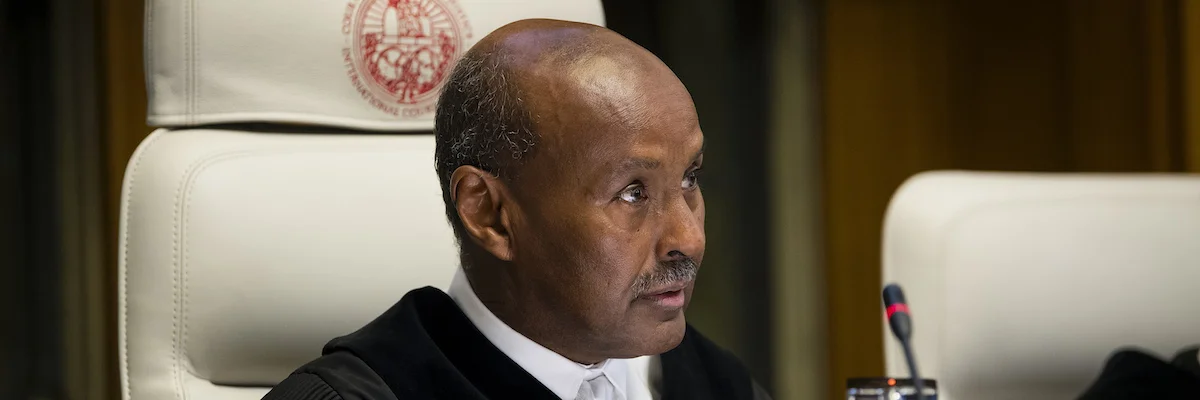
Chief judge Abdulqawi Ahmed Yusuf said the UN's top court "unanimously rejects the preliminary objections to admissibility raised by the United States of America.”
The court also "finds that it has jurisdiction" in the case, Yusuf said at the end of an hour-long reading of the decision.
Tehran said the United States had illegally seized Iranian financial assets and those of Iranian companies—and with Iran's clerical regime facing economic difficulties after sanctions and a fall in its currency resolving the case remains crucial.
The US Supreme Court had said Iran must give the cash to survivors and relatives of victims of attacks blamed on Tehran, including the 1983 bombing of a US Marine barracks in Beirut and the 1996 Khobar Towers bombing in Saudi Arabia.
Iran said the freezing of the funds breached the 1955 Treaty of Amity with the United States, an agreement signed before Iran's 1979 Islamic Revolution severed relations between the countries.
The United States announced in October that it was pulling out of the Treaty of Amity after the ICJ in a separate case ordered Washington to lift nuclear-related sanctions on humanitarian goods for Iran.
The ICJ is the top court of the United Nations and was set up after World War II to resolve disputes between member states. Its rulings are binding and cannot be appealed, but it has no means of enforcing them.
'Unclean Hands'
Tensions between Tehran and Washington are already high around the 40th anniversary of the Iranian revolution and a Middle East meeting in Warsaw starting Wednesday where the United States aims to pile pressure on Iran.
Relations have been strained ever since US President Donald Trump's decision last year to pull out of a "terrible" international nuclear deal with Iran and reimpose sanctions.
The 2015 nuclear deal had unblocked billions of dollars in other Iranian funds.
Iran first lodged the lawsuit in June 2016, accusing Washington of breaking the decades-old amity treaty dating from the time of the Shah, who was deposed in the revolution.
Judge Yusuf noted that at the last hearing on Iran's funds in October, the United States had argued "that Iran's 'unclean hands' preclude the court from proceeding with this case."
But he added that "even if it were shown that (Iran's) conduct was not beyond reproach, this would not be sufficient" on its own to throw out the case.
He also said the fact that the US had now pulled out of the amity treaty with Iran "has no effect on the jurisdiction of the court" and that it now needed to hold detailed hearings.
US officials including US National Security Advisor John Bolton have previously called the ICJ's legitimacy into account, and were incensed by October's ruling by the court that Washington must drop sanctions on humanitarian goods.
In Poland this week, US Secretary of State Mike Pompeo will use a two-day conference of foreign ministers to try to rally the world behind increasing pressure on Iran and supporting Israel, although turnout could be thin.
The Trump administration has also found itself at odds with its European allies over the nuclear deal, with EU powers launching a mechanism to bypass sanctions.
Photo Credit: Wikicommons
World Court to Rule on Iran's Billions Frozen in US
◢ The International Court of Justice will on Wednesday give its decision on a bid by Iran to recover $2 billion in frozen assets that the United States says must be paid to victims of attacks blamed on Tehran. The case threatens to cause further bad blood after a decision in October when the Hague-based tribunal ordered Washington to lift nuclear-related sanctions on humanitarian goods for Iran.
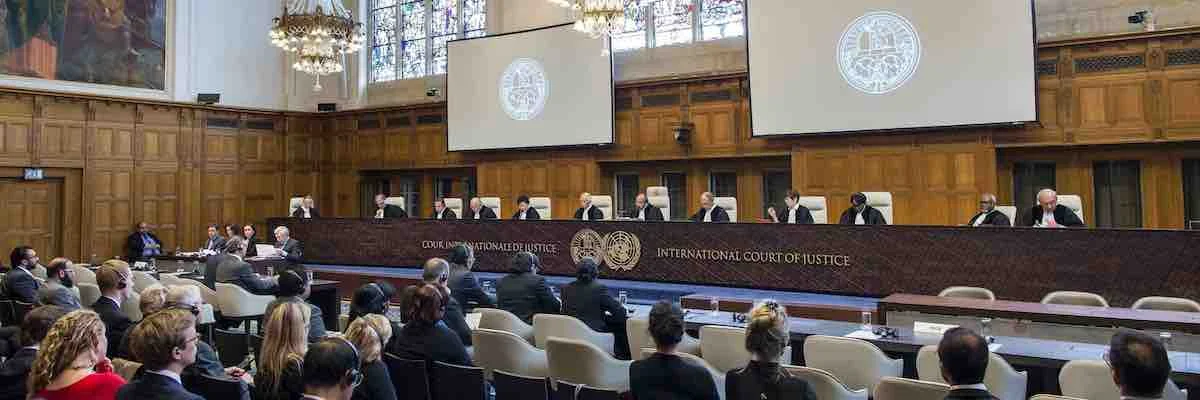
The International Court of Justice will on Wednesday give its decision on a bid by Iran to recover USD 2 billion in frozen assets that the United States says must be paid to victims of attacks blamed on Tehran.
The case threatens to cause further bad blood after a decision in October when the Hague-based tribunal ordered Washington to lift nuclear-related sanctions on humanitarian goods for Iran.
Tensions between Tehran and Washington are already high around the 40th anniversary of the Iranian revolution and a Middle East meeting in Warsaw where the United States aims to pile pressure on Iran.
The US Supreme Court ruled in 2016 that Iran must give the cash to survivors and relatives of victims of attacks blamed on Tehran, including the 1983 bombing of a US Marine barracks in Beirut.
Iran said the US decision to freeze the funds breached 1955 Treaty of Amity with the United States, an agreement signed before Iran's 1979 Islamic Revolution severed relations between the countries.
The United States announced after the sanctions case that it was immediately pulling out of the Treaty of Amity.
At the last hearing on Iran's funds appeal in October at the Hague-based tribunal, Washington said Iran has "unclean hands" and that its alleged support for terrorism should disqualify the case from being heard.
The court will now rule on the "preliminary objections" of the United States to Iran's case, it said in a statement.
The ICJ is the top court of the United Nations and was set up after World War II to resolve disputes between member states. Its rulings are binding and cannot be appealed, but it has no means of enforcing them.
'Bad Faith'
Relations between Washington and Tehran have been strained since US President Donald Trump's decision last year to pull out of a "terrible" international nuclear deal with Iran and reimpose sanctions.
The 2015 nuclear deal had unblocked billions of dollars in other Iranian funds.
In Poland this week, Secretary of State Mike Pompeo will use a two-day conference of foreign ministers to try to rally the world behind increasing pressure on Iran and supporting Israel, although turnout could be thin.
The Trump administration has also found itself at odds with its European allies over the nuclear deal, with EU powers launching a mechanism to bypass sanctions.
But with Iran's clerical regime facing economic difficulties the case on the frozen funds remains crucial.
Iran first lodged the lawsuit in June 2016, accusing Washington of breaking the decades-old amity treaty dating from the time of the Shah, who was deposed in the revolution.
Tehran said the United States had illegally seized Iranian financial assets and those of Iranian companies.
However in October, Richard Visek, a US State Department legal official, told the ICJ that "Iran comes to the court with unclean hands—indeed, it is a remarkable show of bad faith.
"The actions at the root of this case centre on Iran's support for international terrorism... Iran's bad acts include supports for terrorist bombings, assassinations, kidnappings and airline hijackings," he said at the time.
Pompeo had added in October the time that "we owe it to our fallen heroes, their families, and the victims of Iran's terrorist activities to vigorously defend against the Iranian regime's meritless claims... in The Hague.”
The US Supreme Court ruled in April 2016 that the USD 2 billion in frozen Iranian assets should be paid to about 1,000 survivors and relatives of those killed in attacks blamed on the Islamic Republic.
As well as the Beirut Marine barracks attack, in which 241 soldiers were killed, these also included the 1996 Khobar Towers bombing in Saudi Arabia.
Photo Credit: Wikicommons
Israel Warns Iran that its Missiles Can Travel 'Very Far'
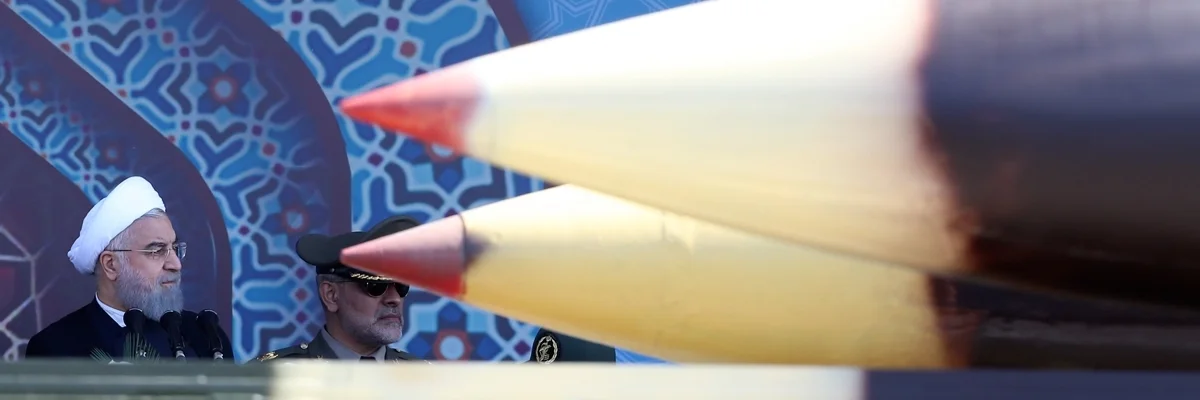
◢ Prime Minister Benjamin Netanyahu warned Iran Tuesday that Israeli missiles can travel "very far", on the eve of a conference in Poland about peace and security in the Middle East. Speaking during a visit to a naval base in the northern port of Haifa, Netanyahu said: "The missiles you see behind me can go very far, against any enemy, including Iran's proxies in our region"—an apparent reference to Lebanon's powerful Hezbollah movement.
Prime Minister Benjamin Netanyahu warned Iran Tuesday that Israeli missiles can travel "very far", on the eve of a conference in Poland about peace and security in the Middle East.
Speaking during a visit to a naval base in the northern port of Haifa, Netanyahu said: "The missiles you see behind me can go very far, against any enemy, including Iran's proxies in our region"—an apparent reference to Lebanon's powerful Hezbollah movement.
"We are constantly working according to our understanding and the need to prevent Iran and its proxies from entrenching on our northern border and in our region in general," Netanyahu added.
"We are doing everything necessary," said Netanyahu, as he inspected Israel's Iron Dome aerial defence system.
Netanyahu has repeatedly said Israel would not allow Iran and its ally Hezbollah to entrench themselves in neighboring Syria where they are backing the Damascus regime against rebels and jihadists.
Israel has carried out hundreds of air strikes in Syria in the past few years against Iranian and Hezbollah targets.
On Wednesday the Israeli prime minister is set to take part in an international conference in Warsaw co-organized by the United States and Poland.
US Secretary of State Mike Pompeo last month announced the two-day conference saying it would focus on the "destabilizing influence" of Iran in the Middle East.
But with few RSVPs coming, Poland and the US have toned down the agenda to focus on ways of promoting peace and security in the Middle East.
During the conference US President Donald Trump son-in-law and adviser Jared Kushner, who has been putting final touches on a "deal of the century" for peace between Israel and the Palestinians, will make a rare speaking appearance.
Kushner may offer hints of the US peace proposal but is not expected to unveil the full deal until after the April 9 election in Israel.
Photo Credit: IRNA
Iran Slams US as Huge Crowds Mark 40 Years Since Revolution
◢ Iran's president on Monday blasted a US "conspiracy" against the country as vast crowds marked 40 years since the Islamic revolution at a time of heightened tensions with Washington. "The presence of people today on the streets all over Islamic Iran... means that the enemy will never reach its evil objectives," President Hassan Rouhan.
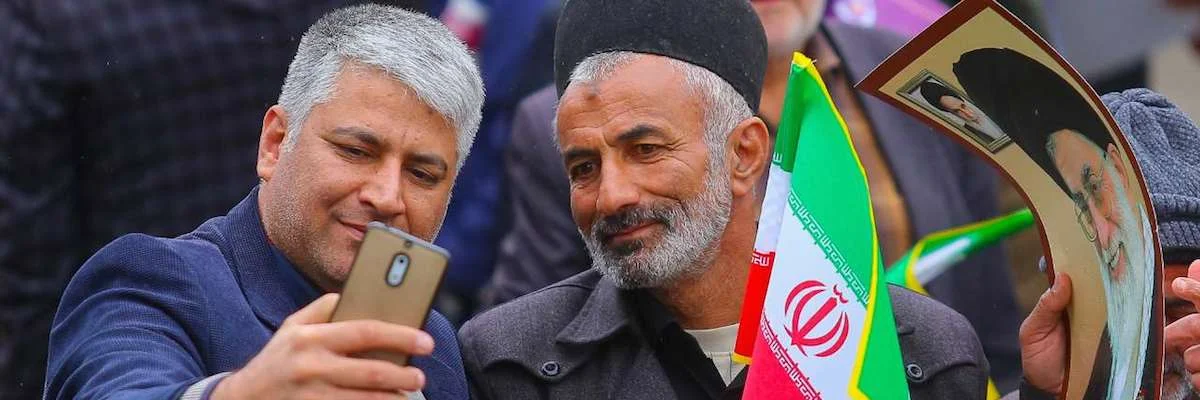
Iran's president on Monday blasted a US "conspiracy" against the country as vast crowds marked 40 years since the Islamic revolution at a time of heightened tensions with Washington.
"The presence of people today on the streets all over Islamic Iran... means that the enemy will never reach its evil objectives," President Hassan Rouhanitold those thronging Tehran's Azadi (Freedom) square.
Chador-clad women, militia members in camouflage fatigues and ordinary citizens marched through the capital in freezing rain to mark the day in February 1979 that Ayatollah Ruhollah Khomeini ended millenia of royal rule.
Life-size replicas of Iranian-made cruise and ballistic missiles lined the route in a statement of defiance after Washington last year reimposed sanctions after pulling out of a deal on Tehran's nuclear program.
A pre-prepared resolution was read out that proclaimed "unquestioning obedience to the supreme leader Ayatollah Ali Khamenei" and called US President Donald Trump an "idiot".
The event Monday was the culmination of official celebrations called the "10 Day Dawn" that mark the period between February 1, 1979 and February 11 when Shiite cleric Khomeini retuned from exile and ousted the shah's last government.
The state has played up this year's anniversary as 40 is symbolic of maturity in the Islamic tradition and the age at which Prophet Mohammed received revelations from God.
But despite the official festivities today's Islamic republic faces acute economic challenges as it struggles with a mix of domestic hardships and US sanctions.
'Support the revolution'
State television offered blanket coverage of the commemorations, showing marchers in cities ranging from Abadan in southwestern Iran to Mashad in the northeast.
Banners held by marchers or hung along the streets bore slogans including "Death to America", "Death to Israel", "we will trample on America", "forty yeas of challenge, forty years of US defeats".
An anchor on state television warned of hostile foreign media trying to downplay the participation of Iranians in the march but expressed confidence that "they would be confounded by the unprecedented level of attendance".
Those who took to the streets were bullish despite the economic problems in the country, made worse by Washington's punitive measures.
Former public servant Saaghi insisted that it remained paramount for Iranians to stick by the revolution.
"We are here to support the revolution," the 57-year-old pensioner, who refused to give his first name, told AFP at the event in Tehran.
He compared the US sanctions and economic hardships to "riding a bicycle when someone puts a stick in the wheels" but pointed to advances in other fields as more than making up for them.
“At the revolution's 40 anniversary we are on top of scientific achievements like nanotechnology or accurate missiles," he said.
Extensive fireworks displays were held across Tehran on Sunday night.
Before the fireworks, supporters of the revolution shouted chants of "Allahu Akbar" (God is greatest) from rooftops, recalling the protests that swept Khomeini to power four decades earlier.
Current supreme leader Ayatollah Ali Khamenei is set to publish "a detailed statement explaining the 'second step' of the progress of the Islamic revolution", his official website said.
Photo Credit: IRNA
Tough Times for Iran's Political Parties as Revolution Turns 40
◢ Iran's main political parties are on rocky ground as the Islamic Republic marks its 40th birthday, with reformists in disarray and conservatives seeking a new identity. Even though key reformist leaders have been forcibly sidelined, Mohammad Ali Abtahi, a former reformist vice-president in the 1990s, still believes gradual change is the only option for his country.
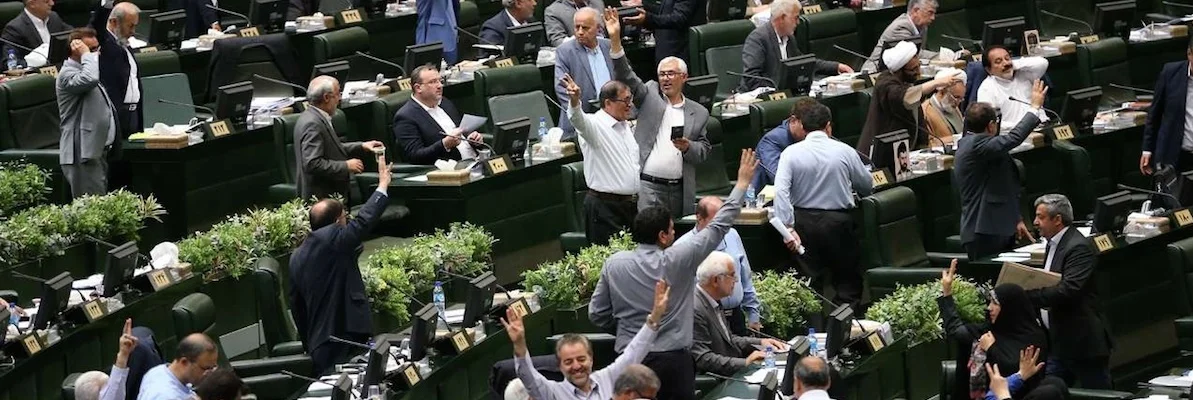
Iran's main political parties are on rocky ground as the Islamic Republic marks its 40th birthday, with reformists in disarray and conservatives seeking a new identity.
Even though key reformist leaders have been forcibly sidelined, Mohammad Ali Abtahi, a former reformist vice-president in the 1990s, still believes gradual change is the only option for his country.
Since mass protests against alleged election-rigging in 2009, his former boss, ex-president Mohammad Khatami, is barred from appearing in the media, and presidential candidates Mir Hossein Mousavi and Mehdi Karroubi have been under house arrest for the last eight years.
There are also few signs of a new generation emerging to succeed them, not least because Iran's influential Guardian Council has the power to reject any election candidates it deems unqualified, Abtahi told AFP.
"The candidates that can pass the Guardian Council's vetting are low-level," he said. "You can't expect much from them."
The reformists instead pinned their hopes on President Hassan Rouhani, a political moderate who sought conciliation with the West through a landmark nuclear deal in 2015.
Yet their hopes have proven ill-founded. Since the United States unilaterally withdrew from that deal last year, Iran's economy has been in tailspin, adding to popular anger that burst onto the streets in violent protests across dozens of towns and cities a year ago.
’Game has changed'
"When the demonstrators shouted 'Reformists, conservatives: the game is over', they were not wrong," said conservative analyst and politician Amir Mohebbian. "The fact is the (political) game has changed."
"Until now, voters would go for the candidate they thought would do the least harm ... but now they have taken as much as they can stand. Now the people want someone who can actually solve their problems."
Mohebbian did not elaborate on potential candidates as jockeying for the next presidential elections, due to take place in 2021, has not yet started.
But the decision to back Rouhani has "bankrupted" the reformists, he claimed.
Journalist and activist Ahmad Zeidabadi, who has been arrested several times, goes further, saying the reformists' plans to try to change the very nature of the state "reached a dead end" some time ago because of the system's lack of "flexibility.”
The disarray among the reformist camp however does not mean the conservatives will benefit, said Mohebbian, who believes they first need to "redefine their relationship with the establishment."
For decades, the conservatives have been closely associated with the establishment, many of them holding key unelected positions.
But for them to survive the changing political environment, they "must move closer to the people" since the people "don't trust" them now, Mohebbian said.
And it is not just mainstream political factions who are demanding change. Ardent supporters of the revolution believe its original values—such as policies in favor of the poor—have been largely forgotten, pointing to widespread allegations of corruption to back their claims.
'Paradigm shift?'
Concern over corruption by successive governments has become a "powderkeg," believes Nader Talebzadeh, a film-maker who advised Ebrahim Raisi, the preferred candidate of ultraconservatives in the 2017 presidential election.
The whole issue of corruption "makes the Iranian people very angry," he added.
But for all the popular disillusionment, former vice-president Abtahi said Iranians are still "wise enough to know that regime change will destroy their future"—especially if it is coordinated by the United States.
"Maybe if the US had turned Iraq and Afghanistan into an economic heaven, a heaven of social freedoms... maybe things would be very different," he said with a wry smile.
The authorities have always boasted of high election turnouts as evidence of their legitimacy. In 2017, more than 73 percent of eligible voters took part in the presidential election.
Looking ahead, Mohebbian believes "the next five years or so are going to be important," pointing to the fact that Iran will need at some point to choose a successor to supreme leader Ayatollah Ali Khamenei, who turns 80 this year.
"This is the general period in which there could be changes in the country's leadership," Mohebbian said.
"The important issue is whether a shift at the top of the state will lead to a paradigm shift or not," he added.
“Will it lead to a change of things that we currently consider sacrosanct? Or will these elements be kept but the direction change, leaving only a shell of what was?"
Photo Credit: IRNA
Europe Not to be Trusted: Iran Leader
◢ Iran's supreme leader Ayatollah Ali Khamenei said Friday that Europe "cannot be trusted", a week after the EU launched a trade mechanism to bypass US sanctions on Tehran. “These days there's talk of the Europeans and their proposals. My advice is that they shouldn't be trusted, just like the Americans," he said at a meeting with air force officials, his website reported.
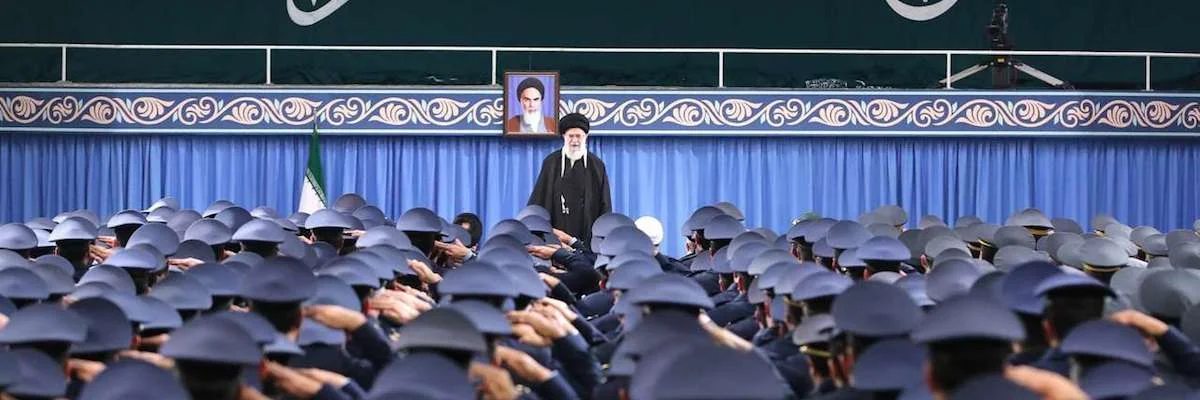
Iran's supreme leader Ayatollah Ali Khamenei said Friday that Europe "cannot be trusted", a week after the EU launched a trade mechanism to bypass US sanctions on Tehran.
“These days there's talk of the Europeans and their proposals. My advice is that they shouldn't be trusted, just like the Americans," he said at a meeting with air force officials, his website reported.
"I'm not saying we shouldn't have relations with them. This is about trust," he added.
Britain, France and Germany last week launched a special payment mechanism called INSTEX to help save the 2015 nuclear deal between Iran and world powers.
It would allow Tehran to keep trading with EU companies in spite of US sanctions renewed after Washington quit the accord last year.
Tehran has cautiously welcomed INSTEX as a "first step", but US officials said the new entity would not have any impact on efforts to exert economic pressure on Iran.
Khamenei also accused Europe of hypocrisy over human rights, criticizing France's treatment of protesters in Paris.
"They (anti-riot police) attack protesters in Paris streets and blind them, then they have the audacity to make human rights requests of us," he said.
Turning to the United States, Khamenei said Iranians would chant "death to America" as long as Washington kept up its hostile policies, but the slogan was not directed at the American people.
"Death to America means death to (President Donald) Trump, (National Security Advisor) John Bolton and (Secretary of State Mike) Pompeo. It means death to America's rulers... we have nothing against the American people," he said.
Photo Credit: IRNA
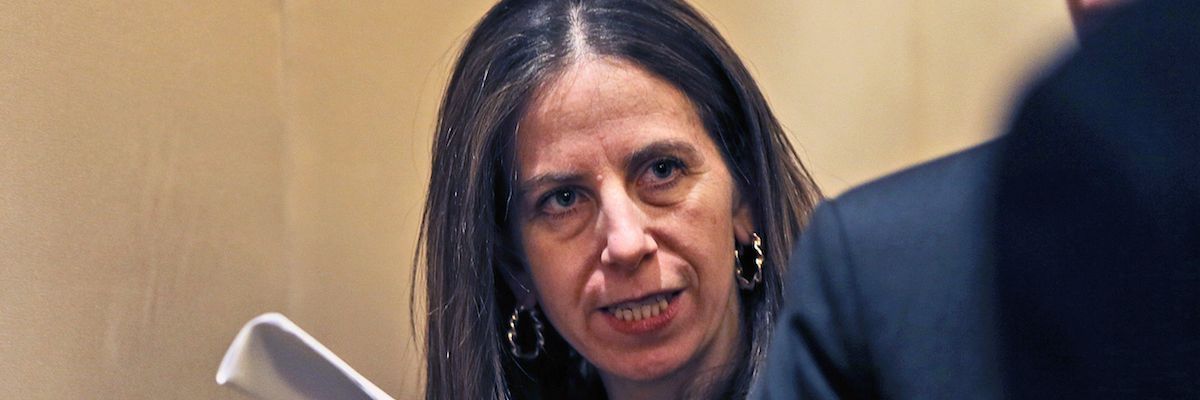
Turkish Businessman Sanctioned by US for Dealing with Iran
◢ The United States slapped sanctions on aTurkish businessman on Thursday for violating US sanctions on Iran. Evren Kayakiran, 39, was the managing director from 2013-2015 of a Turkish company that distributes motion control products, the Treasury Department said in a statement.
The United States slapped sanctions on aTurkish businessman on Thursday for violating US sanctions on Iran.
Evren Kayakiran, 39, was the managing director from 2013-2015 of a Turkish company that distributes motion control products, the Treasury Department said in a statement.
It said the Turkish firm, Elsim, had been acquired by a US company, Kollmorgen Corp., in 2013, making it subject to US sanctions on Iran.
Elsim violated US sanctions by sending employees to Iran to service machines under the guise that they were on vacation there, the Treasury Department said.
Kollmorgen, which reported the violations, reached a USD 13,381 settlement with the Treasury Department's Office of Foreign Assets Control.
"Treasury is sanctioning Kayakiran not just for his willful violation of US sanctions on Iran, but also for directing staff to commit and cover up these illegal acts," said Sigal Mandelker, undersecretary for terrorism and financial intelligence.
US companies and individuals are barred from dealing with Kayakiran and US financial institutions are not allowed to accept payments involving him.
Photo Credit: AP
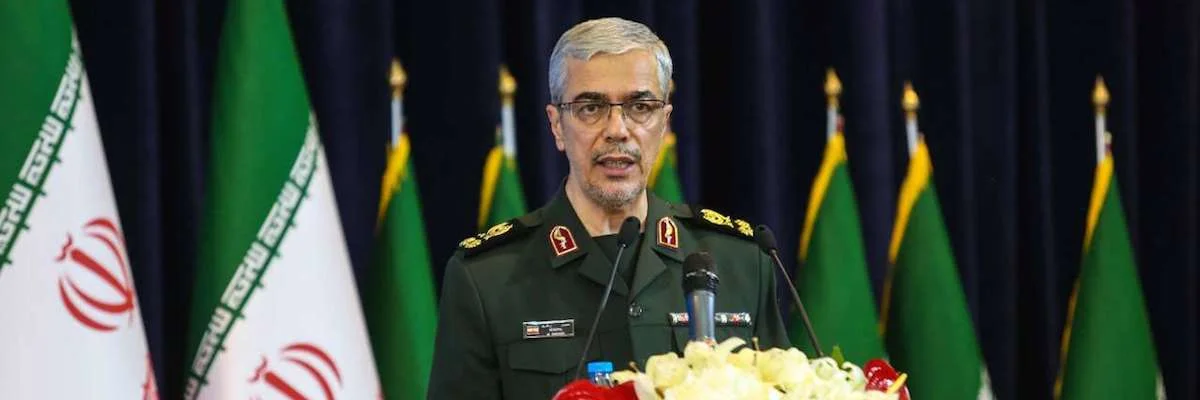
Iran Revolutionary Guards Unveil 'New Ballistic Missile'
◢ Iran's Revolutionary Guards on Thursday unveiled a new ballistic missile with a range of 1,000 kilometres, their official news agency Sepah News reported. The move was the latest show of military might by the country as it celebrates the 40th anniversary of the Islamic Revolution at a time of heightened tensions with the United States.
Iran's Revolutionary Guards on Thursday unveiled a new ballistic missile with a range of 1,000 kilometres, their official news agency Sepah News reported.
The move was the latest show of military might by the country as it celebrates the 40th anniversary of the Islamic Revolution at a time of heightened tensions with the United States.
The surface-to-surface missile—called Dezful—is an upgrade on the older Zolfaghar model that had a range of 700 kilometers (435 miles), aerospace commander Brigadier General Amirali Hajizadeh said.
The new weapon was revealed after Iran on Saturday said it had successfully tested a new cruise missile named Hoveizeh with a range of 1,350 kilometers.
The unveiling ceremony Thursday was carried out by Revolutionary Commander Major General Mohammad Ali Jafari and Hajizadeh at an "underground ballistic missile production facility", the report said.
The facility's location was not specified and pictures published by Sepah News showed only the two commanders in a room examining the missile.
"Displaying this missile production facility deep underground is an answer to Westerners ... who think they can stop us from reaching our goals through sanctions and threats," Jafari was reported as saying.
"Europeans talk of limiting our defensive capability while they have the audacity (to allow) their offensive power be used to attack innocent people all over the world," he added.
Hajizadeh said the new missile had a "destructive power" twice that of the Zolfaghar version, which Iran used for the first time in October to strike a jihadist base in Syria.
Iran has voluntarily limited the range of its missiles to 2,000 kilometers (1,250 miles), but that is still enough to hit its arch-enemy Israel and US bases in the Middle East.
Tehran reined in most of its nuclear program under a landmark 2015 deal with major powers but has kept up development of its ballistic missile technology.
President Donald Trump pulled the US out of the nuclear accord in May and reimposed sanctions on Iran, citing the missile program among its reasons.
Iran and the other signatories have stuck by the 2015 agreement, although some European governments have demanded an addition to address Tehran's ballistic missile program and its intervention in regional conflicts.
UN Security Council Resolution 2231—adopted just after the nuclear deal—calls on Iran "not to undertake any activity related to ballistic missiles designed to be capable of delivering nuclear weapons".
Tehran insists that its missile development program is "purely defensive" and compliant with the resolution.
Photo Credit: IRNA