
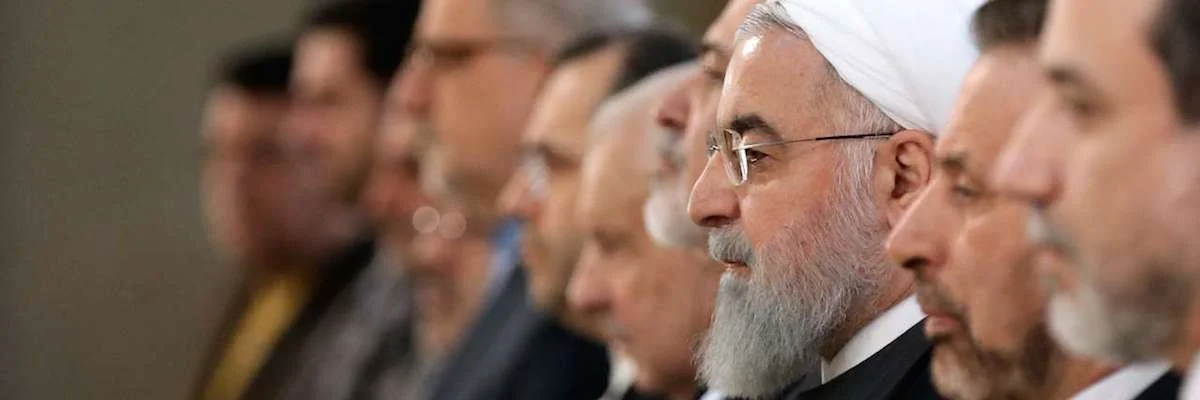
Rouhani Says Iran Ready to Accept Friendly US Ties if it 'Repents'
◢ Iranian President Hassan Rouhani said Wednesday his country would be ready to establish "friendly relations" with the United States if it apologized for past wrongs. "Our slogan is friendly relations with the whole world," he said. That would even include "America, if it repents... and apologizes for its previous interferences in Iran, and is prepared to accept the greatness and dignity of the nation of Iran and the great Islamic Revolution.”
Iranian President Hassan Rouhani said Wednesday his country would be ready to establish "friendly relations" with the United States if it apologized for past wrongs.
"Our slogan is friendly relations with the whole world," he said.
That would even include "America, if it repents... and apologizes for its previous interferences in Iran, and is prepared to accept the greatness and dignity of the nation of Iran and the great Islamic Revolution," he said.
"We are still ready to accept America's... repentance despite the fact that for years it has done injustice to us," he told foreign diplomats in Tehran during a ceremony to mark the 40th anniversary of Iran's Islamic Revolution.
During the hostage crisis at Washington's US embassy in 1979, Iranian students had famously demanded that the US should repent in return for the release of diplomats.
The following year, the two countries cut diplomatic ties, and they have remained estranged ever since.
In a message marking Persian New Year in March 2009, then-US president Barack Obama reached out to the Islamic Republic, declaring: "we know that you are a great civilization, and your accomplishments have earned the respect of the United States and the world."
Iran's supreme leader Ayatollah Ali Khamenei responded the next day, saying "change and our attitude will change.”
In June the same year, Obama became the first serving American president to recognize that the US played a role in the 1953 coup that toppled Iran's elected government—but he stopped short of apologizing.
He also insisted that Iran had wronged the US, including over the hostage crisis.
The Obama administration was one of six world powers that signed a 2015 deal with Iran, easing sanctions in exchange for restrictions on Tehran's nuclear program.
But the detente was scuppered by Obama's successor Donald Trump, who in May last year unilaterally withdrew from the nuclear accord and re-imposed sanctions.
Rouhani last week accused the US of being an "oath-breaker", and his hardline opponents have repeatedly hammered the 2015 deal.
Photo Credit: IRNA
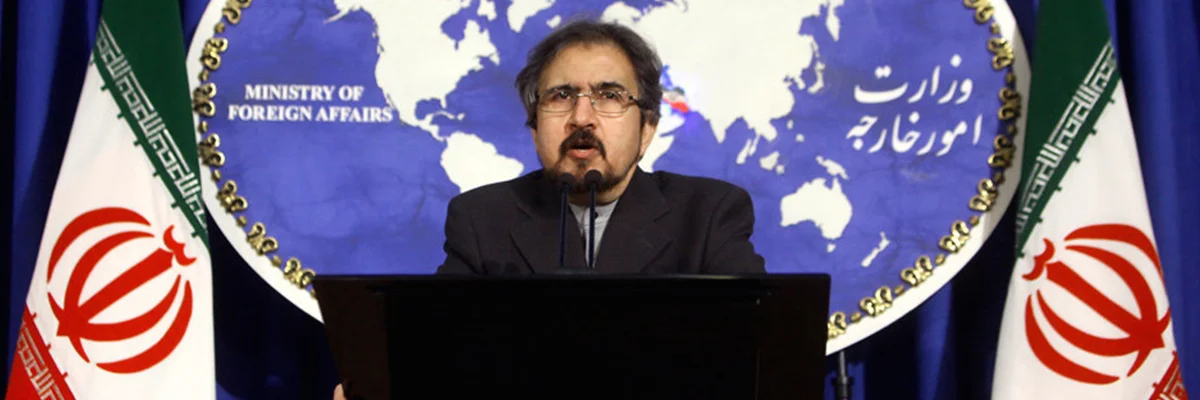
Iran Rejects EU Trade, Anti-Money Laundering Link
◢ Iran on Tuesday ruled out linkage between a new EU mechanism to trade with Tehran bypassing US sanctions and an anti-money laundering bill. “Linking implementation of this mechanism... with the requirements of institutions such as the FATF is unacceptable," the foreign ministry said, referring to the international Financial Action Task Force.
Iran on Tuesday ruled out linkage between a new EU mechanism to trade with Tehran bypassing US sanctions and an anti-money laundering bill.
“Linking implementation of this mechanism... with the requirements of institutions such as the FATF is unacceptable," the foreign ministry said, referring to the international Financial Action Task Force.
Iran is on an FATF blacklist drawn up to counter money laundering and the financing of terrorist groups, but the Paris-based organization has suspended counter-measures since 2017 while Tehran works on reforms.
EU leaders on Monday welcomed the bloc's new mechanism to trade with Iran but warned Tehran over its ballistic missile program and regional policies while calling for it to implement reforms to comply with FATF demands.
Britain, France and Germany created the system last week to allow firms to trade with Iran without falling foul of US sanctions.
The foreign ministry, in its statement, welcomed the EU's "positive stances" but also criticized the bloc's warnings on its missile program and its regional policies.
"Iran's defense activities... are merely defensive, deterrent and a domestic matter that has never been on the agenda of our negotiations with other countries," it said.
"Raising such issues under current regional circumstances and clear threats against the national security of the Islamic Republic of Iran is not constructive," the ministry said.
It urged European countries "to take a realistic look at regional incidents and issues and not to be influenced" by the United States.
Brussels, for its part, hopes the special payment mechanism for trade with Iran—registered under the name INSTEX—will help save the 2015 nuclear deal between Tehran and major powers.
Washington has reimposed sanctions after President Donald Trump last year quit the accord which lifted the measures in exchange for curbs on Iran's nuclear program.
Iran has welcomed INSTEX as a "first step", while US officials have said it would not affect its efforts to exert economic pressure on Tehran.
Photo Credit: IRNA
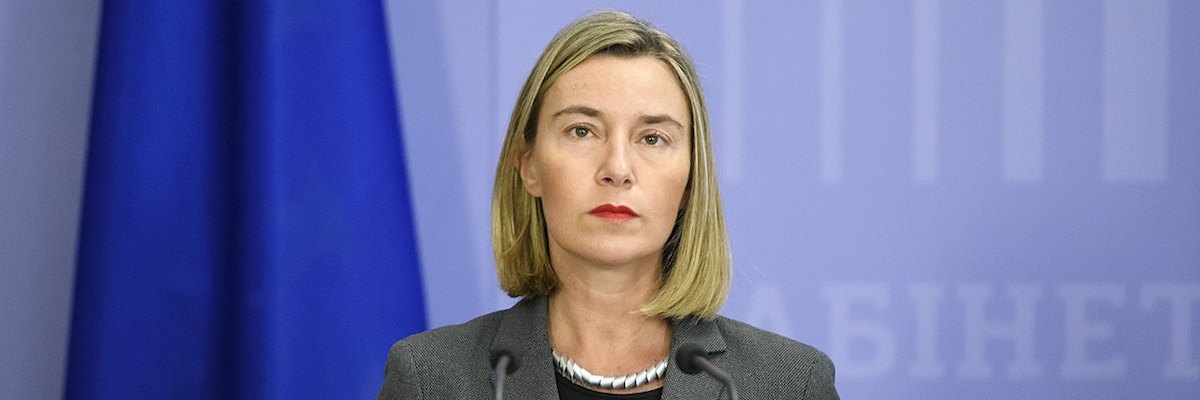
EU Backs Iran Trading System But Warns on Syria, Missiles
◢ The EU warned Tehran over its ballistic missile program and interference in the Syria conflict Monday, while welcoming a new mechanism to trade with Iran while bypassing US sanctions. In a long-awaited statement on Iran that has been the subject of more than a week of wrangling in Brussels, the EU restated its commitment to saving the 2015 nuclear deal with Iran and took aim at Washington for abandoning the pact and reimposing sanctions.
The EU warned Tehran over its ballistic missile program and interference in the Syria conflict Monday, while welcoming a new mechanism to trade with Iran while bypassing US sanctions.
In a long-awaited statement on Iran that has been the subject of more than a week of wrangling in Brussels, the EU restated its commitment to saving the 2015 nuclear deal with Iran and took aim at Washington for abandoning the pact and reimposing sanctions.
The bloc hailed the creation last week by France, Britain and Germany of a system to allow firms to trade with Iran without falling foul of US sanctions as vital to supporting legitimate business and said the "resolve to complete this work is unwavering".
But with numerous European powers growing increasingly concerned about Tehran's missile programme, meddling in several Middle East conflicts and recent attempted attacks on opposition figures living in the EU, the bloc urged Iran to mend its ways.
The statement criticized Iran's "provision of military, financial and political support to non-state actors in countries such as Syria and Lebanon.”
"The (EU) Council has serious concerns regarding Iran's military involvement and continuous presence of Iranian forces in Syria," the statement said.
Iran is a key supporter of Syrian President Bashar al-Assad and the statement urged Tehran to use its leverage to get Damascus behind UN-led efforts to end the civil war, which has claimed more than 360,000 lives since it began in 2011.
While defending the nuclear deal—which limited Tehran's atomic ambitions in return for sanctions relief—Europe has sought to keep up pressure with sanctions, most recently listing Iranian intelligence services over plots to assassinate regime opponents on Dutch, Danish and French soil.
Continuing Iranian missile tests have also alarmed the EU—not to mention countries in the Middle East—and Monday's statement called on Tehran to stop such activities.
"Iran continues to undertake efforts to increase the range and precision of its missiles, together with increasing the number of tests and operational launches. These activities deepen mistrust and contribute to regional instability," the statement said.
Brussels hopes the new Iran trading mechanism—registered last week in Paris under the name INSTEX—will keep Tehran in the nuclear deal by preserving some of the economic benefits it received.
Iran gave INSTEX a cautious welcome but US officials have dismissed the idea that the new entity would have any impact on efforts to exert economic pressure on Tehran.
Before INSTEX can go live, Iran has to set up a similar entity of its own so the two sides can clear trading on a barter basis without transferring money. It is not clear how long this will take.
Photo Credit: Wikicommons
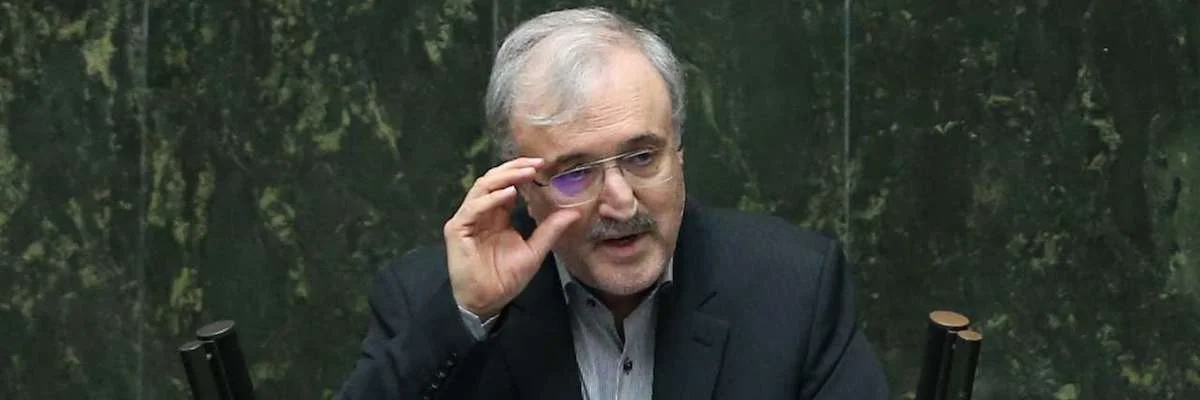
Iran Parliament Approves New Health Minister
◢ Iran's parliament Monday gave an overwhelming vote of confidence to President Hassan Rouhani's pick as health minister, after his predecessor resigned over budget cuts and criticism of the allocation of state funds. Saeed Namaki was voted into office with 229 votes out of a total 259. He had been appointed as caretaker by Rouhani after the former minister Hassan Ghazizadeh Hashemi resigned on December 3.
Iran's parliament Monday gave an overwhelming vote of confidence to President Hassan Rouhani's pick as health minister, after his predecessor resigned over budget cuts and criticism of the allocation of state funds.
Saeed Namaki was voted into office with 229 votes out of a total 259.
He had been appointed as caretaker by Rouhani after the former minister Hassan Ghazizadeh Hashemi resigned on December 3.
Hashemi's resignation letter points at "inconsistencies and not delivering on promises" by the government's planning and budget organization, semi-official news agency ISNA reported.
Namaki had previously served as deputy to Mohammad-Bagher Nobakht, the head of planning and budget organization.
The Rouhani administration and Hashemi had repeatedly been criticized for their allegedly costly plan to reform Iran's healthcare system.
But in his last speech as minister, Hashemi said the reform project had cost a fraction of what was spent on bailing out failed credit institutions.
"The total money spent... is 164 trillion rials. (Yet they) spent 350 trillion rials on corrupt credit institutions," he said, in a video of the speech posted on Iran's video-sharing service Aparat.
Several unauthorized credit institutions, which mushroomed during ex-president Mahmoud Ahmadinejad's era, collapsed in Rouhani's six years in office, with the central bank rushing to reimburse lost deposits.
The healthcare reform plan aimed to reduce medical costs for patients and ease Iranians' access to medical services.
Speaking in parliament, the new minister vowed to carry on with the reforms and said that "no previous commitments will be ignored".
Iran is struggling with a sharp economic downturn as its currency has sharply depreciated against the dollar. The recession has been fueled partly by the US withdrawal from a landmark 2015 nuclear deal last May and the reimposition of unilateral sanctions.
Photo Credit: IRNA
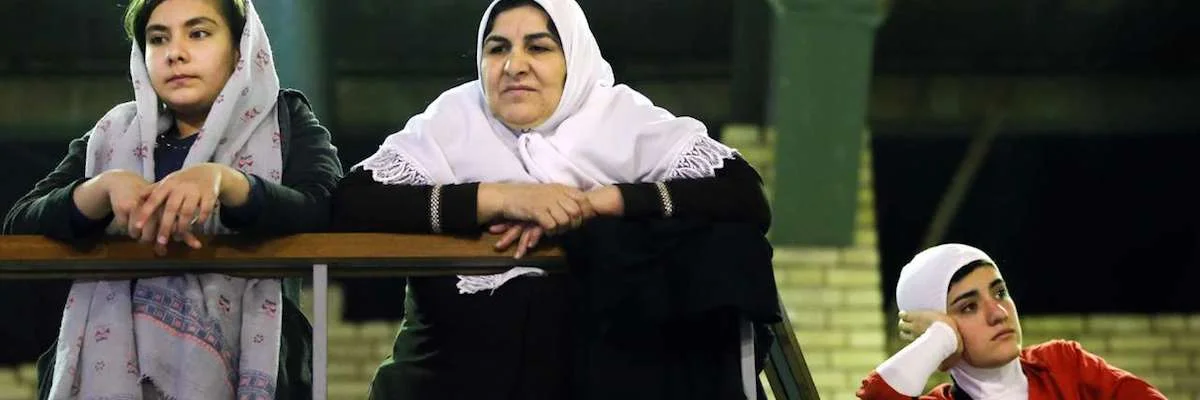
Iran Women See New Opportunities Alongside Old Barriers
◢ As the Islamic republic marks its 40th birthday, few issues are more politically sensitive or full of contradictions than the status of women. After the revolution, Islamic laws gave women a lower legal status than men, requiring them, for example, in many cases to gain permission from their father or husband to leave the country.
Saba was just 25 when she left her design job in New York to work on a project renovating an art gallery back in her hometown Tehran.
Within months, she won three more contracts to do up galleries and the lobby of an apartment complex.
"I had dreamt of building my own company, but I hadn't expected it to happen any time soon. If I had stayed in New York, I wouldn't have had this chance," said Saba, now 27.
She says the position of women in Iran has changed a lot over the past decade.
"People now trust women in management positions. Still it's hard, especially on a construction site. But it's hard anywhere. It's hard in New York," she told AFP.
As the Islamic republic marks its 40th birthday, few issues are more politically sensitive or full of contradictions than the status of women.
After the revolution, Islamic laws gave women a lower legal status than men, requiring them, for example, in many cases to gain permission from their father or husband to leave the country.
They are considered to have half the value of men in various legal aspects such as inheritance and testimony in court.
'A Path Forward'
But the Islamic republic also encouraged education for women, who now outnumber men at universities -- a development that has transformed expectations and overturned centuries-old traditions.
"Going to university was a path forward for girls like us who did not want to end up like our mothers in a traditional society," said Mina, a 25-year-old linguistics student in Tehran.
Mina didn't tell her father she was studying for the university entrance exam.
"He couldn't believe it when I was accepted, that I would go to some other city to live. He actually stopped talking to me for some time," she said.
"Whatever you do, your gender is the deciding factor," said 26-year-old archaeology student Sara.
It makes you believe that you have to have kids, you have to be modest. You can barely believe that you can be independent, be seen as an individual with a character," she added.
She said discrimination was rife in her field.
"Male archaeologists prefer not to work with women even if they're competent. They say it's just trouble. The women must keep their hijab at all times... they won't be taken seriously by laborers," she said.
"If a woman is successful in a line of work like this, she's fought very hard. And not all women are capable of fighting so much."
'Tool of Male Arousal'
Iran's rulers claim that Islamic gender laws—particularly "hijab" rules that require women to wear a headscarf and modest clothing—are designed to protect women.
Supreme leader Ayatollah Ali Khamenei tweeted in 2018 that the #MeToo movement was evidence of how Western society had failed women.
"The Western model for women is symbolic of consumerism, cosmetics, showing off for men as a tool of male sexual arousal," he wrote.
Nonetheless, clothing norms in Iran have gradually but significantly changed in recent years.
It is now unremarkable, especially in wealthier areas, to see women in tight jeans with loose, colorful headscarves.
The morality police that patrolled the streets, adjusting headscarves or bursting into cafes to make sure any couples were related, are now rarely seen.
'Nothing Lke It Was'
The authorities still draw the line at actively protesting the compulsory hijab: several women were arrested last year for doing so, and a prominent rights lawyer, Nasrin Sotoudeh, jailed after taking on their cases.
But many also recall how much they have clawed back since the early days of the revolution.
"It's nothing like it was. You couldn't even get a lift with a male friend," said a female journalist in Tehran.
"We were terrified of being stopped, because they were out there, checking cars. Or going for lunch with a (male) friend—it would never happen! Now no one even thinks twice about these things."
Many were still dismayed that "moderate" President Hassan Rouhani, who ran on promises to improve citizens' rights, again failed to appoint a female minister after his 2017 re-election.
"There is a glass ceiling and it will continue," said Fereshteh Sadeghi, a political journalist in Tehran.
"When Rouhani reached power it seems he didn't want to fall out with the ayatollahs, and backed down.
"Little by little, women are getting their rights but for now there is no women's movement."
Photo Credit: IRNA
Iran in 'Successful Test' of New Cruise Missile on Revolution Anniversary
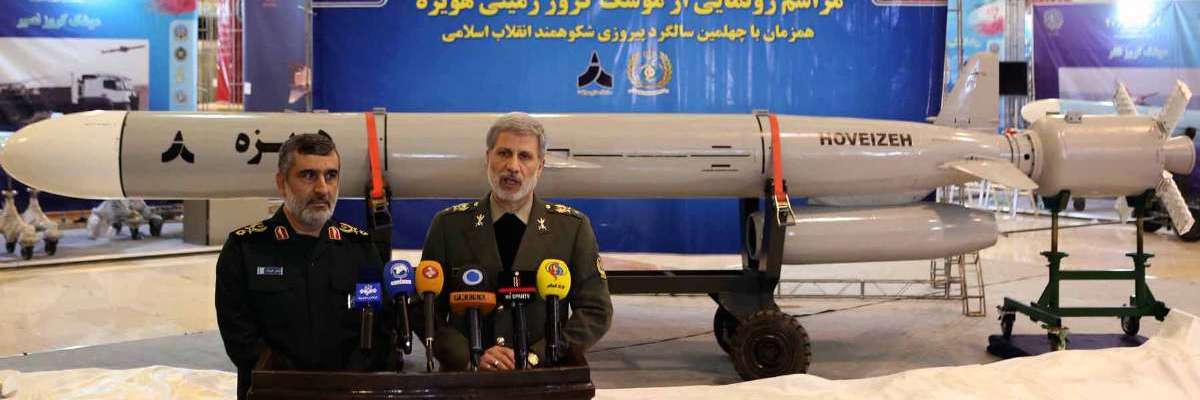
◢ Iran announced the "successful test" of a new cruise missile with a range of over 1,350 kilometres on Saturday, coinciding with celebrations for the country's 1979 Islamic revolution. “The test of the Hoveizeh cruise missile was carried out successfully at a range of 1,200 kilometres (840 miles) and accurately hit the set target," Defence Minister Amir Hatami said, quoted on state television which broadcast footage of its launch.
Iran announced the "successful test" of a new cruise missile with a range of over 1,350 kilometres on Saturday, coinciding with celebrations for the country's 1979 Islamic revolution.
“The test of the Hoveizeh cruise missile was carried out successfully at a range of 1,200 kilometres (840 miles) and accurately hit the set target," Defense Minister Amir Hatami said, quoted on state television which broadcast footage of its launch.
“It can be ready in the shortest possible time and flies at a very low altitude," he said.
Hatami described the Hoveizeh as the "long arm of the Islamic Republic of Iran" in defending itself.
It is part of the Soumar group of cruise missiles, first unveiled in 2015 with a range of 700 kilometres, according to the minister.
The Hoveizeh unveiling was part of an arms exhibition dubbed "40 years of defensive achievements" and held in Tehran.
Friday marked the beginning of 10 days of celebrations of the Islamic revolution that ousted the pro-Western shah.
On Thursday, thousands of Iranians had packed the mausoleum of the Islamic republic's founder Ayatollah Ruhollah Khomeini.
Iran has voluntarily limited the range of its missiles to 2,000 kilometers (1,250 miles), but this is still sufficient to reach Israel and Western bases in the Middle East.
Washington and its allies have accused Tehran of pursuing enhanced missile capabilities that also threaten Europe.
Iran has "no intention of increasing the range" of its missiles, the country's Supreme National Security Council secretary, Admiral Ali Shamkhani, said Tuesday.
'Purely Defensive'
Iran reined in most of its nuclear program under a landmark 2015 deal with major powers but has kept up development of its ballistic missile technology.
US President Donald Trump's administration pulled out of the nuclear accord in May and reimposed sanctions against Iran, citing the missile program among its reasons.
European governments have stuck by the 2015 agreement, although some have demanded an addition to address Iran's ballistic missile program and its intervention in regional conflicts including Yemen.
UN Security Council Resolution 2231—adopted just after the nuclear deal—calls on Iran "not to undertake any activity related to ballistic missiles designed to be capable of delivering nuclear weapons".
The US has repeatedly accused Iran of violating the resolution.
But Tehran denies seeking any nuclear weapons capability, and insists that its missile development program is "purely defensive" and compliant with the resolution.
Iran's space program has also been criticized by the West, with Washington charging that an abortive satellite launch in mid-January was cover for a bid to develop an intercontinental ballistic missile capability.
Iran tried unsuccessfully to put a satellite into orbit on January 15 and plans to "vigorously carry on" and make a second attempt, Shamkhani said.
Iran's newly-tested missile takes its name from a city in the southwestern province of Khuzestan that was devastated in the 1980-1988 war against Saddam Hussein's Iraq.
Several Iranian cities were battered by missiles during the eight-year conflict in a bombing campaign dubbed the "war of the cities".
Iranian officials say Western sanctions have starved its air force of spare parts and replacement aircraft, limiting its operational capacity and forcing it to rely on the missile program.
As Iranians marked the anniversary of the revolution, the US on Saturday lashed out at the country's leadership, insisting it had failed to make good on pledges to improve the lives of ordinary people.
"When he returned to Iran in 1979, Ayatollah Khomeini made lots of promises to the Iranian people, including justice, freedom, and prosperity," the US State Department said on Twitter.
"40 years later, Iran's ruling regime has broken all those promises."
Photo Credit: IRNA
Iran Welcomes New EU Trade Entity as First Step': Official
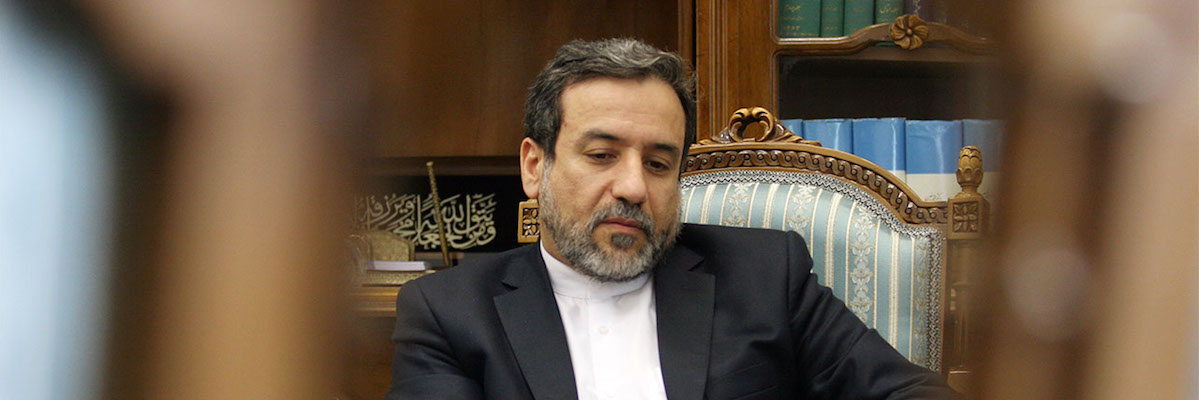
◢ Tehran on Thursday cautiously welcomed as a "first step" the expected launch of an EU trade entity aimed at saving Iran's nuclear deal by bypassing US sanctions. The special payment mechanism "is the first step within the set of commitments the Europeans have made to Iran which I hope will be fully implemented and not be incomplete," said deputy foreign minister Abbas Araghchi, according to state news agency IRNA.
Tehran on Thursday cautiously welcomed as a "first step" the expected launch of an EU trade entity aimed at saving Iran's nuclear deal by bypassing US sanctions.
The special payment mechanism "is the first step within the set of commitments the Europeans have made to Iran which I hope will be fully implemented and not be incomplete", said deputy foreign minister Abbas Araghchi, according to state news agency IRNA.
The formal announcement of the new payment vehicle is expected to be made on Thursday afternoon by the German, French and British foreign ministers in Bucharest.
The entity, registered in France with German governance and finance from all three countries, will allow Iran to trade with EU companies despite Washington reimposing US sanctions after President Donald Trump pulled out of the 2015 accord.
The three countries are the European parties to the landmark deal that curbed Tehran's nuclear ambitions in return for sanctions relief.
The new European scheme called INSTEX —short for Instrument in Support of Trade Exchanges—was originally intended to allow Iran to sell oil to the EU on a barter basis.
But, with Europe currently buying very little Iranian crude, it is now aimed at small- and medium-sized companies.
Iran is hoping that INSTEX will allow the Europeans to meet Tehran's trade demands and keep the nuclear deal afloat.
"This entity has been in principle designed for sanctioned goods," Araghchi said.
He denied claims by some in Iran that sanctioned goods would not be traded by INSTEX.
"Some have said that this entity has been designed for non-sanctioned goods such as food, etc. It is possible that the beginning of activities might be with these goods until a mechanism for payments takes form," he said.
"But in principle this entity would (only) be useful for sanctioned goods and the objective of the entity is for sanctioned goods," Araghchi added.
Photo Credit: IRNA
Europe Launches Iran Trade Mechanism
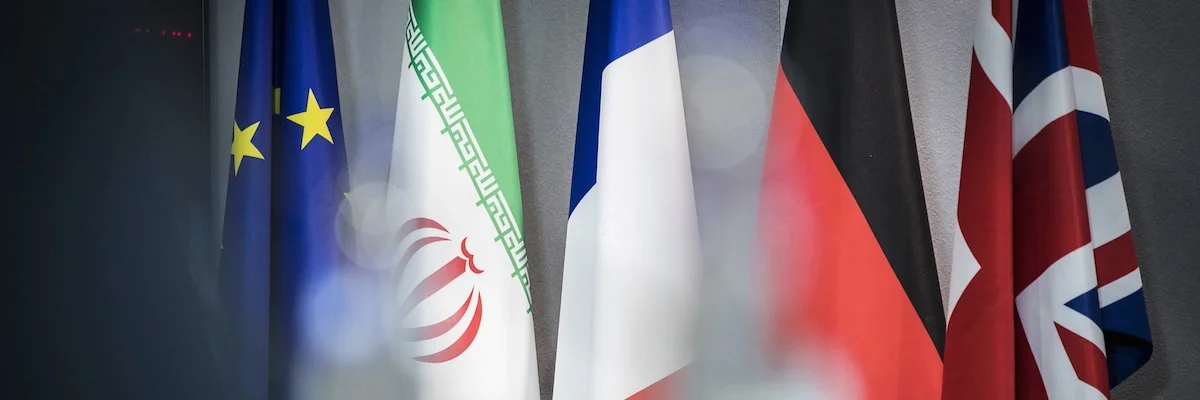
◢ Britain, France and Germany will launch a special payment mechanism Thursday that the EU hopes will help save the Iran nuclear deal by bypassing US sanctions, European sources told AFP. The entity, to be registered in France with German governance and finance from all three countries, will allow Iran to trade with EU companies despite Washington reimposing sanctions after President Donald Trump pulled out of the 2015 accord.
Britain, France and Germany will launch a special payment mechanism Thursday that the EU hopes will help save the Iran nuclear deal by bypassing US sanctions, European sources told AFP.
The entity, registered in France with German governance and finance from all three countries, will allow Iran to trade with EU companies despite Washington reimposing US sanctions after President Donald Trump pulled out of the 2015 accord.
The three countries—the European signatories to the landmark deal that curbed Tehran's nuclear ambitions in return for sanctions relief—are expected to launch the device, which has been in preparation for months.
While the new institution, called INSTEX—short for Instrument in Support of Trade Exchanges—is a project of the three governments, it will receive the formal endorsement of all 28 EU members.
The company was registered in Paris on Tuesday with 3,000 euros capital and a supervisory board with members from France and Germany, and chaired by a Briton.
The formal announcement is expected to be made on Thursday afternoon by the German, French and British foreign ministers in Bucharest.
EU diplomatic chief Federica Mogherini, who has led the bloc's efforts to save the Iran nuclear deal, said she welcomed the creation of INSTEX.
"This step... the establishment of the special purpose vehicle, is I believe the mechanism that will allow legitimate trade with Iran to continue as foreseen in the nuclear agreement. So full support from our side," she told reporters.
Transatlantic Discord
Washington has warned the EU against trying to sidestep its sanctions on Tehran, while the Europeans —along with the deal's other signatories Russia and China—say Iran has not broken its side of the nuclear accord and should be allowed to trade.
The UN atomic agency has certified Iran's compliance with its obligations 13 times and even the head of the CIA said this week that Tehran was abiding by the accord—drawing a furious response from Trump.
The EU has growing concerns about Tehran's ballistic missile program, as well as its human rights record, its interference in Middle East conflicts and recent attempted attacks against opposition groups in Europe.
Washington has warned it will vigorously pursue any company breaching its sanctions against the Islamic republic and a number of major international corporations have already pulled out.
Mogherini insisted transatlantic ties were not threatened by the discord over Iran, saying Brussels was in regular contact with the US to discuss concerns about Tehran's activities.
Belgian Foreign Minister Didier Reynders said that despite differences over the nuclear deal, Europe shared many of Washington's concerns about Iran.
“It's essential we show our American colleagues that we are going in the same direction as them on a series of issues such as ballistic missiles and Iran's regional activities," Reynders said as he arrived for the EU foreign ministers meeting.
On the INSTEX project, he said that "at the end of the day it will be companies that decide whether or not they want to work in Iran, bearing in mind the risk of American sanctions."
The new European scheme was originally intended to allow Iran to sell oil to the EU on a barter basis but, with Europe now buying very little Iranian crude, it is now aimed at small- and medium-sized companies.
"We'll have to wait and see who uses it," a European source said.
Photo Credit: IRNA
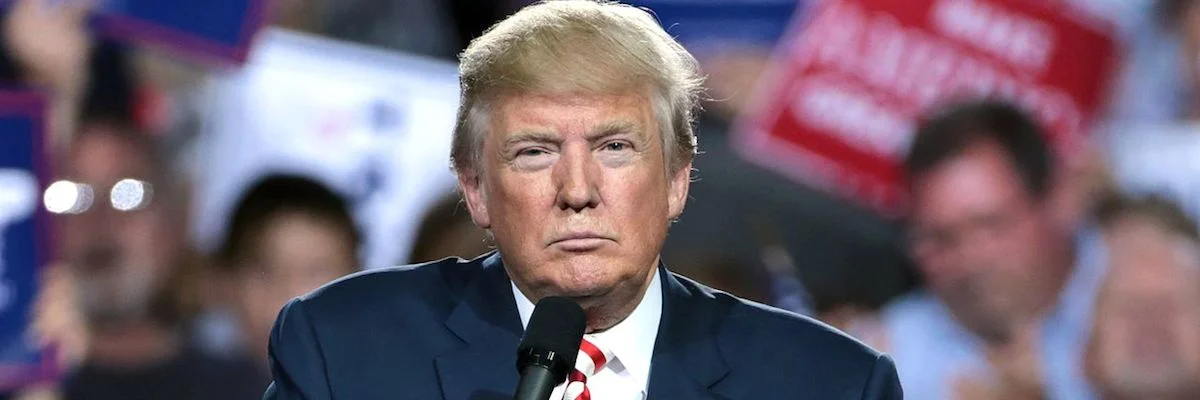
Trump Says US Intelligence Services 'Naive,' 'Wrong' on Iran
◢ President Donald Trump on Wednesday attacked the US intelligence services as "naive" and "wrong" on the threat he says is posed by Iran. "Perhaps Intelligence should go back to school!" Trump said in a blistering tweet. "The Intelligence people seem to be extremely passive and naive when it comes to the dangers of Iran. They are wrong!" Trump tweeted.
President Donald Trump on Wednesday attacked the US intelligence services as "naive" and "wrong" on the threat he says is posed by Iran.
"Perhaps Intelligence should go back to school!" Trump said in a blistering tweet.
"The Intelligence people seem to be extremely passive and naive when it comes to the dangers of Iran. They are wrong!" Trump tweeted.
Although especially vehement, it was not the first time Trump has publicly criticized his own intelligence services.
The broadside, which included separate tweets where Trump praised the success of his policies in Syria and North Korea, followed testimony Tuesday by top intelligence chiefs that were widely seen as contradicting the president's rosy assessments.
In a hearing on global threats at the Senate Intelligence Committee, the top officials took issue with Trump's assertion that the Islamic State group has been defeated, and that North Korea can be convinced to forego its nuclear weapons.
They also challenged the president's claim that Tehran is actively seeking nuclear weapons, the justification Trump gave for withdrawing last year from a multilateral treaty on Iran.
They underscored again that they believe Russia meddled deeply on Trump's behalf in the 2016 presidential election—which he has repeatedly denied—and can be expected to do the same in 2020.
The hearing took place weeks after Trump cited a victory over Islamic State to justify his sudden announcement of an immediate pullout from Syria, a move that alarmed the US defense establishment and allies in the Middle East.
And it came just weeks before Trump plans a second summit with North Korean leader Kim Jong Un to negotiate a hoped-for denuclearization of the deeply isolated state.
Photo Credit: Wikicommons
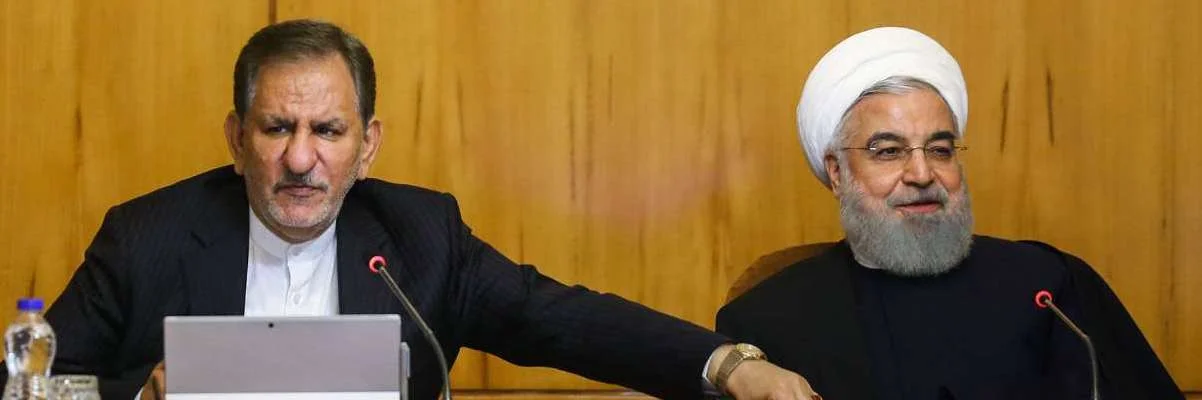
Iran's Rouhani Tells Critics: Blame 'Oath-Breaker' US
◢ Iran's President Hassan Rouhani slammed his critics on Wednesday, defending the political achievements of a landmark 2015 nuclear deal and calling the US an "oath-breaker". Hardliners have repeatedly hammered the 2015 nuclear deal with six world powers since the early stages of negotiations, calling it a fool's errand and a deception.
Iran's President Hassan Rouhani slammed his critics on Wednesday, defending the political achievements of a landmark 2015 nuclear deal and calling the US an "oath-breaker".
"One should not condemn the government or the great Islamic system instead of America—this is the greatest damage that can be done," he said on state TV.
Hardliners have repeatedly hammered the 2015 nuclear deal with six world powers since the early stages of negotiations, calling it a fool's errand and a deception.
They contend that Iran has gained nothing from the agreement despite complying with its restrictions on the Islamic republic's nuclear program, intensifying their criticism after Washington withdrew from the treaty last year.
Speaking during an annual ceremony of allegiance to the late founder of the Islamic republic, Ayatollah Ruhollah Khomeini, Rouhani said: "America has not been an oath-breaker only to us, but also to Europe, China, NAFTA and the Trans-Pacific Partnership (TPP)."
President Donald Trump withdrew Washington from the deal—technically called the Joint Comprehensive Plan of Action (JCPOA)—last May, reimposing punishing sanctions on the Islamic Republic.
Washington also withdrew from the TPP trade agreement in 2016, the Paris Agreement on climate change control the next year and forced Canada and Mexico to renegotiate and sign a new deal in 2018 replacing the North American Free Trade Agreement.
The other parties to the Iran nuclear deal—Britain, China, France, Germany and Russia along with the European Union—have insisted it remains in force and is working.
Rouhani took another jab at opponents who have criticized Iranian diplomats' lack of foresight over not predicting the US withdrawal.
"No agreement is based on whether the other party remains, but the main basis is the country's interests," he said.
He ended his speech by calling for "unity", saying Khomeini's main concern was not foreign forces but domestic "discord.”
Photo Credit: IRNA
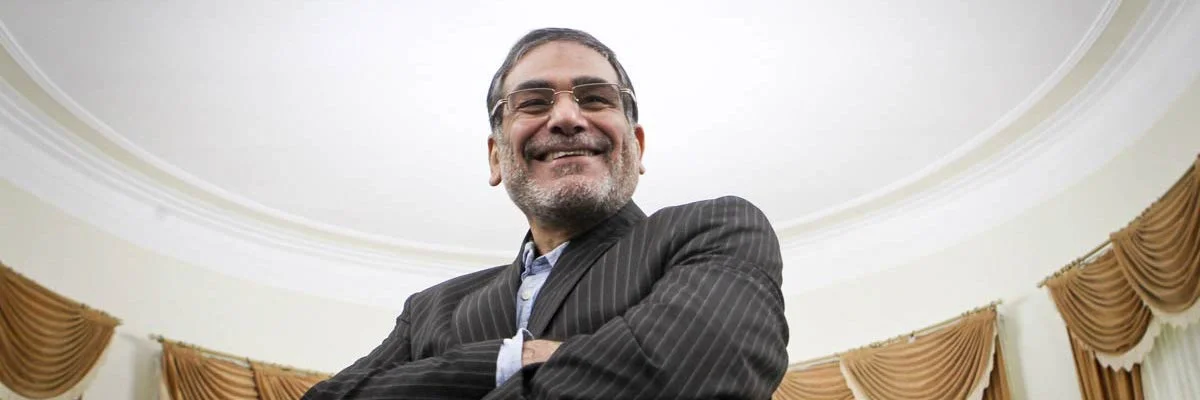
Iran Denies Any Intention of Boosting Range of Missiles
◢ Iran has "no intention of increasing the range" of its missiles, a senior defense official said Tuesday, amid threats of European as well as US sanctions over its ballistic program. Iran has voluntarily limited the range of its missiles to 2,000 kilometers (1,250 miles), sufficient to reach Israel and Western bases in the Middle East. But Washington and its allies have accused Tehran of pursuing enhanced missile capabilities that also threaten Europe.
Iran has "no intention of increasing the range" of its missiles, a senior defense official said Tuesday, amid threats of European as well as US sanctions over its ballistic program.
Iran has voluntarily limited the range of its missiles to 2,000 kilometers (1,250 miles), sufficient to reach Israel and Western bases in the Middle East.
But Washington and its allies have accused Tehran of pursuing enhanced missile capabilities that also threaten Europe.
"Iran has no technological or operational constraints to increasing the range of its military missiles," the secretary of the Supreme National Security Council, Admiral Ali Shamkhani, said.
"But while constantly striving to improve accuracy, solely based on its defense doctrine, (it) has no intention of increasing the range of (its) missiles," the official IRNA news agency quoted him as saying.
US President Donald Trump cited Iran's missile program as one of the reasons why he pulled Washington out of a landmark 2015 nuclear deal between Tehran and major powers last year.
European governments have stuck by the nuclear deal but some have demanded a supplementary agreement to tackle Iran's ballistic missile program and its interventions in regional conflicts.
Shamkhani's comments come after France warned on Friday that it was ready to impose new sanctions if talks on a supplementary deal fail to make progress.
"We have begun a difficult dialogue with Iran... and, unless progress is made, we are ready to apply sanctions, firmly, and they know it," Foreign Minister Jean-Yves Le Drian said.
Iran retorted that French arms sales in the Middle East were one of the real sources of instability in the region.
Space Program to Continue
Iran's space program has also come under Western criticism, with Washington charging that an abortive satellite launch earlier this month was cover for a bid for an intercontinental ballistic missile capability.
But Shamkhani, who was addressing the national conference on space technology in Tehran, said Iran could accept no limitations on its satellite launches.
"We will vigorously carry on with the development of our space program," IRNA quoted him as saying.
Iran tried unsuccessfully to put a satellite into orbit on January 15, and plans to make a second attempt soon.
US Secretary of State Mike Pompeo accused Iran of violating UN Security Resolution 2231 of 2015.
It calls on Iran "not to undertake any activity related to ballistic missiles designed to be capable of delivering nuclear weapons".
Iran has always denied seeking any nuclear weapons capability but has said repeatedly that it needs its missile program as a matter of national security.
In the 1980-1988 war launched by Saddam Hussein's Iraq, Iranian cities were devastated by Iraqi missiles in a bombing campaign dubbed the "war of the cities.”
Iranian officials say that Western sanctions have starved its air force of spare parts and replacement aircraft, severely limiting its operational capacity and forcing Iran to rely on its missile programme.
The council run by Shamkhani is in charge of drawing up Iranian military and security policy.
A former defense minister and adviser to supreme leader Ayatollah Ali Khamenei, he was appointed as its secretary by President Hassan Rouhani in 2013.
Photo Credit; IRNA
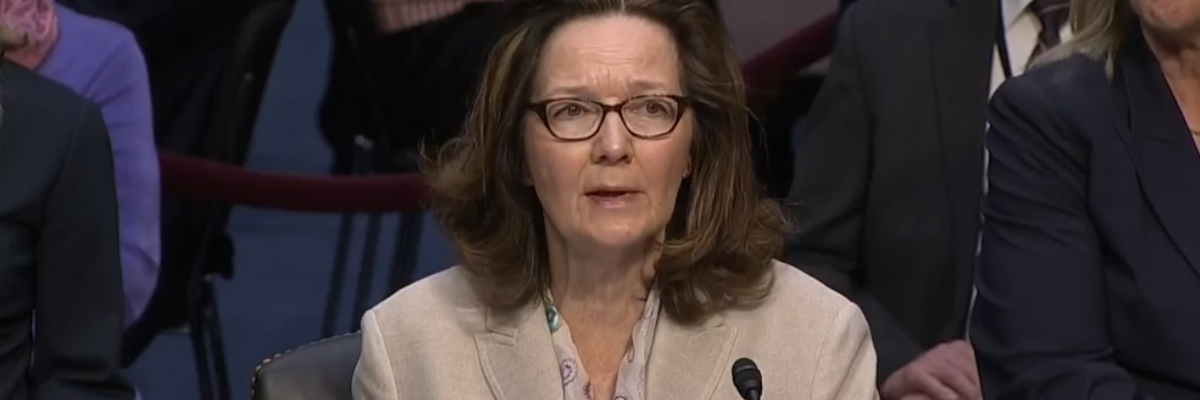
Iran Still Adhering to Nuclear Deal: CIA Chief
◢ Iran is still abiding by the terms of the 2015 nuclear deal despite the US pullout from the multinational agreement, Central Intelligence chief Gina Haspel said Tuesday. "At the moment technically they are in compliance" with they Joint Comprehensive Plan of Action (JCPOA), Haspel told the Senate Intelligence Committee.
Iran is still abiding by the terms of the 2015 nuclear deal despite the US pullout from the multinational agreement, Central Intelligence chief Gina Haspel said Tuesday.
"At the moment technically they are in compliance" with they Joint Comprehensive Plan of Action (JCPOA), Haspel told the Senate Intelligence Committee.
"I think the most recent information is the Iranians are considering taking steps that would lessen their adherence to JCPOA as they seek to pressure the European to come through with the investment and trade benefits that Iran hoped to gain from the deal," she said.
"They are making some preparations that would increase their ability to take a step back if they make that decision," she noted.
"But we do see them debating amongst themselves as they failed to realize the economic benefits that they hoped for from the deal."
The United States withdrew from the JCPOA on May 8, 2018, after President Donald Trump concluded it was not in US interests. The administration argued that the windfall from trade would go to finance Iran's regional military activities, and there was no guarantee it would not resume nuclear weapons development after the deal expired.
Washington has since restored tough sanctions that were in place before the deal was reached.
The remaining five signatories to the JCPOA—Britain, China, France, Germany and Russia—have distanced themselves from Trump's move and have supported continued commercial engagement with Tehran.
But, as a number of European companies have pulled out under pressure from US sanctions, those countries have backed an EU effort to set up a special payment system in an attempt to continue trade and business ties with Iran.
Photo Credit: Wikicommons
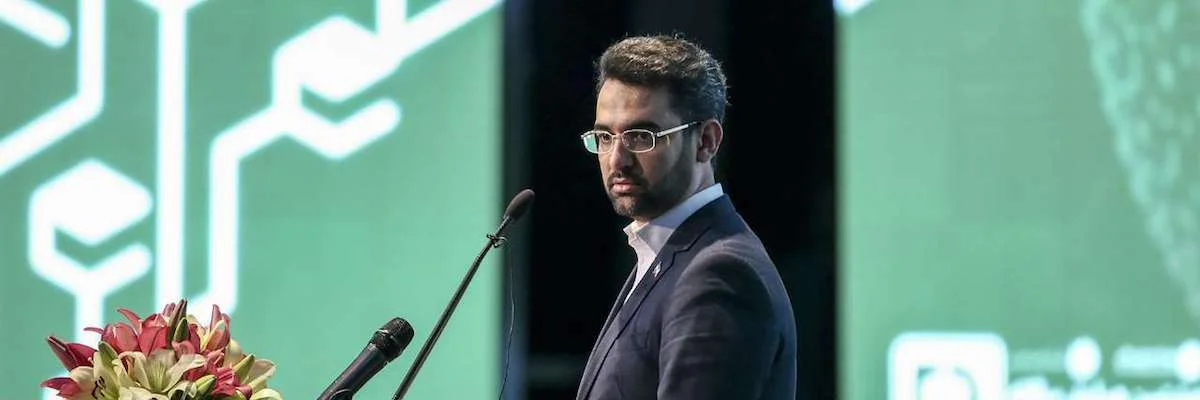
Iran IT Minister Says Blocking Instagram Would Create New Problems
◢ Iran's information technology minister said Tuesday that blocking the photo- and video-sharing application Instagram would only create new problems for the Islamic republic. "We believe the strategy of filtering Instagram is not an efficient one to neutralize its threats and might even intensify them," Mohammad-Javad Azari-Jahromi told ISNA news agency on the sidelines of a conference on electronic banking in Tehran.
Iran's information technology minister said Tuesday that blocking the photo- and video-sharing application Instagram would only create new problems for the Islamic republic.
"We believe the strategy of filtering Instagram is not an efficient one to neutralize its threats and might even intensify them," Mohammad-Javad Azari-Jahromi told ISNA news agency on the sidelines of a conference on electronic banking in Tehran.
“Acting unilaterally and filtering will not solve any problems on its own, but will only cause challenges in other fields," he said.
In January, Iranian media said the judiciary was mulling a ban on Instagram.
The deputy for cyberspace affairs at the public prosecutor's office, Javad Javidnia, has called Instagram a "disaster" for Iranians and especially its youth, charging the app was being used for "crimes.”
"Some says that using Instagram has consequences and that it poses threats, yet many believe that it hosts many businesses and is an important tool in their everyday life," said Azari-Jahromi.
Iran's economy is suffering under US sanctions reimposed after Washington withdrew in May from the 2015 nuclear deal between Tehran and world powers.
Iran has in recent years blocked access to social media platforms such as Facebook, Twitter and YouTube, and the judiciary blocked the Telegram messaging app in May.
Instagram remains the last major platform not blocked in the Islamic republic.
Despite the restrictions, Iranians including top officials like President Hassan Rouhani and the IT minister use services such as Twitter, which are widely accessible via proxy servers.
Photo Credit: IRNA
US Slaps 13 Charges on Huawei, Executive Over Iran Sanctions Violations
◢ The US Justice Department on Monday unveiled sweeping charges against Chinese telecommunications giant Huawei in two cases likely to ratchet up tensions between the two superpowers—including that of a top executive arrested in Canada on a US warrant. Meng’s case has sparked a major crisis between Beijing and Ottawa, which is accused of doing Washington’s bidding.
The US Justice Department on Monday unveiled sweeping charges against Chinese telecommunications giant Huawei in two cases likely to ratchet up tensions between the two superpowers—including that of a top executive arrested in Canada on a US warrant.
The department unveiled 13 charges against Huawei Technologies, its chief financial officer Meng Wanzhou—the daughter of the company’s founder who is currently out on bail in Canada—and two affiliates related to violating US sanctions on Iran.
Meng’s case has sparked a major crisis between Beijing and Ottawa, which is accused of doing Washington’s bidding.
The indictment was unsealed as China’s top trade negotiator arrived in Washington for high-stakes talks with US officials, possibly complicating the discussions ahead of a March deadline to avert a deepening of their trade war.
In addition, 10 US federal charges were filed against two Huawei affiliates for stealing robot technology from T-Mobile.
“Both sets of charges expose Huawei’s brazen and persistent actions to exploit American companies and financial institutions, and to threaten the free and fair global marketplace,“ said FBI Director Christopher Wray.
China reacted furiously, saying there were “strong political manipulations” behind the case against Huawei.
In a statement sent to AFP, Huawei denied “that it or its subsidiary or affiliate have committed any of the asserted violations of US law set forth in each of the indictments.”
The firm “is not aware of any wrongdoing by Ms Meng (Wanzhou), and believes the US courts will ultimately reach the same conclusion,“ it added.
Extradition Request
Meng—who was arrested in Vancouver on Dec 1 at Washington’s request—is expected to fight extradition to the United States, amid heavy pressure on Canada from Beijing, whose subsequent detention of two Canadians is seen as an act of retaliation for Meng’s arrest.
Late Monday, Canada’s Justice Department confirmed that officials had received a formal extradition request from the US, reported Canadian broadcaster CBC, with a hearing set for Feb 6.
Acting US Attorney General Matthew Whitaker said there was nothing in the indictment that alleged Chinese government involvement in either case.
However, he added, “As I told Chinese officials in August, China must hold its citizens and Chinese companies accountable for complying with the law.”
The Chinese foreign ministry accused Washington of using “state power to discredit and crack down on specific Chinese companies in an attempt to strangle the enterprises’ legitimate and legal operations”.
“There are strong political motivations and political manipulations behind the actions,“ ministry spokesman Geng Shuang said in a statement, urging Washington to stop “the unreasonable suppression of Chinese companies including Huawei”.
The broader allegations against Meng, filed in federal court in New York, had already been revealed in general terms by Canadian authorities.
They allege that between 2007 and 2017, Meng, Huawei and the subsidiaries sought to mask their business with Iran in violation of US and UN sanctions on the country.
Meng in particular “repeatedly lied” to bankers about the relationships between the companies, especially with Skycom, a Huawei affiliate in Iran, according to the charges.
That violated US laws, the Justice Department said, because the Iran business involved US-dollar transactions processed by banks through the United States.
Huawei and the affiliates also lied to US authorities, obstructing the investigation, they said.
Beijing renewed its demand for the US to drop its warrant against Meng and for Canada to release her.
‘Bonuses for stealing tech secrets’
The second case charged that Huawei made a concerted effort to steal technology related to a phone-testing robot dubbed Tappy from a T-Mobile USA lab in Washington state.
Engineers of Huawei – which was supplying T-Mobile with phones – took pictures and made measurements of parts of the robot, “even stealing a piece of it,“ said Whitaker.
The Justice Department charged that the Chinese company had, in July 2013, offered bonuses to employees “based on the value of information they stole from other companies around the world, and provided to Huawei via an encrypted email address.”
The indictments came as Chinese Vice Premier Liu He arrived in Washington on Monday to lead trade talks this week, according to Chinese state media.
Speaking together with Justice Department officials announcing the indictments, US Secretary of Commerce Wilbur Ross said they were “wholly separate from our trade negotiations with China.”
However, he added: “Commerce will continue to work with our interagency partners to protect US national security interests.”
Photo Credit: Depositphoto
Syria and Iran Sign 'Strategic' Economic Agreement
◢ Syria and Iran signed 11 agreements and memoranda of understanding late Monday, including a "long-term strategic economic cooperation" deal aimed at strengthening cooperation between Damascus and one of its key allies in the civil war that has torn the country apart. The agreements covered a range of fields including economy, culture, education, infrastructure, investment and housing, the official Sana news agency reported.
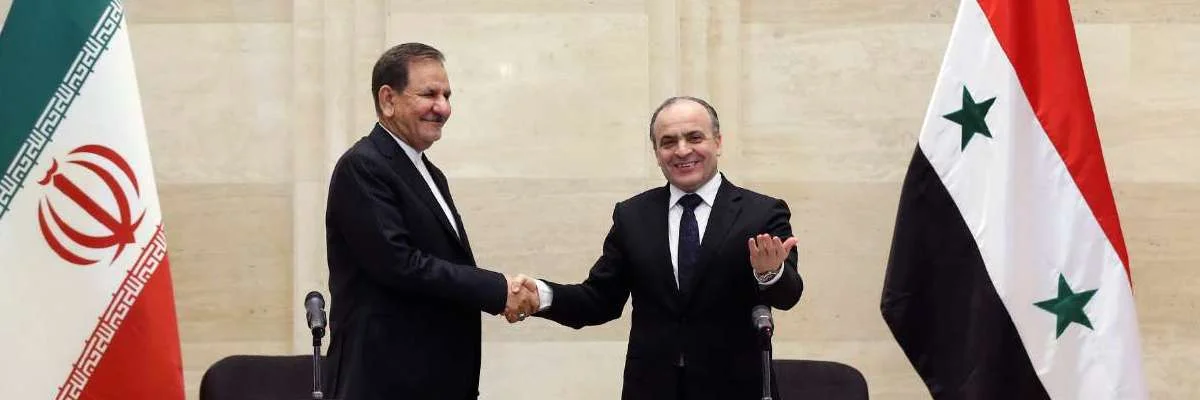
Syria and Iran signed 11 agreements and memoranda of understanding late Monday, including a "long-term strategic economic cooperation" deal aimed at strengthening cooperation between Damascus and one of its key allies in the civil war that has torn the country apart.
The agreements covered a range of fields including economy, culture, education, infrastructure, investment and housing, the official Sana news agency reported.
They were signed during a visit to Damascus by Iran's First Vice President Eshaq Jahangiri.
Syrian Prime Minister Imad Khamis said it was "a message to the world on the reality of Syrian-Iranian cooperation", citing "legal and administrative facilities" to benefit Iranian companies wishing to invest in Syria and contribute "effectively to reconstruction".
The agreements included two memos of understanding between the railway authorities of the two countries as well as between their respective investment promotion authorities.
In relation to infrastructure, there was also rehabilitation of the ports of Tartus and Latakia as well as construction of a 540 megawatt energy plant, according to Khamis.
In addition there were "dozens of projects in the oil sector and agriculture", he added.
The civil war has taken an enormous toll on the Syrian economy and infrastructure, with the cost of war-related destruction estimated by the UN at about USD 400 billion.
Iran will stand "alongside Syria during the next phase that will be marked by reconstruction", Jahangiri promised.
Iran and Syria had already signed a military cooperation agreement in August while Tehran has supported Damascus economically during the conflict through oil deliveries and several lines of credit.
The new agreements come against the backdrop of fresh US sanctions against Iran, while Syrian President Bashar al-Assad's regime and several Syrian businesspeople and companies are already on US and European blacklists.
They also come as Israel has repeatedly pledged to keep arch-foe Iran from entrenching itself militarily in Syria, where the war has already claimed more than 360,000 lives and displaced several million people.
Photo Credit: IRNA
Amid Cool Response, US Says Warsaw Conference Not Aimed at Iran
◢ A US-Polish conference next month on the Middle East is not aimed at Iran, a US official said Monday, after key players balked at attending. Secretary of State Mike Pompeo plans to head to Warsaw for the February 13-14 "Ministerial to Promote a Future of Peace and Security in the Middle East," which he earlier said would look at "making sure Iran is not a destabilizing influence."
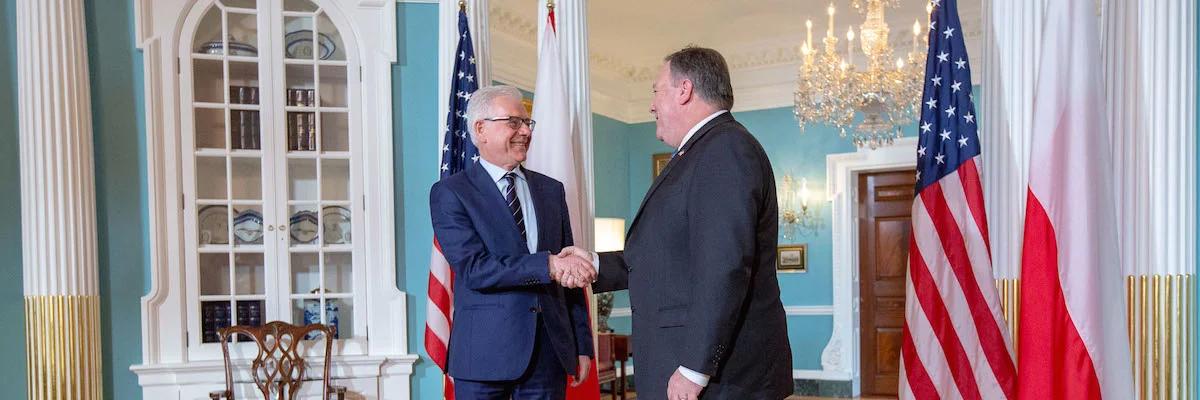
A US-Polish conference next month on the Middle East is not aimed at Iran, a US official said Monday, after key players balked at attending.
Secretary of State Mike Pompeo plans to head to Warsaw for the February 13-14 "Ministerial to Promote a Future of Peace and Security in the Middle East," which he earlier said would look at "making sure Iran is not a destabilizing influence."
But the conference has drawn few concrete RSVPs amid unease over the hard US line on Iran, with EU diplomatic chief Federica Mogherini saying she had previous commitments even though the event is taking place in the European Union.
A senior US official, previewing the conference to reporters, said that Iran would not be a specific agenda item.
"It's important to underscore that this is not an anti-Iran meeting or coalition-building exercise," the official said on condition of anonymity.
"From the start, this ministerial has been focused on exploring a range of issues important to the region's security and prosperity," he said.
He said Pompeo "will certainly discuss concerns regarding Iran's destructive policies in the region," but said this was because "it's difficult to talk about the region's challenges without referencing Iran."
The official said that the conference would discuss the crises in Syria and Yemen as well as missile proliferation, cyber issues, human rights and refugees, with working groups then tasked with following up.
The conference, which Pompeo said will draw ministers from around the world, comes almost exactly as Iran marks 40 years since its Islamic revolution and after the United States reimposed sweeping sanctions on the country.
Iran summoned a Polish diplomat to protest the conference, which it called a hostile act.
A Polish official said that, despite serving as co-host, that Poland still supports an international agreement on Iran's nuclear program from which President Donald Trump withdrew.
Russia has also said it will not attend the conference because of its "one-country" focus and failure to address the Israeli-Palestinian conflict.
Photo Credit: Polish MFA
EU's Iran Payments Vehicle Ready - But Stuck
◢ A payment mechanism the EU hopes will save the Iran nuclear deal by bypassing US sanctions is ready, diplomats said Monday, but is held up by disagreements among European countries. The "Special Purpose Vehicle" is being put together by Germany, France and Britain, the European signatories to the 2015 accord that curbed Tehran's nuclear ambitions in return for sanctions reilef.
A payment mechanism the EU hopes will save the Iran nuclear deal by bypassing US sanctions is ready, diplomats said Monday, but is held up by disagreements among European countries.
The "Special Purpose Vehicle" is being put together by Germany, France and Britain, the European signatories to the 2015 accord that curbed Tehran's nuclear ambitions in return for sanctions reilef.
The entity, to be based in France with German governance and finance from all three countries, will allow Iran to receive payments despite Washington reimposing sanctions after ditching the deal.
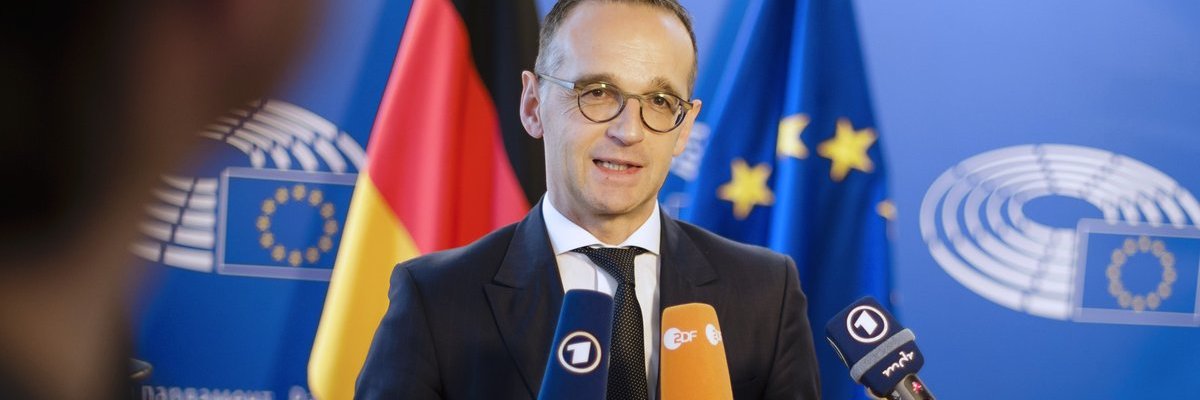
"It will be registered, it is not yet registered. I would say that we are immediately before the point of the implementation of our plan," German Foreign Minister Heiko Maas said at a meeting in Brussels organized by the Belgian government.
While the vehicle is the work of the three governments involved, the EU wants to launch it along with a formal statement on Iran endorsed by all 28 member states and addressing the whole spectrum of European concerns about the Islamic republic.
The EU has commended Iran for sticking to its commitments under the nuclear deal, but has growing concerns about Tehran's ballistic missile program, as well as its human rights record, its interference in Middle East conflicts and recent attempted attacks against opposition groups in Europe.
Diplomatic sources said that Italy and Spain have so far blocked the adoption of the statement, meaning it may have to wait until the next formal meeting of EU ministers on February 12.
It is not clear whether Germany, France and Britain will wait for consensus on the statement or go ahead and launch the vehicle without it.
Photo Credit: Phototek

Iran Accuses France of 'Destabilizing' Region
◢ Iran has accused France of being a destabilizing force in the region after its foreign minister threatened new sanctions against Tehran over its missile program. "The Islamic republic has always called for the strengthening of peace and stability in the region," the Iranian foreign ministry said in a statement released overnight Friday.
Iran has accused France of being a destabilizing force in the region after its foreign minister threatened new sanctions against Tehran over its missile program.
"The Islamic republic has always called for the strengthening of peace and stability in the region," the Iranian foreign ministry said in a statement released overnight Friday.
As such Iran "considers the mass sales of sophisticated and offensive weapons by... France as a factor in destabilizing the balance of the region," the statement said.
It came after French Foreign Minister Jean-Yves Le Drian on Friday said Paris was ready to impose new sanctions on Tehran if talks on its missile program and its regional influence fail to make progress.
"We have begun a difficult dialogue with Iran... and unless progress is made we are ready to apply sanctions, firmly, and they know it," Le Drian said.
Le Drian also demanded that Iran change its behavior in the region, specifically regarding its military presence in Syria.
The Iranian foreign ministry responded saying "Iran's missile program is not negotiable" and warned that "any new sanction by European countries will lead to a review of our relations with them".
Iran reined in most of its nuclear program under a landmark 2015 deal with major powers—Britain, China, France, Germany, Russia and the United States—that lifted sanctions on the Iran.
But in May the United States withdrew from the deal and re-imposed sanctions on Tehran.
The EU has been trying to set up a special payment mechanism to maintain trade and business ties with Iran and circumvent the US sanctions.
Tehran has continued to develop its ballistic missile technology but says it has no intention of acquiring atomic weapons and that its missile development programs are purely defensive.
Photo Credit: IRNA
Iran Deplores 'Unjustifiable' German Banning of Mahan Air
◢ Iran's foreign ministry on Tuesday deplored Germany's decision to ban Iranian airline Mahan air from its airports describing the move as "hasty and unjustifiable.” Iran said it hope Germany will reconsider its decision. The rescinding of Mahan Air's flight permits to Germany is a hasty, unjustifiable act," the ministry said in a statement.
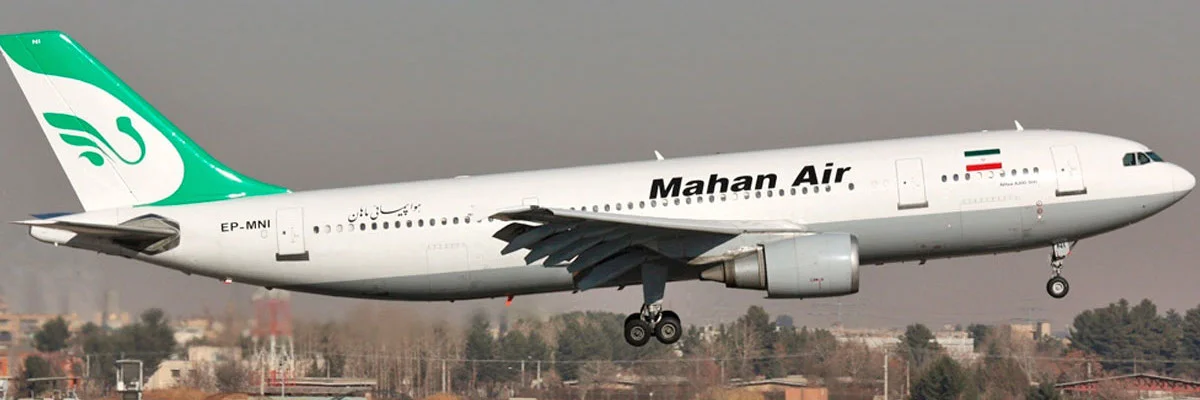
Iran's foreign ministry on Tuesday deplored Germany's decision to ban Iranian airline Mahan air from its airports describing the move as "hasty and unjustifiable.”
"The rescinding of Mahan Air's flight permits to Germany is a hasty, unjustifiable act," the ministry said in a statement.
"This action is in conflict with the spirit governing the long-standing relations between the Iranian and German nations," and "contrary to the interests of bilateral relations, it said.
Iran said it hope Germany will reconsider its decision.
Germany said on Monday it had banned Mahan Air from its airports.
Germany foreign ministry spokesman Christofer Burger told reporters in Berlin the move was necessary to protect Germany's "foreign and security policy interests".
A spokeswoman at Germany's transport ministry said Iran had been informed that the ban would take effect from Monday and involve Mahan Air flights from and to Germany.
Mahan Air, Iran's second-largest carrier after Iran Air, flies four services a week between Tehran and the German cities of Dusseldorf and Munich.
The ban caused confusion and chaos for Mahan Air passengers as the airline rushed to secure replacement flights for them.
"I've been in the aviation industry for decades, and I've never seen such a thing" a Mahan Air employee from the company's Dusseldorf office told AFP in Tehran on Tuesday.
"It borders on cruelty for all of these passengers," he said on condition of anonymity, adding that staff had been fielding calls from distraught passengers all day long.
Mahan air was blacklisted by the US in 2011, as Washington said the carrier was providing technical and material support to an elite unit of Iran's Revolutionary Guards known as the Quds Force.
Iran's aging air fleet has had a string of crashes in recent years mostly due to tough decades-long US sanctions hindering the purchase of new airplanes and critical spare parts for its civilian fleet.
Hopes for a change in the situation were dashed last May when Washington pulled out of a landmark 2015 deal over Iran's nuclear program, reimposing sanctions that had been lifted as part of the multilateral accord.
Photo Credit:
Russia Snubs US-Polish Conference on Iran
◢ Russia on Tuesday slammed a planned US-Polish conference on peace and security in the Middle East as "counterproductive" because of its focus on countering Iran, and said it would not attend. US Secretary of State Mike Pompeo has announced plans for the major conference in Warsaw on February 13 and 14 to be attended by ministers from a dozen countries.
Russia on Tuesday slammed a planned US-Polish conference on peace and security in the Middle East as "counterproductive" because of its focus on countering Iran, and said it would not attend.
US Secretary of State Mike Pompeo has announced plans for the major conference in Warsaw on February 13 and 14 to be attended by ministers from a dozen countries.
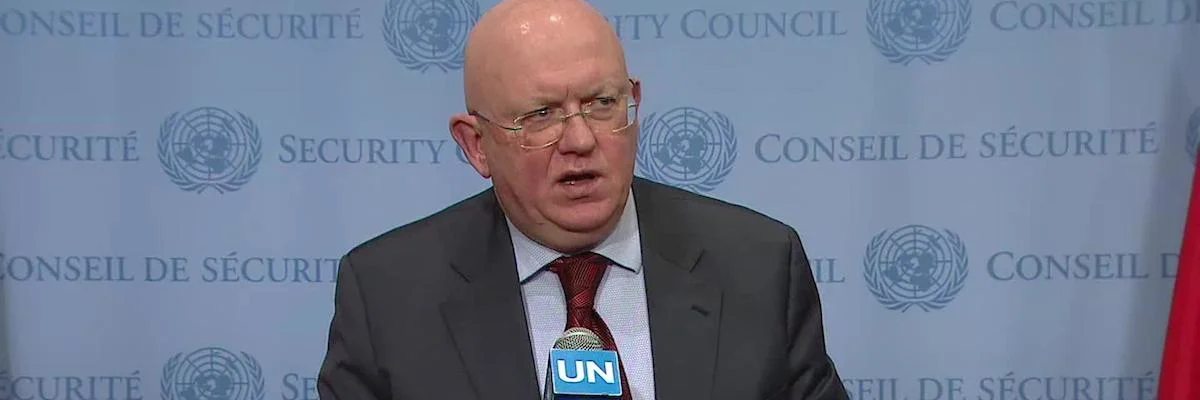
Addressing the UN Security Council, Russian Ambassador Vassily Nebenzia said the conference would fail to bolster Middle East security because of its "one-country aspect" and failure to address the Israeli-Palestinian conflict.
"Attempts to create some kind of military alliances in the region by holding conferences and focussing on having a simplified unilateral approach that is clearly linked just to Iran are counterproductive," Nebenzia told a council debate on the Middle East.
Such a move "just further pushes away the prospects of finding a genuine security architecture for the region," he added.
In Moscow, the Russian foreign ministry released a statement saying Russia would not attend the meeting which is described as an "anti-Iran platform" and a bid to create conditions to weaken the Iran nuclear deal.
"Why has that conference not invited Iran, which is one of the most significant and large countries in the region?" asked Nebenzia.
Iran has reacted angrily to the planned conference and warned Poland that it could face consequences for hosting the gathering.
Pompeo first announced the conference on January 11 to bring together countries in addressing peace and security in the Middle East, and make "sure that Iran is not a destabilizing influence" in the region.
The conference has also received a cool reception from European countries.
Facing a lack of enthusiasm, acting US Ambassador Jonathan Cohen described the Warsaw meeting as a "global brainstorming session" and stressed that it was "not the venue to demonize or attack Iran."
Some of the agenda items for the conference include the humanitarian crises in Syria and Yemen, missile development and cyber security, Cohen told the council.
Photo Credit: UN