
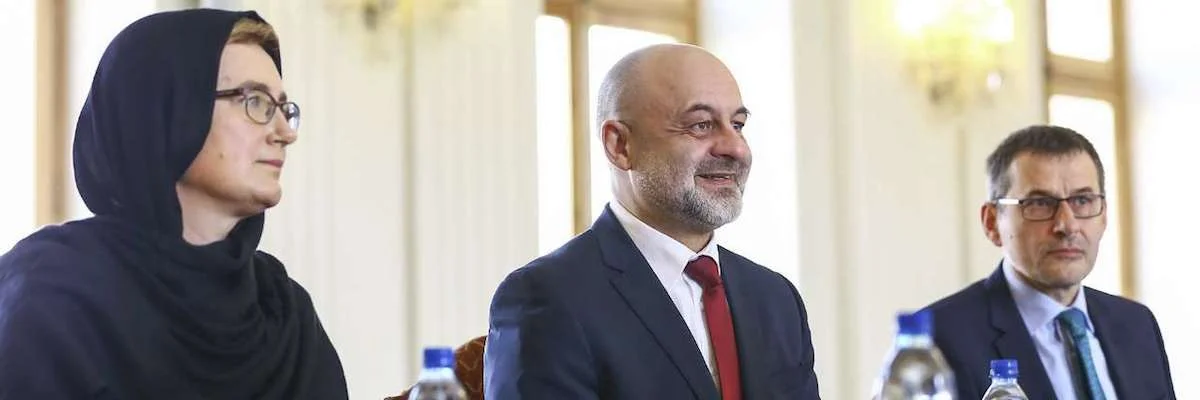
Polish Deputy FM in Tehran Over Conference Row
◢ Poland's Deputy Foreign Minister Maciej Lang met in Tehran on Monday with his Iranian counterpart in an effort to solve a dispute over a conference his country is to host. Lang described as "constructive" his talks with Iran's Deputy Foreign Minister Abbas Araghchi over the jointly organized conference with the United States on peace and security in the Middle East.
Poland's Deputy Foreign Minister Maciej Lang met in Tehran on Monday with his Iranian counterpart in an effort to solve a dispute over a conference his country is to host.
Lang described as "constructive" his talks with Iran's Deputy Foreign Minister Abbas Araghchi over the jointly organized conference with the United States on peace and security in the Middle East.
"We spoke about a wide range of issues, including misunderstandings about the Warsaw conference, and I presented our point of view on this issue. We had a long discussion and I hope that I did it in a clear way," Lang told AFP in an interview.
"For Poland this conference is not against any country," he said.
The summit had first been announced on January 11 by US Secretary of State Mike Pompeo, who said that it "includes an important element of making sure that Iran is not a destabilizing influence" in the region.
The Iranian foreign ministry said in a statement the reasons provided by the Polish government for organizing the summit were unacceptable and that the Poles "must be mindful of the consequences".
The Islamic republic would not allow any country in or outside the region "to build coalitions against its interests", the statement said.
Lang expressed hopes that the conference would have a positive impact on relations with Iran.
"We intend to organize an event to discuss problems. Basically the outcome of this conference is to find a process serving stability in the region," he said.
"We believe the outcome will be positive. Why should we suppose that relations with Iran would suffer?"
Iran had reacted angrily to the conference when news of it first broke.
Poland's charge d'affaires was summoned by the Iranian foreign ministry to "protest the anti-Iranian so-called peace and security conference" on January 13.
Foreign Minister Mohammad Javad Zarif poured scorn on the Warsaw summit and pointed out that the country welcomed more than 100,000 Polish refugees during World War II.
"Polish Govt can't wash the shame: while Iran saved Poles in WWII, it now hosts a desperate anti-Iran circus," Zarif tweeted on January 11.
Photo Credit: IRNA
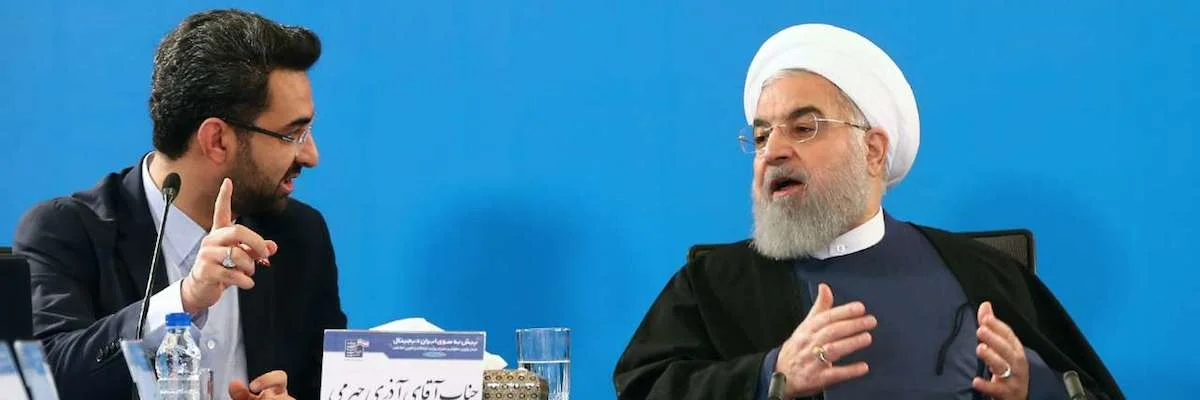
Resisting New Technology is 'Outdated' Says Iran's Rouhani
◢ Iranian President Hassan Rouhani on Monday said resistance against new technologies is "outdated" as he once again criticized the judiciary's blocking of social media. "Resisting new technologies and modern developments is an outdated approach," Rouhani said in a speech broadcast by state television.
Iranian President Hassan Rouhani on Monday said resistance against new technologies is "outdated" as he once again criticized the judiciary's blocking of social media.
"Resisting new technologies and modern developments is an outdated approach," Rouhani said in a speech broadcast by state television.
"We can see that some still oppose new phenomena especially those related to communication and information," he added.
Iran in recent years has blocked access to many social media platforms such as Facebook, Twitter and YouTube and in May the judiciary blocked the Telegram messaging app.
In May Rouhani said the government does not approve of the judiciary's blockage of Telegram—the country's most popular social network with some 40 million users or around half the population.
In his speech Monday he said preventing Iranians from accessing social would amount to creating a forbidden fruit which they would crave more.
"Filtering is not the solution. We must raise the society's digital literacy so that they can use it (social media) without being harmed by it," Rouhani said.
"We don't have free media in Iran and only have state television and radio," he said.
"Everything is congested in the cyberspace ... everyone wants to say everything in this space since they don't have any other media," he added.
In January, Iranian media said the judiciary was mulling banning Instagram, the last major platform still freely available in the country.
Despite social media restrictions, Iranians including top officials such as Rouhani himself and Foreign Minister Mohammad Javad Zarif continue to use services such as Twitter, which are widely accessible via proxy servers.
Photo Credit: IRNA
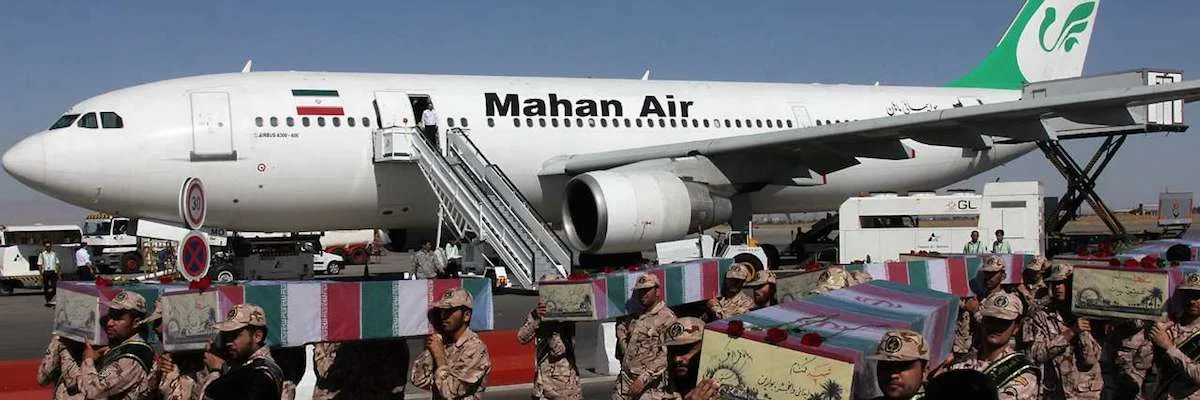
Germany Plans to Sanction Iran Airline
◢ Germany plans to ban Iranian airline Mahan Air from its airports, media reported Monday, in an escalation of sanctions adopted by the European Union against Iran over attacks on opponents in the bloc. "The Federal Aviation Office (LBA) will this week suspend the operating license of Iranian airline Mahan," reported Munich-based daily Sueddeutsche Zeitung.
Germany said Monday it had banned Iranian airline Mahan Air from its airports, in an escalation of sanctions adopted by the European Union against Tehran over attacks on opponents in the bloc.
The move was necessary to protect Germany's "foreign and security policy interests", foreign ministry spokesman Christofer Burger told reporters at a regular Berlin press conference.
Officials at the Federal Aviation Office (LBA) sent Tehran-based Mahan Air a notification "ordering the immediate suspension of its authorization to operate passenger flights from and to Germany" from Monday, a transport ministry spokeswoman added.
Mahan, Iran's second-largest carrier after Iran Air, flies four services a week between Tehran and the German cities of Duesseldorf and Munich.
It was blacklisted by the US in 2011, as Washington said the carrier was providing technical and material support to an elite unit of Iran's Revolutionary Guards known as the Quds Force.
The US treasury has threatened sanctions against countries and companies offering the airline's 31 aircraft landing rights or services such as on-board dining.
But Brussels and Washington have been at odds on how best to deal with Iran since President Donald Trump's decision to withdraw from a 2015 deal lifting some sanctions in exchange for Tehran suspending its nuclear program.
'Destabilizing Activity'
Foreign ministry spokesman Burger reiterated that Germany wished to "uphold" the agreement "and play our part in keeping economic exchange with Iran possible".
"But we have always said that destabilizing activity by Iran in the (Middle East) region as well as Iran's ballistic missile program are unacceptable," he added.
"On top of that, there are recent indications regarding the activities of Iran's secret services within EU states."
The EU earlier this month targeted sanctions at Iran's security services and two of their leaders, accused of involvement in a series of murders and planned attacks against Tehran critics in the Netherlands, Denmark and France.
Brussels' measures included freezing funds and financial assets belonging to Iran's intelligence ministry and individual officials, but did not target any companies.
US Ambassador to Germany Richard Grenell, a close Trump ally, welcomed Berlin's decision.
"Mahan Air has flown terrorists, weapons, equipment, and funds to international locations to support Iranian terrorist proxy groups," he said in a statement, adding that it had been used "to support the Assad regime in Syria."
Since his arrival, Grenell has exerted unusually intense pressure on German firms over Iran sanctions.
Rail operator Deutsche Bahn, Deutsche Telekom, Mercedes-Benz parent Daimler and industrial group Siemens have all said they will stop their operations in the country.
Last week German authorities said they had arrested a German-Afghan military advisor on suspicion of spying for Iran.
Photo Credit: IRNA
Iraq Likely Theater if US, Iran Tensions Worsen: Study
◢ Iraq could bear the brunt if conflict intensifies between Iran and the United States, a think-tank study said Wednesday. The International Crisis Group, which researches ways to prevent war, interviewed officials around the world including Iran for an extensive report on the state of the 2015 denuclearization accord between Tehran and major powers.
Iraq could bear the brunt if conflict intensifies between Iran and the United States, a think-tank study said Wednesday.
The International Crisis Group, which researches ways to prevent war, interviewed officials around the world including Iran for an extensive report on the state of the 2015 denuclearization accord between Tehran and major powers.
President Donald Trump has withdrawn the United States and ramped up economic pressure aimed at isolating Iran, although Europeans still back the accord negotiated under former president Barack Obama.
The International Crisis Group said that Iran would likely continue to comply with the deal, seeing itself as holding the moral high ground and capable of waiting out Trump, who faces re-election next year.
But the study said that Tehran's calculations could change if its oil exports, which stood at 3.8 million barrels a day in 2017, fall below 700,000, a level that could trigger hyper-inflation and intensify domestic protests which for now appear manageable.
If Iran decides to retaliate against the United States, the report said that Tehran may find its most attractive option to be to employ its proxies around the Middle East, a path that would be murky enough to avoid a strong European reaction.
The report quoted a senior Iranian national security official as saying that the likeliest theater was Iraq, where militias from the Shiite majority have close ties with Tehran.
"Iraq is where we have experience, plausible deniability and the requisite capability to hit the US below the threshold that would prompt a direct retaliation," the official was quoted as saying.
Iran is also deeply involved in Syria and Lebanon, but the two countries are especially fragile and Tehran could lose its gains, the official said.
Iran has limited assets in Afghanistan, while stepping up support for Huthi rebels in Yemen would hurt regional rival Saudi Arabia more than the United States, the official said.
The Wall Street Journal reported Sunday that Trump's hawkish national security adviser, John Bolton, asked for military options to strike Iran after an Iranian-linked group launched a mortar attack in September on Baghdad's "Green Zone," the protected area where the US embassy is located. The US says its embassy was the target.
No one was hurt and demonstrators also ransacked the Iranian consulate in Basra during the wave of protests over economic conditions in Iraq.
Photo Credit: IRNA
Opel Helps France's PSA Buck China, Iran Auto Downturn
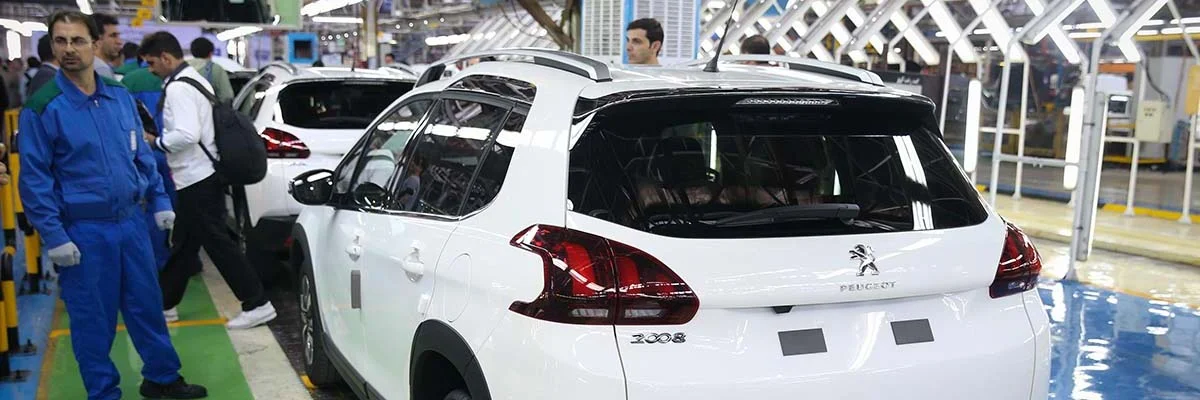
◢ French auto giant Groupe PSA, which makes the Citroen and Peugeot brands, reported record vehicle sales Tuesday as the acquisition of General Motors' Opel unit helped offset a sharp downturn in key markets China and Iran. PSA sold 3.88 million vehicles, up 6.8 percent from 2017 when it acquired the Opel business which includes British-based Vauxhall.
French auto giant Groupe PSA, which makes the Citroen and Peugeot brands, reported record vehicle sales Tuesday as the acquisition of General Motors' Opel unit helped offset a sharp downturn in key markets China and Iran.
PSA sold 3.88 million vehicles, up 6.8 percent from 2017 when it acquired the Opel business which includes British-based Vauxhall.
PSA said that without the Opel contribution, 2018 sales would have been down 12 percent despite a strong showing in Europe.
Ranked second in Europe after Germany's Volkswagen, PSA said it did well last year to increase overall sales "for a fifth consecutive year... against a background of adverse economic and geopolitical winds."
The company failed, however, to hit the overall target of four million vehicles it had set, largely due to the impact of fresh sanctions imposed on Iran by US President Donald Trump and a slump in China.
PSA announced in June that it was suspending operations in Iran, where it would have expected sales of 300,000 vehicles.
In China, PSA said sales plunged more than 34 percent in an overall market down nearly six percent.
Total sales in China and Southeast Asia fell for a fourth consecutive year to 262,600.
PSA and its Chinese partner and major shareholder Dongfeng, sold 740,000 vehicles in China in 2014 and had targeted one million for last year.
The company said early last year that it hoped that new SUV models and upgrading its distribution network would boost sales in China.
In Europe, PSA said sales jumped 30.6 percent to 3.1 million vehicles, accounting for 80 percent of the total compared with 65 percent in 2017.
The Opel and Vauxhall brands chalked up sales of around one million vehicles.
Photo Credit: IRNA
Iran Satellite in US Row Fails to Reach Orbit
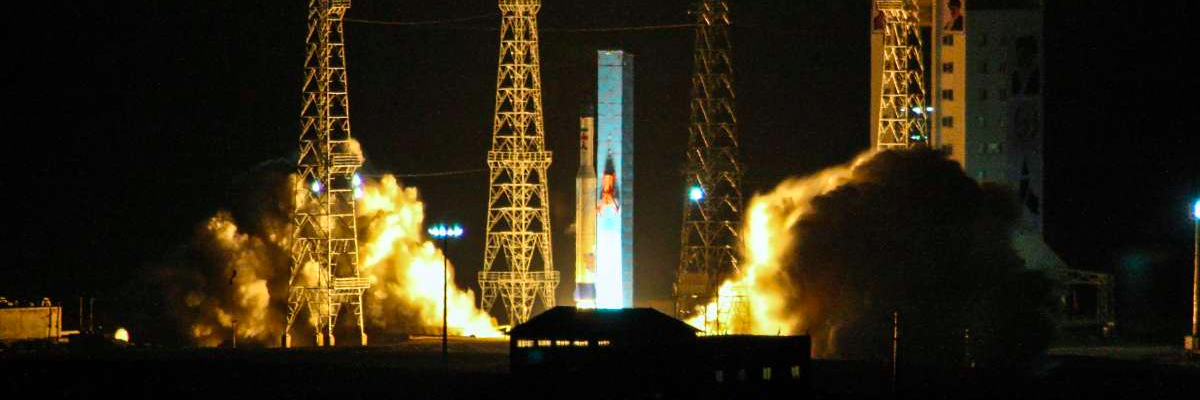
◢ Iran launched a satellite criticized by the United States as a breach of a UN resolution on Tuesday but it failed to reach orbit, the telecommunications minister said. Iran's arch foe Israel swiftly condemned the launch, which it charged was cover for the testing of the first stage of an intercontinental ballistic missile.
Iran launched a satellite criticized by the United States as a breach of a UN resolution on Tuesday but it failed to reach orbit, the telecommunications minister said.
Iran's arch foe Israel swiftly condemned the launch, which it charged was cover for the testing of the first stage of an intercontinental ballistic missile.
"The Payam satellite was successfully launched this morning with the Safir satellite carrier," Mohammad Javad Azari Jahromi told state television.
"But the satellite unfortunately failed to be placed in orbit in the final stage."
The Payam (Message in Persian) and its launch vehicle had gone through successful testing of its first and second stages, the minister said.
But in the actual launch, the satellite failed to reach the required speed on detachment from the rocket in the third stage.
Both the Payam and its carrier were designed and produced at Tehran's Amirkabir University of Technology.
University head Ahmad Motamedi said Amirkabir had already received an order for a replacement, Mehr news agency reported.
Iran also plans to launch another low Earth orbit satellite, the Doosti (Friendship in Persian), Jahromi said.
He did not give a date for the launch but said the satellite was intended to orbit the earth at an altitude of 250 kilometres (156 miles).
"We will do our best to place it in the orbit," he said.
Iran has said repeatedly that its space program, like its wider ballistic missile programme, is for scientific research and defense purposes only.
The Payam and the Doosti were both designed to gather information on environmental change in Iran, President Hassan Rouhani said on Monday.
"The satellite will give us all the information we need, and we will prove to the world that we are a country of science," Rouhani said.
But Israel and its US ally both claim the space program is cover for the development of longer-range ballistic missiles capable of delivering nuclear warheads.
"Iran is lying now that it launched an innocent satellite to space," Israeli Prime Minister Benjamin Netanyahu said after the abortive launch.
"It actually wants to achieve the first stage of an intercontinental missile, in violation of all international agreements," he told a ceremony in Tel Aviv for the investiture of new armed forces chief of staff, Lieutenant General Aviv Kochavi.
"We fully support the United State's firm objection to this act of aggression," he added.
Earlier this month, US Secretary of State Mike Pompeo said Iran's plans to send satellites into orbit would violate the UN Security Council resolution that endorsed a landmark 2015 nuclear deal between major powers and Tehran.
Tehran reined in most of its nuclear program under the deal, since abandoned by Washington last year, but has continued to develop its ballistic missile and rocket technology.
Security Council Resolution 2231 calls on Iran to refrain from testing missiles designed to be capable of carrying a nuclear weapon, but does not specifically bar Tehran from missile or rocket launches.
Washington says the space launches violate the resolution.
Iran's satellite-delivery rockets use technology "virtually identical" to nuclear-capable ballistic missiles, Pompeo said on January 3.
“The United States will not stand by and watch the Iranian regime's destructive policies place international stability and security at risk."
Tehran denied the planned launch was a violation of Resolution 2231.
"The satellite is part of a civil project with purely scientific aims, foreign ministry spokesman Bahram Ghasemi told the semi-official ISNA news agency.
"Iran will wait for no country's permission to conduct such scientific projects."
The Payam satellite, first designed over a decade ago, was initially expected to be launched on a foreign-manufactured rocket, project manager Mostafa Safavi told ISNA in an interview published just hours before the launch.
"The Payam is a non-military satellite with a non-military mission but some countries, thinking that it could have a military purpose, showed no enthusiasm for launching Iranian satellites," Safavi said.
"When they did not cooperate for non-technical reasons, the satellite's specifications were altered and made ready for a domestic launcher," he added.
Iran has launched several short-life satellites into orbit over the past decade, including the Simorgh and the Pajouhesh.
Photo Credit: IRNA
White House Sought Military Strike Against Iran
◢ The White House demanded that the military draft plans for strikes on Iran after attacks in Iraq last year, sparking concern at the Pentagon and State Department, The Wall Street Journal reported Sunday. The report said the move came after a mortar attack launched by an Iran-linked group on the Baghdad diplomatic quarters home to the US embassy in September. No one was hurt by the shells, which landed in an open lot.
The White House demanded that the military draft plans for strikes on Iran after attacks in Iraq last year, sparking concern at the Pentagon and State Department, The Wall Street Journal reported Sunday.
The report said the move came after a mortar attack launched by an Iran-linked group on the Baghdad diplomatic quarters home to the US embassy in September. No one was hurt by the shells, which landed in an open lot.
But the White House National Security Council (NSC) sought to develop a forceful American response to the low-scale attack, including options for a strike against the Islamic republic, the Journal reported.
It added that the NSC also requested options to respond with strikes in Iraq and Syria.
"It definitely rattled people," a former senior US administration official told the newspaper. "People were shocked. It was mind-boggling how cavalier they were about hitting Iran."
Although the Defense Department did develop proposals for a possible strike, the Journal said it was unclear whether they were shared with the White House.
In one NSC meeting, then deputy national security advisor Mira Ricardel called the attacks in Iraq an "act of war" and called for a decisive US response.
Pentagon officials stressed that it was not unusual for the Defense Department to draw up military plans for the White House.
"The Department of Defense is a planning organization and provides the president military options for a variety of threats," Colonel Rob Manning, a Pentagon spokesman, told AFP.
He said the Pentagon's activities include "routinely reviewing and updating plans and activities to deal with a host of threats, including those posed by Iran, to deter and, if necessary, to respond to aggression."
Asked about the report during his Middle East trip, US Secretary of State Mike Pompeo declined comment.
After the attack in Baghdad, the White House warned that "the United States will hold the regime in Tehran accountable for any attack that results in injury to our personnel or damage to United States government facilities."
“America will respond swiftly and decisively in defense of American lives," it added.
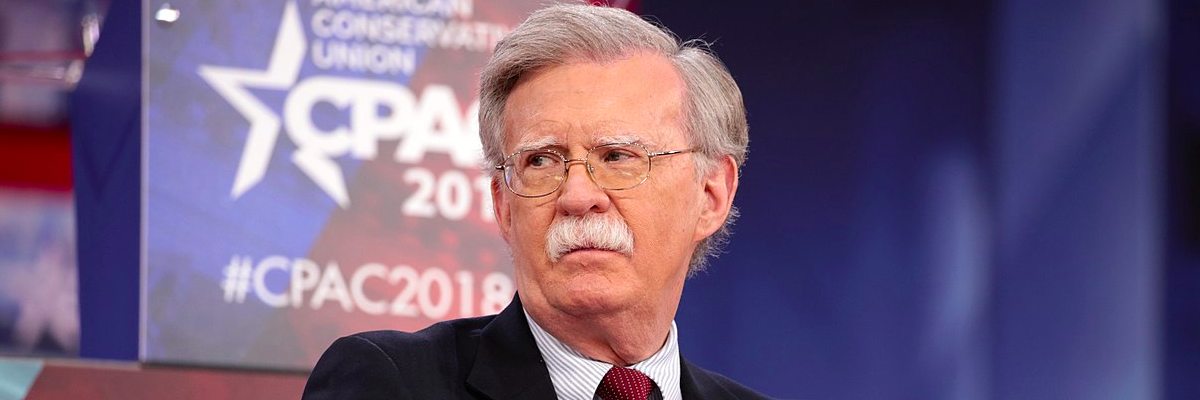
National Security Advisor John Bolton, a known Iran hawk, has pressed for regime change in the Islamic republic.
He penned a 2015 New York Times opinion piece prior to his current role titled "To stop Iran's bomb, bomb Iran."
Photo Credit: Wikicommons
Cargo Plane Crashes in Iran, Killing 15
◢ A military cargo plane overshot a runway, crashed and caught fire during a botched landing near the Iranian capital Tehran, killing 15 people, the army said Monday. The plane was carrying meat from Bishkek in Kyrgyzstan when it crashed near the capital Tehran, the army said in a statement.
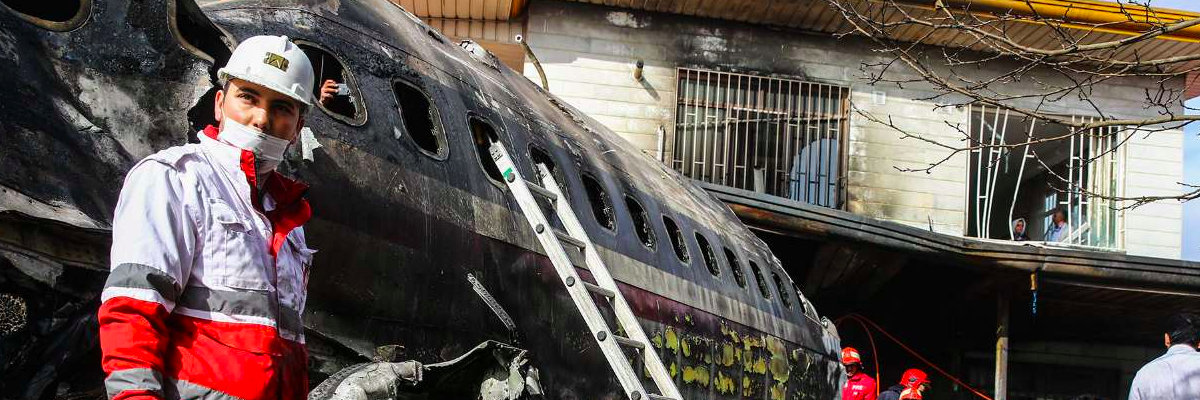
A military cargo plane overshot a runway, crashed and caught fire during a botched landing near the Iranian capital Tehran, killing 15 people, the army said Monday.
The plane was carrying meat from Bishkek in Kyrgyzstan when it crashed near the capital Tehran, the army said in a statement.
"The plane had 16 passengers, 14 of whom were the army crew and two were civilians; 15 were martyred," spokesman Amir Taghikhani said. "One, the flight engineer, was injured and is currently in hospital."
The charred remains of a plane's fuselage with Iranian Air Force colors, its nose wedged through the wall of what appeared to be a house, were seen in photographs obtained by AFP.
Wreckage including a landing gear and a mangled jet engine were scattered nearby.
"A (Boeing) cargo 707 place carrying meat took off from Bishkek in Kyrgyzstan and had an emergency landing at Fath airport this morning," the army said in a statement on its website.
"It exited the runway during the landing and caught fire after hitting the wall at the end of the runway."
Fath airport is in Alborz province, just northwest of Tehran.
The Fars news agency, considered close to the military, earlier said there were 16 people onboard and that only the flight engineer had survived.
State broadcaster IRIB showed footage of burning wreckage.
Still Smoldering
Investigators found the plane's black box, which will provide more details about the crash, deputy Alborz governor Azizollah Shahbazi told Tasnim news agency.
Pictures published by local media showed the charred carcasses of the animals on board, still smoldering inside one of the buildings the plane smashed into.
Fars carried a video showing emergency teams cutting through the plane's nose, which had penetrated what it said was an empty residential complex.
Iran's aging air fleet has had a string of crashes in recent years.
Iran's Aseman Airlines was ordered to ground its fleet of ATR planes in February last year after one of them crashed in the Zagros mountains, killing all 66 people onboard.
Iran has been subject to tough US sanctions for years, hindering the purchase of new aeroplanes and critical spare parts for the US-made planes in its air force, civilian flag carrier Iran Air and domestic airlines.
Hopes of a change in the situation were dashed last May when Washington pulled out of a landmark 2015 deal over Iran's nuclear program, reimposing sanctions that had been lifted as part of the multilateral accord.
Photo Credit: IRNA
Iran Foreign Minister in Baghdad for Talks
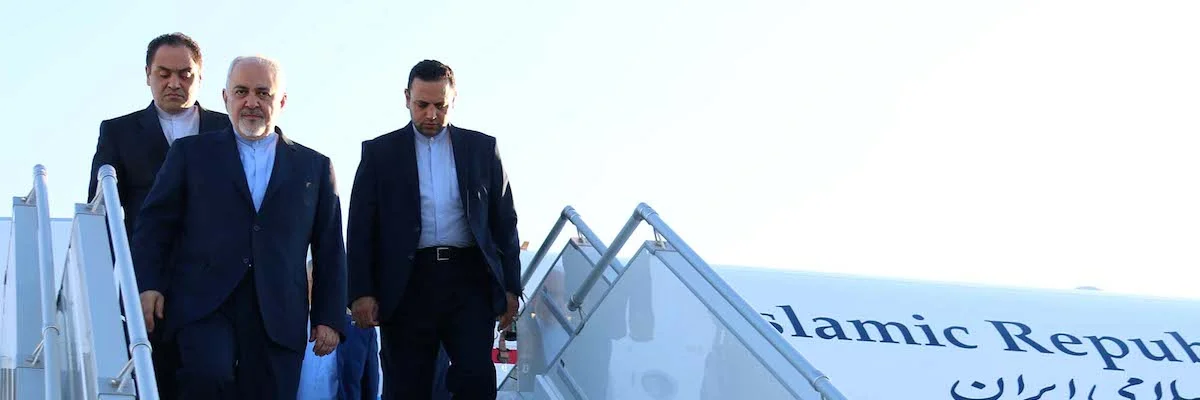
◢ Iranian Foreign Minister Mohammad Javad Zarif met with his Iraqi counterpart in Baghdad on Sunday for wide-ranging talks, including on US sanctions against Tehran. The visit came just days after US Secretary of State Mike Pompeo made a surprise stop on his regional tour to urge Iraq to stop relying on Iran for gas and electricity imports.
Iranian Foreign Minister Mohammad Javad Zarif met with his Iraqi counterpart in Baghdad on Sunday for wide-ranging talks, including on US sanctions against Tehran.
The visit came just days after US Secretary of State Mike Pompeo made a surprise stop on his regional tour to urge Iraq to stop relying on Iran for gas and electricity imports.
Washington has granted Baghdad a waiver until late March to keep buying Iranian gas and power, despite reimposing tough sanctions on Tehran in November.
After a two-hour meeting on Sunday, Iraq's top diplomat Mohammed Ali al-Hakim said he had talked through the restrictions with his counterpart.
"We discussed the unilateral economic measures taken by the US and are working with our neighbour (Iran) on them," Hakim said.
Zarif slammed Washington's role in the region.
"These failures have continued for the past 40 years and my proposal to countries (in the region) is to not bet on a losing horse," he told reporters.
Iran's foreign minister went on to meet Iraqi premier Adel Abdel Mahdi, who released a statement affirming: "Iraq's policy is built on seeking the best ties with all of its neighbors."
Zarif is expected to attend several economic forums in various Iraqi cities, including Sulaymaniyah in the Kurdish north.
While in Baghdad, he discussed numerous political and economic issues with his Iraqi counterpart including Syria and Yemen.
Hakim said Iraq was in favour of the Arab League reinstating Syria's membership, eight years after suspending it as the conflict there unfolded.
Following Zarif's visit, Iranian President Hassan Rouhani is also expected to travel to Iraq in the near future.
Iran is the second-largest source of imported goods in Iraq.
Besides canned food and cars, Baghdad also buys 1,300 megawatts of electricity and 28 million cubic meters of natural gas daily from Iran to feed power plants.
That dependence is uncomfortable for Washington, which sees Tehran as its top regional foe and expects Iraq to wean itself off Iranian energy resources.
But energy ties between Baghdad and Tehran appear to have remained close, with Iran's oil minister visiting Baghdad last week to denounce US sanctions as "totally illegal.”
Photo Credit: IRNA
Iran Summons Polish Diplomat to Protest US Summit
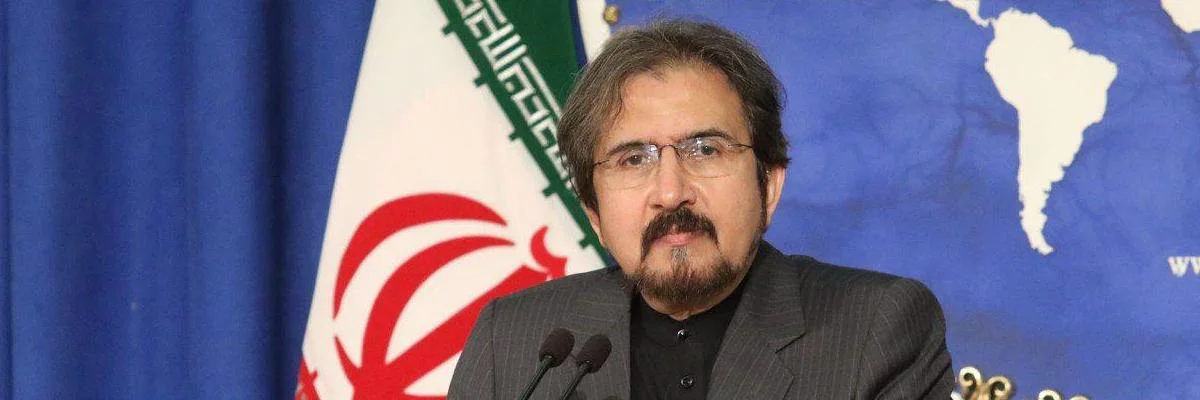
◢ Iran's foreign ministry summoned Poland's top diplomat in the country to protest its decision to host what it called an "anti-Iranian" summit, a spokesman said Sunday. Poland's charge d'affaires was summoned to "protest the anti-Iranian so-called peace and security conference," ministry spokesman Bahram Ghasemi said on his Telegram channel.
Iran's foreign ministry summoned Poland's top diplomat in the country to protest its decision to host what it called an "anti-Iranian" summit, a spokesman said Sunday.
Poland's charge d'affaires was summoned to "protest the anti-Iranian so-called peace and security conference," ministry spokesman Bahram Ghasemi said on his Telegram channel.
He was told "this is a hostile act by the United States against Iran and Poland is expected to refrain from going along with the US in holding this conference," Ghasemi added.
The summit was announced Friday by US Secretary of State Mike Pompeo, who said dozens of countries would participate.
They will "focus on Middle East stability and peace and freedom and security here in this region, and that includes an important element of making sure that Iran is not a destabilising influence," he told Fox News.
Poland's representative in Iran, Wojciech Unolt, reportedly said the conference, to be held February 13-14 in Warsaw, was not anti-Iranian and that Poland did not share recent remarks by the US against Iran.
The Iranian official said this was inadequate and Iran would be "forced to retaliate" if Poland did not back down.
Poland's foreign ministry said in a statement late Sunday "the international community has the right to discuss various regional and global issues.”
And Poland had the right "to co-organize a conference, whose goal is to develop a platform for actions promoting stability and prosperity in the Middle East region," it added.
Iran's cinema organization said it had cancelled a Polish film festival scheduled for next month, according to local media.
"A guest who does not honor their host cannot continue to be a guest. To honor Iran's dignity, the Polish film week in Tehran will be postponed until Warsaw's behaviour is proper," tweeted cinema organisation chief Hossein Entezami, according to the semi-official news agency ILNA.
Foreign Minister Mohammad Javad Zarif earlier poured scorn on the Warsaw summit and pointed out that the country, then impoverished after invasion by Britain and the Soviet Union, welcomed more than 100,000 Polish refugees during World War II.
"Polish Govt can't wash the shame: while Iran saved Poles in WWII, it now hosts a desperate anti-Iran circus," Zarif tweeted.
Photo Credit: IRNA
US to Host Global Summit on Iran in Poland, Pompeo Says
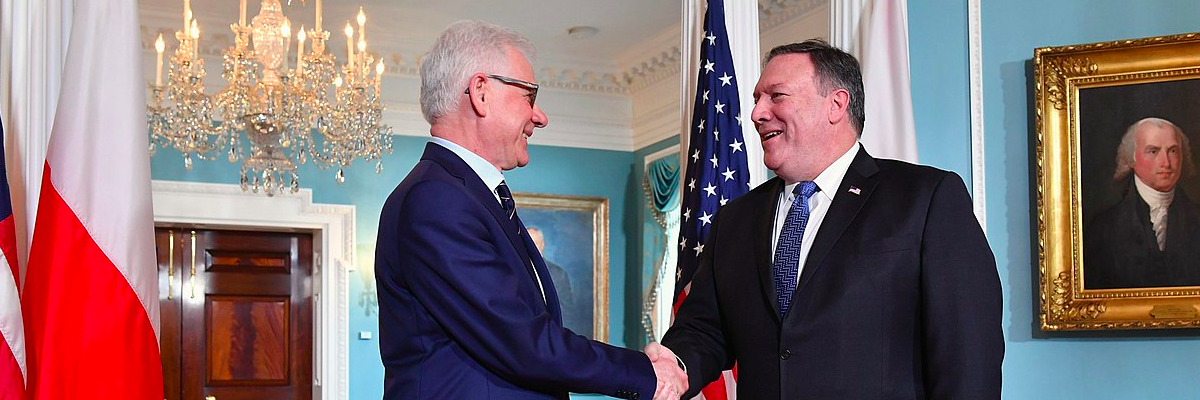
◢ The United States is organizing an international summit in Poland next month, focusing on Iran's Middle Eastern influence, Secretary of State Mike Pompeo told Fox News. The event will "focus on Middle East stability and peace and freedom and security here in this region, and that includes an important element of making sure that Iran is not a destabilizing influence," the top US diplomat said.
The United States is organizing an international summit in Poland next month, focusing on Iran's Middle Eastern influence, Secretary of State Mike Pompeo told Fox News.
Pompeo made the announcement in an interview with the network during a regional tour aimed at reassuring US allies after President Donald Trump's shock decision to withdraw all US troops from Syria, which sparked concerns that Iran's influence could grow.
"We'll bring together dozens of countries from all around the world," Pompeo told Fox.
They will "focus on Middle East stability and peace and freedom and security here in this region, and that includes an important element of making sure that Iran is not a destabilizing influence," the top US diplomat said.
The event will take place on February 13 and 14.
Photo Credit: Wikicommons
Pompeo Vows to Expel 'Every Last Iranian Boot' from Syria
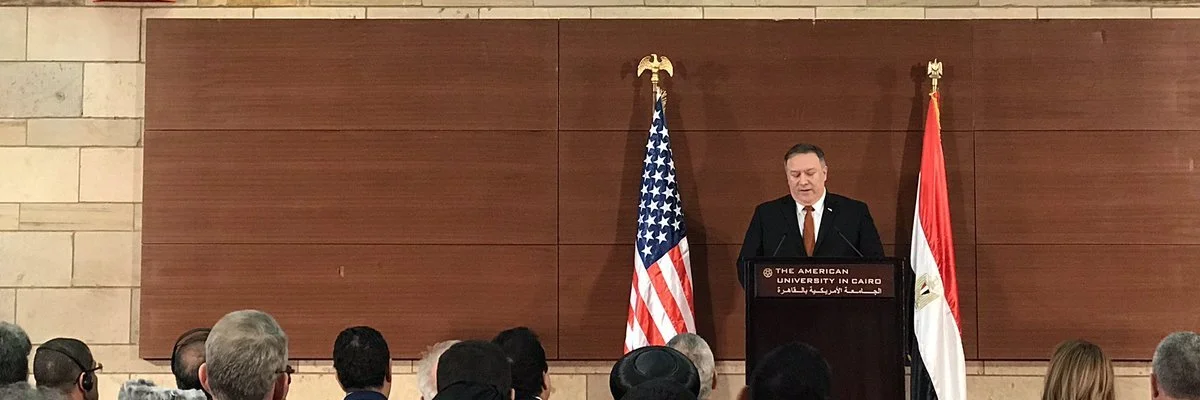
◢ US Secretary of State Mike Pompeo vowed Thursday the United States and its allies would chase all Iranian troops from Syria, and urged Middle East nations to forge a common stand against Tehran. "It's time for old rivalries to end, for the sake of the greater good of the region," said Pompeo at a keynote address in Cairo.
US Secretary of State Mike Pompeo vowed Thursday the United States and its allies would chase all Iranian troops from Syria, and urged Middle East nations to forge a common stand against Tehran.
"It's time for old rivalries to end, for the sake of the greater good of the region," said Pompeo at a keynote address in Cairo.
America "will use diplomacy and work with our partners to expel every last Iranian boot" from Syria and bolster efforts "to bring peace and stability to the long-suffering Syrian people," he added.
The top US diplomat was in Egypt on the latest leg of a whistle-stop regional tour aimed at shoring up Washington's Middle East policy following President Donald Trump's shock decision to withdraw 2,000 US troops from Syria.
Pompeo stressed the pullout would go ahead, despite comments in recent weeks appearing to walk back Trump's decision, but that the US would remain engaged.
The "decision to withdraw our troops has been made. We will do that. We will withdraw our forces, our uniformed forces, from Syria and continue America's crushing campaign," Pompeo told reporters at a joint press conference with his Egyptian counterpart Sameh Shukry.
He also met earlier with Egyptian President Abdel Fattah al-Sisi, after arriving in Cairo late Wednesday on his longest trip since taking office last year which has already taken him to Jordan, Baghdad and the Iraqi Kurdish regional capital Arbil.
'New beginning'
In his address entitled "A Force for Good: America Reinvigorated in the Middle East" at the American University in Cairo, Pompeo also took aim at former president Barack Obama without naming him.
Trump's predecessor had "grossly underestimated the tenacity and viciousness of radical Islamism," Pompeo said.
And parroting Obama's words in his landmark 2009 speech in Cairo, Pompeo vowed that now was really "a new beginning" in ties between the US and the Middle East.
Pompeo's tour is aimed at urging regional allies to continue to confront the "significant threats" posed by Iran and jihadists.
Even though Islamic State group jihadists have been largely eradicated from Iraq, after capturing a vast swathe of territory in 2014, some still control a few pockets in war-torn Syria.
Pompeo will also visit Gulf countries including Bahrain, the United Arab Emirates, Qatar, Kuwait, Oman and Saudi Arabia.
As he arrived in Egypt, the State Department described the country as a “steadfast partner in the anti-terror fight, and a courageous voice in denouncing the radical Islamist ideology that fuels it".
But there are rising concerns that US policy is getting bogged down. A long-promised Trump plan for a peace deal between Israelis and Palestinians has so far failed to materialise.
And many of the Trump administration's decisions have stoked confusion and angered many regional allies.
'Middle East even messier'
"By most accounts, Trump's Middle East policy has made a messy Middle East even messier," Aaron David Miller, a former US diplomat and now an analyst at the Wilson Center, said on Twitter.
"A risk averse president who makes new policy by tweet or phone call surrounded by risk-ready advisers who run cleanup, don't respect deliberation and have objectives that aren't clear or attainable equals US policy (or lack of it) in Syria."
Turkey and the United States are now at loggerheads over the future of Syrian Kurdish forces, considered by Ankara as "terrorists", after the troop pullout.
Turkish officials had a tense meeting this week with Trump's national security adviser John Bolton in Ankara aimed at coordinating the pullout process after Bolton set conditions that appeared to postpone it indefinitely.
The terms included total defeat of IS—still active in some Syrian regions—and ensuring that Kurdish fighters who fought alongside the Americans against the jihadists will be protected.
On Thursday, Turkey renewed its threat to launch an offensive against Kurds.
"If the (pullout) is put off with ridiculous excuses like Turks are massacring Kurds, which do not reflect the reality, we will implement this decision," Turkish Foreign Minister Mevlut Cavusoglu told NTV television.
Photo Credit: Nadeen Shaker
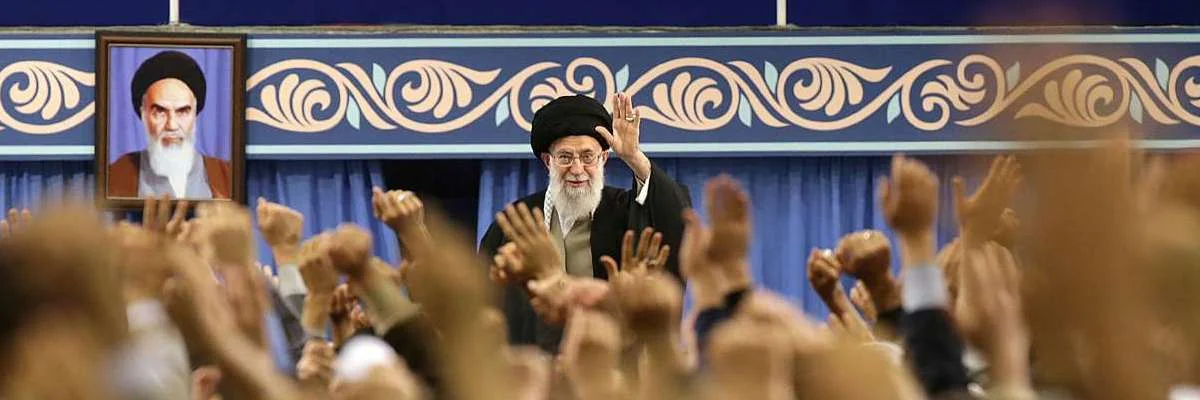
Iran's Khamenei: Some US Officials are 'First-Class Idiots'
◢ Iran's supreme leader Ayatollah Ali Khamenei said some US officials are "first-class idiots" in a speech on Wednesday. "Some US officials pretend that they are mad. Of course I don't agree with that, but they are first-class idiots," he said in the speech in Tehran, quoted on his official Twitter feed.
Iran's supreme leader Ayatollah Ali Khamenei said some US officials are "first-class idiots" in a speech on Wednesday.
"Some US officials pretend that they are mad. Of course I don't agree with that, but they are first-class idiots," he said in the speech in Tehran, quoted on his official Twitter feed.
Khamenei was having a dig at US officials who had predicted there would be regime change in Iran by the end of 2018.
"A while ago, a US politician had said, among a gathering of terrorists and thugs, that he hopes to celebrate this Christmas in Tehran," Khamenei said, according to his Twitter feed.
"Christmas was a few days ago. This is how US calculations work."
It was not clear to which US official he was referring, but members of President Donald Trump's administration have called for regime change and predicted it would happen soon.
This has included National Security Advisor John Bolton—a long-time regime change advocate—who often speaks at gatherings of the exiled People's Mujahedeen of Iran (MEK) opposition group, considered a terrorist cult by Tehran's leaders.
"Before 2019 we here will celebrate in Tehran," Bolton told an MEK meeting in Paris in July 2017.
Photo Credit: IRNA
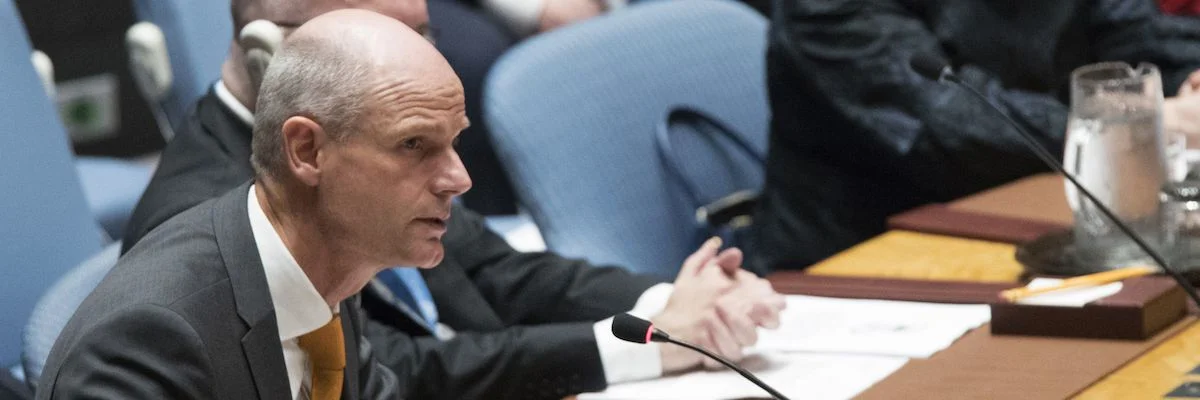
Iran Behind Two Assassinations in the Netherlands: Dutch Minister
◢ Iran was likely behind the murders of two Dutch citizens believed to be dissidents against the regime in Tehran, Dutch Foreign Minister Stef Blok said Tuesday. The Dutch secret service "has strong indications that Iran was involved in the assassinations of two Dutch nationals of Iranian origin in Almere 2015 and in The Hague in 2017," Blok said in a letter to parliament.
The Netherlands accused Iran Tuesday of involvement in the murder of two dissidents on Dutch soil, adding that the EU was hitting Tehran with sanctions partly as a result of the killings.
The Dutch secret service "has strong indications that Iran was involved in the assassinations of two Dutch nationals of Iranian origin in Almere 2015 and in The Hague in 2017," Foreign Minister Stef Blok said in a letter to parliament.
"These individuals were opponents of the Iranian regime," he said in the letter, also signed by Dutch Interior Minister Kajsa Ollongren.
"The Netherlands considers it probable that Iran had a hand in the preparation or commissioning of assassinations and attacks on EU territory," the ministers said.
They added that the EU had on Tuesday "partly at the recommendation of the Netherlands" agreed to impose fresh sanctions on Iran.
Dutch police have previously named the two victims as Ali Motamed, 56, who was killed in the central city of Almere in 2015, and Ahmad Molla Nissi, 52, murdered in The Hague in 2017.
Last June, the Netherlands expelled two workers from the Iranian embassy in connection with the murders.
Tehran at the time protested the expulsion of the two diplomats as an "unfriendly and destructive move" and threatened to retaliate.
Danish Prime Minister Lars Lokke Rasmussen had earlier confirmed that the European Union has agreed on new sanctions targeting the Iranian Intelligence and Security Ministry and two Iranian nationals.
Denmark had led efforts for sanctions after allegations that Tehran tried to kill three Iranian dissidents on Danish soil.
France had meanwhile hit two suspected Iranian agents with asset freezes over a plot to bomb a rally near Paris.
Photo Credit: Wikicommons
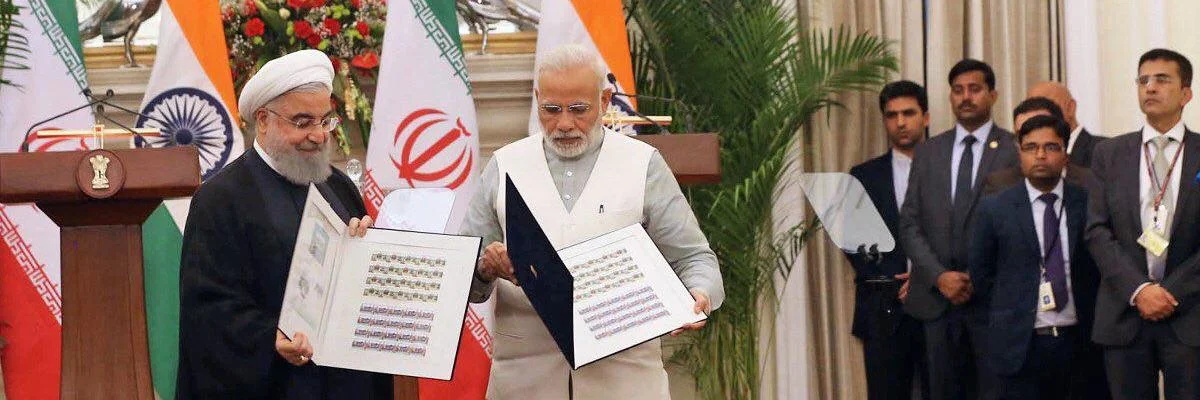
Iran, India Move Closer on Trade as EU Stalls
◢ Iran will boost trade with India as the European Union struggles to find a way to circumvent a fresh US embargo on Tehran, Iranian Foreign Minister Javad Zarif said Tuesday. Brussels is working on a payment mechanism to keep financial transactions flowing with Iran, after the US ditched the 2015 nuclear deal with Tehran earlier this year and reintroduced a raft of sanctions on the country.
Iran will boost trade with India as the European Union struggles to find a way to circumvent a fresh US embargo on Tehran, Iranian Foreign Minister Javad Zarif said Tuesday.
Brussels is working on a payment mechanism to keep financial transactions flowing with Iran, after the US ditched the 2015 nuclear deal with Tehran earlier this year and reintroduced a raft of sanctions on the country.
But Zarif told reporters in New Delhi that the EU's delay in implementing the system meant Iran would look elsewhere.
"Europeans have made efforts but couldn't... progress up to our expectations. We will expand our cooperation via various channels such as India," Zarif said after meeting India's transport minister, as quoted by Iran's semi-official news agency ISNA.
The EU hopes its "special purpose vehicle" (SPV) announced in September will keep the nuclear deal alive and persuade Tehran to stay on board by giving companies a way of trading with Iran without violating Washington's sanctions.
But Brussels is struggling to find a host for the SPV and many EU companies are fearful of repercussions from US President Donald Trump's administration.
India, which imports around 80 percent of its oil needs, recently signed a deal with Iran to buy crude in rupees rather than US dollars, helping it get around the sanctions.
Zarif added that Iran was "very happy" that the Indian government was allowing the Iranian Bank Pasargad to open a branch in India's financial capital of Mumbai.
India also recently took over the running of part of Iran's Chabahar Port, in the Gulf of Oman, as the countries build closer ties.
“We hope, despite US sanctions, Iran and India will have more cooperation in line with the interests of the people and the two countries," said Zarif.
Photo Credit: IRNA
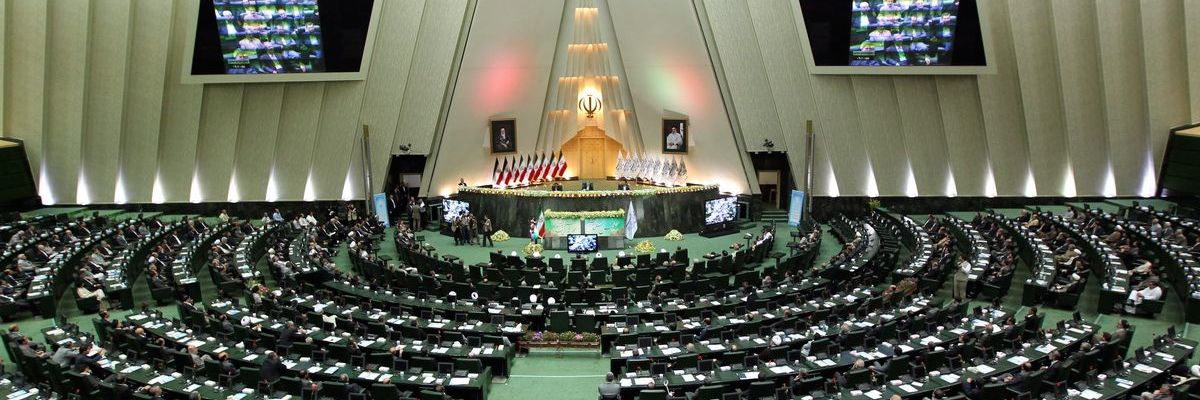
Iran MPs to Investigate Protester Torture Claims
◢ Iran's parliament will investigate claims by a labor protest leader that he was tortured in prison following strikes at a sugar factory, the semi-official ISNA news agency reported on Sunday. Alireza Rahimi, a member of parliament's presiding board, said his request for an investigation had been accepted by speaker Ali Larijani, according to ISNA.
Iran's parliament will investigate claims by a labor protest leader that he was tortured in prison following strikes at a sugar factory, the semi-official ISNA news agency reported on Sunday.
Alireza Rahimi, a member of parliament's presiding board, said his request for an investigation had been accepted by speaker Ali Larijani, according to ISNA.
It followed claims by Esmail Bakhshi, written on his Instagram account and reported by the reformist Etemad newspaper, that he was tortured during 25 days in detention in southwestern Khuzestan province late last year.
Bakhshi was one of the organizers of weeks-long protests at the Haft Tapeh sugar factory in Shush over unpaid wages and alleged criminal activity by new private owners.
Ali Motahari, an outspoken member of parliament, wrote a column in Etemad on Sunday titled "Source of shame", demanding answers from the intelligence ministry.
The governor of Khuzestan, Gholamreza Shariati, denied Bakhshi's claims.
"I checked with the relevant bodies and the claim of torture was strongly denied," he told the Jamaran news site.
Rahimi said Intelligence Minister Mahmoud Alavi will attend the commission hearings in parliament, according to ISNA.
The strike at Haft Tapeh, which has around 4,000 workers, largely ended in December after the workers received their wages.
Iran has been hit by strikes over working conditions in several key sectors this year, including education, mines, transport and the steel industry, mainly outside Tehran.
In November the head of Iran's judiciary warned restive workers against creating "disorder.”
"Workers should not allow their demands to become an excuse and an instrument for the enemy," Ayatollah Sadegh Larijani said, quoted by the judiciary's news agency Mizan Online.
Photo Credit: IRNA
Iran Approves Anti-Money Laundering Bill
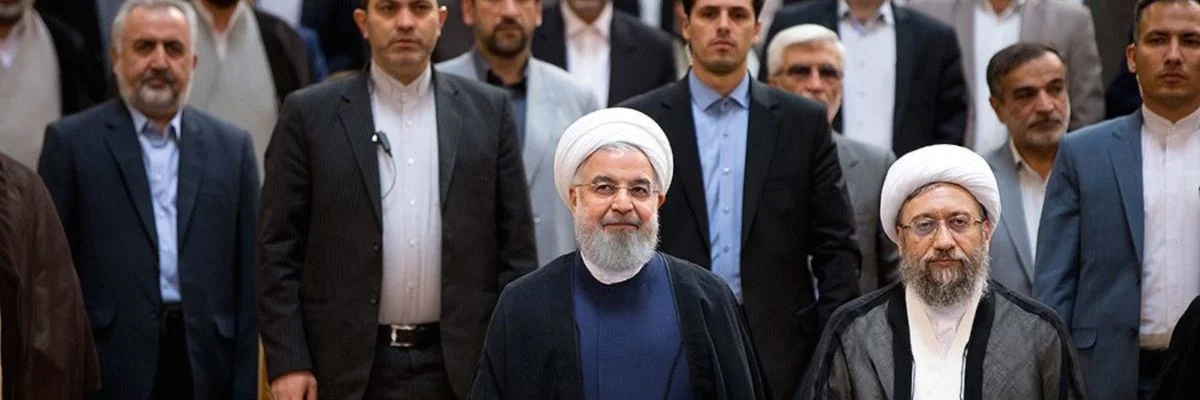
◢ An Iranian arbitration body gave its approval on Saturday to an anti-money laundering bill seen as crucial to maintaining international trade and banking ties, the official IRNA news agency reported. "The bill on amending the law to counter money laundering was approved with certain changes and will be sent to the parliament speaker to be communicated to the government," Expediency Council member Gholamreza Mesbahi-Moghadam told IRNA.
An Iranian arbitration body gave its approval on Saturday to an anti-money laundering bill seen as crucial to maintaining international trade and banking ties, the official IRNA news agency reported.
"The bill on amending the law to counter money laundering was approved with certain changes and will be sent to the parliament speaker to be communicated to the government," Expediency Council member Gholamreza Mesbahi-Moghadam told IRNA.
The Expediency Council settles disputes between parliament, which approved the bill last year, and the conservative-dominated Guardian Council, which vets all legislation and had rejected it.
Conservatives have argued that new legislation on money laundering and terrorist financing will provide Western powers with leverage over Iran's economy and how it funds regional allies such as Lebanon's Hezbollah.
But the government of President Hassan Rouhani says the laws are needed to meet demands set by by the international Financial Action Task Force (FATF), which monitors countries' efforts to tackle financial crime.
Iran is alone with North Korea on the FATF's blacklist—although the Paris-based organization has suspended counter-measures since June 2017 while Iran works on reforms.
The FATF will meet again in February to discuss Iran's progress.
The government is hoping to salvage banking and trade ties after the United States walked out of a landmark 2015 nuclear deal between major powers and Iran and reimposed crippling unilateral sanctions.
The other parties to the deal—Britain, France, Germany, China and Russia—have sought to salvage the agreement and maintain trade with Iran, but have called on Tehran to meet FATF requirements.
The anti-money laundering bill is one of four pieces of legislation put forward by the government to that end.
A previous bill on the mechanics of monitoring and preventing terrorist financing was signed into law in August.
Two others—allowing Iran to join UN conventions against terrorist-financing and organized crime—have been approved by parliament but are still being delayed by higher authorities, including the Guardian Council.
The Expediency Council currently has 38 members, all appointed by supreme leader Ayatollah Ali Khamenei.
Photo Credit: Fars
Boeing Stuck in Iran Creates Headaches for Norwegian Airline
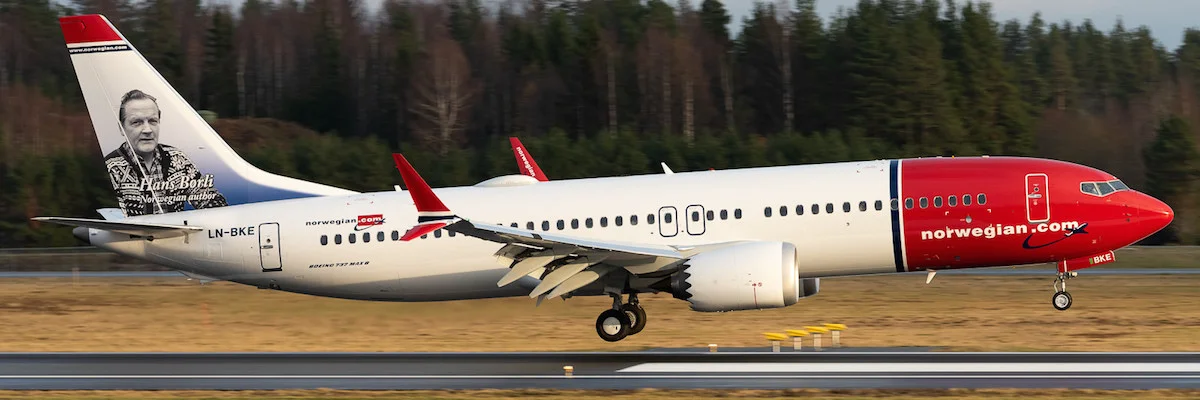
◢ Norwegian Air Shuttle said Friday one of its Boeing 737s has been stuck in Iran for three weeks after an unscheduled landing due to engine problems, as US restrictions reportedly create headaches for the airline and possibly passengers. The aircraft was en route from Dubai to Oslo with 192 passengers and crew members on board when it carried out a "safety landing" in Shiraz in southwestern Iran because of engine trouble.
Norwegian Air Shuttle said Friday one of its Boeing 737s has been stuck in Iran for three weeks after an unscheduled landing due to engine problems, as US restrictions reportedly create headaches for the airline and possibly passengers.
The aircraft was en route from Dubai to Oslo with 192 passengers and crew members on board when it carried out a "safety landing" in Shiraz in southwestern Iran because of engine trouble on December 14, a Norwegian Air Shuttle spokesman, Andreas Hjornholm, told AFP.
While passengers were able to fly on to Oslo the following day on another aircraft, the Boeing 737 Max has been stuck on Iranian soil where the airline's mechanics are trying to repair it, Hjornholm said.
According to specialized sites such as www.airlive.net, the repair work has encountered problems because international sanctions bar the airline from sending spare parts to Iran.
With the US withdrawal from the Iran nuclear deal, the Trump administration decided to reimpose sanctions on Tehran.
Norwegian Air Shuttle refused to comment on those reports.
"I can only say that we are working with several options to get the plane back on the wings, and right now we are waiting for our technicians to be able to service the plane and to get it working," Hjornholm said.
The incident has fueled jokes on social media.
"Iran has become a Bermuda Triangle that feeds on planes," one Iranian Twitter user wrote.
It could also pose problems for the plane's passengers and crew members if they want to travel to the US in future.
Since 2015, anyone who has travelled to seven countries considered at risk (Iran, Iraq, Libya, Somalia, Sudan, Syria and Yemen) since March 2011 is excluded from the US visa waiver programme applied to most Europeans.
According to Hjornholm, the passengers and crew on the Dubai-Oslo flight officially entered Iran and stayed overnight at a hotel on December 14-15.
The US embassy in Oslo was not available for comment.
Last year, former NATO secretary general Javier Solana was refused entry to the US because he had visited Iran for the inauguration ceremony of President Hassan Rouhani in 2013.
Photo Credit: Peder Mathisen
US Warns Iran Against Space Launch
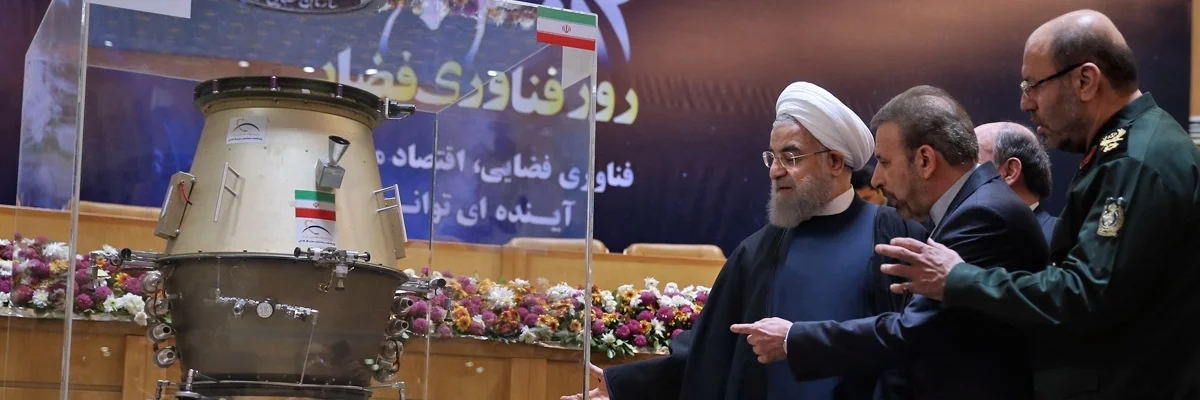
◢ The United States on Thursday warned Iran of consequences if it goes ahead with plans to send off three space launch vehicles, charging despite Tehran's denials that the move would violate a UN resolution. Secretary of State Mike Pompeo said that Iran's satellite-delivery rockets used technology "virtually identical" to nuclear-capable ballistic missiles, which could eventually include long-range missiles capable of reaching the United States.
The United States on Thursday warned Iran of consequences if it goes ahead with plans to send off three space launch vehicles, charging despite Tehran's denials that the move would violate a UN resolution.
Secretary of State Mike Pompeo said that Iran's satellite-delivery rockets used technology "virtually identical" to nuclear-capable ballistic missiles, which could eventually include long-range missiles capable of reaching the United States.
"The United States will not stand by and watch the Iranian regime's destructive policies place international stability and security at risk," Pompeo said in a statement.
"We advise the regime to reconsider these provocative launches and cease all activities related to ballistic missiles in order to avoid deeper economic and diplomatic isolation," he said.
Pompeo said that an Iranian launch would defy UN Security Council Resolution 2231 of 2015, which endorsed an international accord on ending the clerical regime's nuclear program and called on Tehran "not to undertake any activity related to ballistic missiles designed to be capable of delivering nuclear weapons."
US President Donald Trump last year walked out of the Iran deal, which was negotiated by his predecessor Barack Obama, instead reimposing sweeping sanctions aimed at crippling the country's economy.
Iranian Foreign Minister Mohammad Javad Zarif denied Pompeo's charges, saying that neither space launches nor missile tests—which Iran says are vital for defense and not nuclear in nature—violated Resolution 2231.
"The US is in material breach of same, & as such it is in no position to lecture anyone on it," he tweeted, referring to the US rejection of the UN-endorsed denuclearization pact.
Iran's deputy defense minister, Brigadier General Ghasem Taghizadeh, said in November that Tehran would launch three satellites into space "in the coming months."
"These satellites have been built with native know-how and will be positioned in different altitudes," he said, as quoted by the semi-official ISNA news agency.
Iran has seen economic potential in developing a satellite program, which could build a needed revenue source and also be used for espionage.
But US intelligence has said that the technology could easily be converted to long-range missiles.
Photo Credit: IRNA

Broadway Hits Iran With Unique Take on 'Les Miserables'
◢ Iranian theatre director Hossein Parsaee calls Victor Hugo's classic a "masterpiece without borders" but his groundbreaking production of "Les Miserables" that has hit the stage in Tehran has a few unique twists. It was a mainly young, well-heeled crowd when AFP visited recently, and they could barely control their excitement at a rare chance to attend a musical in their home city.
Iranian theatre director Hossein Parsaee calls Victor Hugo's classic a "masterpiece without borders" but his groundbreaking production of "Les Miserables" that has hit the stage in Tehran has a few unique twists.
For a start, none of the actresses are allowed to reveal their own hair, and in case their wigs look too natural, the poster advertising the show carries a bright red notice underscoring that their locks are fake.
Nor do the actors and actresses touch hands, or have any other physical contact throughout the musical.
This is, after all, the capital of the Islamic republic, even if the blockbuster show in the luxurious Espinas Hotel feels a world away from the usual stereotypes about Iran.
The concessions to the government's view of Islamic rules are often subtle.
There is, for instance, always at least one other voice accompanying an actress when she sings—since female solos are taboo—although spotting the second voice can be tricky.
All the other staples of a big-budget musical are here: a live orchestra, billowing dry ice and dazzling light displays.
With a cast, crew and orchestra of over 450, the production has played to sold-out 2,500-strong crowds for six nights a week since it debuted in November.
’It Was All Perfect'
It was a mainly young, well-heeled crowd when AFP visited recently, and they could barely control their excitement at a rare chance to attend a musical in their home city.
"It was so much more than I expected," gushed Maryam Taheri, a 45-year-old housewife, after the show.
"The acting, the music, the lighting—it was all perfect."
Foreign-made TV, film and cartoon versions of "Les Miserables"—a French 19th-century epic on sociopolitical tumult, crime and punishment—have been frequently shown in Iran, where the book has also been translated.
The classic work even has the stamp of approval from supreme leader Ayatollah Ali Khamenei, who has described Victor Hugo's book as "a miracle among novels... a book of kindness, affection and love."
The new production is being hailed as the most spectacular play yet staged in Iran, and arrives at a topical moment with the ongoing "yellow vest" protests in France.
"After 200 years you see it happening again in France," contends businessman Mehdi Hooshyar.
"This is good, it shows whenever their society stagnates, something like this happens to move it forward," he said.
"The revolution is still alive."
'No Miserables Allowed In'
The lavishness of the production has brought its share of criticism, however.
The play has come at a volatile moment in Iran, when anger at economic inequality and corruption dominates political debate.
Tickets, priced between IRR 500,000 and IRR 1.85 million (roughly USD 5 to USD 20), are beyond the means of most Iranians.
“No Miserables allowed in," said a conservative daily, Javan.
Director Parsaee said connecting with Tehran's elite was part of the point.
"This story is relevant to all times, and all places, and that includes today's Tehran. It's about the class divide, the social breakdown and the poverty that exists today," he told AFP.
"It's a reminder to the audience that other classes exist and we need to see them and know about them. It's a serious warning."
'No Taboos Broken'
Much of the show seems to run against Iranian taboos, not least the mixed dancing and drinking in brothels and inns.
But Parsaee, who used to head the performing arts department at the Ministry of Culture and Islamic Guidance, knows the red lines well.
“The review board saw the play in its entirety before we were allowed to begin our run," he said.
"They found it completely compatible with the rules and regulations. No taboos were broken."
The director's love for musicals started around a decade ago when he saw "Oliver Twist", based on the Charles Dickens classic, in London.
"I was depressed for days, thinking why can't we do this? I vowed to myself that I would one day make a musical in Iran."
He did precisely that, bringing "Oliver Twist" to the stage in Tehran last year.
And now he has established a production company to train a new generation of musical directors.
"I've opened the door on musicals in Iran, and now, like a relay race, others must advance it to a point that there won't be any difference between Iran and Broadway."
Photo Credit: IRNA