
Iran Sees 'Revival' of Imperilled Lake Urmia
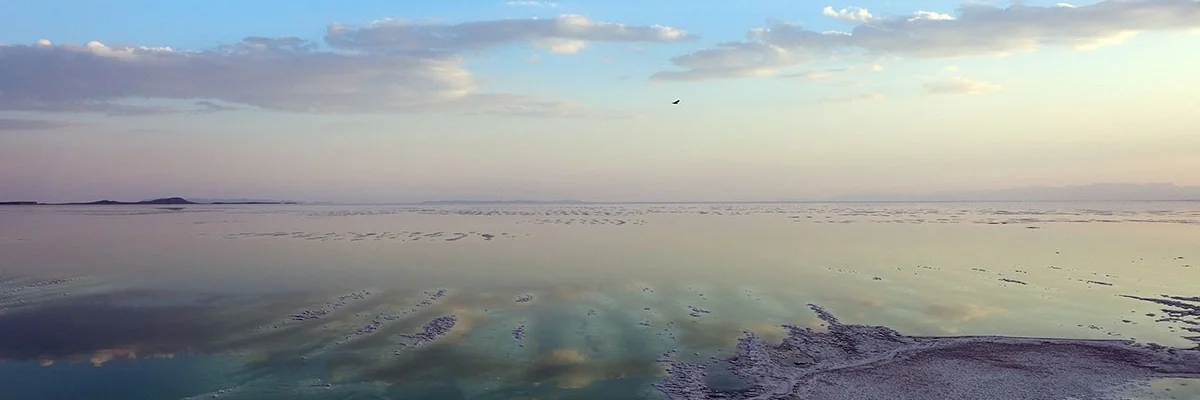
◢ It is one of the worst ecological disasters of recent decades, but the shrinking of Iran's great Lake Urmia finally appears to be stabilizing and officials see the start of a revival. A rusty cargo ship and a row of colorful pedal boats lying untouched on the bone-dry basin are a sign of the devastating loss of water in what was once the largest lake in the Middle East.
It is one of the worst ecological disasters of recent decades, but the shrinking of Iran's great Lake Urmia finally appears to be stabilizing and officials see the start of a revival.
A rusty cargo ship and a row of colorful pedal boats lying untouched on the bone-dry basin are a sign of the devastating loss of water in what was once the largest lake in the Middle East.
Situated in the mountains of northwest Iran, Lake Urmia is fed by 13 rivers and designated as a site of international importance under the UN Convention on Wetlands that was signed in the Iranian city of Ramsar in 1971.
The lake has been shrinking since 1995, according to the UN Environment Program, due to a combination of prolonged drought, over-farming and dams.
By August 2011 the lake's surface was 2,366 square kilometres (914 square miles) and shrank drastically to just 700 km2 in 2013, according to the United Nations.
The catastrophe has threatened the habitat of shrimp, flamingos, deers and wild sheep and caused salt storms that pollute nearby cities and farms.
That finally triggered a coordinated effort to save the lake in 2013—with a joint program between Iran and the UN Development Program funded by the Japanese government.
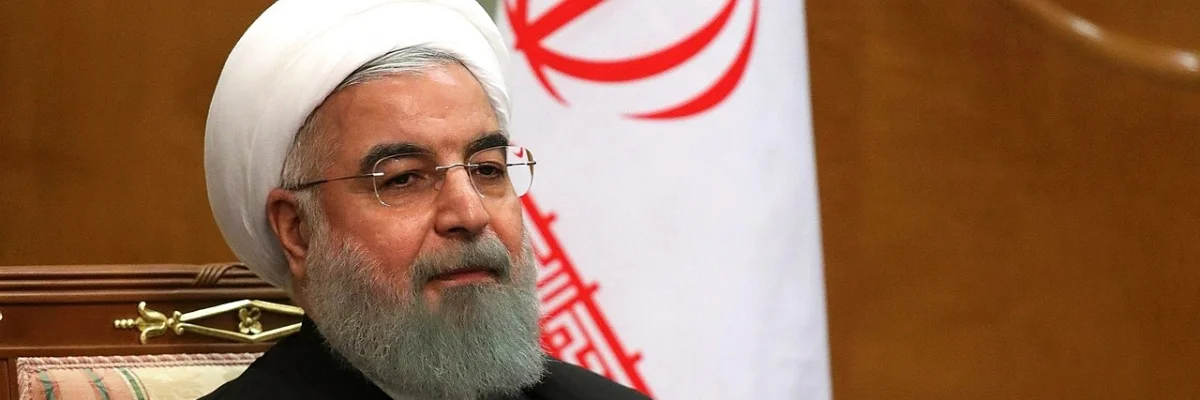
The project became a priority for the incoming administration of President Hassan Rouhani.
"One of my promises was to revive Urmia lake, and I am still committed to that promise," Rouhani said during a recent visit to the region.
Some positive results are finally emerging and the lake's surface area reached 2,300 km2 last year, according to UN Development Program figures.
"This is the beginning of the lake's revival," said Abolfazl Abesht, who heads the wetlands unit of Iran's environment department.
He warned it would take "decades" to return to the 5,000 km2 it once covered, but at least "now the trend has stopped".
Sustainable Farming
Rising temperatures and reduced rainfall have been a major factor in the lake's decline, experts say.
So, too, was the construction of a causeway in 2008 to shorten driving times between Urmia and the nearby city of Tabriz that cut the lake in two.
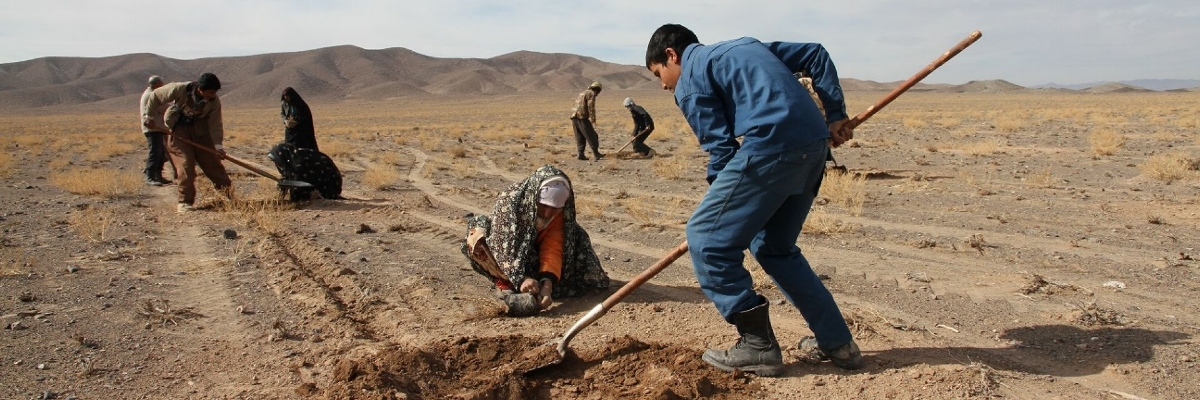
But people were also a major part of the problem due to a rapid rise in the population and farming around the lake, which provides a livelihood to some six million people.
The rejuvenation effort therefore focused on redirecting rivers to irrigate farmland, thus avoiding use of water from the lake, and the promotion of more sustainable farming methods.
“Almost 85 percent of the water is used for agriculture, and we are trying to help farmers reduce usage through cheap and effective techniques," said Abesht.
Measures such as using natural instead of chemical fertilizers, or leveling the land to avoid run-off, have shown major improvements for local farmer Afshin Medadi.
The 47-year-old had to invest in new equipment, but says "things are more cost-effective now", with his farm using a tenth of the water.
There has also been a noticeable reduction in the salt and dust pollution whipped up from the desiccated lake floor during storms, he added.
Others have launched their own green initiatives.
One group of 20 women set up a collective to raise awareness among lakeside communities about water waste, and encourage the production of handicrafts to boost sustainable employment.
One of the organisers, 39-year-old Kobra Asghari from the village of Gharehgozlou, hopes industries such as carpet and doll-making can gradually overtake traditional farming.
They are also encouraging women to plant less thirsty crops such as saffron and olives.
“We gradually managed to encourage the men to do the same," she said.
"People are paying more attention to their environment and the dying ecosystem."
Photo Credit: IRNA
Several Injured During Iran Water Protests
◢ Several people were injured in the southwestern Iranian city of Khorramshahr late Saturday when demonstrators protesting against water pollution clashed with police, Iranian state media reported. The protesters set fire to rubbish bins and damaged public property, prompting police to fire tear gas to disperse them, state-run IRNA news agency said Sunday.
Several people were injured in the southwestern Iranian city of Khorramshahr late Saturday when demonstrators protesting against water pollution clashed with police, Iranian state media reported.
The protesters set fire to rubbish bins and damaged public property, prompting police to fire tear gas to disperse them, state-run IRNA news agency said Sunday.
Officials gave different accounts of those injured during the protest, with Deputy Interior Minister Hossein Zolfaghari saying 11 people were hurt when someone opened fire.
"Ten were members of the security forces" and one was a civilian who was hospitalised, he was quoted by IRNA as saying.
The attacker has not been identified, the news agency said.
Interior Minister Abdolreza Rahmani Fazli, meanwhile, said just one person was injured in a "confrontation involving shots."
He denied reports carried by Saudi media that Iranian security forces had shot and killed at least four protesters.
"The statements saying numerous people were killed are false," he said during a press conference.
The unrest erupted after some 500 people, mostly youth, gathered at a main square in the city to protest against pollution that is seeping into the city's drinking water network, IRNA reported. Protesters also gathered outside a mosque, the agency added.
At least one protester was seriously injured in the clashes and "a few policemen" were hurt, the agency said, quoting Khorramshahr deputy governor Valiollah Hayati. "No one has been killed," IRNA said, quoting Hayati.
According to IRNA, there have been several protests against water pollution in Khorramshahr and the neighboring city of Abadan over the past three days.
Iran has been facing mounting economic woes since the United States in May pulled out of a 2015 accord between Tehran and world powers that had lifted international sanctions in exchange for a scaling back of the Islamic republic's nuclear program.
Iran's currency has plunged almost 50 percent in value in the past six months against the US dollar and inflation is on the rise.
Traders in Tehran's Grand Bazaar held a rare strike on Monday against the collapse of the rial on the foreign exchange.
Brief scuffles had also broken out on Monday between protesters and police in the capital.
On Sunday, Vice President Eshagh Jahangiri said in statements broadcast on state television that Iran is suffering from several problems, not just US sanctions.
Among Iran's "woes", he cited its dependence on oil revenues along with a weak private sector and a fragile banking sector.
Industry Minister Mohammad Shariatmadari told a news conference in Tehran on Saturday that the situation was not "critical" but "special".
He urged foreign firms working in Iran to resist US "threats" of sanctions and to continue doing business in the country.
Photo Credit: UN
Rouhani Slams Officials' 'Vow of Silence' in Face of Protests
◢ Iran's President Hassan Rouhani said Saturday that officials were failing to respond effectively to mounting popular protests, in part because they are being threatened by unnamed behind-the-scenes forces. In a wide-ranging speech carried on state television, Rouhani said officials were failing to respond and appeared to have taken "a vow of silence."
Iran's President Hassan Rouhani said Saturday that officials were failing to respond effectively to mounting popular protests, in part because they are being threatened by unnamed behind-the-scenes forces.
Recent weeks have seen social media filled with videos and reports of protests, but since they are barely covered by domestic media and access is restricted for foreign journalists, they have been hard to verify.
They include protests by farmers over water shortages in Isfahan; by ethnic Arabs over the treatment of minorities in the southern province of Khuzestan; and over administrative reforms in the southwestern city of Kazeroon.
The videos appear to show these localized protests taking on broader slogans against the Islamic establishment, such as: "Our enemy is right here and falsely they say America is our enemy."
But in a wide-ranging speech carried on state television, Rouhani said officials were failing to respond and appeared to have taken "a vow of silence."
"As people haven't got enough information... as people don't see plans for the future, as people see the current problems, they may get upset and angry, come to the streets and cry out," he told senior officials in Tehran.
"(But) we speak little to the people. Our government managers have taken a vow of silence. I don't know who told them to. I don't know what they are scared of."
Rouhani said a major problem was that officials were being intimidated by unnamed "supervisory bodies."
He did not name them, but Rouhani has previously clashed with the powerful Revolutionary Guards and the conservative-dominated judiciary over their outsized role in politics and the economy.
"When in the morning (an official) is going to work, somebody sends him a text message, another calls him, another threatens him... the country cannot be run like this," he said.
In the past month, Tehran's reformist mayor Mohammad-Ali Najafi and the deputy head of the environment agency Kaveh Madani both quit their posts following pressure from hardliners, though Najafi claimed he left for health reasons.
"Don't pay attention to some letters, some threats. If you are scared to respond, send them to me," Rouhani said.
Photo Credit: Wikicommons