
Senate Votes to Curb Trump’s War Powers Over Soleimani Strike
◢ The Senate voted to restrict President Donald Trump’s ability to take military action against Iran, with eight Republicans joining Democrats to approve a measure that would require express congressional approval before a strike.
By Daniel Flatley
The Senate voted to restrict President Donald Trump’s ability to take military action against Iran, with eight Republicans joining Democrats to approve a measure that would require express congressional approval before a strike.
The resolution, introduced by Democratic Senator Tim Kaine, bars U.S. troops from engaging in hostilities against Iran or any part of its government or military, unless Congress declares war or specifically authorizes the use of military force. The president said he will veto the legislation.
“With passage of this resolution, we sent a powerful message that we don’t support starting a war with Iran unless Congress votes that military action is necessary,” Kaine said in a statement after the vote. “If we’re to order our young men and women in uniform to risk their lives and health in war, it should be on the basis of careful deliberation.”
The resolution was adopted on a 55-45 vote and next goes to the Democratic-led House, where it’s expected to be approved. Thursday’s Senate vote fell short of the margin that would be needed to override a Trump veto.
Senate Minority Leader Chuck Schumer called Thursday’s vote a “clear shot across the bow,” to show Trump that “a bipartisan majority of senators don’t want the president waging war without congressional approval.”
Inadequate Briefing
Republican senators Mike Lee and Rand Paul signed on as cosponsors of the measure last month after a briefing by Trump administration officials about the drone strike that killed Iranian General Qassem Soleimani in early January. The two senators said the explanation from officials, including Secretary of State Michael Pompeo, was inadequate and condescending.
Lee opposed one of several attempts by GOP colleagues to sink or weaken the legislation by amending it on the Senate floor. The Utah Republican said the “military-industrial complex” has grown too powerful during the country’s longest period at war. He said measures like the Kaine resolution will clarify that it is Congress’s responsibility to debate and declare war.
“We’ve been lied to by the Pentagon for years regarding a war that’s gone on two decades,” Lee said. “We don’t want additional ambiguities, we don’t want any more war.”
Lee and Paul were joined by fellow Republicans Susan Collins of Maine and Todd Young of Indiana, who signed on to the measure after Kaine removed direct references to Trump and the Soleimani strike. Kaine said Wednesday the resolution is “not directed toward President Trump,” but rather to the executive branch in general.
Bipartisan Vote
In addition to GOP Senators Lee, Paul, Collins and Young, four other Republicans voted for the resolution: Lamar Alexander of Tennessee, Bill Cassidy of Louisiana, Jerry Moran of Kansas and Lisa Murkowski of Alaska.
The three senators seeking the 2020 Democratic presidential nomination—Bernie Sanders, Amy Klobuchar and Elizabeth Warren—also left the campaign trail to be in Washington and support the measure.
Kaine has said that the resolution would not prevent the president from taking action to defend U.S. troops in harm’s way or to take defensive action against an imminent threat.
“While the president does and must always have the ability to defend the United States from imminent attack, the executive power to initiate war stops there,” Kaine said. “An offensive war requires a congressional debate and vote.”
The president would veto the resolution, according to a Wednesday statement from his administration that called it “untimely and misguided.” Kaine’s resolution was drafted several weeks ago and is no longer relevant since the U.S. is not currently engaged in any hostilities against Iran, the statement said.
Photo: Wikicommons
Senate to Vote This Week on Limiting Trump’s Iran Options
◢ The Senate will take up a resolution this week intended to rein in President Donald Trump’s ability to attack Iran without congressional authorization, as Democrats and a small group of Republican senators push back following the killing in January of Iranian General Qassem Soleimani.
By David Flatley
The Senate will take up a resolution this week intended to rein in President Donald Trump’s ability to attack Iran without congressional authorization, as Democrats and a small group of Republican senators push back following the killing in January of Iranian General Qassem Soleimani.
“This is not about bucking the president,” Senator Mike Lee, a Utah Republican, said Monday. “This about making sure the process works as the Constitution requires.”
Lee is one of four Republican senators co-sponsoring the measure with Senator Tim Kaine, a Virginia Democrat, that would order the president to cease any hostilities against Iran, its government or its military without express authorization from Congress.
The GOP support will provide the 51 votes needed for the Senate to pass the resolution. The House passed a similar measure in January but would need to pass Kaine’s resolution for the legislation to go to Trump’s desk. The president is likely to veto it, and the Senate lacks the votes for an override.
“We’re likely to start the debate on Wednesday afternoon,” Kaine said. “We’ll probably have it done by Thursday.”
Trump ordered a drone strike on Jan. 3 that killed Soleimani in Baghdad. Some lawmakers, especially Democrats, have said the White House repeatedly shifted its justification for the strike.
Classified Briefing
The Senate measure, S.J.Res. 68, includes changes sought by Republicans who were frustrated by a classified briefing in January by Secretary of State Michael Pompeo and other administration officials. Lee said it was the worst briefing he’d ever received on military matters.
Republicans Rand Paul of Kentucky, Todd Young of Indiana and Susan Collins of Maine are also co-sponsoring the Senate measure.
With four Democratic senators—Bernie Sanders of Vermont, Elizabeth Warren of Massachusetts, Amy Klobuchar of Minnesota and Michael Bennet of Colorado—in New Hampshire for the presidential primary Tuesday, holding the vote late Wednesday or Thursday would give them time to return to Washington.
The House resolution similar to Kaine’s is sponsored by Representative Elissa Slotkin, a Michigan Democrat and a former CIA analyst.
The House also has passed other bills related to the Soleimani operation, including two in January from Representatives Ro Khanna and Barbara Lee, both of California, that would defund military action against Iran not authorized by Congress. It also would repeal a 2002 authorization for the use of military force that the administration has cited as part of its justification for the strike on Soleimani.
Photo: IRNA
Pompeo Favors 'Peaceful Resolution' to Crisis After Saudi Attack
◢ US Secretary of State Mike Pompeo Thursday said he preferred a “peaceful resolution” to a crisis sparked by attacks on Saudi oil infrastructure, as Iran warned against “all-out war.” Pompeo has blamed Iran for the weekend assault on two facilities which wiped out half of Saudi oil production, dismissing its denials and condemning the “act of war.”
US Secretary of State Mike Pompeo Thursday said he preferred a “peaceful resolution” to a crisis sparked by attacks on Saudi oil infrastructure, as Iran warned against “all-out war.”
Pompeo has blamed Iran for the weekend assault on two facilities which wiped out half of Saudi oil production, dismissing its denials and condemning the “act of war.”
The rhetoric has raised the risk of an unpredictable escalation in the tinderbox region where Saudi Arabia and Iran are locked in a decades-old struggle for dominance.
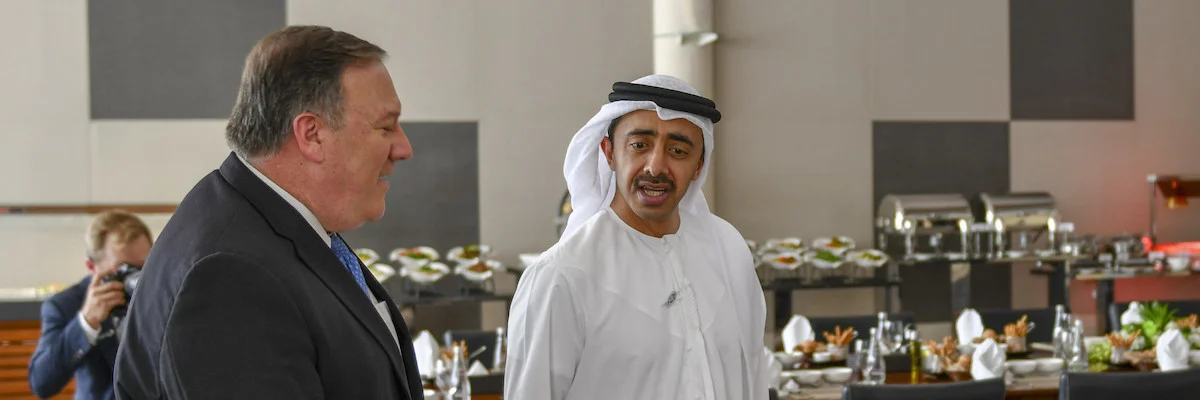
Visiting the United Arab Emirates, Pompeo however said his country would prefer a “peaceful” solution to the crisis.
“We’d like a peaceful resolution,” he said.
“I hope the Islamic Republic of Iran sees it the same way,” he told reporters after talks with the leaders of the United Arab Emirates.
Iran’s Foreign Minister Mohammad Javad Zarif earlier warned any US or Saudi military strike on Iran could cause “all-out war.”
“We don’t want war, we don’t want to engage in a military confrontation,” he told CNN in an interview aire Thursday.
“But we won’t blink to defend our territory.”
Pompeo arrived in Abu Dhabi from the Saudi city of Jeddah, where late Wednesday he met Crown Prince Mohammed bin Salman, the kingdom’s de-facto ruler who has said the assault poses a “real test” of global will.
The two sides agreed “the Iranian regime must be held accountable for its continued aggressive, reckless, and threatening behaviour,” State Department spokeswoman Morgan Ortagus said.
The “unacceptable and unprecedented attack… not only threatened Saudi Arabian national security, but also endangered the lives of all the American citizens living and working in Saudi Arabia,” she added.
‘Glass Towers’
Saudi officials Wednesday unveiled what they said were fragments of 25 drones and cruise missiles fired Saturday at the facilities in the country’s east, engulfing them in flames.
“The attack was launched from the north and unquestionably sponsored by Iran,” defence ministry spokesman Turki al-Maliki said, but did not say whether Saudi officials believed Iran would ultimately be found to be the culprit.
Tehran-linked Huthi rebels in Saudi Arabia’s southern neighbor Yemen have claimed responsibility, but both Washington and Riyadh have ruled that out, saying it was beyond their capabilities.
French Foreign Minister Jean-Yves Le Drian also said the Huthi claim “lacks credibility”.
The Huthis have hit dozens of targets in Saudi Arabia, and their rapidly advancing arsenal has exposed the vulnerability of the kingdom despite its vast military spending.
Huthi military spokesman Brigadier Yahya Saree said Saturday’s assault on the two facilities was launched from three locations inside Yemen, using advanced drones with long-range capabilities.
He also threatened the United Arab Emirates, a key member of the Saudi-led coalition fighting the Huthis, saying it was ready to attack dozens of targets including the skyscraper-filled cities of Dubai and Abu Dhabi.
“If you want peace and security for your facilities, and towers made of glass that cannot withstand one drone, then leave Yemen alone,” he said.
‘List of Iran Targets’ ‘
US military planners weighing retaliation have reportedly forwarded a list of Iranian targets including the Abadan oil refinery, one of the world’s largest, or Khark Island, the country’s biggest oil export facility, the New York Times said.
Other potential targets include missile launch sites and other assets of the elite Islamic Revolutionary Guard Corps, and bases in the southwest where unusual activity suggests they had a role in the strikes.
“Any strikes against Iran would almost certainly be carried out by volleys of cruise missiles from Navy vessels. Strike aircraft would be aloft to carry out attacks if Iranian retaliated against the first wave,” the newspaper said.
Cinzia Bianco, a Middle East analyst at the European Council on Foreign Relations, said the incident could “trigger an out-of-control chain of escalatory events.”
“Inside Saudi Arabia, there is uncertainty over the most appropriate course of action,” she told AFP.
“However the dominant thinking there points to the US targeting critical infrastructure in Iran as to minimise or exclude any human cost.”
Late Wednesday, CBS News cited an unnamed US official as saying Iran’s supreme leader Ayatollah Ali Khamenei approved the attack, on condition it be carried out in a way to deny Iranian involvement.
US officials quoted said the most damning evidence against Iran was unreleased satellite photos showing Iran’s Revolutionary Guard Corps making preparations for the attack at its Ahvaz airbase.
But the commander of Iran’s Revolutionary Guards, Major General Hossein Salami, said Thursday his country was “so powerful that they are forced to falsely accuse us to be behind any incident”.
An international inquiry is under way, with the the United Nations saying Thursday experts had arrived in the kingdom and begun their mission “at the invitation of the Saudi authorities”.
Trump, who has already re-imposed sanctions that have crippled Iran’s economy, promised on Wednesday to “substantially increase” the measures, winning quick praise from Riyadh.
Zarif, himself under US sanctions since July 31, described the measures as “illegal” and “inhuman” and designed to hurt ordinary citizens.
Photo: State Department
U.S. Sends 1,500 Troops to Mideast After Blaming Attacks on Iran
◢ President Donald Trump ordered more troops to the Middle East as the Pentagon blamed Tehran for recent attacks in the region, yet the small scale of the U.S. move signaled a desire to avoid a further escalation of tensions between the two nations. The U.S. will bolster forces in the region by about 1,500 troops, though Trump and the Pentagon said that the deployment is for defensive purposes.
By Tony Capaccio and Margaret Talev
President Donald Trump ordered more troops to the Middle East as the Pentagon blamed Tehran for recent attacks in the region, yet the small scale of the U.S. move signaled a desire to avoid a further escalation of tensions between the two nations.
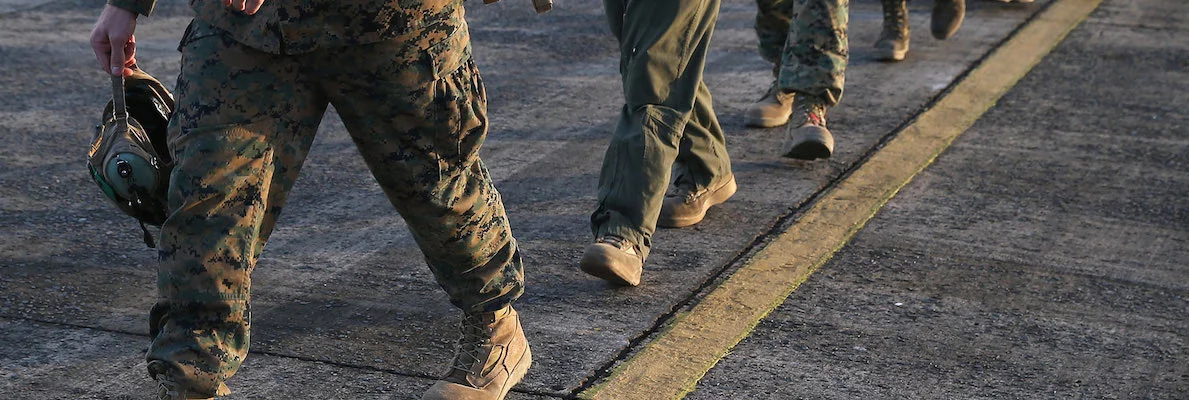
The U.S. will bolster forces in the region by about 1,500 troops, though Trump and the Pentagon said that the deployment is for defensive purposes with a focus on missile defense, surveillance and keeping open shipping lanes in the Persian Gulf. About 600 of the troops are already in the region, meaning fewer than 1,000 new service members will deploy.
“We’re going to be sending a relatively small number of troops to the Middle East,” Trump said as he departed the White House on Friday for Japan. The troops will serve “mostly in a protective capacity,” Trump said, adding, “We’ll see what happens.”
After tensions between Iran and Washington spiked earlier this month, Trump’s comments and the size of the deployment suggest the administration wants to avoid fueling fears of another Middle East war. At the same time, Pentagon officials said they believe Iran is behind a spate of recent attacks on oil tankers, a Saudi oil pipeline and the “Green Zone” diplomatic compound in Baghdad.
“We believe with a high degree of confidence that this stems back to the leadership of Iran at the highest levels,” U.S. Navy Vice Admiral Michael Gilday, director of the Defense Department’s Joint Staff, told reporters at the Pentagon on Friday. All of the attacks “have been attributed to Iran, through their proxies” or other forces, Gilday said. It was the first time the U.S. publicly charged Iran with being behind the attacks, though Iranian-backed rebels in Yemen had claimed responsibility for the pipeline attack.
The moves come after the Trump administration said it had evidence Iran was threatening other attacks on American interests or allies in the region. The administration earlier this month expedited the deployment of a carrier battle group to the Middle East along with a Patriot missile battery and additional bombers.
It wasn’t immediately clear where in the region the new troops would be sent, though the U.S. has military bases in places including Qatar, Bahrain and Iraq. The deployment also includes a new fighter squadron and spy planes, Gilday said.
Deterrence Effect
“All those troops, all of those weapons have been going to Iran the last three weeks not to take military action against Iran, but to deter Iran from taking military action against us,” Republican Senator Tom Cotton said in an interview on Bloomberg Television.
While people familiar with the troop decision called the deployment “initial,” it falls far short of Trump’s statement that in the event of hostilities with Iran he would be willing to send many times more than 120,000 troops suggested in a New York Times report last week. The president has also repeatedly signaled in recent weeks that he is open to talks with Iran’s leadership, though he’s suggested officials in Tehran need to reach out to him first.
On Thursday, Acting Defense Secretary Patrick Shanahan said the Pentagon was focused on having “the right force protection” in the region.
“Our job is deterrence. This is not about war,” Shanahan told reporters. “We have a mission there in the Middle East: freedom of navigation, you know, counterterrorism in Syria and Iraq, you know, defeating al-Qaeda in Yemen, and then the security of Israel and Jordan.”
Separately, the Trump administration decided to bypass Congress and approve the sale of more than $2 billion in weapons to Iran’s regional rival Saudi Arabia, invoking a rarely used provision in the Arms Export Control Act despite bipartisan objections by lawmakers.
In a letter explaining the decision to allow sales to Saudi Arabia, the United Arab Emirates and Jordan, Secretary of State Michael Pompeo said Iran’s “malign activities” in the region necessitated the decision to sidestep congressional approval. He said he weapons sales “must occur as quickly as possible in order to deter further Iranian adventurism in the Gulf and throughout the Middle East.”
More broadly, the rising tensions are linked to Trump’s decision to ratchet up pressure by ordering punishing new economic sanctions on Iran after withdrawing America last year from the multinational nuclear deal reached with Tehran in 2015. The agreement, which sought to ease sanctions on the Islamic Republic in exchange for an end to Iran’s nuclear program, is still backed by European allies as well as China and Russia.
In a sign of frustration over the effectiveness of the U.S. sanctions, Iran is now threatening to resume enriching uranium beyond levels permitted in the 2015 accord in its effort to push France, Germany, the U.K. and the European Union to find ways to relieve the effects of U.S. sanctions.
‘Who’s Provoking Who?’
As both sides sought to react in recent weeks, questions have been raised about the escalating threats. Senator Angus King, a member of the Senate Intelligence and Armed Services Committee, asked on CNN this month, “Who’s provoking who?”
“Are they reacting because they are concerned about what we’re doing, or are we reacting because we’re concerned what they’re doing?” asked King, an independent who caucuses with Democrats. “And that raises my second concern, which is miscalculation.”
Senator Jack Reed, the top Democrat on the Armed Services Committee, warned on Thursday that there is “significant” potential for an overreaction by Iranian personnel or militia in Iraq, Syria and Afghanistan to the U.S.’s new military deployments.
Risk of Miscalculation
“The dangers are extreme in terms of miscalculation,” Reed said in an interview.
The Rhode Island senator declined to discuss the Pentagon threat briefing he’s received on the Iran situation but said he was “absolutely” concerned about miscalculation by Iran in reacting to the U.S. moves.
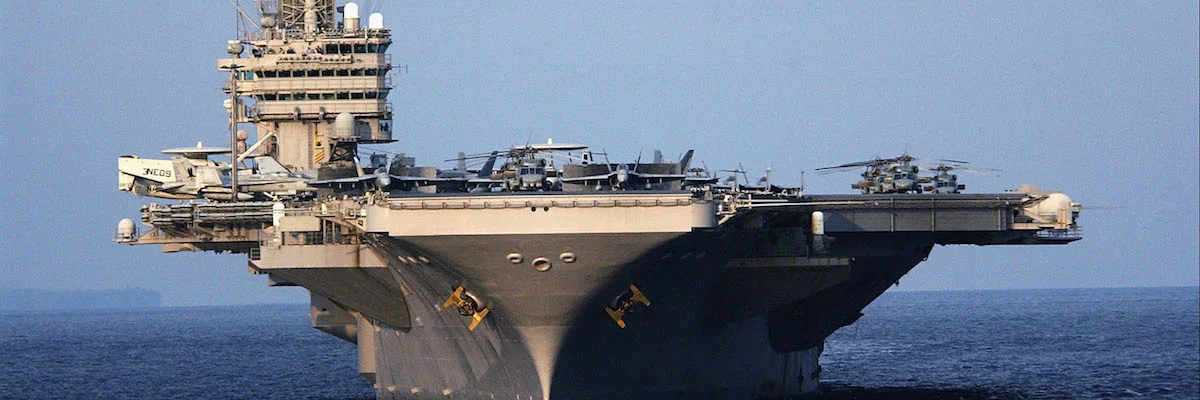
Asked about the Trump administration’s decision earlier this month to accelerate the deployment of the USS Abraham Lincoln aircraft carrier battle group and other military hardware to the region, Reed said “if it’s a deterrence I think that’s appropriate because we don’t want to see an outbreak of conflict there.”
“We did not want to signal to the Iranians, erroneously, that we were not prepared,” he said.
Photo: Bloomberg

US Sending B-52s to Middle East Against Iran 'Threat'
◢ The US Air Force is deploying massive B-52 Stratofortress bombers to the Gulf in response to an alleged possible plan by Iran to attack American forces in the region, the Pentagon said Tuesday. The US move comes in response to intelligence about a threat orchestrated by Iran, officials said, but details of the threat have not been disclosed.
The US Air Force is deploying massive B-52 Stratofortress bombers to the Gulf in response to an alleged possible plan by Iran to attack American forces in the region, the Pentagon said Tuesday.
Several nuclear-capable B-52s are heading to the region along with an aircraft carrier task force following what the Defense Department called "recent and clear indications that Iranian and Iranian proxy forces were making preparations to possibly attack US forces."
"The deployment of the USS Abraham Lincoln Carrier Strike Group and a bomber task force are considered a prudent step in response to indications of heightened Iranian readiness to conduct offensive operations against US forces and our interests," said acting Pentagon spokesman Charles Summers in a statement.
"We emphasize the White House statement that we do not seek war with the Iranian regime, but we will defend US personnel, our allies and our interests in the region."
The deployment was first announced late Sunday by John Bolton, President Donald Trump's national security advisor, who said the move was "a clear and unmistakable message to the Iranian regime that any attack on United States interests or on those of our allies will be met with unrelenting force."
The US move comes in response to intelligence about a threat orchestrated by Iran, officials said, but details of the threat have not been disclosed.
Navy Captain Bill Urban, the spokesman for the US military's Central Command, which spans the Middle east, said the threat could be land-based or maritime.
He said the Lincoln strike group was already scheduled to head to the region on long-planned deployment but that its arrival in the Gulf has been accelerated due to the threat.
That led to the cancellation of a planned port visit by the Lincoln to Split, Croatia.
The multinational carrier group, including several ships, multiple types of aircraft, and 6,000 personnel, will be deployed "where it will best be able to protect US forces and interests in the region and to deter any aggression."
The deployment comes a year after Trump pulled the United States out of a multinational accord under which Tehran drastically scaled back its sensitive nuclear work.
Since then, the Trump administration has ramped up menacing rhetoric against Iran while tightening economic sanctions on the country.
Photo: Wikicommons
Risks Rise as US Warns Iran with Aircraft Carrier
◢ Fears of conflict rose Monday as the United States vowed to send a message to Iran by deploying an aircraft carrier strike group, amid a report that Tehran would scale back its commitments under a nuclear deal after mounting pressure by President Donald Trump. Patrick Shanahan, the acting US defense secretary, said he approved the deployment of the USS Abraham Lincoln carrier strike group to unspecified waters in the vicinity of Iran.
Fears of conflict rose Monday as the United States vowed to send a message to Iran by deploying an aircraft carrier strike group, amid a report that Tehran would scale back commitments under a nuclear deal after mounting pressure by President Donald Trump.
Patrick Shanahan, the acting US defense secretary, said he approved the deployment of the USS Abraham Lincoln carrier strike group to unspecified waters in the vicinity of Iran in response to "indications of a credible threat by Iranian regime forces."
"We call on the Iranian regime to cease all provocation. We will hold the Iranian regime accountable for any attack on US forces or our interests," Shanahan tweeted.
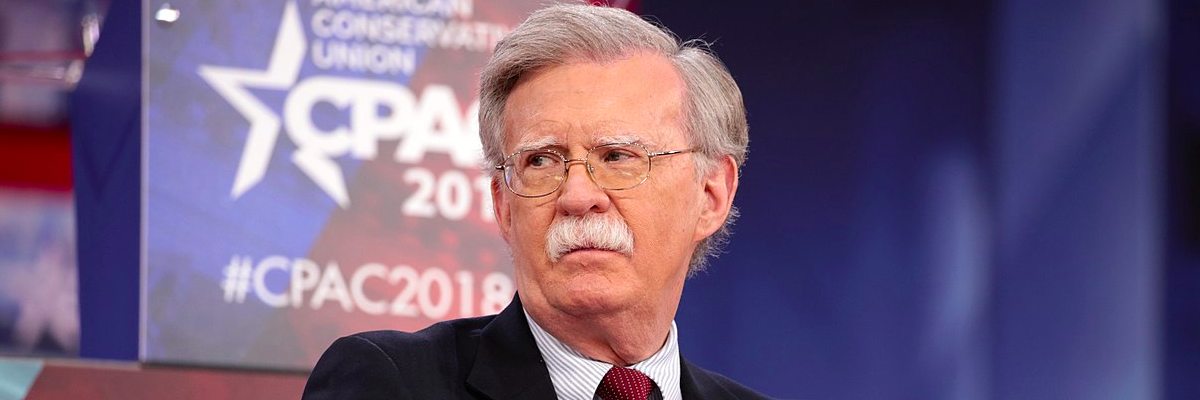
The announcement came first on Sunday evening from John Bolton, Trump's national security advisor, who said the move was "a clear and unmistakable message to the Iranian regime that any attack on United States interests or on those of our allies will be met with unrelenting force."
"The United States is not seeking war with the Iranian regime, but we are fully prepared to respond to any attack, whether by proxy, the Islamic Revolutionary Guard Corps, or regular Iranian forces," Bolton said.
US officials did not give more details on the alleged threat, and the Pentagon had already announced in April that the USS Abraham Lincoln had headed on a "regularly scheduled deployment" out of its base in Norfolk, Virginia.
Iran's supreme national security council spokesman Keyvan Khosravi dismissed Bolton's statement, calling it a "clumsy use of an out-of-date event for psychological warfare."
Based on intelligence, or politics?
The news site Axios said Bolton's warning came after Israel, which has pushed to isolate Iran, passed along intelligence on a possible plot by Tehran "against a US target in the Gulf or US allies like Saudi Arabia or the UAE."
Quoting an unnamed Israeli official, Axios said the intelligence was "not very specific at this stage" but that the "Iranian temperature is on the rise" due to pressure.
Mark Dubowitz, chief executive of the Foundation for Defense of Democracies, which advocates a hard line on Iran, said he had heard of a "spike" in intelligence in recent days about planned attacks.
He believed Iran had given the green-light to Islamist movements Hamas and Islamic Jihad to fire missiles into Israel in a weekend flare-up to "create a crisis to distract the US and Israel" from plots elsewhere.
Other observers were much more skeptical of the intentions of Bolton, who has advocated attacking Iran and enjoyed close ties to the country's formerly armed opposition before Trump hired him.
“The Trump administration's team of saber-rattling foreign policy advisors are all but openly shouting their desire for an unauthorized and unconstitutional war with Iran," said Senator Tom Udall, a Democrat.
"Congress must act immediately to stop this reckless march to war before it's too late," he tweeted.
The deployment announcement came almost a year to the day after Trump pulled the United States out of a multinational accord under which Tehran drastically scaled back its sensitive nuclear work.
"I think this is manufactured by Bolton to try to justify the administration's very harsh policy toward Iran despite the fact that Iran has been complying with the nuclear deal," said Barbara Slavin, the director of the Future of Iran Initiative at the Atlantic Council think tank.
Iran Frustration Mounting
With frustration mounting in Iran over the lack of dividends from the nuclear accord, the semi-official ISNA news agency said that President Hassan Rouhani would announce "retaliatory measures" on Wednesday to mark the anniversary of the US pullout.
The news agency said that Rouhani would invoke sections of the accord under which Iran can cease some or all of its commitments if other parties fail to adhere to their part, notably on ending sanctions.
The Trump administration instead has imposed sweeping sanctions on Tehran and in recent weeks has hit even harder, moving to ban all countries from buying Iran's oil, its top export, and declaring the Revolutionary Guards to be a terrorist group—the first such designation of a unit of a foreign government.
UN inspectors say that Iran has remained in compliance with the nuclear deal, which is still backed by European powers as well as Democrats seeking to unseat Trump next year.
Britain, France and Germany have set up a special payments system to let European businesses operate in Iran and avoid US sanctions, although few firms have been willing to incur Washington's wrath.
Photo: Bloomberg
White House Sought Military Strike Against Iran
◢ The White House demanded that the military draft plans for strikes on Iran after attacks in Iraq last year, sparking concern at the Pentagon and State Department, The Wall Street Journal reported Sunday. The report said the move came after a mortar attack launched by an Iran-linked group on the Baghdad diplomatic quarters home to the US embassy in September. No one was hurt by the shells, which landed in an open lot.
The White House demanded that the military draft plans for strikes on Iran after attacks in Iraq last year, sparking concern at the Pentagon and State Department, The Wall Street Journal reported Sunday.
The report said the move came after a mortar attack launched by an Iran-linked group on the Baghdad diplomatic quarters home to the US embassy in September. No one was hurt by the shells, which landed in an open lot.
But the White House National Security Council (NSC) sought to develop a forceful American response to the low-scale attack, including options for a strike against the Islamic republic, the Journal reported.
It added that the NSC also requested options to respond with strikes in Iraq and Syria.
"It definitely rattled people," a former senior US administration official told the newspaper. "People were shocked. It was mind-boggling how cavalier they were about hitting Iran."
Although the Defense Department did develop proposals for a possible strike, the Journal said it was unclear whether they were shared with the White House.
In one NSC meeting, then deputy national security advisor Mira Ricardel called the attacks in Iraq an "act of war" and called for a decisive US response.
Pentagon officials stressed that it was not unusual for the Defense Department to draw up military plans for the White House.
"The Department of Defense is a planning organization and provides the president military options for a variety of threats," Colonel Rob Manning, a Pentagon spokesman, told AFP.
He said the Pentagon's activities include "routinely reviewing and updating plans and activities to deal with a host of threats, including those posed by Iran, to deter and, if necessary, to respond to aggression."
Asked about the report during his Middle East trip, US Secretary of State Mike Pompeo declined comment.
After the attack in Baghdad, the White House warned that "the United States will hold the regime in Tehran accountable for any attack that results in injury to our personnel or damage to United States government facilities."
“America will respond swiftly and decisively in defense of American lives," it added.
National Security Advisor John Bolton, a known Iran hawk, has pressed for regime change in the Islamic republic.
He penned a 2015 New York Times opinion piece prior to his current role titled "To stop Iran's bomb, bomb Iran."
Photo Credit: Wikicommons
Kerry Says War Chances Rising After US Leaves Iran Deal
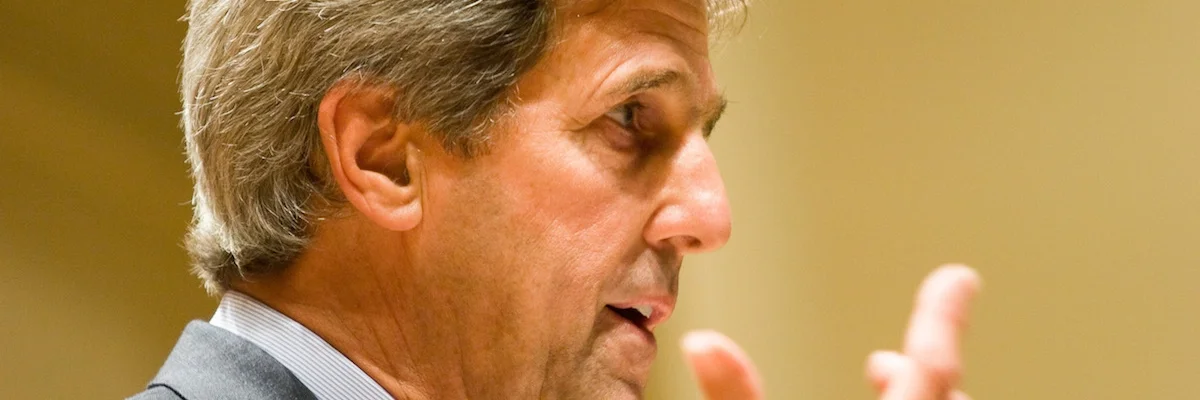
◢ Former secretary of state John Kerry voiced fear Friday of conflict with Iran after the United States pulled out of a denuclearization deal, saying regional leaders had privately pressed him for military strikes. Kerry spearheaded diplomacy that led to the 2015 agreement in which Iran promised Western powers, Russia and China to scale back its nuclear program drastically in return for sanctions relief.
Former secretary of state John Kerry voiced fear Friday of conflict with Iran after the United States pulled out of a denuclearization deal, saying regional leaders had privately pressed him for military strikes.
Kerry spearheaded diplomacy that led to the 2015 agreement in which Iran promised Western powers, Russia and China to scale back its nuclear program drastically in return for sanctions relief.
By pulling out of the accord, President Donald Trump has "made it more likely that there will be conflict in the region because there are people there who would love to have the United States of America bomb Iran," the former senator and presidential candidate told the Council on Foreign Relations as he promotes his memoir, "Every Day is Extra."
Kerry said that Saudi Arabia's late king Abdullah and Egypt's ousted president Hosni Mubarak had both told him that the United States should attack Iran, even while they would not take the position publicly.
Israeli Prime Minister Benjamin Netanyahu, an outspoken critic of the Iran deal, had also asked then US president Barack Obama for the green light to bomb Iran, Kerry said.
While UN inspectors found that Iran was complying with the accord, Trump declared the deal to be a disaster for not addressing other US concerns with Iran including threats to Israel, support for Islamist militant moves such as Hezbollah and Tehran's missile program.
But Kerry said the United States was "actually getting them to do things, quietly," including on easing the conflict in war-ravaged Yemen, and believed that President Hassan Rouhani was "trying to move the country in a different direction."
"What Trump has done is now empower the guys in Iran who said don't deal with the United States, they'll burn you," Kerry said.
"He has made it more likely that if there is an implosion in Iran internally through pressure or otherwise, it will not be an unknown Jeffersonian democrat who is going to appear and take over, it will be the IRGC or another Ahmadinejad, and we will be worse off and the people of Iran will be worse off," he said, referring to the hardline Revolutionary Guards and former firebrand president Mahmoud Ahmadinejad.
Trump has lashed out at Kerry for meeting Iranian Foreign Minister Mohammad Javad Zarif since leaving office, accusing him of violating an obscure US law that prohibits private citizens from negotiating on disputes with foreign governments.
Kerry said Trump was seeking to distract from his own scandal related to alleged Russian interference in the 2016 election and said it was normal for former officials to maintain communication with foreign counterparts.
Photo Credit: Wikicommons
Trump, Iran Drama Escalates—via Twitter
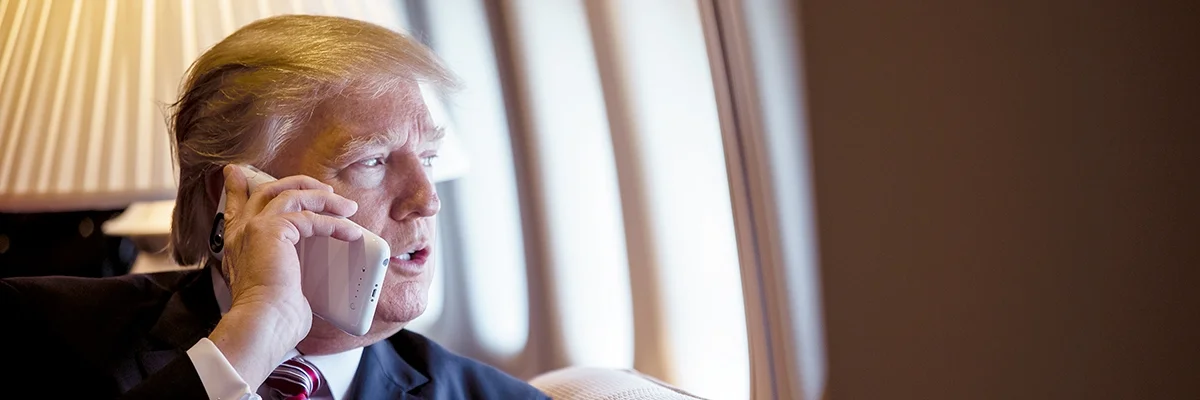
◢ Tensions are mounting between Donald Trump and Iran—the US president's raw tweet threatening Tehran was met Monday with a similarly bilious reply, upping the ante in the high-stakes game of diplomatic chicken. Trump's tweeted warning late Sunday to Iranian President Hassan Rouhani—all in capital letters, the digital equivalent of shouting—sparked questions about Washington's strategy towards the Islamic republic.
Tensions are mounting between Donald Trump and Iran—the US president's raw tweet threatening Tehran was met Monday with a similarly bilious reply, upping the ante in the high-stakes game of diplomatic chicken.
Trump's tweeted warning late Sunday to Iranian President Hassan Rouhani—all in capital letters, the digital equivalent of shouting—sparked questions about Washington's strategy towards the Islamic republic.
The US is regularly suspected of backing the idea of regime change, but analysts say its current stance may simply be an attempt to pivot after a week of dire headlines over Trump's much-maligned summit with Russia's Vladimir Putin and a relative lack of progress on North Korea.
The saber-rattling began when Iranian President Hassan Rouhani cautioned Trump not to "play with the lion's tail," saying that conflict with Iran would trigger the "mother of all wars"—prompting the furious salvo from the US leader.
The Republican leader's response was reminiscent of the belligerent tone he took with North Korea last year.
"NEVER, EVER THREATEN THE UNITED STATES AGAIN OR YOU WILL SUFFER CONSEQUENCES THE LIKES OF WHICH FEW THROUGHOUT HISTORY HAVE EVER SUFFERED BEFORE," Trump warned Rouhani on Twitter.
"WE ARE NO LONGER A COUNTRY THAT WILL STAND FOR YOUR DEMENTED WORDS OF VIOLENCE & DEATH. BE CAUTIOUS!"
A few hours later, Iranian Foreign Minister Mohammad Javad Zarif fired back. "COLOR US UNIMPRESSED," Zarif wrote in English, mimicking Trump's caps-lock message.
"We've been around for millennia & seen fall of empires, incl our own, which lasted more than the life of some countries. BE CAUTIOUS!"
While Trump's "tough stand" was hailed by Israeli Prime Minister Benjamin Netanyahu, it also provoked an avalanche of questions about its exact meaning and impact.
When asked about the president's motivations, White House spokeswoman Sarah Sanders said he was focused on "the safety and security of the American people" and ensuring Tehran did not acquire nuclear weapons.
But she seemed to downplay concerns about his aggressive posturing, saying Trump has been "pretty strong since day one in his language toward Iran."
Concerns? 'None at all'
In May, Trump—who has made Iran his public enemy number one—announced the US withdrawal from what he called a "defective" multinational nuclear deal with Tehran, and moved to reinstate punishing sanctions.
For some analysts in Washington, Trump's harsh words were a political smoke screen.
"Frustrated by no progress w/NK; angered by negative push back post Helsinki, Trump is looking to vent, act tough, and change channel," said Aaron David Miller, a former US diplomat and Middle East negotiator for several administrations.
"If nothing else, Trump's ALL CAPS tirade reflect(s) reality that US has no Iran policy. Empty/ridiculous US rhetoric in response to same from Iran."
After speaking with European officials about Trump's warnings, International Crisis Group president Rob Malley said diplomats on the continent were not "really taking it seriously."
In Europe, Trump's tirade is seen as a way to distract from controversy over his summit with Putin and special counsel Robert Mueller's investigation into possible collusion between the Trump campaign and a Russian effort to sway the 2016 election.
But the president stood by his remarks. Asked by reporters at the White House whether he had concerns about provoking tensions with Iran, Trump said "None at all."
Saber-Rattling
While US ties with Iran and North Korea are different on several fronts, the words used by Trump to denigrate Tehran are similar in tone to those he directed last August at North Korean leader Kim Jong Un.
Several observers noted the similarities between the threats on Iran, and Trump's "maximum pressure" campaign towards Pyongyang.
In September 2017, in his first speech to the United National General Assembly, Trump threatened to "totally destroy" North Korea.
Nearly a year on, Trump has met Kim—who he once called "Rocket Man" on a "suicide mission"—for a landmark summit, and follow-up talks are underway between the two sides.
However, concrete progress has been scant so far on denuclearization of the Korean peninsula.
Democrats have expressed alarm about Trump's Iran bluster.
"Reckless Iran rhetoric creates risks—especially if words are unbacked by actionable strategy," Senator Richard Blumenthal said.
Photo Credit: Wikicommons
Iranians Skeptical Over US Claims of Support
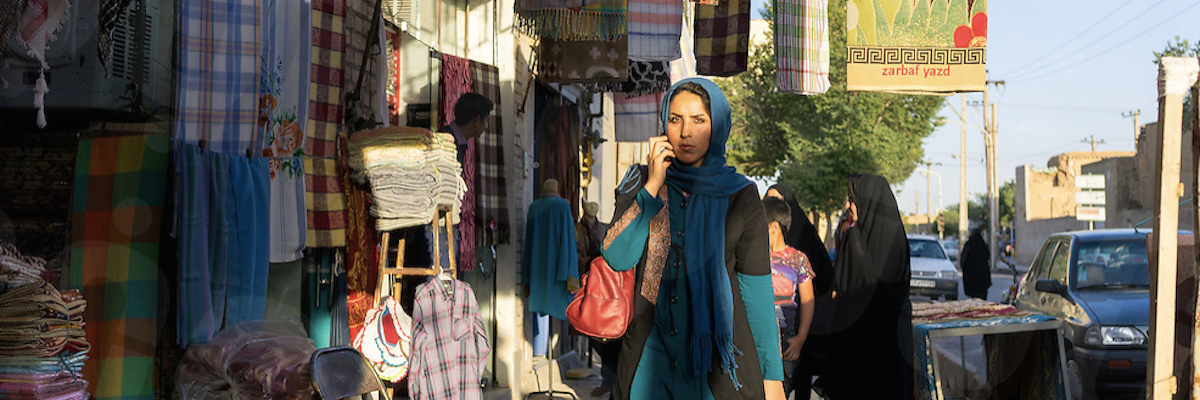
◢ Tehranis said Monday they were deeply skeptical at Washington's claims that it stood with them against their government, as tensions rose again following the latest threats from US President Donald Trump. "It's true that at the moment our society is in a crisis and under pressure that is creating discontent," said Haleh, a child psychologist in the north Tehran suburb of Jordan. "But we don't want the West to impose a revolution that can lead to disorder," she added.
Tehranis said Monday they were deeply skeptical at Washington's claims that it stood with them against their government, as tensions rose again following the latest threats from US President Donald Trump.
"It's true that at the moment our society is in a crisis and under pressure that is creating discontent," said Haleh, a child psychologist in the north Tehran suburb of Jordan. "But we don't want the West to impose a revolution that can lead to disorder," she added.
US Secretary of State Mike Pompeo gave a much-hyped speech in California on Sunday in which he described Iran's government as "a nightmare for the Iranian people."
He announced an intensified American propaganda campaign so that "ordinary Iranians inside Iran and around the globe can know that America stands with them."
Trump added to the tensions on Sunday with an angry response to President Hassan Rouhani, who had warned a conflict with Iran would be the "mother of all wars".
"NEVER, EVER THREATEN THE UNITED STATES AGAIN OR YOU WILL SUFFER CONSEQUENCES THE LIKES OF WHICH FEW THROUGHOUT HISTORY HAVE EVER SUFFERED BEFORE," Trump blasted on Twitter.
Many Iranians—even those opposed to the current system—fear what they see as a push for regime change, especially after the US pulled out of the 2015 nuclear deal and announced it was reimposing crippling financial sanctions.
"People want change, but not necessarily a change of regime," said office worker Firouzeh.
"It's been 40 years since the last revolution and we are still paying the price. An entire generation has paid the price. Do they really want another revolution?"
Regardless of how they view their government, Iranians are at least glad to have been spared the violence engulfing much of the region.
"For us, the most important thing is security, and for now we have security. We must have reforms, but people hope it happens without violence so that everyone wins," said Haleh, the psychologist.
Others felt a deal was still possible with the US president.
"Trump is a businessman," said Amir, who said he did multiple jobs to get by in Iran's struggling economy.
"He'll make an offer and we'll reach a mutual agreement, with God's help."
He said all Iranians were worried about the economy, with large-scale unemployment, rising prices and a currency that has dropped to record lows against the dollar.
"The government must listen to the problems of the people. It can be done, it's not impossible," said Amir.
"But Iranians will not accept being forced (by outside powers). They will react to defend their national honor and dignity," he added.
The head of Iran's powerful Basij militia said Trump's threats were "psychological warfare".
"He is not in a position to act against Iran. The people and the armed forces will stand up against our enemies and will not come up short," said General Gholam Hossein Gheypour, according to the semi-official ISNA news agency.
Photo Credit: Thomas Christofoletti

Trump Hits Back at Iran 'War' Talk
◢ President Donald Trump on Sunday hit back at bellicose comments by Iran's president, warning him of consequences "the likes of which few throughout history have ever suffered," as the US intensifies its campaign against the Islamic republic. The high-stakes verbal sparring is reminiscent of the exchanges Trump had last year with North Korean leader Kim Jong Un, before the two leaders met in a historic summit last month.
President Donald Trump on Sunday hit back at bellicose comments by Iran's president, warning him of consequences "the likes of which few throughout history have ever suffered," as the US intensifies its campaign against the Islamic republic.
"NEVER, EVER THREATEN THE UNITED STATES AGAIN OR YOU WILL SUFFER CONSEQUENCES THE LIKES OF WHICH FEW THROUGHOUT HISTORY HAVE EVER SUFFERED BEFORE," Trump said on Twitter in a direct message to President Hassan Rouhani, who earlier Sunday warned Trump not to "play with the lion's tail," saying that conflict with Iran would be the "mother of all wars".
The US president, writing his entire message in capital letters, continued his riposte: "WE ARE NO LONGER A COUNTRY THAT WILL STAND FOR YOUR DEMENTED WORDS OF VIOLENCE & DEATH. BE CAUTIOUS!"
The high-stakes verbal sparring is reminiscent of the exchanges Trump had last year with North Korean leader Kim Jong Un, before the two leaders met in a historic summit last month.
Trump has made Iran a favorite target since his rapprochement with nuclear-armed North Korea. His comments Sunday night came after his Secretary of State Mike Pompeo, in a major address to the Iranian diaspora in California, said Washington is not afraid to sanction top-ranking leaders of the "nightmare" Iranian regime.
Trump in May pulled the US out of a hard-won agreement with Tehran, also signed by Britain, China, France, Germany and Russia, which lifted sanctions in exchange for curbs on Iran's nuclear program.
The 2015 agreement was in response to fears that Iran was developing a nuclear bomb.
European allies maintain their support for the deal and have vowed to stay in it, though their businesses fear US penalties.
Following Washington's pullout Pompeo unveiled Washington's tougher line under which, he said, the US would lift its new sanctions if Iran ended its ballistic missile program and interventions in regional conflicts from Yemen to Syria.
"You cannot provoke the Iranian people against their own security and interests," Rouhani said in a televised speech Sunday, ahead of Pompeo's address.
'More to Come'
Rouhani repeated his warning that Iran could shut down the strategic Strait of Hormuz, a vital shipping lane for international oil supplies.
"Peace with Iran would be the mother of all peace and war with Iran would be the mother of all wars," Rouhani said.
On Saturday, Iran's supreme leader Ayatollah Ali Khamenei said the US does not abide by agreements.
"As I have previously said, we cannot trust in the words of the United States and even in their signature, so negotiations with the United States are useless," Khamenei told a gathering of Iranian diplomats in Tehran.
Pompeo on Sunday noted that the US in January had already sanctioned Sadeq Larijani, the head of Iran's judiciary, for human rights violations.
"We weren't afraid to tackle the regime at its highest level," he said, also confirming that Washington wants all countries to reduce their imports of Iranian oil "as close to zero as possible" by November 4, or face American sanctions.
"There's more to come," Pompeo said of the US financial penalties.
"Regime leaders—especially those at the top of the IRGC and the Quds Force like Qasem Soleimani—must be made to feel painful consequences of their bad decision making," said Pompeo, a longtime Iran hawk. He was referring to Iran's special forces and Revolutionary Guards.
Roundly applauded by his audience, Pompeo affirmed support by Washington for protesters in the Islamic republic.
"The regime in Iran has been a nightmare for the Iranian people," he said.
Washington's top diplomat announced an intensified American propaganda campaign, with the launch of a multimedia channel with 24-hour coverage on television, radio, and social media.
This will ensure that "ordinary Iranians inside Iran and around the globe can know that America stands with them," he said.
Regularly suspected of favoring regime change in Iran, Pompeo refused to distinguish between moderates and radicals at the heart of the Islamic republic.
"Our hope is that ultimately the regime will make meaningful changes in its behavior both inside Iran and globally," he said.
Photo Credit: Wikicommons

Rouhani Says Conflict With Iran Would Be 'Mother of All Wars'
◢ Iran's President Hassan Rouhani warned the United States not to "play with the lion's tail" on Sunday, saying that conflict with Iran would be the "mother of all wars.” Addressing his US counterpart Donald Trump, Rouhani said: "You declare war and then you speak of wanting to support the Iranian people.
Iran's President Hassan Rouhani warned the United States not to "play with the lion's tail" on Sunday, saying that conflict with Iran would be the "mother of all wars."
Addressing his US counterpart Donald Trump, Rouhani said: "You declare war and then you speak of wanting to support the Iranian people.
"You cannot provoke the Iranian people against their own security and interests," he said in a televised speech at a gathering of Iranian diplomats in Tehran.
Rouhani repeated his warning that Iran could shut down the strategic Strait of Hormuz, a vital shipping lane for international oil supplies.
"We have always guaranteed the security of this strait. Do not play with the lion's tail, you will regret it forever," he said.
"Peace with Iran would be the mother of all peace and war with Iran would be the mother of all wars."
Rouhani spoke ahead of a much-trailed speech by US Secretary of State Mike Pompeo later Sunday, seen as part of Washington's efforts to foment unrest against the Islamic government in Iran.
The US is seeking to tighten the economic screws on Iran, abandoning a landmark 2015 nuclear deal and reimposing stringent sanctions.
Washington has also launched concerted propaganda efforts in Iran, including social media campaigns, designed to exacerbate popular discontent.
"Whenever Europe has sought an agreement with us, the White House has sown discord," Rouhani said.
But he added: "We must not think that the White House will remain forever at this level of opposition to international law, against the Muslim world."
Photo Credit: IRNA