
Iran Unrest Shows No Signs of Subsiding
◢ Three security personnel have been killed by "rioters" in Iran, the latest deaths in protests that showed no sign of subsiding Tuesday despite a wave of arrests and an internet shutdown. The United Nations expressed alarm on Tuesday "that the use of live ammunition has allegedly caused a significant number of deaths across the country.”
Three security personnel have been killed by "rioters" in Iran, the latest deaths in protests that showed no sign of subsiding Tuesday despite a wave of arrests and an internet shutdown.
The deaths take to at least five the number of people confirmed to have been killed in the nationwide demonstrations that erupted on Friday against a shock decision to impose petrol price hikes.
The situation on the streets remains unclear largely due to the government-imposed internet outage which has entered a third day.'
The United Nations expressed alarm on Tuesday "that the use of live ammunition has allegedly caused a significant number of deaths across the country.”
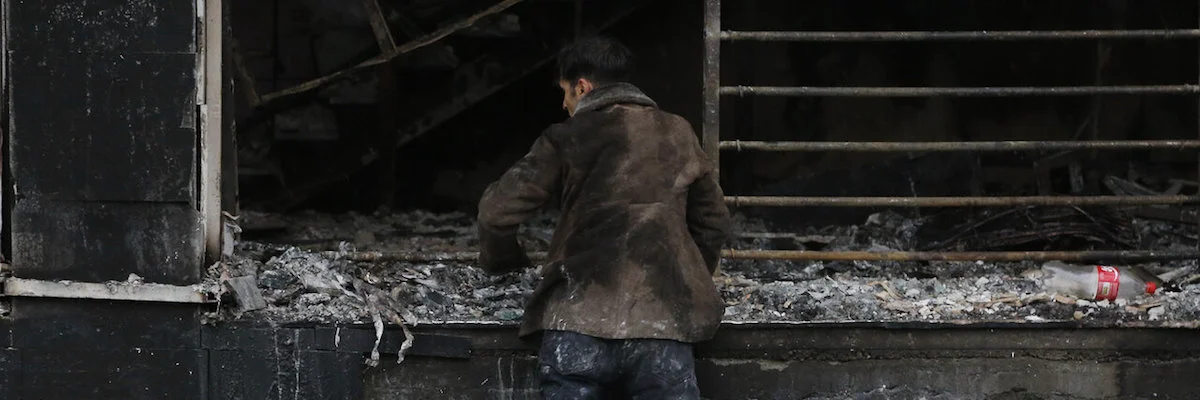
On Tuesday morning, AFP journalists saw two petrol stations in central Tehran gutted by fire and damage to other infrastructure including a police station and pedestrian overpass.
But they were prevented from filming as hundreds of riot police stood guard at entrances to major squares in the Iranian capital with armoured vehicles and water cannon.
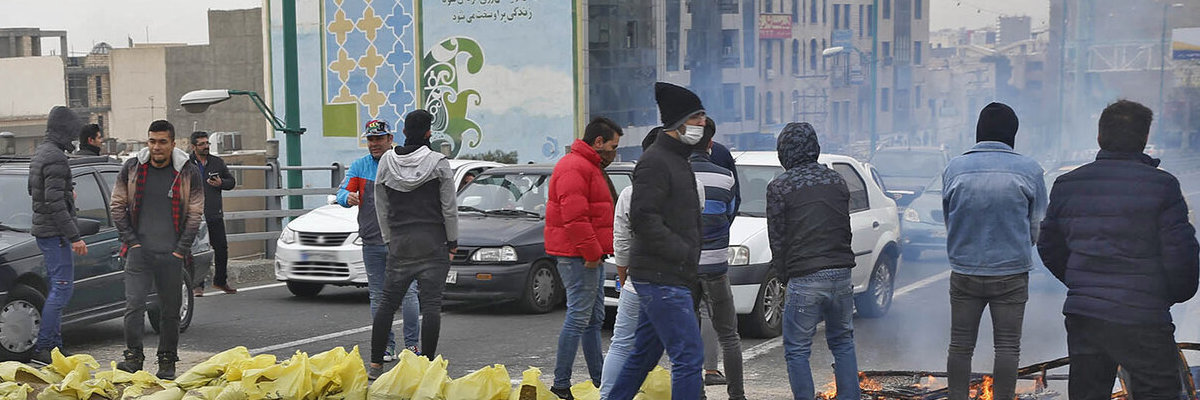
When the demonstrations broke out on Friday, drivers stopped their vehicles on major thoroughfares in Tehran to block traffic.
They soon turned violent and spread to more than 20 cities and towns across Iran, with banks, petrol stations and other public property set alight and shops looted.
The demonstrations erupted after it was announced the price of petrol would be raised by 50 percent for the first 60 litres purchased over a month and 200 percent for any extra fuel after that.
Iran's economy has been battered since May last year when President Donald Trump unilaterally withdrew the US from a 2015 nuclear agreement and reimposed crippling sanctions.
Ambush
Footage of masked young men clashing with security forces has been broadcast on state television, which rarely shows any signs of dissent.
In a new video aired Monday night, a man can be seen firing what appears to be an assault rifle as others hurl stones apparently at security forces in the western city of Andimeshk.
In the latest bloodshed, assailants wielding knives and machetes ambushed and killed three security personnel west of Tehran, the ISNA and Fars news agencies reported late Monday.
One of the three was identified as Morteza Ebrahimi, a commander of the Islamic Revolutionary Guard Corps and father of a newborn child, according to Fars.
The other two were Majid Sheikhi, 22, and Mostafa Rezaie, 33. Both served in the Basij militia, a volunteer force loyal to the establishment.
The overall toll—which also includes a civilian and policeman—is expected to rise, with unofficial reports saying that at least six other people have been killed.
It is the worst violence since at least 25 lives were lost in protests over economic hardship that started in Iran's second city Mashhad in December 2017 before spreading to other urban centers.
Internet Outage
In response to the violence, the authorities say they have arrested more than 200 people.
The internet outage has stemmed the flow of videos shared on social media of protests or associated acts of violence.
"National connectivity remains at just five percent of normal levels, leaving Iranians cut off from the world," tweeted Netblocks, a website that monitors global net shutdowns.
Iran announced the decision to impose petrol price hikes and rationing at midnight Thursday-Friday, saying the move was aimed at helping the needy with cash handouts.
The plan agreed by a council made up of the president, parliament speaker and judiciary chief comes at a sensitive time ahead of February parliamentary elections
It has received the public support of Iran's supreme leader Ayatollah Ali Khamenei.
President Hassan Rouhani has defended the price hike saying the proceeds will be used to make welfare payments to 60 million Iranians.
The United States has condemned Iran for using "lethal force".
Iran hit back at its arch-enemy on Monday, slamming US Secretary of State Mike Pompeo after he tweeted "the United States is with you" in response to the demonstrations.
Germany called for dialogue between the government and "legitimate" protesters while France reiterated its support for the right to peaceful demonstration and voiced regret over the deaths.
Judiciary spokesman Gholamhossein Esmaili warned on Tuesday that the authorities would deal firmly with those who endanger security and carry out arson attacks.
In televised remarks, he also called on citizens to inform on "seditionists" who have committed acts of violence.
Photo: IRNA
Iran 'Calmer' Despite More Riots Over Oil Price Hikes
◢ Iran said it still faces "riots" even though the situation was calmer Monday after days of violent protests sparked by a shock decision to hike petrol prices in the sanctions-hit country. Major roads have been blocked, banks torched and shops looted in the nationwide unrest that has left at least two dead—a civilian and a police.
By Amir Havasi
Iran said it still faces "riots" even though the situation was calmer Monday after days of violent protests sparked by a shock decision to hike petrol prices in the sanctions-hit country.
Major roads have been blocked, banks torched and shops looted in the nationwide unrest that has left at least two dead—a civilian and a policeman.
Footage of the violence showing masked young men on debris-strewn streets setting buildings ablaze has been aired on state television, which rarely shows any signs of dissent.
The Basij militia, whose commander Brigadier General Gholamreza Soleimani said "America's plot (had) failed", reported looting, according to semi-official news agency ISNA.
Demonstrations broke out on Friday after it was announced that the price of petrol would be raised by 50 percent for the first 60 litres and 200 percent for any extra fuel after that each month.
The authorities in the Islamic republic say they have arrested more than 200 people and restricted internet access.
Netblocks, a website that monitors net traffic, tweeted: "40 hours after #Iran implemented a near-total internet shutdown, connectivity to the outside world remains at just 5% of ordinary levels".
Government spokesman Ali Rabiei said the situation was "calmer" on Monday.
But there were still "some minor issues and tomorrow and the day after we won't have any issues with regard to riots", he told a news conference, without elaborating.
"There have been gatherings in some cities, in some provinces," he said.
Pressed to give figures on the number of casualties in the unrest, he said: "What I can tell you today is that gatherings are about 80 percent less than the previous day."
The situation on the streets has been unclear largely due to the internet outage that has stemmed the flow of videos shared on social media of protests or associated acts of violence.
Iran's economy has been battered since May last year when President Donald Trump unilaterally withdrew the US from a 2015 nuclear agreement and reimposed crippling sanctions.
'Lethal Force'
The US on Sunday condemned Iran for using "lethal force" against demonstrators.
"The United States supports the Iranian people in their peaceful protests against the regime that is supposed to lead them," said White House press secretary Stephanie Grisham.
Iran's foreign ministry slammed US Secretary of State Mike Pompeo after he tweeted "the United States is with you" Saturday in response to the demonstrations.
In a statement issued late Sunday, the ministry said it was reacting to Pompeo's "expression of support... for a group of rioters in some cities of Iran and condemned such support and interventionist remarks".
"The dignified people of Iran know well that such hypocritical remarks do not carry any honest sympathy," ministry spokesman Abbas Mousavi was quoted as saying.
"The acts of a rioter and saboteur group supported by the likes of (Pompeo) have no congruity with the conduct of the wise Iranian people."
The statement blasted Washington's "ill-intent" over its decision to reimpose sanctions on Tehran after withdrawing from the nuclear deal.
"It's curious that the sympathising is being done with the people who are under the pressure of America's economic terrorism," Mousavi said.
‘Welfare Payments’
For its part, Germany called Monday for dialogue between the government and "legitimate" protesters in Iran.
"It is legitimate and deserving of our respect when people courageously air their economic and political grievances, as is currently happening in Iran," said Chancellor Angela Merkel's spokeswoman Ulrike Demmer.
"The Iranian government should respond to the current protests with a willingness to engage in dialogue," she added.
Iran announced the decision to impose petrol price hikes and rationing at midnight Thursday-Friday, saying the move was aimed at helping the needy with cash handouts.
The plan agreed by a council made up of the president, parliament speaker and judiciary chief comes at a sensitive time ahead of February parliamentary elections.
It won support on Sunday from Iran's supreme leader Ayatollah Ali Khamenei.
Khamenei blamed "hooligans" for damaging property and said "all the centres of the world's wickedness against us have cheered" the street protests.
President Hassan Rouhani on Sunday defended the controversial petrol price hike whose proceeds are to be used to make welfare payments to 60 million Iranians.
Rouhani also announced the first payments would be made to 20 million people on Monday evening.
But he also warned that Iran could not allow "insecurity.”
"Protesting is the people's right, but protesting is different from rioting. We should not allow insecurity in the society," said Rouhani.
The intelligence ministry said at the weekend that it has identified those behind the unrest and that measures would be taken against them.
Forty people have already been arrested in the central city of Yazd, ISNA reported on Sunday.
Another 180 people were arrested in the past three days in the southern province of Khuzestan, state news agency IRNA said Monday.
Fars news agency, which is close to Iran's Revolutionary Guards, said it was unclear when the internet restrictions would be lifted, citing an informed government source.
Photo: IRNA
Rouhani Slams Officials' 'Vow of Silence' in Face of Protests
◢ Iran's President Hassan Rouhani said Saturday that officials were failing to respond effectively to mounting popular protests, in part because they are being threatened by unnamed behind-the-scenes forces. In a wide-ranging speech carried on state television, Rouhani said officials were failing to respond and appeared to have taken "a vow of silence."
Iran's President Hassan Rouhani said Saturday that officials were failing to respond effectively to mounting popular protests, in part because they are being threatened by unnamed behind-the-scenes forces.
Recent weeks have seen social media filled with videos and reports of protests, but since they are barely covered by domestic media and access is restricted for foreign journalists, they have been hard to verify.
They include protests by farmers over water shortages in Isfahan; by ethnic Arabs over the treatment of minorities in the southern province of Khuzestan; and over administrative reforms in the southwestern city of Kazeroon.
The videos appear to show these localized protests taking on broader slogans against the Islamic establishment, such as: "Our enemy is right here and falsely they say America is our enemy."
But in a wide-ranging speech carried on state television, Rouhani said officials were failing to respond and appeared to have taken "a vow of silence."
"As people haven't got enough information... as people don't see plans for the future, as people see the current problems, they may get upset and angry, come to the streets and cry out," he told senior officials in Tehran.
"(But) we speak little to the people. Our government managers have taken a vow of silence. I don't know who told them to. I don't know what they are scared of."
Rouhani said a major problem was that officials were being intimidated by unnamed "supervisory bodies."
He did not name them, but Rouhani has previously clashed with the powerful Revolutionary Guards and the conservative-dominated judiciary over their outsized role in politics and the economy.
"When in the morning (an official) is going to work, somebody sends him a text message, another calls him, another threatens him... the country cannot be run like this," he said.
In the past month, Tehran's reformist mayor Mohammad-Ali Najafi and the deputy head of the environment agency Kaveh Madani both quit their posts following pressure from hardliners, though Najafi claimed he left for health reasons.
"Don't pay attention to some letters, some threats. If you are scared to respond, send them to me," Rouhani said.
Photo Credit: Wikicommons