

Pompeo Says Iran Tied to Al-Qaeda, Declines to Say if War Legal
◢ US Secretary of State Mike Pompeo on Wednesday accused Iran of ties to Al-Qaeda and declined to say whether the Trump administration had legal authority to invade the country. Testifying before the Senate Foreign Relations Committee, Pompeo hedged on whether the authorization of force by the US Congress days after the September 11, 2001 attacks would allow the United States to strike Iran.
US Secretary of State Mike Pompeo on Wednesday accused Iran of ties to Al-Qaeda and declined to say whether the Trump administration had legal authority to invade the country.
Testifying before the Senate Foreign Relations Committee, Pompeo hedged on whether the authorization of force by the US Congress days after the September 11, 2001 attacks would allow the United States to strike Iran.
"I would prefer just to leave that to lawyers," Pompeo told Senator Rand Paul, a Republican who is critical of US foreign interventions.
"The factual question with respect to Iran's connections to Al-Qaeda is very real. They have hosted Al-Qaeda, they have permitted Al-Qaeda to transit their country," he said.
"There is no doubt there is a connection between the Islamic Republic of Iran and Al-Qaeda. Period, full stop," he said.
But Pompeo denied Paul's suggestion that President Donald Trump's designation Monday of Iran's elite Revolutionary Guards was aimed at making a legal case for war.
"It was not part of the decision-making process. The designation was a simple recognition of reality," Pompeo said, citing US figures that Iran was behind more than 600 deaths of US troops in Iraq after the 2003 invasion when Tehran backed Shiite forces.
Trump has piled pressure on Iran after last year withdrawing from a nuclear accord negotiated under previous president Barack Obama, slapping sweeping sanctions as Washington seeks to roll back the clerical regime's regional influence.
Paul voiced concern that Pompeo had not rejected war with Iran under the 2001 authorization, which has been used to back the war in Afghanistan as well as attacks on Al-Qaeda in countries as diverse as Yemen and the Philippines.
"I am troubled that the administration can't unequivocally say that you haven't been given power or authority by Congress to have war with Iran," Paul said.
"In any kind of semblance of a sane world, you would have to come back and ask us before you go into Iran," Paul said. The US Constitution gives the power to declare war to Congress.
Paul also rejected the idea that Iran, a Shiite clerical regime, would ally with Al-Qaeda, Sunnis whose ranks have denounced Shiites as heretics.
"I don't think that dog hunts very well," Paul said of Pompeo's statement. "They actually would just as soon eradicate Sunni extremists."
Iran is believed to have been the longtime base of Hamza bin Laden, the son of late Al-Qaeda founder Osama bin Laden.
But some experts say Tehran kept him under house arrest as a way to maintain pressure on rival Saudi Arabia and dissuade Al-Qaeda attacks inside Iran.
Photo Credit: State Department
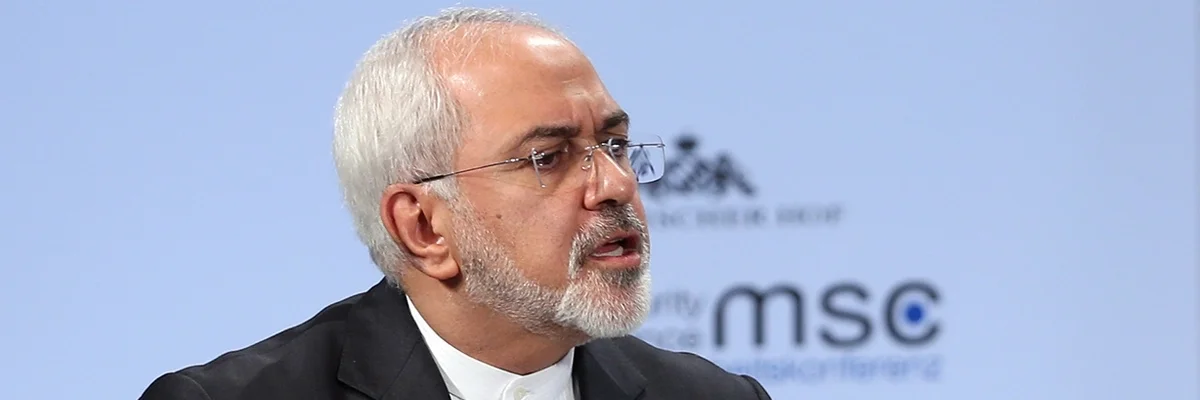
Zarif Calls for US Forces to be Put on Iran 'Terror' List
◢ Iran's top diplomat Mohammad Javad Zarif on Monday urged President Hassan Rouhani to place US forces in the region on Tehran's list of "terrorist" groups, the foreign ministry said. The foreign minister requested the move against US Central Command (CENTCOM), which has forces stationed from Central Asia to Egypt, shortly after Washington announced it was designating Iran's Revolutionary Guards a terrorist organization.
Iran's top diplomat Mohammad Javad Zarif on Monday urged President Hassan Rouhani to place US forces in the region on Tehran's list of "terrorist" groups, the foreign ministry said.
The foreign minister requested the move against US Central Command (CENTCOM), which has forces stationed from Central Asia to Egypt, shortly after Washington announced it was designating Iran's Revolutionary Guards a terrorist organization.
The Iranian foreign minister wrote to Rouhani asking him "to put the American Forces in Western Asia known as CENTCOM on the Islamic Republic of Iran's list of terrorist groups", the ministry said.
Zarif also blasted the US move on Twitter, saying it was done to support Israeli Prime Minister Benjamin Netanyahu ahead of Tuesday's parliamentary election in the Jewish state.
"A(nother) misguided election-eve gift to Netanyahu. A(nother) dangerous U.S. misadventure in the region," he wrote.
Part of America's vast military presence around the globe, CENTCOM's area of command covers multiple war zones and hotspots including Afghanistan, Iraq, Syria, Yemen and the Gulf.
The US decision came as part of already far-reaching attempts to undermine the Iranian government.
President Donald Trump said the "unprecedented" move "recognizes the reality that Iran is not only a State Sponsor of Terrorism, but that the IRGC actively participates in, finances, and promotes terrorism as a tool of statecraft."
"The IRGC is the Iranian government's primary means of directing and implementing its global terrorist campaign," Trump said in a statement.
It is the first time the United States has applied the designation to part of a foreign government, rather than guerrilla groups or other more informal entities.
The move follows Trump's decision to pull the United States out of a multilateral deal with Iran that was meant to lift crippling economic sanctions in return curbs on Tehran's nuclear program.
Photo Credit: IRNA
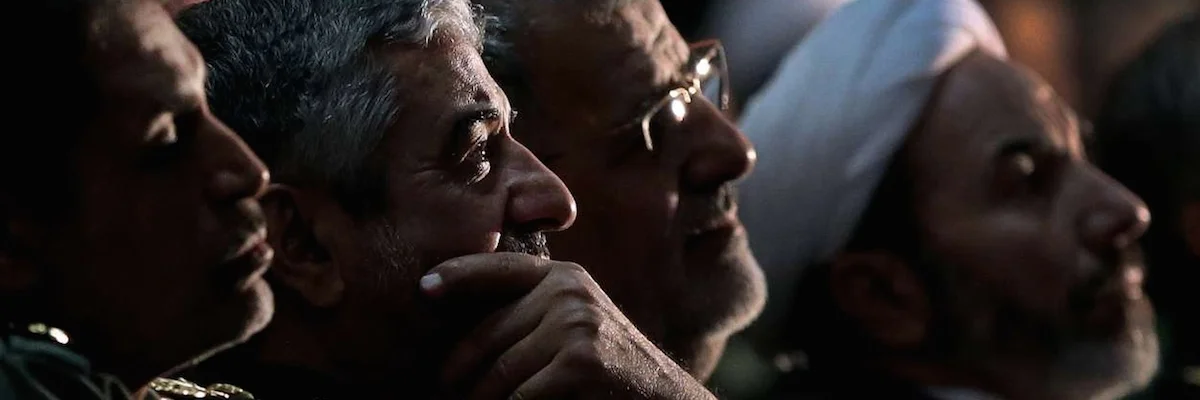
US Designates Iran's Revolutionary Guards as Terrorist Organization
◢ President Donald Trump on Monday announced the United States is designating Iran's elite military force, the Islamic Revolutionary Guard Corps, a terrorist organization. Trump said in a statement that the "unprecedented" move "recognizes the reality that Iran is not only a State Sponsor of Terrorism, but that the IRGC actively participates in, finances, and promotes terrorism as a tool of statecraft."
The United States on Monday designated Iran's elite Revolutionary Guards as a terrorist organization, ramping up already far-reaching efforts to undermine the clerical government in Tehran—which swiftly retaliated by calling US troops terrorists.
It is the first time that Washington has branded part of a foreign government a terrorist group, meaning that anyone who deals with the Islamic Revolutionary Guard Corps could face prison in the United States.
President Donald Trump called the unit—which has some 125,000 troops and vast interests across the Iranian economy—Tehran's "primary means of directing and implementing its global terrorist campaign."
"This action will significantly expand the scope and scale of our maximum pressure on the Iranian regime," Trump said in a statement.
Secretary of State Mike Pompeo, addressing reporters, said that all businesses and banks around the world "now have a clear duty" to cut off all dealings that involve the Revolutionary Guards.
"The leaders of Iran are racketeers, not revolutionaries," Pompeo said.
The move comes on top of Trump's decision last year to pull the United States out of an international deal with Iran that was meant to lift crippling economic sanctions in return for the government allowing its nuclear technology to be restricted and kept under close supervision.
The United States has long debated the terrorist designation and has been encouraged to do so by Saudi Arabia and Israel, arch-rivals of Iran which enjoy close relationships with Trump.
The decision comes hours before Israeli Prime Minister Benjamin Netanyahu faces re-election in tight polls. In a statement, he thanked his "dear friend" Trump.
Swift Retaliation
Iran swiftly took retaliatory action. The Supreme National Security Council, in a statement carried by the official news agency IRNA, declared the United States to be a state sponsor of terrorism and both called the US Central Command and forces underneath it terrorist groups.
Part of America's vast military presence around the globe, CENTCOM's area of command covers multiple conflict zones and hotspots including Afghanistan, Iraq, Syria, Yemen and the Gulf.
Foreign Minister Mohammad Javad Zarif, who recommended the CENTCOM designation, denounced the move against the Revolutionary Guards as a way to sway the Israeli election.
"A(nother) misguided election-eve gift to Netanyahu. A(nother) dangerous US misadventure in the region," Zarif tweeted.
The Revolutionary Guards were formed after the 1979 Islamic revolution with a mission to defend the religious regime, in contrast to more traditional military units that protect borders.
Abroad, the Guards' prized Quds Force, named for the Arabic word for Jerusalem, supports Iranian allies including Syrian President Bashar al-Assad, Lebanon's Hezbollah and militias from Iraq's Shiite majority.
At home, the Guards have amassed sweeping political and economic influence, with Brian Hook, the State Department's representative on Iran, citing estimates that they control up to half of the Iranian economy.
Pompeo and Hook said that 603 troops killed in Iraq since the United States invaded in 2003—or 17 percent of the total US death toll—could be attributed to Iran.
The Revolutionary Guards were also at the forefront of assisting Iraqi forces in defeating Islamic State extremists.
Criminalizing Contact With Guards
The United States has long mulled designating the Revolutionary Guards as terrorists but held off, fearing threats to US troops and questioning whether the move would do much to pressure a force already under a raft of sanctions.
US officials said the terrorist label, which takes effect on April 15, would make it a criminal offense in the United States to provide "material support" to the Revolutionary Guards, with violators subject to up to 20 years in prison.
Pompeo set his sights directly on Qassem Soleimani, the major general who leads the Quds Force.
"We are sending... a clear message to Iran's leaders, including Qassem Soleimani and his band of thugs, that the United States is bringing all pressure to bear to stop the regime's outlaw behavior," Pompeo said.
The United States insists that its goal is not regime change but several of Trump's top advisers have long been close to Iranian exiles seeking to topple the Islamic republic.
Critics in the United States said that the Trump administration was seeking to stir up a crisis that could lead to confrontation or at least push Iran to violate the 2015 nuclear accord. Europeans strongly support preserving the agreement and UN inspectors say that Iran remains in compliance.
"This is yet another dangerous escalation of conflict with Iran that is disturbingly reminiscent of the lead-up to the failed war in Iraq," said Tom Udall, a Democratic senator from New Mexico.
"The Trump administration is ratcheting up confrontation, undercutting diplomacy and putting American troops at risk," he said.
Photo Credit: IRNA
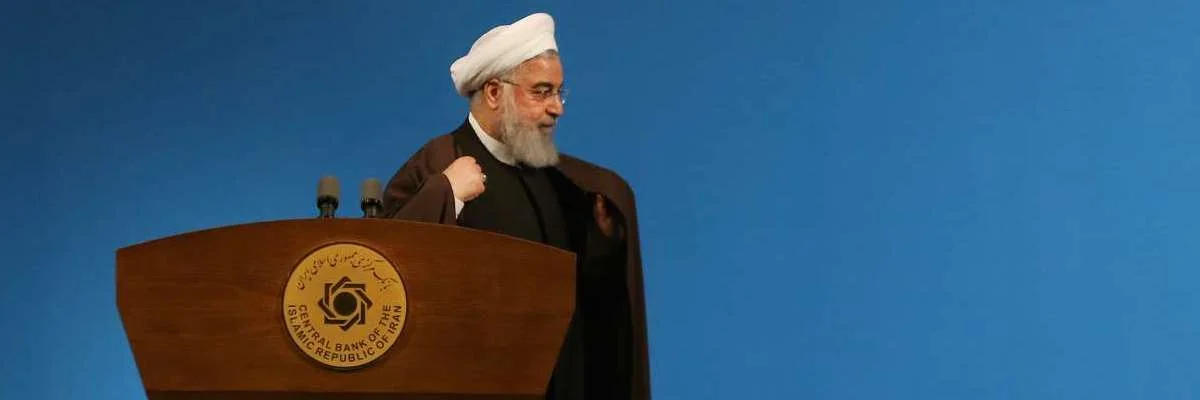
Iran Demands Pakistan Acts 'Decisively Against Terrorists'
◢ Iran's President Hassan Rouhani has demanded Pakistan act "decisively against anti-Iranian terrorists" in a phone call with the country's premier, Tehran said, a month after a bloody attack on security forces. Iran says a Pakistani suicide bomber was behind the February 13 attack that killed 27 Revolutionary Guards in its volatile southeastern province of Sistan-Baluchistan.
Iran's President Hassan Rouhani has demanded Pakistan act "decisively against anti-Iranian terrorists" in a phone call with the country's premier, Tehran said, a month after a bloody attack on security forces.
Iran says a Pakistani suicide bomber was behind the February 13 attack that killed 27 Revolutionary Guards in its volatile southeastern province of Sistan-Baluchistan.
A Sunni jihadist group, Jaish al-Adl (Army of Justice), which Tehran says operates mostly out of bases in neighboring Pakistan, claimed responsibility for the blast.
Iran has accused Pakistan's army and intelligence agency of sheltering the jihadists and summoned the country's ambassador in the wake of the attack.
Rouhani in the phone conversation Saturday evening with Pakistani Prime Minister Imran Khan called to maintain good ties and pointed the finger of blame at Tehran's traditional regional and international foes.
"We shouldn't allow decades of friendship and brotherhood between the two countries be affected by terrorist groups that we both know from where they are being armed and financed," Rouhani said, according to a government statement.
The Iranian president was alluding to the United States and Israel, as well as Saudi Arabia and the United Arab Emirates, which it accuses of aiding jihadist groups responsible for attacks from Pakistani soil.
February's bombing was the latest of numerous attacks on Iran's security forces and officials in Sistan-Baluchistan, where the minority Sunni Baluchis accuse the authorities of discrimination.
Photo Credit: IRNA
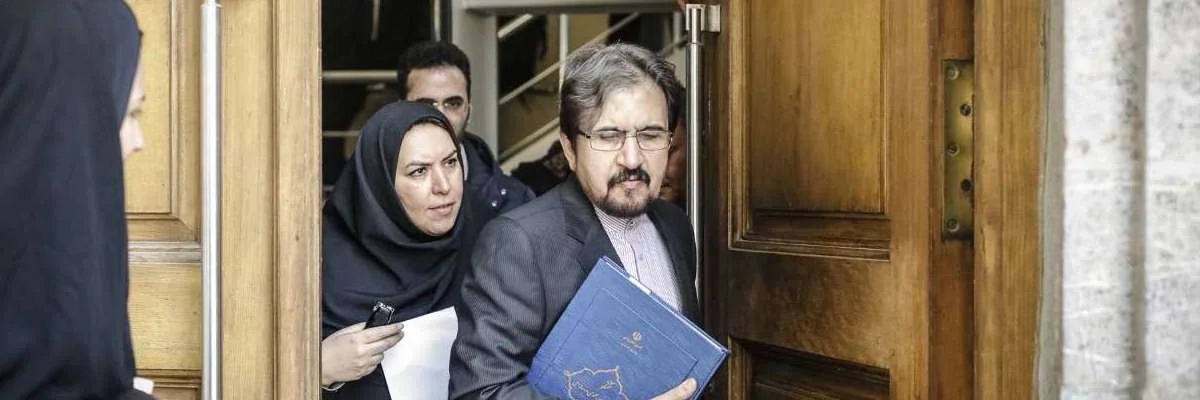
Iran Arrests 3 'Terrorists' over Suicide Bomb Attack
◢ Iran's elite Revolutionary Guards said Monday it has arrested three "terrorists" involved in last week's deadly suicide bomb attack on security forces in a region bordering Pakistan. "Safe houses in (the cities of) Saravan and Khash were identified and eliminated, and the terrorists based in them were arrested," the force said on its official Sepah news agency.
Iran's elite Revolutionary Guards said Monday it has arrested three "terrorists" involved in last week's deadly suicide bomb attack on security forces in a region bordering Pakistan.
"Safe houses in (the cities of) Saravan and Khash were identified and eliminated, and the terrorists based in them were arrested," the force said on its official Sepah news agency.
"Three of the terrorists were arrested and 150 kilograms (330 pounds) of explosives and 600 kilograms of explosive materials as well as weapons and ammunition were confiscated," it said.
The Guards said the three arrested had "produced, guided and supported" the vehicle used in Wednesday's suicide bombing.
The attack killed 27 members of Iran's Revolutionary Guards traveling on a bus in the volatile southeastern province of Sistan-Baluchistan, which straddles the border with Pakistan.
It was claimed by the jihadist outfit Jaish al-Adl (Army of Justice).
Iran has provided Pakistani officials with "information on the terrorist groups' hidden and semi-hidden training centers", army chief-of-staff Mohammad Bagheri told Tasnim news agency.
In a phone call with Pakistani army commanders, Bagheri asked them to "either confront the groups or allow (Iranian) forces to enter."
Islamabad launched an operation against the "terrorists" in its Balochistan border province on Sunday, he said.
Guards commander Major General Mohammad Ali Jafari has accused Pakistan's army and intelligence agency of sheltering the jihadists.
The foreign ministry said Iran "cannot tolerate" Pakistan's inability to stop cross-border attacks on Iran and said Tehran's frustration had been communicated to Islamabad.
"We hope the Pakistani government can and wants to prevent such things from happening again," spokesman Bahram Ghasemi told reporters on Monday.
The ministry has summoned the Pakistani ambassador in Tehran and urged Islamabad to "seriously confront... the terrorist groups active on its border" with Iran.
Photo Credit: IRNA
Iranians Cry 'Revenge' at Funeral of Terrorism Victims
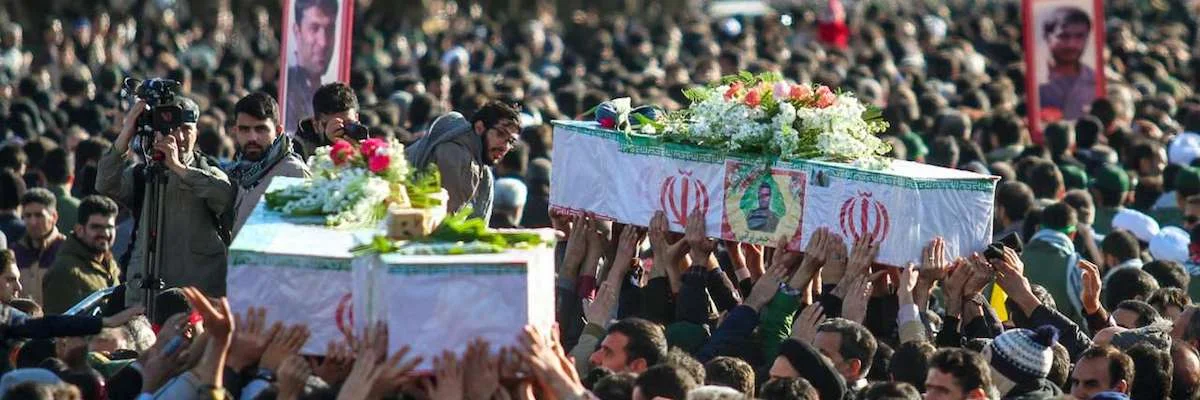
◢ Tens of thousands of Iranians called for "revenge" Saturday at the funeral of 27 Revolutionary Guards killed in a suicide attack perpetrated by jihadists that Tehran accuses Pakistan of supporting. "The Islamic Republic of Iran will no longer observe the previous reservations and will directly act to counter such acts," Jafari told mourners gathered at the city of Isfahan's Bozorgmehr Square.
Tens of thousands of Iranians called for "revenge" Saturday at the funeral of 27 Revolutionary Guards killed in a suicide attack perpetrated by jihadists that Tehran accuses Pakistan of supporting.
"The government of Pakistan must pay the price of harboring these terrorist groups and this price will undoubtedly be very high," said Major General Mohammad Ali Jafari, referring to jihadist outfit Jaish al-Adl ("Army of Justice").
"The Islamic Republic of Iran will no longer observe the previous reservations and will directly act to counter such acts," Jafari told mourners gathered at the city of Isfahan's Bozorgmehr Square.
The comments by Jafari, commander of Iran's elite Revolutionary Guards, came a day ahead of a planned two-day visit to Pakistan by Mohammed bin Salman, the crown prince of Iran's regional arch-rival Saudi Arabia.
Jafari blamed Pakistan's army and Inter-Services Intelligence agency, saying that "sheltering and silence" amounts to supporting the perpetrators.
As he left the podium, people shouted "Commander of Sepah (Farsi for Revolutionary Guards)—Revenge! Revenge!""
The Wednesday bombing targeted a busload of Revolutionary Guards in the volatile southeastern province of Sistan-Baluchistan, which straddles the border with Pakistan.
Jaish al-Adl was formed in 2012 as a successor to the Sunni extremist group Jundallah (Soldiers of God), which waged a deadly insurgency for a decade before it was severely weakened by the capture and execution of its leader Abdolmalek Rigi in 2010.
Jafari also blasted "the traitorous governments of Saudi Arabia and (the) Emirates" and said Iran will no longer tolerate their "hidden support for anti-Islam thugs and Takfiri groups".
He called on President Hassan Rouhani and the country's Supreme National Security Council to give the guards more freedom to carry out "retaliatory operations," but did not elaborate.
Iran's supreme leader Ayatollah Ali Khamenei has linked the perpetrators of Wednesday's attack to "the spying agencies of some regional and trans-regional countries".
'We will never submit'
Black flags attached to lamp-posts adorned Isfahan as the city prepared for the funeral and two days of mourning.
When the bodies of the troops arrived on the back of Toyota vans—the guards' signature vehicles—their comrades, women in black veils and young men in jeans were there to greet them.
Tens of thousands chanted "Down with America!" and "We will never submit!"
Iran's flag could be seen at half-mast in Bozorgmehr Square's southeastern side, and the crowd chanted "Allahu Akbar" each time the speaker read the names of the dead.
The troops killed in the bombing belonged to the Guards' 14th Imam Hussein Division, which is based in Isfahan province, according to Tasnim news agency.
Aged from 21 to 52, each will be buried in his hometown after the funeral.
A housekeeper originally from Khuzestan province, where a deadly attack killed 24 last year, told AFP of the thirst for revenge.
"We demand that the blood of these troops be avenged," said Tayebbeh Rezaee, 34. "They cannot weaken the Islamic Republic in any way—not war, not economic attacks. So they have to stoop to such acts."
Restive Sistan
Sistan-Baluchistan has long been a flashpoint, where Pakistan-based Baluchi separatists and jihadists carry out cross-border raids.
A Revolutionary Guard was killed and five wounded in a February 2 attack claimed by Jaish al-Adl on a base of the Basij militia in the town of Nikshahr, some way from the border.
One of the wounded—Khodarahm Heidari, who was critically injured in that attack—died on Saturday, semi-official news agency ISNA reported.
On January 29 three members of an Iranian bomb squad sent to the scene of an explosion in the provincial capital Zahedan were wounded when a second device blew up as they were trying to defuse it, police said at the time.
And in early December two people were killed and around 40 others wounded in the port city of Chabahar, also in Sistan-Baluchistan, in an attack which Iran's Foreign Minister Mohammad Javad Zarif blamed on "foreign-backed terrorists"—a reference to Sunni Muslim extremists.
In October, Jaish al-Adl claimed responsibility for abducting 12 Iranian security personnel near the border with Pakistan.
Photo Credit: IRNA

Iran Vows Revenge on 'Mercenaries' Behind Suicide Attack
◢ President Hassan Rouhani vowed revenge Thursday against the "mercenary group" behind a suicide bombing which killed 27 people in southeastern Iran and accused the US and Israel of supporting "terrorism.” Rouhani was speaking at Tehran's Mehrabad Airport before leaving for the Russian resort of Sochi for a summit with his Russian and Turkish counterparts Vladimir Putin and Recep Tayyip Erdogan on the future of war-battered Syria.
President Hassan Rouhani vowed revenge Thursday against the "mercenary group" behind a suicide bombing which killed 27 people in southeastern Iran and accused the US and Israel of supporting "terrorism.”
"We will certainly make this mercenary group pay for the blood of our martyrs," the official IRNA news agency quoted the Iranian president as saying in response to Wednesday's attack.
"The main root of terrorism in the region is America and Zionists, and some oil-producing countries in the region also financially support the terrorists," he added.
Rouhani was speaking at Tehran's Mehrabad Airport before leaving for the Russian resort of Sochi for a summit with his Russian and Turkish counterparts Vladimir Putin and Recep Tayyip Erdogan on the future of war-battered Syria.
Wednesday's attack, which targeted a busload of Revolutionary Guards in the volatile southeastern province of Sistan-Baluchistan, was one of the deadliest on Iranian security forces in years.
The bomber struck as the troops were returning from a patrol mission on the border with Pakistan, where Baluchi separatist and jihadist groups have rear bases, the Guards said.
Sistan-Baluchistan is home to a large ethnic Baluchi community, who straddle the border and who, unlike most Iranians, who are Shiite Muslims, are mainly Sunni.
Warning to Neighbors
Rouhani called on Iran's neighbors to assume their "legal responsibilities" and not allow "terrorists" to use their soil to prepare attacks.
"If this continues and they cannot stop the terrorists, it is clear—based on international law—that we have certain rights and will act upon them in due time," he said, without elaborating.
The attack came on the same day as the United States gathered some 60 countries in Poland for a conference on the Middle East and Iran which they hoped would increase pressure on Tehran.
Iran quickly linked the attack to the Warsaw conference, where supporters of the formerly armed opposition People's Mujahedeen plan a second day of protests on Thursday.
Dubbing the meeting the "WarsawCircus", Foreign Minister Mohammad Javad Zarif said it was "no coincidence that Iran is hit by terror on the very day" that the talks began in the Polish capital.
"Especially when cohorts of same terrorists cheer it from Warsaw streets & support it with twitter bots? US seems to always make the same wrong choices, but expect different results," Zarif wrote on Twitter.
Wednesday's bombing was claimed by the jihadist Jaish al-Adl (Army of Justice), which is blacklisted as a terrorist group by Iran, the SITE Intelligence Group reported.
The group was formed in 2012 as a successor to Sunni extremist group Jundallah (Soldiers of God), which waged a deadly insurgency against Iranian targets over the previous decade.
Sistan-Baluchistan has been hit by previous deadly attacks in recent months.
On January 29, three members of an Iranian bomb squad sent to the scene of an explosion in provincial capital Zahedan were wounded when a second device blew up as they were trying to defuse it.
And in early December, two people were killed and around 40 wounded in an attack in the strategic port city of Chabahar, on the province's Arabian Sea coast, which Zarif blamed on "foreign-backed terrorists".
In October, Jaish al-Adl claimed responsibility for abducting 12 Iranian security personnel near the border, five of whom were later released and flown home after Pakistani intervention.
Zarif visited Islamabad twice in a month for briefings on the progress of the efforts to secure the captured unit's release.
Photo Credit: IRNA
Iran Arrests 10 Over Suicide Attack on Police
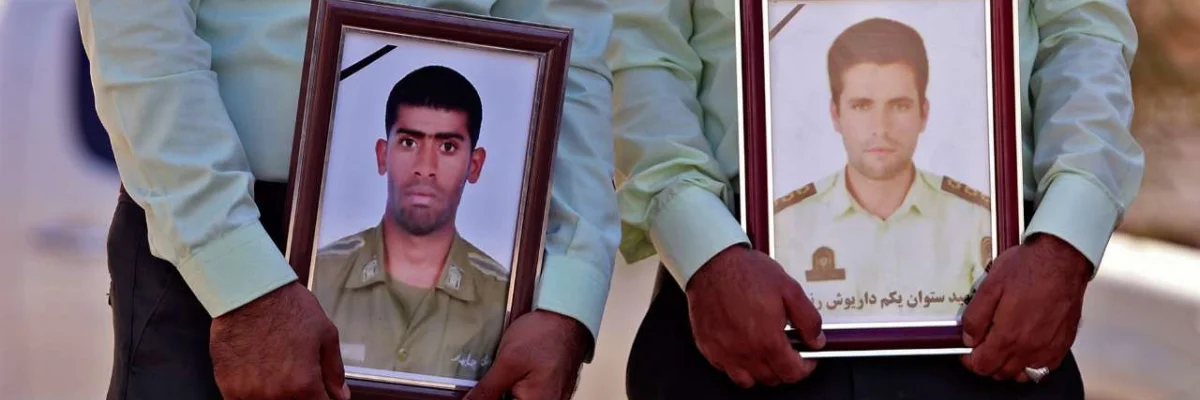
◢ Iranian police said Sunday that 10 people had been arrested in connection with a suicide attack in southeastern Iran that killed two police officers. Jihadist separatist group Ansar al-Furqan has claimed responsibility for Thursday's assault in which an explosives-laden car was driven into a police station in the port city of Chabahar.
Iranian police said Sunday that 10 people had been arrested in connection with a suicide attack in southeastern Iran that killed two police officers.
Jihadist separatist group Ansar al-Furqan has claimed responsibility for Thursday's assault in which an explosives-laden car was driven into a police station in the port city of Chabahar.
The authorities have rejected the claim of responsibility for the attack, relatively rare in Iran, which also injured around 40 people.
Police chief Hossein Ashtari said 10 people had been arrested, according to the conservative Fars news agency, without giving any details.
Ansar al-Furqan released a photo of the alleged suicide bomber on Saturday, identified as Abdullah Aziz, according to the Site Intelligence Group, which monitors jihadist activities.
Sistan-Baluchistan province has faced decades-long insurgencies by Pakistan-based Baluchi separatists and Sunni Muslim extremists.
Iran has blamed the United States and Tehran's regional rivals, Saudi Arabia and Israel, for supporting the insurgent groups.
Photo Credit: IRNA
Suicide Bomber Kills Two in Southeast Iran
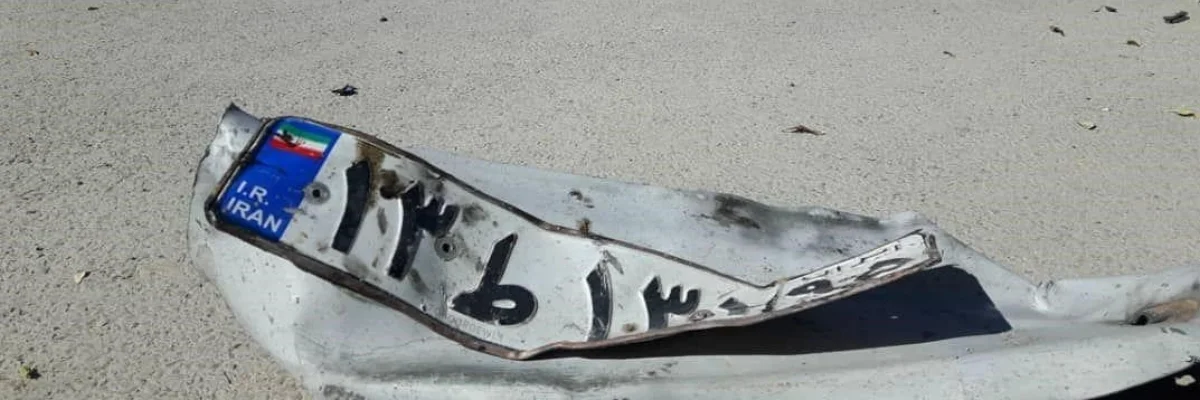
◢ A suicide bomber killed at least two people and wounded many more outside police headquarters in the port city of Chabahar in restive southeastern Iran on Thursday, according to a revised official toll. Chabahar lies in Sistan-Baluchistan province which has long been a flashpoint, with Pakistan-based Baluchi separatists and Sunni Muslim extremists carrying out cross-border attacks targeting the Shiite authorities.
A suicide bomber killed at least two people and wounded many more outside police headquarters in the port city of Chabahar in restive southeastern Iran on Thursday, according to a revised official toll.
Chabahar lies in Sistan-Baluchistan province which has long been a flashpoint, with Pakistan-based Baluchi separatists and Sunni Muslim extremists carrying out cross-border attacks targeting the Shiite authorities.
"This terrorist act led to the martyrdom of two members of the police force," the province's deputy governor in charge of security, Mohammad Hadi Marashi, told state television.
Chabahar city governor Rahmdel Bameri said earlier that four people were
killed and many more wounded when the bomber blew up a car, but later revised
the death toll to two.
"The explosion was very strong and broke the glass of many buildings close by," Bameri told state television.
Many nearby shop owners and civilian passers-by, including women and children, were severely wounded, he added.
Chabahar lies some 100 kilometres (60 miles) west of the Pakistan border and is home to a large, mainly Sunni Muslim ethnic Baluchi community which straddles the two countries.
The number of assailants was not immediately clear.
"The terrorists tried to enter Chabahar police headquarters but they were prevented by the guards and they detonated the car bomb," Marashi said without elaborating on how many assailants took part.
Chabahar has a deep-water port on the Gulf of Oman and with Indian assistance Iran has been developing it as a major energy and freight hub between Central Asia and India, bypassing Pakistan.
Photo Credit: Tasnim

Danish Envoy Returns to Iran After Foiled Assassination Plot
◢ Denmark said Tuesday its ambassador would return to Iran this week, three weeks after he was recalled over Copenhagen's assertion that Tehran tried to kill three Iranian dissidents on Danish soil. "The ambassador is going back to Iran on Thursday," Danish foreign ministry spokeswoman Anne Moller told AFP.
Denmark said Tuesday its ambassador would return to Iran this week, three weeks after he was recalled over Copenhagen's assertion that Tehran tried to kill three Iranian dissidents on Danish soil.
"The ambassador is going back to Iran on Thursday," Danish foreign ministry spokeswoman Anne Moller told AFP.
Denmark has accused Tehran of plotting an "attack" against three Iranians believed to be members of the Arab Struggle Movement for the Liberation of Ahvaz (ASMLA) who live in Denmark.
Tehran blames ASMLA, which it calls a terrorist organization, for an attack on a military parade in the Iranian city of Ahvaz on September 22, spraying the crowd with gunfire and killing 24 people.
Iran has rejected the Danish allegations, claiming Tehran's enemies are conspiring to ruin its relations with Europe.
Copenhagen has been consulting with its European allies about possible sanctions against Tehran.
"In the meeting yesterday (Monday), we received a lot of support. We are still looking at what kind of sanctions can be applied to Iran," Moller said.
"A new phase has begun to counter Iran's unacceptable behavior. Danish diplomacy will focus heavily on supporting these efforts in European capitals, in Brussels and in Tehran," a foreign ministry statement said.
Photo Credit: Danish MFA
EU to Consider Sanctions on Iran for Failed Attack Plots
◢ EU foreign ministers on Monday agreed to examine possible sanctions against Iran over two foiled attacks in Europe blamed on Iranian intelligence, as demands grow for tough action against Tehran. France has hit two suspected Iranian agents with asset freezes over a plot to bomb a rally near Paris, while Denmark has called for a coordinated EU response to a foiled murder bid on its soil.
EU foreign ministers on Monday agreed to examine possible sanctions against Iran over two foiled attacks in Europe blamed on Iranian intelligence, as demands grow for tough action against Tehran.
France has hit two suspected Iranian agents with asset freezes over a plot to bomb a rally near Paris, while Denmark has called for a coordinated EU response to a foiled murder bid on its soil.
The move came as 150 MEPs slammed the bloc's "silence" over the plots as well as human rights abuse in Iran and called for steps to hold Tehran to account.
Up to now the EU has trod cautiously on Iran as it seeks to save the beleaguered nuclear deal with Tehran, after the US withdrew from it earlier this year and reimposed sanctions.
Copenhagen has been consulting EU partners about economic sanctions against Tehran after Danish intelligence accused Iran of planning to murder three Iranian dissidents in Denmark.
EU foreign ministers meeting in Brussels discussed the incident and decided to press ahead with work on sanctions.
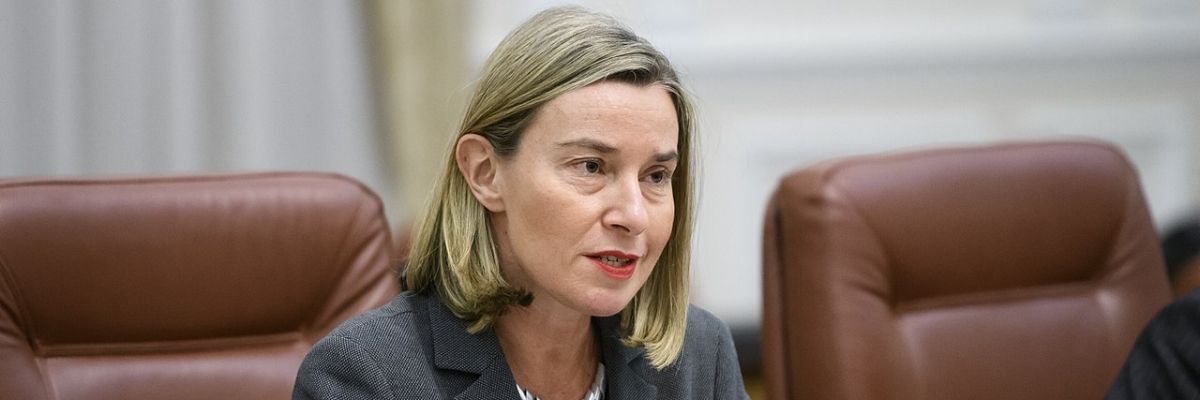
"What happened (in Denmark) was completely unacceptable and this was clearly stated by all of us," EU foreign policy chief Federica Mogherini told reporters.
"The council will take forward some work to explore appropriate targeted responses in light of what has happened in Danish territory."
The measures could include adopting at EU level the sanctions France imposed last month on two suspected Iranian agents and others from Iran's ministry of intelligence and security.
France's security services concluded that the head of operations at the Iranian intelligence ministry had ordered a plot to bomb a rally of the People's Mujahedeen of Iran (MEK) opposition group in a suburb of Paris in June.
Iran has been blamed in the past for attacks in countries as far afield as Argentina, India and Thailand, and French officials say Tehran is also suspected of carrying out "several" assassinations of opposition figures in Europe since 2015.
Photo Credit: Wikicommons

Trio Arrested in Denmark for Praising Iran Parade Attack
◢ Three members of an Iranian separatist group that Tehran blames for a deadly attack in Iran and who were targeted by a foiled assassination plot in Denmark have been arrested, Danish police said Wednesday. "Three people have been arrested suspected of violating the Danish law... on condoning terrorism," a police statement said.
Three members of an Iranian separatist group that Tehran blames for a deadly attack in Iran and who were targeted by a foiled assassination plot in Denmark have been arrested, Danish police said Wednesday.
"Three people have been arrested suspected of violating the Danish law... on condoning terrorism," a police statement said.
The three members of the Arab Struggle Movement for the Liberation of Ahvaz (ASMLA) are accused of praising the five commandos who attacked a military parade in the Iranian city of Ahvaz on September 22, spraying the crowd with gunfire and killing 24 people.
Iran has blamed the attack on the ASMLA, which advocates for an Arab state in a southwestern Iranian province. Tehran calls it a terrorist organisation.
The Danish intelligence service PET on October 30 said it had prevented an assassination attempt by Tehran against three exiled Iranians living in Denmark, including the exiled leader of ASMLA.
PET has provided protection for the ASMLA leader since early 2018 "as a result of tangible threats which, in the assessment of PET, emanate from Iran".
"Despite the fact that they are suspected of having committed crimes, they continue to be protected by extensive security measures because of the threat posed to them," Danish police said in a statement Wednesday.
A Norwegian of Iranian origin was arrested on October 21 and placed in custody, suspected of planning the assassination and spying for Iran.
Denmark recalled its ambassador to Iran over the foiled attack, and said it was consulting with its allies about possible sanctions against Tehran.
Iran has denied the Danish allegations, calling them "a continuation of conspiracies by the enemies of good and developing relations between Iran and Europe."
Photo Credit: Wikicommons
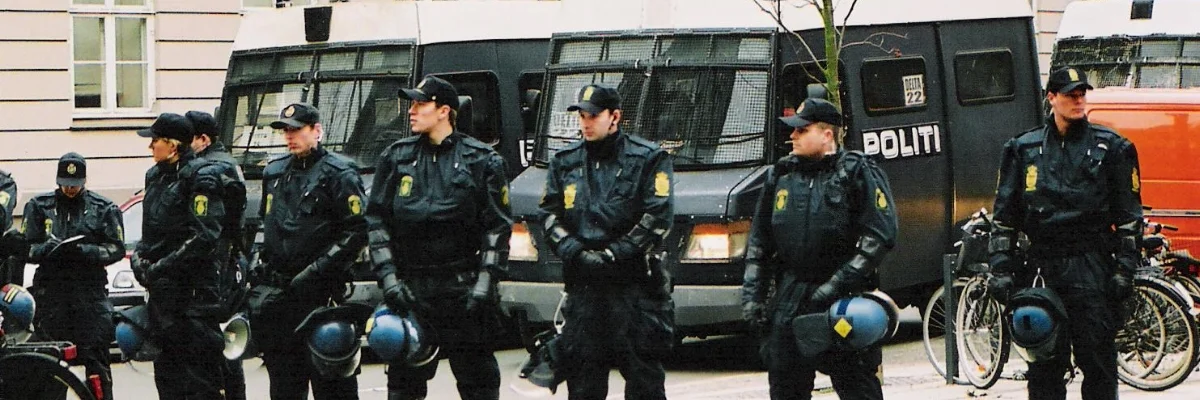
Denmark Recalls Ambassador to Iran Over Foiled 'Attack'
◢ Denmark on Tuesday recalled its ambassador to Iran after it accused Tehran of plotting a foiled "attack" against three Iranians living in the Scandinavian country. "It is the Iranian government, it is the Iranian state that is behind" the plot, Danish Foreign Minister Anders Samuelsen told reporters. He added that he was consulting with "partners and allies", including the EU, about possible sanctions.
Denmark on Tuesday recalled its ambassador to Iran after it accused Tehran of plotting a foiled "attack" against three Iranians living in the Scandinavian country.
"I have decided to recall Denmark's ambassador in Tehran for consultations... Denmark can in no way accept that people with ties to Iran's intelligence service plot attacks against people in Denmark," Danish Foreign Minister Anders Samuelsen told reporters.
"It is the Iranian government, it is the Iranian state that is behind" the plot, Samuelsen said.
He added that he was consulting with "partners and allies", including the EU, about possible sanctions.
Earlier Tuesday, the head of Denmark's intelligence service PET, Finn Borch Andersen, said his agency believed the Iranian intelligence service "was planning an attack in Denmark" against three Iranians suspected of belonging to the Arab Struggle Movement for the Liberation of Ahvaz.
A Norwegian of Iranian origin was arrested on October 21 for allegedly planning the attack and spying for Iran.
The suspect was detained in the southwestern Swedish city of Goteborg, according to the Swedish security service Sapo.
Iran has denied the Danish allegations, with foreign ministry spokesman Bahram Ghasemi saying they were part of a European conspiracy against Iran.
In late September, Tehran accused Denmark, the Netherlands and Britain of "hosting several members of the terrorist group" that Iran holds responsible for an attack in the mainly ethnic Arab city of Ahvaz in southwestern Iran.
The September 22 attack, during which five commandos opened fire on a military parade, left 24 people dead.
The so-called Islamic State group and a separatist Arab group claimed responsibility, and Iran staged several operations in Iraq and Syria in response.
’Will Stand Up to Iran'
Danish Prime Minister Lars Lokke Rasmussen echoed Samuelsen's comments, writing on Twitter: "It is totally unacceptable that Iran or any other foreign state plans assassinations on Danish soil. Further actions against Iran will be discussed in the EU."
In Oslo, where he was meeting other Northern European leaders, Rasmussen spoke with British counterpart Theresa May, whom he said expressed "support" for Denmark.
"In close collaboration with UK and other countries we will stand up to Iran," he added.
Iran's ambassador to Denmark was summoned to the foreign ministry Tuesday for an explanation.
Meanwhile, US Secretary of State Mike Pompeo said the US also stood behind Denmark.
"We congratulate the government of Denmark on its arrest of an Iranian regime assassin. For nearly 40 years, Europe has been the target of Iran-sponsored terrorist attacks. We call on our allies and partners to confront the full range of Iran's threats to peace and security," Pompeo wrote on Twitter.
The US and European countries nonetheless have different approaches to engagement with Iran.
In May, the US pulled out of a 2015 international accord on Iran's nuclear program and in August it reimposed sanctions against Tehran.
A second wave of sanctions is to take effect on November 5.
EU countries, China and Russia want to preserve the 2015 agreement and maintain trade ties with Iran however.
PET's announcement ended weeks of speculation about why Denmark shut down bridges and ferries to Sweden on September 28 during a manhunt that mobilized hundreds of police and the military.
The shutdown was aimed at foiling the Iranian operation, PET acknowledged on Tuesday.
Photo Credit: Wikicommons
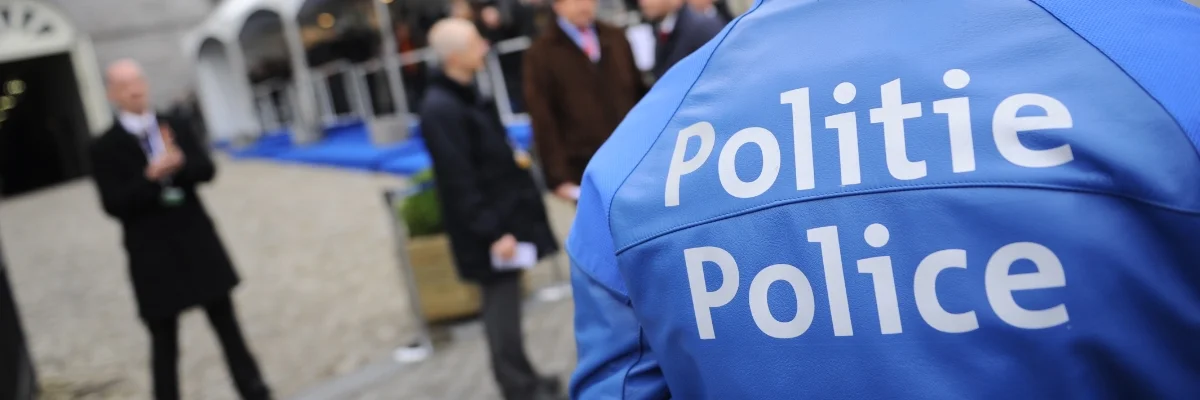
Iranian Diplomat Held in Belgium Over 'Bomb Plot'
◢ An Iranian diplomat was taken into custody in Belgium on Wednesday on suspicion of involvement in an alleged plot to bomb an Iranian opposition rally in France. An investigating magistrate earlier questioned the Iranian, normally based in Vienna, in the northern Belgian city of Antwerp, the Federal Prosecutor's Office said in a statement.
An Iranian diplomat was taken into custody in Belgium on Wednesday on suspicion of involvement in an alleged plot to bomb an Iranian opposition rally in France.
An investigating magistrate earlier questioned the Iranian, normally based in Vienna, in the northern Belgian city of Antwerp, the Federal Prosecutor's Office said in a statement.
Prosecutors said Tuesday that the suspect, previously identified as Assadollah Assadi, had been extradited to Belgium from Germany.
Tehran summoned the German ambassador on Wednesday to protest the extradition, which the foreign ministry said was "caused by a fabricated conspiracy by enemies of Iran and European relations.”
Iran has denied French accusations that Assadi was involved in a plot targeting an annual gathering of the National Council of Resistance of Iran (NCRI) on June 30 just outside Paris.
Belgian anti-terrorism prosecutors announced on July 2 that they had foiled the plot. They then requested the extradition of both Assadi and a man identified as Merhad A., who was detained in Paris.
Belgian police believe Mehrad A. is an accomplice of a husband and wife team caught in Brussels in possession of 500 grammes (about a pound) of the powerful explosive TATP and a detonator.
All three are Belgian nationals of Iranian origin.
The accusations come at a particularly sensitive time as Iran works with European powers to salvage the 2015 nuclear deal, abandoned by the United States earlier this year.
Photo Credit: Wikicommons
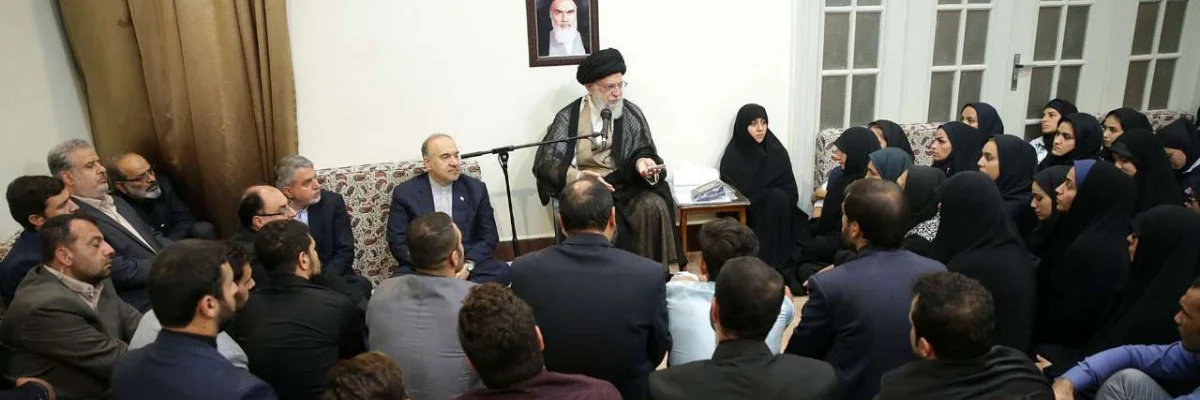
Iran Supreme Leader Says Saudi, UAE 'Funded' Ahvaz Attackers
◢ Iran's supreme leader on Monday said the attackers who killed 24 people at a weekend military parade in the southwestern city of Ahvaz were funded by Saudi Arabia and the United Arab Emirates. "Based on reports, this cowardly act was the work of those very individuals who are rescued by the Americans whenever they are in trouble and who are funded by the Saudis and the (United) Arab Emirates," Ayatollah Ali Khamenei said, in remarks posted on his official website.
Iran's supreme leader on Monday said the attackers who killed 24 people at a weekend military parade in the southwestern city of Ahvaz were funded by Saudi Arabia and the United Arab Emirates.
"Based on reports, this cowardly act was the work of those very individuals who are rescued by the Americans whenever they are in trouble and who are funded by the Saudis and the (United) Arab Emirates," Ayatollah Ali Khamenei said, in remarks posted on his official website.
He did not give any further details on the identity of those behind what he called a "terrorist attack.”
In the immediate aftermath of the attack on Saturday, Iranian authorities said they suspected Arab separatist groups were behind the attack, none of whom is known to have a presence in Syria.
Khamenei, who was speaking to a group of Iranian athletes, said the attack "once again shows the Iranian nation faces many enemies on its proud path of progress and development".
"We will most certainly rigorously punish the perpetrators of this attack," he added.
Photo Credit: IRNA
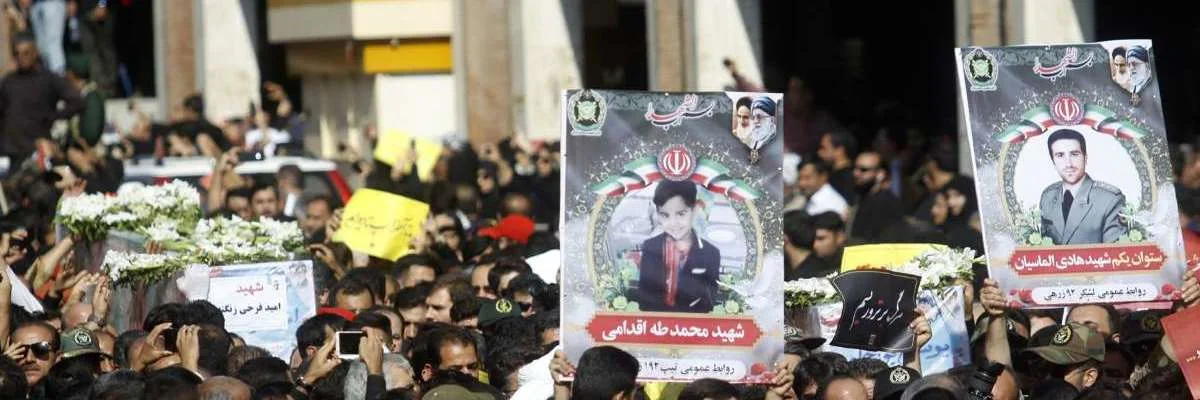
Thousands Attend Funeral for Iran Attack Dead
◢ Tens of thousands of mourners attended a funeral on Monday in the southwestern Iranian city of Ahvaz for soldiers and civilians killed in an attack on a military parade. Four militants attacked the Saturday parade marking the start of the 1980-1988 Iran-Iraq war, spraying the crowd with gunfire and killing 24 people.
Tens of thousands of mourners attended a funeral on Monday in the southwestern Iranian city of Ahvaz for soldiers and civilians killed in an attack on a military parade.
Four militants attacked the Saturday parade marking the start of the 1980-1988 Iran-Iraq war, spraying the crowd with gunfire and killing 24 people.
Iranian officials blamed Arab separatists, backed by Gulf Arab allies of the US, for the operation.
AFP reporters on Monday saw members of the public and the military carrying coffins draped in the Iranian flag, some bearing pictures of the deceased.
The mourners, mostly wearing black, carried pictures of the dead along with banners reading "we will stand to the end" and "no to terrorism.”
Under blazing sun, crowds streamed in from all four main streets leading into the city-centre square where the funeral was held, three of them dedicated to men and the fourth to women.
In the square itself, also segregated, a woman dressed in the traditional Arab-style chador wailed loudly and held a picture of her son, Reza Shoaibi, a conscript who was among the dead.
As the funeral progressed, her wailing and expressions of sorrow steadily grew louder until she fainted.
The heat became so intolerable that trucks sprayed water onto the crowd as temperatures hit 40 degrees Celsius (105 fahrenheit).
Mourners waved red, green and black flags with revolutionary messages, as well as the flags of Arab tribes from the surrounding Khuzestan region.
Iranian authorities have blamed Arab separatists and accused the United States, Israel and Gulf Arab monarchies of backing Saturday's "terrorist" attack.
The Islamic State group also claimed responsibility.
Khuzestan, which has a large ethnic Sunni Arab community, was a major battleground of the 1980s war with Iraq and it saw unrest in 2005 and 2011.
Kurdish rebels frequently attack military patrols on the border further north, but attacks on government targets in major cities are rare.
'Devastating' Revenge
Monday's ceremony began in front of the square's Sarallah Mosque with speeches by generals and security officials.
Intelligence Minister Mahmoud Alavi said that arrests had already been made.
"The terrorists themselves have perished, our agents will identify their remnants and supporters to the last man. A major part of them have already been arrested," he told the crowd.
Brigadier General Hossein Salami, the deputy head of the Islamic Revolutionary Guards Corps, vowed to exact vengeance.
“We promise that our reaction will be devastating, we warn everyone that we will take revenge," he told mourners.
After the speeches ended, a famous wartime religious chanter sang songs of lamentation as thousands of mourners beat their chests in unison, a traditional mourning practice of Shiite Muslims.
Later, the coffins were transported to the city cemetery and laid to rest.
The dead ranged from a preschool boy to a wheelchair-bound war veteran.
Pictures of women and children scrambling to find cover evoked an emotional response from Iranians.
Abdolzahra Savari, an ethnic Arab who had attended the funeral, called the attackers infidels.
"These are ruthless people with no shred of humanity in them," he said.
Sabah Abiad, a middle-aged bank employee who attended the funeral, said the unity among the region's different groups was self-evident.
"As you can see now, all of the people, whether they're Lor, Arab, Shushtari or Dezfuli, are all here today and all say death to the terrorists," he told AFP.
Iran holds regular military parades to mark national anniversaries and show off its latest military hardware, notably missiles.
This year's parades had special significance as tensions with the United States have peaked since the US withdrew from the 2015 nuclear deal in May and began to re-impose unilateral economic sanctions on Tehran.
Iran's presence in Syria has also triggered rising tensions with Israel.
Photo Credit: IRNA
Iran Vows 'Crushing Response' After Gunmen Kill 29 at Army Parade
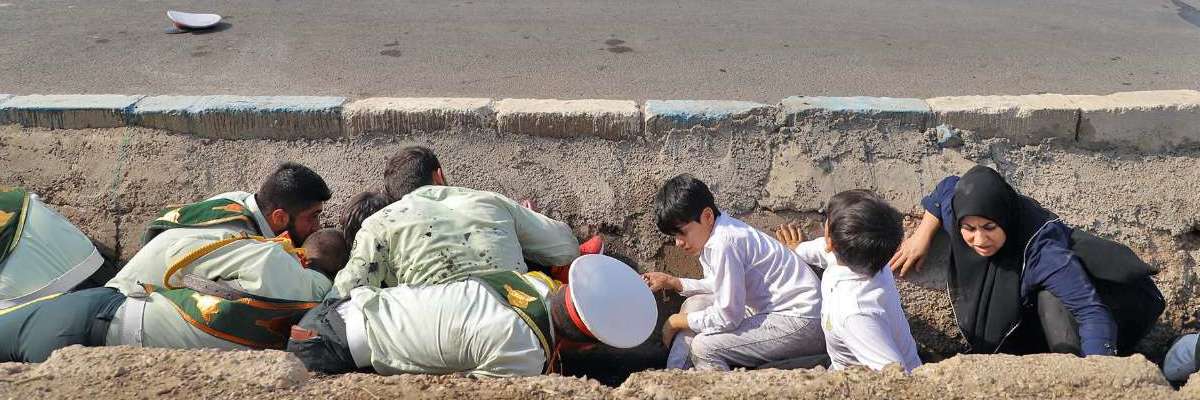
◢ Iranian President Hassan Rouhani vowed a "crushing" response after assailants sprayed a crowd with gunfire, shooting dead at least 29 people including women and children Saturday at a military parade near the Iraqi border. The Islamic State (IS) group claimed responsibility for the rare assault in the southwestern city of Ahvaz, while Iranian officials blamed "a foreign regime" backed by the United States.
Iranian President Hassan Rouhani vowed a "crushing" response after assailants sprayed a crowd with gunfire, shooting dead at least 29 people including women and children Saturday at a military parade near the Iraqi border.
The Islamic State (IS) group claimed responsibility for the rare assault in the southwestern city of Ahvaz, while Iranian officials blamed "a foreign regime" backed by the United States.
A local journalist who witnessed the attack said shots rang out for 10 to 15 minutes and that at least one of the assailants, armed with a Kalashnikov assault rifle, wore the uniform of Iran's Revolutionary Guards.
"We realised it was a terrorist attack as bodyguards (of officials) started shooting," Behrad Ghasemi told AFP. "Everything went haywire and soldiers started running."
"The terrorists had no particular target and didn't really seem to care as they shot anyone they could with rapid gunfire."
Ahvaz lies in Khuzestan, a province bordering Iraq that has a large ethnic Arab community and has seen separatist violence in the past that Iran has blamed on its regional rivals.
Iran summoned diplomats from Denmark, the Netherlands and Britain over their "hosting of some members of the terrorist group" which carried out the attack, state media said Sunday.
"It is not acceptable that the European Union does not blacklist members of these terrorist groups as long as they do not perpetrate a crime on... European soil," official news agency IRNA quoted foreign ministry spokesman Bahram Qasemi as saying.
After addressing a similar parade in Tehran to commemorate the start of the 1980-1988 war with Iraq, Rouhani warned that "the response of the Islamic Republic of Iran to the smallest threat will be crushing.”
Foreign Minister Mohammad Javad Zarif said the attack was carried out by "terrorists recruited, trained, armed & paid by a foreign regime".
"Iran holds regional terror sponsors and their US masters accountable for such attacks," he wrote on Twitter.
'Bloody Crime'
IS claimed the attack via its propaganda mouthpiece Amaq and, according to intelligence monitor SITE, said the attack was in response to Iranian involvement in conflicts across the region.
State television gave a toll of 29 dead and 57 wounded, while IRNA said those killed included women and children who were spectators at the parade.
Three attackers were killed at the scene and the fourth died later of his injuries, said armed forces spokesman Brigadier General Abolfazl Shekarchi.
The Revolutionary Guards accused Shiite-dominated Iran's Sunni arch-rival Saudi Arabia of funding the attackers, while Iran's supreme leader Ayatollah Ali Khamenei also blamed Iran's pro-US rivals.
Tehran-backed Lebanese Shiite movement Hezbollah condemned the "terrorist" attack, saying that "repulsive Satanic hands" were behind it.
"This operation was a continuation of the other forms of war the United States and its allies are waging, directly or indirectly," it said.
In a message to Russia's close regional ally, President Vladimir Putin said he was "appalled by this bloody crime", while Syria, another ally, neighboring Turkey and France also expressed condolences.
Khuzestan was a major battleground of the 1980s war with Iraq and the province saw unrest in 2005 and 2011, but has since been largely quiet.
Kurdish rebels frequently attack military patrols on the border further north, but attacks on regime targets in major cities are rare.
On June 7, 2017 in Tehran, 17 people were killed and dozens wounded in simultaneous attacks on the parliament and on the tomb of revolutionary leader Ayatollah Ruhollah Khomeini—the first inside Iran claimed by IS.
In April, 26 alleged members of the Sunni extremist group went on trial in connection with the attacks.
Rouhani Defiant
The attack in Ahvaz came as Rouhani and other dignitaries attended the main anniversary parade in Tehran.
In a keynote speech, he vowed to boost Iran's ballistic missile capabilities, despite Western concerns that were cited by his US counterpart Donald Trump in May when he abandoned a landmark nuclear deal with Tehran.
"We will never decrease our defensive capabilities... we will increase them day by day," Rouhani said.
"The fact that the missiles anger (the West) shows they are our most effective weapons."
The United States reimposed crippling sanctions on Iran last month, and another round of even harsher sanctions targeting Iran's vital oil sector is set to go back into effect on November 5.
Washington has said it is ready to open talks on a new agreement to replace the July 2015 accord, but Tehran has repeatedly said it cannot negotiate under pressure from sanctions.
Rouhani leaves Sunday for New York to attend next week's United Nations General Assembly along with Trump, but Iran has repeatedly ruled out any meeting.
Photo Credit: IRNA
Belgium Charges Two for Attack Plot on Iran Opposition in France
◢ Belgian prosecutors on Monday charged a husband and wife over a plot to bomb a weekend rally by an exiled Iranian opposition group in France. Amir S. and Nasimeh N., both Belgian nationals, "are suspected of having attempted to carry out a bomb attack" on Saturday in the Paris suburb of Villepinte, during a conference organized by the People's Mujahedin of Iran, a statement from the Belgian federal prosecutor said.
Belgium, France and Germany have detained six people, including an Iranian diplomat, over an alleged plot to bomb a weekend rally by an exiled Iranian opposition group in Paris, authorities and sources said Monday.
The apparent foiled attack was to have targeted a meeting of thousands of Iranian opposition supporters in a northern suburb of the French capital that was also attended by leading US figures, including close allies of President Donald Trump.
The developments came on the day Iranian President Hassan Rouhani arrived in Switzerland on a visit that Tehran said was of "crucial importance" for cooperation between the Islamic Republic and Europe after the US withdrawal from the Iranian nuclear agreement.
Rouhani is also due to visit Austria, which currently holds the six-month presidency of the European Union, and hosts the detained Iranian diplomat.
Iran's foreign minister dismissed the attack plot as a "false flag ploy" designed to overshadow Rouhani's tour.
"How convenient: Just as we embark on a presidential visit to Europe, an alleged Iranian operation and its 'plotters' arrested," Mohammad Javad Zarif tweeted .
"Iran unequivocally condemns all violence and terror anywhere, and is ready to work with all concerned to uncover what is a sinister false flag ploy," he said.
Federal authorities in Brussels first revealed the arrests, charging a husband and wife described by prosecutors as Belgian nationals "of Iranian origin".
Amir S., 38, and Nasimeh N., 33, "are suspected of having attempted to carry out a bomb attack" on Saturday in the Paris suburb of Villepinte, during the conference organized by the People's Mujahedin of Iran, a statement from the Belgian federal prosecutor said.
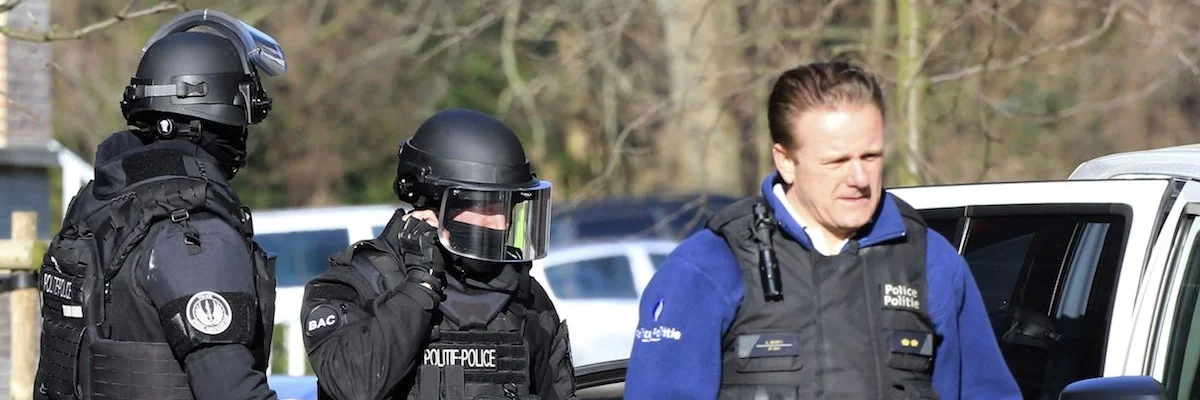
The couple were carrying 500 grams (about one pound) of the volatile explosive TATP along with a detonator when an elite police squad stopped them in a residential district of Brussels.
The statement said that an Iranian diplomat at the embassy in Vienna, a contact of the couple, was also detained in Germany.
In France, three people were taken into custody Saturday, a security source said on Monday—two of them later released.
In Belgium, police carried out five nationwide raids on Saturday, authorities said, though they refused to detail the results.
'Around the Corner'
The Belgian statement said about 25,000 people attended the rally in France where people waved the red, green and white flag of the National Council of Resistance of Iran (NCRI), and cheered its leader Maryam Rajavi.
The NCRI groups some exiled opposition organizations including the former rebel People's Mujahedin, which is banned in Iran.
At the rally, former New York mayor and Trump lawyer Rudy Giuliani urged regime change in Iran, saying the prospect was closer than ever after the Islamic Republic was hit by a wave of strikes and protests.
Giuliani called for a boycott of companies "that continually do business with this regime".
"Freedom is right around the corner," he said of the recent protests in Iran.
Giuliani and other US politicians have been hugely paid to speak at the annual Paris rally in recent years. Republican firebrand and former House speaker Newt Gingrich also addressed the rally.
The People's Mujahedin, formed in the 1960s to overthrow the shah of Iran, fought the rise of the mullahs in Tehran following the 1979 Islamic revolution.
It was listed as a "terrorist organization" by the US State Department in 1997 and was only removed from terror watchlists by the European Union in 2008 and Washington in 2012.
Belgium has been on high alert since the smashing of a terror cell in the town of Verviers in January 2015 that was planning an attack on police.
Photp Credit: EPA
UN's Top Court to Hear Iran Row with US Over Frozen Assets
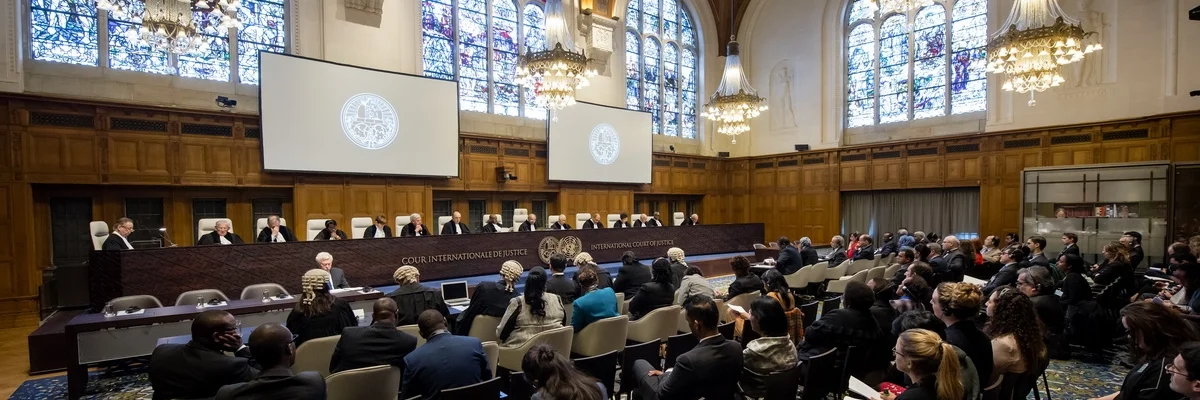
◢ The UN's top court will in October hear a complex case brought by Iran against the United States seeking to recover billions in frozen assets, which US courts say should go to American victims of terror attacks. The International Court of Justice (ICJ) said in a statement Friday it will "hold public hearings in the case concerning Certain Iranian Assets (Islamic Republic of Iran v. United States of America)" at its seat in The Hague.
The UN's top court will in October hear a complex case brought by Iran against the United States seeking to recover billions in frozen assets, which US courts say should go to American victims of terror attacks.
The International Court of Justice (ICJ) said in a statement Friday it will "hold public hearings in the case concerning Certain Iranian Assets (Islamic Republic of Iran v. United States of America), from Monday 8 to Friday 12 October 2018" at its seat in The Hague.
The hearings "will be devoted to preliminary objections raised by the United States," the statement added, after which judges will decide whether or not they can rule in the dispute.
The case was lodged by Tehran in June 2016 accusing the US of breaking a decades-old bilateral treaty, dating from the time of the Shah, by seizing Iranian financial assets and those of Iranian companies.
US courts have "awarded total damages of over USD 56 billion ... against Iran in respect of its alleged involvement in various terrorist acts mainly outside the US," Iran said.
The case was filed just weeks after the US Supreme Court ruled in April 2016 that USD 2 billion in frozen Iranian assets should be paid to about 1,000 survivors and relatives of those killed in attacks blamed on the Islamic
republic.
These included the 1983 bombing of a US Marine barracks in Beirut and the 1996 Khobar Towers bombing in Saudi Arabia.
But Tehran reacted angrily to the ruling which came almost a year after the landmark nuclear deal with world powers which led to the unblocking of other frozen funds.
To the dismay of the other world powers, US President Donald Trump has since walked away from the nuclear deal, and the United States in 2017 raised objections to the court's hearing of the case.
The four days of public audiences are expected to focus on whether the ICJ judges can take up the case under the strict rules governing their procedures.
Set up in 1946, the ICJ rules in disputes between states on the basis of existing treaties and international law.
Iran argues that the US is breaking the terms of the 1955 Treaty of Amity signed with the then regime of the Shah long before he was ousted in the 1979 Islamic Revolution. The treaty governs economic ties and consular rights.
But the US severed bilateral diplomatic ties with Iran in 1979 after 52 Americans were taken hostage in the US embassy in Tehran. They have not yet been fully restored.
Iran meanwhile is also demanding that the United States "make full reparations to Iran for the violation of its international legal obligations in an amount to be determined by the court at a subsequent stage of the proceedings."
Photo Credit: UN