

Iran President Defends Telecom Minister Against Judiciary
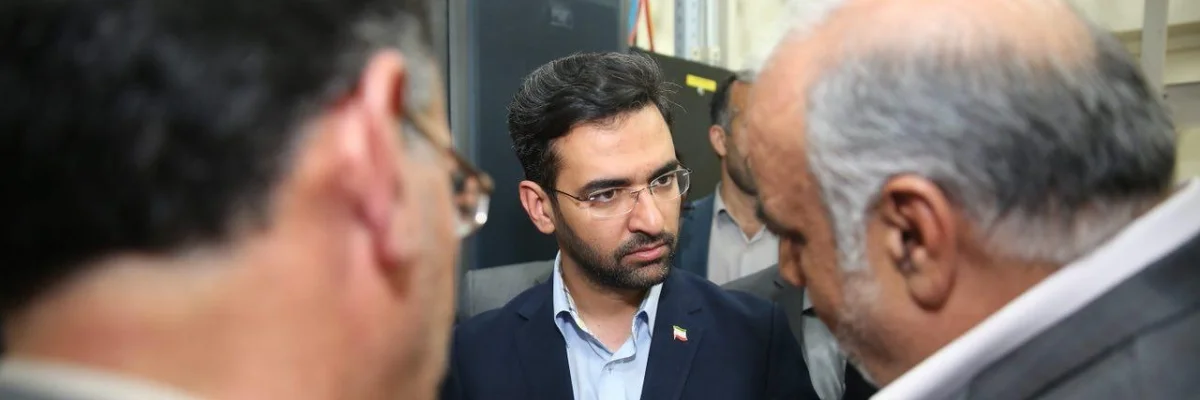
◢ Iran President Hassan Rouhani on Monday brushed off attacks against his telecom minister over charges of failing to create a "safe environment" in social media and leaving Iranian data vulnerable to espionage, state television reported. According to the judiciary, 2,000 people in the southwestern city of Ahvaz and the general prosecutor's office have lodged a complaint against the minister, Mohammad Javad Azari-Jahromi.
Iran President Hassan Rouhani on Monday brushed off attacks against his telecom minister over charges of failing to create a "safe environment" in social media and leaving Iranian data vulnerable to espionage, state television reported.
According to the judiciary, 2,000 people in the southwestern city of Ahvaz and the general prosecutor's office have lodged a complaint against the minister, Mohammad Javad Azari-Jahromi.
"Someone in the judiciary says they'll lodge a complaint against a young minister. Well, he is not at all intimidated and is doing his job," said Rouhani, without naming the minister.
“Ok, then, lodge a complaint! The young minister is working for the benefit of the people and pays no heed to pointless orders," he added defiantly.
A "lack of safe space" in social media has "drawn (young people) to Takfiri (jihadist) groups and eventually led to (last year's) terrorist incident at the armed forces parade," a cyberspace official at the prosecutor's office, Javad Javidnia, told semi-official news agency ISNA.
Back in September 2018 in the southwestern city of Ahvaz, in Khuzestan province bordering Iraq, gunmen killed at least 24 people as they opened fire on the military parade.
Javidnia said a complaint had also been lodged against the managers of Telegram and Instagram.
Iran has in the past blocked access to social media platforms such as Facebook, Twitter and YouTube, and the judiciary blocked the Telegram messaging app in May.
The judiciary has also accused Azari-Jahromi, at 37 the youngest member of Rouhani's cabinet, of leaving Iran's "big data" vulnerable to access by its enemies, which enables them to commit "internet espionage".
"Foreigners can analyze this data and use it to disrupt the country's security and stability," Javidnia told ISNA.
The judiciary has frequently clashed with the telecom minister.
In January, Azari-Jahromi opposed a mulled ban on the photo- and video-sharing application Instagram, saying it would only create new problems for the Islamic republic.
Despite restrictions, top Iranians officials like Rouhani and the minister himself use services such as Twitter, which are widely accessible via proxy servers.
Photo Credit: IRNA
Iran Minister Says 'Impossible' to Block Information by Banning Apps
◢ Iran's telecoms minister said Tuesday it was "impossible to block citizen's access to information", a day after the conservative-dominated judiciary banned the hugely popular Telegram messaging app. The move follows a presidential directive banning all government workers from using foreign messenger apps to communicate.
Iran's telecoms minister said Tuesday it was "impossible to block citizen's access to information", a day after the conservative-dominated judiciary banned the hugely popular Telegram messaging app.
Mohammad Javad Azari Jahromi's comments on Twitter highlighted differences of opinion between the government of reformist President Hassan Rouhani and ultra-conservatives who control the judiciary and security services.
"Even if we ban the use of software, other software will be found and information will start to circulate freely again," Jahromi wrote. "Technology is not intrinsically guilty, corrupt, or deviant," he added.
"It is human beings who misuse it to promote crime and corruption in the virtual world, just as they do in real life."
A Tehran judge on Monday ordered the blocking of Telegram, the judiciary's Mizan Online news agency said, following accusations that the app has allowed armed opposition groups to fuel unrest.
The move follows a presidential directive banning all government workers from using foreign messenger apps to communicate.
Built by Russian tech guru Pavel Durov, Telegram is the most popular social network in Iran with some 40 million users—roughly half the population.
During a wave of protests that hit dozens of Iranian cities early this year, authorities temporarily banned the app, saying it enabled foreign-based "counter-revolutionary" groups to stir tensions.
Since then, authorities have sought to develop Iranian social media networks and limit reliance on foreign-based platforms, which Tehran accuses of hosting sites hostile to the Islamic Republic.
The ban adds Telegram to the list of social networks blocked in the Islamic Republic but accessible via virtual private network (VPN) software which can circumvent internet blackouts—something the judiciary wants to prevent in the case of the messaging app.
Monday's announcement was followed by rumors Jahromi had resigned, but the semi-official ISNA news agency denied that.
"On the question of filtering (social networks), we said and repeated that this is not the only solution," it cited him as saying. "The competent authorities heard our arguments and made their decision."
Photo Credit: IRNA

Iran Bans Use of Popular Telegram Messaging App
◢ Iran's judiciary on Monday banned the hugely popular Telegram messaging app, which the authorities have accused of allowing armed opposition groups to fuel unrest. A judge in Tehran gave "the order to interrupt Telegram,” the judiciary's Mizan Online news agency said.
Iran's judiciary on Monday banned the hugely popular Telegram messaging app, which the authorities have accused of allowing armed opposition groups to fuel unrest.
A judge in Tehran gave "the order to interrupt Telegram," the judiciary's Mizan Online news agency said.
The move comes on the heels of a recent presidential directive banning all government workers from using foreign messenger apps to communicate.
Telegram, built by Russian tech guru Pavel Durov, is the most popular social network in Iran with some 40 million users—roughly half the population.
During a wave of protests that hit dozens of Iranian cities over at the start of the year, authorities temporarily banned Telegram, saying the service enabled foreign-based "counter-revolutionary" groups to stir tensions.
Since then, authorities have sought to develop Iranian social media networks and limit the reliance on foreign-based platforms, which Tehran accuses of hosting sites deemed hostile to the Islamic Republic.
Several Iranian platforms offering services similar to Telegram have emerged in recent months, like the Soroush network, which already claims to have five million subscribers.
Iran's supreme leader Ayatollah Ali Khamenei and President Hassan Rouhani both announced in mid-April they would stop using Telegram.
The last message on Khamenei's Telegram channel directed users to accounts on Iranian messaging services, including Soroush and Gap.
The tribunal in Tehran issued its order Monday after receiving complaints against Telegram, accusing it of "inciting rebellion" and allowing "terrorist groups" to threaten national security, Mizan Online reported.
All internet providers and phone operators now have "a duty to completely block access to Telegram," the news agency said, citing the judge's decision
Anyone in breach of the order "will be considered in violation with the judicial order and prosecuted", the news agency said. AFP journalists said Telegram was still working by Monday evening.
Photo Credit: Wikicommons
Iran's Khamenei Quits Telegram
◢ Iran's supreme leader Ayatollah Ali Khamenei announced Wednesday that he would no longer use the hugely popular messaging app Telegram, shifting instead to domestic services. President Hassan Rouhani quickly followed suit, announcing that he too was giving up Telegram shortly after issuing a directive banning the government and administration workers from using foreign messenger apps to communicate,
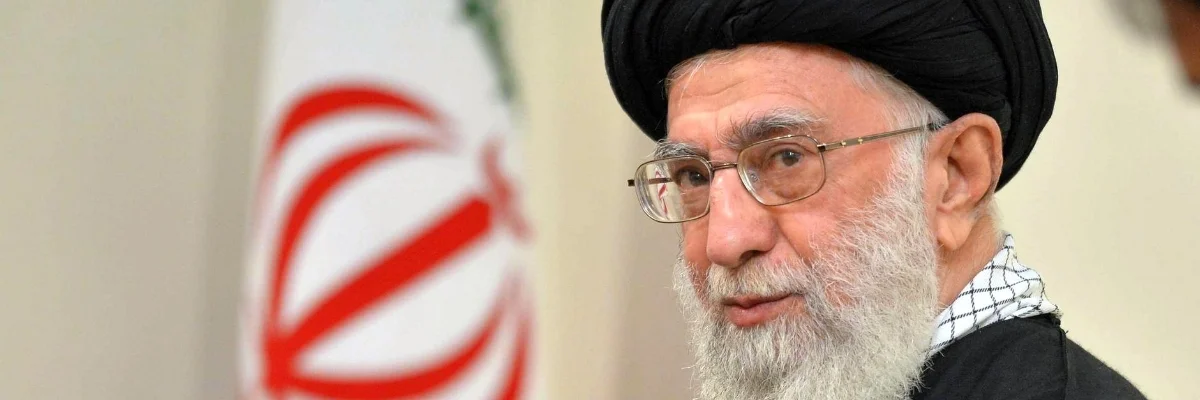
Iran's supreme leader Ayatollah Ali Khamenei announced Wednesday that he would no longer use the hugely popular messaging app Telegram, shifting instead to domestic services.
President Hassan Rouhani quickly followed suit, announcing that he too was giving up Telegram shortly after issuing a directive banning the government and administration workers from using foreign messenger apps to communicate, according to the official IRNA news agency.
The announcements came as rumours continued that Iran would soon block Telegram, built by Russian tech guru Pavel Durov and the most popular social media service in the country with some 40 million users—roughly half the population.
"In line with safeguarding national interests and removing the monopoly of the Telegram messaging network, the website for the preservation and publication of the works of Grand Ayatollah Khamenei will stop its activities in this network from this moment," said the last message on Khamenei's Telegram channel.
It directed users to accounts on Iranian messaging services, including Soroush and Gap, which the authorities are trying to promote. Rouhani's account said the president's messages would continue through the "messaging applications of our country".
First Vice President Eshagh Jahangiri and foreign ministry spokesperson Bahram Ghassemi also closed their Telegram accounts on Wednesday, IRNA reported.
Last week, Khamenei issued a statement saying any breaches of online privacy were "haram," meaning they were religiously forbidden.
This was interpreted as seeking to encourage the use of domestic apps, which many Iranians fear will be monitored by intelligence services.
Khamenei's channel said his move away from Telegram was an initial step towards stopping its use by all "official bodies".
On Sunday, the ministry of education banned the use of foreign social media networks in schools.
During a wave of protests that hit dozens of Iranian cities in December and January, Iranian authorities temporarily banned Telegram, accusing it of allowing foreign-based "counter-revolutionary" groups to fuel unrest.
But Rouhani's government has pushed back against efforts to block Telegram and other popular services such as Instagram, saying thousands of businesses use the service and access to the outside world should not be curtailed.
On Tuesday conservative lawmaker Abolfazl Abutorabi said "all foreign messaging services" could be banned on April 21, with Telegram first to go.
Soroush claims to have some 5 million users, while Gap has more than 1.3 million. There was no word on whether Khamenei's office would stop using his five Twitter feeds in different languages, which exist despite the service being blocked for ordinary Iranians.
Facebook and Twitter are both blocked in Iran, although they are easily accessible using virtual private network (VPN) software.
Photo Credit
Iran Bans Foreign Social Media Networks in Schools
◢ Iran's ministry of education on Sunday banned the use of foreign social media networks in schools, the ILNA news agency reported, amid a push by Tehran to limit the influence of outside online platforms. Schools must "only use domestic social networks" for their communication, the ministry said in a statement, according to the reformist-linked news agency.
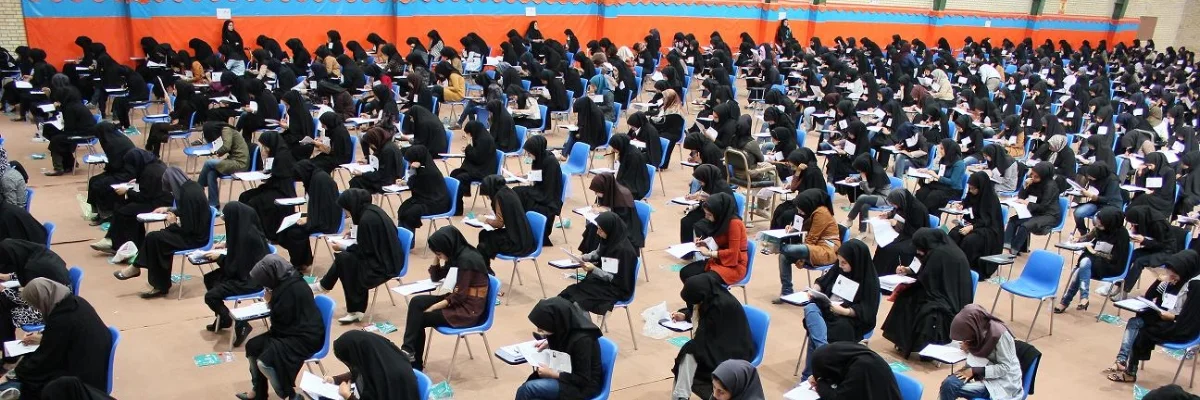
Iran's ministry of education on Sunday banned the use of foreign social media networks in schools, the ILNA news agency reported, amid a push by Tehran to limit the influence of outside online platforms.
Schools must "only use domestic social networks" for their communication, the ministry said in a statement, according to the reformist-linked news agency.
Telegram is the most popular social network in Iran. In 2017, the app claimed it had 40-million monthly users in the Islamic Republic.
Instagram is also very popular, and companies in Iran—like elsewhere—often use both platforms to communicate directly with customers.
Less used, Facebook and Twitter are blocked in Iran, but easily accessible using a virtual private network (VPN).
During a wave of protests that hit dozens of Iranian cities over at the start of the year, Iranian authorities temporarily banned Telegram, accusing the app of allowing foreign-based "counter-revolutionary" groups to fuel unrest.
Since then, authorities have sought to develop Iranian social media networks and limit the reliance on foreign-based platforms, which Tehran accuses of hosting sites deemed hostile to the Islamic Republic.
Several Iranian platforms offering services similar to Telegram have emerged in recent months, like the Soroush network, which already claims to have five million subscribers.
According to the official IRNA news agency, Telecommunication Minister Mohammad-Javad Azari Jahromi recently pledged Iranian networks would offer the same guarantees of confidentiality as foreign platforms.
"No message is read, and no (personal) information is communicated to anyone," he told parliament.
In a statement recently posted to his website, Iran's Supreme Leader Ayatollah Ali Khamenei said the government should guarantee the "security and privacy" of people on the internet.
Khamenei called intrusions into online privacy "haram", or prohibited from a religious standpoint.
Iranian media has appeared to encourage people to join the new networks by assuring viewers they will continue to operate even if Telegram is again banned.
Photo Credit: Mehr