
Iran Seizes Ship Smuggling Fuel, Arrests 16 Malaysians
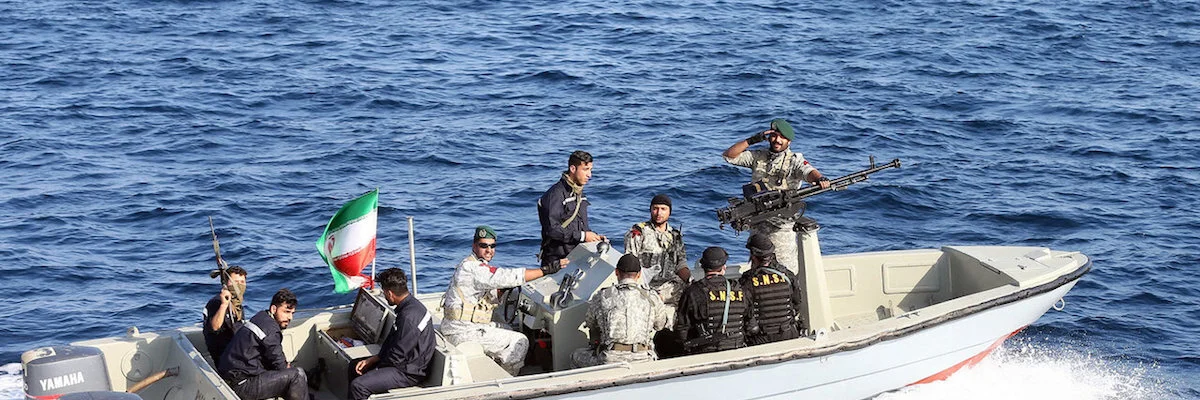
◢ Iran' Revolutionary Guards have seized a ship suspected of fuel-smuggling and arrested 16 Malaysian crew members. The website of IRIB state television said the Guards confiscated 1.3 million liters of "smuggled fuel" from the unnamed vessel 15 nautical miles from Abu Musa island.
Iran' Revolutionary Guards have seized a ship suspected of fuel-smuggling and arrested 16 Malaysian crew members, state media reported on Monday.
The website of IRIB state television said the Guards confiscated 1.3 million litres of "smuggled fuel" from the unnamed vessel 15 nautical miles from Abu Musa island.
“The ship's 16 crew who are of Malaysian nationality were arrested," the Guards' naval commander for the region, Brigadier General Ali Ozmayi, was quoted as saying.
Abu Musa is one of three islands in the southern Gulf that are under Iranian control but claimed by the United Arab Emirates.
"This is the sixth ship smuggling fuel that (the Guards') navy has confiscated," added Ozmayi.
In September, Iran seized a boat and arrested 12 Filipino crewmen from a suspected fuel-smuggling ring in the Strait of Hormuz, state media reported.
The Islamic Revolutionary Guard Corps detained a "foreign tanker" in Gulf waters on July 14 for allegedly smuggling contraband fuel.
Iran also seized another ship on July 31 with seven foreign crew aboard over fuel smuggling, but it never revealed the vessel's identity or the nationality of its crew.
Tensions have been high in the Gulf this year, after the United States stepped up a stated campaign of "maximum pressure" on Iran following its withdrawal from a landmark nuclear deal in 2018.
The escalation saw ships mysteriously attacked, drones downed and oil tankers seized in the Strait of Hormuz—a chokepoint for a third of world's seaborne oil.
And on July 19 the Guards seized the British-flagged oil tanker Stena Impero for allegedly hitting a fishing boat and released it two months later.
Photo: IRNA
Iran Seizes Small Oil Tanker Suspected of Smuggling Fuel
◢ Iran’s Revolutionary Guards seized a foreign oil tanker in the Persian Gulf on July 31, compounding concerns about the safety of shipping in a region crucial to oil exports. The vessel—the third foreign ship seized by the guards in the Gulf since July 14—is suspected of smuggling a large volume of fuel, the Guards said on their Sepah News portal.
By Shaji Mathew and Arsalan Shahla
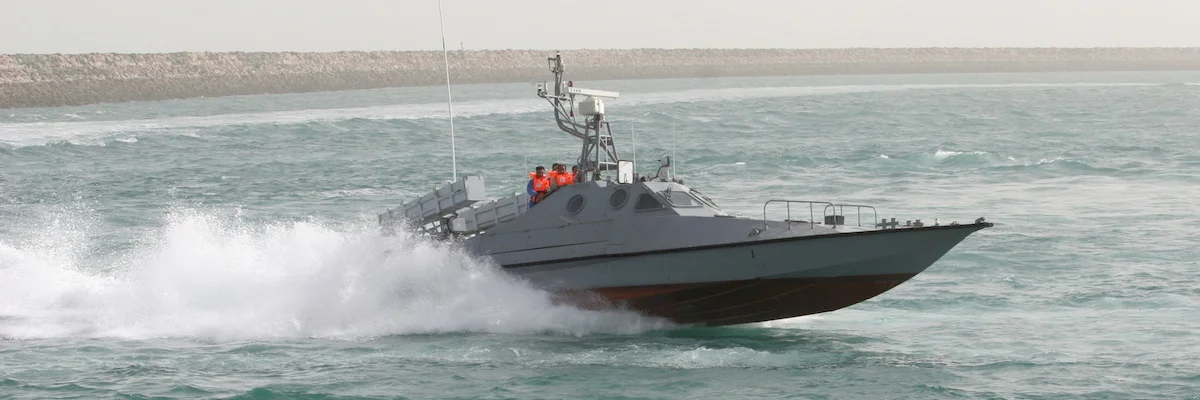
Iran’s Revolutionary Guards seized a foreign oil tanker in the Persian Gulf on July 31, compounding concerns about the safety of shipping in a region crucial to oil exports.
The vessel—the third foreign ship seized by the guards in the Gulf since July 14—is suspected of smuggling a large volume of fuel, the Guards said on their Sepah News portal, without giving any details about the flag or nationality of the ship or its operator.
The ship was carrying 700,000 liters (4,403 barrels) of smuggled fuel when it was seized near Farsi Island in the western part of the Gulf, off Iran’s southwestern coast, Sepah News reported. That’s about 400 miles (640 kilometers) from the Strait of Hormuz, which has been at the center of Iran’s standoff with the West in recent weeks. Iran’s state-run Press TV reported that the seized ship is an Iraqi tanker that was delivering the fuel to some Arab countries in the Persian Gulf.
The allegedly smuggled volume is a minuscule amount in oil terms: the largest supertankers are capable of hauling cargoes of 2 million barrels.
Even so, the impounding of the ship could escalate the tensions that have flared in the region’s waters as Iran resists U.S. sanctions that are crippling its all-important oil exports and hits back after one of its ships was seized July 4 near Gibraltar. Iran grabbed a British tanker, the Stena Impero, in Hormuz two weeks later and continues to hold it.
The passage at the mouth of the Persian Gulf accounts for about a third of the world’s seaborne oil flows. To reduce the risks of navigating the waterway, the Royal Navy has started to escort British ships, and a plan for a European naval mission is taking shape.
The U.S. has embarked on a parallel operation that the Europeans are wary of joining for fear of being identified with President Donald Trump’s “maximum pressure campaign” against Iran and its economy. In response to that campaign, Iran has abandoned restrictions on uranium enrichment, downed a U.S. drone and test-fired a ballistic missile. It’s also been accused of carrying out a number of attacks on tankers near Hormuz.
Cargo Confiscated
According to Sepah News, the ship seized last week had loaded fuel from other vessels before it was impounded. It was taken to Bushehr port on Iran’s southwest coast, and its cargo was confiscated and handed over to the National Oil Distribution Company of Iran. All seven foreign crew members were arrested.
The announcement of the ship’s capture coincides with a joint meeting between the Iranian and Qatari coast guards in Tehran aimed at improving and developing maritime cooperation between the Gulf neighbors, state-run Islamic Republic News Agency reported earlier Sunday. That gathering follows a rare meeting between the coast guards of Iran and the U.A.E. last week.
Photo: Tasnim
Iran to Cap Petrol Sales to Curb Smuggling
◢ Iran is reintroducing fuel cards that will cap petrol purchases in a bid to combat rampant smuggling, state media reported on Tuesday. Smuggling has boomed in recent months as the rial has plummeted against the dollar in the face of the reimposition of crippling US sanctions following Washington's withdrawal from a landmark 2015 nuclear deal between major powers and Tehran.
Iran is reintroducing fuel cards that will cap petrol purchases in a bid to combat rampant smuggling, state media reported on Tuesday.
Smuggling has boomed in recent months as the rial has plummeted against the dollar in the face of the reimposition of crippling US sanctions following Washington's withdrawal from a landmark 2015 nuclear deal between major powers and Tehran.
The Islamic republic has some of the most heavily subsidized petrol in the world, with a pump price of around USD 0.08 per litre (less than two US cents per gallon).
Low fuel prices have led to high consumption, with Iran's 80 million population buying an average of 90 million litres (20 million gallons) per day, according to state news agency IRNA.
They have also fueled very high levels of smuggling—estimated at around 10 to 20 million liters (2.2 million - 4.5 million gallons) per day, IRNA said.
Much of it heads across the border to Pakistan, where petrol costs 10 times, and diesel around 40 times, as much as in Iran.
Fuel cards were first introduced in 2007 with a view to reforming the expensive subsidies system. High limits were set—180 litres (40 gallons) per day for the average driver—since the focus was on curbing large-scale smuggling.
The state-run National Iranian Oil Products Distribution Company said drivers would have three weeks to register for the new electronic cards setting a daily limit on petrol purchases.
The limit has not yet been set, but was introduced "in order to prevent fuel smuggling," the firm said in a statement on Monday.
It said the return to a card system "does not mean there will be fuel rationing and price hikes."
But Oil Minister Bijan Namdar Zanganeh has said a price increase may be necessary in the coming year—a move that remains highly sensitive in a country that boasts the world's second-largest reserves of gas and fourth-largest of oil.
Photo Credit: IRNA
UN Highlights Illegal Somali Charcoal Trafficking to Iran
◢ Al-Qaeda-linked Al-Shabaab rebels are profiting from the illegal trafficking of charcoal exports produced in Somalia and transiting through Iran, United Nations experts said in a report recently shared with the UN Security Council. The document, which has not yet been made public, said Iranian ports in the Kish and Qeshm free zones have been the main destinations of the shipments since March 2018.
Al-Qaeda-linked Al-Shabaab rebels are profiting from the illegal trafficking of charcoal exports produced in Somalia and transiting through Iran, United Nations experts said in a report recently shared with the UN Security Council.
"The process involved using false Comoros, Cote d'Ivoire (Ivory Coast) and Ghana certificates of origin to import Somali charcoal, repackaging the charcoal from typical blue-green bags into white bags labeled as 'Product of Iran,'" said the report, excerpts of which AFP has obtained.
The document, which has not yet been made public, said Iranian ports in the Kish and Qeshm free zones have been the main destinations of the shipments since March 2018.
They would then travel onwards to ports in countries including the United Arab Emirates and Oman, where the charcoal is mainly used for smoking shisha water pipes.
The UN has banned Somali charcoal imports since 2012 in order to cut sources of revenue for the Shabaab, which levies taxes on charcoal production in regions they control.
The world body estimates that some 3.6 million bags of charcoal were produced in 2017 for exports, generating some USD 7.5 million in revenue for the Shabaab.
The report shared with the Security Council was drafted by a UN group of experts tasked with applying sanctions slapped on Somalia.
The document called Iran a "weak link" in implementing the charcoal ban and pointed to countries such as Ghana and the Ivory Coast for allowing charcoal traffickers to "exploit weaknesses" in the certification processes.
"Overall implementation of the charcoal ban by member states has improved compared to the previous mandate, and seizures of cargoes of Somali charcoal by Oman and the UAE have been influential in deterring the illicit charcoal trade," it added.
"However, implementation has also been inconsistent."
The Shabaab have vowed to overthrow the Somali government, which is backed by the international community and the 20,000-strong African Union mission in the country, AMISOM.
While they were pushed out of Mogadishu in 2011 and lost many of their bastions, they still control vast rural zones in the country.
Photo Credit: Depositphotos
Iran Factor Seen in Tajikistan’s Stranded Trucks
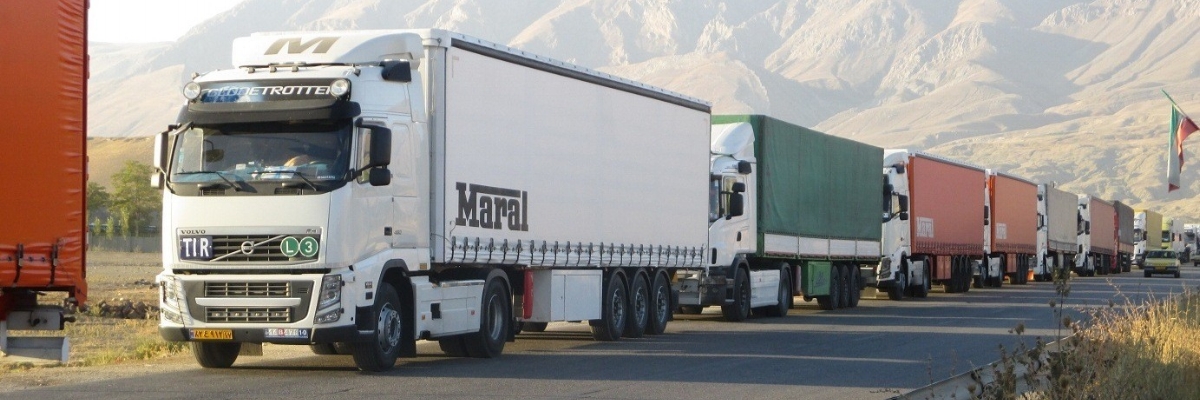
◢ For the last two weeks, around 50 trucks traveling to or from Tajikistan have lain stranded on the northern and southern borders of Turkmenistan in a standoff that defies immediate explanation. Senior transportation officials in Dushanbe have told Eurasianet on condition of anonymity that one working suspicion is that the blockade may have been instigated by Iran, which shares a long border with Turkmenistan.
This article has been republished with permission from Eurasianet.
For the last two weeks, around 50 trucks traveling to or from Tajikistan have lain stranded on the northern and southern borders of Turkmenistan in a standoff that defies immediate explanation.
The trucks traveling from Tajikistan are carrying aluminum, produced at the country’s giant Talco plant, to Turkey. The cargo coming in the other direction comprises mainly textiles.
It is not clear why Turkmenistan should have barred Tajik vehicles from crossing its territory. In fact, senior transportation officials in Dushanbe have told Eurasianet on condition of anonymity that one working suspicion is that the blockade may have been instigated by Iran, which shares a long border with Turkmenistan.
One long-haul driver, who also asked that his name not be published for fear of repercussions, said that in the 10 years he has been ferrying aluminum from the Talco plant in the town of Tursunzoda, this is the first time he has run into such trouble. On September 4, when Eurasianet spoke with the driver, who is parked with his freight in a location on the Uzbek-Turkmen border, he had been waiting for nine days to be allowed through.
“They will not give us a reason. We thought the problem might be something to with transit permits, which we didn’t bring with us from Tajikistan,” the driver said, referring to a document issued to long-haul truckers by Tajikistan’s Transportation Ministry. “But even with the permits they won’t let us through.”
Turkmen border officials have purportedly told Tajik drivers that they might as well turn around and find another route, since they will not be allowed through. Meanwhile, large vehicles registered anywhere but Tajikistan are being let into Turkmenistan.
Khairullo Abidov, director of the Dushanbe-based Real Trans freight company, told Eurasianet that in addition to the 50 or so Tajik trucks stuck on either side of Turkmenistan, there are also some 15 Turkish trucks—whose manifests show Tajikistan as their final destination—not being permitted to leave Iran.
“They would not even allow our trucks into the neutral zone, they are just waiting in the parking lot on the Uzbek side and the Iranian side,” Abidov said.
Transportation Ministry officials in Dushanbe have told Eurasianet that they have received no explanation from Turkmenistan for the cause of this blockade. A formal note requesting clarification has been submitted by the Foreign Ministry to the Turkmen Embassy in Dushanbe, but no response has been forthcoming.
“For a week, we have yet to receive a clear explanation from Turkmenistan, and so we are advising our drivers to go through [Kazakhstan and] Azerbaijan. The road is longer and more expensive. It depends on the drivers whether they want to wait or drive further,” one high-level ministry source said.
Abidov said that for now, he will bide his time.
“But if the worst comes to the worse, then we will have to take our vehicles across the Caspian to Kazakhstan, and from there to Uzbekistan and Tajikistan. But that is an additional USD 1,200 for each truck,” he said.
The Transportation Ministry official told Eurasianet that one of the possibilities being considered in Dushanbe is that the situation has been instigated by Iran. Turkmen officials have told their Tajik colleagues that Iran is allowing only 40 trucks through their border daily, but that does not seem to explain why the Tajiks are being singled out for this treatment.
“We know perfectly well that they are letting through all vehicles except those from Tajikistan,” the ministry official said.
Relations between Tajikistan and Iran have fallen to an all-time low of late. With encouragement from Saudi Arabia, which has disbursed several dozen million dollars in aid to Dushanbe, the Tajik government has embarked on an often outlandish demonization campaign against Iran.
In an interview in July, Saudi Arabia’s ambassador to Tajikistan, Abdulaziz ibn Muhammad al-Badi, boasted that by doling out USD 200 million in aid over the years, Riyadh had managed to squeeze Iran out of the country. In the same exchange, al-Badi indicated that he gave credence to Tajik state media claims that Iran is trying to lay the ground for an Islamic revolution in Tajikistan.
Most recently, Tajik officials have sought to imply that Iran was somehow involved in a hit-and-run attack in late July that left four foreign cyclists, including two Americans, dead. The killings were claimed by the Islamic State group.
Whether suggestions that Iran may have somehow leaned on Turkmenistan to impose the blockade is part of a broader smear campaign, or if Tehran is engaging in reprisals, remains uncertain.
Another theory is that Turkmenistan is adopting stricter security measures in response to a possible discovery of drugs being carried across the border. Tajikistan is believed by international drug enforcement officials to be a major hub for the trafficking of heroin originating in Afghanistan.
One final, if implausible, scenario mooted in Dushanbe is that Turkmenistan has adopted this unfriendly policy in response to an incident on August 21 in which a young Turkmen woman died while waiting in a line at the Tajik consulate. Securing visas can entail months of wrangling and standing for endless hours in stuffy hot rooms, so the suggestion is that the woman may have succumbed to exhaustion. Tajik officials have said they think it unlikely this would have been enough to instigate a blockade, however.
Photo Credit: IRNA