

Iran's Judicial Authority Moves to Ban 'Torture' and Forced Confessions
Iran's judicial authority on Thursday issued an order banning torture, the use of "forced confessions", solitary confinement, illegal police custody and other violations of defendants' rights.
Iran's judicial authority on Thursday issued an order banning torture, the use of "forced confessions,” solitary confinement, illegal police custody and other violations of defendants' rights.
The "document on judicial security" was signed by Iran's judiciary chief Ayatollah Ebrahim Raisi and released by Mizan Online, the authority's news agency.
It also stresses the "transparency" of the judicial process, including the right to freely choose a lawyer and "the principle of the presumption of innocence.”
It also guarantees "consular access" for foreign nationals.
Iran is regularly accused by the United Nations, several Western countries, rights organisations and Iranian lawyers of flouting the principles that Raisi says he wants to see respected.
The publication of the charter comes a week after controversy sparked by videos posted on social media showing police officers beating detainees in pickup trucks in the middle of a street.
In the videos, apparently filmed in Tehran, the detainees are also made to apologise for the "mistakes" they say they have committed.
Raisi on Monday said the police action was a "case of violation of civil rights", according to Mizan Online.
He also ordered measures be taken against those responsible, saying it was "strictly forbidden to attack the accused, even if they are thugs."
Raisi, 59, who is close to Iran's supreme leader Ayatollah Ali Khamenei, was picked to lead the judiciary in March 2019 with the mission of radically transforming an institution mired in corruption.
At the beginning of September, the execution of a young wrestler caused outrage after reports he been convicted on the basis of confessions extracted under torture.
Raisi ran in the 2017 presidential elections with the support of a broad conservative coalition, but was beaten by Hassan Rouhani who won a second term.
Iranian media see Raisi as a possible candidate for the next presidential election, scheduled for June 2021.
Since Raisi took office, the press have covered several high-profile cases of "economic corruption", or prevarication within the judicial authority.
State television announced overnight Wednesday the successful extradition of Ali Reza Heydarabadipour, former head of Sarmayeh bank who was convicted of being the kingpin of an embezzlement scandal harming tens of thousands of teachers.
Heydarabadipour—extradited from Spain in coordination with Interpol—arrived Wednesday evening in Iran, state television said.
He had been sentenced in absentia to 12 years in prison.
Photo: IRNA
Iran Children Citizenship Bill Sent Back to Parliament
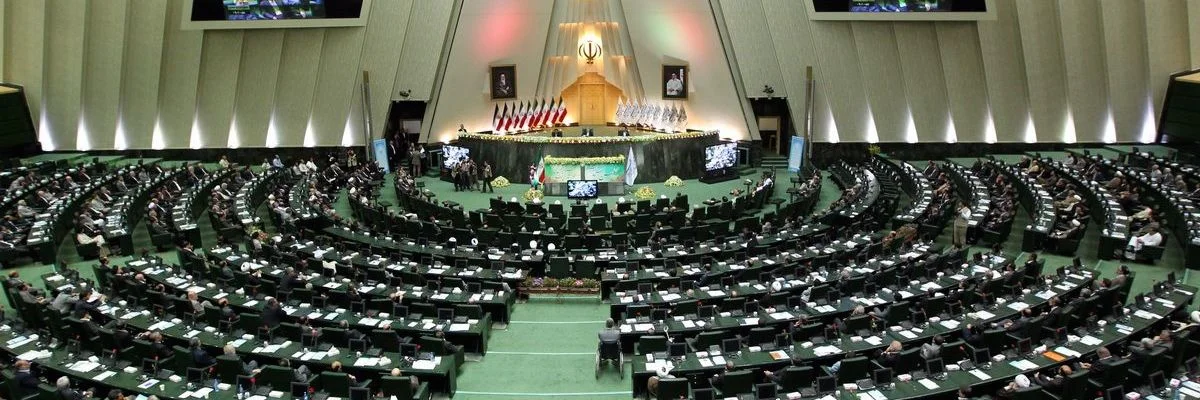
◢ Iran's Guardian Council said Saturday it sent a bill that would allow Iranian mothers married to foreigners to confer citizenship on their children back to parliament, citing "security" concerns. In a statement on its website, the council said it did not have an issue with the spirit of the bill, but rather the absence of any clauses allowing authorities to address "security" issues potentially arising from the activities of foreign fathers.
Iran's Guardian Council said Saturday it sent a bill that would allow Iranian mothers married to foreigners to confer citizenship on their children back to parliament, citing "security" concerns.
In a statement on its website, the council said it did not have an issue with the spirit of the bill, but rather the absence of any clauses allowing authorities to address "security" issues potentially arising from the activities of foreign fathers.
The council—made up of clerics and jurists—was also concerned that the bill planned to automatically grant residence permits to foreign fathers, when in the council's view the government must retain discretion to refuse, MP Tayebeh Siavoshi told the semi-official ISNA news agency.
The bill, overwhelmingly passed in May by parliament, has been seen as a huge step forward for thousands of children born in Iran to Afghan fathers who cannot enjoy full social rights.
Iran is one of seven countries worldwide that "do not allow mothers to confer their citizenship on their children with no or very limited exceptions," according to a 2019 report by the United Nations' refugee agency (UNHCR).
Lebanon, Kuwait, Qatar, eSwatini (formerly Swaziland) and Brunei are among the others.
The next step is for parliament to review the bill and amend it, ahead of further discussion by the Guardian Council.
Parliament's powers are limited compared to other institutions.
Lawmaking is vetted by the Guardian Council, which has the authority to interpret the constitution and check laws' compliance with sharia.
According to Iranian officials, the Islamic republic is home to some three million Afghan immigrants, many of whom are married to Iranian women and have children.
"Thousands of children were left out in the cold... with this law things would have cleared up for them," said sociologist Mohammad Reza Jalaeipour in an interview with official news agency IRNA.
"Some of them can't have driving licenses, some of them can't have social security," he added.
Photo: IRNA