
Iran Unveils Second Homegrown Virus Vaccine Project
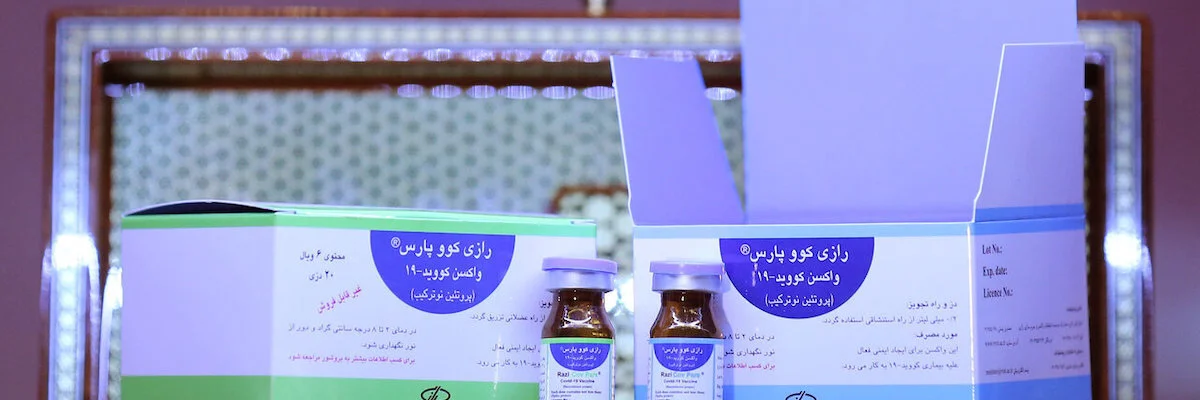
Iran unveiled its second homegrown coronavirus vaccine project Monday, the day before the launch of a vaccination campaign to combat the Middle East's deadliest Covid-19 outbreak.
Iran unveiled its second homegrown coronavirus vaccine project Monday, the day before the launch of a vaccination campaign to combat the Middle East's deadliest COVID-19 outbreak.
“We will start human tests in the coming days, or in a week at the latest," Massoud Soleimani, a member of Iran's national vaccine committee, told journalists in Karaj near Tehran.
The vaccine, dubbed Razi Cov Pars, was developed at the Razi Vaccine and Serum Research Institute, which is linked to the agriculture ministry, Soleimani said.
At the start of Phase 1 of the clinical trials, "13 volunteers between the ages of 18 and 55" will receive a jab, he added.
The unveiling comes the day before the launch Tuesday of a campaign to vaccinate Iran's 80-million-plus population, starting with the Sputnik V jab, according to Health Minister Saeed Namaki.
The first doses of the Russian vaccine arrived on Thursday in Tehran, with two other shipments expected by February 18 and 28, according to Iranian authorities.
The Islamic republic has bought two million doses of Sputnik V, health ministry spokesman Kianoush Jahanpour told AFP on Saturday.
Namaki said last week that Iran would also receive 4.2 million doses of the vaccine developed by Anglo-Swedish firm AstraZeneca and Oxford University, purchased via the international vaccine mechanism COVAX.
The coronavirus has killed more than 58,500 people and infected 1.4 million in Iran, according to the health ministry.
Iran started clinical trials of its first locally developed vaccine in late December.
Photo: IRNA
Iran Expects First Batch of Russian Vaccine This Week
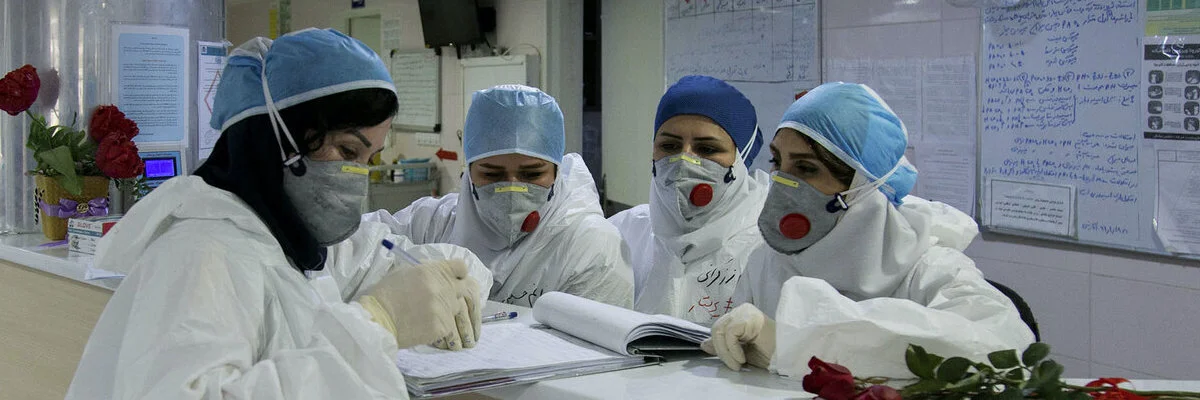
Iran's ambassador to Russia said Saturday that Tehran expects to receive the first batch of Moscow's Sputnik V coronavirus vaccine by February 4, state news agency IRNA reported.
Iran's ambassador to Russia said Saturday that Tehran expects to receive the first batch of Moscow's Sputnik V coronavirus vaccine by February 4, state news agency IRNA reported.
The news comes just days after Iran's Foreign Minister Mohammad Javad Zarif announced the vaccine had been approved by the Islamic Republic.
"A contract for the purchase and joint production was signed yesterday between Iran and Russia," envoy Kazem Jalali said, quoted by IRNA.
Two more batches are to be delivered by February 18 and 28, he added, without specifying quantities.
Iran's supreme leader Ayatollah Ali Khamenei earlier this month banned the use of vaccines made by the United States and Britain, calling them "completely untrustworthy".
Iran is fighting the Middle East's deadliest outbreak of COVID-19 with more than 57,800 dead out of over 1.4 million cases.
The country says arch enemy US has blocked its access to vaccines through Washington's tough sanctions regime.
While food and medicine are technically exempt, international banks tend to refuse transactions involving Iran.
Russia registered the jab—named after the Soviet-era satellite—in August last year, before the start of large-scale clinical trials, leaving some experts wary.
Sputnik V's developers have since said the vaccine is more than 90 percent effective and several countries outside of Russia have begun administering it, including Argentina.
Hungary has also said it has reached a deal to buy the vaccine, although it has not been approved by the European Union.
Iran started clinical trials of its own vaccine in late December.
Photo: IRNA
Iran's Daily Virus Infections Top 10,000
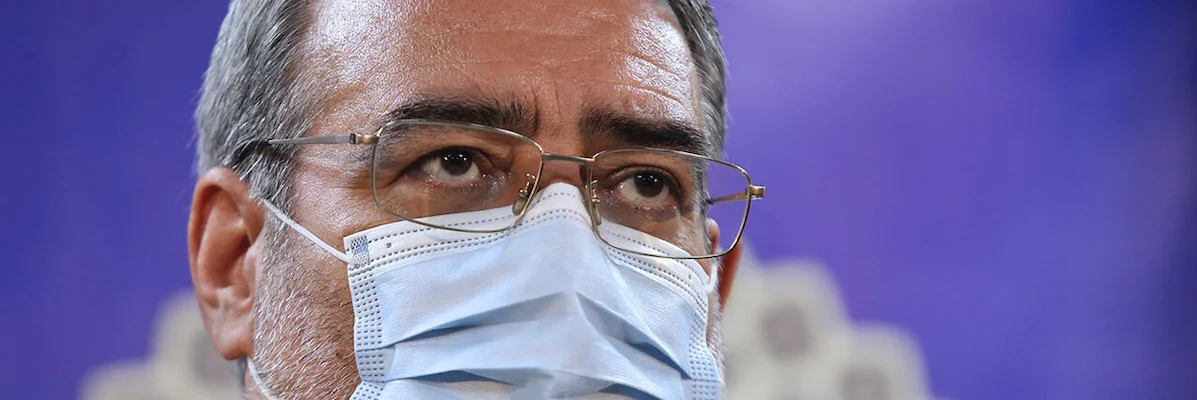
Iran's daily novel coronavirus infections crossed the 10,000 mark on Monday, the health ministry announced, setting a new record as fatalities remained close to their all-time high level.
Iran's daily novel coronavirus infections crossed the 10,000 mark on Monday, the health ministry announced, setting a new record as fatalities remained close to their all-time high level.
The latest official figure of 10,463 positive Covid-19 cases in a 24-hour period comes only three days after the Islamic republic exceeded 9,000.
Iran's coronavirus caseload now stands at 692,949, the ministry said.
The virus also claimed 458 lives in the past day, raising the country's overall number of fatalities to 38,749.
The previous fatality record of 459 came on Sunday, according to official figures.
Iran recently imposed several rounds of short-lived restrictions across the country to contain the virus, but the rising deaths and infections have prompted calls by experts and officials for a full lockdown.
Tehran's governor Anoushirvan Mohseni-Bandpey said on Monday that the lockdown proposal was no longer on the agenda as a new set of measures had since been unveiled, state news agency IRNA reported.
The measures, announced on Saturday and set to last a month from Tuesday, force the closure of non-essential businesses such as malls, small retailers, cinemas and gyms from 6:00 pm until the next morning.
It would apply to Tehran, provincial capitals and certain highly populated cities, according to the national anti-virus taskforce.
Iran has not imposed a full lockdown since it was hit by COVID-19 in February, with President Hassan Rouhani arguing the country's sanctions-hit economy cannot afford to be shut down for an extended period.
Photo: IRNA

Iran Imposes Travel Restrictions as Virus Deaths Hit Record
Iran on Sunday said it will restrict travel to the cities hit hardest by the novel coronavirus, state TV said, amid a record high of daily COVID-19 deaths.
Iran on Sunday said it will restrict travel to the cities hit hardest by the novel coronavirus, state TV said, amid a record high of daily COVID-19 deaths.
The measure takes effect at Monday midday and will last until Friday, the broadcaster reported, citing an order by the interior ministry.
The restrictions prevent residents from leaving and non-residents from entering based on vehicle plate numbers, but do not apply to public transportation, it added.
It applies to the capitals of 25 provinces considered "red"—the highest level on Iran's colour-coded risk scale—and includes the capital Tehran with more than 8 million residents.
Violators will be fined, the order added.
Limited restrictive measures were imposed on Saturday in those cities, forcing the closure of some public spaces and businesses.
Daily deaths reached a record 434 on Sunday, health ministry spokeswoman Sima Sadat Lari said, adding that 7,719 more people tested positive for the virus in the past 24 hours.
In total, 35,298 people have died from coronavirus, according to official figures.
The rising toll has prompted several health experts and officials to call for a full lockdown in the capital.
Photo: IRNA
Iran Declares 'Full-Scale War' as Virus Deaths Hit Record
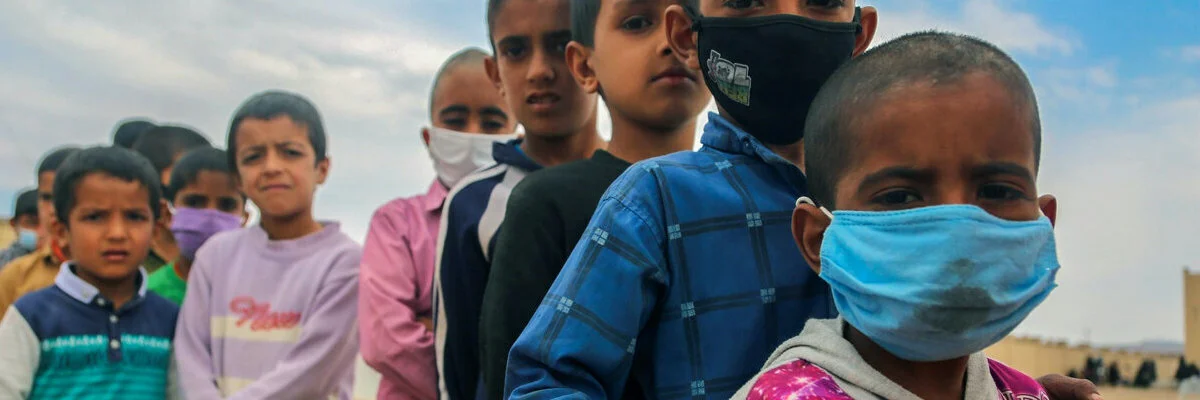
Iran declared "full-scale war" with coronavirus as it reported a record death toll Wednesday for a second straight day and surging infections overload a health care system struggling with US sanctions.
By Amir Havasi
Iran declared "full-scale war" with coronavirus as it reported a record death toll Wednesday for a second straight day and surging infections overload a health care system struggling with US sanctions.
The Middle East's worst-hit country recorded 415 deaths in 24 hours.
"This is the result of an unprecedented rise in infections and hospitalisations in recent weeks," health ministry spokeswoman Sima Sadat Lari said in a televised address, visibly moved as she gave the grim figures.
"We are now in a full-scale war with the coronavirus," she said.
The latest fatalities, 69 above Tuesday's toll which was also a daily record, raised the total virus deaths to 33,714 in the country of 80 million.
Lari said 6,824 people had tested positive for the virus in the past 24 hours, bringing Iran's declared cases to 558,648.
President Hassan Rouhani warned last week that his country was now faced with "a larger wave of this virus and we have to fight it".
Figures have kept rising since September.
"The main condition for overcoming this disease... and challenge is seeing change in the beliefs and attitudes of every single person," Lari said.
She said 27 of Iran's 31 provinces are currently "red" -- the highest risk level on the country's colour-coded scale.
Tehran province accounts for more than half of Iran's daily Covid-19 deaths, according to its crisis management chief, Reza Karami.
The burgeoning cases have overloaded Iran's already stretched hospitals, as renewed US sanctions since its withdrawal from a 2015 nuclear deal with Iran hit all sectors of the Iranian economy.
"Our hospitals are saturated with patients," deputy health minister Iraj Harirchi said earlier this month.
Queue for Beds
Patients are queueing for beds at some hospitals, he said, with staff also having to cope with their own "physical and mental fatigue" and spare parts shortages hampering repairs to medical equipment.
As the health crisis deepens, Iran's supreme leader Ayatollah Ali Khamenei made a rare public meeting with the novel coronavirus taskforce on Saturday.
"We must do everything" to reduce the number of deaths, Khamenei said.
Rouhani, in an October 19 warning of worse days to come, urged the health ministry to increase the number of daily Covid-19 tests to fight back against the spread.
Health Minister Saeed Namaki told state television on Wednesday that daily tests are to be ramped up to "25,000 to 40,000 or even more", without giving details.
Iran has been struggling ever since its first two coronavirus cases reported in the city of Qom on February 19, after having announced a suspension of air links with China.
After initial accusations of a slow response, the government closed down most public spaces and non-essential businesses in March, stopping short of a full lockdown.
But it gradually reopened the economy from April, arguing that sanctions left it with no other choice.
The Islamic republic has repeatedly faced charges of playing down virus figures, but officials insist they are being transparent.
Harirchi, however, has acknowledged that the actual figures could be significantly higher, mostly due to shortcomings in testing and reporting.
Many other countries in the Middle East have also witnessed a surge in Covid-19 cases.
In neighbouring Iraq, a lockdown imposed early in the pandemic has been dropped for economic reasons, even as deaths have topped 11,000 out of 460,000 confirmed cases.
Jordan had its worst day on Tuesday with more than 3,800 cases and 44 deaths, reaching a total of 668 dead out of 58,855 declared cases of Covid-19.
The kingdom has taken a series of measures to curb its second wave, including imposing a night-time curfew.
Saudi Arabia has been the worst-hit among the Arab countries in the Gulf, with more than 346,000 infections and 5,300 deaths.
In Israel and the Palestinian territories, more than 363,000 cases have been reported, with recent measures including lockdowns and partial curfews.
Photo: IRNA
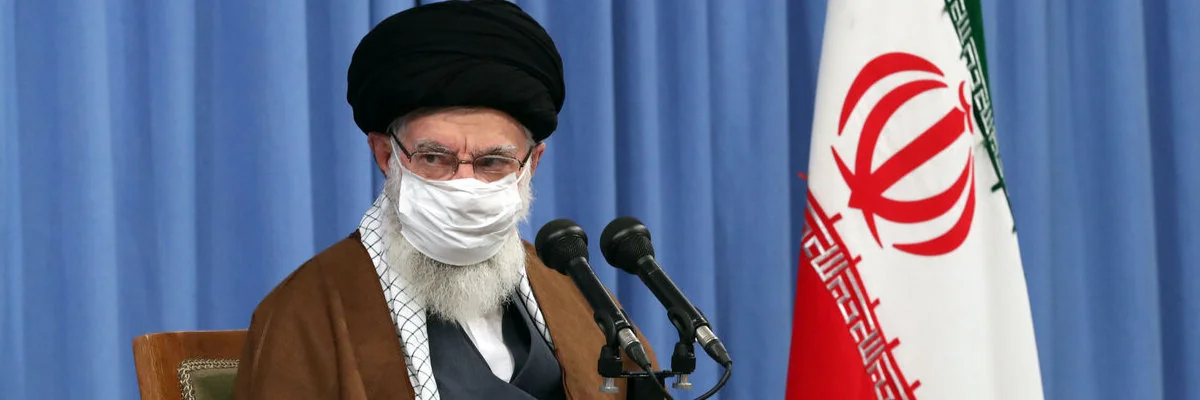
Iran's Khamenei Calls for Every Effort to Stop COVID-19 Spread
Iran's supreme leader Ayatollah Ali Khamenei on Saturday called for stiff action to stem rising cases of novel coronavirus, in a rare public meeting with the national committee battling the pandemic.
Iran's supreme leader Ayatollah Ali Khamenei on Saturday called for stiff action to stem rising cases of novel coronavirus, in a rare public meeting with the national committee battling the pandemic.
"We must do everything" to reduce the number of deaths, Khamenei said, adding that health officials "must ensure that infected people are identified and treated from the start" of their sickness.
Iran is struggling with recent records highs of daily deaths from COVID-19.
Khamenei has, since the start of the pandemic, largely participated in meetings remotely via video-conference.
But on Saturday he joined the weekly meeting of the coronavirus taskforce in person, hosted by President Hassan Rouhani, with members all masked and separated by large spaces.
Khamenei called for "the need to adopt severe penalties for those who commit major violations of health regulations" established by the health ministry in order to stop the pandemic.
The "basis and the priority in all decision-making is the health of the people," Khamenei said, noting that "an autumn resurgence of Covid-19 is occurring all over the world".
Iran said the total number of victims rose on Saturday to 32,320, with 562,705 cases recorded.
Photo: IRNA
Iran Hits New Virus Records, Curbs Travel
Iran on Wednesday announced temporary travel restrictions on five major cities including Tehran as the country hit new single-day records in both COVID-19 deaths and new infections.
Iran on Wednesday announced temporary travel restrictions on five major cities including Tehran as the country hit new single-day records in both COVID-19 deaths and new infections.
As well as the capital, the measures include banning travel to and from Karaj, Mashhad, Isfahan and Urmia, the health ministry's Kianoush Jahanpour told state television.
It runs from midnight until Sunday noon, only involving private vehicles but not "public transportation" such as buses and planes, he said.
According to Jahanpour, the measure may be renewed after Sunday and extended to other cities.
The aim was to dissuade Iranians from travelling at the weekend, which runs from Thursday to Friday in Iran, and a public holiday on Saturday.
"A large part of the population... is not being responsible," Jahanpour said.
A retired employee in Tehran named Pakzamir told AFP that "the authorities blame the people, but that is not true."
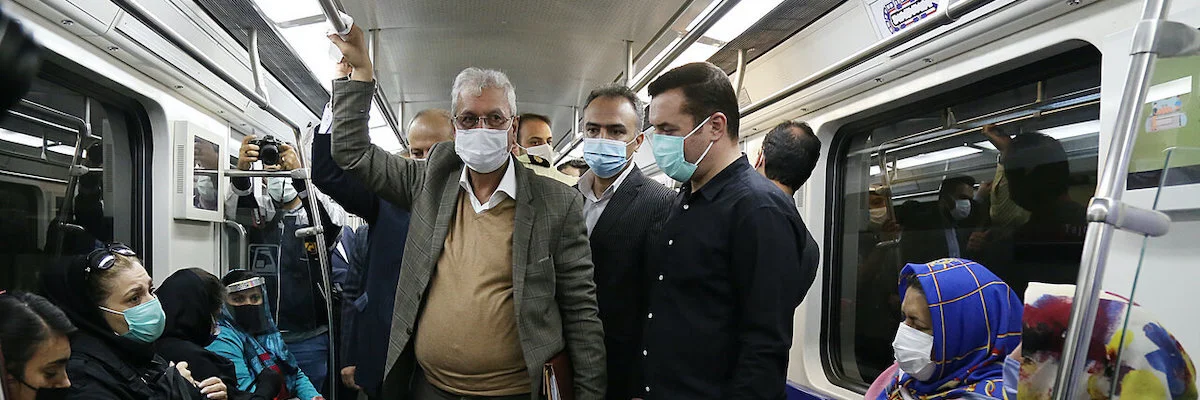
According to her, rising costs in a troubled economy are forcing people to "use the subway and public transportation, and that spreads the disease."
"The main reason for the rise in coronavirus (cases) is the government's lack of planning and not enforcing restrictions properly," teacher Fariba Ghasemi said.
Deaths and infections from the virus have been on a sharply rising trajectory in Iran since early September.
COVID-19 deaths numbered 279 on Wednesday as 4,830 new cases of infection were confirmed, the highest single-day figures since the country reported its first cases in February.
The novel coronavirus has killed a total of 29,349 people out of 513,219 cases in the Middle East country hardest hit by the pandemic.
The numbers are likely to be higher than officially reported, deputy health minister Iraj Harirchi acknowledged Wednesday, primarily due to testing and reporting protocols.
Iran on Saturday started imposing fines for the first time for breaches of health rules in the capital.
Tehran authorities on October 3 shut most public spaces and cancelled gatherings for a week, a move that was extended to Wednesday.
It was not immediately clear if they were to be renewed again alongside the travel curbs.
Photo: IRNA
Iran Reimposes Restrictive Virus Measures in Tehran
Iran on Saturday reimposed measures in Tehran province to contain the novel coronavirus, state TV reported, shutting public spaces and cancelling events days after confirming another record number of cases.
Iran on Saturday reimposed measures in Tehran province to contain the novel coronavirus, state TV reported, shutting public spaces and cancelling events days after confirming another record number of cases.
The measures went into force on Saturday and were set to last a week, the broadcaster said, citing an order by the Tehran governor's office.
Under the restrictions, universities and education centres, mosques, cinemas, museums, wedding halls, beauty salons, gyms, cafes, zoos and swimming pools would be closed, state TV reported.
"Cultural and social events and conferences" were cancelled and Friday prayers would not be held, it added.
The Islamic republic confirmed a record 3,825 COVID-19 cases on Thursday, surpassing the previous high reported on September 22.
The restrictions are largely the same as those taken early in the pandemic in Iran, which stopped short of imposing a full lockdown, despite facing the Middle East's deadliest outbreak.
The measures were progressively eased from April to avoid deepening an economic crisis precipitated by the reimposition of heavy sanctions by the United States in 2018.
Iranian President Hassan Rouhani called on Saturday for heavy fines and punishment for those flouting health protocols.
"We must set harsh fines for those who know they are infected but have not self-quarantined for 14 days or even told others" they have contracted the virus, Rouhani said at a meeting of the national coronavirus taskforce.
He added that government employees who failed to observe regulations could be suspended for one year if first warnings were not heeded.
Not wearing a mask would incur a fine and businesses could be closed down if health regulations were not respected, according to the president.
Iran's health ministry on Saturday announced 3,523 new COVD-19 infections, bringing the total number of cases since February to 468,119.
The day's death toll of 179 brought the number of fatalities due to the disease to 26,746.
Photo: IRNA
Iran Marks New Record Single-Day COVID-19 Infection Tally
Iran reported a new record number of Covid-19 cases on Thursday, with 3,825 infections confirmed in the past 24 hours, according to official statistics.
Iran reported a new record number of COVID-19 cases on Thursday, with 3,825 infections confirmed in the past 24 hours, according to official statistics.
The figure surpasses the previous record single-day case tally of 3,712, reported on September 22.
The number of deaths per day linked to the disease have remained stable, according to Iranian authorities.
"We have unfortunately lost 211 of our dear compatriots to the COVID-19 illness over the past 24 hours," health ministry spokeswoman Sima Sadat Lari said in a press briefing.
The new fatalities bring the total number of deaths to 26,380, out of 461,044 cases recorded in the country, which has been battling the Middle East's deadliest outbreak of the novel coronavirus since February.
Criticising a "decline in compliance with health protocols" across the country, Lari reiterated a call for Iranians to observe regulations in place to stem the spread of the virus, in particular wearing masks where it is mandatory.
"The trend toward a decline in mask use in recent weeks remains of deep concern for our colleagues within the health system," she said.
Iran took various restrictive measures to stem the virus but stopped short of imposing a full lockdown to avoid deepening an economic crisis precipitated by the reimposition of heavy sanctions by the United States in 2018.
Photo: IRNA
New School Year Begins in Iran Amid Concerns, Criticism
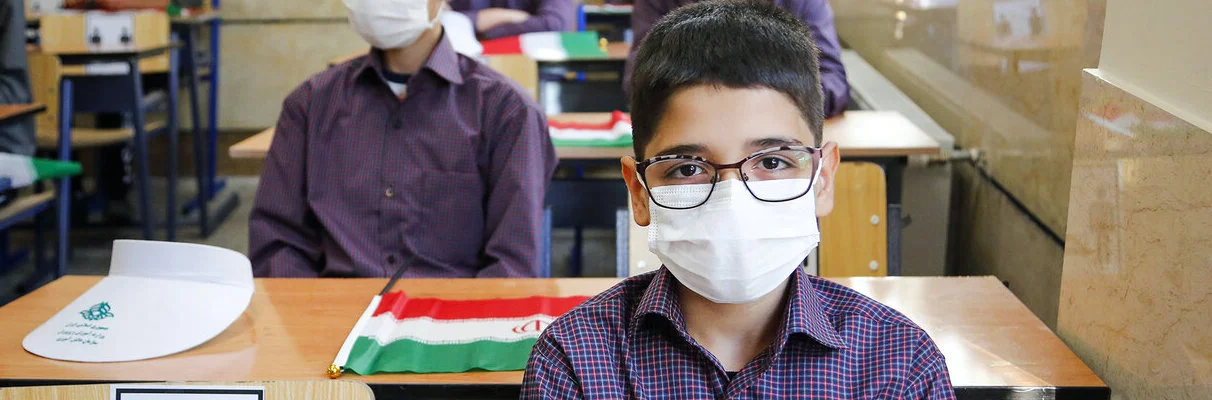
The school year in Iran began on Saturday after a near six-month shutdown due to the novel coronavirus pandemic, with parents voicing concerns despite authorities pledging to enforce health protocols.
By Amir Havasi
The school year in Iran began on Saturday after a near six-month shutdown due to the novel coronavirus pandemic, with parents voicing concerns despite authorities pledging to enforce health protocols.
Some 15 million pupils in the Islamic republic returned to class, mostly remotely, as the country continues to battle its Covid-19 outbreak, the deadliest in the Middle East with over 22,000 killed and more than 384,000 infected since the first cases were confirmed in February.
The first day of classes at Nojavanan high school in northeastern Tehran was attended by a slew of officials and journalists, as well as students.
President Hassan Rouhani appeared in a video to inaugurate the new academic year at the school -- a break with tradition that drew fire from some Iranians online who thought he should have come in person if students were required to be present.
Education Minister Mohsen Haji-Mirzaei looked to assuage parents' concerns in a speech after he rang the bell to launch the new school year.
"I hope that families trust us and rest assured that the ministry will exercise utmost vigilance" regarding health protocols, he said.
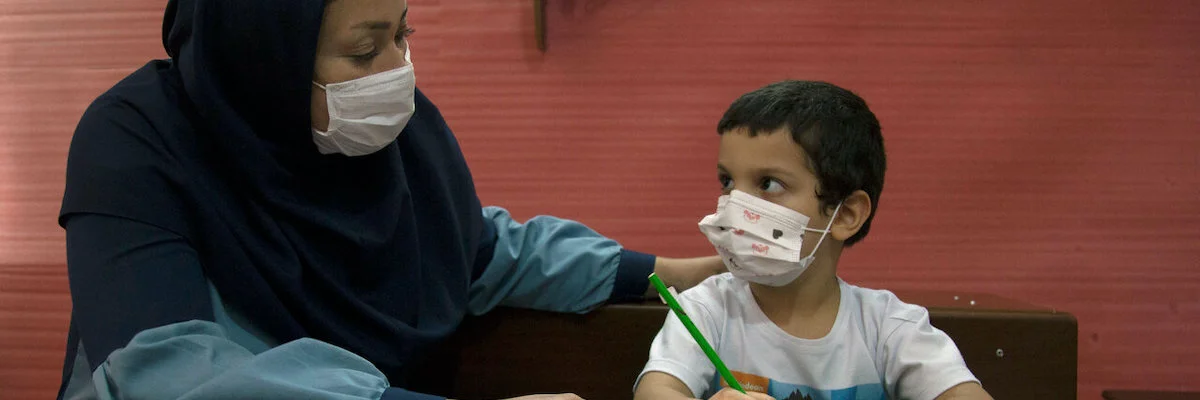
Pupils and other attendees wore masks and were required to pass through a disinfection tunnel, have their temperatures checked and sit socially distanced in the schoolyard.
Other anti-virus measures at schools include keeping classes to 35 minutes and requiring students and staff to stay one meter (three feet) apart and wear masks, according to Iran's anti-virus taskforce.
Rouhani Under Fire
During his video address, Rouhani emphasized the need to for students to observe health protocols, calling for the "utmost discipline" in respecting measures.
Rouhani's choice not to attend the opening ceremony in person drew criticism from some.
"Rouhani rang the bell (to start the school year) remotely, then he expects me to send my son in person?" reformist journalist Maziar Khosravi wrote on Twitter.
Conservative film producer Mahmoud Razavi echoed Khosravi in a tweet, saying, "how can they expect people to trust protocols when the president himself does not, and send their loved ones to school?"
Rouhani's government had come under fire before schools reopened, with the head of Iran's medical council, Mohammadreza Zafarghandi, writing an open letter in which he called proposed health protocols counterproductive, as students could spread the virus if they were infected but asymptomatic.
‘Stressful'
This concern was shared by some teachers, parents and students at Nojavanan high school.
"Controlling (Covid-19's spread) is very difficult... as is teaching kids how to follow health protocols and social distancing," school principal, Nasrin Mobini, told AFP.
"We are all concerned -- my colleagues, the parents, everyone."
Literature teacher Amiri, 60, said the return of students to school was "stressful", but that it was important that the first classes be held in person so teachers and students can get to know each other.
One parent, only giving her surname as Azaraksh, said she brought her son for the opening day with "concern", but she preferred in-person education if health protocols were "really" observed.
Many students shared their parents' worries, but were pleased to be back at school.
"We're happy that schools have reopened, but... it's still dangerous for us and others," said 14-year-old Askhan.
Most classes are expected to be held remotely, though some pupils, including those in preschool and elementary school will attend classes in person intermittently.
Ava Golkar, 33, the English department head at Soroush elementary school in northern Tehran, told AFP that only five pupils attended the opening day in person, while the rest watched via video streaming.
Photo: IRNA
Iran Says COVID-19 has Killed 20,000 in Six Months
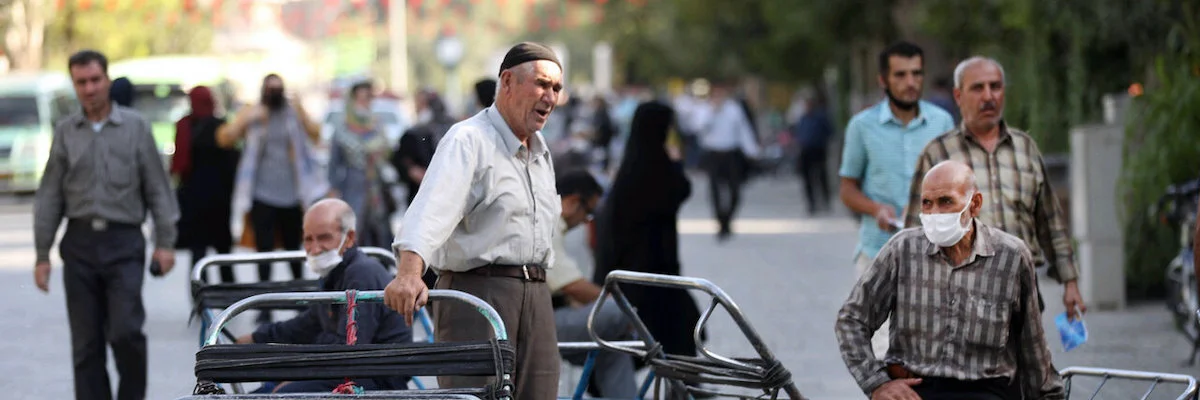
Iran's novel coronavirus death toll has surpassed 20,000, the government said Wednesday, six months after announcing the start of what quickly became the Middle East's deadliest outbreak.
Iran's novel coronavirus death toll has surpassed 20,000, the government said Wednesday, six months after announcing the start of what quickly became the Middle East's deadliest outbreak.
The health ministry said Covid-19 claimed 153 more lives in the past 24 hours, bringing the country's overall toll to 20,125 dead.
Its spokeswoman, Sima Sadat Lari, told a televised news conference there had been another 2,444 cases of infection in the last 24 hours.
The Islamic republic has now reported 350,279 coronavirus infections since announcing its first cases—two deaths in the Shiite holy city of Qom—on February 19.
Lari described the situation as "concerning" in 26 of Iran's 31 provinces, among them Tehran.
She also stressed health protocols should be observed during the holy Shiite mourning month of Moharram, which starts on Friday.
"In no case should Moharram ceremonies be held in closed spaces," she said.
There has been skepticism at home and abroad about Iran's official figures, amid concerns the real toll could be much higher.
Authorities have not imposed a mandatory lockdown on the population across Iran.
Schools were shut, public events cancelled and travel between provinces banned in March.
Restrictions were gradually lifted in April as the coronavirus pandemic exacerbated a sharp downturn for Iran's sanctions-hit economy.
But deaths and infections have risen in the Islamic republic since hitting a months-long low in May, leading to a reimposition of some protocols.
Photo: IRNA
Iran Reports Highest Virus Cases for Nearly a Month
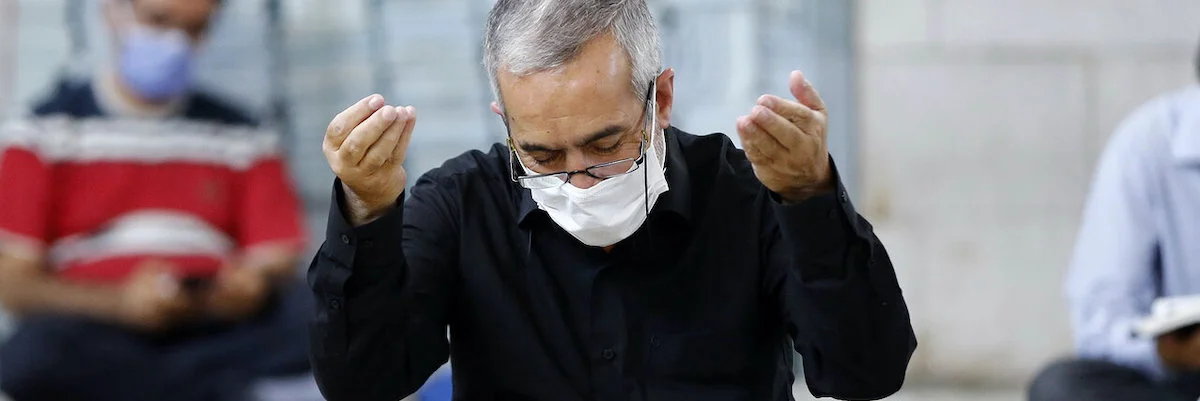
Iran on Sunday reported its highest single-day novel coronavirus infection count in nearly a month, warning that most of its provinces have been hit by a resurgence of the disease.
Iran on Sunday reported its highest single-day novel coronavirus infection count in nearly a month, warning that most of its provinces have been hit by a resurgence of the disease.
Iran has been battling the Middle East's deadliest outbreak of COVID-19 since late February.
After a lull in deaths and infections from April to May, it now appears that the provinces first hit, including the holy city of Qom, are back in the same place as figures have been on the rise.
Health ministry spokeswoman Sima Sadat Lari said that 2,685 more people had tested positive for COVID-19 in the past 24 hours, the country's highest single-day count since July 8.
This raises total cases identified since late February to 309,437, she added.
Another 208 people also died during the same period, bringing the overall toll to 17,190.
According to Lari, the situation is "concerning" in 25 out of Iran's 31 provinces.
"Sadly, since late June, daily infections have been on a rising trajectory" in Qom in central Iran, she said.
"We are concerned that trivializing the situation and lax observance of health protocols may lead to a worsening of the outbreak in the province."
Lari warned against travel to Mazandaran, a popular northern tourist resort at the vanguard of the outbreak where daily infections had more than quadrupled in the past six weeks.
Official figures show a marked increase in deaths and infections since the end of June.
As a result, mask-wearing was made compulsory in covered areas and provinces were given powers to reimpose restrictive measures.
Iranian media said that renowned Iranian filmmaker Khosro Sinai, 79, had died from the virus on Saturday.
Celebrated and awarded in numerous Iranian and international festivals, Sinai was the latest high-profile figure to succumb to COVID-19 in Iran following several government officials and politicians.
Photo: IRNA
Virus-Hit Iran Warns Against Weddings and Funerals
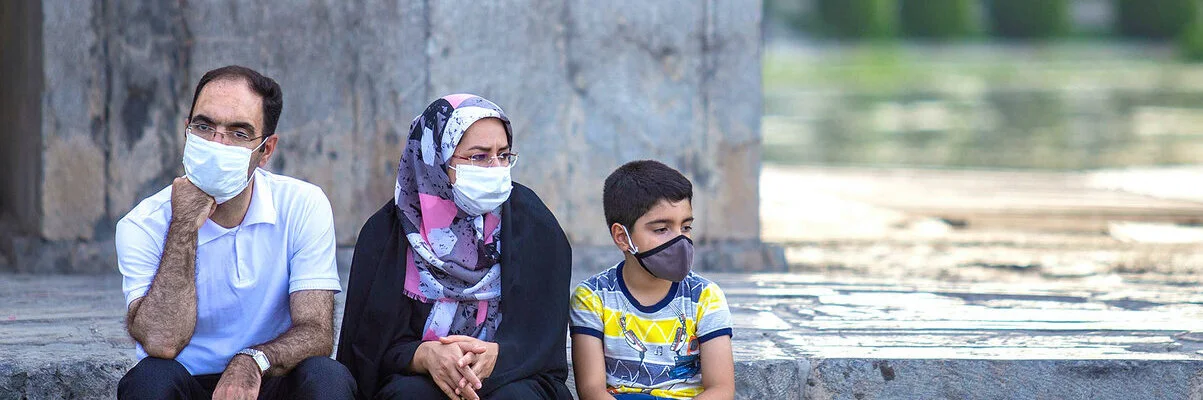
Tehran on Monday warned Iranians against holding wedding and funeral gatherings as the country's novel coronavirus outbreak showed no signs of abating, claiming another 212 lives.
Tehran on Monday warned Iranians against holding wedding and funeral gatherings as the country's novel coronavirus outbreak showed no signs of abating, claiming another 212 lives.
"Despite repeated calls to not hold weddings and mourning ceremonies, reports from across the country still indicate they are taking place," said health ministry spokeswoman Sima Sadat Lari.
"The presence of people at these overcrowded events increases the risk of mass infection," she added, in remarks aired on state television.
While there is no nationwide ban on weddings and funerals, the venues in which they are staged have been ordered shut and authorities have repeatedly urged people to keep such gatherings small.
The Islamic republic has been battling to contain the Middle East's deadliest novel coronavirus outbreak since announcing its first cases on February 19.
Lari said another 212 people had died of the COVID-19 illness in the past 24 hours, bringing the country's overall death toll since February to 15,912.
She added that 2,434 new infections during the same period took the total case load to 293,606.
Government spokesman Ali Rabiei has also tested positive for the novel coronavirus, state news agency IRNA reported on Monday.
Rabiei had been "resting at home since late last week after showing some symptoms" but has since been hospitalized, IRNA added.
He is the latest high-profile Iranian official to contract the novel coronavirus. Several have died but most have recovered.
Virus-related deaths and infections in Iran have risen to record highs since hitting months-long lows in May.
That has prompted authorities to make masks mandatory in enclosed public spaces and reimpose restrictions in some areas.
Photo: IRNA
Confusion And Fear as Iran Says Millions May Have Virus
President Hassan Rouhani's recent announcement that 25 million Iranians may have been infected with the coronavirus, a figure drastically higher than the country's official tally, has left many perplexed and fearful.
By Amir Havasi
President Hassan Rouhani's recent announcement that 25 million Iranians may have been infected with the coronavirus, a figure drastically higher than the country's official tally, has left many perplexed and fearful.
The shock statement came five months after Iran announced its first COVID-19 cases: the deaths of two people in the Shiite holy city of Qom.
It was compounded by Rouhani's suggestion his government was now hoping to overcome the Middle East's worst outbreak via herd immunity.
"Our estimate is that up to now 25 million Iranians have been infected with this virus," Rouhani told a virus taskforce meeting on Saturday.
Citing the results of a health ministry study, he warned that "30 to 35 million more may face infection" in the future and added that Iran had "not yet achieved herd immunity".
The number is far higher than the 15 million cases recorded worldwide and significantly more than some hard-hit countries such as the United States and Brazil.
It was also nearly 100 times worse than Iran's official infection figure of over 270,000 cases issued at the time by the health ministry.
Iran's toll has continued to climb since, with the virus having officially claimed 221 lives between Wednesday and Thursday, while infections climbed by 2,621.
Since he announced Saturday's massively elevated estimates, Rouhani has not mentioned them again, let alone elaborated.
But a slew of officials have since come up with their own explanations, with some saying the 25 million does not refer to full-blown infection cases but to all those who were "exposed" to COVID-19 and may now have a level of immunity.
'Strategic Mistake'
Iran's deputy health minister for research and technology said the figure was an estimate based on research carried out in March "on about 10,000 people in 13-14 provinces".
"It's been proven so far that these people's immunity is stable, meaning that they are like those vaccinated," Reza Malekzadeh told state news agency IRNA on Monday.
He did not name the provinces where this testing had taken place. Iran's population is more than 80 million.
A second deputy health minister, Alireza Raisi, said in a television interview that the figure of 25 million had been derived from serology tests.
Such tests are for antibodies and detect whether an individual has been exposed to any type of coronavirus, not just COVID-19, he said on Tuesday.
"In Iran and the world, various studies have been done on COVID-19 and the 25 million is the result of one such study and should not be seen as anything more than that," he said.
Raisi also denied Iran was now seeking to overcome the virus through herd immunity.
"Herd immunity is in no way part of (Iran's) policy and countries that have done it eventually regretted doing so," he said.
"There will be no immunity until we have a vaccine."
Responding to a suggestion that mentioning such figures and herd immunity may alarm the public, Raisi said in a veiled criticism that "emphasizing such numbers is a strategic mistake".
Yet according to Dr Emma Hodcroft, a molecular epidemiologist at the University of Basel, the estimate of "a country-wide seropositivity rate of 30 percent, from numbers given, would be far, far higher than we've found in any other country."
In an email to AFP, she noted that numbers that high were only found in "very hard-hit areas" like New York city, which is much smaller and more densely populated than Iran.
Hodcroft also warned against extrapolating numbers from antibody tests to the whole population, especially if they were done in very hard-hit areas of the country.
'Frightening'
Many on Tehran's streets appeared confused or disturbed by the president's statistics and complained of not having received an explanation.
"The way Mr. Rouhani put it, this means almost the whole population of Iran" have been or will be infected, said a 50-year-old businessman who only gave his name as Ashrafi.
"So, observing health protocols has been for nothing?" he added, saying the numbers were "frightening".
He also complained that Health Minister Said Namaki should have been the one who explained the figures and any move toward herd immunity.
Ashkan Daliri, a hairdresser in his 20s, said he believed the numbers to be real and "a bit scary".
He said he thought the announcement was meant to make "the people face reality so that they would be scared into observing health protocols more".
He added that herd immunity might be an effective way to control the outbreak, even though "it would mean more people would die".
An art teacher named Rezayi said she did not believe the numbers were actually so high.
"And even if they are, it's still hard to accept them given how the president has denied his statements before," she said.
She was referring to a comment Rouhani made days after the start of Iran's outbreak in February, when he said "everything will return to normal" within a few days.
Having come under criticism for seemingly trying to normalize the crisis, the government's spokesman later said that Rouhani meant a return to normal decision-making procedures by state bodies.
Photo: IRNA
Iran Says Virus Death Toll Tops 13,000
Iran reported on Monday more than 200 new coronavirus fatalities that took the overall toll in the Middle East's deadliest outbreak beyond 13,000.
Iran reported on Monday more than 200 new coronavirus fatalities that took the overall toll in the Middle East's deadliest outbreak beyond 13,000.
"Unfortunately, in the past 24 hours, we have lost 203 of our compatriots due to the COVID-19 disease," said health ministry spokeswoman Sima Sadat Lari.
"Based on this figure, the total number of victims has reached 13,032," she told a televised news conference.
Lari said another 2,349 people had tested positive for the virus, raising the overall figure in the country's outbreak to 259,652.
Iran has been struggling to contain the virus since announcing its first cases in February—two deaths in the Shiite holy city of Qom.
The Islamic republic has refrained from enforcing full lockdowns to stop the pandemic's spread.
Official figures have shown an upward trajectory in new confirmed cases since early May, when Iran hit a near two-month low in daily recorded infections.
The Iranian government made the wearing of masks compulsory in closed public spaces from July 4, including on public transport.
State television, whose presenters now wear masks, said on Monday that police in Tehran were stopping commuters without masks from entering the subway.
Authorities in Qom tightened controls in banks and administrative offices to ensure the implementation of health protocols, including mask-wearing, Tasnim news agency reported on Monday.
The health ministry spokeswoman called on everyone to keep a physical distance from others, to wash their hands and to use masks.
"The more time you spend in an overcrowded environment, the more likely you are to contract the disease," Lari said.
Iran closed schools, cancelled public events and banned movement between its 31 provinces in March, but progressively lifted restrictions from April to try to reopen its sanctions-hit economy.
The economy is suffering under the pressures of the health crisis.
The country's currency, the rial, has hit new lows against the US dollar in recent weeks, mostly over border closures and a halt in non-oil exports, according to analysts.
Photo: IRNA
Iran's Khamenei Urges Fight Against 'Tragic' Virus Resurgence
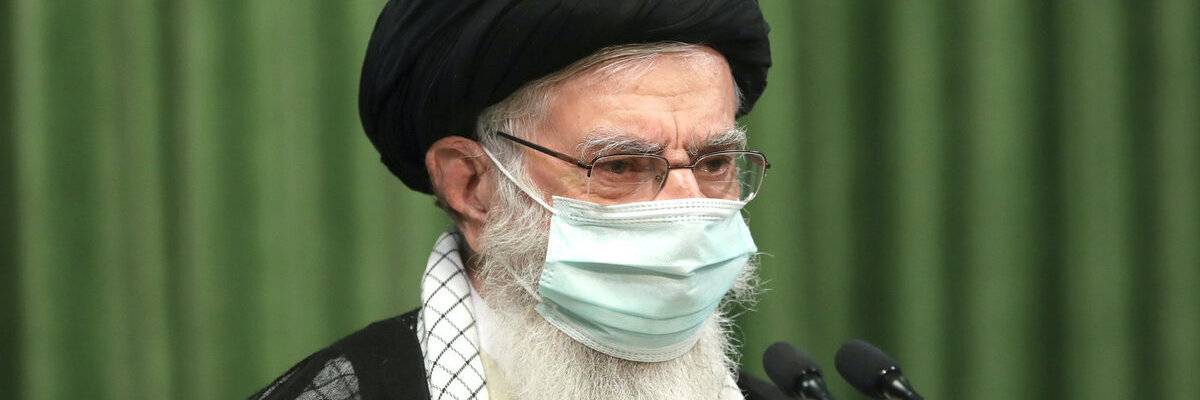
Iran's supreme leader Sunday called the resurgence of the novel coronavirus in the country "truly tragic" and urged all citizens to help stem what has been the region's deadliest outbreak.
Iran's supreme leader Sunday called the resurgence of the novel coronavirus in the country "truly tragic" and urged all citizens to help stem what has been the region's deadliest outbreak.
"Let everyone play their part in the best way to break the chain of transmission in the short term and save the country," Ayatollah Ali Khamenei said in a video conference with lawmakers, according to his office.
Iran has been struggling to contain the outbreak since announcing its first cases in February, and has reported more than 12,800 deaths since then.
Khamenei's speech was his first to MPs since the new parliament took office at the end of May, dominated by conservatives and ultra-conservatives elected in February polls.
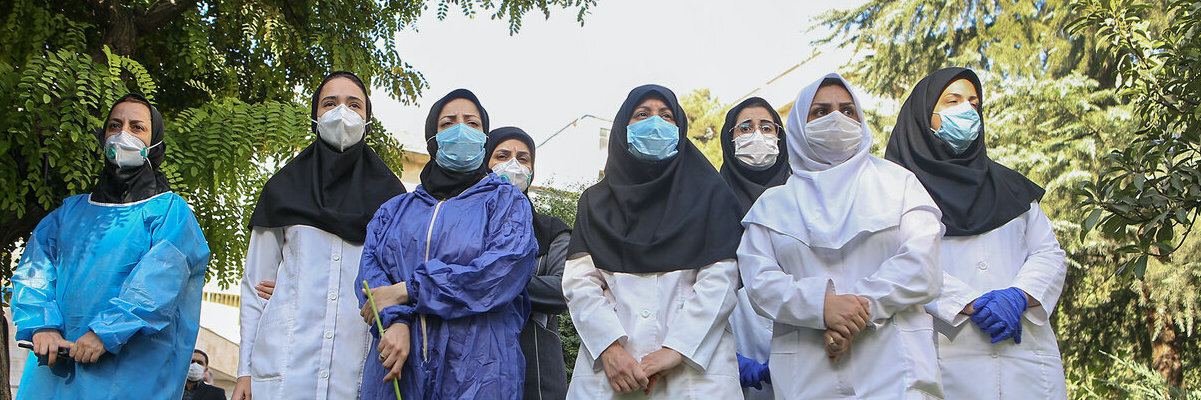
According to his official site, Khamenei praised healthcare workers for "their sacrifices.”
But he also strongly criticized "some people who do not even do something as simple as wearing a mask", saying he felt "ashamed" of such behavior.
Khamenei's comments came as infections have again been on the rise in Iran since early May.
According to figures announced Sunday, 194 deaths from the COVID-19 disease and 2,186 new cases were recorded in the past 24 hours.
The health ministry announced a record 221 deaths in a single day on Thursday.
In total, 257,303 cases have been reported in the country, including 12,829 deaths, health ministry spokeswoman Sima Sadat Lari said Sunday in a televised press conference.
The rising toll has prompted authorities to make masks mandatory in enclosed public spaces and to allow the hardest-hit provinces to reimpose other measures against the virus.
Iran had closed schools, cancelled public events and banned movement between its 31 provinces in March, but the government progressively lifted restrictions from April to reopen its sanctions-hit economy.
On Saturday, President Hassan Rouhani said the country could not afford to shut down the economy, even as the outbreak worsened.
Iran must continue "economic, social and cultural activities while observing health protocols", Rouhani said during a televised virus taskforce meeting.
But he reminded Iranians that restrictions, such as a ban on public and private gatherings, remained in place.
"Gatherings, whether for funerals, weddings, parties, seminars or festivals are all harmful" to public health, Rouhani said.
Authorities have previously reported the spread of the virus in areas where such bans had been ignored.
On Sunday, Khamenei also told lawmakers that "parliament has the right to question... but is not permitted to insult or slander government officials".
His comments came a week after a session in which MPs heckled Foreign Minister Mohammad Javad Zarif, largely over his key role in negotiating a 2015 nuclear deal with world powers.
The deal had given the Islamic republic relief from international sanctions in return for limits on its nuclear program, but Iranian conservatives staunchly opposed the multilateral agreement, arguing the US could never be trusted.
The US unilaterally abandoned the accord in 2018 as a prelude to reimposing biting sanctions.
Photo: IRNA
Iran Says Cannot Shut Down Economy Despite Worsening Virus Outbreak
Iran said on Saturday that it cannot afford to shut down its sanctions-hit economy, even as the country's novel coronavirus outbreak worsens with record-high death tolls and rising infections.
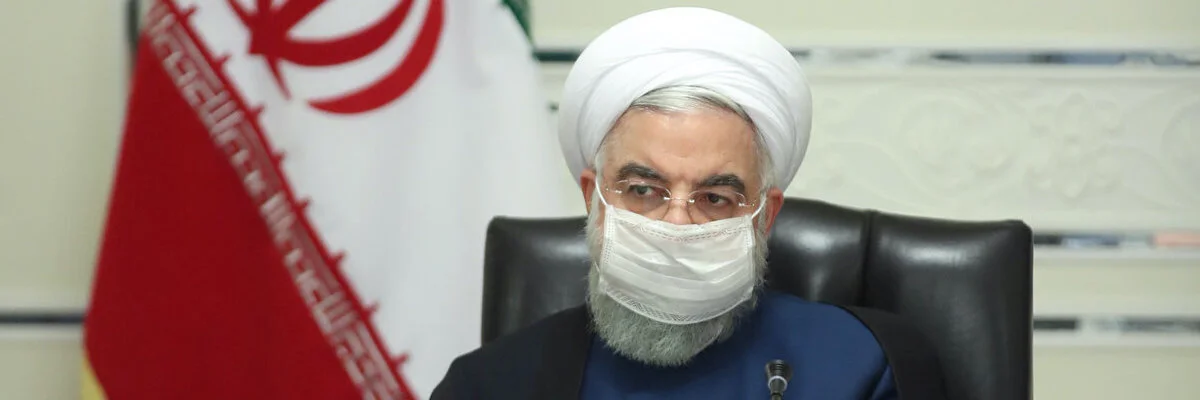
Iran said on Saturday that it cannot afford to shut down its sanctions-hit economy, even as the country's novel coronavirus outbreak worsens with record-high death tolls and rising infections.
Iran must continue "economic, social and cultural activities while observing health protocols", President Hassan Rouhani said during a televised virus taskforce meeting.
"The simplest solution is to close down all activities, (but) the next day, people would come out to protest the (resulting) chaos, hunger, hardship and pressure," he added.
The Islamic republic has been struggling since late February to contain the country's COVID-19 outbreak, the deadliest in the Middle East.
Health ministry spokeswoman Sima Sadat Lari reported Saturday that 188 people had died from the respiratory disease in the past 24 hours, raising the overall toll to 12,635.
Iran's daily COVID-19 death toll has topped 100 since around mid-June, with a record single-day tally of 221 reported on Thursday.
Lari also raised the country's caseload to 255,117, with 2,397 new infections recorded.
The outbreak's rising toll has prompted authorities to make wearing masks mandatory in enclosed public spaces and to allow the hardest hit provinces to reimpose restrictive measures.
Iran closed schools, cancelled public events and banned movement between its 31 provinces in March, but Rouhani's government progressively lifted restrictions from April to reopen its sanctions-hit economy.
Iran has suffered a sharp economic downturn after US President Donald Trump withdrew from a landmark nuclear agreement in 2018 and reimposed crippling sanctions.
The International Monetary Fund predicts Iran's economy will shrink by six percent this year.
"It is not possible to keep businesses and economic activities shut down in the long-term," Rouhani said, emphasizing that "the people will not accept this.”
Health Minister Said Namaki warned on Wednesday of a potential "revolt over poverty" and blamed US sanctions for the government's "empty coffers.”
The reopening of the economy "was not over our ignorance (of the virus' dangers), but it was due to us being on our knees against an economy that could take no more", Namaki said on state television.
US sanctions targeted vital oil sales and banking relations, among other sectors, forcing Iran to rely on non-oil exports, which have dropped as borders were closed to stem the spread of the virus.
Photo: IRNA
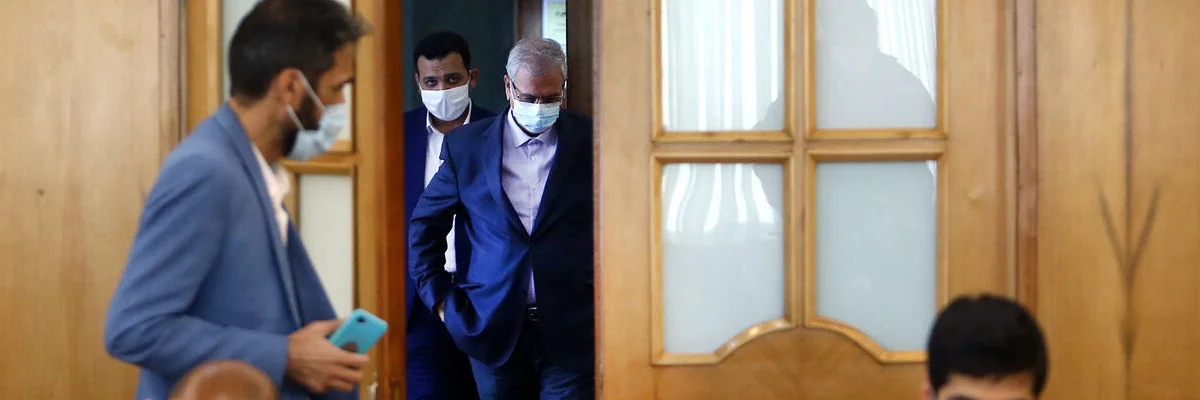
Iran Reports Record One-Day Coronavirus Death Toll of 200
Iran announced on Tuesday a one-day record of 200 deaths from COVID-19. The resurgence of the virus prompted the government to oblige people to wear masks in enclosed public spaces or when gathering in groups from July 4.
Iran announced on Tuesday 200 more deaths from the coronavirus, the most in a single day since the Middle East's deadliest outbreak began in February.
The previous record was Sunday's toll of 163 deaths.
"Unfortunately in the past 24 hours we have lost 200 of our compatriots, bringing the total number of victims to 11,931," health ministry spokeswoman Sima Sadat Lari said on state television.
"The increase in the number of deaths is very painful for all of us," she said, adding that it was "the result of all of our behavior and actions".
Another 2,637 people have tested positive for the virus, taking the total official number of cases to 245,688, Lari said.
Officially recorded deaths and infections from the virus have been steadily rising since Iran reported a near-two-month low in daily recorded cases in early May.
The resurgence shown by official statistics prompted the government to oblige people to wear masks in enclosed public spaces or when gathering in groups from July 4.
But authorities have repeatedly warned against what they view as a lax attitude by citizens towards masks, while also expressing concerns about people continuing to gather in groups.
"Always have a mask on you when you go out," Lari emphasized on Tuesday.
She also said that infections had risen sharply in one area, which she did not name, after a string of weddings there in recent days.
Iran never imposed a full lockdown in its fight against coronavirus.
Instead, it banned gatherings, particularly in religious and sporting arenas. It also restricted business activity, alongside travel, among other measures.
But economic pressure—already intense before the arrival of coronavirus, due to hefty US sanctions—saw the government progressively allow businesses to open up again from April, as the growth in infections appeared to slow.
State news agency IRNA on Tuesday reported that 12 members of one of the country's top football clubs, Esteghlal, had tested positive for the virus.
Iran's football season had got back under way on June 25, after a four-month suspension due to the pandemic.
Authorities have allowed provinces hardest hit by the virus's resurgence to reimpose restrictions.
Senior Iranian officials, including Ayatollah Ali Khamenei and President Hassan Rouhani, have sought to set an example by being seen to wear masks—a campaign also driven home by state TV.
Enforcement of this measure has sometimes proved difficult, especially in the capital, with many residents remaining reluctant to wear masks even on public transport, where doing so has been compulsory for over two months.
Photo: IRNA
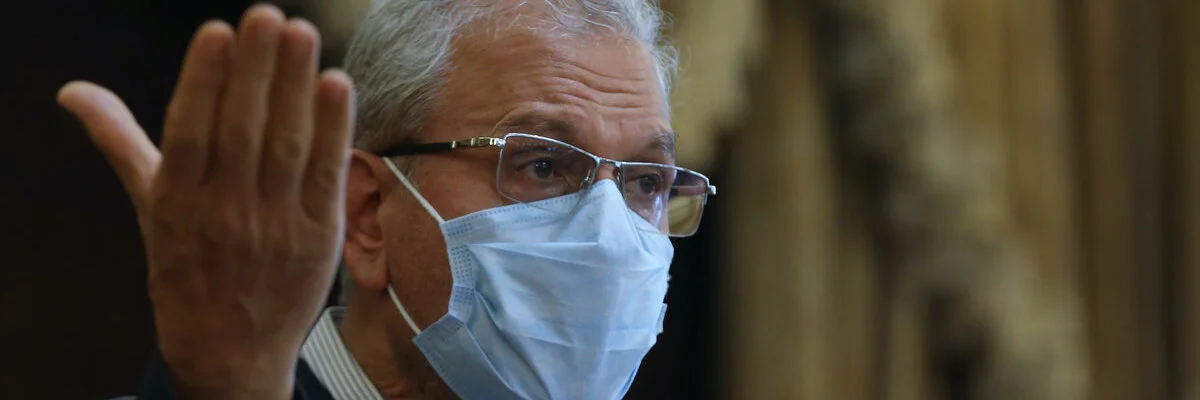
Iran Says Still in First Wave of Virus Outbreak
Iran's coronavirus epidemic is still in its first wave, the government said Tuesday as it announced nearly 150 new deaths a day after reporting a record high daily toll.
Iran's coronavirus epidemic is still in its first wave, the government said Tuesday as it announced nearly 150 new deaths a day after reporting a record high daily toll.
The Islamic republic has struggled to contain COVID-19 since it reported its first cases—two deaths—in the Shiite holy city of Qom in late February.
Official figures have shown a rising trajectory in new confirmed cases since early May, when Iran hit a near two-month low in daily recorded infections.
But officials have repeatedly denied the upward trend amounts to a second wave.
"The coronavirus is currently peaking in border provinces or cities which did not experience a peak in the first months of the outbreak," health ministry spokeswoman Sima Sadat Lari said on Tuesday.
"Therefore, we're still witnessing the first wave in the country," she said, quoted by state news agency IRNA.
Lari said Iran would only have a second wave if there was another rise in cases in provinces that "had a significant peak" when the first cases were declared.
Iran recorded 162 deaths from the novel coronavirus on Monday, its highest figure for a single day since the start of the outbreak on February 19.
Lari on Tuesday reported 147 new fatalities, raising overall deaths to 10,817.
She also raised the country's COVID-19 caseload to 227,662, with 2,457 new infections in the past 24 hours.
Vaccine in Making
Authorities have so far refrained from enforcing full lockdowns to stop the pandemic's spread and the use of masks and protective equipment has been optional in most areas.
Iran closed schools, cancelled public events and banned movement between its 31 provinces in March, but the government gradually lifted restrictions from April to try to reopen its sanctions-hit economy.
The increasing virus caseload has seen some previously largely unscathed provinces classified as "red"—the highest level on Iran's color-coded risk scale—with authorities allowed to reimpose restrictive measures if required.
They include Bushehr, Hormozgan, Kermanshah, Khuzestan, Khorasan Razavi, Kurdistan, and West and East Azerbaijan, all located along Iran's borders.
Iran has announced that wearing masks will be made mandatory in covered public spaces as of next week.
Authorities have for weeks been urging citizens to use protective equipment.
"Our attempts so far have been to avoid entering the second wave" of the outbreak, government spokesman Ali Rabiei told a news conference on Tuesday.
"Considering the problems the coronavirus has created for the economy, we have no choice but to try to live healthily in co-existence with the virus every day," he added.
Iran's health minister Said Namaki said on Tuesday that a coronavirus vaccine in the making has "mostly passed animal models successfully" and that the country "will start human clinical trials soon.”
Phoro: IENA
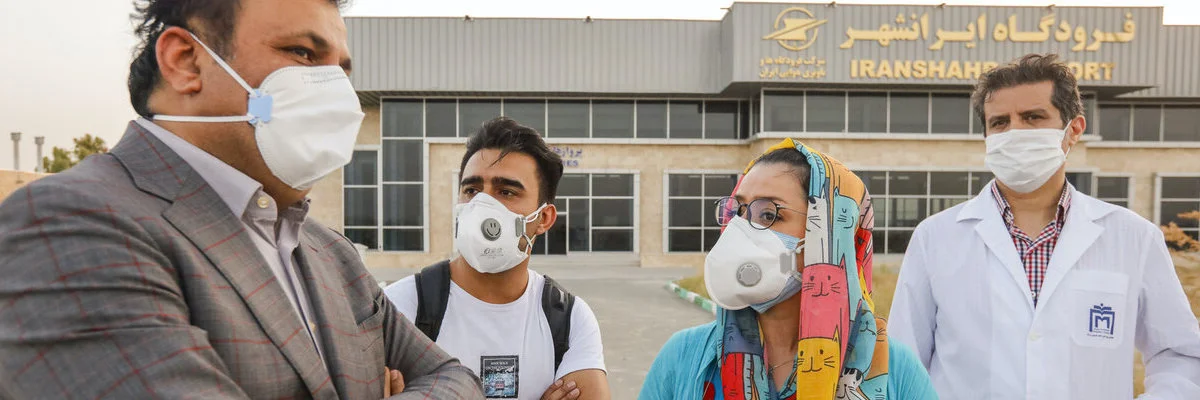
Virus-Hit Iran Says Masks Compulsory From Next Week
Iran said Sunday it will make mask-wearing mandatory in certain areas. The new steps were announced as Iran counted 144 new fatalities from the COVID-19 disease, its highest death toll for a single day in almost three months.
By Amir Havasi
Iran said Sunday it will make mask-wearing mandatory in certain areas and has allowed virus-hit provinces to reimpose restrictions, as novel coronavirus deaths mounted in the Middle East's worst-hit country.
The new steps were announced as Iran counted 144 new fatalities from the COVID-19 disease, its highest death toll for a single day in almost three months.
The Islamic republic has refrained from enforcing full lockdowns to stop the pandemic's spread, and the use of masks and protective equipment has been optional in most areas.
President Hassan Rouhani said Iran would have to live with the virus for the "long haul", as he announced the latest measures to combat it.
Mask-wearing would be "obligatory in covered spaces where there are gatherings", he said during a televised meeting of the country's anti-virus taskforce.
According to him, the measure would come into force as of next week, continue until July 22 and would be extended if necessary.
Rouhani said the health ministry had devised "a clear list" of the types of spaces and gatherings deemed high-risk, but he did not elaborate.
He also did not say what the penalty would be for those who fail to observe the measure.
According to deputy health minister Iraj Harirchi, services would not be provided to those without masks in areas such as government organizations and shopping malls.
But implementing the measure may be difficult, as according to Tehran's mayor, many do not wear masks in places like the capital's public transport network, where it is already mandatory.
"Fifty percent of metro passengers wear masks... and even fewer in buses," Mayor Pirouz Hanachi was quoted as saying by the semi-official ISNA news agency.
"We can't forcefully confront people without masks," he added.
'Red' Counties
Iran reported its first COVID-19 cases on February 19 and it has since struggled to contain the outbreak.
The health ministry on Sunday announced 144 virus deaths in the past 24 hours, its highest for a single day since April 5, raising the total to 10,508.
Spokeswoman Sima Sadat Lari also raised total confirmed infections to 222,669, with 2,489 new cases during the same period.
Official figures have shown an upward trajectory in new confirmed cases since early May, when Iran hit a near two-month low in daily recorded infections.
"Considering the rising numbers, I plead with you to definitely use masks outside and in covered places," Lari said.
Iran closed schools, cancelled public events and banned movement between its 31 provinces in March, but the government progressively lifted restrictions from April to try to reopen its sanctions-hit economy.
The economy is starting to suffer under the pressures of the health crisis.
The country's currency, the rial, has hit new lows against the US dollar in recent days, mostly over border closures and a halt in non-oil exports, according to analysts.
The increasing virus caseload has seen some previously unscathed provinces classified as "red"—the highest level on Iran's color-coded risk scale—with authorities allowing them to reimpose restrictive measures if required.
According to Rouhani, the measure would also be extended to provinces with "red" counties.
"Any county that is red, its provincial (virus) committee can propose reimposing limitations for a week", which could be extended if needed, he said.
The government launched an "#I wear a mask" campaign on Saturday and pleaded with Iranians to observe guidelines aimed at curbing infections.
One Iranian is infected with COVID-19 every 33 seconds and one dies from the disease every 13 minutes, Harirchi said on Saturday.
Zanjan county in northwestern Iran has already reimposed restrictive measures for two weeks, its governor said in a televised interview.
It followed a "certain indifference from Zanjan residents and as the number of our (virus) deaths picked up again in recent weeks," said Alireza Asgari.
The limitations include closing wedding halls and a ban on funeral events held at mosques, as they can lead to large gatherings, he added.
Photo: IRNA