
Iran and India Agree to Speed up Major Port Project
◢ Tehran and Delhi have agreed to accelerate the development of an important Iranian port, India's foreign minister said during a visit to the sanctions-hit Islamic republic on Monday. Chabahar port—being jointly developed by India, Iran and Afghanistan—is on the Indian Ocean about 100 kilometres (62 miles) west of the Pakistan border.
Tehran and Delhi have agreed to accelerate the development of an important Iranian port, India's foreign minister said during a visit to the sanctions-hit Islamic republic on Monday.
Chabahar port—being jointly developed by India, Iran and Afghanistan—is on the Indian Ocean about 100 kilometres (62 miles) west of the Pakistan border.
But development has stalled, despite waivers to sanctions that the United States began reimposing last year after withdrawing from a landmark 2015 nuclear deal with Iran.
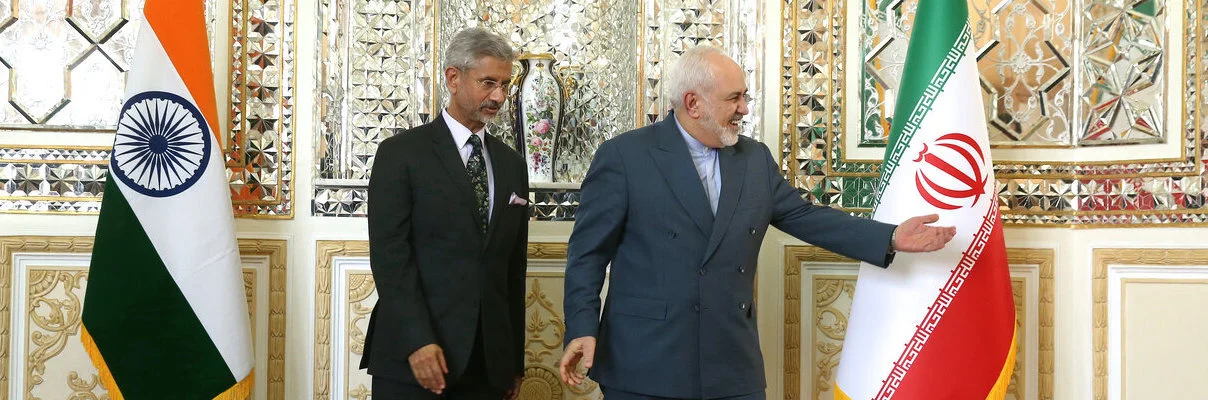
"Just concluded a very productive #IndiaIran Joint Commission Meeting," Indian Foreign Minister Subrahmanyam Jaishankar tweeted.
"Reviewed the entire gamut of our cooperation. Agreed on accelerating our Chabahar project," he added as he wound up a two-day visit to the Iranian capital.
Washington withdrew from the nuclear accord and reimposed sanctions on Tehran as part of a campaign of "maximum pressure" aimed at reducing its arch-enemy's regional role and missile programme.
The rare exemptions from the sanctions are due mainly to the pivotal role of the port, and a planned railway line, in breaking landlocked Afghanistan's dependence on Pakistan for trade.
Iran's President Hassan Rouhani said Monday in a joint news conference with Jaishankar that the project would boost trade in the region.
"Completing the Chabahar-Zahedan railway and connecting it to Iran's national railway can elevate the position of Chabahar port, revolutionise regional commerce and help transport goods on a cheaper and shorter route," he said.
Rouhani said maintaining regional security was an important topic for Iran and India.
"In the current situation where America stands against nations with unilateral sanctions, we have to try to continue bilateral cooperation.
"This situation certainly will not last, and America will be forced to stop its maximum pressure against Iran sooner or later," he said, without elaborating.
India stopped buying Iranian oil after the US abolished waivers for some countries in May, in a move meant to wipe out the Islamic republic's main source of revenue.
Despite tensions in their relationship, Iran and India have sought to move forward and develop partnerships.
Photo: IRNA
Iran Looks to Remote Port to Beat US Sanctions
◢ With the web of US sanctions tightening, Iran faces a host of challenges as it looks to an isolated port in the country's far southeast to maintain the flow of goods. The port in Chabahar, only about 100 kilometers (62 miles) from the Pakistan border and located on the Indian Ocean, is Iran's largest outside the Gulf.
With the web of US sanctions tightening, Iran faces a host of challenges as it looks to an isolated port in the country's far southeast to maintain the flow of goods.
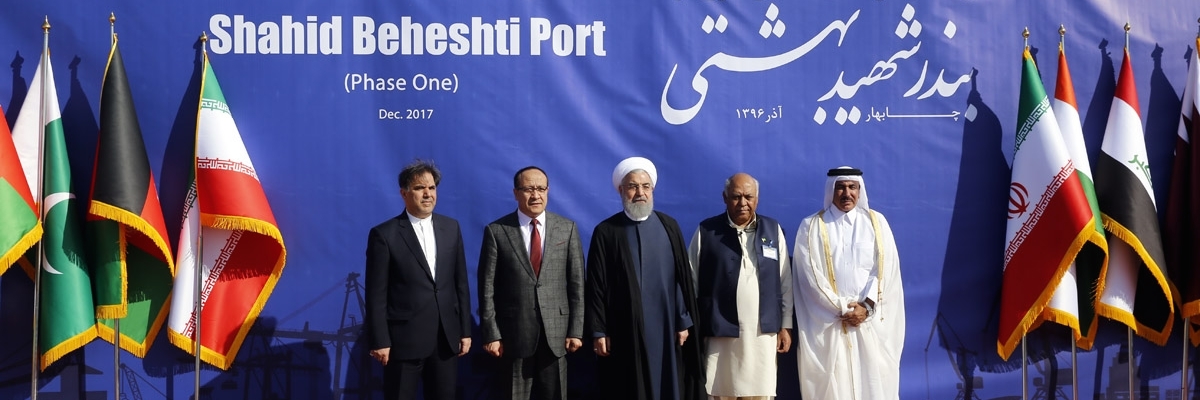
The port in Chabahar, only about 100 kilometers (62 miles) from the Pakistan border and located on the Indian Ocean, is Iran's largest outside the Gulf.
It is also the only Iranian port with exemptions from unilateral economic sanctions reimposed by the United States in 2018.
That is due mainly to the pivotal role of the port, and a planned railway line, in breaking landlocked Afghanistan's dependence on Pakistan for trade with the world, especially India.
Afghan trade as well as plans for a trading route by rail between central Asia and the Indian Ocean called the North-South Corridor are the main reasons the Islamic republic has invested one billion dollars in Chabahar's Shahid Beheshti port, official sources say.
"We will keep on developing this port... our rail network, road network and airport are all being developed, so that we can implement the North-South Corridor," Roads and Urban Development Minister Mohammad Eslami told AFP while visiting Chabahar for a development conference.
‘Traffic will Pick Up'
More than 200 hectares (almost 500 acres) of land have been reclaimed from the sea for the project and over 17.5 million cubic meters (618 million cubic feet) dredged, creating a 16.5-meter (54-foot) draught.
But more than a year since the new installations became operational in December 2017, business has yet to pick up.
The ships that officials say have docked in the past year have only loaded and unloaded 2.1 million tonnes of cargo, a far cry from the port's annual capacity of 8.5 million tonnes.
Only 20 ships have docked at the new section of the port and most of its three kilometers of waterfront remains unutilized, with new machinery and neatly lined-up cranes standing idle.
But authorities remain upbeat about the prospects for growth.
Hossein Shahdadi of the provincial ports and maritime authority said that in the first 11 months of the past Iranian year, which started on March 21, 2018, "there has been a 56 percent increase in cargo handled at the port compared with the previous year.”
"We've also had a 25 percent rise in the number of ships calling at the port" on the Gulf of Oman, he said.
Arun Kumar Gupta, managing director of India Ports Global Limited which has a 10-year concession at the new port, played down the startup issues.
"Any port will have a gestation period, there will be lulls but we are very sure that traffic will pick up," Gupta told AFP.
'Born with Sanctions'
The Indian company began work in December and has so far handled only an average of 60,000 tonnes of cargo per month.
But Gupta is counting on the port's proximity to India and Afghanistan to attract business.
Chabahar's location, however, carries its own risks as it lies in the volatile Sistan Baluchistan province where militant jihadists operate.
In December, a suicide attack on the local police headquarters killed two policemen.
During an investment conference in February, security was tight with many roads cut off and hundreds of armed security personnel deployed to protect delegates.
Apart from security concerns, US sanctions banning financial transactions with Iran make it ever harder to pay or receive payments.
Some like Afsaneh Rabiani, who runs a freight forwarding company, see Chabahar as an opportunity for "those willing to take the risk".
“I've been researching Chabahar for the past year and a half, and the infrastructure is now in place to do serious work here," she said.
As for the sanctions, Iran's roads minister said the challenge was nothing new.
"We were born with sanctions. Ever since the (1979 Islamic) revolution, we have been under sanctions and we are working on how to counter them," Eslami said, as he oversaw the unloading of a first shipment of Afghan goods lined up to be re-exported from Chabahar.
Photo Credit: IRNA
US Exempts Indian-Backed Port in Iran from Sanctions
◢ The United States said Tuesday it would exempt Iran's Indian-backed port of Chabahar from new sanctions on Tehran, recognizing the value of the project to Afghanistan. Iran late last year inaugurated the port on the Indian Ocean which provides a key supply route to landlocked Afghanistan and allows India to bypass its historic enemy Pakistan.
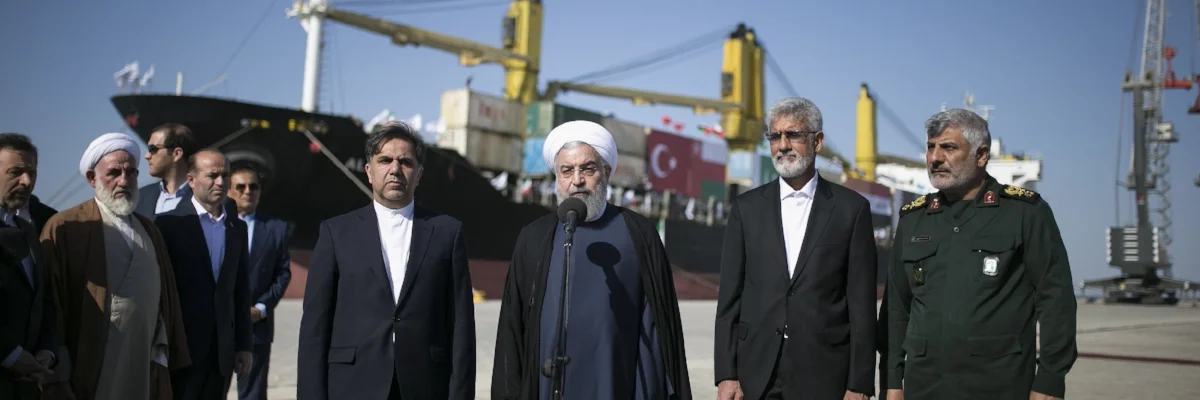
The United States said Tuesday it would exempt Iran's Indian-backed port of Chabahar from new sanctions on Tehran, recognizing the value of the project to Afghanistan.
Iran late last year inaugurated the port on the Indian Ocean which provides a key supply route to landlocked Afghanistan and allows India to bypass its historic enemy Pakistan.
The United States will exempt from sanctions the development of Chabahar along with an attached railway project and Iranian petroleum shipments into Afghanistan, the State Department said.
President Donald Trump's "South Asia strategy underscores our ongoing support of Afghanistan's economic growth and development as well as our close partnership with India," a State Department spokesperson said.
"This exception relates to reconstruction assistance and economic development for Afghanistan. These activities are vital for the ongoing support of Afghanistan's growth and humanitarian relief," the spokesperson said.
The United States, which has been building closer relations with New Delhi since the late 1990s, earlier exempted India from sanctions that took effect on Monday.
The Trump administration has vowed to exert maximum pressure on Iran to end its support for regional proxies, exiting a denuclearization agreement that brought sanctions relief.
Trump's decision has been opposed by European powers as well as other nations including India, which has largely warm relations with Iran and accuses Pakistan of fomenting attacks on its soil.
India has poured USD 2 billion into Afghanistan since the 2001 US-led overthrow of the extremist Taliban regime, which was also opposed by Iran.
India has seen Chabahar as a key way both to send supplies to Afghanistan and to step up trade with Central Asia as well as Africa.
Iran has plans to link the port by railway to Zahedan on the Pakistani border up to Mashhad in the northeast.
Photo Credit: IRNA
Iran Signs Deal with China to Connect Key Port to Rail Network
◢ China will build a train line connecting the Iranian port of Bushehr to the rest of the country's railway network under a $700 million deal signed on Wednesday. The agreement was inked in Tehran in the presence of Iranian Transport Minister Abbas Akhoundi and officials from China Machinery Industry Construction Group.
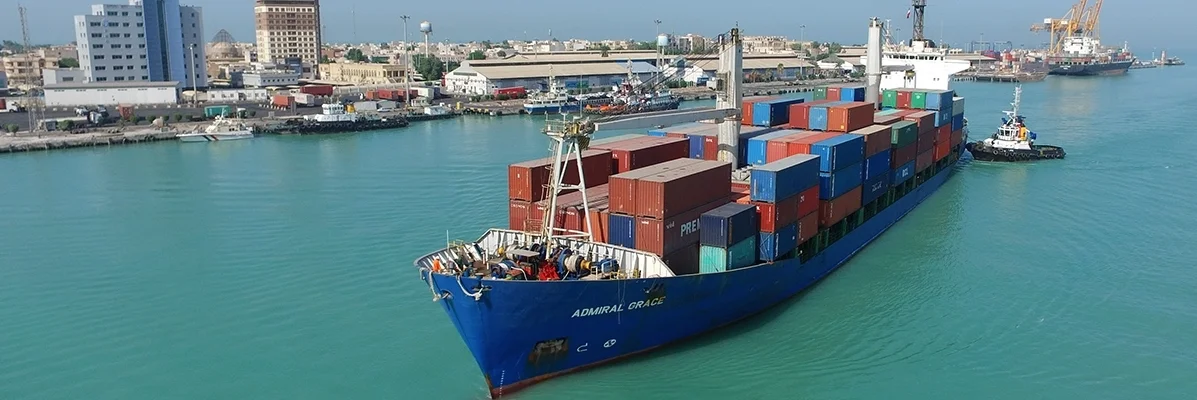
China will build a train line connecting the Iranian port of Bushehr to the rest of the country's railway network under a $700 million deal signed on Wednesday.
The agreement was inked in Tehran in the presence of Iranian Transport Minister Abbas Akhoundi and officials from China Machinery Industry Construction Group.
It will see the group build a 400-kilometre (250-mile) railway between the Gulf port and the southern city of Shiraz, IRNA state news agency cited officials as saying without specifying when construction would get underway. This would complete the "North-South Railway Corridor" in line with Iran's goal of becoming a transport hub for goods between the Gulf, the Indian subcontinent, Russia and Central Asia.
Products arriving at Bushehr, Iran's second biggest port after Bandar Abbas, also on the Gulf, currently have to be transported by road.
The Bushehr-Shiraz rail project is one of seven the government is working on totaling 2,300 kilometers in tracks, according to IRNA.
China is Iran's biggest economic and trading partner. In September, the Asian giant granted lines of credit worth $10 billion for five banks financing infrastructure projects.
Photo Credit: IRNA