
Tehran Mayor Sees 'Threat' in Iranians' Dissatisfaction
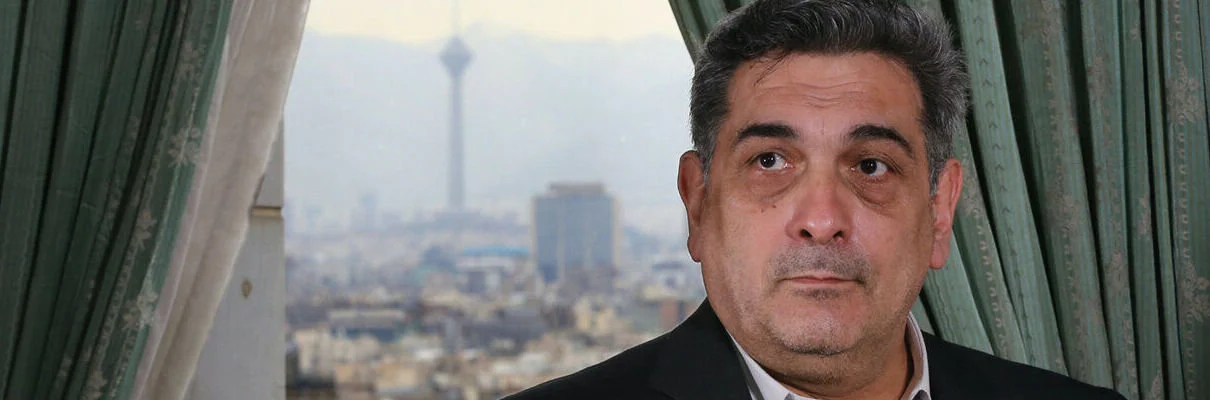
Iran's low voter turnout reflects a wider malaise in a country long buckling under sanctions and more recently also hit hard by the coronavirus, spelling "a threat for everyone," Tehran's mayor Pirouz Hanachi told AFP.
By Amir Havasi
Iran's low voter turnout reflects a wider malaise in a country long buckling under sanctions and more recently also hit hard by the coronavirus, spelling "a threat for everyone," Tehran's mayor Pirouz Hanachi told AFP.
"The turnout at the ballot box is a sign of people's satisfaction level," said Hanachi, mayor of Iran's political and business centre and largest city, with more than eight million people.
"When there is dissatisfaction with the government or the state, it then reaches everyone and that includes the municipality too," he said in an interview on Tuesday.
Iran has suffered the double blow of a sharp economic downturn caused by US economic sanctions over its contested nuclear program, and the region's most deadly COVID-19 outbreak.
Reformists allied with moderate President Hassan Rouhani lost their parliamentary majority in a landslide conservative victory in February, in a major setback ahead of presidential elections next year.
Voter turnout hit a historic low of less than 43 percent in the February polls after thousands of reformist candidates were barred from running by the Islamic republic's powerful Guardian Council.
Such voter fatigue "can be a threat for everyone, not just reformists or conservatives," warned the mayor, a veteran public servant with a background in urban development who is tied to the reformist camp.
The conservative resurgence reflects dissatisfaction with the Rouhani camp that had sought reengagement with the west and the reward of economic benefits—hopes that were dashed when US President Donald Trump in 2018 pulled out of a landmark nuclear deal and reimposed crippling sanctions.
The International Monetary Fund predicts Iran's economy will shrink by six percent this year.
"We're doing our best, but our situation is not a normal one," Hanachi said. "We are under sanctions and in a tough economic situation."
As he spoke in his town hall office, the shouts of angry garbage truck drivers echoed from the street outside, complaining they had not received pay or pensions for months.
The mayor downplayed the small rally as the kind of event that could happen in "a municipality in any other country", adding that the men were employed not by the city itself but by contractors.
Shrinking Economy
Iran's fragile economy, increasingly cut off from international trade and deprived of crucial oil revenues, took another major blow when the novel coronavirus pandemic hit in late February.
Since then the outbreak has killed more than 12,000 people and infected over 248,000, with daily fatalities reaching a record of 200 early this week, according to official figures.
A temporary shutdown of the economy in recent months and closed borders sharply reduced non-oil exports, Iran's increasingly important lifeline.
This accelerated the plunge of the Iranian rial against the US dollar, threatening to further stoke an already high inflation rate.
In just one impact, said Hanachi, the Teheran municipality lost two trillion rial ($9 million) because of sharply reduced demand for public transport in recent months.
As many Tehran residents got back into their cars to avoid tightly-packed subways and buses, this has done nothing to help solve Tehran's long standing air pollution issue.
Tehran has had only 15 "clean" air quality days since the March 20 Persian New Year, according to the municipality.
One of Hanachi's tasks is to fight both the virus and air pollution—a tough juggling act as car travel is safer for individuals but also worsens the smog that often cloaks the capital.
The mayor said he worried that, after restrictions on car travel were reimposed in May to reduce air pollution, subways are once again packed during peak hours, as is the bustling city centre.
Tehran's Grand Bazaar, which is now crowded with shoppers, warned Hanachi, "can become a focal point for the epidemic."
Photo: IRNA
Smog in Iran Shuts Schools, Universities
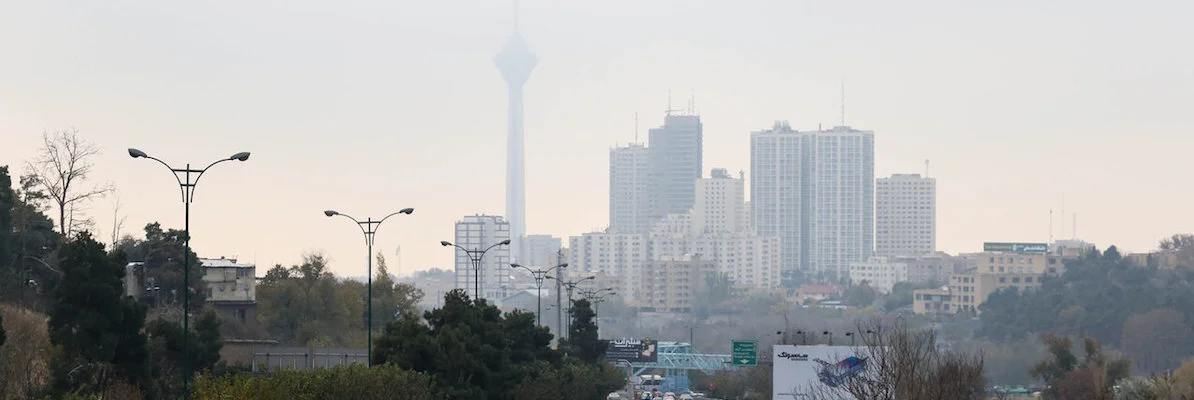
◢ Air pollution forced the closure of schools and universities in parts of Iran on Saturday, including Tehran, which was cloaked by a cloud of toxic smog, state media reported. The young and elderly and people with respiratory illnesses were warned to stay indoors and sporting activities were suspended.
Air pollution forced the closure of schools and universities in parts of Iran on Saturday, including Tehran, which was cloaked by a cloud of toxic smog, state media reported.
The young and elderly and people with respiratory illnesses were warned to stay indoors and sporting activities were suspended for the start of the working week in the Islamic republic.
The decision to shut schools and universities in the capital was announced late Friday by deputy governor Mohammad Taghizadeh, after a meeting of an emergency committee for air pollution.
"Due to increased air pollution, kindergartens, preschools and schools, universities and higher education institutes of Tehran province will be closed," he said, quoted by state news agency IRNA.
Schools in the capital would also be closed for a second day on Sunday, Taghizadeh said later.
"Having examined the index of pollutants in Tehran... it was decided for all schools to be closed tomorrow in Tehran province, except for the counties of Firuzkuh, Damavand and Pardis," he was quoted as saying.
An odd-even traffic scheme was imposed on Saturday to restrict the number of private vehicles on roads in the capital and trucks were banned outright in Tehran province, IRNA reported.
The scheme would be lifted on Sunday, but heavy vehicles would still be barred from the city, said Taghizadeh.
Industry to be Halted
But activities would be halted on Sunday for all sand mines and industries in Tehran that contribute to air pollution, he added, without specifying which ones.
Schools were also closed on Saturday in the northern province of Alborz and in the central province of Esfahan, IRNA reported, citing officials.
Other areas where schools were shut included the northeastern city of Mashhad, Orumiyeh city in northwestern Iran and Qom city, south of Tehran.
In Tehran, average concentrations of hazardous airborne particles reached 146 micrograms per cubic meter on Saturday morning, according to air.tehran.ir, a government-linked website.
By mid-afternoon, the index had dropped to 107 after winds blew away some of the pollution hanging over the capital.
The World Health Organization's advised maximum level is 50.
The pall of pollution has shrouded the sprawling city of eight million for days and is only expected to clear on Monday when rain is forecast.
Air pollution was the cause of nearly 30,000 deaths per year in Iranian cities, state media reported earlier this year, citing a health ministry official.
The problem worsens in Tehran during winter, when a lack of wind and the cold air traps hazardous smog over the city for days on end—a phenomenon known as thermal inversion.
Most of the city's pollution is caused by heavy vehicles, motorbikes, refineries and power plants, according to a World Bank report released last year.
Photo: IRNA
Air Pollution Shuts Schools in Iran's Capital
◢ Schools in Tehran were ordered to be closed on Wednesday after the Iranian capital was cloaked in dangerously high levels of air pollution, authorities said. Average concentrations of hazardous airborne particles hit 133 micrograms per cubic meter in the city and were as high as 150 for 10 districts.
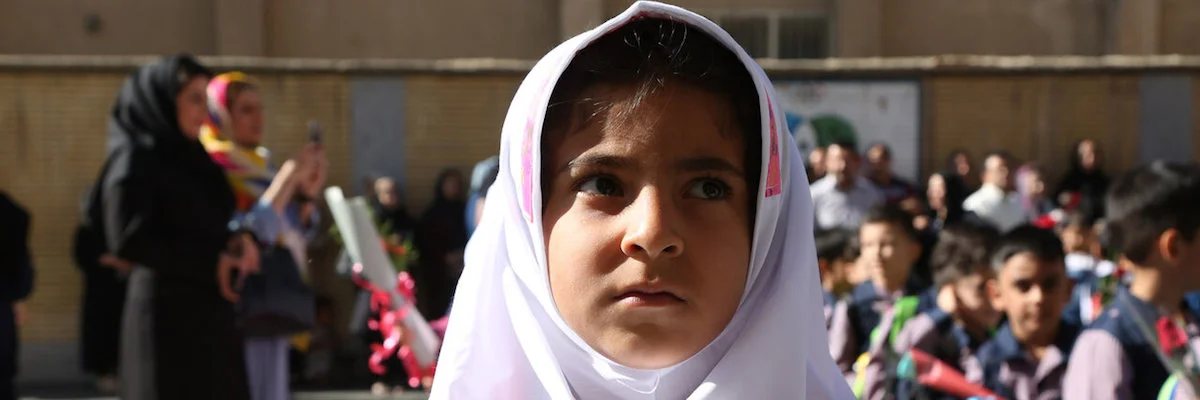
Schools in Tehran were ordered to be closed on Wednesday after the Iranian capital was cloaked in dangerously high levels of air pollution, authorities said.
Governor Anoushiravan Mohseni-Bandpey said kindergartens, preschools and primary schools would be shut in the city and the counties of Gharchak, Pishva and Varamin.
"The air quality index for the city of Tehran still has not passed the unhealthy status for sensitive groups," he was quoted as saying by state news agency IRNA.
Average concentrations of hazardous airborne particles hit 133 micrograms per cubic meter in the city and were as high as 150 for 10 districts, he said.
That is far above the World Health Organization's recommended maximum of 25 micrograms per cubic meter on average over a 24-hour period.
Many people were seen wearing face masks to avoid fumes as they waited for buses on the sides of traffic-choked streets of southern Tehran during morning rush-hour.
A layer of thick smog covered Tehran on Tuesday, but it appeared to dissipate in northern areas on Wednesday morning with fewer school buses on the roads.
Air pollution was the cause of nearly 30,000 deaths per year in Iranian cities, IRNA reported earlier this year, citing a health ministry official.
Each winter, Iran's sprawling capital suffers some of the worst pollution in the world through thermal inversion—a phenomenon that traps hazardous air over the city.
According to a World Bank report last year, most of the pollution in the city of eight million inhabitants is caused by heavy duty vehicles, motorbikes, refineries and power plants.
Photo: IRNA

U.S. Sanctions Are Forcing Iran to Ditch Push to Cleaner Fuels
◢ Iran is about to burn a lot more fuel oil as a result of U.S. sanctions and new global shipping rules, reversing the nation’s progress in switching to cleaner-burning natural gas. Power plants and other industrial facilities will burn more than 200,000 barrels a day of highly polluting fuel oil next year, double the amount Iran used in 2018.
By Verity Ratcliffe
Iran is about to burn a lot more fuel oil as a result of U.S. sanctions and new global shipping rules, reversing the nation’s progress in switching to cleaner-burning natural gas.
Power plants and other industrial facilities will burn more than 200,000 barrels a day of highly polluting fuel oil next year, double the amount Iran used in 2018, according to a forecast by Iain Mowat of consultant Wood Mackenzie Ltd.
Iran produces a surplus of fuel oil, and the excess has swelled since the U.S. began restricting the OPEC member’s exports last year. Sanctions also prevent Iran from importing the equipment it would need to refine the heavy oil product into less-polluting products like gasoline and, even if they find a way building refineries takes time.
The situation will only worsen once the International Maritime Organization restricts the use of high-sulfur fuel oil for most vessels starting Jan. 1. Commercial ships and power stations are the two main sources of demand for fuel oil. By curbing the shipping industry’s appetite, the UN agency’s new measure will leave Iran little choice but to burn more fuel oil at home to generate electricity.
Iranians “will have no choice but to dump it at whatever low price they can get for it, cut back on refining or use it themselves,” said Robin Mills, chief executive officer of Dubai-based consultant Qamar Energy. Since anyone buying Iranian fuel oil would run afoul of U.S. sanctions, even rock-bottom prices might not be enough to stimulate sales, he said.
Iran is a prime candidate for flouting the next year’s new IMO rules by using high-sulfur fuel oil in its own fleet, Mills said. International ports, however, have arranged for harsh penalties for violators.
Iran’s government says it wants to build new refineries to process fuel oil into other products. Although refineries typically take four years to complete, Tehran is hoping for faster results, said Sakineh Almasi, a spokeswoman for the parliamentary energy commission, according to the parliament’s Icana news service. Almasi didn’t say how the government plans to work around U.S. sanctions.
Meanwhile, Iran’s storage facilities for oil and fuel are filling up fast. Because the government prefers to reserve precious spare storage capacity for higher-value products such as condensate, it can’t accumulate surplus fuel oil for long, Mills said.
Iran’s use of fuel oil to produce electricity peaked in 2013 and has since fallen sharply as the country’s power plants switched to cleaner-burning natural gas. In the Iranian year ending in March 2018, they consumed about a quarter of the fuel oil they burned four years earlier, according to state-owned Thermal Power Plants Holding Co. A TPPH representative wasn’t immediately available to comment on the outlook for future consumption.
The resurgence in Iranian fuel-oil demand threatens to make the country’s notorious air pollution even worse. Fuel oil contains much more sulfur than natural gas does. Power plants emit these pollutants, blamed for causing acid rain and contributing to human health conditions such as asthma and even lung cancer.
Photo: Tasnim
Iran Sees 'Revival' of Imperilled Lake Urmia
◢ It is one of the worst ecological disasters of recent decades, but the shrinking of Iran's great Lake Urmia finally appears to be stabilizing and officials see the start of a revival. A rusty cargo ship and a row of colorful pedal boats lying untouched on the bone-dry basin are a sign of the devastating loss of water in what was once the largest lake in the Middle East.
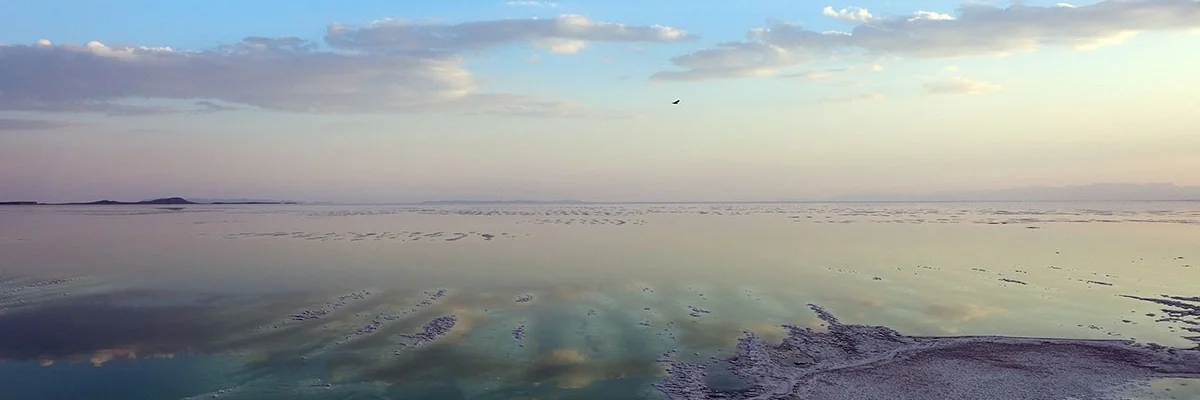
It is one of the worst ecological disasters of recent decades, but the shrinking of Iran's great Lake Urmia finally appears to be stabilizing and officials see the start of a revival.
A rusty cargo ship and a row of colorful pedal boats lying untouched on the bone-dry basin are a sign of the devastating loss of water in what was once the largest lake in the Middle East.
Situated in the mountains of northwest Iran, Lake Urmia is fed by 13 rivers and designated as a site of international importance under the UN Convention on Wetlands that was signed in the Iranian city of Ramsar in 1971.
The lake has been shrinking since 1995, according to the UN Environment Program, due to a combination of prolonged drought, over-farming and dams.
By August 2011 the lake's surface was 2,366 square kilometres (914 square miles) and shrank drastically to just 700 km2 in 2013, according to the United Nations.
The catastrophe has threatened the habitat of shrimp, flamingos, deers and wild sheep and caused salt storms that pollute nearby cities and farms.
That finally triggered a coordinated effort to save the lake in 2013—with a joint program between Iran and the UN Development Program funded by the Japanese government.
The project became a priority for the incoming administration of President Hassan Rouhani.
"One of my promises was to revive Urmia lake, and I am still committed to that promise," Rouhani said during a recent visit to the region.
Some positive results are finally emerging and the lake's surface area reached 2,300 km2 last year, according to UN Development Program figures.
"This is the beginning of the lake's revival," said Abolfazl Abesht, who heads the wetlands unit of Iran's environment department.
He warned it would take "decades" to return to the 5,000 km2 it once covered, but at least "now the trend has stopped".
Sustainable Farming
Rising temperatures and reduced rainfall have been a major factor in the lake's decline, experts say.
So, too, was the construction of a causeway in 2008 to shorten driving times between Urmia and the nearby city of Tabriz that cut the lake in two.
But people were also a major part of the problem due to a rapid rise in the population and farming around the lake, which provides a livelihood to some six million people.
The rejuvenation effort therefore focused on redirecting rivers to irrigate farmland, thus avoiding use of water from the lake, and the promotion of more sustainable farming methods.
“Almost 85 percent of the water is used for agriculture, and we are trying to help farmers reduce usage through cheap and effective techniques," said Abesht.
Measures such as using natural instead of chemical fertilizers, or leveling the land to avoid run-off, have shown major improvements for local farmer Afshin Medadi.
The 47-year-old had to invest in new equipment, but says "things are more cost-effective now", with his farm using a tenth of the water.
There has also been a noticeable reduction in the salt and dust pollution whipped up from the desiccated lake floor during storms, he added.
Others have launched their own green initiatives.
One group of 20 women set up a collective to raise awareness among lakeside communities about water waste, and encourage the production of handicrafts to boost sustainable employment.
One of the organisers, 39-year-old Kobra Asghari from the village of Gharehgozlou, hopes industries such as carpet and doll-making can gradually overtake traditional farming.
They are also encouraging women to plant less thirsty crops such as saffron and olives.
“We gradually managed to encourage the men to do the same," she said.
"People are paying more attention to their environment and the dying ecosystem."
Photo Credit: IRNA
Iran Risks Losing 70% of Farmlands: Environment Chief
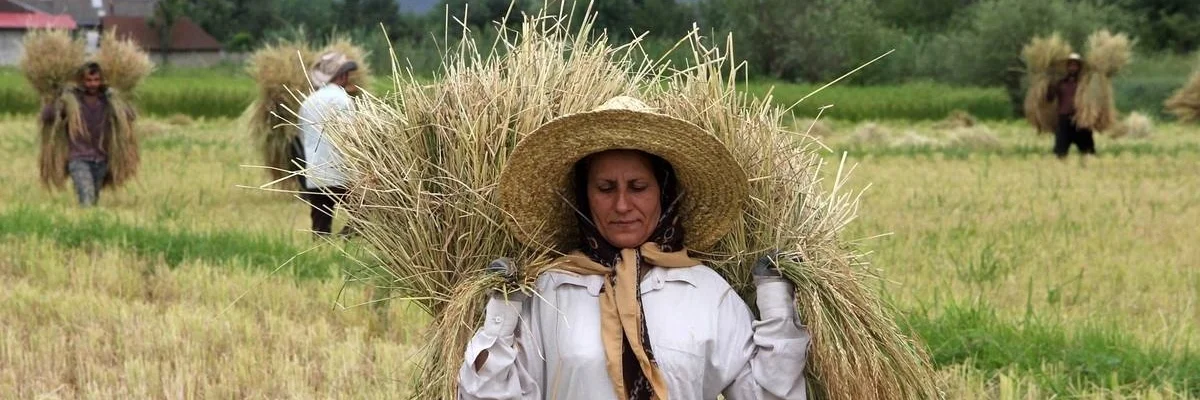
◢ Iran faces losing 70 percent of its farmlands if urgent action is not taken to overcome a litany of climate woes, the country's environment chief Isa Kalantari told AFP. The Islamic Republic is grappling not only with air, water and soil pollution, as well as drought and desertification, but also with the effect of years of crippling US and international sanctions.
Iran faces losing 70 percent of its farmlands if urgent action is not taken to overcome a litany of climate woes, the country's environment chief Isa Kalantari told AFP.
The Islamic Republic is grappling not only with air, water and soil pollution, as well as drought and desertification, but also with the effect of years of crippling US and international sanctions.
Adding to the dire situation, "we currently use about 100 percent of our renewable water ... according to global standards this figure should not be higher than 40 percent," said Kalantari, vice president and head of Iran's Environment Department, in an exclusive interview in Tehran.
"The excessive consumption of water, especially from groundwater is a threat and could have terrible social consequences," he warned.
If the situation is not brought under control, then "we would lose about 70 percent of our cultivated land in a maximum of 20 to 30 years."
"The south of Alborz and east of Zagros, if we don't take swift action, will become unusable for agriculture," Kalantari added.
Alborz and Zagros are mountain ranges in the north and west of Iran respectively. The majority of Iran's mostly arid land mass and population centres are located to the south and east of them.
According to the UN's Food and Agriculture Organization, Iran, a country of some 80 million people, predominantly relies on agriculture.
Past Errors
Kalantari said there had been many years of mismanagement of water resources, and mistaken decisions forced by political and economic concerns such as the US sanctions and climate change.
“We basically thought that environment was not that important," he said.
Other countries had also failed to address climate issues introducing policy errors in the 1960s and 1970s.
"We made these mistakes in the 1980s. Then we came to realize that in places that we'd built dams, we shouldn't have built any, and in places where we should have built dams, we didn't build any," he said.
The pressure on the country's resources has also been exacerbated by population growth, with Iranians encouraged to have large families in the years following its 1979 Islamic revolution.
“In the first decade after the revolution, we encountered a high population growth rate, more than three percent annually," Kalantari said.
This policy was taken "without paying attention to utilising and improving" the use of resources, he said.
He also highlighted the effects of the Iran-Iraq war (1980-1988), when the country was isolated and could not concern itself with sustainable development as it had a burgeoning population to feed.
"Iran could not, and cannot, bear the pressure that this (population growth) exerted on the consumption of water, for the supply of food and for agriculture," he added.
The strain has shown recently with Iranians taking to the streets in December and January this year, protesting over economic conditions.
A former agriculture minister in the 1990s, Kalantari said Iran could not be self-sufficient in food production for its estimated 80 million people "if we want sustainable policies".
Even with state-of-the-art technology, Iran could only be completely self-sufficient to supply food for 50 to 55 million people.
Sanctions Hit
He also blamed some of the country's air pollution woes on biting sanctions.
"Locally-produced car engines are not up to standard, so when sanctions are imposed, car manufacturers such as Peugeot and Renault depart," said Kalantari.
The two carmakers suspended operations in Iran after Washington withdrew from a ground-breaking nuclear deal earlier this year and reimposed sanctions, as European leaders have so far failed to gain any exemptions for their firms.
A lack of new cars prompts Iranians to "use domestically-made engines" which do not adhere to modern environmental standards.
The resulting pollution frequently hangs heavily over the capital Tehran, with smog often rendering the mountains to the north invisible, while there have been growing cases of people hospitalized with respiratory problems.
Photo Credit: IRNA
Conflict Hinders Iran Efforts to Counter Dust Storms
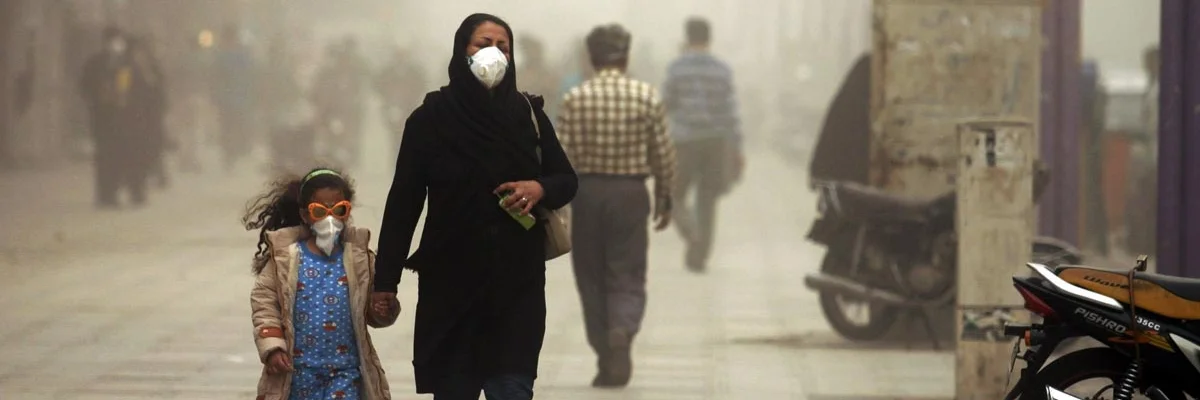
◢ Iran's efforts to counter worsening dust storms have been hampered by conflict in the region, the deputy head of the environment department said on Saturday. "We signed agreements with the Iraqi and Syrian governments in 2010 and 2011 to help them counter the source of dust storms," Masoud Tajrishi told a news conference in Tehran.
Iran's efforts to counter worsening dust storms have been hampered by conflict in the region, the deputy head of the environment department said on Saturday.
"We signed agreements with the Iraqi and Syrian governments in 2010 and 2011 to help them counter the source of dust storms," Masoud Tajrishi told a news conference in Tehran.
"But with the events that have happened in those two countries, the environment has lost all priority, and it is still not a priority for them," he added.
Some 30 million hectares (74 million acres) of Iran suffer devastating dust storms every year, many blowing in from Iraq, Saudi Arabia and Syria.
Hundreds are hospitalized with respiratory problems and border towns have some of the worst air pollution in the world.
The outbreak of civil war in Syria in 2011 and the subsequent spread of the Islamic State group into Iraq were a major setback for efforts to work against dust storms.
Tajrishi said a new mapping system was being implemented to track the origins and paths of the storms so they could be better understood and countered.
But he added: "Iran is situated within a belt of deserts, and with the decrease in rains due to climate change, dust storms are here to stay for quite some time," Tajrishi said.
Photo Credit: IRNA
Photo Credit: IRNA