
Tehran Mayor Sees 'Threat' in Iranians' Dissatisfaction
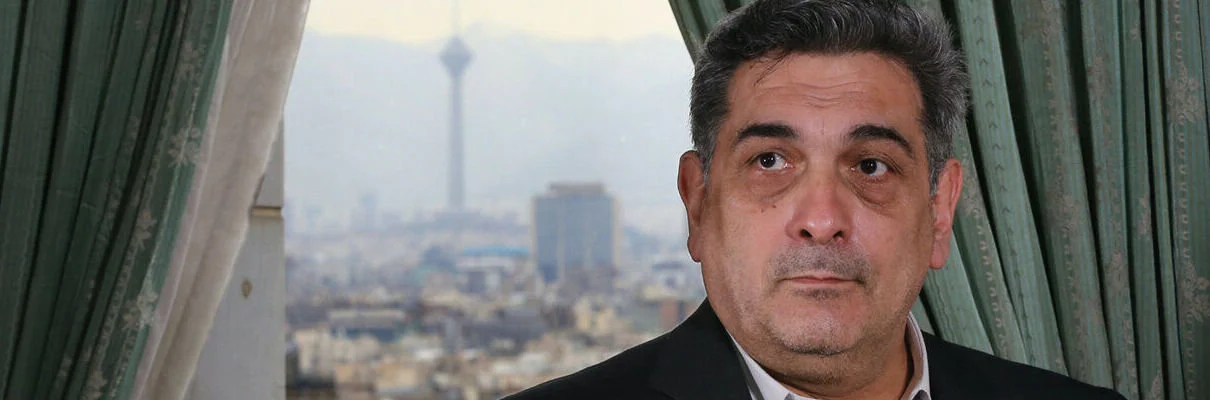
Iran's low voter turnout reflects a wider malaise in a country long buckling under sanctions and more recently also hit hard by the coronavirus, spelling "a threat for everyone," Tehran's mayor Pirouz Hanachi told AFP.
By Amir Havasi
Iran's low voter turnout reflects a wider malaise in a country long buckling under sanctions and more recently also hit hard by the coronavirus, spelling "a threat for everyone," Tehran's mayor Pirouz Hanachi told AFP.
"The turnout at the ballot box is a sign of people's satisfaction level," said Hanachi, mayor of Iran's political and business centre and largest city, with more than eight million people.
"When there is dissatisfaction with the government or the state, it then reaches everyone and that includes the municipality too," he said in an interview on Tuesday.
Iran has suffered the double blow of a sharp economic downturn caused by US economic sanctions over its contested nuclear program, and the region's most deadly COVID-19 outbreak.
Reformists allied with moderate President Hassan Rouhani lost their parliamentary majority in a landslide conservative victory in February, in a major setback ahead of presidential elections next year.
Voter turnout hit a historic low of less than 43 percent in the February polls after thousands of reformist candidates were barred from running by the Islamic republic's powerful Guardian Council.
Such voter fatigue "can be a threat for everyone, not just reformists or conservatives," warned the mayor, a veteran public servant with a background in urban development who is tied to the reformist camp.
The conservative resurgence reflects dissatisfaction with the Rouhani camp that had sought reengagement with the west and the reward of economic benefits—hopes that were dashed when US President Donald Trump in 2018 pulled out of a landmark nuclear deal and reimposed crippling sanctions.
The International Monetary Fund predicts Iran's economy will shrink by six percent this year.
"We're doing our best, but our situation is not a normal one," Hanachi said. "We are under sanctions and in a tough economic situation."
As he spoke in his town hall office, the shouts of angry garbage truck drivers echoed from the street outside, complaining they had not received pay or pensions for months.
The mayor downplayed the small rally as the kind of event that could happen in "a municipality in any other country", adding that the men were employed not by the city itself but by contractors.
Shrinking Economy
Iran's fragile economy, increasingly cut off from international trade and deprived of crucial oil revenues, took another major blow when the novel coronavirus pandemic hit in late February.
Since then the outbreak has killed more than 12,000 people and infected over 248,000, with daily fatalities reaching a record of 200 early this week, according to official figures.
A temporary shutdown of the economy in recent months and closed borders sharply reduced non-oil exports, Iran's increasingly important lifeline.
This accelerated the plunge of the Iranian rial against the US dollar, threatening to further stoke an already high inflation rate.
In just one impact, said Hanachi, the Teheran municipality lost two trillion rial ($9 million) because of sharply reduced demand for public transport in recent months.
As many Tehran residents got back into their cars to avoid tightly-packed subways and buses, this has done nothing to help solve Tehran's long standing air pollution issue.
Tehran has had only 15 "clean" air quality days since the March 20 Persian New Year, according to the municipality.
One of Hanachi's tasks is to fight both the virus and air pollution—a tough juggling act as car travel is safer for individuals but also worsens the smog that often cloaks the capital.
The mayor said he worried that, after restrictions on car travel were reimposed in May to reduce air pollution, subways are once again packed during peak hours, as is the bustling city centre.
Tehran's Grand Bazaar, which is now crowded with shoppers, warned Hanachi, "can become a focal point for the epidemic."
Photo: IRNA
Iran's Ahmadinejad Calls for Immediate Free Elections
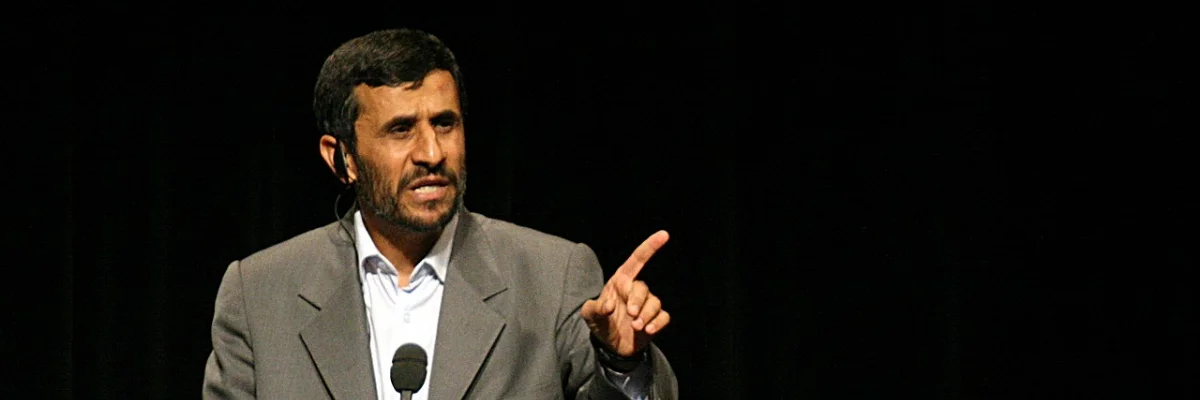
◢ Iran's hardline former president Mahmoud Ahmadinejad called for the immediate holding of free presidential and parliamentary elections in a letter to supreme leader Ayatollah Ali Khamenei published on Thursday.
Iran's hardline former president Mahmoud Ahmadinejad called for the immediate holding of free presidential and parliamentary elections in a letter to supreme leader Ayatollah Ali Khamenei published on Thursday.
The call, from a man whose name is synonymous with the bloody repression of mass protests against his controversial 2009 re-election, marked a new act of defiance against a political establishment that has long since turned against him.
Ahmadinejad made no specific reference in his letter to a wave of unrest that swept Iran over the new year but it comes as the country's divided political factions argue over how to respond. "The immediate holding of free presidential and parliamentary elections—of course without their being engineered by the Guardian Council and without interference by military or security bodies so that people have a free choice—is an urgent necessity," he wrote.
The Guardian Council is a powerful vetting body which oversees all elections in Iran and which barred Ahmadinejad, among others, from running for president last May.
The council rejected Ahmadinejad's call for early elections and hit back at his criticism of its supervisory procedures. "The country has no need for... elections right now because all elections are conducted in a legal and sustainable manner," council spokesman Ali Kadkhodai said. Parliamentary elections are not due before 2020 and the next presidential election is due in 2021. Kadkhodai charged that Ahmadinejad had himself sought to get round the rules in the 2009 election by pressing it to publish the results before the legal time-limit.
Injustices
The former president referred directly in his letter to a speech Khamenei delivered on Sunday in which he said that progress was needed in "the field of justice", acknowledging widespread criticism of the system.
"These clear comments from the leader can of course be understood" as an appeal for "urgent and concrete reforms that meet the demands of the people," he said.
Ahmadinejad called for the dismissal of judiciary chief Ayatollah Sadeq Larijani, a rival hardliner, on the grounds that the "injustices" of the judiciary were "one of the main causes of public discontent."
He also called for the release of all people arrested for criticizing the regime and the halting of any proceedings under way.
Ahmadinejad remains popular, particularly among poorer segments of society who recall the large-scale welfare schemes he implemented during his 2005-2013 presidency.
But he has fallen out with the establishment, especially since he ran for
president last year against Khamenei's advice. A number of his senior aides have been arrested on financial and corruption charges, and his protege Hamid Baghaie was sentenced to 15 years in December.
The demonstrations over the new year, during which at least 25 people died,
initially focused on economic problems but swiftly escalated into protests
against corruption and the regime itself.
During the 2009 protests against Ahmadinejad's re-election, dozens of people were killed as the regime deployed militia to back up police. Thousands of people were detained and his two reformist challengers—Mehdi Karoubi and Mir Hossein Mousavi—remain under house arrest.
Photo Credit: Wikicommons