
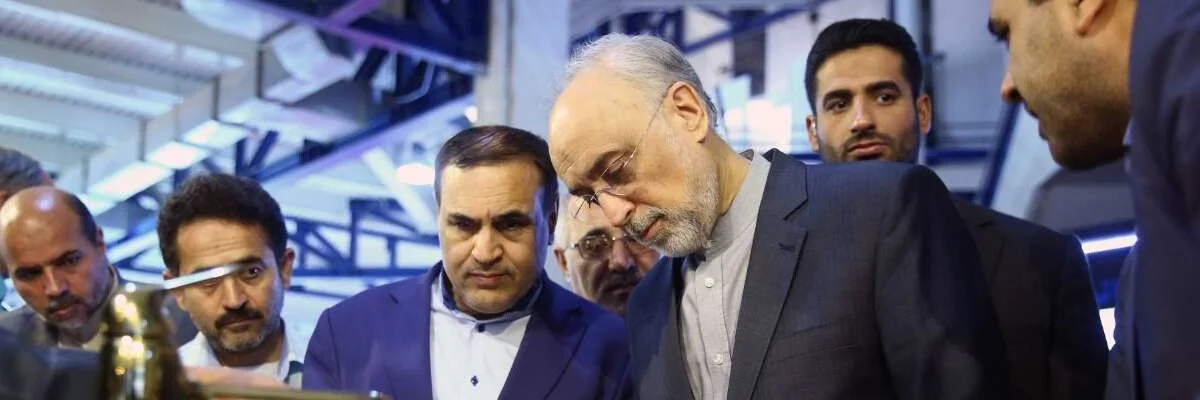
Iran Advances Research on Uranium Metal Production
Tehran told the UN nuclear watchdog Wednesday that it was advancing research on uranium metal production, in what would be a fresh breach of the limits in Iran's 2015 deal with world powers.
Tehran told the UN nuclear watchdog Wednesday that it was advancing research on uranium metal production, in what would be a fresh breach of the limits in Iran's 2015 deal with world powers.
The latest move, which adds to pressure on US President-Elect Joe Biden just days before his inauguration, concerns Iran's plans to conduct research on uranium metal production at a facility in the city of Isfahan.
The Vienna-based International Atomic Energy Agency (IAEA) said in a statement that "Iran informed the Agency in a letter on 13 January that modification and installation of the relevant equipment for the mentioned R&D activities have been already started'".
Iran says the research is aimed at providing advanced fuel for a research reactor in Tehran.
"Natural uranium will be used to produce uranium metal in the first stage," the Iranian ambassador to the UN in Vienna Kazem Gharib Abadi said in a tweet.
The topic is sensitive because uranium metal can be used as a component in nuclear weapons and the 2015 deal contained a 15-year ban on "producing or acquiring plutonium or uranium metals or their alloys".
After 10 years Iran would have been allowed to initiate research on producing uranium metal-based fuel "in small agreed quantities" but only if the other parties to the deal had given approval.
In 2018 US President Donald Trump dramatically withdrew from the deal and went on to re-impose crippling economic sanctions on Iran.
The following year Tehran announced it would start breaking the deal's limits on its nuclear activity.
The breaches have included exceeding the stockpile limit on enriched uranium, enriching beyond the permitted purity level, and using more advanced centrifuges than permitted under the deal.
Tensions have increased since the assassination in late November of Iranian nuclear physicist Mohsen Fakhrizadeh.
In the aftermath of the attack, blamed on Israel, hardliners in Tehran pledged a response and Iran's parliament passed a controversial law calling for expanded nuclear activity and for an end to IAEA inspections.
The law also demanded Iran's Atomic Energy Organization "operate a facility of metal uranium production" within five months.
Iran says all of its breaches of the 2015 deal's limits are reversible, but insists that the US has to come back to the deal and lift sanctions first.
Biden has signalled he is willing to rejoin the pact but faces a tight window of opportunity between his own inauguration and presidential elections in Iran in June.
Photo: IRNA
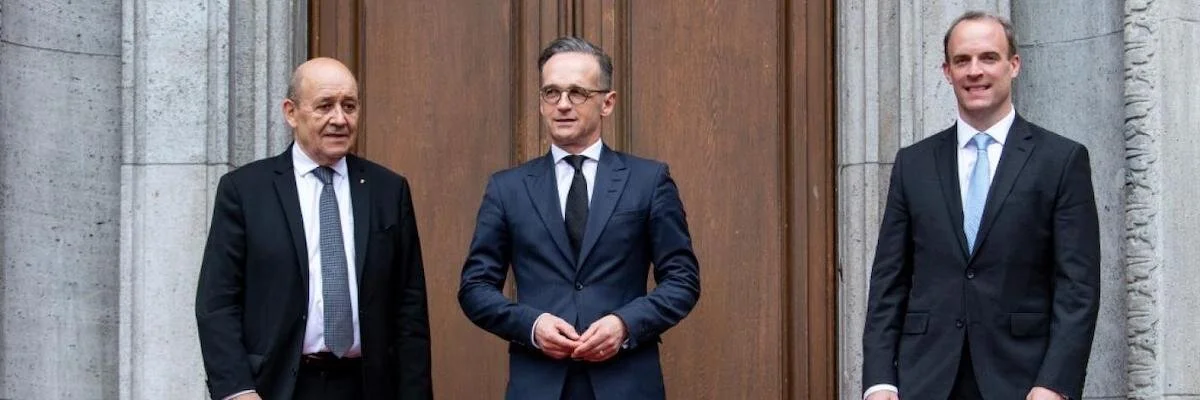
European Powers 'Welcome' Biden's Aim to Re-Enter JCPOA
The governments of France, Germany, and the UK “welcome the statements by President-elect Biden on the JCPOA and a diplomatic path to address wider concerns with Iran,” the trio said in a statement on Monday.
The governments of France, Germany, and the UK “welcome the statements by President-elect Biden on the JCPOA and a diplomatic path to address wider concerns with Iran,” the trio said in a statement on Monday.
The three governments, dubbed the E3, also declared that they would “address Iran’s non-compliance within the framework of the JCPOA,” reiterating their support for Joint Comprehensive Plan of Action. The statement described the deal as "the best and currently the only way to monitor and constrain Iran's nuclear programme.”
The E3 also expressed concerns over plans by Iran to install advanced centrifuges at its main nuclear enrichment plant in Natanz.
The UN's nuclear watchdog, the International Atomic Energy Agency (IAEA) reported last month that Iran had installed and begun operating advanced centrifuges at an underground section at Natanz.
"Iran's recent announcement to the IAEA that it intends to install an additional three cascades of advanced centrifuges at the Fuel Enrichment Plant in Natanz is contrary to the JCPOA and deeply worrying," the E3 said.
Under the terms of Iran's 2015 deal it is only meant to enrich uranium with a less sophisticated variety of centrifuges.
Since May last year Iran has taken steps to violate that limit and several others laid down in the deal in retaliation for US President Donald Trump's withdrawal from the accord in 2018 and subsequent reimposition of sanctions.
The three European powers said they had noted, "with great concern" a law passed by the Iranian parliament that would expand Iran's nuclear programme and limit the IAEA's monitoring access, saying this too would be "incompatible with the JCPOA and Iran's wider nuclear commitments".
The bill "for the lifting of sanctions and protection of the Iranian people's interests" was approved by the powerful Guardian Council on Wednesday but has to be signed by President Hassan Rouhani to become law.
Rouhani, whose government has signalled a readiness to engage with US President-elect Joe Biden, called the bill "detrimental to the course of diplomatic activities.”
The three European governments said that if Iran was serious about wanting to return to diplomacy with the incoming US administration, it had to reverse the bill and the installation of the centrifuges.
Photo: IRNA
Iran Has Nothing to Gain From Halting Inspections: Grossi
Iran has nothing to gain from ending inspections of its nuclear facilities, the head of the UN's nuclear watchdog warned as tensions rise after a top Iranian nuclear scientist was assassinated.
By Jastinder Khera and Anne Beade
Iran has nothing to gain from ending inspections of its nuclear facilities, the head of the UN's nuclear watchdog warned as tensions rise after a top Iranian nuclear scientist was assassinated.
In an interview with AFP after a year in office, IAEA Director General Rafael Grossi issued the appeal in response to calls by Iranian MPs to end inspections following the killing.
"We understand the distress but at the same time it is clear that no-one, starting with Iran, would have anything to win from a decrease, limitation or interruption of the work we do together with them," Grossi said.
Grossi, 59, confirmed that so far the IAEA had not yet received any signal from Iranian authorities that anything would change regarding inspections in the wake of the killing of Mohsen Fakhrizadeh.
Iran's parliament on Sunday demanded a halt to those inspections, signalling another potential retreat from a key commitment in its 2015 nuclear deal with world powers.
This is not the first time that parliamentarians have expressed themselves in this way or in very similar ways," Grossi pointed out.
"We haven't received any indication of restriction or limitation of their cooperation with us," he said. "I do not see any reason to believe that this would be the case now."
Grossi emphasised that the IAEA's extensive inspections regime was "essential" if the outside world was to have assurances about the nature of Iran's nuclear programme.
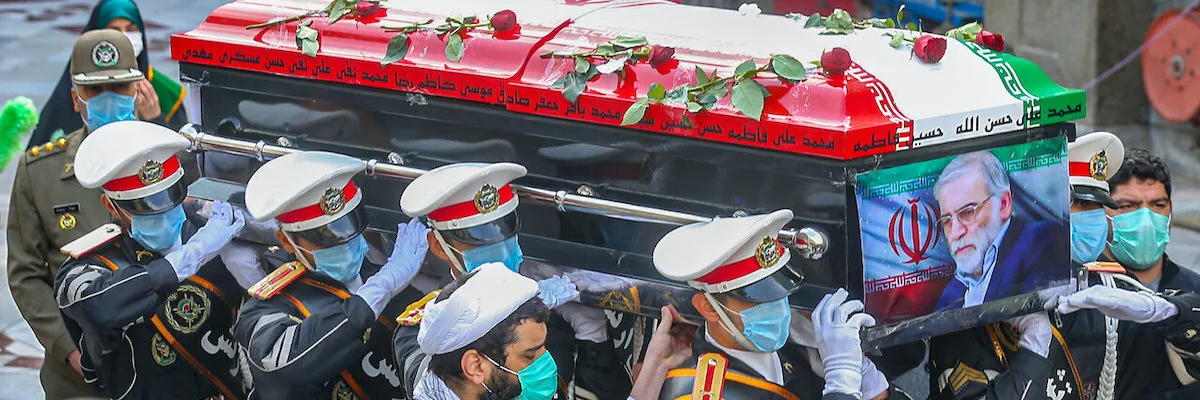
Fakhrizadeh was laid to rest on Monday, three days after he was assassinated on a major road outside Tehran.
"Let me say that we abhor violence of any type, we are an international organisation for peace and security," Grossi said.
The killing could put yet more strain on diplomatic efforts to salvage Iran's 2015 nuclear deal with world powers, which has been disintegrating ever since the Trump administration withdrew from it two years ago.
High-Stakes Gamble
Iran has been one of the thorniest issues Grossi has had to tackle over an eventful year since taking office in early December 2019.
"They have a very large nuclear programme that requires as you know one of the biggest, if not the biggest efforts in terms of inspection. Without that... the instability in the region would be far higher," Grossi said.
A high point during his leadership was his trip to Tehran in August which ended in an agreement allowing IAEA inspectors access to two sites where undeclared nuclear activity may have taken place in the 2000s.
That had followed months where Tehran had denied access to the locations.
"I was served with a denial of access to two sites barely 40 days into the job, something that had never happened before in the history of the IAEA," Grossi recalls.
He admitted that some member states and analysts had thought his gambit of flying to Iran for talks was a risk.
However, it paid off and won him plaudits in Vienna's diplomatic circles.
'Sense of Urgency'
However, when it comes to another controversial undeclared site, in the Turquzabad district of Tehran, Grossi said there were still unanswered questions over the presence of nuclear material.
"I do not want to dramatise but it is important that we get clarification," he said.
While not setting a deadline for Iran to provide the necessary information, Grossi said "a sense of urgency is clear on my side" and recalled that the site has been under discussion for almost two years now.
Grossi said his proudest achievement was that the agency managed to keep going throughout the coronavirus despite the challenges.
"I had to argue my way with foreign ministers, I had to hire private planes to send my inspectors - it wasn't easy."
Looking to the year ahead, Grossi said he hoped the Agency would be a "priority" for the incoming administration of President-elect Joe Biden.
Photo: IRNA
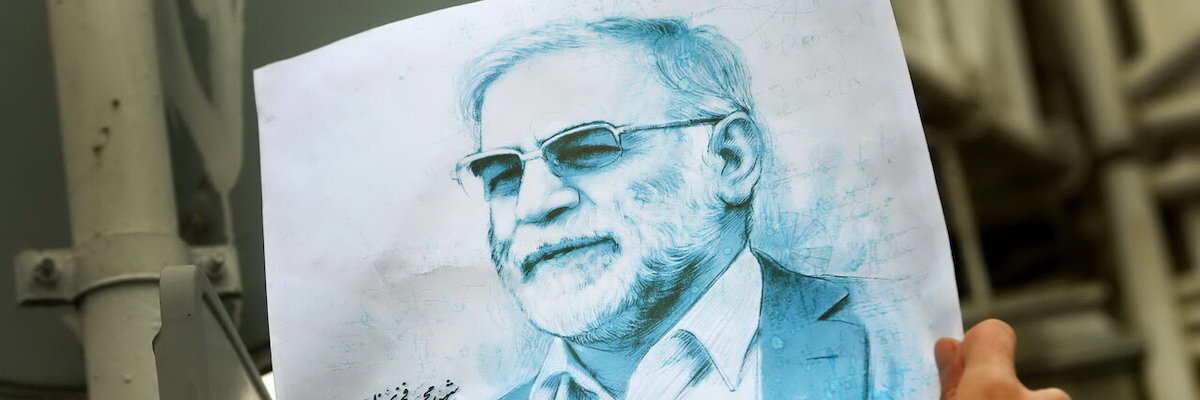
Iran Mulls Response as it Prepares to Bury Killed Nuclear Scientist
Debate raged in Iran on Sunday over how and when to respond to a top nuclear scientist's assassination, blamed on arch-foe Israel, as his body was honoured at Shiite shrines to prepare it for burial.
By Amir Havasi
Debate raged in Iran on Sunday over how and when to respond to a top nuclear scientist's assassination, blamed on arch-foe Israel, as his body was honoured at Shiite shrines to prepare it for burial.
Two days after Mohsen Fakhrizadeh died from wounds sustained in a firefight between his guards and unidentified gunmen near Tehran, parliament demanded a halt to international inspections of Iranian nuclear sites while a top official hinted Iran should leave the global non-proliferation treaty.
Iran's Supreme National Security Council usually handles decisions related to the country's nuclear programme, and parliamentary bills must be approved by the powerful Guardians Council.
President Hassan Rouhani has stressed the country will seek its revenge in "due time" and not be rushed into a "trap.”
Israel says Fakhrizadeh was the head of an Iranian military nuclear programme, the existence of which the Islamic republic has consistently denied, and Washington had sanctioned him in 2008 for activities linked to Iran's atomic activities.
The scientist's body was taken for a ceremony on Sunday at a major shrine in the holy city of Qom before being transported to the shrine of the Islamic republic's founder Imam Khomeini, according to Iranian media.Fakhrizadeh's funeral will be held Monday in the presence of senior military commanders and his family, the defence ministry said on its website, without specifying where.
Demands for 'Strong Reaction'
Israel has not officially commented on Fakhrizadeh's killing, less than two months before US President-elect Joe Biden is set to take office after four years of hawkish foreign policy under President Donald Trump. Trump withdrew the US from a multilateral nuclear agreement with Iran in 2018 and then reimposed and beefed up punishing sanctions as part of its "maximum pressure" campaign against Tehran.
Biden has signalled his administration may be prepared to rejoin the accord, but the nuclear scientist's assassination has revived opposition to the deal among Iranian conservatives.
The head of Iran's Expediency Council, a key advisory and arbitration body, said there was "no reason why (Iran) should not reconsider the Nuclear Proliferation Treaty".
Mohsen Rezaee said Tehran should also halt implementation of the additional protocol, a document prescribing intrusive inspections of Iran's nuclear facilitates.
Iran's supreme leader Ayatollah Ali Khamenei called Saturday for Fakhrizadeh's killers to be punished. Parliament speaker Mohammad-Bagher Ghalibaf called Sunday for "a strong reaction" that would "deter and take revenge" on those behind the killing of Fakhrizadeh, who was aged 59 according to Iranian media.
Call for Strikes
For Israeli newspaper Haaretz, Fakhrizadeh's killing was clearly tied to Biden's arrival in office.
"The timing of the assassination, even if it was determined by purely operational considerations, is a clear message to President-elect Joe Biden, intended to show Israel's criticism" of plans to revive the deal, it said.
The UAE, which in September normalised ties with Israel, condemned the killing and urged restraint.
The foreign ministry, quoted by the official Emirati news agency WAM, said Abu Dhabi "condemns the heinous assassination of Mohsen Fakhrizadeh, which could further fuel conflict in the region...
"The UAE calls upon all parties to exercise maximum degrees of self-restraint to avoid dragging the region into new levels of instability and threat to peace," it said.
Britain, a party to the nuclear accord, said Sunday it was "concerned" about possible escalation of tensions in the Middle East following the assassination, while Turkey called the killing an act of "terrorism" that "upsets peace in the region.”
In Iran, ultra-conservative Kayhan daily called for strikes on Israel if it were "proven" to be behind the assassination.
Kayhan called for the port city of Haifa to be targeted "in a way that would annihilate its infrastructure and leave a heavy human toll.”
Iran has responded to the US withdrawal from the 2015 deal by gradually abandoning most of its key nuclear commitments under the agreement.
'Revive Iran's Nuclear Industry
Rezaee called on Iran's atomic agency to take "minimum measures" such as "stopping the online broadcast of cameras, reducing or suspending inspectors and implementing restrictions in their access" to sites, ISNA news agency reported.
Iran's parliament said the "best response" to the assassination would be to "revive Iran's glorious nuclear industry.”
It called for International Atomic Energy Agency (IAEA) inspectors to be barred from the country's atomic sites, said the legislature's news agency ICANA.
Some MPs had earlier accused inspectors of acting as "spies" potentially responsible for Fakhrizadeh's death.
But the spokesman for Iran's atomic energy organisation, Behrouz Kamalvandi, told IRNA on Saturday that the issue of inspectors' access "must be decided on at high levels" of the Islamic republic's leadership.
Photo: IRNA
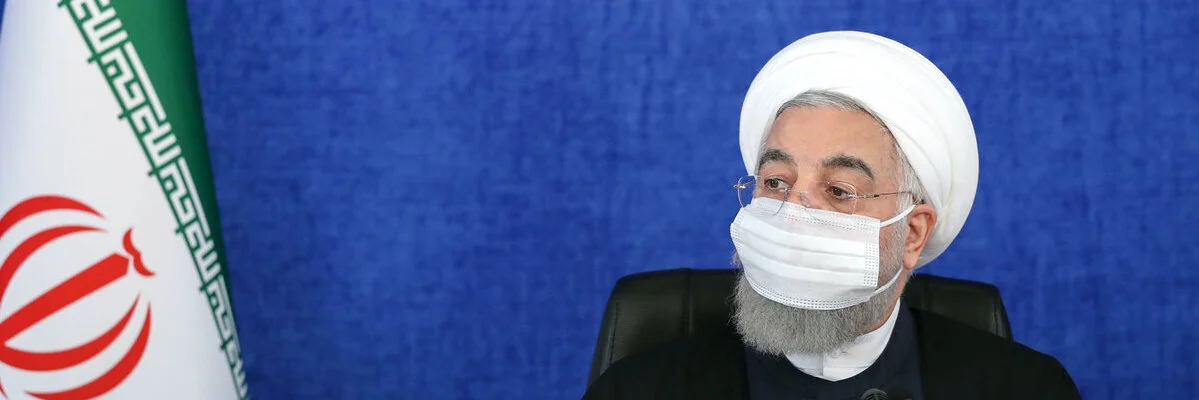
Rouhani Calls for Return to Pre-Trump US-Iran Situation
Iran's President Hassan Rouhani on Wednesday invited US President-elect Joe Biden's incoming administration to restore the "situation that prevailed" before Donald Trump came to power.
Iran's President Hassan Rouhani on Wednesday invited US President-elect Joe Biden's incoming administration to restore the "situation that prevailed" before Donald Trump came to power.
"Iran and the US can both decide and declare that they will return to the situation that prevailed until January 20, 2017," Rouhani told his cabinet, referring to the date when the outgoing US president assumed office.
“If there is such a will among the future American leaders, I think that it will be very easy to resolve" numerous problems, Rouhani said.
Iran and the US do not have direct diplomatic ties, but a nuclear deal agreed between Tehran, Washington and other world powers in 2015—negotiated when Barack Obama was in the White House, with Biden as his deputy—saw bilateral tensions dissipate to the lowest level in decades.
Trump unilaterally withdrew the US from that pact in May 2018 and launched a "maximum pressure" campaign against Iran with sanctions that plunged its economy into a deep recession.
The two countries have twice come to the brink of war since mid-2019.
The Iranian government's policy is based on "respect for commitments against respect for commitments... (and) respect in exchange for respect," Rouhani said, noting an opportunity to "completely change the course" of events of the last four years.
Since Biden's victory in the November 3 US presidential election, Rouhani has repeatedly signaled his openness to the incoming US administration, although Iran's supreme leader has cautioned against hopes of an opening with the West.
Photo: IRNA
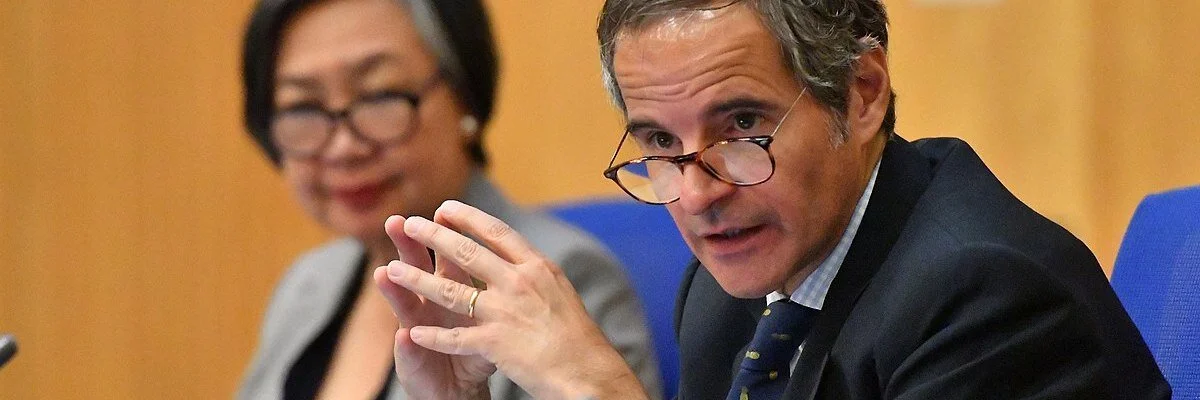
IAEA Not Satisfied With Iranian Explanation on Nuclear Site
The UN's nuclear watchdog said Wednesday that Iran's explanations over the presence of nuclear material at an undeclared site in the country were "not technically credible.”
By Jastinder Khera
The UN's nuclear watchdog said Wednesday that Iran's explanations over the presence of nuclear material at an undeclared site in the country were "not technically credible.”
The news comes as observers watch to see whether Joe Biden's victory in the US presidential election will lead to detente between Iran and Western powers.
Despite Iranian authorities providing some information about the site, "the agency informed Iran that it continues to consider Iran's response to be not technically credible," the International Atomic Energy Agency (IAEA) said in a report seen by AFP.
"A full and prompt explanation from Iran regarding the presence of uranium particles of anthropogenic origin... at a location in Iran not declared to the agency is needed," the report said.
While the IAEA has not identified the site in question, diplomatic sources have indicated to AFP that it is in the Turquzabad district of Tehran, previously identified by Israel as an alleged site of secret atomic activity.
A source familiar with the issue said there was no indication the site had been used for processing uranium but that it could have been used for storing it as late as the end of 2018.
Iran's ambassador to the IAEA, Kazem Gharib Abadi, wrote on Twitter that "any hasty comments should be avoided.”
"Interactions are ongoing with a view to finalize the resolution of the matter," he added.
'Sabotage'
The report did not provide any new information about two separate locations where the IAEA took samples in September and where undeclared nuclear activity may have taken place in the early 2000s.
The analysis of those samples is ongoing.
It however confirmed that Iran's stockpile of enriched uranium is now more than 12 times the limit set down in a 2015 deal with world powers, even if the rate at which the stockpile is expanding has slowed since the last report.
The 2015 accord has been progressively unravelling since US President Donald Trump withdrew from the deal in May 2018 and went on to re-introduce crippling economic sanctions on Iran.
In retaliation, Iran has been breaking the limits on its nuclear activity laid down in the deal since May 2019.
As well as breaching limits on the stockpile amount and enrichment level of uranium laid down in the 2015 Joint Comprehensive Plan of Action (JCPOA), Iran has been using more advanced centrifuges than permitted under the deal.
Wednesday's report confirmed that, in line with previous statements by Iranian officials, centrifuges had been installed at an underground part of the Natanz nuclear facility after another part of the site was damaged in an explosion in July which Iran blamed on "sabotage"
'Maximum Pressure'
The three European powers who are still party to the 2015 deal, namely France, the UK and Germany, have been scrambling to find ways to keep the accord intact.
The election of Trump's Democrat opponent Joe Biden as the next US president has offered some hope the deal could be revived, as Biden has offered Iran a "credible path back to diplomacy".
On Wednesday Iranian President Hassan Rouhani said the country would take “any opportunity" which could "lift the pressure of sanctions from the shoulders of our people".
However, obstacles remain to any detente.
Iran insists that the US has to lift sanctions imposed by the Trump administration before it will come back into compliance with the JCPOA's limits.
The "maximum pressure" campaign on Iran launched by the Trump administration has seen Tehran's distrust of the Americans intensify and tensions between the two countries have twice brought them to the brink of war since mid-2019.
Biden will face a tight window of opportunity between his inauguration on January 20 and an Iranian presidential election set for June 18 in which reformists and moderates allied to Rouhani may face a tough challenge from conservatives.
On Friday US Secretary of State Mike Pompeo will start a tour of US allies, including several of Iran's neighbours, during which he is expected to discuss raising further pressure on Tehran in the remaining two months of the Trump administration.
Photo: Wikicommons
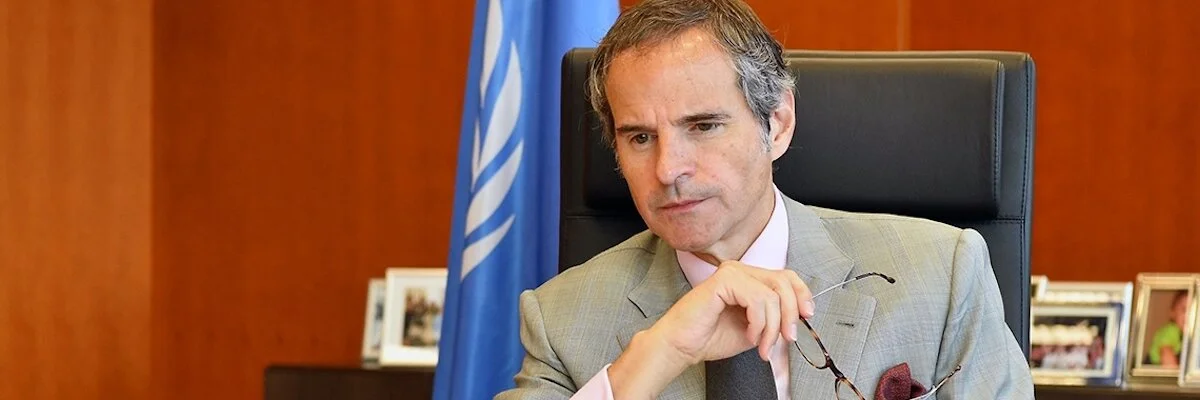
UN Nuclear Watchdog to Visit 2nd Iran Site in 'a Few Days'
The head of UN's nuclear watchdog said Monday that inspectors would "in a few days" visit the second of two sites in Iran where undeclared nuclear activity may have taken place in the early 2000s.
The head of UN's nuclear watchdog said Monday that inspectors would "in a few days" visit the second of two sites in Iran where undeclared nuclear activity may have taken place in the early 2000s.
Iran's refusal to allow the International Atomic Energy Agency (IAEA) access to the two sites had caused a diplomatic row for months.
This had further strained efforts to save the 2015 landmark Iran nuclear deal, which has hung by a thread since the US pulled out of it in 2018.
The accord promises Iran sanctions relief in exchange for curbing its nuclear program, but Tehran has stepped up nuclear activities since last year after the US reimposed sanctions.
IAEA Director General Rafael Grossi said a visit to a second site, to which the agency had requested access, was imminent following a recent visit to the first.
"The second one will happen in a few days," he told reporters after opening the agency's 35-member board of governors' meeting.
He said analyzing environmental samples collected at the first site would take "not less than a couple of months, two or three months maybe".
Tehran announced in late August that it would allow the IAEA access to the two sites, following a visit to Tehran by Grossi.
The denial had prompted the IAEA's board of governors to pass a resolution in June urging Tehran to comply with the agency's requests.
Under the 2015 accord, the IAEA monitors Iran's nuclear activities and regularly updates its members.
In its latest report, the IAEA said Iran's stockpile of enriched uranium now stands at more than ten times the limit set down in the 2015 deal.
Iran is also continuing to use more advanced centrifuges to enrich uranium than is permitted under the deal.
However, the level of enrichment has not gone above that which would be needed for use in a nuclear weapon.
The head of Iran's atomic agency, Ali Akbar Salehi, said Sunday that 1,044 centrifuges were active at the Fordow uranium enrichment plant.
The suspension of all enrichment at the underground facility was one of the restrictions on Iran's nuclear activities under the Iran nuclear accord.
Photo: IAEA
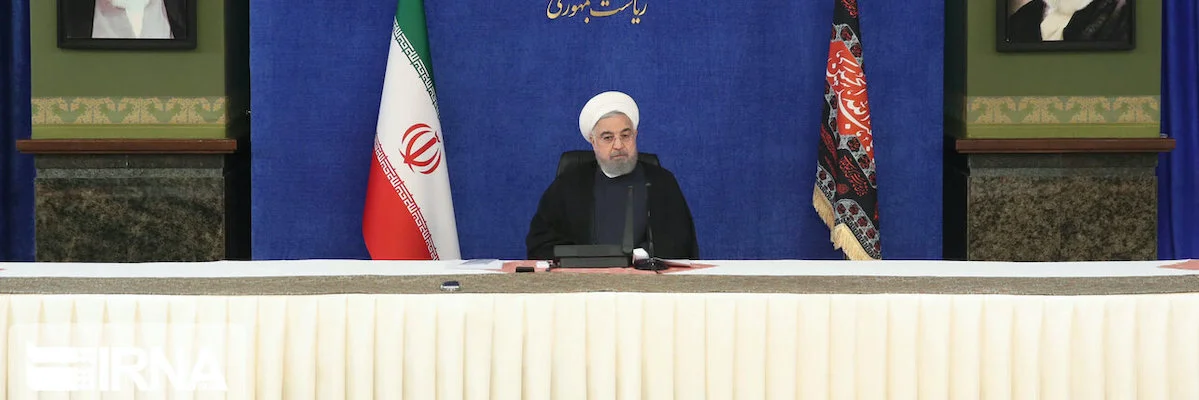
Iran Launches New 'Advanced' Nuclear Centrifuges
Iran's nuclear body said Tuesday it had launched a new "advanced centrifuges" facility to replace one badly damaged by "sabotage" at its main Natanz nuclear fuel plant in July.
Iran's nuclear body said Tuesday it had launched a new "advanced centrifuges" facility to replace one badly damaged by "sabotage" at its main Natanz nuclear fuel plant in July.
"It was decided to create a more modern, larger and more improved station in the heart of the mountains around Natanz, and the implementation of this project has started," Ali Akbar Salehi, the head of Iran's atomic agency, said on state television.
"We started the preliminary work by supplying the equipment and setting up a series of production chambers for advanced centrifuges," he added, without giving further details.
Advanced centrifuges are used in the process of uranium enrichment.
Iran said last month that an explosion at its plant in Natanz had been caused by "sabotage.”
After the July explosion, Iran sent warnings to Washington and Israel, two countries which accuse Tehran of developing a secret military nuclear program, claims Iran has always denied.
On Sunday, Iranian atomic energy spokesman Behrouz Kamalvandi said that after investigations into the Natanz explosion they had identified the "elements" responsible. No further details were given.
The 2015 nuclear agreement has been faltering since US President Donald Trump unilaterally withdrew in 2018 from an international accord that gave Iran relief from sanctions in exchange for curbs on its nuclear program,
In retaliation to the US withdrawal, the Islamic republic started producing uranium at a higher grade than allowed under the deal.
Last week, the UN's nuclear watchdog said that Iran's stockpile of enriched uranium stands at more than ten times the limit set down in the 2015 nuclear deal.
Photo: IRNA
Iran Allows UN Access to Alleged Nuclear Sites
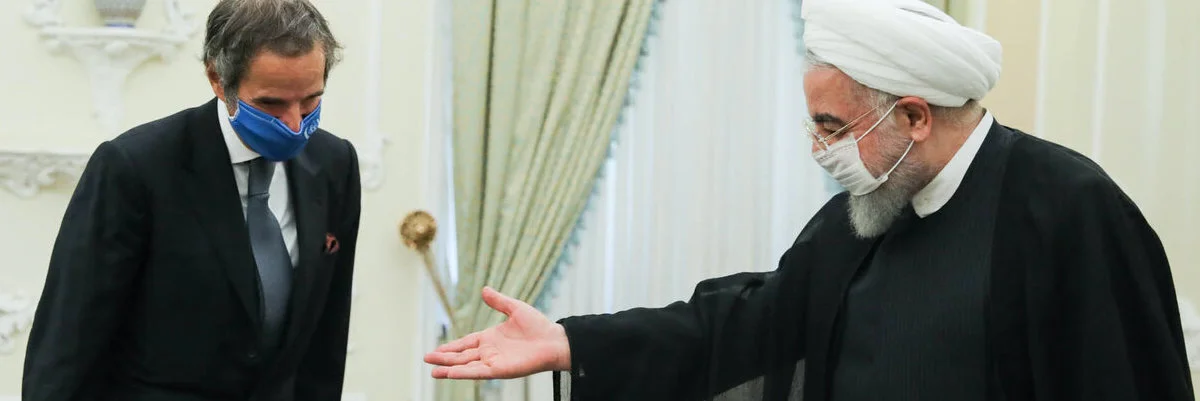
Iran agreed Wednesday to allow a UN watchdog the access it has requested to two alleged nuclear sites, as the head of the agency ended his first visit to Tehran.
Iran agreed Wednesday to allow a UN watchdog the access it has requested to two alleged nuclear sites, as the head of the agency ended his first visit to Tehran.
The announcement came only hours after Iran's arch foe the United States suffered a humiliating defeat when the United Nations blocked its controversial bid to reimpose international sanctions on the Islamic republic.
The US move had threatened to torpedo a historic 2015 accord under which Iran had agreed to curb its nuclear program in exchange for sanctions relief.
The deal known formally as the Joint Comprehensive Plan of Action (JCPOA) has been hanging by a thread since US President Donald Trump's unilateral decision to withdraw from it in 2018.
Iran has retaliated by gradually reducing its commitments to the JCPOA ever since.
But it agreed on Wednesday to grant the International Atomic Energy Agency the access it has sought to two sites that were suspected of having hosted undeclared activity in the early 2000s.
"Iran is voluntarily providing the IAEA with access to the two locations specified by the IAEA," the two sides said in a joint statement, adding they had agreed on dates for the access and the verification activities there.
The announcement came at the end of IAEA director general Rafael Grossi's first visit to Iran since the Argentine took the post last year.
In their statement, the two sides said the agreement followed "intensive bilateral consultations" and that the IAEA had no further access requests.
"Based on analysis of available information to the IAEA, the IAEA does not have further questions to Iran and further requests for access to locations," they said.
"Both sides recognize the independence, impartiality and professionalism of the IAEA continue to be essential in the fulfillment of its verification activities," they added.
'Sworn Enemies'
The IAEA's board of governors had passed a resolution in late June put forward by Britain, France and Germany, urging Tehran to provide inspectors access to the two disputed sites.
Grossi met with Iran's President Hassan Rouhani on Wednesday before wrapping up his visit.
"Iran, like before, is ready to closely cooperate with the agency in the framework of safeguards," Rouhani said, according to the government's official website.
He called the agreement "favorable" and said it can help "finally settle issues".
Rouhani also called on Grossi to consider that Iran has "sworn enemies" with nuclear weapons who do not cooperate with the IAEA and are "always seeking to cause issues" for Tehran.
The IAEA monitors Iran's nuclear activities as part of the 2015 nuclear agreement between the Islamic republic and the five permanent members of the UN Security Council -- Britain, China, France, Russia and the United States -- plus Germany.
Since the US pullout, the remaining participants to the deal have been struggling to save it.
Access to the two disputed sites had been blocked for months, prompting a diplomatic row.
According to the spokesman for Iran's nuclear body, one of the two is located in central Iran between Isfahan and Yazd provinces, and the other is close to Tehran.
Iran had argued that the IAEA's access requests are based on allegations from Israel and have no legal basis.
After meeting Grossi, head of Iran's atomic agency, Ali Akbar Salehi, said a "new chapter" had started in relations between the country and the agency.
Photo: IRNA
Iran Hails 'Constructive' Talks With Visiting IAEA Chief
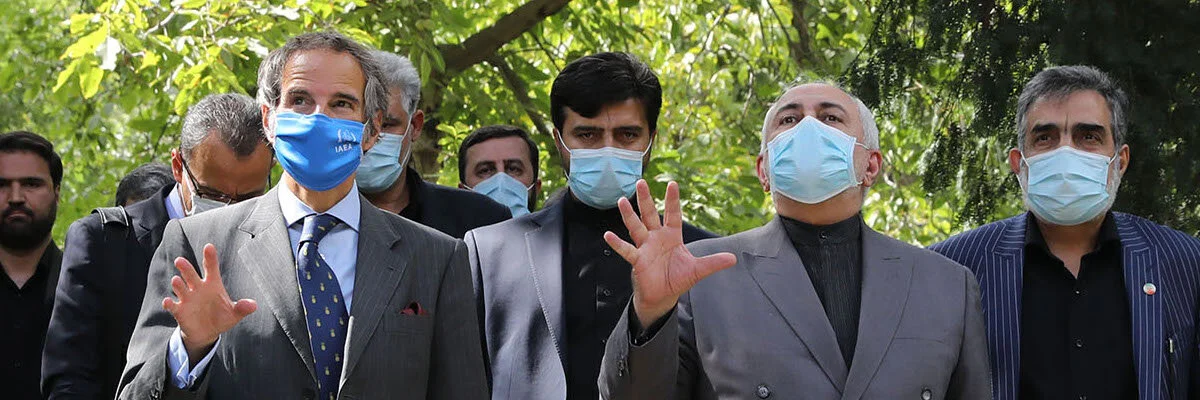
Iran's nuclear body said it held "constructive" talks on Tuesday with the visiting head of the International Atomic Energy Agency amid tensions over a US bid to reimpose UN sanctions.
By Amir Havasi
Iran's nuclear body said it held "constructive" talks on Tuesday with the visiting head of the International Atomic Energy Agency amid tensions over a US bid to reimpose UN sanctions.
The trip is Rafael Mariano Grossi's first to the Islamic republic since the Argentine took the helm of the Vienna-based UN agency last year.
It comes more than two years after US President Donald Trump pulled out of a landmark international agreement that put curbs on Iran's nuclear program in exchange for sanctions relief.
Grossi first met with the head of the country's atomic agency, Ali Akbar Salehi. Later he is due to meet Foreign Minister Mohammad Javad Zarif.
"A new chapter has started with this visit," Salehi said after the meeting, quoted by state news agency IRNA.
"Today's talks were constructive," he added.
"It was decided that the agency continue its work professionally and independently and Iran, too, act in the framework of its commitments."
Salehi said Iran's "enemies will not rest" but noted that Tehran has "so far been able to manage the issue".
‘Safeguards Verification'
Access to the two disputed sites has been blocked for months, prompting a diplomatic row.
Iran has argued that the IAEA's access requests are based on allegations from the country's arch-enemy Israel and have no legal basis.
The two sides were working on a statement which will be announced "in due time", Salehi added.
Grossi said later in a tweet that the two sides were working on "reaching an agreement on IAEA's safeguards verification activities in Iran."
In a statement before the talks, the nuclear body had said Iran expects the IAEA to "maintain neutrality in any situation and refrain from entering international political games."
The UN agency's board of governors had passed a resolution in late June put forward by European states, urging Tehran to provide inspectors access to two sites to help clarify whether undeclared nuclear activity took place there in the early 2000s.
According to the spokesman for Iran's nuclear body, one of the two is located in central Iran between Isfahan and Yazd provinces, and the other is close to Tehran.
He hinted in a Monday interview with Iran's Al-Alam television network that access may be granted if the agency does not demand more.
"To prevent enemies from exploiting the situation... we are seeking ways to alleviate our concerns and say there is access, see there's nothing," Behrouz Kamalvandi was quoted as saying.
"But this issue must be resolved once and for all... meaning that they would not demand afterwards to inspect somewhere else in the same way," he added.
US 'Snapback' Bid
Grossi's visit comes amid tensions between the US and its European allies over Washington's bid to maintain an arms embargo on Iran and reimpose UN sanctions.
It also takes place shortly before a September 1 meeting of the joint commission on the 2015 nuclear agreement.
Washington controversially maintains it has the right to force the reimposition of sanctions through the agreement's "snapback" mechanism, despite its withdrawal.
Britain, France and Germany rejected the move, saying it frustrated their efforts to salvage the accord.
The deal has been on life-support and tensions escalating since Trump's decision to pull out of the deal formally known as the Joint Comprehensive Plan of Action, or JCPOA.
In retaliation, Iran has progressively abandoned nuclear commitments under the accord.
Grossi is also expected to meet Iran's President Hassan Rouhani on Wednesday before flying back to Vienna.
Photo: Twitter
IAEA Head to Make First Visit to Iran on Monday
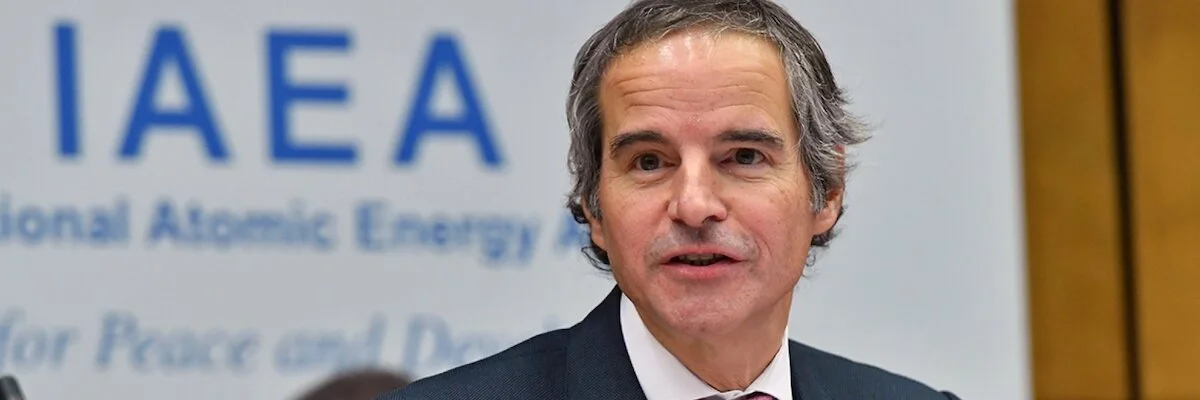
The head of the UN atomic watchdog will to go Tehran on Monday for meetings with senior Iranian officials aimed at improving cooperation on Iran's nuclear activities, the IAEA said.
The head of the UN atomic watchdog will to go Tehran on Monday for meetings with senior Iranian officials aimed at improving cooperation on Iran's nuclear activities, the IAEA said.
The visit comes amid tensions between the US and its European allies over Washington's bid to maintain an arms embargo on Iran and reimpose UN sanctions dating back to 2006.
It will be the first visit to Iran by Rafael Mariano Grossi since he became director general of the International Atomic Energy Agency in December.
The IAEA said in a statement on Saturday that Grossi will address Iran's cooperation with the agency and in particular access for its inspectors to certain sites.
"My objective is that my meetings in Tehran will lead to concrete progress in addressing the outstanding questions that the agency has related to safeguards in Iran and, in particular, to resolve the issue of access," he said.
“I also hope to establish a fruitful and cooperative channel of direct dialogue with the Iranian Government which will be valuable now and in the future.”
His visit takes place shortly before a September 1 meeting in Vienna of the joint commission on the landmark 2015 deal between Iran and global powers that aims to prevent Tehran from developing a nuclear bomb.
The US and European nations are at loggerheads after Washington began the process Thursday of activating a controversial mechanism aimed at restoring UN sanctions on Iran.
Britain, France and Germany rejected the move, saying it frustrated their efforts to salvage the 2015 accord that US President Donald Trump pulled out of two years ago.
Washington controversially maintains it has the right to force the reimposition of sanctions through the agreement's "snapback" mechanism despite its withdrawal.
Photo: IAEA
Iran's Rouhani Says UN Watchdog Risks Losing Independence
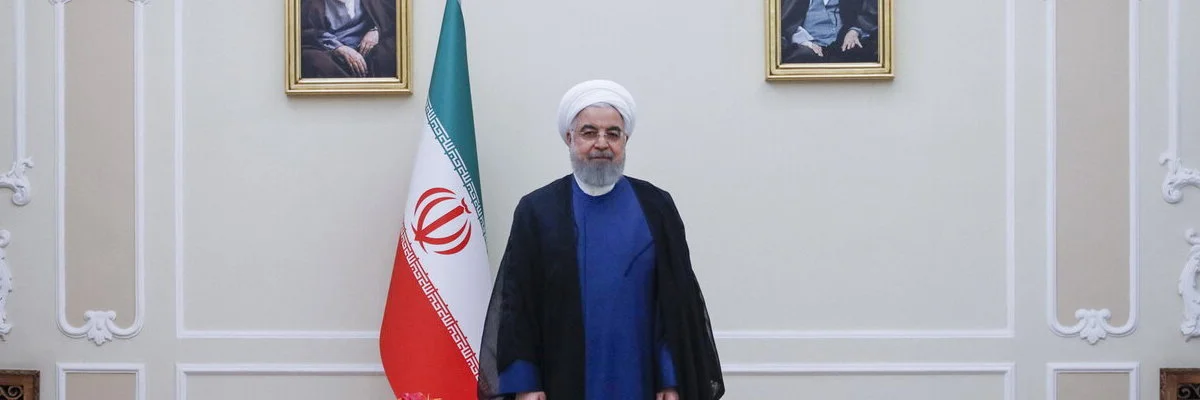
Iran's president warned Wednesday that the UN nuclear watchdog risks losing its independence after it adopted a resolution urging access to two sites alleged to have hosted past nuclear activities.
Iran's president warned Wednesday that the UN nuclear watchdog risks losing its independence after it adopted a resolution urging access to two sites alleged to have hosted past nuclear activities.
The Vienna-based International Atomic Energy Agency passed the resolution put forward by European states last week, calling on Iran to help clarify whether undeclared nuclear activities took place at the sites in the early 2000s.
But the Islamic republic says the IAEA's requests for access were based on allegations from its arch-enemy Israel and had no legal basis.
"The Zionist regime and the Americans are pressuring the agency to investigate something related to 20, 18 years ago. They are deceiving the agency, misleading it," President Hassan Rouhani said during a televised cabinet meeting.
"Our expectation is that... the agency should be able to keep its independence," he added, warning that Israel and the United States were tarnishing its reputation.
Rouhani also slammed the three European parties to the Iran nuclear deal—Britain, France and Germany—for putting forward the resolution and "sullying themselves for no reason" by cooperating with Israel and the US.
"We did not expect this from the Europeans," he said, while praising China and Russia—also parties to the nuclear deal—for standing against the resolution.
Iran agreed with the five countries plus the US in 2015 to limit its nuclear program in exchange for relief from sanctions, but the deal has been on life support ever since US President Donald Trump withdrew from it and unilaterally reimposed sanctions in 2018.
Tehran has criticized the Europeans for failing to provide it with the economic benefits set out in the accord and has rolled back some of its commitments in retaliation for the US pullout.
Rouhani said Iran would continue to work with the IAEA regarding "legal inspections.”
Photo: IRNA
UN Nuclear Watchdog Passes Resolution Criticizing Iran
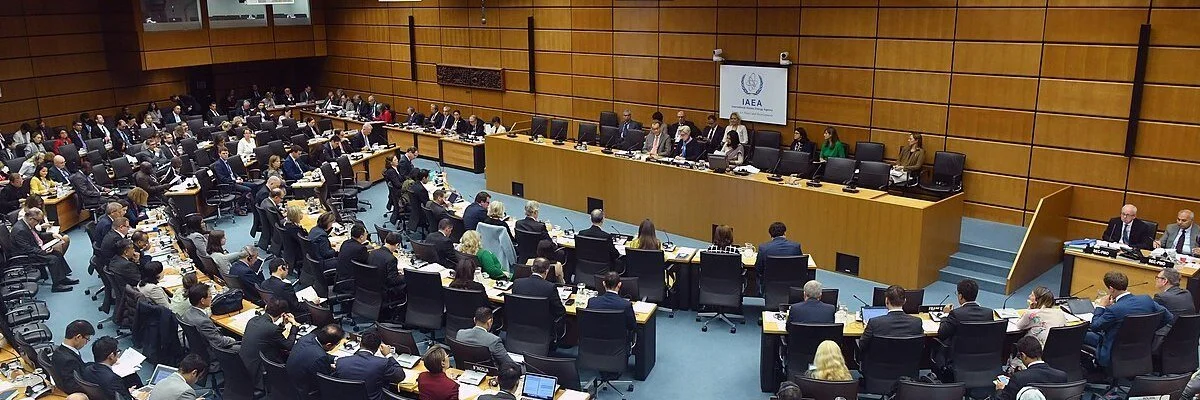
The board of governors at the UN's nuclear watchdog has passed a resolution critical of Iran, diplomatic sources said Friday, the first of its kind since 2012.
The board of governors at the UN's nuclear watchdog has passed a resolution critical of Iran, diplomatic sources said Friday, the first of its kind since 2012.
The resolution calls on Tehran to provide inspectors from the International Atomic Energy Agency (IAEA) with access to two sites in Iran in order to clarify whether undeclared nuclear activity took place there in the early 2000s.
Iran has been blocking access to the sites for months.
Earlier this week Iran warned that such a resolution would be "counterproductive" and that it would take "appropriate measures" in response.
Even though the sites in question are not thought to be directly relevant to Iran's current nuclear program, the agency says it needs to know if activities going back almost two decades have been properly declared and all materials accounted for.
Despite the row over the two sites, the IAEA says it still has the access it needs to inspect Iran's declared nuclear facilities, as the agency is mandated to do under the landmark deal between Iran and world powers reached in 2015.
However the latest row comes as that deal continues to unravel, with Iran continuing to breach the limits on nuclear activity in the accord in retaliation for the United States' withdrawal from it and reimposition of sanctions.
Photo: Wikicommons
Iran Warns Against UN Nuclear Watchdog Resolution
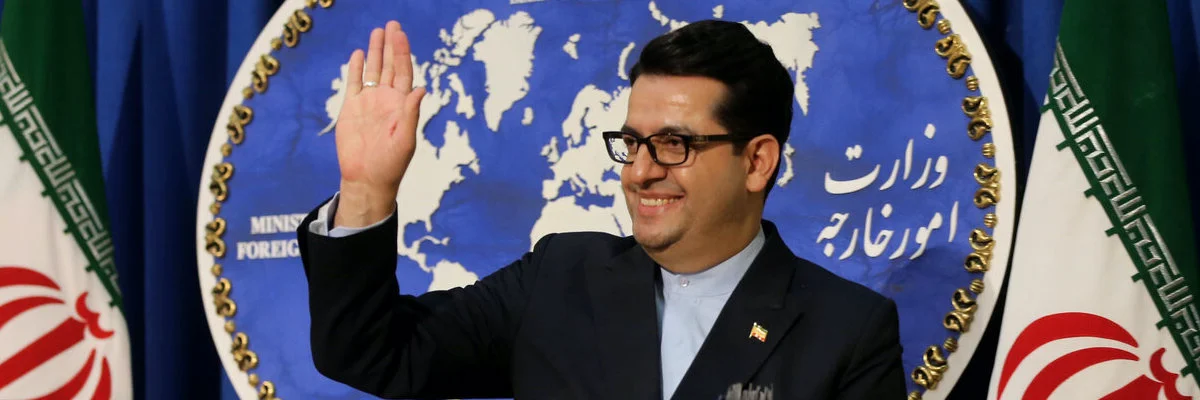
Iran criticized on Tuesday a plan to put forward a resolution at a meeting of the UN's nuclear watchdog urging the country to allow access to two disputed sites.
Iran criticized on Tuesday a plan to put forward a resolution at a meeting of the UN's nuclear watchdog urging the country to allow access to two disputed sites.
European states are expected to submit the resolution at the Vienna-based International Atomic Energy Agency's (IAEA) board of governors' meeting this week.
"Introduction of this resolution aiming to call on Iran to cooperate with the Agency... is disappointing and absolutely counterproductive," said Kazem Gharib Abadi, Iran's UN ambassador in Vienna.
Diplomats say the resolution will call on Iran to provide access to two locations where past nuclear activity may have occurred -- sites to which the IAEA has been trying to gain access for months.
At the start of this week's meeting on Monday, IAEA Director General Rafael Grossi repeated his appeal to Iran to "cooperate immediately and fully" and grant access.
Even though the sites in question are not thought to be directly relevant to Iran's current nuclear program, the agency says it needs to know if activities going back almost two decades have been properly declared and all materials accounted for.
But in Tuesday's statement, Gharib Abadi warned that if the resolution was adopted, "Iran would have no choice but to take appropriate measures, the consequences of which would be upon the sponsors of such political and destructive approaches".
He did not specify what these measures would be.
Gharib Abadi argued that the IAEA's access requests were based on allegations from Iran's arch-enemy Israel.
Additional information provided by the IAEA in support of its requests "were merely some commercial satellite imageries that contained no convincing underlying reason" to provide access, he added.
'Complication and Difficulties'
The IAEA's board of governors has not passed a resolution critical of Iran since 2012.
While a new resolution would be largely symbolic in character, it could be a prelude for the dispute being referred to the UN Security Council, the only UN body that can impose sanctions.
However, there is the added complication that due to the coronavirus pandemic the IAEA board of governors' meeting is taking place in a virtual format.
Russia has been particularly active in resisting the prospect of remote voting and on Monday it was decided that a physical meeting would be convened if a vote needs to be held.
It is not clear how quickly such a meeting could be organized.
Also on Tuesday Iranian Foreign Minister Mohammad Javad Zarif visited Moscow where his Russian opposite number Sergei Lavrov pledged to stand by Tehran, while referring to "developments taking place right now in Vienna" and "ideas our western friends are floating in New York".
"We will be very firmly opposing any attempts to use this situation in order to manipulate the Security Council and to promote an anti-Iranian agenda," Lavrov said.
Despite the row over the two sites, the IAEA says it still has the access it needs to Iran's nuclear facilities to monitor its current activities, as the agency is mandated to do under the landmark deal between Iran and world powers reached in 2015.
The deal has been unravelling since US President Donald Trump withdrew from it two years ago and went on to re-impose harsh economic sanctions on Iran.
In retaliation Iran has been slowly abandoning limits on its activities set out under the deal, including on the size and enrichment level of its uranium stockpile.
Iran has accused the European parties to the deal—France, the UK and Germany—of not doing enough to mitigate the impact of American sanctions.
In his statement, Gharib Abadi hinted that pressing ahead with the resolution could cause "complication and difficulties" for the future of the 2015 accord.
Photo: IRNA

UN Nuclear Watchdog Chief Asks Iran for Access to Disputed Sites
The head of the UN's nuclear watchdog on Monday called on Iran to allow "prompt access" to two sites where past nuclear activity may have occurred.
By Jastinder Khera
The head of the UN's nuclear watchdog on Monday called on Iran to allow "prompt access" to two sites where past nuclear activity may have occurred.
"I hope we can do better," Rafael Grossi, director general of the Vienna-based International Atomic Energy Agency (IAEA), told reporters when asked about the agency's current relationship with Iran.
Grossi was speaking at the start of a meeting of the agency's Board of Governors which is expected to discuss a report earlier this month in which the IAEA expressed "serious concern" that Iran has been blocking inspections at two sites.
"There are areas where our cooperation is ongoing and there is this issue where quite clearly we are in disagreement," he said.
Grossi repeated an appeal to Iran to "cooperate immediately and fully" with the agency.
If the Board of Governors pass a resolution critical of Iran, it would be the first of its kind since 2012.
Even though the two sites in question are not thought to be directly relevant to Iran's current activities, the agency says it needs to know if activities going back almost two decades have been properly declared and all materials accounted for.
The report detailed efforts by the agency's officials to get access to the locations.
Iran told the agency the report was a source of "deep regret and disappointment" and hinted the queries were based on "fabricated information" from "intelligence services".
Israel has previously claimed its intelligence services unearthed information on an alleged previous nuclear weapons program in Iran.
Grossi said that there were "no legal ambiguities" around the requests for access.
"The agency works on the basis of a very rigorous, dogged, meticulous technical and scientific analysis of information," he said, insisting: "Nothing is taken at face value."
Western states have voiced concern over Iran's denial of access to the sites concerned, with the United States being particularly vocal.
Brink of Collapse
The latest row over access comes as a landmark deal between Iran and world powers in 2015 continues to unravel.
Under the deal, known as the Joint Comprehensive Plan of Action (JCPOA), Iran committed to curtailing its nuclear activities for sanctions relief and other benefits.
But the Islamic republic has slowly abandoned its commitments after US President Donald Trump's decision two years ago to renounce the deal and reimpose harsh sanctions.
Iran's stockpile of enriched uranium is now almost eight times the limit fixed in the accord, according to an IAEA assessment published earlier this month.
However, the level of enrichment is still far below what would be needed for a nuclear weapon.
The IAEA says it continues to have access to all the facilities needed to monitor Iran's current nuclear activity.
The latest tension will further complicate efforts by the deal's EU signatories—the so-called E3 of France, Germany and Britain—to keep the deal from collapsing.
Trump has called for the E3 to follow his lead and leave the deal.
Last month, the US said it was ending sanctions waivers for nations that remain in the Iran nuclear accord—a move likely to have most impact on Russian firms working on Iran's nuclear program.
The American move brought condemnation from the E3 and was branded "unlawful" by Tehran.
Iran is also concerned that the US is pushing for an extension to an international arms embargo against Tehran which is set to be progressively eased from October.
Last week Iranian President Hassan Rouhani urged other UN Security Council members, especially veto-wielding China and Russia, to stand against the American "conspiracy".
Photo: Wikicommons
EU: US Ending Nuclear Waivers Means Harder to Check Iran
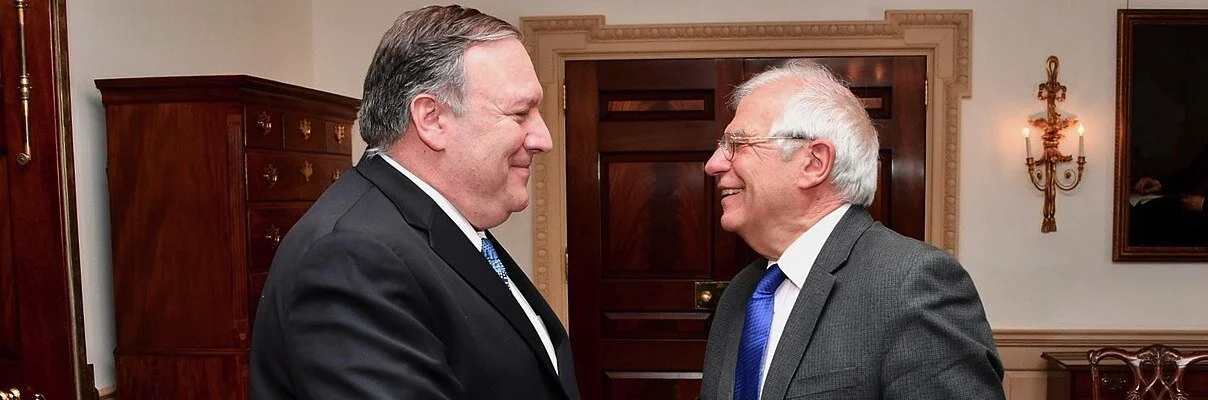
The European Union's foreign policy chief on Thursday condemned Washington's move to end sanction waivers for countries remaining in the Iran nuclear accord, warning it would make it harder to keep Tehran in check.
The European Union's foreign policy chief on Thursday condemned Washington's move to end sanction waivers for countries remaining in the Iran nuclear accord, warning it would make it harder to keep Tehran in check.
Donald Trump's administration announced Wednesday that it was ending the waivers because of a series of "escalatory actions" by Iran aimed at pressuring the United States, which pulled out of the accord in 2018.
But the EU's Josep Borrell highlighted the "enduring importance" of the deal, known as the Joint Comprehensive Plan of Action (JCPOA), because it was vital to ensuring that Iran's nuclear activities remain above board.
"The agreement remains the best and only way to ensure the peaceful nature of the Iranian nuclear program" Borrell told a United Nations Security Council meeting on Europe-UN relations.
"This is why I regret yesterday's decision by the US not to prolong the waivers for the JCPOA-related nuclear projects.
"This will make it more difficult for the international community to ensure the exclusively peaceful nature of Iran's nuclear program."
Iran has taken small steps away from its nuclear commitments in a bid to get Washington to remove sanctions as called for by the 2015 accord.
Trump quit the agreement negotiated under his predecessor Barack Obama, under which Iran had drastically curbed its nuclear activities.
But the Trump administration until now had issued waivers to allow companies, primarily from Russia, to keep carrying out the work of the agreement without risking legal ramifications in the world's largest economy.
Iran's UN ambassador said that with the end of waivers, US Secretary of State Mike Pompeo was pulling the "final plug" on the nuclear deal two years after Trump withdrew the US from it.
“Claiming US is STILL 'Participant' is not just preposterous; it's FALSE," the envoy Majid Takht Ravanchi tweeted.
The envoy was referring to Washington's claim that it remains a participant in the deal, despite renouncing it, and can push to extend an arms embargo on Iran due to begin expiring in October.
Photo: Wikicommons
US Ends Sanction Waivers for Nations in Iran Nuclear Deal
The United States said Wednesday it was ending waivers in its sanctions for nations that remain in the Iran nuclear accord, bringing the deal further to the verge of collapse.
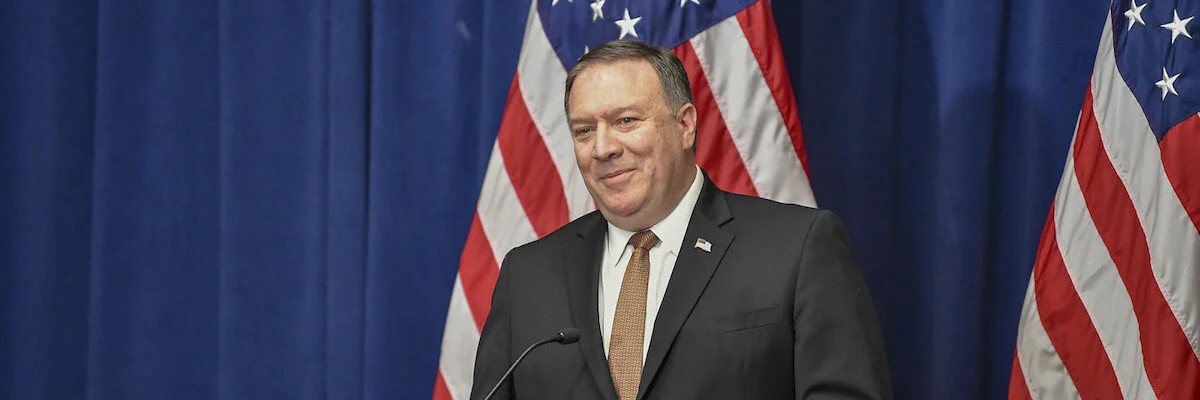
The United States said Wednesday it was ending waivers in its sanctions for nations that remain in the Iran nuclear accord, bringing the deal further to the verge of collapse.
Secretary of State Mike Pompeo said he was responding to Iran's "brinkmanship" of nuclear steps, which have been aimed at pressuring the United States to remove sanctions as called for by the 2015 accord.
"These escalatory actions are unacceptable and I cannot justify renewing the waiver," Pompeo said in a statement.
President Donald Trump bolted from the agreement negotiated under his predecessor Barack Obama, under which Iran had drastically curbed its nuclear activities.
But the Trump administration until now had issued waivers to allow companies, primarily from Russia, that are still present in Iran to carry out the agreement.
The United States will notably remove the waivers that allowed the modification of the heavy water reactor in Arak, which prevented it from using plutonium for military use, as well as the export of spent and scrap research reactor fuel.
Pompeo said that the United States was issuing a final 60-day waiver to allow companies involved in the projects to wrap up their operations.
The United States, however, did not move to stop international support for Bushehr, oil-rich Iran's only nuclear power plant, where Russia has been supplying fuel.
Pompeo said the United States was providing a 90-day waiver extension on Bushehr to "ensure safety of operations" but reserved the right to modify it at will.
In justifying the moves, Pompeo also pointed to recent comments by Iran's supreme leader, Ayatollah Ali Khamenei, who said it was an "Islamic duty" to fight for the "liberation of Palestine" and denounced supporters of Israel.
Pompeo accused Khamenei of invoking the Holocaust, saying: "The regime's vile rhetoric only strengthens the international community's resolve to counter its threats."
Britain, France and Germany—along with Russia and China—still support the nuclear accord, saying that it was working by reducing Iran's nuclear activities.
The Trump administration, which has close ties both to Israel and Iran's regional rival Saudi Arabia, called the deal a "disaster" and said the larger issue was reducing Tehran's activities in the region.
Iran's economy has faced intense pressure over the sanctions, while Trump has also used military force, killing a top Iranian general in a January drone strike.
Photo: State Department
UN Nuclear Watchdog Asks Iran to 'Immediately' Cooperate
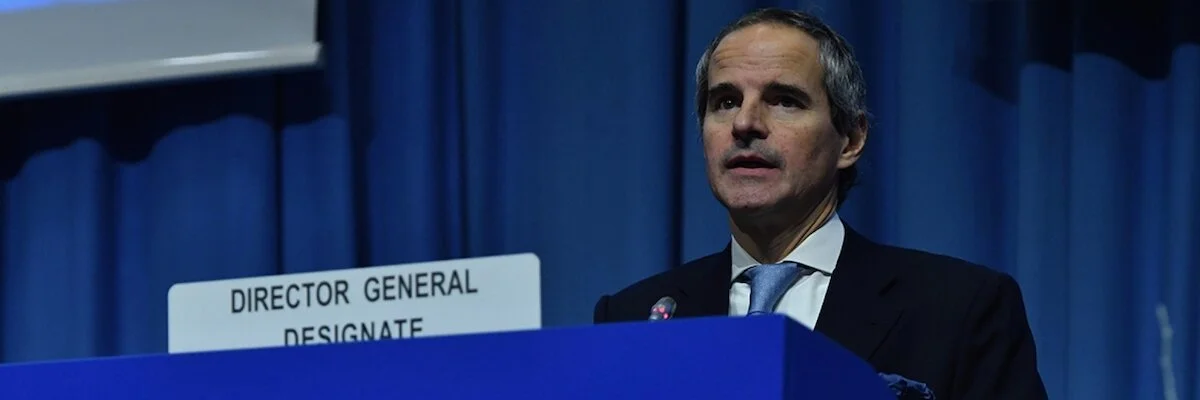
◢ The head of the UN's atomic watchdog on Monday urged Iran to "cooperate immediately and fully" with a landmark nuclear agreement with world powers that is hanging by a thread. An IAEA report last week revealed that Tehran refused the agency access in January to the two sites.
The head of the UN's atomic watchdog on Monday urged Iran to "cooperate immediately and fully" with a landmark nuclear agreement with world powers that is hanging by a thread.
The agency called on Iran to provide access to two locations, and said Tehran had failed to engage "in substantive discussions" to clarify the agency's questions, said Rafael Grossi, the new chief of the International Atomic Energy Agency (IAEA).
Grossi said the IAEA had raised questions "related to possible undeclared nuclear material and nuclear-related activities at three locations that have not been declared by Iran.”
He added that the lack of access to two of the three sites and Iran's failure to engage in talks was "adversely affecting the agency's ability... to provide credible assurance of the absence of undeclared nuclear material and activities in Iran".
An IAEA report last week revealed that Tehran refused the agency access in January to the two sites.
Diplomats say these are related to Iran's alleged military nuclear projects in the 2000s, and not its current activities.
But the renewed focus on Iran's historic program could add to current tensions.
Iran's UN ambassador in Vienna, Kazem Gharib Abadi, said last week that Tehran had no obligation to grant IAEA access to sites if it deems the requests to be based on "fabricated information", accusing the US and Israel of trying to "exert pressure on the agency.”
Israel has claimed that its intelligence services have new information on the alleged previous nuclear weapons program in Iran.
A second IAEA report last week outlined Iran's continued breaches of the terms of the 2015 nuclear accord, but did not report any restrictions in access to nuclear facilities.
Speaking at a quarterly meeting of IAEA's 35-member Board of Governors, Grossi said "to date, the agency has not observed any changes to Iran's implementation of its nuclear-related commitments" since January when Tehran announced it would cease all obligations.
The 2015 accord—offering Tehran sanctions relief in exchange for restrictions on its nuclear activities -- has been faltering since the US withdrew from it in 2018 and re-imposed harsh sanctions on Iran.
This has prompted Tehran to progressively abandon the accord's restrictions since last year.
Other parties to the deal—China, Britain, Germany, France and Russia—have been meeting with Tehran to try to save the accord.
Photo: IAEA
IAEA Chief Demands 'Clarifications' on Iran's Nuclear Program
◢ The head of the UN's atomic watchdog on Tuesday sounded the alarm at Iran's cooperation with the agency and demanded "clarifications" over an undeclared site in Tehran where uranium particles were found late last year. The IAEA issued two reports, one on Iran's current nuclear program and the other detailing its denial of access to two sites the agency wanted to visit.
By Didier Lauras and Jastinder Khera
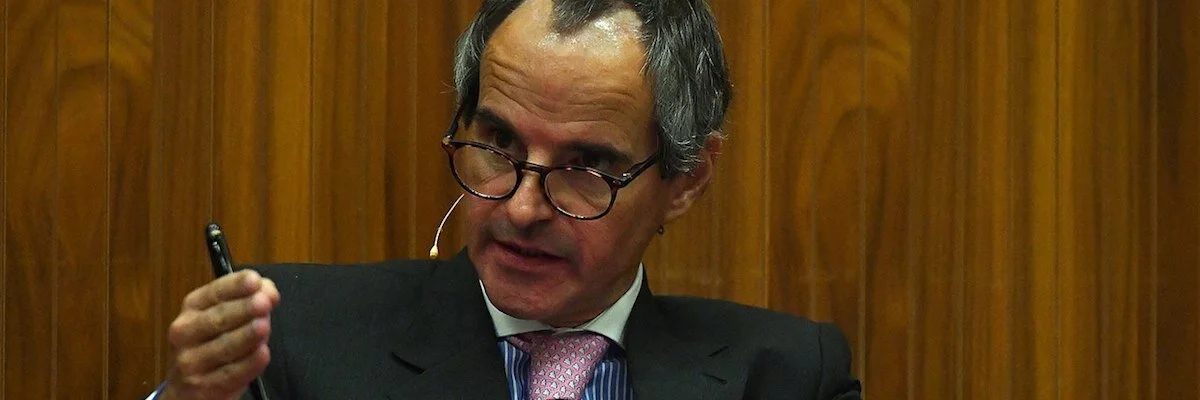
The head of the UN's atomic watchdog on Tuesday sounded the alarm at Iran's cooperation with the agency and demanded "clarifications" over an undeclared site in Tehran where uranium particles were found late last year.
It comes on the same day as the IAEA issued two reports, one on Iran's current nuclear program and the other detailing its denial of access to two sites the agency wanted to visit.
Rafael Grossi, the new head of the International Atomic Energy Agency (IAEA), who was in Paris to meet President Emmanuel Macron, told AFP: "Iran must decide to cooperate in a clearer manner with the agency to give the necessary clarifications."
"The fact that we found traces (of uranium) is very important. That means there is the possibility of nuclear activities and material that are not under international supervision and about which we know not the origin or the intent.
"That worries me," Grossi added.
The IAEA has for months been pressing Tehran for information about the kind of activities being carried out at the undeclared site where the uranium particles were found.
While the IAEA has not identified the site in question, diplomatic sources told AFP the agency asked Iran about a site in the Turquzabad district of Tehran, where Israel has alleged secret atomic activity in the past.
In addition, according to a report issued by the IAEA on Tuesday, "the Agency identified a number of questions related to possible undeclared nuclear material and nuclear-related activities at three locations in Iran".
At one of them the report said the IAEA had from early July 2019 observed "activities... consistent with effort to sanitize part of the location".
A diplomatic source said that the three locations were separate to Turquzabad.
The source also said that the agency's queries were thought to relate to Iran's historic nuclear activities and not to its compliance with the 2015 nuclear deal with world powers.
The IAEA report says the agency first raised questions about the sites last year and that Iran refused access to two of them that the agency wished to visit in late January.
Iran then sent the IAEA a letter saying it did "not recognize any allegation on past activities and does not consider itself obliged to respond to such allegations".
Deal in Danger
The second report from the agency detailed Iran's current breaches of several parts of a landmark 2015 international deal on scaling back its nuclear programme.
The report showed Iran's stockpile of enriched uranium now stands at more than five times the limit fixed under the accord.
It said that as of February 19, 2020 the Iranian stockpile stood at the equivalent of 1,510 kilogrammes, as opposed to the 300 kg limit set under the agreement.
Some experts consider this amount to provide sufficient material to produce a nuclear weapon, depending on its exact level of purity.
However, it would still need several more steps, including further enrichment, to make it suitable for use in a weapon.
The report says that Iran has not been enriching uranium above 4.5 percent.
An enrichment level of around 90 percent would be needed for weapons use.
Richard Nephew, a former lead US sanctions expert during the negotiations for the 2015 deal, pointed out that while the latest figures were "a problem (that)... needs to be addressed", Iran's uranium stockpile remains a fraction of what it was before the deal actually came into force.
"This remains not yet a crisis and we have time to fix it diplomatically, if anyone in Washington or Tehran is still so inclined," he said on Twitter.
The 2015 deal has been hanging by a thread since the US withdrew from it in May 2018 and went on to impose stinging sanctions on Iran, in particular targeting its vital oil sector.
The latest IAEA reports come just days after a meeting in Vienna of the remaining parties to the deal ended without a clear plan to keep the accord alive.
The 2015 agreement promised Iran an easing of very damaging economic and other sanctions in return for scaling back its nuclear programme.
Tehran has been progressively reducing its commitments to the accord in retaliation for the US move.
Photo: Wikicommons
EU Top Diplomat Holds Talks in Iran 'To De-Escalate Tensions'
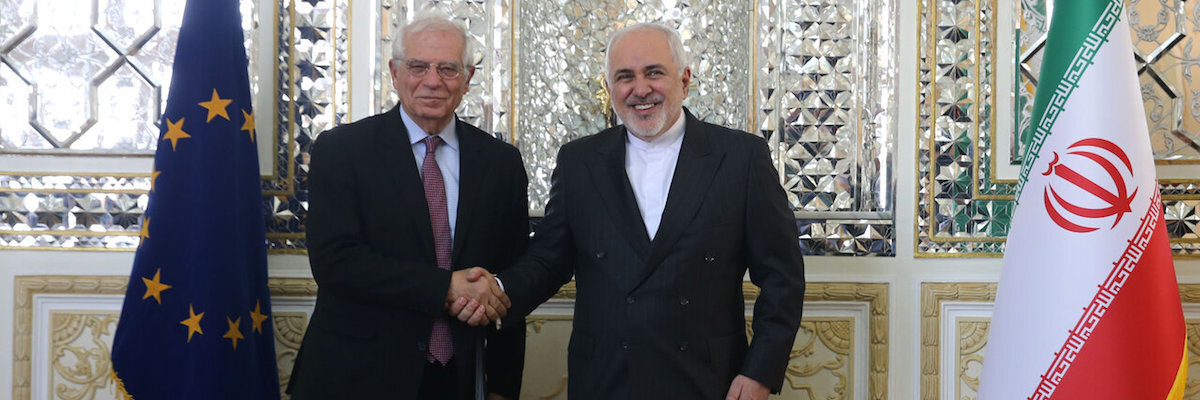
◢ Top EU diplomat Josep Borrell on Monday held talks in the Iranian capital on a mission aimed at lowering tensions over the Islamic republic's nuclear program. Borrell's mission aims "to de-escalate tensions and seek opportunities for political solutions to the current crisis," said the office of the EU's high representative for foreign affairs and security policy.
Top EU diplomat Josep Borrell on Monday held talks in the Iranian capital on a mission aimed at lowering tensions over the Islamic republic's nuclear program.
Borrell's trip, his first to Iran since taking office, follows a spike in tensions between arch foes Washington and Tehran after the January 3 assassination in Baghdad of a top Iranian general in a US drone strike.
Borrell's visit opened with a meeting with Foreign Minister Mohammad Javad Zarif.
According to a ministry statement, the two men discussed "the situation in the Persian Gulf and the need to reduce regional tensions" and the 2015 deal on Iran's nuclear program.
The deal between Tehran and a group of world powers has been crumbling since US President Donald Trump withdrew from it in 2018, and Washington has since stepped up sanctions and a campaign of "maximum pressure" against Iran.
Tehran has gradually stepped back from its own commitments under the deal, while military tensions with the US brought the two countries to the brink of full-blown confrontation last month.
Borrell's mission aims "to de-escalate tensions and seek opportunities for political solutions to the current crisis," said the office of the EU's high representative for foreign affairs and security policy.
The trip will allow Borrell "to convey the EU's strong commitment to preserve" the nuclear deal, known as the Joint Comprehensive Plan of Action, and to discuss cooperation between the EU and Iran, it said.
Zarif and Borrell also touched on Trump's controversial peace plan for the Israeli-Palestinian conflict and developments in Iraq, Syria and Yemen, the foreign ministry said.
The European diplomat later met President Hassan Rouhani and is set to meet parliament speaker Ali Larijani.
Iranian foreign ministry spokesman Abbas Mousavi told a news conference that Tehran hoped Borrell's visit would help the European Union "understand" its situation and prompt the bloc to "show goodwill by taking serious measures".
Accusations, Denials
Borrell said on January 24 that he had consulted the countries still in the deal—which also include Russia and China—and that all are determined to save the accord.
A joint commission that oversees the deal and comprises representatives of all the countries involved will meet in February, he said, without giving a precise date.
Washington accuses Tehran of seeking a nuclear weapon, which Iran has always denied.
The deal struck in Vienna between Iran and the five permanent members of the UN Security Council—Britain, China, France, the United States and Russia—plus Germany, offered Tehran a partial reprieve from crippling international sanctions.
In exchange, Iran agreed to drastically reduce its nuclear activities and to submit to a tailor-made inspection regime by the International Atomic Energy Agency (IAEA).
The US withdrawal from the deal and its reimposition of biting sanctions deprived Iran of anticipated economic benefits.
The renewed US sanctions have almost entirely isolated Iran from the international financial system, driven away oil buyers and plunged the country into a severe recession.
Since May 2019, Iran has progressively scaled back commitments under the agreement in response to the US sanctions and Europe's inability to circumvent them.
Iran is now producing uranium enriched beyond the 3.67 percent set by the agreement, and no longer adheres to the limit of 300 kilogrammes (660 pounds) imposed on its enriched uranium stocks.
It has also resumed research and development that was restricted under the deal.
Photo: IRNA