
Russia Says Biden Must Lift Sanctions to Save Iran Nuclear Deal
Russia said Tuesday it was up to Washington to take the first steps if US President Joe Biden wants to salvage the landmark Iran nuclear deal.
By Jonathan Brown
Russia said Tuesday it was up to Washington to take the first steps if US President Joe Biden wants to salvage the landmark Iran nuclear deal.
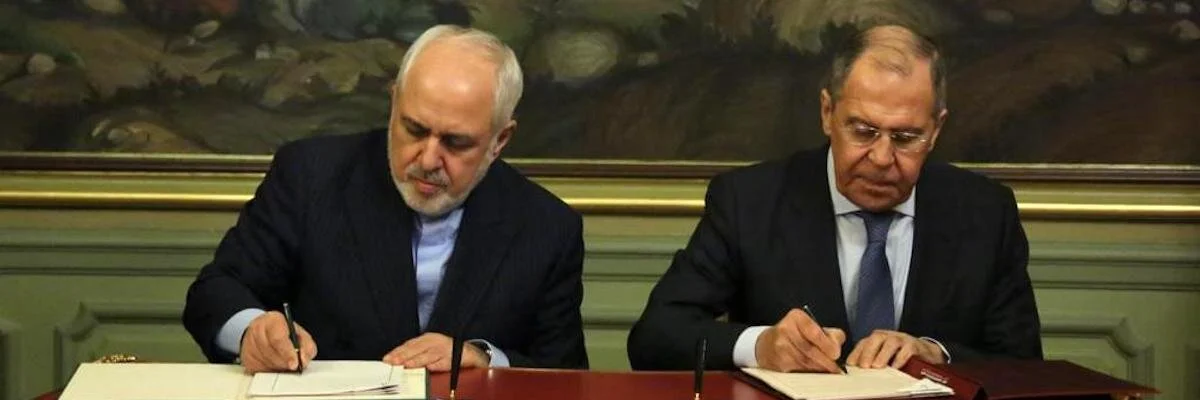
Foreign Minister Sergei Lavrov urged Washington to lift sanctions on Tehran and save the historic agreement during his first talks with his Iranian counterpart since Biden's election victory raised hopes for the fate of the deal.
Lavrov said that Russia and Iran "share the same position" on the preservation of the 2015 accord, urging the United States to lift sanctions as a condition for Iran's return to compliance
"This in turn will provide the preconditions for the implementation of all requirements of the nuclear deal by the Islamic Republic of Iran," he told journalists.
The talks in Moscow came days after Iranian Foreign Minister Mohammad Javad Zarif urged the United States to make the "fundamental choice" to end its sanctions regime and reverse the "failed policies" of the previous White House administration, which took a hawkish position on Tehran.
He cautioned that any efforts by Washington to extract additional concessions would ultimately end in failure.
"Iran wants the nuclear deal it made," Zarif wrote in an op-ed in the US foreign policy magazine Foreign Affairs last week.
He reiterated Iran's position while in the Russian capital Tuesday, saying that if Washington cancels its penalties on Tehran, then Iran will not restrict the work of inspectors and return to its obligations under the accord.
"We will resume their complete implementation," Zarif said. The agreement was largely left in tatters after former US president Donald Trump unilaterally withdrew and ordered officials to reimpose tough penalties against Tehran as part of his administration's "maximum pressure" policy. Known as the Joint Comprehensive Plan of Action (JCPOA), the deal was agreed between Iran, the United States, China, Russian, Britain, France and Germany in 2015.
'Businesslike and Pragmatic'
The deal offered sanctions relief in exchange for curbs on Tehran's nuclear ambitions and guarantees it would not seek an atomic bomb. Iran maintains it has only pursued a civilian nuclear energy programme.
Immediately following the talks in Moscow, the French presidency on Tuesday said Iran must comply with the accord in order to see a US return, in direct contradiction to Russia's stance.
"If they are serious about negotiations and want to obtain a new commitmentfrom all participants in the JCPOA, first they must refrain from further provocations and second they must respect what they are no longer respecting" in terms of commitments, an official said on condition of anonymity.
Later Tuesday, Zarif tweeted: "It was the US that broke the deal—for no reason. It must remedy its wrong; then Iran will respond." A new wave of US sanctions has hit hard Iran's vital oil sector and its international banking ties, plunging the economy into a recession. Biden's pick for secretary of state, Antony Blinken, said at a Senate confirmation hearing this month that Trump's policies had made Iran "more dangerous.”
While Blinken confirmed Biden's desire for Washington to return to the nuclear agreement, both the United States and Iran have said the other must return to full compliance before the accord is implemented again.
Since the US exit, Russia and European signatories had advocated efforts to save the accord and cautioned Iran against bolstering its nuclear enrichment. Russia's Deputy Foreign Minister Sergei Ryabkov in December called on Iran to take "maximum responsibility" after Tehran announced plans to install advanced centrifuges in the country's main nuclear enrichment plant.
The ministry earlier this month blamed Iran's departure from the nuclear deal on "systematic crude violations" by the United States. Moscow appears cautiously optimistic over the fate of the deal under the new White House administration after its arms negotiator Mikhail Ulyanov described Washington's position as "businesslike and pragmatic.”
But time is running out for signatories to restore the nuclear deal and bring all parties back on track.
Legislation passed by Iran's parliament in December requires Tehran to boost uranium enrichment and limit UN inspections if sanctions are not removed by February.
Photo: IRNA
Iran Says 'Sabotage' Caused Natanz Nuclear Site Blast
Iran's Atomic Energy Organization said on Sunday that "sabotage" was the cause of an explosion that damaged the Natanz nuclear facility last month.
Iran's Atomic Energy Organization said on Sunday that "sabotage" was the cause of an explosion that damaged the Natanz nuclear facility last month.
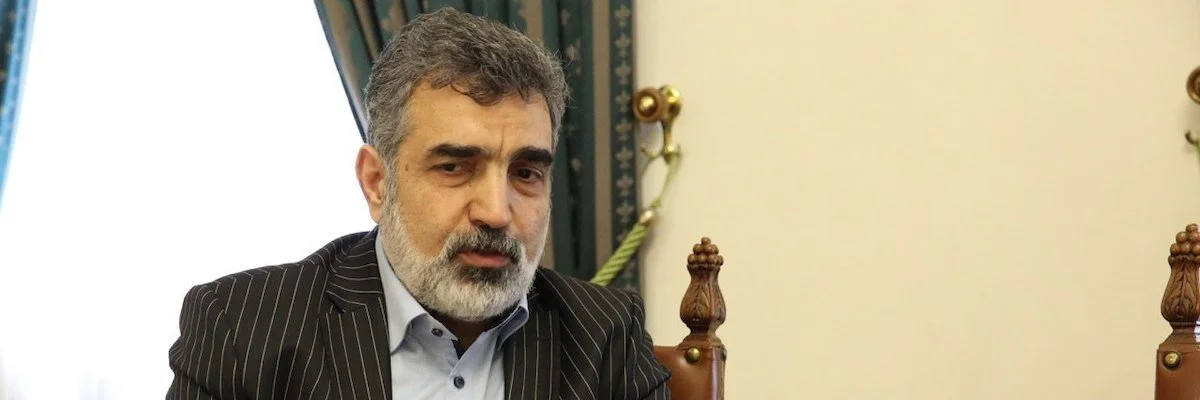
"Security investigations confirm this was sabotage and what is certain is that an explosion took place in Natanz," said spokesman Behrouz Kamalvandi.
"But how this explosion took place and with what materials... will be announced by security officials in due course," he was quoted as saying by state news agency IRNA.
Iran said after the July 2 incident that it had determined its cause but declined to release details due to "security concerns".
Natanz governor Ramezan-Ali Ferdowsi said a fire had broken out at the site, but the country's atomic agency said it caused no casualties or radioactive pollution.
At the time, IRNA published an editorial warning Iran's arch-foes against hostile actions, saying unnamed Israeli social media accounts had claimed the Jewish state was behind it.
The incident came six days after an explosion near a military complex rocked Tehran.
The blast in the Parchin area southeast of the Iranian capital was due to "leaking gas tanks", the defense ministry said.
The Islamic republic resumed uranium enrichment at the Natanz complex, in central Iran, in September last year.
The move came after the United States unilaterally withdrew in 2018 from an international accord that gave Iran relief from sanctions in exchange for curbs on its nuclear program.
Tehran has always denied its nuclear program has any military dimension.
Photo: IRNA

If Iran Gets Nuclear Bomb, Saudi Arabia Will Follow: Crown Prince
◢ Saudi Crown Prince Mohammed bin Salman has said if Iran develops a nuclear weapon, Riyadh will follow suit—just days before he arrives in Washington for talks with US President Donald Trump.In an interview with CBS television, parts of which were released Thursday, the upstart Saudi royal likened Iran's supreme leader to Adolf Hitler, warning he could sweep through the Middle East like Germany's Nazis did at the start of World War II.
Saudi Crown Prince Mohammed bin Salman has said if Iran develops a nuclear weapon, Riyadh will follow suit—just days before he arrives in Washington for talks with US President Donald Trump.
In an interview with CBS television, parts of which were released Thursday, the upstart Saudi royal likened Iran's supreme leader to Adolf Hitler, warning he could sweep through the Middle East like Germany's Nazis did at the start of World War II.
"Saudi Arabia does not want to acquire any nuclear bomb, but without a doubt, if Iran developed a nuclear bomb, we will follow suit as soon as possible," Prince Mohammed said in the interview, which will air in full on CBS on Sunday.
Iran's supreme leader Ayatollah Ali Khamenei, he said, "wants to create his own project in the Middle East, very much like Hitler who wanted to expand at the time," said the 32-year-old heir to the throne.
"Many countries around the world and in Europe did not realize how dangerous Hitler was until what happened, happened. I don't want to see the same events happening in the Middle East."
His comments come as the Trump administration threatens to end the Iran nuclear deal, which could leave Tehran free to advance its development of atomic weapons.
Stoking Saudi-Iran Rivalry
Prince Mohammed, the son and heir of King Salman bin Abdulaziz Al Saud, is scheduled to arrive in Washington on Monday ahead of talks with Trump on Tuesday.
The brazen prince, dubbed "MBS", has rocked Saudi Arabia since his father became king in 2015 and named him defense minister.
Last year, he was elevated to crown prince, and is seen as the effective ruler under his 82-year-old father.
His moves have shaken up the kingdom—declaring a liberalization of social mores from the stifling ideology of Wahhabi Islam, and moving to modernize a heavily top-down economy.
But in a move to consolidate his power over rival royals, he also locked up many princes and top businessmen for months to force them to hand over fortunes and accept him as the country's future sovereign.
And he has also added fuel to largely Sunni Saudi Arabia's fight with Shiite Iran, miring the US-backed Saudi military in a disastrous confrontation with Tehran's proxies in a war that has destroyed much of Yemen, and launching a mostly failed effort by Gulf Arab states to isolate Qatar.
Trump however has repeatedly signaled his support for Saudi Arabia, visiting Riyadh in May 2017 on his first foreign trip as the US leader.
His son-in-law and senior aide Jared Kushner took the lead in building a relationship with Prince Mohammed, reportedly supporting his political offensive against Qatar—which the US Defense Department opposed.
Fast-Track Nuclear Energy Program
The new push by the kingdom to develop a nuclear energy capability has raised worries that, as in Iran, it could potentially underpin a weapons program.
Earlier this week, the Saudi cabinet officially put the atomic energy program on a fast track, saying it aims to lessen domestic use of oil to preserve the kingdom's huge hydrocarbon resources for export markets.
Saudi Arabia has for decades ranked as the world's leading crude oil exporter.
Prince Mohammed's visit comes less than two months before Trump must decide whether to continue sticking with the 2015 Joint Comprehensive Plan of Action (JCPOA), which removed sanctions on Iran in exchange for its pledge to halt its push toward developing nuclear weapons capability.
Trump has repeatedly condemned the deal, agreed by his predecessor Barack Obama together with Britain, China, France, Germany and Russia—all of which want to keep the agreement in place.
But Trump's sacking of Secretary of State Rex Tillerson, removing a defender of the deal, and naming CIA Director Mike Pompeo, an Iran hawk, to replace him could sound the death knell for the Iran accord when the May 12 deadline for Trump's decision arrives.
"The United States is determined to leave the nuclear deal, and changes at the State Department were made with that goal in mind—or at least it was one of the reasons," Iran's deputy foreign minister Abbas Araghchi said Wednesday.
Photo Credit: Wikicommons
Iran Sticking to Nuclear Deal: UN Watchdog
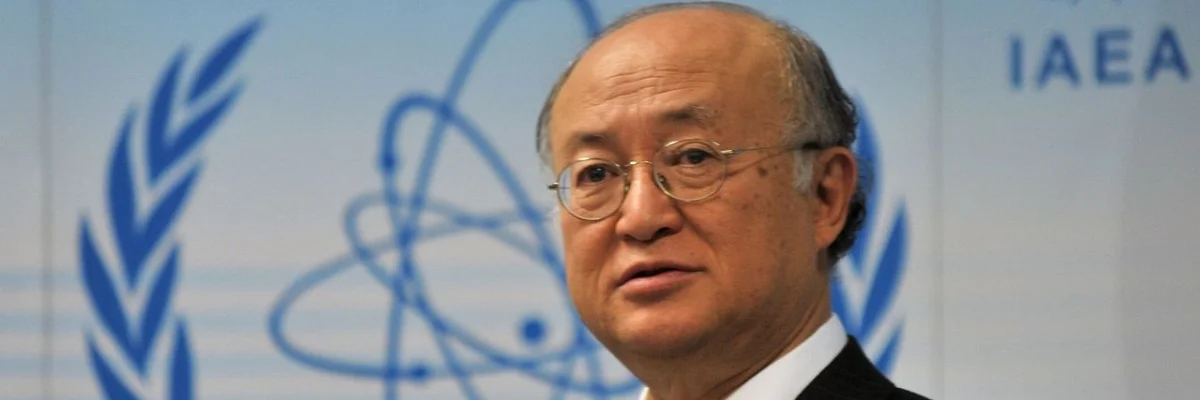
◢ Iran is still sticking to the 2015 nuclear accord, a UN atomic watchdog report showed Thursday, four months ahead of US President Donald Trump's deadline to fix its "disastrous flaws". The International Atomic Energy Agency document, the ninth since the deal came into force in January 2016, showed Iran complying with the accord's key parameters.
Iran is still sticking to the 2015 nuclear accord, a UN atomic watchdog report showed Thursday, four months ahead of US President Donald Trump's deadline to fix its "disastrous flaws".
The International Atomic Energy Agency document, the ninth since the deal came into force in January 2016, showed Iran complying with the accord's key parameters.
The number of centrifuges to enrich uranium was below the agreed level of 5,060, while Iran's total stockpile of low-enriched uranium "has not exceeded 300 kg", said the report seen by AFP.
Uranium when enriched to high purities can be used in a nuclear weapon. At low purities it can be used for peaceful applications such as power generation—Iran's stated aim.
The volume of heavy water, a reactor coolant, remained below the agreed maximum of 130 tonnes throughout the past three months.
Iran has inched above that ceiling twice since the accord took effect. It removed and rendered inoperable the core of the Arak reactor, which could in theory have produced weapons-grade plutonium, before the accord entered into force.
Aside from the relatively minor breach on heavy water, the IAEA reports have consistently shown Iran adhering to the deal in the two years since it took effect.
However, the future of the hard-won agreement between Iran and the five permanent members of the UN Security Council plus Germany is highly uncertain.
Trump in January set a 120-day deadline for US lawmakers and European
allies to "fix" his predecessor Barack Obama's main foreign policy achievement or face a US exit. He is concerned that parts of the deal start to expire from 2026 and that
it fails to address Iran's missile programme, its regional activities or its human rights abuses.
A US exit could kill the nuclear deal, which the Islamic Republic has refused to re-negotiate. While Iran has reaped massive economic benefits from the accord, notably by being able to resume oil exports, it is still constrained by US sanctions in other areas.
Russian Foreign Minister Sergei Lavrov has warned Europe signatories against compromising on the deal, saying it would be a "slippery slope in a very dangerous direction".
The IAEA report also said that Iran informed it in January of a decision to "construct naval nuclear propulsion in future". The IAEA has asked Tehran for further details. Press reports in the past have said that Tehran wants to develop nuclear-powered ships and/or submarines.
Photo Credit: Wikicommons