
Virus-Hit Iran Says Masks Compulsory From Next Week
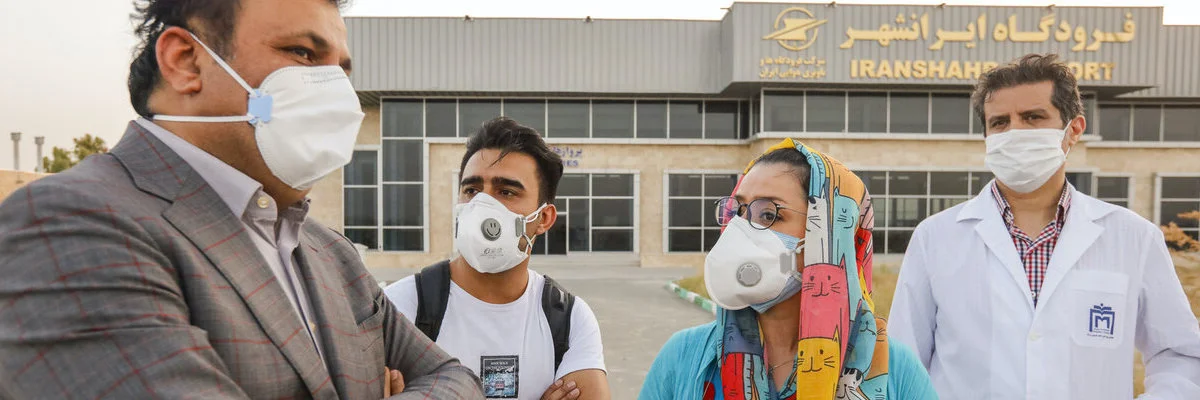
Iran said Sunday it will make mask-wearing mandatory in certain areas. The new steps were announced as Iran counted 144 new fatalities from the COVID-19 disease, its highest death toll for a single day in almost three months.
By Amir Havasi
Iran said Sunday it will make mask-wearing mandatory in certain areas and has allowed virus-hit provinces to reimpose restrictions, as novel coronavirus deaths mounted in the Middle East's worst-hit country.
The new steps were announced as Iran counted 144 new fatalities from the COVID-19 disease, its highest death toll for a single day in almost three months.
The Islamic republic has refrained from enforcing full lockdowns to stop the pandemic's spread, and the use of masks and protective equipment has been optional in most areas.
President Hassan Rouhani said Iran would have to live with the virus for the "long haul", as he announced the latest measures to combat it.
Mask-wearing would be "obligatory in covered spaces where there are gatherings", he said during a televised meeting of the country's anti-virus taskforce.
According to him, the measure would come into force as of next week, continue until July 22 and would be extended if necessary.
Rouhani said the health ministry had devised "a clear list" of the types of spaces and gatherings deemed high-risk, but he did not elaborate.
He also did not say what the penalty would be for those who fail to observe the measure.
According to deputy health minister Iraj Harirchi, services would not be provided to those without masks in areas such as government organizations and shopping malls.
But implementing the measure may be difficult, as according to Tehran's mayor, many do not wear masks in places like the capital's public transport network, where it is already mandatory.
"Fifty percent of metro passengers wear masks... and even fewer in buses," Mayor Pirouz Hanachi was quoted as saying by the semi-official ISNA news agency.
"We can't forcefully confront people without masks," he added.
'Red' Counties
Iran reported its first COVID-19 cases on February 19 and it has since struggled to contain the outbreak.
The health ministry on Sunday announced 144 virus deaths in the past 24 hours, its highest for a single day since April 5, raising the total to 10,508.
Spokeswoman Sima Sadat Lari also raised total confirmed infections to 222,669, with 2,489 new cases during the same period.
Official figures have shown an upward trajectory in new confirmed cases since early May, when Iran hit a near two-month low in daily recorded infections.
"Considering the rising numbers, I plead with you to definitely use masks outside and in covered places," Lari said.
Iran closed schools, cancelled public events and banned movement between its 31 provinces in March, but the government progressively lifted restrictions from April to try to reopen its sanctions-hit economy.
The economy is starting to suffer under the pressures of the health crisis.
The country's currency, the rial, has hit new lows against the US dollar in recent days, mostly over border closures and a halt in non-oil exports, according to analysts.
The increasing virus caseload has seen some previously unscathed provinces classified as "red"—the highest level on Iran's color-coded risk scale—with authorities allowing them to reimpose restrictive measures if required.
According to Rouhani, the measure would also be extended to provinces with "red" counties.
"Any county that is red, its provincial (virus) committee can propose reimposing limitations for a week", which could be extended if needed, he said.
The government launched an "#I wear a mask" campaign on Saturday and pleaded with Iranians to observe guidelines aimed at curbing infections.
One Iranian is infected with COVID-19 every 33 seconds and one dies from the disease every 13 minutes, Harirchi said on Saturday.
Zanjan county in northwestern Iran has already reimposed restrictive measures for two weeks, its governor said in a televised interview.
It followed a "certain indifference from Zanjan residents and as the number of our (virus) deaths picked up again in recent weeks," said Alireza Asgari.
The limitations include closing wedding halls and a ban on funeral events held at mosques, as they can lead to large gatherings, he added.
Photo: IRNA
Iran Fires up Advanced Centrifuges in Latest Nuclear Step
◢ Iran said Saturday it has fired up advanced centrifuges to boost its enriched uranium stockpiles, in the latest scaling back of commitments under a crumbling 2015 nuclear deal. The country's Atomic Energy Organization said, however, that it would honor commitments to give UN inspectors access to monitor its nuclear sites.
By Amir Havasi
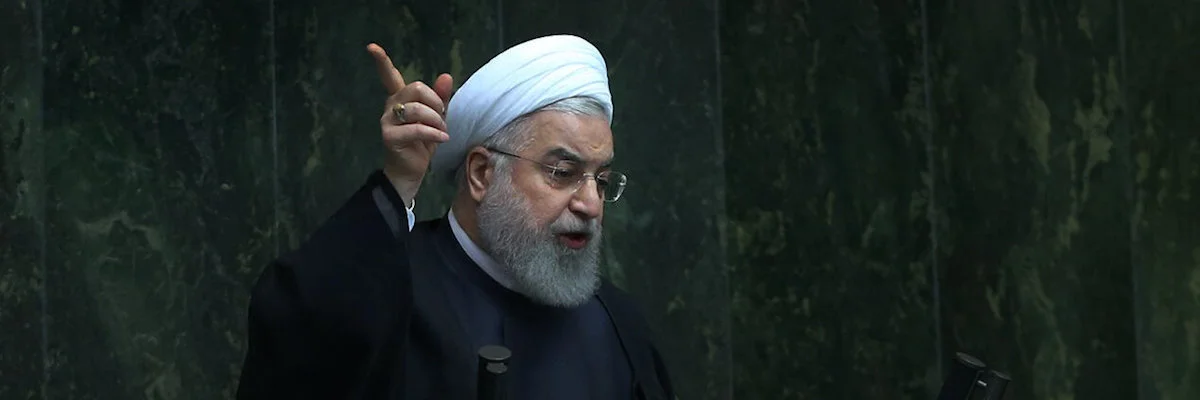
Iran said Saturday it has fired up advanced centrifuges to boost its enriched uranium stockpiles, in the latest scaling back of commitments under a crumbling 2015 nuclear deal.
The country's Atomic Energy Organisation said, however, that it would honor commitments to give UN inspectors access to monitor its nuclear sites.
Three European countries—Britain, France and Germany—have been engaged in talks to try to rescue the 2015 deal that gave Iran relief from sanctions in return for curbs on its nuclear program.
Tensions have been escalating between Iran and the United States since May last year when President Donald Trump pulled out of the accord and began reimposing sanctions that have crippled its economy.
The arch-foes were on the cusp of confrontation in June when Iran downed a US drone and Trump ordered retaliatory strikes before canceling them at the last minute.
On Saturday, Iran's Atomic Energy Organisation said it had activated 20 IR-4 and 20 IR-6 centrifuges as its latest step back in rolling back its commitments.
"The centrifuge machines, as they are engaged in research and development, will help with increasing the stockpile," said the agency's spokesman, Behrouz Kamalvandi.
"The capacity of these machines is many times more than the previous machines. This started as of yesterday (Friday)," he told a news conference in Tehran.
But Kamalvandi said Iran would allow the International Atomic Energy Agency (IAEA) to continue monitoring its nuclear program, as it has done under the 2015 accord.
"Regarding the monitoring and accesses of the IAEA... so that everything is clear (Iran's) commitments regarding transparency will be followed as before," he said.
Europe 'Must Hurry'
The European Union on Friday emphasized its reliance on the UN nuclear watchdog to monitor Iran's activities as it voiced "great concern" over the country's decision to roll back its commitments.
The IAEA in its latest report, on August 30, said it continues to verify compliance through cameras and on-site inspections.
But in an apparent hint at worries about access it said "ongoing interactions... require full and timely cooperation by Iran.”
The latest move by Iran came after EU members Britain, France and Germany were unable to find a way to offset the impact of sanctions on the country before a September 7 deadline set by the Islamic republic.
"If Europe wants to do something, it must hurry, because returning to the situation before reducing commitments could take time," Kamalvandi said on Saturday.
Tehran has already hit back twice with countermeasures in response to the US withdrawal from the 2015 deal.
On July 1, Iran said it had increased its stockpile of enriched uranium to beyond the 300-kilogram maximum set by the deal.
A week later, it announced it had exceeded a 3.67-percent cap on the purity of its uranium stocks.
On Saturday, however, Iran indicated it had no plans to step up the enrichment of uranium to higher levels.
"We currently do not need 20 percent enrichment, and if we do so at some time, we will first increase the 4.5 percent stockpile and then act," said Kalamvandi.
The announcement came on the eve of a visit to Iran by the acting head of the IAEA, Cornel Feruta. Kamalvandi said Feruta would meet the head of Iran's Atomic Energy Organisation, Ali Akbar Salehi, and Foreign Minister Mohammad Javad Zarif.
Photo: IRNA
New Wave Of Iranian Globetrotters Hits The Road
◢ A travel frenzy is gripping young Iranians, who are inspiring each other through social media to overcome traditional constraints and expand their horizons.
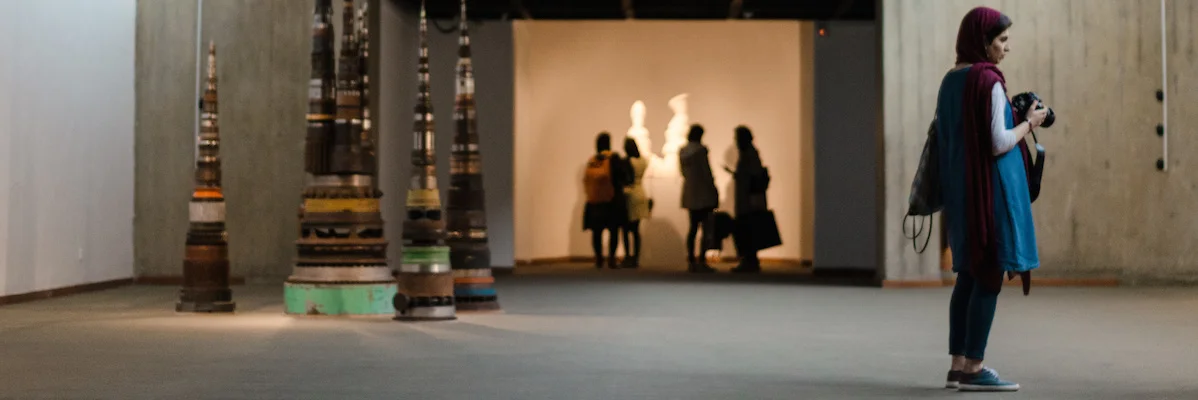
A travel frenzy is gripping young Iranians, who are inspiring each other through social media to overcome traditional constraints and expand their horizons.
The exploits of young Iranian travelers, hitchhiking and backpacking their way around the globe, have become immensely popular on Instagram and Telegram, the most widely used apps in Iran, with some gathering more than 200,000 followers.
Iran has long had a globetrotting elite thanks to the large diaspora that fled to the United States and Europe after the 1979 revolution, but now it is the turn of the emerging middle class to stretch their wings, overcoming cultural barriers and parental worries in the process.
Sara Louee, 31, grew up thinking that holidays were a family trip to the northern coasts of Iran.
But two years ago, she met a group of foreigners through the website couchsurfing.com and joined them as they hitchhiked to the ancient city of Yazd.
She was unprepared: "I had absolutely no equipment. I was wearing flimsy girly shoes and had borrowed a backpack from a friend," she told AFP.
But her mind was opened to a world of possibility and she was soon saving for a 40-day trip around Europe, even if it meant battling with her conservative-minded parents.
"My family didn't accept it easily or overnight. I went through a lot of pain. But I gradually proved I could do it with shorter trips and gained their trust," said Louee, who now blogs regularly about her travels.
"These days, if I stay home at the weekend, my dad comes over and asks if something is wrong," she added, laughing.
'Strangers in your room?!'
Other young Iranians, particularly women, say they had been taught that travelling alone was dangerous.
"When I told people I stayed in a hostel in Europe, Iranians would be shocked and say 'You mean there were strangers in your room?! Didn't they do anything to you?'" said Mahzad Elyassi, another travel blogger.
She only heard about hitchhiking for the first time in 2015 but has since travelled to all 32 of Iran's provinces and 20 countries.
"We've proven that Iran is really safe for such trips. It's become a trend.
"One woman said she used my Instagram page to convince her husband, saying: 'If she can do it alone, so can we.'"
Last year, Iran recorded 9.2 million departures, a 38.5-percent increase on the previous year and almost double the numbers a decade ago.
The trend has been helped by President Hassan Rouhani, who came to power in 2013 promising to improve Iran's relations with the world.
Iranians are not welcome everywhere: the United States this year banned them from entry unless they have close family, and European countries have strict and laborious procedures for tourists designed to weed out poor people.
But much of the rest of the world is welcoming Iran's tourist boom, with 38 countries now waiving visas for Iranians.
They include Georgia, Russia, Turkey and Malaysia, and talks are reportedly under way with India.
Tech Support
That has helped encourage travel among those outside of the rich elite by putting the focus on cheaper countries.
"Maybe Iranians don't have enough dollars or euros to travel to Europe but they can explore places like southeast Asia," said Elyassi.
Technology has also been crucial.
"When I started, Google Maps didn't exist. People couldn't just easily travel and share their experiences," said Reza Pakravan, 43, one of Iran's best-known travelers after he broke the world record for crossing the Sahara on a bike.
Alireza Zafari, 38, has spent two years on the "Herculean task" of documenting the whole of Iran for travelers, a project he expects will take another eight years to complete.
He hopes to encourage more Iranians and foreigners to visit Iran's beauty spots rather than the default option of popping across the border to Turkey, still the top choice for Iranians with 2.1 million visits last year thanks to cheap package tours and the availability of booze.
"The reason behind the travel wave is that people have become aware of the world, and technology gives them easy access to the information they need," Zafari told AFP.
By Ali Noorani in Tehran
Photo Credit: Negar Ghaffari, Iran Open Album