
Stolen Ancient Artifact Returns to Iran Museum
◢ A twice-stolen ancient Persian artifact is back in Tehran's national museum after a New York court ordered it returned to Iran. The limestone relief was handed over to Iran's representative at the United Nations last month and was personally brought back to Iran by President Hassan Rouhani, returning from the UN General Assembly.
A twice-stolen ancient Persian artifact is back in Tehran's national museum after a New York court ordered it returned to Iran.
"It now belongs to the people who made it in the first place, and who are now going to preserve it, and is part of their identity," Firouzeh Sepidnameh, director of the ancient history section of the National Museum told AFP on Tuesday.
The limestone relief was handed over to Iran's representative at the United Nations last month and was personally brought back to Iran by President Hassan Rouhani, returning from the UN General Assembly.
The bas-relief, approximately 25 centuries old, depicts the head of a soldier from a line of Immortal Guards.
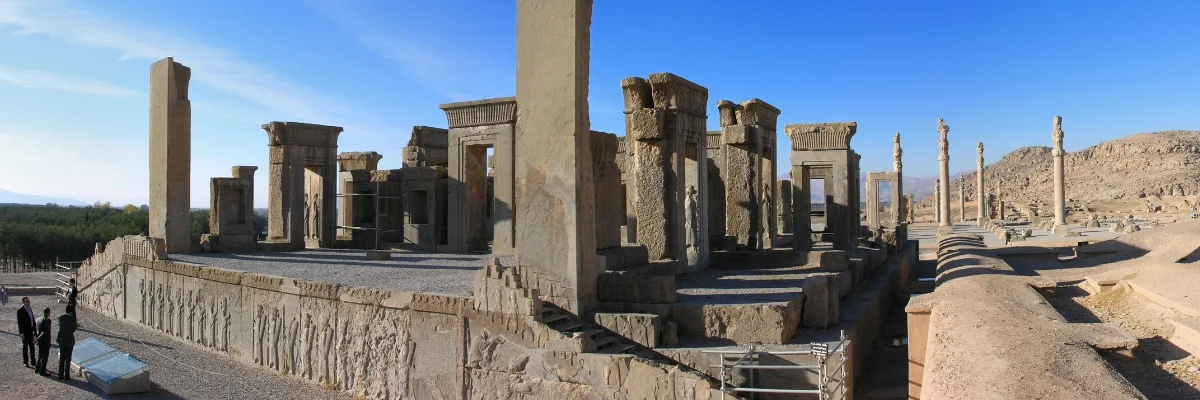
It was discovered in an archaeological dig in the early 1930s at Persepolis, capital of the Achaemenid Empire near today's central Iranian city of Shiraz.
The artifact was stolen four years after it was found, and ultimately ended up at the Montreal Museum of Fine Arts where it was again stolen in 2011.
It was seized by the Manhattan district attorney's office in 2017 when it resurfaced and was put on sale at an art fair.
"The international community has evolved enough to realize every artifact must return to its point of origin," said Sepidnameh.
Photo Credit: Wikicommons
Iranians Welcome Louvre Show Despite Tense Diplomacy
◢ Iranians gave a warm welcome to a new exhibition by France's Louvre on Tuesday -- the first major show by a foreign museum in the country. It features a number of treasures from the Paris museum's collection, including a 2,400-year-old Egyptian sphinx, a bust of Roman emperor Marcus Aurelius and drawings by Rembrandt and Delacroix.
Iranians gave a warm welcome to a new exhibition by France's Louvre on Tuesday—the first major show by a foreign museum in the country.
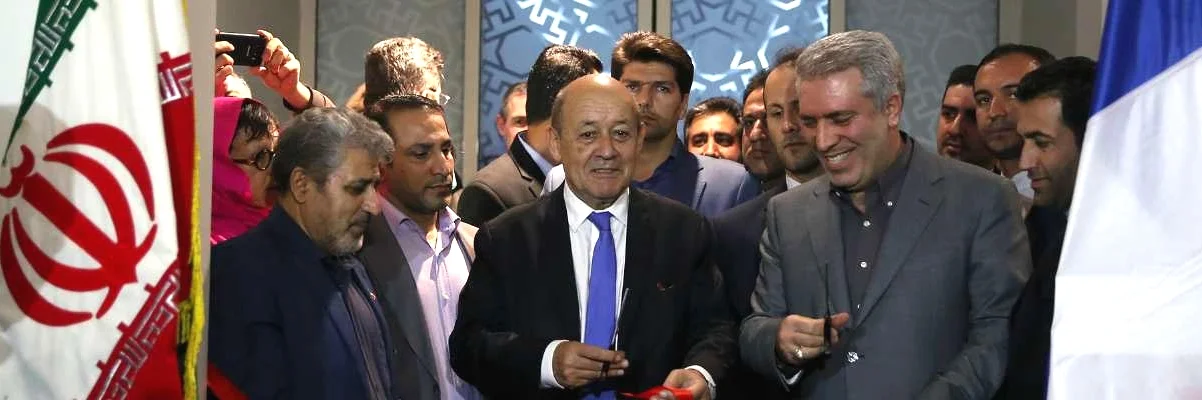
"It was great. I never thought I'd see such artworks in my life," said Mehdi, a 26-year-old student. The exhibition certainly appeared to go down better than Monday's visit by French Foreign Minister Jean-Yves Le Drian, who faced a day of tense discussions with Iranian officials before inaugurating the Louvre show.
The ever-combative Kayhan newspaper summed up the view of Le Drian's visit with the headline: "Impudent guest gets a dressing-down." Le Drian has angered Iran's leaders with his stern criticism of their missile program and foreign interventions.
"It was a tough trip, without concessions," he told reporters on the way back to Paris late Monday. The Louvre show returns the focus to the more positive aspects of France's relations with Iran, which include the rebuilding of trade ties through deals involving companies such as Peugeot, Renault and Total since world powers signed a 2015 nuclear accord with Tehran.
It features a number of treasures from the Paris museum's collection, including a 2,400-year-old Egyptian sphinx, a bust of Roman emperor Marcus Aurelius and drawings by Rembrandt and Delacroix.
"Very Good" Cooperation
"It was very good, though I was hoping to see more Iranian pieces," said Sorena, a young accountant. "But it was interesting and this sort of international cooperation is very good. Maybe it will lead to more economic relations with other countries."
Only two small pieces from what is now Iran came over from the Louvre collection—an axe dating back more than 3,000 years and an even older mysterious bronze ornament from Lorestan featuring two bulls and a circle of men that became the logo of the Tehran Stock Exchange when it was launched in the 1960s.
"I know there are lots of valuable Iranian pieces in the Louvre, but this is a good start," said Khashayar Tayar, a music teacher in his thirties. "I'm really grateful to the organizers for this show. I hope future exhibitions will have more Iranian pieces to make me even happier."
The exhibition marks the culmination of two years of work since a cultural exchange agreement was signed during a visit by President Hassan Rouhani to Paris in January 2016.
France has deep cultural ties with pre-revolutionary Iran, and the National Museum itself was built by a Frenchman, Andre Godard, in 1938.
"In the tumultuous ocean of international relations, cultural diplomacy is a flare that we should maintain together," Le Drian said at the ribbon-cutting ceremony on Monday night.
Photo Credit: IRNA