
Iran Judiciary Criticizes Money Laundering Claims
◢ Iran's judiciary chief said Monday that government officials must not make accusations of vast money-laundering operations by powerful institutions, which could be exploited by the enemy. The criticism followed statements by Foreign Minister Mohammad Javad Zarif to the Khabar Online news agency last week in which he said: "Money laundering is a reality in our country, and a lot of people are benefitting from it."
Iran's judiciary chief said Monday that government officials must not make accusations of vast money-laundering operations by powerful institutions, which could be exploited by the enemy.
The criticism followed statements by Foreign Minister Mohammad Javad Zarif to the Khabar Online news agency last week in which he said: "Money laundering is a reality in our country, and a lot of people are benefitting from it."
Zarif said "thousands of billions" of rials were being laundered by unnamed organizations in Iran, and that these groups were behind efforts to block new laws against money laundering and terrorist financing.
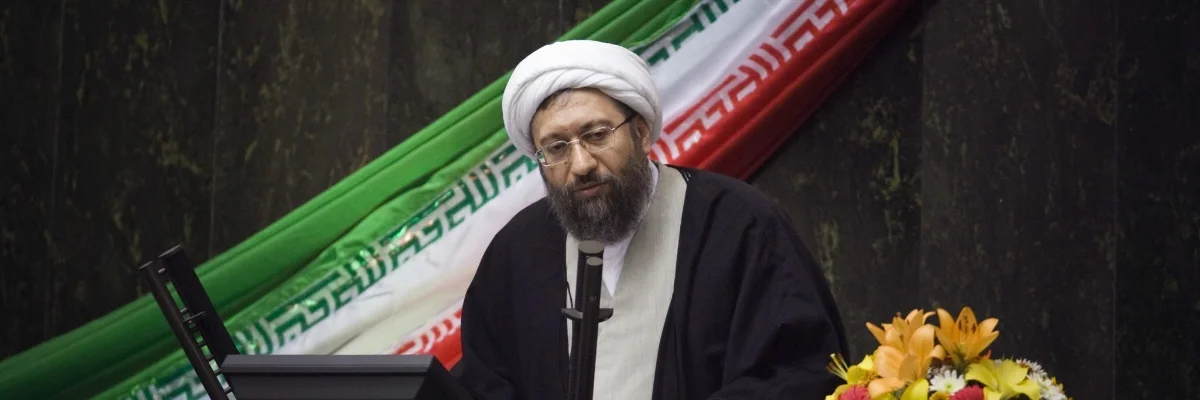
"If there is huge money laundering in the country, why did you not report this to the judiciary?" said Sadegh Larijani, judiciary chief, in a speech on Monday, according to the semi-official ISNA news agency.
"The enemy's best tool is economic pressure... In such a situation officials are expected not to make two-sided statements that could be misused by the enemy," he added, without naming Zarif.
The government introduced four new laws this year aimed at meeting demands set by the Financial Action Task Force (FATF), which monitors global efforts to counter money laundering and terrorist financing.
Conservatives groups have attacked the bills, saying they would undermine Iran's ability to support allied militant groups in the region, such as Lebanon's Hezbollah.
But Zarif said wealthy groups were also involved because they opposed greater financial transparency.
"There are special interests behind some of these concerns and propaganda,"
he said.
"I don't aim to pin this to any certain organization, but those places that do launder thousands of billions are certainly financially capable of spending a few hundred billion on propaganda and psychological operations in the country," he added.
Larijani hit back on Monday, saying: "The authorities should not say things that drop like a dagger into the heart of the system."
Iran is alone with North Korea on the FATF blacklist, but the Paris-based organization has suspended counter-measures since June 2017 while it works on reforms.
One bill on the mechanics of monitoring and preventing terrorist financing was signed into law in August.
The remaining three have been approved by parliament but have been held up by higher authorities that oversee legislation.
Photo Credit: IRNA
Iran Guardian Council Rejects Terror Financing Bill
◢ Iran's powerful Guardian Council on Sunday rejected a bill on joining the UN convention against terrorist financing seen as crucial to maintaining trade and banking ties with the world. The conservative-dominated council, which oversees legislation passed by the parliament, said aspects of the bill were against Islamic law and the constitution and sent it back to lawmakers for revision.
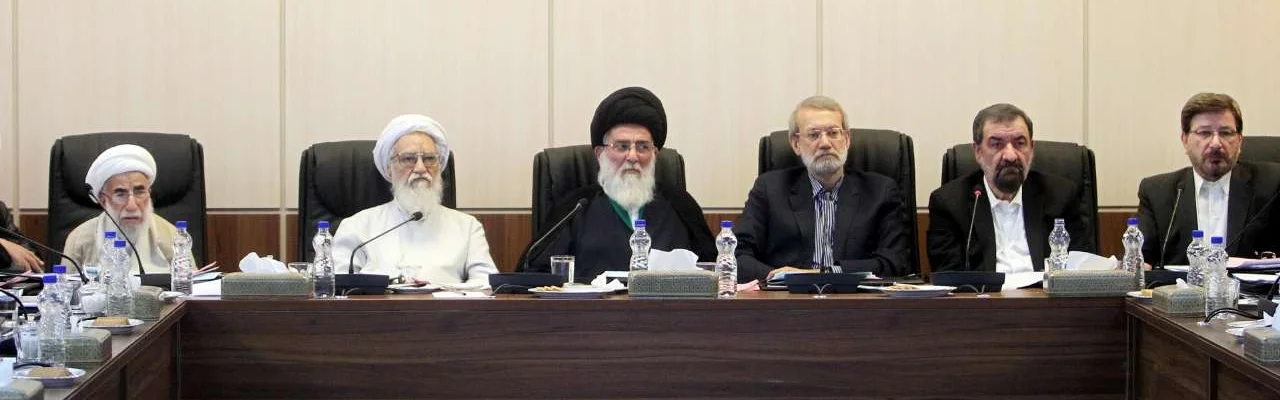
Iran's powerful Guardian Council on Sunday rejected a bill on joining the UN convention against terrorist financing seen as crucial to maintaining trade and banking ties with the world.
The conservative-dominated council, which oversees legislation passed by the parliament, said aspects of the bill were against Islamic law and the constitution and sent it back to lawmakers for revision.
"The Guardian Council has in several sessions reviewed the bill... and it has considered it to have flaws and ambiguities," wrote spokesman Abbas Ali Kadkhodaie on Twitter.
The bill, narrowly passed by parliament on October 7, is one of four put forward by the government of President Hassan Rouhani in order to meet demands set by the international Financial Action Task Force (FATF), which monitors countries' efforts to tackle money-laundering and terrorist financing.
Many hawks in Iran say the laws would limit the country's ability to support "resistance groups" such as Lebanon's Hezbollah and Palestinian Hamas by bringing greater transparency to its accounts.
But Rouhani's government argues it is particularly vital after the United States walked out of the 2015 nuclear deal and reimposed sanctions.
The other parties to the deal—Britain, France, Germany, China and Russia—have sought to salvage the agreement and maintain trade with Iran, but have demanded that it accede to the FATF.
Iran is alone with North Korea on the FATF, although the Paris-based organisation has suspended counter-measures since June 2017 while Iran works on reforms.
Last month, the FATF gave Iran another extension to February to update its laws.
"Neither I nor the president can guarantee that all problems will go away if we join (the UN convention), but I guarantee that not joining will provide the US with more excuses to increase our problems," said Iran's Foreign Minister Mohammad Javad Zarif during the parliament debate last month.
A previous bill on the mechanics of monitoring and preventing terrorist financing was signed into law in August.
But two others—on money-laundering and organized crime—have also been delayed by higher authorities, including the Guardian Council, after being approved by parliament.
The council is made up of six clerics appointed by supreme leader Ayatollah Ali Khamenei and six lawyers appointed by the judiciary.
Photo Credit: IRNA
Iran's Khamenei Says 'No Need' to Join Global Financial Crime Agreements, Supports Domestic Laws
◢ Iran has "no need to join" global agreements on areas such as terrorism and money laundering, the country's supreme leader Ayatollah Ali Khamenei said Wednesday as the issue divides parliament. Describing parliament as "mature and wise", Khamenei said lawmakers "must independently make legislation on issues such as terrorism or combating money laundering."
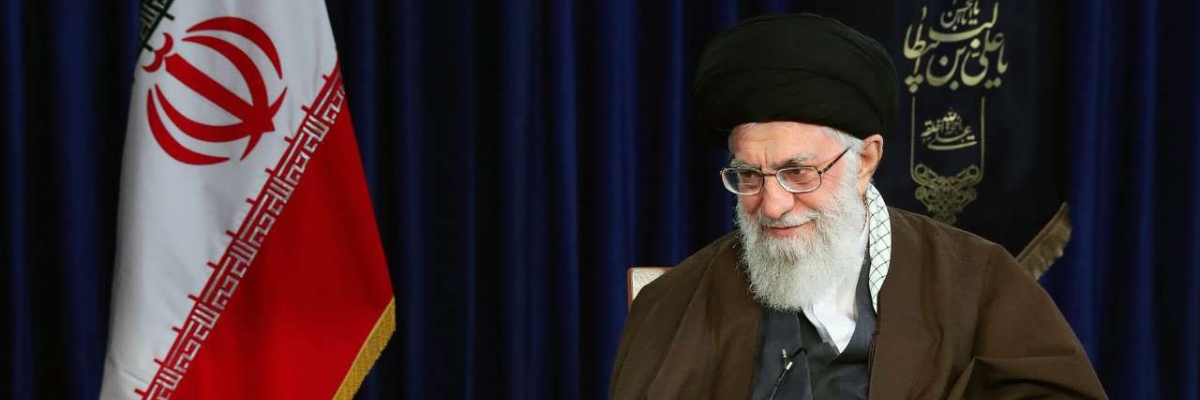
Iran has "no need to join" global agreements on areas such as terrorism and money laundering, the country's supreme leader Ayatollah Ali Khamenei said Wednesday as the issue divides parliament.
Describing parliament as "mature and wise", Khamenei said lawmakers "must independently make legislation on issues such as terrorism or combating money laundering."
"Of course some of the provisions of international conventions may be good but there's no need to join these conventions, citing these provisions," the supreme leader told a gathering of MPs, according to his official website.
Khamenei cautioned against signing up to global conventions when "we are not aware of the depth of their aims or (when) we know that they have problems."
Earlier this month Iran's parliament voted to suspend discussion of joining the UN Terrorism Financing Convention for two months, as Tehran waits to see whether its nuclear deal with world powers survives after the US pulled out of the landmark accord.
Debate among Iranian lawmakers on joining such global agreements is often furious, with conservatives warning signing up to the terrorism financing accord would cut off Iranian support to key regional allies Hezbollah and Hamas.
The military wings of both groups are designated as terrorist organizations by the United States and European Union, among others.
But the government has argued international cooperation is essential to confront terrorist groups which have targeted the country.
Iran's commitment to the UN convention is a condition for being removed from the blacklist of the Financial Action Task Force (FATF), a spot shared with North Korea.
Being on the blacklist of the inter-governmental body has added to Iran's woes in accessing global banking.
Iran's struggle to access international markets has been further compounded by the US decision to withdraw from the nuclear deal.
The remaining parties to the accord—Britain, China, France, Germany and
Russia—have committed to staying in the deal.
But their companies risk falling foul of US sanctions if they continue to do business with Iran.
Photo Credit: IRNA