
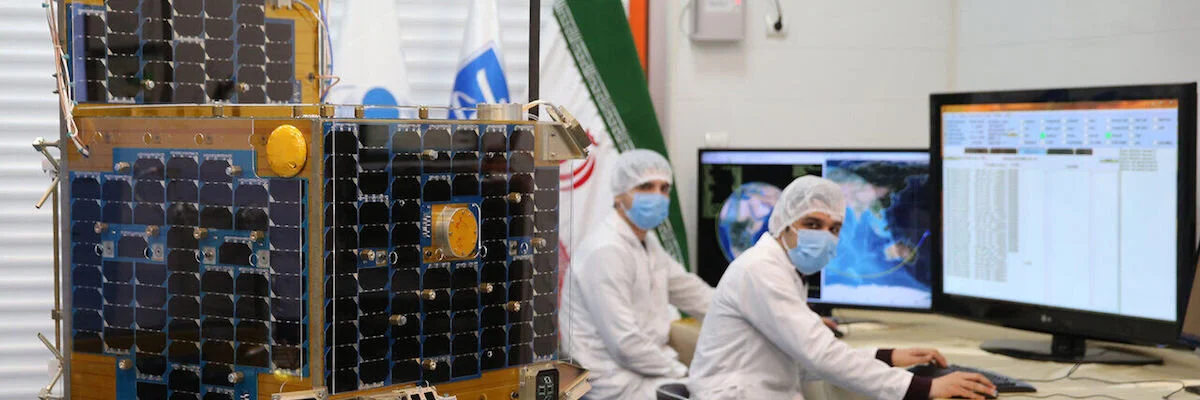
France Condemns Latest Iranian Space Launch
◢ France condemned efforts by Iran to build a new ballistic missile with a range of more than 500 kilometers, further complicating efforts to keep Tehran operating within the framework of a faltering nuclear accord. France also said Iran had fired off a “space launcher” with ballistic missile technology.
By Ania Nussbaum
France condemned efforts by Iran to build a new ballistic missile with a range of more than 500 kilometers, further complicating efforts to keep Tehran operating within the framework of a faltering nuclear accord.
“The development of Iran’s ballistic missile program undermines regional stability and affects the security of Europe,” the French foreign affairs ministry said on Monday. “France calls on Iran to fully comply with its international obligations in this regard.”
Iran already breached aspects of the 2015 nuclear deal known as the Joint Comprehensive Plan of Action, such as exceeding levels of enriched uranium and no longer adhering to limits of centrifuges -- a response to the U.S. abandoning the accord in 2018. The European Union last month initiated formal proceedings to resolve the dispute that could lead to a re-imposition of sanctions by the United Nations.
France also said Iran on February 9 fired off a “space launcher” with ballistic missile technology. “Iran cannot carry out activities, including launches, related to ballistic missiles capable of delivering nuclear weapons,” according to the statement.
Photo: IRNA
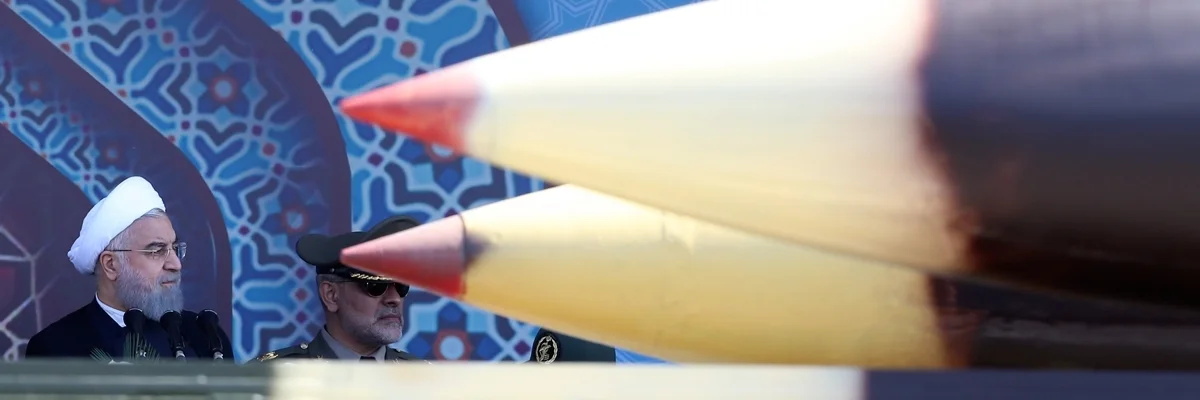
Britain, France, Germany Seek Full UN Report of Iran Missile Activity
◢ Britain, France and Germany are accusing Iran of developing missile technology, following recent activities, that they said was inconsistent with a UN resolution, and are calling for a full UN report, according to a letter released Tuesday. The European trio cited Iran's launch of a space vehicle and the unveiling of two new ballistic missiles in February.
Britain, France and Germany are accusing Iran of developing missile technology, following recent activities, that they said was inconsistent with a UN resolution, and are calling for a full UN report, according to a letter released Tuesday.
The European trio cited Iran's launch of a space vehicle and the unveiling of two new ballistic missiles in February as forming "part of trend of increased activity inconsistent" with the resolution, according to the letter sent to UN Secretary General Antonio Guterres.
UN Security Council Resolution 2231—adopted just after the 2015 nuclear deal—calls on Iran "not to undertake any activity related to ballistic missiles designed to be capable of delivering nuclear weapons."
Tehran insists that its missile program is defensive and that it has no intention of developing a nuclear capability.
The three countries asked Guterres to "report fully and throughly on Iranian ballistic missile activity" in his next report, which is expected in June.
The letter from the European countries, which are signatories to the nuclear deal along with the United States and Russia, came nearly a month after the United States made a similar appeal to the council, saying it was time to bring back tougher international restrictions on Tehran.
President Donald Trump pulled the United States out of the nuclear accord in May last year and reimposed sanctions on Iran, citing concerns about missile development among its reasons.
At a council meeting in December, US Secretary of State Mike Pompeo called for tighter restrictions on Iran to curb its missile program but Russia flatly asserted that there was no proof that Iran's missiles can carry a nuclear payload.
The European countries said the Safir space launch vehicle used for a satellite blastoff on February 6 is based on two other missiles and uses technology closely related to the development of long-range and intercontinental ballistic missiles.
On February 7, the Iranian Islamic Revolutionary Guards unveiled the Dezful surface-to-surface missile which they claimed had a range of 1,000 kilometers, according to the letter sent on March 25.
During a public display in Tehran on February 4, Iran revealed a variant of the Khorramshahr ballistic missile that the letter said was "potentially an intermediate-range ballistic missile."
Iran reined in most of its nuclear program under the landmark nuclear deal with major powers but has kept up development of its ballistic missile technology.
Photo Credit: IRNA
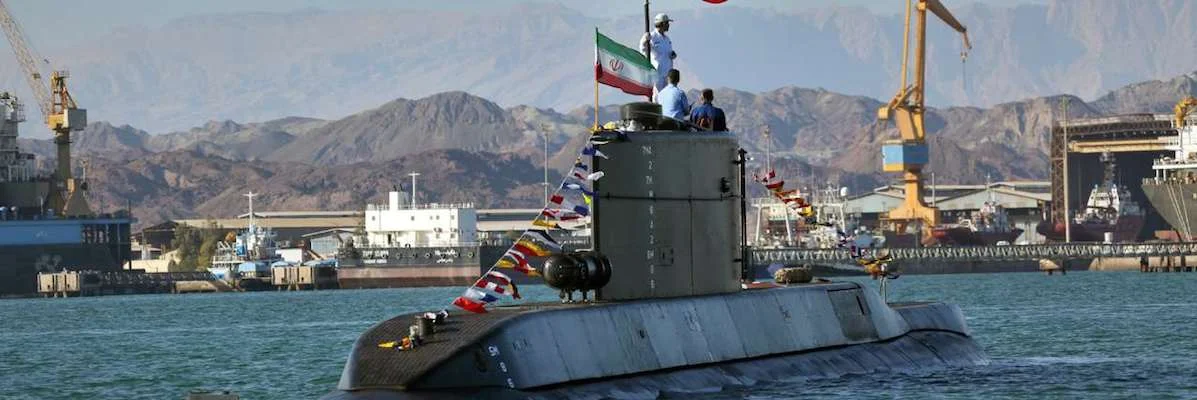
Iran Launches 'Cruise Missile Capable' Submarine
◢ Iran on Sunday launched a new locally-made submarine capable of firing cruise missiles, state TV said, in the country's latest show of military might at a time of heightened tensions with the US. The launch ceremony, led by President Hassan Rouhani, took place in the southern port city of Bandar Abbas.
Iran on Sunday launched a new locally-made submarine capable of firing cruise missiles, state TV said, in the country's latest show of military might at a time of heightened tensions with the US.
The launch ceremony, led by President Hassan Rouhani, took place in the southern port city of Bandar Abbas.
"Today, the Islamic Republic of Iran is fully self-reliant on land, air and sea," Rouhani said.
"Our defensive power is meant to defend our interests and we have never sought to attack any country," he added.
Named the Fateh (Farsi for 'Conqueror'), Fars news agency said the new submarine is Iran's first in the semi-heavy category, filling a gap between the light Ghadir class and the heavy Kilo class submarines that the country possesses.
Fars said the near 600-tonne underwater vessel is equipped with torpedoes and naval mines in addition to cruise missiles, and can operate more than 200 metres below sea level for up to 35 days.
The US withdrew from a 2015 multilateral nuclear deal with Iran in May 2018 and re-imposed biting unilateral sanctions later last year.
Iran's Revolutionary Guards on February 7 unveiled a new ballistic missile with a range of 1,000 kilometers (620 miles), according to the elite unit's official media agency Sepah News.
The surface-to-surface missile—called Dezful—is an upgrade on the older Zolfaghar model that had a range of 700 kilometres, aerospace commander Brigadier General Amirali Hajizadeh said.
Rouhani said on Sunday that "pressure by enemies, the (Iran-Iraq) war and sanctions" were incentives for Tehran to be self-reliant in its defense industry.
"Maybe we would not have this motivation to industrialize our defense sector," he said, if Iran could just buy the weaponry it needed.
Iran's top military brass and cabinet ministers attended the ceremony.
Photo Credit: IRNA
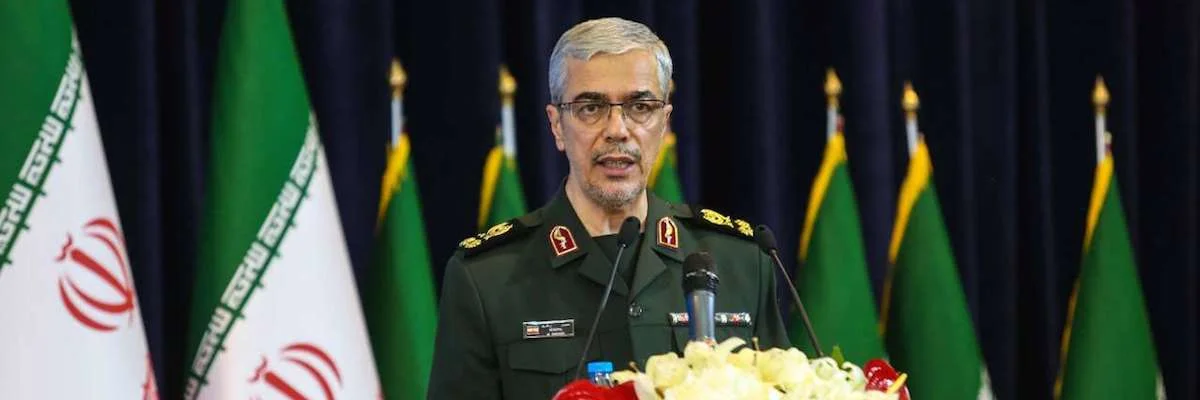
Iran Revolutionary Guards Unveil 'New Ballistic Missile'
◢ Iran's Revolutionary Guards on Thursday unveiled a new ballistic missile with a range of 1,000 kilometres, their official news agency Sepah News reported. The move was the latest show of military might by the country as it celebrates the 40th anniversary of the Islamic Revolution at a time of heightened tensions with the United States.
Iran's Revolutionary Guards on Thursday unveiled a new ballistic missile with a range of 1,000 kilometres, their official news agency Sepah News reported.
The move was the latest show of military might by the country as it celebrates the 40th anniversary of the Islamic Revolution at a time of heightened tensions with the United States.
The surface-to-surface missile—called Dezful—is an upgrade on the older Zolfaghar model that had a range of 700 kilometers (435 miles), aerospace commander Brigadier General Amirali Hajizadeh said.
The new weapon was revealed after Iran on Saturday said it had successfully tested a new cruise missile named Hoveizeh with a range of 1,350 kilometers.
The unveiling ceremony Thursday was carried out by Revolutionary Commander Major General Mohammad Ali Jafari and Hajizadeh at an "underground ballistic missile production facility", the report said.
The facility's location was not specified and pictures published by Sepah News showed only the two commanders in a room examining the missile.
"Displaying this missile production facility deep underground is an answer to Westerners ... who think they can stop us from reaching our goals through sanctions and threats," Jafari was reported as saying.
"Europeans talk of limiting our defensive capability while they have the audacity (to allow) their offensive power be used to attack innocent people all over the world," he added.
Hajizadeh said the new missile had a "destructive power" twice that of the Zolfaghar version, which Iran used for the first time in October to strike a jihadist base in Syria.
Iran has voluntarily limited the range of its missiles to 2,000 kilometers (1,250 miles), but that is still enough to hit its arch-enemy Israel and US bases in the Middle East.
Tehran reined in most of its nuclear program under a landmark 2015 deal with major powers but has kept up development of its ballistic missile technology.
President Donald Trump pulled the US out of the nuclear accord in May and reimposed sanctions on Iran, citing the missile program among its reasons.
Iran and the other signatories have stuck by the 2015 agreement, although some European governments have demanded an addition to address Tehran's ballistic missile program and its intervention in regional conflicts.
UN Security Council Resolution 2231—adopted just after the nuclear deal—calls on Iran "not to undertake any activity related to ballistic missiles designed to be capable of delivering nuclear weapons".
Tehran insists that its missile development program is "purely defensive" and compliant with the resolution.
Photo Credit: IRNA
EU Backs Iran Trading System But Warns on Syria, Missiles
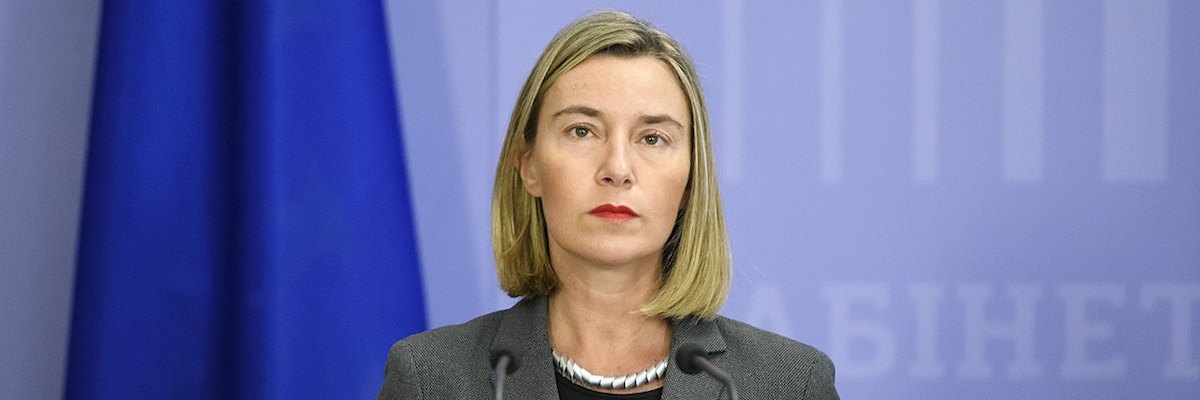
◢ The EU warned Tehran over its ballistic missile program and interference in the Syria conflict Monday, while welcoming a new mechanism to trade with Iran while bypassing US sanctions. In a long-awaited statement on Iran that has been the subject of more than a week of wrangling in Brussels, the EU restated its commitment to saving the 2015 nuclear deal with Iran and took aim at Washington for abandoning the pact and reimposing sanctions.
The EU warned Tehran over its ballistic missile program and interference in the Syria conflict Monday, while welcoming a new mechanism to trade with Iran while bypassing US sanctions.
In a long-awaited statement on Iran that has been the subject of more than a week of wrangling in Brussels, the EU restated its commitment to saving the 2015 nuclear deal with Iran and took aim at Washington for abandoning the pact and reimposing sanctions.
The bloc hailed the creation last week by France, Britain and Germany of a system to allow firms to trade with Iran without falling foul of US sanctions as vital to supporting legitimate business and said the "resolve to complete this work is unwavering".
But with numerous European powers growing increasingly concerned about Tehran's missile programme, meddling in several Middle East conflicts and recent attempted attacks on opposition figures living in the EU, the bloc urged Iran to mend its ways.
The statement criticized Iran's "provision of military, financial and political support to non-state actors in countries such as Syria and Lebanon.”
"The (EU) Council has serious concerns regarding Iran's military involvement and continuous presence of Iranian forces in Syria," the statement said.
Iran is a key supporter of Syrian President Bashar al-Assad and the statement urged Tehran to use its leverage to get Damascus behind UN-led efforts to end the civil war, which has claimed more than 360,000 lives since it began in 2011.
While defending the nuclear deal—which limited Tehran's atomic ambitions in return for sanctions relief—Europe has sought to keep up pressure with sanctions, most recently listing Iranian intelligence services over plots to assassinate regime opponents on Dutch, Danish and French soil.
Continuing Iranian missile tests have also alarmed the EU—not to mention countries in the Middle East—and Monday's statement called on Tehran to stop such activities.
"Iran continues to undertake efforts to increase the range and precision of its missiles, together with increasing the number of tests and operational launches. These activities deepen mistrust and contribute to regional instability," the statement said.
Brussels hopes the new Iran trading mechanism—registered last week in Paris under the name INSTEX—will keep Tehran in the nuclear deal by preserving some of the economic benefits it received.
Iran gave INSTEX a cautious welcome but US officials have dismissed the idea that the new entity would have any impact on efforts to exert economic pressure on Tehran.
Before INSTEX can go live, Iran has to set up a similar entity of its own so the two sides can clear trading on a barter basis without transferring money. It is not clear how long this will take.
Photo Credit: Wikicommons
Iran in 'Successful Test' of New Cruise Missile on Revolution Anniversary
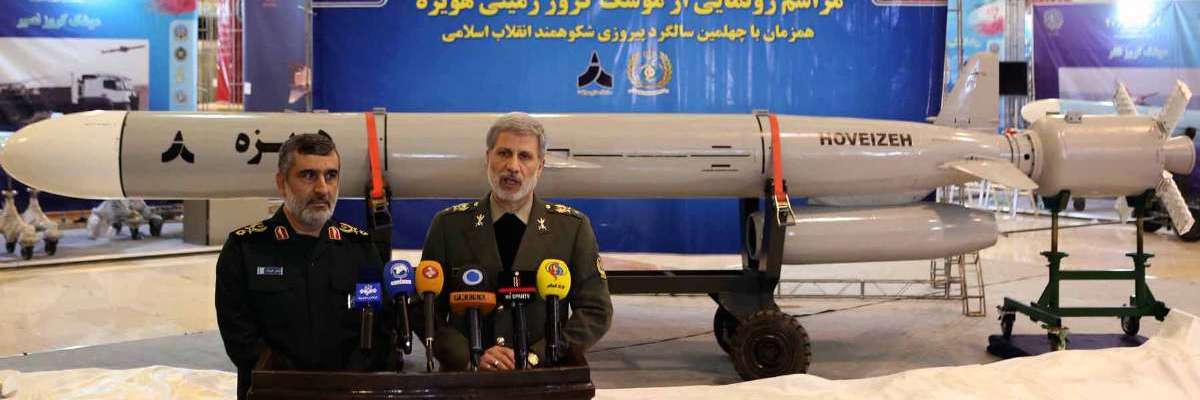
◢ Iran announced the "successful test" of a new cruise missile with a range of over 1,350 kilometres on Saturday, coinciding with celebrations for the country's 1979 Islamic revolution. “The test of the Hoveizeh cruise missile was carried out successfully at a range of 1,200 kilometres (840 miles) and accurately hit the set target," Defence Minister Amir Hatami said, quoted on state television which broadcast footage of its launch.
Iran announced the "successful test" of a new cruise missile with a range of over 1,350 kilometres on Saturday, coinciding with celebrations for the country's 1979 Islamic revolution.
“The test of the Hoveizeh cruise missile was carried out successfully at a range of 1,200 kilometres (840 miles) and accurately hit the set target," Defense Minister Amir Hatami said, quoted on state television which broadcast footage of its launch.
“It can be ready in the shortest possible time and flies at a very low altitude," he said.
Hatami described the Hoveizeh as the "long arm of the Islamic Republic of Iran" in defending itself.
It is part of the Soumar group of cruise missiles, first unveiled in 2015 with a range of 700 kilometres, according to the minister.
The Hoveizeh unveiling was part of an arms exhibition dubbed "40 years of defensive achievements" and held in Tehran.
Friday marked the beginning of 10 days of celebrations of the Islamic revolution that ousted the pro-Western shah.
On Thursday, thousands of Iranians had packed the mausoleum of the Islamic republic's founder Ayatollah Ruhollah Khomeini.
Iran has voluntarily limited the range of its missiles to 2,000 kilometers (1,250 miles), but this is still sufficient to reach Israel and Western bases in the Middle East.
Washington and its allies have accused Tehran of pursuing enhanced missile capabilities that also threaten Europe.
Iran has "no intention of increasing the range" of its missiles, the country's Supreme National Security Council secretary, Admiral Ali Shamkhani, said Tuesday.
'Purely Defensive'
Iran reined in most of its nuclear program under a landmark 2015 deal with major powers but has kept up development of its ballistic missile technology.
US President Donald Trump's administration pulled out of the nuclear accord in May and reimposed sanctions against Iran, citing the missile program among its reasons.
European governments have stuck by the 2015 agreement, although some have demanded an addition to address Iran's ballistic missile program and its intervention in regional conflicts including Yemen.
UN Security Council Resolution 2231—adopted just after the nuclear deal—calls on Iran "not to undertake any activity related to ballistic missiles designed to be capable of delivering nuclear weapons".
The US has repeatedly accused Iran of violating the resolution.
But Tehran denies seeking any nuclear weapons capability, and insists that its missile development program is "purely defensive" and compliant with the resolution.
Iran's space program has also been criticized by the West, with Washington charging that an abortive satellite launch in mid-January was cover for a bid to develop an intercontinental ballistic missile capability.
Iran tried unsuccessfully to put a satellite into orbit on January 15 and plans to "vigorously carry on" and make a second attempt, Shamkhani said.
Iran's newly-tested missile takes its name from a city in the southwestern province of Khuzestan that was devastated in the 1980-1988 war against Saddam Hussein's Iraq.
Several Iranian cities were battered by missiles during the eight-year conflict in a bombing campaign dubbed the "war of the cities".
Iranian officials say Western sanctions have starved its air force of spare parts and replacement aircraft, limiting its operational capacity and forcing it to rely on the missile program.
As Iranians marked the anniversary of the revolution, the US on Saturday lashed out at the country's leadership, insisting it had failed to make good on pledges to improve the lives of ordinary people.
"When he returned to Iran in 1979, Ayatollah Khomeini made lots of promises to the Iranian people, including justice, freedom, and prosperity," the US State Department said on Twitter.
"40 years later, Iran's ruling regime has broken all those promises."
Photo Credit: IRNA
Trump Says US Intelligence Services 'Naive,' 'Wrong' on Iran
◢ President Donald Trump on Wednesday attacked the US intelligence services as "naive" and "wrong" on the threat he says is posed by Iran. "Perhaps Intelligence should go back to school!" Trump said in a blistering tweet. "The Intelligence people seem to be extremely passive and naive when it comes to the dangers of Iran. They are wrong!" Trump tweeted.
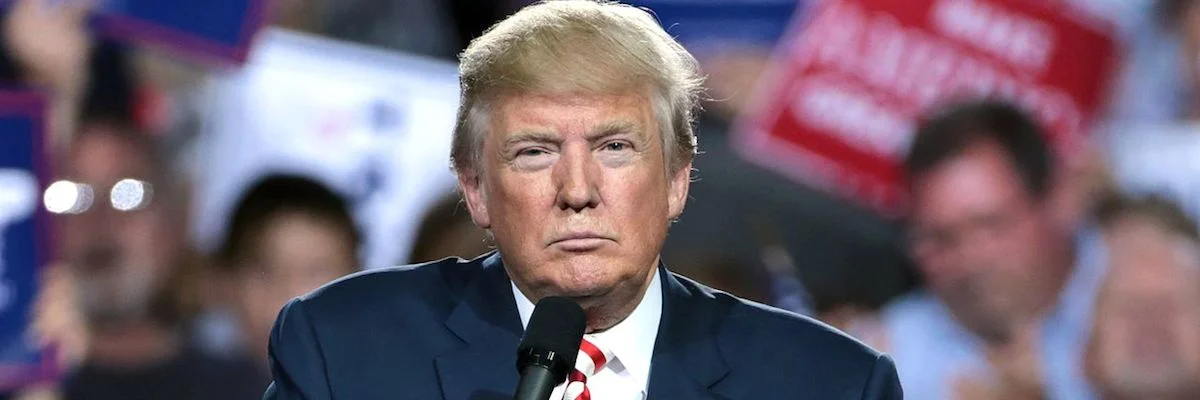
President Donald Trump on Wednesday attacked the US intelligence services as "naive" and "wrong" on the threat he says is posed by Iran.
"Perhaps Intelligence should go back to school!" Trump said in a blistering tweet.
"The Intelligence people seem to be extremely passive and naive when it comes to the dangers of Iran. They are wrong!" Trump tweeted.
Although especially vehement, it was not the first time Trump has publicly criticized his own intelligence services.
The broadside, which included separate tweets where Trump praised the success of his policies in Syria and North Korea, followed testimony Tuesday by top intelligence chiefs that were widely seen as contradicting the president's rosy assessments.
In a hearing on global threats at the Senate Intelligence Committee, the top officials took issue with Trump's assertion that the Islamic State group has been defeated, and that North Korea can be convinced to forego its nuclear weapons.
They also challenged the president's claim that Tehran is actively seeking nuclear weapons, the justification Trump gave for withdrawing last year from a multilateral treaty on Iran.
They underscored again that they believe Russia meddled deeply on Trump's behalf in the 2016 presidential election—which he has repeatedly denied—and can be expected to do the same in 2020.
The hearing took place weeks after Trump cited a victory over Islamic State to justify his sudden announcement of an immediate pullout from Syria, a move that alarmed the US defense establishment and allies in the Middle East.
And it came just weeks before Trump plans a second summit with North Korean leader Kim Jong Un to negotiate a hoped-for denuclearization of the deeply isolated state.
Photo Credit: Wikicommons
Iran Denies Any Intention of Boosting Range of Missiles
◢ Iran has "no intention of increasing the range" of its missiles, a senior defense official said Tuesday, amid threats of European as well as US sanctions over its ballistic program. Iran has voluntarily limited the range of its missiles to 2,000 kilometers (1,250 miles), sufficient to reach Israel and Western bases in the Middle East. But Washington and its allies have accused Tehran of pursuing enhanced missile capabilities that also threaten Europe.
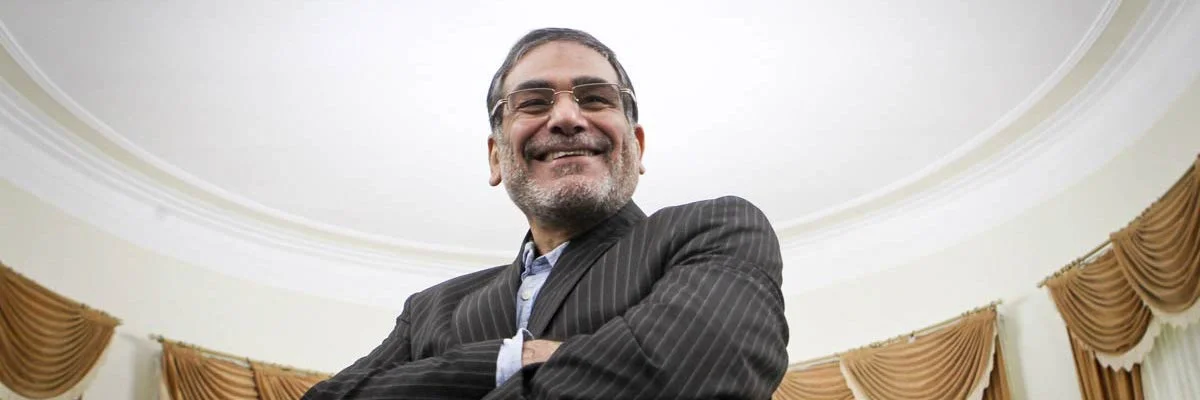
Iran has "no intention of increasing the range" of its missiles, a senior defense official said Tuesday, amid threats of European as well as US sanctions over its ballistic program.
Iran has voluntarily limited the range of its missiles to 2,000 kilometers (1,250 miles), sufficient to reach Israel and Western bases in the Middle East.
But Washington and its allies have accused Tehran of pursuing enhanced missile capabilities that also threaten Europe.
"Iran has no technological or operational constraints to increasing the range of its military missiles," the secretary of the Supreme National Security Council, Admiral Ali Shamkhani, said.
"But while constantly striving to improve accuracy, solely based on its defense doctrine, (it) has no intention of increasing the range of (its) missiles," the official IRNA news agency quoted him as saying.
US President Donald Trump cited Iran's missile program as one of the reasons why he pulled Washington out of a landmark 2015 nuclear deal between Tehran and major powers last year.
European governments have stuck by the nuclear deal but some have demanded a supplementary agreement to tackle Iran's ballistic missile program and its interventions in regional conflicts.
Shamkhani's comments come after France warned on Friday that it was ready to impose new sanctions if talks on a supplementary deal fail to make progress.
"We have begun a difficult dialogue with Iran... and, unless progress is made, we are ready to apply sanctions, firmly, and they know it," Foreign Minister Jean-Yves Le Drian said.
Iran retorted that French arms sales in the Middle East were one of the real sources of instability in the region.
Space Program to Continue
Iran's space program has also come under Western criticism, with Washington charging that an abortive satellite launch earlier this month was cover for a bid for an intercontinental ballistic missile capability.
But Shamkhani, who was addressing the national conference on space technology in Tehran, said Iran could accept no limitations on its satellite launches.
"We will vigorously carry on with the development of our space program," IRNA quoted him as saying.
Iran tried unsuccessfully to put a satellite into orbit on January 15, and plans to make a second attempt soon.
US Secretary of State Mike Pompeo accused Iran of violating UN Security Resolution 2231 of 2015.
It calls on Iran "not to undertake any activity related to ballistic missiles designed to be capable of delivering nuclear weapons".
Iran has always denied seeking any nuclear weapons capability but has said repeatedly that it needs its missile program as a matter of national security.
In the 1980-1988 war launched by Saddam Hussein's Iraq, Iranian cities were devastated by Iraqi missiles in a bombing campaign dubbed the "war of the cities.”
Iranian officials say that Western sanctions have starved its air force of spare parts and replacement aircraft, severely limiting its operational capacity and forcing Iran to rely on its missile programme.
The council run by Shamkhani is in charge of drawing up Iranian military and security policy.
A former defense minister and adviser to supreme leader Ayatollah Ali Khamenei, he was appointed as its secretary by President Hassan Rouhani in 2013.
Photo Credit; IRNA
Amid Cool Response, US Says Warsaw Conference Not Aimed at Iran
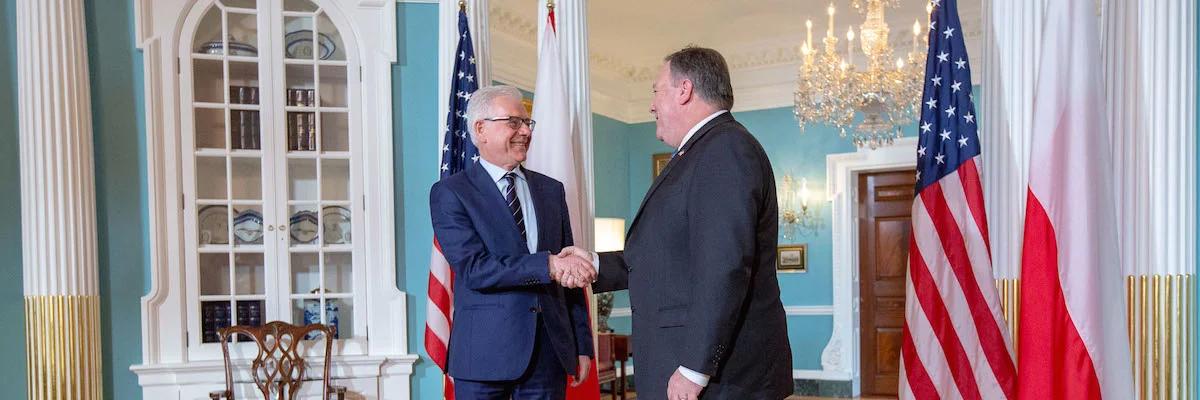
◢ A US-Polish conference next month on the Middle East is not aimed at Iran, a US official said Monday, after key players balked at attending. Secretary of State Mike Pompeo plans to head to Warsaw for the February 13-14 "Ministerial to Promote a Future of Peace and Security in the Middle East," which he earlier said would look at "making sure Iran is not a destabilizing influence."
A US-Polish conference next month on the Middle East is not aimed at Iran, a US official said Monday, after key players balked at attending.
Secretary of State Mike Pompeo plans to head to Warsaw for the February 13-14 "Ministerial to Promote a Future of Peace and Security in the Middle East," which he earlier said would look at "making sure Iran is not a destabilizing influence."
But the conference has drawn few concrete RSVPs amid unease over the hard US line on Iran, with EU diplomatic chief Federica Mogherini saying she had previous commitments even though the event is taking place in the European Union.
A senior US official, previewing the conference to reporters, said that Iran would not be a specific agenda item.
"It's important to underscore that this is not an anti-Iran meeting or coalition-building exercise," the official said on condition of anonymity.
"From the start, this ministerial has been focused on exploring a range of issues important to the region's security and prosperity," he said.
He said Pompeo "will certainly discuss concerns regarding Iran's destructive policies in the region," but said this was because "it's difficult to talk about the region's challenges without referencing Iran."
The official said that the conference would discuss the crises in Syria and Yemen as well as missile proliferation, cyber issues, human rights and refugees, with working groups then tasked with following up.
The conference, which Pompeo said will draw ministers from around the world, comes almost exactly as Iran marks 40 years since its Islamic revolution and after the United States reimposed sweeping sanctions on the country.
Iran summoned a Polish diplomat to protest the conference, which it called a hostile act.
A Polish official said that, despite serving as co-host, that Poland still supports an international agreement on Iran's nuclear program from which President Donald Trump withdrew.
Russia has also said it will not attend the conference because of its "one-country" focus and failure to address the Israeli-Palestinian conflict.
Photo Credit: Polish MFA

Iran Accuses France of 'Destabilizing' Region
◢ Iran has accused France of being a destabilizing force in the region after its foreign minister threatened new sanctions against Tehran over its missile program. "The Islamic republic has always called for the strengthening of peace and stability in the region," the Iranian foreign ministry said in a statement released overnight Friday.
Iran has accused France of being a destabilizing force in the region after its foreign minister threatened new sanctions against Tehran over its missile program.
"The Islamic republic has always called for the strengthening of peace and stability in the region," the Iranian foreign ministry said in a statement released overnight Friday.
As such Iran "considers the mass sales of sophisticated and offensive weapons by... France as a factor in destabilizing the balance of the region," the statement said.
It came after French Foreign Minister Jean-Yves Le Drian on Friday said Paris was ready to impose new sanctions on Tehran if talks on its missile program and its regional influence fail to make progress.
"We have begun a difficult dialogue with Iran... and unless progress is made we are ready to apply sanctions, firmly, and they know it," Le Drian said.
Le Drian also demanded that Iran change its behavior in the region, specifically regarding its military presence in Syria.
The Iranian foreign ministry responded saying "Iran's missile program is not negotiable" and warned that "any new sanction by European countries will lead to a review of our relations with them".
Iran reined in most of its nuclear program under a landmark 2015 deal with major powers—Britain, China, France, Germany, Russia and the United States—that lifted sanctions on the Iran.
But in May the United States withdrew from the deal and re-imposed sanctions on Tehran.
The EU has been trying to set up a special payment mechanism to maintain trade and business ties with Iran and circumvent the US sanctions.
Tehran has continued to develop its ballistic missile technology but says it has no intention of acquiring atomic weapons and that its missile development programs are purely defensive.
Photo Credit: IRNA
Iran Urges West to End 'Absurdities' on Missiles
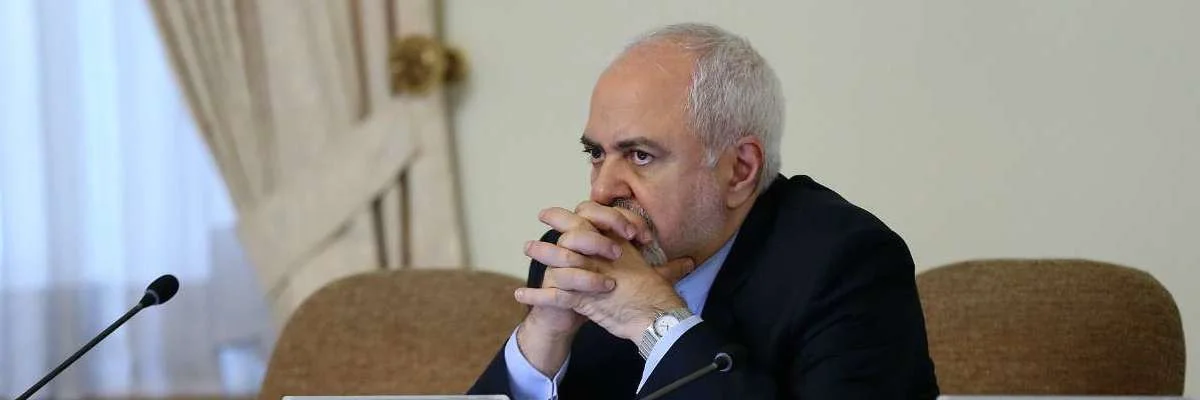
◢ Iran on Thursday urged the United States and its allies to stop their "absurd" accusations about Iranian missile tests, a day after Washington urged the UN to adopt punitive measures against Tehran. "US & allies should cease their hypocritical absurdities about Iran's missiles," Iranian Foreign Minister Javad Zarif wrote on Twitter.
Iran on Thursday urged the United States and its allies to stop their "absurd" accusations about Iranian missile tests, a day after Washington urged the UN to adopt punitive measures against Tehran.
"US & allies should cease their hypocritical absurdities about Iran's missiles," Iranian Foreign Minister Javad Zarif wrote on Twitter.
"Facts speak for themselves. It's they who sell USD 100s of billions in arms to butcher Yemenis," he added, referring to the devastating Saudi-led war backed by the West against Yemen rebels.
Beneath the text, Zarif published a graphic detailing arms exports to Saudi Arabia from 2013 to 2017 using figures from the Stockholm International Peace Research Institute (SIPRI).
The US accounted for 61 percent of those arms sales to Riyadh, Britain made up 23 percent of sales, and deals from France accounted for four percent,
according to the chart.
US Secretary of State Mike Pompeo on Wednesday urged the UN Security Council to take punitive action against Iran to limit its ballistic missile program, which Washington says poses a threat to the region and beyond.
A day earlier, Iran confirmed it had carried out a missile test and reiterated its intention to keep up ballistic activities despite Western condemnation.
Paris and London said Tehran's test was "provocative" but called for dialogue with Iran rather than sanctions as demanded by the US.
Iran reined in most of its nuclear program under a landmark 2015 deal with major powers, which the US walked away from in May, but has continued to develop its ballistic missile technology.
UN Security Council Resolution 2231 adopted after the agreement calls on Iran to refrain from testing missiles capable of carrying a nuclear weapon, but does not specifically bar Tehran from missile launches.
Tehran says it has no intention of acquiring atomic weapons and that its missile development programs are purely defensive and comply with the resolution.
Photo Credit:

Pompeo Urges UN to Get Tough on Iran Missiles
◢ US Secretary of State Mike Pompeo on Wednesday urged the United Nations to tighten restrictions on Iran's missiles, which he warned could strike US allies, but other powers called instead for dialogue. Pompeo headed to New York for a Security Council meeting on Iran, which recently confirmed a medium-range ballistic missile test, arguing it is legal and necessary for its defense.
US Secretary of State Mike Pompeo on Wednesday urged the United Nations to tighten restrictions on Iran's missiles, which he warned could strike US allies, but other powers called instead for dialogue.
Pompeo headed to New York for a Security Council meeting on Iran, which recently confirmed a medium-range ballistic missile test, arguing it is legal and necessary for its defense.
"We risk the security of our people if Iran continues stocking up on ballistic missiles," Pompeo told the Security Council.
"We risk escalation of conflict in the region if we fail to restore deterrence. And we convey to all other malign actors that they too can defy the Security Council with impunity if we do nothing," he said.
Iran has "hundreds of missiles which pose a threat to our partners in the region," Pompeo said, referring to Israel and Arab allies such as Saudi Arabia.
Pompeo said the United States would press to preserve a UN arms embargo on Iran due to expire in 2020 and urge the Security Council to set up inspections at sea to prevent weapons shipments.
He also called for the return of a firmer prohibition on Iran developing missiles capable of delivering nuclear weapons, toughening language from the Security Council resolution that supported the nuclear deal.
President Donald Trump has made pressuring Iran a major focus, withdrawing from an international accord on curbing Tehran's nuclear program negotiated under his predecessor Barack Obama and reimposing sweeping sanctions.
Confirming US concerns, a UN report submitted to the Security Council said that recent missiles fired by Yemen's Huthi rebels were manufactured in Iran.
Saudi Arabia has been waging air strikes and a blockade against the rebels, who share religious ties with Iran, triggering what the United Nations calls the world's worst humanitarian crisis.
Iran Denounces 'Lies'
Responding as Pompeo looked on, Iranian envoy Eshagh Al Habib said the top US diplomat was casting Iran as a threat to sell more "beautiful weapons," sarcastically quoting Trump's rationale for backing Saudi Arabia.
He said Iran's missiles were not nuclear in nature and defended the need for strong defense, noting that Western powers backed Saddam Hussein as his warplanes destroyed Iranian cities in the 1980-88 Iran-Iraq war.
"What we heard today was another series of lies, fabrications, disinformation and deceptive statement by the US," Al Habib said, recalling the "infamous speeches" of top US officials in the past—a clear reference to Colin Powell's selling of the 2003 invasion of Iraq.
“For the first time in the UN history, a permanent member of this Council is blatantly punishing UN members not for violating, rather for complying with, a Security Council resolution," he said.
Russian Ambassador Vassily Nebenzia also made a veiled but clear swipe at Pompeo as he denounced attempts to "fan anti-Iranian hysteria."
"There is no proof that the ballistic missiles can carry a nuclear load," Nebenzia told the council, adding that Iran "is ready for dialogue."
France, while saying it shared US goals on Iran, pleaded for the preservation of the nuclear accord, saying it was verifiably working in freezing Iran's nuclear program.
"It's only on this basis that we can build together a long-term strategy for the region," Ambassador Francois Delattre told the council.
"Such a strategy can't come down to a policy of pressure and sanctions; it equally has to come with a firm, frank dialogue with the Iranians on our concerns," he said.
European powers said they were working to ensure that Iran sees the economic fruits of compliance.
But Iran's economy has suffered a severe blow and is forecast to contract due to the renewal of sanctions by the United States, which has vowed to preclude all countries from virtually any business in Iran.
Photo Credit: Wikicommons
Iran Confirms Recent Missile Test Amid Western Criticism
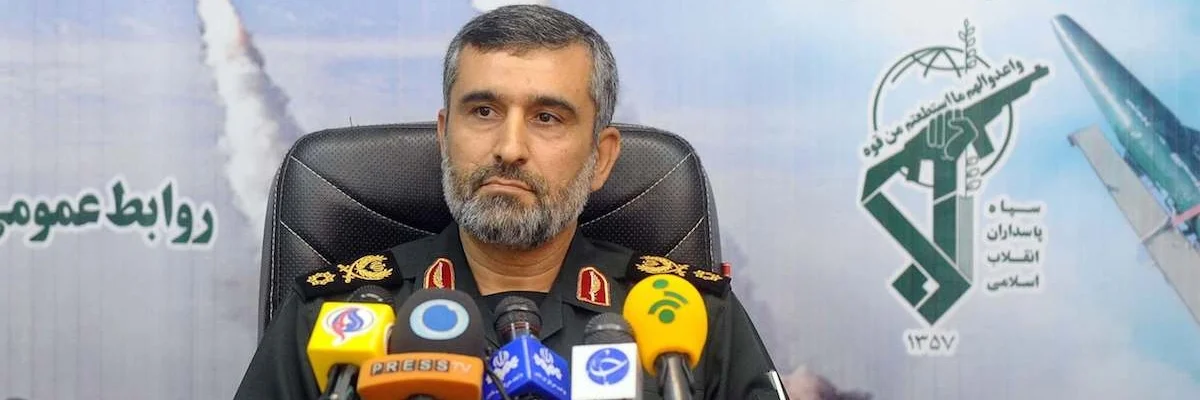
◢ Iran confirmed on Tuesday that it had carried out a recent test of a medium-range ballistic missile after Western powers sharply criticized a December 1 launch. “We are continuing our missile tests and this recent one was a significant test," the Fars news agency reported, citing Revolutionary Guards aerospace commander Brigadier General Amirali Hajizadeh.
Iran confirmed on Tuesday that it had carried out a recent test of a medium-range ballistic missile after Western powers sharply criticized a December 1 launch.
“We are continuing our missile tests and this recent one was a significant test," the Fars news agency reported, citing Revolutionary Guards aerospace commander Brigadier General Amirali Hajizadeh.
"The US reaction showed that it was a big thing for them and that it upset them," the conservative news agency said, adding that Iran carried out between 40 and 50 missile tests a year.
Iran has pressed on with its ballistic missile program after reining in much of its nuclear program under a landmark 2015 deal with major powers.
A UN Security Council resolution adopted after the agreement calls on Iran to refrain from testing missiles capable of carrying a nuclear weapon, but does not specifically bar Tehran from missile launches.
The UN Security Council convened at the request of Britain and France on December 4 to discuss the latest test which both governments described as "provocative" and "inconsistent" with Resolution 2231.
Britain said that the types of missiles fired had capabilities that "go way beyond legitimate defensive needs".
Iran has developed several types of ballistic missiles with a range of up to 3,000 kilometers (1,875 miles)—sufficient to reach Israel and Western bases across the region.
In its report, Fars did not specify the date of the latest test or say which types of missile were fired.
Washington, which quit the nuclear deal in May, described the test as an outright "violation" of Resolution 2231 and called on the Security Council to condemn it.
But veto-wielding Moscow has defended Tehran's right to carry out the missile tests, and the December 4 meeting ended with no joint statement or any plan for follow-up action.
The council is due to meet again on December 19 for a regular review of the resolution's implementation.
Iran has received regular certifications of compliance with the provisions of the nuclear deal from the UN atomic watchdog.
Western criticism has focused instead on Tehran's missile program and its military interventions in the region.
Photo Credit: ISNA
Trump, Macron Call for 'New' Nuclear Deal with Iran
◢ US President Donald Trump and French counterpart Emmanuel Macron called for a "new" deal with Iran Tuesday, looking beyond disagreements over a landmark nuclear accord that still hangs in the balance. Trump laid transatlantic divisions bare during a visit by the French president, pillorying a three-year old agreement designed to curb Iran's nuclear program.
US President Donald Trump and French counterpart Emmanuel Macron called for a "new" deal with Iran Tuesday, looking beyond disagreements over a landmark nuclear accord that still hangs in the balance.
Trump laid transatlantic divisions bare during a visit by the French president, pillorying a three-year old agreement designed to curb Iran's nuclear program.
The US leader described the deal as "insane" and "ridiculous," despite European pleas for him not to walk away.Instead, Trump eyed a broader "deal" that would also limit Iran's ballistic missile program and support for militant groups across the Middle East.
"I think we will have a great shot at doing a much bigger, maybe, deal," said Trump, stressing that any new accord would have to be built on "solid foundations."
"They should have made a deal that covered Yemen, that covered Syria," said Trump. "No matter where you go in the Middle East, you see the fingerprints of Iran behind problems."
Macron admitted after meeting Trump that he did not know whether the US president would walk away from the nuclear deal when a May 12 decision deadline comes up.
"I can say that we have had very frank discussions on that, just the two of us," Macron told a joint press conference with Trump at his side.
Putting on a brave face, he said he wished "for now to work on a new deal with Iran" of which the nuclear accord could be one part.
Neither Trump nor Macron indicated whether Iran would get something in return for concessions on its ballistic programs, activities in the Middle East or extending nuclear controls beyond 2025.
Trump—true to his background in reality TV—teased his looming decision.
"This is a deal with decayed foundations. It's a bad deal, it's a bad structure. It's falling down," the US leader said. "We're going to see what happens on the 12th."
Trump's European allies have repeatedly tried to persuade him not to abandon the 2015 deal, which gave Iran massive sanctions relief and the guarantee of a civilian nuclear program in return for limiting enrichment that could produce weapons grade fuel.
German Chancellor Angela Merkel will renew those calls when she visits Washington on Friday.
Iran, meanwhile, has warned it will ramp up enrichment if Trump walks away from the accord, prompting a blunt warning from the US leader.
"They're not going to be restarting anything. If they restart it, they're going to have big problems, bigger than they ever had before. And you can mark it down," he said.
Simmering Tensions
For months American and European officials have been working behind the scenes trying to find a compromise on Iran that allows the mercurial US president to claim a public victory, while keeping the deal intact.
More hawkish American officials accuse Europeans—particularly Germany—of putting business interests ahead of security, and of opposing a tougher stance against Iran to safeguard investments in the Islamic Republic.
That charge is sharply rejected by European officials, who are increasingly frustrated at spending time dealing with Trump's complaints rather than tackling Iran's behavior.
The disagreement threatens to plunge transatlantic relations to their lowest point since the Iraq War.
Trump's comments on Iran contrasts markedly with the exuberant welcome he gave the French leader.
Tuesday morning both men waxed lyrical about shared heroes of yore—from the Marquis de Lafayette to Alexis de Tocqueville—as they listened to strains of "La Marseillaise" and "The Star-Spangled Banner."
Later, the Trumps rolled out the red carpet for the Macrons once more at a lavish state dinner—of which the US first lady was said to have fine-tuned every last detail, from gold tableware to white floral centerpieces, for star guests including Apple CEO Tim Cook and media mogul Rupert Murdoch.
Melania Trump dazzled in a sequined Chanel dress of black Chantilly lace, while Brigitte Macron stepped out in a long-sleeved creamy white gown with gold lattice detailing by Louis Vuitton.
"May our friendship grow even deeper, may our kinship grow even stronger, and may our sacred liberty never die," Trump said in his toast to the Macrons.
In turn, the French leader spoke at length of "how deep, how strong, and how intense the relationship is between our two countries," and marveled at the unforeseen rapport he has forged with Trump.
"I got to know you, you got to know me. We both know that none of us easily changes our minds, but we will work together, and we have this ability to listen to one another," he said.
The key question is whether Macron can translate that privileged relationship into concrete results—as he also pushes for a permanent exemption for Europe from US steel and aluminum tariffs.
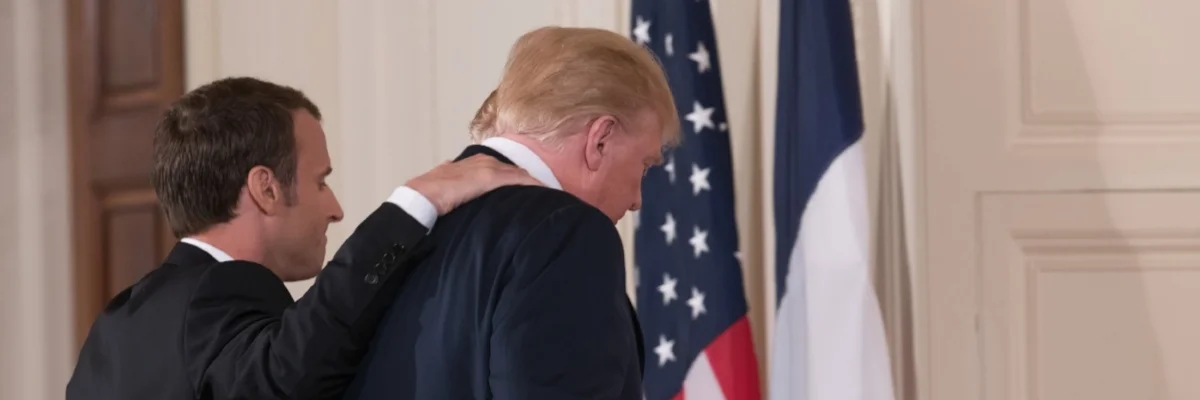
Earlier in the Oval Office, Trump offered a striking—and slightly awkward—sign of their much-vaunted intimacy. "We have a very special relationship, in fact I'll get that little piece of dandruff off," Trump said, swiping something off Macron's jacket. "We have to make him perfect—he is perfect."
Photo Credit: Jacques Witt/SIPA