
Iran Poll Shows Majority Backs Right to Protest After Crackdown
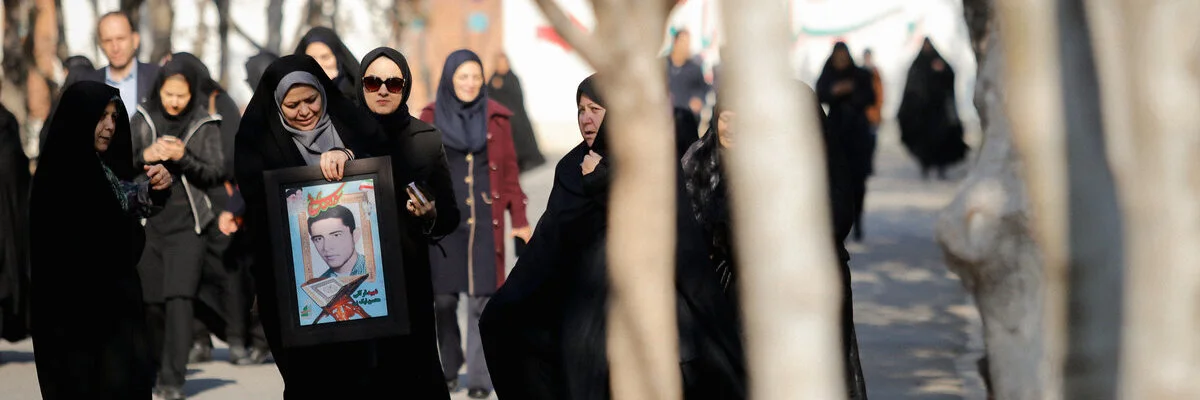
◢ About three-quarters of Iranians surveyed in a government-backed poll said they supported the rights of protesters to take to the streets in last month’s countrywide demonstrations. The Iranian Students’ Polling Agency also found that 62% of respondents saw “dialogue with protesters” as the government’s best means of addressing popular discontent.
By Arsalan Shahla
About three-quarters of Iranians surveyed in a government-backed poll said they supported the rights of protesters to take to the streets in last month’s countrywide demonstrations, a reformist newspaper reported.
The Iranian Students’ Polling Agency, which surveyed 2,027 people in the province of Tehran, also found that 62 percent of respondents saw “dialogue with protesters” as the government’s best means of addressing popular discontent, the daily Etemad newspaper said.
The expression of support, especially in a survey conducted by a state-backed polling organization, suggests that grievances still run deep in Iran. Triggered by a steep rise in gasoline prices, November’s protests met with a violent crackdown, becoming the bloodiest in Iran since the 1979 revolution.
The government so far hasn’t provided an official death toll for the unrest, but the London-based rights group Amnesty International estimates that some 304 people were killed by security forces.
The demonstrations spread to scores of cities and towns throughout the country and several of Tehran’s districts and its outskirts were swept up in the unrest.
Officials have consistently claimed that the majority of those who took part in demonstrations and clashed with police were “rioters” and “terrorists” acting on behalf of foreign governments. Hundreds of people remain in prison.
The most deadly violence took place in the oil-rich, Arab-speaking province of Khuzestan, which the ISPA survey doesn’t cover.
According to the survey, 71% of people said impartiality at Iran’s state broadcaster, which holds a monopoly over the country’s entire broadcasting services, was “low” or “very low” when it came to covering the protests. Some 90% of respondents said they used alternative news sources such as social media and satellite TV.
Photo: IRNA
Iran TV Boss Fired Over Jackie Chan Sex Scene
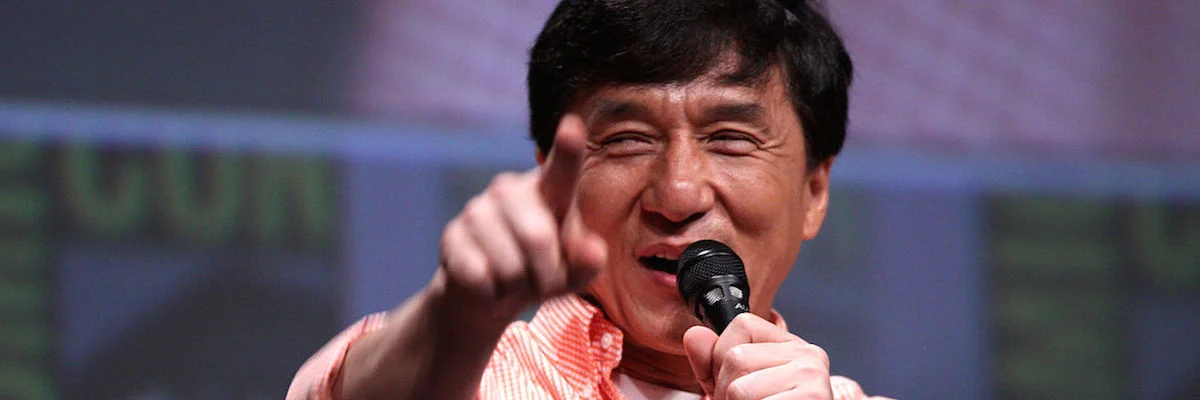
◢ A regional boss of Iran's state broadcaster IRIB has been fired after inadvertently letting a Jackie Chan sex scene slip through its tight censorship rules, local media reported on Monday. Viewers on Iran's Kish Island were shocked when their local TV station showed the martial arts star having sex with a prostitute in one of his films.
A regional boss of Iran's state broadcaster IRIB has been fired after inadvertently letting a Jackie Chan sex scene slip through its tight censorship rules, local media reported on Monday.
Viewers on Iran's Kish Island were shocked when their local TV station showed the martial arts star having sex with a prostitute in one of his films.
That is far beyond the usual limits in Iran, where men and women are not even allowed to shake hands on screen.
There was a quick response after a viewer posted the clip online.
"Clips of immoral scenes of a film featuring Jackie Chan have been circulating on social media which was apparently shown by Kish IRIB," the semi-official ISNA news agency reported.
“These scenes which are in total contradiction with the principles of IRIB has ultimately led to the dismissal and reprimand of some of the employees of IRIB in Kish," it said, adding this included IRIB's director-general for Kish.
There were angry responses from some Iranians pointing out that no one had been fired over a fatal bus crash that killed 10 students at Tehran's Azad University last week.
"Buses turn over, planes crash, ships sink... no one is dismissed... A few seconds of Jackie Chan making love on IRIB and immediately all staff in that section are sacked," wrote one Twitter user.
IRIB TV presenter Reza Rashidpoor joked on his morning talk show that the controversy could have been avoided if IRIB had included a caption saying Chan was married to the actress playing the prostitute.
He was referring to a program last week in which IRIB added a caption to say a couple holding hands on screen were married in real life.
Photo Credit: Wikicommons
Iran TV Film On Evils of Dancing Online Sparks Controversy
◢ A film on Iranian state television showing social media users being upbraided for allegedly promoting dance online has sparked criticism from reformists in the Islamic republic. The broadcast, aired Friday on flagship channel IRIB 1, featured men and women whose faces were not shown being questioned and made to repent for activities portrayed as contrary to Islamic law and "family values.”
A film on Iranian state television showing social media users being upbraided for allegedly promoting dance online has sparked criticism from reformists in the Islamic republic.
The broadcast, aired Friday on flagship channel IRIB 1, featured men and women whose faces were not shown being questioned and made to repent for activities portrayed as contrary to Islamic law and "family values".
Daily newspaper Haft-e Sobh, close to Islamic conservatives in Iran, reported that four of those interviewed were arrested at an unknown date and then released.
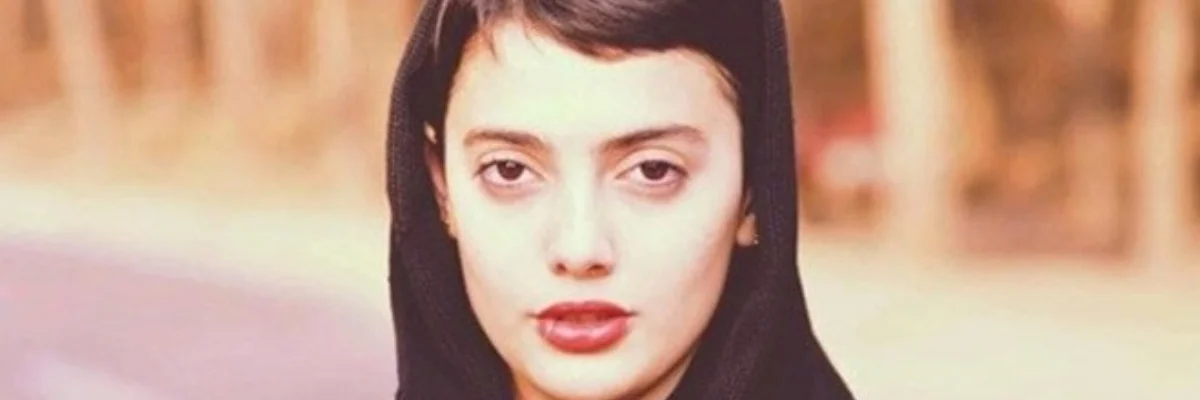
Among them was a young woman who became popular for posting Instagram videos of herself dancing without a veil and in t-shirts revealing her tattooed midriff, reformist newspaper Etemad reported.
In the broadcast footage, the woman identified as Maedeh Hojabri breaks down in tears before admitting that "dancing is a crime", the newspaper wrote.
"But I never posted anything bad on Instagram, never," the woman said in the program.
Dancing in public is prohibited in Iran under legislation introduced after the Islamic revolution of 1979 and women are required to wear headscarves and long clothing.
But the treatment of the social media "stars" in the broadcast drew a backlash from reformist media and internet users -- especially after Haft-e Sobh said the film was made by the police.
Etemad blasted IRIB and asked whether the authorities should not be going after people blamed for crimes it deemed more serious.
"Why do we not bring in the crooks?" journalist Abdi wrote.
The newspaper also cited Hesamodin Ashna, an advisor to President Hassan Rouhani, suggesting that those shown in the film might not have given their "consent."
Online, critics expressed their anger over the broadcast.
On Instagram, Shiite cleric Mohammad Reza Zaeri, a former editor of the popular daily Hamshahri, wrote that it was not "the wiggling of a teenager's hip" that undermines Iran's Islamic system but "the slip of a pen by an old judge."
One hashtag reading "Dance and we'll dance" in Persian and another one saying "Dancing is not a crime" in English spread on Twitter, with users posting videos of themselves dancing.
Another campaign demanding to "Ban IRIB" has also spread on Twitter, calling on the US government to impose fresh sanctions on Iranian state television.
However, despite the controversy, those behind the programming defended the airing of the film.
IRIB public relations director Mohammad Hossein Ranjbaran wrote in Haft-e Sobn that "many families" had called to demand" that the broadcaster covers the issue and the "damage caused by cyberspace."
Photo Credit: Twitter
Iran Newspaper Chief Freed After Arrest
◢ The head of Iran's reformist newspaper Shargh was freed Sunday, a day after being arrested over a report on "prostitution" in a northeastern city that angered residents, Iranian media said. Mehdi Rahmanian, the director of the newspaper, was released in the afternoon after paying bail of 500 million rials (USD 9,000), the ILNA news agency reported.
The head of Iran's reformist newspaper Shargh was freed Sunday, a day after being arrested over a report on "prostitution" in a northeastern city that angered residents, Iranian media said.
Mehdi Rahmanian, the director of the newspaper, was released in the afternoon after paying bail of 500 million rials (USD 9,000), the ILNA news agency reported.
The courts had summoned him "after a complaint by a group of residents of the Shahid Rajai neighborhood of Mashhad," the semi-official ISNA news agency reported, quoting the city's deputy prosecutor Hassan Heydari.
"The newspaper had described some of the district's women as prostitutes." Mashhad's Khorassan newspaper said Rahmanian had been detained after initially failing to pay the bail.
Shargh on April 8 published a report on the murder of a six-year-old Afghan girl in the impoverished Shahid Rajai district of Mashhad, the second-largest city in Iran.
The article quoted an official from an association for children and poor people who said the district was home to several brothels and that drugs were sold there.
Khorassan said the article had provoked an angry protest by residents in front of the local mosque three days later.
Heydari said the prosecution had asked Rahmanian to "take action" against the journalist who wrote the article and "repair" the damage caused but measures were not taken.
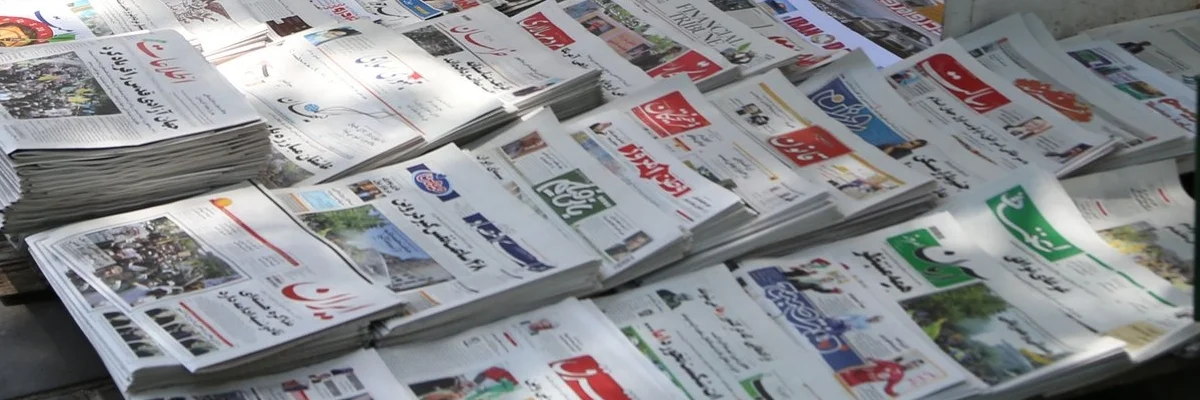
Like other reformist newspapers, Shargh returned to the newsstands in late 2012 after being banned for several years.
It is one of the main reformist newspapers and a key supporter of President Hassan Rouhani, a moderate conservative elected to a second term in 2017.
Since taking office, Rouhani has been the target of intense criticism by ultra-conservatives, who dominate the judiciary and the security services.
Photo Credit: Ted Regencia