
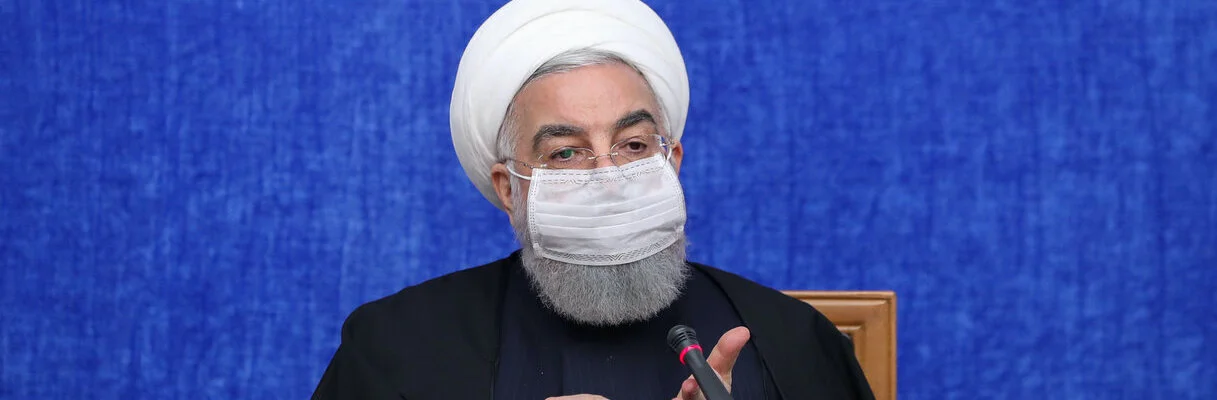
Iran Security Body Urges Unity on Nuclear Policy
Iran's top security body called Saturday for unity on the country's nuclear policy following a public row between the government and parliament over a controversial bill.
Iran's top security body called Saturday for unity on the country's nuclear policy following a public row between the government and parliament over a controversial bill.
The bill "for the lifting of sanctions and protection of the Iranian people's interests" was approved by the powerful Guardian Council on Wednesday and has to be signed by President Hassan Rouhani to become law.
Having drawn heated opposition from the government, the bill calls on the administration to end UN inspections of Iran's nuclear facilities and to "produce and store 120 kilogrammes (265 pounds) per year of uranium enriched to 20 percent.”
Both steps would run counter to commitments made by Tehran in a landmark deal with major powers in 2015 and would likely complicate efforts to get Washington back on board after outgoing US President Donald Trump abandoned it in 2018.
In a statement published by Iranian media on Saturday, the supreme national security council said that the bill "does not produce any specific issue for national interests.”
“In contrast, what is against national interests and a cause for concern is this ruckus which has damaged the position and status of the country's legal bodies," it said.
The body condemned "recent remarks and attitudes" which have "sacrificed national for partisan interests, have no benefit for the country and send the wrong message" to Iran's foes.
It called on authorities to focus on "reinforcing national unity" and vowed to prevent Iran's interests becoming "a plaything in the hands of politicians".
Passage of the bill, which was first drafted in early November, was speeded up following the assassination of Iran's top nuclear scientist Mohsen Fakhrizadeh.
He was killed on a major road outside Tehran last week in a bomb and gun attack that Iran has blamed on its arch foe Israel.
The security council statement came after Rouhani and parliament speaker Mohammad-Bagher Ghalibaf exchanged sharp remarks in a public dispute in recent days.
On Wednesday, the president called the bill "detrimental to the course of diplomatic activities."
Rouhani's government has signaled a readiness to engage with US President-elect Joe Biden after four tense years under Trump, who reimposed sanctions after withdrawing the United States from the nuclear agreement.
Photo: IRNA
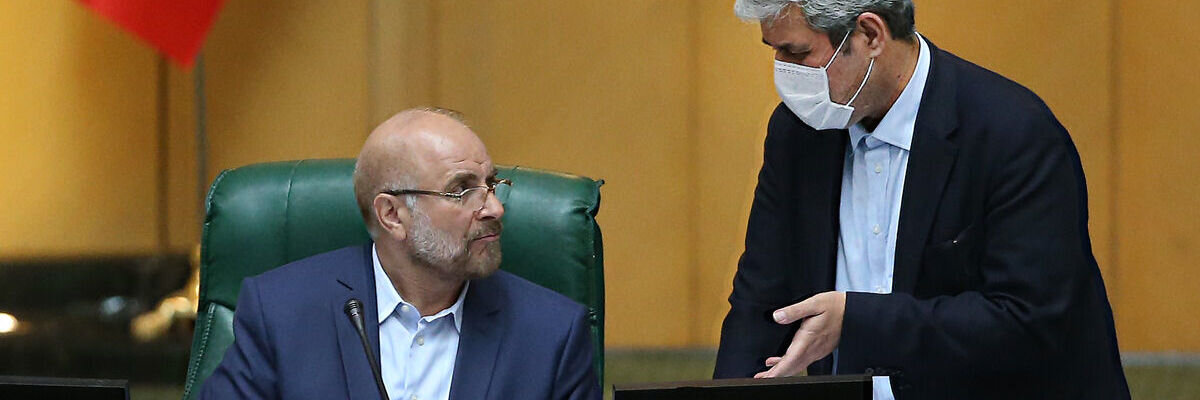
Iran's New Parliament Speaker Says Talks With US 'Futile'
Iran's parliament speaker Mohammad-Bagher Ghalibaf said any negotiations with the United States would be "futile" as he delivered his first major speech to the conservative-dominated chamber on Sunday.
Iran's parliament speaker Mohammad-Bagher Ghalibaf said any negotiations with the United States would be "futile" as he delivered his first major speech to the conservative-dominated chamber on Sunday.
Ghalibaf, a former commander of the Revolutionary Guards' air force, was elected speaker on Thursday after February elections that swung the balance in the legislature towards ultra-conservatives.
The newly formed parliament "considers negotiations with and appeasement of America, as the axis of global arrogance, to be futile and harmful," said Ghalibaf.
He also vowed revenge for the US drone attack in January that killed Qasem Soleimani, the commander of the Guards' foreign operations arm.
"Our strategy in confronting the terrorist America is to finish the revenge for martyr Soleimani's blood," he told lawmakers in a televised address.
This, he said, would entail "the total expulsion of America's terrorist army from the region".
Decades-old tensions between Tehran and Washington have soared in the past year, with the sworn arch enemies twice appearing to come to the brink of a direct confrontation.
The tensions have been rising since 2018, when President Donald Trump withdrew the US from a landmark nuclear accord and began reimposing crippling sanctions on Iran's economy.
That was followed by the US drone strike near Baghdad airport in January that killed Soleimani, a hugely popular figure in the Islamic republic.
Days later, Iran fired a barrage of missiles at US troops stationed in Iraq in retaliation, but Trump opted against taking any military action in response.
Ghalibaf called for ties to be improved with neighbours and with "great powers who were friends with us in hard times and share significant strategic relations", without naming them.
The 58-year-old Ghalibaf is a three-time presidential candidate who lost out to current incumbent Hassan Rouhani at the last election in 2017.
The newly elected speaker had also served as Tehran mayor and the Islamic republic's police chief before taking up his latest post.
Photo: IRNA

Conservative ex-Tehran Mayor Ghalibaf Elected Iran Speaker
Iran's newly formed parliament on Thursday elected former Tehran mayor Mohammad-Bagher Ghalibaf as its speaker, consolidating the power of conservatives ahead of next year's presidential election.
Iran's newly formed parliament on Thursday elected former Tehran mayor Mohammad-Bagher Ghalibaf as its speaker, consolidating the power of conservatives ahead of next year's presidential election.
The vote further shifts the political balance toward conservatives who oppose the relative moderate President Hassan Rouhani at a time Iran is engaged in a bitter standoff with arch foe the United States which has reimposed painful economic sanctions.
State television said the 58-year-old received 230 votes out of the 267 cast to secure what is one of the most influential positions in the Islamic republic.
Ghalibaf is a three-time presidential candidate, former police chief and member of the Revolutionary Guards who served as Tehran mayor from 2005 to 2017.
He received the most votes from the capital in February's parliamentary election, which saw the lowest turnout in decades.
The record abstention was partly over the disqualification of many moderate and reformist candidates by the Guardian Council, a watchdog dominated by ultra-conservatives.
An alliance of "principalists"—or conservatives—and ultra-conservatives swept the election in the absence of any challenge from the reformist side.
The parliament, which shapes debate in Iran, had been closed for six weeks until April 7 as part of measures aiming to curb the spread of the novel coronavirus.
Iran has been hit hard by the Middle East's deadliest outbreak. According to the health ministry, the virus has so far killed 7,564 out of 141,591 confirmed infections.
Thursday's vote saw Ghalibaf succeed Ali Larijani, who had held the post since 2008.
The speaker not only directs the parliament's affairs but also has a seat at the High Council of Economic Coordination alongside the president and judiciary chief.
Established in 2018 by the supreme leader's decree, the Council is the highest authority on economic affairs and is meant to combat the impact of United States' sanctions imposed on Iran.
US President Donald Trump withdrew from a landmark nuclear agreement and reimposed sanctions on Iran in 2018, mainly targeting the crucial oil and banking sectors.
Photo: IRNA
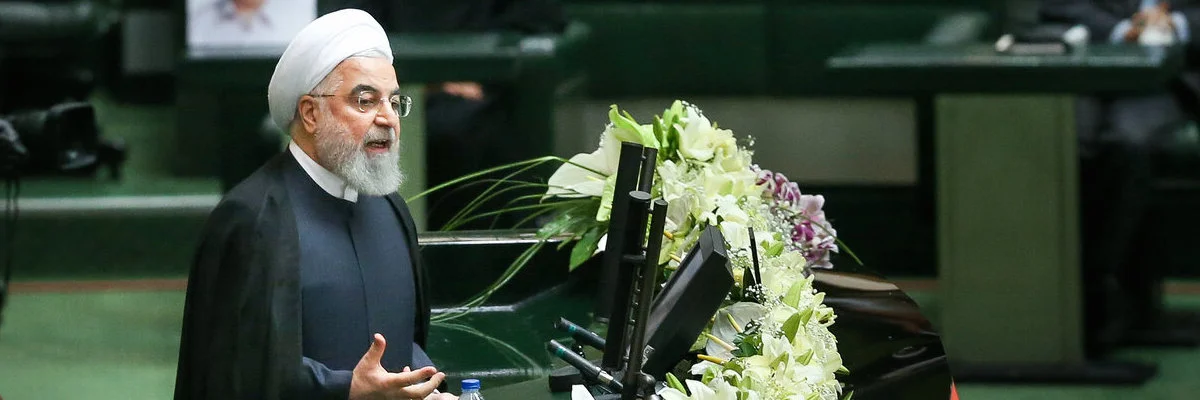
Rouhani Urges Iran MPs to Cooperate as Parliament Opens
President Hassan Rouhani urged Iranian lawmakers to "cooperate" with his government in a speech on Wednesday during the inaugural session of the new parliament following a February election swept by conservatives.
President Hassan Rouhani urged Iranian lawmakers to "cooperate" with his government in a speech on Wednesday during the inaugural session of the new parliament following a February election swept by conservatives.
The parliament, a legislative chamber that shapes debate in Iran, had been closed for six weeks until April 7 as part of measures aimed at curbing the spread of the novel coronavirus.
Iran has been hit by the Middle East's deadliest outbreak of the virus. Its toll stands at more than 7,500 dead and nearly 140,000 infected.
"I hope that in the year that remains for this government we will be able to cooperate and work together," Rouhani said in the address before the newly formed parliament, or Majles.
Iran held a legislative election on February 21 and is scheduled to hold a presidential poll in around 12 months.
The 11th legislature since the Islamic revolution of 1979 opened as the country's economy gradually returns to normal from the virus outbreak.
In a sign that the fight against the virus is still far from over, however, a seat was left vacant between each deputy.
But many of the elected representatives wore no masks.
Rouhani, who is in the final year of his second and final term, called on MPs, collectively and individually, to place the "national interest above special interests", "party interests" or "constituency interests".
The moderate president defended the performance of his government, which has faced criticism from its conservative and ultra-conservative opponents who now form a majority in the parliament.
'Olive Branch'
For many observers, the record abstention in February's elections reflected the people's disenchantment with broken promises.
Less than 43 percent of voters cast ballots in the election, according to official results.
Voters stayed away after the Guardian Council, a watchdog dominated by ultra-conservatives, disqualified many moderate and reformist candidates from the February 21 election.
The signing of an international agreement on Iran's nuclear programme in 2015 had raised hopes for a bright economic future and an opening up of the country to the world after years of isolation.
But these hopes were dashed before being totally buried in 2018 when US President Donald Trump withdrew from the accord and began reimposing sanctions on Iran.
In his speech, Rouhani again denounced what he called the "psychological war" and "economic and medical terrorism" that he said the United States was waging against his country.
But he said the Iranian nation had stood up against "the enemy" and that its resistance had won.
The president praised his government's performance in dealing with the coronavirus outbreak as a source of "great pride", adding that Iran was "among the countries that have succeeded".
Fereshteh Sadeghi, a political journalist in Tehran, expressed doubt that the new parliament would cooperate with Rouhani's government.
"Rouhani again offers olive branch to new parliament, saying he doesn't seek confrontation but friendship," she tweeted in English.
"He knows these rivals can't be controlled as Ali Larijani did it for him in the past 7 years. God helps him!" she said, referring to the outgoing parliament speaker.
Photo: IRNA
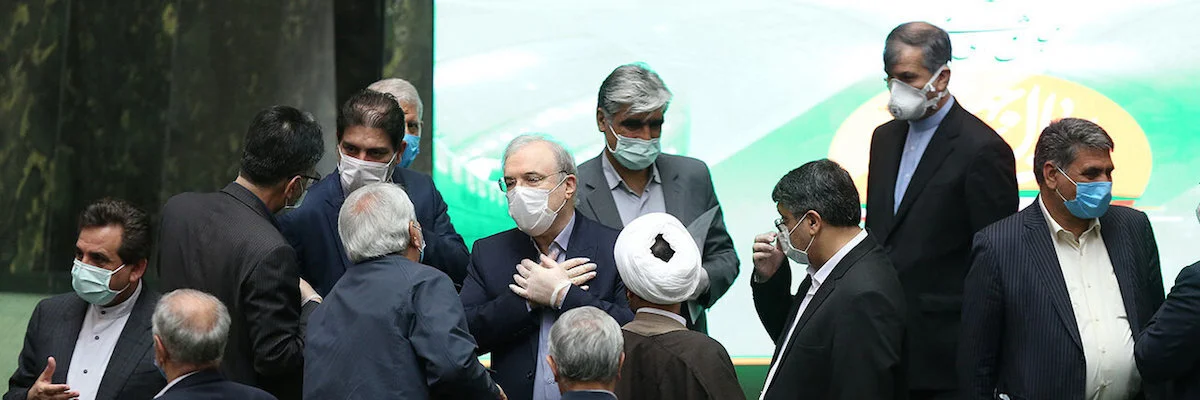
Iran Reopens Parliament as Virus Infections Drop for Seventh Day
Iran's parliament convened Tuesday for the first time since the coronavirus outbreak forced its doors to close, as the country reported a drop in new infections for the seventh straight day.
Iran's parliament convened Tuesday for the first time since the coronavirus outbreak forced its doors to close, as the country reported a drop in new infections for the seventh straight day.
More than two-thirds of the legislature's 290 members gathered in the absence of speaker and veteran politician Ali Larijani, who tested positive for COVID-19 last week.
At least 31 members of the parliament, or Majles, which had been shut since February 25, have contracted the disease.
State television footage of the opening session showed some MPs huddling together despite guidelines on social distancing to stop the spread of the virus.
Parliament debated and eventually blocked an urgent bill to totally lock down the country for a month, with those against arguing it would damage the economy.
"This plan is against jobs and growing productivity. Who's going to pay for implementing it?" MP Shadmehr Kazemzadeh said, according to the semi-official news agency ISNA.
But Abdolkarim Hosseinzadeh, who drafted the bill, said Iran had been "confused" about how to contain the virus.
"We must urgently make a decision, as history will judge us," he said.
Health ministry spokesman Kianoush Jahanpour reported 133 new coronavirus deaths, saying the overall fatalities had reached 3,872.
Another 2,089 infections were recorded nationwide, bringing the total to 62,589.
Iran announced its first COVID-19 cases on February 19, when it said two people had died from the illness.
Jahanpour said that while 3,987 patients were in critical condition, recoveries had increased and a total of 27,039 people had left hospital.
Iran is by far the worst hit by the pandemic in the Middle East, according to official tolls.
There has been speculation abroad that the real number of deaths and infections could be higher, however.
Virus 'Cluster Bomb'
In a bid to halt COVID-19, Iran has ordered the closure of non-essential businesses and imposed inter-city travel bans, while refraining from a lockdown.
But its taskforce to battle the virus said "low-risk" businesses would be allowed to reopen from Saturday, while observing health protocols.
The body said two-thirds of public servants must go to work and the rest could do so from home.
It also said newspaper and magazine publishers could resume their print editions from Saturday, after being barred for a week.
Authorities are yet to define what low-risk businesses are and have been criticised for sending mixed signals by relaxing social distancing measures.
"We're seeing a duality in senior officials' remarks," ISNA quoted the head of Tehran's city council as saying.
"On one hand, there's the health ministry asking for more stringent measures, and on the other economic officials decide things that make people feel the coronavirus is not so dangerous after all," said Mohsen Hasehmi.
A taskforce member said anyone going back to work could become a virus "cluster bomb" as many of those infected were asymptomatic.
"I don't know what's the reasoning for such a decision," state news agency IRNA quoted Hamid Souri as saying Monday.
Officials said the reopening of businesses was meant to save the economy.
"We cannot shut down industries and production" at a time of "economic war" amid crippling US sanctions, Health Minister Saeid Namaki told parliament.
At least 31 members of Iran's parliament, seen here in session in January, have contracted the coronavirus
Iran is by far the Middle East country worst hit by the coronavirus pandemic and there has been speculation abroad that the real numbers of deaths and infections could be significantly higher than the official figures suggest.
Photo: IRNA
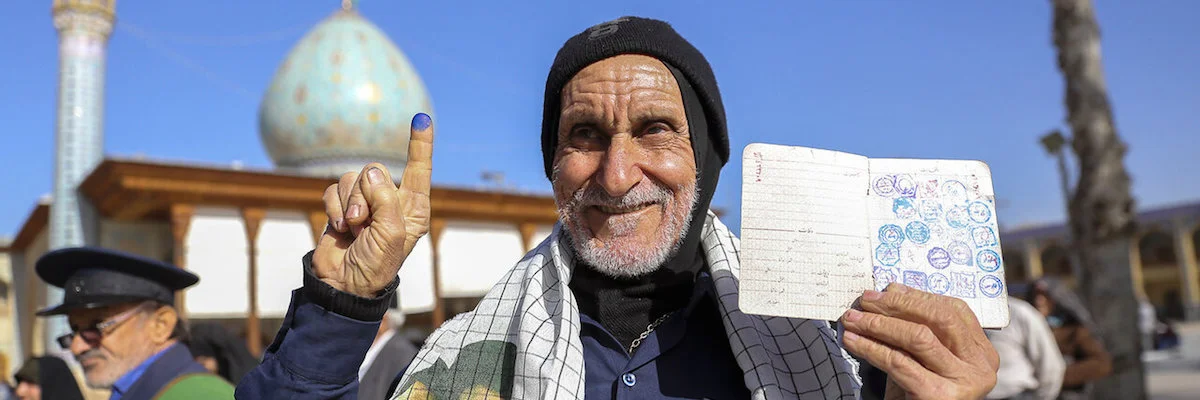
Conservatives Claim Victory in Iran Polls After Record Low Turnout
◢ Conservatives took a lead Saturday as the first results of Iran's parliamentary election came in, boosted by a predicted low turnout following the disqualification of nearly half the candidates. The conservative and ultra-conservative alliance appeared to have a comfortable edge in the capital in preliminary results, the committee's spokesman Esmail Mousavi said.
By Amir Havasi
Conservatives took a lead Saturday as the first results of Iran's parliamentary election came in, boosted by a predicted low turnout following the disqualification of nearly half the candidates.
Friday's election followed months of steeply escalating tensions between Iran and its decades-old arch foe the United States.
Voters had been widely expected to shun the polls, disillusioned by unfulfilled promises and struggling to cope in a country whose economy has buckled under harsh US sanctions.
About half of the 16,000-odd candidates were barred. Among them were many reformists and moderates—including dozens of sitting lawmakers.
By midday Saturday, votes had been counted in 71 constituencies out of 208, according to National Elections Committee figures reported by semi-official news agency ISNA.
Tehran is the biggest catch in the election with 30 seats.
The conservative and ultra-conservative alliance appeared to have a comfortable edge in the capital in preliminary results, the committee's spokesman Esmail Mousavi said.
Most votes went to the first three names on the alliance's list, he said.
Leading the race was Mohammad Bagher Ghalibaf, a three-time presidential candidate, former police chief and member of the Revolutionary Guards who was Tehran mayor from 2005 to 2017.
Reformists and moderates hardly figured in the 37 other names of "leading Tehran candidates", Mousavi said.
Final results for both the capital and other provinces would be announced by early Sunday at the latest, he added.
Landslide Win
The interior ministry announced results of 95 percent of the 208 constituencies in Friday's election, declaring the names of the winning candidates but without specifying their political affiliation.
"Victory for the anti-American candidates, a new slap for Trump," crowed the ultra-conservative Kayhan newspaper.
"The people have disqualified the reformists," it added, alluding to Rouhani's backers, who have been weakened by President Donald Trump pulling the US out of a landmark nuclear deal and by a slew of economic and political crises.
Seventeen women were elected, the website of the government newspaper Iran said—the same number as in the outgoing 290-seat parliament.
Interior Minister Abdolreza Rahmani Fazli announced the participation rate was 42.6 percent—the lowest in four decades.
The election came two days after Iran announced its first cases of the deadly new coronavirus that emerged in China.
"We held these elections when there were various incidents in the country: we had bad weather, there was this coronavirus disease, there was the plane crash," Rahmani Fazli said, referring to the January 3 downing of a Ukrainian airliner which killed 176 people.
He said that in such a scenario "the turnout rate seems perfectly acceptable for us."
"A lot of people voted in the previous parliamentary election, but the enthusiasm faded away every day after that," Ali, a Tehran taxi driver, told AFP.
"And now there's nothing to be hopeful about to go and vote," added the 53-year-old, who abstained.
With official figures still coming in, news outlets close to conservatives and ultra-conservatives have predicted a landslide win for their candidates across Iran.
The state television website said most of the 56 winners announced on Saturday were fresh faces and only 10 were former members of parliament.
Fars tweeted that turnout in Tehran was 1.9 million out of more than nine million eligible voters.
Many in the capital seem to have sat out the election, including Arghavan Aram, who manages an NGO for transsexuals.
"An election with only one faction is not an election, it's a selection," she said.
'Natural' Turnout
Political figures across the spectrum discussed the cause of what may be a historically low turnout, even though final figures have yet to be released.
"Such a turnout is natural in an election where progressive reformists couldn't present candidates due to unprecedented disqualifications," Emad Bahavar, a reformist activist, tweeted.
Abdollah Ganji, editor-in-chief of ultra-conservative Javan daily, asked his Twitter followers about the low turnout, and those who responded said economic problems were the main cause.
Tweeting his congratulations to conservatives, prominent right-wing figure Ezzatollah Zarghami said it would be "very important" to get to the root cause of the low turnout.
The 11th parliamentary election since the 1979 Islamic Revolution comes after a surge in tensions between Tehran and Washington, and Iran's accidental downing of a Ukrainian airliner that sparked anti-government protests.
Turnout was estimated at around 40 percent nationwide and 30 percent in Tehran at the scheduled close of polls on Friday, according to Fars.
But authorities extended polling for another six hours to allow as many people as possible to vote.
Fars said the official turnout figure would be released on Saturday, while official results are not expected to be announced until Sunday.
Schools were closed in dozens of urban centres on Saturday while the count went ahead.
Iran fell into a deep recession after US President Donald Trump reimposed sanctions following Washington's unilateral withdrawal from a landmark nuclear deal in 2018.
Photo: IRNA
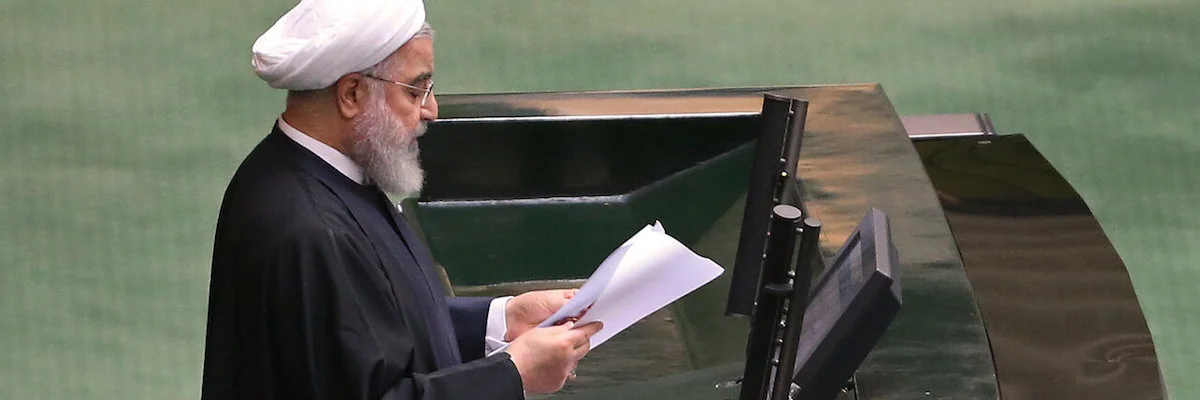
Iran Unveils Budget of 'Resistance' Against US Sanctions
◢ Iran's President Rouhani announced Sunday what he called a "budget of resistance" to counter crippling US sanctions, weeks after a fuel price hike sparked nationwide protests that turned deadly. Rouhani said the aim was to reduce "hardships" as the Islamic Republic has suffered a sharp economic downturn.
Iran's President Hassan Rouhani announced Sunday what he called a "budget of resistance" to counter crippling US sanctions, weeks after a fuel price hike sparked nationwide protests that turned deadly.
Rouhani said the aim was to reduce "hardships" as the Islamic republic has suffered a sharp economic downturn, with a plummeting currency sending inflation skyrocketing and hiking import prices.
The US sanctions imposed in May last year in a bitter dispute center on Iran's nuclear program include an embargo on the crucial oil sector whose sales Washington aims to reduce to zero in a campaign of "maximum pressure.”
Rouhani told parliament that the budget, which includes a 15 percent public sector wage hike, "is a budget of resistance and perseverance against sanctions".
It would "announce to the world that despite sanctions we will manage the country, especially in terms of oil," he added.
Rouhani said the 4,845 trillion rial ($36 billion at the current street rate) budget was devised to help Iran's people overcome difficulty.
It would benefit from a $5 billion "investment" from Russia which was still being finalised, he said, without giving further details.
"We know that under the situation of sanctions and pressure, people are in hardship. We know people's purchasing power has declined," said Rouhani.
"Our exports, our imports, the transfer of money, our foreign exchange encounter a lot of problems.
"We all know that we encounter problems in exporting oil. Yet at the same time, we endeavour to reduce the difficulty of people's livelihood."
Rouhani said that despite the US sanctions his government estimated that Iran's non-oil economy would "be positive" this year.
"Contrary to what the Americans thought, that with the pressure of sanctions our country's economy would encounter problems, thank God we have chosen the correct path... and we are moving forward," he said.
The budget announcement comes after fuel price hikes Iran announced in mid-November triggered deadly demonstrations across the country.
Officials in Iran have yet to give an overall death toll for the unrest in which petrol pumps and police stations were torched and shops looted.
London-based human rights group Amnesty International said at least 208 people were killed in the crackdown, but Iran has dismissed such figures as "utter lies".
'Reducing Hardships'
US President Donald Trump began imposing punitive measures in May 2018, after unilaterally withdrawing from an accord that gave Iran relief from sanctions in return for limits on its nuclear program.
The United States has continued to ramp up its sanctions this year as part of a stated campaign of "maximum pressure" against the Islamic republic.
Iran's economy has been battered, with the International Monetary Fund forecasting it will contract by 9.5 percent this year.
The sharp downturn has seen the rial plummet and inflation running at more than 40 percent.
In his speech, Rouhani only touched on a few areas of the draft budget for the financial year starting late March 2020, which must be scrutinised and voted on by parliament.
"All our efforts are geared towards reducing these hardships to some extent so it can be more tolerable," he told deputies.
"I deem it necessary here to tell the honourable representatives that the criteria of our budget is still based on maximum pressure and continuation of America's sanctions," he said.
"This does not mean that the government will not take other steps, but at the same time this is our criteria and based on this criteria we have devised and executed the budget."
The budget comes ahead of parliamentary elections in February.
Photo: IRNA
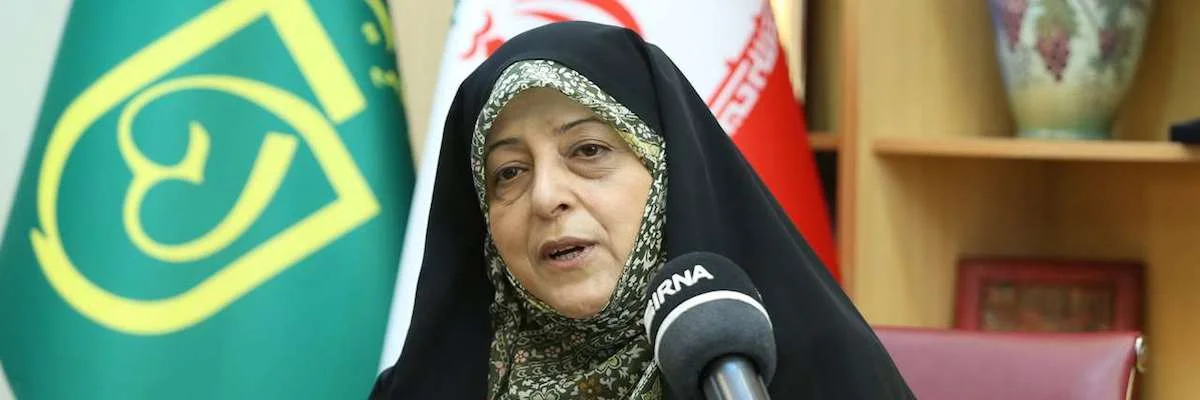
Iran Parliament Upholds Women's Rights in Citizenship Debate
◢ Iran’s parliament struck a blow for women’s rights by overwhelmingly voting to confer citizenship on children born to an Iranian mother and foreign father. Such a law would represent a significant development for women’s rights in Iran, with possible implications for the wider region, where many countries don’t give women the right to pass on citizenship to their children if the father is a foreign national.
Iran’s parliament struck a blow for women’s rights by overwhelmingly voting to confer citizenship on children born to an Iranian mother and foreign father.
Currently, children of “mixed marriages” are only eligible for citizenship if their Iranian parent is a man. If the decision is approved by the Guardian Council, a powerful body of senior clerics and judges, then the offspring of mixed marriages would be eligible for citizenship, regardless of whether their mother or father is the Iranian national.
The parliamentary vote was reported Sunday by state-run Islamic Republic News Agency.
Such a law would represent a significant development for women’s rights in Iran, with possible implications for the wider region, where many countries don’t give women the right to pass on citizenship to their children if the father is a foreign national.
It would also give tens of thousands of children access to social and health care services.
Iran’s vice president for women’s and family affairs said the current legislation, dating back to 1934, was written at a time “when women were considered chattel.”
“Today, when women have gained dignity, respect and a high level of education and status in the country, on the basis of what logic are we depriving a woman the right to transfer the citizenship that’s in her blood on to her child?” Masoumeh Ebtekar said, according to IRNA.
Photo: IRNA
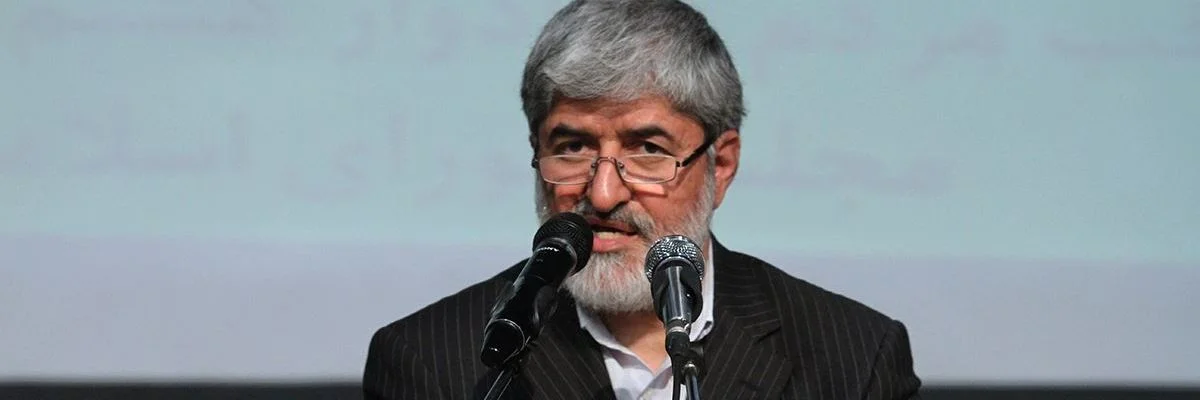
Tehran Lawmaker Says Move on Nuclear Curbs Shows Iran 'Not Weak'
◢ Iran's move to stop respecting some of the agreed limits on its nuclear activities showed it is "not in a position of weakness", a deputy speaker of the Islamic republic's parliament said Sunday. “The timely decision of the Islamic republic regarding its commitments in the (nuclear deal) showed that Iran is not in a position of weakness," said Ali Mottahari, according to the official IRNA news agency.
Iran's move to stop respecting some of the agreed limits on its nuclear activities showed it is "not in a position of weakness", a deputy speaker of the Islamic republic's parliament said Sunday.
“The timely decision of the Islamic republic regarding its commitments in the (nuclear deal) showed that Iran is not in a position of weakness," said Ali Mottahari, according to the official IRNA news agency.
Tehran announced Wednesday that it would stop respecting some of the curbs on its nuclear activities imposed under the landmark 2015 deal with world powers.
The announcement came exactly a year after the US withdrew from the deal, known as the Joint Comprehensive Plan of Action (JCPOA), with further measures threatened if the agreement's other signatories fail to mitigate the impact of renewed American sanctions within 60 days.
The sweeping sanctions have dealt a severe blow to the Iranian economy.
Mottahari's comments came a day after President Hassan Rouhani called for unity among Iranian political factions during a time of heightened tensions with the United States.
Rouhani said Iran was facing "an all-out war unprecedented in the history
of the Islamic republic.”
Iran's situation could be worse than during the 1980-1988 Iran-Iraq war, he said according to the government's official website.
"In the war we didn't have any banking, sales of oil and import-export problems and the only sanctions against us were arms embargoes," he said, during what was billed as an informal meeting with members of different political groups and parties.
The administration of US President Donald Trump has ratcheted up pressure on Iran in recent days over alleged threats from Tehran.
Washington said on Saturday it was deploying an amphibious assault ship and a Patriot missile battery to bolster an aircraft carrier and B-52 bombers already sent to the Gulf.
Photo: IRNA
Iran Guardian Council Rejects Terror Financing Bill
◢ Iran's powerful Guardian Council on Sunday rejected a bill on joining the UN convention against terrorist financing seen as crucial to maintaining trade and banking ties with the world. The conservative-dominated council, which oversees legislation passed by the parliament, said aspects of the bill were against Islamic law and the constitution and sent it back to lawmakers for revision.
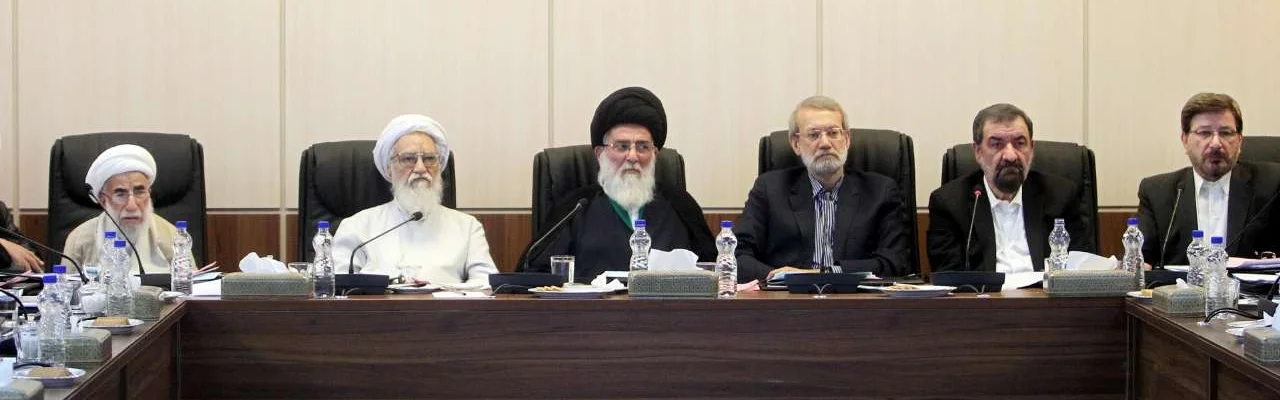
Iran's powerful Guardian Council on Sunday rejected a bill on joining the UN convention against terrorist financing seen as crucial to maintaining trade and banking ties with the world.
The conservative-dominated council, which oversees legislation passed by the parliament, said aspects of the bill were against Islamic law and the constitution and sent it back to lawmakers for revision.
"The Guardian Council has in several sessions reviewed the bill... and it has considered it to have flaws and ambiguities," wrote spokesman Abbas Ali Kadkhodaie on Twitter.
The bill, narrowly passed by parliament on October 7, is one of four put forward by the government of President Hassan Rouhani in order to meet demands set by the international Financial Action Task Force (FATF), which monitors countries' efforts to tackle money-laundering and terrorist financing.
Many hawks in Iran say the laws would limit the country's ability to support "resistance groups" such as Lebanon's Hezbollah and Palestinian Hamas by bringing greater transparency to its accounts.
But Rouhani's government argues it is particularly vital after the United States walked out of the 2015 nuclear deal and reimposed sanctions.
The other parties to the deal—Britain, France, Germany, China and Russia—have sought to salvage the agreement and maintain trade with Iran, but have demanded that it accede to the FATF.
Iran is alone with North Korea on the FATF, although the Paris-based organisation has suspended counter-measures since June 2017 while Iran works on reforms.
Last month, the FATF gave Iran another extension to February to update its laws.
"Neither I nor the president can guarantee that all problems will go away if we join (the UN convention), but I guarantee that not joining will provide the US with more excuses to increase our problems," said Iran's Foreign Minister Mohammad Javad Zarif during the parliament debate last month.
A previous bill on the mechanics of monitoring and preventing terrorist financing was signed into law in August.
But two others—on money-laundering and organized crime—have also been delayed by higher authorities, including the Guardian Council, after being approved by parliament.
The council is made up of six clerics appointed by supreme leader Ayatollah Ali Khamenei and six lawyers appointed by the judiciary.
Photo Credit: IRNA
Iran Parliament Passes Counter-Terror Finance Bill
◢ Iran's parliament on Sunday approved a bill to counter terrorist financing that was strongly opposed by conservatives but seen as vital to salvaging the nuclear deal with European and Asian partners. The bill, one of four put forward by the government to meet demands set by the international Financial Action Task Force (FATF), was passed by 143 votes to 120.
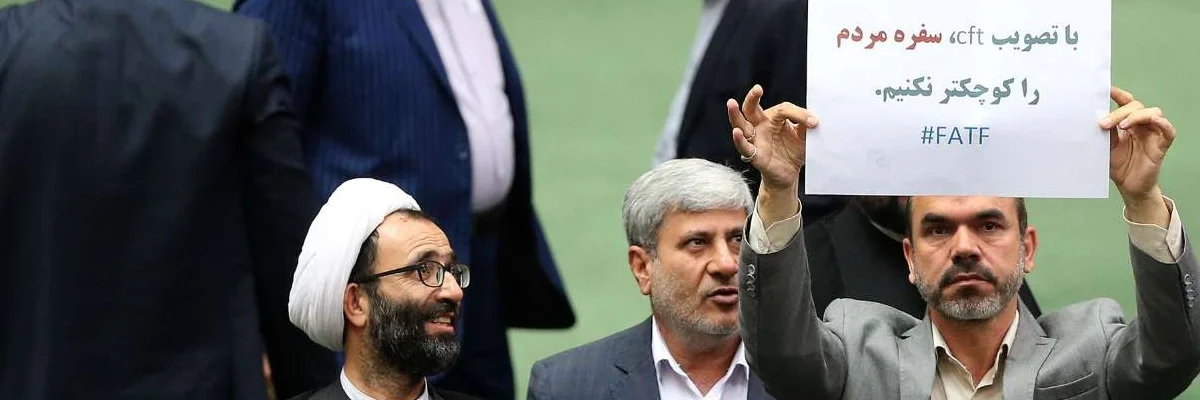
Iran's parliament on Sunday approved a bill to counter terrorist financing that was strongly opposed by conservatives but seen as vital to salvaging the nuclear deal with European and Asian partners.
The bill, one of four put forward by the government in a bid to meet demands set by the international Financial Action Task Force (FATF), was passed by 143 votes to 120, according to the semi-official ISNA news agency.
It aims to bring Iran's laws in line with international standards and allow it to join the UN Terrorism Financing Convention.
A previous bill on the mechanics of monitoring and preventing terrorist financing was signed into law in August.
But joining the UN convention has been controversial because hardliners say it will limit Iran's ability to support armed groups in the region such as its Lebanese ally, Hezbollah.
Two other bills—on money-laundering and organised crime—have also been passed by parliament but are being held up by the Guardian Council, which vets all legislation.
Iran is alone with North Korea on the blacklist of the Paris-based FATF, which monitors global money laundering and terrorist financing.
The FATF suspended counter-measures against Iran in June 2017 and has set a final deadline of mid-October for it to amend its laws.
The issue has become particularly pressing since the United States walked out of the 2015 nuclear deal with Iran earlier this year and began reimposing sanctions.
The other parties to the deal—Britain, France, Germany, China and Russia—have sought to salvage the agreement and maintain trade with Iran, but have demanded that it accede to the FATF.
"Neither I nor the president can guarantee that all problems will go away if we join (the UN convention)," said Iran's Foreign Minister Mohammad Javad Zarif during the debate ahead of the vote.
"But I guarantee that not joining will provide the US with more excuses to increase our problems," he added.
He said Russia and China—two of Iran's "strategic allies"—have refused to maintain financial ties unless it joined the FATF.
'Death to Traitors'
Conservatives were furious with the vote on Sunday, with hardliners leading chants of "death to traitors" outside parliament.
In a heated debate ahead of the vote, opponents of the bill said it would not solve the country's financial problems, and would help its enemies.
"We did what (the FATF) demanded, we passed three bills but nothing happened. Our financial problems will not go away even if we join," said lawmaker Hossein Naghavi Hosseini.
Another hardliner, Mohammad Dehghan, warned the bill means "providing the enemy with intelligence during an economic war" and that passing it amounted to "treason".
Both sides have evoked supreme leader Ayatollah Ali Khamenei to support their position.
Conservatives pointed to Khamenei's statement in June that Iran has "no need to join" global conventions.
But parliament speaker Ali Larijani, who supports the government's position, said he had received a letter from Khamenei explaining that his remarks were about "conventions in general" and not meant to oppose any particular bills.
Reformist lawmaker Mohammad Feyzi told the session that Iran does not have "the luxury of choice" and will face negative consequences if it refuses to join the FATF.
Ali Najafi, spokesman for the parliament's commission which produced the bill, said Iran retained the right to walk away from the UN convention "wherever it acts against the Iranian constitution" and emphasized that it does not force Iran to recognize Israel.
Photo Credit: IRNA
Iran Parliament Drops Plan to Impeach Education Minister
◢ Iran's parliament called off a planned vote to impeach the education minister on Sunday, Iranian media reported, offering some respite for the embattled government of President Hassan Rouhani. Twenty-nine lawmakers signed a motion last Wednesday to impeach the minister, Mohammad Bathaei, but all of them withdrew their signatures.
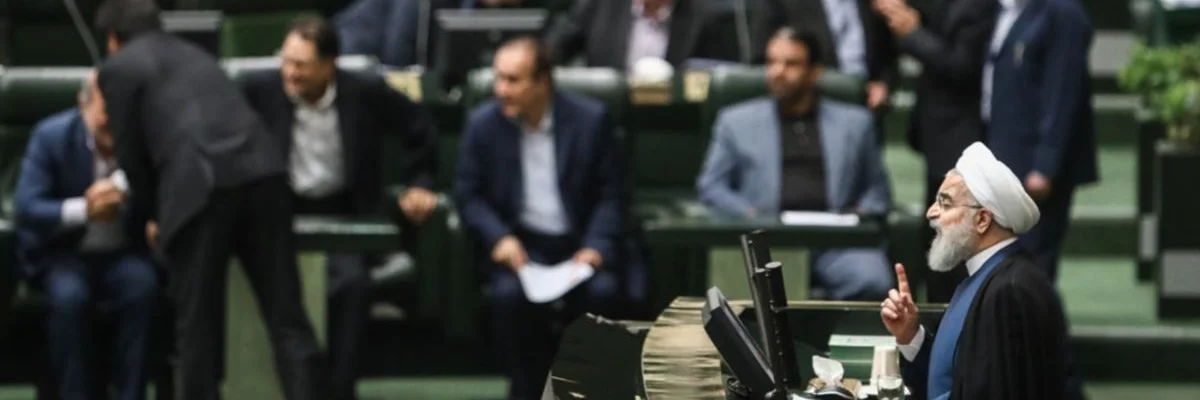
Iran's parliament called off a planned vote to impeach the education minister on Sunday, Iranian media reported, offering some respite for the embattled government of President Hassan Rouhani.
Twenty-nine lawmakers signed a motion last Wednesday to impeach the minister, Mohammad Bathaei, but all of them withdrew their signatures.
"Given the imminent opening of schools (on September 23), those requesting the impeachment have withdrawn their request," said Ahmad Amirabadi, a member of parliament's presiding board, according to the semi-official news agency ISNA.
Rouhani has faced mounting pressure from lawmakers over his handling of an economic crisis, partly triggered by the withdrawal of the United States from the 2015 nuclear deal and reimposition of sanctions.
Parliament sacked his labour and economy ministers last month, and industries minister Mohammad Shariatmadari has also been targeted for impeachment, though it is not clear if that will still go ahead.
Rouhani himself was summoned to parliament to answer questions from lawmakers last Tuesday, a first in his five years in power, and only the second time for a sitting president.
Economic grievances played a role in Bathaei's planned impeachment, with lawmakers criticizing the reduced budget for education and school renovation, though senior officials pointed out that the minister has no power over budgets.
Supreme leader Ayatollah Ali Khamenei last week welcomed the pressure on Rouhani's cabinet, saying it was a sign of the strength of Iran's democracy.
But he also warned that differences between officials should not be overly emphasized "because the people would become worried."
Photo Credit: Mehr
Iran Lawmakers Reject Rouhani Answers on Economic Woes
◢ Iran's parliament voted its dissatisfaction with President Hassan Rouhani on Tuesday after grilling him over the deteriorating economy. It was the first time Rouhani had been summoned by parliament in his five years in power, and MPs demanded answers on unemployment, rising prices and the sharp depreciation of the rial, which has lost more than half of its value since April.
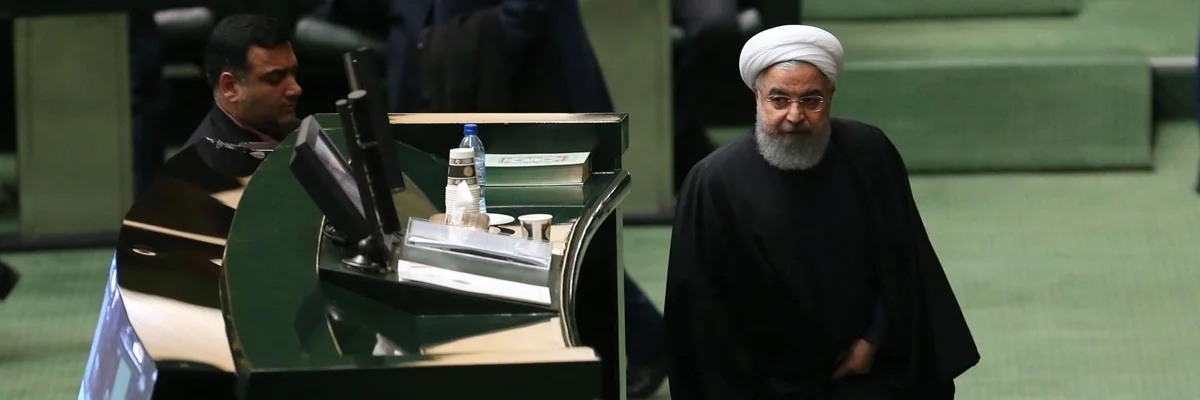
Iran's parliament voted its dissatisfaction with President Hassan Rouhani on Tuesday after grilling him over the deteriorating economy.
It was the first time Rouhani had been summoned by parliament in his five years in power, and MPs demanded answers on unemployment, rising prices and the sharp depreciation of the rial, which has lost more than half of its value since April.
The lawmakers, who have already impeached his labour and economy ministers this month, were unimpressed.
In votes at the end of the session, they expressed dissatisfaction with Rouhani's responses to four of their five questions on the economy.
Rouhani trod a difficult line, seeking to acknowledge the problems facing ordinary Iranians without admitting to a full-blown crisis.
"It should not be said we are facing a crisis. There is no crisis. If we say there is, it will become a problem for society and then a threat," he told parliament.
Under parliamentary rules, the issues on which lawmakers expressed dissatisfaction will now be referred to the judiciary for review.
As usual, Rouhani offered no concrete policy proposals, instead saying repeatedly that the answer lay in showing the people that the establishment was united.
"You may talk about employment, foreign currency, recession, smuggling... I think the problem is in people's view of the future," he said.
"The people are not afraid of the United States, they are afraid of our disagreements. If the people see we are united, they will realize the problems will be resolved."
But Rouhani's government—which pushed a "moderate" line of improved relations with the West—has been badly weakened by Washington's May decision to withdraw from a landmark 2015 nuclear deal between Iran and major powers and reimpose sanctions.
Most foreign firms have abandoned investment projects in Iran, and the next phase of renewed US sanctions in November will hit the crucial oil sector.
'Palace of wishes'
Rouhani sought to shift the blame to the administration of US President Donald Trump, saying: "We will not allow a bunch of anti-Iranians who have gathered in the White House to conspire against us."
But most Iranians blame their own government for failing to capitalize on the nuclear deal while it had the chance, and for raising people's expectations without delivering results.
"You created a palace of wishes called the JCPOA," said Mojtaba Zolnour, an MP for the shrine city of Qom, using the technical name for the nuclear deal.
"With one kick from Trump, this palace was demolished, and you didn't have an alternative," he said.
Despite the impeachment of two of his ministers, Rouhani himself is protected by supreme leader Ayatollah Ali Khamenei, who said recently that removing the president would "play into the hands of the enemy."
That may explain the soft line taken by several speakers, with one conservative MP, Hossein Naghavi-Hosseini, emphasising: "We will stand by your government for the sake of protecting the system of the Islamic republic."
But when it came to the votes, lawmakers accepted only one of Rouhani's answers—related to international banking sanctions, which they agreed were beyond his government's control.
Even after the nuclear deal, major foreign banks continued to refuse to work with Iran, fearing the lack of transparency in its financial sector could lead them into legal trouble.
Rouhani has even lost support among reformists who had supported him as the best option after their own leaders were either locked up or barred from standing for office.
"What have we done with this nation? We made them miserable and wretched," said leading reformist MP Elias Hazrati as he voted in favour of impeaching economy minister Masoud Karbasian on Sunday.
Photo Credit: IRNA