

Virus-Hit Iran Shuts Non-Essential Business in Much of the Country
Iran announced Saturday it had shut non-essential businesses in over half its cities and towns for up to two weeks and introduced movement restrictions to rein in its novel coronavirus outbreak.
Iran announced Saturday it had shut non-essential businesses in over half its cities and towns for up to two weeks and introduced movement restrictions to rein in its novel coronavirus outbreak.
Iran has avoided imposing a full lockdown since it was hit by COVID-19 in February, with President Hassan Rouhani arguing the country's sanctions-battered economy cannot afford to be shut down for an extended period.
Iran's coronavirus task force announced Saturday that only essential services—including health centres and pharmacies, food shops and public transport—will be allowed to open in the country's areas of highest risk, for up to two weeks.
These include more than half of the country's cities and towns, according to the task force, with Tehran and all other provincial capitals affected by the measures.
Private vehicles are also prohibited from leaving the worst-hit areas until further notice, and are banned from circulating between 9:00 pm and 4:00 am in Tehran and other large cities.
The task force said more than 53 million of Iran's over 80-million-strong population would be affected by the measures.
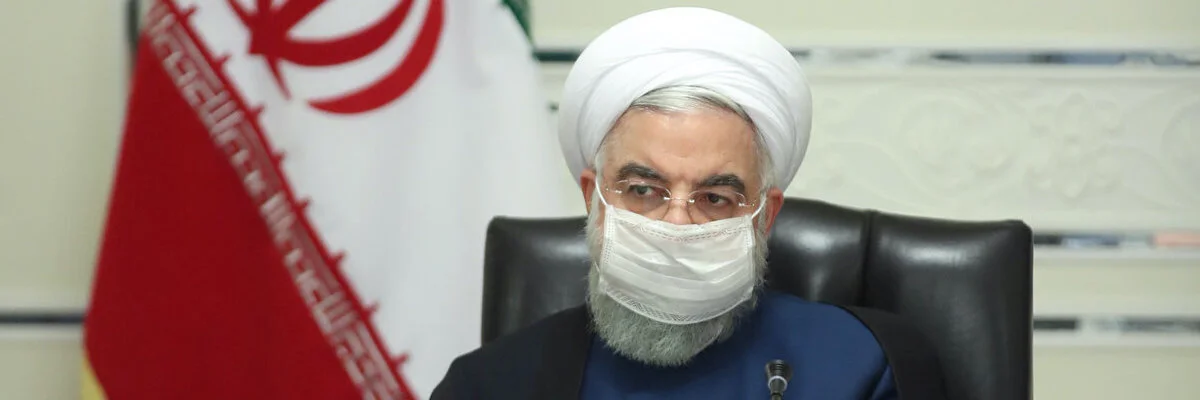
Rouhani warned that the Islamic republic was facing its "third wave" of infections, and said the new restrictions were a signal to Iranians that the problem is "very serious."
"We call on all citizens to adhere to all the rules, in order to reduce the economic pressure imposed today on businesses as quickly as possible," Rouhani said Saturday.
"We must convince people that we have no other option," he added.
‘Two Crucial Weeks'
Rouhani also promised to provide financial support of one million rials per month—about four dollars—"for the next four months to about 30 million people", without giving further details.
Iran is the worst-hit country in the Middle East, and its virus death toll has passed 400 a day since the start of November.
The health ministry on Saturday reported 12,931 new daily cases of infection and 431 deaths, bringing the total number of infections to 841,308 and fatalities to 44,327.
Some officials, including from the health ministry, have expressed concern that the real toll is likely to be higher.
On the streets of Tehran, the new measures were met with some scepticism.
Saleswoman Mahsa Teimouri said people had ignored health warnings about the virus before.
"It doesn't matter if the government imposes restrictions, since people do not comply," she said.
Nurse Ziba Amrollahi also said that rules were being flouted.
"There are people in the streets, and no one cares about complying with the rules," Amrollahi said. "People are travelling and attending gatherings more than they did in the past.”
On Saturday, the front page of the reformist newspaper Sazandegi showed a closed shop with a poster on its door announcing that "we stay at home because your life is more precious to us."
The government's official newspaper, Iran, carried the headline: "Two crucial weeks to control the coronavirus."
Photo: IRNA
Iran Says Cannot Shut Down Economy Despite Worsening Virus Outbreak
Iran said on Saturday that it cannot afford to shut down its sanctions-hit economy, even as the country's novel coronavirus outbreak worsens with record-high death tolls and rising infections.
Iran said on Saturday that it cannot afford to shut down its sanctions-hit economy, even as the country's novel coronavirus outbreak worsens with record-high death tolls and rising infections.
Iran must continue "economic, social and cultural activities while observing health protocols", President Hassan Rouhani said during a televised virus taskforce meeting.
"The simplest solution is to close down all activities, (but) the next day, people would come out to protest the (resulting) chaos, hunger, hardship and pressure," he added.
The Islamic republic has been struggling since late February to contain the country's COVID-19 outbreak, the deadliest in the Middle East.
Health ministry spokeswoman Sima Sadat Lari reported Saturday that 188 people had died from the respiratory disease in the past 24 hours, raising the overall toll to 12,635.
Iran's daily COVID-19 death toll has topped 100 since around mid-June, with a record single-day tally of 221 reported on Thursday.
Lari also raised the country's caseload to 255,117, with 2,397 new infections recorded.
The outbreak's rising toll has prompted authorities to make wearing masks mandatory in enclosed public spaces and to allow the hardest hit provinces to reimpose restrictive measures.
Iran closed schools, cancelled public events and banned movement between its 31 provinces in March, but Rouhani's government progressively lifted restrictions from April to reopen its sanctions-hit economy.
Iran has suffered a sharp economic downturn after US President Donald Trump withdrew from a landmark nuclear agreement in 2018 and reimposed crippling sanctions.
The International Monetary Fund predicts Iran's economy will shrink by six percent this year.
"It is not possible to keep businesses and economic activities shut down in the long-term," Rouhani said, emphasizing that "the people will not accept this.”
Health Minister Said Namaki warned on Wednesday of a potential "revolt over poverty" and blamed US sanctions for the government's "empty coffers.”
The reopening of the economy "was not over our ignorance (of the virus' dangers), but it was due to us being on our knees against an economy that could take no more", Namaki said on state television.
US sanctions targeted vital oil sales and banking relations, among other sectors, forcing Iran to rely on non-oil exports, which have dropped as borders were closed to stem the spread of the virus.
Photo: IRNA
Iran Daily Virus Deaths Exceed 100 for First Time in 2 Months
Iran on Sunday reported over 100 new deaths in a single day from the novel coronavirus, for the first time in two months.
Iran on Sunday reported over 100 new deaths in a single day from the novel coronavirus, for the first time in two months.
In televised remarks, health ministry spokeswoman Sima Sadat Lari announced 107 Covid-19 fatalities in the past 24 hours, raising the overall toll to 8,837.
"It was very painful for us to announce the triple-digit figure," said Lari.
"This is an unpredictable and wild virus and may surprise us at any time," she added, urging Iranians to observe health protocols.
Iran last recorded triple-digit daily fatalities on April 13, with 111 dead.
Lari also announced 2,472 new cases confirmed in the past day, bringing the total infection caseload to 187,427, with over 148,000 recoveries
Iranian President Hassan Rouhani on Saturday reproached citizens for failing to observe measures designed to rein in the virus.
It was "disturbing" to see that only "18 to 20 percent of people" observe health protocols and social distancing, down from "80 percent or more" between April 20 and May 20, he said, citing a report.
According to Lari, seven of Iran's 31 provinces are currently classified as "red"—the highest level on Iran's color-coded risk scale.
But Rouhani has said the increase in reported infections should not be taken as a sign of a worsening health situation.
"When more tests are done, then naturally more cases are identified," he told a cabinet meeting on Wednesday.
The high number of recent cases "does not have a negative aspect to it and people should not worry", he added.
Iran has carried out more than 1.2 million COVID-19 tests since its first cases were reported, according to Lari.
The health ministry's head epidemiologist, Mohammad-Mehdi Gouya, said last week that the primary cause of the surge in reported infections was due to testing those "with no or light symptoms.”
The gradual easing of lockdown measures has also partly contributed to higher infections, he added.
Photo: IRNA
Iran Counts 71 Virus Deaths as New Cases Top 1,000
Iran on Tuesday announced 71 deaths from the novel coronavirus, and said there were also more than 1,000 new cases of infection in the country.
Iran on Tuesday announced 71 deaths from the novel coronavirus, and said there were also more than 1,000 new cases of infection in the country.
The fatalities recorded in the past 24 hours brought to 5,877 the overall death toll from the illness in the Middle East's hardest-hit country.
Health ministry spokesman Kianoush Jahanpour said 1,112 people tested positive for the virus that causes COVID-19.
That took to 92,584 the total number of infections recorded in Iran since it announced its first cases in mid-February.
Iran says 72,439 of those admitted to hospital with the virus have recovered and been discharged.
Its latest figures came a day after the ministry announced its daily infection count had fallen to 991—below 1,000 for the first time since March 10.
Doubts have been cast over Iran's coronavirus casualty figures by experts and officials both at home and abroad.
State television on Tuesday aired footage from Tehran grocery stores where posters urged customers to observe social distancing rules.
"The majority do not respect these instructions," a salesman told the channel.
A bus driver complained about passengers who were failing to abide by government guidelines.
"People always pay in cash," he said, expressing concern over a method of payment discouraged by the authorities as it increases the risk of the virus spreading.
Iran's government ordered the closure of schools, universities, cinemas and stadiums among other public spaces in March in order to halt the spread of the virus.
But it has allowed a phased reopening of shops and has lifted restrictions on movement within the country since April 11.
Mosques remain closed even as the Islamic republic observes the Muslim fasting month of Ramadan.
The Iranian authorities have warned of the possibility of a "second wave" in the country's coronavirus outbreak.
Photo: IRNA