
Iran's Rouhani Says UN Watchdog Risks Losing Independence
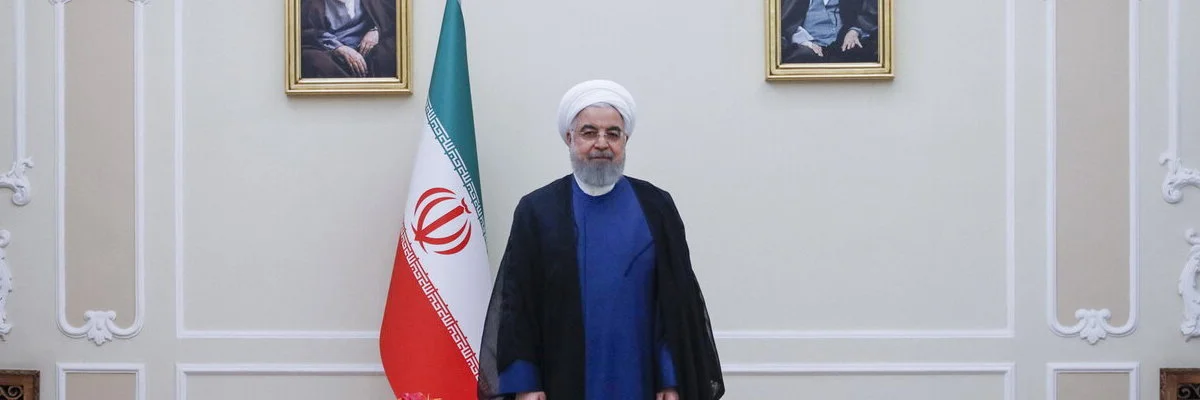
Iran's president warned Wednesday that the UN nuclear watchdog risks losing its independence after it adopted a resolution urging access to two sites alleged to have hosted past nuclear activities.
Iran's president warned Wednesday that the UN nuclear watchdog risks losing its independence after it adopted a resolution urging access to two sites alleged to have hosted past nuclear activities.
The Vienna-based International Atomic Energy Agency passed the resolution put forward by European states last week, calling on Iran to help clarify whether undeclared nuclear activities took place at the sites in the early 2000s.
But the Islamic republic says the IAEA's requests for access were based on allegations from its arch-enemy Israel and had no legal basis.
"The Zionist regime and the Americans are pressuring the agency to investigate something related to 20, 18 years ago. They are deceiving the agency, misleading it," President Hassan Rouhani said during a televised cabinet meeting.
"Our expectation is that... the agency should be able to keep its independence," he added, warning that Israel and the United States were tarnishing its reputation.
Rouhani also slammed the three European parties to the Iran nuclear deal—Britain, France and Germany—for putting forward the resolution and "sullying themselves for no reason" by cooperating with Israel and the US.
"We did not expect this from the Europeans," he said, while praising China and Russia—also parties to the nuclear deal—for standing against the resolution.
Iran agreed with the five countries plus the US in 2015 to limit its nuclear program in exchange for relief from sanctions, but the deal has been on life support ever since US President Donald Trump withdrew from it and unilaterally reimposed sanctions in 2018.
Tehran has criticized the Europeans for failing to provide it with the economic benefits set out in the accord and has rolled back some of its commitments in retaliation for the US pullout.
Rouhani said Iran would continue to work with the IAEA regarding "legal inspections.”
Photo: IRNA
UN Nuclear Watchdog Passes Resolution Criticizing Iran
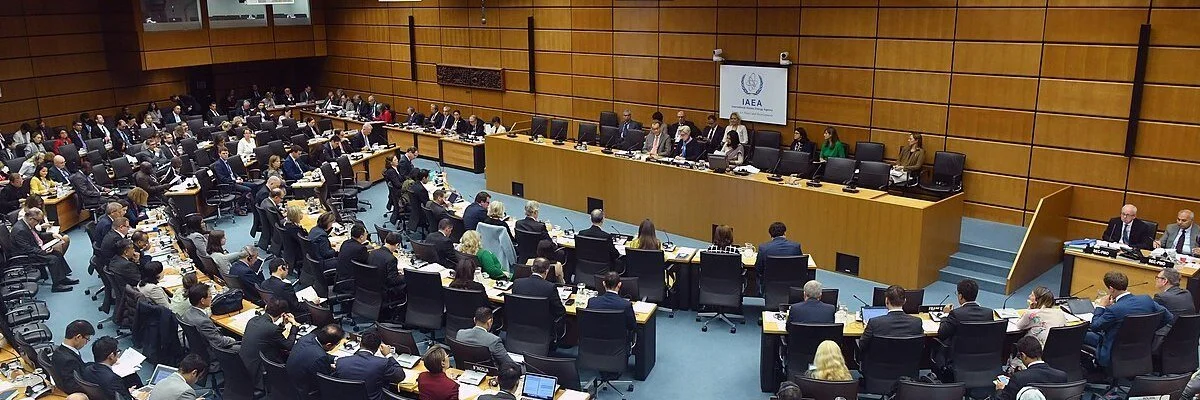
The board of governors at the UN's nuclear watchdog has passed a resolution critical of Iran, diplomatic sources said Friday, the first of its kind since 2012.
The board of governors at the UN's nuclear watchdog has passed a resolution critical of Iran, diplomatic sources said Friday, the first of its kind since 2012.
The resolution calls on Tehran to provide inspectors from the International Atomic Energy Agency (IAEA) with access to two sites in Iran in order to clarify whether undeclared nuclear activity took place there in the early 2000s.
Iran has been blocking access to the sites for months.
Earlier this week Iran warned that such a resolution would be "counterproductive" and that it would take "appropriate measures" in response.
Even though the sites in question are not thought to be directly relevant to Iran's current nuclear program, the agency says it needs to know if activities going back almost two decades have been properly declared and all materials accounted for.
Despite the row over the two sites, the IAEA says it still has the access it needs to inspect Iran's declared nuclear facilities, as the agency is mandated to do under the landmark deal between Iran and world powers reached in 2015.
However the latest row comes as that deal continues to unravel, with Iran continuing to breach the limits on nuclear activity in the accord in retaliation for the United States' withdrawal from it and reimposition of sanctions.
Photo: Wikicommons
Iran Still Abiding By Nuclear Deal Terms: IAEA
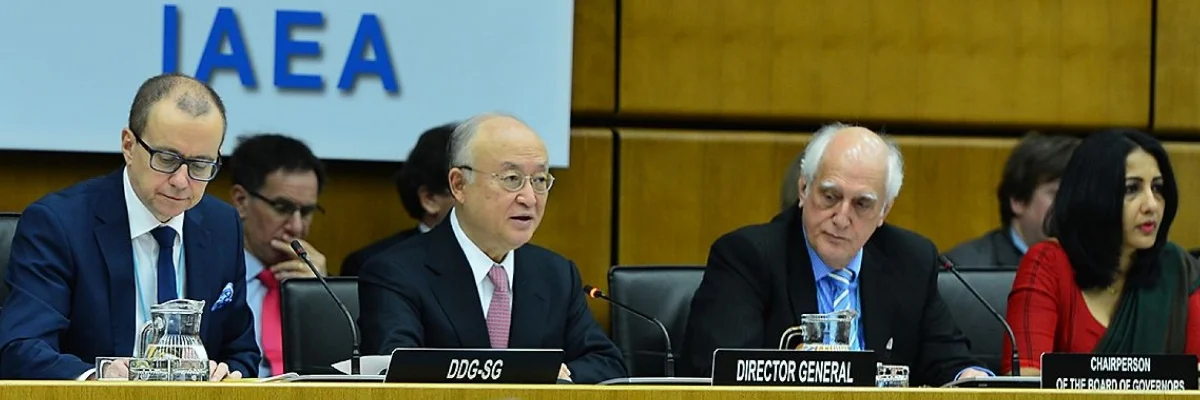
◢ Iran is sticking to the terms of its nuclear deal with world powers, a UN atomic watchdog report showed Thursday, despite ongoing uncertainty over its future. The report from the International Atomic Energy Agency showed that Iran was still complying with the key parameters of the Joint Comprehensive Plan of Action (JCPOA), agreed in 2015 by Iran and the US, China, Russia, Britain, France and Germany.
Iran is sticking to the terms of its nuclear deal with world powers, a UN atomic watchdog report showed Thursday, despite ongoing uncertainty over its future.
The report from the International Atomic Energy Agency showed that Iran was still complying with the key parameters of the Joint Comprehensive Plan of Action (JCPOA), agreed in 2015 by Iran and the US, China, Russia, Britain, France and Germany.
It comes despite the future of the deal being thrown into doubt after US President Donald Trump withdrew from the pact in May and re-imposed US
sanctions.
The latest report says the IAEA had had access "to all the sites and locations in Iran which it needed to visit."
The agency repeated language in its previous report emphasizing the importance of "timely and proactive cooperation in providing such access" on Iran's part.
A senior diplomat with knowledge of the issue said that the language was a way "to send a message to Iran to prevent potential problems" rather than being caused by any particular behavior on the part of the Iranians.
The report said Iran's stockpiles of low-enriched uranium and heavy water had both slightly increased since the last report in May, but were still under the limits agreed in the deal.
Iran's economy has been battered by the return of US sanctions following Trump's decision, undermining support for the deal within Iran.
'No avoiding' Further Talks
On Wednesday Iran's supreme leader Ayatollah Ali Khamenei said Tehran should be ready to "set aside" the JCPOA if it is no longer in the country's national interests.
However, Khamenei said talks should continue with European states, who have been trying to find a way to salvage the agreement.
Last week, the EU agreed an EUR 18 million package of assistance to Iran "for projects in support of sustainable economic and social development" in the Islamic Republic, the first tranche of a wider package worth EUR 50 million."
Most foreign firms have abandoned investment projects in Iran, and the next phase of renewed US sanctions in November will hit the crucial oil sector.
Speaking on Thursday while attending meetings of EU foreign and defense ministers, the EU's foreign policy chief Federica Mogherini said that despite disagreements with Iran over other issues, "we believe that addressing regional disagreements with Iran can be done in a more effective manner if we maintain the nuclear deal in place".
French Foreign Minister Jean-Yves Le Drian, also speaking in Vienna, said that in his opinion Iran was respecting "the fundamentals of the JCPOA."
However, he added that "Iran cannot avoid discussions, negotiations on three other major subjects that worry us," namely Iran's ballistic missile program, the long-term future of its nuclear program and its role in conflicts in the wider region.
In June, in a bid to mount pressure on the Europeans, Iran announced a plan to increase its uranium enrichment capacity with new centrifuges in the event that the agreement collapses, while still denying any desire to build a nuclear weapon.
Under the 2015 agreement, Iran can only enrich uranium to 3.67 percent—far below the roughly 90-percent level needed for nuclear weapons.
Photo Credit: IAEA