
Iran Suggests Up to 225 Killed in November Protests
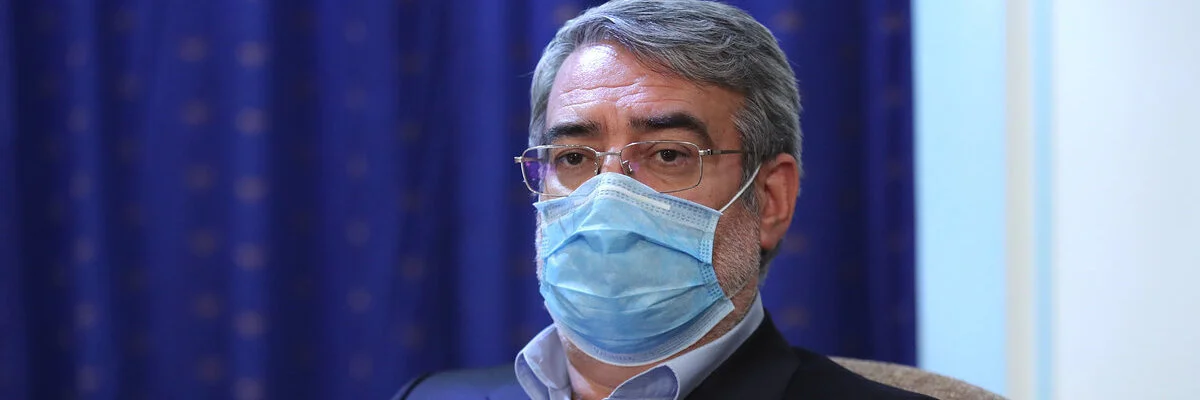
Iran's interior minister has suggested that up to 225 people were killed in November protests sparked by a petrol price hike, ISNA news agency reported on Sunday.
Iran's interior minister has suggested that up to 225 people were killed in November protests sparked by a petrol price hike, ISNA news agency reported on Sunday.
Officials in Iran have yet to issue an overall death toll for the unrest, while London-based human rights group Amnesty International has put the number at more than 300.
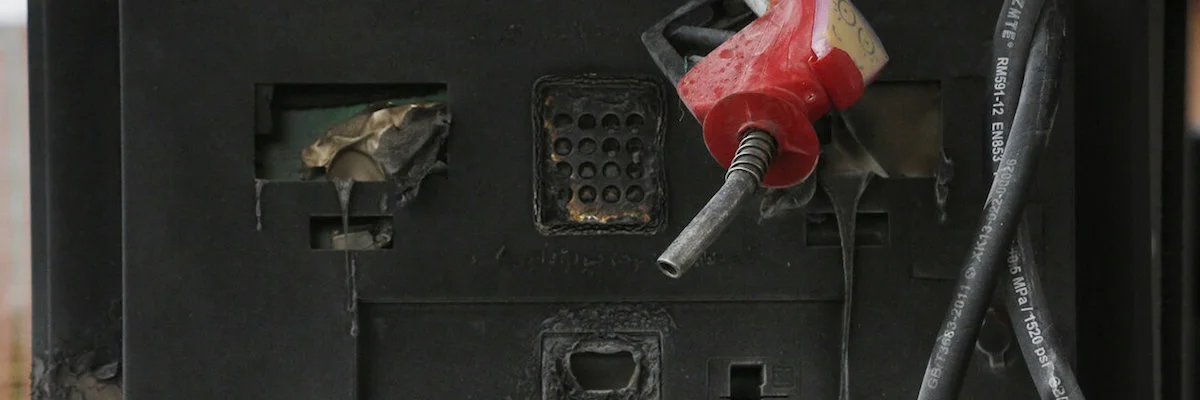
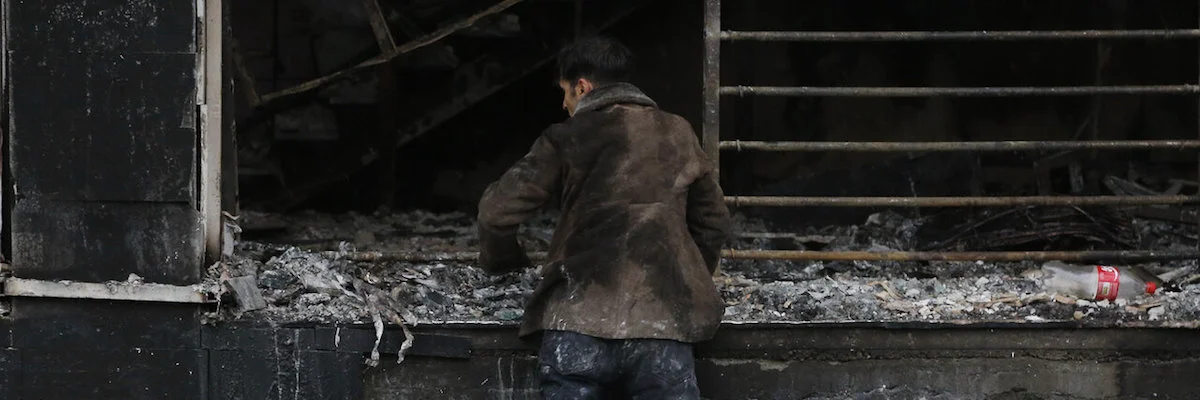
The protests erupted on November 15 in several cities and rapidly spread to at least 100 cities and towns, with petrol pumps torched, police stations attacked and shops looted, before being put down by security forces amid a near-total internet blackout.
Officials had repeatedly denied death tolls given by foreign media and human rights groups as "lies", and passed responsibility of reporting on it between different state bodies.
"Sad things happened. About 40 or 45 people, meaning around 20 percent of those killed, were shot with non-standard issue weapons and martyred," said Interior Minister Abdolreza Rahmani Fazli.
"No armed confrontation with the people happened... but when they attack a police station, they have to be confronted," ISNA quoted him as saying.
His breakdown indicated that, according to the government, between 200 and 225 people were killed in the violence.
According to Amnesty, at least 304 people were killed during the unrest.
A group of independent UN rights experts said in December that based on unconfirmed reports more than 400 people could have been killed in the crackdown.
The experts said at the time that at least 12 of those killed were children.
They pointed to reports and footage apparently showing that security forces "not only fired live ammunition at unarmed protesters, but also aimed at their heads and vital organs".
The United States has claimed that more than 1,000 were killed in the violence.
Iran has blamed the violence that broke out during the protests on "thugs" backed by its foes the United States, Israel and Saudi Arabia.
It has singled out exiled royalists and the People's Mujahedeen of Iran (MEK), an exiled former rebel group which it considers a "terrorist cult".
The minister said the petrol price hike had been "just an excuse" for creating chaos as foes had wanted a "civil war" in Iran.
He also defended the internet blackout, saying that the MEK, monarchists, and the Islamic State group were "giving military training through the internet.”
Photo: IRNA
Iran Poll Shows Majority Backs Right to Protest After Crackdown
◢ About three-quarters of Iranians surveyed in a government-backed poll said they supported the rights of protesters to take to the streets in last month’s countrywide demonstrations. The Iranian Students’ Polling Agency also found that 62% of respondents saw “dialogue with protesters” as the government’s best means of addressing popular discontent.
By Arsalan Shahla
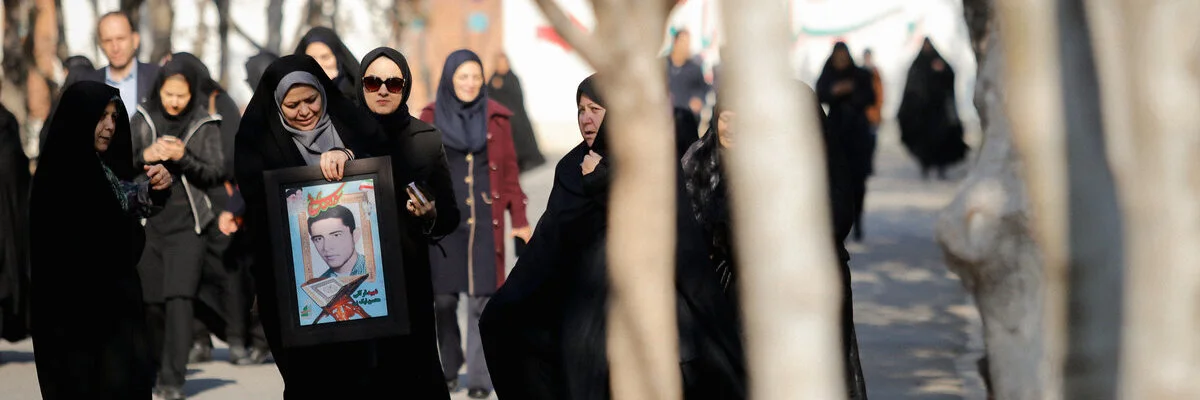
About three-quarters of Iranians surveyed in a government-backed poll said they supported the rights of protesters to take to the streets in last month’s countrywide demonstrations, a reformist newspaper reported.
The Iranian Students’ Polling Agency, which surveyed 2,027 people in the province of Tehran, also found that 62 percent of respondents saw “dialogue with protesters” as the government’s best means of addressing popular discontent, the daily Etemad newspaper said.
The expression of support, especially in a survey conducted by a state-backed polling organization, suggests that grievances still run deep in Iran. Triggered by a steep rise in gasoline prices, November’s protests met with a violent crackdown, becoming the bloodiest in Iran since the 1979 revolution.
The government so far hasn’t provided an official death toll for the unrest, but the London-based rights group Amnesty International estimates that some 304 people were killed by security forces.
The demonstrations spread to scores of cities and towns throughout the country and several of Tehran’s districts and its outskirts were swept up in the unrest.
Officials have consistently claimed that the majority of those who took part in demonstrations and clashed with police were “rioters” and “terrorists” acting on behalf of foreign governments. Hundreds of people remain in prison.
The most deadly violence took place in the oil-rich, Arab-speaking province of Khuzestan, which the ISPA survey doesn’t cover.
According to the survey, 71% of people said impartiality at Iran’s state broadcaster, which holds a monopoly over the country’s entire broadcasting services, was “low” or “very low” when it came to covering the protests. Some 90% of respondents said they used alternative news sources such as social media and satellite TV.
Photo: IRNA
Iran Unveils Budget of 'Resistance' Against US Sanctions
◢ Iran's President Rouhani announced Sunday what he called a "budget of resistance" to counter crippling US sanctions, weeks after a fuel price hike sparked nationwide protests that turned deadly. Rouhani said the aim was to reduce "hardships" as the Islamic Republic has suffered a sharp economic downturn.
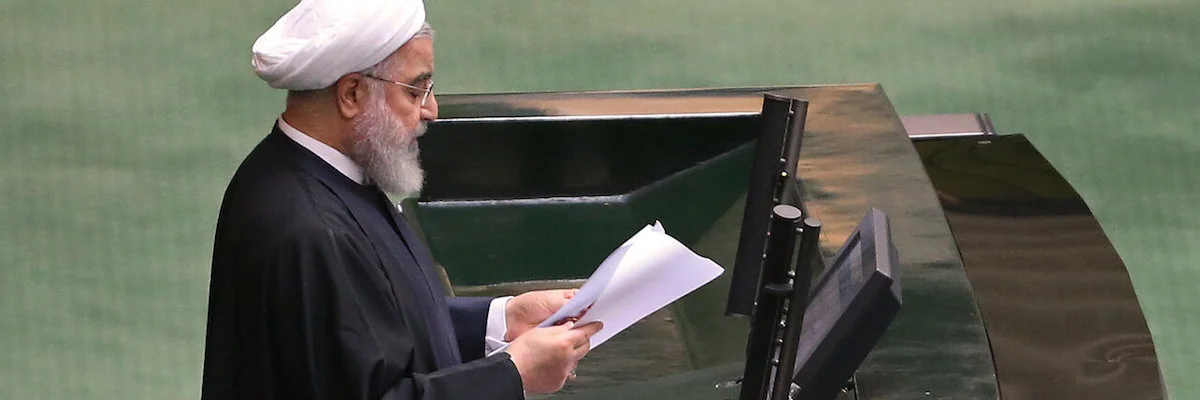
Iran's President Hassan Rouhani announced Sunday what he called a "budget of resistance" to counter crippling US sanctions, weeks after a fuel price hike sparked nationwide protests that turned deadly.
Rouhani said the aim was to reduce "hardships" as the Islamic republic has suffered a sharp economic downturn, with a plummeting currency sending inflation skyrocketing and hiking import prices.
The US sanctions imposed in May last year in a bitter dispute center on Iran's nuclear program include an embargo on the crucial oil sector whose sales Washington aims to reduce to zero in a campaign of "maximum pressure.”
Rouhani told parliament that the budget, which includes a 15 percent public sector wage hike, "is a budget of resistance and perseverance against sanctions".
It would "announce to the world that despite sanctions we will manage the country, especially in terms of oil," he added.
Rouhani said the 4,845 trillion rial ($36 billion at the current street rate) budget was devised to help Iran's people overcome difficulty.
It would benefit from a $5 billion "investment" from Russia which was still being finalised, he said, without giving further details.
"We know that under the situation of sanctions and pressure, people are in hardship. We know people's purchasing power has declined," said Rouhani.
"Our exports, our imports, the transfer of money, our foreign exchange encounter a lot of problems.
"We all know that we encounter problems in exporting oil. Yet at the same time, we endeavour to reduce the difficulty of people's livelihood."
Rouhani said that despite the US sanctions his government estimated that Iran's non-oil economy would "be positive" this year.
"Contrary to what the Americans thought, that with the pressure of sanctions our country's economy would encounter problems, thank God we have chosen the correct path... and we are moving forward," he said.
The budget announcement comes after fuel price hikes Iran announced in mid-November triggered deadly demonstrations across the country.
Officials in Iran have yet to give an overall death toll for the unrest in which petrol pumps and police stations were torched and shops looted.
London-based human rights group Amnesty International said at least 208 people were killed in the crackdown, but Iran has dismissed such figures as "utter lies".
'Reducing Hardships'
US President Donald Trump began imposing punitive measures in May 2018, after unilaterally withdrawing from an accord that gave Iran relief from sanctions in return for limits on its nuclear program.
The United States has continued to ramp up its sanctions this year as part of a stated campaign of "maximum pressure" against the Islamic republic.
Iran's economy has been battered, with the International Monetary Fund forecasting it will contract by 9.5 percent this year.
The sharp downturn has seen the rial plummet and inflation running at more than 40 percent.
In his speech, Rouhani only touched on a few areas of the draft budget for the financial year starting late March 2020, which must be scrutinised and voted on by parliament.
"All our efforts are geared towards reducing these hardships to some extent so it can be more tolerable," he told deputies.
"I deem it necessary here to tell the honourable representatives that the criteria of our budget is still based on maximum pressure and continuation of America's sanctions," he said.
"This does not mean that the government will not take other steps, but at the same time this is our criteria and based on this criteria we have devised and executed the budget."
The budget comes ahead of parliamentary elections in February.
Photo: IRNA
Iran Says Still Ready for Talks if US Lifts Sanctions
◢ Iran is willing to return to the negotiating table if the United States first drops sanctions, President Hassan Rouhani said Wednesday, after a fuel price hike sparked deadly violence ahead of elections. "If they are prepared to put aside the sanctions, we are ready to talk and negotiate, even at the level of heads of the 5+1 countries," Rouhani said in remarks aired live on state television.
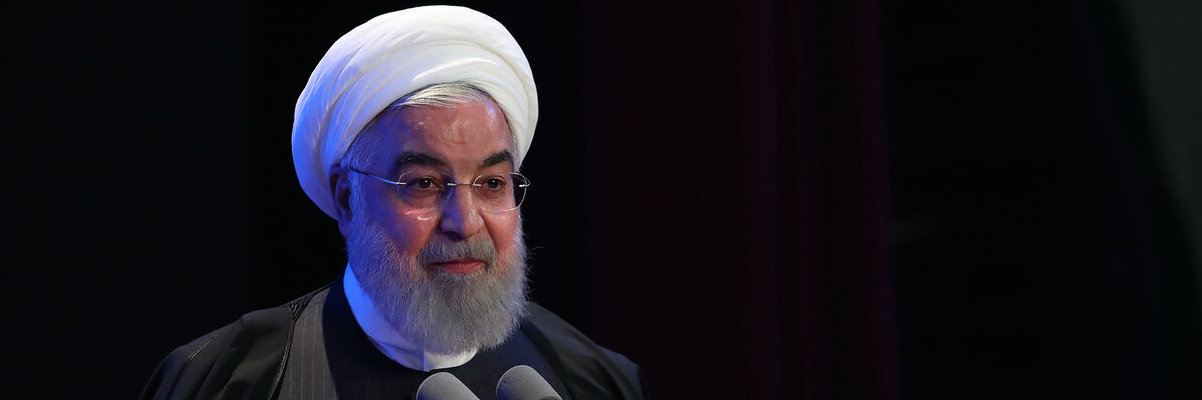
Iran is willing to return to the negotiating table if the United States first drops sanctions, President Hassan Rouhani said Wednesday, after a fuel price hike sparked deadly violence ahead of elections.
European countries have been pushing for talks with Iran to salvage a 2015 nuclear deal that has all but collapsed since the United States withdrew and reimposed sanctions last year.
Rouhani has long demanded the lifting of US sanctions for Iran's return to talks under the auspices of the so-called P5+1 that reached the deal—the five veto-wielding permanent members of the UN Security Council plus Germany.
His latest statement comes after a shock announcement in mid-November that the price of petrol was going up by as much as 200 percent triggered demonstrations across Iran that turned deadly.
The decision came at a sensitive time ahead of a February parliamentary election.
It is a rise many Iranians can ill afford in a country whose sanctions-hit economy is expected to contract by 9.5 percent this year.
"If they are prepared to put aside the sanctions, we are ready to talk and negotiate, even at the level of heads of the 5+1 countries," Rouhani said in remarks aired live on state television.
"We are under sanctions. This situation... is (because of) incitement by the Zionists and the region's reactionary," he said, referring to Iran's regional rivals Israel and Saudi Arabia.
His remarks came after France and Germany raised the possibility of triggering a mechanism in the deal that could lead to the reimposition of UN sanctions.
‘Cruel Act'
Rouhani described the sanctions as "a cruel act by the White House".
"We have no choice but to resist and persevere," he said. "At the same time, we have not closed the window for negotiations.
"I tell the nation of Iran that any time America is prepared to lift and put aside its wrong, cruel, unlawful, incorrect, terrorist sanctions, immediately the heads of 5+1 can meet and we have no problem."
The landmark 2015 deal gave Iran relief from economic sanctions in return for curbs on its nuclear programme.
It has been at risk of falling apart since US President Donald Trump unilaterally withdrew from it in May last year and reimposed sanctions.
Known formally as the Joint Comprehensive Plan of Action (JCPOA), it was agreed between Britain, China, France, Russia and the United States, plus Germany.
Twelve months on from the US pullout, Iran began reducing its commitments to the deal hoping to win concessions from those still party to the accord.
Its latest step back came last month, when engineers began feeding uranium hexafluoride gas into mothballed enrichment centrifuges at the underground Fordow plant south of Tehran.
In his remarks, Rouhani said his government strived to remain in the nuclear deal despite "pressures" that were on it.
‘Utter Lies'
The statement comes after angry demonstrations erupted against a shock decision to raise petrol prices on November 15.
London-based human rights group Amnesty International said on Monday that at least 208 people were killed in a crackdown on the demonstrations, citing what it called credible reports.
Iran's judiciary spokesman Gholamhossein Esmaili on Tuesday rejected as "utter lies" unofficial casualty figures given by "hostile groups" based abroad.
On Monday night, state television charged that foreign media had been "hyping up" the death toll.
It said "the security forces had no choice but to resort to authoritative and tough confrontation... and a number of rioters were killed".
The unrest started hours after it was announced that the price of petrol would rise from 10,000 rials per litre to 15,000 (12 US cents) for the first 60 litres, and to 30,000 rials for any extra fuel bought after that each month.
Rouhani has said proceeds would go to the most needy.
State news agency IRNA said the payments had since been made in three installments between November 18 and 23.
Photo: IRNA
Iran for First Time Acknowledges Protesters Were Shot Dead
◢ Iran for the first time acknowledged that its security forces shot and killed protesters last month during violent crackdowns. State television on Tuesday reported that “rioters” had been shot dead in several areas as they joined anti-government protests, including in Tehran, the capital, and Mahshahr in the country’s southwest.
By Yasna Haghdoost
Iran for the first time acknowledged that its security forces shot and killed protesters last month during one of the most violent crackdowns on dissent since the 1979 Islamic revolution.
State television on Tuesday reported that “rioters” had been shot dead in several areas as they joined anti-government protests, including in Tehran, the capital, and Mahshahr in the country’s southwest. The latter has a sizable Arab population, and the report claimed security forces clashed with a separatist group there.
The Islamic Revolutionary Guard Corps said on Saturday that it was investigating reports that its forces had targeted and shot protesters, the semi-official Iranian Labour News Agency reported, citing Brigadier General Mohammadreza Yazdi.
Separately, official figures showed 300 protesters remain in custody in Tehran. Judiciary spokesman Gholam Hossein Esmaeili said most of those arrested during the unrest had been freed, and that the demonstrations have died down.
Iran was rocked by protests in November after the government increased gasoline prices by as much as 300% and introduced rationing as the economy struggles under crippling U.S. sanctions meant to curtail Iranian influence in the Middle East and weaken its leadership.
The International Monetary Fund expects Iran’s recession to deepen this year, with gross domestic product contracting 9.5%.
The unrest soon took a broader anti-establishment turn and authorities responded with a swift crackdown, severing access to most of the internet in a move that made it difficult to track the demonstrations and the government response.
On Tuesday, President Donald Trump, who reimposed the sweeping penalties on Iran’s crucial oil exports, urged the world to take a closer look at the security operation. “The word is that thousands of people are being killed that are protesting. Not just small numbers,” he said in London, where he’s attending a NATO summit.
According to the London-based Amnesty International rights group at least 208 people have died. New York-based Human Rights Watch estimated that up to 7,000 people were arrested.
Iranian officials have put the death toll much lower.
Photo: IRNA
Iran Unrest Shows No Signs of Subsiding
◢ Three security personnel have been killed by "rioters" in Iran, the latest deaths in protests that showed no sign of subsiding Tuesday despite a wave of arrests and an internet shutdown. The United Nations expressed alarm on Tuesday "that the use of live ammunition has allegedly caused a significant number of deaths across the country.”
Three security personnel have been killed by "rioters" in Iran, the latest deaths in protests that showed no sign of subsiding Tuesday despite a wave of arrests and an internet shutdown.
The deaths take to at least five the number of people confirmed to have been killed in the nationwide demonstrations that erupted on Friday against a shock decision to impose petrol price hikes.
The situation on the streets remains unclear largely due to the government-imposed internet outage which has entered a third day.'
The United Nations expressed alarm on Tuesday "that the use of live ammunition has allegedly caused a significant number of deaths across the country.”
On Tuesday morning, AFP journalists saw two petrol stations in central Tehran gutted by fire and damage to other infrastructure including a police station and pedestrian overpass.
But they were prevented from filming as hundreds of riot police stood guard at entrances to major squares in the Iranian capital with armoured vehicles and water cannon.
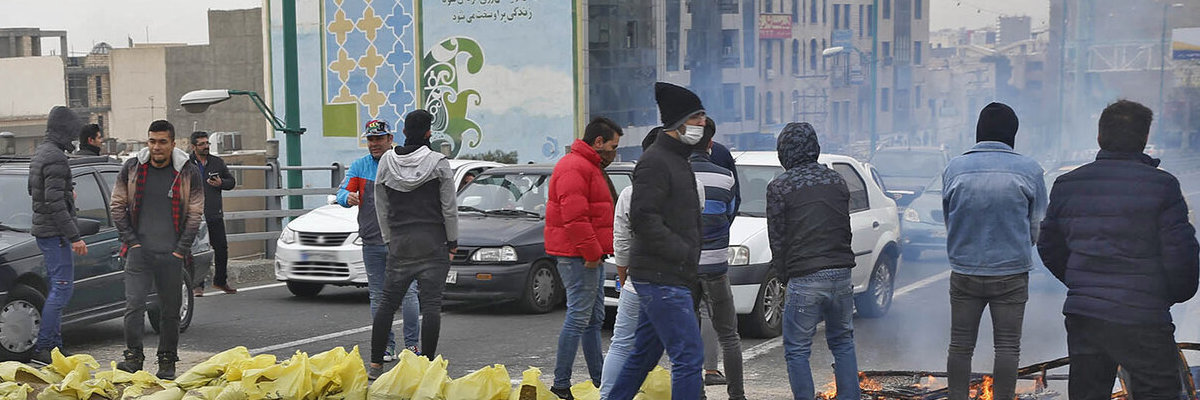
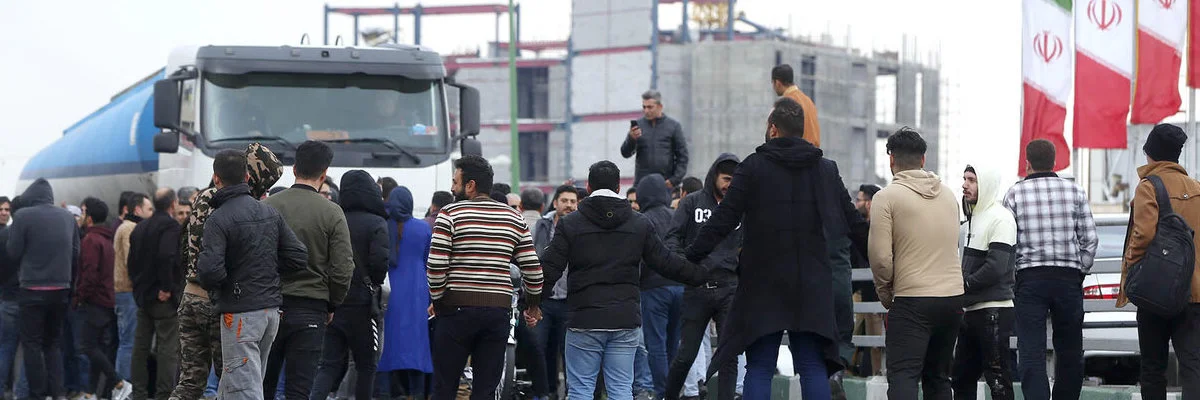
When the demonstrations broke out on Friday, drivers stopped their vehicles on major thoroughfares in Tehran to block traffic.
They soon turned violent and spread to more than 20 cities and towns across Iran, with banks, petrol stations and other public property set alight and shops looted.
The demonstrations erupted after it was announced the price of petrol would be raised by 50 percent for the first 60 litres purchased over a month and 200 percent for any extra fuel after that.
Iran's economy has been battered since May last year when President Donald Trump unilaterally withdrew the US from a 2015 nuclear agreement and reimposed crippling sanctions.
Ambush
Footage of masked young men clashing with security forces has been broadcast on state television, which rarely shows any signs of dissent.
In a new video aired Monday night, a man can be seen firing what appears to be an assault rifle as others hurl stones apparently at security forces in the western city of Andimeshk.
In the latest bloodshed, assailants wielding knives and machetes ambushed and killed three security personnel west of Tehran, the ISNA and Fars news agencies reported late Monday.
One of the three was identified as Morteza Ebrahimi, a commander of the Islamic Revolutionary Guard Corps and father of a newborn child, according to Fars.
The other two were Majid Sheikhi, 22, and Mostafa Rezaie, 33. Both served in the Basij militia, a volunteer force loyal to the establishment.
The overall toll—which also includes a civilian and policeman—is expected to rise, with unofficial reports saying that at least six other people have been killed.
It is the worst violence since at least 25 lives were lost in protests over economic hardship that started in Iran's second city Mashhad in December 2017 before spreading to other urban centers.
Internet Outage
In response to the violence, the authorities say they have arrested more than 200 people.
The internet outage has stemmed the flow of videos shared on social media of protests or associated acts of violence.
"National connectivity remains at just five percent of normal levels, leaving Iranians cut off from the world," tweeted Netblocks, a website that monitors global net shutdowns.
Iran announced the decision to impose petrol price hikes and rationing at midnight Thursday-Friday, saying the move was aimed at helping the needy with cash handouts.
The plan agreed by a council made up of the president, parliament speaker and judiciary chief comes at a sensitive time ahead of February parliamentary elections
It has received the public support of Iran's supreme leader Ayatollah Ali Khamenei.
President Hassan Rouhani has defended the price hike saying the proceeds will be used to make welfare payments to 60 million Iranians.
The United States has condemned Iran for using "lethal force".
Iran hit back at its arch-enemy on Monday, slamming US Secretary of State Mike Pompeo after he tweeted "the United States is with you" in response to the demonstrations.
Germany called for dialogue between the government and "legitimate" protesters while France reiterated its support for the right to peaceful demonstration and voiced regret over the deaths.
Judiciary spokesman Gholamhossein Esmaili warned on Tuesday that the authorities would deal firmly with those who endanger security and carry out arson attacks.
In televised remarks, he also called on citizens to inform on "seditionists" who have committed acts of violence.
Photo: IRNA
Iran 'Calmer' Despite More Riots Over Oil Price Hikes
◢ Iran said it still faces "riots" even though the situation was calmer Monday after days of violent protests sparked by a shock decision to hike petrol prices in the sanctions-hit country. Major roads have been blocked, banks torched and shops looted in the nationwide unrest that has left at least two dead—a civilian and a police.
By Amir Havasi
Iran said it still faces "riots" even though the situation was calmer Monday after days of violent protests sparked by a shock decision to hike petrol prices in the sanctions-hit country.
Major roads have been blocked, banks torched and shops looted in the nationwide unrest that has left at least two dead—a civilian and a policeman.
Footage of the violence showing masked young men on debris-strewn streets setting buildings ablaze has been aired on state television, which rarely shows any signs of dissent.
The Basij militia, whose commander Brigadier General Gholamreza Soleimani said "America's plot (had) failed", reported looting, according to semi-official news agency ISNA.
Demonstrations broke out on Friday after it was announced that the price of petrol would be raised by 50 percent for the first 60 litres and 200 percent for any extra fuel after that each month.
The authorities in the Islamic republic say they have arrested more than 200 people and restricted internet access.
Netblocks, a website that monitors net traffic, tweeted: "40 hours after #Iran implemented a near-total internet shutdown, connectivity to the outside world remains at just 5% of ordinary levels".
Government spokesman Ali Rabiei said the situation was "calmer" on Monday.
But there were still "some minor issues and tomorrow and the day after we won't have any issues with regard to riots", he told a news conference, without elaborating.
"There have been gatherings in some cities, in some provinces," he said.
Pressed to give figures on the number of casualties in the unrest, he said: "What I can tell you today is that gatherings are about 80 percent less than the previous day."
The situation on the streets has been unclear largely due to the internet outage that has stemmed the flow of videos shared on social media of protests or associated acts of violence.
Iran's economy has been battered since May last year when President Donald Trump unilaterally withdrew the US from a 2015 nuclear agreement and reimposed crippling sanctions.
'Lethal Force'
The US on Sunday condemned Iran for using "lethal force" against demonstrators.
"The United States supports the Iranian people in their peaceful protests against the regime that is supposed to lead them," said White House press secretary Stephanie Grisham.
Iran's foreign ministry slammed US Secretary of State Mike Pompeo after he tweeted "the United States is with you" Saturday in response to the demonstrations.
In a statement issued late Sunday, the ministry said it was reacting to Pompeo's "expression of support... for a group of rioters in some cities of Iran and condemned such support and interventionist remarks".
"The dignified people of Iran know well that such hypocritical remarks do not carry any honest sympathy," ministry spokesman Abbas Mousavi was quoted as saying.
"The acts of a rioter and saboteur group supported by the likes of (Pompeo) have no congruity with the conduct of the wise Iranian people."
The statement blasted Washington's "ill-intent" over its decision to reimpose sanctions on Tehran after withdrawing from the nuclear deal.
"It's curious that the sympathising is being done with the people who are under the pressure of America's economic terrorism," Mousavi said.
‘Welfare Payments’
For its part, Germany called Monday for dialogue between the government and "legitimate" protesters in Iran.
"It is legitimate and deserving of our respect when people courageously air their economic and political grievances, as is currently happening in Iran," said Chancellor Angela Merkel's spokeswoman Ulrike Demmer.
"The Iranian government should respond to the current protests with a willingness to engage in dialogue," she added.
Iran announced the decision to impose petrol price hikes and rationing at midnight Thursday-Friday, saying the move was aimed at helping the needy with cash handouts.
The plan agreed by a council made up of the president, parliament speaker and judiciary chief comes at a sensitive time ahead of February parliamentary elections.
It won support on Sunday from Iran's supreme leader Ayatollah Ali Khamenei.
Khamenei blamed "hooligans" for damaging property and said "all the centres of the world's wickedness against us have cheered" the street protests.
President Hassan Rouhani on Sunday defended the controversial petrol price hike whose proceeds are to be used to make welfare payments to 60 million Iranians.
Rouhani also announced the first payments would be made to 20 million people on Monday evening.
But he also warned that Iran could not allow "insecurity.”
"Protesting is the people's right, but protesting is different from rioting. We should not allow insecurity in the society," said Rouhani.
The intelligence ministry said at the weekend that it has identified those behind the unrest and that measures would be taken against them.
Forty people have already been arrested in the central city of Yazd, ISNA reported on Sunday.
Another 180 people were arrested in the past three days in the southern province of Khuzestan, state news agency IRNA said Monday.
Fars news agency, which is close to Iran's Revolutionary Guards, said it was unclear when the internet restrictions would be lifted, citing an informed government source.
Photo: IRNA
Rouhani Warns Protest-Hit Iran Cannot Allow 'Insecurity'
◢ Iran's supreme leader on Sunday threw his support behind a decision to hike petrol prices, a move that sparked nationwide unrest in which he said "some lost their lives.” The protests flared hours after it was announced that the price of petrol would be raised by 50 percent for the first 60 liters and by 300 percent for anything above that each month.
By Amir Havasi
IPresident Hassan Rouhani warned Sunday that riot-hit Iran could not allow "insecurity" after two days of unrest killed two people and saw authorities arrest dozens and restrict internet access.
"Protesting is the people's right, but protesting is different from rioting. We should not allow insecurity in the society," he said.
Rouhani defended the controversial petrol price hike that triggered the protests -- a project which the government says will finance social welfare spending amid a sharp economic downturn.
The unrest erupted on Friday, hours after it was announced the price of petrol would rise to 15,000 rials per litre (12 US cents) from 10,000 for the first 60 litres, and to 30,000 rials for any extra fuel bought after that each month.
It is a rise many consumers can ill afford, given that Iran's economy has been battered since May last year when President Donald Trump unilaterally withdrew the US from a 2015 nuclear agreement and reimposed crippling sanctions.
The rial has plummeted, inflation is running at more than 40 percent and the International Monetary Fund expects Iran's economy to contract by 9.5 percent this year and stagnate in 2020.
The petrol plan is expected to generate 300 trillion rials ($2.55 billion) per annum, from which the government says about 60 million needy would receive payments.
"For this... we should either increase taxes on the people, export more oil... or reduce subsidies and return the revenues to the people in need," said Rouhani.
‘Centers of Wickedness’
Iran's supreme leader Ayatollah Ali Khamenei said "some lost their lives" in the violence and blamed "hooligans".
"All the centres of the world's wickedness against us have cheered" the street protests, he said.
The latest death was a policeman shot in a clash with "rioters" in the western city of Kermanhshah.
Several people were also wounded and dozens arrested in the demonstrations that saw motorists block highways and others torch public property.
A 24-hour internet blackout appeared to have stemmed the flow of images shared on social media, with only officials' accounts and local news agencies still active.
Semi-official news agency ISNA said the protests had "mostly subsided" by Sunday evening, a report that could not be verified due to the online outage and limited news from agencies.
The petrol pricing plan was agreed by the High Council of Economic Coordination made up of the president, parliament speaker and judiciary chief.
Khamenei said that "I am not an expert and there are different opinions but I had said that if the heads of the three branches make a decision I will support it.
"Some people would definitely get upset over this decision... but damaging and setting fire (to property) is not something (normal) people would do. It is hooligans."
Following his speech, parliament cancelled a motion to reverse the price hike, semi-official news agency ISNA reported.
A lawmaker resigned Sunday to protest the decision which circumvented parliament, saying the presence of MPs was now "meaningless".
Internet Blocked
Access to the internet was restricted a day after the demonstrations broke out.
Netblocks, an internet monitoring website, tweeted Saturday that "Iran is now in the midst of a near-total national internet shutdown".
It came after a decision by the Supreme National Security Council, according to ISNA.
"Upon the decision of the Security Council of Iran and communicated to internet operators, access to internet has been limited as of last night and for 24 hours," it said, quoting an informed source at the information and communications technology ministry.
Some of the worst violence seen so far was in the central city of Sirjan, where acting governor Mohammad Mahmoudabadi said a civilian was killed and fuel stations were among the public property attacked and damaged.
In Kermanshah, a policeman died Sunday, a day after a "confrontation with a number of rioters and thugs," the provincial police chief told IRNA.
In Tehran on Saturday, protesters were seen burning tyres on a street and shouting slogans.
Similar scenes were witnessed in the cities of Shiraz, Isfahan and Bushehr, where security forces fired tear gas and water cannon at demonstrators.
Forty "disruptors" were arrested in the central city of Yazd after clashing with police, the province's public prosecutor told ISNA on Sunday. Most were not locals, he added.
Police said security forces would "not hesitate to confront those disrupting peace and security and will identify the ringleaders and field forces and confront them".
The intelligence ministry said those behind the unrest "have been identified" and that measures would be taken against them, according to ISNA.
Photo: IRNA