

Japan Funds Development of Tuna Fisheries, Environmental Projects in Iran
Japan will fund UN initiatives to support fisheries in Chabahar, on Iran’s southeastern coast, and help foster sustainable livelihoods for locals who live near Lake Urmia in the country’s northwest.
Last month the Embassy of Japan in Tehran hosted a ceremony where two memorandums of understanding were signed new grants to support projects carried out by the United Nations Industrial Development Organization (UNIDO) and the United Nations Development Programme (UNDP) in Iran. The UN initiatives will support fisheries in Chabahar, on Iran’s southeastern coast, and help foster sustainable livelihoods for locals who live near Lake Urmia in the country’s northwest.
Attending the event were Kazutoshi Aikawa, the Ambassador of Japan; Maryam Javan Shahraki, UNIDO Representative in Iran; Claudio Providas, the UNDP Resident Representative in the Islamic Republic; Nabiollah Khoun-Mirzaei, Head of Iran Fisheries Organization; Ahmadreza Lahijanzadeh, Deputy for Marine and Wetlands at the Department of Environment; and representatives from Iran’s ministries of Agriculture and Foreign Affairs.
In his opening speech, the Japanese ambassador affirmed his country’s willingness to continue the expansion of its friendly relations with Iran.
“The government of Japan has decided to grant ¥676 million (about $6 million) to the Islamic Republic of Iran for the implementation of the two important projects,” Aikawa said.
The MoU signed with UNIDO will begin the third phase of the “Project for Promoting Inclusive and Sustainable Development of the Yellowfin Tuna Value Chain in Chabahar,” which started in 2017.
Javan Shahraki said that UNIDO and Japan have enjoyed a strong connection for decades and that their partnership encompasses all aspects of industrial development, from reducing poverty and promoting security in crisis-affected areas to trade, technology promotion and facilitating investment.
“Today we celebrate the signing ceremony of a Grant Aid ‘Project for Promoting Inclusive and Sustainable Development of the Yellowfin Tuna Value Chain’ in the strategic port of Chabahar in Sistan and Baluchestan Province,” Javan Shahraki said. “Building on earlier interventions to build the capacity of the tuna value chain in Chabahar, the new project will support the ability of local fishermen to access new markets while at the same time enhancing the sustainability of the fishery industry in Iran.”
Adding high-quality tuna to Iran’s list of regional and global exports is one of the main achievements of the UNIDO project in Chabahar, Javan Shahraki said. The project is also upgrading Chabahar Veterinary Laboratory and Iran Veterinary Lab with diagnostic kits and equipment; establishing sustainable links between private-sector companies in Iran and Japan; organizing study tours in Japan for Iranian fishermen, policymakers and laboratory experts; conducting workshops in Iran and Japan on marine cage culture, stock enhancement and after-catch management processes, on-site fishing and info-sharing for Iranian fishermen in Japan.
Javan Shahraki told Bourse & Bazaar that UNIDO has prioritised development activities in Iran, including strengthening the value chain of local and indigenous products.
“We are happy to have received Japan’s $3.5 million financial assistance for the project at hand,” Javan Shahraki said. “Chabahar’s yellowfin tuna has a competitive edge to it in the international markets compared with other tuna fish. Today marks the beginning of the third phase of our cooperation with Japan in this project. During the first phase, we studied the region’s ecology to see which species need to be focused on. Based on the research carried out by UNIDO as well as Japanese experts, Iran’s tuna fish was deemed one of extraordinary size, which in turn can generate a high value added. Yet, if harvest methods and ways of environment preservation are not improved, the fish could either fall prey to the danger of extinction or shrink in size. Right now, our tuna fish in Chabahar is three times as big as that of Japan.”
Using the government’s grant aid, UNIDO has trained local fishermen on best practices for harvesting and preserving yield quality during post-harvest procedures, and Chabahar’s quality control laboratories now have the equipment required for quality preservation.
Khoun-Mirzaei told Bourse and Bazaar that Iran has a huge capacity to produce tuna, but harvest and after-catch preservation methods are up to speed with the latest techniques used elsewhere in the world.
“This is why the collaboration between the UNIDO office in Tehran and the Japanese government is so significant, since it will upgrade our harvest knowledge, fishing equipment, quality-control methods and ecosystem preservation, and help our high-quality tuna find its way into international markets while enjoying higher value added,” Khoun-Mirzaei said.
Isa Golshahi, General Director of Iran Fisheries Organization’s Seafood Quality Improvement, Processing and Marketing Promotion Department, told Bourse and Bazaar that this project will ensure that generating higher values from the yellowfin tuna is more easily attainable.
“The fish indigenous to our waters has a high quality,” Golshahi said. “Through the cooperation with UNIDO and Japan, we can turn the tuna currently sold at prices lower than $2 per kilogram into products worth over $8 or in some cases $20 per kilogram.”
Japan Funds UNDP’s Lake Urmia Project
The second document signed during Wednesday’s ceremony marked the start of a new phase of collaboration between UNDP and the Japanese government on the “Project for Promoting Environmental Management and Sustainable Livelihoods in Lake Urmia and Other Wetlands.” Japan has provided a grant aid worth approximately US$3 million to continue work on Lake Urmia.
“The project has an environmental component but also has a focus on livelihoods,” Providas told Bourse & Bazaar. “To preserve the environment, you need to look at livelihoods as well. The important component is economic diversification and creating jobs. Can we improve water usage for farming but reduce the reliance of farming activities of around 250 villages around Lake Urmia on this endangered water body? This is what we are working on.”
Lahijanzadeh said that the Iranian government has so far spent around $1 billion on saving Lake Urmia and has been granted funds and technical assistance from Japan over several years.
“We hope to be able to transfer the knowledge and experience we have had with Japanese experts and UNDP assistance to Parishan Lake in Fars Province and Shadegan Wetlands in the southern Khuzestan Province as well,” Lahijanzadeh said.
In his speech, the Japanese ambassador said that in line with efforts to revive Lake Urmia and prevent it from drying up, the government of Japan has supported UNDP’s project for the lake’s restoration through sustainable agricultural practices and biodiversity conservation since 2014.
“In this new project, the knowledge and experiences gathered through all these years will be transferred to the remaining spots of the Lake Urmia basin, and it will also be disseminated to two other wetlands in Iran, which are facing similar problems,” Aikawa said.
Photo: IRNA

Air Pollution Shuts Schools in Iran's Capital
◢ Schools in Tehran were ordered to be closed on Wednesday after the Iranian capital was cloaked in dangerously high levels of air pollution, authorities said. Average concentrations of hazardous airborne particles hit 133 micrograms per cubic meter in the city and were as high as 150 for 10 districts.
Schools in Tehran were ordered to be closed on Wednesday after the Iranian capital was cloaked in dangerously high levels of air pollution, authorities said.
Governor Anoushiravan Mohseni-Bandpey said kindergartens, preschools and primary schools would be shut in the city and the counties of Gharchak, Pishva and Varamin.
"The air quality index for the city of Tehran still has not passed the unhealthy status for sensitive groups," he was quoted as saying by state news agency IRNA.
Average concentrations of hazardous airborne particles hit 133 micrograms per cubic meter in the city and were as high as 150 for 10 districts, he said.
That is far above the World Health Organization's recommended maximum of 25 micrograms per cubic meter on average over a 24-hour period.
Many people were seen wearing face masks to avoid fumes as they waited for buses on the sides of traffic-choked streets of southern Tehran during morning rush-hour.
A layer of thick smog covered Tehran on Tuesday, but it appeared to dissipate in northern areas on Wednesday morning with fewer school buses on the roads.
Air pollution was the cause of nearly 30,000 deaths per year in Iranian cities, IRNA reported earlier this year, citing a health ministry official.
Each winter, Iran's sprawling capital suffers some of the worst pollution in the world through thermal inversion—a phenomenon that traps hazardous air over the city.
According to a World Bank report last year, most of the pollution in the city of eight million inhabitants is caused by heavy duty vehicles, motorbikes, refineries and power plants.
Photo: IRNA
Iran Sees 'Revival' of Imperilled Lake Urmia
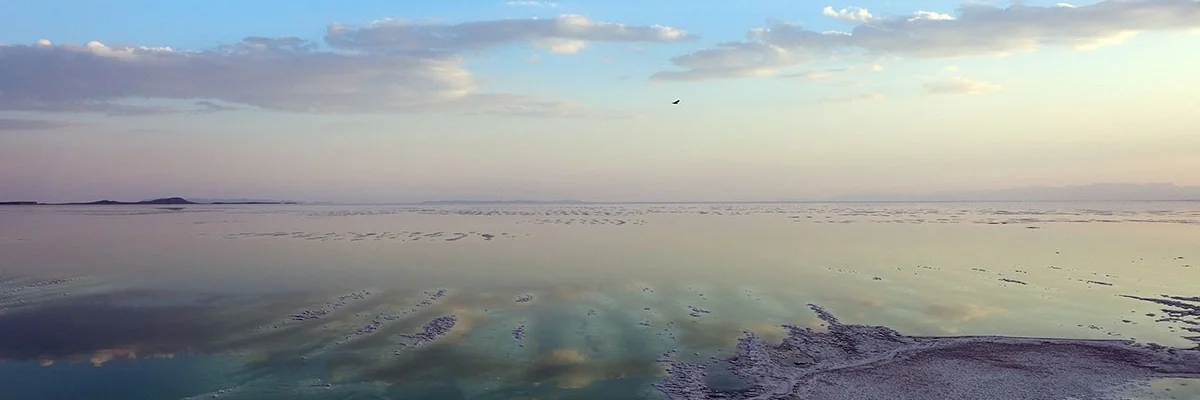
◢ It is one of the worst ecological disasters of recent decades, but the shrinking of Iran's great Lake Urmia finally appears to be stabilizing and officials see the start of a revival. A rusty cargo ship and a row of colorful pedal boats lying untouched on the bone-dry basin are a sign of the devastating loss of water in what was once the largest lake in the Middle East.
It is one of the worst ecological disasters of recent decades, but the shrinking of Iran's great Lake Urmia finally appears to be stabilizing and officials see the start of a revival.
A rusty cargo ship and a row of colorful pedal boats lying untouched on the bone-dry basin are a sign of the devastating loss of water in what was once the largest lake in the Middle East.
Situated in the mountains of northwest Iran, Lake Urmia is fed by 13 rivers and designated as a site of international importance under the UN Convention on Wetlands that was signed in the Iranian city of Ramsar in 1971.
The lake has been shrinking since 1995, according to the UN Environment Program, due to a combination of prolonged drought, over-farming and dams.
By August 2011 the lake's surface was 2,366 square kilometres (914 square miles) and shrank drastically to just 700 km2 in 2013, according to the United Nations.
The catastrophe has threatened the habitat of shrimp, flamingos, deers and wild sheep and caused salt storms that pollute nearby cities and farms.
That finally triggered a coordinated effort to save the lake in 2013—with a joint program between Iran and the UN Development Program funded by the Japanese government.
The project became a priority for the incoming administration of President Hassan Rouhani.
"One of my promises was to revive Urmia lake, and I am still committed to that promise," Rouhani said during a recent visit to the region.
Some positive results are finally emerging and the lake's surface area reached 2,300 km2 last year, according to UN Development Program figures.
"This is the beginning of the lake's revival," said Abolfazl Abesht, who heads the wetlands unit of Iran's environment department.
He warned it would take "decades" to return to the 5,000 km2 it once covered, but at least "now the trend has stopped".
Sustainable Farming
Rising temperatures and reduced rainfall have been a major factor in the lake's decline, experts say.
So, too, was the construction of a causeway in 2008 to shorten driving times between Urmia and the nearby city of Tabriz that cut the lake in two.
But people were also a major part of the problem due to a rapid rise in the population and farming around the lake, which provides a livelihood to some six million people.
The rejuvenation effort therefore focused on redirecting rivers to irrigate farmland, thus avoiding use of water from the lake, and the promotion of more sustainable farming methods.
“Almost 85 percent of the water is used for agriculture, and we are trying to help farmers reduce usage through cheap and effective techniques," said Abesht.
Measures such as using natural instead of chemical fertilizers, or leveling the land to avoid run-off, have shown major improvements for local farmer Afshin Medadi.
The 47-year-old had to invest in new equipment, but says "things are more cost-effective now", with his farm using a tenth of the water.
There has also been a noticeable reduction in the salt and dust pollution whipped up from the desiccated lake floor during storms, he added.
Others have launched their own green initiatives.
One group of 20 women set up a collective to raise awareness among lakeside communities about water waste, and encourage the production of handicrafts to boost sustainable employment.
One of the organisers, 39-year-old Kobra Asghari from the village of Gharehgozlou, hopes industries such as carpet and doll-making can gradually overtake traditional farming.
They are also encouraging women to plant less thirsty crops such as saffron and olives.
“We gradually managed to encourage the men to do the same," she said.
"People are paying more attention to their environment and the dying ecosystem."
Photo Credit: IRNA
Iran Risks Losing 70% of Farmlands: Environment Chief
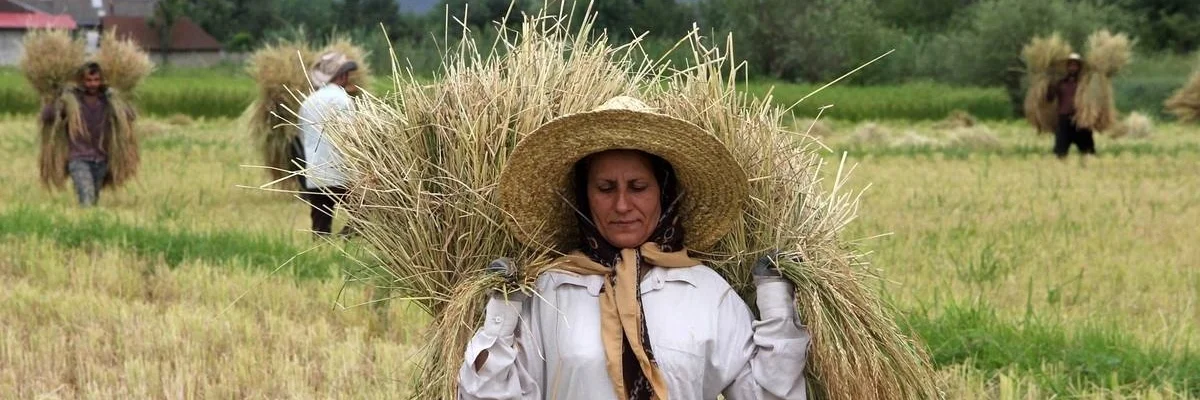
◢ Iran faces losing 70 percent of its farmlands if urgent action is not taken to overcome a litany of climate woes, the country's environment chief Isa Kalantari told AFP. The Islamic Republic is grappling not only with air, water and soil pollution, as well as drought and desertification, but also with the effect of years of crippling US and international sanctions.
Iran faces losing 70 percent of its farmlands if urgent action is not taken to overcome a litany of climate woes, the country's environment chief Isa Kalantari told AFP.
The Islamic Republic is grappling not only with air, water and soil pollution, as well as drought and desertification, but also with the effect of years of crippling US and international sanctions.
Adding to the dire situation, "we currently use about 100 percent of our renewable water ... according to global standards this figure should not be higher than 40 percent," said Kalantari, vice president and head of Iran's Environment Department, in an exclusive interview in Tehran.
"The excessive consumption of water, especially from groundwater is a threat and could have terrible social consequences," he warned.
If the situation is not brought under control, then "we would lose about 70 percent of our cultivated land in a maximum of 20 to 30 years."
"The south of Alborz and east of Zagros, if we don't take swift action, will become unusable for agriculture," Kalantari added.
Alborz and Zagros are mountain ranges in the north and west of Iran respectively. The majority of Iran's mostly arid land mass and population centres are located to the south and east of them.
According to the UN's Food and Agriculture Organization, Iran, a country of some 80 million people, predominantly relies on agriculture.
Past Errors
Kalantari said there had been many years of mismanagement of water resources, and mistaken decisions forced by political and economic concerns such as the US sanctions and climate change.
“We basically thought that environment was not that important," he said.
Other countries had also failed to address climate issues introducing policy errors in the 1960s and 1970s.
"We made these mistakes in the 1980s. Then we came to realize that in places that we'd built dams, we shouldn't have built any, and in places where we should have built dams, we didn't build any," he said.
The pressure on the country's resources has also been exacerbated by population growth, with Iranians encouraged to have large families in the years following its 1979 Islamic revolution.
“In the first decade after the revolution, we encountered a high population growth rate, more than three percent annually," Kalantari said.
This policy was taken "without paying attention to utilising and improving" the use of resources, he said.
He also highlighted the effects of the Iran-Iraq war (1980-1988), when the country was isolated and could not concern itself with sustainable development as it had a burgeoning population to feed.
"Iran could not, and cannot, bear the pressure that this (population growth) exerted on the consumption of water, for the supply of food and for agriculture," he added.
The strain has shown recently with Iranians taking to the streets in December and January this year, protesting over economic conditions.
A former agriculture minister in the 1990s, Kalantari said Iran could not be self-sufficient in food production for its estimated 80 million people "if we want sustainable policies".
Even with state-of-the-art technology, Iran could only be completely self-sufficient to supply food for 50 to 55 million people.
Sanctions Hit
He also blamed some of the country's air pollution woes on biting sanctions.
"Locally-produced car engines are not up to standard, so when sanctions are imposed, car manufacturers such as Peugeot and Renault depart," said Kalantari.
The two carmakers suspended operations in Iran after Washington withdrew from a ground-breaking nuclear deal earlier this year and reimposed sanctions, as European leaders have so far failed to gain any exemptions for their firms.
A lack of new cars prompts Iranians to "use domestically-made engines" which do not adhere to modern environmental standards.
The resulting pollution frequently hangs heavily over the capital Tehran, with smog often rendering the mountains to the north invisible, while there have been growing cases of people hospitalized with respiratory problems.
Photo Credit: IRNA

Iran Environment Head Seeks Answers on Detained Activists
◢ Iran's vice-president in charge of environmental affairs has called for an explanation on the fate of more than a dozen activists arrested this year, state news agency IRNA reported Sunday. “We are not asking for their release or for their execution, we just want their fate to be clarified. This is part of their citizenship rights," Isa Kalantari, who heads Iran's environment department, told IRNA.
Iran's vice-president in charge of environmental affairs has called for an explanation on the fate of more than a dozen activists arrested this year, state news agency IRNA reported Sunday.
"We are not asking for their release or for their execution, we just want their fate to be clarified. This is part of their citizenship rights," Isa Kalantari, who heads Iran's environment department, told IRNA.
"This was supposed to have happened by the end of this summer but their trial hasn't even started yet," he added.
Iran has arrested at least a dozen environmental activists since January on charges of spying for foreign intelligence agencies, but few details have been released.
One of them, Kavous Seyed Emami, a 63-year-old professor and renowned environmentalist, allegedly committed suicide in prison in February, a fortnight after his arrest.
The judiciary has prepared indictments against five of the detainees, according to state media, but a court date has yet to be set.
"We have cited the intelligence minister that these activists are not spies, and that the ministry is the sole official authority on whether someone is a spy," Kalantari said.
In May, Mahmoud Sadeghi, a reformist member of parliament, also tweeted that the intelligence ministry had not found any proof that the environmentalists were spies.
Iran's judiciary, however, considers itself as the only authority on settling the question of spying and has warned other bodies not to interfere.
Photo Credit: UNDP
Conflict Hinders Iran Efforts to Counter Dust Storms
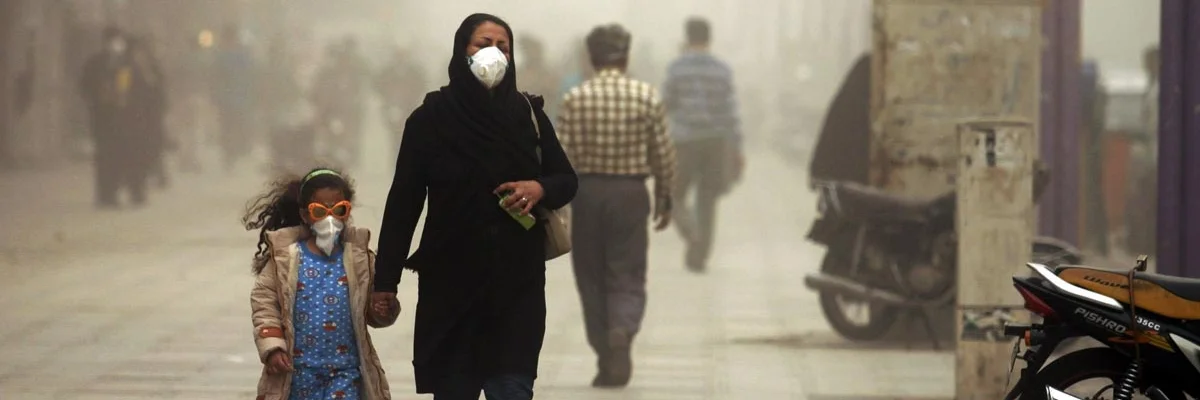
◢ Iran's efforts to counter worsening dust storms have been hampered by conflict in the region, the deputy head of the environment department said on Saturday. "We signed agreements with the Iraqi and Syrian governments in 2010 and 2011 to help them counter the source of dust storms," Masoud Tajrishi told a news conference in Tehran.
Iran's efforts to counter worsening dust storms have been hampered by conflict in the region, the deputy head of the environment department said on Saturday.
"We signed agreements with the Iraqi and Syrian governments in 2010 and 2011 to help them counter the source of dust storms," Masoud Tajrishi told a news conference in Tehran.
"But with the events that have happened in those two countries, the environment has lost all priority, and it is still not a priority for them," he added.
Some 30 million hectares (74 million acres) of Iran suffer devastating dust storms every year, many blowing in from Iraq, Saudi Arabia and Syria.
Hundreds are hospitalized with respiratory problems and border towns have some of the worst air pollution in the world.
The outbreak of civil war in Syria in 2011 and the subsequent spread of the Islamic State group into Iraq were a major setback for efforts to work against dust storms.
Tajrishi said a new mapping system was being implemented to track the origins and paths of the storms so they could be better understood and countered.
But he added: "Iran is situated within a belt of deserts, and with the decrease in rains due to climate change, dust storms are here to stay for quite some time," Tajrishi said.
Photo Credit: IRNA
Photo Credit: IRNA

Iran Government Says No Evidence Against Detained Environmentalists
◢ Iran's environment chief said Tuesday that a government committee had concluded there was no evidence against wildlife activists rounded up on spying charges in recent months. Isa Kalantari, head of the government's department of environment, told state news agency IRNA that the conclusion had been reached by a special four-man committee.
Iran's environment chief said Tuesday that a government committee had concluded there was no evidence against wildlife activists rounded up on spying charges in recent months.
Isa Kalantari, head of the government's department of environment, told state news agency IRNA that the conclusion had been reached by a special four-man committee, including the ministers of justice, interior and intelligence, and the president's legal deputy.
"This four-member group has come to the conclusion that these detained individuals are in custody without having done anything and naturally they must be freed soon," Kalantari said.
Iran has multiple, overlapping intelligence agencies—the most prominent are linked to the government, judiciary and Revolutionary Guards—that often act independently of each other, so the committee's assessment may have no effect.
The government's intelligence ministry has previously stated there was no evidence against the arrested environmentalists.
"There is no document indicating the truth of the accusations leveled against these detained individuals," Kalantari said.
Little detail has been given about the detentions, which began with the arrest of eight members of the Persian Wildlife Heritage Organisation in January.
But the cases drew international attention after the renowned head of the organization, 63-year-old Kavous Seyed Emami, allegedly committed suicide in prison a fortnight after his arrest.
Kalantari's deputy at the department of environment, Kaveh Madani, was also forced to flee the country last month after pressure from hardliners about his private life.
There have been reports of several more environmentalists arrested in the south of the country, although only three have been officially confirmed—members of the Association for the Protection of Nature in Lavardin.
Iran faces severe environmental challenges, particularly linked to a prolonged drought and extreme air pollution.
Photo Credit:

Iran Lawmakers Slam Crackdown on Environmentalists
◢ An Iranian lawmaker on Tuesday criticized a recent crackdown on environmental activists and officials, saying it risked "bad consequences for the country." Parliament's environmental and transparency committees held a closed-door session in which they discussed the arrest on espionage charges of several NGO workers earlier this year.
An Iranian lawmaker on Tuesday criticized a recent crackdown on environmental activists and officials, saying it risked "bad consequences for the country", the semi-official ISNA news agency reported.
Parliament's environmental and transparency committees held a closed-door session in which they discussed the arrest on espionage charges of several NGO workers earlier this year. One detainee later died in custody.
"Some... have accused these individuals of spying, but the expert views of the Intelligence Ministry are almost exactly contrary to them," said Mohammad Reza Tabesh, head of parliament's environment committee, according to ISNA.
He was relaying information provided by the head of the government's Environment Protection Agency (EPA), Isa Kalantari.
Iran has multiple and competing intelligence agencies. One is under the moderate government of President Hassan Rouhani and another under the Revolutionary Guards, who have opposed his efforts to rebuild ties with the West.
The lawmakers discussed Kaveh Madani, a young water expert who took leave from his post at London's Imperial College last year to become deputy head of the EPA.
It was revealed on Monday that Madani, who had faced weeks of pressure from hardline opponents of the government, had abruptly resigned while traveling outside the country.
Kalantari told the lawmakers that Madani had wished to carry on his work "despite the pressures exerted," according to the account given by Tabesh. "But he resigned because his parents were not happy."
Madani released a cryptic message on Twitter on Tuesday. "Yes, the accused has escaped from a land in which online ignorance has rejected science, knowledge and expertise," he wrote.
"They have realized that finding a guilty person, enemy and spy is much easier than accountability and participation in resolving problems." Madani's appointment had been seen as a test of Rouhani's efforts to attract expat Iranians back home.
But Madani he was briefly detained in February in mysterious circumstances, then vilified by hardliners after photos were released purporting to show him dancing and drinking on holiday.
Among the environmentalists arrested in recent months were seven members of the Persian Wildlife Heritage Organisation.
Its head, renowned environmentalist Kaveh Seyed Emami, died in Tehran's Evin prison in February after being accused of spying for the United States and Israel.
Iranian authorities said he committed suicide in his cell, but this has been disputed by the family.
Iran is suffering from a range of extreme environmental problems, including world-beating levels of air pollution and years of drought that have devastated swathes of its agricultural land.
Photo Credit: Mehr

Iran Environmentalist, Symbol of Expat Return, Quits
◢ A top Iranian environment official, who symbolized government efforts to encourage expat Iranians to return home, has quit just seven months into his job, sources said Monday. The resignation of Kaveh Madani, who was a young professor at London's Imperial College before returning to Iran in September 2017, followed reports of mounting conservative pressure against him.
A top Iranian environment official, who symbolized government efforts to encourage expat Iranians to return home, has quit just seven months into his job, sources said Monday.
The resignation of Kaveh Madani, who was a young professor at London's Imperial College before returning to Iran in September 2017, followed reports of mounting conservative pressure against him.
The government of President Hassan Rouhani, which has called on Iranians abroad to come home and help develop the country, appointed the water conservation expert as deputy head of the country's environment department.
But in recent weeks, conservative outlets published photos purporting to show him drinking and dancing on holiday. Hardliners called him "debauched" and demanded he be sacked.
Shortly after arriving in Iran last year, Madani had told the English-language Tehran Times that many Iranians abroad were "waiting and watching closely to see what's going to happen".
"If I succeed, we might see more people coming back to help the government," he said. But on Monday a colleague of Madani confirmed reports that he had resigned while out of the country.
In February, Madani was briefly detained by one of Iran's security agencies amid a crackdown on environmentalists that saw several activists arrested on espionage charges.
One, Kavous Seyed Emami, died in Tehran's Evin prison after being accused of spying for the United States and Israel. Iranian authorities said he had committed suicide in his cell, but this has been disputed by the family.
Madani studied in Tabriz in northern Iran before getting his PhD in civil and environmental engineering from the University of California, according to Imperial College's website.
"I'm the representative of a generation who left the country and the whole country is complaining about losing this generation and brain drain," he told the Tehran Times in December.
He also tweeted at the time: "I have returned with the hope of creating
#hope". After hearing of Madani's resignation, reformist lawmaker Mahmoud Sadeghi criticised authorities for the message he said they were sending to "elite Iranians living abroad".
The water expert's departure comes as Iran suffers from years of drought, which has devastated its agriculture.
There have been reports of persistant protests by farmers in Isfahan in recent weeks, which have been denounced by conservatives including the city's Friday prayers leader.
Photo Credit: Kaveh Madani Twitter