
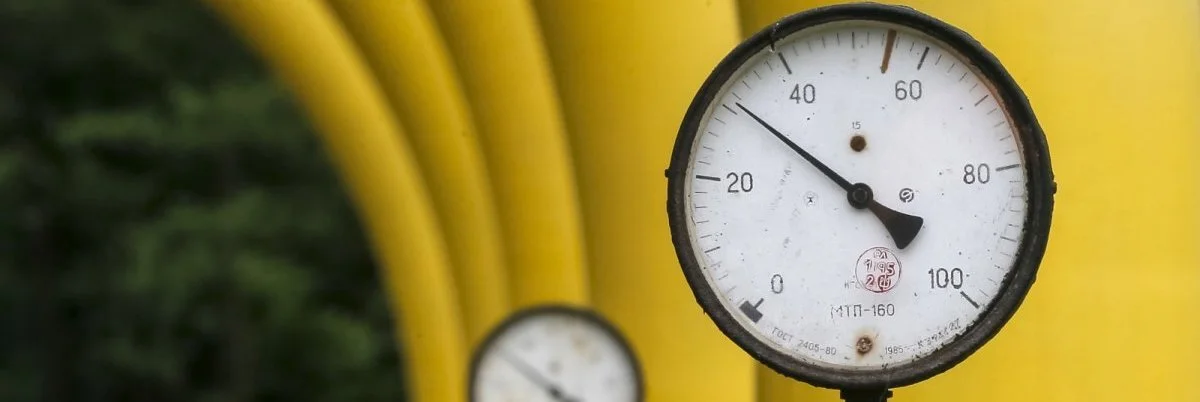
Iran Energy Minister in Baghdad Over Trade Dispute
Iran's Energy Minister Reza Ardakanian met with officials in Baghdad on Tuesday amid a trade dispute that has seen electricity reduced for 40 million Iraqis already facing shortages for decades.
Iran's Energy Minister Reza Ardakanian met with officials in Baghdad on Tuesday amid a trade dispute that has seen electricity reduced for 40 million Iraqis already facing shortages for decades.
The National Iranian Gas Company (NIGC) said in a statement that the Iraqi electricity ministry owed it "more than six billion dollars in arrears.”
After years of complaints from Tehran and requests for more time from Baghdad, "Iran will reduce from five to three million cubic meters of its gas supply to Iraq" needed to run power plants, Iraqi electricity ministry spokesman Ahmed Moussa told state television.
Iraq buys gas and electricity from neighbouring Iran to supply about a third of its power sector, worn down by years of conflict and poor maintenance.
But it must navigate sanctions imposed on trade with Tehran by the United States, which blacklisted Iran's energy industry in 2018 but granted Baghdad a series of temporary waivers.
On Tuesday, Ardakanian met with Iraqi Electricity Minister Majid Hantoush, Prime Minister Mustafa al-Kadhimi and Iraq central bank governor Mustafa Ghaleb Mukhif.
Iran is meant to receive payments through public banking institutions to avoid US sanctions.
"The Iraqi Electricity Ministry owes more than $2 billion in arrears and $1 billion in contract violations, while $3 billion is blocked and inaccessible in the Trade Bank of Iraq," Iraq's main public bank, the NIGC statement said.
For decades, Iraqis have had to cope with power outages that can last up to 20 hours a day in some areas.
Virtually all households are connected to private generators, but the prices of those services have recently soared amid a severe economic crisis accompanied by currency devaluation.
Using its own fuel plus Iranian gas, Iraq can produce a total of around 16,000 megawatts of electricity.
That is far below demand, which hovers around 24,000 MW but can jump to 30,000 in summer, when temperatures reach a sizzling 50 degrees Celsius (122 Fahrenheit).
Photo: IRNA
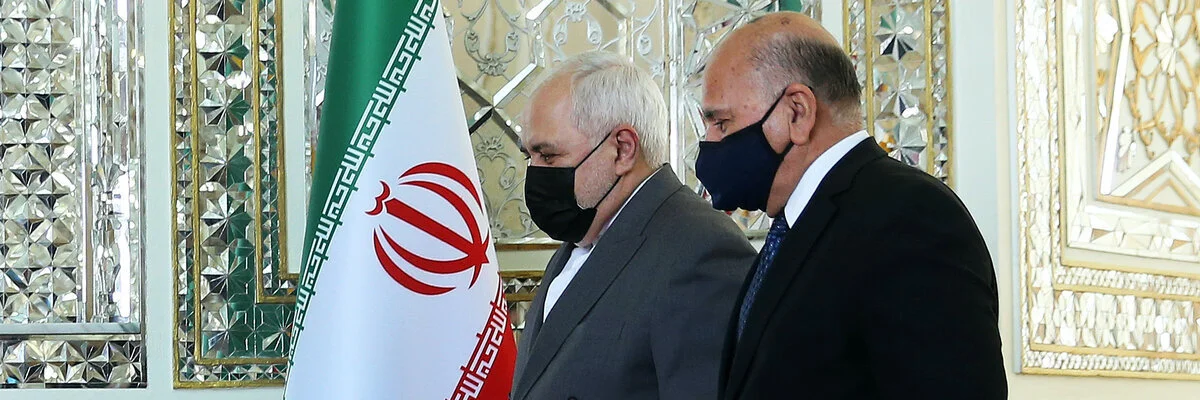
US Grants Iraq New 60-day Waiver To Import Iranian Gas
The US has granted Iraq a 60-day extension to a sanctions waiver allowing it to import Iranian gas for its crippled power grids.
The US has granted Iraq a 60-day extension to a sanctions waiver allowing it to import Iranian gas for its crippled power grids, an Iraqi official told AFP on Wednesday.
Baghdad relies on gas and electricity imports from its neighbour Tehran to supply about a third of its electricity sector, worn down by years of conflict and poor maintenance.
The US blacklisted Iran's energy industry in late 2018 but has since granted its ally Baghdad a series of temporary waivers to stave off country-wide blackouts.
In May, Washington granted Iraq a four-month extension as a gesture of good will towards Mustafa al-Kadhemi, who had just formed a cabinet seen as more US-friendly than its predecessor.
The US has pressured Iraq to use the waivers to become independent from Iranian energy, specifically by partnering with American firms, and had been frustrated by the slow progress under the previous premier Adel Abdel Mahdi.
While Kadhemi's cabinet has sought to fast-track such deals, it has been unable stem the near-daily rocket and IED attacks on Western military and diplomatic interests.
On his trip to Washington in August, Kadhemi scored agreements with various US firms for energy development across Iraq, including Chevron, Baker Hughes, Exxon and General Electric.
As OPEC's second-biggest producer, Iraq relies on crude exports to fund more than 90 percent of its state budget, but this year's price collapse has seriously undermined the government's fiscal position.
Photo: IRNA
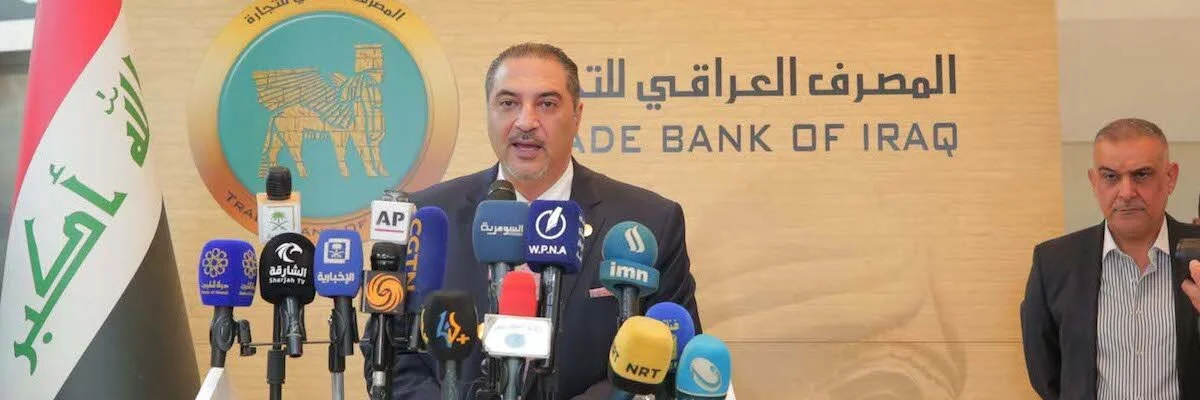
Iraq to 'Stop' Iran Gas Transfers if US Waiver Ends: Bank
◢ The bank through which Iraq pays for Iranian gas imports to power its grids said Tuesday it would stop processing payments if a crucial US sanctions exemption expires next month. "We'll stop. As simple as that," the head of Trade Bank of Iraq (TBI) Faisal al-Haimus told AFP.
The bank through which Iraq pays for Iranian gas imports to power its grids said Tuesday it would stop processing payments if a crucial US sanctions exemption expires next month.
"We'll stop. As simple as that," the head of Trade Bank of Iraq (TBI) Faisal al-Haimus told AFP.
That could be devastating for Iraq's crippled electricity sector, which has relied on Iran for about a third of its supply, and comes at a time of heightened US-Iran tensions.
Washington slapped tough sanctions on Iran's energy sector in 2018 but has granted Iraq a series of temporary waivers over the last 15 months to allow it to buy gas from Tehran.
Baghdad pays for the imports by depositing Iraqi dinars into an account at the state-owned TBI, which Iran is technically allowed to use to purchase non-sanctioned goods.
But if Iraq's waiver is not renewed next month, TBI would stop processing payments, Haimus said.
"If the waiver ended, of course TBI will not pay for any gas or deal with any Iranian entity over gas or electricity. Absolutely," he said.
"As a bank, the most important thing we have is that we are compliant (with international regulations). That's why people trust us," the chairman added.
Sanctions Threat
Any entity that deals with institutions or countries that are blacklisted by the US could be slapped with secondary sanctions, which restrict its access to US dollars.
The waiver protected Iraq from such sanctions, allowing it to continue importing about 1,400 MW of electricity and 28 million cubic metres (988 million cubic feet) of gas from Iran.
In the meantime, Iran and Iraq agreed on a payment scheme in line with US regulations: a TBI account in Iraqi dinars.
As of last year, Iraq had an outstanding bill of around $2 billion for previous gas and electricity purchases, according to Iranian Oil Minister Bijan Zangeneh.
Haimus declined to disclose how much had been paid into the account or how much was still owed, but told AFP that "disputes" meant Iran had not been able to actually access the money.
"A few payments were made according to this mechanism but the problem is that handling this money was not possible," he said.
Iraq fears being swept up in the spiralling tensions between Iran and the US, both of them allies to Baghdad.
Earlier this month, Iraq's parliament voted in favor of ousting foreign troops—including some 5,200 US forces—following a US drone strike near the Baghdad airport that killed top Iranian and Iraqi military officials.
Outraged by the vote, US President Donald Trump threatened to impose sanctions "like they've never seen before" on Iraq if US troops were forced out.
The US then informed Iraq that it was considering blocking Baghdad's access to a US-based account where Iraq keeps oil revenues that contribute 90 percent of the national budget.
Photo: TBI
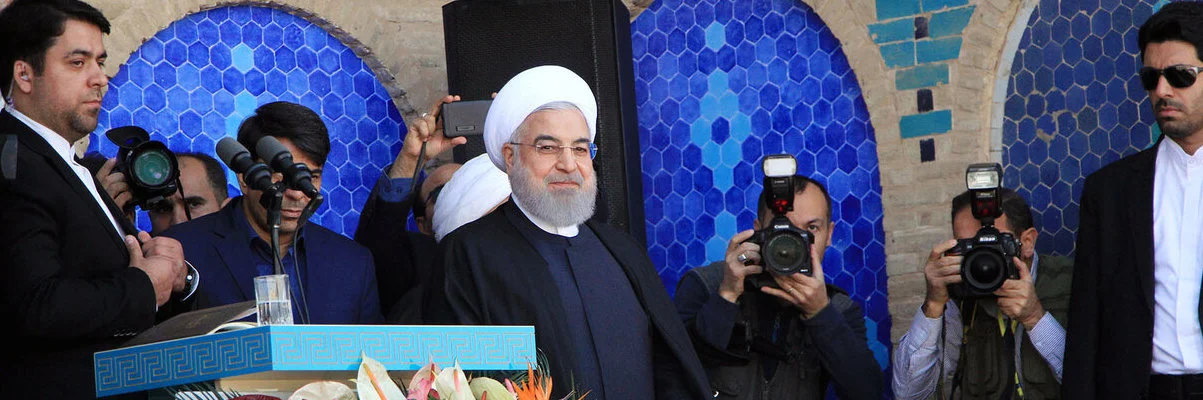
Iran Says Oil Field Found With 53bn Barrels of Crude
◢ Iran has discovered a new oil field containing 53 billion barrels of crude, President Hassan Rouhani said Sunday, a find that would increase Iran's proven reserves by over a third. The 80-meter deep field stretches nearly 200 kilometres from Khuzestan's border with Iraq to the city of Omidiyeh.
By Amir Havasi
Iran has discovered a massive new oil field, President Hassan Rouhani said Sunday, a find that would boost its proven reserves by about a third in a rare piece of "good news" for an economy battered by US sanctions.
In a speech aired on state TV, Rouhani said the country's economy had stabilised despite punishing US measures against its senior leaders, banking and finance sectors.
The vast field in the southwestern province of Khuzestan holds an estimated 53 billion barrels of crude, he said.
The 80-meter deep reservoir stretches nearly 200 kilometres from Khuzestan's border with Iraq to the city of Omidiyeh.
"This is a small gift by the government to the people of Iran," he said in a speech from the central city of Yazd.
"We announce to America today that we are a rich nation, and despite your enmity and cruel sanctions, Iranian oil industry workers and engineers discovered this great oil field."
The find would add around 34 percent to the OPEC member's current proven reserves, estimated by energy giant BP at 155.6 billion barrels.
Iran, a founding member of the Organization of the Petroleum Exporting Countries, sits on what were already the world's fourth-biggest oil reserves.
The new reserves, if proven, would lift it to third place, just before regional arch-rival Saudi Arabia.
'Unconventional' Sales
But it remains to be seen how much the country can benefit from the new field.
Iran has struggled to sell its oil since US President Donald Trump withdrew from a landmark 2015 nuclear deal last year and reimposed unilateral sanctions.
In May, Washington ended temporary sanctions waivers it had granted to the eight main buyers of Iranian oil, ratcheting up the pressure on holdouts China, India and Turkey to find other suppliers.
Tehran does not report exact figures, but says some crude is still exported via "unconventional" means.
It has hit back at the US with a series of countermeasures, stepping up its nuclear activities and threatening to go further unless the deal's promised economic benefits materialise.
It insists its moves are transparent and easily reversible, calling on the deal's other parties to honor their commitments.
The remaining parties to the 2015 accord—Britain, China, France, Germany and Russia—have been working on measures to help it avoid US sanctions, but with few results so far.
Since the US withdrawal, tensions have cranked up in the Gulf with a series of mysterious attacks on tankers and Saudi oil installations, with Tehran and Washington narrowly avoiding an armed confrontation after the downing of a US drone over Iranian territory.
Economic 'Disruptors'
Iran has experienced a sharp economic downturn this year, fuelled in part by US sanctions, with a plummeting currency sending inflation skyrocketing and hiking the prices of imports.
But Rouhani insisted the economy had now stabilised.
"Our people weathered hard days in the past year ... (but) I believe America is now hopeless," he said.
The IMF has said Iran's economy will contract by a massive 9.5 percent this year, its worst performance since 1984 when the Islamic republic was at war with neighbouring Iraq, but notes the growth is expected to stabilise at zero next year.
Authorities have cracked down hard on "economic disruptors"—Iranians accused of exploiting shortages and fluctuations in gold and currency prices, with dozens tried and some executed.
"I call on the judiciary... to explain billion-dollar corruption cases to the people," Rouhani said during his speech in Yazd.
"Where has the money gone?"
He pointed to a "$2.7 billion case" whose suspect has been "arrested, sentenced to die and is now in prison"—but in which the money is yet to be recovered.
He appeared to be referring to business magnate Babak Morteza Zanjani, on death row after being convicted in 2016 of embezzling $2.7 billion while helping the government circumvent international sanctions.
Photo: IRNA
Iran Discovers Gas Field Near Persian Gulf
◢ Iran has discovered a gas field near the Gulf with enough reserves to supply the capital for 16 years, state media reported on Sunday. The Eram field contained 19 trillion cubic feet, the National Iranian Oil Company said, cited by official news agency IRNA.
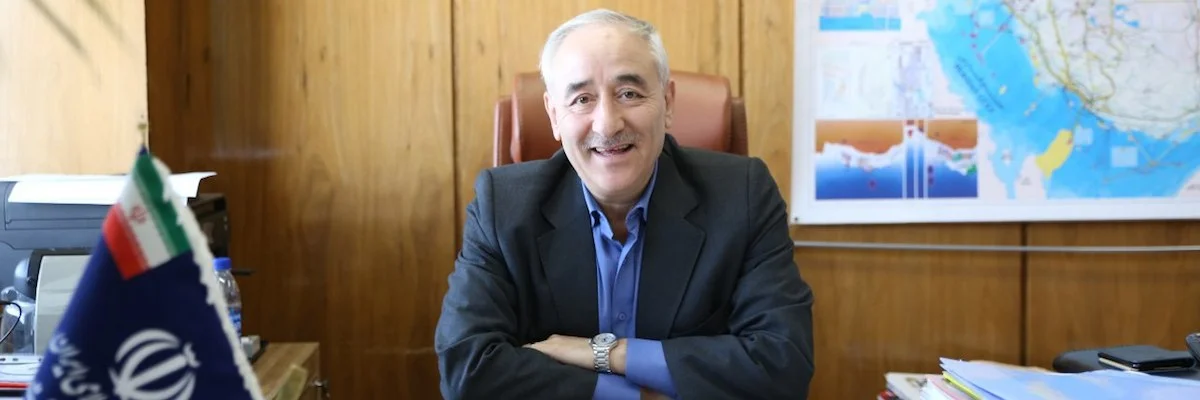
Iran has discovered a gas field near the Gulf with enough reserves to supply the capital for 16 years, state media reported on Sunday. The Eram field contained 19 trillion cubic feet (538 billion cubic meters) of natural gas, the National Iranian Oil Company said, cited by official news agency IRNA.
The oil ministry's Shana website said the field was located in Fars province, about 200 kilometres (125 miles) south of Shiraz.
"Given the volume of 19 trillion cubic feet reserves of in-situ gas and 385 million barrels of gas condensate in Eram field, the revenue from this field will be $40 billion," IRNA quoted an NIOC official as saying.
The amount of gas in the newly discovered field was enough to supply Tehran—a city with an estimated population of around eight million—for 16 years, the official said.
Iran is a member of OPEC which says the country has proven natural gas reserves of 1,197 trillion cubic feet (33.9 trillion cubic meters), the second highest in the world.
Photo: IRNA
Iran Says China's CNPC Pulls Out of Gas Project
◢ Iran's oil minister said Sunday that China's CNPC has withdrawn from the development of an offshore gas field and that state-owned Petropars will take over the entire project. The South Pars gas field was to be developed jointly by France's Total, China National Petroleum Corporation and Petropars under a $4.8-billion deal signed in July 2017.
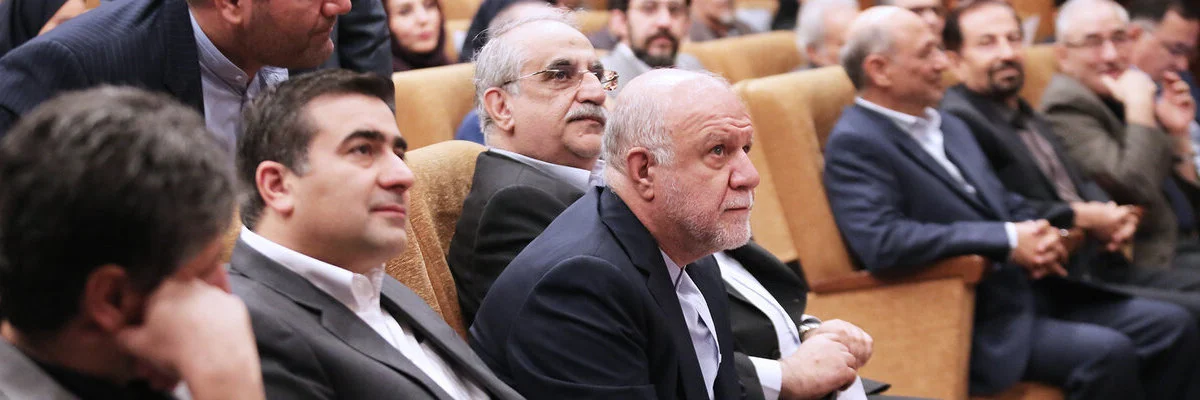
Iran's oil minister said Sunday that China's CNPC has withdrawn from the development of an offshore gas field and that state-owned Petropars will take over the entire project.
The South Pars gas field was to be developed jointly by France's Total, China National Petroleum Corporation and Petropars under a $4.8-billion deal signed in July 2017.
The deal came after Iran reached a 2015 agreement with world powers that gave it relief from sanctions in exchange for limits on its nuclear program, ending years of economic isolation.
Total left the project three months after US President Donald Trump's administration withdrew from the nuclear accord in May last year and reimposed sanctions on Iran's oil industry and other key sectors of the economy.
"Phase 11 (of South Pars) will be entirely developed by Petropars company," Iran's Oil Minister Bijan Namdar Zanganeh was quoted as saying by the ministry's official website.
Asked whether CNPC International had abandoned the project, Zanganeh said:
“Yes, they have.”
The other parties to the Iran nuclear deal—Britain, France, Germany, China and Russia—have vowed to stay in the accord despite the US withdrawal, but their efforts have so far borne no fruit.
Zanganeh said that Petropars did not take the lead on South Pars from the outset because "we wanted to attract foreign investment for this project" and that Petropars was "supposed to learn alongside these (foreign) companies".
He added that the development of a pressure booster platform would depend on talks between Iran's MAPNA Group and other companies.
Petropars signed a $440 million agreement in September with another state-owned firm, Pars Oil and Gas Company, to develop the Balal field in the Persian Gulf.
Photo: IRNA
Iran Inks Deal to Develop Gas Field in Tense Persian Gulf
◢ Two Iranian companies signed a $440 million agreement Saturday to develop a gas field in the sensitive Persian Gulf, with the oil ministry saying it showed arch-foe the United States could not stop the country with sanctions.
Two Iranian companies signed a $440 million agreement Saturday to develop a gas field in the sensitive Persian Gulf, with the oil ministry saying it showed arch-foe the United States could not stop the country with sanctions.
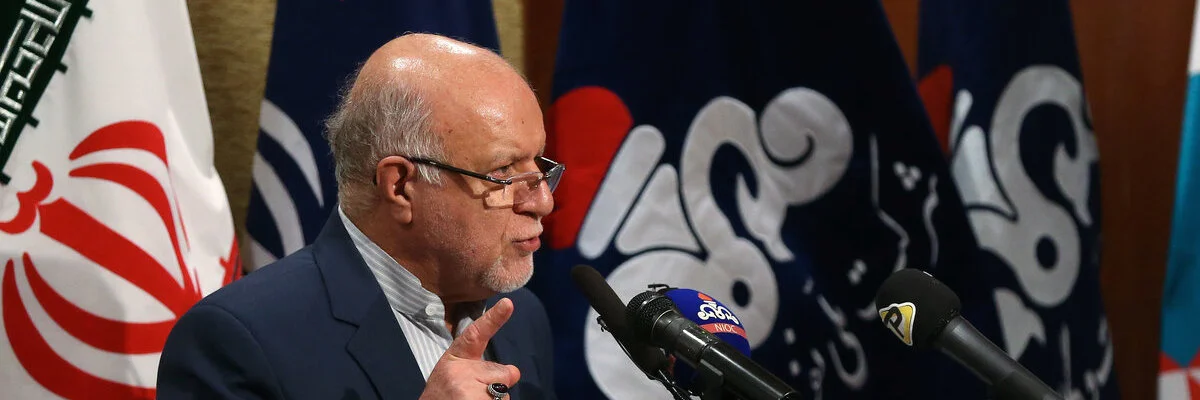
Oil Minister Bijan Namdar Zanganeh said the deal reached between two government-owned firms, Pars Oil and Gas Company and PetroPars, to develop the Balal field would be the first of many.
Tensions have soared in the Gulf since last year when the US began reimposing sanctions on Iran after unilaterally withdrawing from a 2015 deal that put curbs on its nuclear program.
"Signing this contract is ... the beginning of a process," Zanganeh said, quoted by the oil ministry's Shana website.
"This is a sign that we are still functioning with sanctions at their peak... We are alive, we are active and working for Iran's oil industry," the Iranian minister said.
The sanctions, he added, "have not been able to stop the progress of Iranian oil industry and its development."
"We don't want to boast, but the United States cannot stop Iranian oil exports." The Balal gas field is located 90 kilometres south of Lavan island in the Persian Gulf.
The deal aims to reach a production rate of 500 million cubic feet of gas per day over a 34-month period.
Photo: iRNA

U.S. Sanctions Are Forcing Iran to Ditch Push to Cleaner Fuels
◢ Iran is about to burn a lot more fuel oil as a result of U.S. sanctions and new global shipping rules, reversing the nation’s progress in switching to cleaner-burning natural gas. Power plants and other industrial facilities will burn more than 200,000 barrels a day of highly polluting fuel oil next year, double the amount Iran used in 2018.
By Verity Ratcliffe
Iran is about to burn a lot more fuel oil as a result of U.S. sanctions and new global shipping rules, reversing the nation’s progress in switching to cleaner-burning natural gas.
Power plants and other industrial facilities will burn more than 200,000 barrels a day of highly polluting fuel oil next year, double the amount Iran used in 2018, according to a forecast by Iain Mowat of consultant Wood Mackenzie Ltd.
Iran produces a surplus of fuel oil, and the excess has swelled since the U.S. began restricting the OPEC member’s exports last year. Sanctions also prevent Iran from importing the equipment it would need to refine the heavy oil product into less-polluting products like gasoline and, even if they find a way building refineries takes time.
The situation will only worsen once the International Maritime Organization restricts the use of high-sulfur fuel oil for most vessels starting Jan. 1. Commercial ships and power stations are the two main sources of demand for fuel oil. By curbing the shipping industry’s appetite, the UN agency’s new measure will leave Iran little choice but to burn more fuel oil at home to generate electricity.
Iranians “will have no choice but to dump it at whatever low price they can get for it, cut back on refining or use it themselves,” said Robin Mills, chief executive officer of Dubai-based consultant Qamar Energy. Since anyone buying Iranian fuel oil would run afoul of U.S. sanctions, even rock-bottom prices might not be enough to stimulate sales, he said.
Iran is a prime candidate for flouting the next year’s new IMO rules by using high-sulfur fuel oil in its own fleet, Mills said. International ports, however, have arranged for harsh penalties for violators.
Iran’s government says it wants to build new refineries to process fuel oil into other products. Although refineries typically take four years to complete, Tehran is hoping for faster results, said Sakineh Almasi, a spokeswoman for the parliamentary energy commission, according to the parliament’s Icana news service. Almasi didn’t say how the government plans to work around U.S. sanctions.
Meanwhile, Iran’s storage facilities for oil and fuel are filling up fast. Because the government prefers to reserve precious spare storage capacity for higher-value products such as condensate, it can’t accumulate surplus fuel oil for long, Mills said.
Iran’s use of fuel oil to produce electricity peaked in 2013 and has since fallen sharply as the country’s power plants switched to cleaner-burning natural gas. In the Iranian year ending in March 2018, they consumed about a quarter of the fuel oil they burned four years earlier, according to state-owned Thermal Power Plants Holding Co. A TPPH representative wasn’t immediately available to comment on the outlook for future consumption.
The resurgence in Iranian fuel-oil demand threatens to make the country’s notorious air pollution even worse. Fuel oil contains much more sulfur than natural gas does. Power plants emit these pollutants, blamed for causing acid rain and contributing to human health conditions such as asthma and even lung cancer.
Photo: Tasnim
Iran Sanctions Breach Suspicion Prompts Bank to Seize Ships
◢ Reports alleging that fuel tankers appeared to breach U.S. sanctions against Iran were cited in court filings by a bank as it sought to seize the ships, accusing the owners of loan default. The accusations, which led to the the temporary arrest of the vessels in Singapore late last month, come as the U.S. seeks to isolate the regime in Tehran by cutting off oil sales, a major source of revenue.
By Saket Sundria, Serene Cheong and Dan Murtaugh
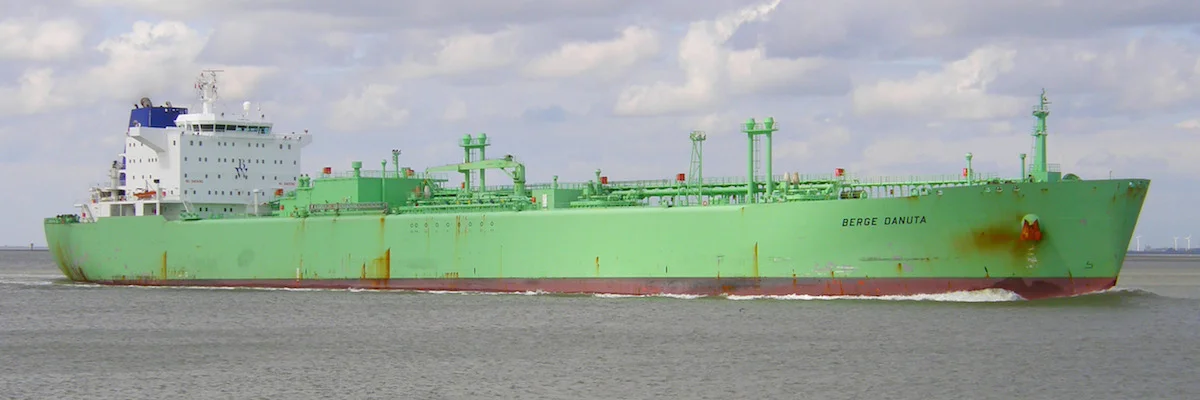
Reports alleging that fuel tankers appeared to breach U.S. sanctions against Iran were cited in court filings by a bank as it sought to seize the ships, accusing the owners of loan default.
The accusations, which led to the the temporary arrest of the vessels in Singapore late last month, come as the U.S. seeks to isolate the regime in Tehran by cutting off oil sales, a major source of revenue. They also underscore how traders and shippers suspected of violating sanctions can run foul of their own lenders, not just governments.
Hanover-based Norddeutsche Landesbank-Girozentrale, known as NordLB, detailed its claim in documents filed last month in the High Court of Singapore seeking the arrest of the vessels, accusing their China-based owner of defaulting on a $30 million mortgage agreement.
The German lender said in the filings it was notified June 25 by the London P&I Club, a ship owners’ association that provides protection and indemnity insurance, that coverage on the ships would be terminated. That came one day before Lloyd’s List, an industry news publication, reported that two of the ships—Gas Infinity and Gas Dignity—appeared to have transported Iranian liquefied petroleum gas in breach of U.S. sanctions, the bank said.
Transponders Off
NordLB said it believes London P&I terminated coverage after being contacted by Lloyd’s to comment for the article. The London P&I club confirmed that it no longer insures Gas Infinity, but declined to comment further.
The tankers, along with Sea Dragon, were used as collateral for a $30 million loan NordLB made in July 2018 to Silvana Limited, Sea Dragon Group and Sea Dolphin Co., with China’s Kunlun Holding Co. and Kunlun Shipping as guarantors, according to the affidavit. The companies have offices in Shanghai and Hong Kong.
Gas Infinity and Gas Dignity turned off their transponders, which usually publicly broadcast their locations, when approaching the Strait of Hormuz and then turned them on again several days later when they were laden with fuel, the bank said in the affidavit, citing the Lloyd’s article. The bank also cited a Bloomberg article describing similar activity by another LPG tanker owned by Kunlun Trading Co., a shareholder of the borrower.
Sheriff’s Arrest
While the bank only cited media reports for its suspicions the ships broke sanctions, it described the actions, as well as losing satisfactory insurance coverage, as “events of default” on the mortgage.
Gas Infinity was placed under sheriff’s arrest in Singapore on July 22 and Sea Dragon on July 24, according to information from the Supreme Court of Singapore. Both ships have since been released. Gas Infinity is currently signaling China as its next destination while Sea Dragon is anchored off the south of India and indicating U.A.E.’s Khor Fakkan as its next destination, Bloomberg ship-tracking data show.
A woman who answered the phone at Kunlun Holding’s office Friday declined to comment and an email to Hong Kong-based Kunlun Shipping Co. went unanswered. Nobody responded to emails and phone calls to people associated with the Chinese companies whose contact information was included in court exhibits. NordLB declined to comment on the case.
In the court documents, NordLB said that the owners denied Gas Dignity had been in Iranian waters. But, it added, their response included location data missing days that corresponded to the time when Lloyd’s reported the transponder was turned off.
The bank also said that the copies of logbooks provided by the owners to show Gas Infinity was undergoing sea trials were mostly illegible and didn’t identify the name of the ship, according to the documents.
The two ships that were detained in Singapore under sheriff’s arrest, Gas Infinity and Sea Dragon, have both since sailed. Allen & Gledhill, representing NordLB, called for the release of the tankers in Singapore’s high court on July 29. The attorneys didn’t respond to an email seeking comment on the issue.
Photo: Fleetmon
Saudis Take Iran's Oil-Market Share, Keeping OPEC Supply Steady
◢ Saudi Arabia ramped up oil production last month by the most this year, largely filling the gap created by tougher U.S. sanctions on its political rival, Iran. Iranian output plunged in May to the lowest since 1990 as the Trump administration threatened sanctions, according to a Bloomberg survey of officials, analysts and ship-tracking data.
By Grant Smith
Saudi Arabia ramped up oil production last month by the most this year, largely filling the gap created by tougher U.S. sanctions on its political rival, Iran.
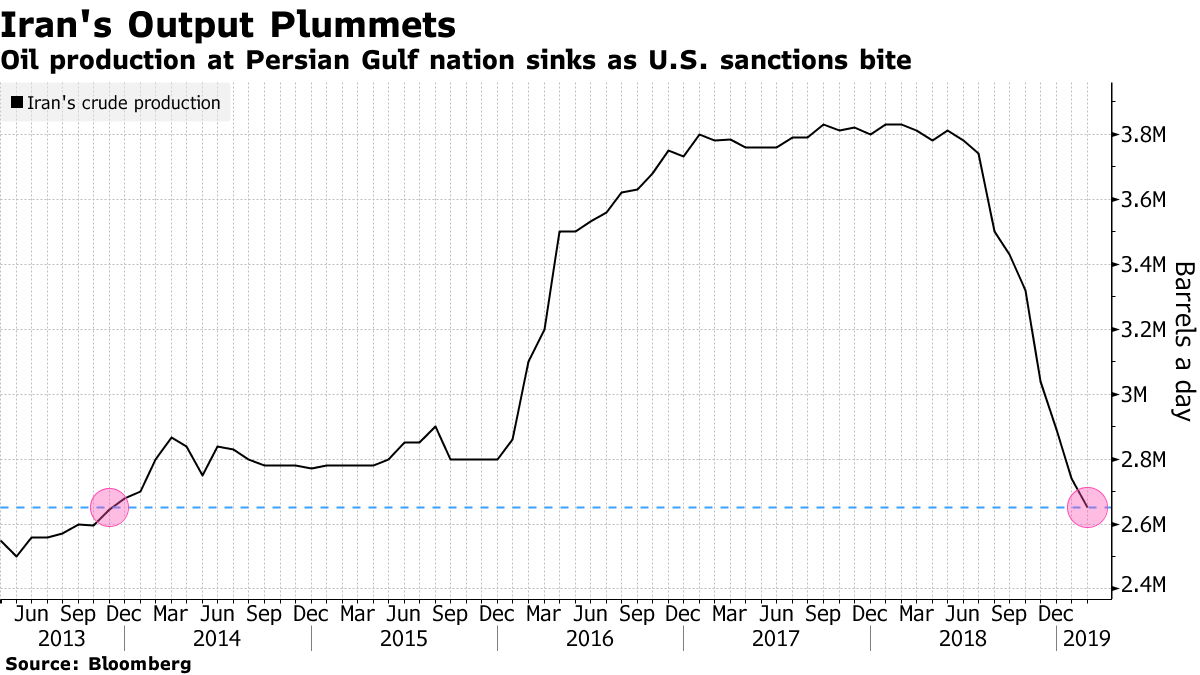
Iranian output plunged in May to the lowest since 1990 as the Trump administration threatened penalties for anyone trading with the Islamic Republic, according to a Bloomberg survey of officials, analysts and ship-tracking data.
Nonetheless, the production boost by Riyadh, along with increases in fellow OPEC members Libya and Iraq, meant that overall output from the group remained unchanged in May from the previous month. OPEC pumps about 40% of the world’s oil supplies.
Iran’s production plunged by 230,000 barrels a day to 2.32 million a day, according to the Bloomberg survey. Saudi Arabia increased by 170,000 barrels a day to 9.96 million a day. Total supply from OPEC’s 14 members was unchanged at 30.26 million barrels a day.
President Donald Trump is tightening the squeeze on Iran’s oil exports amid a dispute that revolves around the country’s nuclear program, and has turned to America’s allies in Riyadh to keep global crude markets comfortably supplied. The survey indicates that Saudi Arabia, a long-standing antagonist of Iran, has been willing to oblige.
That sets the stage for a contentious meeting when the Organization of Petroleum Exporting Countries and its partners gather in the coming weeks to consider production levels for the second half of the year. Iran has warned that the 59-year-old cartel is at risk of collapse because of aggressive moves by some members.
Despite the boost, the Saudis are still significantly below the limit of 10.3 million barrels a day agreed at the start of the year with a global coalition of producers, which spans fellow OPEC members as well as nations outside the group including Russia and Kazakhstan.
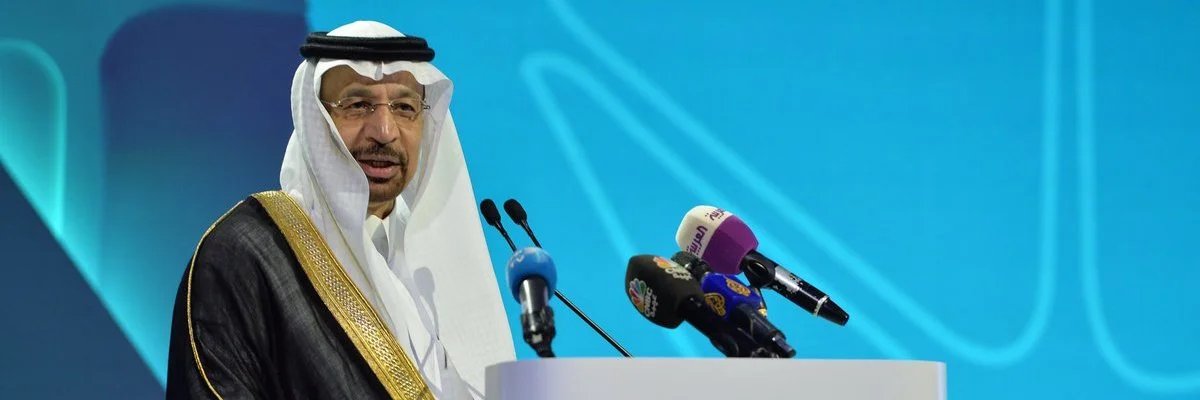
Saudi Arabian Energy Minister Khalid Al-Falih has recommended that the alliance should keep the supply curbs in place for the rest of the year, as headwinds to global economic growth may reduce oil demand.
Oil prices slumped more than 11% in London last month as the trade dispute between the U.S. and China threatened to crimp growth in the world’s two biggest economies. Brent, the international benchmark, was trading around $62 a barrel on Monday.
While the Saudi production increase was still well inside the limits agreed with fellow producers, the same can’t be said of a boost by Iraq.
Baghdad raised output by 50,000 barrels a day last month to 4.63 million a day, meaning that it has now abandoned any of the restraint pledged under the OPEC agreement. As the Saudis have urged fellow OPEC members to abide by their individual targets, that could provide another source of friction when the producers get together.
Photo: Aramco
India Has Ended Iranian Oil Imports: Envoy
◢ India has ended all imports of oil from Iran, its ambassador in Washington said Wednesday, becoming the latest country to grudgingly comply with threatened US sanctions. India had already sharply decreased its imports from Iran and bought one million tons of crude in April, the last month before Washington stepped up its pressure campaign against Tehran and ended all exemptions to oil sanctions.
India has ended all imports of oil from Iran, its ambassador in Washington said Wednesday, becoming the latest country to grudgingly comply with threatened US sanctions.
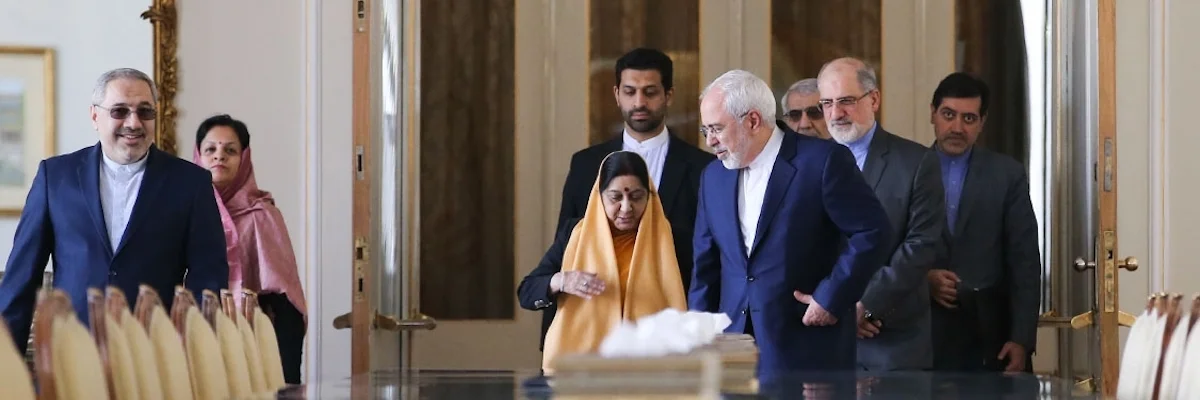
India had already sharply decreased its imports from Iran and bought one million tons of crude in April, the last month before Washington stepped up its pressure campaign against Tehran and ended all exemptions to sanctions, Ambassador Harsh Vardhan Shringla said.
"That's it. After that we haven't imported any," Shringla told reporters during a briefing on Prime Minister Narendra Modi's election victory.
Shringla said that energy-hungry India has also ended all imports from Venezuela because it considered itself a partner of the United States—but said the shift had caused pain at home, with Iran formerly supplying 10 percent of India's oil needs.
Calling Iran "an extended neighbor" of India with longstanding cultural links, Shringla declined to say if New Delhi shared President Donald Trump's concerns about Tehran.
“This is an issue that has to be dealt with, really, between the United States and Iran. We are only, in many senses, looking at it as a third party," Shringla said.
But he added: "We would not like to see a move towards any escalation in any way in that area, for the simple reason that we depend very heavily on stability in that part of the world."
Trump last year pulled out of a multinational pact under which Iran drastically scaled back its nuclear work in return for promises of sanctions relief.
The Trump administration has instead ramped up economic pressure on Iran and recently deployed military assets including an aircraft carrier strike group to the area.
The United States as of May 2 has ended exemptions it had given to eight governments from its unilateral order to stop buying Iranian oil.
Turkey, which enjoyed a waiver and vocally disagreed with the US policy, has also stopped importing oil from Iran, a Turkish official said Tuesday.
State Department spokeswoman Morgan Ortagus welcomed the news from Turkey.
"We want the whole world to comply with these sanctions, and we're grateful for our partners and allies that are respecting them," she told reporters.
The Indian ambassador, however, voiced confidence that US sanctions would not affect its partnership in developing Iran's Chabahar port.
India wants to use the port to ship supplies into Afghanistan in a detour from its arch-rival Pakistan, which historically backed the Taliban.
"I think it is in the interest of both our countries and all others concerned to ensure that that lifeline continues for the people of Afghanistan," Shringla said.
Photo: IRNA
Trump to Sanction Allies Over Iran Oil, Risking Friction
◢ The United States said Monday it would start imposing sanctions on friends such as India that buy Iranian oil, in its latest aggressive step to counter Tehran that could jeopardize US relationships. The announcement sent global crude prices spiraling higher, although President Donald Trump tweeted that Saudi Arabia and other US allies would"more than make up" for decreases in Iranian oil.
The United States said Monday it would start imposing sanctions on friends such as India that buy Iranian oil, in its latest aggressive step to counter Tehran that could jeopardize US relationships.
The announcement sent global crude prices spiraling higher, although President Donald Trump tweeted that Saudi Arabia and other US allies would "more than make up" for decreases in Iranian oil.
In seeking to reduce Iran's oil exports to zero, the Trump administration is targeting the country's top revenue maker in its latest no-holds-barred move to scale back the clerical regime's influence
"The Trump administration and our allies are determined to sustain and expand the maximum economic pressure campaign against Iran to end the regime's destabilizing activity threatening the United States, our partners and allies and security in the Middle East," the White House said in announcing its move.
Eight governments were initially given six-month reprieves from the unilateral sanctions imposed last year by the United States on Iran.
They include India, which has warm ties with Washington but disagrees on the US insistence that Iran is a threat.
Other countries that will be affected include China and Turkey, opening up new friction in contentious relationships if the United States goes ahead with sanctions over buying Iranian oil.
Secretary of State Mike Pompeo insisted that the United States would punish countries that buy Iranian oil after May 2, without spelling out the scope of the sanctions.
“We've made clear—if you don't abide by this, there will be sanctions," Pompeo told reporters. "We intend to enforce the sanctions."
The others—Greece, Italy, Japan, South Korea and Taiwan—have already heavily reduced their purchases from Iran.
Pressure Keeps Building
Trump last year withdrew the United States from an accord negotiated by his predecessor, Barack Obama, under which Iran drastically reduced its nuclear program in return for promises of sanctions relief.
Pompeo said the United States would keep raising pressure until Iranian leaders come back to the table, although he appeared little concerned with wooing them, saying he was making his demands to "the ayatollah and his cronies."
Trump's tough Iran policy has already alienated close allies, with the Europeans supporting the 2015 accord—with which UN inspectors say Iran is complying—and setting up a way for their businesses to evade US sanctions.
A key backer of Trump's push is Israeli Prime Minister Benjamin Netanyahu, who hailed the latest move as "of great importance."
Just two weeks ago, Trump took another key step by designating Iran's elite Revolutionary Guards—who are in charge of preserving the regime and have amassed vast commercial interests—as a terrorist group, the first time such action has been taken against part of another government.
Iran earned USD 52.7 billion from petroleum exports in 2017, according to the oil cartel OPEC, before the reimposition of US sanctions.
Experts say it is unlikely that Iranian exports will ever be reduced completely to zero, with a black market likely to exist.
Oil Prices Rise
Oil prices jumped overnight on reports of the action by the United States.
US benchmark West Texas Intermediate for May delivery went up another 2.2 percent shortly after opening to $65.39 a barrel.
Backing Trump's comments, Saudi Arabia's Energy Minister Khalid al-Falih said that the kingdom would work to "stabilize" the oil market.
Energy-hungry India stands to be among the most affected by the decision and is also facing US pressure not to buy from Venezuela, where Trump is seeking to topple leftist President Nicolas Maduro.
According to Indian commerce ministry data, oil imports from Iran in the 10 months to January rose 16.3 percent to 21.3 million tonnes—although they have declined since the initial US sanctions announcement.
Trump's move has also been good for US business, with India's oil purchases from the United States skyrocketing 350 percent from 2017 to 2018.
In the case of Turkey, Ibrahim Kalin, the spokesman for President Recep Tayyip Erdogan, recently told reporters in Washington that "we are expecting" a waiver extension as the country had reduced imports from Iran, despite disagreeing with US policy.
The United States still has an exemption in place for Iraq, which relies on electricity from its neighbor to cope with chronic blackouts that have triggered unrest.
Photo: Bloomberg
Iran Says OPEC+ Pact Will Be `Easy' to Extend Beyond June
◢ The OPEC+ group could easily extend its agreement on oil-production cuts, according to Iranian Oil Minister Bijan Namdar Zanganeh. Iran is exempt from oil-output cuts following U.S. President Donald Trump’s decision to re-impose sanctions on the country last year.
The OPEC+ group could easily extend its agreement on oil-production cuts, according to Iranian Oil Minister Bijan Namdar Zanganeh.
“My understanding is, there is no difficulty extending the cooperation. It should be easy” to prolong the deal beyond the first half of the year, Zanganeh told reporters in Moscow following a meeting with his Russian counterpart Alexander Novak. The current OPEC+ pact “is going ahead well,” Zanganeh added.
Iran is exempt from oil-output cuts following U.S. President Donald Trump’s decision to re-impose sanctions on the country last year. When the Organization of Petroleum Exporting Countries and its allies met in Vienna in December to work out the details of the new production-cuts pact, Iran’s opposition was one of the stumbling blocks to reaching a deal. Russia helped to overcome this and get a deal agreed.
The OPEC+ agreement to reduce oil output by 1.2 million barrels a day expires at the end of June. So far, there’s little clarity on how willing the key members of the group are to extend it. Russia, OPEC’s main ally outside the group, has advocated a wait-and-see approach, proposing to postpone a decision until May or June. Saudi Arabia, which was initially in favor of making a new commitment quickly, later agreed more time is needed.
Oil just had its best quarter in a decade which prompted Trump to criticize OPEC, saying the cartel should increase production because prices are getting “too high.”
Despite pressure from Trump to raise production, Saudi Arabia and the other members of OPEC+ seem resolved to continue restraining output to avert a glut. OPEC’s crude production slid in March for a fourth month, according to a Bloomberg survey, as Saudi Arabia pressed on with output curbs aimed at balancing global markets, and as an economic crisis in Venezuela escalated.
Photo Credit: Bloomberg

Trump Team Split Over Iran Oil Waivers as Next Deadline Nears
◢ President Donald Trump’s national security team is deeply divided over whether to let a small group of countries keep buying Iranian oil after a U.S. deadline on sanctions waivers expires in May. Now that fight is getting ugly. The division—primarily between John Bolton’s National Security Council and Michael Pompeo’s State Department—has led to rising frustration and flared tempers.
President Donald Trump’s national security team is deeply divided over whether to let a small group of countries keep buying Iranian oil after a U.S. deadline on sanctions waivers expires in May. Now that fight is getting ugly.
The division—primarily between John Bolton’s National Security Council and Michael Pompeo’s State Department—has led to rising frustration and flared tempers. It’s exposing fault lines over how the president’s most senior advisers approach the Iran issue, according to four people familiar with the debate who asked not to be identified discussing the internal deliberations.
Above the fray, at least for now, is a president who must weigh competing priorities. While Trump wants to make good on his “maximum pressure” campaign against Iran and strong-arm it into meeting U.S. demands—including ending its ballistic missile tests and support for Hezbollah—there’s also concern that squeezing Tehran too much will lead to a spike in oil prices. That could raise gasoline costs for U.S. drivers as the 2020 election approaches.
Favoring a tougher tack, Bolton and his team point out that oil prices remain low—about USD 59 a barrel as of Monday. But that could change quickly depending on production moves by OPEC nations as well as the administration’s separate efforts to choke off Venezuelan oil sales in a bid to push President Nicolas Maduro from office.
“The administration will really be weighing its desire to put the screws further on Iran against its allergy to oil over USD 70 a barrel,” said Meghan O’Sullivan, a former deputy national security adviser now at the Harvard Kennedy School. “It is risky for the administration to think that it can drive a hard policy which contracts the oil supply from both Iran and Venezuela simultaneously.”
A spokesman for the White House National Security Council said agencies are coordinating closely to apply maximum pressure on Iran. A State Department official said the U.S. goal remains to get to zero Iranian oil exports as quickly as possible, adding that the secretary of state alone has the discretion to grant exemptions.
There’s little doubt the U.S. sanctions have pinched Iran: Oil revenue has tumbled, the rial has been battered and shortages of meat, medicine and gasoline are spreading. Iran’s supreme leader this week even called European efforts to sustain trade with Iran outside of U.S. sanctions “a joke.”
Price Spike
Trump has until the first week of May to decide whether to issue new waivers to eight governments—China, India, Japan, Turkey, Italy, Greece, South Korea and Taiwan—that were allowed in November to keep buying Iranian oil without facing penalties. The current speculation is that the biggest buyers of Iranian crude, including China and India, will get waivers again.
But Bolton and officials in the Energy Department argue that it’s time for the administration to make good on its demands to push Iran’s oil exports to zero. Pompeo’s team, led by Iran special representative Brian Hook, caution that a sudden removal of Iranian crude from the market—about 1.1 million barrels a day—would fuel volatility and lead to a price spike.
A key analyst who has advised the White House on its approach said the intensifying squabble underscores just how much more politicized the debate over the waivers has become as the U.S. presidential election in 2020 grows nearer.
“If you think Trump will be a two-term president, you have about six years and you can afford to go more slowly,” said Mark Dubowitz, chief executive officer of the Foundation for Defense of Democracies. “But if you think there’s a risk that he’s a one-term president, then he’s got 21 months left and you want to throw everything you can at the regime.”
Pompeo, a hard-line conservative on most issues, and Treasury Secretary Steven Mnuchin find themselves increasingly isolated from Bolton and their usual allies on Capitol Hill, including Republican Senators Marco Rubio and Tom Cotton, who have argued for the U.S. not to grant any more waivers.
“The Iranian regime uses its petrodollars to fund terrorism and sow chaos throughout the region,” Cotton tweeted on March 18. “Going forward, the proper amount of oil exports from Iran is zero.”
According to two GOP aides familiar with the thinking of Senator James Risch, the chairman of the Senate Foreign Relations Committee, the Idaho Republican believes any new waiver will need “substantial justification” to be granted. Risch also thinks there’s more than enough oil sloshing around global markets to counter the crude removed from Iran, thanks to Saudi Arabia and the U.S., according to the people.
As the debate plays out, Pompeo is also facing pressure from his own ambassadors. According to one of the people, Kay Bailey Hutchison, the U.S. ambassador to NATO, is among several who especially oppose giving Turkey another waiver. They argue that would send the wrong message when the U.S. is pushing NATO allies to cut ties with Tehran.
The debate has moved along enough that Hook and his allies have lost several key supporters who were previously open to the waivers but now believe issuing them sends the wrong signal.
“I’m sympathetic to where Brian Hook and Secretary Pompeo are in striking a balance between zero Iranian oil and global oil prices,” Dubowitz said. “But today’s oil market supports zero. So either you’re running a maximum pressure campaign against Iran or you’re not.”
Photo Credit: Bloomberg
US Extends Iraq Waiver Over Iran Sanctions
◢ The United States is extending a waiver to let energy-hungry Iraq keep buying power from Iran, despite Washington's campaign of sanctions aimed at curbing Tehran, an official said. "While this waiver is intended to help Iraq mitigate energy shortages, we continue to discuss our Iran-related sanctions with our partners in Iraq," a State Department official said.
The United States is extending a waiver to let energy-hungry Iraq keep buying power from Iran, despite Washington's campaign of sanctions aimed at curbing Tehran, an official said.
The State Department issued a second three-month exemption from Iran sanctions for Iraq, mindful not to destabilize the war-torn country increasingly reliant on Iranian gas and electricity to cope with chronic blackouts that have triggered unrest.
"While this waiver is intended to help Iraq mitigate energy shortages, we continue to discuss our Iran-related sanctions with our partners in Iraq," a State Department official said.
The official said that increasing Iraq's capacities and diversifying imports "will strengthen Iraq's economy and development as well as encourage a united, democratic and prosperous Iraq free from malign Iranian influence."
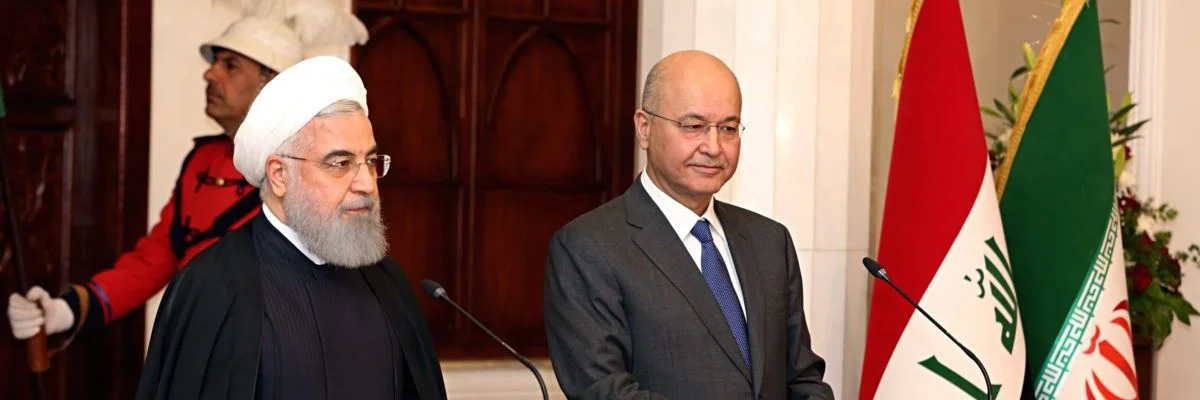
Despite Washington's repeated warnings, Iraq since the fall of Saddam Hussein has walked a fine line and maintained warm ties with Iran, with which Iraq's majority Shiite community shares religious affinities.
Iranian President Hassan Rouhani paid a visit last week to Iraq, where he highlighted Tehran's support in battling the Islamic State extremist movement and said that the United States was "despised" in the region.
Last year, US President Donald Trump pulled out of an international deal on curbing Iran's nuclear program that was negotiated by his predecessor Barack Obama.
Trump instead imposed sweeping sanctions on Iran as he seeks to reduce the regional role of the Shiite clerical state, a foe of US allies Saudi Arabia and Israel.
But the US approach has met strong opposition, with European powers encouraging their companies to stay present in Iran so as to safeguard the denuclearization accord.
Photo Credit: IRNA
Oil Market Can Weather Zero Iranian Exports: U.S. Officials
◢ US officials said the global oil market can withstand the removal of all Iranian crude exports this year, a conclusion that could be pivotal in the coming weeks as President Donald Trump weighs whether to end sanctions waivers granted to several nations. The message from American officials comes as OPEC and its allies prepare for a ministerial meeting in Baku, Azerbaijan.
US officials said the global oil market can withstand the removal of all Iranian crude exports this year, a conclusion that could be pivotal in the coming weeks as President Donald Trump weighs whether to end sanctions waivers granted to several nations.
Based on current oil supply and the potential of the US and Saudis to ramp up production, “going to zero” could happen this year without compromising affordable crude supplies, according to four officials who spoke on condition of anonymity to discuss internal deliberations. The officials emphasized that the discussions are still underway and no final decision has been made.
The message from American officials comes as OPEC and its allies prepare for a ministerial meeting in Baku, Azerbaijan, this weekend to discuss whether the cartel and its allies should continue cutting global output.
President Donald Trump re-imposed sanctions on Iran in November, with the goal of choking off the Islamic Republic’s oil revenue. The administration granted eight countries full or partial waivers allowing them to continue buying the nation’s crude: China, India, Italy, Greece, Japan, South Korea, Taiwan and Turkey. The waivers, which last for 180 days, were meant to be temporary measures to ease their transition from Iranian oil and avoid unsettling the energy market.
As the waivers near their expiration date, the officials said that sufficient spare capacity exists to make up for the loss of all Iranian oil barrels. They cited OPEC’s ability to ramp up production as well as booming U.S. output, among other possibilities.
According to the International Energy Agency, OPEC has 2.8 million barrels a day of spare capacity, more than enough to offset Iranian supply losses. Iran exported 1.17 million barrels a day in February, up from a multiyear low of 629,000 barrels a day in December, according to Bloomberg tanker tracking. Meanwhile, the U.S. Energy Information Administration estimates that global crude supply this year will exceed demand by 180,000 barrel a day, according to its Short-Term Energy Outlook.
But future supply losses from Venezuela muddy the picture. The politically beleaguered country saw oil production decline by 100,000 barrels a day in February to 1.14 million, the IEA said. Deeper declines are likely in March, the group said.
“We’re committed to bringing Iranian crude oil exports to zero as quickly as market conditions will permit,” U.S. Secretary of State Mike Pompeo said Tuesday at the CERAWeek by IHS Markit conference in Houston.
Photo Credit: State Department
U.S. Oil Waivers That Rocked Market in 2018 Coming Back to Focus
◢ Uncertainty over U.S. waivers for buyers of Iranian oil is starting to grip the market again, under very different circumstances than when American sanctions were set to go into effect last year. The Trump administration, for its part, says the aim is still to completely halt Iran’s oil shipments as it seeks to increase economic pressure on Tehran.
Uncertainty over U.S. waivers for buyers of Iranian oil is starting to grip the market again, under very different circumstances than when American sanctions were set to go into effect last year.
Before existing exemptions were granted in early November, Saudi Arabia was pumping at record levels, benchmark Brent futures rose to a four-year high, traders were predicting USD 100 oil, and Donald Trump was seeking lower fuel prices ahead of U.S. mid-term elections. The waivers blindsided the market, which had assumed America would bring Iranian exports to zero, and sparked a 40 percent collapse in crude.
Now, as the six-month waivers allowing buyers to ship limited quantities approach their expiry, the Saudis are pursuing aggressive output cuts, U.S. sanctions on Venezuela have further squeezed supplies and OPEC producers burned by last quarter’s oil slump are defying Trump’s call for lower prices. Iran’s customers, meanwhile, are making plans -- with some betting the exemptions will be extended and others expecting an end.
The Trump administration, for its part, says the aim is still to completely halt Iran’s oil shipments as it seeks to increase economic pressure on Tehran. In February, Japanese broadcaster NHK cited the State Department’s Brian Hook as saying the U.S. doesn’t plan to extend the waivers. More recently, Secretary of State Mike Pompeo said America wants to bring the Islamic Republic’s exports to zero “as quickly as market conditions will permit.”
Iran’s customers, meanwhile, are making plans—with some assuming the waivers will be renewed while others foreseeing some cuts to permitted purchases. Here’s a round-up of plans by major buyers, based on information from traders who participate in the market, refinery officials, data compiled by Bloomberg and analysts.
South Korea
Waiver: Up to 200,000 barrels a day of condensate
Nation purchased 179,000 b/d from Iran in February, tanker tracking data show
Refineries built to turn ultra-light oil known as condensate into petrochemicals have stepped up purchases of alternative supply due to mounting uncertainty around future cargoes from Iran. Hanwha Total Petrochemical Co. and SK Innovation Co. have bought several spot cargoes of Qatari shipments for loading in April after a months-long hiatus, just as the U.S.-issued waiver is set to expire.
The companies had slashed their spot purchases in February and March as they rushed to import the maximum permitted volume of Iran’s South Pars condensate. While they are now turning to Qatari cargoes, they are being aided by a glut in the market for such supply.
Additionally, the relatively low cost of other feedstock such as heavy full-range naphtha offers another viable replacement for some. Overall demand is also muted due to planned maintenance shutdown at Hyundai Chemical Co.
China
Waiver: 360,000 b/d over six months
Nation purchased 569,000 b/d from Iran in February, based on tanker tracking data
The nation’s largest refiners, state-run Sinopec and PetroChina Co., are preparing for a scenario where U.S.-issued waivers are renewed with some cuts to permitted purchase volumes, according to company officials with knowledge of procurement plans, who asked not to be identified because the information is private.
Chinese buyers may choose to secure at least some alternatives in the spot market ahead of time, according to a Bloomberg survey of traders who participate in the market. That’s because allocations for Iranian cargoes tend to take place three to four weeks before shipments are due to load, leaving refiners with the risk of insufficient supplies if there are hurdles related to the waivers.
With Atlantic Basin benchmarks Brent crude and West Texas Intermediate prices weakening relative to the Middle East’s Dubai marker, China is seen sustaining high levels of African oil imports while also considering shipments of Russian Urals and American crude as trade tensions between the U.S. and China ease.
Japan
Waiver: Unknown volume
Nation purchased 167,000 b/d from Iran in February, based on tanker tracking data
After receiving its first cargo under the waivers only in February, the close U.S. ally is now already scaling back purchases even though the waivers expire only in early May. A cargo that loaded this month from Iran for Cosmo Oil Co. will be the company’s last. Fuji Oil Co. halted lifting shipments at the end of February.
Other refiners that have purchased volumes include JXTG Holdings Inc. and Showa Shell Sekiyu KK. Japan’s purchases from Iran typically drop during March due to uncertainty around the prospect of an annual renewal of government-issued freight insurance for the Islamic Republic’s cargoes for the following fiscal year starting in April.
The nation’s refiners are highly reliant on Middle East producers for crude supply, and the Saudi-led output curbs by the Organization of Petroleum Exporting Countries and its allies could increase the risk of disruptions if the U.S. waiver on Iran isn’t renewed. Japanese firms have already purchased more spot cargoes of Abu Dhabi’s Murban and Das for April loading, according to traders who participate in the market.
India
Waiver: Up to 300,000 b/d
Four Indian refiners took nine million barrels of Iranian crude in March
Buyers of Iranian crude such as Indian Oil Corp. and Bharat Petroleum Corp. plan to continue importing oil from the Persian Gulf producer in April, even as the availability of May supplies remains uncertain as refiners await the Trump administration’s decision on waivers.
While an IOC official said the company is mulling alternative plans should supplies be halted, the top Indian importer of Iranian crude remains confident that it can lean on flexible terms in its supply contracts with Saudi Arabia and Iraq to make up for any loss in shipments.
BPCL, meanwhile, has booked 1 million barrels of Iranian oil for April and had yet to decide on its purchases for May, Director of Refineries R. Ramachandran said.
“Beyond May 4, we don’t know what will happen. We are waiting,” he said, adding that the company has the option of purchasing other grades from the Middle East. “We feel the extension of waivers may not happen easily, so we have alternative plans,” he added.
Photo Credit: Bloomberg
Iran and Armenia Propose Gas Transit to Georgia
◢ A state visit by Armenian Prime Minister Nikol Pashinyan to Iran has resulted in an agreement between the two countries to cooperate on the potential transiting of Iranian gas through Armenia to Georgia. The possible export of Iranian gas to Georgia was first raised in 2016 with the National Iranian Gas Company (NIGC) making successive claims of a deal with both the Georgian state and an unnamed private sector company.
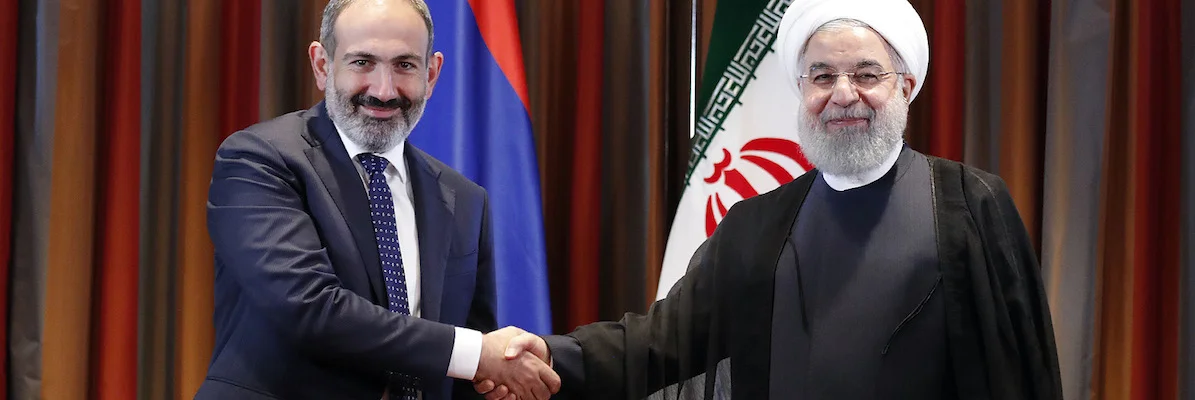
A state visit by Armenian Prime Minister Nikol Pashinyan to Iran has resulted in an agreement between the two countries to cooperate on the potential transiting of Iranian gas through Armenia to Georgia.
If implemented, the agreement promises to be controversial, not least because it would involve Armenia challenging Russian control of its gas distribution sector, and potentially pitching both Armenia and Georgia into conflict with the United States, which last November re-imposed its stringent sanctions against Iran.
The suggestion for the transit deal appears to have come from Iranian President Hassan Rouhani, who brought up the issue in a Tehran press conference following his February 27 meeting with Pashinyan.
"As to cooperation in the field of gas supply, we expressed the Iranian side’s readiness to step up supplies,” Rouhani said. “We are likewise prepared to launch tripartite cooperation to export gas to Georgia."
Pashinyan said he was amenable. "Armenia is ready to cooperate with Iran and become a transit country for Iranian gas,” he said following Rouhani’s remarks. “The establishment of an energy corridor is also of great importance both in terms of bilateral and regional dimensions and in broader terms."
Neither commented on whether Georgia has yet been involved in discussions on the possible trade and an Armenian foreign ministry spokesperson was unable to confirm to Eurasianet whether Georgia had been consulted.
The possible export of Iranian gas to Georgia was first raised in 2016 with the National Iranian Gas Company (NIGC) making successive claims of a deal with both the Georgian state and an unnamed private sector company.
However, these reports were subsequently denied by Tbilisi, which has yet to confirm any form of gas agreement with Iran.
If implemented, the plan would introduce some competition into the Georgian gas market. Georgia is currently supplied entirely from Azerbaijan.
Transit of gas from Iran through Armenia to Georgia is technically possible, as pipelines with sufficient spare capacity linking the three countries already exist. But there are a number of technical and political hurdles that would have to be overcome to make it work.
The line linking Georgia and Armenia is part of a Soviet-era pipeline that currently delivers Russian gas to Armenia. Exporting Iranian gas to Georgia through this line would require its flow to be reversed, and for Armenia to halt its imports of Russian gas. That in turn would require Armenia to replace that gas with increased imports from its only other source of supply, Iran.
That, then, could see the volume of gas needed to supply both Armenia and Georgia exceed the current capacity of the Iran-Armenia pipeline, requiring the line to be expanded, a move which would be both expensive and time consuming.
In theory, gas trade between Iran and Georgia could also be managed by a swap deal, under which Russia would supply a given volume of gas to Georgia, and Iran would supply the same volume to Armenia in exchange.
This would not require the flow through the Georgia-Armenia pipeline to be reversed, and would see Armenia only reducing, and not ending, its gas imports from Russia.
Both options are technically possible but would require support from both Moscow and Washington, either of which could block gas trade between Iran and Georgia or at the very least make it difficult to realize.
Yerevan is already at loggerheads with Gazprom, which owns Armenia's gas distribution network and controls around 80 percent of the country's gas market, after the company hiked gas prices for Armenia at the start of the year.
Gazprom would be unlikely to welcome further competition in the Armenian market, although the possibility of increased Iranian gas exports to Armenia could persuade the Russians back to the negotiating table.
Ultimately, though, the final decision on whether an Iran-Georgia gas trade could go ahead appears to lie with Washington and the terms of its re-imposed sanctions regime against Iran.
The situation regarding Iran's gas exports is "not so straightforward,” Erika Olson, economic counsellor at the U.S. embassy in Ankara, said February 16 at a regional energy conference in Istanbul.
While Iran's gas exports are currently exempt from sanctions, financial transactions to pay for the gas are sanctioned, Olson said. Payments for gas are to be deposited into a local bank account where it can be used only in payment for the exports of sanctions-exempt goods back to Iran.
As such, Armenia's gas imports from Iran under the existing barter agreement are exempt from U.S. sanctions, and swap deals for Georgian gas could also be ruled exempt.
However, Olson also cautioned that the situation for any new gas deals involving Iran could face uncertain prospects depending on a number of “variables.”
Photo Credit: Press Office of the Government of Armenia
Syria and Iran Sign 'Strategic' Economic Agreement
◢ Syria and Iran signed 11 agreements and memoranda of understanding late Monday, including a "long-term strategic economic cooperation" deal aimed at strengthening cooperation between Damascus and one of its key allies in the civil war that has torn the country apart. The agreements covered a range of fields including economy, culture, education, infrastructure, investment and housing, the official Sana news agency reported.
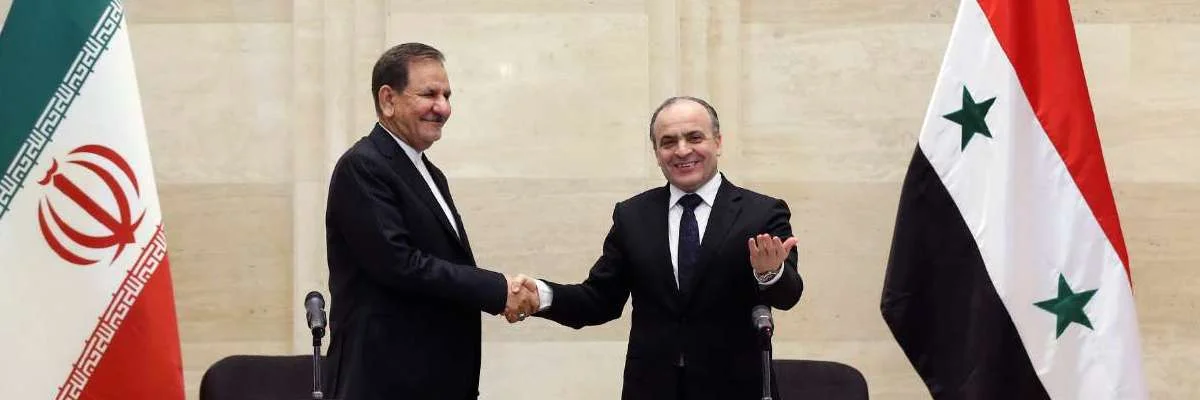
Syria and Iran signed 11 agreements and memoranda of understanding late Monday, including a "long-term strategic economic cooperation" deal aimed at strengthening cooperation between Damascus and one of its key allies in the civil war that has torn the country apart.
The agreements covered a range of fields including economy, culture, education, infrastructure, investment and housing, the official Sana news agency reported.
They were signed during a visit to Damascus by Iran's First Vice President Eshaq Jahangiri.
Syrian Prime Minister Imad Khamis said it was "a message to the world on the reality of Syrian-Iranian cooperation", citing "legal and administrative facilities" to benefit Iranian companies wishing to invest in Syria and contribute "effectively to reconstruction".
The agreements included two memos of understanding between the railway authorities of the two countries as well as between their respective investment promotion authorities.
In relation to infrastructure, there was also rehabilitation of the ports of Tartus and Latakia as well as construction of a 540 megawatt energy plant, according to Khamis.
In addition there were "dozens of projects in the oil sector and agriculture", he added.
The civil war has taken an enormous toll on the Syrian economy and infrastructure, with the cost of war-related destruction estimated by the UN at about USD 400 billion.
Iran will stand "alongside Syria during the next phase that will be marked by reconstruction", Jahangiri promised.
Iran and Syria had already signed a military cooperation agreement in August while Tehran has supported Damascus economically during the conflict through oil deliveries and several lines of credit.
The new agreements come against the backdrop of fresh US sanctions against Iran, while Syrian President Bashar al-Assad's regime and several Syrian businesspeople and companies are already on US and European blacklists.
They also come as Israel has repeatedly pledged to keep arch-foe Iran from entrenching itself militarily in Syria, where the war has already claimed more than 360,000 lives and displaced several million people.
Photo Credit: IRNA
Iran Sanctions Herald Energy Trouble for Caucasus Nations
◢ The resumption of wide-ranging American sanctions on Iran promises economic uncertainty for the Islamic Republic’s neighbors in the Caucasus: Azerbaijan, Georgia and Armenia. All three have to various extents relied on Iran for natural gas, and stand to be affected—if only by uncertainty until the exact scope of the sanctions becomes clearer.
This article has been republished with permission from Eurasianet.
The resumption of wide-ranging American sanctions on Iran promises economic uncertainty for the Islamic Republic’s neighbors in the Caucasus: Azerbaijan, Georgia and Armenia.
Washington's goal of reducing Iran's oil exports to zero will not directly impact any of three Caucasus states, as none of them imports Iranian crude. All three, however, have to various extents relied on Iran for natural gas, and stand to be affected—if only by uncertainty until the exact scope of the sanctions becomes clearer.
U.S. National Security Adviser John Bolton recently visited all three countries to try to shore up support for Washington’s efforts to isolate Tehran, though his results were inconclusive. When Washington imposed the new round of sanctions on November 5 it exempted eight countries, including neighboring Turkey, but none of the Caucasus states were spared.
As a major exporter of both crude oil and natural gas, and a sometime importer of Iranian gas, Azerbaijan's position is most complex.
Azerbaijan shares long land and maritime borders with Iran, as well as ownership of a number of undeveloped Caspian oil and gas fields subject to a joint development agreement signed in March this year.
Development of those fields is now unlikely to proceed, but other joint ventures have advanced beyond the point where even Washington can impose a halt.
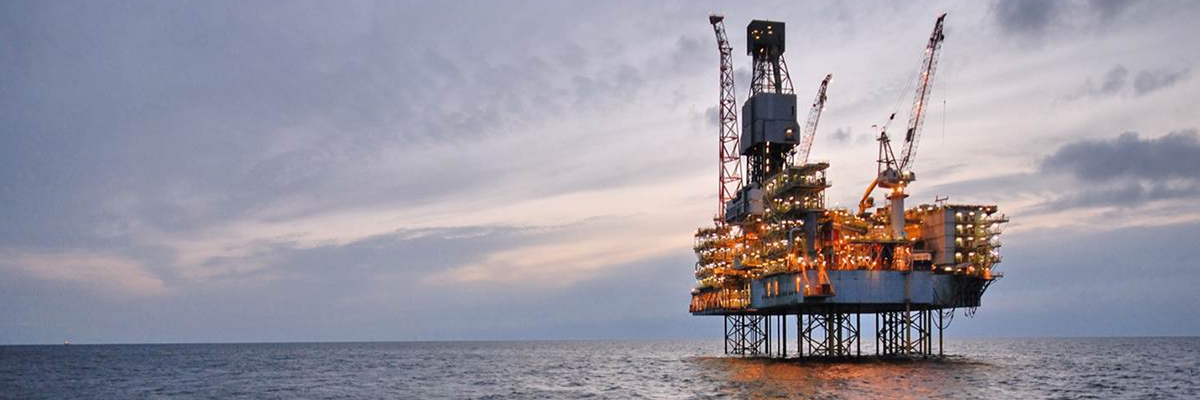
Azerbaijan's main gas field, Shah Deniz, is being developed by a consortium led by UK oil giant BP, but in which Iran's national oil company, NIOC, holds a 10 percent stake.
Shah Deniz is currently the only source of gas for the long-planned, EU-backed Southern Gas Corridor (SGC), aimed at lessening Europe’s dependence on Russian energy.
Already in August, Washington made the position of Shah Deniz and the SGC project clear when the Treasury Department granted a permanent waiver from Iran-related sanctions for "the development of natural gas and the construction and operation of a pipeline to transport natural gas from Azerbaijan to Turkey and Europe."
That concession means that neither BP, the Azerbaijani state oil company SOCAR, nor the other three shareholders will face sanctions related to that project.
Azerbaijan also stands potentially to benefit from any increase in global oil prices caused by the halting of Iranian exports. That uncertainty also would lead to an increase in natural gas prices, which are for the most part indexed to oil prices.
"Azerbaijan may well reap some secondary benefits from U.S. sanctions on Iran, since it stands to gain if oil prices increase as a result of heightened tensions in the Persian Gulf," Caspian energy analyst and Atlantic Council fellow John Roberts told Eurasianet, though he cautioned that any potential benefits are unpredictable as they rely on factors beyond Baku's control.
Roberts added that Azerbaijan's position is further complicated by its position as an importer of natural gas from Iran.
Azerbaijan imports small volumes of Iranian gas into its exclave of Nakhchivan for local consumption. Also, in recent years, gas from Turkmenistan has transited via Iran into mainland Azerbaijan to supplement its own production and to meet export commitments to Georgia, which is expected to import around 2.7 billion cubic meters of gas from Azerbaijan this year.
SOCAR spokesman Ibrahim Ahmadov told Eurasianet that the company’s gas imports via Iran have now stopped thanks to increased domestic production.
"A big part of the imported gas was used to fill our gas storage during summer which is then re-exported in winter when there is higher demand," Ahmadov said. With more than 3 billion cubic meters currently in storage, and further imports due from Russia before the end of the year, SOCAR doesn't anticipate shortages. "There should be no problems with the gas supply in Georgia," Ahmadov said.
Sandwiched between Iran and Armenia, and with a tiny outlet to Turkey, Nakhchivan's geography limits its alternatives.
An agreement with Ankara for a pipeline link to bring gas into Nakhchivan from Turkey was signed in 2010, but to date no pipeline has been laid, leaving the exclave still dependent directly on swap arrangements with Iran.
Such barter deals would not necessarily put Baku in breach of the U.S. sanctions. Ahmadov confirmed that SOCAR is “not planning any payment-based transactions with Iran in the near future.”
If Azerbaijan's gas exports to Georgia will indeed be unaffected, then Georgia – which with its Black Sea coast has no need to import Iranian petroleum products – should be little troubled by the U.S. sanctions.
Few Options for Armenia
The same, though, cannot be said for Armenia, whose landlocked geography and regional political isolation leave it few options.
With few natural resources of its own, and still getting over 40 percent of its power supply from the aging Metsamor nuclear power plant, Armenia has become increasingly dependent on imported gas to meet its energy needs.
The bulk of Armenia’s gas is imported from Russia (via Georgia), but Yerevan also imported about 400 million cubic meters of gas from Iran in 2017, and sends Iran power in exchange. In late 2017 an agreement was announced for Armenia to boost Iran gas imports by up to 25 percent, and to increase power exports by a similar amount.
The status of that agreement and of existing Iranian gas exports to Armenia is currently unclear.
On November 6, Armenian foreign ministry spokesperson Anna A. Naghdalyan tweeted that her ministry was closely monitoring developments. "A comprehensive examination of the effects the new sanctions will have on Armenia is ongoing," she said. She did not respond by press time to queries from Eurasianet.
Armenia's position is further complicated by the fact that much of its gas pipeline network is owned by Russia's Gazprom. The two have long bickered over the price Gazprom charges for the gas it supplies.
Forcing Yerevan to abandon Iranian imports will thus leave it more dependent on Russia, and in a far weaker bargaining position.
Photo Credit: BP