
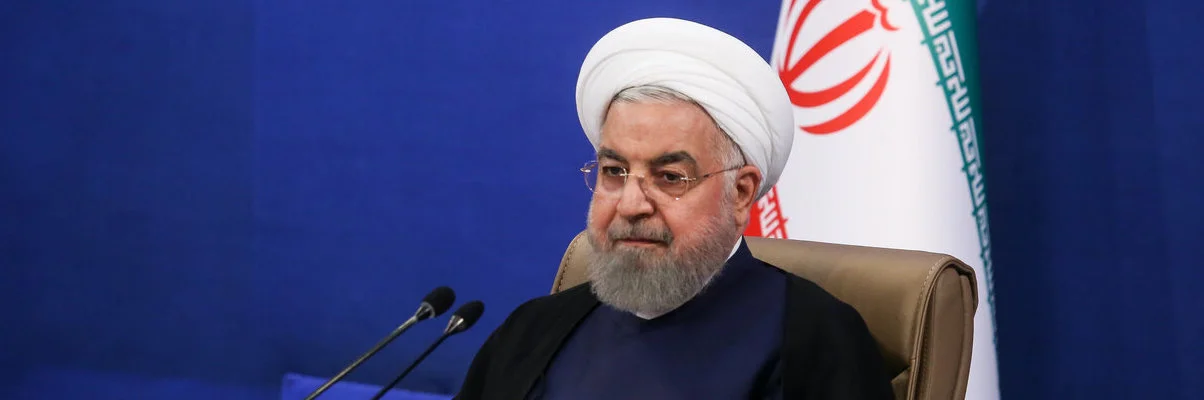
Iran's Rouhani Hopeful US Arms Embargo Push Will Fail
Iran's President Hassan Rouhani expressed "great hopes" Wednesday that a US bid to extend an arms embargo on his country will fail, warning of consequences if the UN Security Council backs it.
By Amir Havasi
Iran's President Hassan Rouhani expressed "great hopes" Wednesday that a US bid to extend an arms embargo on his country will fail, warning of consequences if the UN Security Council backs it.
Rouhani's remarks came after Iran's ambassador to the United Nations said the US would have to redraft its proposed resolution on the issue after being "rebuffed" by Security Council members.
"We have great hopes that America will fail," Rouhani told a televised meeting of his cabinet.
The ban on selling weapons to Iran is set to be progressively eased from October under the terms of Resolution 2231, which blessed the Iran nuclear deal that world powers agreed in July 2015.
But a UN embargo on materials and technology that Iran could use for its ballistic missile program is to remain in place until 2023.
The European Union has said it will continue to enforce its own embargo against Iran after the lifting of the first UN restrictions.
Under the accord officially known as the Joint Comprehensive Plan of Action, Iran committed to limiting its nuclear program in exchange for sanctions relief.
The JCPOA has been on life-support since the US under President Donald Trump withdrew from it and reimposed unilateral sanctions in 2018.
Iran has since taken small but escalatory steps away from compliance with the agreement as it presses for the sanctions relief it was promised.
'Blatant Violation'
"We have great hopes that America will realize its failure and see its isolation," the Iranian president said.
"But our stance in any case is clear. If such a resolution comes to pass... it means a blatant violation of the JCPOA," he added, warning the "consequences will rest with the perpetrators of this act".
Iran's envoy to the UN, Majid Takht Ravanchi, said on Wednesday that the US "was forced to retreat" from its draft resolution after being "rebuffed by UNSC members" and had to propose a fresh version.
"The new draft is similar—in its NATURE and GOAL—to the previous. Confident that the Council will—again—reject this move."
Foreign Minister Mohammad Javad Zarif said earlier the new draft was a "five-page resolution reduced to five sentences", and added that by presenting it as new, the US was disrespecting Security Council members.
The original US text, seen by AFP in New York, effectively called for an indefinite extension of the arms embargo on Iran and used hawkish rhetoric.
'Unholy Mess'
A new US-drafted resolution also seen by AFP was slimmed down from that one, but it still calls for an indefinite extension.
With most European countries in the 15-member Council expected to abstain, the new text is unlikely to get the nine votes it needs to pass.
If it does, China and Russia intend to veto the resolution.
Richard Gowan, a New York-based UN expert at the International Crisis Group, said the US had "mishandled the diplomatic choreography over this resolution.”
"They wanted to push their hardline draft and then make a show of compromising on a shorter text, which they hoped Estonia or Tunisia would introduce," he said.
"But the Estonians and Tunisians, like most other Council members, seem to have decided that they want as little to do with this unholy mess as possible.
"After talks on Monday, both turned down the opportunity to table the compromise text," he told AFP in New York.
"So now the US has had to do that itself. But the goal, which is to move towards snapback, remains the same."
European allies of the US—Britain, Germany and France, who along with Russia and China, are parties to the JCPOA—have voiced support for extending the conventional arms embargo but their priority is to preserve the nuclear deal.
Washington has threatened to use a contested argument that it remains a "participant" in the JCPOA—despite its withdrawal—and if UN sanctions are not extended, it can force their return if it sees Iran as being in violation of the accord's terms.
Photo: IRNA
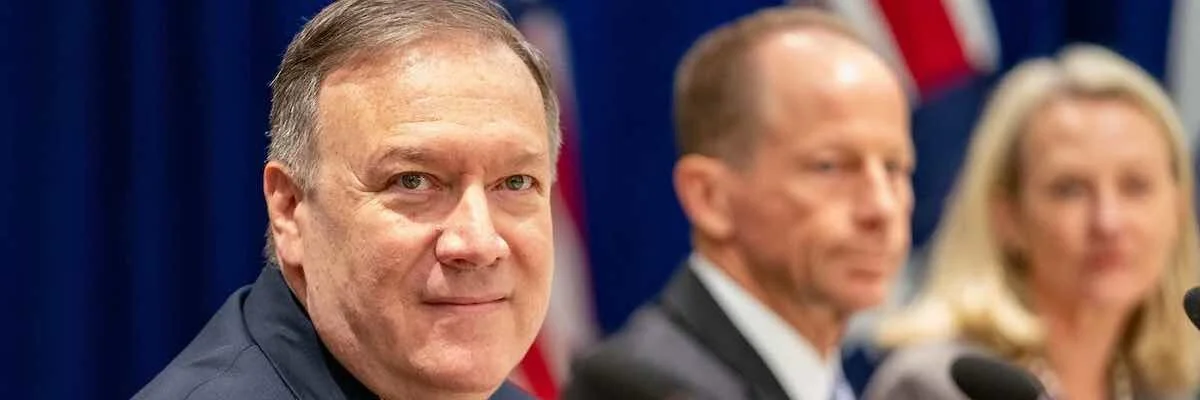
Pompeo Warns of UN Sanctions if Iran Arms Ban Ends
Secretary of State Mike Pompeo on Thursday gave his clearest indication yet that the United States would seek to force UN sanctions on Iran if an arms embargo lapses.
Secretary of State Mike Pompeo on Thursday gave his clearest indication yet that the United States would seek to force UN sanctions on Iran if an arms embargo lapses.
Russia and China, two of the Permanent Five nations that enjoy veto power on the Security Council, want the UN embargo on selling conventional weapons to Iran to end on October 18 as laid out under a 2015 resolution.
Pompeo told the Senate Foreign Relations Committee that the United States would introduce a resolution to extend the embargo "in the near future" which "we hope will be met with approval from other members of the P5."
"In the event it's not, we're going to take the action necessary to ensure that this arms embargo does not expire," he said.
The United States has previously said it has the authority to "snap back" UN economic sanctions that were lifted as part of a nuclear deal with Iran.
"We have the capacity to execute snapback and we're going to use it in a way that protects and defends America," Pompeo told the committee.
The 2015 resolution had blessed a denuclearization deal with Iran negotiated by former president Barack Obama from which President Donald Trump pulled out in 2018.
Trump has since repeatedly denounced the accord, but Pompeo argues that the United States remains a "participant" in the accord -- with the right to snap back UN sanctions for violations -- as it was listed in the 2015 resolution.
Even US allies are skeptical about the legal argument and warn that such a move could damage the Security Council as an institution.
France and Britain, the other nations in the P5, support extending the arms embargo but say the greater priority is maintaining a diplomatic solution to stop Iran's nuclear program.
The embargo issue could come to a head days before the US presidential election. Trump's rival Joe Biden backs the Iran agreement.
After leaving the accord, Trump unilaterally imposed US sanctions aimed at strangling Iran's economy and reducing its regional influence.
The Trump administration has demanded that all nations stop buying Iran's oil, its biggest export.
Pompeo on Thursday announced a further expansion of sanctions enforcement, saying the United States would punish anyone who transfers 22 specific metals including forms of aluminum and steel that could be used in Iran's weapons programs.
Photo: State Department
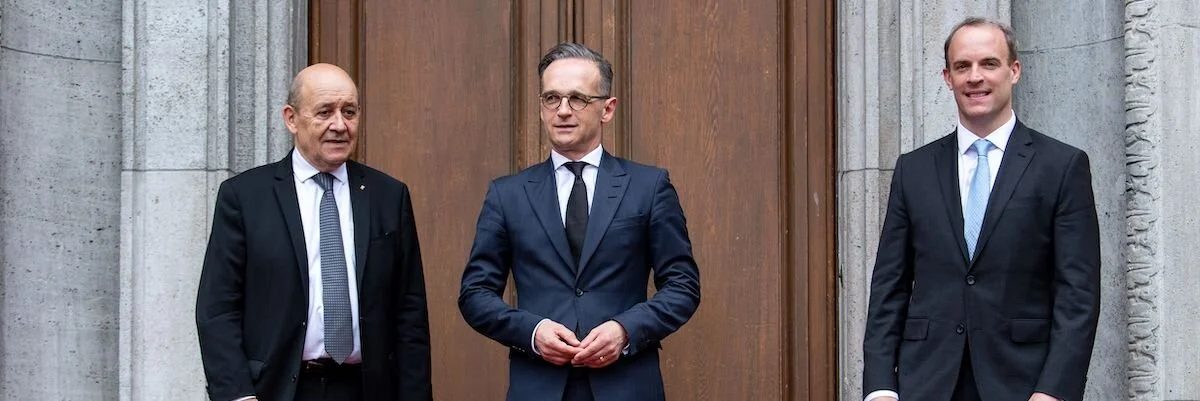
Britain, France, Germany Will Not Back U.N. Iran Sanctions Snapback
The foreign ministers of Britain, France and Germany said Friday they opposed lifting a UN arms embargo on Iran this year, but opposed sanctions “snapback,” after the UN's nuclear watchdog passed a resolution critical of Tehran.
The foreign ministers of Britain, France and Germany said Friday they opposed lifting a UN arms embargo on Iran this year, after the UN's nuclear watchdog passed a resolution critical of Tehran.
"We believe that the planned lifting of the UN conventional arms embargo established by Resolution 2231 next October would have major implications for regional security and stability," the ministers said in a joint statement.
The statement by the three key European powers on Iran will be a blow to Tehran, which had urged a lifting of the embargo despite US pressure for it to remain in place.
The ban on selling weapons—such as battle tanks, combat aircraft, warships and missiles or missile systems—to Iran had been set to be progressively eased from October.
Iranian President Hassan Rouhani earlier this month urged UN Security Council members to oppose a US "conspiracy" to extend the arms embargo.
The three powers said they plan to address the arms embargo issue "in close coordination" with UN Security Council permanent members Russia and China.
The board of governors at the International Atomic Energy Agency (IAEA) had passed a resolution Friday urging Tehran to provide inspectors with access to two sites to clarify whether undeclared nuclear activity took place there in the early 2000s.
It was the first such resolution since 2012 and came against a background of tension over the Iranian nuclear program, with Iran's position causing increasing exasperation in Europe.
"Since 2019, Iran has taken nuclear measures contrary to its commitments" under the 2015 deal on its nuclear program with world powers, the ministers' statement said.
It added that Iran "has denied the access requested by the agency for many months" to the sites.
But the powers insisted they remained committed to the 2015 nuclear deal, which analysts believe has been greatly undermined by the withdrawal of the United States in 2018.
They said sanctions should not be reimposed and that they opposed the "maximum" pressure policy against Iran of the administration of US President Donald Trump.
"We firmly believe that any unilateral attempt to trigger UN sanctions snapback would have serious adverse consequences" in the UN Security Council.
"We remain committed... (to the nuclear deal) and, in order to preserve it, urge Iran to reverse all measures inconsistent with the agreement and return to full compliance without delay," said the statement.
Photo: Shutterstock
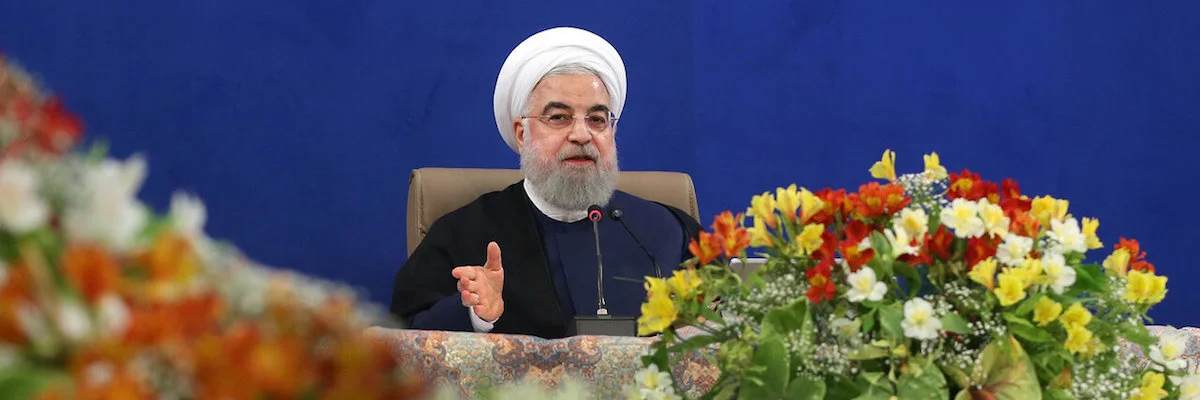
Iran Urges Powers to Oppose US Arms Embargo Bid
Iran's President Hassan Rouhani on Wednesday urged UN Security Council members, especially veto-wielding China and Russia, to oppose a US "conspiracy" to extend an arms embargo on Iran.
Iran's President Hassan Rouhani on Wednesday urged UN Security Council members, especially veto-wielding China and Russia, to oppose a US "conspiracy" to extend an arms embargo on Iran.
"We will reach a point... when, based on Resolution 2231, all arms embargoes on Iran will be lifted," said Rouhani
"The Americans are already angry and upset... and are preparing a resolution and want to bring it to the Security Council," he told a televised cabinet meeting.
The ban on selling weapons to Iran is set to be progressively eased from October in accordance with UN Security Council Resolution 2231.
The weapons include battle tanks, combat aircraft, warships and missiles or missile systems, according to the resolution.
But a UN embargo on materials, goods, equipment and technology that Iran could use for its ballistic missile program will remain in place until October 2023.
The European Union has said it will continue to enforce its own arms embargo against Iran after the lifting of the first UN embargo.
Resolution 2231 blessed the landmark international agreement reached in 2015 that placed limits on Iran's nuclear program.
US President Donald Trump withdrew from the accord—known formally as the Joint Comprehensive Plan of Action (JCPOA)—in 2018 and began reimposing sanctions on Iran.
The United Nations Security Council includes among its 15 members five veto-wielding permanent members—Britain, China, France, Russia and the United States.
Rouhani appealed to those other than the United States to oppose its bid to extend the arms embargo.
"We expect the four permanent members to stand against this conspiracy, for global interests, global stability," he said.
"We especially expect (this from) our two friendly countries, Russia and China."
Washington said last week it had shared a draft resolution with Russia to extend the ban, with Moscow and Beijing having already voiced opposition to he measure.
"Russia and China need to join a global consensus on Iran's conduct," said Kelly Craft, the US ambassador to the UN.
“This is an absolute imperative that we exercise all our options to make certain that this UN arms embargo is extended."
Even though Trump has left the nuclear accord, his administration has argued that the US remains a participant under Resolution 2231 and can trigger UN sanctions for Iran's non-compliance with the 2015 deal.
Yet according to the EU's top diplomat Josep Borrell, the US "cannot claim they are still part of the JCPOA to deal with this issue" after leaving it.
Iran, which has gradually scaled back its commitments to the accord in response to the renewed US sanctions, has dismissed the US argument as without any legal standing and warned that extending the embargo would mean the death of the nuclear accord.
Photo: IRNA
Iran's Rouhani Threatens to Cut Off Persian Gulf Oil
◢ Iran's President Hassan Rouhani struck a defiant stance against US sanctions on Tuesday, renewing his threat to cut off international oil sales from the Gulf. “America should know... it is not capable of preventing the export of Iran's oil," Rouhani said at a televised rally in Semnan province.
Iran's President Hassan Rouhani struck a defiant stance against US sanctions on Tuesday, renewing his threat to cut off international oil sales from the Persian Gulf.
“America should know... it is not capable of preventing the export of Iran's oil," Rouhani said at a televised rally in Semnan province.
"If it ever tries to do so... no oil will be exported from the Persian Gulf," he added. since the 1980s, Iran has said repeatedly it would blockade the Gulf in response to international pressure but has never carried out the threat.
Washington has reimposed sanctions, including an oil embargo, since withdrawing from a landmark 2015 nuclear deal between Tehran and major powers in May.
It has vowed to reduce Iran's oil sales to zero, but has granted temporary waivers to eight countries.
Rouhani last threatened to close the Gulf in July when he warned the US "should not play with the lion's tail."
The president downplayed the economic impact of sanctions, accusing the media of exaggerating the country's problems.
"No hyperinflation, no massive unemployment will threaten us. People should stop saying such things in the papers," he told the crowd.
The latest inflation report from Iran's central bank says food prices rose 56 percent year-on-year in October.
Rouhani acknowledged there were "some problems", but said these would be addressed in the new budget plan to be presented on December 16.
He said the government would maintain subsidies on essential goods and increase public sector wages and pensions by 20 percent.
Photo Credit: IRNA