
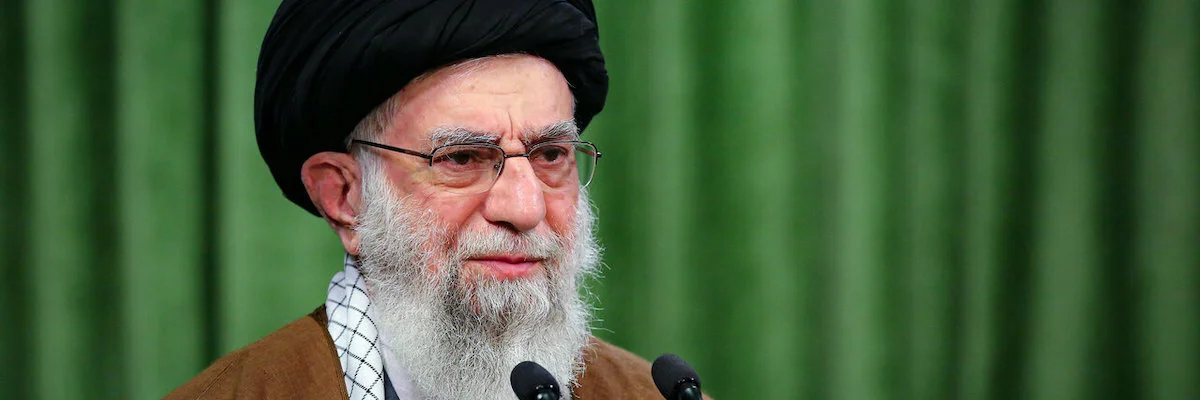
Khamenei Says Outcome of US Vote Will Not Affect Iran's Policies
The US presidential election will have "no effect" on Tehran's policies towards Washington, Iran's supreme leader said Tuesday.
The US presidential election will have "no effect" on Tehran's policies towards Washington, Iran's supreme leader said Tuesday.
"On the subject of the United States, we follow a sensible, calculated policy (which) cannot be affected by changes of personnel" in Washington, Ayatollah Ali Khamenei said in a televised speech marking the anniversary of the birth of the Prophet Mohammed.
"Today is election day in the United States. Things may happen but they do not concern us," he said. "Our policies are well defined and the coming and going of (presidents) will have no effect" on them.
American voters headed to the polls on Tuesday in a vote that coincides with the anniversary of the 1979 storming by radical students of the US embassy in Tehran.
The ensuing crisis lasted 444 days until 52 hostages were finally released, and has poisoned relations between the two countries to this day.
Iran and the US have come close to armed conflict twice since June 2019, following the Trump administration's withdrawal the previous year from a multilateral deal on the Iranian nuclear programme.
Trump has engaged in a policy of "maximum pressure" against Tehran, reimposing harsh sanctions that have plunged the Iranian economy into a severe recession.
Tehran has responded by rolling back its commitments under the 2015 accord.
Joe Biden, Trump's challenger, who is leading in polls, favours diplomacy with Iran and has backed the nuclear accord negotiated while he was vice president under Barack Obama.
Photo: IRNA
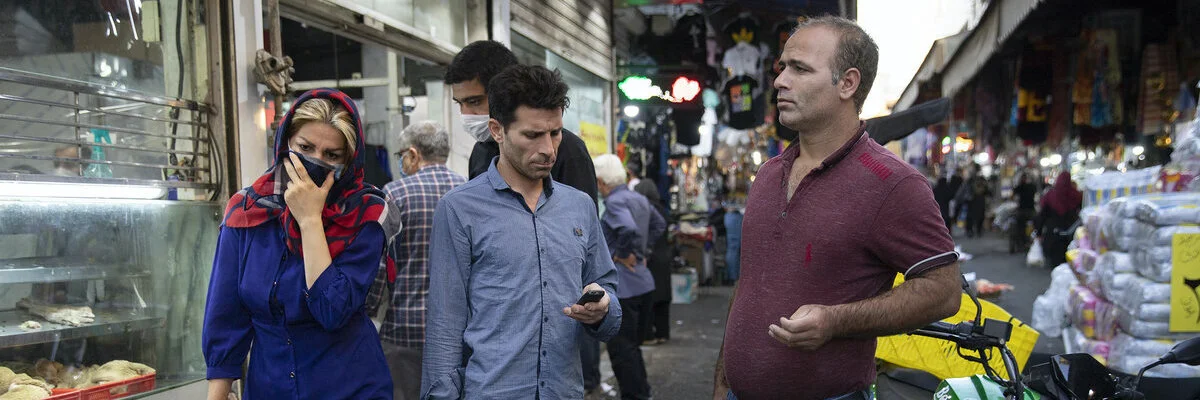
In Tehran, White House Race is Talk of Town
For Iran, struggling from sanctions imposed under Washington's policy of "maximum pressure", the US presidential race raises hope of change—but also fears that life could get even worse.
By Ahmad Parhizi
For Iran, struggling from sanctions imposed under Washington's policy of "maximum pressure", the US presidential race raises hope of change—but also fears that life could get even worse.
“The general view is that the result of this presidential election is crucial for the population,” said Zeinab Esmaili, who covers foreign affairs for the Iranian reformist newspaper Shargh.
Tehran and Washington, long-time enemies, have not maintained diplomatic relations for decades.
But tensions have soared under US President Donald Trump, who pulled out of a nuclear accord negotiated by his predecessor Barack Obama—as well as other nations—and placed sweeping sanctions on the country.
Iranians have grown used to having their day-to-day lives hit hard by foreign policy decisions taken far away in the US.
“It is natural for us to talk about the American elections,” said Mohammad Amin Naqibzadeh, a 28-year-old geopolitics student.
In May 2018, Trump withdrew from a landmark deal that gave Iran relief from sanctions in return for UN-verified guarantees that it is not seeking nuclear weapons.
The subsequent waves of sanctions on Iran have crippled its economy.
International Arrogance
So along with the US election, two topics dominate conversation in Tehran: the rise in prices and the declining exchange rate of the Iranian rial.
Both crises are linked deeply to US relations with Tehran.
Iran has also been battered by the coronavirus pandemic, with related restrictions adding to the Islamic republic’s economic woes.
The value of its currency has slumped dramatically.
The rial has lost nearly 90 percent of its value against the dollar in the past three years, fueling galloping inflation.
Iran regularly denounces as “lies” Washington’s claims that the sanctions do not affect ordinary citizens.
Officially, the authorities have a clear view on who they support: neither candidate.
Both Trump and Democratic White House hopeful Joe Biden are two sides of the same coin of Washington’s “international arrogance”.
For Iran’s leaders, Washington is often dubbed the “Great Satan”, or simply the “enemy”.
But on Tehran’s streets, many residents say they believe they would be better off with Biden.
If Trump is re-elected, people expect to get more of the same “maximum pressure” policy and crushing sanctions.
In September, Biden wrote that he “will offer Tehran a credible path back to diplomacy”.
Some hope that could mean the potential return of the US to the UN nuclear agreement on Iran — a deal struck while Biden was Obama’s vice-president.
“There is therefore hope he will return to this agreement,” said Mohammad Ali Kiani, a 28-year-old politics student.
“In general, people think that a victory for Biden… would be better for Iran,” said Esmaili, the journalist for Shargh.
But not all are convinced.
“People are hoping for an improvement in their economic situation,” said journalist Maziar Khosravi.
“It does not matter to them who is in the White House.”
Others seem to expect that Trump will win a second term—and that for them, life will grow worse.
“They see it as very likely that Trump will start a second term and that… the rise in prices and the devaluation of the rial will continue,” Esmaili said.
‘Illusion’
The news that Trump tested positive for the coronavirus sparked several conspiracy theories on Iranian social media—as well as jokes linking the state of his health to the exchange rate.
Officially, the authorities in Iran support neither President Donald Trump nor his challenger Joe Biden in the US election, but many people on Tehran’s streets say they believe they’ll be better off with Biden© AFP ATTA KENARE
If Trump wins a second term, the continuation of his hardline policies will further impact politics in Iran.
“A radical American approach also radicalises (politics) in Iran,” said reformist economist Saeed Leylaz.
Leylaz wants to believe that if Biden won, he would “seriously change US policy towards Iran”.
But others are skeptical, and say a Biden victory would unlikely change much — not least because there are only five months between the January 20 inauguration of the US winner, and Iran’s own presidential elections on June 18.
Hamidreza Taraqi, a senior official in the conservative alliance which won legislative elections in February, is opposed to any discussion with Washington.
He pointed out that the decades-long political conflict between Tehran and Washington has already “tested both Democrats and Republicans”, and calls the idea of change under Biden an “illusion”.
“Neither have embarked on a path that will resolve the problems” of Iran, he said.
Photo: IRNA
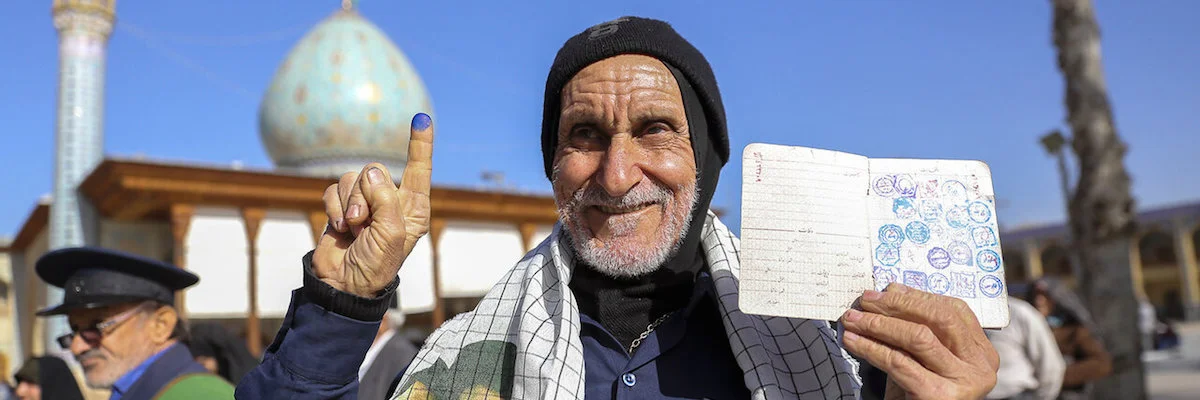
Conservatives Claim Victory in Iran Polls After Record Low Turnout
◢ Conservatives took a lead Saturday as the first results of Iran's parliamentary election came in, boosted by a predicted low turnout following the disqualification of nearly half the candidates. The conservative and ultra-conservative alliance appeared to have a comfortable edge in the capital in preliminary results, the committee's spokesman Esmail Mousavi said.
By Amir Havasi
Conservatives took a lead Saturday as the first results of Iran's parliamentary election came in, boosted by a predicted low turnout following the disqualification of nearly half the candidates.
Friday's election followed months of steeply escalating tensions between Iran and its decades-old arch foe the United States.
Voters had been widely expected to shun the polls, disillusioned by unfulfilled promises and struggling to cope in a country whose economy has buckled under harsh US sanctions.
About half of the 16,000-odd candidates were barred. Among them were many reformists and moderates—including dozens of sitting lawmakers.
By midday Saturday, votes had been counted in 71 constituencies out of 208, according to National Elections Committee figures reported by semi-official news agency ISNA.
Tehran is the biggest catch in the election with 30 seats.
The conservative and ultra-conservative alliance appeared to have a comfortable edge in the capital in preliminary results, the committee's spokesman Esmail Mousavi said.
Most votes went to the first three names on the alliance's list, he said.
Leading the race was Mohammad Bagher Ghalibaf, a three-time presidential candidate, former police chief and member of the Revolutionary Guards who was Tehran mayor from 2005 to 2017.
Reformists and moderates hardly figured in the 37 other names of "leading Tehran candidates", Mousavi said.
Final results for both the capital and other provinces would be announced by early Sunday at the latest, he added.
Landslide Win
The interior ministry announced results of 95 percent of the 208 constituencies in Friday's election, declaring the names of the winning candidates but without specifying their political affiliation.
"Victory for the anti-American candidates, a new slap for Trump," crowed the ultra-conservative Kayhan newspaper.
"The people have disqualified the reformists," it added, alluding to Rouhani's backers, who have been weakened by President Donald Trump pulling the US out of a landmark nuclear deal and by a slew of economic and political crises.
Seventeen women were elected, the website of the government newspaper Iran said—the same number as in the outgoing 290-seat parliament.
Interior Minister Abdolreza Rahmani Fazli announced the participation rate was 42.6 percent—the lowest in four decades.
The election came two days after Iran announced its first cases of the deadly new coronavirus that emerged in China.
"We held these elections when there were various incidents in the country: we had bad weather, there was this coronavirus disease, there was the plane crash," Rahmani Fazli said, referring to the January 3 downing of a Ukrainian airliner which killed 176 people.
He said that in such a scenario "the turnout rate seems perfectly acceptable for us."
"A lot of people voted in the previous parliamentary election, but the enthusiasm faded away every day after that," Ali, a Tehran taxi driver, told AFP.
"And now there's nothing to be hopeful about to go and vote," added the 53-year-old, who abstained.
With official figures still coming in, news outlets close to conservatives and ultra-conservatives have predicted a landslide win for their candidates across Iran.
The state television website said most of the 56 winners announced on Saturday were fresh faces and only 10 were former members of parliament.
Fars tweeted that turnout in Tehran was 1.9 million out of more than nine million eligible voters.
Many in the capital seem to have sat out the election, including Arghavan Aram, who manages an NGO for transsexuals.
"An election with only one faction is not an election, it's a selection," she said.
'Natural' Turnout
Political figures across the spectrum discussed the cause of what may be a historically low turnout, even though final figures have yet to be released.
"Such a turnout is natural in an election where progressive reformists couldn't present candidates due to unprecedented disqualifications," Emad Bahavar, a reformist activist, tweeted.
Abdollah Ganji, editor-in-chief of ultra-conservative Javan daily, asked his Twitter followers about the low turnout, and those who responded said economic problems were the main cause.
Tweeting his congratulations to conservatives, prominent right-wing figure Ezzatollah Zarghami said it would be "very important" to get to the root cause of the low turnout.
The 11th parliamentary election since the 1979 Islamic Revolution comes after a surge in tensions between Tehran and Washington, and Iran's accidental downing of a Ukrainian airliner that sparked anti-government protests.
Turnout was estimated at around 40 percent nationwide and 30 percent in Tehran at the scheduled close of polls on Friday, according to Fars.
But authorities extended polling for another six hours to allow as many people as possible to vote.
Fars said the official turnout figure would be released on Saturday, while official results are not expected to be announced until Sunday.
Schools were closed in dozens of urban centres on Saturday while the count went ahead.
Iran fell into a deep recession after US President Donald Trump reimposed sanctions following Washington's unilateral withdrawal from a landmark nuclear deal in 2018.
Photo: IRNA
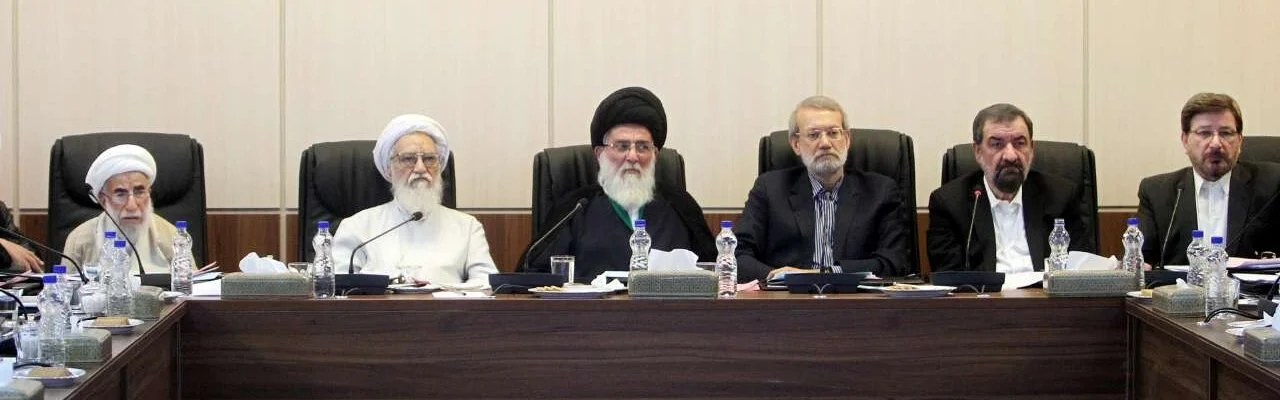
U.S. Sanctions Iranian Election Officials Who Bar Candidates
◢ The U.S. said it has sanctioned members of an Iranian government agency that it says rigs elections in the country by disqualifying candidates who don’t echo the political ideology of Ayatollah Ali Khamenei. Five members of Iran’s Guardian Council and its Elections Supervision Committee, who are appointed by Khamenei, were added to the U.S. sanctions list on Thursday.
By Alex Wayne and Golnar Motevalli
The U.S. said it has sanctioned members of an Iranian government agency that it says rigs elections in the country by disqualifying candidates who don’t echo the political ideology of Ayatollah Ali Khamenei.
Five members of Iran’s Guardian Council and its Elections Supervision Committee, who are appointed by Khamenei, were added to the U.S. sanctions list on Thursday, the Treasury Department said in a statement.
“The Trump administration will not tolerate the manipulation of elections to favor the regime’s malign agenda, and this action exposes those senior regime officials responsible for preventing the Iranian people from freely choosing their leaders,” Treasury Secretary Steven Mnuchin said in the statement. “The United States will continue to support the democratic aspirations of Iranians.”
The commander of Iran’s powerful Islamic Revolutionary Guard Corps, General Hossein Salami, urged Iranians to turn out for parliamentary elections on Friday in defiance of the U.S. and said “every vote by the people is a slap in the face of an enemy who is hoping for a low turnout,” the semi-official Tasnim news reported.
The government is concerned about low turnout for the election after the Guardian Council and its elections committee issued mass disqualifications of reformist and moderate candidates. Treasury said in its statement that “several thousand” candidates were ruled ineligible for the election, “including several incumbent legislators.”
Brian Hook, the State Department’s special representative for Iran, told reporters Thursday that the balloting is “political theater” because “the real election took place in secret long before any ballots were cast.”
Photo: IRNA
Iran Defends Barring of Candidates as Campaign Ends
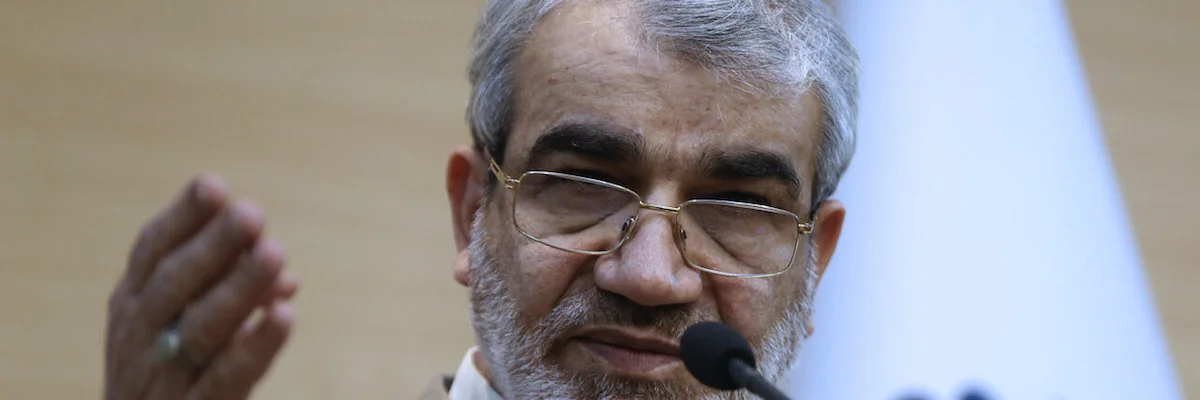
◢ Iran's electoral watchdog on Wednesday defended its decision to disqualify thousands of candidates for a crucial parliamentary election in two days, as a lackluster campaign neared its end. Conservatives are expected to make an overwhelming resurgence in Friday's vote.
By David Vujanovic
Iran's electoral watchdog on Wednesday defended its decision to disqualify thousands of candidates for a crucial parliamentary election in two days, as a lackluster campaign neared its end.
Conservatives are expected to make an overwhelming resurgence in Friday's vote, which comes after months of steeply escalating tensions between Iran and its decades-old arch foe the United States.
Their gains would be made at the expense of those who back President Hassan Rouhani, a moderate conservative who was re-elected in 2017 promising people more freedoms and the benefits of engagement with the West.
But many people in Iran feel their lives have been crippled by an economic slump exacerbated by harsh US sanctions since President Donald Trump pulled the United States out of a landmark nuclear deal with the Islamic republic in 2018.
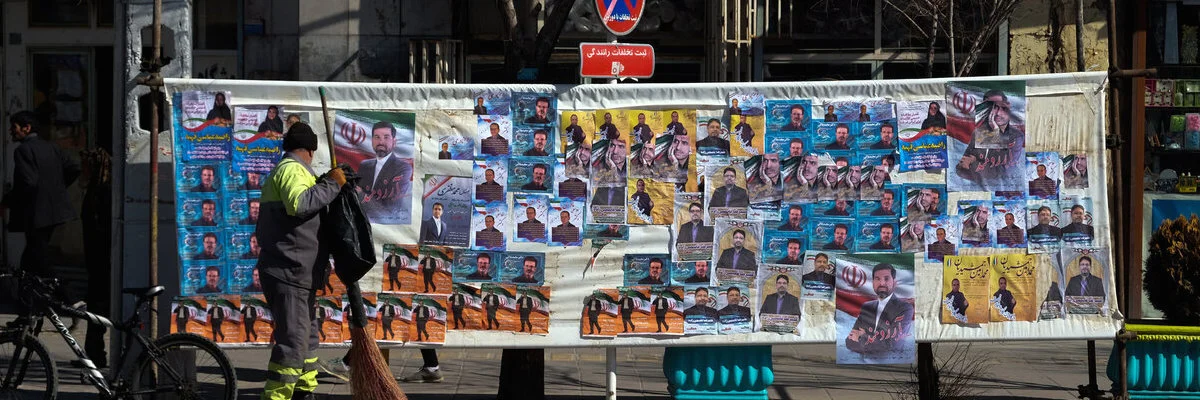
A week of campaigning, which has seen posters go up but only a few low-key gatherings, comes to an end on Wednesday, before a day of silence on the eve of polling day.
The interior ministry said around half of the 16,033 hopefuls would contest the election after the Guardian Council barred thousands, most of them moderates and reformists.
But the Council said it was "neutral" in its dealings with all political camps and acted in accordance with the law when it blocked their candidacy.
"The Guardian Council follows the laws and regulations parliament has passed at different times," said its spokesman Abbas Ali Kadkhodaee.
Disillusionment
"This time, just like at previous (elections), we have tried to properly follow the law," he told a news conference.
"The Council has never had a political view... It approaches political factions with closed eyes.
"What it does judge is the evidence in the cases of the candidates and then it only acts in accordance with the law passed by parliament."
Commentators expect disillusionment among the 57 million-strong electorate in the sanctions-hit country to result in a low turnout.
Many people on the streets of Tehran have expressed dissatisfaction with politicians ahead of the election, saying they failed to keep their word or to raise living standards.
Supreme leader Ayatollah Ali Khamenei on Tuesday urged Iranians to vote, saying it was a "religious duty".
Rouhani issued a similar call on Wednesday, saying that taking part would give Iran the "strength and unity" needed in its stand against the United States.
"We are going to the polls to choose the best people for parliament, which is a very important institution," he said in televised remarks after a meeting of his cabinet.
"We are under severe sanctions and pressure by the global arrogance, and we have to break these sanctions and improve people's lives," he added, referring to the United States.
"Sanctions are a terrorist and tyrannical act against Iran.
"One cannot say sanctions have no effect and the government should be doing more... It's lies, it's supporting America."
Turnout at Iran's past 10 elections averaged 60.5 percent, said the interior ministry.
'Tyrannical' Sanctions
The Guardian Council said it expected at least 50 percent of registered voters to cast ballots in the election.
"Our forecast is that we will have a good turnout in the upcoming election, and the average turnout has usually not been under 50 percent, and we will witness a turnout of 50 percent turnout in this election too," its spokesman Kadkhodaee said.
Iranians have been feeling the strain after months of turmoil.
The economy has been battered since Trump abandoned the nuclear deal in 2018 and reimposed sanctions as part of a "maximum pressure" campaign.
In November, demonstrations over petrol price hikes spread across Iran and turned violent before being crushed in a deadly crackdown.
Tehran and Washington have nearly gone to war twice in the past seven months, most recently after the US killed prominent Iranian general Qasem Soleimani on January 3.
The "martyrdom" of the hugely popular general provoked an outpouring of grief in Iran.
Millions of people turned out to mourn his death, but that unity suffered a blow after Iran admitted it "accidentally" shot down a Ukrainian airliner, killing 176 people.
Voting for Iran's 290-seat parliament, or Majles, opens at 8:00 am (0430 GMT) on Friday and lasts 10 hours, but can be extended. The first results are expected on Sunday.
Photo: IRNA
Iran Supreme Leader Says Voting is 'Religious Duty'
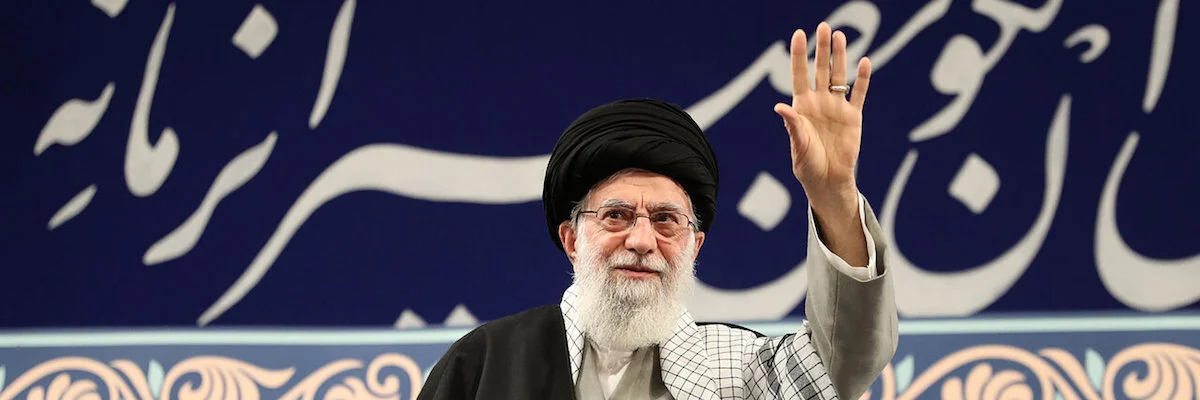
◢ Iran's supreme leader said Tuesday it is a "religious duty" for people to vote in this week's general election and strengthen the Islamic republic against the "propaganda" of its enemies. "Participating in elections and voting... is a religious duty, not just a national or revolutionary duty," Ayatollah Ali Khamenei said in a speech, parts of which were aired on state television.
Iran's supreme leader said Tuesday it is a "religious duty" for people to vote in this week's general election and strengthen the Islamic republic against the "propaganda" of its enemies.
"Participating in elections and voting... is a religious duty, not just a national or revolutionary duty," Ayatollah Ali Khamenei said in a speech, parts of which were aired on state television.
"Elections nullify many of the vicious plots the Americans have in their minds and Zionists have in their hearts against the country," he said, referring to US ally Israel.
Iranians are set to elect a new parliament on Friday, with conservatives expected to make a resurgence.
Observers expect a low turnout as many reformist and moderate candidates have been barred from running by the Guardian Council.
The council, made up of six clerics appointed by the supreme leader and six lawyers selected by the judiciary, disqualified more than half of the 14,444 hopefuls.
The move threatens the thin majority of President Hassan Rouhani's alliance in parliament.
Friday's election comes after months of domestic turmoil and steeply escalating tensions between Iran and its arch enemy the United States.
In November, nationwide demonstrations over petrol price hikes turned violent before being crushed in a deadly crackdown.
Tensions with Washington have risen since 2018 when US President Donald Trump withdrew from a landmark nuclear agreement and reimposed crippling sanctions.
But they have never come as close to a direct confrontation as in the past seven months, when it has happened twice, most recently after the US killed prominent Iranian general Qasem Soleimani on January 3.
Iran hit back on January 8 by firing a barrage of missiles at US troops in Iraq.
It had been on high alert for US retaliation that day when they shot down a Ukrainian airliner in Tehran, killing all 176 people on board.
The downing of the Boeing 737, which the armed forces later admitted was accidental, sparked more protests that turned political.
Khamenei said the election would show that Iran's enemies had failed to divide the nation.
"Watch how the people favor the election despite the enemies' insistence on distancing the people from the system," the supreme leader said.
Photo: IRNA
Iran’s Hard Liners Are Making a Comeback
◢ So-called “principlists”—conservatives wedded to the theocratic ideals of Iran’s 1979 Islamic Revolution and often connected to the IRGC—are set to win elections to Iran’s parliament on Friday. And although the legislature has only limited powers, the vote will set the foundations for presidential elections due next year and the eight-year political cycle to follow.
By Marc Campion and Arsalan Shahla
Last month, a strategist for Iran’s Islamic Revolutionary Guard Corps proposed an alarming tactic to revive the ailing economy: Take an American hostage every week and ransom them back for $1 billion each.
“That’s the way to do it,” Hassan Abbasi told a public meeting in Nowshahr, a port city on the Caspian Sea.
Abbasi’s bombast, widely viewed on YouTube, has been disowned by the IRGC’s leadership and isn’t policy. Yet it raises a vital question: What would hard liners do differently if they secured control over all branches of power in Iran? That’s important because it’s probably about to happen for the first time since 2013, when President Hassan Rouhani swept to office promising an end to Iran’s long-running nuclear standoff with the West and a new era of economic prosperity.
So-called “principlists”—conservatives wedded to the theocratic ideals of Iran’s 1979 Islamic Revolution and often connected to the IRGC—are set to win elections to Iran’s parliament on Friday. And although the legislature has only limited powers, the vote will set the foundations for presidential elections due next year and the eight-year political cycle to follow.
The return of conservative control to all branches of government for the first time since the end of Mahmoud Ahmadinejad’s presidency in mid-2013 has significant potential consequences for the Iranian economy and the wider Middle East – including any hopes Iran will renegotiate its landmark nuclear settlement with the U.S.
About 90 current MPs have been barred from running again, tipping the field heavily in favor of principlists who have argued that Iran should not yield to the economic privations imposed by tightening U.S. sanctions.
That piles additional pressure on Rouhani and his less ideologically-driven government, which has already lost much credibility in the eyes of voters since the U.S. unilaterally withdrew from the 2015 nuclear deal he championed.
Rouhani signed that agreement expecting the accompanying sanctions relief to trigger foreign investment and plug the nation of 84 million into the global economy after decades of isolation. Never fully realized, those hopes disappeared after the U.S. reimposed sanctions in 2018.
“What is especially important for people is to see this severe pressure lifted from their lives in line with the values of the Islamic revolution,” Alaeddin Boroujerdi, prominent conservative legislator and former head of parliament’s committee on foreign policy and national security, said in a phone interview on Monday. “As the Supreme Leader has said, we are in an imposed economic war.”
Officials from Supreme Leader Ayatollah Ali Khamenei down are urging a shift to “economic resistance” -- an idea floated in the midst of nuclear negotiations as a fall back option should the West abrogate its commitments. That would see Iran abandon Rouhani’s push to open up toWestern investment and trade, and focus, instead, on boosting self-reliance. It calls for looser fiscal policies to support the poor, less dependence on oil exports, and more investment in domestic industries.
Conservatives say Iran should turn instead to China, already the nation’s biggest trade partner, though that’s probably not enough to ensure growth. Chinese energy technologies have disappointed Iranian partners in the past and, already embroiled in a trade war with the U.S., China has proved reluctant to invite American penalties by buying much more Iranian oil.
The re-imposition of sanctions has hammered the economy – the International Monetary Fund estimates it shrank by 9.5% last year – but Iran’s growth, inflation and, to an extent, its currency have begun to stabilize, even if recovery remains elusive. Oil exports, down 80%, show no sign of recovering. Yet the construction sector is doing well, as are steel production and exports for cash to Iran’s immediate neighbors – a trade more difficult for the U.S. to interdict than oil.
A crisis budget issued in December gives an idea of the emerging approach. Unusually, it received approval from the National Economic Security Council before presentation to parliament, signalling cross-system support. It boosts handouts for the poor as well as defense spending, though in both cases by less than inflation and relying on some heroic growth and oil export assumptions to make the sums add up.
Iran appears confident it has sufficient reserves to plug those fiscal holes, at least for a year or so. Critically, that would take the country beyond November elections in the U.S., which might bring a change of attitude in Washington – even if President Donald Trump secures a second term.
“The Trump administration has framed its policy as giving Iran a choice: Capitulate to U.S. demands, or see the economy collapse,” said Henry Rome, an Iran specialist at Eurasia Group, a New York-based risk consultancy. “But the Iranians have made it clear they are forging their own third option – to muddle through until circumstances shift in their favor.”
IRGC to Power?
In a recent research note to clients, Tehran business consultancy Ara Enterprise predicted a landslide conservative victory in parliamentary polls, leading to deeper political and economic isolation. Yet they could also surprise.
“Many believe that the IRGC in power is not such a bad scenario, as no one could sabotage their mandate,” the note said, whereas reformist President Mohammad Khatami (1997-2005), like Rouhani, faced a conservative assault. IRGC control, it added, could even lead to a Nixon-to-China-style settlement with the U.S., something conservatives would never allow with Rouhani as president.
The IRGC, the only national military force listed by the U.S. as a terrorist organization, has become richer and more powerful than it was even under Ahmadinejad. Across sectors, it has taken contracts that either belonged to or were intended for foreign investors driven away by sanctions. That process is likely to continue.
The risk for conservatives is that some voters will stay home, reducing turnout and, potentially legitimacy. One poll taken after fuel-price protests in November found only 21% of respondents in Tehran planned to vote, though confrontation with the U.S. has energized Khamenei’s conservative base.
“It’s not a matter of reformists versus conservatives anymore,” said Mohsen, a 33-year-old who attended last week’s celebration of the revolution. “It’s about revolutionaries against non-revolutionaries, supporters of the Islamic revolution against infiltrators and deviants.”
Photo: IRNA
Iran's Beleaguered President Rouhani Rules Out Resigning
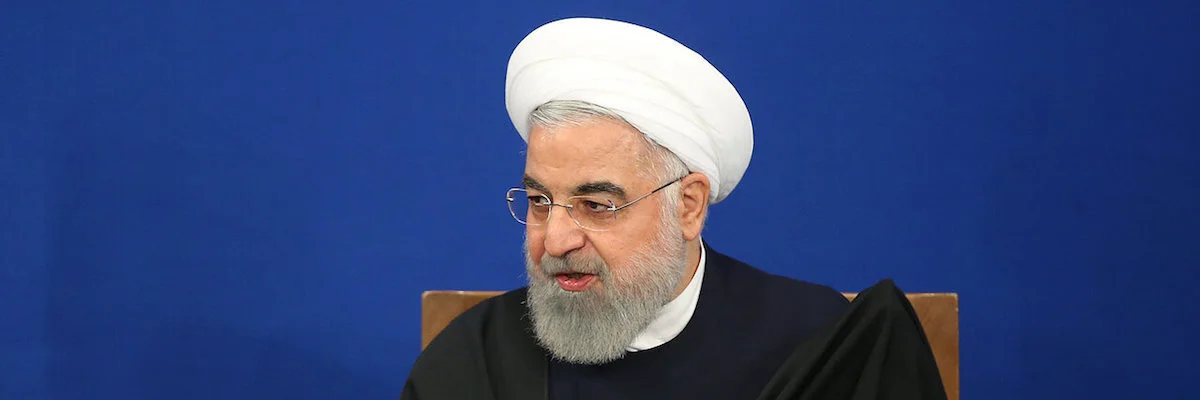
◢ Iran's President Hassan Rouhani on Sunday ruled out resigning and vowed to see out his term, even as he admitted he had offered to step aside twice since being elected. Speaking ahead of a general election next Friday, Rouhani also appealed to voters to turn out despite the fact that many moderate and reformist candidates were disqualified from the race.
By Amir Havasi
Iran's President Hassan Rouhani on Sunday ruled out resigning and vowed to see out his term, even as he admitted he had offered to step aside twice since being elected.
Speaking ahead of a general election next Friday, Rouhani also appealed to voters to turn out despite the fact that many moderate and reformist candidates were disqualified from the race.
Rumours have swirled in Iran recently that the 71-year-old, whose second and last term ends next year, had been planning to quit, but his office denied the reports.
Rouhani's government has come under fire over the state of Iran's sanctions-hit economy and for allegedly failing to fulfil election promises.
The legitimacy of Rouhani and his government have been called into question after they were left in the dark for days after the armed forces admitted they "accidentally" shot down a Ukrainian airliner on January 8.
Hardliners have attacked his administration for negotiating a nuclear deal with world powers that ultimately backfired when the United States withdrew unilaterally and reimposed harsh sanctions.
"My resignation does not make much sense... we have made promises to the people and we will continue to fulfil those promises" despite the economic situation and pressure from "the enemy", Rouhani said, referring to the US.
"The idea of resigning (because of these recent problems) never occurred to me."
But Rouhani admitted he had offered to resign twice in the past, and that they were rejected by supreme leader Ayatollah Ali Khamenei.
"In the first months after my election, I told the supreme leader 'If you think for some reason that someone else or another government can serve the country better, I'm ready to go'," said Rouhani.
"He vehemently rejected it," he told a news conference in Tehran.
Rouhani, a moderate conservative, said he raised the issue with the supreme leader again during his second term.
"I would not even let the government leave its responsibility an hour earlier, not a month or a week earlier'," he quoted Khamenei as saying.
Election Appeal
Rouhani's supporters suffered a setback in the lead-up to the February 21 election after more than half of the 14,444 who sought to stand were disqualified, most of them moderates and reformists.
Despite the purge, Rouhani called for a strong showing at the election.
"All elections are important to us, and I urge all people to come to the ballot box and vote... to choose the best (candidates) and have a good parliament," he told Sunday's news conference.
Iran's seventh president, Rouhani won election in 2013 after promising greater social freedoms and the benefits of engagement with the West.
He delivered on the second pledge in 2015, when Iran agreed to limit its nuclear activities in return for the lifting of international sanctions.
The president was re-elected in 2017 with the support of reformists.
But support from those who backed him in the past has fallen away badly amid criticism over his austerity measures.
In November, street protests broke out in Iran over a surprise petrol price hike.
They spread to dozens of urban centres and turned violent before being put down by the security forces.
Iran's economy has been battered since the US pulled out of the nuclear deal, with the World Bank estimating it shrunk by 8.7 percent in 2019.
Photo: IRNA
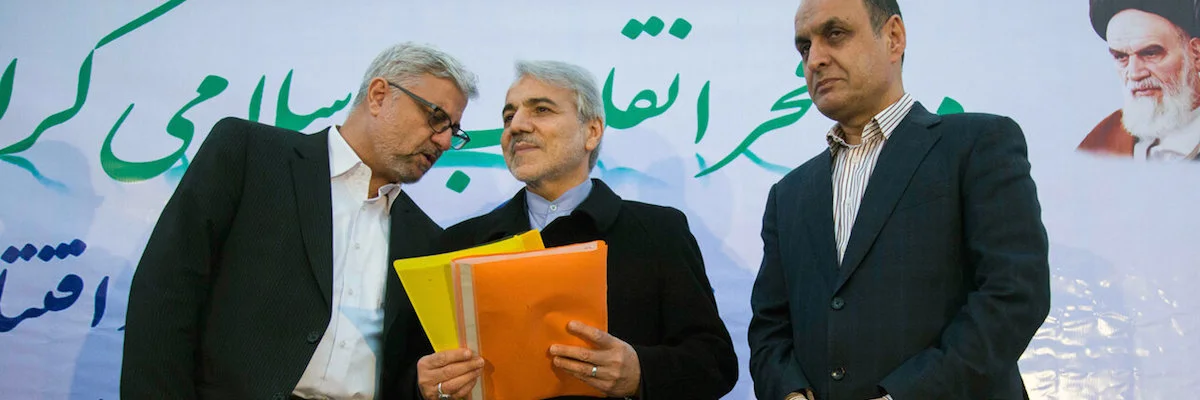
Campaigning Begins in Iran Parliamentary Election
◢ Campaigning kicked off in Iran on Thursday ahead of next week's crucial parliamentary election at which conservatives are expected to win most seats after thousands of moderates and reformists were disqualified. The February 21 election comes after months of escalating tensions between Iran and its arch enemy the United States.
Campaigning kicked off in Iran on Thursday ahead of next week's crucial parliamentary election at which conservatives are expected to win most seats after thousands of moderates and reformists were disqualified.
The February 21 election comes after months of escalating tensions between Iran and its arch enemy the United States.
The Guardian Council, which vets candidates, said more than 7,000 qualified to stand in the election, but even more were disqualified, semi-official news agency ISNA reported.
"In this election 7,148 will compete for the parliament's 290 seats... and 7,296 have been disqualified," it quoted National Elections Commission chief Jamal Orf as saying.
Most of the barred candidates come from the ranks of moderate conservative President Hassan Rouhani's alliance with reformists.
There was not much fanfare seen on the streets of Tehran where posters went up for the first day of campaigning, an AFP correspondent reported.
State news agency IRNA said campaign posters and banners of candidates were also going up in other cities and towns in the country.
The purge of candidates is likely to discourage many Iranians from voting, but supporters of conservatives and ultra-conservatives are still expected to make a strong showing.
The parliament—or Majles—drafts legislation, ratifies international treaties and approves the country's budget.
But analysts say the election will be a rare opportunity to gauge sentiment of the Iranian public after months of turmoil.
Backing for Rouhani and the reformists has fallen away since US President Donald Trump withdrew from a nuclear deal that was supposed to give Iran relief from sanctions.
Since the withdrawal, Trump has slapped wave after wave of sanctions on Iran as part of a stated campaign of "maximum pressure".
The campaign has battered the economy of the Islamic republic, which saw nationwide protests against a fuel price hike turn violent in November before they were crushed by the security forces.
In January, Iran came to the brink of an all-out confrontation with the United States for the second time in seven months when it fired missiles at US troops in Iraq in retaliation for the killing of one of its top generals.
Photo: IRNA
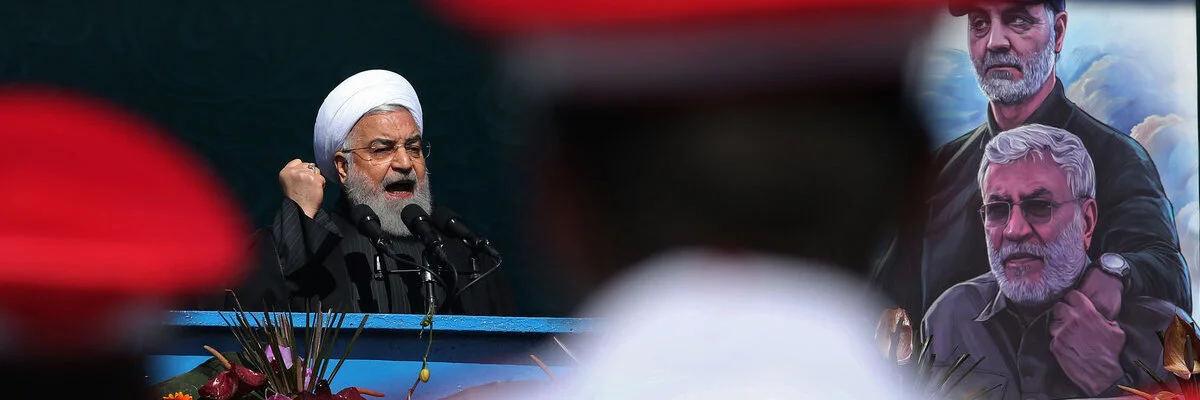
Jeers as Weakened Rouhani Calls for Unity in Deeply Divided Iran
◢ Iranian President Hassan Rouhani was jeered by supporters of hard-line conservative rivals as he called for national unity and fair elections in a key address just weeks head of parliamentary polls. Marking the anniversary of the 1979 Islamic revolution, Rouhani praised Iranians for withstanding the economic hardship.
By Arsalan Shahla and Golnar Motevalli
Iranian President Hassan Rouhani was jeered by supporters of hard-line conservative rivals as he called for national unity and fair elections in a key address just weeks head of parliamentary polls.
Marking the anniversary of the 1979 Islamic revolution, Rouhani praised Iranians for withstanding the economic hardship and instability brought on by U.S. President Donald Trump’s “maximum pressure” campaign.
“We shouldn’t talk about this or that faction. The revolution belongs to everyone,” Rouhani told a crowd that also included supporters, government workers and school children.
But his speech in Tehran’s Azadi Square was often drowned out by vocal, mostly male groups who had swarmed a temporary fence dividing the stage area from the public enclosure. They booed Rouhani loudly, while glorifying Supreme Leader Ayatollah Ali Khamenei and even calling for war with the U.S.
The two countries have been locked in an increasingly perilous confrontation since Trump reimposed sanctions and sought to contain Iran’s regional influence. The dispute culminated in the killing of Iran’s most senior military general, Qassem Soleimani, last month and Iranian reprisals that sparked fears of war.
‘Shut Up’
“Whenever we’ve stood together, we’ve managed to defeat the U.S.,” Rouhani said, only to be met with chants of “shut up” and “death to the conciliator.”
The main road leading to Azadi Square was lined with stalls promoting the Islamic revolution and Shiite Islam, and decrying the U.S. and Israel.
Rouhani and his government have always been the target of hard-liners opposed to his engagement with the West and the landmark 2015 nuclear deal it delivered.
But his rivals—fiercely loyal to Khamenei’s leadership and brand of ultra-conservative religious politics—have been empowered since Trump abrogated the accord and imposed sanctions. They are expected to dominate parliamentary elections on Feb. 21, gaining a new foothold in power ahead of next year’s presidential ballot.
Thousands of reformists, as well as centrist conservatives who backed Rouhani, have been barred from contesting. Last month, the president rebuked officials vetting candidates, charging them with in effect of denying voters a choice. Turnout is expected to drop from previous polls.
Oil Penalties
Rouhani, whose two election wins were propelled by middle class support, has seen his popularity slump as the economy nosedived under sanctions, especially those on Iran’s oil exports. Tehran has responded to Trump’s offensive by abandoning many of the nuclear deal’s enrichment caps.
In November, widespread protests erupted after gasoline prices were raised without warning, and hundreds of people were then killed in a violent crackdown by security forces.
Unrest broke out again in January when, after days of official denials, Iran’s Revolutionary Guard admitted it had unintentionally shot down a Ukrainian passenger jet above Tehran, killing all on board.
The tragedy occurred hours after Iran had responded to Soleimani’s killing with missile strikes on bases in Iraq that housed U.S. troops, sending tensions in the region soaring to new heights.
Invoking Soleimani’s legacy, Rouhani said on Tuesday that Iran “must pursue both diplomacy and resistance,” a comment most likely aimed at opponents who oppose ties with outside powers.
Photo: IRNA
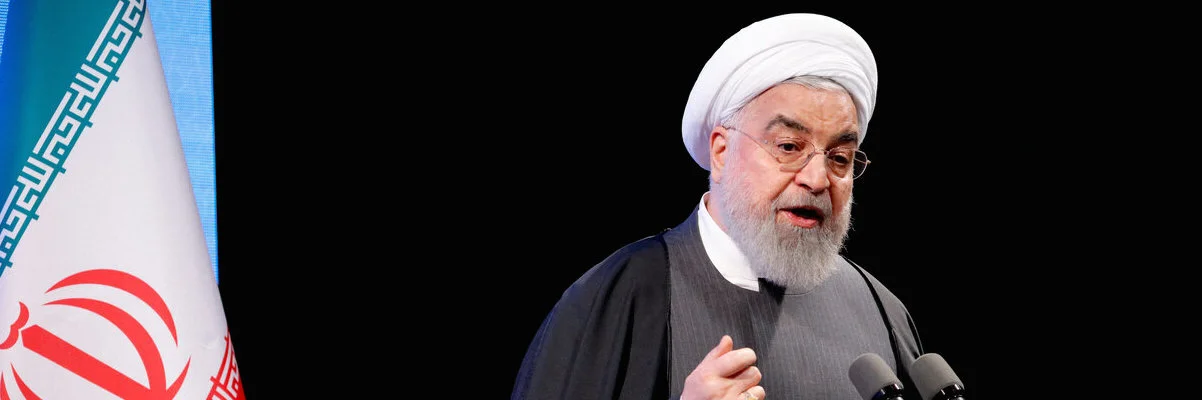
Iran’s Rouhani Seeks Checks on Election-Vetting Body
◢ Iran’s President Hassan Rouhani asked his top aides and lawmakers to draft a bill revising the election-related powers of the Guardian Council, one of the Islamic Republic’s most powerful institutions. The move comes after swathes of candidates, including allies of Rouhani, were disqualified from standing in the February 21 parliamentary vote.
By Golnar Motevalli
Iran’s President Hassan Rouhani asked his top aides and lawmakers to draft a bill revising the election-related powers of the Guardian Council, one of the Islamic Republic’s most powerful institutions, the state-run Islamic Republic News Agency reported.
Rouhani instructed his first vice president, Eshaq Jahangiri, to work with his top legal advisers and parliamentarians to review the ability of the council—a 12-member chamber of clerics and legal scholars—to vet and disqualify potential candidates for elections, IRNA reported.
The move, which is likely to face resistance from other political factions and from Supreme Leader Ayatollah Ali Khamenei, comes after swathes of candidates, including allies of Rouhani, were disqualified from standing in the Feb. 21 parliamentary vote. Khamenei appoints half of the council’s members.
Last month Rouhani said the scale of the disqualifications, which include 90 sitting reformist lawmakers, undermined the validity of the election and would result in a single-party race. Earlier Wednesday, Khamenei criticized those who challenged the Guardian Council’s vetting process and urged all Iranians to participate in the vote.
Photo: IRNA
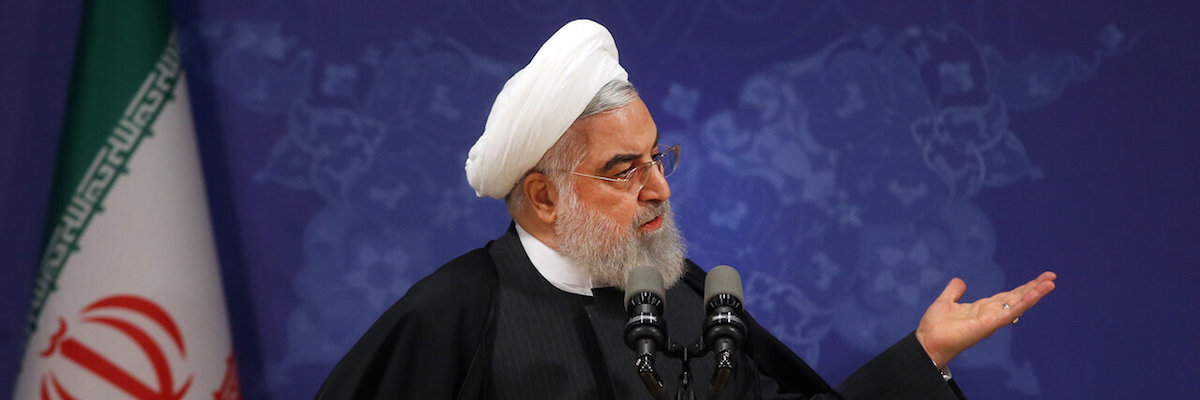
Iran's Rouhani Sounds Alarm for 'Democracy' After Candidates Barred
◢ Iran's president warned Monday of threats to the Islamic republic's "democracy and national sovereignty", after a body dominated by his ultra-conservative rivals disqualified thousands of candidates, weeks before elections. Rouhani, whose alliance fears losing its majority in the February 21 polls, said the disqualifications risked appointments being made "elsewhere" than the ballot box.
Iran's president warned Monday of threats to the Islamic republic's "democracy and national sovereignty", after a body dominated by his ultra-conservative rivals disqualified thousands of candidates, weeks before elections.
President Hassan Rouhani's moderate conservatives and their reformist allies are locked in a public quarrel with the Guardian Council over the disqualification of thousands of candidates—including 92 sitting MPs.
The council, which oversees Iran's elections, says it has barred some 9,500 potential candidates from standing, almost two thirds of the 14,500 hopefuls.
Rouhani, whose alliance fears losing its majority in the February 21 polls, said the disqualifications risked appointments being made "elsewhere" than the ballot box.
"The greatest danger for democracy and national sovereignty is the day when elections become a formality," the government's website quoted Rouhani as saying in a meeting with provincial governors.
"May God never bring this day," he added.
"Let us reassure the people and tell them our system is not a single-party system."
In an apparent reference to ultra-conservatives, he said "they should at least let there be competition and participation".
He called on Iranians of all stripes to vote, "even if... there are shortcomings in elections".
"Sometime I may not want to vote for some reason, but some other time I may not have enough trust to go to the ballot box; this is very dangerous," he said.
Candidates who are disqualified are allowed to appeal before the elections.
The polls come after a traumatic month for Iran, in which it approached the brink of war with the United States and mistakenly shot down a passenger jet.
A US drone strike in Iraq killed top Iranian general Qassem Soleimani on January 3, and Iran retaliated five days later by launching a wave of missiles at US troops stationed in Iraq.
Hours later, with Iranian forces on high alert, its air defences mistakenly shot down a Ukraine International Airlines passenger jet, killing all 176 people on board.
The disaster triggered scattered protests in Tehran and other cities, although they appeared smaller than nationwide demonstrations in November, sparked by a fuel price hike, in which Amnesty International said at least 300 people died.
Photo: IRNA
Trump Offensive Leaves Iran’s Hardliners Ascendant as Poll Nears
◢ Those who backed Iranian President Rouhani when Iran negotiated the 2015 nuclear deal with world powers, including the influential 62-year-old Larijani, stand fatally weakened as the accord crumbles under President Donald Trump’s economic offensive and Tehran’s tit-for-tat reprisals. With elections looming, the consequences for Iran and regional security are substantial.
By Golnar Motevalli and Arsalan Shahla
After a dozen years as speaker of Iran’s parliament, half of them allied with President Hassan Rouhani as he reached out to the West, Ali Larijani is bowing out.
It’s been a tumultuous reign, book-ended by devastating U.S. sanction regimes. But his decision not to contest February 21 national assembly elections is more than a hard-earned career change. Those who backed Rouhani when Iran negotiated the 2015 nuclear deal with world powers, including the influential 62-year-old Larijani, stand fatally weakened as the accord crumbles under President Donald Trump’s economic offensive and Tehran’s tit-for-tat reprisals.
The U.S. “maximum pressure” campaign weakened the position of Iran’s reformists, according to one of their number, Jalal Mirzaei.
“Things were going well,” Mirzaei said in Vienna this month as he attended an OPEC meeting. Then “Mr. Trump became president.”
As a result, more than six years after Iranians opted for change under Rouhani, arch-conservatives are ascendant, dominating the field of favored ballot candidates. The consequences for Iran and regional security are substantial.
On the Backfoot
“We’re in a situation where the more reasonable voices calling for a much more open Iran which was pro-diplomacy are fast losing ground to hardliners,” said Ellie Geranmayeh, deputy head of the Middle East and North Africa program at the European Council of Foreign Relations.
The Trump administration sought to weaken Iran, which he blamed for stirring regional strife and exporting extremism, in part by alienating Iranians from their leaders. His administration pointed to last month’s protests and a deadly security crackdown as evidence the sanctions strategy is working.
To further its aims, the U.S. might welcome power consolidated in the hands of ultra-conservatives, said Geranmayeh, if that undermines European resolve to maintain ties with Iran.
But for many observers, the electoral realignment’s more likely to extend the standoff. After all, encouraging Iran to accept greater curbs on its nuclear and missile programs for sanctions to be lifted becomes harder if the result is to sideline the people who might be willing to make the case for concessions.
While Iranian leaders have mostly remained united in opposing negotiations with the U.S. until it removes sanctions, two attempts by French President Emmanuel Macron to kickstart talks showed promise. The second foundered after a September attack on Saudi Arabian oil facilities, which Washington blamed on Iran, hardened positions.
‘Gravely Damaged’
“By undermining Rouhani’s most important achievement, Trump gravely damaged his presidency and popularity,” said Ali Vaez, senior analyst at the International Crisis Group. “What has been fatally damaged in the process is not just pro-engagement Iranian politicians, but the whole concept of engagement with the West.”
The 16,145 people registered to contest 290 seats in parliament represent the narrow spectrum of Iranian politics. But the most well-known number among Rouhani’s fiercest critics, supporters of an unflinching interpretation of Iran’s Islamic laws with careers defined by distrust of the U.S. and the wider West.
They include ex-mayor of Tehran and former military officer Mohammad-Bagher Qalibaf; Vahid Yaminpour, a TV personality; and legal scholar and cleric Hamid Rasaei.
The most notable reformists standing are Rouhani’s former top legal adviser Shahindokht Molaverdi, and the president’s son-in-law. The current record number of 14 women lawmakers is likely to drop.
Secretary of State Michael Pompeo on December 2 said the Trump administration’s reliance on sanctions to achieve goals in places like Iran and Venezuela had been “incredibly effective.” Tehran has fewer resources to conduct a regional “terror campaign,” he said.
Collision Course
Yet a lurch to the right in Iran risks emboldening the security services and their proxy forces in war zones such as Yemen and Syria, raising the chances of a confrontation, orchestrated or unplanned, with the U.S. just as its Gulf partners want to deescalate tensions.
And it could overwhelm the government with “monthly and even weekly interrogations of ministers and impeachment efforts,” said Geranmayeh. Targets will include Oil Minister Bijan Namdar Zanganeh, one of Rouhani’s most effective technocrats who has longstanding links to reformers, and whom hardliners in parliament are currently trying to impeach.
The government had lost support before Trump exited the nuclear deal last year, for failing to deliver the jobs and better pay the accord promised. Other Iranians, dismayed over no progress in delivering greater social freedoms, lost patience.
As a U.S. ban on critical oil exports tipped the economy into recession, the government’s popularity dived.
Low Turnout
The slump is expected to reduce turnout in February, boosting hardliners whose supporters traditionally vote under instruction from Supreme Leader Ayatollah Ali Khamenei.
Mohammadali Abtahi, a reformist cleric jailed during unrest that followed 2009’s disputed presidential election, told Shargh newspaper that “unpopular” conservatives would “emerge as victorious only if turnout is low.”
He’s not the only moderate to speak out. In a statement read by supporters, former President Mohammad Khatami, whose words can’t be reported in Iran due to a ban, told a December 12 Tehran rally that the only alternative to an Islamic Republic that honored its original founding principles was a dictatorship.
Others present called on Khamenei to overhaul an opaque council able to disqualify election candidates with little accountability, as well as to avoid using decrees—such as the one that triggered November’s violence—to bypass parliamentary oversight.
As for Larijani, Iran’s former top nuclear negotiator may be taking a step back to consider a bid for the presidency. But much of that would depend on the fate of the nuclear deal and whether Trump himself wins another term next year.
Seething Unrest
For now, as he nears the end of his tenure, Larijani still has the task of refereeing a majority-moderate parliament that’s using whatever time it has left to amend the gasoline policy.
In Tehran, where an acrid smog hung over commuters, first-time voter Amirali, 20, dismissed the system as corrupt.
“Somebody comes along with the promise of a better future and people fall for their words,” he said, asking not to be identified due to the sensitivity of speaking to foreign media.
The spark for the protests was a surprise decision to hike gasoline prices and introduce rationing. Demonstrations swept through the cities of Tabriz, Isfahan and Mashhad, and then spread to Tehran as the city was cloaked by a sudden snowfall.
Unverified mobile-phone footage showed clashes between protesters and security forces. Authorities imposed an unprecedented internet blackout and it’s still not clear how many people were killed: death tolls range from an initial 12 reported by officials—a number that hasn’t been updated—to an estimate of more than 200 by Amnesty International.
The violence underscored moderates’ perilous position with less than two years left of Rouhani’s second and last term.
“The most important thing that brings people out to vote is hope,” said Zanganeh, in what could turn out to be a grim prophesy. “And the thing that drives them away is hopelessness.”
Photo: IRNA