
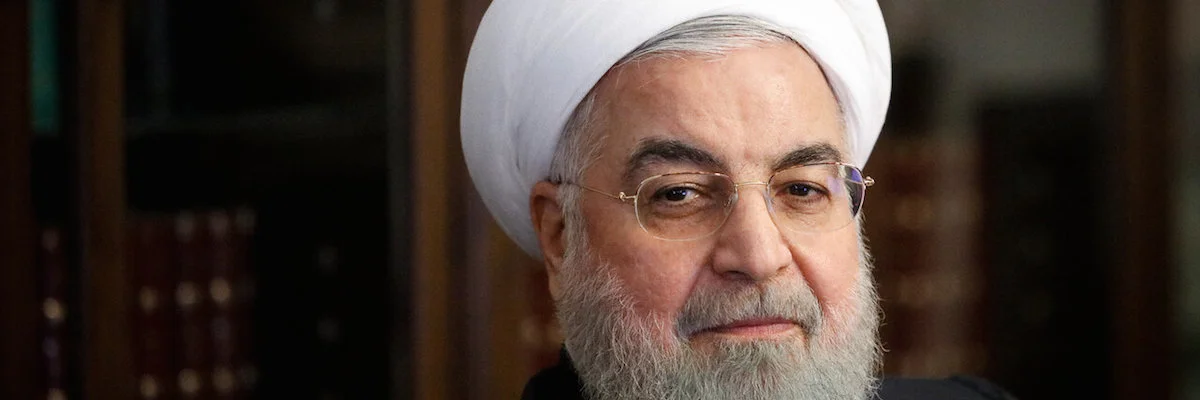
Iran Refutes US Accusations Over Saudi Attacks
◢ Iran on Sunday dismissed US accusations it was behind drone attacks on Saudi oil installations, suggesting Washington was seeking a pretext to retaliate against the Islamic Republic. "Such fruitless and blind accusations and remarks are incomprehensible and meaningless," foreign ministry spokesman Abbas Mousavi was quoted as saying in a statement.
Iran on Sunday dismissed US accusations it was behind drone attacks on Saudi oil installations, suggesting Washington was seeking a pretext to retaliate against the Islamic Republic.
"Such fruitless and blind accusations and remarks are incomprehensible and meaningless," foreign ministry spokesman Abbas Mousavi was quoted as saying in a statement.
US Secretary of State Mike Pompeo condemned Iran after Saturday's attacks, which knocked out half of Saudi Arabia's oil production.
Yemen's Iran-aligned Huthi rebels claimed responsibility for the drone strikes, but Pompeo said "there is no evidence the attacks came from Yemen".
"The United States will work with our partners and allies to ensure that energy markets remain well supplied and Iran is held accountable for its aggression," the top US diplomat tweeted.
Mousavi said the US allegations over the pre-dawn strikes on Abqaiq and Khurais in Saudi Arabia's Eastern Province were meant to justify actions against Iran.
"Such remarks... are more like plotting by intelligence and secret organisations to damage the reputation of a country and create a framework for future actions," he said.
Tehran and Washington have been at loggerheads since May last year when President Donald Trump pulled out of a 2015 multilateral deal that promised Iran relief from sanctions in return for curbs on its nuclear programme.
Iran's President Hassan Rouhani accused Washington of diverting blame for the war in Yemen, where US ally Saudi Arabia leads a military coalition that has regularly carried out air strikes.
"Today, witness that innocents die every day in Yemen ... Americans, instead of blaming themselves—and confessing that their presence in the region is creating problems—blame the region's countries or Yemen's people," Rouhani said.
"If we want there to be real security in the region, the solution is that America's aggression cease," Iran's president added, before leaving for Ankara to attend a trilateral meeting on Syria with Turkey and Russia.
"We believe the region's issues can be solved through talks in Yemen, Yemeni-Yemeni negotiations -- they must decide for themselves. The bombardment of Yemeni people must stop," Rouhani said.
'Maximum Lying'
Since its withdrawal from the nuclear accord, the United States has slapped crippling sanctions on Iran as part of a campaign of "maximum pressure".
The Islamic Republic has responded by reducing its nuclear commitments.
"The Americans have taken the policy of 'maximum pressure' which has apparently turned into 'maximum lying' due to their failures," said Mousavi.
The arch-foes were on the cusp of confrontation in June when Iran downed a US drone and Trump ordered retaliatory strikes before cancelling them at the last minute.
In remarks published Sunday, the commander of the Islamic Revolutionary Guard Corps' aerospace arm said Iran's missiles could hit US bases and ships within a range of 2,000 kilometres (about 1,240 miles).
"Neither us nor the Americans want a war," Brigadier General Amirali Hajizadeh said, quoted by Tasnim news agency, which is considered close to the Guards.
"Of course, some forces facing each other in the field could do something, by which a war could start," the commander said.
"We have always prepared ourselves for a full-fledged war... everyone should know that all American bases and their vessels in a 2,000-kilometer range can be targeted by our missiles," he added.
Photo: IRNA
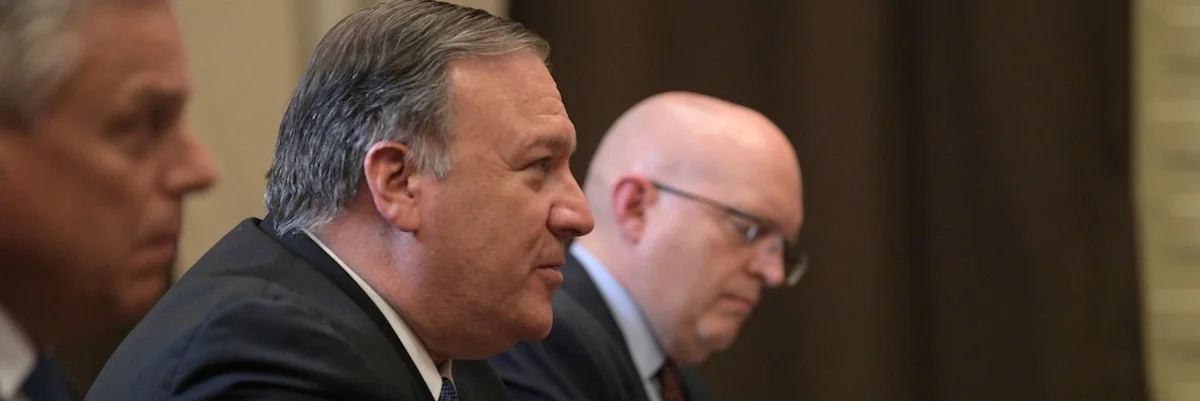
Pompeo Blames Iran for Drone Attack on Saudi Oil Industry
◢ U.S. Secretary of State Michael Pompeo blamed Iran for a series of brazen attacks on a massive Saudi Aramco oil facility, saying there was no evidence the drones originated in Yemen as Tehran-backed rebels there claimed. Iran denied responsibility for the raids Saturday, which forced Saudi Arabia to slash its daily oil output in half.
By Maria Jose Valero and Nadeem Hamid
U.S. Secretary of State Michael Pompeo blamed Iran for a series of brazen attacks on a massive Saudi Aramco oil facility, saying there was no evidence the drones originated in Yemen as Tehran-backed rebels there claimed.
Iran denied responsibility for the raids Saturday, which forced Saudi Arabia to slash its daily oil output in half.
Pompeo tweeted after the White House confirmed that President Donald Trump offered support for Saudi Arabia’s self-defense in a call on Saturday with Saudi Crown Prince Mohammed Bin Salman.
Iran launched an “unprecedented attack on the world’s energy supply,” Pompeo said on Twitter after at least one Republican lawmaker urged the U.S. to respond in kind with a strike on Iranian oil facilities. He gave no evidence to back up that allegation.
The Wall Street Journal reported that Saudi and U.S. officials are investigating the possibility that cruise missiles were launched from Iraq, which is much closer than Yemen, and is home to a host of Iran-backed Shiite missiles.
Pompeo said the U.S. will work with allies to ensure the energy market remains well supplied, echoing comments from the White House. He also called on all nations to “publicly and unequivocally condemn Iran’s attacks.”
Saudi Arabia, which is locked in multiple proxy wars with Iran in the Middle East trying to contain its widening influence, hasn’t blamed anyone for the assault on the oil facility. On Sunday, it was racing to restore oil production after state energy producer Saudi Aramco lost about 5.7 million barrels per day of output in the raids on the world’s biggest crude-processing facility and the kingdom’s second-biggest oil field.
The attack intensified the volatility in the Persian Gulf region, which has been destabilized by a showdown between the U.S. and Iran over the 2015 nuclear deal. Frictions have mounted in the Gulf ever since Trump quit the deal last year and began reimposing harsh sanctions on Iran to try to force it to renegotiate a deal that would more broadly limit its nuclear and military ambitions.
Iran has responded by rolling back some of its obligations under the accord, as the agreement allows parties to do when others pull away from their commitments. It’s also been accused of carrying out a number of attacks on oil tankers in the Gulf region, charges it has denied.
Iranian Foreign Ministry spokesman Abbas Mousavi rejected the latest U.S. allegations, saying such “blind and fruitless accusations and statements are unfathomable and meaningless.” Foreign Minister Mohammad Javad Zarif tweeted, “Having failed at ‘max pressure,’ @SecPompeo’s turning to ‘max deceit.’”
Iranian-backed Houthi rebels in Yemen claimed responsibility for the strikes. A Saudi-led coalition backed by the U.S. has been fighting for more than four years to try to vanquish the Houthis and restore Yemen’s President Abdrabbuh Mansour Hadi to power. But the Houthis have proven more tenacious than the Saudis expected, withstanding four years of withering air attacks and fighting off better-armed forces with a disciplined insurgency.
They’ve stepped up their drone and missile attacks on enemy forces and Saudi territory, and as the war has dragged on, thousands of civilians have died, millions have gone hungry, and al-Qaeda and Islamic State have mounted a resurgence.
The U.S. “strongly condemns today’s attack on critical energy infrastructure,” White House spokesman Judd Deere said in an emailed statement that was also posted on Twitter. The U.S. government “is monitoring the situation and remains committed to ensuring global oil markets are stable.”
France, which has been working with Iran to try to salvage its nuclear deal with world powers after the U.S. pulled out last year, condemned the attacks and expressed “total solidarity” with the kingdom.
“Such actions can’t but aggravate the tensions and the risk of conflict in the region,” the French Foreign Ministry said. “It’s imperative they stop,” it added, without assigning blamed.
Republican Senator Lindsey Graham, a confidant of Trump, earlier urged a decisive U.S. response against Iranian targets.
“It is now time for the U.S. to put on the table an attack on Iranian oil refineries if they continue their provocations or increase nuclear enrichment,” Graham of South Carolina said on Twitter. “Iran will not stop their misbehavior until the consequences become more real, like attacking their refineries.”
Photo: Kremlin.ru

Trump Says U.S. Warship Downed Iran Drone Near Strait of Hormuz
◢ President Donald Trump said the U.S. “immediately destroyed” an Iranian drone that approached the USS Boxer near the Strait of Hormuz, the latest sign of escalating military tensions around the critical oil chokepoint. The drone was a threat to the ship and its crew, Trump said at the White House on Thursday.
By Jennifer Jacobs and Josh Wingrove
President Donald Trump said the U.S. “immediately destroyed” an Iranian drone that approached the USS Boxer near the Strait of Hormuz, the latest sign of escalating military tensions around the critical oil chokepoint.
The drone was a threat to the ship and its crew, Trump said at the White House on Thursday. The president said he’s calling “on other nations to protect their ships as they go through the Strait.” The Boxer is an amphibious assault ship.
“The Boxer took defensive action against an Iranian drone which had closed into a very, very near distance—approximately 1,000 yards, ignoring multiple calls to stand down and was threatening the safety of the ship and the ship’s crew,” Trump said.
Oil futures in New York clawed back a bit of the day’s 2.6% loss, climbing 34 cents a barrel after the announcement.
Pentagon spokesman Jonathan Hoffman said in a statement that at 10 a.m. local time the Boxer “was in international waters conducting a planned inbound transit of the Strait of Hormuz” when a drone “closed within a threatening range” and “the ship took defensive action.”
The confrontation comes as tensions between Washington and Tehran remain high over a spate of attacks on cargo ships, the downing of an American drone and the British seizure of a tanker carrying Iranian oil.
Earlier in the day, the U.S. condemned Iranian naval activity in the Persian Gulf and demanded that the Islamic Republic release a small tanker and its crew that its forces seized this week. A State Department official who asked not to be identified discussing the issue cited the Islamic Revolutionary Guard Corps’ “continued harassment” of vessels in and around the Strait.
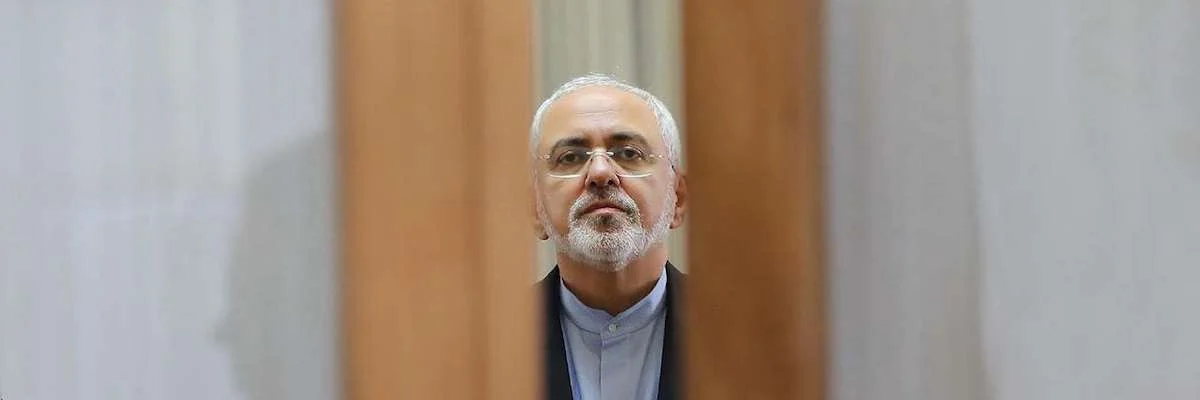
Iranian Foreign Minister Mohammad Javad Zarif said in an interview with Bloomberg News on Wednesday that said his country is capable of shutting the Strait of Hormuz, but doesn’t want to.
“We certainly have the ability to do it, but we certainly don’t want to do it because the Strait of Hormuz and the Persian Gulf are our lifeline,” Zarif said in New York. “It has to be secured. We play a big role in securing it, but it has to be secure for everybody.”
About one-third of the world’s seaborne crude and fuels passed through the Strait of Hormuz last year, highlighting its key role in global oil markets. In May and June, six tankers were attacked in the region. While Iran has been blamed for attacks on merchant shipping, it has denied responsibility.
“It’s dangerous because it is very crowded,” Zarif said, adding that the last time the area was this crowded, the U.S. shot down an Iranian commercial airliner with 290 passengers in 1988. “We feel the danger and that is why we want to avoid a dangerous escalation, but we cannot give up defending our country.”
Photo: Wikicommons
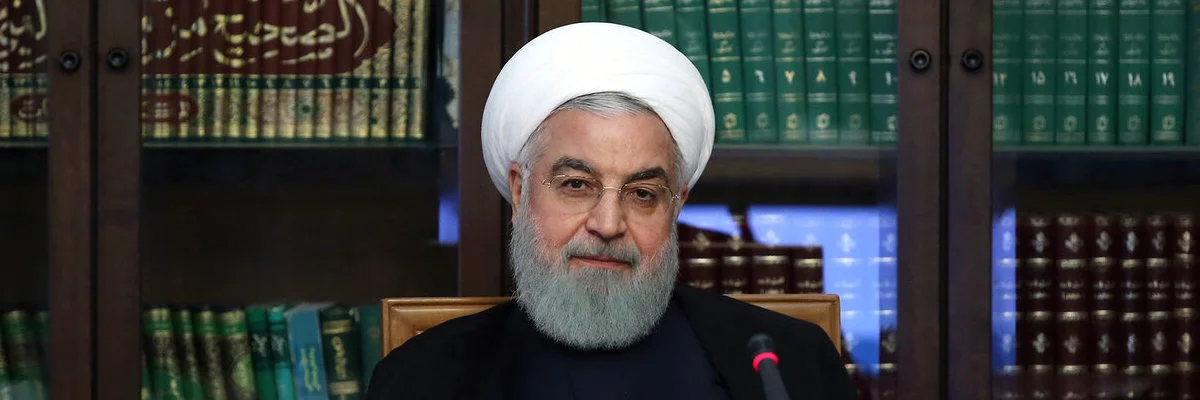
Trump Vows New Iran Sanctions, Tehran Warns US Against Attack
◢ US President Donald Trump on Saturday pledged to hit Iran with "major" new sanctions as Tehran warned Washington that any attack would see its interests across the Middle East go up in flames. The war of words heated up after Trump had pulled back from military action against Iran in response to its downing of a US reconnaissance drone.
By Inčs Bel Aiba and Amir Havasi
US President Donald Trump on Saturday pledged to hit Iran with "major" new sanctions as Tehran warned Washington that any attack would see its interests across the Middle East go up in flames.
The war of words heated up after Trump had pulled back from military action against Iran in response to its downing of a US reconnaissance drone.
That incident, which came after a series of attacks on tankers in the congested shipping lanes out of the Gulf that the US has blamed on Iran, exacerbated already tense relations between the two countries.
Iran has denied responsibility for those attacks. Trump, who spent Saturday huddling with his advisors at Camp David, initially told reporters that he was keen to be Iran's "best friend"—if the country agreed to renounce nuclear weapons.
"When they agree to that, they're going to have a wealthy country. They're going to be so happy, and I'm going to be their best friend," he told reporters.
Iran has denied seeking a nuclear weapon and says its program is for civilian purposes.
A multinational accord reached by Tehran and world powers in 2015 sought to curb Iran's nuclear ambitions in exchange for sanctions relief. But Trump left that agreement more than a year ago and has imposed a robust slate of punitive economic sanctions designed to choke off Iranian oil sales and cripple its economy—one he now plans to expand.
"We are putting major additional Sanctions on Iran on Monday," tweeted Trump, who has also deployed additional troops to the Middle East.
"I look forward to the day that Sanctions come off Iran, and they become a productive and prosperous nation again - The sooner the better!"
Added Secretary of State Mike Pompeo: "When the Iranian regime decides to forgo violence and meet our diplomacy with diplomacy, it knows how to reach us. Until then, our diplomatic isolation and economic pressure campaign against the regime will intensify."
But lest anyone think he was entirely ruling out military action, Trump tweeted Saturday evening that "I never called the strike against Iran 'BACK,' as people are incorrectly reporting, I just stopped it from going forward at this time!"
'Powder Keg'
A top Iranian military official warned Washington against any strikes.
"Firing one bullet towards Iran will set fire to the interests of America and its allies" in the region, armed forces general staff spokesman Brigadier General Abolfazl Shekarchi told the Tasnim news agency.
"If the enemy—especially America and its allies in the region—make the military mistake of shooting the powder keg on which America's interests lie, the region will be set on fire," Shekarchi warned.
Following his comments, Iran said it had executed a man, a contractor for the defense ministry's aerospace organization, who had been convicted of spying for the United States.
'Trampling' International Law
After the downing Thursday of the Global Hawk surveillance aircraft, Trump said the United States had been "cocked & loaded" to strike Iran.
But at the last minute, he said he pulled back as the response would not have been "proportionate."
The US president subsequently said he did not want war with Iran, but if it came to pass, there would be "obliteration like you've never seen before," according to excerpts of an interview with NBC conducted on Friday.
Tehran insists that the drone violated its airspace—something Washington denies—but a commander of the elite Revolutionary Guards, Brigadier General Amir Ali Hajizadeh, told state news agency IRNA that the violation could have been an accident.
"Nonetheless, this was an act of trampling international aviation laws by a spy aircraft," Hajizadeh added.
The Pentagon released a map of the drone's flight path, indicating it avoided Iranian waters, but Iranian Foreign Minister Mohammad Javad Zarif on Saturday published maps showing the aircraft inside Iranian territory.
"There can be no doubt about where the vessel was when it was brought down," he wrote on Twitter.
After the drone was downed, Trump secretly authorized US Cyber Command to carry out a retaliatory cyber attack on Iran, The Washington Post reported Saturday.
It crippled computers used to control rocket and missile launches, according to the Post, while Yahoo News said a spying group responsible for tracking ships in the Gulf was targeted.
Iran's foreign ministry said it had summoned the charge d'affaires of the United Arab Emirates, from where the US drone launched, to protest its decision to "put its installations at the disposal of foreign forces for aggression."
The US Federal Aviation Administration has barred American civilian aircraft from the area "until further notice," and several major non-US airlines were altering flight paths to avoid the sensitive Strait of Hormuz.
Photo: IRNA
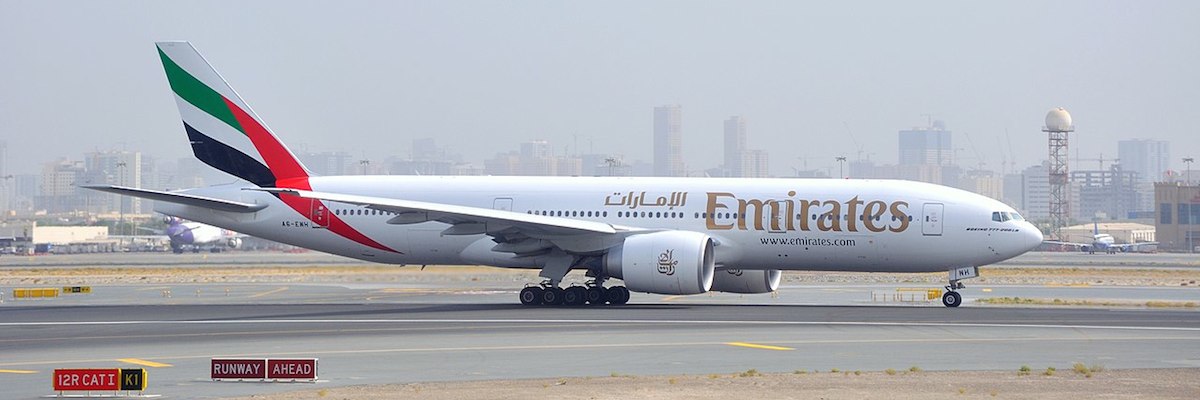
Airlines Halt Hormuz Flights Amid US-Iran Crisis
◢ Some of the world's leading carriers including British Airways, Qantas and Singapore Airlines on Friday suspended flights over the Strait of Hormuz, as Iran-US tensions flare over the downing of a drone. The suspensions came after the Federal Aviation Administration issued a notice, "prohibiting US-registered aircraft from operating over the Persian Gulf and Gulf of Oman.”
By Jitendra Joshi
Some of the world's leading carriers including British Airways, Qantas and Singapore Airlines on Friday suspended flights over the Strait of Hormuz, as Iran-US tensions flare over the downing of a drone.
The suspensions will affect many thousands of passengers and came after the Federal Aviation Administration in the United States issued a Notice to Airmen (NOTAM), "prohibiting US-registered aircraft from operating over the Persian Gulf and Gulf of Oman".
The NOTAM was in response to "heightened military activities and increased political tensions that might place commercial flights at risk", an FAA statement said, as Tehran and Washington engaged in a war of words over Thursday's missile strike on the drone.
The FAA's notice applies only to US-registered airlines, and United Airlines said it was suspending its Newark-Mumbai service in response. But European and Asian operators were taking no chances.
"Our safety and security team are constantly liaising with authorities—including the likes of the FAA -- around the world as part of their comprehensive risk assessment into every route we operate," a BA spokeswoman said.
Germany's Lufthansa and Dutch airline KLM followed suit in bypassing the Hormuz area, although Air France said it was already flying further south. Dubai-based Emirates said it had rerouted flights to avoid "areas of possible conflict.”
Iran's downing of the drone—which Washington insists was above international waters but Iran says was within its airspace—has seen tensions between the two countries spike further after a series of attacks on tanker ships blamed by the US on Tehran.
The Global Hawk surveillance aircraft can attain a maximum altitude of 60,000 feet (18.3 kilometres), nearly double the typical cruising height of a passenger plane.
KLM said: "The incident with the drone is reason not to fly over the Strait of Hormuz for the time being. This is a precautionary measure."
Pakistan Problem
The Netherlands is still reeling from the downing of Malaysia Airlines flight MH17 in 2014, which was hit a missile over eastern Ukraine's Donetsk region where pro-Russian separatist rebels are battling Ukraine government forces.
All 298 people on board were killed, 196 of them Dutch. International investigators on Wednesday charged three Russians and a Ukrainian with murder over the shooting down of the plane, which was
traveling between Amsterdam and Kuala Lumpur. The incident forced airlines on the busy Europe-Asia route to divert flights away from Ukraine airspace.
Responding to the latest tensions over Iran, Malaysia Airlines said it "is closely monitoring the situation and is guided by various assessments including security reports and NOTAMs by respective airspace control authorities".
Australia's flag carrier Qantas said it too was avoiding the Strait of Hormuz and Gulf of Oman "until further notice", while Singapore Airlines warned passengers that its flight times to Europe would likely take longer now. Europe-Asia flights have already faced disruption since February, when
Pakistan restricted large swathes of airspace near India due to cross-border air strikes which came close to all-out war between the nuclear-armed rivals.
"This (Pakistan's action) has also pushed much of the transiting traffic south, nearer to the area now prohibited to US carriers," the flight-tracking website Flightradar24 said in a blog.
Alex Macheras, an independent aviation analyst in London, said the Hormuz diversions were another image problem for Iran after the "mass exodus" of European airlines, which had to abandon their Tehran routes following the restoration of US sanctions.
Pointing back to the Ukraine downing, Pakistan's closure and other incidents, he told AFP that "more and more passengers have been affected by geopolitics", and that many travelers were avoiding stopovers in the Middle East altogether.
Photo: Wikicommons

Trump Ordered Military Strike Against Iran, Then Called It Off
◢ The U.S. called off military strikes against Iran on Thursday night that were approved by President Donald Trump, according to an administration official, abandoning a move that would have dramatically escalated tensions that are already running high between the two countries. The attack, ordered after Iranian forces shot down a U.S. Navy drone over the Strait of Hormuz, would have involved airstrikes and was close to being carried out when it was stopped.
By Tony Capaccio and John Harney
The U.S. called off military strikes against Iran on Thursday night that were approved by President Donald Trump, according to an administration official, abandoning a move that would have dramatically escalated tensions that are already running high between the two countries.
The attack, ordered after Iranian forces shot down a U.S. Navy drone over the Strait of Hormuz, would have involved airstrikes and was close to being carried out when it was stopped, said the official, who was granted anonymity to discuss a national security matter. The official would not discuss whether the plan might be revived.
Airstrikes would raise the specter of a far broader conflict in the volatile region, which supplies one-third of the world’s oil.
It was not immediately known what prompted the decision to hold off. But the move and its reversal underscore the wavering approach the president has shown at times regarding military force. He has repeatedly and fiercely lashed out at Iran and North Korea, but then cooled his rhetoric when hostilities threatened to erupt into open conflict. On two occasions since he took office, he has ordered military strikes on Syria.
Brent oil pared its biggest weekly gain in four months on the shifting developments. Futures erased gains in London on Friday, but are still up 4% for the week.
Iran’s Deputy Foreign Minister for Political Affairs Seyed Abbas Araghchi said the country had "indisputable" evidence the U.S. drone had violated Iranian air space, adding some wreckage was recovered from the country’s territorial waters. "The Islamic Republic of Iran would not hesitate for a moment to decisively defend its territory against any aggression," Araghchi said in a statement released by the Ministry of Foreign Affairs on Friday.
Earlier Thursday, as the attack was being planned, Trump downplayed Iran’s strike on the U.S. Navy drone in the Persian Gulf that escalated regional tensions and fueled a surge in oil prices, suggesting a “loose and stupid” individual may have been responsible for the strike.
“I would imagine it was a general or somebody who made a mistake by shooting that drone down,” Trump said during an Oval Office meeting Thursday with Canadian Prime Minister Justin Trudeau. “I find it hard to believe it was intentional. It could have been somebody who was loose and stupid.”
The operation was first reported by the New York Times, which said that Trump had pulled back as warplanes were in the air. The U.S. official disputed that part of the Times account.
The White House declined to comment on the reports and an official at the State Department didn’t immediately respond to a request for comment.
The president is in an increasingly difficult position on Iran. His administration has blamed the Islamic Republic for a series of attacks in the Gulf region since mid-May, including one last week on two oil tankers, but with little consequence for Tehran. He’s shown a desire to project American power, yet during the 2016 election he promised to extricate the U.S. from foreign conflicts, an issue that’s sure to come up as his re-election campaign begins.
The U.S. has directed additional forces to the Middle East in recent weeks, but the numbers—about 2,000 troops in total—have been modest and haven’t come with clear indications of where they would be sent or what their mission would be. In some cases, forces already planned for deployment to the region had their arrival accelerated, while troops scheduled to depart saw their tours extended.
A military assault by the U.S. could have immediate and far-reaching consequences. With proxy forces or allies in countries including Lebanon, Syria, Iraq and Yemen, among others, retaliation from Iran could come in many forms, targeting not just U.S. interests but Israel as well and raising the risk of disruptions to oil flows out of the wider Persian Gulf region.
The last time the U.S. launched a significant military effort against Iran was Operation Praying Mantis in 1988. In that operation, U.S. Navy ships sank two Iranian ships and destroyed two Iranian surveillance platforms.
The move came after the USS Samuel B. Roberts was damaged by a mine in the Persian Gulf.
Later that year, a U.S. Navy cruiser shot down an Iranian commercial aircraft on a scheduled flight in Iranian airspace, killing nearly 300 people. The U.S. expressed regret for the loss of life and said it mistakenly targeted the plane. Iran said it was a deliberate and illegal act.
During his time in office, Trump has ratcheted up economic sanctions on Iran as part of his “maximum pressure” campaign against the Islamic Republic. Yet he has also said he doesn’t want a war with Tehran and that he is hoping Iran will reach out to negotiate.
As tensions climbed on Thursday following the drone strike, regional analysts and lawmakers from both parties warned that the likelihood of a bigger confrontation could be looming, whether intentional or not.
“The president may not intend to go to war here but we’re worried that he and the administration may bumble into a war,” Senate Minority Leader Chuck Schumer, a New York Democrat, told reporters Thursday after a briefing at the White House.
The top Republicans in the Senate and House both called separately for Trump to take a “measured” response to the Iranian actions.
Saudi Vice Minister of Defense Khalid bin Salman said he met with Brian Hook, the U.S. special representative to Iran, to “explore the latest efforts to counter hostile Iranian acts and continuous escalation that threaten the region’s security and stability.” In a series of posts on Twitter, the minister affirmed Saudi Arabia’s support for the U.S. “maximum pressure campaign on Iran.”
The U.S. said the Global Hawk drone was flying in international airspace about 34 kilometers (20 miles) away from Iranian territory when it was shot down.
“This was an unprovoked attack on a U.S. surveillance asset in international airspace,” said Navy Captain Bill Urban, a spokesman for U.S. Central Command.
Photo: Wikicommons
Iran Says Downed US Drone Recovered in its Territorial Waters
◢ Iran's Foreign Minister Mohammad Javad Zarif said Thursday a US surveillance drone "violated Iranian airspace" before being shot down earlier in the day, providing coordinates to back his claim. The drone "was targeted at 04:05 at the coordinates (25°59'43"N 57°02'25"E) near Kouh-e Mobarak. We've retrieved sections of the US military drone in OUR territorial waters where it was shot down."
By Sebastian Smith and Marc Jourdier
Iran said Thursday it had recovered parts of a US spy drone in its territorial waters, after downing the aircraft in a missile strike slammed by President Donald Trump as a "big mistake."
Under pressure to respond to the high-stakes incident in the strategic Strait of Hormuz, where a series of tanker attacks have sent tensions soaring with Iran, Trump initially struck a combative tone.
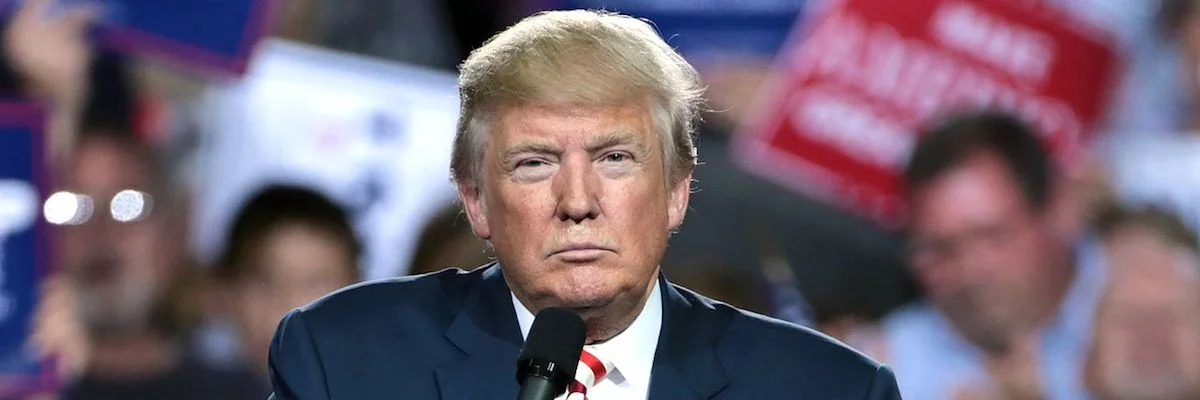
"Iran made a very big mistake!" he tweeted in response to news Iran had shot down the Global Hawk surveillance aircraft—which the Pentagon says was above international waters at the time.
"This country will not stand for it, that I can tell you," he repeated later at the White House.
But as the overnight incident whipped up fears of open conflict between the United States and its declared foe Iran—sending crude oil prices up more than six percent—Trump moved swiftly to dial tensions back down, suggesting the drone may have been shot in error.
"I find it hard to believe it was intentional, if you want to know the truth," Trump said. "I think that it could have been somebody who was loose and stupid that did it."
The president's mixed message left the world unsure what Washington's next move would be.
"You will find out," Trump said, when asked about possible retaliation.
In Tehran, however, the message came loud and clear.
Late Thursday Foreign Minister Mohammad Javad Zarif announced that parts of the drone had been recovered in Iranian territorial waters, as Tehran moved to bring the incident before the United Nations.
“We don't seek war, but will zealously defend our skies, land & waters," Zarif said.
Drone violating or victim?
The Pentagon denounced the strike as an "unprovoked attack" in international air space, claiming the navy drone was some 34 kilometers (21 miles) from Iran when destroyed by a surface-to-air missile.
But the Islamic Revolutionary Guard Corps said it brought the drone down as it was "violating Iranian air space" over the waters of Hormozgan province.
Zarif provided coordinates to back the claim.
"At 00:14 US drone took off from UAE in stealth mode & violated Iranian airspace," Zarif tweeted. "It was targeted at 04:05 at the coordinates (25°59'43"N 57°02'25"E) near Kouh-e Mobarak."
"We've retrieved sections of the US military drone in OUR territorial waters where it was shot down."
In a letter addressed to the UN Security Council and Secretary-General Antonio Guterres, Iran protested against a "dangerous and provocative act by the U.S. military forces against the territorial integrity of the Islamic Republic of Iran."
The drone downing came as Iran was already accused by Washington of carrying out explosions on oil tankers in the congested Hormuz area. Tehran denies being behind the attacks but has frequently threatened to block the sea lanes used by shipping to move much of the world's oil exports.
The commander of the US Naval Forces Central Command, Sean Kido, said that a mine allegedly used in one of the attacks matched Iranian weaponry and that incriminating fingerprints had also been collected.
Options 'running out?'
Trump has repeatedly said he does not favor war with Iran unless it is to stop the country getting a nuclear weapon—something Iranian leaders insist they are not pursuing.
But critics of the Trump administration say his policy of "maximum pressure"—including crippling economic sanctions, abandonment of a complex international deal to regulate Iran's nuclear activities, and deployment of extra sea, air and land forces to the region—make war ever more likely.
In Washington, talk of war has become part of the already heated atmosphere as Trump's reelection fight starts to gain traction.
A key Republican ally of Trump, Senator Lindsey Graham, said the president's "options are running out."
Asked if he believed the countries were nearing conflict, he replied: "I think anybody would believe that we're one step closer."
"They shot down an American asset well within international waters trying to assess the situation. What are you supposed to do?"
One of Trump's biggest opponents, the Democratic speaker of the House of Representatives, Nancy Pelosi, warned that "there's no appetite for wanting to go to war in our country."
Israeli Prime Minister Benjamin Netanayahu blasted "Iranian aggression" and said "Israel stands by the United States."
But Russian President Vladimir Putin, who has close relations with Iran's leadership, said that US military retaliation against Iran "would be a disaster for the region."
Diplomatic, Military Brinkmanship
Trump was elected in part on promises to end US involvement in wars in the Middle East, but the president has at the same time made clear his unquestioning support for Iran's big rivals in the region—Israel and Saudi Arabia.
Trump's arrival in the White House, alongside veteran Mideast hawks like his national security adviser John Bolton, has seen sharp deterioration in relations with Tehran.
Trump began last May by abandoning—and effectively wrecking—a 2015 international agreement on bringing Iran in from the diplomatic cold in exchange for verified controls on its nuclear industry.
That has prompted Iran to threaten it will stop observing restrictions agreed to under the deal on enrichment of uranium.
The threat has been seen as an effort to pressure European governments that want to save the nuclear deal to push back against Washington. The US State Department called that "extortion."
Photo: IRNA
Oil Prices Jump 6% as Trump Says Iran Made 'Very Big Mistake'
◢ Oil prices jumped Thursday on rising US-Iran tensions, with gains accelerating on a cryptic tweet by US President Donald Trump after Iranian forces shot down a US spy drone. President Donald Trump said Thursday that Tehran had made a "very big" error, after Iranian forces shot down a US spy drone near the strategic Strait of Hormuz.
Oil prices jumped Thursday on rising US-Iran tensions, with gains accelerating on a cryptic tweet by US President Donald Trump after Iranian forces shot down a US spy drone.
President Donald Trump said Thursday that Tehran had made a "very big" error, after Iranian forces shot down a US spy drone near the strategic Strait of Hormuz.
Near 1505 GMT, US benchmark West Texas Intermediate climbed 6.3 percent to $57.13 a barrel, while Brent futures in London gained 4.7 percent to $64.69 a barrel.
"Iran made a very big mistake!" he tweeted in his first public reaction to the strike.
Iran's Islamic Revolutionary Guard Corps earlier said it had brought down the surveillance drone after it entered its country's airspace. The Pentagon said the incident occurred in international airspace.
The drone shooting adds to growing tensions as Tehran pushes back against surging US diplomatic, economic and military pressure.
Trump has repeatedly said he does not favor war with Iran unless it is to stop the country getting a nuclear weapons—something Iranian leaders insist they are not pursuing.
Critics of the Trump administration say that his policy of "maximum pressure"—including crippling economic sanctions, abandonment of a complex international deal to regulate Iran's nuclear activities, and deployment of extra sea, air and land forces to the region—make war ever more likely.
The drone downing came as Iran was already accused by Washington of having carried out explosions on two oil tankers in the congested Hormuz area. Tehran denies having been behind the attacks but has frequently threatened in the past to block the sea-lanes used by shipping to move much of the world's oil exports.
Photo: Wikicommons
Iran Shoots Down US Drone as Tensions Soar
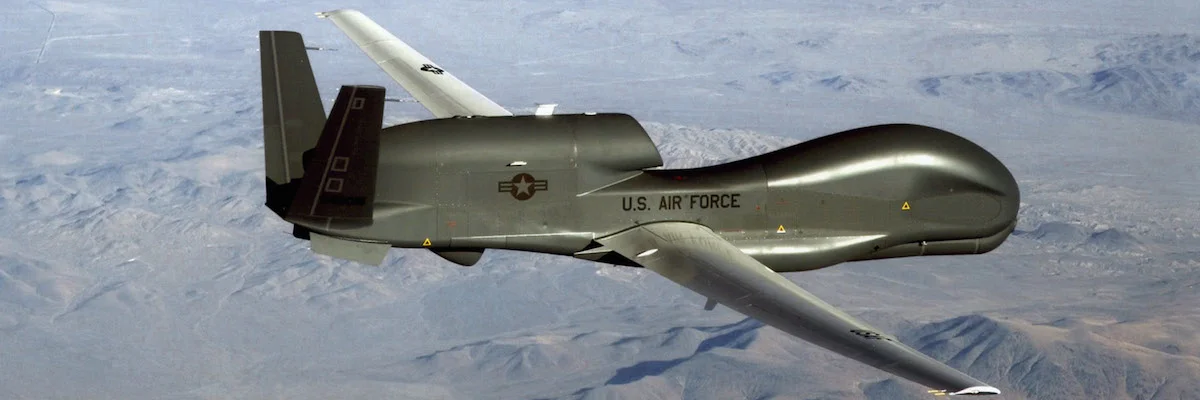
◢ Iran shot down a US spy drone Thursday near the strategic Strait of Hormuz, with the two sides at odds whether it was in Iranian or international airspace, in the latest incident stoking tensions between the arch-foes. The Islamic Revolutionary Guard Corps said the "US-made Global Hawk surveillance drone" was hit with a missile "after violating Iranian air space" over the waters of Hormozgan province.
By Marc Jourdier
Iran shot down a US spy drone Thursday near the strategic Strait of Hormuz, with the two sides at odds whether it was in Iranian or international airspace, in the latest incident stoking tensions between the arch-foes.
The Islamic Revolutionary Guard Corps said the "US-made Global Hawk surveillance drone" was hit with a missile "after violating Iranian air space" over the waters of Hormozgan province.
The Pentagon confirmed a US surveillance drone was shot down by Iranian forces, but it insisted the unmanned aircraft was in international airspace.
The incident comes at a time of growing antagonism between Iran and the United States following two waves of still unexplained attacks on Gulf shipping, which Washington has blamed on Tehran.
Iran has denied any involvement and hinted the US might have orchestrated them itself to provide a pretext for the use of force against the Islamic Republic.
Russian President Vladimir Putin said any use of force by the United States against Iran "would be a disaster for the region.”
The head of Iran's Revolutionary Guard said the downing of the drone was "a clear message" his country will defend its borders.
Iran will "respond to all foreign aggression and our reaction is, and will be, categorical and absolute", General Hossein Salami said, quoted by Tasnim news agency.
"We declare that we are not looking for war but we are ready to respond to any declaration of war," he added.
The Pentagon said later in a statement that an Iranian surface-to-air missile had brought down a US Gold Hawk high-altitude drone over the Strait of Hormuz.
"Iranian reports that the aircraft was over Iran are false," it said.
"This was an unprovoked attack on a US surveillance asset in international airspace."
World oil prices rebounded strongly on the news, with London's Brent North Sea crude up 2.78 percent to $63.54 per barrel in midday trading and New York's West Texas Intermediate up 3.42 percent to $55.60.
'Maximum pressure'
Tensions have been running high between Iran and the United States ever since President Donald Trump abandoned a landmark 2015 nuclear agreement in May last year.
The subsequent reimposition of crippling unilateral sanctions has dealt a heavy blow to Iran's already flagging economy.
Washington has also bolstered its military presence in the Middle East in a campaign of "maximum pressure" against Tehran.
Its deployment to the Gulf of an aircraft carrier task force as well as B-52 bombers, an amphibious assault ship and a missile defense battery has sparked fears of fresh conflict in the region.
One of the two tankers attacked in the Gulf of Oman last week was damaged by a limpet mine, the US military said Wednesday.
Commander Sean Kido of US Naval Forces Central Command, or NAVCENT, said the mine used in the attack "is distinguishable and it is also strikingly bearing a resemblance to Iranian mines that have already been publicly displayed in Iranian military parades.”
The Japanese-owned Kokuka Courageous, loaded with highly flammable methanol, came under attack on June 13 as it passed through the Gulf of Oman along with the Norwegian-operated Front Altair.
Fingerprints
It was the second attack in a month on ships in the strategic shipping lane.
On May 12, two Saudi oil tankers and two other vessels were damaged in mysterious "sabotage attacks" in the Gulf of Oman off the United Arab Emirates.
Kido told reporters in the UAE emirate of Fujairah that the US military had recovered "biometric information" of the assailants on the Kokuka Courageous including fingerprints.
This information "can be used to build a criminal case", Kido said as the US Navy took journalists to the damaged ship currently anchored some 14 kilometres (nine miles) off Fujairah.
Defence Minister Amir Hatami flatly rejected allegations Iran was behind the twin attacks.
"Accusations levelled against Iran's armed forces and the published film with regards to the incident (that) happened to the vessels... are unsubstantiated and we categorically reject these accusations," the official news agency IRNA quoted him as saying.
Washington has released images and a grainy black-and-white video it says shows Iranians on a patrol boat removing an unexploded limpet mine attached to the Kokuka Courageous.
The US commander Kido said there was an "ongoing joint and combined investigation with our regional partners into the attacks" on the two tankers.
Photo: US Air Force