
Iran's Rial Hits New Record-Low on Trump Fears
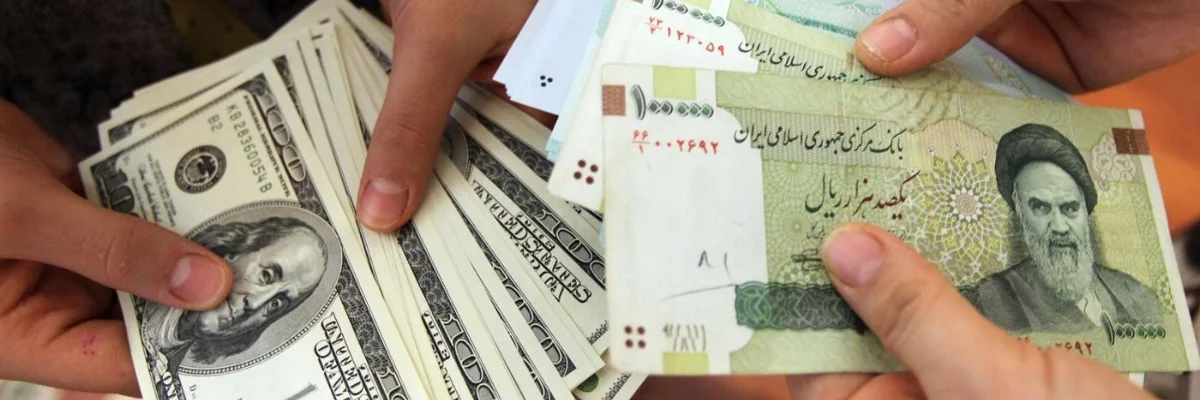
◢ Iran's currency fell more than six percent against the dollar on Sunday, hitting another record-low, as fears of a US withdrawal from the nuclear deal continued to drive speculation. The rial reached 55,200 to the dollar at the close on the open market—a drop of nearly a third in the past six months.
Iran's currency fell more than six percent against the dollar on Sunday, hitting another record-low, as fears of a US withdrawal from the nuclear deal continued to drive speculation.
The rial reached 55,200 to the dollar at the close on the open market—a drop of nearly a third in the past six months—according to the Financial Informing Network, considered the most reliable for fluctuations in the free rate.
"There is a clearly an increase of people buying dollars because they think the United States will pull out of the nuclear deal," said the head of an exchange office in Tehran, on condition of anonymity.
The gap with the government's official rate, which stood at 37,814 on Sunday, has continued to widen, threatening a return of high inflation which the government has battled to bring under control.
"The government can't do anything when there is this much panic. If the US exits the agreement, the Iranian currency could collapse even further and reach 70,000 to the dollar," said the exchange dealer.
The head of the central bank, Valiollah Seif, and Economy Minister Masoud Karbasian were summoned to parliament to discuss the issue last Monday.
Long queues have been seen outside exchange offices for weeks as uncertainty mounts over the nuclear deal which Iran reached with world powers in 2015.
President Donald Trump has threatened to walk away from the deal and reimpose sanctions by May 12—the next deadline for confirming US involvement—unless new restrictions are placed on Iran's nuclear and missile programs.
The rial stood at around 40,000 to the dollar in October, when Trump said he would no longer certify Iran's compliance with the nuclear deal, and has been falling steadily since.
Iran's government took drastic measures in February to stem the decline, arresting unlicenced exchange dealers and freezing speculators' accounts, but they have had little impact.
President Hassan Rouhani, who has staked his legacy on trying to revive the economy by rebuilding ties with the West, sought to play down the decline earlier this year, saying Iran was bringing in plenty of dollars through oil sales.
Photo Credit: AFP
Iran Currency Hits Record Low, Crashing Through 50,000 Mark
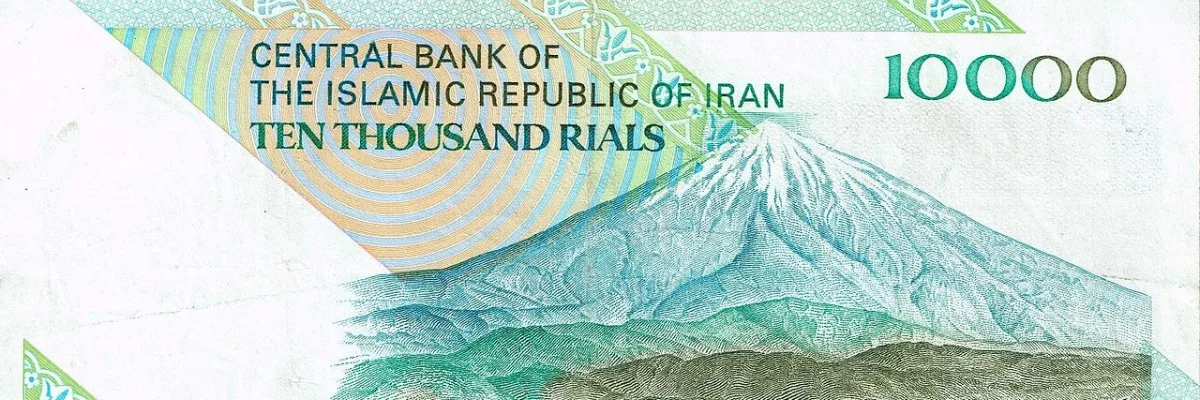
◢ The Iranian rial fell to a record-low on Monday, breaking through the 50,000-to-the-dollar mark for the first time, with analysts blaming uncertainty stemming from Washington. The rial has lost around a quarter of its value in the past six months to reach 50,860 against the US dollar according to the Financial Information Market, a trusted website for fluctuations on the open market.
The Iranian rial fell to a record-low on Monday, breaking through the 50,000-to-the-dollar mark for the first time, with analysts blaming uncertainty stemming from Washington.
The rial has lost around a quarter of its value in the past six months to reach 50,860 against the US dollar according to the Financial Information Market, a trusted website for fluctuations on the open market.
The gap with the official rate, which stood at 37,686 on Monday, has continued to widen. Iran's government took drastic measures last month to stem the decline in the free market rate, arresting foreign exchange dealers, freezing speculators' accounts and raising interest rates, as well as buying up millions of dollars in a bid to lower the price.
But on the streets of Tehran, long queues continued to gather outside foreign exchanges in the build-up to the Nowruz New Year holiday, which is running for another week.
"The issue is psychological rather than economic. There's no reason to buy dollars except in the hope that you can sell them later at a higher rate," said Esfandyar Batmanghelidj, founder of the Europe-Iran Forum, a business network.
He said Iranians were reacting to worrying headlines from the United States, where President Donald Trump recently appointed two hardline anti-Iran figures to his administration: Mike Pompeo as secretary of state and John Bolton as national security advisor.
Many analysts believe Trump will pull out of the 2015 nuclear deal with Iran when it next comes up for renewal in May, bringing back crippling sanctions.
"I see many people looking to invest in neighbouring countries because this fear is spreading about the future of the JCPOA (nuclear deal)," said Navid Kalhor, a Tehran-based financial analyst.
Local officials have complained that Iranians are hoarding billions of dollars, while local banks run short of cash "I have friends who go to banks and ask for 15 or 20 million tomans (150 million or 200 million rials, $3,000 or $4,000) and they're told to come back in a week because they're out of cash," said Kalhor.
"Very Concerning"
The devaluation poses a major problem for President Hassan Rouhani's government, which had hoped to attract massive foreign investment in the wake of the nuclear deal.
Already facing huge obstacles from remaining, non-nuclear US sanctions, the collapsing currency will serve as another deterrent to potential investors, Batmanghelidj said.
"Even in an instance where an investor is willing to operate in Iran, the devaluation is very concerning. If you invest now and the currency falls even 15 percent, you have to discount that from your returns, and that's very difficult to hedge against," he said.
"This will be difficult for the government. There is very little they can do about the mentality of individuals."
The government has resisted unifying the official and free-market rates of the rial because it would mean more expensive imports and therefore higher inflation.
But analysts say the gap has distorted trade and fueled corruption. Perhaps the biggest challenge is that hoarding dollars has become a preferred way to store money amid economic uncertainty, especially after a housing boom stagnated after years of over-construction.
Iranian banks have tried to counter this by offering interest rates as high as 20 percent.
But speculation on the dollar has become an endemic problem. The Iran newspaper reported last month that 775 people's accounts had been frozen on suspicion of distorting the foreign exchange market with capital movements totaling 200 trillion rials (over $4 billion).
This has only fueled wider problems in the economy by discouraging investors from putting their money into businesses. "The situation in the economy right now is far from beautiful," said Kalhor.
Photo Credit: Wikicommons