

Iran Airs Support for 'Resilient' Lebanese After Blasts
Iran's top diplomat expressed Tehran's support for the "resilient" people of Lebanon after Beirut was rocked by devastating explosions on Tuesday.
Iran's top diplomat expressed Tehran's support for the "resilient" people of Lebanon after Beirut was rocked by devastating explosions on Tuesday.
"Our thoughts and prayers are with the great and resilient people of Lebanon," Mohammad Javad Zarif tweeted.
"As always, Iran is fully prepared to render assistance in any way necessary," he said.
"Stay strong, Lebanon," added the Iranian foreign minister.
At least 27 people were killed and 2,500 injured, according to "preliminary estimates" announced by Lebanese Health Minister Hamad Hassan.
The explosions hit Beirut's port, flattening buildings in the vicinity and sending out shockwaves for kilometres (miles).
The cause was not immediately known.
Photo: IRNA
Iran Floods Kill at Least Three
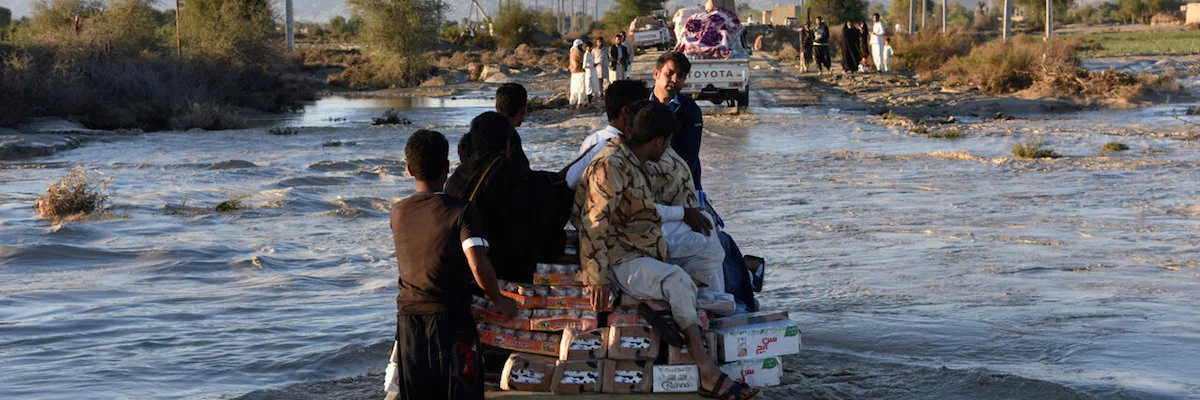
◢ Flooding in southern Iran has killed at least three people and left hundreds of villages cut off following days of heavy rainfall, official media reported on Tuesday. "More than 20,000 people in villages of Sistan-Baluchistan province have lost their homes because of flooding or are surrounded by water," Deputy Health Minister Alireza Raisi said.
Flooding in southern Iran has killed at least three people and left hundreds of villages cut off following days of heavy rainfall, official media reported on Tuesday.
“So far three people have been confirmed dead and one has been reported missing," Press TV, the English-language service of state television, reported on its website.
Rescue teams used boats and helicopters to provide relief after floodwaters cut off road access to urban areas of Hormozgan, Kerman and Sistan-Baluchistan provinces, state news agency IRNA said.
They have so far been unable to reach the town of Qasr-e Qand and 40 surrounding villages in Sistan-Baluchistan, said governor Rahimbaksh Pakandish, cited by IRNA.
Five hundred villages were affected and thousands of homes destroyed or damaged in the southeastern province, IRNA reported, adding that 285 families were given emergency shelter in Red Crescent tents.
"More than 20,000 people in villages of Sistan-Baluchistan province have lost their homes because of flooding or are surrounded by water," Deputy Health Minister Alireza Raisi was quoted as saying.
The Revolutionary Guards distributed 1,000 food packages to those affected, said IRNA.
In Kerman province, roads were severed and 40 villages suffered damage, while in Hormozgan province 61 people were rescued.
The amount of rain that fell in the southwestern province of Hormozgan since Friday was "unprecedented", the semi-official ISNA news agency reported.
Floodwaters had surrounded more than 50 villages in the Gulf province.
"Unprecedented floods are ravaging #Iran's Sistan & Baluchistan province, with significant human & material costs," Foreign Minister Mohammad Javad Zarif tweeted on Monday night.
The flood disaster is the worst in Iran since at least 70 people were killed across 20 provinces in April.
Photo: IRNA
Saudi, UAE Send Relief Aid to Flood-Stricken Iran
◢ Saudi Arabia and the UAE have sent 95 tons of humanitarian aid to their rival Iran as it reels from deadly floods, officials said Thursday, after Tehran complained US sanctions were obstructing relief. The aid, which includes food and shelter material, was authorized by Saudi Arabia's king and crown prince, it added.
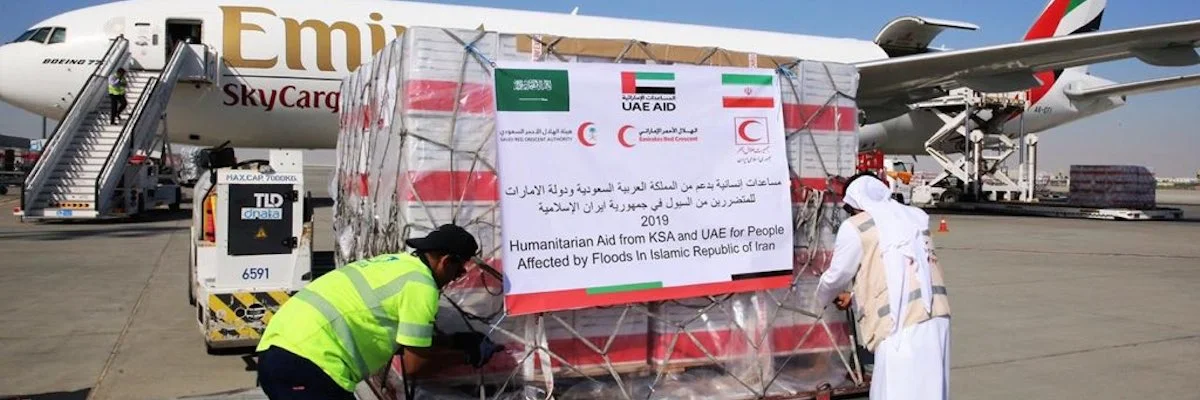
Saudi Arabia and the UAE have sent 95 tons of humanitarian aid to their rival Iran as it reels from deadly floods, officials said Thursday, after Tehran complained US sanctions were obstructing relief.
"The Saudi Red Crescent, as part of a joint Saudi-UAE initiative to alleviate the suffering of Iranian citizens, has dispatched a relief plane to Tehran with 95 tons of humanitarian aid to support those affected by floods," the official Saudi Press Agency said.
The aid, which includes food and shelter material, was authorized by Saudi Arabia's king and crown prince, it added.
The Emirates Red Crescent was also involved in the relief operation, the UAE's official WAM news agency said.
At least 76 people have died in Iran after torrential rainfall, which has also caused billions of dollars worth of damage since March 19.
Iran's Red Crescent has repeatedly complained that US banking sanctions re-imposed last year make it impossible to receive donations from outside the country.
US President Donald Trump last year withdrew Washington from a multilateral agreement on Iran'snuclear program, later re-imposing sanctions focusing on oil exports and financial transactions.
Sunni powerhouse Saudi Arabia and Shiite-dominated Iran have a longstanding rivalry based as much on geostrategic interests as religious differences.
Facing off across the Gulf, the two major oil producers have taken opposing sides for decades in conflicts across the Middle East.
Riyadh broke off diplomatic relations with Tehran in 2016 in protest at the torching of its diplomatic missions by Iranian protesters angry over its execution of a leading Shiite cleric.
Photo: Saudi Red Crescent
2 Million in Need of Aid After Iran Floods: Red Crescent
◢ The devastating floods that have swamped many parts of Iran since March have left two million people in need of humanitarian aid, the Red Crescent said Monday. The International Federation of Red Cross and Red Crescent Societies called the floods the "largest disaster to hit Iran in more than 15 years.”
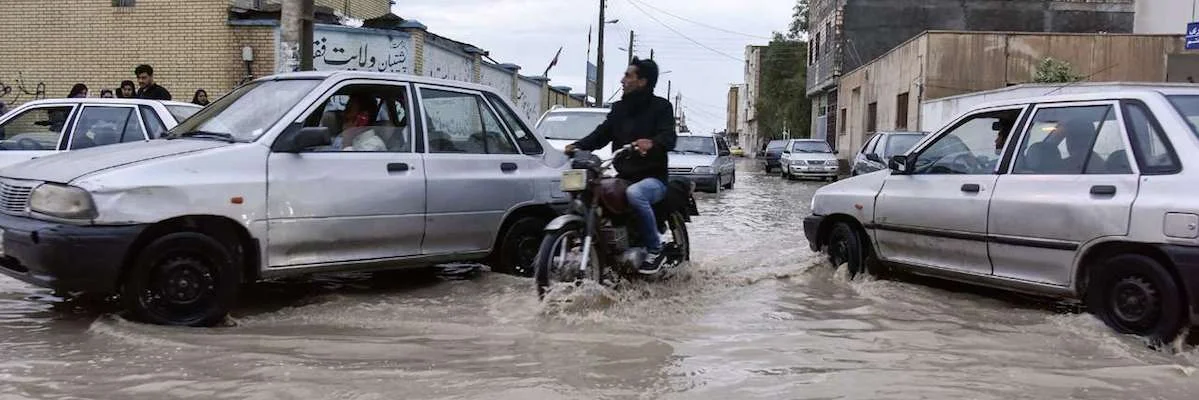
The devastating floods that have swamped many parts of Iran since March have left two million people in need of humanitarian aid, the Red Crescent said Monday.
The International Federation of Red Cross and Red Crescent Societies called the floods the "largest disaster to hit Iran in more than 15 years.”
According to the IFRC, the floods have killed at least 78 people and injured more than 1,000 others.
An estimated 10 million people across 2,000 cities and towns have been affected, with more than half a million displaced, it said.
"In all, more than 457,000 people have been reached by Red Crescent services," and emergency accommodation provided for 239,000.
Heavy rainfall in eastern Iran since Saturday prompted authorities to renew flood warnings for large swathes of the country, with local media reporting rivers bursting their banks and roads being swept away.
Iran has been hit by massive floods since March 19 following heavy rainfall in the normally arid country.
Alternating between the country's north, west and southwest, the floods have caused between USD 2.2 and USD 2.6 billion of damages.
Officials said Sunday that 25 out of Iran's 31 provinces have been affected and more than 14,000 kilometers (8,700 miles) of roads damaged.
Photo Credit: IRNA
76 Dead in Iran Floods as Tehran Weighs Costs
◢ Floods in Iran have killed 76 people and caused more than USD 2.2 billion in damages in recent weeks, officials said Sunday, with warnings still in place for large swathes of the country. "With the death of five people in the Khuzestan province flood and another person in Ilam province the death toll has now reached 76" since March 19, according to a statement published online by the coroner's office.
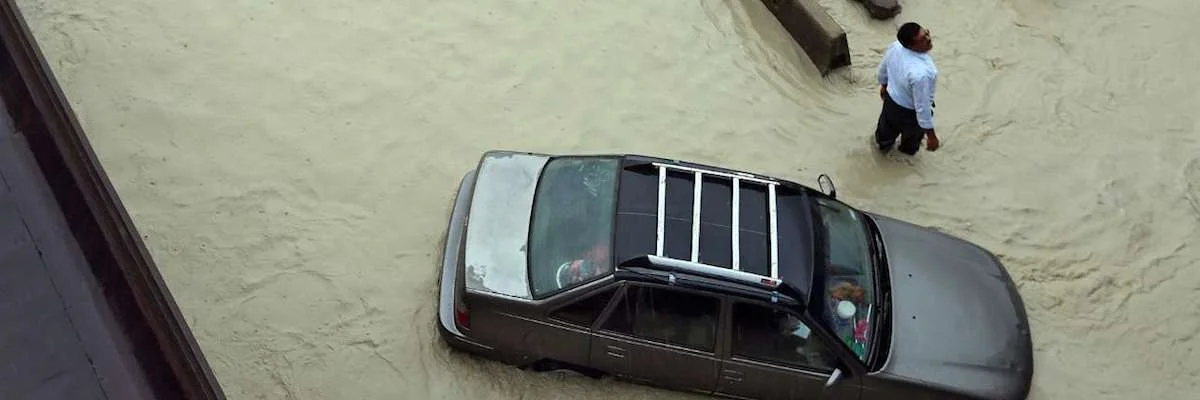
Floods in Iran have killed 76 people and caused more than USD 2.2 billion in damages in recent weeks, officials said Sunday, with warnings still in place for large swathes of the country.
"With the death of five people in the Khuzestan province flood and another person in Ilam province the death toll has now reached 76" since March 19, according to a statement published online by the coroner's office.
The two southwestern provinces are the latest overwhelmed by floods that first hit the northeast of the usually arid country, forcing hundreds of thousands to evacuate from cities and villages.
Officials have again issued flood warnings for the east of Iran with heavy rains that began on Saturday forecasted to continue.
The floods have caused immense damage with homes, roads, infrastructure and agriculture all hit.
"Twenty-five provinces and more than 4,400 villages across the country were affected by the floods," Interior Minister Abdolreza Rahmani-Fazli told parliament, according to the official IRNA news agency.
He said the damages amount to between 300 and 350 trillion rials—between USD 2.2 and USD 2.6 billion at the free market rate.
Transport minister Mohammad Eslami meanwhile told lawmakers "725 bridges have been totally destroyed."
“More than 14,000 kilometers (8,700 miles) of roads have been damaged," he said, according to IRNA.
The head of Iran's meteorology service told the same parliamentary session that the floods do not necessarily mean that a decades-long drought has ended.
"The recent floods were due to climate change and global warming," Sahar Tajbakhsh said according to the semi-official ISNA news agency.
The Islamic republic has received aid from neighboring countries and further afield, with France on Saturday donating 210 tents and 114 pumps.
Photo Credit: IRNA
Iranians Band Together to Battle Devastating Floods
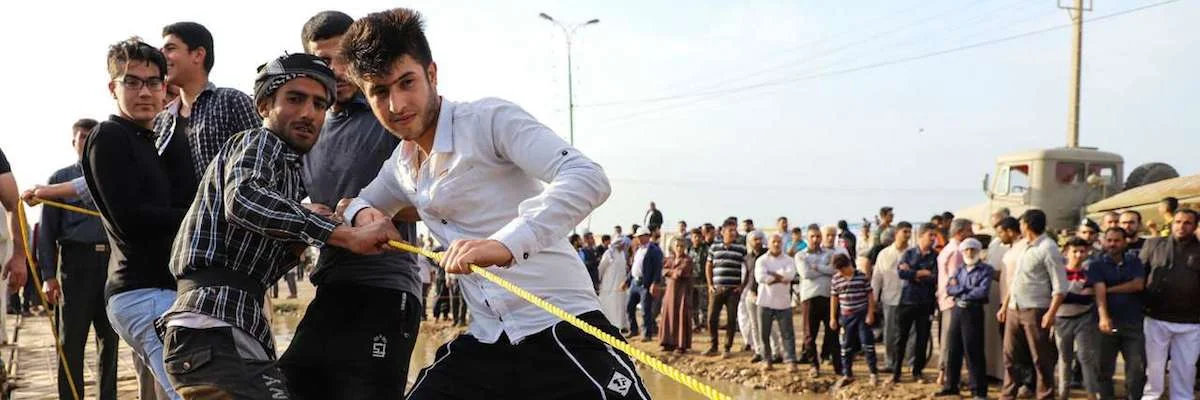
◢ The oil-rich Khuzestan province and its large Arab minority have been hit by major floods since early April due to heavy rains and floodwater rushing down from the north. In the absence of adequate resources in place to ease such disasters, people are banding together in towns like Hamidiyeh to battle the overflow.
Sweat rolling down his cheek, Ghasem Arabi filled sandbags to prop-up a makeshift dyke as flood waters surged just metres behind him in Iran's deluge-stricken southwest.
"Our youth are working day and night," said the 37-year-old nurse as he helped shovel sand into plastic sacks held by fellow residents in the agricultural town of Hamidiyeh.
"God willing this flood will not reach their homes... that's all they have left," he said, adding that many had already lost their farmlands to the rising waters.
The oil-rich Khuzestan province and its large Arab minority have been hit by major floods since early April due to heavy rains and floodwater rushing down from the north.
They are the latest in a series of unprecedented floods that have swamped the normally arid country since March 19, killing at least 70 people in 20 of Iran's 31 provinces.
In the absence of adequate resources in place to ease such disasters, people are banding together in towns like Hamidiyeh to battle the overflow.
Most women and children have been evacuated but young men and their fathers have stayed behind to help protect their homes, building barriers and banks to beat back the swelling waters of the Karkheh river.
Arabi works at a hospital in Ahvaz city, the capital of Khuzestan, roughly 30 kilometres (18 miles) southeast of Hamidiyeh.
He was on holiday with his family for the Nowruz Persian New Year holiday when the floods started. He decided to stay and help.
"We need clothes, food, drinking water. Running water and power get cut every night," said Arabi.
His brothers were busy lugging what little furniture and appliances they had up to the roof, hoping to protect them from the tide.
'Critical' Situation
Floodwaters have already swallowed up some houses along the river bank, seeping into the ground floors of others and turning yards into lakes.
The rising waters have submerged kilometres of surrounding flatlands too.
Many of the newly homeless residents have found shelter with neighbours in parts of the town still hoping to control the flood.
Along the bulging river banks, dozens dig up soil and fill sandbags.
The Karkheh's water level has risen dangerously close to the town's sole small bridge. Just a few more metres and the river will only be crossable by boat.
"See that tree? That's where my garden was," said one resident, throwing a stone towards a branch poking out of the water.
At one spot along the bank, more than a dozen men formed a chain from a nearby alley to the water's edge, handing down bags of sand.
The mix of locals, fatigue-clad members of the elite Revolutionary Guards and Muslim clerics wearing black and white robes looked almost jovial—singing revolutionary anthems and upbeat Arabic tunes.
Despite the presence of the Guards, residents said more government help was needed.
"We lack trucks, sandbags... and bulldozers. The situation is very critical," said Abbas Mansouri, a farmer whose house was heavily damaged but was handing out food, tea and cold water to his neighbours.
Two pumps draining water out of homes were donated by the Guards, locals said, and a bulldozer and a truck working nearby belonged to the government, according to their drivers.
"The government has sent us very little help," said one resident, without providing his name.
He said he had not seen any Red Crescent workers or soldiers pitching in to help out.
'My Heart Breaks'
The scale of the disaster and a lack of resources has meant the Red Crescent has been forced to prioritize villages with limited means, aid workers with the group told AFP.
The humanitarian organisation only has six helicopters to cover thousands of square kilometres hit by the floods, according to a Red Crescent flight engineer.
The flooding has caused damages worth IRR 40 trillion in Khuzestan—over USD 280 million at the free market rate—according to an official figure.
Despite oil riches and large agriculture industry, Khuzestan is one of Iran's most underprivileged provinces.
"Agriculture was their life and now it's destroyed," Mostafa Torfi, a 35-year old aid worker, told AFP.
"My heart breaks for the villagers every time I see them ... We are doing all we can for them," he added.
Photo Credit:INRA
Iran Orders More Than 60,000 to Evacuate Food-Hit Oil City
◢ Authorities ordered tens of thousands of residents of the southwestern Iranian city of Ahvaz to evacuate immediately on Wednesday as floodwaters entered the capital of oil-rich Khuzestan province, state television reported. The province's governor, Gholamreza Shariati, said he ordered the evacuation of five districts as a "precautionary and preventive move to avert any danger.”
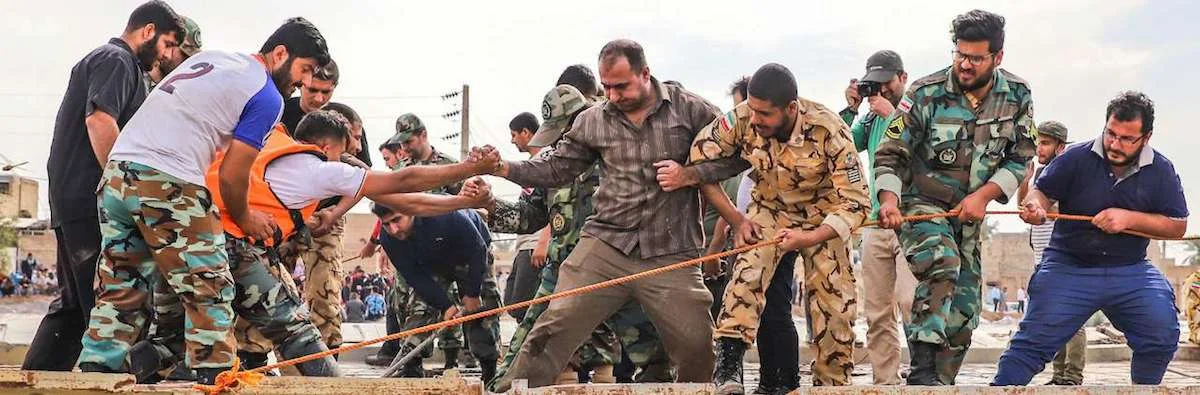
Authorities ordered tens of thousands of residents of the southwestern Iranian city of Ahvaz to evacuate immediately on Wednesday as floodwaters entered the capital of oil-rich Khuzestan province, state television reported.
The province's governor, Gholamreza Shariati, said he ordered the evacuation of five districts as a "precautionary and preventive move to avert any danger", Iran's Tasnim news agency reported.
The districts have an estimated population of between 60,000 and 70,000.
Shariati asked young men to "help us in building dykes and to assist in the evacuation of women, children and the elderly."
"The Dez and Karkheh rivers have for the first time joined each other near Ahvaz and are now flowing towards the city," Shariati told state TV, adding this was unprecedented.
"These two rivers are far away from each other, but the huge volume of floodwater caused them to join up.”
Shariati said a sixth district was also put on standby for possible evacuation.
Khuzestan province has been struggling with major floods due to heavy rains as well as floodwater coming from the north.
It is the latest in a series of unprecedented floods that have hit the normally arid country since March 19, killing at least 70 people in 20 of Iran's 31 provinces.
The country's northeast was first swamped on March 19 before the west and southwest of the country were hit on March 25.
Food is Priority
On April 1 the west and southwest were again swamped by floods when heavy rains returned.
The huge inflow of water forced authorities to release large volumes of water from the province's largest dams, which is now threatening some of the cities downstream including the Ahvaz region, home to 1.3 million.
Authorities ordered the evacuation of six new cities along the Karkheh river on Saturday as the situation neared "critical" status.
"We've been trying to manage the water ... most of it has been diverted toward other channels," Ahvaz Mayor Mansour Katanbaf told ISNA on Sunday.
But on Monday a hospital in danger of being flooded was evacuated in Ahvaz as officials battled to contain the rising waters.
Emergency services have been left scrambling to prevent further loss of life and to provide relief to flood-stricken residents.
"Delivering food and hygienic goods to (shelter) camps is our primary priority and we have provided emergency accommodations for about 44,000 people," Iran Red Crescent's head of Relief and Rescue Organization Morteza Salimi told AFP on Tuesday.
In the city of Susangerd, swamped by floodwaters, an AFP team dispatched to the region saw residents living in tents setup on the roofs of their homes as what had previously been roads had become canals marked by the palm trees lining the streets.
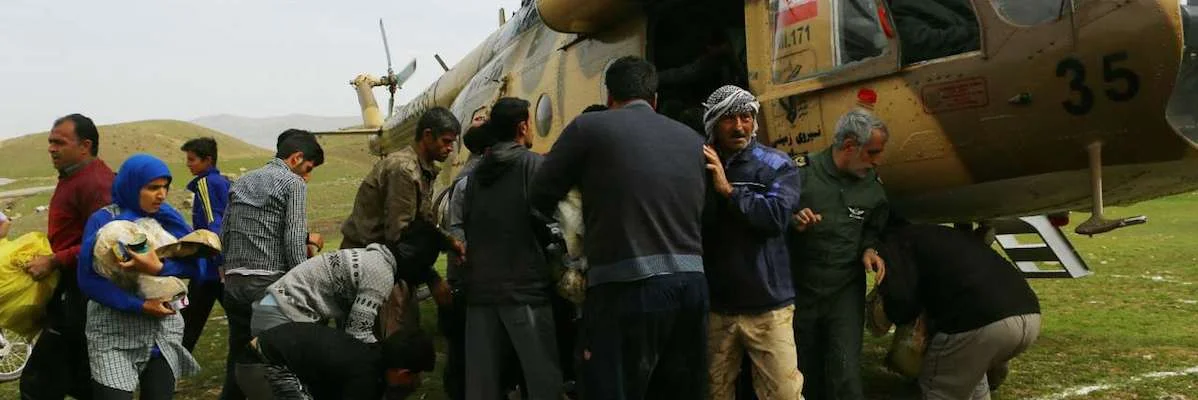
Red Crescent choppers were providing food and basic goods to regions cutoff by floods, with villagers rushing to receive the help as they approached.
The flooding across Iran has caused damage worth IRR 150 trillion—more than USD 1 billion at the free market rate—according to an official estimate given by lawmaker Mehrdad Lahooti.
Photo Credit: IRNA

Floods Force Evacuation of Hospital in Southwest Iran
◢ Iranian authorities on Monday evacuated patients from a hospital threatened by floodwaters in the southwestern city of Ahvaz, the semi-official news agency ISNA reported. Iran has been hit by several weeks of unprecedented flooding across most of the usually arid country that has killed 70 people, according to the emergency services.
Iranian authorities on Monday evacuated patients from a hospital threatened by floodwaters in the southwestern city of Ahvaz, the semi-official news agency ISNA reported.
Iran has been hit by several weeks of unprecedented flooding across most of the usually arid country that has killed 70 people, according to the emergency services.
On Monday, authorities were battling to prevent floods reaching Ahvaz, which is the capital of Khuzestan province and home to about 1.3 million people.
The advancing waters sparked fears that a hospital on the city's northern outskirts would be submerged after the nearby Karkheh river burst its banks.
“Salamat hospital has been evacuated and all patients transferred to Golestan hospital on the orders of the crisis management authorities due to the risk of the hospital being flooded," the head of Golestan hospital, Meysam Moazi, told ISNA.
The huge floods have forced authorities to release water from one of the largest dams in the area, which has left some of the cities downstream under threat.
A "significant amount" of floodwater from Karkheh started moving toward Ahvaz on Sunday, according to city mayor Mansour Katanbaf.
"We've been trying to manage the water ... most of it has been diverted toward other channels and what's left is being handled," Katanbaf told ISNA.
Authorities ordered the evacuation of six new cities along the Karkheh river on Saturday as the situation neared "critical" status.
According to ISNA, a total of 210 villages along the river have been evacuated, 61 of which are now flooded.
Flooding swamped northeast Iran in mid March before spreading to the west and southwest of the country later in the month.
Heavy rains brought more floods to the west and southwest at the start of April.
The flooding has caused damage worth IRR 150 trillion—more than USD 1 billion at the free market rate, according to an official estimate given by lawmaker Mehrdad Lahooti.
Photo Credit: IRNA
Iran Will Need to Tap Wealth Fund for Flood Damage
◢ Flood damage in western Iran exceeds the government’s budget for disaster relief and officials will have to tap the country’s sovereign wealth fund to cover reconstruction costs, the semi-official Iranian Students’ News Agency reported. Around IRR 9.5 trillion—equivalent to USD 230 million at Iran’s official exchange rate—of damage has been caused to agricultural fields in the southwestern province of Khuzestan alone.
Flood damage in western Iran exceeds the government’s budget for disaster relief and officials will have to tap the country’s sovereign wealth fund to cover reconstruction costs, the semi-official Iranian Students’ News Agency reported.
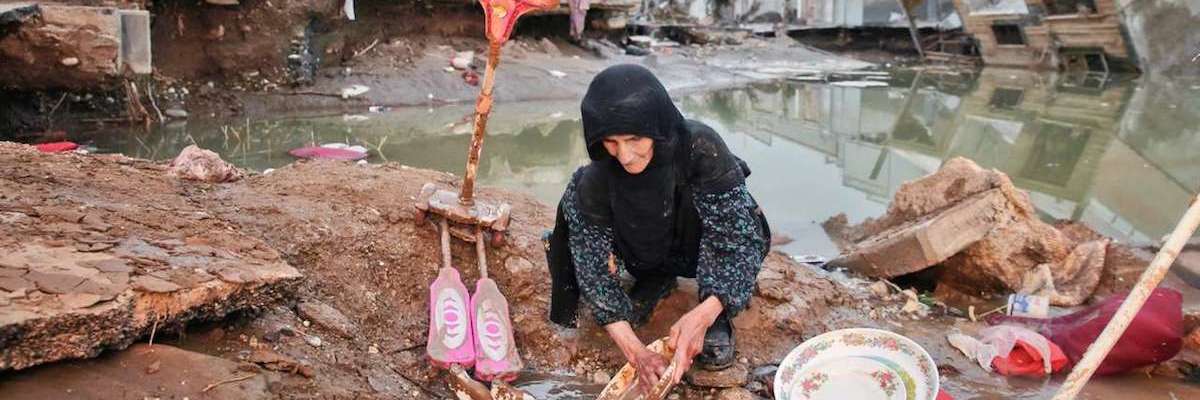
Around IRR 9.5 trillion—equivalent to USD 230 million at Iran’s official exchange rate—of damage has been caused to agricultural fields in the southwestern province of Khuzestan alone, Keykhosro Changlavaee, head of the Agricultural Administration of Khustanestan said, according to ISNA.
The floods that started last month have killed 70 people, according to the state-run Islamic Republic News Agency, and devastated swathes of Western Iran. The waters have destroyed towns and villages, mostly in the provinces of Lorestan and Khuzestan, prompting mass evacuations throughout the area.
“The government cannot finance the heavy cost of the damage alone,” Gholamreza Tajgerdoun, head of the parliamentary commission for budget affairs was cited as saying in the ISNA report. “There needs to be help from elsewhere. The overall cost of the damage hasn’t yet been finalized, but what’s clear is that the damage is greater than the annual budget has allowed for.”
Tajgerdoun said the government will probably have to dip into the National Development Fund, Iran’s sovereign wealth fund, which consists largely of income from oil exports. Iran’s oil sales have declined steeply in the past six months following the U.S. government’s decision to reimpose sanctions on the Islamic Republic’s economy and energy industry after abrogating the 2015 nuclear deal.
Earlier on Saturday, officials said some 36 villages in and around the city of Sushtar in Khuzestan were being evacuated before an expected increase in rainfall that’s anticipated to cause rivers to overflow further in the coming days.
One of the major dams serving Khuzestan, which borders Iraq and the site of several major oil fields, is at risk of overspilling and filled beyond normal capacity, Hamidreza Lashgari, deputy head of Khuzestan’s Water and Electricity Administration, told ISNA. Lashgari warned that authorities may not be able to control the dam if water levels continue to climb.
Photo Credit: IRNA
Iran Orders New Evacuations Amid Fresh Flood Fears
◢ Iranian authorities ordered the evacuation of six cities along the Karkheh river in southwestern Khuzestan province on Saturday after more rain sparked fears of new flooding, state news agency IRNA said. Floods in Iran since March have killed 70 people the head of the emergency services said on Friday according to the official IRNA News Agency.
Iranian authorities ordered the evacuation of six cities along the Karkheh river in southwestern Khuzestan province on Saturday after more rain sparked fears of new flooding, state news agency IRNA said.
Floods in Iran since March have killed 70 people the head of the emergency services said on Friday according to the official IRNA News Agency.
Six cities alongside Karkheh river in southwestern Iran "must be evacuated as soon as possible," Khuzestan governor Gholamreza Shariati told IRNA.
The oil-rich province of Khuzestan has an extensive range of dams, which have swelled upstream due to fresh downpours.
The floodwater's intensity has forced authorities to open emergency discharges at Karkheh dam, one of the largest in the area, thus sparking fears of fresh flooding.
The situation appears to be "critical", he said. "We advise all women and children to be evacuated to shelters and youngsters to remain and help," he added.
Interior Minister Abdolreza Rahmani Fazli warned that up to 400,000 people in Khuzestan could be exposed to the floods, IRNA reported.
Iran, a usually arid country, has been hit by unprecedented flooding across most of the country since mid-March with 70 people killed, according to the country's emergency services.
Heavy rain was forecast for Saturday in Khuzestan.
The country's northeast was swamped on March 19 before the west and southwest of the country were inundated on March 25, killing a total of 45people.
On April 1 the west and southwest were again swamped by floods when heavy rains returned to the area.
The government said the flooding had damaged nearly 12,000 kilometers (7,500 miles) of roads, or 36 percent of the country's entire network.
The worst hit in the latest deluge was Lorestan Province where in some cities whole neighborhoods were washed away and many villages are still cut off.
Fourteen deaths have been reported from Lorestan so far.
Photo Credit: IRNA

EU Provides €1.2 Million in Emergency Support Following Iran Floods
◢ Responding to the devastating floods that have recently affected northern and south western parts of Iran, the European Commission has announced an initial amount of EUR 1.2 million of emergency funding to assist the most vulnerable communities.
Responding to the devastating floods that have recently affected northern and south western parts of Iran, the European Commission has announced an initial amount of EUR 1.2 million of emergency funding to assist the most vulnerable communities.
In a statement released on Thursday, Commissioner for Humanitarian Aid and Crisis Management, Christos Stylianides declared, “We stand in full solidarity with the Iranian people at this difficult time. Our thoughts are with the thousands of families affected by the deadly floods as well as with the brave responders on the ground. The EU will help deliver essential support in the impacted areas.”
The commissioner added, “The new funding will support humanitarian partners, including the International Federation of Red Cross and Red Crescent Societies (IFRC) in delivering much needed relief assistance which will allow the most in need to cover their urgent needs. For over 20 years the EU has funded humanitarian operations in Iran, providing assistance to the most vulnerable refugees, including protection, shelter, water and sanitation, food security, and access to basic education and healthcare services.”
Photo Credit: IRNA
Iran Flood Death Toll Reaches 62
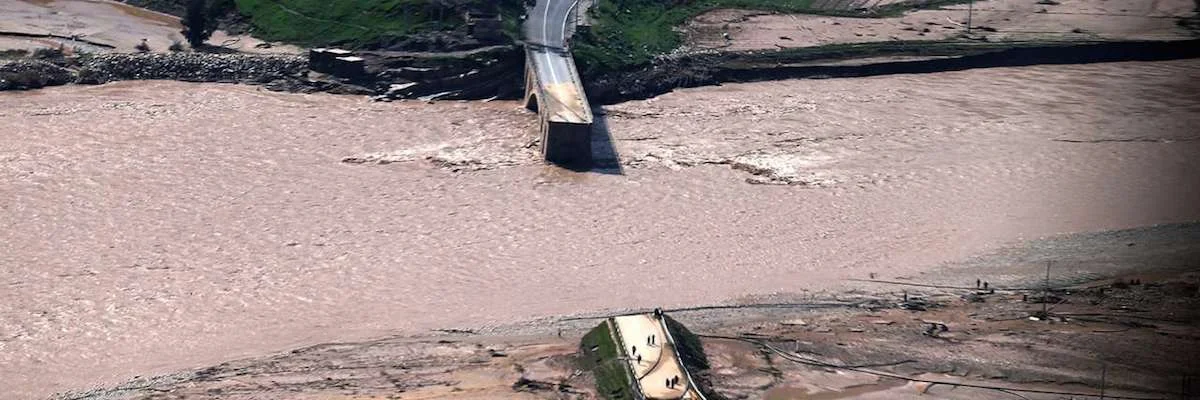
◢ The death toll from major floods swamping much of Iran over the past 15 days has risen to 62, the head of the Iranian Legal Medicine Organization told local media Wednesday. Ahmad Shojaee told the semi-official Fars news agency the southern province of Fars has been hit the hardest with 21 dead.
The death toll from major floods swamping much of Iran over the past 15 days has risen to 62, the head of the Iranian Legal Medicine Organization told local media Wednesday.
Ahmad Shojaee told the semi-official Fars news agency the southern province of Fars has been hit the hardest with 21 dead.
The western province of Lorestan and the northern province of Golestan followed with 14 and 8 dead respectively, he said.
Flood-related deaths have been reported in 11 out of Iran's 31 provinces, Shojaee added.
The semi-official ISNA news agency said the current toll was a tally of the victims whose bodies have been transferred to coroner offices across the country—indicating the count could still rise.
Iran has been hit by flooding across most of the country since March.
The country's northeast was swamped on March 19 before the west and southwest of the country were inundated on March 25, killing a total 45 people.
Flooding in the west and southwest continued on April 1 when heavy rains returned to the area.
"Seventy-eight intercity roads have been blocked, as many as 2,199 rural roads and 84 bridges have been washed away," said Behnam Saeedi, spokesman for the National Disaster Management Organisation.
"Across 15 provinces, 141 rivers burst their banks and around 400 land slides were reported," he told state TV.
The government said the flooding had damaged nearly 12,000 kilometers (7,500 miles) of roads, or 36 percent of the country's entire street network.
Photo Credit: IRNA
Iran FM Accuses US of 'Economic Terrorism' as Flood-Hit Cities Evacuated
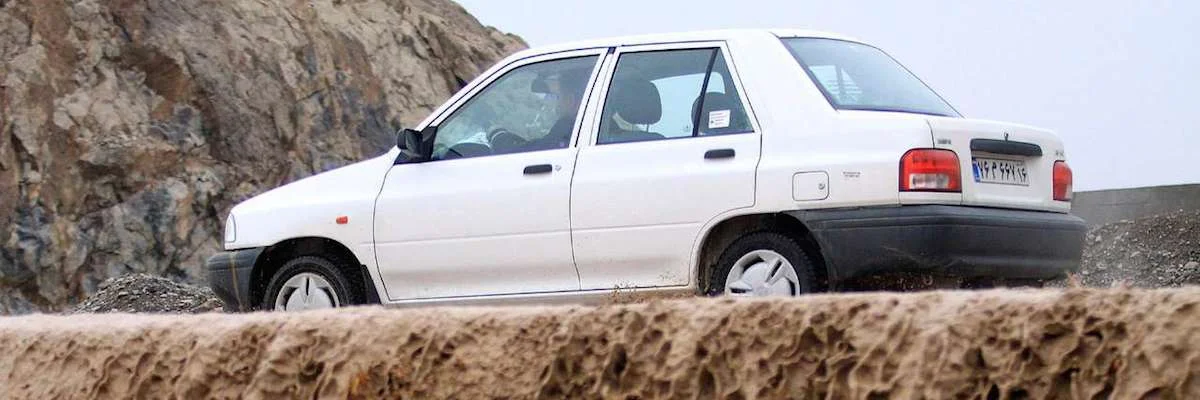
◢ Iranian Foreign Minister Javad Zarif accused the United States of impeding aid efforts and "economic terrorism" on Monday as authorities ordered the immediate evacuation of flood-stricken cities in western Iran. US sanctions are "impeding aid efforts by #IranianRedcrescent to all communities devastated by unprecedented floods," Zarif tweeted.
Iranian Foreign Minister Javad Zarif accused the United States of impeding aid efforts and "economic terrorism" on Monday as authorities ordered the immediate evacuation of flood-stricken cities in western Iran.
US sanctions are "impeding aid efforts by #IranianRedcrescent to all communities devastated by unprecedented floods," Zarif tweeted, referring to search and rescue operations being conducted after huge rainfalls triggered vast flooding.
"Blocked equipment includes relief choppers," the tweet read, adding that "this isn't just economic warfare; it's economic TERRORISM."
The evacuation was ordered after rivers burst their banks, dams overflowed and vast areas were cut off from communication.
A chronic shortage of rescue helicopters in Iran, due to US sanctions, has forced the emergency services to request help from military helicopters and amphibious armored personnel carriers to assist in the rescue operations.
The authorities declared a "situation red", the highest level of alert, in Lorestan province with four or five cities "completely critical", state television news network IRINN reported from Khorramabad, the region's capital.
"In Khorramabad the water has risen by as much as three meters (nearly 10 feet) in parts... and reports are coming in of regions... completely submerged with residents stranded on their rooftops," it added.
The Red Crescent's provincial director, Sarem Rezaee, said his organization had lost contact with much of the region.
“Telephones are not working, our radio communications are down... at this moment we have no news of other cities and villages," he told IRINN, adding roads were flooded and helicopters were unable to take off due to the bad weather.
“We have requested emergency help from neighboring provinces but at the present no one can do anything."
The airport in the western city of Khorramabad was flooded, with images showing water submerging the runway and cutting the province's main air link to the rest of the country.
Authorities in Lorestan ordered evacuations in many regions, bringing in the armed forces to forcibly remove those who do not comply, local media reported.
'Lost All Contact'
The authorities said Pol-e-Dokhtar and Mamulan cities were already half submerged, with one fatality reported in Mamulan.
Images on local media show water gushing through streets in Pol-e-Dokhtar where the water level had reached 1.5 meters (five feet).
Every village in the vicinity of the two cities had been surrounded by flood waters while all five dams in Lorestan had reached capacity and four of them were overflowing.
"We have lost all contact with Pol-e-Dokhtar," the Lorestan Governor General Mousa Khademi told the semi-official ISNA News Agency.
"We do not have any information on the situation there... we do not know how many people have been affected by the floods," he added.
Numerous rivers had burst their banks and landslides blocked many roads, said the reports.
Media outlets showed images of collapsed bridges and oil and gas pipelines destroyed by the flood.
The main railway line linking Tehran to the south of the country had also been blocked by the flood.
This is the third major flood to hit Iran in the past two weeks with unprecedented rainfalls in the mostly arid country that had endured a decades-long drought until this year.
The first occurred in the northeast of the country on March 19 and the second struck the west and southwest of Iran on March 25 with a combined toll of 45 people killed.
The present flood has again struck in the west and southwest following heavy rain that is set to continue into Tuesday. Apart from Lorestan half a dozen other provinces are also facing critical circumstances, with the emergency services reporting 23 out of Iran's 31 provinces have been affected and could face floods.
With the consecutive floods the reservoirs of many dams have reached full capacity forcing emergency discharge, as much as 1,800 cubic meters per second in some cases, to prevent them from breaking.
Photo Credit: IRNA
Iran Orders Evacuation of Flood-Hit Western Cities
◢ Iranian authorities on Monday ordered the immediate evacuation of flood-stricken cities in a western province as rivers burst their banks, dams overflowed and vast areas were cut off from communication. The highest level of alert was declared in Lorestan province with four or five cities "completely critical", state television news network IRINN reported from Khorramabad, the region's capital.
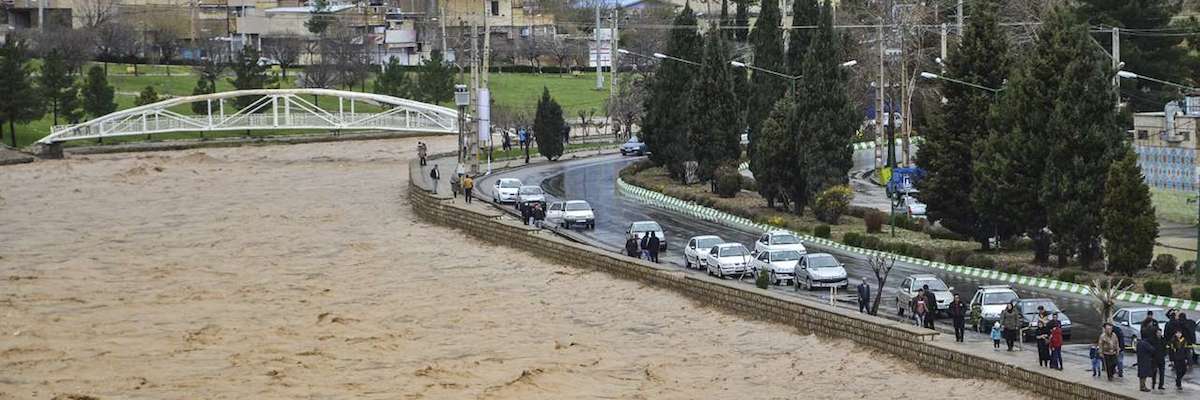
Iranian authorities on Monday ordered the immediate evacuation of flood-stricken cities in a western province as rivers burst their banks, dams overflowed and vast areas were cut off from communication.
The highest level of alert was declared in Lorestan province with four or five cities "completely critical", state television news network IRINN reported from Khorramabad, the region's capital.
"In Khorramabad the water has risen by as much as three metres (nearly 10 feet) in parts... and reports are coming in of regions... completely submerged with residents stranded on their rooftops," it added.
The Red Crescent's provincial director, Sarem Rezaee, said his organization had lost contact with much of the region.
"Telephones are not working, our radio communications are down... at this moment we have no news of other cities and villages," he told IRINN, adding roads were flooded and helicopters were unable to take off due to the bad weather.
"We have requested emergency help from neighbouring provinces but at the present no one can do anything."
The airport in the western city of Khorramabad was flooded, with images showing water submerging the runway and cutting the province's main air link to the rest of the country.
Authorities in Lorestan ordered evacuations in many regions, bringing in the armed forces to forcibly remove those who do not comply, local media reported.
The authorities said Pol-e-Dokhtar and Mamulan cities were already half submerged, with one fatality reported in Mamulan.
Images on local media show water gushing through streets in Pol-e-Dokhtar where the water level had reached 1.5 metres (five feet).
Every village in the vicinity of the two cities had been surrounded by flood waters while all five dams in Lorestan had reached capacity and four of them were overflowing.
Numerous rivers had burst their banks and landslides blocked many roads, said the reports.
Media outlets showed images of collapsed bridges and oil and gas pipelines destroyed by the flood.
The main railway line linking Tehran to the south of the country had also been blocked by the flood.
This is the third major flood to hit Iran in the past two weeks with unprecedented rainfalls in the mostly arid country that had endured a decades long drought until this year.
The first occurred in the northeast of the country on March 19 and the second struck the west and southwest of Iran on March 25 with a combined toll of 45 people killed.
The present flood has again struck in the west and southwest following heavy rain that is set to continue into Tuesday.
Apart from Lorestan half a dozen other provinces are also facing critical circumstances, with the emergency services reporting 23 out of Iran's 31 provinces have been affected and could face floods.
With the consecutive floods the reservoirs of many dams have reached full capacity forcing emergency discharge, as much as 1,800 cubic meters per second in some cases, to prevent them from breaking.
Photo Credit: IRNA

Iran President Visits Flood-Hit Zones as Death Toll Hits 43
◢ President Hassan Rouhani travelled to flood-hit zones of Iran for the first time Wednesday after nine days of heavy rains that have inundated most of the country and killed 43 people. The authorities have been struggling to cope with flooding after extreme rainfall which at times has been equivalent to half of the average annual levels within 24 hours.
President Hassan Rouhani travelled to flood-hit zones of Iran for the first time Wednesday after nine days of heavy rains that have inundated most of the country and killed 43 people.
The authorities have been struggling to cope with flooding after extreme rainfall which at times has been equivalent to half of the average annual levels within 24 hours.
The disaster, which one government minister blamed on climate change, struck in the middle of Iranian New Year break, with many relief workers on leave and millions of holiday-makers on the roads.
"When suddenly 25 out of 31, and on some days all provinces are struck (by flooding), this may be an unprecedented phenomenon," Rouhani said in Tehran, quoted by the government's website.
Rouhani then flew to the northeastern province of Golestan, one of the areas where the floods first struck on March 19 and have since killed at least 10 people, according to the latest official figures.
Speaking at a crisis meeting in Golestan aired live on state television, Rouhani responded to criticism he was slow to visit the disaster-hit zone.
"I had planned to come in the first days, but ultimately due to considerations it was decided the first vice-president would travel here," he said.
The deluge spread rapidly from the north to the west and south of the country on March 25 before hitting the centre of Iran as the weather front moved eastwards.
"In some regions, rainfall within 24 hours equalled that of the prior 10 months," said Mahmoodreza Peiravi, secretary general of Iran's Red Crescent Society.
"If you take the number and ferocity of the floods into account, the death toll was thankfully not that high," he said, while warning it could rise in coming days.
"The floods struck during the holidays and many vacationers on road trips were affected by it," Peiravi told AFP.
"It is possible that some vacationers might have been carried off by the floods and no one is yet aware of it," he warned.
Day of Mourning
A day of mourning has been declared for Thursday in the southern city of Shiraz, the worst-hit area where the flooding claimed the lives of 19 people and injured more than 100.
The latest toll included six people who drowned when a boat full of rescuers and victims overturned in the northeastern Gomishan region in Golestan province.
"Another body has been found but we have not yet recovered it," the area's emergency services head Alireza Kamalgharibi said, adding that search and rescue operations would continue as it was unclear how many people had been on board the boat.
Another four people were killed in the western provinces of Kogiluyeh-Va-Boyerahmad and Lorestan, said Morteza Salimi, head of the Iranian Red Crescent's search and rescue organization.
One death was also reported in each of Khuzestan, Kermanshah and Semnan provinces.
“More than 43,000 people were rescued and nearly 27,000 were provided with emergency accommodation," Salimi said, quoted by Tasnim news agency, adding rescue operations had been carried out in 30 provinces.
Officials estimate the flooding caused hundreds of millions of dollars in damage to homes, farms and infrastructure.
The skies have mostly cleared up for now but Iran's meteorological service has warned of more heavy showers from Saturday.
Such a widespread flood threat is unprecedented in arid Iran, which until 2018 was dealing with decades of drought.
"Climate change is forcing itself on our country," Energy Minister Reza Ardekanian, who is in charge of dams and water supply, said on Monday.
"These unprecedented floods in our country are because of climate change worldwide," he added.
Photo Credit: IRNA

23 Dead as Iran Battles Heavy Rain and Floods
◢ The death toll from major floods swamping much of Iran has risen to 23, emergency services said Tuesday, as authorities sent safety warnings to mobile telephones across the country. Supreme leader Ayatollah Ali Khamenei issued a message of condolence urging officials to speed up relief efforts and compensation for victims of the floods, which the authorities described as unprecedented.
Iran battled torrential rain and floods across most of the country on Tuesday, warning citizens to stay vigilant after unprecedented flash flooding killed 23 people.
The authorities also announced for the first time that seven people were killed a week ago in separate floods that swept the northeastern provinces of Golestan and Mazandaran.
The latest deluge claimed the lives of 19 people and injured 98 in the worst-hit southern city of Shiraz, the rescue services said.
There was also one death in each of the western provinces of Kermanshah, Lorestan and Kogiluyeh-Va-Boyerahmad, and another in the southwestern province of Khuzestand.
The disaster, which the energy minister blamed on climate change, struck in the middle of Iranian New Year holidays, with many relief workers on vacation and millions of Iranians on the roads.
On Tuesday the authorities sent out emergency warnings to the public on mobile phones as state television aired safety tips, including on how to leave cars stuck in floods.
Supreme leader Ayatollah Ali Khamenei issued a message of condolence and urged officials to speed up relief efforts and compensation for victims of the floods, which the authorities described as unprecedented.
Overall, at least 110 people were injured in this week's flooding, the health ministry said.
More than 25,000 had to be put up in emergency accommodation, according to the Iranian Red Crescent Society.
With at least 20 of Iran's 31 provinces experiencing floods or facing an imminent threat and more than 250 cities and villages needing emergency assistance, the country's National Crisis Management Committee was put on its highest alert level.
Iran's meteorological service has warned of more heavy showers through to Wednesday, and flood warnings have gone out for central provinces including Isfahan and Tehran.
Sandbagging in Tehran
In the capital sandbags were laid at the entrances to underground stations as police made emergency plans to divert traffic from freeways already impeded by runoff from the downpour.
In top tourist attraction Isfahan, residents and travelers were evacuated from the banks of the Zayandeh Rood river over fears they would burst.
The river had been completely dry until recently due low rainfall.
As the weather front moves to the east of Iran, more and more regions of the country that had been facing chronic water shortages a few months ago have been inundated with water.
The downpour has triggered scores of landslides that have blocked roads, especially in mountainous regions.
One buried an entire village in Kogiluyeh-Va-Boyerahmad province shortly after residents were evacuated, the semi-official Fars News agency quoted its governor as saying.
Hundreds of villages in western Iran have been cut off with many also losing electricity and normal water supplies, forcing authorities to deploy military helicopters to try to save and supply those left stranded.
Overnight the crisis management committee sent out multiple text messages to all mobile telephones in Iran urging people to be cautious and await instructions from official sources.
"Remain calm when facing possible dangers... do not honk your car horns in mountainous regions as it might cause avalanches," one of the messages read.
"Do not set up tents near rivers or mountainous areas... and most importantly do not cross bridges when floods are running underneath," read another one.
The floods followed extreme rainfall which at times was equivalent to half of the average annual levels within 24 hours.
Such a widespread flood threat is unprecedented in arid Iran, which until 2018 was dealing with decades of drought.
"Climate change is forcing itself on our country," said Energy Minister Reza Ardekanian, who is in charge of dams and water supply.
"These unprecedented floods in our country are because of climate change worldwide," he said on Monday, quoted by the Tasnim news agency.
Photo Credit: IRNA
At Least 18 Dead as Iran Faces Unprecedented Floods
◢ The death toll of floods that have swept across most Iranian provinces has risen to 18 with more than 70 injured, the country's emergency services said Monday. National Emergency Service chief Pirhossein Koolivand said the casualty toll in the southern city of Shiraz was 17 dead and 74 injured, while another person was killed in Sarpol-e Zahab in the western province of Kermanshah.
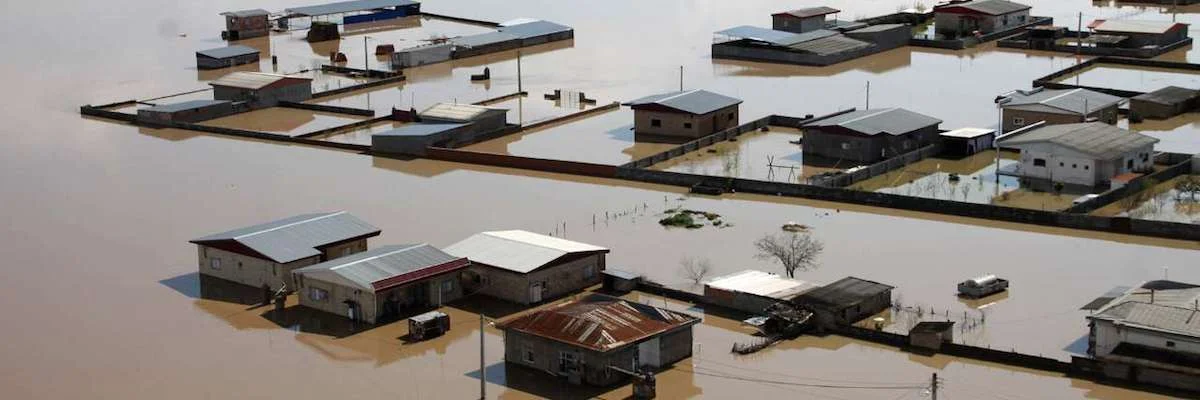
Major floods across much of Iran have left 18 people dead and more than 70 injured, blocking roads and triggering landslides with warnings of more heavy rain to come, emergency services said Monday.
Such a widespread flood threat is unprecedented in arid Iran, which until 2018 was dealing with decades of drought.
Seventeen people were killed and 74 injured in the southern city of Shiraz, and one person was killed in Sarpol-e Zahab in the western province of Kermanshah, the rescue services said.
The national emergency has struck in the middle of Iranian New Year holidays, with many relief workers also on vacation.
Many of those killed in Shiraz were holidaymakers caught in the flood as they entered the city in their cars.
With 25 of Iran's 31 provinces experiencing floods or facing imminent threat, the country's National Crisis Management Committee was activated at cabinet level.
"I have ordered all governor-generals, all provincial managers and officials nationwide to stay at their posts throughout the next 72 hours which is the peak of the flood threat," First Vice President Eshagh Jahangiri said on state television after the committee's first meeting.
Since the flooding, Iran's President Hassan Rouhani, a moderate, has been absent from public view, with his deputies and ministers taking his place in visiting disaster-struck areas.
Reports on the ultra-conservative Fars news agency that Rouhani has been vacationing on the southern Gulf island of Qeshm have triggered criticism from his political opponents.
Situation 'Critical'
Iran's meteorological service has warned of more heavy showers until Wednesday, forecasting as much as 15 centimetres (almost six inches) of rainfall in some western provinces in the next 24 hours.
The situation is "critical" in the provinces of Khuzestan, Lorestan and Kohgiluyeh-Va-Boyerahmad, said Deputy Interior Minister Mehdi Jamalinejad, quoted by the ISNA news agency.
The latest floods follow major flooding on March 19 in the northeast's Golestan and Mazandaran provinces, for which no official casualty toll has been issued.
The police have advised against road trips in the coming days, with many roads blocked by flooding or landslides caused by heavy rains.
Tehran's Mehrabad Airport announced delays or cancellations of flights to the provinces.
The Crises Management Organization and the health ministry, in charge of hospitals, have cancelled all leave and been placed on full alert.
Local media reported that hundreds of villages have lost electricity and water, many of them cut off as access roads were washed away.
'Climate Change'
The army has been called in to help the worst affected areas, and villages are being evacuated for fear of rivers and dams overflowing.
Officials have gone on state television to broadcast urgent calls for holidaymakers as well nomadic tribes in western Iran to move to high ground and away from rivers.
Flood warnings have gone out for central provinces such as Isfahan and the
capital Tehran.
"Climate change is forcing itself on our country," said Energy Minister Reza Ardekanian, who is in charge of dams and water supply.
"These unprecedented floods in our country are because of climate change worldwide," he said, quoted by Tasnim news agency.
Photo Credit: IRNA
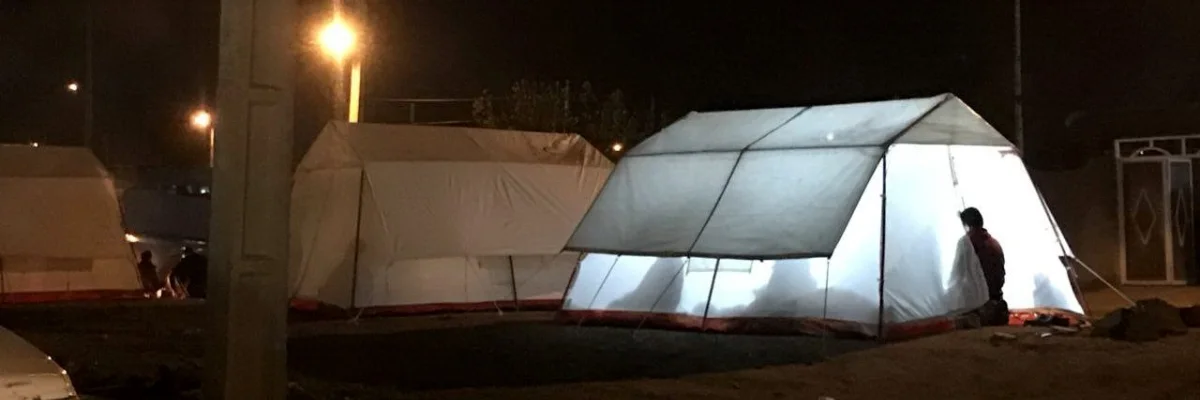
Strong Earthquake Rocks Western Iran
◢ A strong 6.4-magnitude earthquake hit Iran's western province of Kermanshah late Sunday, the country's institute of geophysics said, with local officials reporting some 260 people injured. The epicenter of the quake was 17 kilometers southwest of the city of Sarpol-e Zahab, according to the institute, which said it struck at a depth of 7 kilometers.
A strong 6.4-magnitude earthquake hit Iran's western province of Kermanshah late Sunday, the country's institute of geophysics said, with local officials reporting some 260 people injured.
The epicenter of the quake was 17 kilometers southwest of the city of Sarpol-e Zahab, according to the institute, which said it struck at a depth of 7 kilometers.
At least 260 people were injured in Sarpol-e Zahab and the neighboring city of Gilan-e Gharb, close to the Iraqi border, Kermanshah governor Houshang Bazvand told state television.
"We've had no reports of fatalities so far. The situation is currently under control," Bazvand said.
"There were power and water cuts in both cities, but they lasted only a few minutes."
The head of Iran's emergency medical services Pirhossein Kolivand said in televised comments that most of the injuries were due to "people panicking and fleeing their homes".
The number of those hurt could rise as 18 emergency teams dispatched from neighboring provinces were still assessing the damage, he said.
Sarpol-e Zahab resident Fariba Babayi described the fear that swept the city when the quake hit.
"Lights went out, walls looked as if they were going to fall and all the neighbors were screaming," Babayi, 36, told AFP by telephone.
"I didn't run this time, even though my mother was out calling to me."
Those living in the city are all too familiar with the devastation earthquakes can bring after it bore the brunt of a 7.3-magnitude tremor last November that killed 620 people and injured thousands more.
Partial rebuilding work on Babayi's house finished just a month ago after it was razed in that quake and her family are still paying construction costs.
"We cannot go back to normal life anymore. There are all the bad memories, the trauma people live with," she told AFP.
There were no official details of any damage to buildings and infrastructure after the latest earthquake.
The region was rocked by seven weaker aftershocks an hour after the initial tremor, the strongest of which was magnitude 5.2, the geophysics institute said.
There were also reports that the initial quake was felt across the border in Iraq.
’Just Reconstructed'
Morteza Salimi, an official with the red crescent society of Iran, told semi-official news agency ISNA that the quake rocked areas "just reconstructed" after the tremor a year ago.
The quake last November damaged some 30,000 houses, with huge numbers made homeless at the start of the cold season in the mountainous region.
Local officials said the estimated cost of reconstruction would be billions of dollars, at a time when Iran was struggling to cope with a tanking economy.
There was criticism that new social housing built as part of a scheme championed by ex-president Mahmoud Ahmadinejad had failed to withstand the tremor.
The western province of Kermanshah was also hit by a 6.0-magnitude quake in August that killed two people and injured more than 250.
Iran sits on top of two major tectonic plates and sees frequent seismic activity.
In 2003, a 6.6-magnitude tremor struck the southeast of the country, decimating the ancient mud-brick city of Bam and killing at least 31,000 people.
The country's deadliest was a 7.4-magnitude quake in 1990, that killed 40,000 people in northern Iran, injured 300,000 and left half a million homeless.
Photo Credit: IRNA