
Iran Currency Hits All-Time Low Against Dollar
◢ The Iranian rial hit another all-time low against the US dollar on Monday in spite of central bank efforts to stem the decline. The rial has lost around 15 percent of its value on the open market in the past three days, bottoming at 128,500 to the dollar by Monday evening, according to Bonbast.com, which monitors Iran's rates.
The Iranian rial hit another all-time low against the US dollar on Monday in spite of central bank efforts to stem the decline.
The rial has lost around 15 percent of its value on the open market in the past three days, bottoming at 128,500 to the dollar by Monday evening, according to Bonbast.com, which monitors Iran's rates.
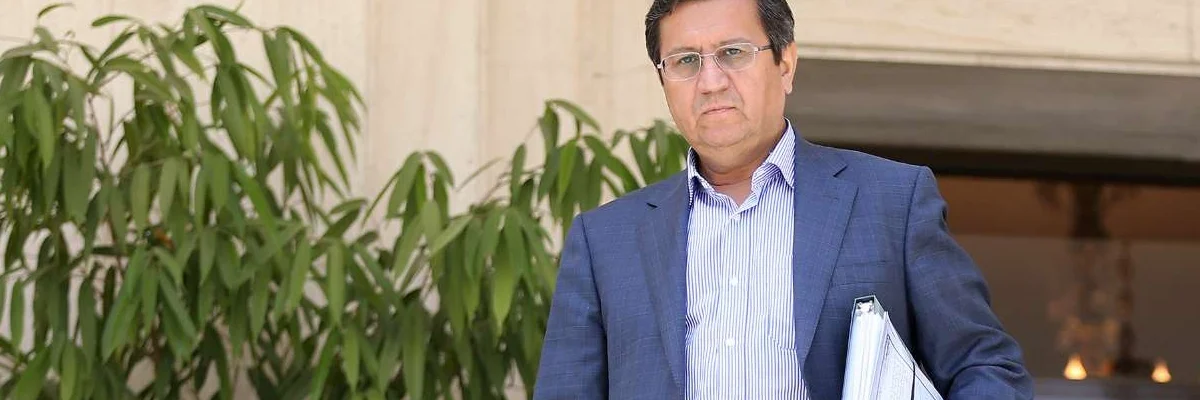
The drop followed a speech by central bank governor Abdolnaser Hemmati on Saturday, in which he announced tighter restrictions on allocating foreign exchange reserves, said financial journalist Maziar Motamedi.
"Hemmati said that he wishes to be much more careful in allocating foreign currencies at government rates, signalling a potential forthcoming shortage of hard currency," he told AFP.
The rial has lost 70 percent of its value in the past year, primarily due to increased hostility from the United States and its withdrawal from the 2015 nuclear deal in May.
Official statements have done little to calm the markets.
Hemmati, who took over in August after his predecessor was sacked, "seems to have had a point when he said in (his inaugural speech) that he will try to minimise public remarks, as every comment coming from high-ranking officials aiming to calm the market has spurred negative reactions," said Motamedi.
The central bank puts tight controls on how much foreign currency is pumped into the system, and hands out a special government rate of 42,000 to certain importers, such as those buying essential goods like medicines.
Another factor may be demand from pilgrims heading to Iraq for the upcoming Arbaeen religious festival, attended by some two million Iranians last year.
The central bank has tried to calm the market, first by trying to end open-market trading in April, fixing the rate at 42,000 and shutting down exchange shops.
But that only sparked huge speculation and corruption on the black market, leading the government to sack the central bank chief and reverse the April measures.
Photo Credit: IRNA
Iran's Rial Hits Record-Low 100,000 to the Dollar
◢ Iran's currency hit a record low on Sunday of 100,000 rials to the dollar amid a deepening economic crisis and the imminent return of full US sanctions. The unofficial rate stood at 102,000 rials by midday, according to Bonbast, one of the most reliable sites for tracking the Iranian currency. The rate was confirmed by a trader who spoke on condition of anonymity to AFP.
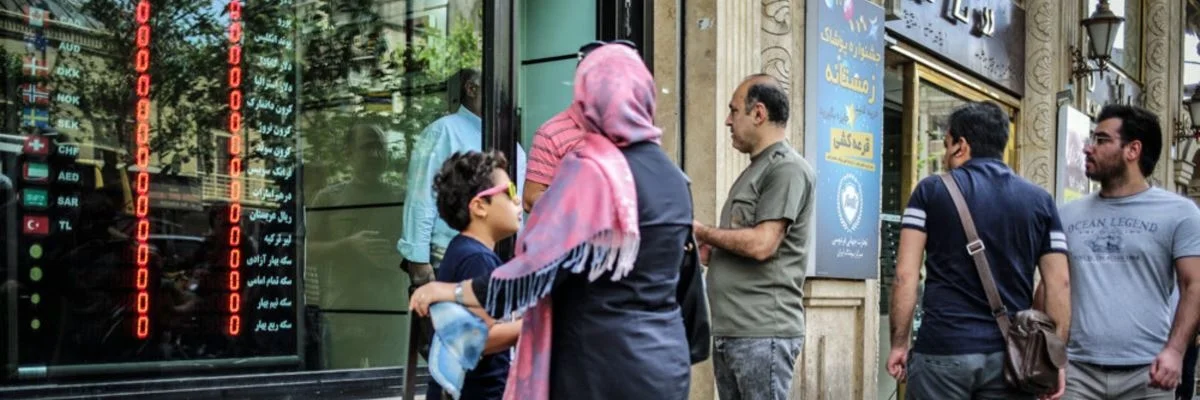
Iran's currency hit a record low on Sunday of 100,000 rials to the dollar amid a deepening economic crisis and the imminent return of full US sanctions.
The unofficial rate stood at 102,000 rials by midday, according to Bonbast, one of the most reliable sites for tracking the Iranian currency.
The rate was confirmed by a trader who spoke on condition of anonymity to AFP.
The rial has lost half its value against the dollar in just four months, having broken through the 50,000-mark for the first time in March.
The government attempted to fix the rate at 42,000 in April, and threatened to crackdown on black market traders.
But the trade continued with Iranians worried about a prolonged economic downturn turning to dollars as a safe way to store their savings, or as an investment in the hope the rial will continue to drop.
With banks often refusing to sell their dollars at the artificially low rate, the government was forced to soften its line in June, allowing more flexibility for certain groups of importers.
The handling of the crisis was one of the reasons behind last week's decision by President Hassan Rouhani to replace central bank chief, Valiollah Seif.
The currency collapse was encouraged by the US announcement in May that it was pulling out of the 2015 nuclear deal, that lifted certain sanctions in exchange for curbs to Iran's atomic program.
The US is set to reimpose its full range of sanctions in two stages on August 6 and November 4, forcing many foreign firms to cut off business with Iran.
Photo Credit: Mehr
Tehran's Grand Bazaar Strikes in Protest at Rial Collapse
◢ Traders in the Iranian capital's Grand Bazaar held a rare protest strike Monday against the collapse of the rial on the foreign exchange market as demonstrators also took to the streets. At a crossroads in central Tehran, police fired tear gas at dozens of youths shouting slogans and throwing stones, an AFP photographer said.
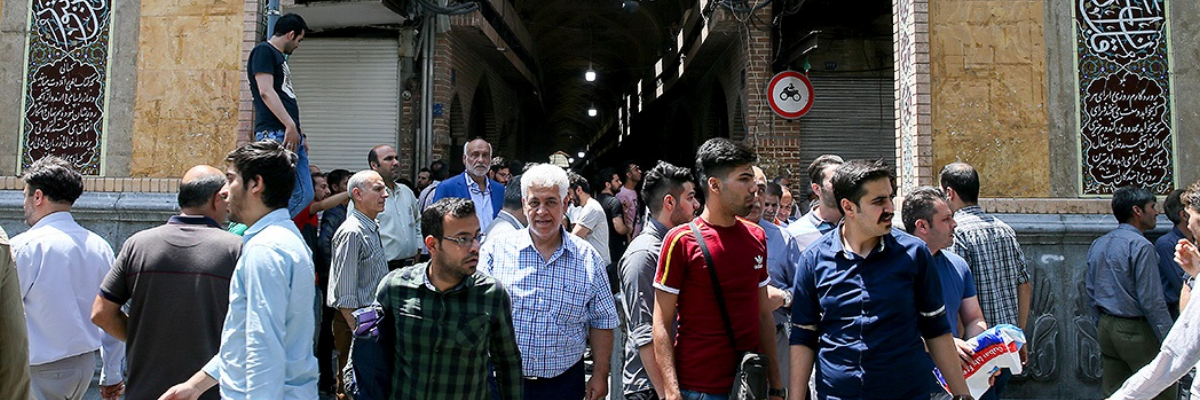
Traders in the Iranian capital's Grand Bazaar held a rare protest strike Monday against the collapse of the rial on the foreign exchange market as demonstrators also took to the streets.
At a crossroads in central Tehran, police fired tear gas at dozens of youths shouting slogans and throwing stones, an AFP photographer said.
"The demands of bazaar traders are legitimate. They want the situation on the foreign exchange market to be clarified once and for all," Abdollah Esfiandari, head of the historical covered market's administrative board, told ISNA news agency.
He said the protest was against "the high exchange rate, foreign currency fluctuations... goods being blocked at customs, and the lack of clear criteria for duties".
Shops had their metal shutters down throughout the market, said 45-year-old carpet trader who grew up in the area. "It's the first time in my life that I have seen this."
Iran's currency has plunged almost 50 percent in value in the past six months, with the US dollar now buying around 85,000 rials on the open market.
"Anti-riot police intervened" to disperse a protest in the Grand Bazaar, making two arrests, according to another carpet merchant.
Iran has faced mounting economic woes since the United States in May pulled out of a 2015 nuclear accord between Tehran and world powers that lifted international sanctions in exchange for a scaling back of the Islamic republic's atomic program.
Photo Credit: Omid Vahabzadeh, Fars News
Iranians Flock to Empty Exchangers After Currency Fix
◢ Confused and frustrated Iranians flocked to exchange offices on Tuesday after the government fixed a new rate for the dollar, only to find there were none to buy. Some predict the exchangers will find ways to fiddle the system to get round the new fixed rate, even though Vice-President Eshagh Jahangiri warned this would be considered smuggling.
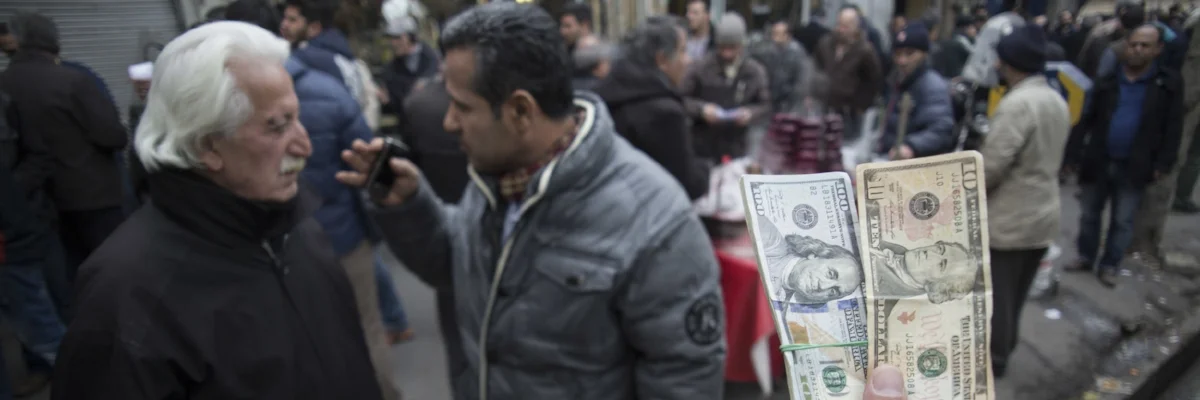
Confused and frustrated Iranians flocked to exchange offices on Tuesday after the government fixed a new rate for the dollar, only to find there were none to buy.
On Ferdowsi Street in central Tehran, home to dozens of banks and currency exchanges, many had hoped to find much cheaper dollars than the day before.
Overnight, the government had announced it was fixing the rate at 42,000 rials per dollar in a bid to arrest a slide in the currency, which has lost more than a third of its value against the greenback in six months.
But all along Ferdowsi Street, exchangers were turning hundreds of people away or had signs up saying: "We have no dollars to sell", while rate boards showed blank spaces for US and European currencies.
"Last night on TV I heard it's 42,000 so I came here to buy some for my son who is overseas. I've checked every exchanger but I couldn't find any dollars," said Tahmoores Faravahar, a 71-year-old retired oil sector worker.
A day earlier, some reported dollars selling at a record-high rate of 60,000 rials—pushed up by fears over tensions with the United States and a difficult political and economic situation at home.
"The truth is that the people can't trust the word of the government that their money will be safe," said a trader who sold currency on the street and asked to remain anonymous.
"People don't have hope in the political and economic situation in this country. People are confused and just want to keep their money safe by turning it into dollars."
One exchange office said it was never clear when the central bank would deliver dollars for them to sell.
"I don't know why they haven't come yet today," he said in the early afternoon. "But the new rate is good. The price was not normal these last few days."
'Everything is down'
Another street trader said the recent currency speculation was driven by the fact that people had few other options to make cash.
"If you look at the market, everything is down except the dollar. Real estate is down, the retail sector is down. People need income so it's a good idea to buy and sell dollars and make some money," he said.
"Last night, the government lowered the price and some people had a heart attack, but it won't stay like this."
He said exchangers would find ways to fiddle the system to get round the new fixed rate, even though Vice President Eshagh Jahangiri warned this would be considered smuggling.
"Just like the smuggling of drugs, no one has the right to buy or sell it... If any other exchange rate is formed in the market, the judiciary and security forces will deal with it," Jahangiri warned on state television.
Some said this had only created fear and confusion. "I want to sell some dollars but no one wants to buy them because the market is not safe," said a man in his forties, who did not give his name.
"The exchanges are worried about the situation because the government says it is smuggling if they sell above the new rate, so no one wants to sell," he said.
Meanwhile, for the many journalists covering the scene at Ferdowsi Street on Tuesday, there was another, unexplained phenomenon. "There are so many police here, but no one has asked us anything," said one local reporter.
Other media, including AFP reporters, said it was the first time they had been left to work without even being asked for their papers or being told to move on.
Journalists have felt less pressure since President Hassan Rouhani came to power in 2013, but police routinely hassle reporters and stop them filming in public. "It's like a dream," said one journalist as police walked past his video camera without batting an eye.
Photo Credit: Shutterstock