
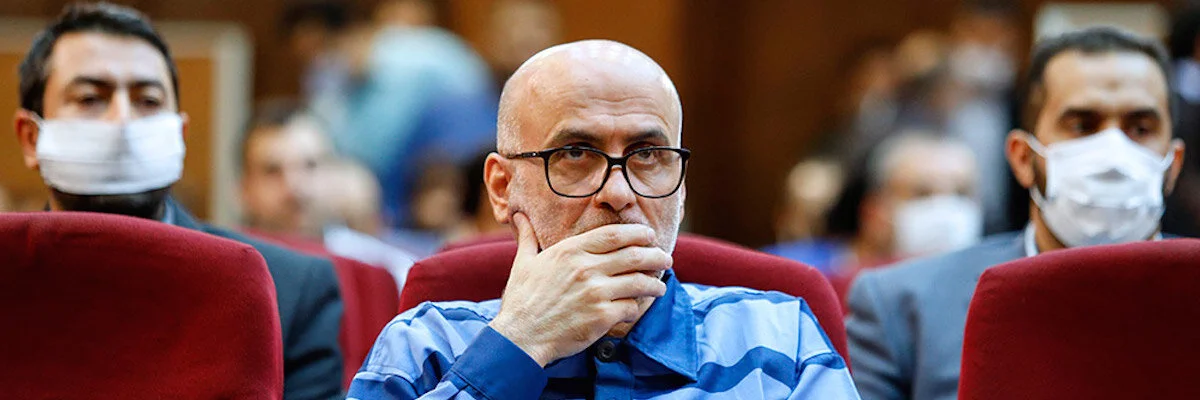
Iran Opens Trial of Former Judiciary Deputy Head
Iran opened the high-profile trial of a former senior judiciary official alongside 21 accused accomplices on Sunday in Tehran, charging them with corruption, money laundering and influence trading.
Iran opened the high-profile trial of a former senior judiciary official alongside 21 accused accomplices on Sunday in Tehran, charging them with corruption, money laundering and influence trading.
In a rare move state television broadcast the hearing live, focusing on the accused Akbar Tabari, the former deputy head of administrative affairs at the judiciary.
Tabari "obstructed the execution of justice" against influential senior Iranian officials "by forming a criminal group" within his office which "became a centre... for certain accused (individuals) to settle their cases", his indictment said, according to official judiciary news agency Mizan Online.
Tabari and 21 other defendants were tried by the 5th chamber of Tehran's criminal court, presided over by judge Hassan Babaie.
The former official worked as the financial director during the mandate of Ayatollah Mahmoud Hashemi Shahroudi, who headed Iran's judiciary from 1999 to 2009.
Tabari was later promoted to the head of executive affairs and then executive deputy under Ayatollah Sadeq Amoli Larijani from 2009 to 2019, according to state news agency IRNA .
In March 2019, Iran's supreme leader Ayatollah Ali Khamenei replaced Larijani with Ebrahim Raisi, a religious conservative, and called on him to work "against corruption".
According to IRNA , Raisi "dismissed Tabari eight days after taking office", without specifying a reason. Judiciary spokesman Gholamhossein Esmaili confirmed Tabari's arrest on July 2019, saying that it "proves the seriousness of the judiciary... to fight against corruption, especially if it is within" it.
Former judge Bijan Qasemzadeh is among the co-accused at the trial.
He is best known for ordering the blocking of Telegram, the most popular messaging service in the Islamic republic at the time.
Esmaili announced in June 2019 that three judges were involved in Tabari's case, one of whom is still in office.
Raisi vowed to make the fight against corruption in the justice system his "first priority" shortly after coming to power, followed by unprecedented trials targeting judges and senior Iranian officials.
Two former members of parliament were recently sentenced to 61 months in prison for manipulating the country's auto market.
Photo: Mizan
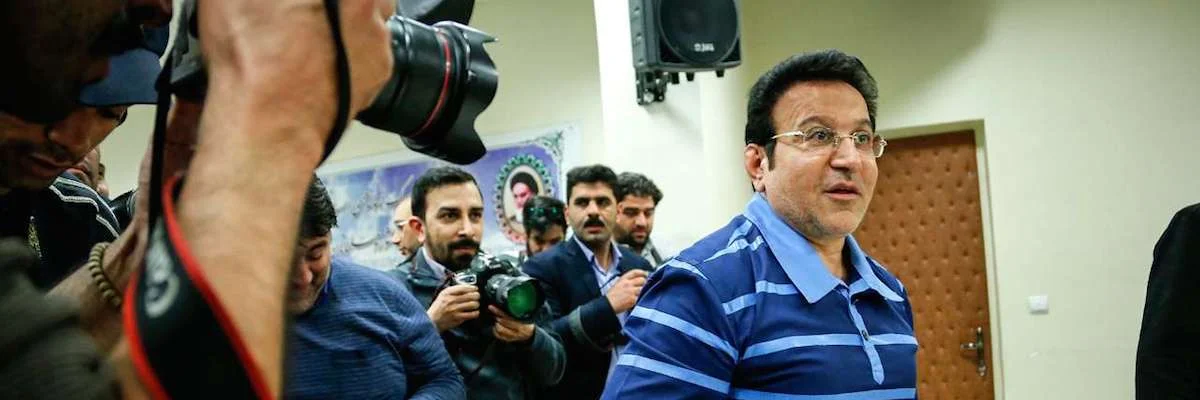
Iran Court Tries 13 in $7 Billion Petrochemical Fraud Case
◢ The trial has started in an Iranian court for 13 petrochemical industry executives charged with embezzling EUR 6.6 billion USD 7.4 billion) in one of the nation’s biggest corruption cases, the state-run Islamic Republic News Agency reported.
The trial has started in an Iranian court for 13 petrochemical industry executives charged with embezzling EUR 6.6 billion USD 7.4 billion) in one of the nation’s biggest corruption cases, the state-run Islamic Republic News Agency reported.
The defendants, most either chief executives or board members of Iranian petrochemical producers and exporters, are accused of “causing a great economic disturbance” by establishing shell companies overseas to circumvent sanctions imposed while Mahmoud Ahmadinejad was president, judge Assadollah Masoudi Magham said, according to IRNA.
Reading from a 700-page indictment, another judicial official added that billions of euros worth of sales from petrochemical exports were funneled to the companies as purchases, the Mehr news agency reported on Thursday.
The case, described by IRNA as “record-breaking” for its monetary value, is the latest in a series of trials and investigations started after the government of President Hassan Rouhani and the hardline judiciary vowed to root-out corruption in response to rising public anger over levels of cronyism and economic nepotism within industry and government.
The return in August of U.S. sanctions, the most punitive ever imposed on the Islamic Republic by Washington, has brought fresh urgency to the efforts as people are being forced to cope with steep increases in prices and a collapse in the rial, which have cut the value of their paychecks and spending power.
Photo Credit: IRNA

Trial Opens for Iran President's Brother
◢ The trial of Iranian President Hassan Rouhani's brother, who was arrested two years ago on charges of financial violations, opened Tuesday in Tehran, the judiciary's news website Mizan Online reported. Hossein Fereydoun, a key adviser to Rouhani, was arrested in July 2017 following long-running corruption allegations, with the judiciary saying at the time that he was the subject of "multiple investigations.”
The trial of Iranian President Hassan Rouhani's brother, who was arrested two years ago on charges of financial violations, opened Tuesday in Tehran, the judiciary's news website Mizan Online reported.
Hossein Fereydoun, a key adviser to Rouhani, was arrested in July 2017 following long-running corruption allegations, with the judiciary saying at the time that he was the subject of "multiple investigations.”
At the first hearing on Tuesday Fereydoun and four associates were present in court with their lawyers for a session that lasted more than two hours, Mizan Online said.
During the hearing a representative of the state prosecutor read out the indictment, it said, without giving further details.
A new hearing will be held next week, Mizan Online said without giving an exact date.
Fereydoun and his brother do not share the same name because Rouhani changed his when he was younger.
A day after his arrest in 2017, Fereydoun was released on bail, reported by local media to be millions of dollars.
The head of the General Inspection Organisation, Naser Seraj, had accused Fereydoun of financial violations.
Seraj alleged Fereydoun had influenced the appointment of two bank directors, one of whom was accused by the Revolutionary Guards of involvement in a "large corruption scandal.”
Conservatives had demanded that Fereydoun be put on trial, accusing him of receiving zero-interest loans among other violations.
Photo Credit: Wikicommons
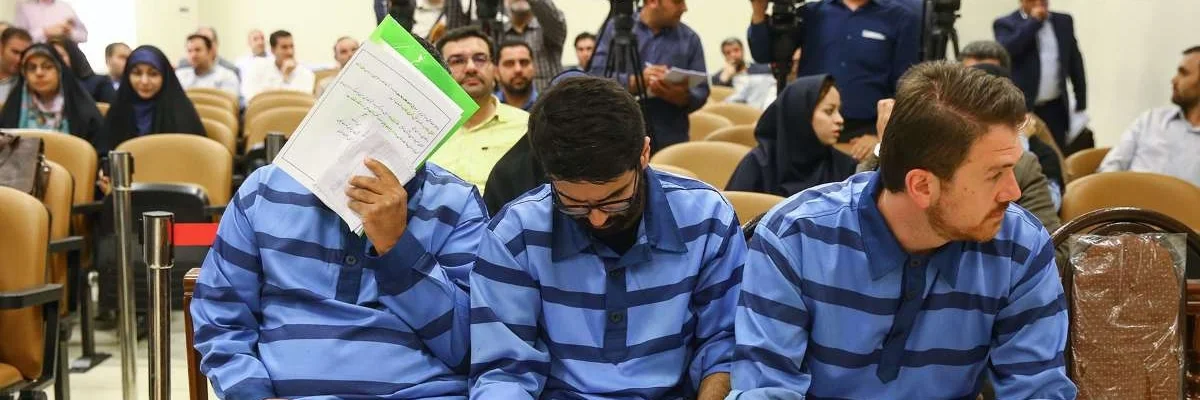
Iran Arrests 11 Who Stole $400m Earmarked for Imports
◢ Iran's intelligence ministry said Monday it had arrested 11 "economic disruptors" who misappropriated some USD 400 million earmarked for essential goods and smuggled the money out of the country. Authorities have been cracking down on those seeking to exploit the collapsing rial, which has lost around half its value against the dollar this year, in part due to the return of US sanctions.
Iran's intelligence ministry said Monday it had arrested 11 "economic disruptors" who misappropriated some USD 400 million earmarked for essential goods and smuggled the money out of the country.
Authorities have been cracking down on those seeking to exploit the collapsing rial, which has lost around half its value against the dollar this year, in part due to the return of US sanctions.
"During these sensitive economic times, this network received IRR 47 trillion rials (USD 416 million at Monday's open market rate) of subsidized foreign exchange to import essential goods but instead invested them in some other countries," the intelligence ministry said in a statement published on its website.
The group, based in the western Kurdistan province, used "bogus companies, forged documents and bribery" to receive subsidized dollars from state banks, it said.
The Islamic republic has multiple exchange rates, with the government offering a subsidized rate of IRR 42,000 per dollar to importers of vital goods. Most Iranians must buy dollars on the open market, where the rate stood at IRR 110,000 on Monday, according to currency tracking site Bonbast.
At one point in September, the rial had fallen to IRR 190,000 per dollar, but the central bank has been pumping cash into the market in recent weeks to stabilize the currency.
Dozens of other "economic disruptors" have been arrested in recent months, and in November, a trader dubbed the "Sultan of Coins" and his accomplice were executed for exploiting the surge in demand for dollars and gold.
Many panicked Iranians rushed to secure their savings by buying foreign currency and precious metals in response to US President Donald Trump's decision in May to withdraw from the 2015 nuclear deal and to reimpose sanctions.
Photo Credit: IRNA

Iran Executes Trader Dubbed 'Sultan of Bitumen'
◢ Iran executed a trader known as the "Sultan of Bitumen" on Saturday over charges of fraud and large-scale smuggling of the oil product, the judiciary's news agency Mizan online reported. Hamidreza Bagheri Dermani is the third businessman to be executed since an anti-corruption drive was launched over the summer.
Iran executed a trader known as the "Sultan of Bitumen" on Saturday over charges of fraud and large-scale smuggling of the oil product, the judiciary's news agency Mizan online reported.
Hamidreza Bagheri Dermani is the third businessman to be executed since an anti-corruption drive was launched over the summer.
He was convicted of "corruption on earth", Iran's most serious offense, after swindling over 10 trillion rials (around USD 100 million at the current rate) through "fraud, forgery and bribery", Mizan reported. Dermani, first arrested in August 2014, reportedly forged dozens of documents of fake real estate to acquire bank loans.
He then used front companies to procure more than 300,000 tonnes of bitumen —an oil-based substance used in asphalt and other products and one of Iran's most profitable businesses—Mizan said.
Dermani was also accused of ties to business magnate Babak Morteza Zanjani, who is awaiting execution after being convicted in 2016 of embezzling USD 2.7 billion while helping the government circumvent international sanctions.
The judiciary said Dermani's loans were facilitated by former central bank governor Mahmoud Reza Khavari, who was convicted in absentia last year after fleeing to Canada in the wake of yet another major embezzlement scandal.
News of Dermani's execution was presented in dramatic fashion on state television on Saturday, with an action-movie soundtrack and full documentary about his crimes.
The footage showed documents claiming Iranian journalist and women's rights activist Hengameh Shahidi, sentenced earlier this month to 12 years in prison on unspecified charges, had tried to pay Dermani's bail last year.
The authorities have been keen to show they are cracking down on "economic disruptors" accused of exploiting shortages and fluctuations in gold and currency prices.
Dozens have been tried and in November a trader dubbed the "Sultan of Coins" and his accomplice were executed for exploiting a surge in gold demand from savers spooked by this year's currency crisis.
Iran has seen a sharp economic downturn this year, fuelled in part by US President Donald Trump's decision in May to withdraw from a landmark 2015 nuclear deal and reimpose crippling unilateral sanctions.
Photo Credit: Mizan
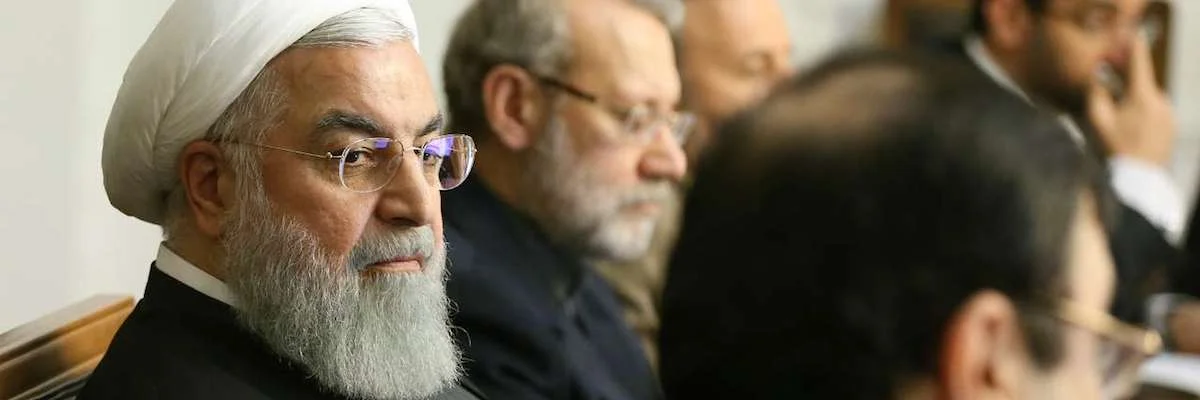
Iran President's Son-in-Law Resigns After Nepotism Claims
◢ Iran President Hassan Rouhani's son-in-law resigned on Monday just two days after his appointment as head of Iran's geological survey sparked accusations of nepotism. Kambiz Mehdizadeh, in his early thirties and reportedly married to Rouhani's daughter in a low-key wedding this August, was appointed to the senior position in the industries and mining ministry on Saturday.
Iran President Hassan Rouhani's son-in-law resigned on Monday just two days after his appointment as head of Iran's geological survey sparked accusations of nepotism, official news agency IRNA reported.
Kambiz Mehdizadeh, in his early thirties and reportedly married to Rouhani's daughter in a low-key wedding this August, was appointed to the senior position in the industries and mining ministry on Saturday.
The move sparked criticism on social media and from some lawmakers.
"I thank you for finding me worthy and inviting me to work alongside you in this ministry, but I ask to be relieved of my service so that I can continue my scientific and research activities," Mehdizadeh wrote in a resignation letter, according to IRNA.
Mehdizadeh is a PhD student in petroleum engineering, who has also served as an advisor to Iran's oil ministry, taekwondo federation and national youth organization, according to the conservative Tasnim news agency.
The minister who appointed him, Reza Rahmani, defended his choice just hours before the resignation, saying Mehdizadeh was "chosen based on his competence and being the president's son-in-law had nothing to do with it," according to IRNA.
Iranians on social media renewed criticism of nepotism that had spread last
year with the hashtag "#good-genes"—a reference to the son of a prominent
reformist politician who attributed his business success to inheriting "good
genes" from his parents.
Photo Credit: IRNA
Son-in-Law of Iran President Faces Nepotism Claims
◢ The appointment of President Hassan Rouhani's son-in-law as head of Iran's geological survey has renewed accusations of nepotism and led on Sunday to the resignation of a senior official, according to conservative media. The appointment of Kambiz Mehdizadeh, in his early thirties and reportedly married to Rouhani's daughter in a low-key wedding this August, was widely criticized by Iranians on social media.
The appointment of President Hassan Rouhani's son-in-law as head of Iran's geological survey has renewed accusations of nepotism and led on Sunday to the resignation of a senior official, according to conservative media.
The appointment of Kambiz Mehdizadeh, in his early thirties and reportedly married to Rouhani's daughter in a low-key wedding this August, was widely criticized by Iranians on social media.
It also triggered the resignation of Jafar Sargheyni, head of the mining section in the industries ministry, who criticized "unprofessional appointments" without directly naming Mehdizadeh, the conservative Tasnim news agency reported.
Mehdizadeh is a PhD student in petroleum engineering, who has also served as an advisor to Iran's oil ministry, taekwando federation and national youth organisation, Tasnim said.
Iranians on social media renewed criticism of nepotism that had spread last year with the hashtag "#good-genes"—a reference to the son of a prominent reformist politician who attributed his business success to inheriting "good genes" from his parents.
"I had no idea even sons-in-law could inherit #good_genes!," wrote one Twitter user on Sunday in reference to Mehdizadeh's appointment.
Another online campaign this summer called on senior officials to come clean about the privileges their children enjoy, particularly those studying in the United States and other Western countries.
The "#Where_is_your_kid" campaign pressured several government figures to respond, including Foreign Minister Mohammad Javad Zarif who said his children had returned to Iran after studying abroad.
Photo Credit: IRNA
Iran Judiciary Criticizes Money Laundering Claims
◢ Iran's judiciary chief said Monday that government officials must not make accusations of vast money-laundering operations by powerful institutions, which could be exploited by the enemy. The criticism followed statements by Foreign Minister Mohammad Javad Zarif to the Khabar Online news agency last week in which he said: "Money laundering is a reality in our country, and a lot of people are benefitting from it."
Iran's judiciary chief said Monday that government officials must not make accusations of vast money-laundering operations by powerful institutions, which could be exploited by the enemy.
The criticism followed statements by Foreign Minister Mohammad Javad Zarif to the Khabar Online news agency last week in which he said: "Money laundering is a reality in our country, and a lot of people are benefitting from it."
Zarif said "thousands of billions" of rials were being laundered by unnamed organizations in Iran, and that these groups were behind efforts to block new laws against money laundering and terrorist financing.
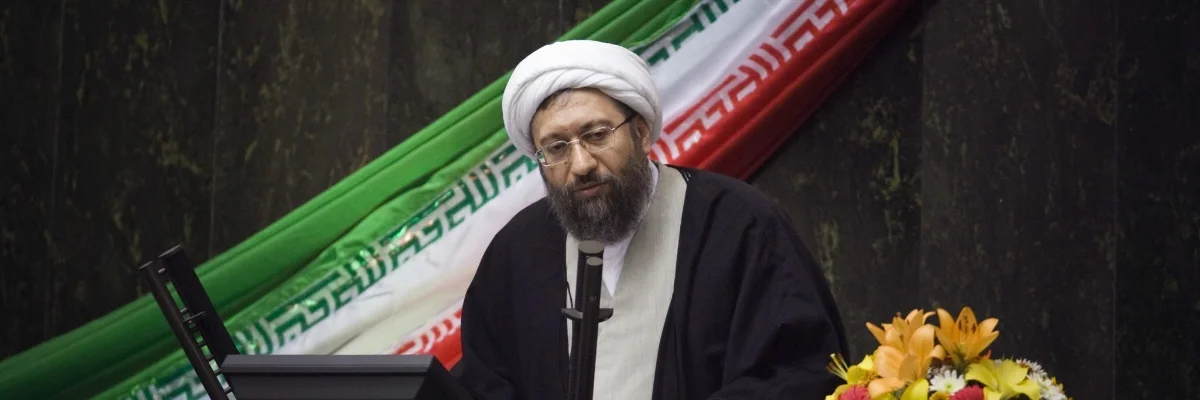
"If there is huge money laundering in the country, why did you not report this to the judiciary?" said Sadegh Larijani, judiciary chief, in a speech on Monday, according to the semi-official ISNA news agency.
"The enemy's best tool is economic pressure... In such a situation officials are expected not to make two-sided statements that could be misused by the enemy," he added, without naming Zarif.
The government introduced four new laws this year aimed at meeting demands set by the Financial Action Task Force (FATF), which monitors global efforts to counter money laundering and terrorist financing.
Conservatives groups have attacked the bills, saying they would undermine Iran's ability to support allied militant groups in the region, such as Lebanon's Hezbollah.
But Zarif said wealthy groups were also involved because they opposed greater financial transparency.
"There are special interests behind some of these concerns and propaganda,"
he said.
"I don't aim to pin this to any certain organization, but those places that do launder thousands of billions are certainly financially capable of spending a few hundred billion on propaganda and psychological operations in the country," he added.
Larijani hit back on Monday, saying: "The authorities should not say things that drop like a dagger into the heart of the system."
Iran is alone with North Korea on the FATF blacklist, but the Paris-based organization has suspended counter-measures since June 2017 while it works on reforms.
One bill on the mechanics of monitoring and preventing terrorist financing was signed into law in August.
The remaining three have been approved by parliament but have been held up by higher authorities that oversee legislation.
Photo Credit: IRNA
Iran Condemns 'Sultan of Coins' to Death for Economic Crimes
◢ A court in Iran sentenced to death a financial trader known as the "Sultan of Coins" on Sunday, along with another man, the judiciary's Mizan Online news agency reported. "Corruption on earth" is the gravest charge in the Islamic republic which warrants a death sentence.
A court in Iran sentenced to death a financial trader known as the "Sultan of Coins" on Sunday, along with another man, the judiciary's Mizan Online news agency reported.
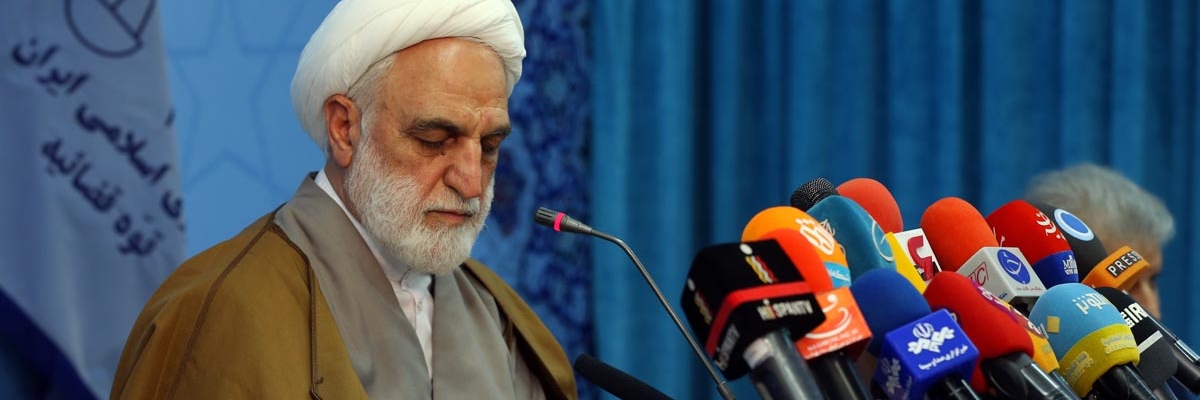
"Two of those convicted of spreading corruption on earth in preliminary hearings had their case reviewed in the Supreme Court and were sentenced to death today," said judiciary spokesman Gholamhossein Mohseni-Ejei.
"Corruption on earth" is the gravest charge in the Islamic republic which warrants a death sentence.
One of the two men set for death row was identified as Vahid Mazloumin—the trader popularly referred to as the "Sultan of Coins" in Iranian media.
Mizan named the other as Mohammad-Esmaeel Ghasemi, without elaborating.
The pair first went on trial on September 8 over charges of "disrupting the economy" through the creation of a network trading in illegal currency and gold coins, Mizan reported.
A third person, Hamid Bagheri-Dermani, was also accused of corruption and sentenced to death in the preliminary hearings. His case is still up for appeal before the Supreme Court.
Ejei said the swift conclusion of the cases served as a "warning to opportunists" aiming to disrupt the economy during the time of the "enemy's pressure" on Iran.
Iran's crackdown on such corruption has intensified since its economy tanked over internal difficulties coupled with the US withdrawal from the 2015 nuclear deal in May and reimposition of sanctions.
Photo Credit: IRNA
Iran Arrests 67 in Corruption Crackdown Approved by Khamenei
◢ Iran's judiciary said Sunday that 67 people have been arrested in recent weeks as part of a corruption crackdown approved by supreme leader Ayatollah Ali Khamenei. More than 100 government employees have also been barred from leaving the country, spokesman Gholamhossein Mohseni Ejeie said, according to the judiciary-linked Mizan news agency. "Our enemy America has decided to put pressure on people and it intends to put our economy under pressure, but to no avail," Ejeie said.
Iran's judiciary said Sunday that 67 people have been arrested in recent weeks as part of a corruption crackdown approved by supreme leader Ayatollah Ali Khamenei.
More than 100 government employees have also been barred from leaving the country, spokesman Gholamhossein Mohseni Ejeie said, according to the judiciary-linked Mizan news agency.
"Our enemy America has decided to put pressure on people and it intends to put our economy under pressure, but to no avail," Ejeie said.
"There are individuals who try to use this opportunity and hoard basic goods and increase pressure on people by hoarding and smuggling," he added.
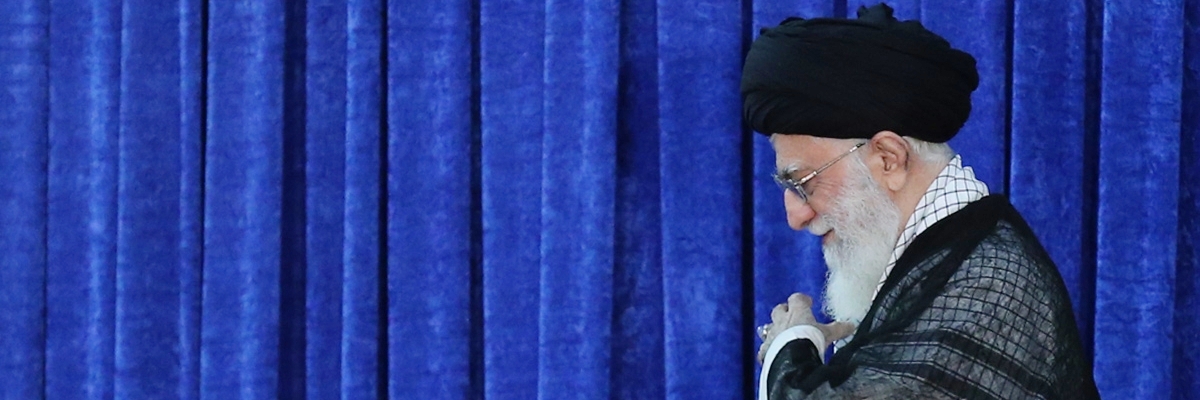
On Saturday, Khamenei approved a request from the head of the judiciary, Sadegh Larijani, to set up special revolutionary courts to try people for economic crimes.
"The goal is that the punishment of convicts of economic corruption be carried out urgently and justly," Khamenei wrote in a response published on his website.
Increased pressure from the United States, including its withdrawal from the 2015 nuclear deal and reimposed sanctions, have exacerbated long-standing public anger over mismanagement and corruption in the economy.
A disastrous attempt to fix the falling value of the rial in April added to the anger after the government revealed that politically-connected importers were hoarding the cheap dollars or selling them on the black market.
Earlier this month, the head of the central bank was sacked and his deputy in charge of foreign exchange arrested.
Corruption is deeply entrenched in Iran, where an opaque business environment provides huge opportunities for embezzlement and market manipulation.
With protests and strikes taking on a political edge in many places, pressure has mounted from all sides to take more concerted action against corruption.
Photo Credit: IRNA

Iran's Currency Crisis Triggers Corruption Crackdown
◢ With its currency plummeting ahead of the reimposition of US sanctions, Iran has responded with dozens of arrests and claims of an enemy conspiracy, but also signs of a push to confront corruption. The Iranian rial has lost almost two-thirds of its value since the start of the year, and 20 percent in just two days since the weekend, hitting a record-low of 119,000 to the dollar.
With its currency plummeting ahead of the reimposition of US sanctions, Iran has responded with dozens of arrests and claims of an enemy conspiracy, but also signs of a push to confront corruption.
The Iranian rial has lost almost two-thirds of its value since the start of the year, and 20 percent in just two days since the weekend, hitting a record-low of 119,000 to the dollar.
Many lay the blame on the imminent reimposition of US sanctions on August 6 following US President Donald Trump's decision to pull out of the historic nuclear accord, with Iranians rushing to store their savings in dollars.
The central bank issued a statement on Monday that trod a familiar line, blaming "the enemies' conspiracies" for the rial's sudden decline.
This may not be purely paranoid fantasy. The US and its Gulf Arab allies are engaged in a "maximum pressure campaign" against the Iranian government, and there have been rumours that the United Arab Emirates has been curbing the physical supply of dollars to Iran, helping drive up prices.
But others say outside pressure is only effective because Iran's economy is so corrupt and poorly managed.
Belatedly, the authorities appear to be waking up to the crisis. This weekend, the judiciary announced 60 people had been arrested for fraud and trying to undermine the banking system, with more to come.
Spokesman Gholam Hossein Mohseni-Ejeie said several had direct ties to the government, allowing them, for example, to illegally import luxury cars, and could face the death penalty on Iran's infamous charge of "corruption on Earth".
New Transparency
The arrests follow mounting anger against profiteers who use political connections to access dollars at artificially low rates, and then use them to import goods on the cheap, or simply sell them on the black market for a huge profit.
In a radical departure from usual government practice, in June the young telecoms minister Mohammad Javad Azari Jahromi exposed a group of mobile phone importers who were gaming the system.
They had been granted USD 250 million at the cheap rate to import phones, he said, "but less than one third was used for the purpose," implying the rest was stashed away or sold.
The 36-year-old minister's move proved wildly popular on social media, but saw a backlash from some of his cabinet colleagues such as Industry Minister Mohammad Shariatmadari, who said doing something similar in his ministry would amount to "a war against the private sector."
Still, the episode showed a new willingness among Iranian officials to "be transparent and introduce accountability into the system," said Esfandyar Batmanghelidj, founder of the Europe-Iran Forum, a business network.
"Hopefully, more officials will understand that this is what the public is looking for."
'Full-Fledged Crisis'
The other priority is fixing the chaotic policies that have facilitated profiteering in the first place, particularly the disastrous decision in April to set a single, fixed rate for the dollar at IRR 42,000.
To enforce the decision, the authorities shut down currency trading shops and made it illegal to sell dollars above the official rate, which only fueled a boom in the black market.
The government was forced to climb down in June, saying only importers of essential items such as medicines would use the cheap rate, while others would negotiate a higher price.
President Hassan Rouhani sacked the central bank chief last week, and his replacement, Abdolnassar Hemati, has promised new currency policies "in the coming days".
But trapped in fire-fighting mode and under fire from both conservatives and reformists over the deteriorating economic situation, Rouhani has done little to address deeper problems.
"We're in a full-fledged crisis and that's taking all the attention. No one is talking about bank reform and investment and job creation," said economic journalist Maziar Motamedi of Tehran's Financial Tribune.
Fearing a public panic, the government continues to insist that everything is under control, but has so far offered only vague promises that it will allocate more money to job creation and funnel more infrastructure projects to the private sector.
"Just saying positive stuff is not helping. People have a hard time believing them," Motamedi said.
"Everyone knows the structural problems are there but the government is tackling crises as they happen rather than preventing them."
Photo Credit: Wikicommons
Iran's Ahmadinejad Says Ally on Hunger Strike Since 'Unjust' Arrest
◢ Former Iranian president Mahmoud Ahmadinejad said Wednesday that his ally Hamid Baghaie was on hunger strike and in deteriorating health after being imprisoned on what he said were politically motivated charges. Ahmadinejad, who served as president from 2005 to 2013, made the claims in a letter to supreme leader Ayatollah Ali Khamenei, published on the Dolatebahar website run by his supporters.
Former Iranian president Mahmoud Ahmadinejad said Wednesday that his ally Hamid Baghaie was on hunger strike and in deteriorating health after being imprisoned on what he said were politically motivated charges.
Ahmadinejad, who served as president from 2005 to 2013, made the claims in a letter to supreme leader Ayatollah Ali Khamenei, published on the Dolatebahar website run by his supporters.
It is the latest volley in a bitter feud with his former colleagues in the Iranian establishment—particularly the conservative-dominated judiciary—which has led him to demand wide-ranging reforms, including fully free elections.
"The judicial apparatus, without any documents or proof or legal citation... under the cover of financial accusations and in a closed trial—has condemned (Baghaie) to the severest possible punishment," Ahmadinejad wrote in his latest letter.
Baghaie, who served as his vice president, was jailed this month for 15 years for embezzling 3,766,000 euros and $590,000.
Prosecutors said the cash was given to him by General Ghasem Soleimani, feted head of the external operations arm of the Revolutionary Guards, the Qods Force, and earmarked for "affairs to do with African countries".
"Mr Baghaie has never accepted these accusations and he's been on hunger strike for 14 days in protest at this injustice by the judicial apparatus," Ahmadinejad said in the letter.
"It is heard that his physical situation is deteriorating. He's been kept in solitary confinement since the first day of his arrest," Ahmadinejad added, calling on Khamenei to step in to avoid a "big catastrophe and irreparable damage."
In an earlier report on the Dolatebahar website, Baghaie was quoted as saying: "Suppose this impossible, fabricated story is true—should I be blamed, or should it be General Ghasem Soleimani as the authorised official in the Qods Force who has delivered the said foreign currency?"
'No Proof'
Ahmadinejad and Baghaei claim no proof of the alleged transactions was presented at the trial in December. Another of their associates—Ahmadinejad's former chief of staff Rahim Mashaie —was arrested this month after burning a copy of Baghaei's verdict outside the British embassy.
A populist with close ties to the hardline religious elite and Revolutionary Guards during his time in office, Ahmadinejad's unruly style saw him fall out with the establishment and clash with Khamenei.
He has become a growing thorn in their side in recent years. Both he and Baghaie were barred from standing in last year's presidential election by the Guardian Council, which vets candidates.
In another letter to Khamenei last month, Ahmadinejad called for "the immediate holding of free presidential and parliamentary elections—of course without their being engineered by the Guardian Council and without interference by military or security bodies so that people have a free choice."
Ahmadinejad remains a hate figure for many reformists, who associate him with the bloody crackdown on mass protests in 2009 and 2010 that followed his contested re-election.
However, he remains popular particularly among poorer segments of society who recall the large-scale welfare schemes he implemented during his presidency.
Photo Credit: Wikicommons