
China Warns US Against Opening Mideast 'Pandora's Box'
◢ China on Tuesday warned against opening a "Pandora's box" in the Middle East after the United States announced the deployment of 1,000 additional troops to the region amid escalating tensions with Iran. Foreign Minister Wang Yi also urged Tehran to not abandon the nuclear agreement "so easily" after Iran said it would exceed its uranium stockpile limit if world powers fail to fulfill their commitments under the agreement in 10 days.
China on Tuesday warned against opening a "Pandora's box" in the Middle East after the United States announced the deployment of 1,000 additional troops to the region amid escalating tensions with Iran.
Foreign Minister Wang Yi also urged Tehran to not abandon the nuclear agreement "so easily" after Iran said it would exceed its uranium stockpile limit if world powers fail to fulfill their commitments under the agreement in 10 days.
The United States ratcheted up pressure on Iran Monday, announcing the deployment of additional troops to the Middle East and producing new photographs it said showed Tehran was behind an attack on a tanker ship in the Gulf of Oman last week.
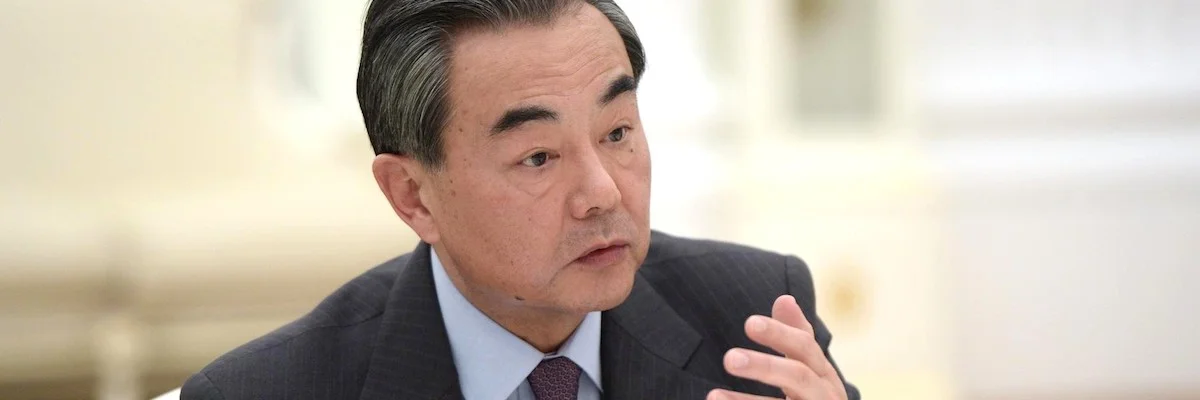
"We call on all parties to remain rational and restrained, not to take any actions to provoke the escalation of tension in the region, and not to open a Pandora's box," Wang told reporters in Beijing during a joint press conference with visiting Syrian Foreign Minister Walid Muallem.
"In particular, the United States should change its practice of extreme pressure," Wang said.
Tensions between Tehran and Washington have escalated ever since the US quit the nuclear deal and with Washington blacklisting Iran's elite Revolutionary Guards as a terrorist organization.
Wang urged Iran to "make prudent decisions" and not "so easily abandon" the deal that aims to keep Tehran's nuclear ambitions in check.
Iranian President Hassan Rouhani announced on May 8 that Iran would stop observing restrictions on its stocks of enriched uranium and heavy water agreed under the deal, a move he said was in retaliation for the unilateral US withdrawal.
Tehran on Monday followed through with a 10-day countdown for world powers to fulfil their commitments under the 2015 nuclear deal.
Iran has threatened to go even further in scaling down nuclear commitments by July 8 unless remaining partners to the deal—Britain, China, France, Germany and Russia—help it circumvent US sanctions and especially enable it to sell its oil.
The US responded to the ultimatum by urging the international community not to give in to Iranian "nuclear extortion", while the UN and European states called for cool heads.
"China's determination to safeguard the comprehensive agreement has not changed," Wang said.
“We are willing to work with all parties to continue to make efforts for the full and effective implementation of the agreement."
Wang said China has also "worked closely" with all parties to reconstruct the Arak heavy water reactor at a nuclear plant in the southwest of Tehran.
On Syria, Wang told his visiting counterpart that China "firmly supports Syria's economic reconstruction" and its efforts to "combat terrorism.”
Beijing has in the past teamed up with Moscow to veto any UN proposals to sanction the government of Syrian President Bashar al-Assad.
"China has always advocated that the Syrian issue should be resolved through political means," Wang said.
Photo: Kremlin.ru
Conflict Hinders Iran Efforts to Counter Dust Storms
◢ Iran's efforts to counter worsening dust storms have been hampered by conflict in the region, the deputy head of the environment department said on Saturday. "We signed agreements with the Iraqi and Syrian governments in 2010 and 2011 to help them counter the source of dust storms," Masoud Tajrishi told a news conference in Tehran.
Iran's efforts to counter worsening dust storms have been hampered by conflict in the region, the deputy head of the environment department said on Saturday.
"We signed agreements with the Iraqi and Syrian governments in 2010 and 2011 to help them counter the source of dust storms," Masoud Tajrishi told a news conference in Tehran.
"But with the events that have happened in those two countries, the environment has lost all priority, and it is still not a priority for them," he added.
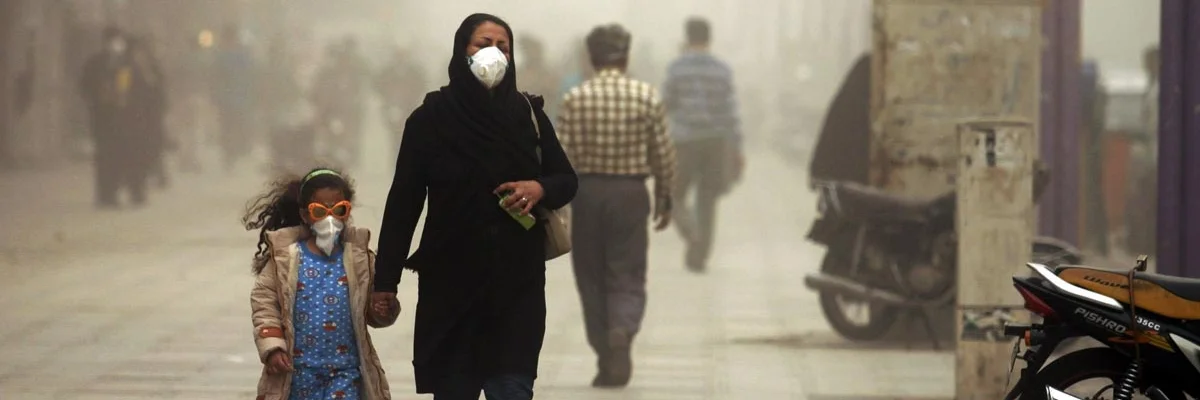
Some 30 million hectares (74 million acres) of Iran suffer devastating dust storms every year, many blowing in from Iraq, Saudi Arabia and Syria.
Hundreds are hospitalized with respiratory problems and border towns have some of the worst air pollution in the world.
The outbreak of civil war in Syria in 2011 and the subsequent spread of the Islamic State group into Iraq were a major setback for efforts to work against dust storms.
Tajrishi said a new mapping system was being implemented to track the origins and paths of the storms so they could be better understood and countered.
But he added: "Iran is situated within a belt of deserts, and with the decrease in rains due to climate change, dust storms are here to stay for quite some time," Tajrishi said.
Photo Credit: IRNA
Photo Credit: IRNA