

EU Protects Firms as it Fights US Bid to Isolate Iran
◢ EU countries on Monday gave European firms legal cover to operate in Iran despite the US pullout from the nuclear deal, after a report that the Trump administration has rejected calls by Brussels for an exemption from sanctions. The bloc's foreign policy chief Federica Mogherini said the 28 countries were doing all they could to save the deal but conceded President Donald Trump's administration could still wreck it.
EU countries on Monday gave European firms legal cover to operate in Iran despite the US pullout from the nuclear deal, after a report that the Trump administration has rejected calls by Brussels for an exemption from sanctions.
The bloc's foreign policy chief Federica Mogherini said the 28 countries were doing all they could to save the deal but conceded President Donald Trump's administration could still wreck it.
US President Donald Trump withdrew from the Iran nuclear deal in May, and Washington now plans to reimpose sanctions on Tehran next month.
"Today, the (European) Council has endorsed the update of the blocking statute annex on the nuclear deal with Iran," Mogherini told reporters in Brussels at a meeting with EU foreign ministers.
She said the European Parliament gave its consent to the statute two weeks ago.
The "blocking statute" forbids EU firms from complying with US sanctions, allowing them to recover damages from such penalties and nullifying any foreign court rulings against them.
The EU vowed to fight to preserve the Iran nuclear deal after the US withdrawal, one of many points of US-European contention.
The blocking statute is due to enter force on August 6, when the first set of US sanctions are due. The second set is due November 4, just before US legislative elections.
The move came as the Financial Times reported that the Trump administration has rejected an EU call for an exemption from US sanctions on companies operating in Iran.
Mogherini conceded it will be tough battle to preserve the Iran nuclear agreement, which Trump's predecessor Barack Obama sealed with Iran along with Britain, France and Germany as well as Russia and China.
"It is a difficult exercise, because the weight of the US in the global economy and the financial system is obviously relevant," the former Italian foreign minister said.
French carmaker Renault, which does not sell cars in the US, has said it will remain in Iran despite the sanctions.
But French oil group Total and carmaker PSA have already indicated they are likely to pull out of Iran.
Mogherini said the EU and other parties were "determined to preserve this deal" she called vital to European, Middle Eastern and global security.
"We will continue to do all we can to try and prevent this deal from being dismantled because we believe the consequences of this would be catastrophic for all."
But she added she was not sure the "efforts are going to be enough."
Photo Credit: Wikicommons
US Hits Iran Central Bank Governor with Sanctions
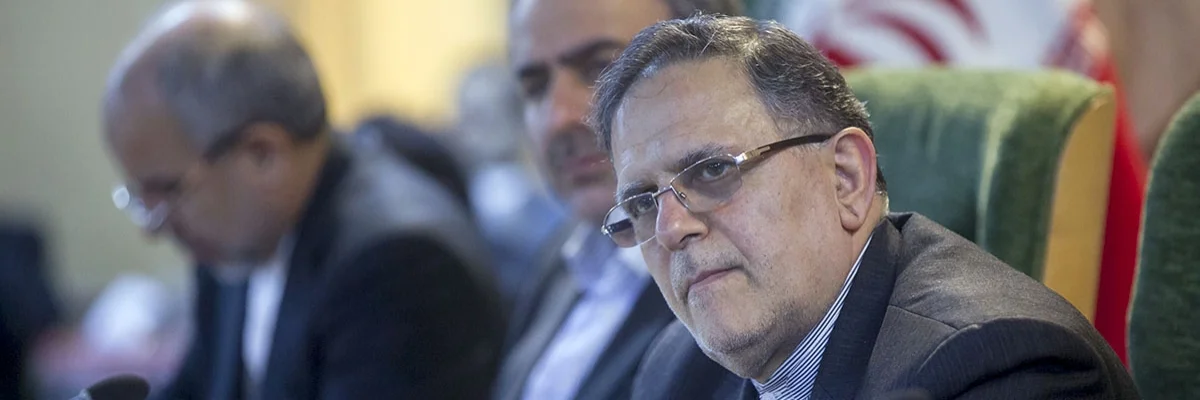
◢ The United States slapped sanctions Tuesday on Valiollah Seif, the governor of the Central Bank of Iran, accusing him of helping the country's Revolutionary Guard Corps transfer millions of dollars to Lebanon's Hezbollah.
The United States slapped sanctions Tuesday on Valiollah Seif, the governor of the Central Bank of Iran, accusing him of helping the country's Revolutionary Guard Corps transfer millions of dollars to Lebanon's Hezbollah.
In the second move in a week taking aim at the money networks of the Revolutionary Guards, or IRGC, the US Treasury also blacklisted a second central bank official, Iraq's Al-Bilad Islamic Bank and its top two executives, and a liaison between IRGC and Hezbollah, which Washington has designated an international terrorist group.
The Treasury said Seif covertly moved "hundreds of millions of dollars" to Hezbollah from IRGC via Al-Bilad Islamic Bank.
Tuesday's action seeks to cut off what the US called a "critical" banking network for Iran, and deny those blacklisted access to the global financial system.
"The United States will not permit Iran's increasingly brazen abuse of the international financial system," said US Treasury Secretary Steven Mnuchin.
"The global community must remain vigilant against Iran's deceptive efforts to provide financial support to its terrorist proxies."
On Thursday, the Treasury announced sanctions against a "large scale" currency exchange network serving the Revolutionary Guards, hitting six individuals and three companies at the center of the network.
At the time, the US singled out the Central Bank of Iran as "complicit" in the operation, foreshadowing Tuesday's action.
The move against Seif came one week after President Donald Trump withdrew from the Iran nuclear accord and signalled plans to ratchet up pressure on the Iranian economy, and especially on the economic power of the Revolutionary Guards.
Photo Credit: Mehr
Iran Bans Banks From Using Cryptocurrencies
◢ Iran banned the use of bitcoin and other cryptocurrencies by banks and financial institutions on Monday amid ongoing debate over how best to regulate the technology. Many in Iran see great potential in digital currencies as a way to overcome problems related to international sanctions and difficulties facing the country's ailing banks.
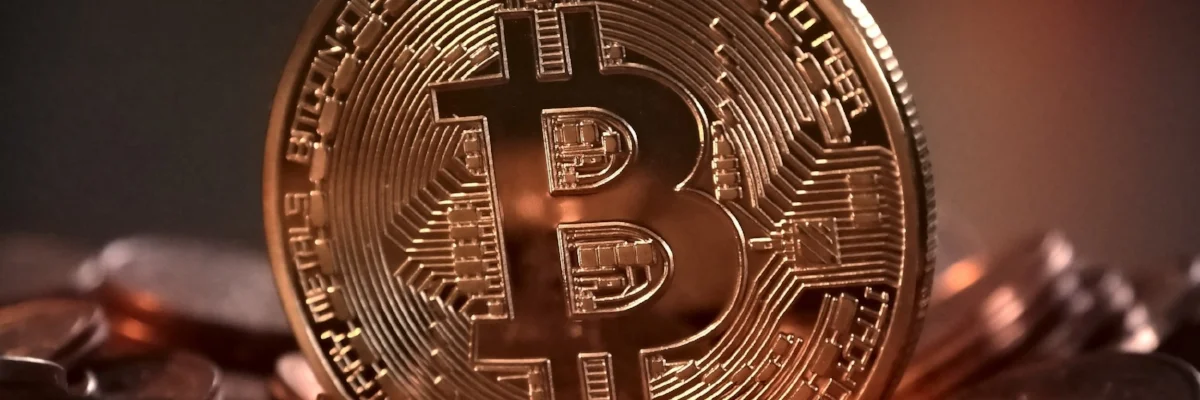
Iran banned the use of bitcoin and other cryptocurrencies by banks and financial institutions on Monday amid ongoing debate over how best to regulate the technology.
"The use of bitcoin and other cryptocurrencies in all the country's monetary and financial centers was banned," the central bank said in a statement overnight.
It said the government's money-laundering committee had taken the decision in late December and it was now being put into effect.
The ban came because "all cryptocurrencies have the capacity to be turned into a means for money-laundering and financing terrorism and in general can be turned into a means for transferring criminals' money," it added.
Many in Iran see great potential in digital currencies as a way to overcome problems related to international sanctions and difficulties facing the country's ailing banks.
Earlier this year, the country's 36-year-old telecoms minister Mohammad-Javad Azari Jahromi set up a team to create Iran's own cryptocurrency.
But there are also fears that the technology could undermine the country's already weak banking system and exacerbate capital flight.
Iranians working in the fledgling private cryptocurrency market said the ban was unlikely to affect their operations.
"This ruling referred directly to banks, financial institutions and currency exchangers that work with the central bank," Hadi Nemati, who works for cryptocurrency exchange platform Coinex, told AFP.
"In my opinion, it doesn't include the general public -- it's not a total ban on cryptocurrencies."
Coinex had however halted activity on its exchange platform because "we always want to make sure we comply with the law", he said. "But I have seen other crypto exchanges were still working normally."
Photo Credit: PXHere
Iranians Flock to Empty Exchangers After Currency Fix
◢ Confused and frustrated Iranians flocked to exchange offices on Tuesday after the government fixed a new rate for the dollar, only to find there were none to buy. Some predict the exchangers will find ways to fiddle the system to get round the new fixed rate, even though Vice-President Eshagh Jahangiri warned this would be considered smuggling.
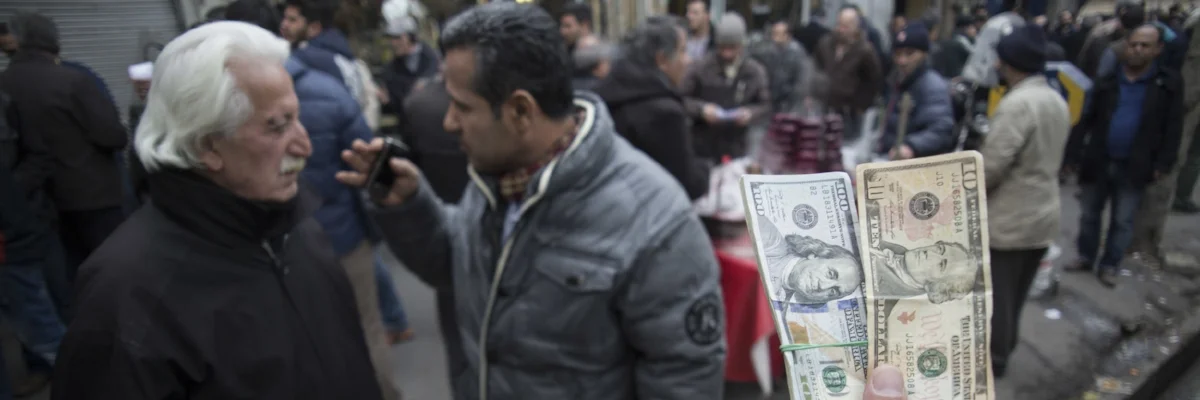
Confused and frustrated Iranians flocked to exchange offices on Tuesday after the government fixed a new rate for the dollar, only to find there were none to buy.
On Ferdowsi Street in central Tehran, home to dozens of banks and currency exchanges, many had hoped to find much cheaper dollars than the day before.
Overnight, the government had announced it was fixing the rate at 42,000 rials per dollar in a bid to arrest a slide in the currency, which has lost more than a third of its value against the greenback in six months.
But all along Ferdowsi Street, exchangers were turning hundreds of people away or had signs up saying: "We have no dollars to sell", while rate boards showed blank spaces for US and European currencies.
"Last night on TV I heard it's 42,000 so I came here to buy some for my son who is overseas. I've checked every exchanger but I couldn't find any dollars," said Tahmoores Faravahar, a 71-year-old retired oil sector worker.
A day earlier, some reported dollars selling at a record-high rate of 60,000 rials—pushed up by fears over tensions with the United States and a difficult political and economic situation at home.
"The truth is that the people can't trust the word of the government that their money will be safe," said a trader who sold currency on the street and asked to remain anonymous.
"People don't have hope in the political and economic situation in this country. People are confused and just want to keep their money safe by turning it into dollars."
One exchange office said it was never clear when the central bank would deliver dollars for them to sell.
"I don't know why they haven't come yet today," he said in the early afternoon. "But the new rate is good. The price was not normal these last few days."
'Everything is down'
Another street trader said the recent currency speculation was driven by the fact that people had few other options to make cash.
"If you look at the market, everything is down except the dollar. Real estate is down, the retail sector is down. People need income so it's a good idea to buy and sell dollars and make some money," he said.
"Last night, the government lowered the price and some people had a heart attack, but it won't stay like this."
He said exchangers would find ways to fiddle the system to get round the new fixed rate, even though Vice President Eshagh Jahangiri warned this would be considered smuggling.
"Just like the smuggling of drugs, no one has the right to buy or sell it... If any other exchange rate is formed in the market, the judiciary and security forces will deal with it," Jahangiri warned on state television.
Some said this had only created fear and confusion. "I want to sell some dollars but no one wants to buy them because the market is not safe," said a man in his forties, who did not give his name.
"The exchanges are worried about the situation because the government says it is smuggling if they sell above the new rate, so no one wants to sell," he said.
Meanwhile, for the many journalists covering the scene at Ferdowsi Street on Tuesday, there was another, unexplained phenomenon. "There are so many police here, but no one has asked us anything," said one local reporter.
Other media, including AFP reporters, said it was the first time they had been left to work without even being asked for their papers or being told to move on.
Journalists have felt less pressure since President Hassan Rouhani came to power in 2013, but police routinely hassle reporters and stop them filming in public. "It's like a dream," said one journalist as police walked past his video camera without batting an eye.
Photo Credit: Shutterstock