
'I Won't Survive': Iranians Reel From Sanctions
◢ Iran's economy had plenty of problems even before US President Donald Trump decided in May to abandon the 2015 nuclear deal and reimpose "crippling" sanctions. But that move exacerbated a record drop in Iran's currency, down 70 percent in the past year, and prompted an exodus of foreign firms.
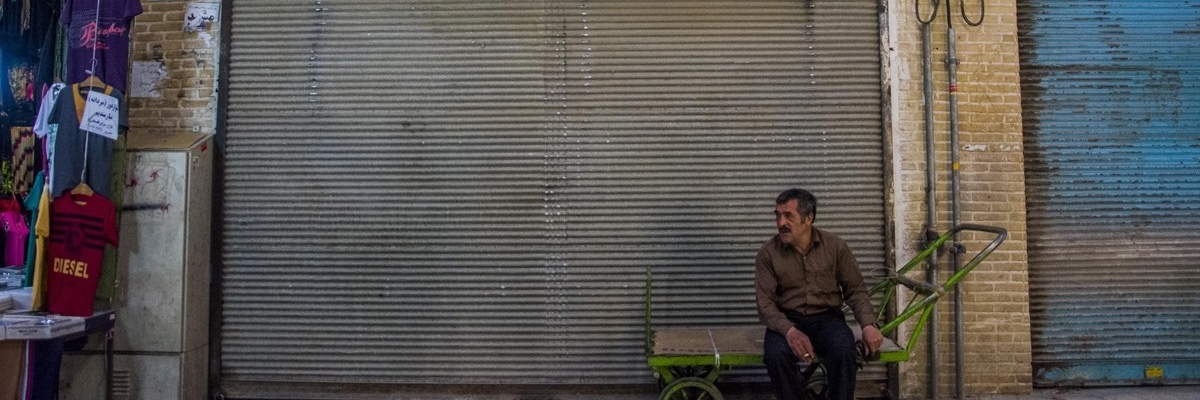
Seventy-year-old Heidar Fekri has been selling industrial equipment from his small store in a Tehran bazaar since before the revolution, but for the first time he is not sure he can survive.
He means it literally: "My shelves are empty, my warehouses are empty and soon I will have to close the doors. This has been my entire life—I won't survive long after the doors close."
Iran's economy had plenty of problems even before US President Donald Trump decided in May to abandon the 2015 nuclear deal and reimpose "crippling" sanctions.
But that move exacerbated a record drop in Iran's currency, down 70 percent in the past year, and prompted an exodus of foreign firms.
Anticipation of the return of the oil embargo—due to kick in on Monday—has already plunged the country into recession and will see the economy shrink by 3.6 percent next year, says the International Monetary Fund.
For Fekri, who has been bringing in industrial pumps and drills from Europe for 47 years, the uncertainty means he has not imported anything for more than a year.
“Sales have dropped 90 percent compared with six months ago. The whole bazaar is suffering," he told AFP.
Almost all products in Iran—from medicines to aircraft spares to plastic bottles—is tied into the global supply chain, so the currency collapse and renewed isolation threatens every corner of society.
The government has been forced to provide food baskets to around half Iran's households as inflation soars.
'Bullying'
For the middle class, perhaps the biggest blow is psychological, as the burst of hope that accompanied the nuclear deal in 2015—the promise of the country finally shedding its pariah status—has evaporated.
"No one knows what the Americans actually want. We did everything they wanted and it wasn't enough. It feels like bullying," said Sam Cordier, head of PGt Advertising, which represents foreign clients such as British Airways and Nestle in Tehran.
Washington says the sanctions are designed to curtail Iran's "destabilizing" activity in the Middle East, but many see them as an attempt to trigger a revolution.
"It's not fair for the Americans to incite violence. If this continues, all the professional businessmen with something to share through knowledge and investment will leave," said Cordier.
He was forced to sack six of his 30 staff and reduce salaries for the rest as, one by one, his foreign clients packed their bags.
"I was crying every 10 minutes when I told them. These are the people who are being hurt. Many young, educated people are leaving the country. There's a massive brain-drain," he said.
'Burned Generation'
There is plenty of hatred towards the Trump administration, but a surprising number of Iranians pin the blame on their own government for not better protecting them.
"Yes, America is doing bad things but they are looking out for their interests. If our state had looked out for Iran's interests, we wouldn't have the situation we have now," said Erfan Yusufi, 30, whose hip new coffee shop is struggling to cope with rising prices and falling demand.
Iran's leaders face a tricky balancing act, remaining defiant in the face of US pressure, while acknowledging the economic pain felt in the country.
"All of us understand people are suffering and under pressure," President Hassan Rouhani told parliament last weekend.
"We cannot tell our people that because of America's pressure, we cannot do anything. This answer is not acceptable."
He blamed foreign media for "filling people's minds with false propaganda" about soaring prices, though Iran's own central bank says food prices rose 46.5 percent in the year to September.
For all the problems, there is little sign that Iranians want another revolution, not least because a sizeable number are still fiercely supportive of the last one.
Most others are fearful of violent unrest, cowed by the security forces or uninterested in doing the bidding of a foreign power.
There is instead a sad resignation among many young people, who often refer to themselves as the "burned generation" for having been denied the chance to realize their potential.
"I'm worried about the future," said Yusufi in his coffee shop. "Our generation starts each day not knowing what will become of us."
Photo Credit: IRNA
US Must Lift 'Humanitarian' Sanctions on Iran: UN court
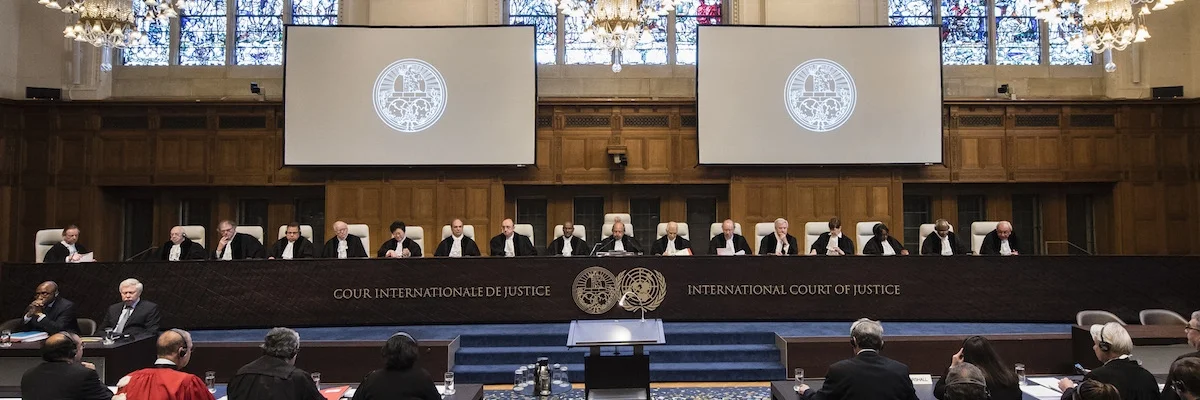
◢ The UN's top court Wednesday ordered the United States to lift sanctions on "humanitarian" goods to Iran that President Donald Trump reimposed after pulling out of Tehran's nuclear deal. The International Court of Justice unanimously ruled that Washington "shall remove by means of its choosing any impediments arising from the measures announced on May 8 to the free exportation to Iran of medicines and medical devices, food and agricultural commodities" as well as airplane parts, said judge Abdulqawi Ahmed Yusuf.
Editor’s Note: The full text of the order of the International Court of Justice can be seen here.
The UN's top court Wednesday ordered the United States to lift sanctions on "humanitarian" goods to Iran that President Donald Trump reimposed after pulling out of Tehran's nuclear deal.
The International Court of Justice unanimously ruled that Washington "shall remove by means of its choosing any impediments arising from the measures announced on May 8 to the free exportation to Iran of medicines and medical devices, food and agricultural commodities" as well as airplane parts, said judge Abdulqawi Ahmed Yusuf.
The court said sanctions on goods "required for humanitarian needs... may have a serious detrimental impact on the health and lives of individuals on the territory of Iran."
US sanctions on aircraft spare parts also had the "potential to endanger civil aviation safety in Iran and the lives of its users.”
Trump slapped a first round of sanctions on Iran in August after pulling out in May of a historic deal aimed at curbing Tehran's nuclear ambitions, to the dismay of his European allies. A second round of punitive measures is due in November.
The ICJ rules on disputes between United Nations member states. Its decisions are binding and cannot be appealed, but it has no mechanism to enforce them.
Photo Credit: ICJ
Russian Companies to Benefit from US Iran Withdrawal
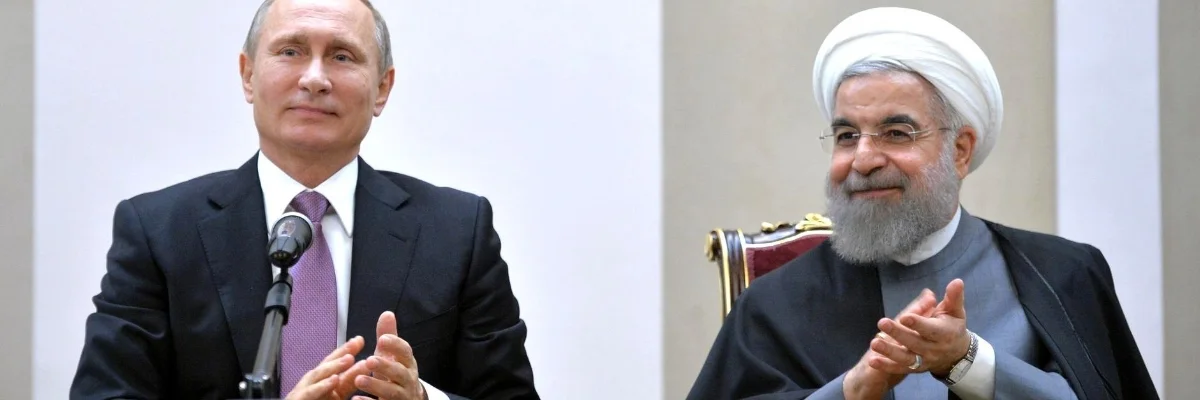
◢ While Russia has condemned Washington for its withdrawal from the Iran nuclear deal, Moscow remains less exposed to the economic consequences of US sanctions than Europe and its companies could even benefit from the move. Russia and Iran sought to strengthen their business ties long before the 2015 agreement, despite international sanctions in place.
While Russia has condemned Washington for its withdrawal from the Iran nuclear deal, Moscow remains less exposed to the economic consequences of US sanctions than Europe and its companies could even benefit from the move.
"The deal and the lifting of sanctions in 2015 marked the return of European business to Iran. But it's unlikely they can keep doing business today, giving room to Russia," said independent political scientist Vladimir Sotnikov.
"Russia can now go ahead at full speed," he added. Russia and Iran once had difficult relations, but have seen ties improve since the end of the Cold War.
While Tehran was shunned by the international community in the 1990s, Moscow agreed to resume the construction of the Bushehr Iranian nuclear plant that Germany had abandoned.
Russia and Iran sought to strengthen their business ties long before the 2015 agreement, despite international sanctions in place.
"European companies are more exposed to the US market, they must comply not to get into trouble. The Russians are less (exposed) and have less to lose," said Igor Delanoe, an analyst at the Franco-Russian Observatory group.
He added that Russian companies continued to work in Iran "without any fuss" even when the sanctions were in place. "They are used to working within legal and economic constraints. The US has systematically forced Iran to turn more towards Russia and China."
The situation could revitalize Russian-Iranian economic ties that have been losing ground in recent years despite the involvement of Russian nuclear and oil giants in the Middle Eastern country.
According to Delanoe, bilateral trade amounted to $1.7 billion in 2017, down 20 percent from the previous year and well below the more than $3 billion in the late 2000s.
Moscow 'Is Not Scared'
On a visit to Tehran on Thursday, Russian deputy foreign minister Sergei Ryabkov said the two countries intended to continue "all round economic cooperation."
"We are not scared of sanctions," Ryabkov said.
This echoes statements from China, which has also said it wanted to continue normal business ties with Iran and is currently financing multi billion dollar infrastructure and electricity projects in the country.
"Russia wants to sell steel, transport infrastructure and other manufactured goods to Iran. The less competition from the US and the EU, the better," said Charlie Robertson, an analyst at Renaissance Capital.
Igor Delanoe said that Russia had a "real role to play" in Iran's energy and electricity sectors.
Another positive sign for the Russian economy is the rise in oil prices, which rose to their highest level since 2014 after the US withdrawal from the Iran deal.
Analysts at Russia's Alfa Bank said the current tensions should maintain oil prices at a high level, which they called a "great relief for the Russian market."
For the Russian state, whose finances remain highly dependent on natural resources, this is a significant source of income at a time when President
Vladimir Putin is beginning his fourth Kremlin term with promises of developing Russia's economy and reducing poverty.
Russian Prime Minister Dmitry Medvedev assessed the cost of Putin's long term goals at more than 100 billion euros.
Photo Credit: Kremlin
Europeans Will 'Do Everything' to Protect Companies in Iran: French Presidency
◢ European officials will "do everything" possible to protect the interests of companies working in Iran, which may now be exposed to new US sanctions against the country, an official in the French presidency said Wednesday.
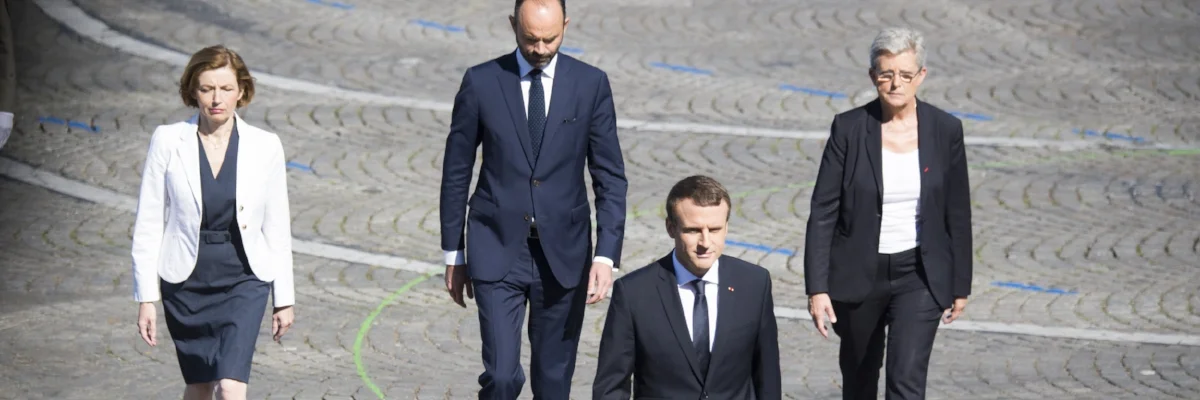
European officials will "do everything" possible to protect the interests of companies working in Iran, which may now be exposed to new US sanctions against the country, an official in the French presidency said Wednesday.
Following President Donald Trump's decision to pull out of the 2015 nuclear deal with Iran and reimpose sanctions, European governments are going "to do everything to protect the interests" of their companies, said the official, speaking on condition of anonymity.
French diplomats said Trump's decision, announced in a short address to the nation on Tuesday, was expected despite efforts by President Emmanuel Macron to sway the US leader.
"Of course this decision is a worry, there are tensions," a second official said.
"It will be difficult to maintain this agreement in these conditions but we will do everything to find a way to protect this multilateral framework."
At a press briefing, the diplomats countered criticism that Macron had been ineffective in lobbying Trump to respect the accord during a state visit to Washington at the end of April.
Despite both men boasting of their close relationship in public, Trump did not inform Macron of his choice beforehand, even during a phone call between the two men just hours before his announcement.
"It was our responsibility to do it (lobbying Trump to stay in the agreement)," the first French official said. "And we did it with full knowledge of the facts."
He added that Macron would continue to play a crucial role in trying to salvage the agreement—which the EU, Russia and China say they want to keep—and reduce tensions in the Middle East.
"He's the only leader who has the ability to talk to other leaders involved, even those that don't talk to each other," the official said.
"That's something, above all in this time of tensions, that is precious."
Photo Credit: