
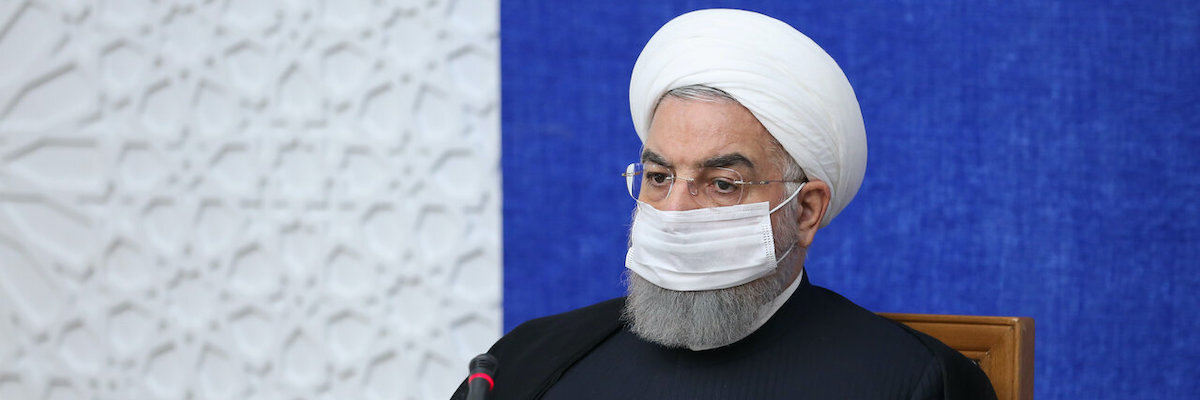
Iran's Rouhani Says New US Sanctions Cannot Break 'Resistance'
Iran's President Hassan Rouhani on Friday dismissed new US sanctions as unable to break the country's "resistance" and said Washington has already done all it can to pressure Tehran.
Iran's President Hassan Rouhani on Friday dismissed new US sanctions as unable to break the country's "resistance" and said Washington has already done all it can to pressure Tehran.
US President Donald Trump's administration imposed sweeping sanctions on Iran's banking sector on Thursday by designating 18 major Iranian banks to "stop illicit access to US dollars.”
"The Americans have so far done all they could against the great nation of Iran," Rouhani said, according to his official website.
"They cannot break the resistance of the Iranian nation with these inhumane" actions, he added.
According to Rouhani, the US administration is following "domestic aims" by such "political-propaganda attempts.”
The sanctions are part of Washington's policy of "maximum pressure" against Tehran aimed at reining in the Islamic republic, the arch-foe of US allies Saudi Arabia and Israel.
They were reimposed after Trump in 2018 unilaterally withdrew the US from a landmark accord with world powers and Iran, which limited the Islamic republic's nuclear programme in exchange for international sanctions relief.
The US claims that transactions involving humanitarian goods such as food and medicine are exempt and that sanctions are "directed at the regime."
Yet statements from experts and right groups point to the dire humanitarian consequences and the suffering sanctions impose on the Iranian people.
Rouhani said the sanctions are "attempts to create serious obstacles in fund transfers for medicine and food" and called them "cruel, terrorist and inhumane.”
He also called on the world's "human rights advocates" to condemn the move.
"All countries witness that America's attempts are completely against international laws and regulations, and in the time of the coronavirus are against human rights," Rouhani said.
Photo: IRNA
Six European Countries Join INSTEX Mechanism for Iran Trade
◢ Paris, London and Berlin on Saturday welcomed six new European countries to the INSTEX mechanism, which is designed to mitigate the effects of US sanctions on European trade with Iran. They also insisted Iran must return to full compliance with its commitments under the deal "without delay.”
Paris, London and Berlin on Saturday welcomed six new European countries to the INSTEX mechanism, which is designed to mitigate the effects of US sanctions on European trade with Iran.
"As founding shareholders of the Instrument in Support of Trade Exchanges (INSTEX), France, Germany and the United Kingdom warmly welcome the decision taken by the governments of Belgium, Denmark, Finland, the Netherlands, Norway and Sweden, to join INSTEX as shareholders," the three said in a joint statement.
The Paris-based INSTEX offers a netting service enabling companies to avoid cross-border financial transactions between the European and Iranian financial systems.
The system has not yet enabled any transactions.
Washington in 2018 unilaterally withdrew from the international agreement governing Iran's nuclear programme and reinstated heavy sanctions against Tehran.
The accession of the six new members "further strengthens INSTEX and demonstrates European efforts to facilitate legitimate trade between Europe and Iran", France, Germany and Britain said.
It represents "a clear expression of our continuing commitment to the Joint Comprehensive Plan of Action"—the 2015 Iranian nuclear deal—the trio added.
They insisted Iran must return to full compliance with its commitments under the deal "without delay.”
"We remain fully committed to pursuing our efforts towards a diplomatic resolution within the framework of the JCPOA."
The 2015 deal set out the terms under which Iran would restrict its nuclear program to civilian use in exchange for the lifting of Western sanctions.
Since the US pullout, Iran has taken four steps back from the accord.
The latest was on November 4 when its engineers began feeding uranium hexafluoride gas into mothballed enrichment centrifuges at the underground Fordow plant south of Tehran.
Photo: IRNA
UniCredit’s German Unit Pleads Guilty in U.S. Sanctions Case
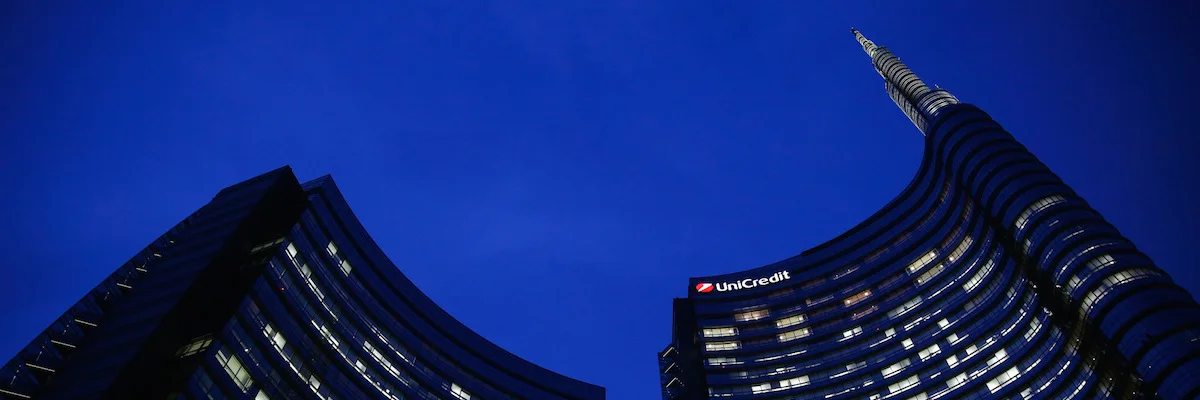
◢ A German unit of the Italian bank UniCredit SpA pleaded guilty to U.S. charges that it allowed Iranian customers to conduct transactions in violation of sanctions. As part of its settlement with several U.S. regulators, the bank will pay $1.3 billion and its Austrian unit will enter into a deferred-prosecution agreement.
A German unit of the Italian bank UniCredit SpA pleaded guilty to U.S. charges that it allowed Iranian customers to conduct transactions in violation of sanctions.
As part of its settlement with several U.S. regulators, the bank will pay $1.3 billion and its Austrian unit will enter into a deferred-prosecution agreement. The bank’s German unit, HypoVereinsbank, will also enter a guilty plea in Manhattan to a state-level charge of violating books-and-records requirements.
The penalty is several hundred million dollars more than people familiar with the matter had expected. It’s also among the largest ever related to U.S. sanctions laws. On April 9, Standard Chartered Plc agreed to pay more than $1 billion to resolve a long-running investigation into its handling of transactions related to Iran.
Over a decade beginning in 2002, the German bank moved at least $393 million through the U.S. financial system on behalf of sanctioned entities, the U.S. Justice Department said. The Austrian unit of UniCredit also conspired to circumvent U.S. restrictions on Iranians, prosecutors said.
The bank handled billions of dollars in illegal and non-transparent transactions to clients in sanctioned countries including Cuba, Iran, Libya, Myanmar and Sudan, according to New York’s Department of Financial Services, which fined UniCredit $405 million as part of the settlement. The U.S. attorney’s office in Washington, the Treasury Department, the New York branch of the Federal Reserve Bank and the New York district attorney’s office also took part in the settlement.
The lender set aside 741 million euros ($838 million) in provisions and charges, including funds to settle the allegations, in the third quarter. The bank had also set aside some money for the matter earlier but declined to provide a total.
The settlement amount is covered fully by those set-asides, UniCredit said Monday in a written statement. The bank’s first-quarter earnings will be boosted by about 300 million euros after the penalty funds are released, the bank said. Its common equity tier 1 ratio, a key measure of financial strength, will improve by 8.5 basis points, it said.
UniCredit says it has implemented a “remediation and enhancement plan to strengthen its policies, procedures, supports and controls to ensure full compliance with applicable economic sanctions and internal control requirements,” it said. The bank said it would also further develop methods to prevent and detect illegal activity.
According the New York regulator, UniCredit implemented automated transaction filtering software, known as the “embargo tool,” in 2004 as part of its efforts to flag transactions that might run afoul of the U.S. Treasury’s Office of Foreign Assets Control.
The bank’s core compliance team came up with an instructional guide designed to help the bank’s employees work around the embargo tool -- by submitting payment orders in an “OFAC-neutral” manner that wouldn’t trigger any red flags, according to the New York regulator.
“UniCredit prioritized profit over compliance and security by deliberately engaging in billions of dollars of transactions with clients from sanctioned nations, including Iran, Libya and Cuba, and then working to cover their tracks to avoid detection,” said Linda Lacewell, the acting superintendent of the New York regulator.
UniCredit Chief Executive Officer Jean Pierre Mustier inherited the case when he took the helm in July 2016. HypoVereinsbank, the German unit, was subpoenaed in March 2011 by the New York district attorney’s office over transactions with certain Iranian entities.
UniCredit, Italy’s biggest bank, is one of several European financial institutions settling similar cases. Fifteen European banks have together paid more than $19.5 billion for violating U.S. sanctions against various countries. BNP Paribas SA’s $8.97 billion penalty in 2014 was the largest individual fine.
The settlement is the second for an Italian bank. Intesa Sanpaolo SpA, the country’s second-biggest lender, agreed to pay $235 million in Dec. 2016 to resolve a New York regulator’s allegations that it flouted money-laundering controls for a decade.
Photo Credit: Bloomberg
Standard Chartered Reaches $1.1 bn US Settlement on Iran Sanctions
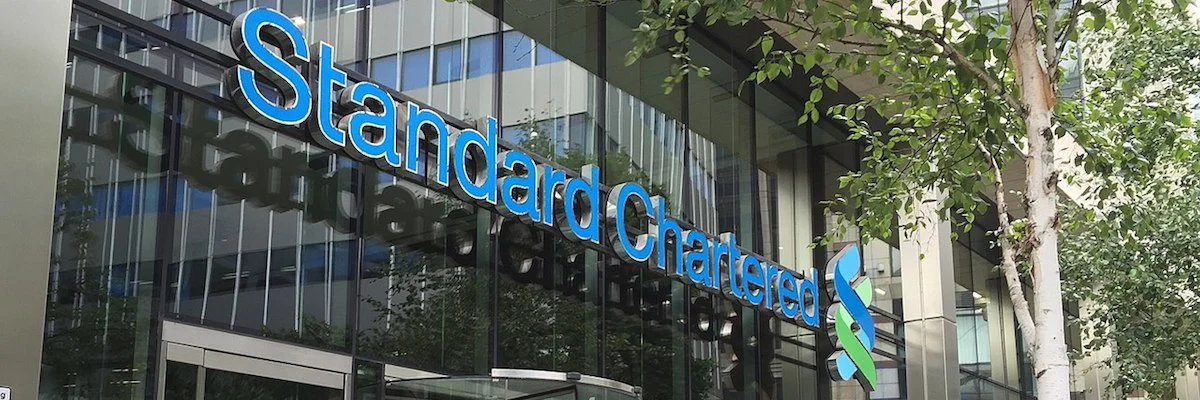
◢ Standard Chartered will pay USD 1.1 billion to settle charges it processed transactions that violated US sanctions on Iran and other prohibited countries, US regulators announced Tuesday. The penalty covers some USD 600 million in US transactions from 2008 to 2014 that originated at Standard Chartered's London and Dubai offices.
Standard Chartered will pay USD 1.1 billion to settle charges it processed transactions that violated US sanctions on Iran and flouted anti-money laundering requirements, US and British regulators announced Tuesday.
The British bank moved through hundreds of millions of dollars of US transactions from Iran and other sanctioned countries, said US Treasury officials, who were joined in the action by other federal and state agencies.
Britain's Financial Conduct Authority—which worked with the US bodies—punished the bank for doing little to detect and counter the laundering of funds that may have come from crimes or which could have been used to finance terrorism
"Standard Chartered's oversight of its financial crime controls was narrow, slow and reactive," said FCA Director of Enforcement and Market Oversight Mark Steward, who said the fine would have been "even higher" if the bank had not cooperated with the probes.
The British portion of the fine amounted to GBP 102.2 million (USD 133.7 million).
A statement from the bank described the violations as "historical," adding that the "vast majority" of the problems predated 2012 and that none occurred since 2014.
"The circumstances that led to today's resolutions are completely unacceptable and not representative of the Standard Chartered I am proud to lead today," said Standard Chartered Group Chief Executive Bill Winters.
"Fighting financial crime is central to what we do and who we are; we do not tolerate misconduct or lax controls and we will continue to root out any issues that threaten the trust we have built over more than 160 years."
Blindly accepting deposits?
The FCA listed a number of flagrant instances in which the bank's money laundering controls fell short.
In one case, the Dubai branch opened an account for a customer with 3 million UAE Dirham (USD 815,000) in cash, apparently without investigating the source of the funds.
The bank also did not sufficiently question a customer who exported a commercial product with potential military application to 75 countries, including two that had armed conflicts or where conflict was likely, the FCA said.
The penalties also cover some USD 600 million in US transactions from 2008 to 2014 that originated at Standard Chartered's London and Dubai offices and went through its US branch, the New York State Department of Financial Services said in a statement.
US regulators said a majority of the problem transactions violated US sanctions on Iran, with a smaller number involving Syria, Sudan, Cuba and Burma.
The US Treasury Department said the agreement requires the bank to conduct regular risk assessments and provide ongoing sanctions compliance training.
Other US bodies joining the agreement included the Federal Reserve and the Department of Justice, which extended a previously-written deferred prosecution agreement with the bank for two years.
"Global financial institutions serve as the first line of defense against money laundering and the financing of terrorist activities and those that fail to foster a strong compliance culture will be held accountable," said Linda Lacewell, acting superintendent of the New York agency.
Photo Credit: Wikicommons
Iran Approves Anti-Money Laundering Bill
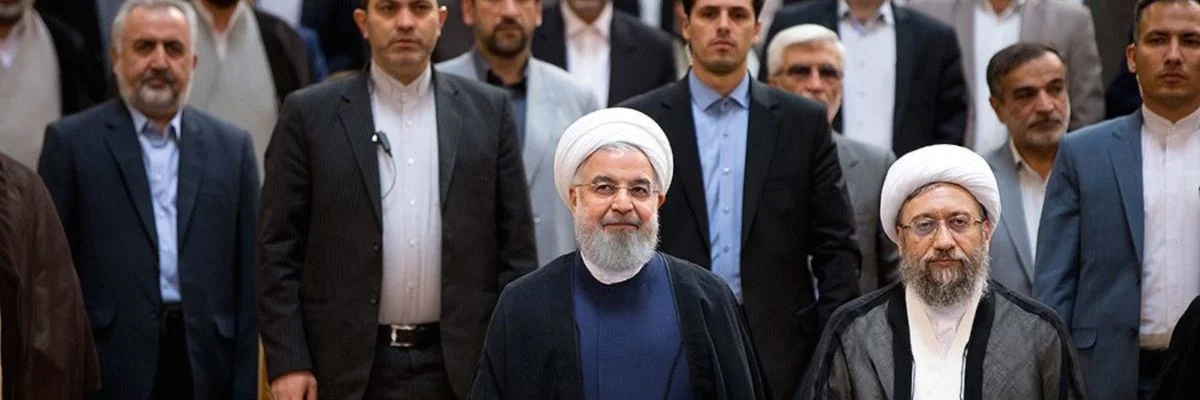
◢ An Iranian arbitration body gave its approval on Saturday to an anti-money laundering bill seen as crucial to maintaining international trade and banking ties, the official IRNA news agency reported. "The bill on amending the law to counter money laundering was approved with certain changes and will be sent to the parliament speaker to be communicated to the government," Expediency Council member Gholamreza Mesbahi-Moghadam told IRNA.
An Iranian arbitration body gave its approval on Saturday to an anti-money laundering bill seen as crucial to maintaining international trade and banking ties, the official IRNA news agency reported.
"The bill on amending the law to counter money laundering was approved with certain changes and will be sent to the parliament speaker to be communicated to the government," Expediency Council member Gholamreza Mesbahi-Moghadam told IRNA.
The Expediency Council settles disputes between parliament, which approved the bill last year, and the conservative-dominated Guardian Council, which vets all legislation and had rejected it.
Conservatives have argued that new legislation on money laundering and terrorist financing will provide Western powers with leverage over Iran's economy and how it funds regional allies such as Lebanon's Hezbollah.
But the government of President Hassan Rouhani says the laws are needed to meet demands set by by the international Financial Action Task Force (FATF), which monitors countries' efforts to tackle financial crime.
Iran is alone with North Korea on the FATF's blacklist—although the Paris-based organization has suspended counter-measures since June 2017 while Iran works on reforms.
The FATF will meet again in February to discuss Iran's progress.
The government is hoping to salvage banking and trade ties after the United States walked out of a landmark 2015 nuclear deal between major powers and Iran and reimposed crippling unilateral sanctions.
The other parties to the deal—Britain, France, Germany, China and Russia—have sought to salvage the agreement and maintain trade with Iran, but have called on Tehran to meet FATF requirements.
The anti-money laundering bill is one of four pieces of legislation put forward by the government to that end.
A previous bill on the mechanics of monitoring and preventing terrorist financing was signed into law in August.
Two others—allowing Iran to join UN conventions against terrorist-financing and organized crime—have been approved by parliament but are still being delayed by higher authorities, including the Guardian Council.
The Expediency Council currently has 38 members, all appointed by supreme leader Ayatollah Ali Khamenei.
Photo Credit: Fars
Societe Generale Fined $1.3 Bn for US Sanctions Violations
◢ US officials fined Societe Generale USD 1.3 billion after charging the French bank with violating US sanctions on Cuba, Iran and other countries in a criminal settlement unveiled Monday. The financial penalty is the second largest ever on a financial institution for violating US sanctions.
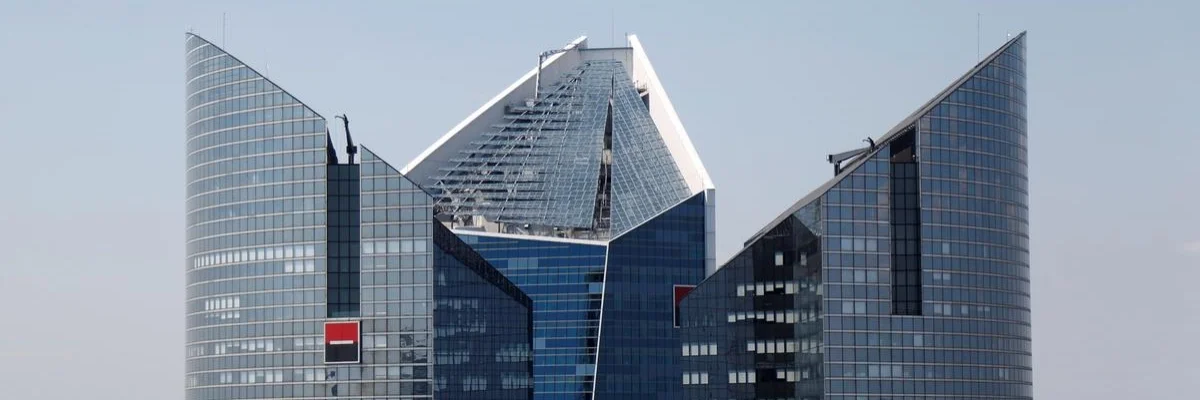
US officials fined Societe Generale USD 1.3 billion after charging the French bank with violating US sanctions on Cuba, Iran and other countries in a criminal settlement unveiled Monday.
The financial penalty is the second largest ever on a financial institution for violating US sanctions, said the Department of Justice, which was joined in the action by the Federal Reserve, US Treasury Department and New York authorities.
"Today, Societe Generale has admitted its willful violations of US sanctions laws—and longtime concealment of those violations—which resulted in billions of dollars of illicit funds flowing through the US financial system," said Geoffrey Berman, US Attorney for the Southern District of New York, outlining terms of a three-year probation period for the French bank under a deferred prosecution agreement.
"Other banks should take heed: Enforcement of US sanctions laws is, and will continue to be, a top priority of this office and our partner agencies."
The bank from 2004 through 2010 engaged in more than 2,500 Cuba-related transactions through US financial institutions, involving close to $13 billion that should have been blocked or stopped for investigation under US sanctions, the Justice Department said.
Societe Generale officials avoided detection by "making inaccurate or incomplete" notations on messages and "engaged in a deliberate practice of concealing the Cuban nexus of US dollar payments," the department said in a statement.
Federal prosecutors said senior bank officials were aware that the transactions breached US law but did not disclose the matter to US authorities. The probe was triggered by the blocking by other US financial institutions in 2012 of two transactions that Societe Generale processed on behalf of a Sudanese sanctioned entity, according to the Justice Department.
The New York Department of Financial Services, another agency involved in the settlement, also hit Societe General for undertaking transactions to Iran in an "improperly, non-transparent manner" involving more than USD 12.5 billion.
Societe Generale said it had already hired additional compliance officers, enhanced training and reorganized the teams for sanctions and embargoes compliance. The bank announced in September that it expected the fine and had set aside funds to pay it.
"We acknowledge and regret the shortcomings that were identified in these settlements and have cooperated with the US authorities to resolve these matters," said Societe Generale Chief Executive Frederic Oudea.
"We aim to meet the highest standards of compliance and ethics, in the best interest of our clients and of all of our stakeholders."
Photo Credit: Wikicommons
Transcript: Special Representative for Iran Brian Hook Briefs Reporters on Iran Sanctions
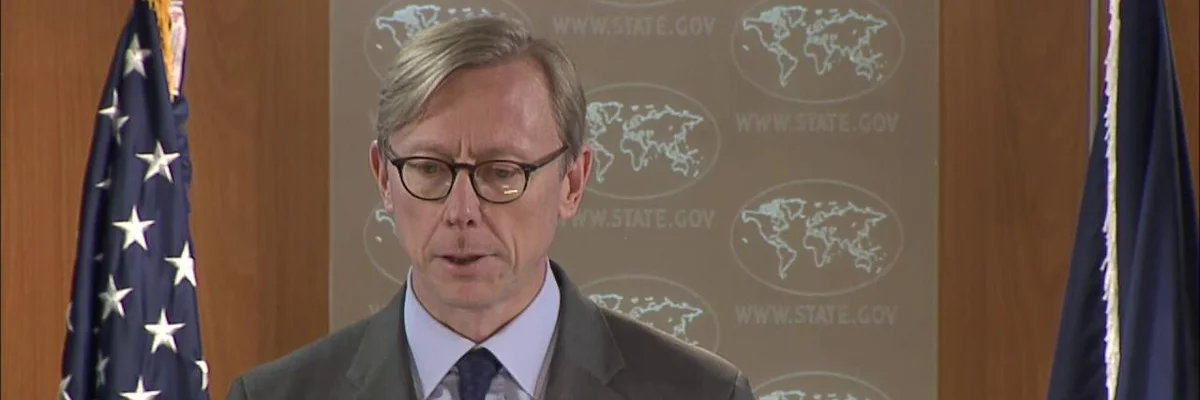
◢ Special Representative for Iran Brian Hook briefed reporters regarding Iran sanctions to be reimposed on Monday November 5. This transcript was published by the Office of the Spokesperson at the U.S. Department of State. The briefing took place on Friday November 2.
This transcript was published by the Office of the Spokesperson at the U.S. Department of State. The briefing took place on November 2, 2018.
MR HOOK: I’m happy to take questions. And you’ve heard the Secretary talk. I just (inaudible).
QUESTION: What are the eight countries?
MR HOOK: Huh?
QUESTION: What are the eight countries?
QUESTION: What are the eight countries?
MR HOOK: Monday. Monday.
QUESTION: Can you at least say what are the two that said that they will cut to zero since it seems the negotiations with them are over?
MR HOOK: It’ll – it’s all going to be announced on Monday.
QUESTION: But why do all of this today if there’s so little detail available today?
MR HOOK: There was a lot of detail today. There was a full briefing by both secretaries. So --
QUESTION: There was not a lot of detail.
MR HOOK: The sanctions go back into effect on Monday. This was a preview today.
QUESTION: Can I ask, though, similar to the question Arshad asked on the – using the word jurisdiction instead of country, can we assume that a certain island that begins with “T” is the reason that you’re using jurisdiction instead of country? Or is that --
MR HOOK: I think --
QUESTION: Taiwan. I’ll --
QUESTION: Could jurisdiction mean more than one government, or does it mean one government?
MR HOOK: Is this what Secretary Mnuchin said?
QUESTION: He said – no, Pompeo.
QUESTION: Both, both. Pompeo – both of them said --
QUESTION: They used the word jurisdictions.
QUESTION: -- jurisdiction not country, which is why – I mean, it’s a technical point, but I’m just – and I get – I can understand that you don’t want to give the names.
MR HOOK: I don’t know all of them. I don’t know.
QUESTION: But are all of the eight countries?
QUESTION: Single governments?
QUESTION: Countries?
MR HOOK: Yes.
QUESTION: Yes countries or yes governments?
MR HOOK: They are – they are --
QUESTION: If Taiwan is among them, that would be a reason to --
MR HOOK: I get it. They’re nations. They’re nations.
QUESTION: Okay. So Taiwan is not.
MR HOOK: I’m not going to say what it’s not. I’m saying that eight nations.
QUESTION: Can I get a clarification on the SREs?
MR HOOK: Yeah.
QUESTION: Yesterday you said the waiver is granted for a six-month period and then re-evaluated.
MR HOOK: That’s by statute.
QUESTION: Right. And then the Secretary said it will take them weeks longer to wind down. Is that all-encompassing for the eight that are being granted or just --
MR HOOK: No, he was – there he was talking about two of the countries that will receive an SRE are going to be given a little extra time, weeks of time, to get to zero.
QUESTION: But they – if they can still – the waiver is for six months still by statute?
MR HOOK: But operationally it’s only relevant for the first few weeks of the – but by law, when we give an SRE, it’s for 180 days.
QUESTION: Right.
MR HOOK: And that’s under the National Defense Authorization Act of 2012, NDAA. And so it’s a 180-day SRE. It doesn’t matter whether they go to – I mean, it’s – each country is different. In two of the countries, they will be getting to zero before the expiration of the SRE.
QUESTION: Can you talk about kind of the broader efforts on trying to get Iran to behave like a normal regime? I mean, does that include kind of the Twitter messaging or social media messaging, or is it something more than that, more concrete about supporting opposition groups or protestors?
QUESTION: Is it more than just Twitter messages? Is there something – is the U.S. doing something to kind of promote protestors?
MR HOOK: The Iranian regime has historically not come to the negotiating table absent significant economic and diplomatic pressure. The reimposition of our sanctions are designed to do two things: deny the regime the revenue it needs to fund violent wars abroad, and also to change the cost-benefit analysis in our favor so that Iran decides to come back to the negotiating table.
The Ayatollah Khamenei has said that require hostility with the United States, which is the kind of thing that you expect to hear from a revolutionary regime. We have been very clear. Secretary Pompeo has been very clear that we have an ear open to what is possible. We very much want to begin work on a new and better deal to replace the insufficient Iran nuclear deal that the President left in May, and our campaign of maximum economic pressure is a critical tactic to achieve that goal.
QUESTION: But he’s also talking about restoring democracy.
MR HOOK: The President, the Secretary of State, the Vice President, at all levels of the administration, have stood with the Iranian people and their aspirations for a better way of life. The Iranian people want a more representative government, a government that does not rob them blind, that supports their human rights, their economic rights, their freedom of expression, freedom of assembly. These are all rights that the United States wants for the Iranian people. We think they deserve a much better way of life, and Secretary Pompeo has repeatedly made remarks addressed to the Iranian people in support of their demands for reforms from this regime.
QUESTION: How – I want to ask the question that Gardiner asked yesterday about the Khashoggi murder and the war in Yemen and how any of that is playing into this. I mean, how can you, on the one hand, focus so much on Iran’s human rights record while not doing enough to pressure the Saudis on some of the same very issues?
MR HOOK: We do not share interests or values with the Iranian regime. We have asked Saudi Arabia to increase the production of oil while we take off Iranian oil from the market, and Saudi Arabia has been very helpful to ensure an adequately supplied oil market during this period where we have seen dramatic reductions in the import of Iranian crude as part of our maximum economic pressure campaign. The Saudi Government has successfully insulated oil from broader political issues, and that has been helpful in the broader context of our pressure campaign.
QUESTION: Well, just to be devil’s advocate here, I understand the shared interests that you have with the Saudis on Iran. But what shared interests, what shared values does the U.S. have with the Saudis – respect for human rights?
MR HOOK: I can only speak to how the Saudis have helped our Iran strategy. The President gave a speech in Riyadh on his first trip overseas as president, where he called upon our Sunni Arab partners to increase their capabilities to reverse Iranian hegemony so that our Arab partners can shoulder more of the burden in the Middle East. And we have enjoyed a great deal of cooperation from Gulf countries and beyond to isolate Iran and to apply as much economic pressure as possible so that they don’t have the money they need to destabilize the Middle East.
QUESTION: How is this escrow account that he talked about going to work, and how do you make sure that the Iranians are going to get basic needs fulfilled – medicine, food?
MR HOOK: The escrow accounts that are being created for those nations that need to continue importing Iranian oil deny Iran hard currency, and it denies Iran any revenue from oil sales. Any time Iran sells oil, that money goes into an escrow account in the importing nation’s bank, and Iran has to spend down that credit. We strongly encourage those nations to ensure that Iran spends that money on humanitarian purchases to benefit the Iranian people. The longest-suffering victims of the Iranian regime are the Iranian people. This regime uses fake companies disguised as humanitarian organizations to divert purchases that should go to food, medicine, and medical devices, and they use that to enrich the regime and support revolutionary activities overseas.
QUESTION: So you’re counting on countries like China to make sure that they don’t use money for those things?
MR HOOK: The United States will be monitoring these escrow accounts very closely. Unlike in prior administrations, we will ensure that the money is not spent on illicit activities, that there isn’t any leakage in these escrow accounts, and we will work closely with countries to encourage the purchase and – the sale and purchase of humanitarian goods to benefit the Iranian people. Our sanctions regime has very clear exceptions for the sale of food, medicine, and medical devices.
QUESTION: So how does the travel ban fit into the U.S. support for Iranian people?
MR HOOK: Because the Iranian regime is the largest sponsor of terrorism in the world, we have a restrictive visa policy. And that policy is driven by the terrorism of the regime. It is not driven by a desire to restrict the average Iranian people. The problem we have is --
QUESTION: But it does.
MR HOOK: But that is the problem of the regime. If the regime would stop funding terrorism and open up its economy so that we can see where the money goes, it would create a much better environment for us to be granting visas.
QUESTION: So for the countries that you say need to keep importing oil, do you foresee issuing these exemptions over and over again? Are you going to put an upper limit on how many times they’ll be renewed?
MR HOOK: Our goal remains getting countries to zero imports of Iranian oil. In 2019, our projections are that oil supply will exceed demand, and that creates a much better atmosphere for us to bring remaining nations to zero as quickly as possible.
QUESTION: So you’re not putting an upper limit on how – for how – how many times these exemptions will be renewed at this point?
MR HOOK: We are not looking to grant additional SREs at the end of the 180-day period. We are being very careful to advance our maximum economic pressure campaign without increasing the price of oil. Next year we anticipate a stronger oil supply coming online, and that will allow us to accelerate the path to zero.
QUESTION: And are you – how many Iranian banks will be cut off from SWIFT? I mean, the administration is saying more than prior, but can you give a number?
MR HOOK: That will be announced by Secretary Mnuchin on Monday.
QUESTION: He did say, though, on this subject – he was very precise in his language. He said “certain designated Iranian financial institutions.” That does not categorically mean all. So is it possible that either, one, don’t redesignate all of the banks that had previously been designated; and two, is it possible that some designated bank, because he used the word “certain designated,” would not be required to disconnect?
MR HOOK: I’m not going to interpret what “certain” means beyond saying that he will announce all the banks on Monday.
QUESTION: The 20 – 20 countries import 80 percent of Iran’s oil, as I understood – stand. Are those eight countries, any of them, among those 20 – the eight countries receiving the SREs?
MR HOOK: That there’s a small group of – that there’s a – there is a relatively small number of countries that make up the lion’s share of the import of Iranian crude.
QUESTION: And are any of them getting exemptions?
MR HOOK: I’m not going to get ahead of the Secretary’s announcement on Monday.
QUESTION: Can you offer a little clarity on the response about non-U.S. civil nuclear cooperation? Will waivers be granted in that --
MR HOOK: The Secretary addressed that this morning, and it’ll be announced on Monday.
QUESTION: On the humanitarian transaction, Europeans have expressed concern in the past weeks that even though there were exemptions to humanitarian goods and services, the financials mechanism were not safe enough, that you have to clarify what are the means by which the countries and entities can do those kind of transactions. Do you think that what you announced today clarifies this and that it’s safe to do humanitarian transactions with Iran?
MR HOOK: The Iranian regime has a history of creating front companies to divert the distribution of humanitarian goods. Financial institutions around the world know of Iran’s history of deceiving banks on the sale of humanitarian goods. The burden is on Iran to open up its dark economy so that banks around the world have more confidence that when they facilitate humanitarian transactions that the humanitarian goods will reach the Iranian people.
The United States is the largest donor of humanitarian assistance in the world. Every sanctions regime we have makes exceptions for food, medicine, and medical devices. That is, we have done our part; the Iranian regime needs to do its part by making those transactions possible in an open and transparent financial system.
QUESTION: Sounds like there’s not very many safe ways of trade – like, for pharmaceutical companies and medical companies.
MR HOOK: The Iranian regime makes it very difficult to facilitate the sale of humanitarian goods and services.
QUESTION: The Europeans says that the fear is that even if you sell humanitarian goods to Iran, you will be target by U.S. sanctions, so they addressing this to you and not to Iran.
MR HOOK: Say that again?
QUESTION: The European countries say that companies fear that if they sell those goods to Iran, they will be targeted by U.S. sanctions. So they ask you to say what are the safe channels to do that.
MR HOOK: The burden is not on the United States to identify the safe channels. The burden is on the Iranian regime to create a financial system that complies with international banking standards to facilitate the sale and provision of humanitarian goods and assistance.
QUESTION: Right, but I think that the point is that they are looking for some kind of, like, assurance --
QUESTION: Guidance from OFAC.
QUESTION: Guidance.
MR HOOK: We have been – OFAC has given very clear guidance over many years --
QUESTION: That’s not what the Europeans say.
MR HOOK: We have done our part to permit the sale of humanitarian goods to Iran. That is our part. That is our role. Iran has a role to make these transactions possible. Banks do not have confidence in Iran’s banking system – often don’t have confidence in Iran’s banking system to facilitate those transactions. That’s Iran’s problem; it is not our problem.
QUESTION: But banks do not have confidence, the companies do not have confidence in Iran banks because they are subject to American sanctions from now on.
MR HOOK: That’s not true.
QUESTION: That’s what the Europeans say. I’m just --
MR HOOK: I’m giving you the answer.
QUESTION: We were expecting the list. (Laughter.)
MR HOOK: But he told you it was coming Monday.
QUESTION: Why is it that – and when you say Monday, this isn’t going to be at literally 12:01 Monday morning, is it? Or I mean --
MR HOOK: No. The Secretary will announce it on Monday, and then it will be published in the Federal Register.
QUESTION: Okay, but he’ll announce it – what, do you have any – like, I just want it for personal planning purposes.
MODERATOR: About 8:30 in the morning.
QUESTION: 8:30 Monday morning and not beforehand. So in other words, I – at 12:01 Monday morning, they go into effect --
MR HOOK: Yes.
QUESTION: -- but there won’t be a – like, is something going to go up on the Treasury website at 12:01? I mean, I’m just trying to figure out --
MR HOOK: I don’t know about that. For our part, on the SREs and anything else will be announced on Monday. I don’t – Treasury may have a different way where at 12:01 they have to --
QUESTION: So you guys aren’t planning on saying who the eight are at 12:01.
MR HOOK: No. No. No.
QUESTION: But presumably these eight are aware that – right, they’ve been told that they’re okay to – because they’re all coming out of the woodwork now, the Turks, the Italians, the South Koreans, the Indians, the – they are.
MR HOOK: I think you’ve answered your own question.
QUESTION: Well, I just want to make sure no one’s lying.
MR HOOK: Oh. We’ll announce it on Monday.
QUESTION: And so will we see sanctions on the countries that aren’t getting these things on Monday?
MR HOOK: We expect – well, we have already seen enormous pre-compliance with the reimposition of our sanctions because corporations around the world are rightly choosing to sell goods and services in the United States over the Iranian market if given the choice.
QUESTION: But I mean, weren’t we going to see sanctions on big countries that aren’t – that don’t get these waivers? Are you going to – sanctions announced on Monday?
MR HOOK: We expect nations around the world to comply with sanctions because it’s in their interest, and it promotes our broader national security objectives to address a significant and expanding threat to peace and security.
Okay.
QUESTION: Thank you.
MR HOOK: All right, thank you.
Photo Credit: State Department
Europeans Want Iran Bank Connected to World: French Senator
◢ European nations are seeking to ensure at least one Iranian bank stays connected to the world after the US imposed new sanctions against the country, a French senator said in Tehran on Sunday. The United States pulled out of a landmark 2015 nuclear deal with Iran in May and has been reimposing punishing sanctions on the Islamic republic, targeting in particular its financial system.
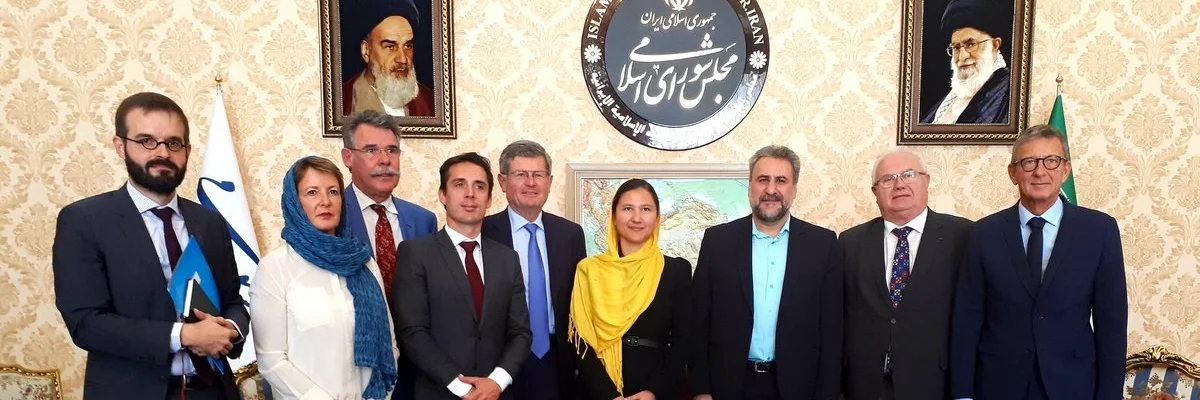
European nations are seeking to ensure at least one Iranian bank stays connected to the world after the US imposed new sanctions against the country, a French senator said in Tehran on Sunday.
The United States pulled out of a landmark 2015 nuclear deal with Iran in May and has been reimposing punishing sanctions on the Islamic republic, targeting in particular its financial system.
The European efforts to help Iranians benefit from the nuclear deal despite the US sanctions is "difficult but it's possible", said French Senator Philippe Bonnecarrere.
One way was "to have at least one Iranian bank remain connected to the international banking system through SWIFT to keep up commercial relations on goods or services that are not subject to sanctions," he added.
Bonnecarrere, who heads the France-Iran friendship group in the upper house of parliament, made the remarks during a news conference with French and Iranian counterparts.
The 2015 nuclear deal was agreed between Iran and the so-called 5+1 group—UN Security Council permanent members Britain, China, France, Russia and the United States, plus Germany.
Bonnecarrere was in Iran with six other members of the French parliament.
The visit was a sign of "all the determination and all the will of France to keep alive the nuclear agreement," said Delphine O, one of lawmakers.
Photo Credit: France en Iran
Iran Parliament Passes Counter-Terror Finance Bill
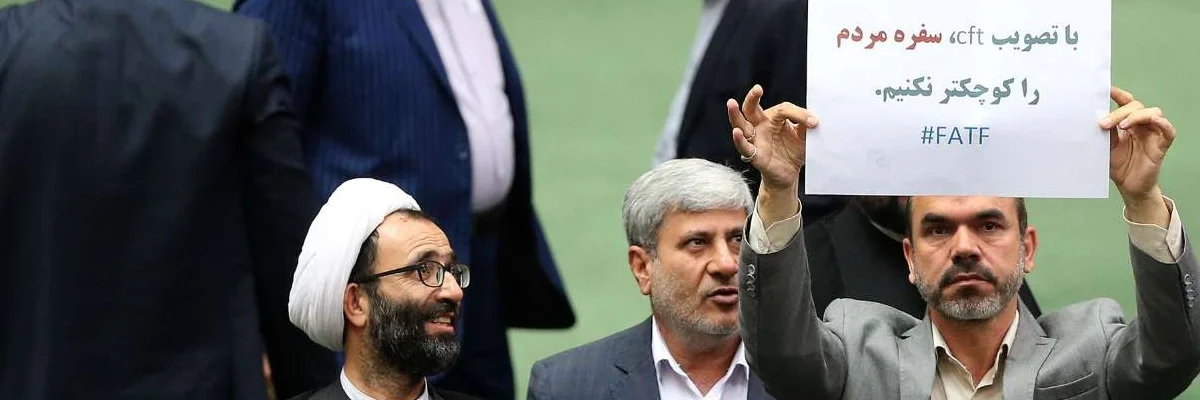
◢ Iran's parliament on Sunday approved a bill to counter terrorist financing that was strongly opposed by conservatives but seen as vital to salvaging the nuclear deal with European and Asian partners. The bill, one of four put forward by the government to meet demands set by the international Financial Action Task Force (FATF), was passed by 143 votes to 120.
Iran's parliament on Sunday approved a bill to counter terrorist financing that was strongly opposed by conservatives but seen as vital to salvaging the nuclear deal with European and Asian partners.
The bill, one of four put forward by the government in a bid to meet demands set by the international Financial Action Task Force (FATF), was passed by 143 votes to 120, according to the semi-official ISNA news agency.
It aims to bring Iran's laws in line with international standards and allow it to join the UN Terrorism Financing Convention.
A previous bill on the mechanics of monitoring and preventing terrorist financing was signed into law in August.
But joining the UN convention has been controversial because hardliners say it will limit Iran's ability to support armed groups in the region such as its Lebanese ally, Hezbollah.
Two other bills—on money-laundering and organised crime—have also been passed by parliament but are being held up by the Guardian Council, which vets all legislation.
Iran is alone with North Korea on the blacklist of the Paris-based FATF, which monitors global money laundering and terrorist financing.
The FATF suspended counter-measures against Iran in June 2017 and has set a final deadline of mid-October for it to amend its laws.
The issue has become particularly pressing since the United States walked out of the 2015 nuclear deal with Iran earlier this year and began reimposing sanctions.
The other parties to the deal—Britain, France, Germany, China and Russia—have sought to salvage the agreement and maintain trade with Iran, but have demanded that it accede to the FATF.
"Neither I nor the president can guarantee that all problems will go away if we join (the UN convention)," said Iran's Foreign Minister Mohammad Javad Zarif during the debate ahead of the vote.
"But I guarantee that not joining will provide the US with more excuses to increase our problems," he added.
He said Russia and China—two of Iran's "strategic allies"—have refused to maintain financial ties unless it joined the FATF.
'Death to Traitors'
Conservatives were furious with the vote on Sunday, with hardliners leading chants of "death to traitors" outside parliament.
In a heated debate ahead of the vote, opponents of the bill said it would not solve the country's financial problems, and would help its enemies.
"We did what (the FATF) demanded, we passed three bills but nothing happened. Our financial problems will not go away even if we join," said lawmaker Hossein Naghavi Hosseini.
Another hardliner, Mohammad Dehghan, warned the bill means "providing the enemy with intelligence during an economic war" and that passing it amounted to "treason".
Both sides have evoked supreme leader Ayatollah Ali Khamenei to support their position.
Conservatives pointed to Khamenei's statement in June that Iran has "no need to join" global conventions.
But parliament speaker Ali Larijani, who supports the government's position, said he had received a letter from Khamenei explaining that his remarks were about "conventions in general" and not meant to oppose any particular bills.
Reformist lawmaker Mohammad Feyzi told the session that Iran does not have "the luxury of choice" and will face negative consequences if it refuses to join the FATF.
Ali Najafi, spokesman for the parliament's commission which produced the bill, said Iran retained the right to walk away from the UN convention "wherever it acts against the Iranian constitution" and emphasized that it does not force Iran to recognize Israel.
Photo Credit: IRNA
Turkey Detains Over 200 for 'Illicit Money Transfers' to US
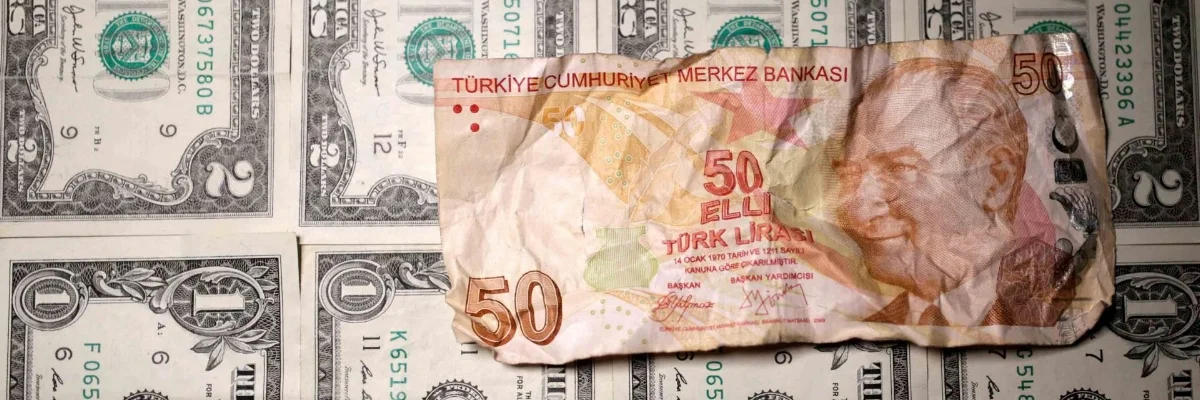
◢ Turkish police detained Tuesday over 200 people in a major nationwide crackdown on illicit money transfers to individuals of Iranian-origin living in the United States. An Istanbul court issued arrest warrants for a total of 417 suspects and have so far rounded up 216 in a nationwide operation carried out in 40 cities, the official Anadolu news agency reported.
Turkish police detained Tuesday over 200 people in a major nationwide crackdown on illicit money transfers to individuals of Iranian-origin living in the United States.
An Istanbul court issued arrest warrants for a total of 417 suspects and have so far rounded up 216 in a nationwide operation carried out in 40 cities, the official Anadolu news agency reported.
The suspects are facing charges including criminal conspiracy and violating measures to prevent terrorism financing, Anadolu said.
There were no further details on who the suspects are.
An investigation found that from the beginning of 2017 some 2.4 billion lira (USD 400 million) had been transferred from Turkey to a total of 28,088 accounts abroad from several banks, it added.
Those conducting the money transfers earned "commissions", Anadolu said, citing the investigation, while the large majority of the recipients of the funds were people of Iranian origin living in the United States.
There were no further details on who these individuals were and if the transfers had an overall aim.
The arrests come as the United States is in the process of reimposing sanctions on Iran after Washington pulled out of a 2015 international deal limiting the nation's nuclear programme, including on Iran's ability to use the international financial system and export oil.
They also come several months after Turkey-US relations hit a rough patch over the detention of a US pastor, with US President Donald Trump making comments that sent the Turkish lira tumbling.
Sanctions busting has also been a source of tension between Washington and Ankara.
US authorities earlier this year convicted Mehmet Hakan Atilla, deputy director general of Turkish lender Halkbank on charges of helping Iran evade US sanctions on billions of dollars of oil proceeds.
In the case, Iranian-Turkish trader Reza Zarrab, who was once close to the Ankara authorities, turned whistleblower and gave evidence accusing the Turkish leadership of being complicit in the scheme.
Turkey depends on foreign suppliers including Iran for its energy needs. The country imports oil and natural gas from Russia as well as from neighboring Iran.
Photo Credit: Depositphoto
Pompeo 'Disturbed' by EU Payment Plan for Iran Business
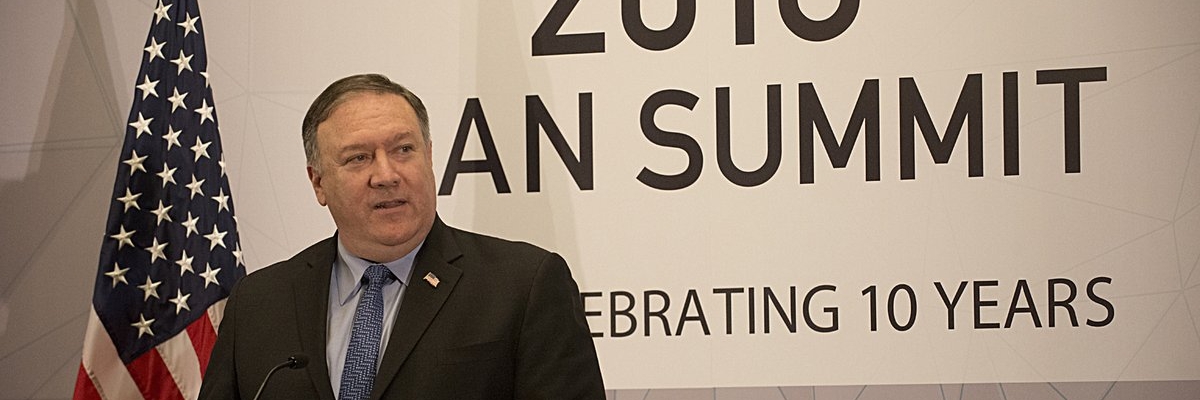
◢ US Secretary of State Mike Pompeo denounced Tuesday a European Union plan to set up a way to preserve business with Iran and avoid renewed American sanctions. Addressing the United Against a Nuclear Iran pressure group being held near the annual UN General Assembly, Pompeo said he was "disturbed and indeed deeply disappointed" by Monday's announcement from remaining members of an international nuclear deal.
US Secretary of State Mike Pompeo denounced Tuesday a European Union plan to set up a way to preserve business with Iran and avoid renewed American sanctions.
Addressing the United Against a Nuclear Iran pressure group being held near the annual UN General Assembly, Pompeo said he was "disturbed and indeed deeply disappointed" by Monday's announcement from remaining members of an international nuclear deal.
"This is one of the most counterproductive measures imaginable for regional peace and security," Pompeo said, accusing the European Union of "solidifying Iran's ranking as the number-one state sponsor of terrorism."
"I imagine the corrupt ayatollahs and IGRC were laughing this morning," Pompeo added at the event in New York, referring to the elite Revolutionary Guards, in a speech that was interrupted several times by anti-war protesters.
President Donald Trump pulled out of an agreement negotiated under his predecessor Barack Obama for Iran to curtail its nuclear program sharply in exchange for sanctions relief.
EU foreign policy chief Federica Mogherini, speaking late Monday alongside Iranian Foreign Minister Mohammad Javad Zarif, said that the agreement was in the global interest and pointed to UN inspectors' findings that Iran is in compliance.
She said that European Union members were working on a legal entity that would allow businesses to buy oil and conduct other business with Iran in hopes of avoiding US sanctions.
Photo Credit: UANI
EU Announces Legal Entity to Maintain Business With Iran
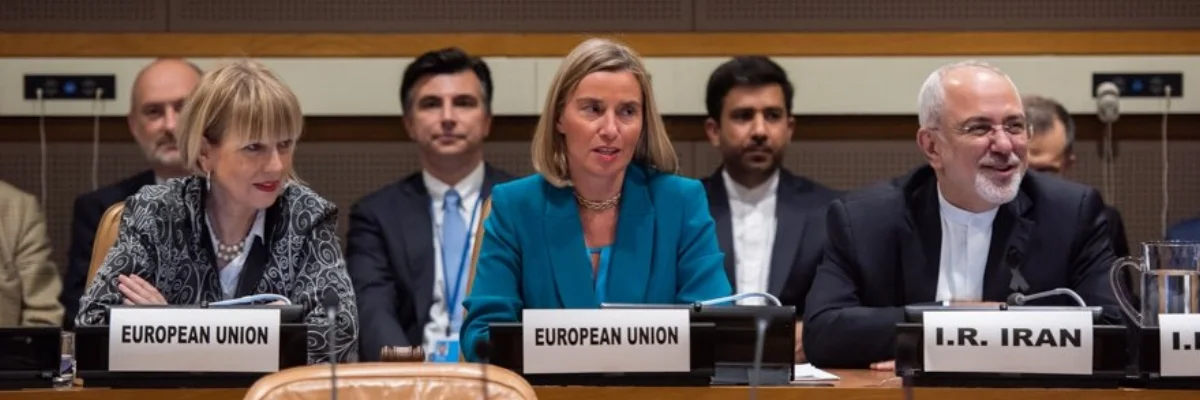
◢ The European Union said Monday its members would set up a payment system to allow oil companies and businesses to continue trading with Iran in a bid to evade sanctions after the US withdrew from a nuclear agreement. Iran and the European Union announced their defiance towards US President Donald Trump's administration after high-level talks at the United Nations among the remaining members of the accord.
The European Union said Monday its members would set up a payment system to allow oil companies and businesses to continue trading with Iran in a bid to evade sanctions after the US withdrew from a nuclear agreement.
Iran and the European Union announced their defiance towards US President Donald Trump's administration after high-level talks at the United Nations among the remaining members of the accord.
The countries said in a statement that they were determined "to protect the freedom of their economic operators to pursue legitimate business with Iran."
With the United States and the dollar dominating so much of global trade, the statement said the new mechanism would "facilitate payments related to Iran's exports (including oil) and imports, which will assist and reassure economic operators pursuing legitimate business with Iran."
EU foreign policy chief Federica Mogherini, speaking at the United Nations
alongside Iranian Foreign Minister Mohammad Javad Zarif, said the countries
were still working out the technical details.
"In practical terms, this will mean that EU member states will set up a legal entity to facilitate legitimate financial transactions with Iran and this will allow European companies to continue to trade with Iran in accordance with European Union law and could be open to other partners in the world," she told reporters.
She said that the remaining members of the so-called Joint Comprehensive Plan of Action—Britain, China, France, Germany and Russia—would also maintain their commitments to support Iran on civilian nuclear energy.
"The participants recalled that these initiatives are aimed at preserving the JCPOA, which is in the international interest," she said.
Pressure on Iranian Economy
In line with findings of UN inspectors, Mogherini reiterated that Iran has been in compliance with the nuclear agreement—under which Tehran drastically scaled back its nuclear program in exchange for relief from sanctions.
The agreement was sealed in 2015 in a signature achievement for then US
president Barack Obama.
Trump pulled out of the agreement in May, describing it as a "disaster" and quickly moving to reimpose sanctions on Iran.
Despite the protests of the European Union, a number of business including French energy giant Total and carmakers Peugeot and Renault as well as Germany's Siemens and Daimler have already suspended operations in Iran for fear of triggering US sanctions.
With Iran's economy already feeling the pinch, US national security adviser John Bolton earlier Monday vowed to impose "maximum pressure" on Tehran, while insisting that Washington was not pushing for regime change.
US Arab allies Saudi Arabia and the United Arab Emirates as well as Israel have long sought for Washington to work to curtail non-Arab and predominantly Shiite Muslim Iran's influence in the Middle East, including in war-torn Syria.
The EU move comes a day before Trump and Iranian President Hassan Rouhani separately address the UN General Assembly, with the US leader expected to take a hard line on Iran.
Photo Credit: EEAS
EU Nations Mull Clearing House to Avoid Iran Sanctions: Reports
◢ Germany, France and Britain are mulling setting up a new financial institution to allow EU trade with Iran to continue despite American sanctions renewed by US President Donald Trump, German media reported Friday. The three countries could set up a "Special Purpose Vehicle" (SPV)—a firm resembling a clearing house that would cut Tehran out of the financial loop while still allowing trade, news weekly Der Spiegel and business daily Handelsblatt reported.
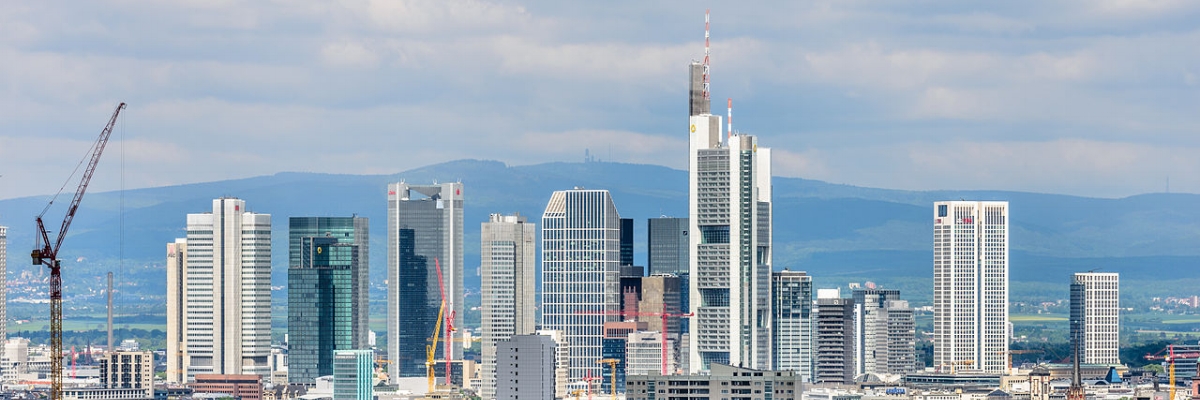
Germany, France and Britain are mulling setting up a new financial institution to allow EU trade with Iran to continue despite American sanctions renewed by US President Donald Trump, German media reported Friday.
The three countries could set up a "Special Purpose Vehicle" (SPV)—a firm resembling a clearing house that would cut Tehran out of the financial loop while still allowing trade, news weekly Der Spiegel and business daily Handelsblatt reported.
For example, Iran could ship oil to a Spanish firm, accumulating credit that could be used to pay a German machine-tool manufacturer for goods going the other way—without any money passing through Iranian hands.
Spokespeople for the German economy and finance ministries told AFP the scheme was one of several options capitals are discussing with the European Commission to create "independent payment channels" to Tehran.
European Commission spokeswoman Maja Kocijancic said Brussels wants "to make sure the effects of the sanctions are minimised for companies that want to do legitimate business with and in Iran and they can still have access to necessary finance," adding that "currently the work is ongoing.”
Trump's decision in May to withdraw Washington from a 2015 deal with Iran, under which the country agreed to freeze its nuclear weapons program in exchange for slackening of economic sanctions, dismayed diplomats across Europe.
Since then EU chiefs have been scrambling to find a way for their firms to continue trading with the Islamic republic.
Banks that usually execute the payments in international deals fear themselves falling foul of American reprisals if they continue to enable business with Iran.
While Berlin, London and Paris are driving the scheme, Der Spiegel reported it would be open to other EU member states if it is set up. Italy is reportedly also interested in participating.
Photo Credit: Wikicommons
French Cattle Farmers' Iran Dreams on Hold as US Sanctions Bite
◢ Multinational companies aren't the only victims of new US sanctions against Tehran: farmers and ranchers in the Normandy region of France hoping to supply Iran with thousands of cattle each year have also seen their path to a huge new market blocked. The deal with one of Iran's biggest meat processing groups was signed in 2016 after Iran agreed with world powers to curtail its nuclear program in exchange for sanctions relief. The goal was to supply mainly prized Charolais stock to help "rebuild a high-quality cattle industry" in the Middle East, Nathalie Goulet, a senator from Normandy, told AFP this week.
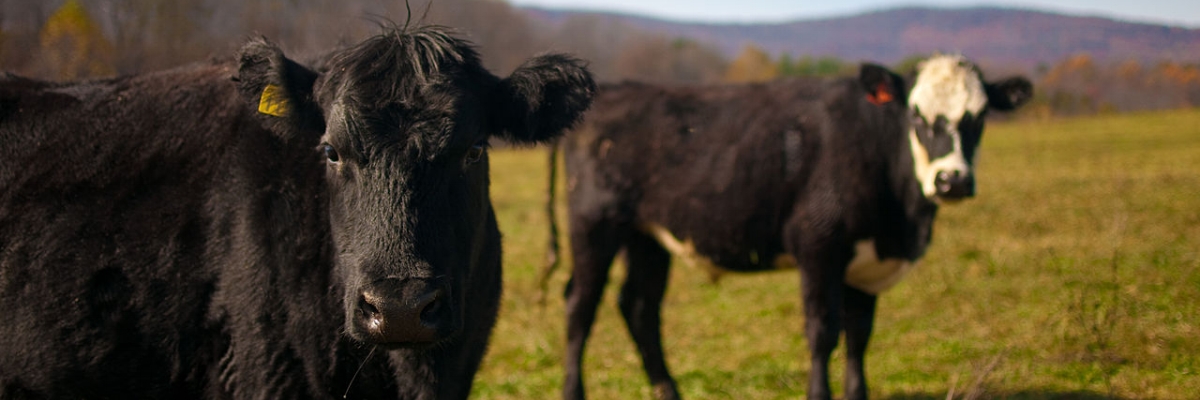
Multinational companies aren't the only victims of new US sanctions against Tehran: farmers and ranchers in the Normandy region of France hoping to supply Iran with thousands of cattle each year have also seen their path to a huge new market blocked.
The deal with one of Iran's biggest meat processing groups was signed in 2016 after Iran agreed with world powers to curtail its nuclear program in exchange for sanctions relief.
The goal was to supply mainly prized Charolais stock to help "rebuild a high-quality cattle industry" in the Middle East, Nathalie Goulet, a senator from Normandy, told AFP this week.
She said it would have been the first time live animals destined for Iran's meat markets would have been imported since the Islamic revolution of 1979.
"We were also hoping to eventually export other products" such as cattle feed and processed meat, she said.
A first "test" was carried out last October, with 310 calves arriving in Iran by plane "in very good condition", she said.
But with US President Donald Trump's decision to pull out of the Iran nuclear deal, the project, potentially worth EUR 10 to 15 million, (USD 11-17 million) risks being abandoned.
Under the new sanctions which went into effect on Tuesday, any company doing business with Iran risks being hit with huge fines by Washington.
"Anyone doing business with Iran will NOT be doing business with the United States," Trump tweeted this week.
Analysts have warned it would be nearly impossible to protect exporters from the reach of the "extraterritorial" US measures—even if they do not do business in the US—given the exposure of large banks to the US financial system and dollar transactions.
Goulet said the French banks involved in the cattle project "are now refusing to take Iranian money," while the company insuring the exports had also pulled out.
Herve Morin, president of the Normandy region, said that although the project has been halted, it has not been "abandoned".
"We're waiting for details on the embargo and the European reaction," he said, referring to pledges by European officials to find ways to protect their companies from the US sanctions.
Yet several French companies, including oil giant Total and carmaker PSA, have already halted their operations in Iran.
The Iranians "want to do this deal," Goulet said, adding that she was also searching for financial alternatives.
"Why not bitcoin?" she said.
Photo Credit: Wikicommons
Turkey in US Talks to Avoid 'Negative Impact' From Iran Sanctions
◢ Turkey on Friday hosted an American delegation for talks to address concerns about the potential negative impact on its economy of the looming reimposition of US sanctions against Iran. US President Donald Trump decided in May to abandon the 2015 deal agreed with other world powers on Iran's nuclear program and reimpose nuclear-related sanctions against the Islamic Republic.
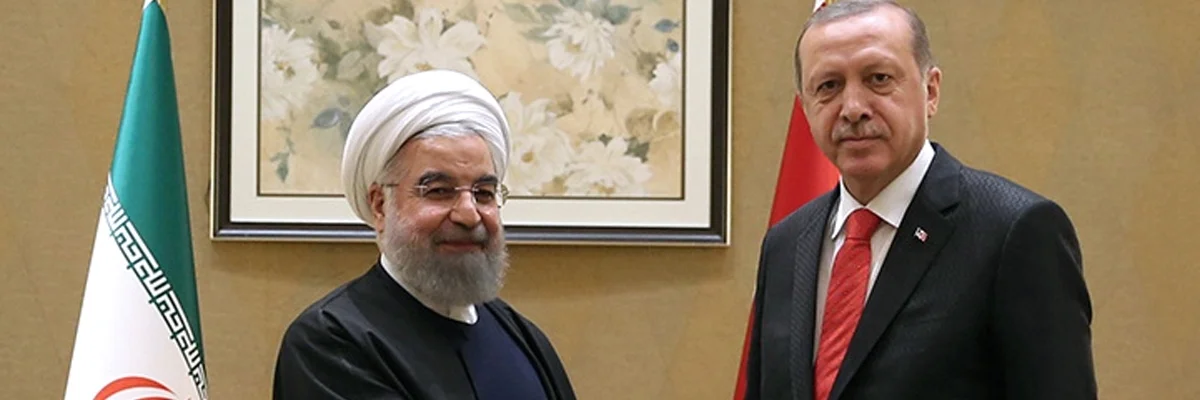
Turkey on Friday hosted an American delegation for talks to address concerns about the potential negative impact on its economy of the looming reimposition of US sanctions against Iran.
US President Donald Trump decided in May to abandon the 2015 deal agreed with other world powers on Iran's nuclear program and reimpose nuclear-related sanctions against the Islamic Republic.
The sanctions, which will seek to bar foreign companies from doing business with Iran and block its oil sales abroad, have alarmed Turkey which has a strong trade relationship with its neighbor and imports Iranian crude.
"Our relevant authorities are carrying out necessary work for Turkey not to be negatively impacted by the upcoming sanctions," the Turkish foreign ministry said in a statement.
"Within this framework, we had discussions with the US delegation visiting Turkey," it said, without giving further details.
It added that "Iran is an important neighbor for Turkey, in view of both our bilateral economic and commercial relations as well as our energy imports."
Turkish officials have vowed to continue trading with Iran despite the sanctions, which the former economy minister Nihat Zeybekci in May described as an "opportunity".
Asking not to be named, a US official acknowledged that the sanctions were "a very important and potentially contentious issue between the two governments."
He said the delegation had come "to make clear what the implications of our sanction legislation are, so there are no misunderstandings and confusion."
"The earlier we have these high level talks..., the less likely we are to wander into new areas of disagreement out of ignorance," said the official.
Relations between Turkey and the US have already been strained after a Turkish banker who helped Iran evade US sanctions was convicted in the US in January.
Mehmet Haka Atilla was convicted after well-connected Turkish-Iranian businessman Reza Zarrab, arrested in the US in 2016, became a government witness and admitted involvement in a multi-billion-dollar gold-for-oil scheme to subvert US economic sanctions against Iran.
During his testimony, Zarrab implicated President Recep Tayyip Erdogan and other officials in the scheme. In May, a Manhattan court sentenced Atilla to 32 months in jail.
Annual trade between Turkey and Iran is around USD 10 billion but Erdogan has expressed hope of raising it to USD 30 billion. Iran supplies Turkey with around one half of its crude oil imports and Iranian tourists are increasingly important for the Turkish market.
Photo Credit: IRNA
Most French Firms 'Won't Be Able to Stay' in Iran: Minister
◢ Most French companies hoping to keep doing business in Iran after the US imposes new sanctions on the country will find it impossible to do so, Finance Minister Bruno Le Maire said Tuesday. These companies "won't be able to stay because they need to be paid for the products they deliver to or build in Iran, and they cannot be paid because there is no sovereign and autonomous European financial institution" capable of shielding them," Le Maire told BFM television.
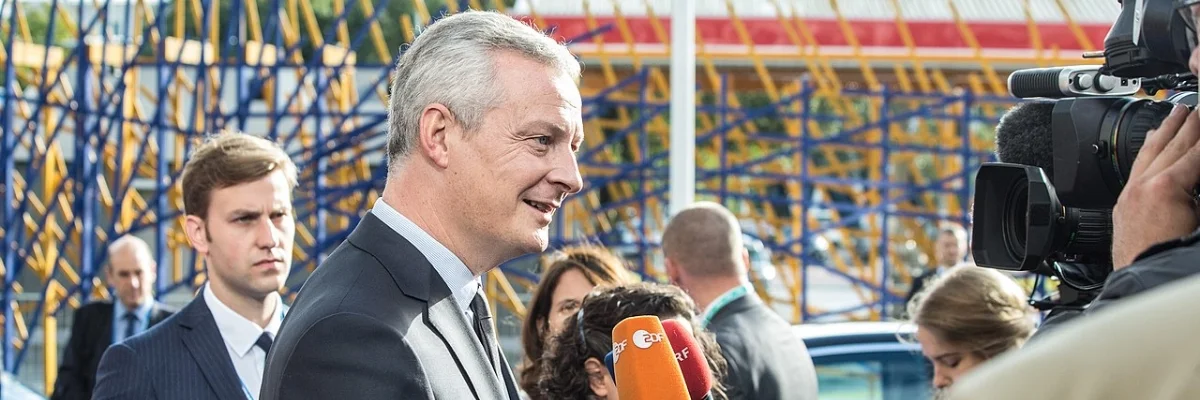
Most French companies hoping to keep doing business in Iran after the US imposes new sanctions on the country will find it impossible to do so, Finance Minister Bruno Le Maire said Tuesday.
These companies "won't be able to stay because they need to be paid for the products they deliver to or build in Iran, and they cannot be paid because there is no sovereign and autonomous European financial institution" capable of shielding them, Le Maire told BFM television.
The new sanctions announced by US President Donald Trump in May after he pulled out of a 2015 nuclear deal with Tehran would punish any foreign firm operating in Iran which also does business with the US or in dollars.
"Our priority is to build independent, sovereign European financial institutions which would allow financing channels between French, Italian, German, Spanish and any other countries on the planet," Le Maire said.
"It's up to us Europeans to choose freely and with sovereign power who we want to do business with," he added. "The United States should not be the planet's economic policeman."
Le Maire and his EU counterparts have been trying to secure exemptions for their firms, many of which rushed back into Iran after the landmark accord curtailing Tehran's nuclear program.
But French oil group Total and carmaker PSA have already indicated they are unlikely to stay in the country, while Renault has said it will remain despite the sanctions—though it does not sell its cars in the US.
Analysts have warned it would be nearly impossible to protect multinationals from the reach of the "extraterritorial" US measures, given the exposure of large banks to the US financial system and dollar transactions.
The first round of the new sanctions, targeting Iran's auto and civil aviation sectors, are scheduled to go into effect on August 6.
Photo Credit: Wikicommons
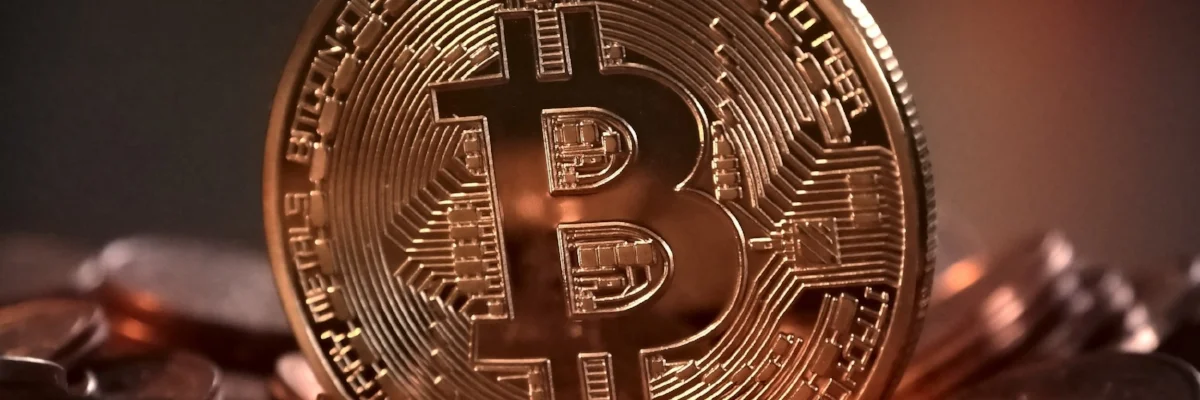
Iran Bans Banks From Using Cryptocurrencies
◢ Iran banned the use of bitcoin and other cryptocurrencies by banks and financial institutions on Monday amid ongoing debate over how best to regulate the technology. Many in Iran see great potential in digital currencies as a way to overcome problems related to international sanctions and difficulties facing the country's ailing banks.
Iran banned the use of bitcoin and other cryptocurrencies by banks and financial institutions on Monday amid ongoing debate over how best to regulate the technology.
"The use of bitcoin and other cryptocurrencies in all the country's monetary and financial centers was banned," the central bank said in a statement overnight.
It said the government's money-laundering committee had taken the decision in late December and it was now being put into effect.
The ban came because "all cryptocurrencies have the capacity to be turned into a means for money-laundering and financing terrorism and in general can be turned into a means for transferring criminals' money," it added.
Many in Iran see great potential in digital currencies as a way to overcome problems related to international sanctions and difficulties facing the country's ailing banks.
Earlier this year, the country's 36-year-old telecoms minister Mohammad-Javad Azari Jahromi set up a team to create Iran's own cryptocurrency.
But there are also fears that the technology could undermine the country's already weak banking system and exacerbate capital flight.
Iranians working in the fledgling private cryptocurrency market said the ban was unlikely to affect their operations.
"This ruling referred directly to banks, financial institutions and currency exchangers that work with the central bank," Hadi Nemati, who works for cryptocurrency exchange platform Coinex, told AFP.
"In my opinion, it doesn't include the general public -- it's not a total ban on cryptocurrencies."
Coinex had however halted activity on its exchange platform because "we always want to make sure we comply with the law", he said. "But I have seen other crypto exchanges were still working normally."
Photo Credit: PXHere