
Iran Slams US as Huge Crowds Mark 40 Years Since Revolution
◢ Iran's president on Monday blasted a US "conspiracy" against the country as vast crowds marked 40 years since the Islamic revolution at a time of heightened tensions with Washington. "The presence of people today on the streets all over Islamic Iran... means that the enemy will never reach its evil objectives," President Hassan Rouhan.
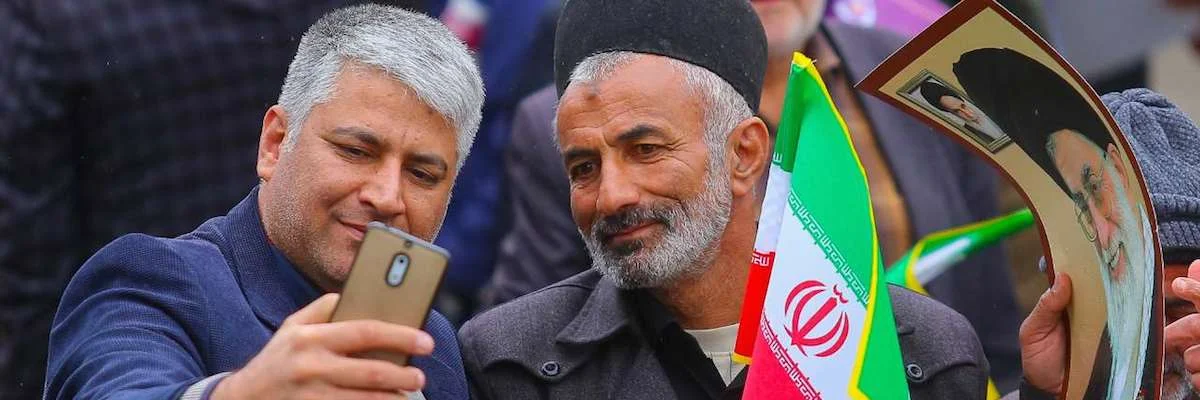
Iran's president on Monday blasted a US "conspiracy" against the country as vast crowds marked 40 years since the Islamic revolution at a time of heightened tensions with Washington.
"The presence of people today on the streets all over Islamic Iran... means that the enemy will never reach its evil objectives," President Hassan Rouhanitold those thronging Tehran's Azadi (Freedom) square.
Chador-clad women, militia members in camouflage fatigues and ordinary citizens marched through the capital in freezing rain to mark the day in February 1979 that Ayatollah Ruhollah Khomeini ended millenia of royal rule.
Life-size replicas of Iranian-made cruise and ballistic missiles lined the route in a statement of defiance after Washington last year reimposed sanctions after pulling out of a deal on Tehran's nuclear program.
A pre-prepared resolution was read out that proclaimed "unquestioning obedience to the supreme leader Ayatollah Ali Khamenei" and called US President Donald Trump an "idiot".
The event Monday was the culmination of official celebrations called the "10 Day Dawn" that mark the period between February 1, 1979 and February 11 when Shiite cleric Khomeini retuned from exile and ousted the shah's last government.
The state has played up this year's anniversary as 40 is symbolic of maturity in the Islamic tradition and the age at which Prophet Mohammed received revelations from God.
But despite the official festivities today's Islamic republic faces acute economic challenges as it struggles with a mix of domestic hardships and US sanctions.
'Support the revolution'
State television offered blanket coverage of the commemorations, showing marchers in cities ranging from Abadan in southwestern Iran to Mashad in the northeast.
Banners held by marchers or hung along the streets bore slogans including "Death to America", "Death to Israel", "we will trample on America", "forty yeas of challenge, forty years of US defeats".
An anchor on state television warned of hostile foreign media trying to downplay the participation of Iranians in the march but expressed confidence that "they would be confounded by the unprecedented level of attendance".
Those who took to the streets were bullish despite the economic problems in the country, made worse by Washington's punitive measures.
Former public servant Saaghi insisted that it remained paramount for Iranians to stick by the revolution.
"We are here to support the revolution," the 57-year-old pensioner, who refused to give his first name, told AFP at the event in Tehran.
He compared the US sanctions and economic hardships to "riding a bicycle when someone puts a stick in the wheels" but pointed to advances in other fields as more than making up for them.
“At the revolution's 40 anniversary we are on top of scientific achievements like nanotechnology or accurate missiles," he said.
Extensive fireworks displays were held across Tehran on Sunday night.
Before the fireworks, supporters of the revolution shouted chants of "Allahu Akbar" (God is greatest) from rooftops, recalling the protests that swept Khomeini to power four decades earlier.
Current supreme leader Ayatollah Ali Khamenei is set to publish "a detailed statement explaining the 'second step' of the progress of the Islamic revolution", his official website said.
Photo Credit: IRNA
Tough Times for Iran's Political Parties as Revolution Turns 40
◢ Iran's main political parties are on rocky ground as the Islamic Republic marks its 40th birthday, with reformists in disarray and conservatives seeking a new identity. Even though key reformist leaders have been forcibly sidelined, Mohammad Ali Abtahi, a former reformist vice-president in the 1990s, still believes gradual change is the only option for his country.
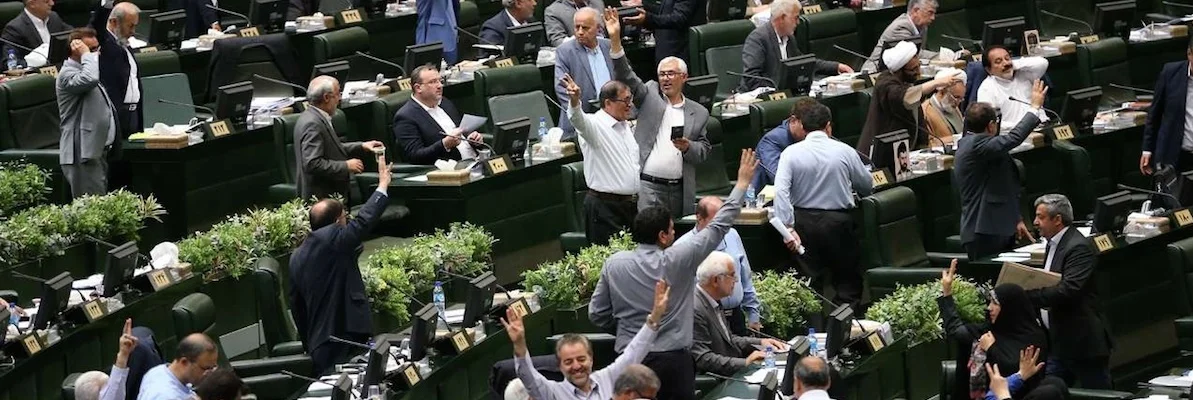
Iran's main political parties are on rocky ground as the Islamic Republic marks its 40th birthday, with reformists in disarray and conservatives seeking a new identity.
Even though key reformist leaders have been forcibly sidelined, Mohammad Ali Abtahi, a former reformist vice-president in the 1990s, still believes gradual change is the only option for his country.
Since mass protests against alleged election-rigging in 2009, his former boss, ex-president Mohammad Khatami, is barred from appearing in the media, and presidential candidates Mir Hossein Mousavi and Mehdi Karroubi have been under house arrest for the last eight years.
There are also few signs of a new generation emerging to succeed them, not least because Iran's influential Guardian Council has the power to reject any election candidates it deems unqualified, Abtahi told AFP.
"The candidates that can pass the Guardian Council's vetting are low-level," he said. "You can't expect much from them."
The reformists instead pinned their hopes on President Hassan Rouhani, a political moderate who sought conciliation with the West through a landmark nuclear deal in 2015.
Yet their hopes have proven ill-founded. Since the United States unilaterally withdrew from that deal last year, Iran's economy has been in tailspin, adding to popular anger that burst onto the streets in violent protests across dozens of towns and cities a year ago.
’Game has changed'
"When the demonstrators shouted 'Reformists, conservatives: the game is over', they were not wrong," said conservative analyst and politician Amir Mohebbian. "The fact is the (political) game has changed."
"Until now, voters would go for the candidate they thought would do the least harm ... but now they have taken as much as they can stand. Now the people want someone who can actually solve their problems."
Mohebbian did not elaborate on potential candidates as jockeying for the next presidential elections, due to take place in 2021, has not yet started.
But the decision to back Rouhani has "bankrupted" the reformists, he claimed.
Journalist and activist Ahmad Zeidabadi, who has been arrested several times, goes further, saying the reformists' plans to try to change the very nature of the state "reached a dead end" some time ago because of the system's lack of "flexibility.”
The disarray among the reformist camp however does not mean the conservatives will benefit, said Mohebbian, who believes they first need to "redefine their relationship with the establishment."
For decades, the conservatives have been closely associated with the establishment, many of them holding key unelected positions.
But for them to survive the changing political environment, they "must move closer to the people" since the people "don't trust" them now, Mohebbian said.
And it is not just mainstream political factions who are demanding change. Ardent supporters of the revolution believe its original values—such as policies in favor of the poor—have been largely forgotten, pointing to widespread allegations of corruption to back their claims.
'Paradigm shift?'
Concern over corruption by successive governments has become a "powderkeg," believes Nader Talebzadeh, a film-maker who advised Ebrahim Raisi, the preferred candidate of ultraconservatives in the 2017 presidential election.
The whole issue of corruption "makes the Iranian people very angry," he added.
But for all the popular disillusionment, former vice-president Abtahi said Iranians are still "wise enough to know that regime change will destroy their future"—especially if it is coordinated by the United States.
"Maybe if the US had turned Iraq and Afghanistan into an economic heaven, a heaven of social freedoms... maybe things would be very different," he said with a wry smile.
The authorities have always boasted of high election turnouts as evidence of their legitimacy. In 2017, more than 73 percent of eligible voters took part in the presidential election.
Looking ahead, Mohebbian believes "the next five years or so are going to be important," pointing to the fact that Iran will need at some point to choose a successor to supreme leader Ayatollah Ali Khamenei, who turns 80 this year.
"This is the general period in which there could be changes in the country's leadership," Mohebbian said.
"The important issue is whether a shift at the top of the state will lead to a paradigm shift or not," he added.
“Will it lead to a change of things that we currently consider sacrosanct? Or will these elements be kept but the direction change, leaving only a shell of what was?"
Photo Credit: IRNA