
Iran Urges OPEC to Rebuff 'Threats' From Trump
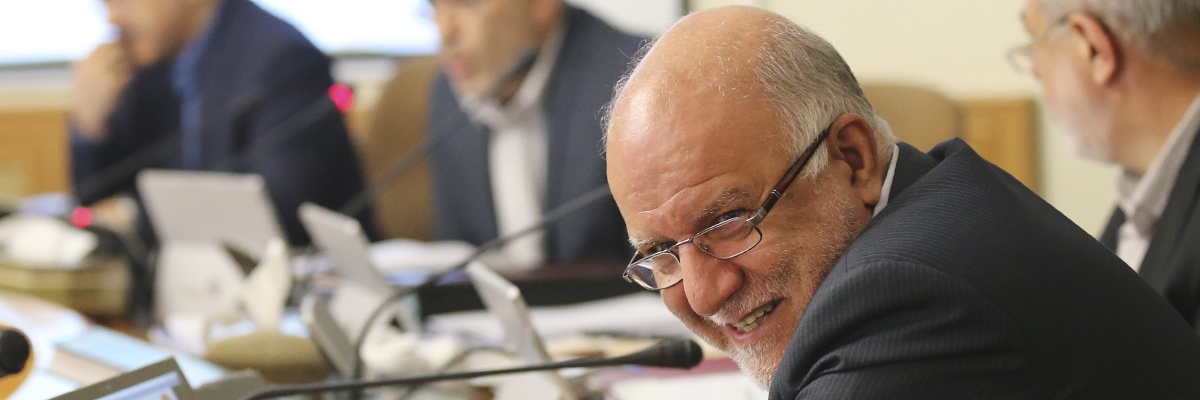
◢ Iran on Sunday called on its OPEC partners not to bow to "threats" from US President Donald Trump, as the oil cartel prepared to meet to discuss output levels. "I hope the outcome of this meeting will not be affected by President Trump's threats," Oil Minister Bijan Namdar Zanganeh told SHANA, his ministry's news agency.
Iran on Sunday called on its OPEC partners not to bow to "threats" from US President Donald Trump, as the oil cartel prepared to meet to discuss output levels.
"I hope the outcome of this meeting will not be affected by President Trump's threats," Oil Minister Bijan Namdar Zanganeh told SHANA, his ministry's news agency.
Ahead of Sunday's meeting in Algiers of the Organisation of Petroleum Exporting Countries, Trump tweeted that "the OPEC monopoly must get prices down now!" by raising output.
Middle East states "would not be safe for very long" without the United States, the president also wrote Thursday.
Zanganeh fired back, saying the claim that "America safeguards the security and survival of producing countries" was the "biggest insult to American allies in the region".
"OPEC is an organization independent of America and will hopefully stay so," he said.
However, the Algiers meeting of OPEC and non-OPEC ministers is expected to offer an increase in output to "offset Iran's production cut", said Zanganeh.
Output from Iran has hit its lowest level since July 2016, according to the International Energy Agency, as top buyers India and China distance themselves from Tehran.
Trump has called for OPEC members, primarily US ally Saudi Arabia, to raise production, and warned importers to stop buying oil from Iran or face American sanctions.
The US in May withdrew from the 2015 nuclear deal with Tehran and reimposed sanctions on the Iranian economy, with a US embargo due to hit Iran's oil industry on November 4.
Photo Credit: IRNA
France's Total Has Officially Left Iran: Oil Minister
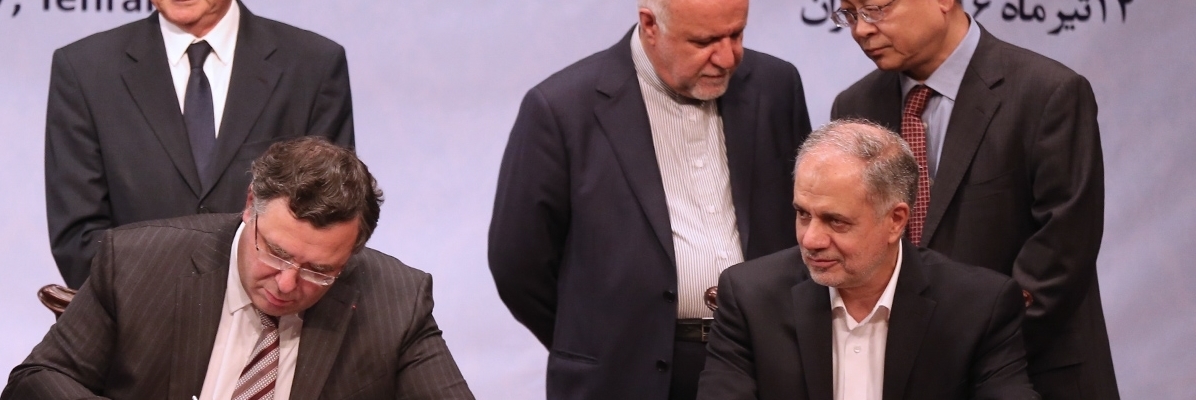
◢ French energy giant Total has officially quit its multi-billion-dollar gas project in Iran, Oil Minister Bijan Namdar Zanganeh said on Monday, following the reimposition of US sanctions. "Total has officially left the agreement for the development of phase 11 of South Pars (gas field)," he told parliament's news agency ICANA, adding that it had been more than two months since the French firm announced it would leave.
French energy giant Total has officially quit its multi-billion-dollar gas project in Iran, Oil Minister Bijan Namdar Zanganeh said on Monday, following the reimposition of US sanctions.
"Total has officially left the agreement for the development of phase 11 of South Pars (gas field)," he told parliament's news agency ICANA, adding that it had been more than two months since the French firm announced it would leave.
Zanganeh also appeared before parliament to underline the dire state of Iran's oil and gas facilities, which he said were "worn out" and in need of renovation that Iran could not afford.
The United States said in May that it was abandoning the 2015 nuclear deal and reimposing sanctions on Iran in two phases in August and November, with the second targeting the country's vital oil and gas sector.
The other parties to the nuclear deal—Britain, France, Germany, China and Russia—have vowed to stay in the accord but their companies risk huge penalties if they keep doing business in Iran.
Total had already said it would be impossible to remain in Iran unless it received a specific waiver from Washington, which was not granted.
The French firm signed up in July 2017 for the USD 4.8 billion project to develop the field off Iran's southern coast, as the lead partner alongside the China National Petroleum Corporation (CNPC) and Iran's Petropars.
It was due to bring state-of-the-art technology to create the pressure needed to tap the gas field, which Iran could then replicate for surrounding fields where pressure has been declining.
Total was due to make an initial USD 1 billion investment, but the company said in May that it had spent less than 40 million euros on the project to date, as uncertainty over US actions mounted.
The company would have been highly vulnerable to US penalties for remaining in Iran.
It has USD 10 billion of capital employed in its US assets, and US banks are involved in 90 percent of its financing operations, Total said in May.
Technology Needed
Zanganeh said the process to find a replacement for Total was underway.
But it is unlikely that CNPC or Iran's own firms can take over the project, said Homayoun Falakshahi, an energy analyst for Wood Mackenzie in London.
"The technology Total was hoping to implement would have been world-first, using electricity to compress the gas," he told AFP.
"The other complication is that it needs huge platforms. Iran can build 5,000- to 7,000-tonne platforms. This would have been 20,000 tonnes," he added.
CNPC was suspended from the project once before, in 2011, for failing to make progress.
The urgent need for investment to upgrade Iran's dilapidated energy infrastructure was a key motivator behind its decision to join the 2015 nuclear deal.
Zanganeh appeared in parliament on Monday to answer questions on safety concerns following a number of recent fires at refineries.
"A big part of the oil industry has been worn out and the necessary renovation has not taken place," he told parliament, according to the official IRNA news agency.
He said there were 10 cases per day of tubes perforating in Iran's southern facilities, and that some refineries were up to 80 years old, "whereas the useful life of an industrial unit is 30 years".
"We have no resources for renovating them," he added.
But some conservatives in Iran oppose foreign involvement in the strategic energy sector, and have frustrated plans to develop attractive investment contracts.
As a result, the Total deal was the only major investment project finalized after the nuclear deal came into force.
The only other deal was a smaller project with Russia's Zarubezhneft, worth EUR 600 million, to develop two oil fields in western Iran.
Photo Credit: IRNA
OPEC Rift Deepens as Iran Walks Out of Key Meeting
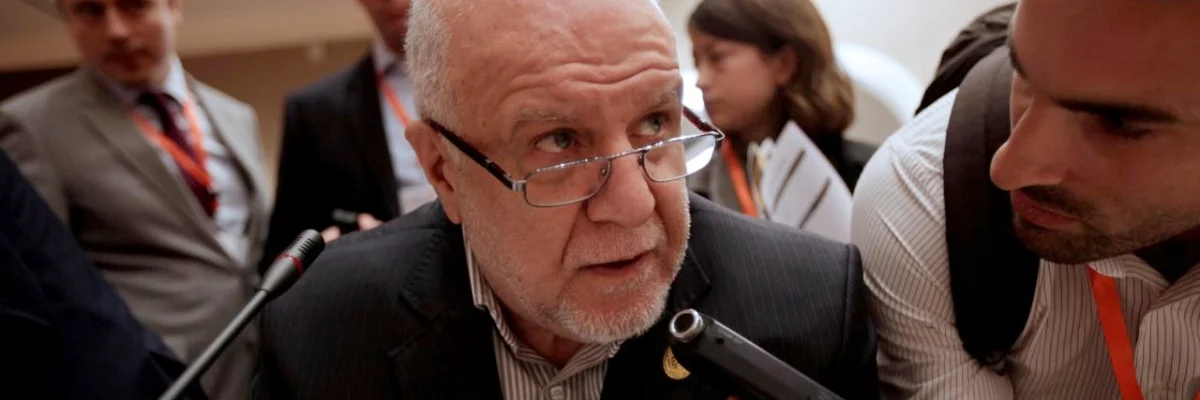
◢ Iran's oil minister walked out of a key meeting with OPEC peers on Thursday, as a rift deepened with regional rival Saudi over its push to ramp up the cartel's oil output. "I do not think we can reach an agreement," Bijan Namdar Zanganeh told reporters at his Vienna hotel after storming out of talks with a group of ministers on the eve of a crucial OPEC meet.
Iran's oil minister walked out of a key meeting with OPEC peers on Thursday, as a rift deepened with regional rival Saudi over its push to ramp up the cartel's oil output.
"I do not think we can reach an agreement," Bijan Namdar Zanganeh told reporters at his Vienna hotel after storming out of talks with a group of ministers on the eve of a crucial OPEC meet.
The talks were meant to lay the groundwork for Friday's gathering of the 14-nation Organization of Petroleum Exporting Countries (OPEC), when the cartel will discuss easing a supply-cut deal with 10 partner countries that has cleared a global oil supply glut and pushed crude prices to multi-year highs.
The output curbs have been in place since January 2017 but Saudi Arabia, backed by non-member Russia, is now pushing to raise production again in order to meet growing demand in the second half of 2018.
But the proposal has run into resistance from Iran, Iraq and Venezuela, who would struggle to immediately raise output and fear losing market share and revenues if other countries open the spigots.
Iran is particularly vocal about its objections as it braces for the impact of fresh US sanctions on its oil exports after President Donald Trump quit the international nuclear agreement.
But Riyadh, which cheered Washington's exit from the nuclear pact, is under pressure from Trump to boost output in order to lower oil prices ahead of November's midterm elections.
Saudi Energy Minister Khalid al-Falih had earlier signaled a compromise could be in the works.
He acknowledged that a big production hike might be "politically unacceptable" to some OPEC countries and said it was important to be "sensitive" to those concerns.
The 24 nations in the pact, known as OPEC+, initially agreed to trim production by 1.8 million barrels a day but they have actually been keeping more than two million bpd off the market.
Observers believe a face-saving deal could be brokered if members simply stopped over-complying with the current pact, and agreed to stick to the original reduction quotas -- which would bring several hundred thousand more barrels to the market each day.
But that is easier said than done since much of the shortfall has come from Venezuela, where an economic crisis has savaged the nation's petroleum production.
Output has also plummeted in Libya, where fighting between rival factions has damaged key oil infrastructure.
Photo Credit:
OPEC Braces for Tough Vienna Talks on Hiking Oil Output
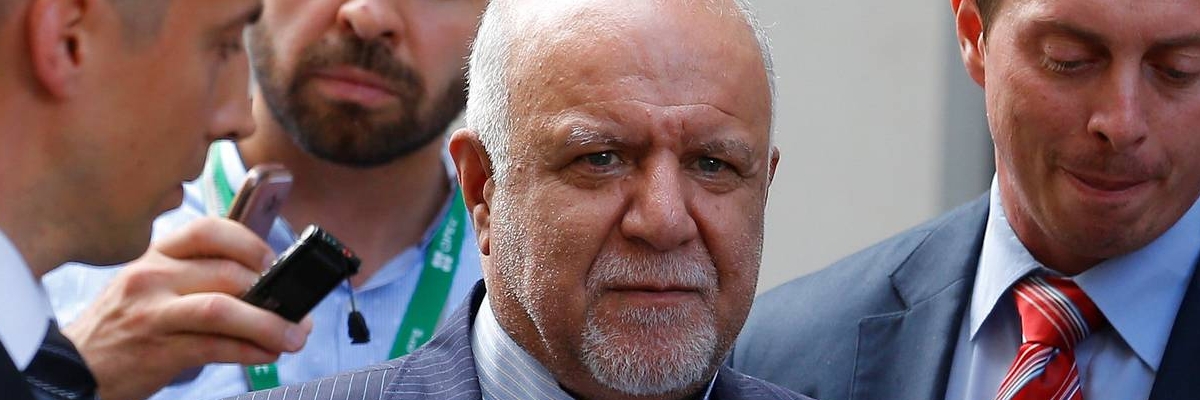
◢ Iran's oil minister on Tuesday said his country would resist unwinding a landmark OPEC agreement to cap oil production, and blamed US President Donald Trump for pushing up crude prices. "I don't believe in this meeting we can reach agreement," Bijan Namdar Zanganeh told reporters in Vienna ahead of the crucial talks.
OPEC ministers arrived in Vienna Tuesday for crunch talks on whether to reverse a landmark pact curbing oil output, with Iran pushing back against Saudi and Russian calls to ramp up production again.
The upcoming June 22-23 meetings of OPEC and non-OPEC energy ministers are set to be the most contentious in a while, with several countries bristling at the thought of reversing a deal that has been in place for 18 months and helped lift oil prices to multi-year highs.
Resistance is being led by Iran, deeply wary of any move by regional rival Saudi Arabia that could push down oil prices at a time when Tehran faces renewed sanctions following US President Donald Trump's decision to quit its international nuclear deal, which is likely to impact the country's oil exports.
However Riyadh, which cheered Washington's exit from the nuclear deal, is under pressure from its US ally to boost output as Trump hopes to keep pump prices low ahead of November's mid-term elections.
"You're dealing with a very political situation," analyst Amrita Sen of Energy Aspects told AFP.
Upon arriving at his Vienna hotel, Iran's oil minister said his country wouldn't back down, and lashed out at Trump for trying to politicize OPEC.
"I don't believe in this meeting we can reach agreement," Bijan Namdar Zanganeh told reporters.
He said Trump was partly to blame for the higher oil prices, saying the US leader had "created difficulty for the oil market" by imposing sanctions on Venezuela and Iran.
"And now he expects OPEC to change something for better prices," Zanganeh said. "This is not fair... OPEC is not part of the Department of Energy of the United States."
Geopolitical Tensions
The 14-nation OPEC cartel and its 10 non-member partner nations, including Russia, together account for more than 50 percent of the world's oil supply, giving them huge sway over the global market.
The so-called OPEC+ group agreed a milestone deal to trim production from January 2017 by 1.8 million barrels a day to clear a global oil glut and shore up low prices.
The strategy paid off, with prices jumping from below $30 a barrel in early 2016 to more than $70 in the second quarter of 2018. The pact was meant to run until the end of this year.
But a collapse in oil production in crisis-hit Venezuela and the prospect of fresh Iranian sanctions have raised fears of a supply crunch that could send prices spiking.
As recently as April however, Saudi Energy Minister Khaled al-Faleh had voiced support for the oil cut deal, saying the market had the capacity to absorb higher prices. But Trump made it clear he disagrees.
"Oil prices are too high, OPEC is at it again. Not good!" he tweeted last week. Observers believe Trump is dialling up the pressure on Riyadh because he wants to offset the expected drop in Iranian production.
In Russia meanwhile, private oil companies are finding it increasingly difficult to justify the cutbacks to shareholders eager to cash in on the higher prices.
For technical reasons, any decision to ramp up output also has to be timed not to coincide with Russia's harsh winter, meaning the next OPEC meeting in November would come too late.
Russia's Energy Minister Alexander Novak pleaded in favor of unwinding the supply-cut pact on Tuesday, citing growing global demand in the months ahead.
"In the third quarter the demand for oil is the highest, so one can expect a shortage in the market if measures are not taken," Novak told Russian news agencies before leaving for Vienna.
To Raise or Not to Raise
Iran is not alone in its battle against output hikes, with Iraq and Venezuela also objecting.
"They stand to lose if production is increased," said SEB bank analyst Bjarne Schieldrop.
According to the International Energy Agency, only a handful of countries in the OPEC+ alliance are realistically able to boost production in the short term.
That includes top supplier Saudi Arabia, its Gulf allies Kuwait and the United Arab Emirates, and Russia.
For most of the others it would make more sense to stick to the restrictions and sell their limited supply at a higher price.
Since OPEC operates on the principle of unanimity, analysts expect some sort of compromise agreement to be thrashed out by Saturday.
"War is war, business is business," said Sen, noting that OPEC ministers have proved before that they are able to set aside geopolitical differences.
Photo Credit: IRNA
Iran Sets Sanctions Waiver Deadline for Oil Giant Total
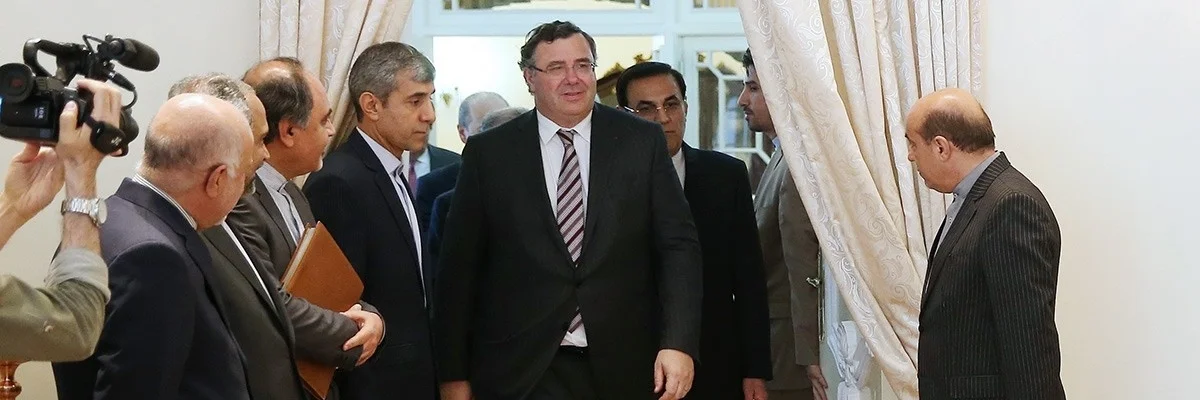
◢ Iran's oil minister on Wednesday gave French energy giant Total 60 days to win a sanctions waiver from Washington or it would lose its stake in a multi-billion-dollar gas project. "Total has 60 days to negotiate with the US government," said Bijan Zanganeh, according to the oil ministry's Shana news agency.
Iran's oil minister on Wednesday gave French energy giant Total 60 days to win a sanctions waiver from Washington or it would lose its stake in a multi-billion-dollar gas project.
"Total has 60 days to negotiate with the US government," said Bijan Zanganeh, according to the oil ministry's Shana news agency.
"The French government too can have negotiations with the US government during these 60 days for Total to stay in Iran."
Total was the only western firm to finalize an investment deal in Iran's energy sector following the 2015 nuclear deal, from which Washington withdrew earlier this month.
It signed the agreement last July to become the lead partner in a USD 4.8 billion project to develop the South Pars 11 gas field, alongside the China National Petroleum Corporation (CNPC) and Iran's Petropars.
But after Washington quit the deal and pledged to fully reimpose sanctions by November, Total has said it will be impossible to continue unless it gets a specific waiver from Washington.
If the French firm fails to win an exemption, CNPC "will replace Total in this project," Zanganeh said.
The oil minister did not explain why the French firm only had 60 days, with US sanctions on foreign energy companies in Iran not due to kick in until November 4.
Even before Washington pulled out of the nuclear deal, Iran had struggled to attract investment into its oil and gas sector.
The only other deal was a $742 million (600 million euro) deal with Russian state-owned firm Zarubezhneft to boost production at two oil fields in the western province of Ilam.
Hardliners in Iran had opposed foreign investment in the energy sector despite the government saying billions were needed to realise its potential.
"Iran failed to attract much energy investment, even when conditions were at their most favorable," wrote the US Center on Global Energy Policy in a recent briefing note.
"The country was far too slow in unveiling its new Iran Petroleum Contract, and when it did, potential investors complained that the terms were unattractive."
Photo Credit: IRNA
Iran Wary as EU Presents Measures to Save Nuclear Deal
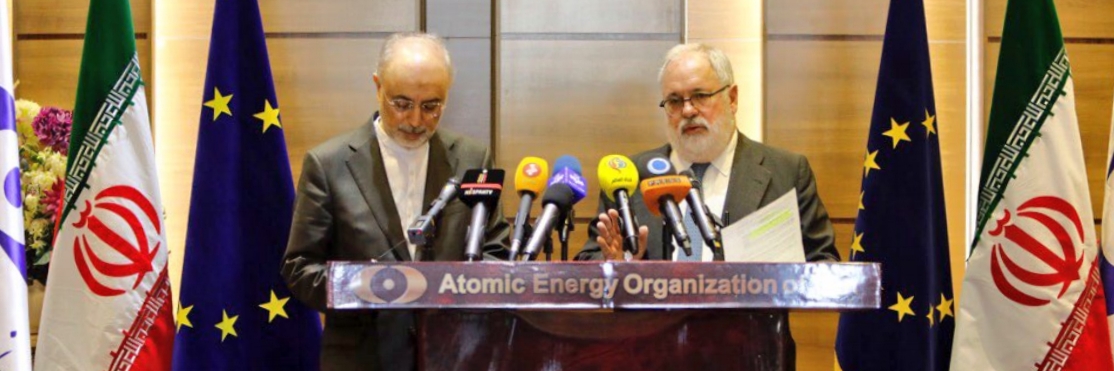
◢ Iran said Saturday it would wait to see whether Europe produces tangible results in overcoming US sanctions before deciding whether to stay in the nuclear deal, as a top EU official visited Tehran to present plans to maintain trade ties. "The ball is in the court of the EU. They have presented different proposals, we will see if they materialize," Iran's Atomic Energy Organization head Ali Akbar Salehi told reporters.
Iran said Saturday it would wait to see whether Europe produces tangible results in overcoming US sanctions before deciding whether to stay in the nuclear deal, as a top EU official visited Tehran to present plans to maintain trade ties.
"The ball is in the court of the EU. They have presented different proposals, we will see if they materialize," Iran's Atomic Energy Organization head Ali Akbar Salehi told reporters.
He was speaking after a meeting with EU Energy Commissioner Miguel Arias Canete, the first high-level Western official to visit Iran since the US withdrew from the 2015 nuclear deal earlier this month.
Canete called the nuclear deal "fundamental for peace in the region" as he outlined EU plans to continue oil and gas purchases and protect European companies, despite renewed US sanctions on Iran that are set to be phased in over the next six months.
"For sure there are clear difficulties with the sanctions," Canete said at a press conference alongside Salehi.
"We will have to ask for waivers, for carve-outs for the companies that make investments."
Salehi acknowledged Europe's efforts but said: "We want tangible results, otherwise we take our own decisions. I personally don't want to see such decisions being taken."
EU Firms Eye Exit
Iran has threatened to resume industrial uranium enrichment "without limit" unless its interests are preserved.
Salehi said the Iranian people had lost trust in the nuclear agreement, and if trade benefits were not protected "they will lose more confidence... and we will be forced to leave."
European leaders have outlined measures to protect EU firms from US sanctions.
But several of their companies—including France's Total and Holland's Maersk -- have already said it will be impossible to stay in Iran once US sanctions are reimposed unless they receive explicit exemptions from Washington.
Canete was due to meet Iran's Environment Minister Isa Kalantari and Oil Minister Bijan Namdar Zanganeh later on Saturday, and Foreign Minister Mohammad Javad Zarif on Sunday.
Iran's trade with the European Union is around 20 billion euros, evenly split between imports and exports.
The vast majority of EU purchases from Iran—90 percent—are oil purchases, going primarily to Spain, France, Italy, Greece, the Netherlands and Germany.
Iran, which has the world's fourth-biggest oil reserves, produces some 3.8 million barrels of oil per day, 70 percent of which goes to China and other Asian countries, and 20 percent to Europe.
It also has the second-biggest gas reserves in the world, but limited infrastructure means little is exported.
Russia and China—the other parties to the nuclear deal—have also vowed to maintain trade with Iran and are less vulnerable to economic pressure from Washington.
Photo Credit: EU MAC
Iran Says China Group Ready to Replace Total on Gas Deal
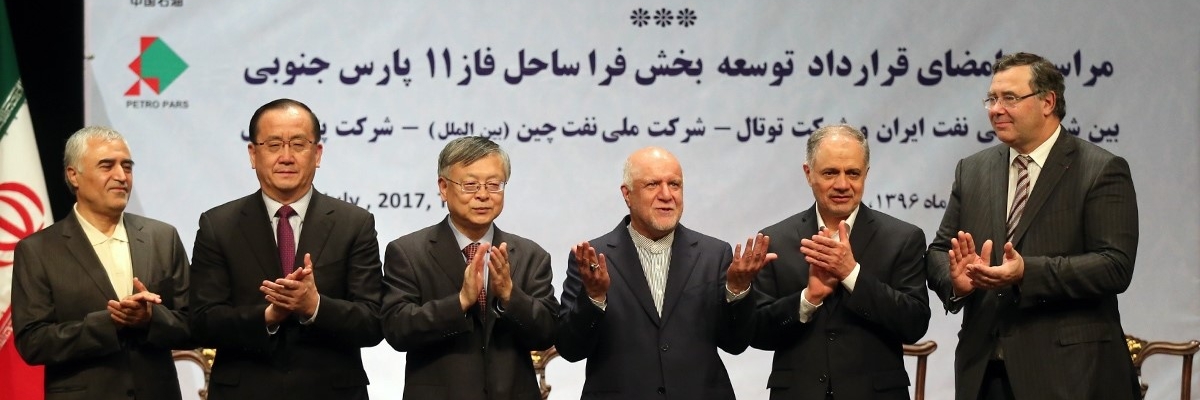
◢ Chinese state-owned oil company CNPC will replace Total on a major gas field project in Iran if the French energy giant pulls out over renewed US sanctions against Tehran, Iran's oil minister has said. Total started the USD 4.8-billion South Pars 11 project in July 2017, two years after Western powers signed a nuclear deal with Tehran prompting the return of many businesses to Iran.
Chinese state-owned oil company CNPC will replace Total on a major gas field project in Iran if the French energy giant pulls out over renewed US sanctions against Tehran, Iran's oil minister has said.
"Total has said that if it doesn't get an exemption from the United States to continue its work, it will begin to pull out of the deal," Bijan Namdar Zanganeh was quoted as saying by his ministry's Shana news service.
"If that happens, the Chinese firm CNPC will replace Total."
Total started the USD 4.8-billion South Pars 11 project in July 2017, two years after Western powers signed a nuclear deal with Tehran prompting the return of many businesses to Iran.
But earlier this month, US President Donald Trump announced his withdrawal from the deal, and warned companies that they face sanctions if they do business with Iran.
The French group said Wednesday it has USD 10 billion of capital employed in its US assets, and US banks are involved in 90 percent of its financing operations, making Total highly vulnerable if targeted by any US actions.
By contrast, Total said it had spent less than EUR 40 million euros on the Iranian project, which it runs with its partner Petrochina and which is dedicated to the supply of domestic gas inside Iran.
Zanganeh said on Wednesday that were CNPC, which was part of the Total deal, unable to carry out the work in South Pars due to US sanctions it would fall to Iran's Petropars.
Iran possesses the second-largest gas reserves on the planet, after Russia, and the fourth largest oil supplies.
Photo Credit: IRNA