
China Hosts Summit with Russia, Iran as Nuclear Deal Wobbles
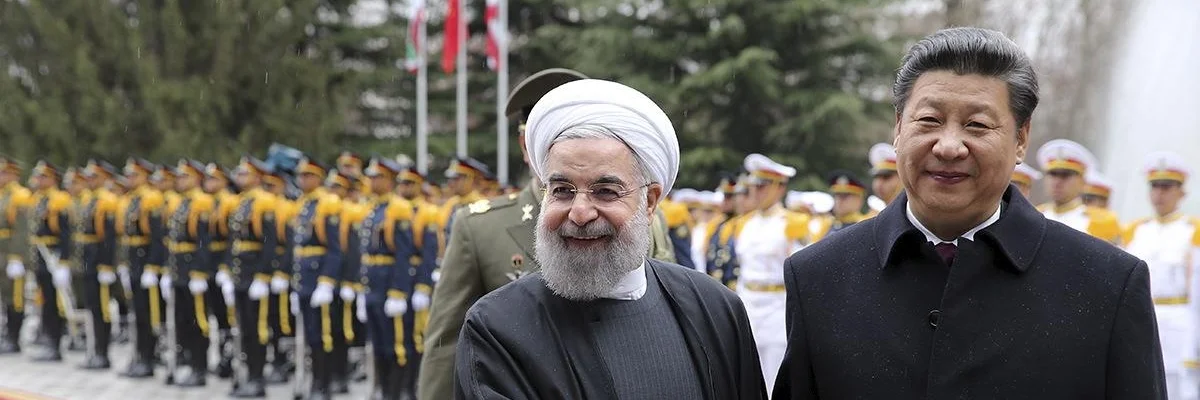
◢ Iran, China and Russia may seek ways to salvage the nuclear deal ditched by Donald Trump when their leaders meet this weekend at a summit on the Chinese coast. The Shanghai Cooperation Organisation (SCO), a regional security bloc led by China and Russia, is set to hold its 18th annual gathering in the city of Qingdao on Saturday and Sunday.
Iran, China and Russia may seek ways to salvage the nuclear deal ditched by Donald Trump when their leaders meet this weekend at a summit on the Chinese coast.
The Shanghai Cooperation Organization (SCO), a regional security bloc led by China and Russia, is set to hold its 18th annual gathering in the city of Qingdao on Saturday and Sunday.
Iran's President Hassan Rouhani is attending this year—just the second time an Iranian leader has participated.
It comes after US President Trump controversially pulled Washington out of a 2015 international pact with Iran that placed limits on its nuclear program in return for easing economic sanctions.
China is Iran's top trade partner and one of the biggest buyers of its oil, but those who oppose the US abandonment of the deal risk huge fines for busting the tough American measures.
Rouhani is taking part because "Iran is currently evaluating the signatories of the nuclear deal to see to what extent they'll be able to effectively maintain it even after the US's withdrawal", said Gao Shangtao, an expert on Middle East relations at Beijing Foreign Affairs College.
"To put it bluntly, if Tehran feels assured that China and Russia can withstand the pressure of US sanctions and continue to do business with Iran, then Tehran will seek to retain the deal—otherwise, it's meaningless," he said.
Chinese businesses are expected to step up activities in Iran to fill the void left by the exit of US companies and the possible withdrawal of European rivals who fear punitive US measures.
Hua Liming, a former Chinese ambassador to Iran, told the Global Times newspaper on Tuesday: "Unlike the US, China will not break its promise and will ensure that China-Iran relations won't be affected."
Iran announced on Tuesday that it plans to boost uranium enrichment capacity with new centrifuges within the 2015 deal's limits, prompting Beijing to urge all parties to "continue to sustain and implement" the agreement.
'Bigger, Grander' SCO Ambitions
The SCO bloc includes four ex-Soviet Central Asian republics and two new members, Pakistan and India—whose President Mamnoon Hussain and Prime Minister Narendra Modi, respectively, will be present this weekend.
Iran is currently an observer member of the SCO, though it has long sought full membership.
"Iran needs more diplomatic support from the East—not only China, but also Central Asia -- in order to strengthen its position and better contend with the US," said Xu Tiebing, international relations professor at the Communication University of China.
But most Chinese analysts "are not too eager to see Iran accepted as a formal member state" due to its perceived political instability, he added.
Chinese President Xi Jinping will meet Rouhani on the sidelines of the summit, but the nuclear deal is not on the formal SCO agenda.
Major SCO topics will include improving trade ties—in part by pushing forward China's Belt and Road global infrastructure project—and strengthening cooperation on drug trafficking, cybersecurity and counter-terrorism.
Despite mistrust between China and Russia, "outside circumstances—specifically US foreign policy—have pushed them closer to each other", said Tugrul Keskin, director of the Center for Global Governance at Shanghai University.
Xu agreed, noting US policy under Trump has been the driver of the SCO's growing profile, becoming "a kind of glue" keeping together SCO member countries who have disparate and often conflicting agendas.
Russian President Vladimir Putin told Chinese state broadcaster CGTN that though the SCO began as a "low-profile organization" that sought merely to "solve border issues" between China, Russia and former Soviet countries, it is now evolving into a larger global force.
"Our objective was quite small, but as we worked together on these small issues, we found similarities between us," he said.
"We realized that together we could achieve something bigger, grander."
Photo Credit: IRNA
China to To Host Iran Leader Amid Nuclear Deal Upheaval
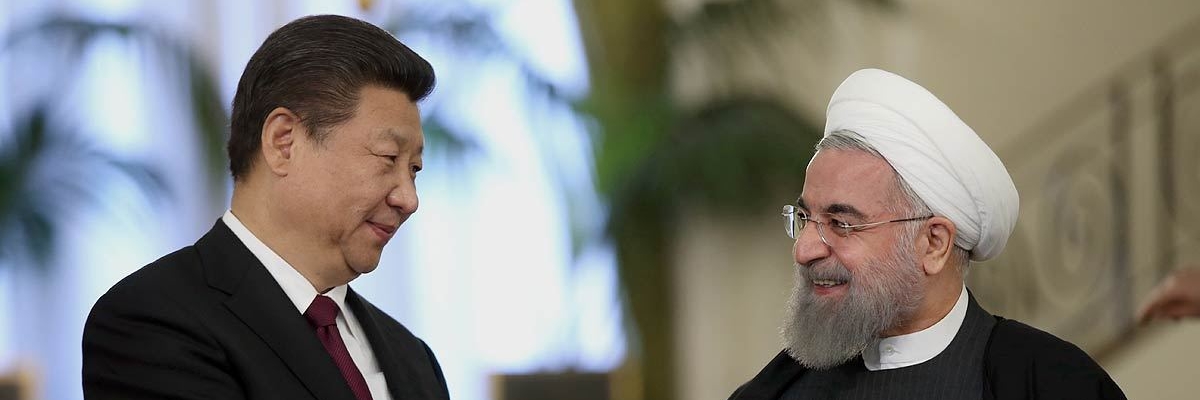
◢ Iran's president will attend a summit with his Chinese and Russian counterparts next month, officials in Beijing said Monday, as they try to salvage the nuclear deal thrown into upheaval by Donald Trump. China, Russia and European powers, all of which signed the 2015 Iran nuclear accord, are scrambling to save the pact following the US president's decision to quit the agreement and reinstate sanctions.
Iran's president will attend a summit with his Chinese and Russian counterparts next month, officials in Beijing said Monday, as they try to salvage the nuclear deal thrown into upheaval by Donald Trump.
China, Russia and European powers, all of which signed the 2015 Iran nuclear accord, are scrambling to save the pact following the US president's decision to quit the agreement and reinstate sanctions.
China's President Xi Jinping will meet Iran's Hassan Rouhani on the sidelines of the Shanghai Cooperation Organisation (SCO) meeting on June 9-10 in Qingdao, said Foreign Minister Wang Yi.
Russian President Vladimir Putin will also attend the summit, he added. Wang did not include the nuclear deal in a readout of the summit's formal agenda.
But Beijing, which is Iran's top trade partner and one of the biggest buyers of its oil, has signaled that it intends to keep working with the Islamic regime despite the US move.
Chinese businesses are expected to step up activities in Iran to fill the void left by the exit of US companies and the possible withdrawal of European rivals for fear of punitive measures enforced by the US.
Iran is currently an observer member of the SCO, though it has long sought full membership.
The regional bloc focusing on security and trade also includes four ex-Soviet Central Asian republics and two new members, Pakistan and India.
The summit will discuss a three-year action plan to "fight the three evil forces"—terrorism, separatism and extremism—and strengthen cooperation on tackling cybersecurity breaches and drug trafficking, Wang said.
China will also push for "reforms to the multilateral trading regime" connecting the markets of SCO members, which account for nearly 40 percent of the global population, he said.
China floated the idea of an SCO free trade area in 2016, according to state-run Xinhua agency, but Wang did not say whether it would be part of the agenda.
Photo Credit: IRNA
Merkel, Chinese Premier Defend Iran Deal, Free Trade
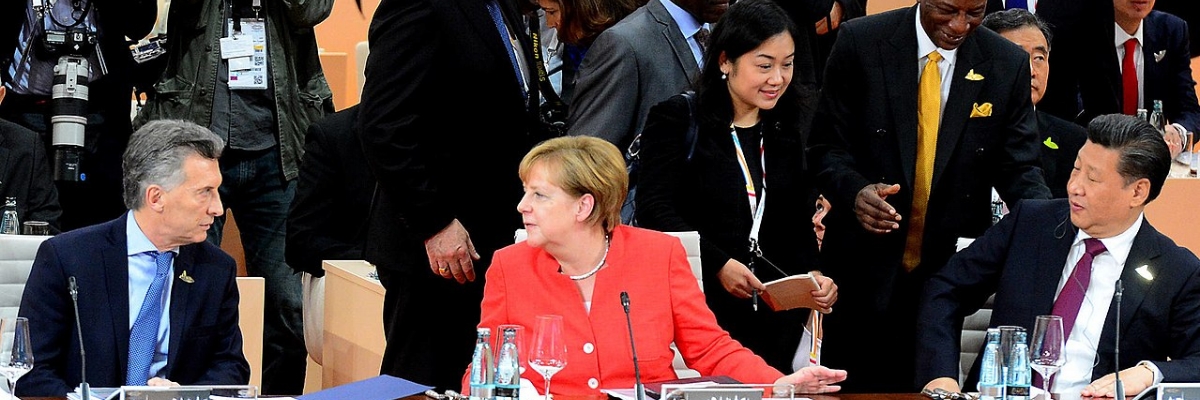
◢ German Chancellor Angela Merkel and Chinese Premier Li Keqiang defended the Iran nuclear deal on Thursday, with Li hinting that terminating the pact would complicate negotiations with North Korea. Merkel and Li showed a united front on Iran and free trade—two issues that have seen high-profile interventions by US President Donald Trump—during their meeting at the opulent Great Hall of the People in Beijing.
German Chancellor Angela Merkel and Chinese Premier Li Keqiang defended the Iran nuclear deal on Thursday, with Li hinting that terminating the pact would complicate negotiations with North Korea.
Merkel and Li showed a united front on Iran and free trade—two issues that have seen high-profile interventions by US President Donald Trump—during their meeting at the opulent Great Hall of the People in Beijing.
Li warned that ending the agreement with Tehran "will not just impact Iran, but also have a negative impact on (the ability) to solve other hot international issues through peaceful negotiations."
He did not mention North Korea by name, but analysts have warned that Trump's withdrawal from the Iran deal dented Washington's negotiating credibility ahead of his scheduled meeting with North Korean leader Kim Jong Un next month.
The German leader also sounded the alarm about the economic impact on Europe of Trump's move to quit the Iran agreement.
Trump's decision to reimpose sanctions on Tehran, despite pleas from allies to maintain the deal, could hit European firms that have done business with Iran since the 2015 accord was signed.
If European companies pull out or shrink operations in Iran fearing US sanctions, it would "create an opportunity for businesses in other countries to step in and play a greater role", Merkel said.
Meanwhile, Li dismissed the idea that the Iran crisis paved the way for the internationalization of the Chinese currency, amid speculation that demand for yuan-denominated oil futures would increase.
"The internationalization of the yuan is a long-term process that is closely linked to the development of the Chinese economy," Li said.
On trade, Merkel welcomed China's moves to reduce automobile import tariffs and allow foreign carmakers to own a majority stake in joint ventures with
Chinese partners.
The Chancellor drove home Berlin's demand for Beijing to ease barriers on foreign investment, saying the two countries would sign a memorandum of understanding to offer mutual access to each others' markets for autonomous vehicles.
"China and Germany are on the path of promoting multilateralism and bolstering free trade," said Merkel, who was accompanied by an industry delegation of 18 German executives.
Li hinted that a China-EU investment agreement, which has been in the works for years, might be signed during a bilateral meeting in July in Beijing.
"China's doors (for investment) will be opened even more," Li said.
Merkel was expected to take up the case of Liu Xia, widow of Nobel peace laureate Liu Xiaobo, who remains under house arrest without charges nearly a year after her husband died of cancer in custody.
"We have found a dialogue mechanism where difficult questions can be raised," she said. Merkel will meet with President Xi Jinping later Thursday.
Photo Credit: Wikicommons