
US Seizes Iranian Petrol Destined for Venezuela
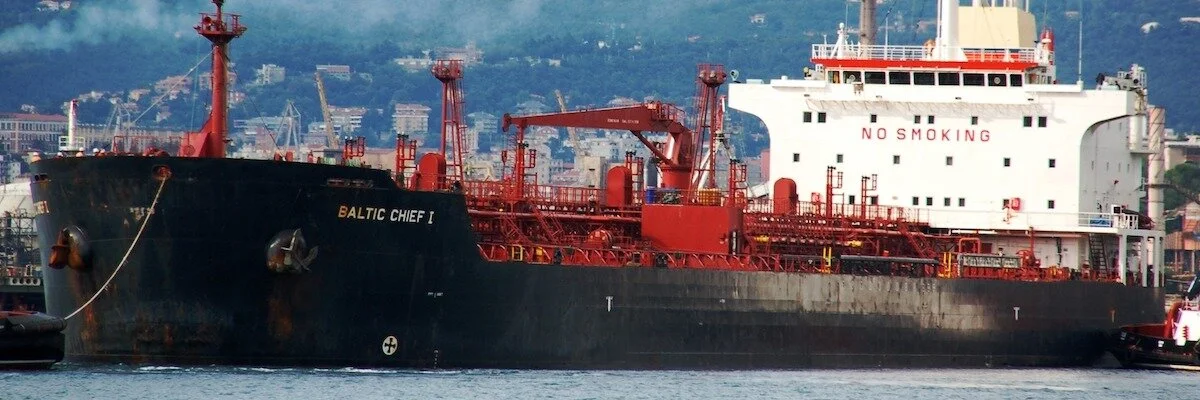
The United States has seized the cargo on four tankers allegedly loaded with Iranian gasoline destined for Venezuela, the Wall Street Journal reported.
The United States has seized the cargo on four tankers allegedly loaded with Iranian gasoline destined for Venezuela, the Wall Street Journal reported.
The US Justice Department issued a warrant last month to seize the cargo of the tankers Bella, Bering, Pandi and Luna, tying the shipments to Iran's Revolutionary Guards, which Washington has labelled a terror group.
The four ships were seized at sea and were now en route to Houston, Texas, the Journal reported Thursday, citing US officials.
The US court complaint says that Iranian businessman Mahmoud Madanipour, who allegedly had links to the Revolutionary Guards, arranged shipments for Venezuela using offshore front companies and ship-to-ship transfers to avoid sanctions on Iran.
Iran's ambassador to Venezuela said reports that Iranian tankers had been seized were "yet another lie and psychological warfare" by the United States.
"The ships are not Iranian, and neither the owner nor its flag has anything to do with Iran," Hojat Soltani said on Twitter in Spanish.
Venezuela is almost entirely dependent on its oil revenues but its production has fallen to roughly a quarter of its 2008 level and its economy has been devastated by six years of recession.
Washington's sanctions against President Nicolas Maduro's regime have forced Venezuela, which used to refine enough oil for its own needs, to turn to allies such as US nemesis Iran to alleviate a desperate gasoline shortage.
Iran sent several tankers of gasoline to Venezuela earlier this year to help ease shortages.
Photo: Fleetmon
US Seeks to Seize Iran Oil Cargoes Bound for Venezuela
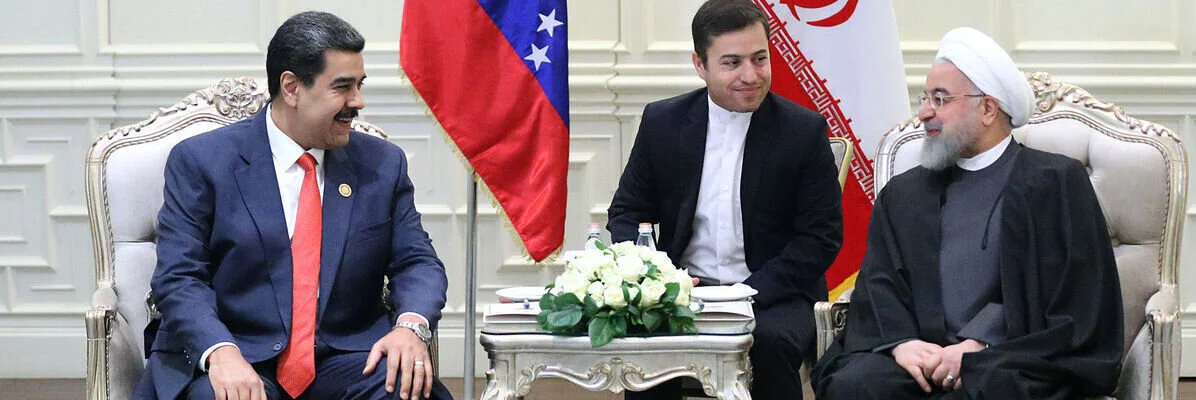
The US Justice Department issued a warrant Thursday to seize the cargoes of four tankers carrying Iranian oil to Venezuela, tying the shipments to Iran's Revolutionary Guards, which Washington calls a terror group.
The US Justice Department issued a warrant Thursday to seize the cargoes of four tankers carrying Iranian oil to Venezuela, tying the shipments to Iran's Revolutionary Guards, which Washington calls a terror group.
The Justice Department filed a forfeiture complaint and warrant in federal court in Washington for the cargoes of the tankers Bella, Bering, Pandi and Luna—currently en route from Iran to Venezuela.
The US alleges that the shipments involve parties affiliated with the Islamic Revolutionary Guard Corps (IRGC), which the United States has designated a "foreign terrorist organization."
A court complaint citing a "confidential source" said Mahmoud Madanipour, who has ties to the IRGC, arranged the shipments for Venezuela, using offshore front companies and ship-to-ship transfers to avoid sanctions on Iran.
"Profits from petroleum sales support the IRGC's full range of nefarious activities, including the proliferation of weapons of mass destruction and their means of delivery, support for terrorism, and a variety of human rights abuses, at home and abroad," the Justice Department said in a statement.
It was not immediately clear how the US government intended to seize the cargoes.
Photo: IRNA
First Iranian Oil Tanker Docks in Venezuela
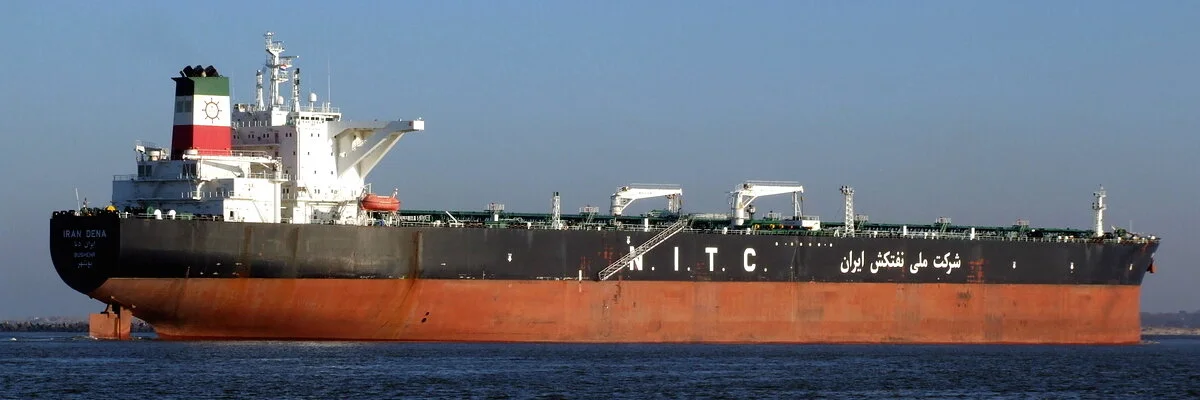
The first of five Iranian tankers carrying much-needed gasoline and oil derivatives docked in Venezuela on Monday, Caracas announced amid concern in Washington.
By Margioni Bermudez
The first of five Iranian tankers carrying much-needed gasoline and oil derivatives docked in Venezuela on Monday, Caracas announced amid concern in Washington.
In a statement delivered on state television, Oil Minister Tareck El Aissami said the convoy was an expression of the Venezuelan people's "self-determination" and praised Tehran's friendship at a time of need.
"What great fortune to have Iran in these times," said the minister, surrounded by members of the military leadership.
Earlier, El Aissami triumphantly shared images on Twitter of the first ship, "Fortune" arriving at El Palito refinery on Venezuela's northwest coast.
"We keep going and WINNING!" El Aissami wrote.
The United States has closely monitored the shipments, concerned that Iran and Venezuela—both under US sanctions—were taking their longstanding ties to another strategic level.
The Iranian tankers have run the gauntlet of US warships arrayed off the Venezuelan coast after Washington announced last month it was stepping up its naval presence, arguing there was an increase in organized crime.
Tensions between Washington and Caracas remain high following Venezuela's disruption last month of an abortive military assault by a group of mercenaries coordinated by a private US security company.
The US has stepped up sanctions against socialist President Nicolas Maduro and his inner circle, recently offering a $15 million reward for Maduro accusing him of masterminding a drug-smuggling ring.
Washington and more than 50 other states accuse Maduro of stealing 2018 elections and instead recognize his opposition rival Juan Guaido as interim president.
Vital Shipment
The vital shipment arrives at a time of chronic fuel shortages in the crisis-wracked South American country, exacerbated by the coronavirus lockdown.
In Caracas, where drivers lined up for hours to fill their tanks, Tehran's helping hand was viewed with a mixture of hope and suspicion.
Osvaldo Rodriguez, 22, doubts the fuel "is for us," but instead destined for those with their hands on the levers of power in Venezuela.
"If gasoline is sold at the same price as abroad, nobody will be able to afford it," he said, alluding to Venezuela's minimum wage of $4.60 a month.
Gasoline is currently selling for up to three dollars a liter on the black market in Caracas, unheard of in a country where motorists are used to filling up for practically nothing.
“We have no shortage of oil! Supposedly we are sitting on five billion barrels of it underground. But there's no gasoline," said Teodoro Lamonte, 50, as he slowly rolled his car along a line outside a service station.
Venezuela boasts the largest proven oil reserves in the world, but production has plummeted under the current regime and its oil exports have been hampered by US sanctions.
The Fortune arrived in Venezuela's territorial waters on Saturday night, escorted by the Venezuelan navy.
The navy on Twitter said its ships were escorting a second tanker, the Forest, which it said entered the country's waters early Monday.
The other Iranian tankers—Petunia, Faxon, Clavel and Forest—will arrive in the next few days, state television said.
The fleet is carrying around 1.5 million barrels of gasoline, according to press reports. Tehran had warned of "consequences" if the US stopped the ships from reaching their destination.
Iran and Venezuela have had close relations since the late socialist leader Hugo Chavez took power in Caracas in 1999.
Venezuela has been in recession for six years, its economy in shambles and its citizens struggling with shortages of basic necessities such as food and medicines.
US sanctions have targeted Venezuelan oil exports, starving Caracas of vital income.
Venezuela is almost entirely dependent on its oil revenues but its production has fallen to roughly a quarter of its 2008 level.
Maduro's government blames that on US sanctions, including against state oil company PDVSA, but many analysts say the regime has failed to invest in or maintain infrastructure.
Falling oil prices since 2014 have exacerbated Venezuela's economic crisis.
Last month, the oil ministry revealed that the price of Venezuelan crude had fallen to its lowest level in more than two decades, at less than $10 a barrel. Last year it averaged $56.70.
Photo: SHANA
Iranian Fuel Shipment Reaches Venezuelan Waters
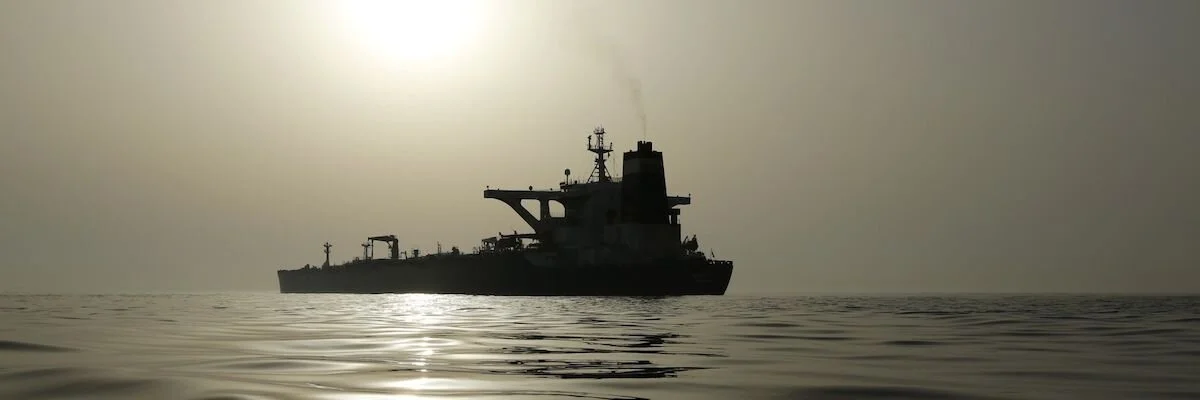
The first of five tankers carrying much-needed Iranian fuel and oil products entered Venezuelan waters on Saturday, a Venezuelan government official said.
The first of five tankers carrying much-needed Iranian fuel and oil products entered Venezuelan waters on Saturday, a Venezuelan government official said.
"The ships of the sister Islamic Republic of Iran are in our exclusive economic zone," Venezuelan oil minister Tareck El Aissami wrote on Twitter after the arrival of the first tanker, named Fortune.
The fleet is carrying about 1.5 million barrels of gasoline according to media reports, and arrives amid tensions between Tehran and Washington, which has imposed sanctions on Venezuelan oil exports and Iran.
Venezuela had said its navy and air force would escort the tankers after Tehran warned of "consequences" if the US stopped the ships from reaching their destination.
According to shipping tracker MarineTraffic, as of at 9:00 pm local time (0100 GMT Sunday) Fortune was near the coast of Sucre state in northern Venezuela after passing off Trinidad and Tobago.
It plans to sail to the El Palito refinery in Puerto Cabello in northern Carabobo state, according to the state-run television station.
The rest of the Iranian ships—the Forest, Petunia, Faxon and Clavel—will arrive in the next few days, according to state television.
Relations between Caracas and Tehran have become close since former Venezuelan president Hugo Chavez took power in 1999.
Iran has repeatedly expressed its support for Nicolas Maduro, his successor, who is also supported by Russia, China, Turkey and Cuba.
The United States calls Maduro a "dictator", however, and has leveled a battery of economic sanctions against his administration, including an oil embargo that came into force in April 2019.
The fuel from Iran comes at a time when the shortage of gasoline, chronic for years in some parts of the country, has worsened in the midst of the COVID-19 pandemic.
Venezuela has the largest oil reserves in the world, but its production is in freefall, a collapse that experts attribute to failed policies, lack of investment and corruption.
Photo: Depositphoto

Iran Warns US Against Disrupting Oil Shipments to Venezuela
Iran's foreign minister on Sunday warned the US against deploying its navy in the Caribbean to disrupt Iranian fuel shipments to Venezuela.
Iran's foreign minister on Sunday warned the US against deploying its navy in the Caribbean to disrupt Iranian fuel shipments to Venezuela.
In a letter to United Nations chief Antonio Guterres, Mohammad Javad Zarif warned against "America's movements in deploying its navy to the Caribbean in order to intervene and create disruption in (the) transfer of Iran's fuel to Venezuela."
He said that any such action would be "illegal and a form of piracy," according to a foreign ministry statement.
Zarif added that the US would be responsible for "the consequences of any illegal measure."
Iran's Fars News claimed Saturday that it had received information that four US Navy warships are in the Caribbean for a "possible confrontation with Iran's tankers."
Elliot Abrams, the State Department's Venezuela envoy, has alleged that Caracas is paying Iran in gold to restore its troubled oil sector.
The US has imposed unilateral sanctions aimed at ending oil exports by both Iran and Venezuela, both major crude producers.
Zarif's deputy has summoned the Swiss ambassador, who represents Washington's interests in Tehran, to communicate Iran's "serious warning".
Abbas Araghchi said any potential threat to Iran's tankers would be met with a "quick and decisive response."
Venezuela has the world's largest proven oil reserves but analysts say that the sector operates below capacity.
The country's economy is in a state of collapse, with millions fleeing as they lack basic goods.
Iran has also taken a hit from renewed US sanctions after US President Donald Trump pulled out of a nuclear accord in 2018.
Maduro has withstood more than a year of US-led efforts to remove him and retains the support of the military.
Iran has repeatedly expressed support for Maduro against opposition leader Juan Guaido, who is recognised by some 60 nations as interim president due to reports of irregularities in Maduro's 2018 re-election.
Photo: IRNA
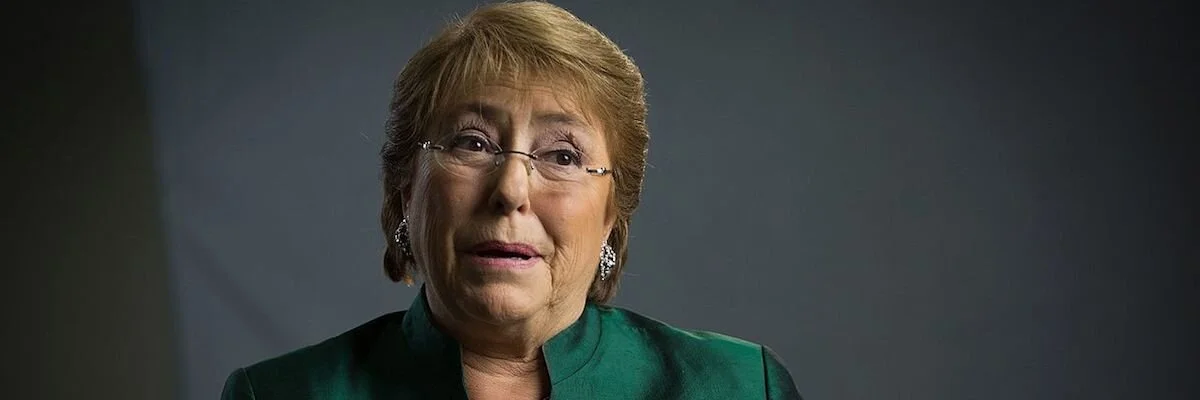
UN Urges Easing of Sanctions on Iran, Others Facing Virus
◢ The UN rights chief called Tuesday for any sanctions imposed on countries like Iran facing the new coronavirus pandemic to be "urgently reevaluated" to avoid pushing strained medical systems into collapse. "In a context of global pandemic, impeding medical efforts in one country heightens the risk for all of us," she said.
The UN rights chief called Tuesday for any sanctions imposed on countries like Iran facing the new coronavirus pandemic to be "urgently reevaluated" to avoid pushing strained medical systems into collapse.
"At this crucial time, both for global public health reasons, and to support the rights and lives of millions of people in these countries, sectoral sanctions should be eased or suspended," Michelle Bachelet said in a statement.
"In a context of global pandemic, impeding medical efforts in one country heightens the risk for all of us," she said.
Bachelet insisted "humanitarian exemptions to sanctions measures should be given broad and practical effect, with prompt, flexible authorization for essential medical equipment and supplies."
Her comments came as the number of cases of COVID-19 approached 400,000 worldwide, including nearly 17,000 deaths, according to an Agence France-Presse tally using official sources.
Bachelet pointed in particular to the case of Iran – one of the hardest-hit countries in the pandemic with nearly 2,000 deaths.
Even before the pandemic, she pointed out that human rights reports had repeatedly emphasized the impact of sectorial sanctions on access to essential medicines and medical equipment in the country, including respirators and protective gear for health care workers.
Bachelet's office stressed that more than 50 Iranian medics had died since the first COVID-19 case was detected in the country 5 weeks ago.
She warned that Iran's epidemic was also spreading to neighboring Afghanistan and Pakistan, putting a strain on their fragile health systems as well.
The statement also cautioned that sanctions could impede medical efforts in Cuba, North Korea, Venezuela and Zimbabwe during the pandemic.
"The majority of these states have frail or weak health systems," Bachelet warned.
"Progress in upholding human rights is essential to improve those systems – but obstacles to the import of vital medical supplies, including over-compliance with sanctions by banks, will create long-lasting harm to vulnerable communities," she said.
The UN rights chief stressed that "the populations in these countries are in no way responsible for the policies being targeted by sanctions, and to varying degrees have already been living in a precarious situation for prolonged periods."
Bachelet stressed the importance of protecting health workers: "Medical professionals should never be punished by the authorities for pointing out deficiencies in the response to the crisis."
She urged world leaders to come together.
“No country can effectively combat this epidemic on its own," she said. "We need to act with solidarity, cooperation and care."
Photo: Wikicommons