
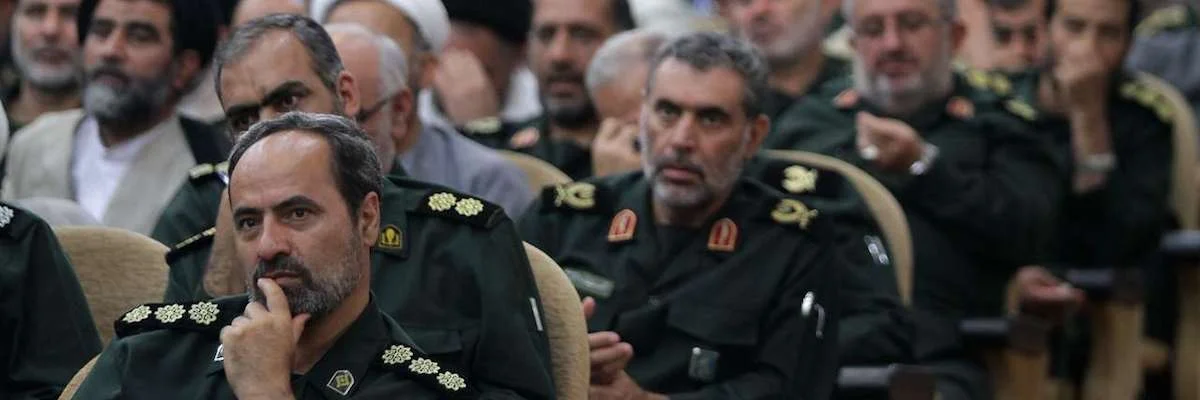
Instagram Accounts of Iran Guards Commanders Blocked
◢ The Instagram accounts of several Iranian Revolutionary Guards commanders have been blocked, the Tabnak news website reported Tuesday, with the photo-sharing website saying it was complying with US sanctions. The United States announced on April 8 that it has placed the IRGC, the ideological army of the Islamic republic, on their list of "foreign terrorist organizations.”
The Instagram accounts of several Iranian Revolutionary Guards commanders have been blocked, the Tabnak news website reported Tuesday, with the photo-sharing website saying it was complying with US sanctions.
The United States announced on April 8 that it has placed the Islamic Revolutionary Guard Corps, the ideological army of the Islamic republic, on their list of "foreign terrorist organizations.”
Tabnak, a site close to Iranian conservatives, said Instagram blocked the accounts of Major General Mohammad Ali Jafari, Major General Mohammad Bagheri and Major General Ghassem Soleimani.
Access to Soleimani's account, which was working last week, was denied on Tuesday.
"Sorry, this page isn't available," read a message on the account.
"The link you followed may be broken, or the page may have been removed."
Contacted by AFP, an Instagram spokesperson said it was operating "under the constraints of US sanctions laws.”
"We work with appropriate government authorities to ensure we meet our legal obligations, including those relating to the recent designation of the IRGC," the spokesperson added.
Iran's Telecommunications Minister Mohammad-Javad Azari Jahromi appeared to be referring to Instagram's move with a tweet on Tuesday.
"When you tear out a man's tongue, you aren't proving him a liar, you're only telling the world that you FEAR what he might say," he wrote on Twitter.
Facebook, Twitter and the Telegram messenger service are officially banned in Iran, making Instagram the only major social media service accessible in the country without the use of a virtual private network, or VPN, to bypass censorship.
Photo: IRNA
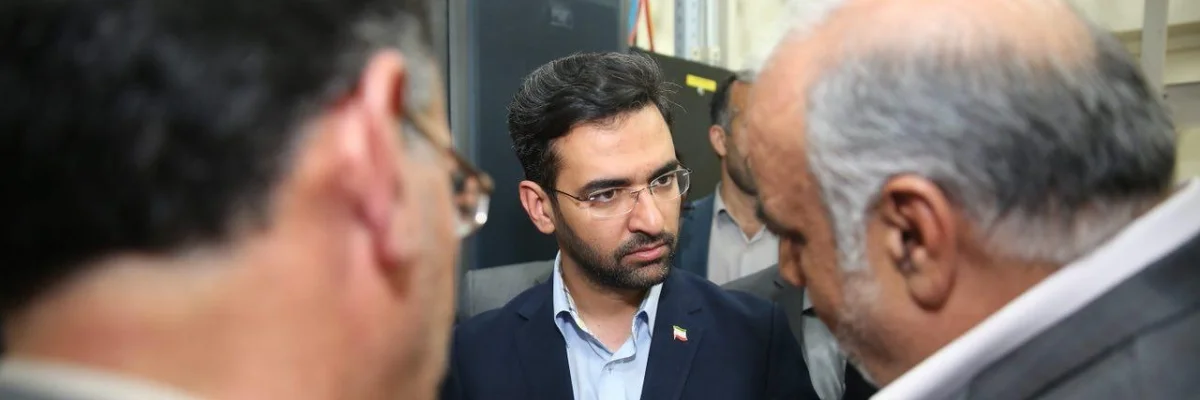
Iran Minister Says 'Impossible' to Block Information by Banning Apps
◢ Iran's telecoms minister said Tuesday it was "impossible to block citizen's access to information", a day after the conservative-dominated judiciary banned the hugely popular Telegram messaging app. The move follows a presidential directive banning all government workers from using foreign messenger apps to communicate.
Iran's telecoms minister said Tuesday it was "impossible to block citizen's access to information", a day after the conservative-dominated judiciary banned the hugely popular Telegram messaging app.
Mohammad Javad Azari Jahromi's comments on Twitter highlighted differences of opinion between the government of reformist President Hassan Rouhani and ultra-conservatives who control the judiciary and security services.
"Even if we ban the use of software, other software will be found and information will start to circulate freely again," Jahromi wrote. "Technology is not intrinsically guilty, corrupt, or deviant," he added.
"It is human beings who misuse it to promote crime and corruption in the virtual world, just as they do in real life."
A Tehran judge on Monday ordered the blocking of Telegram, the judiciary's Mizan Online news agency said, following accusations that the app has allowed armed opposition groups to fuel unrest.
The move follows a presidential directive banning all government workers from using foreign messenger apps to communicate.
Built by Russian tech guru Pavel Durov, Telegram is the most popular social network in Iran with some 40 million users—roughly half the population.
During a wave of protests that hit dozens of Iranian cities early this year, authorities temporarily banned the app, saying it enabled foreign-based "counter-revolutionary" groups to stir tensions.
Since then, authorities have sought to develop Iranian social media networks and limit reliance on foreign-based platforms, which Tehran accuses of hosting sites hostile to the Islamic Republic.
The ban adds Telegram to the list of social networks blocked in the Islamic Republic but accessible via virtual private network (VPN) software which can circumvent internet blackouts—something the judiciary wants to prevent in the case of the messaging app.
Monday's announcement was followed by rumors Jahromi had resigned, but the semi-official ISNA news agency denied that.
"On the question of filtering (social networks), we said and repeated that this is not the only solution," it cited him as saying. "The competent authorities heard our arguments and made their decision."
Photo Credit: IRNA