
Iran Says Ready for Prisoner Swap With US
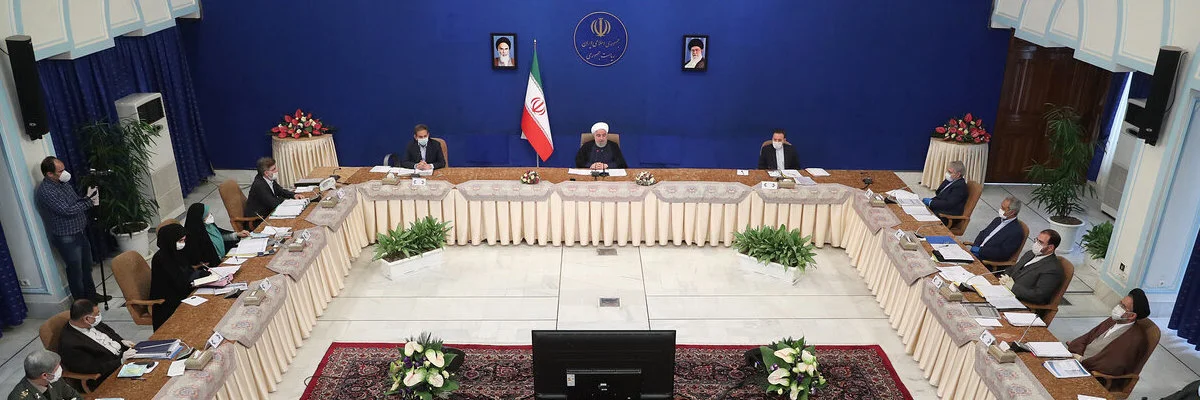
Iran said Sunday it had expressed readiness for a full prisoner exchange with the United States "with no preconditions" but that Washington was yet to respond.
Iran said Sunday it had expressed readiness for a full prisoner exchange with the United States "with no preconditions" but that Washington was yet to respond.
"We said some time ago that we are ready to exchange all Iranian and American prisoners," ISNA news agency quoted government spokesman Ali Rabiei as saying.
"It now appears that America is more ready than before to end this situation," he added, noting that Iran was waiting for a reply.
"Washington has been notified of our readiness and we think no mediator is needed."
The Islamic Republic in December freed Xiyue Wang, a US academic, in an exchange for scientist Massoud Soleimani and said it was open to further swaps.
Rabiei also expressed concern about the health of some Iranian prisoners detained in the United States and claimed they are not being treated well.
One of them is Sirous Asgari, an Iranian scientist infected with the novel coronavirus while in detention, according to the Iranian foreign ministry.
A ministry spokesman said last week that "everything is prepared" and declared "he will soon return to Iran" without elaborating further.
Iran is holding US citizens Siamak Namazi, convicted on charges that include espionage, his father Baquer and environmental expert Morad Tahbaz.
According to the US State Department, Iran temporarily released US Navy veteran Micheal White on March 19.
Both countries have called for releasing prisoners over the virus outbreak.
Iran is battling what is the Middle East's most deadly outbreak, while the US has reported the highest total number of virus deaths worldwide.
Iran has temporarily released more than 100,000 inmates in several stages since March, according to its judiciary.
Photo: IRNA

Iran-US Tensions Decrease in Iraq, For Now
Iraq’s premier-designate Mustafa Kadhimi, seen as a compromise figure, is preparing his cabinet. If his tenure fails, the US may cast Iraq's government as irreversibly "hostile and pro-Iran" and introduce new sanctions.
By Maya Gebeily
It has been weeks since Iran-backed factions in Iraq traded fire with US forces, but experts warn the rivals could be using the time to prepare for an escalation.
After the last Katyusha rockets slammed into American installations in Iraq in March, the United States began planning an unprecedented bombing campaign in Iraq and new Iran-aligned factions threatened to kill Western ambassadors.
"Even if we haven't seen rocket attacks, the Iranians are repositioning themselves for something else," said Phillip Smyth, who researches Shiite armed factions for the Washington Institute for Near East Policy.
"Meanwhile, US troops in Iraq are hunkered down and taking the threat more seriously," Smyth said.
Those troops, deployed as part of the coalition fighting the Islamic State group, have been hit by more than two dozen rocket attacks that have grown gradually deadlier.
Last month, the Pentagon began drafting plans for a major escalation against the Iran-backed factions—namely the hardline Kataeb Hezbollah—blamed for the rockets.
"Washington told us they'd simultaneously hit 122 targets in Iraq if more Americans died," a top Iraqi official said.
The scale of such bombing could have enormous consequences.
Coalition head General Pat White feared it could spin out of control, writing to US Central Command in March with "concerns" that targeted groups would respond, putting thousands of coalition troops in "significant" danger, according to a US military official who saw White's memo.
Non-US coalition members are "nervous" the bombing could kill civilians or push Baghdad to permanently oust foreign troops, diplomats from two coalition countries said.
The plan has been set aside for now as the US fights the spread of COVID-19, three Western diplomats said.
"But if there's another attack and it kills an American, then all of this comes back again," one told AFP.
Coalition 'No Longer Exists'
Washington and Tehran have already edged dangerously close to outright conflict after the US killed Iranian general Qasem Soleimani in Baghdad in January, prompting Iran to launch ballistic missiles at US troops in western Iraq.
Apparently fearing more strikes, the US deployed Patriot anti-missile batteries and C-RAM rocket defence systems to Iraq to protect its forces, a move which US officials acknowledged to AFP could be seen by Iran as provocative.
At the same time, it reduced the coalition's presence, pulling out of half the bases it once operated from in Iraq and withdrawing hundreds of trainers indefinitely as a precautionary measure against COVID-19.
As most non-US troops were trainers, that has left relatively more Americans in the remaining forces.
"The coalition as we knew it no longer exists," a Western diplomat from a coalition country told AFP.
A key lawmaker from Fatah, the bloc representing pro-Iran factions, cast doubt on Washington's intentions this week.
"The American side wasn't serious about withdrawing and handing over bases, and was actually re-deploying its troops for tactical reasons to protect its soldiers amid the spread of the coronavirus," said Mohammad Ghabban.
Kataeb Hezbollah has insisted the shifts should lead into a full and permanent withdrawal, raising the prospect of further rocket attacks.
"There will be no death for these forces if they keep withdrawing as part of a total departure from Iraq," the group said this month.
'Turn Up the Flame'
At the same time, apparently new factions have emerged.
In the last month, three previously unknown groups have called for rocket attacks, threatened the American and British ambassadors, and released rare drone footage of the US embassy in Baghdad and the western Ain al-Asad base, which hosts the most coalition troops.
Two top coalition officials said they suspect the groups were "the same old actors"—Kataeb Hezbollah and allies—who were "organising themselves slightly differently".
Smyth said it appeared Iran was restructuring its Iraqi allies and using front groups for plausible deniability.
"There's calm now, but they'll just turn up the flame once the situation improves for them," Smyth added.
In politics, too, the tug-of-war between Iran and the US over Iraq is at a critical juncture.
Premier-designate Mustafa Kadhimi, seen as a compromise figure, is preparing his cabinet and US officials are due to visit Baghdad in June for key talks.
"This was a roller-coaster relationship—it shouldn't be," said an Iraqi official with knowledge of the talks.
But if Kadhimi fails, a Western diplomat told AFP, the US may cast Iraq's government as irreversibly "hostile and pro-Iran" and introduce new sanctions.
Even the June talks could lead to more polarisation, said Renad Mansour, a researcher at Chatham House.
"The US want to push the Iraqi government to choose a side, which could be a risky move," he told AFP.
"It's almost making the Iraqi government decide: are you with us or against us?"
Photo: Wikicommons
UK Joins US in Persian Gulf Mission After Iran Taunts
◢ Britain said Monday it will join forces with the United States to protect merchant vessels in the Persian Gulf amid heightened tensions with Iran, after Tehran taunted Washington that its allies were too "ashamed" to join the mission. Britain's decision to form the joint maritime taskforce with the United States marks a departure in policy under new Prime Minister Boris Johnson.
By Joe Jackson and Amir Havasi
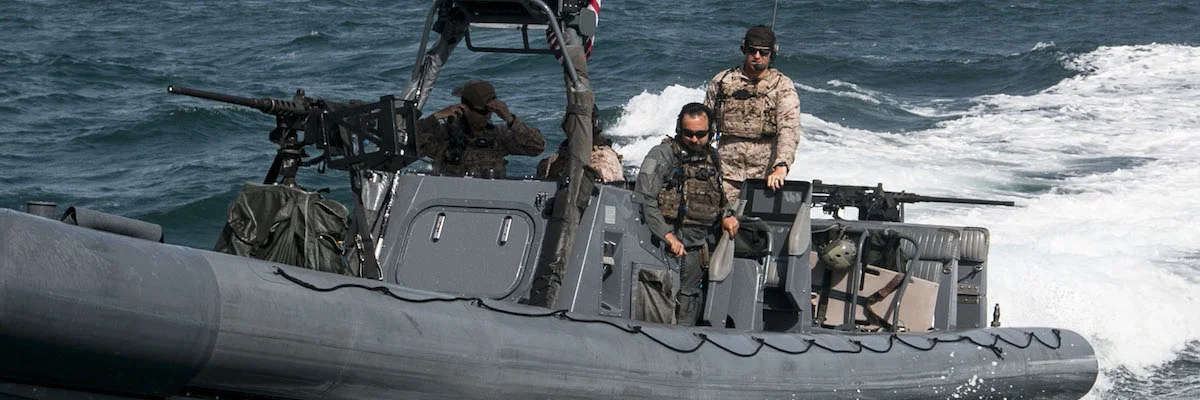
Britain said Monday it will join forces with the United States to protect merchant vessels in the Persian Gulf amid heightened tensions with Iran, after Tehran taunted Washington that its allies were too "ashamed" to join the mission.
Britain's decision to form the joint maritime taskforce with the United States marks a departure in policy under new Prime Minister Boris Johnson, after efforts under his predecessor Theresa May to form a European-led grouping.
It follows a spate of incidents -- including the seizure of ships -- between Iran and Western powers, in particular Britain and the US, centred on the vital Strait of Hormuz thoroughfare.
"The UK is determined to ensure her shipping is protected from unlawful threats, and for that reason we have today joined the new maritime security mission in the Gulf," Defence Secretary Ben Wallace said in a statement.
The announcement from Britain's defence ministry did not detail which, if any, other countries would be joining the new naval coalition.
Britain was also at pains to stress that it had not changed its broader policy towards Tehran.
"We remain committed to working with Iran and our international partners to de-escalate the situation and maintain the nuclear deal," Foreign Secretary Dominic Raab said.
The announcement came hours after Iranian Foreign Minister Mohammad Javad Zarif said Washington was increasingly isolated in its hardline stance against Tehran and its allies were too "ashamed" to join its forces in the Gulf.
He also dismissed US calls for talks as a sham, confirming he had turned down an offer to meet President Donald Trump last month despite the threat of US sanctions against him.
"Today the United States is alone in the world and cannot create a coalition," he said.
"Friendly countries are too ashamed of being in a coalition with them," Zarif told a news conference, saying they had "brought this situation upon themselves, with law-breaking, by creating tensions and crises."
Germany 'Not in Favor’
Tehran and Washington have been locked in a battle of nerves since last year when Trump withdrew the US from a landmark 2015 deal placing curbs on Iran's nuclear programme and began reimposing sanctions.
Tensions have spiked since the Trump administration began stepping up a campaign of "maximum pressure" against Iran.
Drones have been downed and tankers seized by Iranian authorities or mysteriously attacked in Gulf waters, while Britain has detained an Iranian tanker off Gibraltar.
At the height of the crisis, Trump called off air strikes against Iran at the last minute in June after the Islamic republic's forces shot down a US drone.
Iran said on Sunday its forces had seized a "foreign" tanker carrying smuggled fuel in what would be the third such seizure in less than a month in Persian Gulf waters—a conduit for much of the world's crude oil.
Last month the Guards said they had impounded the Panama-flagged MT Riah for alleged fuel smuggling as well as the British-flagged Stena Impero for breaking "international maritime rules".
In response to such incidents, the US has been seeking to form a coalition—dubbed Operation Sentinel—to guarantee freedom of navigation in the Persian Gulf.
Last month Britain, while still led by former prime minister May, proposed a European-led maritime protection force.
But both plans struggled to find partners, with European countries believed to be reluctant to be dragged into a conflict.
Germany said Monday it was currently "not in favour" of joining an American-led coalition.
'Left the Table'
Meanwhile the US continues to target Iran economically, while holding out the prospect of possible talks.
It imposed sanctions against Zarif on Wednesday—under the same sanctions already applied to supreme leader Ayatollah Ali Khamenei—targeting any assets he has in America and squeezing his ability to travel.
Meanwhile however the New Yorker magazine reported that Senator Rand Paul had met Zarif in the US on July 15 and had Trump's blessing when he invited the Iranian minister to go to the White House.
Zarif dismissed as disingenuous US "claims" it wants dialogue.
"They were the ones who left the table... Who do they want to negotiate with?" he said.
But Zarif did not rule out talks in the future, saying: "Even in times of war negotiations will exist."
Photo: CENTCOM
US Says Has Asked Germany to 'Help Secure' Strait of Hormuz
◢ The United States has asked Germany to join an international naval mission to help secure the strategic Strait of Hormuz, the US embassy in Berlin said on Tuesday. "We've formally asked Germany to join France and the UK to help secure the Strait of Hormuz and combat Iranian aggression," said a statement by embassy spokeswoman Tamara Sternberg-Greller.
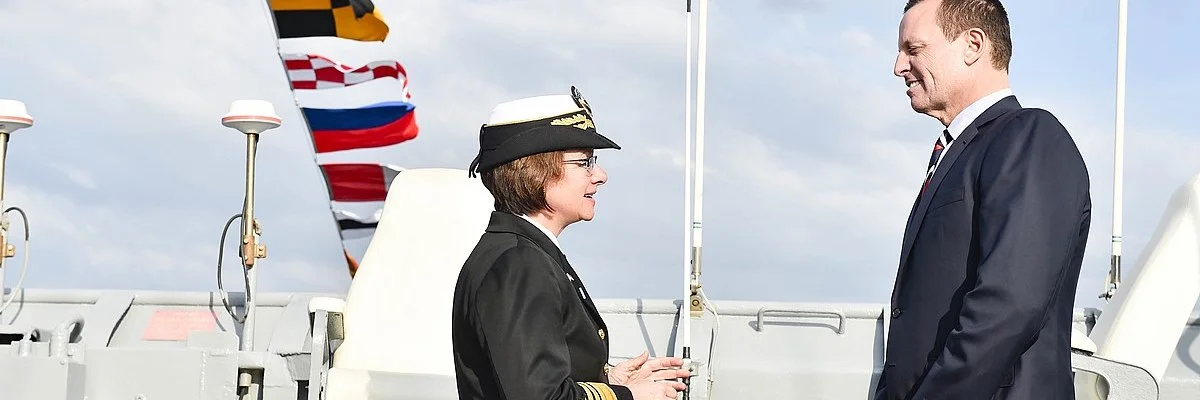
The United States has asked Germany to join an international naval mission to help secure the strategic Strait of Hormuz, the US embassy in Berlin said on Tuesday, as tensions mount between Washington and Iran.
The request comes after Britain last week ordered its navy to escort UK-flagged ships in the world's busiest oil shipping lane in response to Iranian soldiers seizing a tanker in the flashpoint entrance to the Gulf.
"We've formally asked Germany to join France and the UK to help secure the Strait of Hormuz and combat Iranian aggression," said a statement by embassy spokeswoman Tamara Sternberg-Greller.
"Members of the German government have been clear that freedom of navigation should be protected... Our question is, protected by whom?"
Long-simmering tensions have spiked between Tehran and Washington since US President Donald Trump unilaterally withdrew from the Iran nuclear deal last year and reimposed biting sanctions on the Islamic republic.
The US and Gulf powerhouse Saudi Arabia have since accused Iran of being behind multiple mysterious attacks on tankers in the Gulf in June, which Iran denies.
Iran also shot down an unmanned US aircraft in June, after which Trump announced that he had called off retaliatory air strikes at the last minute because the resulting death toll would have been too high.
Since then a series of incidents involving oil tankers have heightened tensions.
The US request to NATO ally Germany is highly controversial in the country, where many politicians fear any naval mission, especially one led by the United States, could heighten the risk of conflict and drag European powers into a war.
Berlin has been clear it rejects Trump's strategy of "maximum pressure" on Iran.
Britain detained an Iranian tanker off its overseas territory of Gibraltar in early July on allegations it was breaching EU sanctions on Syria.
In what many read as a tit-for-tat move, Iran's Revolutionary Guards two weeks later impounded a British-flagged tanker in the Strait of Hormuz.
Britain said last week it was planning a European-led protection force there, but has since suggested such a mission should involve the United States.
Photo: Wikicommons
U.S. Sends 1,500 Troops to Mideast After Blaming Attacks on Iran
◢ President Donald Trump ordered more troops to the Middle East as the Pentagon blamed Tehran for recent attacks in the region, yet the small scale of the U.S. move signaled a desire to avoid a further escalation of tensions between the two nations. The U.S. will bolster forces in the region by about 1,500 troops, though Trump and the Pentagon said that the deployment is for defensive purposes.
By Tony Capaccio and Margaret Talev
President Donald Trump ordered more troops to the Middle East as the Pentagon blamed Tehran for recent attacks in the region, yet the small scale of the U.S. move signaled a desire to avoid a further escalation of tensions between the two nations.
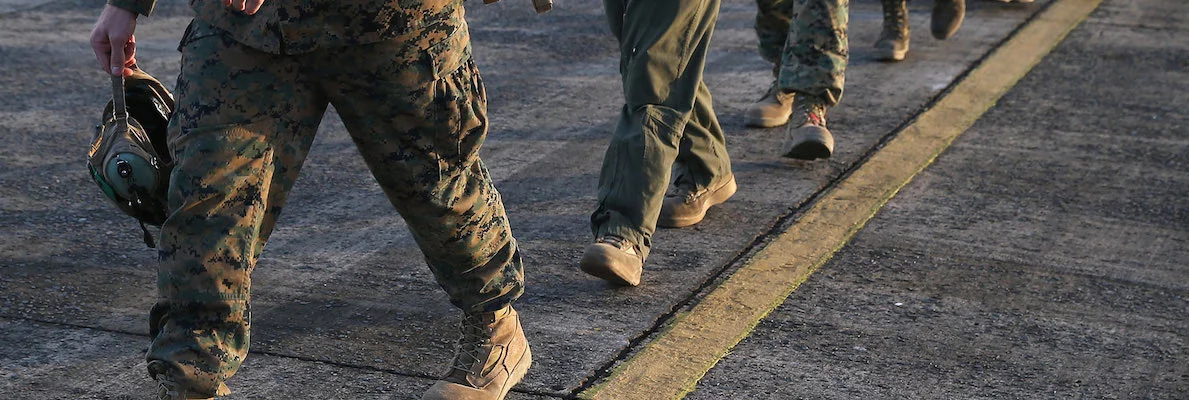
The U.S. will bolster forces in the region by about 1,500 troops, though Trump and the Pentagon said that the deployment is for defensive purposes with a focus on missile defense, surveillance and keeping open shipping lanes in the Persian Gulf. About 600 of the troops are already in the region, meaning fewer than 1,000 new service members will deploy.
“We’re going to be sending a relatively small number of troops to the Middle East,” Trump said as he departed the White House on Friday for Japan. The troops will serve “mostly in a protective capacity,” Trump said, adding, “We’ll see what happens.”
After tensions between Iran and Washington spiked earlier this month, Trump’s comments and the size of the deployment suggest the administration wants to avoid fueling fears of another Middle East war. At the same time, Pentagon officials said they believe Iran is behind a spate of recent attacks on oil tankers, a Saudi oil pipeline and the “Green Zone” diplomatic compound in Baghdad.
“We believe with a high degree of confidence that this stems back to the leadership of Iran at the highest levels,” U.S. Navy Vice Admiral Michael Gilday, director of the Defense Department’s Joint Staff, told reporters at the Pentagon on Friday. All of the attacks “have been attributed to Iran, through their proxies” or other forces, Gilday said. It was the first time the U.S. publicly charged Iran with being behind the attacks, though Iranian-backed rebels in Yemen had claimed responsibility for the pipeline attack.
The moves come after the Trump administration said it had evidence Iran was threatening other attacks on American interests or allies in the region. The administration earlier this month expedited the deployment of a carrier battle group to the Middle East along with a Patriot missile battery and additional bombers.
It wasn’t immediately clear where in the region the new troops would be sent, though the U.S. has military bases in places including Qatar, Bahrain and Iraq. The deployment also includes a new fighter squadron and spy planes, Gilday said.
Deterrence Effect
“All those troops, all of those weapons have been going to Iran the last three weeks not to take military action against Iran, but to deter Iran from taking military action against us,” Republican Senator Tom Cotton said in an interview on Bloomberg Television.
While people familiar with the troop decision called the deployment “initial,” it falls far short of Trump’s statement that in the event of hostilities with Iran he would be willing to send many times more than 120,000 troops suggested in a New York Times report last week. The president has also repeatedly signaled in recent weeks that he is open to talks with Iran’s leadership, though he’s suggested officials in Tehran need to reach out to him first.
On Thursday, Acting Defense Secretary Patrick Shanahan said the Pentagon was focused on having “the right force protection” in the region.
“Our job is deterrence. This is not about war,” Shanahan told reporters. “We have a mission there in the Middle East: freedom of navigation, you know, counterterrorism in Syria and Iraq, you know, defeating al-Qaeda in Yemen, and then the security of Israel and Jordan.”
Separately, the Trump administration decided to bypass Congress and approve the sale of more than $2 billion in weapons to Iran’s regional rival Saudi Arabia, invoking a rarely used provision in the Arms Export Control Act despite bipartisan objections by lawmakers.
In a letter explaining the decision to allow sales to Saudi Arabia, the United Arab Emirates and Jordan, Secretary of State Michael Pompeo said Iran’s “malign activities” in the region necessitated the decision to sidestep congressional approval. He said he weapons sales “must occur as quickly as possible in order to deter further Iranian adventurism in the Gulf and throughout the Middle East.”
More broadly, the rising tensions are linked to Trump’s decision to ratchet up pressure by ordering punishing new economic sanctions on Iran after withdrawing America last year from the multinational nuclear deal reached with Tehran in 2015. The agreement, which sought to ease sanctions on the Islamic Republic in exchange for an end to Iran’s nuclear program, is still backed by European allies as well as China and Russia.
In a sign of frustration over the effectiveness of the U.S. sanctions, Iran is now threatening to resume enriching uranium beyond levels permitted in the 2015 accord in its effort to push France, Germany, the U.K. and the European Union to find ways to relieve the effects of U.S. sanctions.
‘Who’s Provoking Who?’
As both sides sought to react in recent weeks, questions have been raised about the escalating threats. Senator Angus King, a member of the Senate Intelligence and Armed Services Committee, asked on CNN this month, “Who’s provoking who?”
“Are they reacting because they are concerned about what we’re doing, or are we reacting because we’re concerned what they’re doing?” asked King, an independent who caucuses with Democrats. “And that raises my second concern, which is miscalculation.”
Senator Jack Reed, the top Democrat on the Armed Services Committee, warned on Thursday that there is “significant” potential for an overreaction by Iranian personnel or militia in Iraq, Syria and Afghanistan to the U.S.’s new military deployments.
Risk of Miscalculation
“The dangers are extreme in terms of miscalculation,” Reed said in an interview.
The Rhode Island senator declined to discuss the Pentagon threat briefing he’s received on the Iran situation but said he was “absolutely” concerned about miscalculation by Iran in reacting to the U.S. moves.
Asked about the Trump administration’s decision earlier this month to accelerate the deployment of the USS Abraham Lincoln aircraft carrier battle group and other military hardware to the region, Reed said “if it’s a deterrence I think that’s appropriate because we don’t want to see an outbreak of conflict there.”
“We did not want to signal to the Iranians, erroneously, that we were not prepared,” he said.
Photo: Bloomberg

Pompeo Urges UN to Get Tough on Iran Missiles
◢ US Secretary of State Mike Pompeo on Wednesday urged the United Nations to tighten restrictions on Iran's missiles, which he warned could strike US allies, but other powers called instead for dialogue. Pompeo headed to New York for a Security Council meeting on Iran, which recently confirmed a medium-range ballistic missile test, arguing it is legal and necessary for its defense.
US Secretary of State Mike Pompeo on Wednesday urged the United Nations to tighten restrictions on Iran's missiles, which he warned could strike US allies, but other powers called instead for dialogue.
Pompeo headed to New York for a Security Council meeting on Iran, which recently confirmed a medium-range ballistic missile test, arguing it is legal and necessary for its defense.
"We risk the security of our people if Iran continues stocking up on ballistic missiles," Pompeo told the Security Council.
"We risk escalation of conflict in the region if we fail to restore deterrence. And we convey to all other malign actors that they too can defy the Security Council with impunity if we do nothing," he said.
Iran has "hundreds of missiles which pose a threat to our partners in the region," Pompeo said, referring to Israel and Arab allies such as Saudi Arabia.
Pompeo said the United States would press to preserve a UN arms embargo on Iran due to expire in 2020 and urge the Security Council to set up inspections at sea to prevent weapons shipments.
He also called for the return of a firmer prohibition on Iran developing missiles capable of delivering nuclear weapons, toughening language from the Security Council resolution that supported the nuclear deal.
President Donald Trump has made pressuring Iran a major focus, withdrawing from an international accord on curbing Tehran's nuclear program negotiated under his predecessor Barack Obama and reimposing sweeping sanctions.
Confirming US concerns, a UN report submitted to the Security Council said that recent missiles fired by Yemen's Huthi rebels were manufactured in Iran.
Saudi Arabia has been waging air strikes and a blockade against the rebels, who share religious ties with Iran, triggering what the United Nations calls the world's worst humanitarian crisis.
Iran Denounces 'Lies'
Responding as Pompeo looked on, Iranian envoy Eshagh Al Habib said the top US diplomat was casting Iran as a threat to sell more "beautiful weapons," sarcastically quoting Trump's rationale for backing Saudi Arabia.
He said Iran's missiles were not nuclear in nature and defended the need for strong defense, noting that Western powers backed Saddam Hussein as his warplanes destroyed Iranian cities in the 1980-88 Iran-Iraq war.
"What we heard today was another series of lies, fabrications, disinformation and deceptive statement by the US," Al Habib said, recalling the "infamous speeches" of top US officials in the past—a clear reference to Colin Powell's selling of the 2003 invasion of Iraq.
“For the first time in the UN history, a permanent member of this Council is blatantly punishing UN members not for violating, rather for complying with, a Security Council resolution," he said.
Russian Ambassador Vassily Nebenzia also made a veiled but clear swipe at Pompeo as he denounced attempts to "fan anti-Iranian hysteria."
"There is no proof that the ballistic missiles can carry a nuclear load," Nebenzia told the council, adding that Iran "is ready for dialogue."
France, while saying it shared US goals on Iran, pleaded for the preservation of the nuclear accord, saying it was verifiably working in freezing Iran's nuclear program.
"It's only on this basis that we can build together a long-term strategy for the region," Ambassador Francois Delattre told the council.
"Such a strategy can't come down to a policy of pressure and sanctions; it equally has to come with a firm, frank dialogue with the Iranians on our concerns," he said.
European powers said they were working to ensure that Iran sees the economic fruits of compliance.
But Iran's economy has suffered a severe blow and is forecast to contract due to the renewal of sanctions by the United States, which has vowed to preclude all countries from virtually any business in Iran.
Photo Credit: Wikicommons

Iran Failed to Declare Chemical Weapons: US
◢ The United States accused Iran on Thursday of failing to declare a toxic arms programme to the global chemical warfare watchdog, in breach of international agreements. US envoy Kenneth Ward told the Organisation for the Prohibition of Chemical Weapons (OPCW) in The Hague that Tehran was also seeking deadly nerve agents for "offensive purposes.”
The United States accused Iran on Thursday of failing to declare a toxic arms programme to the global chemical warfare watchdog, in breach of international agreements.
US envoy Kenneth Ward told the Organisation for the Prohibition of Chemical Weapons (OPCW) in The Hague that Tehran was also seeking deadly nerve agents for "offensive purposes.”
Tehran did not immediately respond to the accusations, which add to tensions with Washington over Iran's nuclear program, terrorism, and the war in Syria.
"The United States has had longstanding concerns that Iran maintains a chemical weapons program that it failed to declare to the OPCW," ambassador Ward told a five-yearly meeting on the body's future.
"The US is also concerned that Iran is pursuing central nervous system-acting chemicals for offensive purposes."
Ward said Iran had failed to declare the transfer of chemical-filled shells sent to Libya in the 1980s despite an appeal by the OPCW to identify their origin. They were found after the death of Libyan leader Moamer Kadhafi in 2011.
"They were clearly of Iranian origin as evidenced by the farsi writing on the boxes containing the artillery shells," he said.
Iran had also failed to declare a "chemical weapons filling capability" despite the discovery of toxic shells and bombs in Libya and also in Iraq.
Finally, Iran had failed to declare riot control agents despite having marketed them at defence expos, he added.
The new chemical warfare allegations come amid growing pressure on Iran from President Donald Trump, who has withdrawn from the 2015 Iran nuclear deal and introduced several rounds of unilateral US sanctions.
Ward accused Iran and its ally Russia of "enabling" the use of chemical weapons by the government of Syrian President Bashar al-Assad "while pursuing their own chemical weapons programs".
Western powers have accused Russia of carrying out an attack using an undeclared Soviet-era nerve agent on former double agent Sergei Skripal in the British town of Salisbury in March.
Member states at the OPCW this week rejected attempts by Russia to block the watchdog's new powers to identify the perpetrators of chemical attacks in Syria and elsewhere.
Previously the OPCW—charged with enforcing the 1997 Chemical Weapons Convention under which all toxic arms will be destroyed—was only able to confirm the use of chemical weapons without assigning blame.
Photo Credit: OPCW
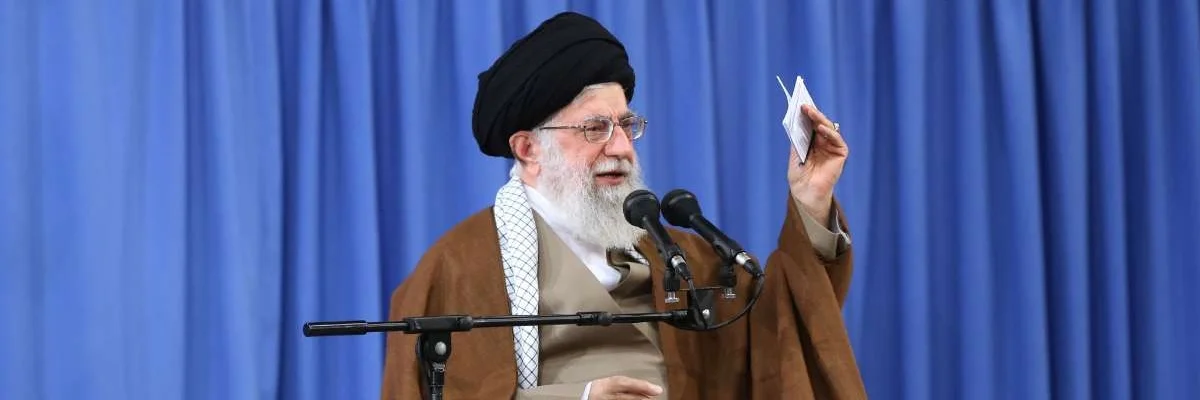
Trump Has 'Disgraced' US Prestige: Iran's Khamenei
◢ Iran's supreme leader Ayatollah Ali Khamenei said Saturday that President Donald Trump has "disgraced" US prestige and would be the ultimate loser from renewing sanctions on the Islamic republic. A defiant Khamenei dismissed the renewed US sanctions—including an oil embargo—that take effect on Monday.
Iran's supreme leader Ayatollah Ali Khamenei said Saturday that President Donald Trump has "disgraced" US prestige and would be the ultimate loser from renewing sanctions on the Islamic republic.
"This new US president... has disgraced the remnant of America's prestige and that of liberal democracy. America's hard power, that is to say their economic and military power, is declining too," he said on his Persian Twitter account, quoting a speech in Tehran.
A defiant Khamenei dismissed the renewed US sanctions—including an oil embargo—that take effect on Monday.
"The challenge between the US and Iran has lasted for 40 years so far and the US has made various efforts against us: military, economic and media warfare," he said.
"There's a key fact here: in this 40-year challenge, the defeated is the US and the victorious is the Islamic republic."
Trump announced in May he was withdrawing from the 2015 nuclear deal and reimposing sanctions, sparking outrage among world powers who say Iran has been complying with commitments to restrict its atomic program.
Washington says it wants a new deal with Iran, curtailing its regional interventions and missile program—demands which have been flatly rejected by Tehran.
’Self-Sufficiency'
The renewed sanctions are designed "to paralyze (Iran's) economy and keep
it backward. However, it has resulted in encouraging a movement towards self-sufficiency in the country," Khamenei added.
“Our youth, across the country, support independence. Some may not be so religious but they are sensitive towards domination by foreigners."
On Friday, the US said it would add 700 individuals and entities to its Iran blacklist and push the SWIFT global banking network to cut off Tehran as Washington applies "maximum pressure" to cripple the country's economy.
Secretary of State Mike Pompeo said eight countries—believed to include India, Japan and possibly China—would be given waivers to continue importing Iranian oil in order to avoid upsetting the global crude market, but only on condition they slow their purchases.
The reimposition of sanctions "is aimed at depriving the regime of the revenues it uses to spread death and destruction around the world", Pompeo said.
"Our ultimate aim is to compel Iran to permanently abandon its well-documented outlaw activities and behave as a normal country."
Britain, France, Germany and the European Union strongly condemned the latest actions from Washington in a joint statement, and have vowed to preserve the nuclear deal, known formally as the Joint Comprehensive Plan of Action (JCPOA).
"The JCPOA is a key element of the global nuclear non-proliferation architecture and of multilateral diplomacy," they said.
"It is crucial for the security of Europe, the region, and the entire world. The JCPOA is working and delivering on its goal."
The US wants Iran to withdraw from war-ravaged Syria, where the Shiite clerical regime is a key ally of President Bashar al-Assad, and end longstanding support to regional militant movements Hezbollah and Hamas, as well as Yemen's Huthi rebels.
Iran's foreign ministry welcomed the show of support from Europe, saying "the continued life of the JCPOA depends on the success" of their efforts to safeguard trade.
The ministry, in a statement, said the US sanctions were a violation of the JCPOA, UN resolutions and "a neglect of humane, moral and ethical values.”
Photo Credit: IRNA
Iran, US in Tense Wait for World Court Sanctions Ruling
◢ The International Court of Justice will hand down an eagerly awaited decision this week on Iran's demand for the suspension of debilitating nuclear-related sanctions imposed by the United States. Accusing Washington of "strangling" its economy, Tehran has asked the court in The Hague to order Washington to lift the measures, reimposed after US President Donald Trump pulled out of a multilateral 2015 accord.
The International Court of Justice will hand down an eagerly awaited decision this week on Iran's demand for the suspension of debilitating nuclear-related sanctions imposed by the United States.
Accusing Washington of "strangling" its economy, Tehran has asked the court in The Hague to order Washington to lift the measures, reimposed after US President Donald Trump pulled out of a multilateral 2015 accord.
Despite its long enmity with the United States, Iran brought the case under a 1955 "friendship treaty" that predates the country's Islamic Revolution.
Washington has forcefully told the court, which rules on disputes between United Nations member states, that it has no jurisdiction to rule on the case as it concerns a matter of national security.
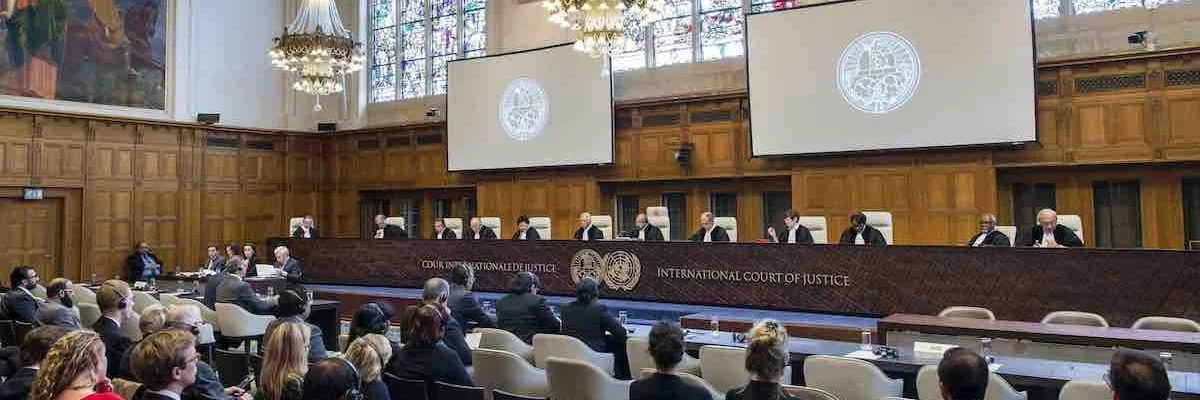
The ruling on Wednesday at 0800 GMT—in the grand surroundings of the 1913-built Peace Palace in the Dutch city—follows four days of hearings at the end of August.
Rulings by the ICJ are binding and cannot be appealed, but it has no way to enforce its decisions.
"If the court orders measures, they should be respected," Eric De Brabandere, a professor of international law at the University of Leiden, told AFP.
If the court decides it has jurisdiction, it will likely "declare that the parties should refrain from aggravating the dispute", but any steps beyond this remain to be seen, he said.
The 2015 nuclear deal saw Iran agree to limit its nuclear program and let in international inspectors in return for an end to years of sanctions by the West.
But Trump pulled out of the deal in May, to the dismay of European allies, arguing that funds from the lifting of sanctions under the pact had been used to support terrorism and build nuclear-capable missiles.
'Economic Warfare'
At the United Nations General Assembly last week, Trump denounced the deal as "horrible" and "one-sided.”
During the ICJ hearings, Iran said the sanctions reintroduced in September are causing economic suffering for its citizens. US lawyers retorted that economic mismanagement was at the root of Iran's woes.
A second wave of US measures is due to hit Iran in early November, targeting its vital oil exports.
Experts said the Iran-US case was an important opportunity for the ICJ to rule on the issue of "economic warfare"—not currently designated as a use of force.
The case "may offer the court sufficient legal basis to indicate a limit under international law to coercion by the US," Geoff Gordon, an international law expert at the Asser Institute in The Hague, told AFP.
"International law, for reasons to do with power politics, has never formally recognized economic warfare to be a use of force as prohibited by the UN Charter, though economic sanctions can have the same effects and worse as guns and bombs."
But he warned that "the decision is likely to be occasion for escalating tensions."
Relations have plunged to a new low since Trump's election, even as the US president reaches out to North Korean leader Kim Jong-un over his nuclear program.
Trump and Iranian President Hassan Rouhani faced off at the UN last week, with Rouhani denouncing leaders with "xenophobic tendencies resembling a Nazi disposition."
Despite their 1955 Treaty of Amity and Economic Relations, Iran and the United States have not had diplomatic ties since 1980.
The ICJ was set up in 1946, after the carnage of World War II, to rule in disputes between countries.
Photo Credit: ICJ
Iran Urges UN Court to Halt 'Economic Strangulation' by US
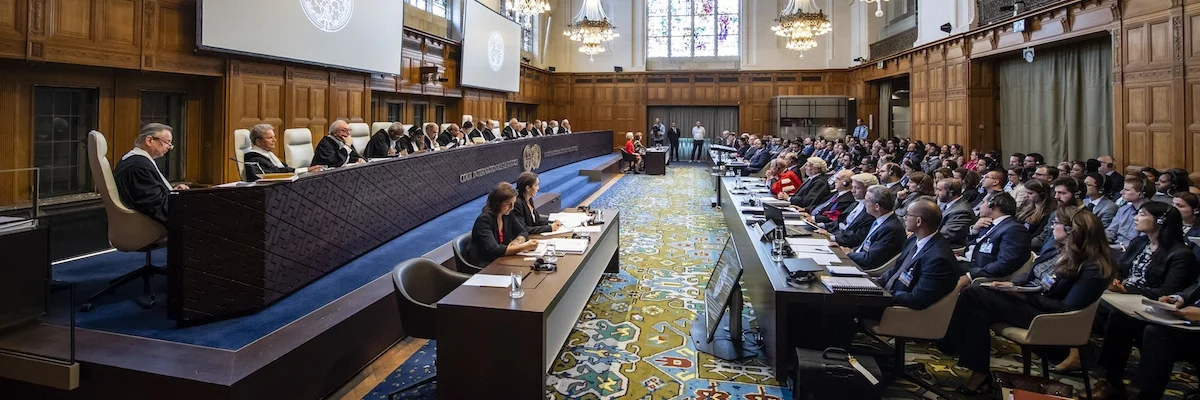
◢ Iran on Monday demanded the UN's top court suspend US nuclear-linked sanctions against Tehran, accusing Washington of plotting its "economic strangulation.” The Islamic Republic launched a suit at the International Court of Justice in The Hague over US President Donald Trump's decision to reimpose the sanctions that had been lifted in a 2015 accord.
Iran on Monday demanded the UN's top court suspend US nuclear-linked sanctions against Tehran, accusing Washington of plotting its "economic strangulation".
The Islamic Republic launched a suit at the International Court of Justice in The Hague over US President Donald Trump's decision to reimpose the sanctions that had been lifted in a 2015 accord.
Iran says Trump's move breaches a 1955 treaty. It told the court the measures were already devastating its economy and threatening the welfare of its citizens.
"The United States is publicly propagating a policy intended to damage as severely as possible Iran's economy and Iranian nationals and companies," Iran's lawyer Mohsen Mohebi told the court.
"This policy is nothing but naked economic aggression against my country," he added.
"Iran will put up the strongest resistance to the US economic strangulation, by all peaceful means."
US lawyers are due to give their response in arguments before the court on Tuesday.
Sanctions had been lifted under a 2015 multilateral agreement in return for Iran committing not to pursue nuclear weapons.
But Trump reimposed unilateral sanctions three weeks ago. He said they were needed to ensure Iran never builds a nuclear bomb.
A second wave of punitive measures are due to hit Iran in early November, targeting its vital energy sector including oil exports.
'Irreparable prejudice'
The US measures have added to Iran's economic woes, helping to fuel strikes and protests from across the country and political spectrum.
In the latest blow, Iran's parliament impeached Economy Minister Masoud Karbasian on Sunday.
Tehran filed its case before the ICJ in late July, calling on the Hague-based tribunal's judges to order the immediate lifting of sanctions pending a definitive ruling.
It said the sanctions would cause it "irreparable prejudice". It argues they breach the 1955 Treaty of Amity and Economic Relations between Iran and the United States.
'One-sided deal'
The ICJ is expected to take a couple of months to decide whether to grant Tehran's request for a provisional ruling. A final decision in the case may take years.
The 2015 deal was signed by Iran and the five permanent members of the United Nations Security Council plus Germany.
Trump, who took office in 2016, called it a "horrible one-sided deal."
He said it "failed to achieve the fundamental objective of blocking all paths to a Iranian nuclear bomb."
To the horror of the other signatories, Trump pulled out and announced in May that he would reinstate sanctions.
'Neither war, nor negotiations' -
Tehran says that the new sanctions are already hurting its economy. Iran's currency the rial has lost around half its value since April.
In a court filing at the ICJ, Iran's lawyers said the US sanctions threaten tens of billions of dollars' worth of business deals with foreign companies.
International companies including France's Total, Peugeot and Renault, and Germany's Siemens and Daimler, have suspended operations in Iran since Trump announced the US withdrawal from the nuclear deal in May.
Air France and British Airways announced Thursday they would halt flights to Tehran next month, saying they were not commercially viable. The British carrier added however that the decision was unrelated to the fresh sanctions.
Trump said the sanctions would turn up the financial pressure on Tehran to come to a "comprehensive and lasting solution" regarding its activities such as its "ballistic missile program and its support for terrorism."
Iran's supreme leader Ayatollah Ali Khamenei this month appeared to rule out any immediate prospect of talks, saying "there will be neither war, nor negotiations," with the US.
Washington's lawyers will present their case on Tuesday, with a second round of arguments on Wednesday and Thursday. Experts expect the US to challenge the ICJ's jurisdiction.
The ICJ was set up in 1946 to rule in disputes between countries.
Photo Credit: ICJ
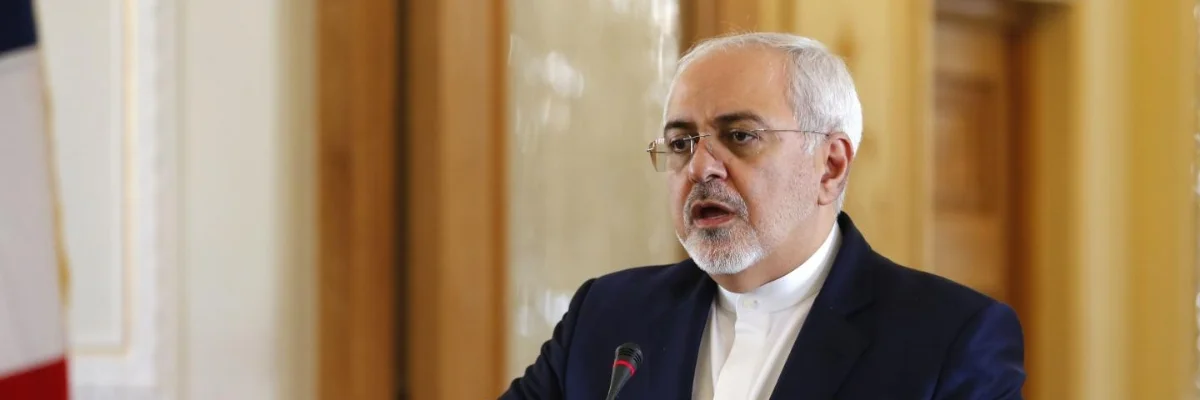
Iran Gives Most Explicit Rejection Yet of US Talks
◢ Iran gave its most explicit rejection yet of talks with the United States on Saturday, and accused Washington of an "addiction to sanctions" over its latest spat with Turkey. The US reimposed harsh sanctions on Iran on Tuesday following its May withdrawal from a landmark 2015 nuclear agreement, dealing a heavy blow to the already troubled economy. US President Donald Trump has offered talks on a "more comprehensive deal" but Iran has baulked at negotiating under the pressure of sanctions and has instead leant on its increasingly close ties with fellow US sanctions targets Turkey and Russia.
Iran gave its most explicit rejection yet of talks with the United States on Saturday, and accused Washington of an "addiction to sanctions" over its latest spat with Turkey.
The US reimposed harsh sanctions on Iran on Tuesday following its May withdrawal from a landmark 2015 nuclear agreement, dealing a heavy blow to the already troubled economy.
US President Donald Trump has offered talks on a "more comprehensive deal" but Iran has baulked at negotiating under the pressure of sanctions and has instead leant on its increasingly close ties with fellow US sanctions targets Turkey and Russia.
Foreign Minister Mohammad Javad Zarif was asked by the conservative Tasnim
news agency whether there was any plan to meet with US Secretary of State Mike
Pompeo.
"No, there will be no meeting," was the blunt response from Zarif.
He said there were also no plans for a meeting with US officials on the sidelines of the UN General Assembly in New York next month, which both Iranian President Hassan Rouhani and Trump are due to attend.
"On Trump's recent proposal (of talks), our official stance was announced by the president and by us. Americans are not honest and their addiction to sanctions does not allow any negotiation to take place," Zarif told Tasnim.
It was Iran's most explicit rejection of talks to date, after much speculation that economic pressure would force its leaders back to the table with Washington or at least to engage in backroom discussions in New York.
Stop 'Bullying' Turkey
Earlier on Saturday, Zarif waded into the mounting row between Turkey and the United States.
"Trump's jubilation in inflicting economic hardship on its NATO ally Turkey is shameful," he wrote on Twitter.
"The US has to rehabilitate its addiction to sanctions (and) bullying or entire world will unite—beyond verbal condemnations—to force it to," he warned.
"We've stood with neighbors before, and will again now."
Trump said Friday he was doubling steel and aluminum tariffs on Turkey as part of an ongoing row over the detention of American pastor Andrew Brunson and other issues.
The tensions have fueled a run on the Turkish lira, which dropped 16 percent to a record low on Friday, with Trump tweeting that the currency was sliding "rapidly downward against our very strong Dollar!"
Rial Pain
Iran too has suffered a major decline in its currency this year—in part due to US abandonment of the nuclear deal—with the rial losing more than half its value against the dollar since April.
Ironically, the rial strengthened in the two days leading up to the reimposition of US sanctions on Tuesday, after the government announced new foreign exchange measures giving greater freedom to trade dollars at market rates.
But there has since been a fresh decline of almost 13 percent, with the rial at 106,200 per dollar on Saturday, according to currency tracking website Bonbast—approaching the record low of 119,000 that it reached on July 31.
Analysts say this is due to uncertainty in the market, with currency traders still unsure of the new rules and struggling to access dollars from the central bank.
Zarif met repeatedly with then US secretary of state John Kerry during the negotiation and implementation of the 2015 agreement—but those relatively warm ties were abruptly ended when the Trump administration came to power.
Rouhani said last week that Iran "always welcomed negotiations" but that Washington would first have to demonstrate it can be trusted.
"If you're an enemy and you stab the other person with a knife and then you say you want negotiations, then the first thing you have to do is remove the knife," he said in an interview on state television.
Photo Credit: IRNA
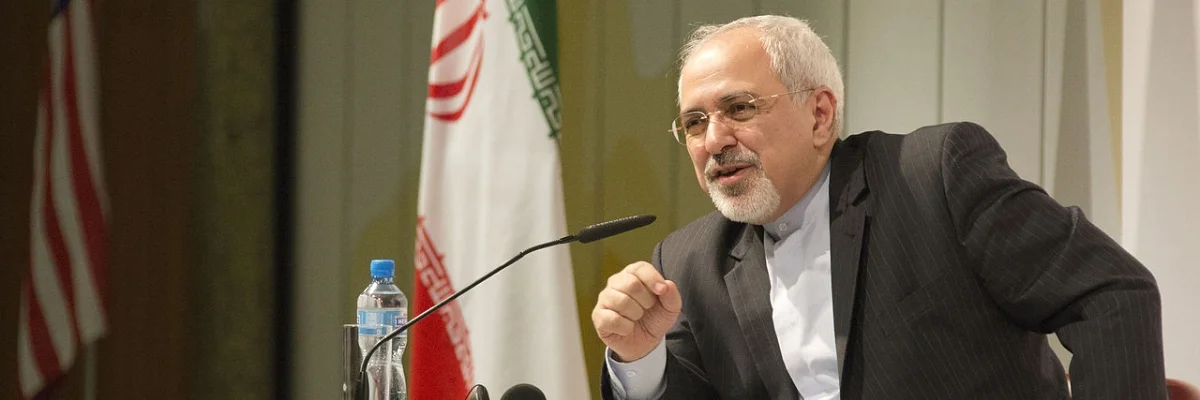
Iran Would Talk Prisoners if US Shows Respect: Zarif
◢ Iran's Foreign Minister Mohammad Javad Zarif says Tehran is open to prisoner swap negotiations with the US if the Trump administration shows a "change of attitude." Negotiations are a "possibility certainly from a humanitarian perspective, but it requires a change of attitude," Zarif said in an interview with CBS television's "Face the Nation" set to air Sunday.
Iran's Foreign Minister Mohammad Javad Zarif says Tehran is open to prisoner swap negotiations with the US if the Trump administration shows a "change of attitude."
Negotiations are a "possibility certainly from a humanitarian perspective, but it requires a change of attitude," Zarif said in an interview with CBS television's "Face the Nation" set to air Sunday.
Five Americans are held in Tehran, including 81-year-old Baquer Namazi, who is in failing health.
Zarif blasted the US administration for showing "disrespect" toward Iran, a frequent target of President Donald Trump's wrath.
Trump has said he wants to rip up the Iran nuclear deal, and his new National Security Advisor John Bolton has advocated for regime change in Tehran.
"You do not engage in negotiations by exercising disrespect for a country, for its people, for its government, by openly making claims, including this illusion about regime change," Zarif said, according to interview excerpts.
In January 2016, after months of secret talks between senior Iranian and US officials during Barack Obama's administration, Tehran released four Americans in exchange for seven Iranians being released in the United States.
A fifth American, identified as Matthew Trevithick, was also released separately as an "associated goodwill gesture."
According to Zarif, there are "many" Iranian prisoners being held in the United States or elsewhere at America's request, "including a lady who had to give birth in an Australian prison because of a US extradition request."
Photo Credit: Wikicommons