

UN Calls for Lifting Restrictions on Iran Diplomats
◢ The United Nations General Assembly on Wednesday called on the US—which hosts the organization's headquarters—to lift restrictions on Iranian diplomats. The UN resolution, proposed by Cyprus on behalf of Bulgaria, Canada, Costa Rica and Ivory Coast, was approved by consensus without being put to a vote.
The United Nations General Assembly on Wednesday called on the US—which hosts the organization's headquarters—to lift restrictions on Iranian diplomats.
The resolution also condemned the denial of visas to Russian diplomats.
Since the summer, Iranian diplomats and ministers have been under strict movement restrictions when they are in the US. They are limited largely to the area around the UN headquarters in New York, the Iranian mission and the ambassador's residence.
The UN resolution, proposed by Cyprus on behalf of Bulgaria, Canada, Costa Rica and Ivory Coast, was approved by consensus without being put to a vote.
Unlike those passed by the Security Council, General Assembly resolutions are not binding but do have political weight.
Without naming specific countries, the text was mainly aimed at the restrictions imposed on Iran, as well as the visa denials to Russia's delegation during last September's General Assembly, diplomats said.
The resolution said the UN "urges the host country to remove all remaining travel restrictions imposed by it on staff of certain missions and staff members of the Secretariat of certain nationalities."
The UN "takes seriously" the travel restrictions and arguments of the "two Missions" that say they are hindered in their functions, the text added.
Tensions between the US and Iran have risen since May last year when President Donald Trump abandoned a 2015 multinational deal with Iran aimed at curbing its nuclear program and began reimposing sanctions.
In September, while participating in the annual General Assembly, Iranian Foreign Minister Mohammad Javad Zarif complained he was unable to visit the country's UN ambassador in a US hospital.
The UN also "expresses serious concern regarding the non-issuance of entry visas to certain representatives of certain Member States," the resolution said, referring to 18 Russian diplomats who were denied US visas, also in September.
They were supposed to participate in various UN committees until December.
According to UN diplomats, during a lunch organized by the White House in early December for members of the UN Security Council, Russia's ambassador to the UN Vassily Nebenzia stressed to Trump that the denied visas were damaging to the United States' image as host country.
The US president said he was not aware of the issue and asked his team to look into the matter, the diplomats said.
The visa refusals have led to work delays for the concerned committees. The UN is considering the possibility of hosting sessions in the Geneva or Vienna headquarters in 2020 if the problem continues.
Photo: Wikicommons
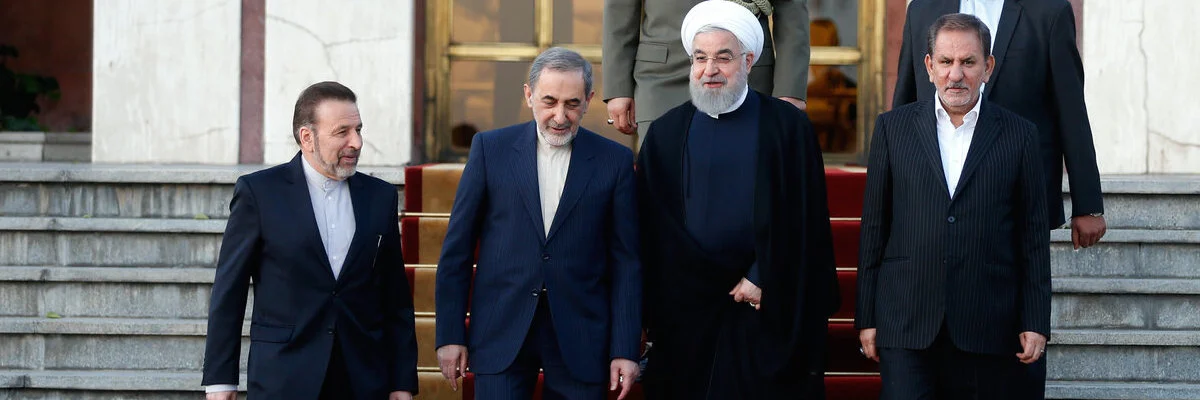
Rouhani Would Not Take Trump's Call, Says French Diplomatic Source
◢ US President Donald Trump phoned his Iranian counterpart Hassan Rouhani on the sidelines of the UN summit last month but he refused to take the call, a French diplomatic source said on Tuesday. "In New York, up to the last moment, Emmanuel Macron tried to broker contact, as his talks with presidents Trump and Rouhani led him to think contact was possible," the diplomatic source said.
US President Donald Trump phoned his Iranian counterpart Hassan Rouhani on the sidelines of the UN summit last month but he refused to take the call, a French diplomatic source said on Tuesday.
The call happened on September 24, the source said, after French President Emmanuel Macron had shuttled between the US and Iranian leaders in a bid to arrange a historic encounter that he hoped would reduce the risk of all-out war in the Middle East.
"In New York, up to the last moment, Emmanuel Macron tried to broker contact, as his talks with presidents Trump and Rouhani led him to think contact was possible," the diplomatic source said.
Speculation was abuzz last month that the leaders could meet on the sidelines of the General Assembly.
But Rouhani said he would only hold talks with the US if Trump lifted economic sanctions on Tehran.
Macron used his 48 hours in New York to see Trump three times and Rouhani twice, urging them to engage directly.
The source said Macron made a last-ditch attempt before flying back to Paris, with French technicians installing a secure phone line linking Trump's Lotte hotel and the Millennium, hosting the Iranian delegation.
The plan involved Trump calling at 9pm despite doubts over the Iranian reaction.
Macron went to the Millennium to ensure the phone call took place. Trump made the call, but Rouhani informed the French president he would not take it, the source said.
"The discussion continued to founder on the Iranians first wanting US sanctions lifted. Donald Trump wants Iran first to make commitments on its nuclear (ambitions) and ballistic and regional activities," the source said.
The French diplomatic source comments come after US reports emerged earlier this week about Macron's initiative to get the leaders to talk.
Tensions have been escalating between Iran and the United States since May last year when President Donald Trump pulled out of the nuclear accord and began reimposing sanctions that have crippled the Iranian economy.
Britain, France and Germany have repeatedly said they are committed to saving the deal that gave Iran relief from sanctions in exchange for curbs on its nuclear programme, but their efforts have so far borne little fruit.
Photo: IRNA

Macron Urges Iran and Rivals to Show ‘Courage of Building Peace’
◢ French President Emmanuel Macron laid out what he says are the conditions for dialing back tensions with Iran, calling on the U.S. and the Iran’s regional rivals to show “the courage of building peace.” Iran is putting “maximum pressure” on the region, Macron said, in a word play on Trump’s “maximum pressure” campaign of sanctions against Tehran.
By Gregory Viscusi
French President Emmanuel Macron laid out what he says are the conditions for dialing back tensions with Iran, calling on the U.S. and the Islamic Republic’s regional rivals to show “the courage of building peace.”
Addressing the United Nations General Assembly on Tuesday, Macron said the recent attack on Saudi oil facilities—which France and its European partners on Monday blamed on Iran—had “changed the situation.” He warned that “a small spark could set off a major conflict.”
Iran is putting “maximum pressure” on the region, Macron said, in a word play on Trump’s “maximum pressure” campaign of sanctions against Tehran.
Macron said solving the crisis with Iran requires “full certainty that Iran never has nuclear weapons,” a settlement of the war in Yemen, a security plan for the region that safeguards maritime flows and, finally, the lifting of U.S.-led sanctions.
“I have no naivety and I don’t believe in miracles,” he said. “I believe in the courage of building peace, and I know the U.S. and Iran have this courage.”
Macron said the U.S., Iran and other participants in the 2015 accord to limit Iran’s nuclear program must sit down and negotiate. President Donald Trump quit the accord last year, reimposing sanctions that Macron and other European leaders tried but failed to circumvent.
Taking clear aim at Trump’s UN address earlier on Tuesday—when the American president said “the future does not belong to globalists, the future belongs to patriots”—Macron said that a “withdrawal into nationalism” won’t solve any crisis.
Photo: IRNA
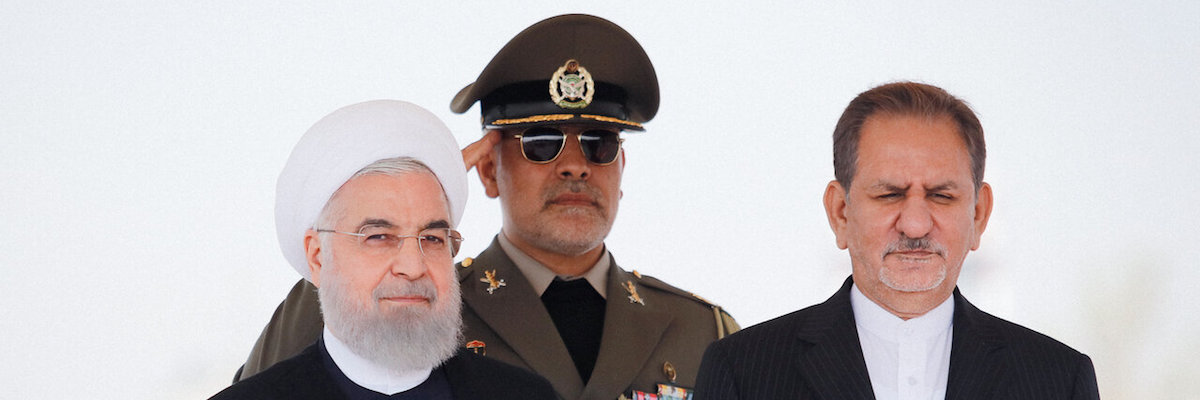
Rouhani Lays Out Conditions as U.S. Talks Seen Slipping Away
◢ Iranian President Hassan Rouhani said talks with the U.S. are still possible under two conditions, but the likelihood of direct negotiations at the United Nations this week appeared to be slipping away as key European leaders prepare to leave New York. Those demands look out of reach for now.
By John Micklethwait and Bill Faries
Iranian President Hassan Rouhani said talks with the U.S. are still possible under two conditions, but the likelihood of direct negotiations at the United Nations this week appeared to be slipping away as key European leaders prepare to leave New York.
Rouhani, speaking Tuesday to New York editors on the sidelines of the UN General Assembly, said the U.S. must return to talks with Iran and the other five partners in the 2015 nuclear agreement that President Donald Trump quit last year. And, Rouhani said, the U.S. must end “illegal” sanctions Trump has ramped up on the Islamic Republic since abandoning the accord.
Those demands look out of reach for now. Getting the U.S. and European allies still in the nuclear deal together in one room becomes harder after Tuesday, when French President Emmanuel Macron and U.K. Prime Minister Boris Johnson are scheduled to return home from New York.
Macron and Japanese Prime Minister Shinzo Abe have repeatedly tried to broker an agreement between Washington and Tehran that would ease tensions in the Persian Gulf. But late on Monday, France joined with the U.K. and Germany in a statement blaming Iran for recent attacks on Saudi oil facilities and saying it’s time for Rouhani’s government to sit down for talks on an agreement that would go beyond the 2015 accord.
“The moment has come for Iran to accept negotiations on a long-term framework on its nuclear program as well as on regional security, including its ballistic missiles,” according to the three nations, which didn’t repeat their past criticism of Trump for quitting the 2015 deal.
In his speech to the UN General Assembly on Tuesday, Trump cited the attacks on Saudi Arabia as a sign of the Islamic Republic’s “menacing behavior” and called on Rouhani’s government to stop lashing out “at everyone else for the problems they alone have created.” The country, Trump said, has “blood lust.”
“Iran’s citizens deserve a government that cares about reducing poverty, ending corruption and increasing jobs, not stealing their money to fund and massacre abroad and at home,” Trump said.
Officials in Tehran have repeatedly said the government won’t consider new talks until the U.S. and Europe abide by their commitments to the 2015 deal, including ensuring that Iran gets economic benefits from curbing their nuclear program. The Islamic Republic also denies any involvement in the attacks on Saudi Aramco facilities.
Anti-Iran Group
On Wednesday, Secretary of State Michael Pompeo is scheduled to speak at an anti-Iran conference in New York. He’s expected to stick with a hard line against U.S. concessions until Iran changes its behavior. Iran considers the group Pompeo is speaking to—United Against Nuclear Iran—a terrorist organization.
With talks this week looking increasingly unlikely, Trump held out the promise of eventual negotiations, saying Tehran could learn from the example of American outreach to North Korea. After severely criticizing North Korea’s missile and nuclear testing in his 2017 UN speech, Trump has since met three times with Kim Jong Un in a bid to get the isolated country to give up its nuclear weapons program. Iran denied it wants to develop nuclear arms and the 2015 accord was designed to restrict and tightly monitor its atomic activities.
“The United States has never believed in permanent enemies,” Trump said. “We want partners, not adversaries. America knows that while anyone can make war, only the most courageous can choose peace.”
Photo: IRNA

Boris Johnson Says It’s Time to Make a New Nuclear Deal With Iran
◢ U.K. Prime Minister Boris Johnson said it’s time to strike a new nuclear deal with Iran, breaking ranks with European allies France and Germany. “Whatever your objections to the old nuclear deal with Iran, it’s time now to move forward and do a new deal,” Johnson told Sky News on Monday.
By Robert Hutton and Gregory Viscusi
U.K. Prime Minister Boris Johnson said it’s time to strike a new nuclear deal with Iran, breaking ranks with European allies France and Germany, which are still trying to preserve the 2015 agreement President Donald Trump withdrew from last year.
“Whatever your objections to the old nuclear deal with Iran, it’s time now to move forward and do a new deal,” Johnson told Sky News on Monday in New York, where he’s attending the United Nations General Assembly.
Johnson also suggested it’s “plainly” clear that Iran was responsible for attacks this month on key oil facilities in Saudi Arabia, pulling into line with the Trump administration’s assessment. “How do we respond to what the Iranians plainly did?” Johnson said. “What the U.K. is doing is trying to bring people together and de-escalate tensions.”
Iran has denied being involved in the attacks on two Saudi Aramco facilities, which were quickly claimed by Tehran-backed Houthi rebels in Yemen who have been fighting a Saudi-led coalition for four years.
After Trump quit the nuclear deal with Iran, the other nations participating in it -- the U.K., Germany, France, Russia and China -- vowed to stand by the accord. But they have failed so far to find a way to sidestep increasingly tough U.S. economic sanctions on the Islamic Republic, and Iran has begun to breach the agreement’s limits on its nuclear program.
Trump has vowed to seek a more stringent accord that would bar Iran permanently from the capability to develop nuclear weapons while also curbing its ballistic missile program and its support for groups, such as Hezbollah, that the U.S. considers terrorists.
Asked about Johnson’s comments, Trump told reporters, “I respect Boris a lot and I’m not at all surprised he was the first one to come out and see that.” He said Johnson is “a man who, No. 1, he’s a friend of mine, and No. 2, he’s very smart, very tough.”
Macron’s Stance
French President Emmanuel Macron said earlier Monday that “the oil attacks change the situation but France remains just as determined.”
He told reporters at the UN that he’s continuing to work on calming tension between Iran and the U.S. even as he inched closer to saying Iran may have been behind the attacks on the Saudi oil facilities.
“There are indications that a state actor may have been involved, given the sophistication,” Macron said, although he stopped short of saying who was responsible until Saudi Arabia completed its investigation.
Macron said he had a quick talk with Trump on Monday morning on the sidelines of a UN General Assembly meeting about climate, and will see him again Tuesday, though the White House hasn’t confirmed any meeting with the French president. Macron said he would meet Iranian President Hassan Rouhani later Monday, a session confirmed by Iranian officials.
“You know the work France has done the past months to make propositions to seek a de-escalation,” Macron said. “We need to get all the partners to sit around a table.” He said the subjects that needed to be discussed are maintaining 2015 accord, what happens after the accord expires, Iran’s ballistic missile program and its involvement in regional crises such as Syria and Yemen.
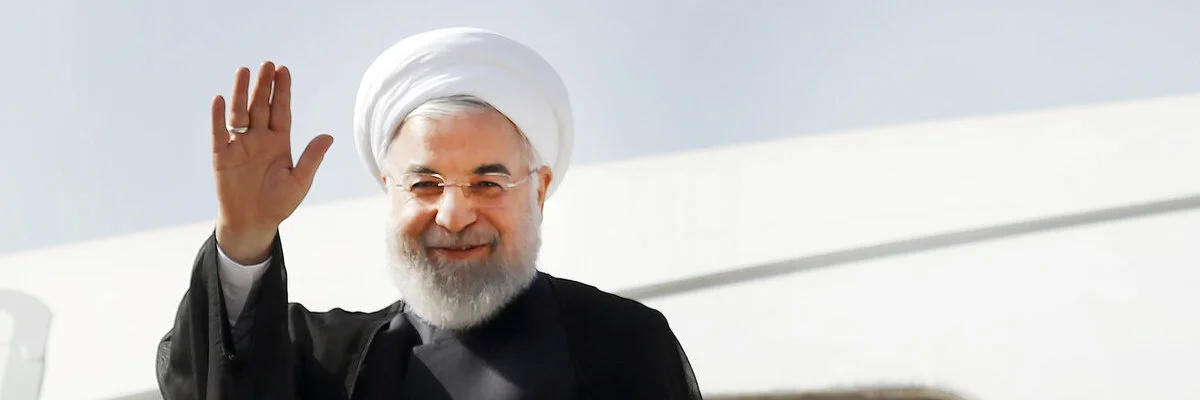
Rouhani Heads to UN in Bid to Win Iran Support Against 'Cruel' US
◢ President Hassan Rouhani set off for New York on Monday to attend the UN General Assembly on a mission to win Iran support against "cruel" pressure from the United States. Speaking before boarding his flight, Rouhani said his delegation was heading to the UN gathering despite reluctance from President Donald Trump's administration to issue them visas.
By David Vujanovic
President Hassan Rouhani set off for New York on Monday to attend the UN General Assembly on a mission to win Iran support against "cruel" pressure from arch-foe the United States.
His departure came as Iran said an oil tanker flying the flag of US ally Britain was "free" to leave more than two months after its forces seized it in sensitive Gulf waters.
Speaking before boarding his flight, Rouhani said his delegation was heading to the UN gathering despite reluctance from President Donald Trump's administration to issue them visas.
Tehran and Washington have been at loggerheads since May last year when Trump abandoned a 2015 nuclear deal and subsequently began reimposing sanctions on Iran in a stated campaign of "maximum pressure".
"When the Americans aren't willing (to let Iran participate), we must insist on travelling," Rouhani said.
"It is essential for us to take part in the UN General Assembly and talk at various levels," he told a news conference at Tehran's Mehrabad airport.
"The cruel actions that have been taken against the Iranian nation and also the difficult and complicated issues that our region faces with them need to be explained to the people and countries of the world."
Tensions have flared in the Gulf since May this year when Iran began reducing its commitments under the nuclear deal and the US deployed military assets to the region.
The US has since formed a naval coalition with its allies Britain, Australia, Bahrain, Saudi Arabia and the United Arab Emirates to escort commercial ships, in response to a spate of incidents in the Gulf.
Saudi Escalation
The tensions escalated further in the wake of devastating September 14 attacks on Saudi oil installations that Washington and Riyadh have, to varying degrees, blamed on Tehran.
British Prime Minister Boris Johnson said Monday his government was drawing a similar conclusion to its allies.
"The UK is attributing responsibility with a very high degree of probability to Iran" for the Saudi attacks, he said, quoted by the UK's Press Association news agency.
Johnson was himself en-route to New York, where he was scheduled to meet with Iran's president.
Long-fraught relations between London and Tehran were further soured after Iran seized the British-flagged Stena Impero on July 19 for allegedly breaking "international maritime laws".
Iran said on Monday that the tanker was "free" to leave after the completion of legal proceedings.
But government spokesman Ali Rabiei did not specify when the vessel, which is owned by a Swedish company, would set sail.
The Iranian announcement comes after a court in British overseas territory Gibraltar ordered the release of an Iranian oil tanker in mid-August despite an 11th-hour US legal bid to keep it in detention.
Before departing for New York, Rouhani said Iran would put forward a plan to de-escalate tensions in the Gulf during the UN meeting.
Under the plan dubbed the Hormuz Peace Endeavour, or HOPE, he said, "all the coastal states of the Persian Gulf are invited to join this coalition to provide and maintain regional security".
Rouhani said the Americans were "at the root" of conflicts in the region and their motive for blaming Iran was to deploy its forces in the Gulf and have access to its oil.
"It is clear that they want to own all of the oil that is in the east of Saudi Arabia.
"It is clear that the US has other goals and such incidents are their pretext to be more present in the region."
Rouhani-Trump Meeting Unlikely
Since pulling out of the nuclear deal, Washington has slapped sanctions on Tehran's armed forces, financial sector and top officials including Foreign Minister Mohammad Javad Zarif.
Iran has responded by scaling back its commitments under the 2015 deal with world powers that gave it the promise of sanctions relief in return for limiting the scope of its nuclear programme.
The US has said it would make its case against Iran at the General Assembly.
Secretary of State Mike Pompeo said the US wanted to give diplomacy "every opportunity to succeed" in the wake of the attacks that set aflame Abqaiq plant and the Khurais oil field in eastern Saudi Arabia.
Following the attacks, the US announced it was imposing further sanctions on Iran's central bank.
That may have dealt a final blow to efforts by France to arrange a meeting between Rouhani and Trump during the UN General Assembly.
Photo: IRNA
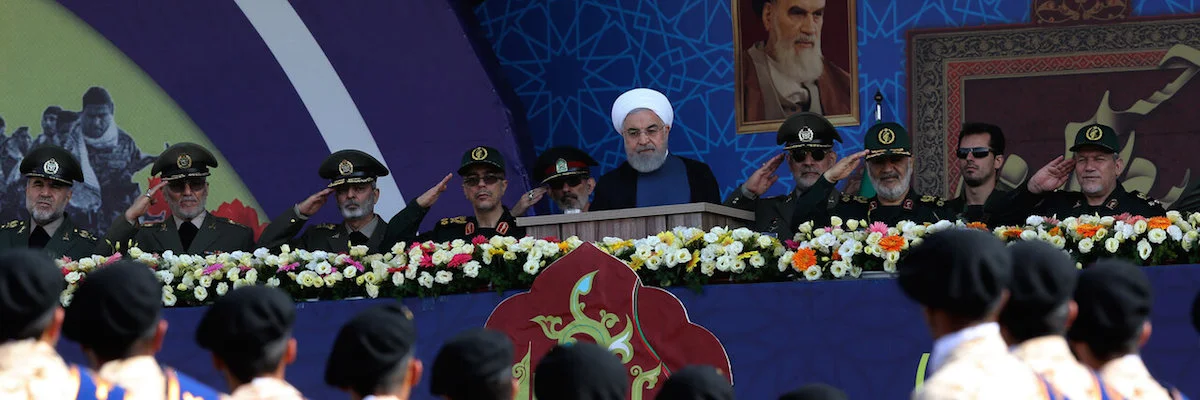
Iran Accuses Foreign Forces of Raising Persian Gulf 'Insecurity'
◢ President Hassan Rouhani on Sunday denounced the presence of foreign forces in the Persian Gulf and said Iran will present a peace plan, after its arch-foe Washington ordered reinforcements to the tense region. "Foreign forces can cause problems and insecurity for our people and for our region," Rouhani said before a military parade commemorating the Iran-Iraq war.
By Amir Havasi
President Hassan Rouhani on Sunday denounced the presence of foreign forces in the Persian Gulf and said Iran will present a peace plan, after its arch-foe Washington ordered reinforcements to the tense region.
"Foreign forces can cause problems and insecurity for our people and for our region," Rouhani said before a military parade commemorating the Iran-Iraq war.
Rouhani also said Iran would present a peace plan to the United Nations within days.
"In this sensitive and important historical moment, we announce to our neighbours that we extend the hand of friendship and brotherhood to them," he said.
Rouhani and top military brass saluted as row after row of soldiers marched past them in tight formation, followed by an array of homegrown military hardware.
The parade showcased tanks, armoured vehicles, drones and missiles—including the Khorramshahr, said to have a range of 2,000 kilometres (more than 1,200 miles).
Tensions between Iran and the US and its allies have threatened to boil over since May last year when President Donald Trump unilaterally withdrew from a 2015 nuclear deal and later began reimposing sanctions.
The tensions escalated in the wake of devastating September 14 attacks on Saudi oil installations that Washington and Riyadh have, to varying degrees, blamed on Tehran.
Following the attacks, which triggered a spike in global oil prices, Trump initially raised the possibility of a military response, saying the US was "locked and loaded".
Washington later expanded its long list of sanctions against Tehran, targeting its central bank, but Trump indicated he did not plan military action.
On Friday, Defence Secretary Mark Esper said the US was sending reinforcements to Saudi Arabia at "the kingdom's request", but noted they would be "defensive in nature".
'Stay Away'
Rouhani called on the foreign powers to "stay away" from the Gulf.
"If they're sincere, then they should not make our region the site of an arms race," he said.
"Your presence has always brought pain and misery... The farther you keep yourselves from our region and our nations, the more security there will be," he added.
"Our logic is the logic of a Persian Gulf whose security comes from within."
The annual military parade marks the start of the week commemorating Iran's 1980-1988 war with Iraq.
Among the new weaponry debuting at Sunday's parade was an upgraded warhead for the Khorramshahr ballistic missile, the Kaman 12 drone with a range of 1,000 kilometres and a mobile radar system capable of detecting landmines, local media reported.
Iran's Foreign Minister Mohammad Javad Zarif tweeted that Rouhani would announce details of the "Hormuz Peace Endeavour" at the UN General Assembly.
Rouhani is to travel to New York on Monday, a day before general debate kicks off at the UN gathering.
Tensions have flared in the Gulf since May, when Iran began reducing its commitments to the nuclear deal and the US said it was sending forces to waters near the Islamic republic in response to "indications of a credible threat".
The US deployed an aircraft carrier strike group and a bomber task force to the sensitive waterways, before sending B-52 bombers, an amphibious assault ship and a Patriot missile battery.
Following the deployments, commercial ships were mysteriously attacked, drones downed and oil tankers seized in Gulf waters.
'Act of War'
Trump in June authorised a military strike after Iran shot down a US drone, only to call off the retaliation at the last moment.
The crisis deepened with the September 14 attacks on Saudi energy giant Aramco's Abqaiq processing plant and Khurais oilfield which halved the kingdom's crude output.
Yemen's Iran-backed Huthi rebels claimed responsibility, but the US says attacks involved cruise missiles from Iran and amounted to "an act of war".
Saudi Arabia, which has been bogged down in a five-year war in Yemen, has warned of "appropriate measures" once the source of the strikes is confirmed by a UN investigation.
The UN has welcomed a Huthi plan for a cessation of hostilities announced Friday, but Saudi Arabia was sceptical.
After months of rising tensions, Iran's semi-official news agency ISNA said Sunday a Swedish-owned oil tanker detained two months ago by Iranian forces would be released "soon".
But "the case regarding its legal violations is still open with Iran's judicial authorities," it quoted the head of the local maritime organization as saying.
Photo: IRNA
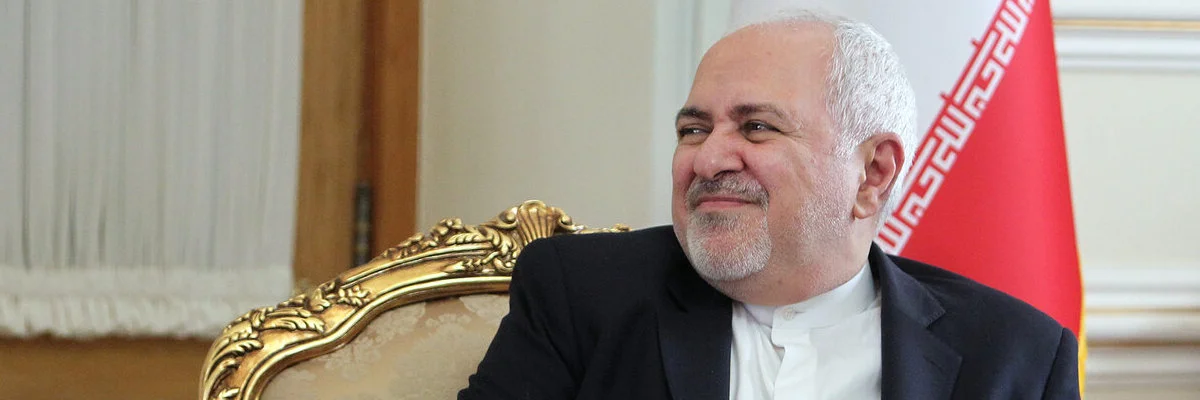
Iran Says Zarif Leaving for UN in NY on Friday
◢ Iran's Foreign Minister Mohammad Javad Zarif is to leave for New York early Friday to attend the UN General Assembly, his ministry said, after reports he may not be granted a visa. "The minister usually departs a day or two before the President," he added, seemingly confirming that both had received visas from the United States.
Iran's Foreign Minister Mohammad Javad Zarif is to leave for New York early Friday to attend the UN General Assembly, his ministry said, after reports he may not be granted a visa.
"Foreign Minister, @JZarif is leaving for New York early on Friday morning to attend the 74th session of UNGA," ministry spokesman Abbas Mousavi wrote in a tweet on Thursday.
"The minister usually departs a day or two before the President," he added, seemingly confirming that both had received visas from the United States.
State media had reported the day before that Iran's President Hassan Rouhani and his delegation could be forced into skipping the assembly if US visas were not issued.
As the host government, the United States is generally obliged to issue visas to diplomats who serve at UN headquarters.
But as Iran's top diplomat, Zarif was sanctioned by the US on July 31—ahead of the UN General Assembly debate due to begin on Tuesday.
UN Secretary-General Antonio Guterres said the world body had been in contact with the U.S. "to solve all outstanding visa problems in relation to delegations".
Iran and the United States have been at loggerheads since May last year when Trump abandoned a 2015 nuclear deal and began reimposing sanctions in its campaign of "maximum pressure".
Iran responded by scaling back its commitments under the landmark accord, which gave it the promise of sanctions relief in return for limiting the scope of its nuclear programme.
The latest escalation had the US blaming Iran for Saturday attacks on two Saudi oil installations as well as a string of recent assaults on shipping in sensitive Persian Gulf waters, all denied by Iran.
Photo: IRNA
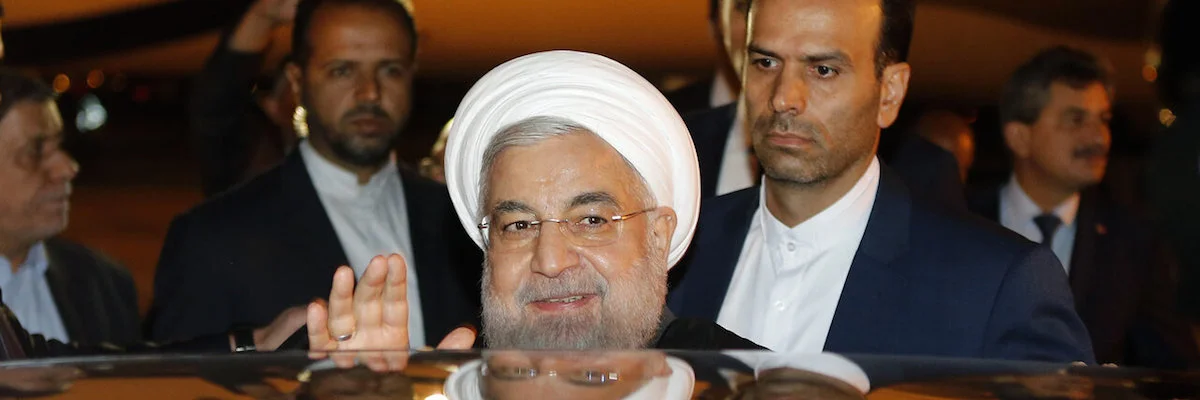
Iran Says 'No Plans' for Rouhani-Trump Meet on UN Sidelines
◢ Iran has not made any plans for President Hassan Rouhani to meet his US counterpart Donald Trump on the sidelines of the upcoming UN General Assembly, a spokesman said Monday. "We have neither planned for this meeting, nor do I think such a thing would happen in New York," the foreign ministry's Abbas Mousavi said in remarks aired on state television.
Iran has not made any plans for President Hassan Rouhani to meet his US counterpart Donald Trump on the sidelines of the upcoming UN General Assembly, a spokesman said Monday.
"We have neither planned for this meeting, nor do I think such a thing would happen in New York," the foreign ministry's Abbas Mousavi said in remarks aired on state television.
The White House said on Sunday that Trump may still meet Rouhani at the UN meeting in New York next week, despite accusations from Washington that Tehran was behind weekend drone attacks on Saudi Arabian oil facilities.
"As we have stated before, if the Americans return to the JCPOA and cease their economic terrorism, they can return to the joint commission and talk," Mousavi added.
He was referring to a commission within the framework of the Joint Comprehensive Plan of Action, a 2015 agreement that gave Iran the promise of relief from sanctions in return for curbs on its nuclear programme.
Tensions between the two countries have soared since Trump unilaterally withdrew the US from the JCPOA in May last year and began reimposing crippling sanctions on the Islamic republic.
European powers have been trying to salvage the nuclear accord and de-escalate the situation.
French President Emmanuel Macron has been leading the efforts, and proposed a meeting between Rouhani and Trump to defuse the crisis.
Photo: IRNA

Macron’s Trump Hustle Shreds New Iran Adviser’s Nerves
◢ French President Macron tapped Emmanuel Bonne, an Arabic and Farsi speaker. to drive his foreign policy agenda in May, replacing Philippe Etienne, a European affairs specialist. The appointment symbolizes a change in foreign policy priorities for the French president after spending the first two years of his term trying to revamp the European Union.
By Helene Fouquet and Gregory Viscusi
The adviser to French President Emmanuel Macron stood on a terrace overlooking the Atlantic in Biarritz last month, puffing on one cigarette after another as the G-7 leaders huddled inside.
Emmanuel Bonne had kicked his university habit years before, but started up again when he was handed his first assignment for the Macron administration: get Iran and the U.S. back to the negotiating table.
To force the issue, he’d helped organize a surprise visit by Iranian Foreign Minister Javad Zarif to coincide with the talks. But U.S. officials were bristling at France’s handling of the summit and the fate of the initiative hung in the balance.
Macron tapped Bonne, an Arabic and Farsi speaker known for his Middle East expertise, to drive his foreign policy agenda in May, replacing Philippe Etienne, a European affairs specialist who’s now ambassador to the U.S. The appointment symbolizes a change in foreign policy priorities for the French president after spending the first two years of his term trying to revamp the European Union.
“It’s an admission that Macron will now be more active in the Middle East, where there’s a lot to do,” said Martin Quencez, the deputy director of the Paris office for the German Marshall Fund think tank. “It’s a definite shift in focus.”
‘Audacity’
Renewing the activist foreign policy Macron pledged in his 2017 election has been helped by a steady improvement in domestic approval ratings. And with German Chancellor Angela Merkel bogged down in coalition politics and Britain distracted by Brexit, Macron’s aides confirm his efforts in the coming months will be targeted more outside Europe.
In a speech to French ambassadors on Aug. 27, Macron described his government’s foreign policy as “influencing the world order with the cards it holds and not submitting to any sort of fatalism,” and over the course of nearly two hours he used the word “audacity” 18 times.
Inviting Zarif to Biarritz was certainly audacious but appears to have paid off. The conference opened Aug. 24 with European allies and the U.S. divided over how to handle Iran’s nuclear ambitions and closed three days later with signs differences could be narrowed.
According to Macron’s office, hawkish U.S. National Security Adviser John Bolton was nowhere to be seen during the G-7, which they took as a good sign. His firing on Sept. 10 now opens new opportunities for advances at the United Nations General Assembly in New York later this month.
Under a French plan, the Tehran government would be allowed to resume some oil exports if it joins formal talks and returns to compliance with the nuclear accord, which unraveled from mid-2018 when the U.S. pulled out. President Donald Trump is open to easing sanctions, something Bolton opposed, according to three people familiar with the matter.
The first signs of ground being prepared came in June, when Bonne visited Tehran. The following month, after Iran said it breached its uranium enrichment cap, Macron sent the scholar-turned-diplomat again to the Iranian capital to speak directly with President Hassan Rouhani.
“Macron’s trying to figure out what’s the minimum Iran expects and the maximum the U.S. would give,” said Henry Rome, a research analyst at the Eurasia Group. “The French are being brokers.”
Taking Risks
Tehran was a familiar place for Bonne to be sent just a few weeks into his new job. It’s where he began his diplomatic career as an adviser to the French embassy in the early 2000s, before moving on to Saudi Arabia in the same role. He was later ambassador to Lebanon.
Apart from trying to salvage the nuclear deal, Macron’s aides say he’ll try to reset relations with Russia—something Bonne isn’t too keen on—with any eventual success there being leveraged to attempt advances in Syria and Libya. Macron has decried Russia’s cyber-meddling in other countries and its crackdowns on domestic opponents, but insists the world’s flash-points can’t be resolved without Moscow.
“We are in Europe, and so is Russia,” he told the French ambassadors. “If we can’t learn to do useful things with Russia, then we will be stuck in sterile tensions and frozen conflicts.”
Rising Stress Levels
So far, Macron can’t point to a major foreign policy success. He failed to keep Trump in the Paris climate accord and the Iran nuclear agreement. His attempts to seize control of talks between Libyan factions didn’t lead to any notable progress.
His next test comes on Sept. 24 when he and Trump address the General Assembly, with Rouhani speaking the following day.
France can open the door, but it can’t make Trump or Rouhani enter. Political considerations in both countries probably rule out a formal meeting between the two. But Macron, who talks regularly to both men, could try to engineer a seemingly serendipitous encounter.
“The UN building is a logistical puzzle or a nightmare, depending on how you look at it,” said Rome. “He might try to arrange some sort of bump-in.” While the chance of success may be low, so is the cost of failure since no one will blame Macron for trying.
Any sign of Bonne chain smoking outside the UN building may be a good indication the French president is up to something again.
Photo: IRNA
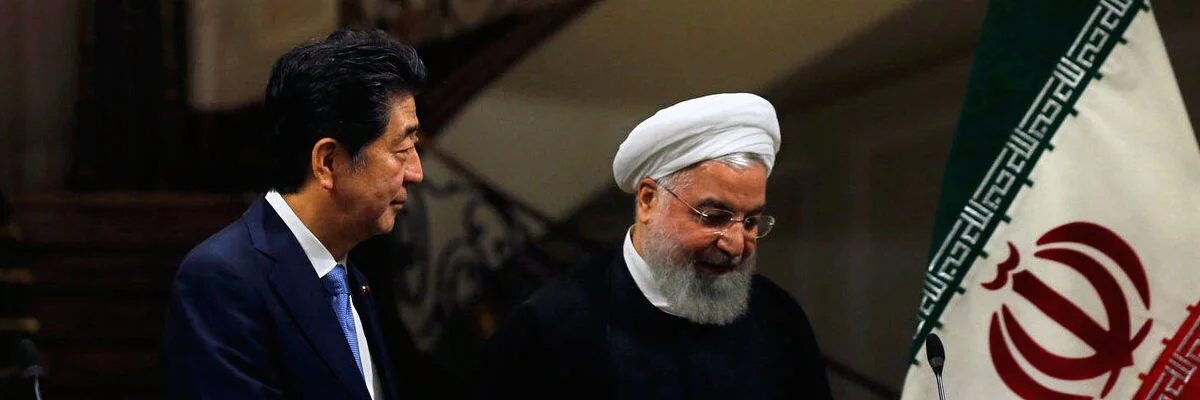
Japan PM Abe to Meet Iran's Rouhani in New York
◢ Japan’s Prime Minister Shinzo Abe plans to meet Iranian President Hassan Rouhani in New York next month as Tokyo continues to seek a leading role in attempts to defuse rising tension in the Middle East. Japan's foreign ministry said Wednesday the meeting was arranged during Iranian Foreign Minister Mohammad Javad Zarif's visit to Tokyo.
Japan's Prime Minister Shinzo Abe plans to meet Iranian President Hassan Rouhani in New York next month as Tokyo continues to seek a leading role in attempts to defuse rising tension in the Middle East.
Japan's foreign ministry said Wednesday the meeting was arranged during Iranian Foreign Minister Mohammad Javad Zarif's visit to Tokyo on Tuesday, and would take place on the sidelines of the UN General Assembly.
Japan has long been a major importer of Iranian oil and was one of eight countries given a waiver by Washington on buying directly from Tehran.
Sanctions were imposed after the US President Donald Trump abandoned the Iranian nuclear agreement struck by his predecessor Barack Obama.
Other signatories—including major European nations—disagreed with Trump's action.
"I have received clear words from Supreme Leader Khamenei that he does not wish to build, possess and to use nuclear weapons," Abe told Zarif during Tuesday's meeting.
“Japan wishes to continue diplomatic efforts toward stabilizing the situation," Abe said.
Abe travelled to Iran in June and met Supreme Leader Ayatollah Ali Khamenei as well as Rouhani in a bid to ease tension between Tehran and Washington.
Zarif made an unannounced appearance at the G7 in France, with the global elite group hoping the surprise visit would help ease friction between Iran and the US.
US President Donald Trump did not meet Zarif, but said he would be willing to hold talks with Rouhani in the near future.
Rouhani said a meeting could only take place if the US first scrapped the sanctions.
Photo: IRNA
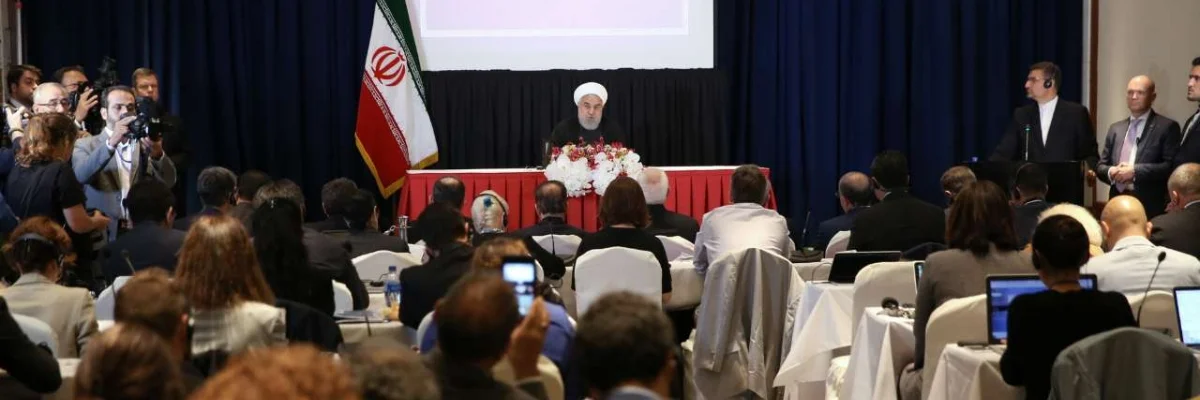
Iran's Rouhani Says US Will Eventually Rejoin Nuclear Deal
◢ Iranian President Hassan Rouhani predicted Wednesday that the United States would eventually rejoin an international nuclear deal, saying talks this week at the United Nations showed his counterpart Donald Trump's isolation. "The United States of America one day, sooner or later, will come back. This cannot be continued," Rouhani told a news conference.
Iranian President Hassan Rouhani predicted Wednesday that the United States would eventually rejoin an international nuclear deal, saying talks this week at the United Nations showed his counterpart Donald Trump's isolation.
"The United States of America one day, sooner or later, will come back. This cannot be continued," Rouhani told a news conference.
"We are not isolated; America is isolated," he said.
Rouhani pointed to a session of the Security Council chaired by Trump earlier Wednesday, where the leaders of Britain and France backed the nuclear deal, as well as a statement by European powers who say they will find ways to continue business with Iran and evade impending sanctions.
"We do hope with all the law-abiding and multilateral-oriented countries that we can ultimately put this behind us in an easier fashion than it was earlier anticipated," Rouhani said.
The elected Iranian leader said that his government would stay in the 2015 agreement, under which Tehran sharply scaled back its nuclear program in return for sanctions relief.
"Until such time that we keep reaping the benefits of that agreement for our nation and people, we shall remain in the agreement," he said.
"Should the situation change, we have other paths and other solutions that we can embark upon," he said.
Rouhani downplayed the sharp words from the US administration, including a warning Tuesday by Trump's national security advisor, John Bolton, that Iran would have "hell to pay" if it crosses the United States.
"During the past 40 years we have been subjected to that type of language many times," he said.
"In this American administration, unfortunately, the language has been said to be somewhat unique and they speak with a different style, presumably because they are new to politics," he said.
Photo Credit: IRNA
Rouhani Says Trump Seeking Iran Leadership 'Overthrow'
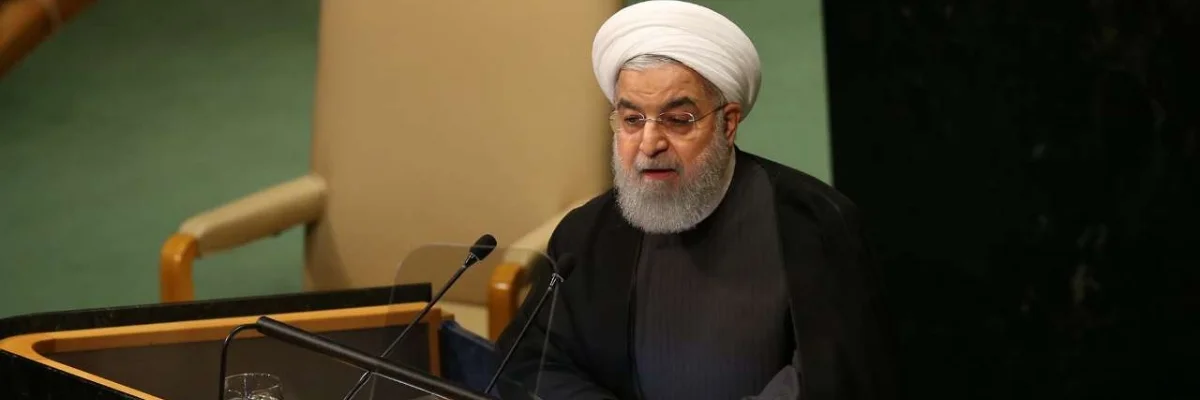
◢ Iranian President Hassan Rouhani accused his US counterpart Donald Trump of trying to topple his government Tuesday as he poured cold water on the idea of resuming talks with Washington after its pullout from an international nuclear accord. "It is ironic that the US government does not even conceal its plan for overthrowing the same government it invites to talks," Rouhani said in a speech at the United Nations General Assembly.
Iranian President Hassan Rouhani accused his US counterpart Donald Trump of trying to topple his government Tuesday as he poured cold water on the idea of resuming talks with Washington after its pullout from an international nuclear accord.
"It is ironic that the US government does not even conceal its plan for overthrowing the same government it invites to talks," Rouhani said in a speech at the United Nations General Assembly.
"For dialogue to take place, there is no need for a photo opportunity. The
two sides can listen to each other right here in this Assembly.
"I am starting the dialogue right here, and state, in unequivocal terms, that the question of international security is not a toy in American domestic politics."
Rouhani took the podium a few hours after Trump called for Iran's isolation in his UN address, accusing the leadership of Iran of sowing "chaos, death and destruction" as he defended his decision to ditch the Iran nuclear accord.
The five remaining parties to the 2015 accord—France, Britain, Germany, China and Russia—agreed during a meeting in New York late Monday to set up a payment system to preserve business ties with Iran despite US sanctions.
The Iranian leader said he was pleased that the international community did not follow the Trump administration's "unilateral and illegal withdrawal from the JCPOA," the JointComprehensive Plan of Action as the nuclear deal is known.
"Unlawful unilateral sanctions in themselves constitute a form of economic terrorism," said Rouhani.
Trump withdrew from the nuclear deal in May, to the dismay of European allies, Russia and China which had invested years in negotiations to achieve a milestone agreement on keeping Iran's nuclear ambitions in check.
In his UN address last year, Trump bashed the nuclear deal as "an embarrassment," signalling that the United States was ready to walk away.
Trump and Rouhani declined to meet on the sidelines of the General Assembly session.
Photo Credit: IRNA
Trump: 'No Plans' to Meet Iran's Rouhani 'Despite Requests'
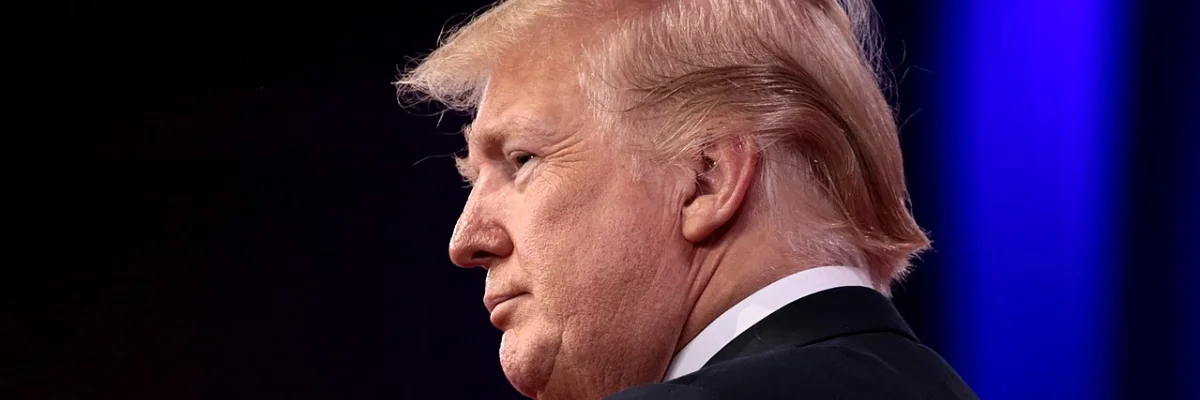
◢ President Donald Trump said Tuesday he had no plans to meet with Iranian leader Hassan Rouhani at the United Nations "despite requests" to do so. "Maybe someday in the future. I am sure he is an absolutely lovely man!" Trump tweeted just hours before both leaders were set to speak at the UN General Assembly, and four months after the US president ditched the Iran nuclear deal.
President Donald Trump said Tuesday he had no plans to meet with Iranian leader Hassan Rouhani at the United Nations "despite requests" to do so.
"Maybe someday in the future. I am sure he is an absolutely lovely man!" Trump tweeted just hours before both leaders were set to speak at the UN General Assembly, and four months after the US president ditched the Iran nuclear deal.
Trump withdrew from the nuclear deal in May to the dismay of European allies, Russia and China which had invested years in negotiations to achieve a milestone agreement on keeping Iran's nuclear ambitions in check.
Rouhani earlier said that as a precondition for any dialogue, Trump would need to repair the damage done by exiting the nuclear deal. "That bridge must be rebuilt," he told NBC news.
The United States maintains that it is seeking to ramp up pressure on Iran which it accuses of sowing chaos in Iraq, Syria, Yemen and Lebanon.
In his General Assembly address, Rouhani was to stress that Iran continues to stick to the 2015 deal and portray the United States as a pariah for breaking its international commitments.
Photo Credit: Wikicommons
Macron to Meet Trump, Iran's Rouhani at UN in New York: French Presidency
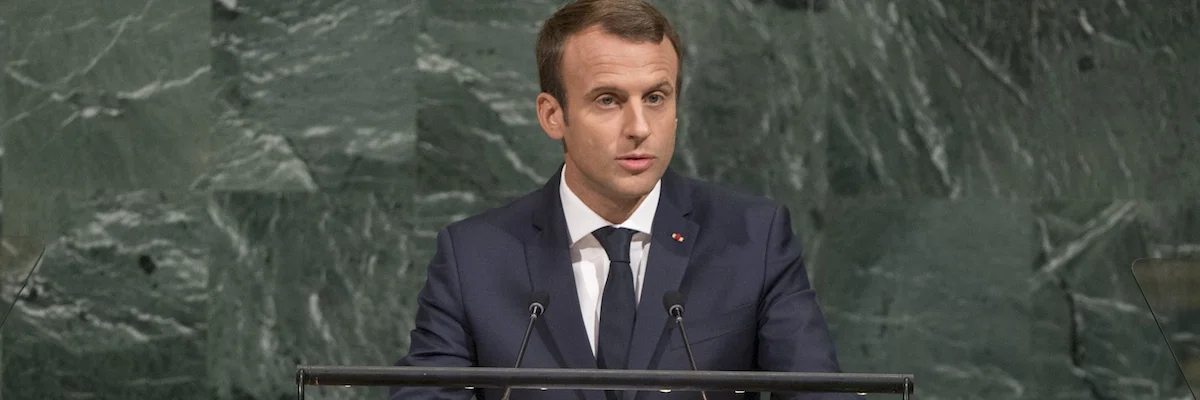
◢ President Emmanuel Macron will separately meet his US and Iranian counterparts, Donald Trump and Hassan Rouhani, during the UN General Assembly in New York next week, the French presidency said Wednesday. Macron will meet Trump on Monday afternoon before having dinner with UN Secretary General Antonio Guterres. On Tuesday, the French President will address the assembly and hold talks with Rouhani, an Elysee Palace official said.
President Emmanuel Macron will separately meet his US and Iranian counterparts, Donald Trump and Hassan Rouhani, during the UN General Assembly in New York next week, the French presidency said Wednesday.
Macron will meet Trump on Monday afternoon before having dinner with UN Secretary General Antonio Guterres. On Tuesday, the French President will address the assembly and hold talks with Rouhani, an Elysee Palace official said.
The meetings come as Macron and other European leaders try to salvage a landmark 2015 accord to curb Tehran's nuclear program, which Trump pulled the US out of last May.
Trump has signaled that he might be willing to meet with Rouhani as well, after re-imposing sanctions against Iran last month.
A new round of even harsher sanctions is set to go into effect in November targeting Iran's vital oil sector.
The sanctions have hit Iran's economy hard since foreign companies can no longer operate in the country without running the risk of being targeted by US penalties.
The US accuses Iran of destabilizing the Middle East by pursuing missile development and its intervention in conflicts in neighboring countries including Syria and Yemen.
Iranian officials have repeatedly indicated they have no plans to hold talks with Trump when the general debate opens at the assembly on Tuesday.
Photo Credit: France ONU
Iran Gives Most Explicit Rejection Yet of US Talks
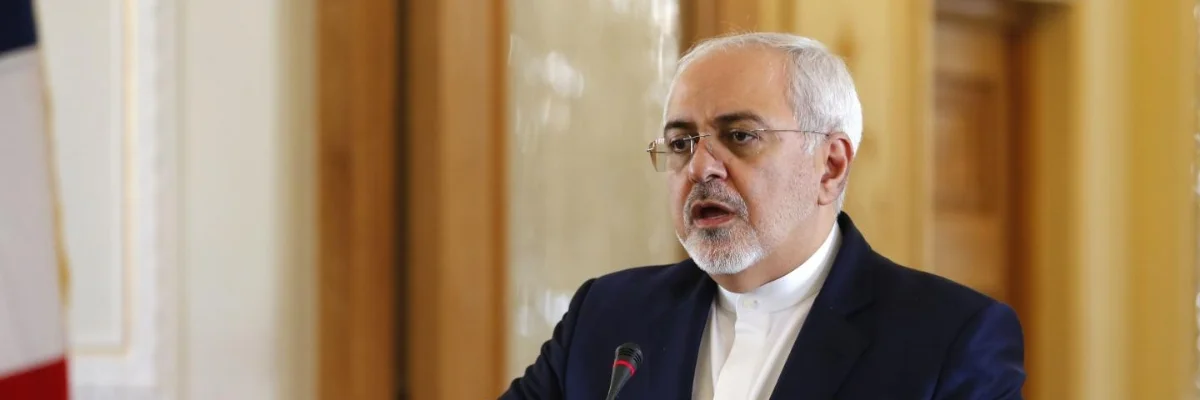
◢ Iran gave its most explicit rejection yet of talks with the United States on Saturday, and accused Washington of an "addiction to sanctions" over its latest spat with Turkey. The US reimposed harsh sanctions on Iran on Tuesday following its May withdrawal from a landmark 2015 nuclear agreement, dealing a heavy blow to the already troubled economy. US President Donald Trump has offered talks on a "more comprehensive deal" but Iran has baulked at negotiating under the pressure of sanctions and has instead leant on its increasingly close ties with fellow US sanctions targets Turkey and Russia.
Iran gave its most explicit rejection yet of talks with the United States on Saturday, and accused Washington of an "addiction to sanctions" over its latest spat with Turkey.
The US reimposed harsh sanctions on Iran on Tuesday following its May withdrawal from a landmark 2015 nuclear agreement, dealing a heavy blow to the already troubled economy.
US President Donald Trump has offered talks on a "more comprehensive deal" but Iran has baulked at negotiating under the pressure of sanctions and has instead leant on its increasingly close ties with fellow US sanctions targets Turkey and Russia.
Foreign Minister Mohammad Javad Zarif was asked by the conservative Tasnim
news agency whether there was any plan to meet with US Secretary of State Mike
Pompeo.
"No, there will be no meeting," was the blunt response from Zarif.
He said there were also no plans for a meeting with US officials on the sidelines of the UN General Assembly in New York next month, which both Iranian President Hassan Rouhani and Trump are due to attend.
"On Trump's recent proposal (of talks), our official stance was announced by the president and by us. Americans are not honest and their addiction to sanctions does not allow any negotiation to take place," Zarif told Tasnim.
It was Iran's most explicit rejection of talks to date, after much speculation that economic pressure would force its leaders back to the table with Washington or at least to engage in backroom discussions in New York.
Stop 'Bullying' Turkey
Earlier on Saturday, Zarif waded into the mounting row between Turkey and the United States.
"Trump's jubilation in inflicting economic hardship on its NATO ally Turkey is shameful," he wrote on Twitter.
"The US has to rehabilitate its addiction to sanctions (and) bullying or entire world will unite—beyond verbal condemnations—to force it to," he warned.
"We've stood with neighbors before, and will again now."
Trump said Friday he was doubling steel and aluminum tariffs on Turkey as part of an ongoing row over the detention of American pastor Andrew Brunson and other issues.
The tensions have fueled a run on the Turkish lira, which dropped 16 percent to a record low on Friday, with Trump tweeting that the currency was sliding "rapidly downward against our very strong Dollar!"
Rial Pain
Iran too has suffered a major decline in its currency this year—in part due to US abandonment of the nuclear deal—with the rial losing more than half its value against the dollar since April.
Ironically, the rial strengthened in the two days leading up to the reimposition of US sanctions on Tuesday, after the government announced new foreign exchange measures giving greater freedom to trade dollars at market rates.
But there has since been a fresh decline of almost 13 percent, with the rial at 106,200 per dollar on Saturday, according to currency tracking website Bonbast—approaching the record low of 119,000 that it reached on July 31.
Analysts say this is due to uncertainty in the market, with currency traders still unsure of the new rules and struggling to access dollars from the central bank.
Zarif met repeatedly with then US secretary of state John Kerry during the negotiation and implementation of the 2015 agreement—but those relatively warm ties were abruptly ended when the Trump administration came to power.
Rouhani said last week that Iran "always welcomed negotiations" but that Washington would first have to demonstrate it can be trusted.
"If you're an enemy and you stab the other person with a knife and then you say you want negotiations, then the first thing you have to do is remove the knife," he said in an interview on state television.
Photo Credit: IRNA