
U.S. to Extend Four Sanctions Waivers On Iran Nuclear Program
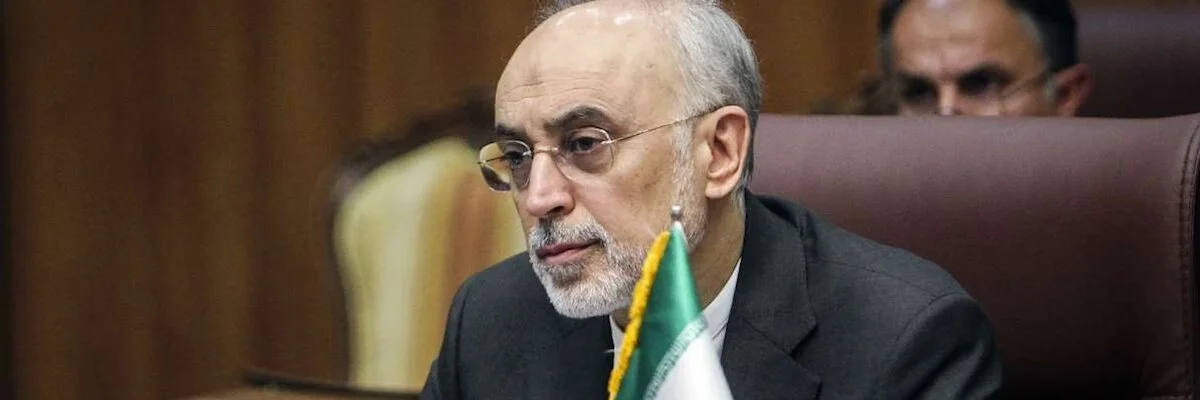
◢ The Trump administration will extend sanctions waivers allowing limited work on Iran’s civil nuclear program for another 60 days, two people familiar with the matter said. At the same time, the administration will announce sanctions on the Atomic Energy Organization of Iran and its chief, Ali Akbar Salehi.
By Nick Wadhams
The Trump administration will extend sanctions waivers allowing limited work on Iran’s civil nuclear program for another 60 days, two people familiar with the matter said.
At the same time, the administration will announce sanctions on the Atomic Energy Organization of Iran and its chief, Ali Akbar Salehi, according to the people, who asked not to be identified discussing a decision that hasn’t been publicly announced.
The decision to extend the waivers follows an internal disagreement between Secretary of State Michael Pompeo, who had advocated ending the waivers, and Treasury Secretary Steven Mnuchin, who wanted them extended.
The sanctions are meant to punish Iran for what the U.S. says is Tehran’s recent nuclear proliferation efforts, one of the people said.
Iran had earlier announced it would no longer be bound by uranium enrichment limits imposed by the Joint Comprehensive Plan of Action, the nuclear deal President Donald Trump quit in 2018.
Trump has since imposed a raft of sanctions on Iran’s economy but had held off ending the four waivers that allowed other participants in the deal, including China, Russia and the U.K., to cooperate on limited nonproliferation work with Iran.
The decision to extend the waivers for now avoids a confrontation with European nations who argue that the nonproliferation work allows them and the U.S. to keep an eye on Iran’s nuclear program.
Photo: IRNA
Iran Protests Turn Violent in Ongoing Anger Over Downed Jet
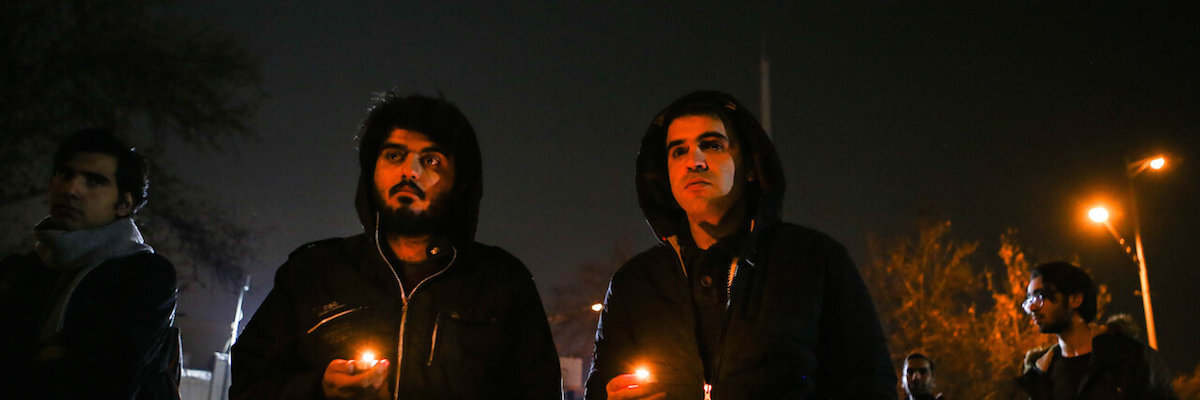
◢ Conditions boiled over as Iranians gathered for a second night of protests after the government admitted it had mistakenly downed a Ukrainian passenger jet, triggering global outrage as well as internal dissent. Security forces stepped up their patrols as protesters, many of them students, came out in force in Tehran’s landmark Azadi Square and at Shahid Beheshti University.
By Aoyon Ashraf and Arsalan Shahla
Conditions boiled over as Iranians gathered for a second night of protests after the government admitted it had mistakenly downed a Ukrainian passenger jet, triggering global outrage as well as internal dissent.
Security forces stepped up their patrols as protesters, many of them students, came out in force in Tehran’s landmark Azadi Square and at Shahid Beheshti University, as well as in several regional cities.
Videos posted on social media, which could not immediately be verified by Bloomberg News, showed clashes between protesters and riot police, trails of blood on a main street, chants in opposition to Supreme Leader Ayatollah Ali Khamenei, and calls to rid the country of the Islamic Revolutionary Guards Corps. Protesters in the videos said arrests had been made and tear gas fired at crowds.
Anger spread across the globe after Iran’s leaders admitted on Saturday that its military accidentally shot down the Ukrainian jet on Wednesday, killing all 176 people on board, after mistaking it for a cruise missile.
The announcement was a dramatic reversal after the regime spent days accusing Western governments of “psychological warfare.” Iran’s government said Sunday it was forming a working group to probe the crash and compensate victims.
President Donald Trump, who a week ago threatened to bomb Iranian cultural sites, sent a series of tweets in Farsi over the weekend expressing support for protesters and warning Iran’s leaders not to intervene. “DO NOT KILL YOUR PROTESTERS,” Trump said.
Earlier, videos showed motorcycle-mounted security forces in green camouflage and anti-riot body armor stationed on Tehran’s central Valiasr Square. There was also a heavy police presence outside Tehran University.
In the face of the growing tensions, some of the organizers of a candlelight vigil Saturday—which turned into an angry protest against the regime—urged people on social media to avoid a rally initially planned for 6 p.m. local time, at Azadi Square.
Large crowds of students demonstrated outside Amir Kabir University in downtown Tehran late Saturday for the candlelight vigil, according to witnesses, before starting chants of “death to the dictator” and “resignation is not enough, a trial is needed!” Security forces intervened to disperse the demonstrators. The British Ambassador to Iran Rob Macaire was briefly detained after he attended the vigil, triggering an international incident.
Others used social media to vent their anger, contrasting the plane deaths with reports that the Iranian attack on the Iraqi bases on Wednesday when the plane was downed was specifically designed not to injure Americans.
The government’s admission that Iran’s security forces hold ultimate responsibility for the downing of the plane -- albeit at a time of conflict with their chief foe -- is a further blow for the country’s ruling clerics at a time when the economy has been devastated by U.S. sanctions. The admission appears to have undercut the sense of national unity that built after the Jan. 3 killing by the U.S. of General Qassem Soleimani, a hero to many Iranians for his work in Iraq and Syria helping to defeat Islamic State.
On Sunday, General Hossein Salami, commander of Iran’s Revolutionary Guards, apologized for the jet downing during a speech n parliament, CBS reported, citing Iranian state television.
“I swear to almighty God that I wished I were in that plane and had crashed with them and had burned, and had not witnessed this tragic incident,” Salami said.
Canadian Prime Minister Justin Trudeau Saturday said he was “outraged” and “furious” by the admission that Iran had shot down Ukrainian International Airlines Flight PS752. At least 57 Canadians were among the dead.
“What Iran has admitted to is very serious. Shooting down a civilian aircraft is horrific. Iran must take full responsibility,” Trudeau said Saturday at a press briefing in Ottawa. He earlier declared the incident a national tragedy.
Ukrainian President Volodymyr Zelenskiy said in a televised address that he wants a full admission of guilt by Iran for what authorities there called a “disastrous mistake.”
Ukraine and Iran will work jointly to decode the black boxes of the doomed Ukrainian Boeing jet, Zelenskiy said. The Ukrainian government will make payments to the families of each of those who died in the crash, he said.
“I urge all international partners of Ukraine, the entire world community, to be united and to keep pressing until the full and final investigation into all the circumstances of this catastrophe is delivered,” said Zelenskiy.
The three-year-old Boeing Co. 737-800 was shot down about two minutes after takeoff from Tehran. The tragedy occurred hours after Iran started launching rockets against Iraqi bases where U.S. forces are stationed, in retaliation for Soleimani’s targeted killing. Nearly half the victims were Iranians, while many of the other passengers, including citizens of Canada, Sweden and the U.K., were of Iranian descent.
U.S. Defense Secretary Mark Esper said Iran was attempting to make itself the victim by blaming the jet incident, in part, on the escalation in tensions with Washington.
“Clearly, it was just a horrible mistake,” Esper said of downing of the Ukrainian commercial airliner in an interview with CBS News. “To somehow allow Iran to play the victim card with the international community is just ridiculous.”
The commander of the IRGC’s aerospace force, Amir Ali Hajizadeh, blamed the tragedy on a communications failure. The operative who first mistakenly identified the plane as an incoming missile failed to get a second opinion due to a “disturbance” and had only 10 seconds to make a decision, he said. The army had previously said that “culprits” would be turned over to judicial authorities.
Iran’s supreme leader offered his condolences to the victims of the Ukrainian flight, while President Hassan Rouhani said the Islamic Republic “deeply regrets the disastrous mistake” and vowed compensation for the families of victims.
Meanwhile, the fate of the 2015 Vienna Nuclear Agreement between world powers and Iran hung in the balance. German, France and the U.K. on Sunday affirmed their commitment to the deal, which Trump pulled the U.S. out of in 2018.
Tehran this month announced it would stop abiding by limits on uranium enrichment, which had been agreed to in return for sanctions relief. The U.S. has instead pressed ahead with a series of measures against the Islamic Republic.
Additional U.S. sanctions announced last week, and a new executive order signed by Trump, “gave us additional capabilities to target both primary and secondary sanctions in different sectors, including the metals industry, construction, and travel,” U.S. Treasury Secretary Steven Mnuchin said Sunday on Fox News.
Photo: IRNA
Qassem Soleimani Killing Leaves Trump’s Middle East Strategy in Tatters
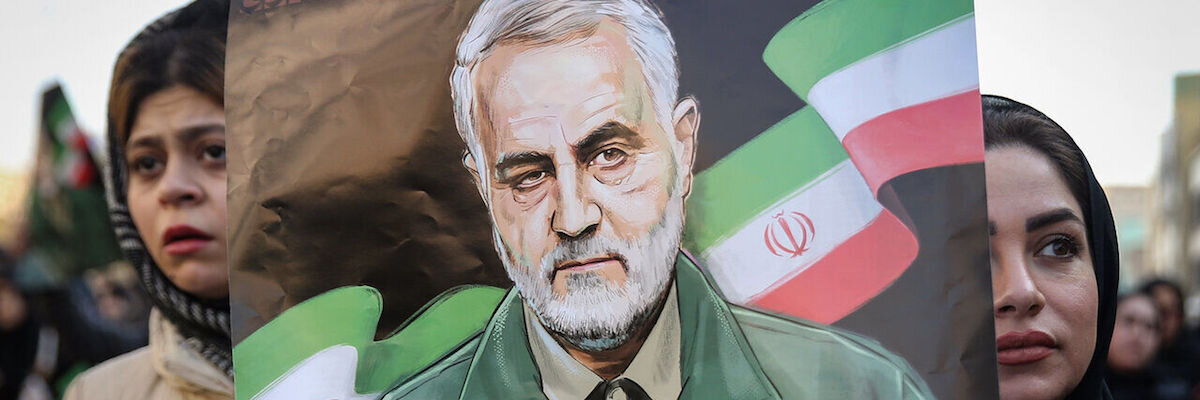
◢ U.S. President Donald Trump and his top aides spent the weekend arguing that the killing of Iranian General Qassem Soleimani would deter future attacks and make the Middle East safer. Instead, U.S. policy in the region seems to be going in the opposite direction of what Trump has long promised.
By Nick Wadhams and David Wainer
U.S. President Donald Trump and his top aides spent the weekend arguing that the killing of Iranian General Qassem Soleimani would deter future attacks and make the Middle East safer.
Instead, U.S. policy in the region seems to be going in the opposite direction of what Trump has long promised—with more U.S. troops going in, not fewer; an Iran defiant, not cowed and broken by sanctions; and regional allies giving only lukewarm support to Trump’s airstrike instead of rallying around it.
Economic costs of the strike are also mounting: oil surged above $70 a barrel on Monday and equities around the world extended losses. Havens climbed, with gold rising to the highest in more than six years.
The political backlash came quickly, as the U.S.-led coalition against Islamic State was forced to suspend operations and Iraq’s parliament on Sunday called for U.S. troops to withdraw. Trump responded by saying Iraq could face sanctions and would have to “reimburse” America. Iran said it would abandon limits on uranium enrichment put in place as part of a 2015 nuclear agreement that Trump abandoned in 2018.
U.S actions have “made an already volatile situation much more dangerous,” said retired Army Lieutenant Colonel Daniel Davis, a senior fellow at Defense Priorities who favors a U.S. troop withdrawal from Iraq. “If you paid any attention to Iran in the last 40 years you know they will never buckle to that kind of pressure. It’s just the opposite.”
The strike on Soleimani appeared to unite Iranians after months of protests against their own government, with hundreds of thousands turning out to mourn a military chief who had made their nation -- battered by U.S. economic sanctions -- appear strong by giving Tehran leverage in conflicts from Syria to Yemen. Iran has vowed revenge, and allies including Hezbollah leader Hassan Nasrallah warned that they’d now seek to drive out the more than 50,000 U.S. troops from the region.
“It united most political forces in Iraq against the U.S.,” said Fawaz Gerges, a professor of international relations at the London School of Economics. “The Trump administration monstrously miscalculated by playing into Iran’s hands.”
The fight against Islamic State was immediately hampered, with the U.S.-led coalition saying it would suspend operations in Iraq to focus on protecting bases that have come under attack. Threats from Iran-backed militias have previously forced staff drawdowns in U.S. diplomatic missions across the country.
Iraq serves as the home base for operations against Islamic State. Trump told reporters aboard Air Force One late Sunday that the U.S. wouldn’t leave unless it got paid back for the “billions” spent on an air base there.
“If they do ask us to leave, if we don’t do it in a very friendly basis, we will charge them sanctions like they’ve never seen before ever,” he said. “It’ll make Iranian sanctions look somewhat tame.”
The escalating tensions hit markets starting Friday and continuing through Monday. Oil futures jumped an additional 3% on Monday after the State Department warned of a “heightened risk” of missile attacks near military and energy facilities in Saudi Arabia. Japanese, Hong Kong and South Korean equities fell, and U.S. and European futures retreated.
After Trump and Iranian officials traded public threats about future reprisals, the U.S. leader will now face questions from lawmakers returning to Washington from the end-of-year break ready to take up a bitter debate over the president’s impeachment by the Democratic-led House and a coming trial in the Republican-controlled Senate.
In the U.S., reaction to the raid has fallen mostly along party lines, with Republicans hailing the elimination of a leader responsible for terror attacks and Democrats questioning the administration’s assertion that Soleimani presented an “imminent threat.” They’re also asking whether Trump has a broader strategy or plan to deal with the aftermath.
U.S. House Speaker Nancy Pelosi, a California Democrat, sent a letter to the chamber’s lawmakers announcing a vote this week on a resolution that would limit Trump’s power in any potential military actions regarding Iran.
Secretary of State Michael Pompeo argued the administration’s case on Sunday news shows after more than a dozen calls with foreign counterparts from China to Saudi Arabia.
He said there were no doubts about the intelligence behind the decision to kill Soleimani, and that any moves taken against Tehran will be “lawful.” That was a response to concerns about Trump’s threat on Saturday to hit “52 Iranian sites” including cultural targets if Tehran retaliates. Trump’s comment raised concerns because attacks against cultural property are prohibited under the Geneva Convention and the U.S. Defense Department’s rules of engagement.
“We’ll behave inside the system,” Pompeo said Sunday on ABC’s “This Week.”
Despite Pompeo’s international outreach, there were few signs of strong support among key U.S. allies beyond Israel, while the NATO alliance planned an emergency meeting Monday to discuss growing tensions in the region. U.K. Prime Minister Boris Johnson summed up European reaction to the strike on Soleimani, saying “we will not lament his death,” but “we are in close contact with all sides to encourage de-escalation.”
Working to the U.S. advantage is Iran’s dire economic situation following increasingly tight U.S. sanctions that have largely wiped out the country’s ability to sell oil abroad and cut it off from most trade partners. And some analysts said the political tensions in Iran will only be briefly masked by Soleimani’s death.
Pompeo seemed to minimize the significance of Iraq’s parliament calling for a withdrawal of U.S. forces, suggesting that outgoing Prime Minister Adel Abdul-Mahdi—who said he was due to meet with Soleimani the morning he was killed about de-escalation efforts between Iran and Saudi Arabia—was acting under enormous pressure from Tehran.
Pompeo said the U.S. was a force for good in Iraq, 17 years after it invaded to oust Saddam Hussein. But the overthrow of the Sunni dictator in 2003 provided an opening that Iran has steadily exploited since, deepening its influence over Shia-majority Iraq. The parliament vote fell along sectarian and ethnic lines, with Sunni and Kurdish lawmakers abstaining.
It’s unlikely U.S. troops will leave Iraq anytime soon, but Sunday’s vote was damning for Trump and U.S. plans for the region. The diplomatic compound in Baghdad was constructed after the 2003 invasion to be the biggest American embassy in the world, designed to essentially serve as a forward operating base and a listening post in the Middle East.
With his latest deployment of about 3,500 troops to Kuwait, Trump has bolstered American forces by about 17,000 personnel since May, undermining his vow to get the country out of “endless wars.”
“Rarely has any single tactical move, untethered from any long-range thinking, produced so many potential strategically negative consequences for the U.S.,” said Aaron David Miller, a senior fellow at the Carnegie Endowment for International Peace. “In one single decision you’ve undermined 17 years of a U.S. mission, fraught though it may be.”
Photo: IRNA
Trump Says Talks with Rouhani Within Weeks Sounds Realistic
◢ US President Donald Trump said he believed it was realistic he could meet his Iranian counterpart Hassan Rouhani within weeks, following a series of diplomatic initiatives by France. Asked by reporters if he thought the timeline proposed by French President Emmanuel Macron was realistic, Trump said: "It does", adding he thought Rouhani would also be in favor.
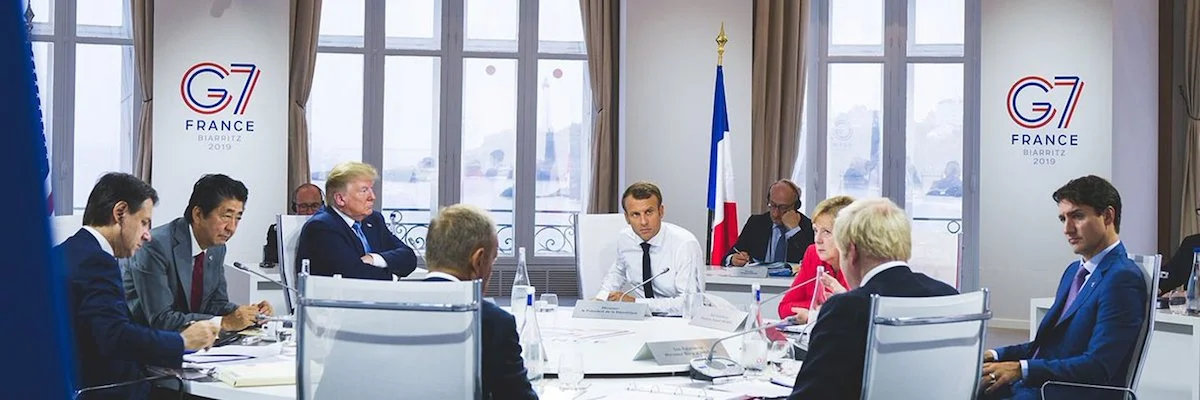
US President Donald Trump said he was prepared to meet his Iranian counterpart Hassan Rouhani in the next few weeks after talks over Tehran's nuclear program at a G7 summit in France.
Iranian Foreign Minister Mohammad Javad Zarif made a surprise appearance on the sidelines of the summit in Biarritz on Sunday at the invitation of French President Emmanuel Macron.
Macron said that the "conditions for a meeting" between Trump and Rouhani to take place "in the next few weeks" had been created through intensive diplomacy and consultations.
"If the circumstances were correct, I would certainly agree to that," Trump said at a joint press conference with Macron.
Asked by reporters if he thought the timeline proposed by his French counterpart sounded realistic, Trump replied: "It does", adding he thought Rouhani would also be in favor.
"I think he's going to want to meet. I think Iran wants to get this situation straightened out," Trump added.
Trump has put in place a policy of "maximum pressure" on Tehran over its disputed nuclear program via crippling sanctions that are seen as raising the risk of conflict in the Middle East.
The US president last year unilaterally pulled out of a landmark 2015 international deal that placed limits on Tehran's nuclear activities in exchange for trade, investment and sanctions relief.
Rouhani defended Zarif's Biarritz visit in a speech aired live on state television on Monday.
"I believe that for our country's national interests we must use any tool," he said.
But hardliners have criticized the initiative, with the ultra-conservative Kayhan newspaper saying the trip was "improper" and sent "a message of weakness and desperation."
Macron has urged the US administration to offer some sort of sanctions relief to Iran, such as lifting sanctions on oil sales to China and India, or a new credit line to enable exports.
In return, Iran would return to complying with the 2015 deal.
Commenting on the talks about Iran at the G7, German Chancellor Angela Merkel said: "It's a big step forward. Now there is an atmosphere in which talks are welcomed."
Photo: G7
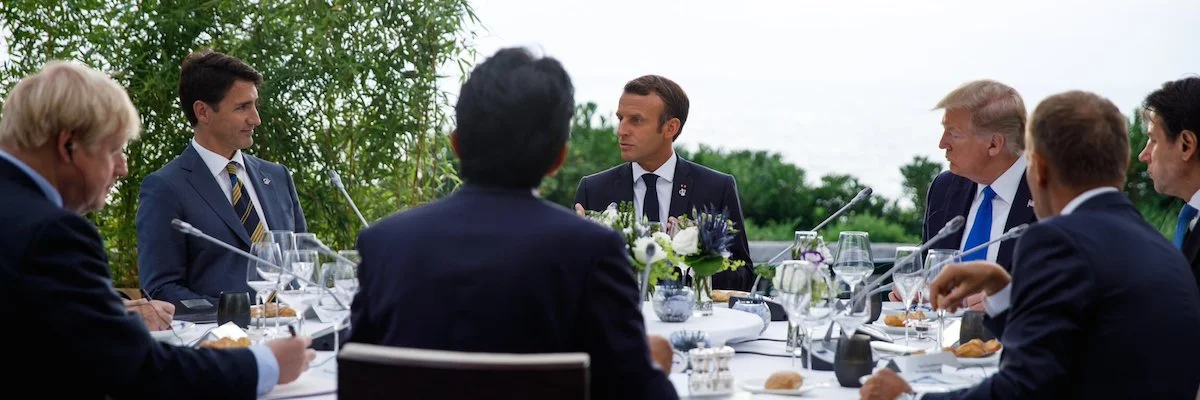
Trump Switches Tone on Iran, Raising Hopes at G7
◢ US President Donald Trump said Monday that he had agreed to the Iranian foreign minister flying in for a G7 summit and insisted he was not seeking regime change in Tehran—a change of tone that could lower tensions. "I knew everything he (Macron) was doing and I approved everything he was doing," Trump said, adding that the French president "asked for my approval,”
By Sebastian Smith, Adam Plowright and Stuart Williams
US President Donald Trump said Monday that he had agreed to the Iranian foreign minister flying in for a G7 summit and insisted he was not seeking regime change in Tehran—a change of tone that could lower tensions.
Mohammad Javad Zarif made a surprise appearance at the summit in Biarritz on Sunday for talks with French President Emmanuel Macron, who is seeking to broker a deal between Iran and the United States.
Zarif also met with French and other European diplomats, but Trump said it was "too soon" for him to meet Zarif.
"I knew everything he (Macron) was doing and I approved everything he was doing," Trump said, adding that the French president "asked for my approval.”
In early August, Trump lambasted Macron for sending "mixed signals" on Iran, and at the end of July the US administration imposed sanctions on Zarif.
Trump has put in place a policy of "maximum pressure" on Tehran over its disputed nuclear programme via crippling sanctions that are seen as raising the risk of conflict in the Middle East.
The US president unilaterally pulled out of a landmark 2015 international deal that placed limits on Tehran's nuclear activities in exchange for trade, investment and sanctions relief.
"I believe that for our country's national interests we must use any tool," Iran's President Hassan Rouhani said of his top diplomat's Biarritz visit in a speech aired live on state television on Monday.
But hardliners criticised the initiative, with the ultra-conservative Kayhan newspaper saying the trip was "improper" and sent "a message of weakness and desperation."
Some analysts also cautioned against optimism about Macron's mediation efforts.
"There is considerable room between what President Trump says and what he thinks one day, and what he says and thinks the next," Robert Malley, head of the International Crisis Group, told AFP.
Photo: Elysée
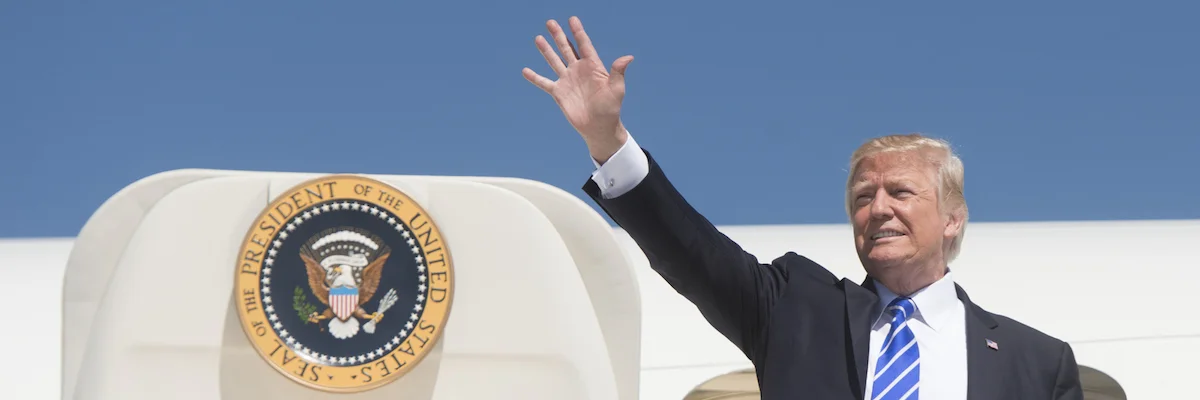
Europe Has Dug In Against Trump’s Iran ‘Maximum Pressure’ Campaign
◢ President Donald Trump wants America’s closest allies to ratchet up the pressure on Iran. But this weekend in France he’ll find they’re still reluctant to join him. Divisions over Iran will be on full display when Trump meets his European peers at a Group of Seven meeting starting Saturday in the coastal city of Biarritz.
By Nick Wadhams
President Donald Trump wants America’s closest allies to ratchet up the pressure on Iran. But this weekend in France he’ll find they’re still reluctant to join him.
Divisions over Iran will be on full display when Trump meets his European peers at a Group of Seven meeting starting Saturday in the coastal city of Biarritz. While the agenda will focus on the global economy, the most pressing security challenge will be navigating the wreckage of Trump’s decision last year to abandon the 2015 deal constraining Tehran’s nuclear program.
Even with Iran downing an American drone and being accused of a spate of tanker attacks in the Persian Gulf, European nations want to preserve the Joint Comprehensive Plan of Action they say kept a rein on Iran’s nuclear program. But they’ve failed to find a way to help Tehran get the economic benefits promised under the deal. Iran is desperate to get its oil back on world markets, but that’s a non-starter for the U.S.
No compromise has emerged.
The Iran debate—and the distrust it has fueled—reflects the strains between the U.S. and Europe in the Trump era: displeasure over his maximalist approach, umbrage over his scorn for allies and, beneath it all, wariness about his intentions. In the case of Iran, allies can’t shake the suspicion that Trump, or his more hawkish advisers, want to provoke a war, no matter his insistence otherwise.
“I’ve heard several folks in Europe say, ‘Look, all of us were serving as diplomats during the Iraq War, so we’ve seen the beginnings of this movie before and we’re not going to get dragged into it again,”’ said Ellie Geranmayeh, a senior policy fellow at the European Council on Foreign Relations. “The Europeans will not want to side with the administration on issues that could lead to military conflict.”
The president hasn’t laid the groundwork for a productive summit. He’s arriving in France on the warpath over trade, allied contributions to NATO and a self-inflicted feud with Denmark over what appeared at first to be a joke: a suggestion the U.S. buy Greenland.
Trump’s best shot at winning some European support will come by working his personal rapport with U.K. Prime Minister Boris Johnson. The two unconventional leaders will meet for breakfast on Sunday, and Johnson may want to straddle European backing for the JCPOA with the need to keep Trump on his side for an eventual trade deal following Brexit.
A U.S. official, who asked not to be identified discussing internal deliberations, said the administration is “optimistic” that Johnson could bring the U.K. closer to the U.S. position on isolating Iran.
A U.K. official, speaking on condition of anonymity, pushed back on expectations that Johnson could be swayed. The new prime minister doesn’t want to rock the boat for French President Emmanuel Macron, who is the host of the G-7, the official said. The U.K. is sticking to its support for the nuclear deal.
But that too has its dangers. One person familiar with the White House thinking on the matter, who also asked not to be identified, said the administration realizes it needs to be careful calibrating its attitude toward Johnson, who may be wary of being seen as too close to Trump ahead of a possible election later this year.
“The president wants to give Boris Johnson a big boost -- he sees Johnson as Britain’s Trump, a like-minded model,” said Heather Conley, director of the Europe Program at the Center for Strategic and International Studies in Washington. “The challenge is Boris Johnson is winding up for an election and he’s got to walk a very fine line on what the domestic instinct is toward Trump.”
U.S. officials are playing down the disagreements between Washington and European capitals, arguing that all sides agree on the threat posed by Iran’s sponsorship of terrorist groups, its development of ballistic missiles and its attacks on tanker traffic around the Strait of Hormuz.
‘Tactical Disagreements’
“We have had tactical disagreements but there isn’t any disagreement on end states,” Brian Hook, the State Department’s Iran envoy, told Bloomberg TV on Aug. 21. “We share the same threat assessment. The Islamic Republic of Iran is the principle driver of instability in today’s Middle East.”
Anxiety is growing in Europe about a growing list of Iranian violations of the 2015 nuclear accord, which the Islamic Republic had obeyed until Trump quit the deal. Angry that the Europeans haven’t been able to deliver economic benefits in defiance of Trump’s sanctions, Iran now has exceeded enriched-uranium limits set by the agreement and is threatening further violations if Europe doesn’t find a way around the American restrictions.
Zarif’s Diplomacy
Iranian Foreign Minister Javad Zarif—who was recently sanctioned by the U.S.—will be in France ahead of the summit on Friday to urge the Europeans to stick to the nuclear deal.
According to press reports and a person familiar with Emmanuel Macron’s thinking, the French president is also circulating a proposal under which the U.S. would ease some restrictions on Iranian oil exports in exchange for the start of a diplomatic dialogue.
U.S. officials say Iran would need to make far bigger concessions for them to entertain such an offer. The idea flies in the face of the administration’s approach, which is to keep ramping up its “maximum pressure” campaign, under the belief that sanctions will so ruin Iran’s economy that its leaders will have no choice but to negotiate.
Two recent cases show just how different the U.S. and European approaches to Iran have become, and how wary U.S. allies are in being associated with the Trump administration’s stance.
Gibraltar Court
The U.K. rebuffed a demand from the White House to keep holding an Iranian oil tanker laden with $130 million in crude allegedly bound for Syria in Gibraltar. A court in the territory deemed it could no longer keep the ship after Iran offered assurances it wouldn’t go to Syria.
Senior U.S. officials had conveyed “grave disappointment” over the decision to let the tanker go, even raising the possibility that an eventual U.S.-U.K. trade deal might be in jeopardy. The Justice Department filed a complaint aimed at blocking the ruling. But the Grace 1—renamed the Adrian Darya 1—left as planned.
Even more embarrassing to the U.S. has been Europe’s shunning of the plan the Americans call Project Sentinel—a bid to protect ships passing through the Strait of Hormuz. In July, the U.K. signed up but was careful to portray its participation as a European-led initiative that was getting help from—and not being led by—the U.S. France and Germany flatly refused to join, leaving the U.S. with two partners: Australia and the U.A.E.
“It’s absolutely necessary to keep the Gulf open, but the fact that they won’t do it tells you something about how toxic President Trump is in European politics,” said Nicholas Burns, a former senior State Department official and professor at the Harvard Kennedy School. “The Europeans don’t trust that Trump will keep his word that he won’t attack Iran.”
Photo: White House
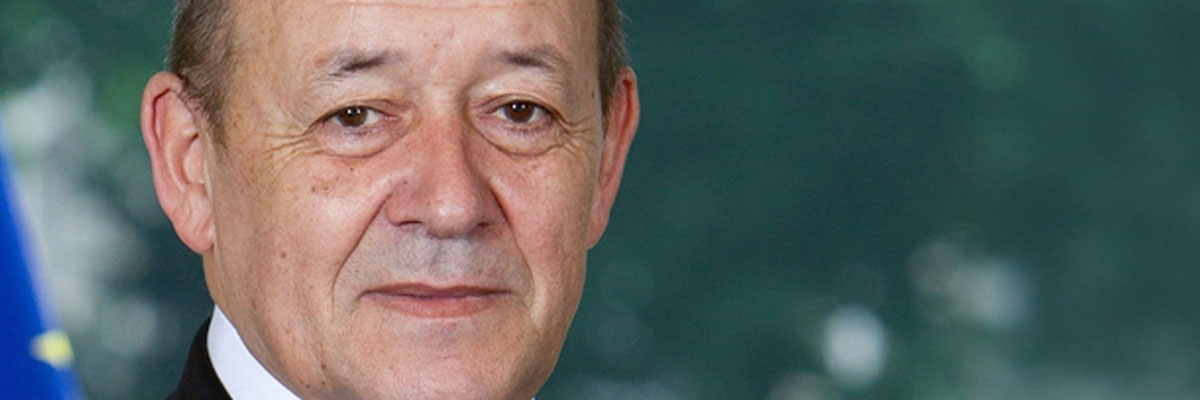
France Says 'Needs No Permission' for Iran Dialogue After Trump Swipe
◢ France said Friday that it "needs no permission" to work towards easing tensions between Iran and the US, after President Donald Trump accused his French counterpart Emmanuel Macron of meddling in the dispute. In a tweet Thursday, Trump claimed that Iranian officials want "desperately to talk to the US, but are given mixed signals from all of those purporting to represent us, including President Macron of France."
France said Friday that it "needs no permission" to work towards easing tensions between Iran and the US, after President Donald Trump accused his French counterpart Emmanuel Macron of meddling in the dispute.
"On Iran, France speaks with complete sovereignty. It is working hard for peace and security in the region, it is working to facilitate a de-escalation in tensions and it needs no permission to do so," Foreign Minister Jean-Yves Le Drian said in a statement.
In a tweet Thursday, Trump claimed that Iranian officials want "desperately to talk to the US, but are given mixed signals from all of those purporting to represent us, including President Macron of France."
"I know Emmanuel means well, as do all others, but nobody speaks for the United States but the United States itself. No one is authorized in any way, shape, or form, to represent us!" he said.
Trump has reimposed crippling sanctions on Iran after pulling out of an international deal aimed at curbing the country's nuclear ambitions.
But the European partners to the accord, including France, have resisted his attempts to isolate the Iranians.
Le Drian said the worsening tensions between Tehran and Washington, which have been blamed for attacks on oil tankers in the Gulf and downings of drones, called for initiatives to try to restore dialogue.
"That's what President Macron is doing, in full transparency with our partners, above all our European partners," he said, adding that Macron was "obviously keeping American authorities informed".
On Tuesday, the Al-Monitor news site reported that Macron, who speaks regularly by telephone with Iranian President Hassan Rouhani, had invited Rouhani to attend the G7 summit in France on August 24-26 to meet with Trump.
The report, which cited two unidentified sources, said Rouhani had declined to attend or send a representative.
The French presidency has denied the report, saying Macron never put forward any such proposal.
After a call with Rouhani on Tuesday, the French leader, who has attempted to mediate in several disputes in North Africa and the Middle East, said it was France's role "to make every effort to ensure that all parties agree to a break and open negotiations."
The dispute with Iran is expected to be a major issue at the G7 summit in the southwestern city of Biarritz.
Paris has engaged in intense diplomacy to try to resolve the tensions, with Macron's foreign policy advisor Emmanuel Bonne twice visiting Tehran.
Russian President Vladimir Putin is scheduled to visit Macron at his holiday retreat on France's Mediterranean coast on August 19 to discuss the Iranian situation, ahead of the G7 meeting.
Photo: French MFA

Trump Sees Chance With Boris Johnson to Lure UK on Iran, Huawei
◢ As Boris Johnson hurtles toward a no-deal Brexit that could leave the U.K. diplomatically adrift and economically vulnerable, President Donald Trump is looking to seize an opportunity to lure the country away from Europe on some of his top foreign policy priorities: Iran and Huawei.
By David Wainer
As Boris Johnson hurtles toward a no-deal Brexit that could leave the U.K. diplomatically adrift and economically vulnerable, President Donald Trump is looking to seize an opportunity to lure the country away from Europe on some of his top foreign policy priorities: Iran and Huawei.
Yet with Johnson focused on negotiating a breakup with the European Union—and perhaps a snap election at home—the White House may have to be patient in its hopes that the U.K.’s leadership change will bring closer alignment on issues including sanctioning Iran’s nuclear program and blocking Huawei Technologies Co. equipment from new 5G mobile networks.
Trump is pressing his case regardless. He and Johnson spoke by phone last week about “areas of further cooperation,” including trade, 5G technology and global security, according to a White House statement. With Johnson—a “good man” Trump has long praised for wanting to leave the EU—now at 10 Downing Street, the U.S. sees Johnson’s need for an eventual bilateral trade deal with America as leverage to peel Britain away from Europe on key issues.
In a first bid to serve as a bridge between the White House and European allies, the U.K. announced on Monday that it will lead “an international mission to restore safe passage” in the Persian Gulf, working with partners including the U.S. Navy. The move offers a face-saving opportunity for countries that spurned a U.S.-led initiative because they blame Trump for quitting the 2015 nuclear accord with Iran.
A senior White House official said the U.S. expects cooperation will grow more robust with the new government, as the two countries work together extensively on security issues including North Korea. Secretary of State Michael Pompeo predicted the nations that long have boasted of their “special relationship” will grow even closer.
“I think we’ll find that there’s a very good working relationship there,” Pompeo said in a Bloomberg TV interview last month. “When the prime minister gets his feet on the ground, I’m looking forward to having a chance to chat with him and his foreign secretary so that we can deliver on behalf of these two important democracies.”
New Foreign Secretary Dominic Raab will be in Washington this week, and his language will be mined for clues on where the U.K. is headed.
Working in the U.S.’s favor is Johnson’s need to seal a trade deal with Washington after the U.K.’s departure from the EU, expected Oct. 31. To help smooth that process, Johnson could take more symbolic steps to spurn Europe and sidle up to Trump.
Key Question: Iran
Johnson’s proposal on Gulf maritime security was welcomed by the U.S. But that doesn’t mean he’s ready to follow Trump in quitting the multinational nuclear agreement the American president has called the “worst deal ever.” In announcing the maritime mission, Raab, the foreign minister, said, “We remain committed to working with Iran and our international partners to de-escalate the situation and maintain the nuclear deal.”
Johnson has repeatedly signaled that he’s a strong supporter of the nuclear deal, which the U.K. and other participating nations have struggled to maintain in the face of renewed U.S. sanctions against Iran. As British foreign minister in 2018, when Trump pulled out of the agreement, Johnson said talks with Tehran culminating in a new accord were difficult to imagine.
“One of the big questions is whether he will break with European unity on Iran,” said Richard Nephew, a Columbia University scholar who was part of the U.S. team that negotiated the nuclear accord. “He needs Trump on his side, at the very least promising a favorable trade deal, as he takes the U.K. down the Brexit route.”
Germany’s Worries
In Germany, there’s concern that Johnson and Trump will try to build a new version of the “special relationship,” according to a coalition official in Berlin.
The Germans see Johnson’s intention to seek a trade deal with the U.S. at a time when the EU is already negotiating such a pact as further evidence of a breach, said the official, who asked not to identified discussing Britain’s political direction. French President Emmanuel Macron’s aides also routinely say that they see the British as potential trouble-makers on trade.
Despite receiving invitations, Johnson hasn’t traveled to the major European capitals. By contrast, his predecessor went to Berlin within days of coming to power.
In the most telling example of friction between London and its European partners, the U.K. undercut a French-led initiative to find a common candidate to lead the International Monetary Fund. Mere hours before EU governments were to begin voting on a candidate, the U.K. suddenly objected to the process and said it wouldn’t take part in offering a potential nominee or in the voting, according to a source familiar with the interaction.
All this is fertile ground for the White House to act to pull the U.K. away, and the promise of a free-trade deal is the biggest carrot of all for a prime minister determined to bring about Brexit and deliver on its promised benefits. That’s why Johnson’s meeting with Trump at the Group of Seven summit in France this month will be the most-watched bilateral of them all for the Europeans.
Picking an Envoy
Johnson will also have a chance to appoint a new ambassador to Washington because Kim Darroch abruptly resigned last month after the leak of internal messages in which he criticized the Trump administration as “clumsy and inept.”
Johnson’s failure to defend Darroch in a televised campaign debate brought criticism from a Foreign Office official who said he’d thrown the ambassador “under a bus.”
Trump had failed to win British support on a number of issues under former Prime Minister Theresa May. A U.K. government official said the U.S. relationship can only improve in light of May’s lack of rapport with Trump. The official predicted a strengthening of relations, drawing on new opportunities on trade and other issues, but not a total reset of ties.
Even under Johnson, breaking the U.K. away from the European Union on foreign policy will be tough, according to three senior European diplomats with knowledge of the new British government. Any moves to cozy up to Trump may be more symbolic than substantive, particularly because Johnson has to worry about maintaining a single-seat majority in the House of Commons.
‘Political Opportunists’
“What Trump and Johnson have in common is they are political opportunists,” said Charles Kupchan, former senior director for European Affairs at the National Security Council in the Obama administration. “They believe in America First, Britain First. They’re out for themselves and I don’t think either Trump or Johnson will be making sacrifices to help each other.”
And while the U.K. is still reviewing its position on Huawei, which the U.S. sees as a stalking horse for Chinese spying and wants banned from allied nations, all four U.K. carriers are already building their 5G networks using equipment from Huawei. BT Group Plc’s EE and Vodafone Group Plc have even gone live with their Huawei-supported 5G. Delaying or freezing that deployment would be an additional hit to an increasingly fragile British economy.
Showman Politics
Trump may have to be patient, knowing the U.K. leader has other priorities. Unlike May, who Trump publicly criticized on multiple occasions, the president sees in Johnson’s rise a vindication of his own style of showman politics.
“Trump from the get-go has been a supporter of getting on with Brexit and he likes populist and right-wing leaders, wherever they may be,” said Kupchan, the former Obama administration official who’s now a senior fellow at the Council on Foreign Relations.
But unlike Trump, Johnson has less room for error on the world stage and is therefore expected to be less volatile. While Trump can insult allies and foes, tear up agreements, and still command any leader’s attention, the U.K. is a diminishing power, said Andreas Krieg, who teaches defense studies at King’s College London.
“He talks about building a Global Britain but he know there’s no capacity to build a global power,” said Krieg. “He understands Britain is not America.”
Photo: Wikicommons
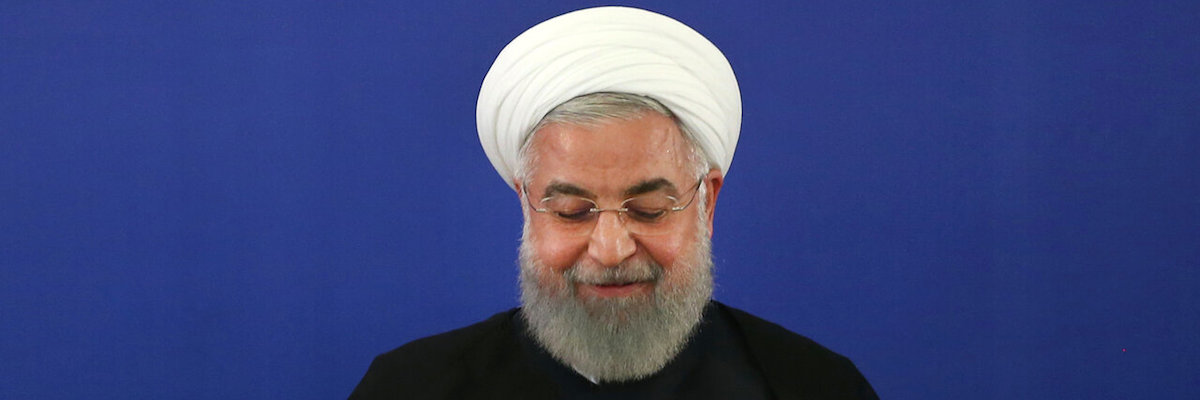
Iran 'Favors' Talks Despite Trump Snub
◢ President Hassan Rouhani said on Tuesday that Iran favors talks with the US if it lifts sanctions against the Islamic republic, despite his top diplomat turning down a meeting with US President Donald Trump. Rouhani said "peace with Iran is the mother of all peace" and "war with Iran is the mother of all wars" as he defended a landmark 2015 nuclear deal between Iran and world powers.
By David Vujanovic
President Hassan Rouhani said on Tuesday that Iran favors talks with the US if it lifts sanctions against the Islamic republic, despite his top diplomat turning down a meeting with US President Donald Trump.
Rouhani said "peace with Iran is the mother of all peace" and "war with Iran is the mother of all wars" as he defended a landmark 2015 nuclear deal between Iran and world powers.
"Iran favours talks and negotiations and, if the US really wants to talk, before anything else it should lift all sanctions," Rouhani said in remarks aired live on state television.
Tensions between Iran and the US have been rising since Trump unilaterally withdrew the US from the nuclear deal in May 2018 and began imposing sanctions on it as part of a "maximum pressure" campaign.
Rouhani, speaking after meeting with his top diplomat, Mohammad Javad Zarif, said Iran was ready for talks regardless of whether or not the US was party to the deal.
"Whether they want to come into the JCPOA or not, it's up to them," said Rouhani, referring to the accord known formally as the Joint Comprehensive Plan of Action.
"All sanctions should be lifted so that there will be no criminals facing us," he said, accusing the US of committing acts of "economic terrorism" for blocking food and medicine imports.
In response, the US ambassador on disarmament Robert Wood said: "Iran simply needs to make up its mind to decide what it wants to do".
"My president has said he is willing to sit down and have a discussion with Iran. We are not sure Iran wants to have that discussion," he said in answer to a question from AFP on the sidelines of a conference in Geneva.
However Rouhani described as "weird" the US approach of calling for negotiations and then slapping sanctions on Zarif.
"So how should we negotiate?" he said on Tuesday. "The person in charge of negotiations is the foreign minister. He must talk to you."
Trump has said publicly several times he is willing to hold talks with Iran even as he lambasts its leadership as corrupt, incompetent and a threat to regional security and US interests.
'Warmongers' Deceived Trump
Twelve months on from the US withdrawal, Iran responded by suspending some of its commitments under the nuclear deal.
The situation threatened to spiral out of control with ships attacked, drones downed and oil tankers seized.
At the height of the crisis, Trump called off air strikes against Iran at the last minute in June after its forces shot down a US drone.
Rouhani, with Zarif sitting beside him, defended the foreign minister who has faced criticism from hardliners over his role in the deal ultimately abandoned by the Americans.
"We had so many economic victories (in the wake of the deal) that it enraged some people," he said.
Rouhani said the US made a mistake when it thought "everything will be over" for Iran after "some planned a street riot" in December 2017.
At that time, Iran was rocked by days of deadly protests reportedly sparked by austerity measures.
"This caused Americans to be trapped. They thought Iran's system is weakened," he said.
"They said, 'One more push. Iran has reached a stage where if we give it another push, everything will be over'."
This push by "warmongers" deceived Trump and led to his decision to leave the JCPOA, he said.
'Oil for Oil'
Rouhani later spoke by phone with French President Emmanuel Macron and voiced support for further cooperation between Iran and Europe, according to the government's official website.
But "unfortunately, simultaneous with Iran and France's attempts to reduce tensions and create favorable conditions for peaceful coexistence in the region, we witness escalatory moves from the US," Rouhani told Macron.
In his earlier televised remarks, Rouhani urged the US to be ready to negotiate fairly
"Peace for peace and oil for oil," he said. "You cannot say that you won't allow our oil to be exported.
"It cannot be that the Strait of Hormuz is free for you and the Strait of Gibraltar is not free for us." Iran has also been locked in a high-seas standoff with US ally Britain since Royal Marines helped to seize a tanker carrying Iranian oil off the British overseas territory of Gibraltar on July 4.
Weeks later, Iran's Revolutionary Guards impounded a British-flagged tanker in the Strait of Hormuz—the conduit for much of the world's crude. Separately on Tuesday, Iran's military unveiled three precision-guided missiles, with Defense Minister Amir Hatami saying they showed the country was ready to defend itself in the face of US "viciousness and conspiracies.”
Photo: IRNA

Trump Says U.S. Warship Downed Iran Drone Near Strait of Hormuz
◢ President Donald Trump said the U.S. “immediately destroyed” an Iranian drone that approached the USS Boxer near the Strait of Hormuz, the latest sign of escalating military tensions around the critical oil chokepoint. The drone was a threat to the ship and its crew, Trump said at the White House on Thursday.
By Jennifer Jacobs and Josh Wingrove
President Donald Trump said the U.S. “immediately destroyed” an Iranian drone that approached the USS Boxer near the Strait of Hormuz, the latest sign of escalating military tensions around the critical oil chokepoint.
The drone was a threat to the ship and its crew, Trump said at the White House on Thursday. The president said he’s calling “on other nations to protect their ships as they go through the Strait.” The Boxer is an amphibious assault ship.
“The Boxer took defensive action against an Iranian drone which had closed into a very, very near distance—approximately 1,000 yards, ignoring multiple calls to stand down and was threatening the safety of the ship and the ship’s crew,” Trump said.
Oil futures in New York clawed back a bit of the day’s 2.6% loss, climbing 34 cents a barrel after the announcement.
Pentagon spokesman Jonathan Hoffman said in a statement that at 10 a.m. local time the Boxer “was in international waters conducting a planned inbound transit of the Strait of Hormuz” when a drone “closed within a threatening range” and “the ship took defensive action.”
The confrontation comes as tensions between Washington and Tehran remain high over a spate of attacks on cargo ships, the downing of an American drone and the British seizure of a tanker carrying Iranian oil.
Earlier in the day, the U.S. condemned Iranian naval activity in the Persian Gulf and demanded that the Islamic Republic release a small tanker and its crew that its forces seized this week. A State Department official who asked not to be identified discussing the issue cited the Islamic Revolutionary Guard Corps’ “continued harassment” of vessels in and around the Strait.
Iranian Foreign Minister Mohammad Javad Zarif said in an interview with Bloomberg News on Wednesday that said his country is capable of shutting the Strait of Hormuz, but doesn’t want to.
“We certainly have the ability to do it, but we certainly don’t want to do it because the Strait of Hormuz and the Persian Gulf are our lifeline,” Zarif said in New York. “It has to be secured. We play a big role in securing it, but it has to be secure for everybody.”
About one-third of the world’s seaborne crude and fuels passed through the Strait of Hormuz last year, highlighting its key role in global oil markets. In May and June, six tankers were attacked in the region. While Iran has been blamed for attacks on merchant shipping, it has denied responsibility.
“It’s dangerous because it is very crowded,” Zarif said, adding that the last time the area was this crowded, the U.S. shot down an Iranian commercial airliner with 290 passengers in 1988. “We feel the danger and that is why we want to avoid a dangerous escalation, but we cannot give up defending our country.”
Photo: Wikicommons
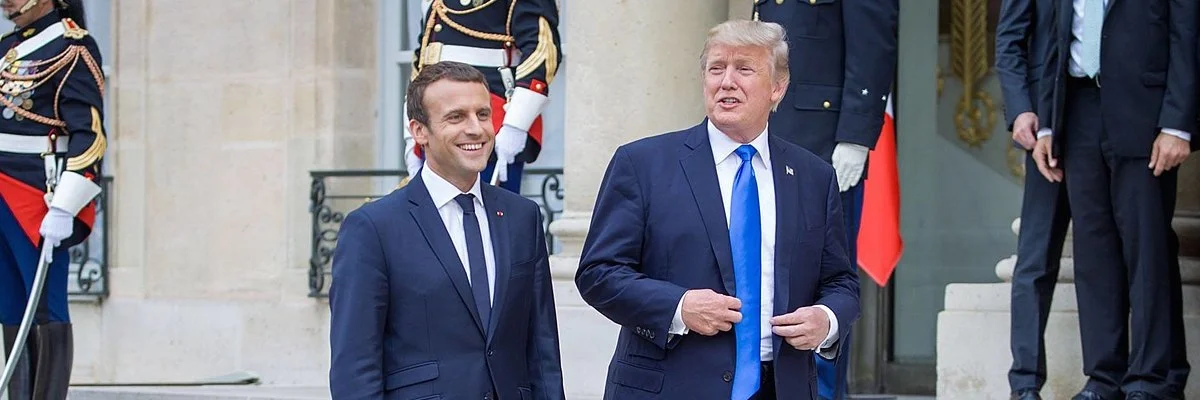
France's Macron to Discuss Iran Tensions with Trump at G20
◢ French President Emmanuel Macron on Monday said he would discuss the current flare-up of tensions between Iran and the United States with President Donald Trump at this week's G20 summit in Japan. The tensions with Iran are set to loom large over the G20 meeting in Osaka later this week after the United States accused Iran of sabotaging ships.
French President Emmanuel Macron on Monday said he would discuss the current flare-up of tensions between Iran and the United States with President Donald Trump at this week's G20 summit in Japan, saying a solution was needed through dialogue to ensure regional security.
The tensions with Iran are set to loom large over the G20 meeting in Osaka later this week after the United States accused Iran of sabotaging ships.
"We have to find a constructive solution with the aim of ensuring collective regional security," Macron told reporters, urging diplomacy rather than an escalation of tensions.
With the EU increasingly concerned over the risk of conflict, Macron pointed to a rare visit by his top diplomatic advisor Emmanuel Bonne to Tehran last week for talks.
"We have condemned very strongly all forms of escalation or aggression and what we will try to have is dialogue," he said.
Iran-US tensions have increased sharply since Trump last year abandoned a landmark 2015 nuclear agreement with Iran and reimposed sanctions, moves strongly opposed by Europe.
Last week Macron appealed to Iran to be "patient and responsible" after Tehran said it would soon surpass the uranium stockpile limit set under the nuclear accord.
Photo: Wikicommons
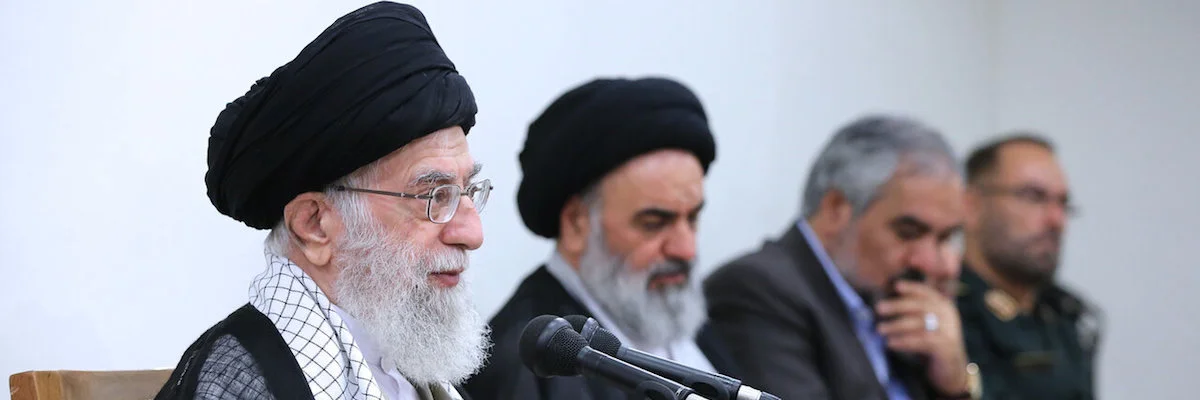
Trump Sanctions Iran's Supreme Leader in Provocative Move
◢ President Donald Trump imposed sanctions on Iran’s supreme leader, Ayatollah Ali Khamenei, and eight senior military commanders, a provocative step designed to increase pressure on the Islamic Republic. Trump told reporters at the White House on Monday that the penalties would deny Khamenei and his office access to financial resources.
By Saleha Mohsin and Shannon Pettypiece
President Donald Trump imposed sanctions on Iran’s supreme leader, Ayatollah Ali Khamenei, and eight senior military commanders, a provocative step designed to increase pressure on the Islamic Republic.
Trump told reporters at the White House on Monday that the penalties would deny Khamenei and his office access to financial resources.
“The supreme leader of Iran is the one who ultimately is responsible for the hostile conduct of the regime,” Trump said.
Trump last week abruptly canceled planned air strikes against Iran for shooting down a U.S. Navy drone on Thursday. The administration also blames Iran for recent attacks on two oil tankers near the Persian Gulf, though Iran denies it.
The penalties won’t have a significant impact on a country that’s already in recession and facing heavy sanctions from the U.S. Still, the new restrictions serve as symbolic reprimand for the attacks, according to former Treasury officials.
‘Annoy the Iranians’
“It will have an effect because it will annoy the Iranians and make negotiations hard to pull off if the supreme leader is sanctioned,” said Brian O’Toole, a senior fellow at the Atlantic Council who previously worked in the U.S. Treasury Department’s sanctions unit.
The U.S. already has sanctioned more than 80% of Iran’s economy, according to Secretary of State Michael Pompeo. He’s en route to Saudi Arabia and the United Arab Emirates to rally a front against Iran.
Khamenei, who was initially elected president of the nascent republic in 1981, has “possessions” worth an estimated at $200 billion, according to a Facebook post by the U.S. embassy in Baghdad in April. He is backed by the Islamic Revolutionary Guard Corps and has survived an assassination attempt and frontline combat.
The U.S. Treasury Department said Monday those sanctioned also include eight officials of the Guard Corps who supervised “malicious regional activities,” including its ballistic missile program and “harassment and sabotage” of commercial ships in international waters.
Treasury Secretary Steven Mnuchin said at a news conference in Washington that some of the sanctions had been “in the works” and others were a result of “recent activities.” He said sanctions against the Islamic Republic have been effective in cutting off funds to the military and “locking up” the Iranian economy, and that the new penalties would be effective as well.
Mnuchin said the U.S. will impose financial restrictions on Iran Foreign Minister Javad Zarif “later this week.”
Trump told reporters Monday that, “A lot of restraint has been shown by us, a lot of restraint—and that doesn’t mean we are going to show it in the future, but I thought that we want to give this a chance,” he said.
Any financial institution that knowingly assists with a financial transaction for those who were sanctioned could be cut off from the U.S. financial system, according to the Treasury.
Trump’s Warning
Trump had warned of additional sanctions on Saturday. At the same time, he said an interview that aired Sunday on NBC’s “Meet the Press” that he thinks Iranian leaders want to negotiate and he’s willing to talk with no preconditions except that the outcome must be Iran acquiring no nuclear weapons. Trump said the proposed discussions have “nothing to do with oil.”
Even before the new penalties were announced, the U.S. had applied sanctions to nearly 1,000 Iranian entities, including banks, individuals, ships and aircraft. In May, the Trump administration prohibited the purchase of Iranian iron, steel, aluminum and copper.
Iran’s Foreign Ministry had said new penalties won’t force the country to negotiate or capitulate.
“Are there any other sanctions left for the U.S. to impose on Iran?” ministry spokesman Abbas Mousavi said Monday prior to Trump’s announcement, according to the official Islamic Republic News Agency. The Trump administration “knows full well that if pressure and sanctions were the answer, they would have yielded results much earlier.”
Tensions have spiked in the Gulf since May, when the Trump administration revoked waivers on the import of Iranian oil, squeezing its economy a year after the U.S. walked away from the landmark 2015 deal meant to prevent the Islamic Republic from developing a nuclear weapon. Since then, a spate of attacks on oil tankers near the Strait of Hormuz shipping choke point have raised the specter of war and pushed up oil prices. The U.S. has blamed the attacks on Tehran, which has denied any wrongdoing.
On Monday, Trump questioned in comments on Twitter why the U.S. was protecting the shipping route on behalf of other countries.
Photo: IRNA
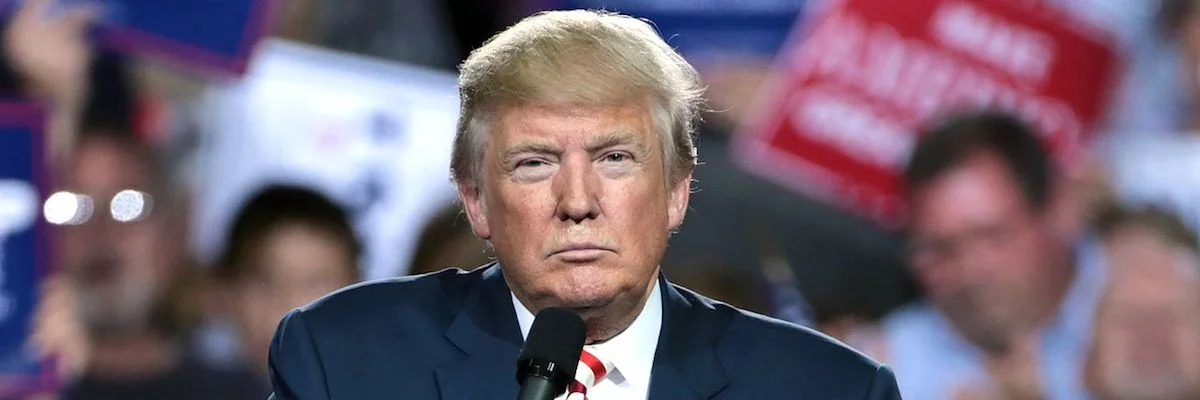
Oil Prices Jump 6% as Trump Says Iran Made 'Very Big Mistake'
◢ Oil prices jumped Thursday on rising US-Iran tensions, with gains accelerating on a cryptic tweet by US President Donald Trump after Iranian forces shot down a US spy drone. President Donald Trump said Thursday that Tehran had made a "very big" error, after Iranian forces shot down a US spy drone near the strategic Strait of Hormuz.
Oil prices jumped Thursday on rising US-Iran tensions, with gains accelerating on a cryptic tweet by US President Donald Trump after Iranian forces shot down a US spy drone.
President Donald Trump said Thursday that Tehran had made a "very big" error, after Iranian forces shot down a US spy drone near the strategic Strait of Hormuz.
Near 1505 GMT, US benchmark West Texas Intermediate climbed 6.3 percent to $57.13 a barrel, while Brent futures in London gained 4.7 percent to $64.69 a barrel.
"Iran made a very big mistake!" he tweeted in his first public reaction to the strike.
Iran's Islamic Revolutionary Guard Corps earlier said it had brought down the surveillance drone after it entered its country's airspace. The Pentagon said the incident occurred in international airspace.
The drone shooting adds to growing tensions as Tehran pushes back against surging US diplomatic, economic and military pressure.
Trump has repeatedly said he does not favor war with Iran unless it is to stop the country getting a nuclear weapons—something Iranian leaders insist they are not pursuing.
Critics of the Trump administration say that his policy of "maximum pressure"—including crippling economic sanctions, abandonment of a complex international deal to regulate Iran's nuclear activities, and deployment of extra sea, air and land forces to the region—make war ever more likely.
The drone downing came as Iran was already accused by Washington of having carried out explosions on two oil tankers in the congested Hormuz area. Tehran denies having been behind the attacks but has frequently threatened in the past to block the sea-lanes used by shipping to move much of the world's oil exports.
Photo: Wikicommons
High-Stakes Iran Talks Try to Prevent Atomic Deal Unraveling
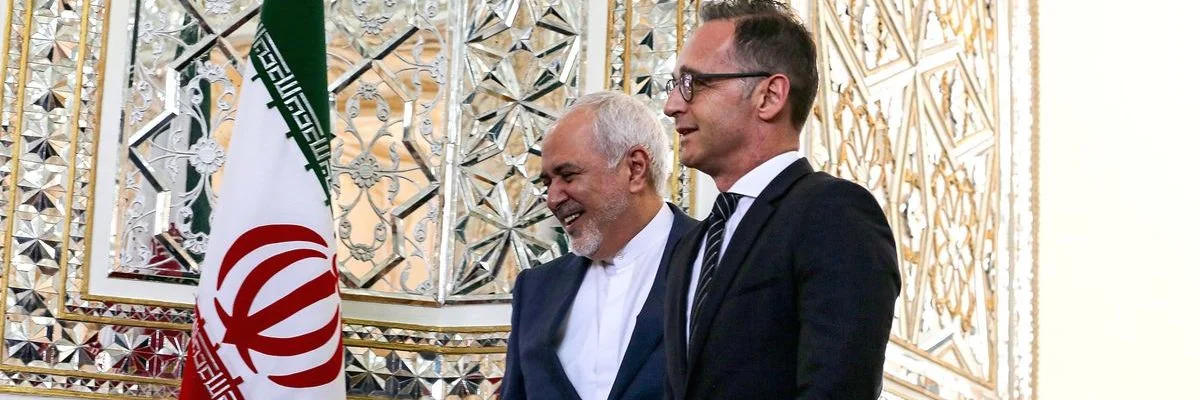
◢ Diplomacy intended to salvage the Iran nuclear deal goes into high gear this week after Tehran threatened to follow the U.S. in abandoning the accord. German Foreign Minister Heiko Maas landed in Iran’s capital to meet Monday with his counterpart Mohammad Javad Zarif. Japanese Prime Minister Shinzo Abe arrives in Tehran on Wednesday for more consultations.
By Golnar Motevalli, Jonathan Tirone and Patrick Donahue
Diplomacy intended to salvage the Iran nuclear deal goes into high gear this week after Tehran threatened to follow the U.S. in abandoning the accord.
German Foreign Minister Heiko Maas landed in Iran’s capital to meet Monday with his counterpart Mohammad Javad Zarif. Japanese Prime Minister Shinzo Abe arrives in Tehran on Wednesday for more consultations. In Vienna, the International Atomic Energy Agency will assess the state of the 2015 agreement that was supposed to rein in Iranian nuclear work in return for sanctions relief.
While European governments recognize Iran’s right to benefit from the nuclear accord and are striving to protect trade with it despite U.S. sanctions, they won’t accept the Islamic Republic’s “reneging” on its nuclear obligations because the U.S. has, Maas said.
The only way to reduce tensions is ending America’s “economic war” on Iran, and Germany and the European Union have a role to play in this, said Zarif, speaking alongside his German counterpart.
Iranian Ultimatum
The flurry of diplomacy kicked off after Iran’s president signaled May 8 that the country could soon violate terms of the agreement, known as the Joint Comprehensive Plan of Action. The declaration was made on the one-year anniversary of the U.S. decision to unilaterally exit the accord and reimpose sanctions, including on vital oil exports. With its economy plunging into recession, Iran gave European signatories 60 days to deliver the financial relief offered under the deal in return for moderating its nuclear output.
The European vehicle to sustain trade with Iran, Instex, will become operational this month, according to a senior European official with knowledge of the Maas-Zarif talks, who asked not to be identified to discuss the private consultations. A material Iranian violation of the nuclear agreement would force EU governments to end efforts to help Tehran mitigate U.S. sanctions.
Germany initially had hoped Maas would be accompanied to Tehran by officials from France and the U.K., the other EU signatories to the deal, according to another European official.
In Vienna, IAEA monitors convene to assess Iranian compliance. They reported last month in a 15th consecutive quarterly report that showed Iran has observed its obligations, amid growing concerns that the Trump administration’s campaign to counter Iranian influence in the Middle East could spill into war.
“I am worried about tensions over the Iran nuclear issue,” IAEA Director General Yukiya Amano said in a statement. “The nuclear-related commitments entered into by Iran under the Joint Comprehensive Plan of Action represent a significant gain. I therefore hope that ways can be found to reduce current tensions through dialogue.”
Iran has increased the rate at which it enriched uranium, although the amount stockpiled is still short of the 300 kilograms (661 pounds) allowed under the deal, Amano said at a press briefing. Any potential violation will be immediately reported and could trigger and emergency meeting in Vienna.
The country had about 180 kilograms of the material stockpiled last week—well short of the amount needed for a weapon, were the material to be further enriched, and if Iran were to make the decision to pursue a bomb. Tehran has always said its program is solely for civilian energy and industrial use, but world powers pursued the deal because they doubted that claim.
Tensions spiked after the U.S. accelerated the deployment of a carrier strike group to the Gulf to counter unspecified Iranian threats, and suggested without providing proof that Iran and its proxies were to blame for attacks on ships in the crucial waterway as well as a Saudi oil pipeline, and sent more troops to the region.
The visit by Abe, the first by a sitting Japanese prime minister in 41 years, was endorsed by President Donald Trump and is an effort to open a channel for mediation. But with the U.S. continuing to pile on new sanctions that target Iran’s petrochemical industry, the initiative has failed to gain traction.
“We are witnessing a treacherous policy” from the U.S., said Abbas Mousavi, the spokesman for Iran’s Ministry of Foreign Affairs. “They bring up negotiations and at the same time administrate maximum pressure. To Iran, this isn’t acceptable.”
High-level diplomacy could continue over the next month depending on the outcome of talks this week in Tehran. The remaining parties to the accord—China, France Germany, Russia and the U.K.—could convene a meeting of foreign ministers if that lends to the accord’s survival, according to one of the European officials.
Photo: Bloomberg
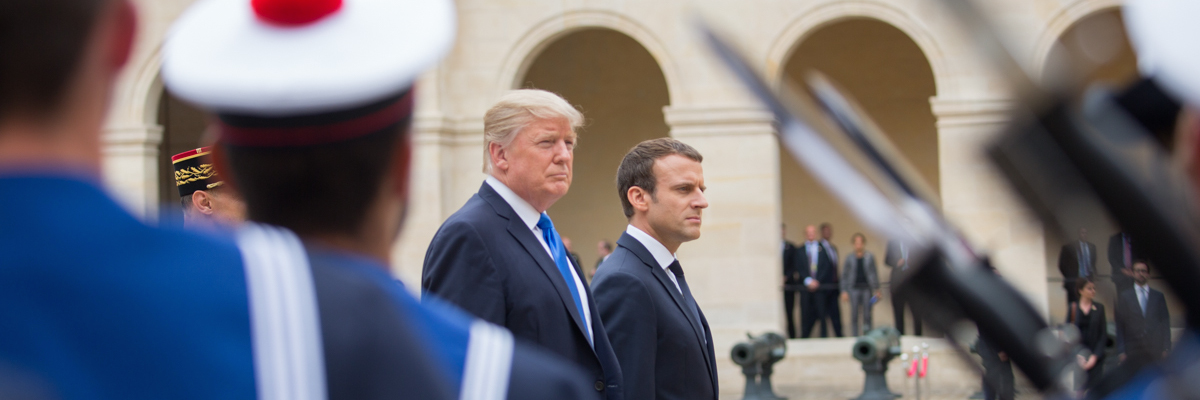
Trump and Macron Say They Have the Same Goals on Iran
◢ U.S. President Donald Trump and his counterpart in France, Emmanuel Macron, said Thursday that they share the goal of preventing Iran from developing nuclear weapons. “I don’t think the president wants to see nuclear weapons and neither do I,” Trump told reporters at a meeting with Macron in Caen, France.
By Alyza Sebenius and Margaret Talev
U.S. President Donald Trump and his counterpart in France, Emmanuel Macron, said Thursday that they share the goal of preventing Iran from developing nuclear weapons.
“I don’t think the president wants to see nuclear weapons and neither do I,” Trump told reporters at a meeting with Macron in Caen, France.
“We do share the same objectives on Iran,” Macron said, siding with Trump in calling for “a new negotiation” with Tehran.
“We want to be sure they don’t get nuclear weapon” and “we want to reduce their ballistic activity,” the French president said.
Macron has advocated for the 2015 Iran nuclear accord to be broadened to curb Iranian behavior Western countries consider hostile, including its development of ballistic missiles. But the French president tried and failed to persuade Trump not to back out of the nuclear deal negotiated by his predecessor Barack Obama.
Trump said earlier this week that there’s “always a chance” of the U.S. taking military action in Iran, though he’d prefer to engage verbally with Iranian President Hassan Rouhani.
“If they want to talk, that’s fine,” Trump said Thursday. “We’ll talk.”
Tensions have recently escalated between the U.S. and Iran after Trump blamed the Islamic Republic for recent violence in the Middle East and ordered 1,500 U.S. troops to the region last month. The small deployment indicated that Trump’s administration wants to avoid fueling fears of another war, though the president has repeatedly made clear the possibility isn’t entirely off the table.
Photo: Wikicommons
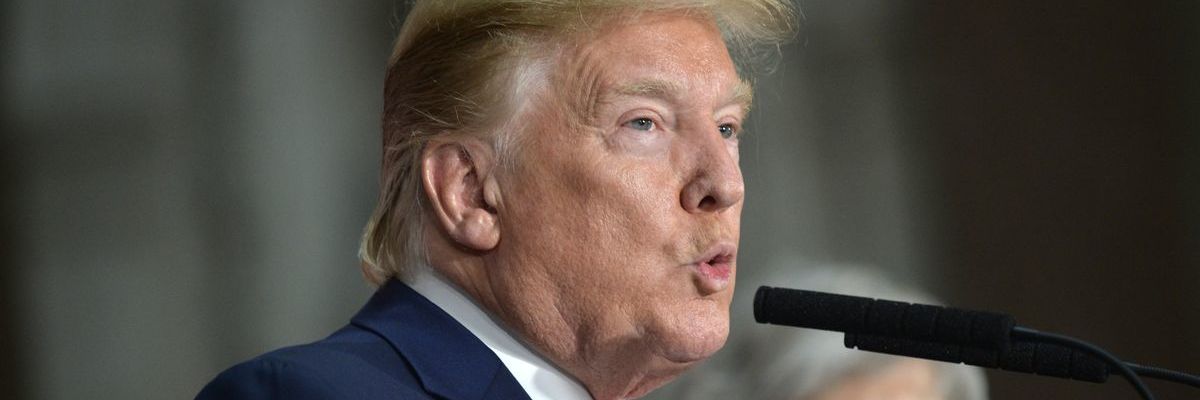
Trump Says ‘Always a Chance’ of War With Iran But Prefers Talks
◢ President Donald Trump said there’s “always a chance” of the U.S. taking military action in Iran, though he’d prefer to engage verbally with Iranian President Hassan Rouhani. “There’s always a chance. Do I want to? No, I’d rather not, but there’s always a chance,” Trump said when asked about the prospect of conflict in an interview on ITV’s Good Morning Britain. “I’d much rather talk.”
By Alyza Sebenius
President Donald Trump said there’s “always a chance” of the U.S. taking military action in Iran, though he’d prefer to engage verbally with Iranian President Hassan Rouhani.
“There’s always a chance. Do I want to? No, I’d rather not, but there’s always a chance,” Trump said when asked about the prospect of conflict in an interview on ITV’s Good Morning Britain. “I’d much rather talk.”
The comments come amid heightened tension between the two countries, after Trump blamed the Islamic Republic for recent violence in the Middle East and ordered 1,500 U.S. troops to the region last month. The small deployment indicated that Trump’s administration wants to avoid fueling fears of another war, though the president made it clear it wasn’t off the table entirely.
Trump said “of course” he’d be willing to talk to Rouhani, pointing out that the Iranian president had himself said he wasn’t looking for conflict with the U.S. “The only thing is we can’t let them have nuclear weapons,” Trump said.
Pentagon officials believe Iran was behind recent attacks on oil tankers, a Saudi oil pipeline and the Green Zone diplomatic compound in Bagdhad, though the U.S. hasn’t published evidence for the claims.
The United Arab Emirates and other countries are investigating the attacks on the ships, Saudi Arabian Foreign Affairs Minister Adel Al-Jubeir said last month.
‘Stay Away’
“The Americans need to stay away,” Iranian Supreme Leader Ayatollah Ali Khamenei said Tuesday. “Where they’ve gone there’s been war, killings, sedition, and humiliation,” he said, adding: “If they get close, we know how to act, we know what needs to be done.”
Trump’s tougher stance toward Iran—the U.S. pulled out of the 2015 nuclear accord signed with global powers and reimposed sanctions—has strained relations with allies in Europe, including the U.K. At their press conference in London Tuesday, Prime Minister Theresa May said while the two governments agreed to work together to avoid escalation by Iran, they “differ on the means of achieving it.”
The nuclear accord capped Iran’s nuclear activities in return for sanctions relief. The agreement, the signatories said, would prevent Tehran from building the nuclear weapons that some Western powers and Israel feared were the end goal of its atomic program. Iran says its nuclear work is solely aimed at meeting civilian energy and medical needs.
May said the U.K., which is part of EU efforts to protect European trade with the Islamic Republic after the U.S. reimposed economic sanctions, still stands by the nuclear deal. Trump criticized the accord—and Iran—again in the ITV interview.
Iran was “extremely hostile when I first came into office,” he said. It was “terrorist nation number one in the world at that time, and probably maybe are today.”
Photo: Bloomberg
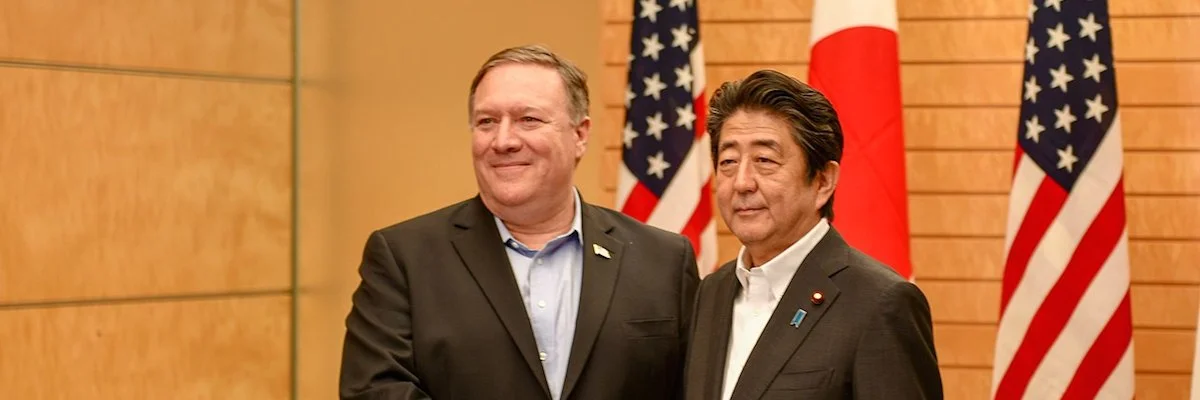
Japan PM to Meet Iran's Khamenei to Mediate With US
◢ Japanese Prime Minister Shinzo Abe will meet Iran's supreme leader Ayatollah Ali Khamenei later this month with Tokyo hoping to mediate between Washington and Tehran, a report said Sunday. As tensions intensify between Iran and Japan's key ally the United States, Abe has reportedly proposed serving as a go-between and is said to be weighing up a state visit to Iran.
Japanese Prime Minister Shinzo Abe will meet Iran's supreme leader Ayatollah Ali Khamenei later this month with Tokyo hoping to mediate between Washington and Tehran, a report said Sunday.
As tensions intensify between Iran and Japan's key ally the United States, Abe has reportedly proposed serving as a go-between and is said to be weighing up a state visit to Iran.
According to the Mainichi Shimbun report, Abe's planned meeting with influential Khamenei will be the first such talks between a Japanese premier and Tehran's supreme leader.
US President Donald Trump said last week he remained open to talks with Tehran during his state visit to Tokyo, appearing to have given the green light to Abe's plan.
Abe will also meet Iran's president Hassan Rouhani before meeting Khamenei during his tour to Iran from June 12 to 14, the newspaper said, citing unnamed government sources.
Before Trump flew to Japan, the United States had announced it was sending 1,500 extra troops to the region, adding to the aircraft carrier group and nuclear-capable bomber planes already dispatched.
Trump himself threatened "the official end" of the country if Tehran ever attacked US interests.
But last Monday in Tokyo, Trump offered assurances that he can live with the Islamic Republic's government, whose toppling has long been a dream for Washington hardliners.
"We're not looking for regime change," Trump said, explaining that he only cared about Iran not achieving nuclear power status.
"I do believe that Iran would like to talk, and if they'd like to talk, we'd like to talk also," Trump added, striking a relatively dovish tone on Iran.
Khamenei has likened negotiations with the Trump administration to "poison" since "they don't stand by anything", referring to Washington's withdrawal from the landmark 2015 nuclear deal signed by Tehran and world powers.
Japan and Iran have kept a good relationship as resource-poor Japan relies heavily on imports of oil from the Middle East, though crude from Iran accounted for just 5.3 percent of the country's total imports last year.
Photo: Wikicommons
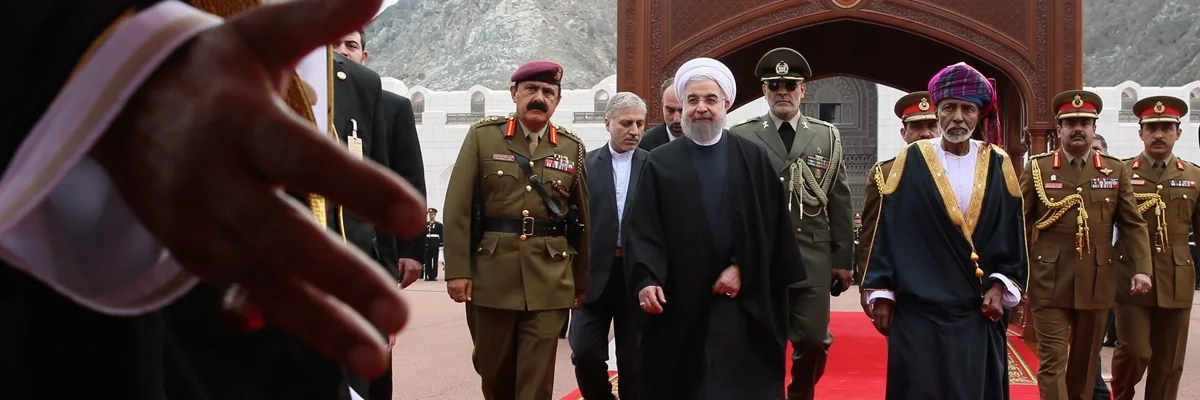
Oman Says It Is Trying to Reduce US-Iran Tensions
◢ Oman said Friday it was trying to reduce spiraling tensions between the Unites States and Iran, as the Pentagon confirmed it was considering deploying more troops to the region. The small but strategically located sultanate, which faces Iran across the highly sensitive Strait of Hormuz at the entrance to the Gulf, has maintained good relations with Tehran throughout successive regional crises.
Oman said Friday it was trying to reduce spiraling tensions between the Unites States and Iran, as the Pentagon confirmed it was considering deploying more troops to the region.
The small but strategically located sultanate, which faces Iran across the highly sensitive Strait of Hormuz at the entrance to the Gulf, has maintained good relations with Tehran throughout successive regional crises.
That has at times allowed it to play an important mediating role, including with the United States.
"We and other parties seek to calm tensions between Washington and Tehran," Muscat's state minister for foreign affairs Yusuf bin Alawi bin Abdullah said in a statement.
"A war could harm the whole world, and both the American and Iranian sides are 'aware of the dangers'."
Abdullah earlier this week visited Tehran, where he met Iranian Foreign Minister Mohammad Javad Zarif, Tehran's official state news agency IRNA said.
Oman played a crucial role in bringing US and Iranian negotiators together for the preliminary talks that ultimately led to a landmark 2015 nuclear deal between Iran and major powers, including the United States.
The current crisis began when President Donald Trump abandoned the deal in May last year and gradually reimposed crippling sanctions that have left Iran's economy reeling.
Washington has since further increased the pressure on Iran, deploying an aircraft carrier task force as well as B-52 bombers, an amphibious assault ship and a missile defence battery to the Gulf.
The movements have come in response to alleged Iranian threats to US interests or those of its Middle East allies.
But they have raised concerns, even among governments close to the US, that brinksmanship with Tehran could lead to a dangerous miscalculation.
On Tuesday, Iraqi Prime Minister Adel Abdel Mahdi announced that he intended to send delegations to the US and Iran "very soon" in an attempt to ease tensions between the two countries, both key allies to Baghdad.
Photo: IRNA
US Fingers Iran on Gulf Attacks but Eases Tone
◢ President Donald Trump's administration charged Tuesday it was "quite possible" Iran was responsible for sabotage of Gulf oil interests but said its robust response had stopped potential attacks on Americans. US officials appeared to be toning down weeks of fiery warnings to Iran before delivering a classified briefing to the full Congress, where rival Democrats have accused the administration of hyping intelligence.
By Shaun Tandon
President Donald Trump's administration charged Tuesday it was "quite possible" Iran was responsible for sabotage of Gulf oil interests but said its robust response had stopped potential attacks on Americans.
Top Trump officials appeared to be toning down weeks of fiery warnings to Iran before delivering a classified briefing to the full Congress, where rival Democrats have accused the administration of hyping intelligence and pushing the United States dangerously close to war.
Secretary of State Mike Pompeo said the United States has not made "a definitive conclusion" that can be presented publicly over sabotage incidents of oil tankers off the United Arab Emirates or drone strikes on a crude pipeline in Saudi Arabia.
"But given all the regional conflicts that we have seen over the past decade and the shape of these attacks, it seems like it's quite possible that Iran was behind these," Pompeo told conservative radio host Hugh Hewitt before heading to Congress.
"Most importantly, we will continue to take acts that protect American interests and that work to deter Iran from misbehavior in the region, which has the real risk of escalating the situation such that crude oil prices rise," he said.
Yemen's Houthi rebels, who are allied with Iran and are being hit hard by US-backed Saudi airstrikes, claimed responsibility last week for a drone strike on a major east-west pipeline in the kingdom, which was forced to shut down temporarily.
John Bolton, Trump's hawkish national security adviser, earlier this month warned of "unrelenting force" if Iran strikes US interests as he announced the deployment to the region of an aircraft carrier strike group, followed by nuclear-capable B-52 bombers.
Threats 'Put on Hold'
Acting Defense Secretary Patrick Shanahan, who will also brief lawmakers alongside the US military chief, General Joseph Dunford, said the US response had made an impact but warned of continued risks.
“I think our steps were very prudent and we've put on hold the potential for attacks on Americans," Shanahan told reporters.
"I'd say we're in a period where the threat remains high and our job is to make sure that there is no miscalculation by the Iranians," he said.
Iranian Foreign Minister Mohammad Javad Zarif warned that the United States was "playing a very, very dangerous game" with military deployments, saying that some actors were "interested in accidents"—a likely allusion to its regional rivals such as Saudi Arabia.
"There will be painful consequences for everybody (if) there is an escalation against Iran, that's for sure," he said," Zarif told CNN.
Trump last year pulled out of a multinational agreement negotiated under his predecessor Barack Obama under which Iran drastically scaled back its nuclear work in return for promises of sanctions relief.
The administration, which is closely allied with the Saudis, instead vowed "maximum pressure" to weaken the clerical state's regional influence, including by trying to stop all oil sales by Iran.
Democrats, who requested the briefing to lawmakers, criticized Iran but said its actions were in line with predicted responses to Trump's moves.
"Bluntly, I believe the path to the current level of tension began when President Trump unilaterally walked out of a diplomatic deal," Senator Tim Kaine said Monday on the chamber's floor.
"I think it would be absolute lunacy for the United States to get involved in another war right now in the Middle East. I think it would be devastating if we were to be in a war with Iran," he said, calling instead fo diplomacy.
Opening on Prisoners?
Trump stoked the fire on Sunday in a tweet in which he warned: "If Iran wants to fight, that will be the official end of Iran.
But the US president—who made similar threats against North Korea before meeting leader Kim Jong Un—a day later downplayed the Iranian threat to US interests and has called for talks.
Few expect Iran's leaders, for whom anti-Americanism is a cardinal tenet of the 1979 Islamic revolution, to meet Trump. But Zarif has proposed a swap of prisoners, a step some observers say could offer a path to resume at least low-level dialogue to ease tensions.
Pompeo in the radio interview said without further explanation that there had been "just a hint" that Iran was moving to release imprisoned US citizens.
"Even a small confidence-building measure is a good thing, so it's absolutely the case that were they to release these Americans who are wrongfully held, it would be a good thing," Pompeo said.
Photo: Bloomberg
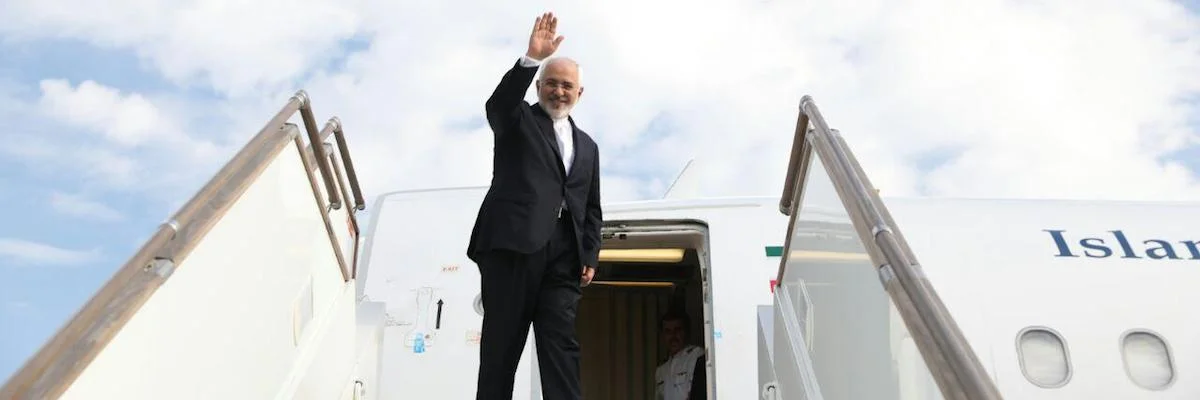
Iran Urges China, Russia 'Concrete Actions' to Save Nuclear Deal
◢ Iranian Foreign Minister Mohammad Javad Zarif on Friday urged China and Russia to take "concrete actions" to safeguard the 2015 nuclear deal as he warned of a "dangerous" situation amid escalating tensions with the US. China was one of the eight global buyers—India, Turkey, Japan, South Korea, Taiwan, Italy and Greece—that was allowed to import Iranian crude oil before the US ended waivers in early May.
By Poornima Weerasekara
Iranian Foreign Minister Mohammad Javad Zarif on Friday urged China and Russia to take "concrete actions" to safeguard the 2015 nuclear deal as he warned of a "dangerous" situation amid escalating tensions with the US.
A stand-off between Tehran and Washington has ratcheted up in recent days, with the US deploying an aircraft carrier group and B-52 bombers to the Gulf last week over alleged threats from Iran.
"Iran and China need to think together and work together about preserving a multilateral global order and avoiding a unilateral global order," Zarif said during a meeting with his Chinese counterpart Wang Yi on Friday evening.
On Wednesday, the US State Department ordered the evacuation of most personnel from the US embassy and consulate in Iraq over an alleged "imminent" threat from Iraqi militias with close links to Tehran.
With tensions rising, the UK warned British-Iranian dual nationals against all travel to Iran on Friday, citing the recent "arbitrary detention and mistreatment" of such citizens.
British insurer Lloyd's of London has also widened its list of areas in and around the Gulf posing "enhanced risk for marine insurers" after a still-mysterious "attack" on tankers anchored off Fujairah, an Emirati port.
Zarif has called on the international community to save the nuclear deal, known as the Joint Comprehensive Plan of Action, or JCPOA.
Iran signed the deal with China, Russia, Germany, Britain, France and the United States. International sanctions were eased in return for curbs on Tehran's nuclear program.
But last year, President Donald Trump walked away from the accord. The US has since imposed sweeping sanctions on Iran.
"So far the international community has mostly released statements rather than taking action," Zarif said.
"If the international community and other JCPOA member countries and our friends in the JCPOA like China and Russia want to keep this achievement, it is required that they make sure the Iranian people enjoy the benefits of the JCPOA with concrete actions," he added.
The White House has sent mixed signals about its intentions in recent days
In a Friday tweet, Trump lambasted the media for what he said was its "fraudulent and highly inaccurate coverage of Iran", amid multiple US reports of infighting in Trump's cabinet over how hard to push Tehran.
'Maximum Pressure'
Zarif said last week that only Russia and China had supported Iran and helped it keep the nuclear deal going, and accused other parties to the agreement of letting Tehran down.
China was one of the eight global buyers—India, Turkey, Japan, South Korea, Taiwan, Italy and Greece—that was allowed to import Iranian crude oil before the US ended waivers in early May.
Zarif's China trip comes after visits to Turkmenistan, India and Japan in the past week.
Despite Washington's campaign of "maximum pressure" against Iran, the Islamic Republic has vowed to keep selling oil to its main customers, especially China, even if it requires using indirect means.
On May 8, Iranian President Hassan Rouhani said Iran would stop observing restrictions on stocks of enriched uranium and heavy water agreed under the nuclear deal in retaliation for the US withdrawal and the reimposition of sanctions.
In his announcement, Rouhani threatened to go further if the European members of the deal failed to start delivering on their promises to help Iran circumvent US sanctions within 60 days.
China in response called on all parties to uphold the nuclear deal in what it called a "shared responsibility.”
European nations have also called on all partners to the deal to help salvage it while expressing frustration at Iran's demands for help in circumventing US sanctions.
One European diplomat called on China to buy Iranian oil as it is less exposed to the United States.
"They are now very exposed to the dollar but it is also a question of political choice," said the source, who spoke on condition of anonymity.
"The reality for the Chinese is that they are in a global trade war with the Americans, they are in the middle of negotiations and they are not quite so sure if they want to load the boat," the diplomat added.
Photo: IRNA